ℹ️ Skipped - page is already crawled
| Filter | Status | Condition | Details |
|---|---|---|---|
| HTTP status | PASS | download_http_code = 200 | HTTP 200 |
| Age cutoff | PASS | download_stamp > now() - 6 MONTH | 0.4 months ago |
| History drop | PASS | isNull(history_drop_reason) | No drop reason |
| Spam/ban | PASS | fh_dont_index != 1 AND ml_spam_score = 0 | ml_spam_score=0 |
| Canonical | PASS | meta_canonical IS NULL OR = '' OR = src_unparsed | Not set |
| Property | Value | |||||||||
|---|---|---|---|---|---|---|---|---|---|---|
| URL | https://www2.hse.ie/conditions/covid19/preventing-the-spread/when-to-wear-face-covering/ | |||||||||
| Last Crawled | 2026-04-10 08:14:58 (12 days ago) | |||||||||
| First Indexed | 2021-06-22 14:15:30 (4 years ago) | |||||||||
| HTTP Status Code | 200 | |||||||||
| Content | ||||||||||
| Meta Title | Face masks: types and how to wear one | |||||||||
| Meta Description | Anyone who wants to wear a face mask to protect themselves and others should do so. Read about types of face masks and how to wear one properly. | |||||||||
| Meta Canonical | null | |||||||||
| Boilerpipe Text | A face mask is a material you wear that covers your nose and mouth. It is sometimes called a face covering.
When worn properly, all types of face masks help to reduce the spread of COVID-19 and other airborne infections. If your face mask does not completely cover your nose and mouth, it will not protect you or anyone else.
Who should wear a face mask
Anyone who wants to wear a face mask to protect themselves and others should do so.
You may be asked to wear a face mask when visiting some health and care settings. The healthcare team will let you know if you need to.
If you have symptoms of COVID-19, cold or flu, it may not be safe to visit a health or care setting. Contact them for advice before visiting.
Types of face masks
There are different types of masks available. When used properly and in higher-risk settings, medical masks and respirator masks give better protection from COVID-19 infection than cloth masks. You can buy these in shops and pharmacies.
Medical masks
Medical face masks have 3 layers of light, paper-like material. They are usually white on the inside and blue on the outside. They are sometimes called surgical masks or medical-grade masks.
A medical mask is usually 3 layers, white on the inside and blue on the outside.
How medical masks work
Medical masks filter the air that goes through the mask but you can inhale some unfiltered air around the edges. There is a band on or in the upper edge that is used to fit the mask around your nose.
Wear medical masks once
You should only wear a medical mask once. You can use the same mask for a few hours if it stays clean, dry and in place. You should not lower your mask below your nose or chin to talk to someone or for any other reason.
When you take off a medical mask, put it in the bin. You should not reuse or wash medical masks. If you reuse a medical mask, it becomes less effective the more you use it.
Respirator masks
Respirator masks often have 4 layers of light, paper-like material. They are usually white on the inside and the outside.
FFP2, FFP3, N95 and KN95 are all types of respirator masks. They are all very similar. Do not use respirator masks with valves.
Respirator masks do not work well on people with a lot of facial hair. They may not work well for children because their faces are smaller.
Properly worn, a respirator mask gives you better protection against inhaling aerosols than a medical mask.
How respirator masks work
When properly fitted to your face, a respirator mask forces all the air you breathe to go through the mask. This means that the air you breathe in and out is filtered.
Good respirator masks usually have 2 bands that go over your head so that they pull the edges of the mask close against your face. This stops any air leaks around the edges. There is a band on or in the upper edge that is used to fit the mask around your nose. A respirator mask should move in and out with your breathing. You should not feel any air leaking under the edge of the mask when you breathe out.
Wear respirator masks once
You should only wear a respirator mask once. You can use the same mask for a few hours if it stays clean, dry and in place. You should not lower your mask below your nose or chin to talk to someone or for any other reason.
When you take off a respirator mask, put it in the bin. You should not reuse or wash respirator masks. If you reuse a respirator mask, it becomes less effective over time. If a reused respirator mask is loose on your face, it cannot work effectively as a respirator mask.
Cloth masks
A cloth face mask is usually made of cotton or silk. It should have 2 or more layers of washable, breathable fabric.
Cloth masks do not work as well as medical and respirator masks. It's OK to use a cloth mask if you do not have a medical or respirator mask.
How to choose a cloth face mask
When choosing a face mask, make sure it:
fits snugly at the side of your face and doesn't leave any gaps
completely covers your nose and mouth
has 2 or more layers of washable, breathable fabric - if it is a cloth mask
Avoid masks that:
are made of material that makes breathing difficult
have valves or vents - these are used to protect you from dust and do not offer protection from COVID-19
Who should not wear a face mask
Face masks are not recommended for anyone who:
has trouble breathing that is made worse by a mask
is unconscious or incapacitated
is unable to remove it without help
has special needs and who may feel upset or very uncomfortable wearing them
needs to communicate with someone who has learning difficulties, is hard of hearing or deaf
How to wear a face mask
Do
clean your hands properly when you put on and take off your face mask
cover your mouth and nose and make sure there are no gaps between your face and the mask
remove it from behind - do not touch the front of the mask
put medical and respirator masks in a bin when you remove them
carry unused face masks in a clean sealable bag such as a ziplock freezer bag, paper bag or cloth bag
carry a second similar type bag to put used cloth face masks in
Don't
do not touch your face mask while wearing it – if you do, clean your hands properly
do not use a wet or soiled face mask
do not share face masks
do not lower your face mask to speak, eat, smoke or vape
do not throw away face masks in public places – you risk infecting others
do not put single-use masks in a recycling bin – they cannot be recycled
How to properly wear a face mask
How to stop your glasses fogging up
If you wear glasses and a face mask, your glasses may fog up.
Cleaning your glasses makes them less likely to fog up. There are special wipes for glasses that can help stop them from fogging up.
A well-fitting face mask can also stop your glasses fogging up. It should fit tightly enough to not leave any gaps around your nose.
Place your glasses on top of the seal of the face mask to try to stop your breath reaching up to your glasses. If you cannot do this, try using a small piece of surgical tape to seal the face mask to your face at the gap under your glasses.
Storing and washing cloth face masks
Store your face mask at home in a dry, breathable bag to keep it clean between use. For example, a paper or cloth bag.
Wash your cloth face mask whenever it gets dirty or at least every day.
When to throw out a cloth face mask
Throw out a reusable face mask if it:
no longer covers the nose and mouth
has loose or damaged ties or straps
does not stay in place on your face
has holes or tears in the fabric | |||||||||
| Markdown | [Skip to main content](https://www2.hse.ie/conditions/covid19/preventing-the-spread/when-to-wear-face-covering/#maincontent)
- [Jobs](https://about.hse.ie/jobs/job-search/)
- [HSE Staff](https://healthservice.hse.ie/staff/)
- [About the HSE](https://about.hse.ie/)
Menu Close
- [English selected](https://www2.hse.ie/conditions/covid19/preventing-the-spread/when-to-wear-face-covering/)
- [Irish Gaeilge](https://www2.hse.ie/ga/conditions/covid19/scaipeadh-a-chosc/cen-uair-is-ceart-cumhdach-aghaidhe-a-chaitheamh/)
Toggle search Search Close
Recommended links
- [Medical cards](https://www2.hse.ie/services/schemes-allowances/medical-cards/)
- [European Health Insurance Card (EHIC)](https://www2.hse.ie/services/schemes-allowances/ehic/)
- [Find urgent and emergency care](https://www2.hse.ie/services/urgent-emergency-care/)
- [Find a civil registration service](https://www2.hse.ie/services/births-deaths-and-marriages/find-a-civil-registration-service/)
- [GP visit cards](https://www2.hse.ie/services/schemes-allowances/gp-visit-cards/gp-visit-cards/)
- [Health A to Z](https://www2.hse.ie/conditions/)
- [Services](https://www2.hse.ie/services/)
- [Living well](https://www2.hse.ie/living-well/)
- [Mental health](https://www2.hse.ie/mental-health/)
- [Pregnancy and birth](https://www2.hse.ie/pregnancy-birth/)
- [Babies and children](https://www2.hse.ie/babies-children/)
- [English selected](https://www2.hse.ie/conditions/covid19/preventing-the-spread/when-to-wear-face-covering/)
- [Irish Gaeilge](https://www2.hse.ie/ga/conditions/covid19/scaipeadh-a-chosc/cen-uair-is-ceart-cumhdach-aghaidhe-a-chaitheamh/)
- [Jobs](https://about.hse.ie/jobs/job-search/)
- [HSE Staff](https://healthservice.hse.ie/staff/)
- [About the HSE](https://about.hse.ie/)
- [Health A to Z](https://www2.hse.ie/conditions/)
- [Services](https://www2.hse.ie/services/)
- [Living Well](https://www2.hse.ie/living-well)
1. [Home](https://www2.hse.ie/)
2. [Health A to Z](https://www2.hse.ie/conditions/)
3. [COVID-19 (coronavirus)](https://www2.hse.ie/conditions/covid19/)
4. [Prevent the spread of COVID-19](https://www2.hse.ie/conditions/covid19/preventing-the-spread/)
[Back to Prevent the spread of COVID-19](https://www2.hse.ie/conditions/covid19/preventing-the-spread/)
### Warning notification:Warning
Unfortunately, you are using an outdated browser. Please, upgrade your browser to improve your experience with HSE. The list of supported browsers:
1. [Chrome](https://www.google.com/intl/en_ie/chrome/ "Chrome")
2. [Edge](https://www.microsoft.com/en-us/edge?form=MA13FJ&exp=e00 "Edge")
3. [FireFox](https://www.mozilla.org/en-US/firefox/new/ "FireFox")
4. [Opera](https://www.opera.com/ "Opera")
5. [Safari](https://www.apple.com/safari/ "Safari")
# Face masks: types and how to wear one
A face mask is a material you wear that covers your nose and mouth. It is sometimes called a face covering.
When worn properly, all types of face masks help to reduce the spread of COVID-19 and other airborne infections. If your face mask does not completely cover your nose and mouth, it will not protect you or anyone else.
## Who should wear a face mask
Anyone who wants to wear a face mask to protect themselves and others should do so.
You may be asked to wear a face mask when visiting some health and care settings. The healthcare team will let you know if you need to.
If you have symptoms of COVID-19, cold or flu, it may not be safe to visit a health or care setting. Contact them for advice before visiting.
## Types of face masks
There are different types of masks available. When used properly and in higher-risk settings, medical masks and respirator masks give better protection from COVID-19 infection than cloth masks. You can buy these in shops and pharmacies.
Medical masks
Medical face masks have 3 layers of light, paper-like material. They are usually white on the inside and blue on the outside. They are sometimes called surgical masks or medical-grade masks.
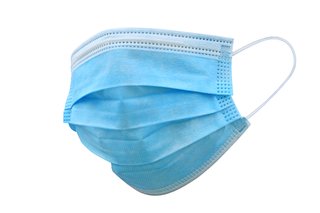
A medical mask is usually 3 layers, white on the inside and blue on the outside.
### How medical masks work
Medical masks filter the air that goes through the mask but you can inhale some unfiltered air around the edges. There is a band on or in the upper edge that is used to fit the mask around your nose.
### Wear medical masks once
You should only wear a medical mask once. You can use the same mask for a few hours if it stays clean, dry and in place. You should not lower your mask below your nose or chin to talk to someone or for any other reason.
When you take off a medical mask, put it in the bin. You should not reuse or wash medical masks. If you reuse a medical mask, it becomes less effective the more you use it.
Respirator masks
Respirator masks often have 4 layers of light, paper-like material. They are usually white on the inside and the outside.
FFP2, FFP3, N95 and KN95 are all types of respirator masks. They are all very similar. Do not use respirator masks with valves.
Respirator masks do not work well on people with a lot of facial hair. They may not work well for children because their faces are smaller.
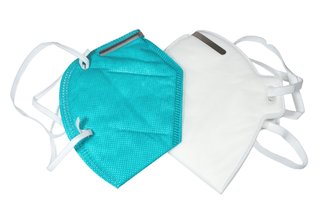
Properly worn, a respirator mask gives you better protection against inhaling aerosols than a medical mask.
### How respirator masks work
When properly fitted to your face, a respirator mask forces all the air you breathe to go through the mask. This means that the air you breathe in and out is filtered.
Good respirator masks usually have 2 bands that go over your head so that they pull the edges of the mask close against your face. This stops any air leaks around the edges. There is a band on or in the upper edge that is used to fit the mask around your nose. A respirator mask should move in and out with your breathing. You should not feel any air leaking under the edge of the mask when you breathe out.
### Wear respirator masks once
You should only wear a respirator mask once. You can use the same mask for a few hours if it stays clean, dry and in place. You should not lower your mask below your nose or chin to talk to someone or for any other reason.
When you take off a respirator mask, put it in the bin. You should not reuse or wash respirator masks. If you reuse a respirator mask, it becomes less effective over time. If a reused respirator mask is loose on your face, it cannot work effectively as a respirator mask.
Cloth masks
A cloth face mask is usually made of cotton or silk. It should have 2 or more layers of washable, breathable fabric.
Cloth masks do not work as well as medical and respirator masks. It's OK to use a cloth mask if you do not have a medical or respirator mask.
## How to choose a cloth face mask
When choosing a face mask, make sure it:
- fits snugly at the side of your face and doesn't leave any gaps
- completely covers your nose and mouth
- has 2 or more layers of washable, breathable fabric - if it is a cloth mask
Avoid masks that:
- are made of material that makes breathing difficult
- have valves or vents - these are used to protect you from dust and do not offer protection from COVID-19
Who should not wear a face mask
Face masks are not recommended for anyone who:
- has trouble breathing that is made worse by a mask
- is unconscious or incapacitated
- is unable to remove it without help
- has special needs and who may feel upset or very uncomfortable wearing them
- needs to communicate with someone who has learning difficulties, is hard of hearing or deaf
## How to wear a face mask
### Do
- clean your hands properly when you put on and take off your face mask
- cover your mouth and nose and make sure there are no gaps between your face and the mask
- remove it from behind - do not touch the front of the mask
- put medical and respirator masks in a bin when you remove them
- carry unused face masks in a clean sealable bag such as a ziplock freezer bag, paper bag or cloth bag
- carry a second similar type bag to put used cloth face masks in
### Don't
- do not touch your face mask while wearing it – if you do, clean your hands properly
- do not use a wet or soiled face mask
- do not share face masks
- do not lower your face mask to speak, eat, smoke or vape
- do not throw away face masks in public places – you risk infecting others
- do not put single-use masks in a recycling bin – they cannot be recycled
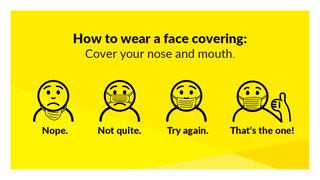
How to properly wear a face mask
How to stop your glasses fogging up
If you wear glasses and a face mask, your glasses may fog up.
Cleaning your glasses makes them less likely to fog up. There are special wipes for glasses that can help stop them from fogging up.
A well-fitting face mask can also stop your glasses fogging up. It should fit tightly enough to not leave any gaps around your nose.
Place your glasses on top of the seal of the face mask to try to stop your breath reaching up to your glasses. If you cannot do this, try using a small piece of surgical tape to seal the face mask to your face at the gap under your glasses.
## Storing and washing cloth face masks
Store your face mask at home in a dry, breathable bag to keep it clean between use. For example, a paper or cloth bag.
Wash your cloth face mask whenever it gets dirty or at least every day.
#### When to throw out a cloth face mask
Throw out a reusable face mask if it:
- no longer covers the nose and mouth
- has loose or damaged ties or straps
- does not stay in place on your face
- has holes or tears in the fabric
## More in [Prevent the spread of COVID-19](https://www2.hse.ie/conditions/covid19/preventing-the-spread/)
### Protect yourself and others
- [How COVID-19 is spread](https://www2.hse.ie/conditions/covid19/preventing-the-spread/how-coronavirus-spread/)
- [Protect yourself and others](https://www2.hse.ie/conditions/covid19/preventing-the-spread/protect-yourself-and-others/)
- [Protecting your child](https://www2.hse.ie/conditions/covid19/preventing-the-spread/protecting-your-child/)
### Face masks
- Face masks: types and how to wear one
### School and COVID-19
- [Knowing if your child is well enough to go to school or childcare](https://www2.hse.ie/babies-children/parenting-advice/caring-for-a-child/knowing-if-your-child-is-well-enough-to-go-to-school-or-childcare/)
Page last reviewed: 29 March 2023
## HSE Live - we're here to help
Monday to Friday: 8am to 8pm
Saturday: 9am to 5pm
Sunday: Closed
Bank holidays: Closed
**Freephone: [1800 700 700](tel:1800700700)**
**From outside Ireland: [00 353 1 240 8787](tel:0035312408787)**
- [HSE Facebook](https://www.facebook.com/HSElive/)
- [HSE Instagram](https://instagram.com/irishhealthservice)
- [HSE TikTok](https://www.tiktok.com/@hselive)
- [HSE YouTube](https://www.youtube.com/channel/UCoNNhGGAYkdavsSXp1iVzCg)
- [HSE LinkedIn](https://ie.linkedin.com/company/health-service-executive)
- [Complaints and feedback](https://www2.hse.ie/complaints-feedback/)
- [Emergencies](https://www2.hse.ie/services/find-urgent-emergency-care/)
- [Cookie settings](https://www2.hse.ie/conditions/covid19/preventing-the-spread/when-to-wear-face-covering/)
## Support links
- [Cookie statement](https://www2.hse.ie/cookie-statement/)
- [Accessibility](https://www2.hse.ie/accessibility-statement/)
- [Privacy statement](https://www2.hse.ie/privacy-statement/)
- [Disclaimer](https://www.hse.ie/disclaimer/)
© Health Service Executive | |||||||||
| Readable Markdown | A face mask is a material you wear that covers your nose and mouth. It is sometimes called a face covering.
When worn properly, all types of face masks help to reduce the spread of COVID-19 and other airborne infections. If your face mask does not completely cover your nose and mouth, it will not protect you or anyone else.
## Who should wear a face mask
Anyone who wants to wear a face mask to protect themselves and others should do so.
You may be asked to wear a face mask when visiting some health and care settings. The healthcare team will let you know if you need to.
If you have symptoms of COVID-19, cold or flu, it may not be safe to visit a health or care setting. Contact them for advice before visiting.
## Types of face masks
There are different types of masks available. When used properly and in higher-risk settings, medical masks and respirator masks give better protection from COVID-19 infection than cloth masks. You can buy these in shops and pharmacies.
Medical masks
Medical face masks have 3 layers of light, paper-like material. They are usually white on the inside and blue on the outside. They are sometimes called surgical masks or medical-grade masks.

A medical mask is usually 3 layers, white on the inside and blue on the outside.
### How medical masks work
Medical masks filter the air that goes through the mask but you can inhale some unfiltered air around the edges. There is a band on or in the upper edge that is used to fit the mask around your nose.
### Wear medical masks once
You should only wear a medical mask once. You can use the same mask for a few hours if it stays clean, dry and in place. You should not lower your mask below your nose or chin to talk to someone or for any other reason.
When you take off a medical mask, put it in the bin. You should not reuse or wash medical masks. If you reuse a medical mask, it becomes less effective the more you use it.
Respirator masks
Respirator masks often have 4 layers of light, paper-like material. They are usually white on the inside and the outside.
FFP2, FFP3, N95 and KN95 are all types of respirator masks. They are all very similar. Do not use respirator masks with valves.
Respirator masks do not work well on people with a lot of facial hair. They may not work well for children because their faces are smaller.

Properly worn, a respirator mask gives you better protection against inhaling aerosols than a medical mask.
### How respirator masks work
When properly fitted to your face, a respirator mask forces all the air you breathe to go through the mask. This means that the air you breathe in and out is filtered.
Good respirator masks usually have 2 bands that go over your head so that they pull the edges of the mask close against your face. This stops any air leaks around the edges. There is a band on or in the upper edge that is used to fit the mask around your nose. A respirator mask should move in and out with your breathing. You should not feel any air leaking under the edge of the mask when you breathe out.
### Wear respirator masks once
You should only wear a respirator mask once. You can use the same mask for a few hours if it stays clean, dry and in place. You should not lower your mask below your nose or chin to talk to someone or for any other reason.
When you take off a respirator mask, put it in the bin. You should not reuse or wash respirator masks. If you reuse a respirator mask, it becomes less effective over time. If a reused respirator mask is loose on your face, it cannot work effectively as a respirator mask.
Cloth masks
A cloth face mask is usually made of cotton or silk. It should have 2 or more layers of washable, breathable fabric.
Cloth masks do not work as well as medical and respirator masks. It's OK to use a cloth mask if you do not have a medical or respirator mask.
## How to choose a cloth face mask
When choosing a face mask, make sure it:
- fits snugly at the side of your face and doesn't leave any gaps
- completely covers your nose and mouth
- has 2 or more layers of washable, breathable fabric - if it is a cloth mask
Avoid masks that:
- are made of material that makes breathing difficult
- have valves or vents - these are used to protect you from dust and do not offer protection from COVID-19
Who should not wear a face mask
Face masks are not recommended for anyone who:
- has trouble breathing that is made worse by a mask
- is unconscious or incapacitated
- is unable to remove it without help
- has special needs and who may feel upset or very uncomfortable wearing them
- needs to communicate with someone who has learning difficulties, is hard of hearing or deaf
## How to wear a face mask
### Do
- clean your hands properly when you put on and take off your face mask
- cover your mouth and nose and make sure there are no gaps between your face and the mask
- remove it from behind - do not touch the front of the mask
- put medical and respirator masks in a bin when you remove them
- carry unused face masks in a clean sealable bag such as a ziplock freezer bag, paper bag or cloth bag
- carry a second similar type bag to put used cloth face masks in
### Don't
- do not touch your face mask while wearing it – if you do, clean your hands properly
- do not use a wet or soiled face mask
- do not share face masks
- do not lower your face mask to speak, eat, smoke or vape
- do not throw away face masks in public places – you risk infecting others
- do not put single-use masks in a recycling bin – they cannot be recycled

How to properly wear a face mask
How to stop your glasses fogging up
If you wear glasses and a face mask, your glasses may fog up.
Cleaning your glasses makes them less likely to fog up. There are special wipes for glasses that can help stop them from fogging up.
A well-fitting face mask can also stop your glasses fogging up. It should fit tightly enough to not leave any gaps around your nose.
Place your glasses on top of the seal of the face mask to try to stop your breath reaching up to your glasses. If you cannot do this, try using a small piece of surgical tape to seal the face mask to your face at the gap under your glasses.
## Storing and washing cloth face masks
Store your face mask at home in a dry, breathable bag to keep it clean between use. For example, a paper or cloth bag.
Wash your cloth face mask whenever it gets dirty or at least every day.
#### When to throw out a cloth face mask
Throw out a reusable face mask if it:
- no longer covers the nose and mouth
- has loose or damaged ties or straps
- does not stay in place on your face
- has holes or tears in the fabric | |||||||||
| ML Classification | ||||||||||
| ML Categories |
Raw JSON{
"/Health": 944,
"/Health/Public_Health": 616,
"/Health/Public_Health/Health_Policy": 396
} | |||||||||
| ML Page Types |
Raw JSON{
"/Article": 998,
"/Article/How_to": 865
} | |||||||||
| ML Intent Types |
Raw JSON{
"Informational": 999
} | |||||||||
| Content Metadata | ||||||||||
| Language | en | |||||||||
| Author | null | |||||||||
| Publish Time | not set | |||||||||
| Original Publish Time | 2021-06-22 14:15:30 (4 years ago) | |||||||||
| Republished | No | |||||||||
| Word Count (Total) | 1,498 | |||||||||
| Word Count (Content) | 1,239 | |||||||||
| Links | ||||||||||
| External Links | 16 | |||||||||
| Internal Links | 35 | |||||||||
| Technical SEO | ||||||||||
| Meta Nofollow | No | |||||||||
| Meta Noarchive | No | |||||||||
| JS Rendered | Yes | |||||||||
| Redirect Target | null | |||||||||
| Performance | ||||||||||
| Download Time (ms) | 140 | |||||||||
| TTFB (ms) | 139 | |||||||||
| Download Size (bytes) | 11,553 | |||||||||
| Shard | 10 (laksa) | |||||||||
| Root Hash | 5514331230062789010 | |||||||||
| Unparsed URL | ie,hse!www2,/conditions/covid19/preventing-the-spread/when-to-wear-face-covering/ s443 | |||||||||