ℹ️ Skipped - page is already crawled
| Filter | Status | Condition | Details |
|---|---|---|---|
| HTTP status | PASS | download_http_code = 200 | HTTP 200 |
| Age cutoff | PASS | download_stamp > now() - 6 MONTH | 0.1 months ago |
| History drop | PASS | isNull(history_drop_reason) | No drop reason |
| Spam/ban | PASS | fh_dont_index != 1 AND ml_spam_score = 0 | ml_spam_score=0 |
| Canonical | PASS | meta_canonical IS NULL OR = '' OR = src_unparsed | Not set |
| Property | Value |
|---|---|
| URL | https://www1.racgp.org.au/newsgp/clinical/how-covid-19-leaves-its-mark-on-the-brain |
| Last Crawled | 2026-04-18 08:00:12 (3 days ago) |
| First Indexed | 2024-03-08 09:45:09 (2 years ago) |
| HTTP Status Code | 200 |
| Meta Title | RACGP - How COVID-19 leaves its mark on the brain |
| Meta Description | null |
| Meta Canonical | null |
| Boilerpipe Text | Analysis
Mounting research shows the disease can lead to an array of problems, including significant drops in IQ scores, writes Dr Ziyad Al-Aly.
COVID-19 can lead to headaches, seizure disorders, strokes, sleep problems, and tingling and paralysis of the nerves, as well as several mental health disorders.
From the very early days of the pandemic,
brain fog
emerged as a significant health condition
that many experience after COVID-19.
Brain fog is a colloquial term that describes a state of mental sluggishness or lack of clarity and haziness that makes it difficult to concentrate, remember things and think clearly.
Fast-forward four years and there is now abundant evidence that being infected with SARS-CoV-2
can affect brain health in many ways
.
In addition to brain fog, COVID-19 can lead to
an array of problems
, including headaches, seizure disorders, strokes, sleep problems, and tingling and paralysis of the nerves, as well as
several mental health disorders
.
A large and growing body of evidence amassed throughout the pandemic details the many ways that
COVID-19 leaves an indelible mark
on the brain. But the specific pathways by which the virus does so are still being elucidated, and curative treatments are non-existent.
Now, two new studies published in the
New England Journal of Medicine
(
NEJM
) shed further light on the
profound toll of COVID-19 on cognitive health
.
I am a
physician scientist
, and I have been devoted to studying
long COVID
since early patient reports about this condition – even before the term ‘long COVID’ was coined. I have testified before the US Senate as
an expert witness on long COVID
and have
published extensively
on this topic.
How COVID-19 leaves its mark on the brain
Here are some of the most important studies to date documenting how COVID-19 affects brain health:
Large epidemiological analyses showed that people who had COVID-19 were at an
increased risk of cognitive deficits
, such as memory problems
Imaging studies done in people before and after their COVID-19 infections show
shrinkage of brain volume
and
altered brain structure after infection
A study of people with mild to moderate COVID-19 showed significant prolonged inflammation of the brain and
changes that are commensurate with seven years of brain ageing
Severe COVID-19 that requires hospitalisation or intensive care may result in cognitive deficits and other brain damage that are
equivalent to 20 years of ageing
Laboratory experiments in human and mouse brain
organoids
designed to emulate changes in the human brain showed that SARS-CoV-2 infection triggers the
fusion of brain cells
. This effectively short-circuits brain electrical activity and compromises function
Autopsy studies of people who had severe COVID-19 but died months later from other causes showed that
the virus was still present in brain tissue
. This provides evidence that contrary to its name, SARS-CoV-2 is not only a respiratory virus, but it can also enter the brain in some individuals. But whether the persistence of the virus in brain tissue is driving some of the brain problems seen in people who have had COVID-19 is not yet clear
Studies show that even when the virus is mild and exclusively confined to the lungs, it can still provoke inflammation in the brain and
impair brain cells’ ability to regenerate
COVID-19 can also
disrupt the blood brain barrier
, the shield that protects the nervous system – which is the control and command centre of our bodies – making it ‘leaky.’ Studies using imaging to assess the brains of people hospitalised with COVID-19 showed disrupted or leaky blood brain barriers in those who experienced brain fog
A large preliminary analysis pooling together data from 11 studies encompassing almost one million people with COVID-19 and more than six million uninfected individuals showed that COVID-19
increased the risk of development of new-onset dementia
in people older than 60 years of age
Autopsies have revealed devastating damage in the brains of people who died with COVID-19.
Drops in IQ
Most recently, a new study published in the
NEJM
assessed cognitive abilities
such as memory, planning and spatial reasoning in nearly 113,000 people who had previously had COVID-19. The researchers found that those who had been infected had significant deficits in memory and executive task performance.
This decline was evident among those infected in the early phase of the pandemic and
those infected when the Delta
and
Omicron variants
were dominant. These findings show that the risk of cognitive decline did not abate as the pandemic virus evolved from the ancestral strain to Omicron.
In the same study, those who had mild and resolved COVID-19 showed cognitive decline equivalent to a three-point loss of IQ. In comparison, those with unresolved persistent symptoms, such as people with persistent shortness of breath or fatigue, had a six-point loss in IQ.
Those who had been admitted to the intensive care unit for COVID-19 had a nine-point loss in IQ. Reinfection with the virus contributed an additional two-point loss in IQ, as compared with no reinfection.
Generally, the average IQ is about 100. An IQ above 130 indicates a highly gifted individual, while an IQ below 70 generally indicates a level of intellectual disability that may require significant societal support.
To put the finding of the
NEJM
study into perspective, I estimate that a three-point downward shift in IQ would increase the number of US adults with an IQ less than 70 from 4.7 million to 7.5 million – an increase of 2.8 million adults with a level of cognitive impairment that requires significant societal support.
Another study in the same issue of the
NEJM
involved more than 100,000 Norwegians between March 2020 and April 2023. It
documented worse memory function
at several time points up to 36 months following a positive SARS-CoV-2 test.
Parsing the implications
Taken together, these studies show that COVID-19 poses a serious risk to brain health, even in mild cases, and the effects are now being revealed at the population level.
A recent analysis of the
US Current Population Survey
showed that after the start of the COVID-19 pandemic, an
additional one million working-age Americans
reported having ‘serious difficulty’ remembering, concentrating or making decisions than at any time in the preceding 15 years. Most disconcertingly, this was mostly driven by younger adults between the ages of 18–44.
Data from the European Union shows a similar trend – in 2022, 15% of people in the EU
reported memory and concentration issues
.
Looking ahead, it will be critical to identify who is most at risk. A better understanding is also needed of how these trends might affect the educational attainment of children and young adults and the economic productivity of working-age adults. And the extent to which these shifts will influence the epidemiology of dementia and Alzheimer’s disease is also not clear.
The growing body of research now confirms that COVID-19 should be considered a virus with a significant impact on the brain. The implications are far-reaching, from individuals experiencing cognitive struggles to the potential impact on populations and the economy.
Lifting the fog on the true causes behind these cognitive impairments, including brain fog, will require years if not decades of concerted efforts by researchers across the globe. And unfortunately, nearly everyone is a test case in this unprecedented global undertaking.
Log in below to join the conversation.
First published in
The Conversation
. Read the
original article
.
brain
COVID-19
long COVID
SARS-CoV-2
newsGP weekly poll
Have you seen an increase in vaccine hesitancy among your patients in the past three years?
Yes, it has increased significantly
56%
Yes, but only slightly
30%
There has been no noticeable difference
10%
No, vaccine hesitancy has actually decreased.
1% |
| Markdown | null |
| Readable Markdown | Analysis
***
Mounting research shows the disease can lead to an array of problems, including significant drops in IQ scores, writes Dr Ziyad Al-Aly.
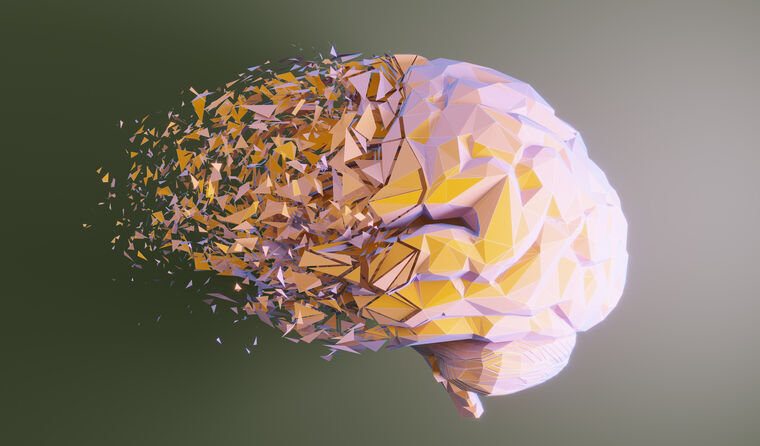
COVID-19 can lead to headaches, seizure disorders, strokes, sleep problems, and tingling and paralysis of the nerves, as well as several mental health disorders.
***
From the very early days of the pandemic, [brain fog](https://www.everydayhealth.com/emotional-health/brain-fog/guide/) [emerged as a significant health condition](https://www.health.harvard.edu/blog/what-is-covid-19-brain-fog-and-how-can-you-clear-it-2021030822076) that many experience after COVID-19.
Brain fog is a colloquial term that describes a state of mental sluggishness or lack of clarity and haziness that makes it difficult to concentrate, remember things and think clearly.
Fast-forward four years and there is now abundant evidence that being infected with SARS-CoV-2 [can affect brain health in many ways](https://doi.org/10.1038/s41591-022-02001-z).
In addition to brain fog, COVID-19 can lead to [an array of problems](https://doi.org/10.1038/s41591-023-02521-2), including headaches, seizure disorders, strokes, sleep problems, and tingling and paralysis of the nerves, as well as [several mental health disorders](https://www.bmj.com/content/376/bmj-2021-068993).
A large and growing body of evidence amassed throughout the pandemic details the many ways that [COVID-19 leaves an indelible mark](https://doi.org/10.1126/science.adl0867) on the brain. But the specific pathways by which the virus does so are still being elucidated, and curative treatments are non-existent.
Now, two new studies published in the *New England Journal of Medicine* (*NEJM*) shed further light on the [profound toll of COVID-19 on cognitive health](https://doi.org/10.1056/NEJMe2400189).
I am a [physician scientist](https://scholar.google.com/citations?user=DtuRVcUAAAAJ), and I have been devoted to studying [long COVID](https://www.cdc.gov/coronavirus/2019-ncov/long-term-effects/index.html) since early patient reports about this condition – even before the term ‘long COVID’ was coined. I have testified before the US Senate as [an expert witness on long COVID](https://www.help.senate.gov/hearings/addressing-long-covid-advancing-research-and-improving-patient-care) and have [published extensively](https://scholar.google.com/citations?view_op=search_authors&hl=en&mauthors=label:long_covid) on this topic.
**How COVID-19 leaves its mark on the brain**
Here are some of the most important studies to date documenting how COVID-19 affects brain health:
- Large epidemiological analyses showed that people who had COVID-19 were at an [increased risk of cognitive deficits](https://doi.org/10.1038/s41591-022-02001-z), such as memory problems
- Imaging studies done in people before and after their COVID-19 infections show [shrinkage of brain volume](https://doi.org/10.1038/s41586-022-04569-5) and [altered brain structure after infection](https://theconversation.com/even-mild-cases-of-covid-19-can-leave-a-mark-on-the-brain-such-as-reductions-in-gray-matter-a-neuroscientist-explains-emerging-research-178499)
- A study of people with mild to moderate COVID-19 showed significant prolonged inflammation of the brain and [changes that are commensurate with seven years of brain ageing](https://doi.org/10.1073/pnas.2217232120)
- Severe COVID-19 that requires hospitalisation or intensive care may result in cognitive deficits and other brain damage that are [equivalent to 20 years of ageing](https://doi.org/10.21203/rs.3.rs-3818580/v1)
- Laboratory experiments in human and mouse brain [organoids](https://hsci.harvard.edu/organoids) designed to emulate changes in the human brain showed that SARS-CoV-2 infection triggers the [fusion of brain cells](https://doi.org/10.1126/sciadv.adg2248). This effectively short-circuits brain electrical activity and compromises function
- Autopsy studies of people who had severe COVID-19 but died months later from other causes showed that [the virus was still present in brain tissue](https://doi.org/10.1038/s41586-022-05542-y). This provides evidence that contrary to its name, SARS-CoV-2 is not only a respiratory virus, but it can also enter the brain in some individuals. But whether the persistence of the virus in brain tissue is driving some of the brain problems seen in people who have had COVID-19 is not yet clear
- Studies show that even when the virus is mild and exclusively confined to the lungs, it can still provoke inflammation in the brain and [impair brain cells’ ability to regenerate](https://doi.org/10.1016/j.cell.2022.06.008)
- COVID-19 can also [disrupt the blood brain barrier](https://doi.org/10.1038/s41593-024-01576-9), the shield that protects the nervous system – which is the control and command centre of our bodies – making it ‘leaky.’ Studies using imaging to assess the brains of people hospitalised with COVID-19 showed disrupted or leaky blood brain barriers in those who experienced brain fog
- A large preliminary analysis pooling together data from 11 studies encompassing almost one million people with COVID-19 and more than six million uninfected individuals showed that COVID-19 [increased the risk of development of new-onset dementia](https://papers.ssrn.com/sol3/papers.cfm?abstract_id=4716751) in people older than 60 years of age
Autopsies have revealed devastating damage in the brains of people who died with COVID-19.
**Drops in IQ**
Most recently, a new study published in the *NEJM* [assessed cognitive abilities](https://doi.org/10.1056/NEJMoa2311330) such as memory, planning and spatial reasoning in nearly 113,000 people who had previously had COVID-19. The researchers found that those who had been infected had significant deficits in memory and executive task performance.
This decline was evident among those infected in the early phase of the pandemic and [those infected when the Delta](https://theconversation.com/delta-variant-makes-it-even-more-important-to-get-a-covid-19-vaccine-even-if-youve-already-had-the-coronavirus-164203) and [Omicron variants](https://theconversation.com/will-omicron-the-new-coronavirus-variant-of-concern-be-more-contagious-than-delta-a-virus-evolution-expert-explains-what-researchers-know-and-what-they-dont-169020) were dominant. These findings show that the risk of cognitive decline did not abate as the pandemic virus evolved from the ancestral strain to Omicron.
In the same study, those who had mild and resolved COVID-19 showed cognitive decline equivalent to a three-point loss of IQ. In comparison, those with unresolved persistent symptoms, such as people with persistent shortness of breath or fatigue, had a six-point loss in IQ.
Those who had been admitted to the intensive care unit for COVID-19 had a nine-point loss in IQ. Reinfection with the virus contributed an additional two-point loss in IQ, as compared with no reinfection.
Generally, the average IQ is about 100. An IQ above 130 indicates a highly gifted individual, while an IQ below 70 generally indicates a level of intellectual disability that may require significant societal support.
To put the finding of the *NEJM* study into perspective, I estimate that a three-point downward shift in IQ would increase the number of US adults with an IQ less than 70 from 4.7 million to 7.5 million – an increase of 2.8 million adults with a level of cognitive impairment that requires significant societal support.
Another study in the same issue of the *NEJM* involved more than 100,000 Norwegians between March 2020 and April 2023. It [documented worse memory function](https://doi.org/10.1056/NEJMc2311200) at several time points up to 36 months following a positive SARS-CoV-2 test.
**Parsing the implications**
Taken together, these studies show that COVID-19 poses a serious risk to brain health, even in mild cases, and the effects are now being revealed at the population level.
A recent analysis of the [US Current Population Survey](https://www.census.gov/programs-surveys/cps.html) showed that after the start of the COVID-19 pandemic, an [additional one million working-age Americans](https://www.nytimes.com/2023/11/13/upshot/long-covid-disability.html) reported having ‘serious difficulty’ remembering, concentrating or making decisions than at any time in the preceding 15 years. Most disconcertingly, this was mostly driven by younger adults between the ages of 18–44.
Data from the European Union shows a similar trend – in 2022, 15% of people in the EU [reported memory and concentration issues](https://ec.europa.eu/eurostat/en/web/products-eurostat-news/w/ddn-20240129-1).
Looking ahead, it will be critical to identify who is most at risk. A better understanding is also needed of how these trends might affect the educational attainment of children and young adults and the economic productivity of working-age adults. And the extent to which these shifts will influence the epidemiology of dementia and Alzheimer’s disease is also not clear.
The growing body of research now confirms that COVID-19 should be considered a virus with a significant impact on the brain. The implications are far-reaching, from individuals experiencing cognitive struggles to the potential impact on populations and the economy.
Lifting the fog on the true causes behind these cognitive impairments, including brain fog, will require years if not decades of concerted efforts by researchers across the globe. And unfortunately, nearly everyone is a test case in this unprecedented global undertaking.
*Log in below to join the conversation.*
*First published in [The Conversation](https://theconversation.com/au). Read the [original article](https://theconversation.com/mounting-research-shows-that-covid-19-leaves-its-mark-on-the-brain-including-with-significant-drops-in-iq-scores-224216).*
***
[brain](https://www1.racgp.org.au/newsgp/allnews?tagname=brain) [COVID-19](https://www1.racgp.org.au/newsgp/allnews?tagname=COVID-19) [long COVID](https://www1.racgp.org.au/newsgp/allnews?tagname=long%20COVID) [SARS-CoV-2](https://www1.racgp.org.au/newsgp/allnews?tagname=SARS-CoV-2)
***
newsGP weekly poll Have you seen an increase in vaccine hesitancy among your patients in the past three years?
| | |
|---|---|
| Yes, it has increased significantly | |
| | 56% |
| Yes, but only slightly | |
| | 30% |
| There has been no noticeable difference | |
| | 10% |
| No, vaccine hesitancy has actually decreased. | |
| | 1% | |
| Shard | 175 (laksa) |
| Root Hash | 13782382071477034975 |
| Unparsed URL | au,org,racgp!www1,/newsgp/clinical/how-covid-19-leaves-its-mark-on-the-brain s443 |