ℹ️ Skipped - page is already crawled
| Filter | Status | Condition | Details |
|---|---|---|---|
| HTTP status | PASS | download_http_code = 200 | HTTP 200 |
| Age cutoff | PASS | download_stamp > now() - 6 MONTH | 0.1 months ago |
| History drop | PASS | isNull(history_drop_reason) | No drop reason |
| Spam/ban | PASS | fh_dont_index != 1 AND ml_spam_score = 0 | ml_spam_score=0 |
| Canonical | PASS | meta_canonical IS NULL OR = '' OR = src_unparsed | Not set |
| Property | Value | |||||||||
|---|---|---|---|---|---|---|---|---|---|---|
| URL | https://www.whiskas.co.uk/blog/feeding/how-many-times-a-day-should-i-feed-my-cat | |||||||||
| Last Crawled | 2026-04-19 18:45:57 (3 days ago) | |||||||||
| First Indexed | 2025-05-05 03:23:28 (11 months ago) | |||||||||
| HTTP Status Code | 200 | |||||||||
| Content | ||||||||||
| Meta Title | How Often Should You Feed a Cat? | Whiskas | |||||||||
| Meta Description | Discover how often you should feed a cat for optimal health and happiness. Uncover expert tips and advice. Find out more with Whiskas. | |||||||||
| Meta Canonical | null | |||||||||
| Boilerpipe Text | Written in collaboration with vets
If you’re wondering ‘how often should I feed my cat?’, you’re not alone - especially when your cat is often meowing for food. At first, it can be tricky to work out a feeding schedule for cats, since there are many different factors that can influence feeding times.
Generally, most adult cats can enjoy two meals a day, one in the morning and one in the evening. However, kittens and senior cats will need to eat more frequently, between three to four small meals a day.
Once you’ve determined how many times a day you should feed a cat, it’s important to keep regular feeding times to maintain consistency. This helps regulate your cat’s digestion and metabolism, reduces anxiety by creating a sense of routine, and prevents your cat from overeating.
In this article, we look in more detail at the factors that influence how often you should feed your cat. Whether it’s their age, activity level, lifestyle, health status, or diet, this will help you create a feeding schedule that is beneficial for your cat’s health and well-being.
Factors influencing feeding frequency for cats
One of the main factors that determines how often you should feed your cat is their age. For instance, weaned kittens up to 14 weeks will need to be fed more frequently to support their rapid growth and high energy demands. At this age, 3-6 smaller meals a day will meet their developmental needs. By 6 months, their rapid growth slows down a bit, in which case 3-4 meals would be fine.
Once your kitten is an adult cat at 12 months, they usually have 2 meals of wet food a day - one in the morning and one in the evening. It’s also recommended to leave their daily portion of dry food out all day for them to graze on, since cats in the wild naturally choose to eat several small meals a day. Then, when they’re senior cats, they may benefit from small but frequent meals again to keep their energy levels steady and support their digestion.
How many times a day you should feed a cat can also change according to their health status. If your cat has a certain medical condition like diabetes or hyperthyroidism, they may need a specific feeding routine. Overweight cats may also need timed meals and controlled portions to prevent overeating.
It also depends on how active your cat is. If they’re an indoor cat or less active, then they may need to be fed less to prevent weight gain. On the other hand, outdoor cats or those that are highly active might need feeding more to replenish their energy. Lastly, dietary choices will also influence how often to feed a cat. Whether your cat eats dry food, wet food, or a combination of both will affect their feeding schedule.
How often should I feed my kitten?
As kittens have a lot of growing to do, they need to eat up to four times as many calories per pound of body weight as adult cats do. However, as their stomach is a lot smaller than that of an adult cat, kittens need to be fed several small meals throughout the day to give them the correct calorie and nutrient intake.
After
kittens are weaned, at about six to eight weeks
, they can start eating up to
six servings of specially-formulated kitten food
. As your kitten gets bigger, you can gradually reduce the number of meals you give them per day until they reach adulthood, or around one year of age.
How often should I feed a senior cat?
Senior cats have different nutritional needs to younger cats and may require specially-formulated senior cat food. Older cats tend to spend more time relaxing and sleeping, so they don’t tend to need as many calories as younger and more active cats. They may need additional nutrients, though, like taurine. The WHISKAS® Senior range contains extra taurine to help your cat’s vision and heart, as well as zinc and linoleic acid for healthy skin and coat, and phosphorus to help their bladder function normally.
With this in mind, you may find that your senior cat is happy with just one or two meals a day. However, you should always ask a veterinarian’s advice if your
older cat stops eating
.
Health and medical conditions
Of course, health and medical conditions can impact how often you should feed your cat, such as diabetes, kidney disease, or obesity. These health issues need a tailored feeding schedule for a specific diet that can help manage their symptoms.
For instance, diabetic cats may need their meals to be timed alongside insulin doses to help regulate their blood sugar levels. Cats that are diagnosed with obesity may need to have their meal portions controlled, with specific feeding times so they don’t overeat.
On the other hand, cats with kidney disease tend to need smaller meals more frequently, with specifically-formulated food to support kidney function. Depending on their health, your veterinarian will advise you accordingly on how many times a day your cat should eat, including the right diet, portion sizes, and schedule.
Feeding times and frequency for your cat
How many times a day you should feed a cat depends on their typical nutritional needs and lifestyle. Most healthy adult cats can have two meals a day, one in the morning and one in the evening, spaced roughly 12 hours apart. However, it also depends on your family schedule and your cat’s eating habits. If your cat prefers to eat smaller amounts in one sitting, then they may prefer more regular meals.
Also, if your cat is an outdoor cat or highly active, they may need a small extra meal in between to maintain their energy. On the other hand, indoor cats or less active ones should avoid extra meals to prevent weight gain. You should also avoid feeding your cat on demand, as this can also lead to excessive weight.
Establishing a consistent routine
Whatever you decide on how often to feed your cat, it’s important that you keep their feeding schedule consistent. Cats thrive on routine as it provides a sense of familiarity for them and can reduce their anxiety levels. It can also curb behavioural issues if they know when to expect their mealtimes, rather than meowing for food.
A consistent feeding routine also supports your cat’s metabolism and regulates their digestion. It’s a good way for cat owners to monitor their appetite, noticing any changes that may be concerning, as well as maintaining an ideal weight. You should also keep calorie intake in mind when deciding
how many treats to give your cat
.
Types of cat food and their impact on feeding frequency
How many times a day a cat should eat also depends on the type of cat food you’re feeding them. Whether it’s dry or wet food, or a combination of both, will influence the frequency and portion size of meals.
Dry food is often offered by itself or alongside wet food. However, dry food is much higher in calories, so it can lead to overeating and weight gain. In these cases, you may need to control the portions. On the other hand, wet food tends to be more filling for cats. It has a higher moisture content and can help keep your cat hydrated, too. We discuss both further below.
Some cat owners choose to serve a raw diet to their cat. While this mimics a cat's natural feeding habits and can be high in protein, there are many risks associated with eating raw food. Preparation and handling of raw food needs to be careful and strict to avoid bacterial contamination. It also lacks the necessary nutrients, vitamins, and minerals. In terms of schedule, raw-fed cats may need smaller meals more frequently.
Ultimately, how often you should feed a cat depends on their individual needs, according to their age, health, and preferences. It’s always best to consult a veterinarian before making changes to your cat’s diet.
Dry food vs. wet food
The choice between
dry food
and
wet food
can be a tricky one, and each type determines how many times a day your cat should eat. Dry food is a popular choice among cat owners since it’s convenient and can be left out for longer than wet food without going bad. This also works well for cats that like to graze throughout the day. However, it has a lot of calories, and is also low in moisture, so cats on a dry food diet will need their daily allocation to be carefully measured out and their bodyweight to be monitored, as well as access to fresh water at all times.
On the other hand, wet food is much more hydrating as it has a higher moisture content. The food itself doesn’t stay fresh for long if left out, so it’s important to offer appropriate portions and feed your cat at specific times a day. Typically, healthy adult cats will eat 2-3 meals a day. Wet food in itself is more filling as well.
It’s common for cat owners to combine both dry food and wet food. You could leave dry food out for the day, while offering wet food at mealtimes. This way you can balance the nutrition, provide variety and make it more convenient. However, this depends on your cat’s weight, as free grazing can lead to weight gain.
Adapting your cat's feeding schedule
It may be that you need to adjust your cat’s feeding schedule in response to changes in their health, age, or lifestyle. For instance, if your cat is less active than before, or they have developed a medical condition. It can also be changes in their environment, like if you’re moving homes. Adapting your cat’s feeding schedule can support their overall well-being by maintaining a healthy weight and reducing stress.
Whatever changes are needed, it’s important to make them gradually. If you suddenly change your cat’s feeding times or portion sizes, it can upset their stomach, create digestive issues, and even cause stress and anxiety. For schedule changes, start with small adjustments of 15-30 minutes every few days, and for food quantities, reduce them by a small amount each time.
In terms of special diets for specific health conditions, you should follow your veterinarian’s guidance closely. They can advise on the right foods, portion sizes, and feeding schedule, depending on your cat’s condition. You’ll need to monitor your cat’s appetite and behaviour during any changes, keeping a consistent routine and calm environment.
Signs your cat's diet needs adjustment
If you’re not sure if your cat’s diet or feeding schedule needs adjustment, you can look out for some behavioural and physical signs. For instance, if you notice sudden weight gain or loss, it could be time to review how often you feed your cat.
Another concerning sign is a change in appetite. If your cat is refusing food or asking for extra, the frequency of their meals or portion sizes might need a closer look. Other signs include digestive issues, such as constipation, diarrhoea, and vomiting, suggesting something might not be quite right.
Some other physical signs to look out for are changes in their coat quality, like if their coat is looking dull compared to usual. This may be because they aren’t receiving enough nutrients. Changes in behaviour, such as low energy or increased irritability, can also indicate nutritional deficiencies.
With any of these signs, you should always consult a veterinarian for proper assessment and guidance. They can advise on how to adjust your cat’s diet to improve their health and well-being.
Consulting with a veterinarian
It’s recommended to consult with a veterinarian for personalised feeding advice regularly. With routine check-ups, your veterinarian can monitor your cat’s growth and weight to make sure they are healthy for their age and breed.
Since your veterinarian will be familiar with your cat’s health, including their activity levels and conditions, they can provide specific advice on how often to feed your cat. If any adjustments need to be made, this can be tailored to your cat’s unique needs. This is especially important for health issues like diabetes, kidney disease, and obesity.
With a balanced diet and healthy weight, your cat can enjoy a high quality of life as they continue to grow, play, and thrive.
How often should you feed a cat - FAQs
Is 1 cup of food too much for a cat?
For most adult cats, one cup of food may be too much, although it depends on the cat’s age, weight, and activity levels. Usually 1/3 to 1/2 cup of dry food is enough. It’s better to weigh the daily amount of food as ‘cups’ vary greatly in size.
Is 2 meals a day enough for a cat?
Yes, if you’re wondering how often to feed a cat, two meals a day is usually enough for most healthy adult cats, but kittens will need more. A meal in the morning and in the evening creates a consistent routine that supports your cat’s digestion, metabolism, and energy levels.
Is 2 pouches of cat food enough?
Depending on your cat’s weight, activity levels, and the pouch size, 2 pouches of cat food may be enough for the average adult cat. However, some cats may need 2-3 85g pouches a day. Check the feeding guidelines on the cat food, and ask your veterinarian if you’re still unsure. | |||||||||
| Markdown | [Skip to main content](https://www.whiskas.co.uk/blog/feeding/how-many-times-a-day-should-i-feed-my-cat#main-content)
[](https://www.whiskas.co.uk/ "WHISKAS UK")
[](https://www.whiskas.co.uk/ "WHISKAS UK")
- [Purr or Pass](https://www.whiskas.co.uk/purrorpass/welcome/ "Purr or Pass")
- [About Us](https://www.whiskas.co.uk/about-us "About Us")
- [Contact Us](https://www.whiskas.co.uk/contact-us "Contact Us")
- [FAQs](https://www.whiskas.co.uk/faqs "FAQs")
- [Our Food](https://www.whiskas.co.uk/cat-food "Our Food")
By Lifestage
- [Kitten](https://www.whiskas.co.uk/cat-food/kitten)
- [Adult 1+](https://www.whiskas.co.uk/cat-food/adult-1-plus-years)
- [Senior 7+](https://www.whiskas.co.uk/cat-food/senior-7-plus-years)
- [Senior 11+](https://www.whiskas.co.uk/cat-food/senior-11-plus-years)
By Product Type
- [Dry Cat Food](https://www.whiskas.co.uk/cat-food/dry-cat-food)
- [Wet Cat Food](https://www.whiskas.co.uk/cat-food/wet-cat-food)
- [Wet Cat Food in Jelly](https://www.whiskas.co.uk/cat-food/wet-cat-food-in-jelly)
- [Wet Cat Food in Gravy](https://www.whiskas.co.uk/cat-food/wet-cat-food-in-gravy)
- [Cat Treats](https://www.whiskas.co.uk/cat-food/cat-treats)
- [Milk](https://www.whiskas.co.uk/cat-food/cat-milk)
By Sub Brand
- [AROMATIC](https://www.whiskas.co.uk/cat-food/wet-cat-food/aromatic-selection)
- [MILKY TREATS™](https://www.whiskas.co.uk/cat-food/cat-treats/milky-treats)
- [CRUNCH TASTY TOPPING](https://www.whiskas.co.uk/cat-food/cat-treats/crunch-tasty-topping)
- [CLASSICS](https://www.whiskas.co.uk/cat-food/classics)
- [DUO](https://www.whiskas.co.uk/cat-food/wet-cat-food/duo)
- [MIXED MENU](https://www.whiskas.co.uk/cat-food/wet-cat-food/tasty-mix)
- [DENTABITES](https://www.whiskas.co.uk/cat-food/cat-treats/dentabites)
- [TEMPTATIONS™](https://www.whiskas.co.uk/cat-food/cat-treats/temptations)
- [CHEF'S CHOICE](https://www.whiskas.co.uk/cat-food/wet-cat-food/chefs-choice)
- [COUNTRY COLLECTION](https://www.whiskas.co.uk/cat-food/wet-cat-food/country-collection)
- [FISH FAVOURITES](https://www.whiskas.co.uk/cat-food/wet-cat-food/fish-favourites)
- [MEATY MEALS](https://www.whiskas.co.uk/cat-food/wet-cat-food/meaty-meals)
- [POULTRY FEASTS](https://www.whiskas.co.uk/cat-food/wet-cat-food/poultry-feasts)
- [GROOM AND CARE](https://www.whiskas.co.uk/cat-food/cat-treats/groom-and-care)
- [RELAX AND UNWIND](https://www.whiskas.co.uk/cat-food/cat-treats/relax-and-unwind)
- [SUPERFOODS](https://www.whiskas.co.uk/cat-food/wet-cat-food/superfoods)
[See All Products](https://www.whiskas.co.uk/cat-food/all-products "See All Products")
- [Blog](https://www.whiskas.co.uk/blog "Blog")
[Care & Health](https://www.whiskas.co.uk/blog/care-and-health "Care & Health")
[Socialising & Play](https://www.whiskas.co.uk/blog/socialising-and-play "Socialising & Play")
[Behaviour](https://www.whiskas.co.uk/blog/behaviour "Behaviour")
[Feeding](https://www.whiskas.co.uk/blog/feeding "Feeding")
[Training](https://www.whiskas.co.uk/blog/training "Training")
[Adopting a cat](https://www.whiskas.co.uk/blog/adopting-a-cat "Adopting a cat")
- [Purrcast](https://www.whiskas.co.uk/purrcast "Purrcast")
- [Cat Breeds](https://www.whiskas.co.uk/cat-breeds "Cat Breeds")
- [Opens a new window Sustainability](https://sustainability.mars.com/en-en/pet-nutrition-cat-sustainability "Sustainability")
- [Free Sample](https://www.whiskas.co.uk/get-a-free-sample "Free Sample")
- [Welcome Offer](https://www.whiskas.co.uk/newsletter-signup "Welcome Offer")
Enter a keyword below to search for articles and products.
\[{"text":"Homepage","url":"\\/"},{"text":"Blog","url":"\\/blog"},{"text":"Feeding","url":"\\/blog\\/feeding"},{"text":"How many times a day should i feed my cat","url":"\\/blog\\/feeding\\/how-many-times-a-day-should-i-feed-my-cat"}\]
- [Homepage](https://www.whiskas.co.uk/)
- [Blog](https://www.whiskas.co.uk/blog)
- [Feeding](https://www.whiskas.co.uk/blog/feeding)
- How many times a day should i feed my cat
# How Often Should You Feed Your Cat?

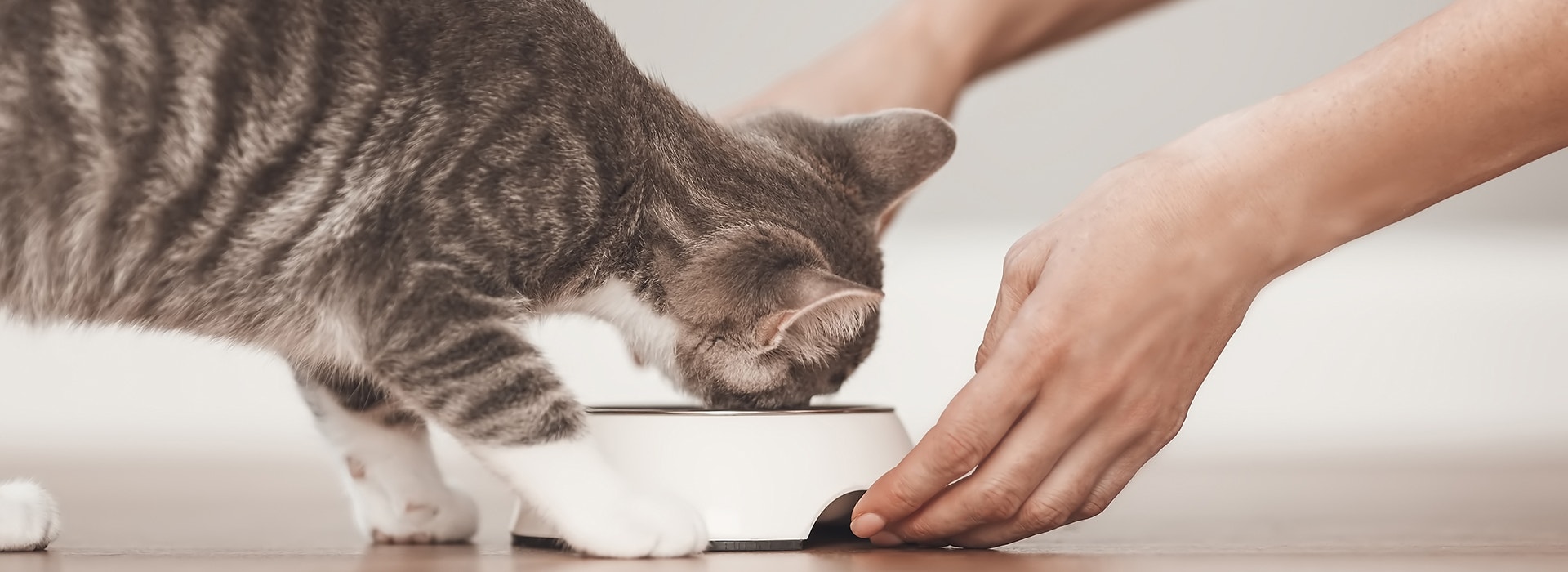

Written in collaboration with vets
If you’re wondering ‘how often should I feed my cat?’, you’re not alone - especially when your cat is often meowing for food. At first, it can be tricky to work out a feeding schedule for cats, since there are many different factors that can influence feeding times.
Generally, most adult cats can enjoy two meals a day, one in the morning and one in the evening. However, kittens and senior cats will need to eat more frequently, between three to four small meals a day.
Once you’ve determined how many times a day you should feed a cat, it’s important to keep regular feeding times to maintain consistency. This helps regulate your cat’s digestion and metabolism, reduces anxiety by creating a sense of routine, and prevents your cat from overeating.
In this article, we look in more detail at the factors that influence how often you should feed your cat. Whether it’s their age, activity level, lifestyle, health status, or diet, this will help you create a feeding schedule that is beneficial for your cat’s health and well-being.
## Factors influencing feeding frequency for cats
One of the main factors that determines how often you should feed your cat is their age. For instance, weaned kittens up to 14 weeks will need to be fed more frequently to support their rapid growth and high energy demands. At this age, 3-6 smaller meals a day will meet their developmental needs. By 6 months, their rapid growth slows down a bit, in which case 3-4 meals would be fine.
Once your kitten is an adult cat at 12 months, they usually have 2 meals of wet food a day - one in the morning and one in the evening. It’s also recommended to leave their daily portion of dry food out all day for them to graze on, since cats in the wild naturally choose to eat several small meals a day. Then, when they’re senior cats, they may benefit from small but frequent meals again to keep their energy levels steady and support their digestion.
How many times a day you should feed a cat can also change according to their health status. If your cat has a certain medical condition like diabetes or hyperthyroidism, they may need a specific feeding routine. Overweight cats may also need timed meals and controlled portions to prevent overeating.
It also depends on how active your cat is. If they’re an indoor cat or less active, then they may need to be fed less to prevent weight gain. On the other hand, outdoor cats or those that are highly active might need feeding more to replenish their energy. Lastly, dietary choices will also influence how often to feed a cat. Whether your cat eats dry food, wet food, or a combination of both will affect their feeding schedule.
## How often should I feed my kitten?
As kittens have a lot of growing to do, they need to eat up to four times as many calories per pound of body weight as adult cats do. However, as their stomach is a lot smaller than that of an adult cat, kittens need to be fed several small meals throughout the day to give them the correct calorie and nutrient intake.
After [kittens are weaned, at about six to eight weeks](https://www.whiskas.co.uk/blog/feeding/weaning-on-to-adult-food), they can start eating up to [six servings of specially-formulated kitten food](https://www.whiskas.co.uk/blog/feeding/how-often-should-i-feed-my-kitten). As your kitten gets bigger, you can gradually reduce the number of meals you give them per day until they reach adulthood, or around one year of age.
## How often should I feed a senior cat?
Senior cats have different nutritional needs to younger cats and may require specially-formulated senior cat food. Older cats tend to spend more time relaxing and sleeping, so they don’t tend to need as many calories as younger and more active cats. They may need additional nutrients, though, like taurine. The WHISKAS® Senior range contains extra taurine to help your cat’s vision and heart, as well as zinc and linoleic acid for healthy skin and coat, and phosphorus to help their bladder function normally.
With this in mind, you may find that your senior cat is happy with just one or two meals a day. However, you should always ask a veterinarian’s advice if your [older cat stops eating](https://www.whiskas.co.uk/blog/care-and-health/what-to-do-if-your-older-cat-isnt-eating).
### Health and medical conditions
Of course, health and medical conditions can impact how often you should feed your cat, such as diabetes, kidney disease, or obesity. These health issues need a tailored feeding schedule for a specific diet that can help manage their symptoms.
For instance, diabetic cats may need their meals to be timed alongside insulin doses to help regulate their blood sugar levels. Cats that are diagnosed with obesity may need to have their meal portions controlled, with specific feeding times so they don’t overeat.
On the other hand, cats with kidney disease tend to need smaller meals more frequently, with specifically-formulated food to support kidney function. Depending on their health, your veterinarian will advise you accordingly on how many times a day your cat should eat, including the right diet, portion sizes, and schedule.
## Feeding times and frequency for your cat
How many times a day you should feed a cat depends on their typical nutritional needs and lifestyle. Most healthy adult cats can have two meals a day, one in the morning and one in the evening, spaced roughly 12 hours apart. However, it also depends on your family schedule and your cat’s eating habits. If your cat prefers to eat smaller amounts in one sitting, then they may prefer more regular meals.
Also, if your cat is an outdoor cat or highly active, they may need a small extra meal in between to maintain their energy. On the other hand, indoor cats or less active ones should avoid extra meals to prevent weight gain. You should also avoid feeding your cat on demand, as this can also lead to excessive weight.
### Establishing a consistent routine
Whatever you decide on how often to feed your cat, it’s important that you keep their feeding schedule consistent. Cats thrive on routine as it provides a sense of familiarity for them and can reduce their anxiety levels. It can also curb behavioural issues if they know when to expect their mealtimes, rather than meowing for food.
A consistent feeding routine also supports your cat’s metabolism and regulates their digestion. It’s a good way for cat owners to monitor their appetite, noticing any changes that may be concerning, as well as maintaining an ideal weight. You should also keep calorie intake in mind when deciding [how many treats to give your cat](https://www.whiskas.co.uk/blog/feeding/how-many-treats-should-i-give-my-cat).
## Types of cat food and their impact on feeding frequency
How many times a day a cat should eat also depends on the type of cat food you’re feeding them. Whether it’s dry or wet food, or a combination of both, will influence the frequency and portion size of meals.
Dry food is often offered by itself or alongside wet food. However, dry food is much higher in calories, so it can lead to overeating and weight gain. In these cases, you may need to control the portions. On the other hand, wet food tends to be more filling for cats. It has a higher moisture content and can help keep your cat hydrated, too. We discuss both further below.
Some cat owners choose to serve a raw diet to their cat. While this mimics a cat's natural feeding habits and can be high in protein, there are many risks associated with eating raw food. Preparation and handling of raw food needs to be careful and strict to avoid bacterial contamination. It also lacks the necessary nutrients, vitamins, and minerals. In terms of schedule, raw-fed cats may need smaller meals more frequently.
Ultimately, how often you should feed a cat depends on their individual needs, according to their age, health, and preferences. It’s always best to consult a veterinarian before making changes to your cat’s diet.
### Dry food vs. wet food
The choice between [dry food](https://www.whiskas.co.uk/cat-food/dry-cat-food) and [wet food](https://www.whiskas.co.uk/cat-food/wet-cat-food) can be a tricky one, and each type determines how many times a day your cat should eat. Dry food is a popular choice among cat owners since it’s convenient and can be left out for longer than wet food without going bad. This also works well for cats that like to graze throughout the day. However, it has a lot of calories, and is also low in moisture, so cats on a dry food diet will need their daily allocation to be carefully measured out and their bodyweight to be monitored, as well as access to fresh water at all times.
On the other hand, wet food is much more hydrating as it has a higher moisture content. The food itself doesn’t stay fresh for long if left out, so it’s important to offer appropriate portions and feed your cat at specific times a day. Typically, healthy adult cats will eat 2-3 meals a day. Wet food in itself is more filling as well.
It’s common for cat owners to combine both dry food and wet food. You could leave dry food out for the day, while offering wet food at mealtimes. This way you can balance the nutrition, provide variety and make it more convenient. However, this depends on your cat’s weight, as free grazing can lead to weight gain.
## Adapting your cat's feeding schedule
It may be that you need to adjust your cat’s feeding schedule in response to changes in their health, age, or lifestyle. For instance, if your cat is less active than before, or they have developed a medical condition. It can also be changes in their environment, like if you’re moving homes. Adapting your cat’s feeding schedule can support their overall well-being by maintaining a healthy weight and reducing stress.
Whatever changes are needed, it’s important to make them gradually. If you suddenly change your cat’s feeding times or portion sizes, it can upset their stomach, create digestive issues, and even cause stress and anxiety. For schedule changes, start with small adjustments of 15-30 minutes every few days, and for food quantities, reduce them by a small amount each time.
In terms of special diets for specific health conditions, you should follow your veterinarian’s guidance closely. They can advise on the right foods, portion sizes, and feeding schedule, depending on your cat’s condition. You’ll need to monitor your cat’s appetite and behaviour during any changes, keeping a consistent routine and calm environment.
### Signs your cat's diet needs adjustment
If you’re not sure if your cat’s diet or feeding schedule needs adjustment, you can look out for some behavioural and physical signs. For instance, if you notice sudden weight gain or loss, it could be time to review how often you feed your cat.
Another concerning sign is a change in appetite. If your cat is refusing food or asking for extra, the frequency of their meals or portion sizes might need a closer look. Other signs include digestive issues, such as constipation, diarrhoea, and vomiting, suggesting something might not be quite right.
Some other physical signs to look out for are changes in their coat quality, like if their coat is looking dull compared to usual. This may be because they aren’t receiving enough nutrients. Changes in behaviour, such as low energy or increased irritability, can also indicate nutritional deficiencies.
With any of these signs, you should always consult a veterinarian for proper assessment and guidance. They can advise on how to adjust your cat’s diet to improve their health and well-being.
### Consulting with a veterinarian
It’s recommended to consult with a veterinarian for personalised feeding advice regularly. With routine check-ups, your veterinarian can monitor your cat’s growth and weight to make sure they are healthy for their age and breed.
Since your veterinarian will be familiar with your cat’s health, including their activity levels and conditions, they can provide specific advice on how often to feed your cat. If any adjustments need to be made, this can be tailored to your cat’s unique needs. This is especially important for health issues like diabetes, kidney disease, and obesity.
With a balanced diet and healthy weight, your cat can enjoy a high quality of life as they continue to grow, play, and thrive.
## How often should you feed a cat - FAQs
### Is 1 cup of food too much for a cat?
For most adult cats, one cup of food may be too much, although it depends on the cat’s age, weight, and activity levels. Usually 1/3 to 1/2 cup of dry food is enough. It’s better to weigh the daily amount of food as ‘cups’ vary greatly in size.
### Is 2 meals a day enough for a cat?
Yes, if you’re wondering how often to feed a cat, two meals a day is usually enough for most healthy adult cats, but kittens will need more. A meal in the morning and in the evening creates a consistent routine that supports your cat’s digestion, metabolism, and energy levels.
### Is 2 pouches of cat food enough?
Depending on your cat’s weight, activity levels, and the pouch size, 2 pouches of cat food may be enough for the average adult cat. However, some cats may need 2-3 85g pouches a day. Check the feeding guidelines on the cat food, and ask your veterinarian if you’re still unsure.
- [PREVIOUS](https://www.whiskas.co.uk/blog/feeding/best-kitten-food-feeding-tips "PREVIOUS")
Your cat may also like…
[adp\_related\_article\_block17 When do I transition my kitten to adult food?](https://www.whiskas.co.uk/blog/feeding/when-can-kittens-eat-adult-food "When do I transition my kitten to adult food?")
[adp\_related\_article\_block17 How Much Should I Feed My Kitten](https://www.whiskas.co.uk/blog/feeding/how-often-should-i-feed-my-kitten "How Much Should I Feed My Kitten")
[adp\_related\_article\_block17 Tips For Feeding Kittens](https://www.whiskas.co.uk/blog/feeding/best-kitten-food-feeding-tips "Tips For Feeding Kittens")
[See More Related Content ›](https://www.whiskas.co.uk/care "See More Related Content ›")
[](https://www.whiskas.co.uk/)
[Have a question? Send us a message](https://live.whiskas.co.uk/contact-us)
[Country]("Country")
- [North America](https://www.whiskas.co.uk/blog/feeding/how-many-times-a-day-should-i-feed-my-cat "North America")
- [Canada (English)](https://www.whiskas.ca/en "Canada (English)")
- [Canada (French)](https://www.whiskas.ca/fr "Canada (French)")
- [United States](https://www.whiskas.com/ "United States")
- [South America](https://www.whiskas.co.uk/blog/feeding/how-many-times-a-day-should-i-feed-my-cat "South America")
- [Argentina](https://www.whiskas.com.ar/ "Argentina")
- [Brazil](https://www.whiskas.com.br/ "Brazil")
- [Chile](https://www.whiskas.cl/ "Chile")
- [Colombia](http://www.whiskas.com.co/ "Colombia")
- [Mexico](https://www.whiskas.com.mx/ "Mexico")
- [Asia](https://www.whiskas.co.uk/blog/feeding/how-many-times-a-day-should-i-feed-my-cat "Asia")
- [China](http://www.whiskas.com.cn/ "China")
- [Indonesia](https://www.whiskasindonesia.com/ "Indonesia")
- [Malaysia](https://www.whiskas.com.my/ "Malaysia")
- [Thailand](https://www.whiskas.co.th/ "Thailand")
- [Rest of World](https://www.whiskas.co.uk/blog/feeding/how-many-times-a-day-should-i-feed-my-cat "Rest of World")
- [Australia](https://www.whiskas.com.au/ "Australia")
- [New Zealand](http://www.whiskas.co.nz/ "New Zealand")
- [South Africa](https://whiskas.co.za/ "South Africa")
- [Europe](https://www.whiskas.co.uk/blog/feeding/how-many-times-a-day-should-i-feed-my-cat "Europe")
- [Austria](https://www.whiskas.at/ "Austria")
- [Belgium](http://www.whiskas.be/ "Belgium")
- [Bulgaria](http://www.whiskas-bg.com/ "Bulgaria")
- [Czech Republic](http://www.whiskas.cz/ "Czech Republic")
- [Denmark](https://www.whiskas.dk/ "Denmark")
- [Estonia](http://www.whiskas.ee/ "Estonia")
- [Finland](http://www.whiskas.fi/ "Finland")
- [France](https://www.whiskas.fr/ "France")
- [Germany](http://www.whiskas.de/ "Germany")
- [Greece](http://www.whiskas.gr/ "Greece")
- [Hungary](http://www.whiskas.hu/ "Hungary")
- [Ireland](http://www.whiskas.ie/ "Ireland")
- [Italy](http://www.whiskas.it/ "Italy")
- [Latvia](http://www.whiskas.lv/ "Latvia")
- [Lithuania](http://www.whiskas.lt/ "Lithuania")
- [Netherlands](http://www.whiskas.nl/ "Netherlands")
- [Norway](http://www.whiskas.no/ "Norway")
- [Phillipines](https://www.whiskas.com.ph/ "Phillipines")
- [Poland](http://www.whiskas.pl/ "Poland")
- [Portugal](http://www.whiskas.pt/ "Portugal")
- [Romania](http://www.whiskas.ro/ "Romania")
- [Russia](http://www.whiskas.ru/ "Russia")
- [Slovakia](http://www.whiskas.sk/ "Slovakia")
- [Slovenia](http://www.whiskas.si/ "Slovenia")
- [Spain](http://www.whiskas.es/ "Spain")
- [Sweden](http://www.whiskas.se/ "Sweden")
- [Switzerland (French)](http://www.whiskas.ch/fr/ "Switzerland (French)")
- [Switzerland (German)](http://www.whiskas.ch/de/ "Switzerland (German)")
- [Turkey](http://www.whiskas.com.tr/ "Turkey")
- [Ukraine](http://www.whiskas.ua/ "Ukraine")
- [United Kingdom](https://www.whiskas.co.uk/ "United Kingdom")
[Have a question? Send us a message](https://live.whiskas.co.uk/contact-us)
[Country]("Country")
- [Opens a new window North America](https://www.whiskas.co.uk/blog/feeding/how-many-times-a-day-should-i-feed-my-cat "North America")
- [Opens a new window Canada (English)](https://www.whiskas.ca/en "Canada (English)")
- [Opens a new window Canada (French)](https://www.whiskas.ca/fr "Canada (French)")
- [Opens a new window United States](https://www.whiskas.com/ "United States")
- [Opens a new window South America](https://www.whiskas.co.uk/blog/feeding/how-many-times-a-day-should-i-feed-my-cat "South America")
- [Opens a new window Argentina](https://www.whiskas.com.ar/ "Argentina")
- [Opens a new window Brazil](https://www.whiskas.com.br/ "Brazil")
- [Opens a new window Chile](https://www.whiskas.cl/ "Chile")
- [Opens a new window Colombia](http://www.whiskas.com.co/ "Colombia")
- [Opens a new window Mexico](https://www.whiskas.com.mx/ "Mexico")
- [Opens a new window Asia](https://www.whiskas.co.uk/blog/feeding/how-many-times-a-day-should-i-feed-my-cat "Asia")
- [Opens a new window China](http://www.whiskas.com.cn/ "China")
- [Opens a new window Indonesia](https://www.whiskasindonesia.com/ "Indonesia")
- [Opens a new window Malaysia](https://www.whiskas.com.my/ "Malaysia")
- [Opens a new window Thailand](https://www.whiskas.co.th/ "Thailand")
- [Opens a new window Rest of World](https://www.whiskas.co.uk/blog/feeding/how-many-times-a-day-should-i-feed-my-cat "Rest of World")
- [Opens a new window Australia](https://www.whiskas.com.au/ "Australia")
- [Opens a new window New Zealand](http://www.whiskas.co.nz/ "New Zealand")
- [Opens a new window South Africa](https://whiskas.co.za/ "South Africa")
- [Opens a new window Europe](https://www.whiskas.co.uk/blog/feeding/how-many-times-a-day-should-i-feed-my-cat "Europe")
- [Opens a new window Austria](https://www.whiskas.at/ "Austria")
- [Opens a new window Belgium](http://www.whiskas.be/ "Belgium")
- [Opens a new window Bulgaria](http://www.whiskas-bg.com/ "Bulgaria")
- [Opens a new window Czech Republic](http://www.whiskas.cz/ "Czech Republic")
- [Opens a new window Denmark](https://www.whiskas.dk/ "Denmark")
- [Opens a new window Estonia](http://www.whiskas.ee/ "Estonia")
- [Opens a new window Finland](http://www.whiskas.fi/ "Finland")
- [Opens a new window France](https://www.whiskas.fr/ "France")
- [Opens a new window Germany](http://www.whiskas.de/ "Germany")
- [Opens a new window Greece](http://www.whiskas.gr/ "Greece")
- [Opens a new window Hungary](http://www.whiskas.hu/ "Hungary")
- [Opens a new window Ireland](http://www.whiskas.ie/ "Ireland")
- [Opens a new window Italy](http://www.whiskas.it/ "Italy")
- [Opens a new window Latvia](http://www.whiskas.lv/ "Latvia")
- [Opens a new window Lithuania](http://www.whiskas.lt/ "Lithuania")
- [Opens a new window Netherlands](http://www.whiskas.nl/ "Netherlands")
- [Opens a new window Norway](http://www.whiskas.no/ "Norway")
- [Opens a new window Phillipines](https://www.whiskas.com.ph/ "Phillipines")
- [Opens a new window Poland](http://www.whiskas.pl/ "Poland")
- [Opens a new window Portugal](http://www.whiskas.pt/ "Portugal")
- [Opens a new window Romania](http://www.whiskas.ro/ "Romania")
- [Opens a new window Russia](http://www.whiskas.ru/ "Russia")
- [Opens a new window Slovakia](http://www.whiskas.sk/ "Slovakia")
- [Opens a new window Slovenia](http://www.whiskas.si/ "Slovenia")
- [Opens a new window Spain](http://www.whiskas.es/ "Spain")
- [Opens a new window Sweden](http://www.whiskas.se/ "Sweden")
- [Opens a new window Switzerland (French)](http://www.whiskas.ch/fr/ "Switzerland (French)")
- [Opens a new window Switzerland (German)](http://www.whiskas.ch/de/ "Switzerland (German)")
- [Opens a new window Turkey](http://www.whiskas.com.tr/ "Turkey")
- [Opens a new window Ukraine](http://www.whiskas.ua/ "Ukraine")
- [Opens a new window United Kingdom](https://www.whiskas.co.uk/ "United Kingdom")
WHISKAS®
- [About Us](https://www.whiskas.co.uk/about-us "About Us")
- [Consumer Care](https://www.whiskas.co.uk/consumer-care "Consumer Care")
- [Site Owner Info](https://www.whiskas.co.uk/site-owner-info "Site Owner Info")
- [Opens a new window Catsan™ Cat Litter Products](https://www.catsan.co.uk/ "Catsan™ Cat Litter Products")
Our Food
- [Kitten](https://www.whiskas.co.uk/cat-food/kitten "Kitten")
- [Adult 1+](https://www.whiskas.co.uk/cat-food/adult-1-plus-years "Adult 1+")
- [Senior 7+](https://www.whiskas.co.uk/cat-food/senior-7-plus-years "Senior 7+")
- [Senior 11+](https://www.whiskas.co.uk/cat-food/senior-11-plus-years "Senior 11+")
Articles
- [Blog](https://www.whiskas.co.uk/blog "Blog")
- [Opens a new window Opens a new window](https://www.instagram.com/whiskas.uk/ "instagram")
- [Opens a new window Opens a new window](https://www.facebook.com/WhiskasUK "facebook")
- [Opens a new window Opens a new window](https://twitter.com/whiskas_uk "twitter")
- [Opens a new window Opens a new window](https://www.youtube.com/user/whiskasuk "youtube")
- [Opens a new window Opens a new window](https://www.instagram.com/whiskas.uk/ "instagram")
- [Opens a new window Opens a new window](https://www.facebook.com/WhiskasUK "facebook")
- [Opens a new window Opens a new window](https://twitter.com/whiskas_uk "twitter")
- [Opens a new window Opens a new window](https://www.youtube.com/user/whiskasuk "youtube")
Cookie Settings
Hey! Got any
cat questions?
Chat with us now
Buy Now
Click to buy from any of the retailers below
- [Opens a new window ](https://www.tesco.com/groceries/en-GB/search?query=whiskas&inputType=suggested)
- [Opens a new window ](https://www.asda.com/groceries/search/whiskas)
- [Opens a new window ](https://groceries.morrisons.com/search?q=whiskas)
- [Opens a new window ](https://www.sainsburys.co.uk/gol-ui/SearchResults/whiskas)
- [Opens a new window ](https://www.petsathome.com/brands/listing/whiskas)
- [Opens a new window ](https://www.amazon.co.uk/s?k=whiskas&crid=35SY0THZV8FF8&sprefix=whiskas%2Caps%2C105&ref=nb_sb_noss_1)
- [Opens a new window ](https://www.ocado.com/search?q=Whiskas)
Get your Welcome offer
Subscribe to our newsletter to receive a welcome discount, useful tips and exciting news about our products.
[SIGN UP NOW Get your \<span\>Welcome offer\</span\>](https://www.whiskas.co.uk/newsletter-signup "SIGN UP NOW")
Discount code valid until 31.12.2026 on a purchase of WHISKAS® products on [www.zooplus.co.uk](https://www.zooplus.co.uk/). Zooplus minimum order £10, code cannot be used in conjunction with other offers or discounts. Code valid for one time use.
[SIGN UP NOWGet your \<span\>Welcome offer\</span\>](https://www.whiskas.co.uk/newsletter-signup "SIGN UP NOW")

Tasty treats to support their health
[Learn more Tasty treats to support their health](https://www.whiskas.co.uk/cat-food/cat-treats/groom-and-care-relax-and-unwind "Learn more")
[Learn moreTasty treats to support their health](https://www.whiskas.co.uk/cat-food/cat-treats/groom-and-care-relax-and-unwind "Learn more")

[Close](https://www.whiskas.co.uk/blog/feeding/how-many-times-a-day-should-i-feed-my-cat#close-modal) | |||||||||
| Readable Markdown | 
Written in collaboration with vets
If you’re wondering ‘how often should I feed my cat?’, you’re not alone - especially when your cat is often meowing for food. At first, it can be tricky to work out a feeding schedule for cats, since there are many different factors that can influence feeding times.
Generally, most adult cats can enjoy two meals a day, one in the morning and one in the evening. However, kittens and senior cats will need to eat more frequently, between three to four small meals a day.
Once you’ve determined how many times a day you should feed a cat, it’s important to keep regular feeding times to maintain consistency. This helps regulate your cat’s digestion and metabolism, reduces anxiety by creating a sense of routine, and prevents your cat from overeating.
In this article, we look in more detail at the factors that influence how often you should feed your cat. Whether it’s their age, activity level, lifestyle, health status, or diet, this will help you create a feeding schedule that is beneficial for your cat’s health and well-being.
## Factors influencing feeding frequency for cats
One of the main factors that determines how often you should feed your cat is their age. For instance, weaned kittens up to 14 weeks will need to be fed more frequently to support their rapid growth and high energy demands. At this age, 3-6 smaller meals a day will meet their developmental needs. By 6 months, their rapid growth slows down a bit, in which case 3-4 meals would be fine.
Once your kitten is an adult cat at 12 months, they usually have 2 meals of wet food a day - one in the morning and one in the evening. It’s also recommended to leave their daily portion of dry food out all day for them to graze on, since cats in the wild naturally choose to eat several small meals a day. Then, when they’re senior cats, they may benefit from small but frequent meals again to keep their energy levels steady and support their digestion.
How many times a day you should feed a cat can also change according to their health status. If your cat has a certain medical condition like diabetes or hyperthyroidism, they may need a specific feeding routine. Overweight cats may also need timed meals and controlled portions to prevent overeating.
It also depends on how active your cat is. If they’re an indoor cat or less active, then they may need to be fed less to prevent weight gain. On the other hand, outdoor cats or those that are highly active might need feeding more to replenish their energy. Lastly, dietary choices will also influence how often to feed a cat. Whether your cat eats dry food, wet food, or a combination of both will affect their feeding schedule.
## How often should I feed my kitten?
As kittens have a lot of growing to do, they need to eat up to four times as many calories per pound of body weight as adult cats do. However, as their stomach is a lot smaller than that of an adult cat, kittens need to be fed several small meals throughout the day to give them the correct calorie and nutrient intake.
After [kittens are weaned, at about six to eight weeks](https://www.whiskas.co.uk/blog/feeding/weaning-on-to-adult-food), they can start eating up to [six servings of specially-formulated kitten food](https://www.whiskas.co.uk/blog/feeding/how-often-should-i-feed-my-kitten). As your kitten gets bigger, you can gradually reduce the number of meals you give them per day until they reach adulthood, or around one year of age.
## How often should I feed a senior cat?
Senior cats have different nutritional needs to younger cats and may require specially-formulated senior cat food. Older cats tend to spend more time relaxing and sleeping, so they don’t tend to need as many calories as younger and more active cats. They may need additional nutrients, though, like taurine. The WHISKAS® Senior range contains extra taurine to help your cat’s vision and heart, as well as zinc and linoleic acid for healthy skin and coat, and phosphorus to help their bladder function normally.
With this in mind, you may find that your senior cat is happy with just one or two meals a day. However, you should always ask a veterinarian’s advice if your [older cat stops eating](https://www.whiskas.co.uk/blog/care-and-health/what-to-do-if-your-older-cat-isnt-eating).
### Health and medical conditions
Of course, health and medical conditions can impact how often you should feed your cat, such as diabetes, kidney disease, or obesity. These health issues need a tailored feeding schedule for a specific diet that can help manage their symptoms.
For instance, diabetic cats may need their meals to be timed alongside insulin doses to help regulate their blood sugar levels. Cats that are diagnosed with obesity may need to have their meal portions controlled, with specific feeding times so they don’t overeat.
On the other hand, cats with kidney disease tend to need smaller meals more frequently, with specifically-formulated food to support kidney function. Depending on their health, your veterinarian will advise you accordingly on how many times a day your cat should eat, including the right diet, portion sizes, and schedule.
## Feeding times and frequency for your cat
How many times a day you should feed a cat depends on their typical nutritional needs and lifestyle. Most healthy adult cats can have two meals a day, one in the morning and one in the evening, spaced roughly 12 hours apart. However, it also depends on your family schedule and your cat’s eating habits. If your cat prefers to eat smaller amounts in one sitting, then they may prefer more regular meals.
Also, if your cat is an outdoor cat or highly active, they may need a small extra meal in between to maintain their energy. On the other hand, indoor cats or less active ones should avoid extra meals to prevent weight gain. You should also avoid feeding your cat on demand, as this can also lead to excessive weight.
### Establishing a consistent routine
Whatever you decide on how often to feed your cat, it’s important that you keep their feeding schedule consistent. Cats thrive on routine as it provides a sense of familiarity for them and can reduce their anxiety levels. It can also curb behavioural issues if they know when to expect their mealtimes, rather than meowing for food.
A consistent feeding routine also supports your cat’s metabolism and regulates their digestion. It’s a good way for cat owners to monitor their appetite, noticing any changes that may be concerning, as well as maintaining an ideal weight. You should also keep calorie intake in mind when deciding [how many treats to give your cat](https://www.whiskas.co.uk/blog/feeding/how-many-treats-should-i-give-my-cat).
## Types of cat food and their impact on feeding frequency
How many times a day a cat should eat also depends on the type of cat food you’re feeding them. Whether it’s dry or wet food, or a combination of both, will influence the frequency and portion size of meals.
Dry food is often offered by itself or alongside wet food. However, dry food is much higher in calories, so it can lead to overeating and weight gain. In these cases, you may need to control the portions. On the other hand, wet food tends to be more filling for cats. It has a higher moisture content and can help keep your cat hydrated, too. We discuss both further below.
Some cat owners choose to serve a raw diet to their cat. While this mimics a cat's natural feeding habits and can be high in protein, there are many risks associated with eating raw food. Preparation and handling of raw food needs to be careful and strict to avoid bacterial contamination. It also lacks the necessary nutrients, vitamins, and minerals. In terms of schedule, raw-fed cats may need smaller meals more frequently.
Ultimately, how often you should feed a cat depends on their individual needs, according to their age, health, and preferences. It’s always best to consult a veterinarian before making changes to your cat’s diet.
### Dry food vs. wet food
The choice between [dry food](https://www.whiskas.co.uk/cat-food/dry-cat-food) and [wet food](https://www.whiskas.co.uk/cat-food/wet-cat-food) can be a tricky one, and each type determines how many times a day your cat should eat. Dry food is a popular choice among cat owners since it’s convenient and can be left out for longer than wet food without going bad. This also works well for cats that like to graze throughout the day. However, it has a lot of calories, and is also low in moisture, so cats on a dry food diet will need their daily allocation to be carefully measured out and their bodyweight to be monitored, as well as access to fresh water at all times.
On the other hand, wet food is much more hydrating as it has a higher moisture content. The food itself doesn’t stay fresh for long if left out, so it’s important to offer appropriate portions and feed your cat at specific times a day. Typically, healthy adult cats will eat 2-3 meals a day. Wet food in itself is more filling as well.
It’s common for cat owners to combine both dry food and wet food. You could leave dry food out for the day, while offering wet food at mealtimes. This way you can balance the nutrition, provide variety and make it more convenient. However, this depends on your cat’s weight, as free grazing can lead to weight gain.
## Adapting your cat's feeding schedule
It may be that you need to adjust your cat’s feeding schedule in response to changes in their health, age, or lifestyle. For instance, if your cat is less active than before, or they have developed a medical condition. It can also be changes in their environment, like if you’re moving homes. Adapting your cat’s feeding schedule can support their overall well-being by maintaining a healthy weight and reducing stress.
Whatever changes are needed, it’s important to make them gradually. If you suddenly change your cat’s feeding times or portion sizes, it can upset their stomach, create digestive issues, and even cause stress and anxiety. For schedule changes, start with small adjustments of 15-30 minutes every few days, and for food quantities, reduce them by a small amount each time.
In terms of special diets for specific health conditions, you should follow your veterinarian’s guidance closely. They can advise on the right foods, portion sizes, and feeding schedule, depending on your cat’s condition. You’ll need to monitor your cat’s appetite and behaviour during any changes, keeping a consistent routine and calm environment.
### Signs your cat's diet needs adjustment
If you’re not sure if your cat’s diet or feeding schedule needs adjustment, you can look out for some behavioural and physical signs. For instance, if you notice sudden weight gain or loss, it could be time to review how often you feed your cat.
Another concerning sign is a change in appetite. If your cat is refusing food or asking for extra, the frequency of their meals or portion sizes might need a closer look. Other signs include digestive issues, such as constipation, diarrhoea, and vomiting, suggesting something might not be quite right.
Some other physical signs to look out for are changes in their coat quality, like if their coat is looking dull compared to usual. This may be because they aren’t receiving enough nutrients. Changes in behaviour, such as low energy or increased irritability, can also indicate nutritional deficiencies.
With any of these signs, you should always consult a veterinarian for proper assessment and guidance. They can advise on how to adjust your cat’s diet to improve their health and well-being.
### Consulting with a veterinarian
It’s recommended to consult with a veterinarian for personalised feeding advice regularly. With routine check-ups, your veterinarian can monitor your cat’s growth and weight to make sure they are healthy for their age and breed.
Since your veterinarian will be familiar with your cat’s health, including their activity levels and conditions, they can provide specific advice on how often to feed your cat. If any adjustments need to be made, this can be tailored to your cat’s unique needs. This is especially important for health issues like diabetes, kidney disease, and obesity.
With a balanced diet and healthy weight, your cat can enjoy a high quality of life as they continue to grow, play, and thrive.
## How often should you feed a cat - FAQs
### Is 1 cup of food too much for a cat?
For most adult cats, one cup of food may be too much, although it depends on the cat’s age, weight, and activity levels. Usually 1/3 to 1/2 cup of dry food is enough. It’s better to weigh the daily amount of food as ‘cups’ vary greatly in size.
### Is 2 meals a day enough for a cat?
Yes, if you’re wondering how often to feed a cat, two meals a day is usually enough for most healthy adult cats, but kittens will need more. A meal in the morning and in the evening creates a consistent routine that supports your cat’s digestion, metabolism, and energy levels.
### Is 2 pouches of cat food enough?
Depending on your cat’s weight, activity levels, and the pouch size, 2 pouches of cat food may be enough for the average adult cat. However, some cats may need 2-3 85g pouches a day. Check the feeding guidelines on the cat food, and ask your veterinarian if you’re still unsure. | |||||||||
| ML Classification | ||||||||||
| ML Categories |
Raw JSON{
"/Pets_and_Animals": 991,
"/Pets_and_Animals/Pets": 988,
"/Pets_and_Animals/Pets/Cats": 987
} | |||||||||
| ML Page Types |
Raw JSON{
"/Article": 999,
"/Article/How_to": 706
} | |||||||||
| ML Intent Types |
Raw JSON{
"Informational": 999
} | |||||||||
| Content Metadata | ||||||||||
| Language | en-gb | |||||||||
| Author | null | |||||||||
| Publish Time | not set | |||||||||
| Original Publish Time | 2025-05-05 03:23:28 (11 months ago) | |||||||||
| Republished | No | |||||||||
| Word Count (Total) | 3,020 | |||||||||
| Word Count (Content) | 2,251 | |||||||||
| Links | ||||||||||
| External Links | 79 | |||||||||
| Internal Links | 55 | |||||||||
| Technical SEO | ||||||||||
| Meta Nofollow | No | |||||||||
| Meta Noarchive | No | |||||||||
| JS Rendered | Yes | |||||||||
| Redirect Target | null | |||||||||
| Performance | ||||||||||
| Download Time (ms) | 58 | |||||||||
| TTFB (ms) | 54 | |||||||||
| Download Size (bytes) | 21,996 | |||||||||
| Shard | 122 (laksa) | |||||||||
| Root Hash | 8229227859642264322 | |||||||||
| Unparsed URL | uk,co,whiskas!www,/blog/feeding/how-many-times-a-day-should-i-feed-my-cat s443 | |||||||||