ℹ️ Skipped - page is already crawled
| Filter | Status | Condition | Details |
|---|---|---|---|
| HTTP status | PASS | download_http_code = 200 | HTTP 200 |
| Age cutoff | PASS | download_stamp > now() - 6 MONTH | 0.1 months ago |
| History drop | PASS | isNull(history_drop_reason) | No drop reason |
| Spam/ban | PASS | fh_dont_index != 1 AND ml_spam_score = 0 | ml_spam_score=0 |
| Canonical | PASS | meta_canonical IS NULL OR = '' OR = src_unparsed | Not set |
| Property | Value |
|---|---|
| URL | https://www.usedcars.com/how-to-improve-gas-mileage-older-car |
| Last Crawled | 2026-04-17 22:07:29 (4 days ago) |
| First Indexed | 2025-07-31 19:12:21 (8 months ago) |
| HTTP Status Code | 200 |
| Meta Title | How to Improve Gas Mileage in an Older Car |
| Meta Description | null |
| Meta Canonical | null |
| Boilerpipe Text | If you're driving an older vehicle, chances are you've noticed it's not as fuel-efficient as it once was. But don’t worry, there are practical ways to stretch every gallon. From simple maintenance tips like checking your tire pressure and replacing air filters, to smarter driving habits such as easing off the accelerator and avoiding idling, improving your gas mileage is within reach. In this guide, we’ll break down the most effective, budget-friendly steps to help your older car run more efficiently and save you money at the pump.
Older cars tend to have lower
fuel efficiency
, with drivers often seeking ways to improve gas mileage. While this can be a difficult task, we’ll provide practical and doable tips for improving the fuel efficiency of your older vehicles.
Understanding Fuel Efficiency in Older Vehicles
What is Good Gas Mileage?
Having
good gas mileage
is when a car consumes less fuel to cover a larger distance per mile. A car’s gas mileage is measured in miles per gallon (mpg). A car with 35 mpg or above is generally considered efficient, although newer cars with hybrid engines can reach upwards of 50 mpg. A car’s mpg is usually higher on highways and slower while driving in traffic.
With environmental and financial concerns to consider, many drivers today are concerned with driving fuel-efficient cars.
How to Calculate Gas Mileage?
While some cars have features that display gas mileage, you can also calculate your car’s gas mileage yourself.
A simple way to work out your gas mileage is to follow these steps:
Ensure your car’s tank is full and then drive for 100 miles.
Fill up the tank with gas.
Divide 100 by the amount of gas you use. So if you filled up five gallons of gas, your car is running at 20 mpg.
If this is too complicated, you can also use an online
gas mileage calculator
to calculate your car’s mpg.
Why Do Older Cars Have Lower Gas Mileage?
Older cars have lower gas mileage as a byproduct of their age. As a car gets older, its efficiency wanes due to wear and tear. If the car hasn’t been well maintained or older parts haven’t been updated, its gas mileage is likely to be lower than when it was new. Moreover, a
study by the University of Michigan
found that cars over 10 years old consume 33% to 35% more gas compared to newer models.
Common Fuel Efficiency Myths and Facts
There are many people out there spreading fiction about what will help constitute better fuel economy, let’s separate the facts from the fiction.
Fiction:
Mornings:
The time of day you fill-up the tank will have little impact on your fuel economy. While the temperature does affect fuel density, gas is stored in underground tanks where the temperature is consistent, meaning refueling in the mornings when it is cool will have little impact on your car.
Idling:
The idea that idling uses less fuel than restarting comes from when older cars use a significant amount of fuel to restart. However, modern engines are more efficient and idling actually uses more fuel.
Size:
It’s not true that small cars get better fuel mileage. It’s what’s under the hood of the car that makes a difference, not size.
Age:
A car is as old as its engine. A well-maintained older engine may have better fuel economy than a poorly cared-for newer one. The idea that an old car gets poor gas mileage is not always true.
Transmission:
In the past, manual transmission resulted in better gas mileage. However, new technology in automatic transmission has made this a myth as more gears have led to less fuel being wasted.
Facts:
Tires:
If you are regularly checking that your tires are inflated to the correct pressure using a tire gauge, you can improve your gas mileage by up to 3.3%.
Fuel:
It doesn’t make any difference which kind of gas you use unless your car is specifically designed to run on premium fuel. Additives won’t make a difference.
Maintenance:
A well-cared-for car will maintain its fuel economy for longer than one that has been poorly looked after.
Cost:
You don’t have to break the bank to improve your fuel economy. If you drive smoothly without idling and avoid aggressive braking and accelerating, you will drastically improve your car’s fuel economy.
Essential Maintenance Tips for Better Gas Mileage
Regular Oil Changes and the Right Oil Type
Using the motor oil recommended by your manufacturer can improve your gas mileage by 1%-2%. It is also
recommended
to choose an oil labeled “Energy Conserving on the API performance to ensure it contains friction-reducing additives. Using the correct viscosity oil for the exterior temperature could also save you between $0.04 to $0.09 per gallon.
Proper Tire Pressure and Alignment
It has been reported that underinflated tires waste 1.2 billion gallons of gas per year. Your tires must be well inflated as underinflated tires have a higher rolling resistance, which generates more friction and increases fuel consumption. It’s important to monitor your tire pressure monthly as both underinflated and
overinflated tires
can impact a car’s fuel economy. By doing this, you can increase your car’s fuel efficiency by up to 3%.
In addition, you should also monitor your car’s tire alignment. Unbalanced alignment can also impact fuel economy negatively as it puts pressure on your tires.
Cleaning or Replacing Air Filters
Dirty or clogged air filters reduce both fuel efficiency and a car’s ability to accelerate. It’s important to have these cleaned or replaced regularly to save on fuel consumption.
Driving Habits That Improve Fuel Economy
Avoiding Rapid Acceleration and Hard Braking
High Revolutions Per Minute (RPM) uses more fuel, so it’s better to avoid revving your engine too much. Similarly, aggressive braking also uses more fuel than braking smoothly.
It has been
reported
that rapid braking and acceleration can lower mileage by between 10% and 40% while city driving, and that easing into braking in stop-and-go city traffic can save between $0.45 and $1.80 per gallon of gas.
Maintaining a Steady Speed and Using Cruise Control
For the reasons mentioned above, it’s best to maintain a steady speed while driving to avoid wasting gas. Driving in cruise control can help maintain a consistent speed while also helping save up to 14% in gas mileage.
Reducing Idling Time
If your engine is on, you’re wasting fuel. If you are in heavy traffic, it’s best to turn off your engine. According to the Department of Energy, Idling can eat up a quarter to half a gallon of gas per hour, depending on the car. This means that turning off your engine can save around $0.03 per minute while you wait to start up again.
Modifications and Upgrades to Improve Fuel Efficiency
Lightweighting Your Car – Removing Unnecessary Weight
Your car’s weight will affect its fuel efficiency. Extra weight leads to increased gas consumption as a result of increased resistance. Remove any unnecessary items from your car as this can significantly impact your fuel economy.
It’s also an idea to replace heavier parts of your car with lightweight components. Replacing alloy metal or heavy steel parts with carbon fiber or lighter materials can positively impact your car’s mileage. In fact, a 50kg weight reduction can save you in fuel consumption.
Upgrading to Low Rolling Resistance Tires
It is advisable to replace your tires with low-rolling resistance tires as they are known for decreasing rolling effort and therefore improving fuel efficiency. Low-rolling resistance tires are made from a rubber compound that reduces internal friction and heat buildup within the tire to reduce the energy lost while a tire rolls.
Improving Aerodynamics with Simple Adjustments
By lowering your car’s aerodynamic drag you can increase fuel efficiency, especially in trucks and semi trucks. By making modifications like adding front air dams, side skirts and rear spoilers, you could help enhance your car's fuel economy.
Mistakes That Reduce Gas Mileage
Ignoring Check Engine Lights
Your car comes with warning lights for a reason, so if they are lit, take note because it likely means you have an emissions problem. If you notice the check engine light coming on, make sure to get it checked by a mechanic. The light can come on if your car is burning too much or not enough fuel.
The check engine light is often lit due to a vacuum leak or problems with the burn sensor. Fixing this as soon as possible will save you more money than if you continue to drive on reduced gas mileage.
Driving with Underinflated Tires
As we have discussed, well-inflated tires can help increase your fuel economy. Underinflated tires have more contact with the road, causing drag and resistance, making your car work harder and consume more energy. It’s recommended to check your tire pressure monthly to make sure they are performing best for your car.
In fact, your car’s fuel efficiency falls by
about 0.2%
for every 1 pound per square inch your tires are underinflated.
Ignoring Manufacturer Recommendations
Your car will come with maintenance recommendations from its manufacturer, who ultimately knows best. It’s important to follow their guidance to ensure your car performs at its best for as long as possible.
To improve an older car’s gas mileage, it’s important to make sure it is well-maintained. Ensure to regularly check your car’s tire pressure and keep up-to-date with routine maintenance to be sure that it will continue to perform at its best. |
| Markdown | [Cars for Sale](https://www.usedcars.com/search-by)[Sell My Car](https://sellmycar.usedcars.com/)[Research](https://www.usedcars.com/research)[For Dealers](https://dealers.usedcars.com/)
Zip Code
**94506**
Danville
Sign In
Sign Up
1. [Home](https://www.usedcars.com/ "Home")
2. [Car Advice](https://www.usedcars.com/advice "Car Advice")
3. How to Improve Gas Mileage in an Older Car
[Tips](https://www.usedcars.com/advice/tips)
6 min. Reading Time
# How to Improve Gas Mileage in an Older Car
[by **Staff**](https://www.usedcars.com/our-contributors/staff)
\|
May 6, 2025
- [Introduction](https://www.usedcars.com/how-to-improve-gas-mileage-older-car#top)
- [Understanding Fuel Efficiency in Older Vehicles](https://www.usedcars.com/how-to-improve-gas-mileage-older-car#understanding-fuel-efficiency-in-older-vehicles)
- [Why Do Older Cars Have Lower Gas Mileage?](https://www.usedcars.com/how-to-improve-gas-mileage-older-car#why-do-older-cars-have-lower-gas-mileage)
- [Essential Maintenance Tips for Better Gas Mileage](https://www.usedcars.com/how-to-improve-gas-mileage-older-car#essential-maintenance-tips-for-better-gas-mileage)
- [Driving Habits That Improve Fuel Economy](https://www.usedcars.com/how-to-improve-gas-mileage-older-car#driving-habits-that-improve-fuel-economy)
- [Modifications and Upgrades to Improve Fuel Efficiency](https://www.usedcars.com/how-to-improve-gas-mileage-older-car#modifications-and-upgrades-to-improve-fuel-efficiency)
- [Mistakes That Reduce Gas Mileage](https://www.usedcars.com/how-to-improve-gas-mileage-older-car#mistakes-that-reduce-gas-mileage)
If you're driving an older vehicle, chances are you've noticed it's not as fuel-efficient as it once was. But don’t worry, there are practical ways to stretch every gallon. From simple maintenance tips like checking your tire pressure and replacing air filters, to smarter driving habits such as easing off the accelerator and avoiding idling, improving your gas mileage is within reach. In this guide, we’ll break down the most effective, budget-friendly steps to help your older car run more efficiently and save you money at the pump.
Older cars tend to have lower [fuel efficiency](https://www.usedcars.com/advice/buying/fuel-efficient-used-car-buying-guide-90?page=8), with drivers often seeking ways to improve gas mileage. While this can be a difficult task, we’ll provide practical and doable tips for improving the fuel efficiency of your older vehicles.
## **Understanding Fuel Efficiency in Older Vehicles**
### **What is Good Gas Mileage?**
Having [good gas mileage](https://www.usedcars.com/advice/tips/tips-to-get-better-gas-mileage-129?page=4) is when a car consumes less fuel to cover a larger distance per mile. A car’s gas mileage is measured in miles per gallon (mpg). A car with 35 mpg or above is generally considered efficient, although newer cars with hybrid engines can reach upwards of 50 mpg. A car’s mpg is usually higher on highways and slower while driving in traffic.
With environmental and financial concerns to consider, many drivers today are concerned with driving fuel-efficient cars.
### **How to Calculate Gas Mileage?**
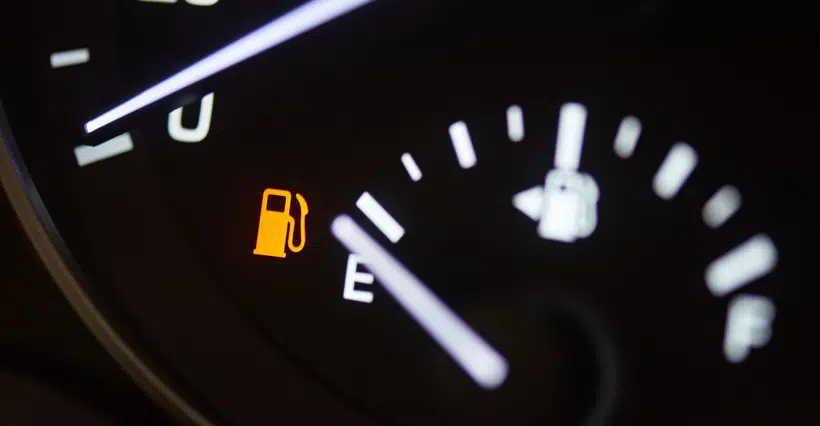
While some cars have features that display gas mileage, you can also calculate your car’s gas mileage yourself.
A simple way to work out your gas mileage is to follow these steps:
1. Ensure your car’s tank is full and then drive for 100 miles.
2. Fill up the tank with gas.
3. Divide 100 by the amount of gas you use. So if you filled up five gallons of gas, your car is running at 20 mpg.
If this is too complicated, you can also use an online [gas mileage calculator](https://www.calculatorsoup.com/calculators/tools/gas-mileage-calculator.php) to calculate your car’s mpg.
## **Why Do Older Cars Have Lower Gas Mileage?**
Older cars have lower gas mileage as a byproduct of their age. As a car gets older, its efficiency wanes due to wear and tear. If the car hasn’t been well maintained or older parts haven’t been updated, its gas mileage is likely to be lower than when it was new. Moreover, a [study by the University of Michigan](https://news.umich.edu/gas-mileage-of-vehicles-on-the-road-little-progress-since-early-90s/) found that cars over 10 years old consume 33% to 35% more gas compared to newer models.
### **Common Fuel Efficiency Myths and Facts**
There are many people out there spreading fiction about what will help constitute better fuel economy, let’s separate the facts from the fiction.
**Fiction:**
- **Mornings:** The time of day you fill-up the tank will have little impact on your fuel economy. While the temperature does affect fuel density, gas is stored in underground tanks where the temperature is consistent, meaning refueling in the mornings when it is cool will have little impact on your car.
- **Idling:** The idea that idling uses less fuel than restarting comes from when older cars use a significant amount of fuel to restart. However, modern engines are more efficient and idling actually uses more fuel.
- **Size:** It’s not true that small cars get better fuel mileage. It’s what’s under the hood of the car that makes a difference, not size.
- **Age:** A car is as old as its engine. A well-maintained older engine may have better fuel economy than a poorly cared-for newer one. The idea that an old car gets poor gas mileage is not always true.
- **Transmission:** In the past, manual transmission resulted in better gas mileage. However, new technology in automatic transmission has made this a myth as more gears have led to less fuel being wasted.
**Facts:**
- **Tires:** If you are regularly checking that your tires are inflated to the correct pressure using a tire gauge, you can improve your gas mileage by up to 3.3%.
- **Fuel:** It doesn’t make any difference which kind of gas you use unless your car is specifically designed to run on premium fuel. Additives won’t make a difference.
- **Maintenance:** A well-cared-for car will maintain its fuel economy for longer than one that has been poorly looked after.
- **Cost:** You don’t have to break the bank to improve your fuel economy. If you drive smoothly without idling and avoid aggressive braking and accelerating, you will drastically improve your car’s fuel economy.
## **Essential Maintenance Tips for Better Gas Mileage**
### **Regular Oil Changes and the Right Oil Type**
Using the motor oil recommended by your manufacturer can improve your gas mileage by 1%-2%. It is also [recommended](https://www.exxon.com/en/car-maintenance-tips)to choose an oil labeled “Energy Conserving on the API performance to ensure it contains friction-reducing additives. Using the correct viscosity oil for the exterior temperature could also save you between \$0.04 to \$0.09 per gallon.
### **Proper Tire Pressure and Alignment**
It has been reported that underinflated tires waste 1.2 billion gallons of gas per year. Your tires must be well inflated as underinflated tires have a higher rolling resistance, which generates more friction and increases fuel consumption. It’s important to monitor your tire pressure monthly as both underinflated and [overinflated tires](https://www.usedcars.com/advice/tips/do-overinflated-tires-really-boost-gas-mileage-44?page=13) can impact a car’s fuel economy. By doing this, you can increase your car’s fuel efficiency by up to 3%.
In addition, you should also monitor your car’s tire alignment. Unbalanced alignment can also impact fuel economy negatively as it puts pressure on your tires.
### **Cleaning or Replacing Air Filters**
Dirty or clogged air filters reduce both fuel efficiency and a car’s ability to accelerate. It’s important to have these cleaned or replaced regularly to save on fuel consumption.
## **Driving Habits That Improve Fuel Economy**
### **Avoiding Rapid Acceleration and Hard Braking**
High Revolutions Per Minute (RPM) uses more fuel, so it’s better to avoid revving your engine too much. Similarly, aggressive braking also uses more fuel than braking smoothly.
It has been [reported](https://afdc.energy.gov/conserve/driving-behavior#:~:text=Analysis%20by%20the%20Massachusetts%20Institute,stop-and-go%20traffic.)that rapid braking and acceleration can lower mileage by between 10% and 40% while city driving, and that easing into braking in stop-and-go city traffic can save between \$0.45 and \$1.80 per gallon of gas.
### **Maintaining a Steady Speed and Using Cruise Control**
For the reasons mentioned above, it’s best to maintain a steady speed while driving to avoid wasting gas. Driving in cruise control can help maintain a consistent speed while also helping save up to 14% in gas mileage.
### **Reducing Idling Time**
If your engine is on, you’re wasting fuel. If you are in heavy traffic, it’s best to turn off your engine. According to the Department of Energy, Idling can eat up a quarter to half a gallon of gas per hour, depending on the car. This means that turning off your engine can save around \$0.03 per minute while you wait to start up again.
## **Modifications and Upgrades to Improve Fuel Efficiency**
### **Lightweighting Your Car – Removing Unnecessary Weight**
Your car’s weight will affect its fuel efficiency. Extra weight leads to increased gas consumption as a result of increased resistance. Remove any unnecessary items from your car as this can significantly impact your fuel economy.
It’s also an idea to replace heavier parts of your car with lightweight components. Replacing alloy metal or heavy steel parts with carbon fiber or lighter materials can positively impact your car’s mileage. In fact, a 50kg weight reduction can save you in fuel consumption.
### **Upgrading to Low Rolling Resistance Tires**
It is advisable to replace your tires with low-rolling resistance tires as they are known for decreasing rolling effort and therefore improving fuel efficiency. Low-rolling resistance tires are made from a rubber compound that reduces internal friction and heat buildup within the tire to reduce the energy lost while a tire rolls.
### **Improving Aerodynamics with Simple Adjustments**
By lowering your car’s aerodynamic drag you can increase fuel efficiency, especially in trucks and semi trucks. By making modifications like adding front air dams, side skirts and rear spoilers, you could help enhance your car's fuel economy.
## **Mistakes That Reduce Gas Mileage**
### **Ignoring Check Engine Lights**
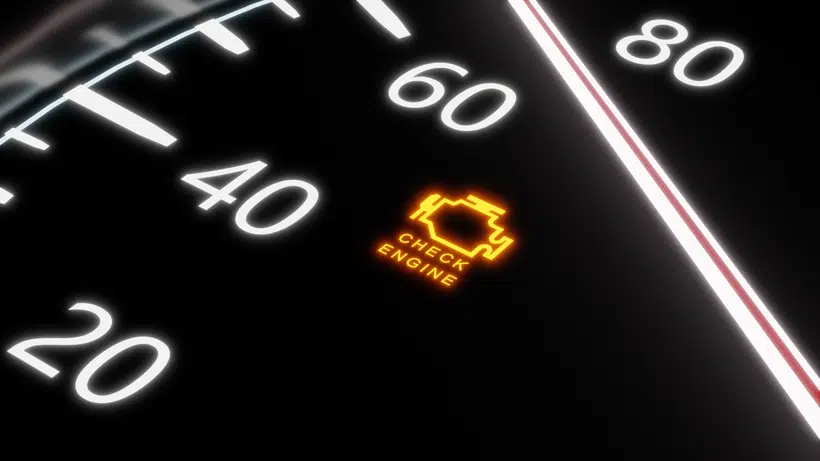
Your car comes with warning lights for a reason, so if they are lit, take note because it likely means you have an emissions problem. If you notice the check engine light coming on, make sure to get it checked by a mechanic. The light can come on if your car is burning too much or not enough fuel.
The check engine light is often lit due to a vacuum leak or problems with the burn sensor. Fixing this as soon as possible will save you more money than if you continue to drive on reduced gas mileage.
### **Driving with Underinflated Tires**
As we have discussed, well-inflated tires can help increase your fuel economy. Underinflated tires have more contact with the road, causing drag and resistance, making your car work harder and consume more energy. It’s recommended to check your tire pressure monthly to make sure they are performing best for your car.
In fact, your car’s fuel efficiency falls by [about 0.2%](https://www.fueleconomy.gov/feg/maintain.jsp) for every 1 pound per square inch your tires are underinflated.
### **Ignoring Manufacturer Recommendations**
Your car will come with maintenance recommendations from its manufacturer, who ultimately knows best. It’s important to follow their guidance to ensure your car performs at its best for as long as possible.
To improve an older car’s gas mileage, it’s important to make sure it is well-maintained. Ensure to regularly check your car’s tire pressure and keep up-to-date with routine maintenance to be sure that it will continue to perform at its best.
***

## Staff
Writer/Editor
Autoweb´s staff
- [Introduction](https://www.usedcars.com/how-to-improve-gas-mileage-older-car#top)
- [Understanding Fuel Efficiency in Older Vehicles](https://www.usedcars.com/how-to-improve-gas-mileage-older-car#understanding-fuel-efficiency-in-older-vehicles)
- [Why Do Older Cars Have Lower Gas Mileage?](https://www.usedcars.com/how-to-improve-gas-mileage-older-car#why-do-older-cars-have-lower-gas-mileage)
- [Essential Maintenance Tips for Better Gas Mileage](https://www.usedcars.com/how-to-improve-gas-mileage-older-car#essential-maintenance-tips-for-better-gas-mileage)
- [Driving Habits That Improve Fuel Economy](https://www.usedcars.com/how-to-improve-gas-mileage-older-car#driving-habits-that-improve-fuel-economy)
- [Modifications and Upgrades to Improve Fuel Efficiency](https://www.usedcars.com/how-to-improve-gas-mileage-older-car#modifications-and-upgrades-to-improve-fuel-efficiency)
- [Mistakes That Reduce Gas Mileage](https://www.usedcars.com/how-to-improve-gas-mileage-older-car#mistakes-that-reduce-gas-mileage)
Search Used Cars
- By Make
- By Type
- By Price
## Trending
1. [](https://www.usedcars.com/trucks-with-best-factory-ground-clearance)
[Buying](https://www.usedcars.com/tag/buying)
### [The Top Trucks with the Best Factory Ground Clearance](https://www.usedcars.com/trucks-with-best-factory-ground-clearance)
2. [](https://www.usedcars.com/classic-pickup-trucks-that-hold-value)
[Buying](https://www.usedcars.com/tag/buying)
### [Classic Pickup Trucks That Still Hold Their Value On The Market](https://www.usedcars.com/classic-pickup-trucks-that-hold-value)
3. [](https://www.usedcars.com/coveted-sedan-features-used-cars)
[Buying](https://www.usedcars.com/tag/buying)
### [The Most Coveted Sedan Features for Used Cars](https://www.usedcars.com/coveted-sedan-features-used-cars)
4. [](https://www.usedcars.com/used-crossover-might-be-perfect-for-you)
[Buying](https://www.usedcars.com/tag/buying)
### [Why a Used Crossover Might Be the Perfect Vehicle for You](https://www.usedcars.com/used-crossover-might-be-perfect-for-you)
5. [](https://www.usedcars.com/used-bmw-engines)
[Shopping](https://www.usedcars.com/tag/shopping)
### [Everything You Need to Know About Used BMW Engines](https://www.usedcars.com/used-bmw-engines)
## Recent Articles
- [](https://www.usedcars.com/what-to-do-with-a-frozen-car-battery)
### [What to Do With a Frozen Car Battery](https://www.usedcars.com/what-to-do-with-a-frozen-car-battery)
Jun 22, 2021
Read Article
- [](https://www.usedcars.com/tips-for-first-time-used-car-buyers)
### [9 Tips for First-Time Used Car Buyers](https://www.usedcars.com/tips-for-first-time-used-car-buyers)
Jan 10, 2025
Read Article
- [](https://www.usedcars.com/blue-book-truck-pricing-guide)
### [Kelley Blue Book Truck Pricing Guide](https://www.usedcars.com/blue-book-truck-pricing-guide)
Jun 25, 2021
Read Article
[Find More Articles](https://www.usedcars.com/advice)
Search Used Cars
- By Make
- By Type
- By Price
Product
- [Search By](https://www.usedcars.com/search-by/)
- [Trade-in or Sell](https://www.usedcars.com/trade-in-or-sell/)
- [Car Advice](https://www.usedcars.com/advice/)
- [Best Cars](https://www.usedcars.com/best-cars/)
- [Research Cars](https://www.usedcars.com/research-cars/)
Company
- [About UsedCars.com](https://www.autoweb.com/about-us/)
- [Contact Us](https://www.autoweb.com/contact-us/)
- [Advertise With Us](https://www.autoweb.com/contact-us/#extra-content)
Resources
- [Calculators](https://www.usedcars.com/car-calculators/)
- [Contributors](https://www.usedcars.com/our-contributors)
- [Market Trends](https://www.usedcars.com/market-trends)
- [Sitemap](https://www.usedcars.com/sitemap/)
Legal
- [Terms of Use](https://www.usedcars.com/termsofuse)
- [Privacy Policy](https://www.usedcars.com/privacypolicy)
- [Fraud Awareness](https://www.autoweb.com/fraud-awareness.html)
- [Do Not Sell My Information](https://privacyportal.onetrust.com/webform/27aa5d67-8136-4a08-ae4b-9860992e2375/f84362ef-6901-4a8c-9a52-e7b06dbb4e6b)
- [Limit the Use of Sensitive Personal Information](https://privacyportal.onetrust.com/webform/27aa5d67-8136-4a08-ae4b-9860992e2375/f84362ef-6901-4a8c-9a52-e7b06dbb4e6b)
- [Cookie Policy](https://www.usedcars.com/cookiepolicy)
Quick Searches
- [Used Cars For Sale](https://www.usedcars.com/used-cars-for-sale-near-me)
- [Trucks For Sale Near Me](https://www.usedcars.com/used-trucks-for-sale-near-me)
- [Cars Under \$10,000](https://www.usedcars.com/used-cars-under-10000-near-me)
- [Used Trucks Under \$10,000](https://www.usedcars.com/used-trucks-under-10000-near-me)
© 2026 AutoWeb, Inc. All Rights Reserved.
Some content provided by and under copyright by Autodata, Inc. dba Chrome Data. © 1986-2026.
Please ensure Javascript is enabled for purposes of [website accessibility](https://userway.org/) |
| Readable Markdown | If you're driving an older vehicle, chances are you've noticed it's not as fuel-efficient as it once was. But don’t worry, there are practical ways to stretch every gallon. From simple maintenance tips like checking your tire pressure and replacing air filters, to smarter driving habits such as easing off the accelerator and avoiding idling, improving your gas mileage is within reach. In this guide, we’ll break down the most effective, budget-friendly steps to help your older car run more efficiently and save you money at the pump.
Older cars tend to have lower [fuel efficiency](https://www.usedcars.com/advice/buying/fuel-efficient-used-car-buying-guide-90?page=8), with drivers often seeking ways to improve gas mileage. While this can be a difficult task, we’ll provide practical and doable tips for improving the fuel efficiency of your older vehicles.
## **Understanding Fuel Efficiency in Older Vehicles**
### **What is Good Gas Mileage?**
Having [good gas mileage](https://www.usedcars.com/advice/tips/tips-to-get-better-gas-mileage-129?page=4) is when a car consumes less fuel to cover a larger distance per mile. A car’s gas mileage is measured in miles per gallon (mpg). A car with 35 mpg or above is generally considered efficient, although newer cars with hybrid engines can reach upwards of 50 mpg. A car’s mpg is usually higher on highways and slower while driving in traffic.
With environmental and financial concerns to consider, many drivers today are concerned with driving fuel-efficient cars.

### **How to Calculate Gas Mileage?**
While some cars have features that display gas mileage, you can also calculate your car’s gas mileage yourself.
A simple way to work out your gas mileage is to follow these steps:
1. Ensure your car’s tank is full and then drive for 100 miles.
2. Fill up the tank with gas.
3. Divide 100 by the amount of gas you use. So if you filled up five gallons of gas, your car is running at 20 mpg.
If this is too complicated, you can also use an online [gas mileage calculator](https://www.calculatorsoup.com/calculators/tools/gas-mileage-calculator.php) to calculate your car’s mpg.
## **Why Do Older Cars Have Lower Gas Mileage?**
Older cars have lower gas mileage as a byproduct of their age. As a car gets older, its efficiency wanes due to wear and tear. If the car hasn’t been well maintained or older parts haven’t been updated, its gas mileage is likely to be lower than when it was new. Moreover, a [study by the University of Michigan](https://news.umich.edu/gas-mileage-of-vehicles-on-the-road-little-progress-since-early-90s/) found that cars over 10 years old consume 33% to 35% more gas compared to newer models.
### **Common Fuel Efficiency Myths and Facts**
There are many people out there spreading fiction about what will help constitute better fuel economy, let’s separate the facts from the fiction.
**Fiction:**
- **Mornings:** The time of day you fill-up the tank will have little impact on your fuel economy. While the temperature does affect fuel density, gas is stored in underground tanks where the temperature is consistent, meaning refueling in the mornings when it is cool will have little impact on your car.
- **Idling:** The idea that idling uses less fuel than restarting comes from when older cars use a significant amount of fuel to restart. However, modern engines are more efficient and idling actually uses more fuel.
- **Size:** It’s not true that small cars get better fuel mileage. It’s what’s under the hood of the car that makes a difference, not size.
- **Age:** A car is as old as its engine. A well-maintained older engine may have better fuel economy than a poorly cared-for newer one. The idea that an old car gets poor gas mileage is not always true.
- **Transmission:** In the past, manual transmission resulted in better gas mileage. However, new technology in automatic transmission has made this a myth as more gears have led to less fuel being wasted.
**Facts:**
- **Tires:** If you are regularly checking that your tires are inflated to the correct pressure using a tire gauge, you can improve your gas mileage by up to 3.3%.
- **Fuel:** It doesn’t make any difference which kind of gas you use unless your car is specifically designed to run on premium fuel. Additives won’t make a difference.
- **Maintenance:** A well-cared-for car will maintain its fuel economy for longer than one that has been poorly looked after.
- **Cost:** You don’t have to break the bank to improve your fuel economy. If you drive smoothly without idling and avoid aggressive braking and accelerating, you will drastically improve your car’s fuel economy.
## **Essential Maintenance Tips for Better Gas Mileage**
### **Regular Oil Changes and the Right Oil Type**
Using the motor oil recommended by your manufacturer can improve your gas mileage by 1%-2%. It is also [recommended](https://www.exxon.com/en/car-maintenance-tips)to choose an oil labeled “Energy Conserving on the API performance to ensure it contains friction-reducing additives. Using the correct viscosity oil for the exterior temperature could also save you between \$0.04 to \$0.09 per gallon.

### **Proper Tire Pressure and Alignment**
It has been reported that underinflated tires waste 1.2 billion gallons of gas per year. Your tires must be well inflated as underinflated tires have a higher rolling resistance, which generates more friction and increases fuel consumption. It’s important to monitor your tire pressure monthly as both underinflated and [overinflated tires](https://www.usedcars.com/advice/tips/do-overinflated-tires-really-boost-gas-mileage-44?page=13) can impact a car’s fuel economy. By doing this, you can increase your car’s fuel efficiency by up to 3%.
In addition, you should also monitor your car’s tire alignment. Unbalanced alignment can also impact fuel economy negatively as it puts pressure on your tires.
### **Cleaning or Replacing Air Filters**
Dirty or clogged air filters reduce both fuel efficiency and a car’s ability to accelerate. It’s important to have these cleaned or replaced regularly to save on fuel consumption.
## **Driving Habits That Improve Fuel Economy**
### **Avoiding Rapid Acceleration and Hard Braking**
High Revolutions Per Minute (RPM) uses more fuel, so it’s better to avoid revving your engine too much. Similarly, aggressive braking also uses more fuel than braking smoothly.
It has been [reported](https://afdc.energy.gov/conserve/driving-behavior#:~:text=Analysis%20by%20the%20Massachusetts%20Institute,stop-and-go%20traffic.)that rapid braking and acceleration can lower mileage by between 10% and 40% while city driving, and that easing into braking in stop-and-go city traffic can save between \$0.45 and \$1.80 per gallon of gas.
### **Maintaining a Steady Speed and Using Cruise Control**
For the reasons mentioned above, it’s best to maintain a steady speed while driving to avoid wasting gas. Driving in cruise control can help maintain a consistent speed while also helping save up to 14% in gas mileage.
### **Reducing Idling Time**
If your engine is on, you’re wasting fuel. If you are in heavy traffic, it’s best to turn off your engine. According to the Department of Energy, Idling can eat up a quarter to half a gallon of gas per hour, depending on the car. This means that turning off your engine can save around \$0.03 per minute while you wait to start up again.
## **Modifications and Upgrades to Improve Fuel Efficiency**
### **Lightweighting Your Car – Removing Unnecessary Weight**
Your car’s weight will affect its fuel efficiency. Extra weight leads to increased gas consumption as a result of increased resistance. Remove any unnecessary items from your car as this can significantly impact your fuel economy.
It’s also an idea to replace heavier parts of your car with lightweight components. Replacing alloy metal or heavy steel parts with carbon fiber or lighter materials can positively impact your car’s mileage. In fact, a 50kg weight reduction can save you in fuel consumption.
### **Upgrading to Low Rolling Resistance Tires**
It is advisable to replace your tires with low-rolling resistance tires as they are known for decreasing rolling effort and therefore improving fuel efficiency. Low-rolling resistance tires are made from a rubber compound that reduces internal friction and heat buildup within the tire to reduce the energy lost while a tire rolls.
### **Improving Aerodynamics with Simple Adjustments**
By lowering your car’s aerodynamic drag you can increase fuel efficiency, especially in trucks and semi trucks. By making modifications like adding front air dams, side skirts and rear spoilers, you could help enhance your car's fuel economy.
## **Mistakes That Reduce Gas Mileage**
### **Ignoring Check Engine Lights**
Your car comes with warning lights for a reason, so if they are lit, take note because it likely means you have an emissions problem. If you notice the check engine light coming on, make sure to get it checked by a mechanic. The light can come on if your car is burning too much or not enough fuel.
The check engine light is often lit due to a vacuum leak or problems with the burn sensor. Fixing this as soon as possible will save you more money than if you continue to drive on reduced gas mileage.

### **Driving with Underinflated Tires**
As we have discussed, well-inflated tires can help increase your fuel economy. Underinflated tires have more contact with the road, causing drag and resistance, making your car work harder and consume more energy. It’s recommended to check your tire pressure monthly to make sure they are performing best for your car.
In fact, your car’s fuel efficiency falls by [about 0.2%](https://www.fueleconomy.gov/feg/maintain.jsp) for every 1 pound per square inch your tires are underinflated.
### **Ignoring Manufacturer Recommendations**
Your car will come with maintenance recommendations from its manufacturer, who ultimately knows best. It’s important to follow their guidance to ensure your car performs at its best for as long as possible.
To improve an older car’s gas mileage, it’s important to make sure it is well-maintained. Ensure to regularly check your car’s tire pressure and keep up-to-date with routine maintenance to be sure that it will continue to perform at its best. |
| Shard | 195 (laksa) |
| Root Hash | 12733718841297950795 |
| Unparsed URL | com,usedcars!www,/how-to-improve-gas-mileage-older-car s443 |