ℹ️ Skipped - page is already crawled
| Filter | Status | Condition | Details |
|---|---|---|---|
| HTTP status | PASS | download_http_code = 200 | HTTP 200 |
| Age cutoff | PASS | download_stamp > now() - 6 MONTH | 0 months ago |
| History drop | PASS | isNull(history_drop_reason) | No drop reason |
| Spam/ban | PASS | fh_dont_index != 1 AND ml_spam_score = 0 | ml_spam_score=0 |
| Canonical | PASS | meta_canonical IS NULL OR = '' OR = src_unparsed | Not set |
| Property | Value |
|---|---|
| URL | https://www.upworthy.com/juneshine-eco-friendly-drinks/ |
| Last Crawled | 2026-04-13 00:11:11 (9 hours ago) |
| First Indexed | 2026-03-03 22:22:45 (1 month ago) |
| HTTP Status Code | 200 |
| Meta Title | These delicious canned cocktails use better tasting ingredients that are better for the environment - Upworthy |
| Meta Description | null |
| Meta Canonical | null |
| Boilerpipe Text | Today, we’re all more selective about what we eat and
drink
. But it’s not because we’re pickier or that our tastes have become more extravagant. What’s changed is that we have a greater understanding of how our choices impact the world around us. So when it comes to choosing food and drinks, simply
tasting
good is not good
enough
. We want products that are good for us
and
good for everyone else, too.
Of course, it’s easy to find
food
that is healthy and ethical. Every grocery store in the country has an entire section of organic, sustainably produced products. But beverages? Particularly healthy and ethical beverages of the adult variety? Those are a lot harder to come by. That’s why a couple of guys named Greg Serrao and Forrest Dein created
JuneShine
hard kombucha and spirits.
Founded in 2018, JuneShine is a San Diego-based craft cocktail company that’s making some big waves in the beverage industry. And it’s not
just
because their drinks taste great—although that does help. You see, JuneShine specializes in alcoholic beverages made from
better ingredients
that are
better for the planet
. JuneShine is also carbon neutral, which means their production leaves no carbon footprint, and the company
donates 1% of all sales
to environmental nonprofits working to fight climate change.
JuneShine started out making organic hard kombucha but expanded to organic craft cocktails. So if you want to feel better about the alcohol you drink, you need to give JuneShine a try.
For the uninitiated, kombucha is a fermented beverage made from green or black tea. Because it contains probiotics, some people drink it to boost gut health. However, with its tangy, fruity flavor and mild effervescence, many people just drink it because it tastes great.
As for hard kombucha, it’s exactly what it sounds like: kombucha, but it’s brewed to 6% alcohol by volume (about the same as a light IPA). This refreshing carbonated beverage is made with organic, real fruit juice and spices, is brewed with naturally occurring probiotics, is gluten-free, and contains no additives, preservatives or colorings, unlike most alcoholic beverages.
JuneShine hard kombucha
is sustainably brewed using organic ingredients and renewable solar energy. Refreshing and never too sweet, JuneShine’s hard kombucha is 6% ABV and comes in 12-ounce cans. Currently, the lineup features eight different flavors: the six “JuneShine Originals” (Midnight Painkiller, Blood Orange Mint, Hopical Citrus, Grapefruit Paloma, Acai Berry and Honey Ginger Lemon) plus two limited edition JuneShine ambassador collaborations (P.O.G. and Prickly Pear Margarita).
Click here
to order.
Love the classics, but tired of all the added sugars and artificial flavors you get in most
canned
cocktails?
JuneShine Spirits
are the perfect solution. They are handcrafted with premium, award-winning spirits, real juice, and sparkling water with no added sugar. They come in 12-ounce cans and are 8-10% ABV.
The Classic Tequila Margarita has real tequila from Casa Orendain in Mexico, tart lime, and a hint of sweet orange. The Tropical Rum Mai Tai contains spiced rum from San Diego-based, award-winning Malahat Spirits, with orange, pineapple, and orange juice. Last but not least, the Passion Fruit Vodka Soda features premium, US-distilled vodka, sparkling water, and a perfectly balanced trio of pineapple, lemon, and passion fruit juices.
Click here
to order.
Can’t decide which JuneShine beverages you want to try? Then don’t! Get a little bit of everything with
JuneShine Samplers
. These sampler packs come with 12, 24 or 36 cans of JuneShine’s bestsellers, or you can create your own custom sampler pack with flavors of your choosing.
If you’re looking for a
better way to get your buzz on
—one that’s better for you and for the planet—order a sampler pack from JuneShine. These refreshing hard kombuchas and craft cocktails will open up a world of flavors you never even knew existed.
Parent-teacher associations in Maasai community. Captured by James Roh for Pura
When asked to describe what Tanzania smells like, Grace Isekore closes her eyes and breathes in deep. For a moment, she’s somewhere else entirely. Tanzania is a rich tapestry of sights and scents, from the smell of sea mist that permeates the coastline to the earthy cardamom and cloves she cooks with in her kitchen. But when Grace emerges from her reverie, her answer is unexpected.
“Tanzania smells like peace,” she says, her eyes still closed. “I see a beautiful country where we are free to move, free to speak. And there is peace within the community.”
For Grace, that sense of peace isn’t just something she smells; it’s something she works toward every day. As a project coordinator with Pastoral Women’s Council (PWC), a women-led organization that empowers pastoralist communities in northern Tanzania, she has seen firsthand how girls flourish when they have the opportunity to attend school. Like scent, education not only connects girls to their own culture, but also helps broaden their horizons, realizing new possibilities for themselves and others. That transformation reshapes entire communities and ripples outward, with the potential to change countries and transform the world for the better.
Different scents, different approaches, and communities driving change
Spices in Tanzania. Captured by James Roh for Pura
For Grace and others around the world, education is freedom, as well as a pathway to a stronger community. Rooted in that shared belief, Pura, a home fragrance company, was inspired to build on their four-year partnership with Malala Fund to create something truly unique: a fragrance collection that connects people through scent to communities in Tanzania, Nigeria, Pakistan, and Brazil, where barriers to girls’ education are among the highest.
Using ingredients from each region, the new
Pura x Malala Fund Collection
uses scent to transport people to these regions directly. “Future in Bloom,” for example, invokes Pakistan’s lush valleys through notes of jasmine, cedarwood, and mango; while Tanzania’s fragrance, “Heart on Fire,” evokes the spirit and joyfulness of the girls who live there through cardamom, lemon, and green tea.
The new Collection honors the work Malala Fund does every day, partnering with locally-led organizations in these four countries to ensure every girl can access and complete 12 years of education. Each scent celebrates the joy, tenacity, and courage of the women and girls driving change on the ground, while also augmenting Pura’s annual grant to Malala Fund by donating eight percent of net revenue from the
Pura x Malala Fund Collection
to Malala Fund directly.
Just as each country’s scent is unique, so too are their needs related to education. But with support from Malala Fund and Pura, local leaders are coming up with creative ways to mobilize entire communities (parents, teachers, elders, and the students themselves, in their pursuit of solutions, understanding that educating girls helps everyone thrive. Here’s how their efforts are creating real, durable impact in Tanzania and Pakistan, and creating a ripple effect that changes the world for the better.
Parent-teacher associations help Maasai girls and their communities in Tanzania problem-solve
A girl’s school in Tanzania. Captured by James Roh for Pura
Northern Tanzania, Grace’s home, is home to pastoralist communities like the Maasai, a nomadic people who have moved with the seasons to nurture the land and care for their livestock for centuries. The nomadic nature of this lifestyle creates significant and unique barriers to girls’ education. Longstanding gender roles have enabled Maasai to survive in the harsh environment and have placed great value on both women and men. Over time, as nomadic life has been threatened by the privatization of land and stationary education models have been implemented, the reality of pastoralist livelihood has shifted and introduced new complexities. Now, the sheer distance to schools is both a practical challenge and one that often comes with danger from the landscape, predators, and potential exposure to assault along the journey. Girls shoulder the responsibility of household chores and there is often cultural pressure around early marriage – both leading to boys’ education being prioritized over girls’.
“There are very, very good [pastoralist] cultural practices, which are passed from generation to generation,” says Janet Kimori, an English teacher at Lekule Girls Secondary School in Longido, Tanzania. But when cultural practices act as educational barriers, “you have to sit down and look for where you are going to assist. As a school, as an individual, the school administration—all of us will chip in and know how we are going to deal with this problem.”
PWC works to ensure girls are able to exercise their right to an education while also preserving pastoralist culture. One successful approach, the organization found, has been the formation of Parent Teacher Associations (PTAs), created with help from Malala Fund. In PTA meetings, students, parents, teachers, elders, and government officials meet, discuss educational barriers, and come up with community-led solutions that preserve and honor their culture while advancing educational outcomes.
PTA meeting in Tanzania. Captured by James Roh for Pura
One recent PTA meeting highlights how these community-led solutions are often the most effective. At Lekule Girls Secondary School, the lack of fresh water forces girls to walk long distances to collect water for the school’s kitchen during the school day, and these long journeys not only disrupt class time but can leave girls vulnerable to sexual assault in isolated areas. Through facilitated discussion, PTA members landed on a solution: installing a borehole to pipe in fresh water to the school. Reliable access to water creates a better learning environment for the girls, but it also benefits the community at large, as local governments are then more likely to invest in health clinics and other community resources nearby.
With a solution in place, the PTA was then able to discuss ideas and map out a course of action. The women would raise money for the cost of the borehole, while the men would recruit workers to dig the hole and lay the pipe. Together, they would ask government officials to match their investment.
The benefits of PTA meetings within the pastoralist communities are undeniable. “The girls are talking and addressing issues in a confident way, and parents feel they are part of the resource team to solve challenges happening at school,” Grace says. One unexpected benefit: The larger cultural impact these PTA meetings have created. Thanks to the success of PTAs within pastoralist communities, the models are now being endorsed on a national level, and schools across Tanzania are starting to use them to solve problems in their own communities. When a community creates opportunities for girls to learn, everyone benefits.
Safe spaces in rural Pakistan help students and their parents connect, then drive change
Safe space for girls meeting in Pakistan. Captured by Insiya Syed.
A continent away in Pakistan, the country’s northernmost region of Gilgit-Baltistan seems like a land untouched by time. The region’s looming mountains, snow-capped peaks, lush valleys and crystalline lakes draw nature lovers and landscape photographers from around the world, but living among this kind of breathtaking scenery has its drawbacks. Schools in the region are few and far between, and the area’s harsh climate often makes roads inaccessible for travel. Poverty and gender-based discrimination are additional obstacles, making school even further out of reach, and girls are affected disproportionately. Going up against these barriers requires a persistent, quiet strength that’s found in the women who live there and reflected in Pakistan’s signature scent.
Saheli Circles are how local leaders in Gilgit-Baltistan are bridging the gap between girls and education. An Urdu term for “female friend,” Saheli Circles are after-school safe spaces where girls explore subjects like art and climate change, while also developing skills that help them manage emotions, set goals, and build positive relationships. Girls study in groups, visit the library, play sports, and tackle filmmaking and photography projects, all designed to develop self confidence and teach the girls how to advocate for issues that matter to them. But the work doesn’t stop there.
“What we’re trying to achieve here will only be impactful if it trickles down to the home environment and the school environment,” says Marvi Sumro, founder and program director of Innovate, Educate, and Inspire Pakistan (IEI), the local organization that developed the Saheli Circles model and partnered with Malala Fund in 2021 to make it a reality. Ever since, Saheli Circles have grown to involve teachers, elders, and parents to encourage relationship building that’s essential for young girls and adolescents. “Our spaces can give mothers and daughters an opportunity to interact a little differently—do an art activity, or have a cup of tea together, or some good conversation,” Marvi says.
The relationship building is what makes the biggest positive impact throughout the community. Recently, one Saheli Circle was able to bring together parents, teachers, and administrators to advocate for better education at their local school, and together they convinced the department of education to hire a science teacher. Another Saheli Circle organized a fund where members of the community can contribute monthly to pay for uniforms, books, and other school expenses for the girls in their village, eliminating those small, hidden costs that are often a barrier to education for many. A third Saheli Circle was able to produce a short film about how gender-based household chores can take away valuable study time from girls, leaving them at a disadvantage. “The girls put the film together and showed it to the mothers, and the response from the mothers was just beautiful,” Marvi says.
Girls smiling in Pakistan. Captured by Insiya Syed.
The education and relationship building that the girls receive in Saheli Circles connects them to larger opportunities and economic freedom that are not possible in their hometown. “For girls in Gilgit-Baltistan, education is extremely important because of the fact that we’re so far away from where the economy is, where the opportunity is. Education becomes this bridge for us, for our girls, to access all the opportunity and economy that exists in [larger cities].”
From rural Tanzania to remote Pakistan, local organizations prove every day that prioritizing girls’ education benefits everyone. Communities that lift up girls are able to secure resources like clean water and well-staffed schools, as well as build stronger relationships.
These outcomes are only possible because of the women and girls who work tirelessly in these regions to overcome barriers and drive progress. The
Pura x Malala Fund Collection
is a way to honor them, celebrate their achievements, and unite people the world over around a shared belief that education is freedom. Like scent, that belief can build, travel, and has the possibility to transform the world.
Experience the
Pura x Malala Fund Collection
here, and connect with the stories of real girls leading change across the globe.
Photo credit:
Canva
–
What type of sleeper are you?
To be honest, most
sleep advice
sounds like it was written for people who already
sleep well
. We’re offered platitudes like “Stick to a
consistent bedtime
.” Revolutionary. Or, “
Avoid screens before bed
.” Sure. “
Try to relax
.” Oh, thanks. Never thought of that.
For millions of people, this sort of
run-of-the-mill sleep advice
feels like being handed a pamphlet about umbrellas in the middle of a tropical storm. The advice isn’t wrong, not really. But it’s basic. Generic. It fails to account for the wildly diverse reasons people struggle with sleep in the first place.
Sleep, however, remains an essential problem for many. Roughly one in three American adults
fails to get the recommended 7+ hours of sleep per night
. Nearly half
report trouble staying asleep on three or more nights a week
. A record-high
57% of Americans say they would simply feel better if they could get more sleep
.
A
new study from Concordia University
feels radical for a simple reason: Instead of lumping all sleepers into “good” and “bad” categories, researchers identified five distinct sleep profiles, each with its own causes, brain patterns, and emotional fingerprints. Once you know which one sounds like you, the advice actually starts to make sense.
A quick look at the science
Researchers in Montreal
studied 770 healthy adults aged 22 to 36
. They analyzed a large, diverse group of real people, not statistical abnormalities. Scientists combined MRI brain scans, sleep quality surveys, cognitive tests, mood assessments, and lifestyle data to build the
most complete picture of human sleep patterns ever assembled
.
What they found: Your sleep isn’t just about what happens when you close your eyes. It’s deeply intertwined with your brain wiring, your emotional life, and how you move through the world during the day. These findings align with the current sleep-deprivation crisis.
Six in ten adults aren’t getting enough sleep
, according to the National Sleep Foundation, and the Centers for Disease Control and Prevention reports that
one in three adults is chronically sleep-deprived
. But not all of those sleepers are struggling for the same reasons, and that distinction matters more than previously realized.
Your sleep profile isn’t a quirky, fun fact like an astrological sign. Knowing which profile you belong to could unlock a good night’s rest—not just tonight, but for a lifetime.
The 5 sleep profiles
Are you a Struggling Sleeper?
Photo credit: Canva
Profile 1: The Struggling Sleeper (LC1)
Does this sound familiar? You get into bed exhausted, lie there for an hour, and suddenly your brain wants to review every awkward conversation you’ve had since 2009. When you do sleep, it’s shallow. You wake up wondering why you even bothered.
LC1, known as the Struggling Sleeper, is the
most prevalent and clinically significant sleep profile
. It is defined by a potent combination: sleep difficulty and underlying mental health struggles, including anxiety, depression, low mood, and poor concentration. These factors are so closely linked that it’s almost impossible to tell which came first. Research has
consistently shown
that insomnia and anxiety and depression have a bidirectional relationship, with each feeding and amplifying the other in a self-reinforcing cycle. Treating only the sleep without addressing the emotional root is like mopping the floor while the faucet is still running.
Brain scans reveal another neurological layer: Individuals with LC1 exhibit hyperactivity in emotional processing regions and reduced connectivity in areas tied to rumination and focus. The brain gets stuck in a loop. So when it’s 2 a.m. and you’re mentally planning contingencies for catastrophes that haven’t happened, this is your brain’s wiring, not a personal failure.
Somehow, Resilient Sleepers make it through the night.
Photo credit: Canva
Profile 2: The Resilient Sleeper (LC2)
This one’s surprising. While Resilient Sleepers often carry real psychological stress—attention difficulties, low mood, pressure that would flatten most people—somehow, they sleep.
This profile offers a fascinating contrast to LC1. People in LC2
experience similar levels of psychological burden as those in Profile 1
, but their sleep does not break down under that pressure. Researchers think this may reflect a neural resilience pathway—a different kind of wiring that prevents stress from taking over the sleep system.
Their brain scans
reveal something intriguing
: strong attention and control networks that act as a buffer, preventing emotional noise from flooding the sleep system at night. You might even underestimate your own sleep quality, thinking it’s worse than it actually is. Researchers believe this profile could be key to understanding what the brain can learn to defend, and whether those defenses can be developed in other sleepers.
For the Medicated Sleeper, sleeping aids are non-negotiable.
Photo credit: Canva
Profile 3: The Medicated Sleeper (LC3)
Melatonin gummies, sleepy tea, a glass of wine, a Benadryl “just this once” that became every night—if sleep aids have quietly become non-negotiable, you probably recognize this profile.
Medicated Sleepers
are often doing well by most measures—they’re socially active and physically healthy—but simply can’t fall asleep on their own without a little chemical assist. The trade-off?
Mild declines in visual memory and emotional regulation
, as sedating medications have been shown to affect both perceptual and emotional processing.
An important note: The
researchers found
that LC3, LC4, and LC5 were less robust than LC1 and LC2, suggesting these profiles may be more variable across populations and should be interpreted with caution.
Short Sleepers don’t need less sleep—they’re sleep-deprived.
Photo credit: Canva
Profile 4: The Short Sleeper (LC4)
You’re efficient. You’ve adapted. So five and a half hours of sleep is fine—you’ve been running on it for years.
Here’s the hard truth: The brain scans of Short Sleepers
look nearly identical to those of people who have pulled a full all-nighter
. No, not just tired people—people who literally haven’t slept. As you can imagine, the cognitive costs of this sleeper profile accumulate quickly, often below the threshold of what we can feel but well above what researchers can measure.
LC4 is characterized by regularly sleeping fewer than six to seven hours per night, and the cognitive impacts are measurable: slower reaction times, decreased problem-solving ability, lower emotional patience, and difficulty managing interpersonal frustration. You may pride yourself on needing little sleep, having built an identity around efficiency. But your partner notices you snap more easily. You’ve forgotten three appointments this month. You’re not superhuman. You’re sleep-deprived, and your brain is working overtime to hide it from you.
Fractured sleep? You might be a Disturbed Sleeper.
Photo credit: Canva
Profile 5: The Disturbed Sleeper
You spend eight hours in bed, but you wake up exhausted. Throughout the night, everything in the world seems to keep you from rest—discomfort, noise sensitivity, a partner who snores—and despite spending plenty of time technically “sleeping,” Disturbed Sleepers rarely feel rested. The quality of sleep is just too fractured.
LC5 is characterized by
nighttime disturbances and interruptions in physical sleep
, and its downstream effects include anxiety, substance use as a coping mechanism, and poor performance across various cognitive domains.
This was the only profile in the study to
show a notable gender difference
, with women scoring significantly higher—consistent with research showing that women experience greater sleep fragmentation over their lifetimes.
Why your sleep type matters
The stakes go well beyond feeling groggy. Each of these profiles carries unique long-term health risks, and the brain research is truly concerning.
The dementia connection
Every night, while you’re asleep, your brain quietly does something extraordinary. It activates what scientists call the
glymphatic system
—a built-in janitorial crew of fluid channels that weave between your brain cells. Their job?
To flush out toxic proteins that accumulate during the day
, including amyloid beta and tau. These are the same proteins that clump and tangle in the brains of people with Alzheimer’s disease.
This cleanup process happens primarily during deep, slow-wave sleep—the kind that disrupted, shortened, or fragmented sleep tends to steal first. And
even one night of sleep deprivation measurably impairs that clearance
. Not a year of bad habits. One night.
When this system fails over time—as it does in people with the Struggling Sleeper, Short Sleeper, and Disturbed Sleeper profiles—toxic proteins don’t just linger;
they build up
. They cluster together. They trigger inflammation, worsening the problem. It’s a slow, silent spiral that can develop for years before anyone notices anything wrong.
The anxiety-depression loop
The relationship between sleep and mental health isn’t a one-way street where anxiety causes bad sleep. It’s more like a revolving door.
Decades of research
have confirmed that insomnia predicts the onset of depression, and depression predicts the worsening of insomnia.
Each one fuels the other
, back and forth, in a cycle that can go on for years.
If you treat depression alone and ignore sleep,
you’ll often get incomplete results
. If you treat only the sleep and overlook the underlying anxiety, the same issue occurs. The two are so closely connected that addressing one without the other usually leaves the whole thing unchanged.
Different sleep problems require different solutions.
Photo credit: Canva
Okay, so what can you actually do about it?
The biggest takeaway from the research is the idea that
sleep problems don’t all stem from the same place
. They can’t all be fixed in the same way. What helps a Struggling Sleeper might do nothing for a Short Sleeper. What a Disturbed Sleeper needs is a completely different conversation from what a Medicated Sleeper needs. Here’s a rundown of what your sleeper profile requires for genuine rest:
If you’re a Struggling Sleeper (Profile 1):
The most important thing to understand is that you can’t just treat the sleep and ignore what’s underneath it. The
anxiety and the insomnia are in a relationship
, and both of them need to be addressed at the same time. The
treatment with the strongest evidence is CBT-I
(Cognitive Behavioral Therapy for Insomnia),
but it could also help to keep a “worry list.”
Before bed, spend 15 minutes writing down everything that’s rattling around in your mind. Getting it on paper moves it out of your brain.
If you’re a Resilient Sleeper (Profile 2):
Congrats! You’re doing something right, even if you’re not sure what it is.
Take a minute to take stock of your stress-management habits; something in your routine is actively protecting your sleep. Jot this down, whatever it is, and try not to trade it away when life gets busy. It’s doing more for your mental health than you realize.
One gentle caution: Resilience isn’t a permanent condition. Major life disruptions—loss, burnout, significant transitions—can shift your profile over time. Keep checking in.
If you’re a Medicated Sleeper (Profile 3):
No judgment here: a lot of people are in this category, and most of them didn’t plan to be.
But it’s worth having an honest conversation with a doctor about whatever you’re taking, because
many over-the-counter sleep aids are designed for occasional use, not nightly use
. Long-term reliance changes how your brain reaches sleep, and that shift is worth understanding.
CBT-I is worth trying here, too
: Studies specifically show it reduces dependence on sleep medications while improving overall outcomes.
If you’re a Short Sleeper (Profile 4):
Let’s name the thing directly: The belief that you’ve adapted to six hours is one of the most common and most convincing lies the sleep-deprived brain tells itself.
True Short Sleepers—people who genuinely thrive on less than seven hours due to a rare genetic trait—
represent less than 3% of the population
. Everyone else who “only needs six hours” has simply stopped noticing the deficit. Treat 7–8 hours the way you treat eating or exercise: a non-negotiable, not a nice-to-have.
If you’re a Disturbed Sleeper (Profile 5):
Sleep hygiene alone probably isn’t going to fix this, because the root is often physical, and physical problems need physical solutions.
If you wake up multiple times a night, snore, or feel unrested despite spending plenty of time in bed,
consider getting evaluated for sleep apnea
. If chronic pain is disrupting your sleep,
address it directly rather than just managing around it at night
.
A
consistent sleep and wake schedule
also helps anchor your circadian rhythm, making it easier for your body to build the biological pressure for sleep that actually gets you through the night.
You deserve genuine rest.
Photo credit: Canva
One size doesn’t fit all (and it never did)
Knowing your profile isn’t just interesting self-knowledge. It’s a starting point for solving the problem and finally getting the kind of sleep that makes everything else in life feel a little more possible.
So, which one sounds like you?
Photo credit:
Canva
–
A group of people in the midst of a lively debate
We live in an age of conflict. Sharp
political
and social divides are everywhere, and while it’s easy to theoretically write off people who disagree with us on fundamental core issues and values, the reality is that we often must co-exist with them and learn to manage our conflicts in a healthy way. Sometimes that means putting aside our differences and “agreeing to disagree.” Something it means hashing them out.
The quickest way to stop having a
constructive dialog
with someone is when they become defensive. This usually results in them digging in their heels and making you defensive. This can result in a
vicious cycle
of back-and-forth defensive behavior that can feel impossible to break. Once that happens, the walls go up, the gloves come off and resolving the situation becomes tough.
Amanda Ripley
, author of
“High Conflict: Why We Get Trapped and How We Get Out,”
says in her book that you can prevent someone you disagree with from becoming defensive by being
curious
about their opinion.
Ripley is a bestselling author and the co-founder of
Good Conflict
, a media and training company that helps people reimagine conflict. Not surprisingly, she’s in high demand on news programs, conferences, and media summits these days.
How to have a constructive conversation
Let’s say you believe the room should be painted red and your spouse says it should be blue. Instead of saying, “I think blue is ugly,” you can say, “It’s interesting that you say that…” and ask them to explain why they chose blue.
The key phrase is: “It’s interesting that you say that…”
It shows genuine curiosity in their point of view. That’s critical to avoid someone shutting down on you.
Two men shake hands while a woman looks on. Photo credit:
Canva
When you show the other person that you genuinely care about their thoughts and appreciate their reasoning, they let down their guard. This makes them feel heard and encourages them to hear your side as well. This approach also encourages the person you disagree with to consider coming up with a collaborative solution instead of arguing to defend their position.
It’s important to assume the other person has the best intentions while listening to them make their case. “To be genuinely curious, we need to refrain from judgment and making negative assumptions about others. Assume the other person didn’t intend to annoy you. Assume they are doing the best they can. Assume the very best about them. You’ll appreciate it when others do it for you,” Kaitlyn Skelly at
The
Ripple Effect Education writes.
Look out for
signs of defensiveness
like blaming, criticizing, making excuses, or being passive-aggressive. These are warning signals that your conversation is veering off the rails.
Phrases you can use to avoid an argument
The curiosity approach can also involve affirming the other person’s perspective while adding your own, using a phrase like, “On the one hand, I see what you’re saying. On the other hand…”
Here are some other phrases you can use:
“I wonder if…”
“It’s interesting that you say that because I see it differently…”
“I might be wrong, but…”
“How funny! I had a different reaction…”
“I hadn’t thought of it like that! For me, though, it seems…”
“I think I understand your point, though I look at it a little differently…”
Two men high-fiving one another. Photo credit:
Canva
What’s the best way to disagree with people?
A 2016 study from
Yale University
supports Ripley’s ideas. The study found that when people argue to “win,” they take a hard line and only see one correct answer in the conflict. Whereas those who want to “learn” are more likely to see that there is more than one solution to the problem. At that point, competition magically turns into collaboration.
“Being willing to hear out other perspectives and engage in dialogue that isn’t simply meant to convince the other person you’re right can lead to all sorts of unexpected insights,” psychologist and marketing professor
Matthew Fisher
at Southern Methodist University
tells CNBC.
The key words are “willing” and “genuine.” These phrases aren’t magic bullets designed to help you level your opponents. You have to actually, truly be willing to learn about their perspective and be open to changing your mind.
Another common tip that usually comes from the world of couple’s counseling is to stop seeing the other person as your adversary. If you can imagine the two of you on the same team versus the problem, your conversations will be more productive.
In a world of strong opinions and differing perspectives, curiosity can be a superpower that helps you have more constructive conversations with those with whom you disagree. All it takes is a little humility and an open mind, and you can turn conflict into collaboration, building bridges instead of walls.
This article originally appeared two years ago. It has been updated.
Photo credit:
Unsplash
–
A woman in her underwear
Look, let’s just get it out there: It’s uncomfortable any time you have to get fully or partially naked for a medical exam or cosmetic procedure. Right? It’s natural and part of the process, but while you know that the person on the other end is a professional who’s just there to do their job, they’re also a human being. Getting naked in front of them in any other context would be extremely weird, and it’s hard to completely shut that part of your brain off no matter the setting.
It’s amazing how
body dysmorphia
really knows no bounds. We tend to think of insecurities as focusing on things like the flatness of our stomachs or the size of our
noses
. But perhaps the thing that people are most self-conscious about is the thing we actually talk about the least.
According to one study,
about 30%
of men are “dissatisfied” with the size, shape, or appearance of their penis. That number is even higher when it comes to how women feel about their vaginas. A
survey
done by
Refinery29
showed that almost half of women had “concerns” about the appearance of their vulva.
The numbers say anywhere from a third to a half or more of all people think there’s something wrong with the way our private parts look. Which begs the question: If we all think we’re
weird
, is anybody really weird at all?
A fascinating Reddit
thread
recently polled experts on this very topic—people who tend to see an awful lot of genitals in their line of work: Waxing technicians or estheticians. The responses were oddly inspiring.
The prompt asked, “Waxers, how often are you surprised by how a clients genitals look?”
Professional waxers chimed in with their stories and observations. As did doctors, nurses, pelvic floor therapists, urologists, and lots of other pros who work closely with people’s unmentionables.
Here are a few of the best responses:
Young women having fun at a sleepover. Photo credit:
Laura Woolf via Flickr
“Gonna chime in as a doctor – and I would imagine it’s the same for professional waxers. WE. DONT. CARE. And in my case I would be surprised if you’d show me something I’ve never seen before.”
– feelgoodx
“I use to be very self conscious and insecure about my genitals. I honestly thought I had a weird vagina. But working in this industry has taught me that every one is a snowflake. I’ve seen it all and nothing surprises me. Just clean yourself before coming in.” –
Wild-Clementine
Not a waxer but I am a labor and delivery nurse. I see a vulva every single day I work, often multiple, and frequently about 3 feet from my face with a spotlight on it lol. Not much surprises me. Most are out of my memory by the time they’re clothed or covered up. When it comes to genitals you want to be unremarkable.” –
tlotd
“Very, very rarely. Shaved, not shaved, lots o’ labia, no labia, etc—it’s all the same to me. I’m just here to work.” –
Important-Tackle
“never. i have seen it all. scars, hyperpigmentation, unevenness; none of it surprises me. just please wash yourself before coming to me.” –
pastelmorning
“Nothing surprises me, I’m mostly just focusing on the hair, but i do have a client who has a tuft of hair on the underside of his shaft near the tip of his penis we call his downstairs soul patch.” –
noorisms
Two big takeaways:
First, outside of obvious mutilations or pathologies, nothing stands out to people who are extremely knowledgeable about genitals. Differences in size, shape, and structure are totally normal and barely even register on the radar!
Second, no matter what you look like down there, good hygiene is always appreciated. A solid tip that extends far beyond the borders of the esthetician’s office!
Being embarrassed, self-conscious, or even ashamed of the way your parts look doesn’t seem like a big deal, but it can be.
A cucumber sits next to a tape measure. Photo credit:
charlesdeluvio via Unsplash
It’s bizarre and tragic that unrealistic beauty standards actually affect the way we perceive our own nether regions. Pornography, media, and inconsiderate past partners all play a role in people developing anxiety about the way their genitals look.
Both
men
and women can have their sex lives
negatively impacted
by bad self-image and anxiety over the way they look naked. When the shame is really bad, it can hold them back in relationships, or even stop them from seeking them in the first place.
This shame or embarrassment unfortunately extends into the medical arena, as well.
Fear of being judged or humiliated can stop women in particular from not just going in for a wax, but from going to the gynecologist, getting breast exams, or asking
potentially-embarrassing
but critical and life-saving health questions. For their part, men are prone to skipping
prostate exam
s, testicular exams, or conversations about potentially embarrassing topics like erectile dysfunction or bladder problems. None of these things are fun or comfortable, but they’re critical for our health!
Experts say sharing your vulnerability with your doctor or cosmetic professional can help. Letting them know you’re nervous or embarrassment can signal them to offer you comfort measures. It also helps to be really direct and detailed with what you want or what you want to discuss.
According to
Cedars Sinai
, “Does sex hurt? Tell your doctor exactly where you feel the pain. Notice that your poop stinks? Try to describe the odor in detail.” If you’re too embarrassed to talk about it, try writing it down. At some point though, you’ll have to get the exam. Just get through it, it gets easier once you build a relationship with your doctor (or waxer!) over time.
If you’ve ever been a little self-conscious, take it from the experts, from the people who have seen hundreds if not thousands of genitals up close and personal, in the most unflattering lighting and from the worst angles possible: You’re totally normal!
This article originally appeared two years ago. It has been updated.
Photo credit:
Ted Nivison/YouTube
–
Ted Nivison grows arugula from “soil” he created using fast food.
There’s a nationwide running joke that the food we get from
fast-food places
isn’t actually food. That doesn’t stop Americans from consuming it. But we do so assuming that this food, which can fossilize in the back of a minivan, is still edible. One man decided to see whether
fast food
contains enough nutrients to grow vegetables if it’s turned into soil.
Ted Nivison
is not a scientist, and does not play one on television. For this experiment, though, he dons a metaphorical lab coat and gloves. After spending time growing his own vegetables, he wanted to see what would happen if he changed up the soil. But instead of adding something practical, like Miracle-Gro, he decided to get innovative.
Potting soil in buckets.
Photo credit: Canva
Nivison set his sights on making his own soil from fast-food scraps. In a
YouTube video
, he’s seen placing a large box on his kitchen counter.
“This is a Lomi. This is a device that lets you turn food scraps into usable soil, or at least what the company calls ‘Lomi Earth,’” he explains. “Obviously, by food scraps, they mean things like vegetables and fruit, but this device can turn any food scraps into soil. So what would happen if I turned fast food into soil? Could I grow a plant from that?”
Surprisingly, the answer to his question was yes. The curious man went to the nearest McDonald’s and dumped two double cheeseburgers, two large fries, 20 chicken nuggets, and a pack of apple slices into the soil-making device. The small machine takes up to 20 hours to turn food into dirt, so Nivison ran some errands before returning to check on the progress.
Burgers, fries, and two drinks in a box.
Photo credit: Canva
“I don’t know what I expected to happen here,” he says before it cuts to a clip of him returning home. “I’ve left the Lomi going and my entire apartment smells like McDonald’s.”
When the video cuts back to the present, Nivison reveals, “I had to open up the windows in my apartment just to filter out the air that I was smelling, and I gotta say, the resulting dirt is a little bit creepy.”
He opens the lid to reveal a bright, reddish-brown, dry, clumpy soil that he says smells like Cheetos. The amateur scientist also describes the soil as greasy. This doesn’t dissuade him, though he muses that a plant might taste the soil and say, “I guess I’m not going to live.”
Unfortunately, the McDonald’s haul didn’t produce enough soil to fill a pot, so he decided to mix things up by creating soil from Taco Bell and KFC, too.
Three tacos on a plate.
Photo credit: Canva
The soil from Taco Bell looks closest to actual potting soil, which he attributes to the food having more vegetables. But the soil from KFC was so incredibly greasy that you could hear it as he moved it around.
To conduct the experiment, he set up a control group, a nod to his high school science education. Then he split the dirt into multiple clay pots with varying levels of traditional potting soil mixed in. One pot contained soil created solely from the fast-food concoction.
It turns out the more Lomi dirt used, the harder the soil became when it was watered. Nivison speculates that this is due to the grease content:
“With 100% Lomi dirt, it looks like the surface of Mars. And I don’t even think the guy in
The Martian
would’ve been able to grow potatoes from this. This is worse than Mars dirt. It is gross. When I watered it, none of the water would seep into the dirt. It just sat on top, turning into something like a swamp.”
After seeing the progress of the plant grown in 10% fast-food dirt, he decided to increase the amount, making sure not to exceed 50%. Seeds planted in 50% to 100% fast-food dirt molded, but so did the seeds planted in 15% Lomi dirt. Unexpectedly, the arugula planted in 20% fast-food dirt sprouted, though it eventually stopped growing.
If you thought the control plant grew the best, you’d be just as shocked as Nivison. The control plant never got beyond the small initial sprouts. It was the plant soaking up that 10% mixture of greasy fast food that outgrew them all. All that experimenting made for a fairly hungry scientist, so he made an arugula salad.
Photo credit:
Canva
–
You’re not trying to be perfect. You’re trying to become unbreakable.
Most
self-help advice
gets one major aspect wrong: the
habits
that actually change your life aren’t the dramatic ones. They’re not
5 a.m. cold plunges
or
75-day fitness challenges
. They’re much more subtle, and almost embarrassingly ordinary. But that’s the point.
Done consistently, the small stuff shapes how you feel, how you show up to the world, and the
person you become over time
. YouTube user
Ideas to Thrive
understands this essential truth. In a recent video, “
17 Boring Habits That Quietly Rebuilt My Life
,” they detail 17 “embarrassingly easy habits that are too small to fail.”
The ideas are simple: create bite-sized routines that fit seamlessly into your day, and build different versions of those systems for different days, whether good or chaotic. The goal is to stick with these practices, daily or weekly, even on turbulent days when nothing seems to go right. They write:
“Traditional productivity advice assumes perfect conditions. This system assumes chaos is inevitable and builds protocols for bad days. You’re not trying to be perfect. You’re trying to be unbreakable.”
Here are 14 deceptively simple habits worth trying, courtesy of
Ideas to Thrive
:
Health and wellness
Intensity, not length, is important here.
Photo credit: Canva
1. Start with embarrassingly easy workouts
Jump-starting a healthier lifestyle doesn’t require a gym membership. You don’t need a plan, a new playlist, or special gear. You just need a dedicated block during the day to move: a short walk, five squats while the coffee brews in the morning, or committing to taking the stairs instead of the elevator.
If this all sounds too small, too trivial to matter, listen to this: In a study tracking nearly 72,000 adults,
Harvard Health found that just 15 minutes of vigorous activity per week
is associated with an 18% lower risk of dying, while 19 minutes per week was linked to a
40% lower risk of developing heart disease
. The takeaway? Even short bursts of intense exercise increase blood flow and improve blood sugar regulation.
A
10-minute workout done three times a week
has been shown to boost endurance by nearly 20%. Importantly, it’s the intensity, not the duration, that drives measurable health benefits. You don’t need an hour per week, just minutes.
2. Drink water before anything else
Before your morning coffee, juice, or that special loose-leaf tea your father-in-law got you (thanks, Perry!), drink a glass of water. Then have another about 30 minutes before your first meal.
You’ll want these glasses to be
roughly 500 milliliters full
. Why? Your stomach has
special nerves that let your brain know when you’re full
. Drinking water before a meal can help those nerves send signals earlier. Plus, it’s a simple trick with real benefits.
Research published in
Clinical Nutrition Research
found
that pre-meal water improves satiety and can support weight loss. It’s not magic, just biology.
3. Put your phone in another room at night
This one’s tricky. What about your morning alarm? (Buy one. It’s good to know the time without constantly checking your phone.) What about that nightly Sudoku game you
have
to do? (Try a book of puzzles, or the one printed in the newspaper.) The
research on this topic
is
extensive and clear
: smartphones in the bedroom disrupt sleep. By removing your phone, you eliminate both the temptation to scroll and the device lighting up with notifications during the night.
According to the
Indian Journal of Medical Research
,
87% of Americans sleep with their phones in the bedroom
, despite consistent evidence linking the habit to poorer sleep outcomes. A
randomized controlled trial
found that restricting bedtime phone use improved sleep quality, shortened sleep onset, and enhanced mood. Luckily, the fix isn’t a fancy gadget. It’s as simple as leaving your phone on the kitchen counter.
4. While you’re at it, write down tomorrow’s one task before bed
Before you sleep, jot down the single most important thing you need to do the next day. That’s it: one thing. Psychologists call the anxiety caused by unfinished tasks the
Zeigarnik Effect
, first identified by Russian psychologist Bluma Zeigarnik in 1927. It explains how
unfinished tasks stay active in our working memory
, using up mental energy and potentially disrupting sleep.
Writing down a plan to complete them can help ease these restless thoughts, reassuring your brain that it’s okay to let go because a clear plan is in place.
Further research shows
that having a written plan boosts productivity, as the act of planning helps lighten your mental load.
The takeaway? Your brain can’t file away a task until it trusts there’s a plan. Give it one sentence tonight.
5. Take a 10-minute walk after lunch
That 2 p.m. slump? It’s not just because of the family-style Jersey Mike’s hoagie you wolfed down (
no judgment
, though it didn’t help). Afternoon sleepiness is real, but a short walk can actually help tremendously.
Post-meal walking is one of the most
well-studied micro-habits in metabolic health
. A
New Zealand study found that a quick 10-minute walk after each main meal
can lower daily blood glucose levels more effectively than a single 30-minute walk taken at any time of day. The Cleveland Clinic notes that
even a five-minute walk after eating
can have a measurable effect on blood sugar.
That’s the entire prescription: 10 minutes around the block. How much simpler can it get?
Productivity and mindset
What are you grateful for?
Photo credit: Canva
6. Write three sentences to yourself before bed
Here’s a gentle, minimal journaling practice: Write three sentences to yourself in a notebook before bed. Answer the following:
What are you thinking about?
What are you grateful for?
What do you want to release before resting?
Bedtime worry and rumination about incomplete tasks
aren’t trivial; they’re significant contributors to difficulty falling asleep. A
brief journaling session before bed acts as a form of cognitive off-loading
, moving those swirling thoughts from active working memory onto the page and signaling to the brain that they’ve been “handled.”
A
study in the
Journal of Experimental Psychology
found that taking a few moments to jot down a quick to-do list before bed can help you fall asleep faster. Gratitude journaling,
done specifically before bed
, has also been shown to improve sleep onset and reduce nighttime disturbances. Your brain wasn’t designed to hold everything. Three sentences are enough to start letting go.
7. Track your habits with color
Find a visual tracker that works for you, whether on paper or in a digital app, and assign yourself colors:
Green for done
Yellow for partially complete
Red for skipped
Yes, it may sound like an elementary school exercise (what’s next, a pizza party for finishing your books?), but there’s real science behind it. Research on digital behavior change interventions shows that
visual tools illustrating the gap between current behavior and a goal
, such as a green bar for steps completed and a red line for the daily target, can boost motivation through clear, visual feedback. The idea is that
color-coded systems tap into these feedback loops
, with the brain processing color patterns faster than text or numbers.
Visual feedback can be powerful. Soon, you’ll start noticing patterns you didn’t even realize were there.
8. Set aside 20 minutes on Sunday for a quick self-review
No one’s under fire; this isn’t a productivity audit. You are not in trouble. But a little self-reflection never hurt, did it?
Without deliberate reflection, it’s easy to stay on autopilot. Reviews
create the feedback loop
necessary for intentional progress. During these sessions, ask yourself:
What went well this week?
What didn’t?
What does next week look like?
Should I adjust my self-improvement expectations?
Reviewing the week
allows you to “bank” wins, process setbacks, and make small, purposeful improvements (a strategy shown to reduce burnout). David Allen, the productivity researcher behind
Getting Things Done
,
notes that the weekly review
“will sharpen your intuitive focus on your important projects as you deal with the flood of new input and potential distractions coming at you the rest of the week.”
By spending 20 minutes looking back each week, you can avoid going 20 weeks in the wrong direction.
9. Close all your browser tabs at the end of the day
Every open tab is an unfinished thought. Research from Princeton University and the University of California, Los Angeles shows that visual clutter—digital or physical—
overloads the brain and elevates stress
. Closing your tabs at the same time each day
creates a shutdown ritual
that helps separate work from rest, a clear boundary that prevents lingering anxiety during off-hours. This distinction is especially important for those who work from home. Productivity experts also note that
fewer digital distractions means fewer choices and less noise
, which in turn reduces decision fatigue and increases the likelihood that tasks get done.
Your browser is not a filing cabinet. Close those tabs. Start fresh tomorrow.
10. Read 10 pages per day
That’s it: 10 pages. That’s about 15 minutes of active reading. Do that every day, and you’ll finish between 12 and 18 books a year (unless you’re working your way through the
Dune
series. Those books are seriously hefty). It’s good for you, too: a landmark study in
Personality and Social Psychology Bulletin
found that just
six minutes of reading can reduce stress levels by up to 68%
.
Ten pages a day is more than just a light reading habit; it’s an insurance policy for your brain’s health.
Social and emotional life
Saying “no” is a deliberate practice.
Photo credit: Canva
11. Say no to one thing per week
Despite the wisdom in
Year of Yes
by Shonda Rhimes, treating “no” as a weekly maintenance habit isn’t an act of selfishness; it’s an act of self-preservation. Chronic people-pleasing
drains the same mental and emotional resources
that support creativity, focus, and recovery.
Research consistently shows
that excessive stress—the kind caused by overcommitting—is a major trigger for depression, anxiety disorders, and burnout.
Psychology Today
notes that saying no
“can create more mental health stability by helping with self-care and building your self-esteem and confidence by setting boundaries.” This is a deliberate practice. Decline at least one request, invitation, or obligation each week that doesn’t align with your priorities. When you set limits on what drains you, you
create space for restorative activities
.
12. Send one thoughtful message a week
Every week, send one intentional message to someone in your life—a text, email, or note that’s personal, specific, and sincere. Social connection is one of the strongest predictors of health and longevity. A
landmark study cited by Stanford University’s Center for Compassion and Altruism Research and Education
found that a lack of social connection is more harmful to health than obesity, smoking, and high blood pressure.
A
study published in
Communication Research
, involving 900 participants across five university campuses, found that even a single intentional outreach to a friend or loved one on any given day can significantly improve well-being, reduce stress, enhance connection, and lessen loneliness. Importantly, the research showed that no particular type of message—whether catching up, showing care, joking, or giving a compliment—was more effective than another. The key factor was the act of reaching out with intention.
Home and money
Don’t rely on willpower alone for this one.
Photo credit: Canva
13. Automate your savings
Don’t rely on willpower alone for this one. Set up an automatic transfer from every paycheck into savings, even if it’s a small percentage.
Richard Thaler and Shlomo Benartzi’s groundbreaking research
found that automated savings programs significantly increase how much people save over time. The reason? It’s far easier to commit to saving money in the future than to cut current spending.
Automation removes the friction of decision-making
. It turns out the best savings plan is the one that runs without you having to make a single decision.
14. Do a two-minute tidy every night
Dishes in the sink. Clothes on the chair. Scattered envelopes on the dining room table. Spend two minutes before bed restoring basic order to your space: reset surfaces, return items to their places, and clear clutter.
Research
conducted by UCLA
, involving 32 dual-income families, found that individuals who described their homes as cluttered or full of unfinished projects showed elevated cortisol patterns linked to chronic stress, especially among women.
Allen’s
Getting Things Done
methodology
helps explain why the two-minute rule works so well. As
he explains
, any task that can be completed in under two minutes should be done immediately rather than delayed, preventing small messes from building into overwhelming chaos.
One small step at a time
None of these habits will change your life overnight. You won’t wake up with a different bank account. Your apartment won’t magically become more organized; you’ll probably still lose focus around 3:33 p.m. each day. But that’s not really how change works, is it? It happens in the small, consistent moments that may not look impressive on paper but add up to real momentum.
You don’t need to overhaul your entire life.
Ideas to Thrive
recommends starting with a handful of habits, then slowly adding more. Pick a few and see where they take you.
Photo credit:
NASA
–
How far away is the Moon from Earth, really?
On April 6, 2026,
the Orion spacecraft
officially took four astronauts
farther from Earth
than any human has gone before. While the
Artemis II mission
did not include a
Moon landing
, it did involve making a pass around the Moon (in addition to making the world cry over
naming a Moon crater
after the late wife of one of the astronauts).
But how far did they go, exactly? We can look at the historic number of miles the Orion flew from Earth—approximately 252,756—but that distance is a little tough for us to visualize. Thankfully,
Professor Anu Ojha’s
scientific demonstration
at The Royal Institution
makes it a lot easier.
The Moon is farther away from Earth than many people imagine
First, Ojha explained that the distance between the Earth and Moon varies because the Moon’s orbit around the Earth is elliptical. But very roughly speaking, he said, the Moon’s orbital distance from the Earth is equal to 10 circumferences of the Earth.
He held up an inflatable globe to represent Earth and explained that he had wrapped a piece of string around it 10 times. At the end of the string, he attached a ball that was the correct scale compared to the Earth.
“It’s about the same size as Australia or Canada or China,” he explained. “About a quarter of the diameter of the Earth.”
He showed a graphic that depicted the Earth and Moon in proper scale, but with a totally inaccurate distance between them. Then, holding the globe, he asked a student to take the Moon ball at the end of the string and start walking away from him.
Photo from the ISS of the moon “rising” over the Earth’s atmosphere (Photo credit:
NASA
)
After the string unwound about six or seven feet, he asked the student to stop. “That’s the sort of visualization we get from this image,” he explained. “But, you know, there’s a lot of string left here.”
Ojha had the student keep walking, and keep walking, and keep walking until he had fully unwound the string. We can barely see the student as he walked up a flight of stairs into a darkened area of the classroom, but it’s clear the distance between the Earth and Moon is much farther than we are used to picturing it.
The International Space Station’s location compared to the Moon drives the point home
After showing how far the Moon—”our nearest naturally occurring neighbor in space”—is from Earth, Ojha put it into even clearer perspective.
“How far away did I say the international boundary of space was?” he asked the students, who responded, “100 kilometers.”
“That’s 1 millimeter on this scale,” Ojha said. “International Space Station (ISS) 400km—a finger width. The Moon is a thousand times the distance to the orbit of the International Space Station.”
But he wasn’t done. He also said that if we go to the next nearest planet, Venus, we are talking about a distance more than 100 times the distance between the Earth and the Moon.
“So we start to see the challenges that we are facing in directly exploring even our own solar system, let alone the universe,” he said.
This demonstration also makes it clearer why space missions to the Moon haven’t been a regular occurrence. Many of us had no idea how much further the Moon was than the ISS. They’re not even close to comparable trips.
Physical science demonstrations for the win
People appreciated the old-school science lesson:
“There is no substitute for physical demonstration in a room.”
“A lot of people just don’t realise the sheer scale of astronomical units, there’s too much ‘space’ out there to wrap their heads around it.”
“Most people can only understand what they can GRASP. This kind of physical demo is the most efficient.”
“I used to do that thing with my elementary school students where we go out to the football field and lay down planets showing how far away everything is from the sun. Blew their minds every time.”
“Everything I learn about space tends to come with the subtext of ‘It’s big. No, not the scale you’re thinking, bigger.’”
“Crazy how even with such a distance and small mass the Moon can still have such a massive effect on our water (and other such things).”
Our understanding of the cosmos is always growing and evolving, of course. But the math that tells us the scale of the objects in space has been around a long time and still has the power to boggle our minds. The universe is awesome, literally. Isn’t it wonderful how the awe that space exploration inspires in us is a reminder of everything that makes us human?
Photo credit:
Lesja Jemeljanova via Facebook
–
Lucas Jemeljanova poses with his family a year before being diagnosed with cancer
It’s a parent’s worst nightmare: Taking your child to the doctor and receiving a life-changing
diagnosis
. It only adds to the heartbreak when they find out there may be no effective treatment at all, and that all they can do is hope for the best.
Few diagnoses strike fear in the heart of parents and doctors more than a cancer called diffuse intrinsic pontine glioma, or DIPG. Primarily found in children, DIPG is a highly aggressive brain tumor that is uniformly fatal, with
less than 10 percent of children
surviving longer than two years after diagnosis. The
tumors
grow fast and on extremely vital areas like the spine and brain stem, making them exceptionally hard to remove. Though young patients have been treated with radiation, chemotherapy, and surgeries, no one had ever been cured of the fatal
cancer
.
But for the first time ever, a 13-year-old boy from Belgium named Lucas Jemeljanova has
beaten the odds
.
Various brain scans. Photo credit:
Diagnosed with DIPG at age six, Lucas’ doctor Jacques Grill told Lucas’ parents, Cedric and Olesja, that he was unlikely to live very long. Instead of giving up hope, Cedric and Olesja flew Lucas to France to participate in a clinical trial called BIOMEDE, which tested new potential drugs against DIPG.
Lucas was randomly assigned a medication called everolimus in the clinical trial, a chemotherapy drug that works by blocking a protein called mTOR. mTOR helps cancer cells divide and grow new blood vessels, while everolimus decreases blood supply to the tumor cells and stops cancer cells from reproducing.
Everolimus
, a tablet that’s taken once per day, has been approved in the UK and the US to treat cancers in the breast, kidneys, stomach, pancreas, and others—but until the BIOMEDE clinical trial, it had never before been used to treat DIPG.
Lucas Jemeljanova poses with his mother. Photo credit: Lesja Jemeljanova via
Facebook
Though doctors weren’t sure how Lucas would react to the medication, it quickly became clear that the results were good.
“Over a series of MRI scans, I watched as the tumor completely disappeared,” Grill said
in an interview
. Even more remarkably, the tumor has not returned since. Lucas, who is now thirteen, is considered officially cured of DIPG.
Even after the tumor was gone, Grill, who is the head of the Brain Tumor Program in the Department of Child and Teenage Oncology at Gustave Roussy cancer research hospital in Paris, was reluctant to stop Lucas’ treatments. Until about a year and a half ago, Lucas was still taking everolimus once every day.
“I didn’t know when to stop, or how, because there was no other reference in the world,” Grill said.
While Lucas is the only one in the clinical trial whose tumor has completely disappeared, seven other children have been considered “long responders” to everolimus, meaning their tumors have not progressed for more than three years after starting treatment.
Lucas with his mother. Photo credit: Lesja Jemeljanova via
Facebook
So why did everolimus work so well for Lucas? Doctors think that an extremely rare genetic mutation in Lucas’ tumor “made its cells far more sensitive to the drug,” Grill said, while the drug worked well in other children because of the “biological peculiarities” of their tumors.
While everolimus is by no means a cure, the trial has provided real hope for parents and families of children diagnosed with DIPG. Doctors must now work to better understand why Lucas’ tumor responded so well to the drug and how they can replicate those results in tumor “organoids”—artificially-grown cells that resemble an organ. After that, said Marie-Anne Debily, a researcher in the BIOMEDE trial, “the next step will be to find a drug that works as well on tumor cells.”
A
more recent clinical trial
tested a new immunotherapy treatment on young DIPG patients and showed promising results. Many of the patients’ tumors shrank and several participants saw functional improvements in their symptoms and day-to-day lives. But only one of the 11 patients has seen success that rivals Lucas’ — a young man identified only as Drew, who has been thriving tumor-free for over four years after receiving treatment.
Once considered a definitive death sentence, there is real hope for the first time. But there’s much more research and work to be done. Until then, however, Lucas’ doctors are thrilled.
“Lucas’ case offers real hope,” said Debily.
Lucas with his parents and sister. Photo credit: Lesja Jemeljanova via
Facebook
This article originally appeared two years ago. It has been updated.
Towards the end of
The Beatles’
illustrious but brief career,
Paul McCartney
wrote
Let it Be,
a song about finding peace by letting events take their natural course. It was a sentiment that seemed to mirror the feeling of resignation the band had with its imminent demise.
The bittersweet song has had an appeal that has lasted generations, and that may be because it reflects an essential psychological concept:
the locus of control.
“It’s about understanding where our influence ends and accepting that some things are beyond our control,” Jennifer Chappell Marsh, a marriage and family therapist, told
The Huffington Post
. “We can’t control others, so instead, we should focus on our own actions and responses.”
The ‘Let Them’ theory, explained
This idea of giving up control (or the illusion of it) when it does us no good was perfectly distilled into two words that everyone can understand: “Let Them.” This is officially known as the “Let Them” theory. Podcast host, author, motivational speaker and former lawyer
Mel Robbins
explained this theory perfectly in a vial Instagram video posted in May 2023.
“I just heard about this thing called the ‘Let Them Theory,’ I freaking love this,” Robbins starts the video.
“If your friends are not inviting you out to brunch this weekend, let them. If the person that you’re really attracted to is not interested in a commitment, let them. If your kids do not want to get up and go to that thing with you this week, let them.” Robbins says in the clip. “So much time and energy is wasted on forcing other people to match our expectations.”
“If they’re not showing up how you want them to show up, do not try to force them to change; let them be themselves because they are revealing who they are to you. Just let them – and then you get to choose what you do next,” she continued.
Put the ‘Let Them’ theory into practice
The phrase is a great one to keep in your mental health tool kit because it’s a reminder that, for the most part, we can’t control other people. And if we can, is it worth wasting the emotional energy? Especially when we can allow people to behave as they wish and then we can react to them however we choose?
How you respond to their behavior can significantly impact how they treat you in the future.
It’s also incredibly freeing to relieve yourself of the responsibility of changing people or feeling responsible for their actions. As the old Polish proverb goes, “Not my circus, not my monkeys.”
“Yes! It’s much like a concept propelled by the book
The Subtle Art of Not Giving a F**k
. Save your energy and set your boundaries accordingly. It’s realizing that we only have “control” over ourselves and it’s so freeing,” one viewer wrote.
Finding Peace Through Acceptance
“Let It Be” brought Paul McCartney solace as he dealt with losing his band in a very public breakup. The same state of mind can help all of us, whether it’s dealing with parents living in the past, friends who change and you don’t feel like you know them anymore, or someone who cuts you off in traffic because they’re in a huge rush to go who knows where.
The moment someone gets on your nerves and you feel a jolt of anxiety run up your back, take a big breath and say, “Let them.”
This article originally appeared two years ago.
It has been updated. |
| Markdown | [Culture](https://www.upworthy.com/category/culture/)
[Family](https://www.upworthy.com/category/family/)
[Nature](https://www.upworthy.com/category/nature/)
[Science](https://www.upworthy.com/category/science/)
[Subscribe](https://www.upworthy.com/newsletter)
Subscribe
## Get stories worth sharing delivered to your inbox.
Explore More
[GOOD](https://www.good.is/) continues our mission to uplift humanity, build bridges across communities, and feature innovative solutions to critical challenges.
Topics
[Culture](https://www.upworthy.com/category/culture/)
[Generations](https://www.upworthy.com/category/culture/generations/)
[Nostalgia](https://www.upworthy.com/category/culture/nostalgia)
[Pop Culture](https://www.upworthy.com/category/culture/pop-culture)
[Family](https://www.upworthy.com/category/family/)
[Dads](https://www.upworthy.com/category/family/dads)
[Kids](https://www.upworthy.com/category/family/kids)
[Moms](https://www.upworthy.com/category/family/moms)
[Parenting](https://www.upworthy.com/category/family/parenting)
[Nature](https://www.upworthy.com/category/nature/)
[Animals](https://www.upworthy.com/category/nature/animals)
[Conservation](https://www.upworthy.com/category/nature/conservation)
[Pets](https://www.upworthy.com/category/nature/pets)
[Science](https://www.upworthy.com/category/science/)
[Health](https://www.upworthy.com/category/science/health)
[People Skills](https://www.upworthy.com/category/science/people-skills)
Company
[About Us](https://www.upworthy.com/about-us/)
[Newsletter](https://www.upworthy.com/newsletter/)
[Partnerships](https://www.upworthy.com/partnerships/)
[GOOD People Book](https://books.disney.com/book/upworthy-good-people-stories-from-the-best-of-humanity/)
[Contact](https://www.upworthy.com/contact-us/)
Connect
- [Instagram](https://www.instagram.com/upworthy/)
- [LinkedIn](https://www.linkedin.com/company/upworthy/)
- [Facebook](https://www.facebook.com/upworthy)
- [TikTok](https://www.tiktok.com/@upworthy)
- [YouTube](https://www.youtube.com/user/upworthy)
[Science](https://www.upworthy.com/category/science/)
# These delicious canned cocktails use better tasting ingredients that are better for the environment
Today, we’re all more selective about what we eat and drink. But it’s not because we’re pickier or that our tastes have become more extravagant. What’s changed is that we have a greater understanding of how our choices impact the world around us. So when it comes to choosing food and drinks, simply tasting good…

By
[Upworthy Staff](https://www.upworthy.com/author/upworthy-staff/)
***
Mar 16, 2022
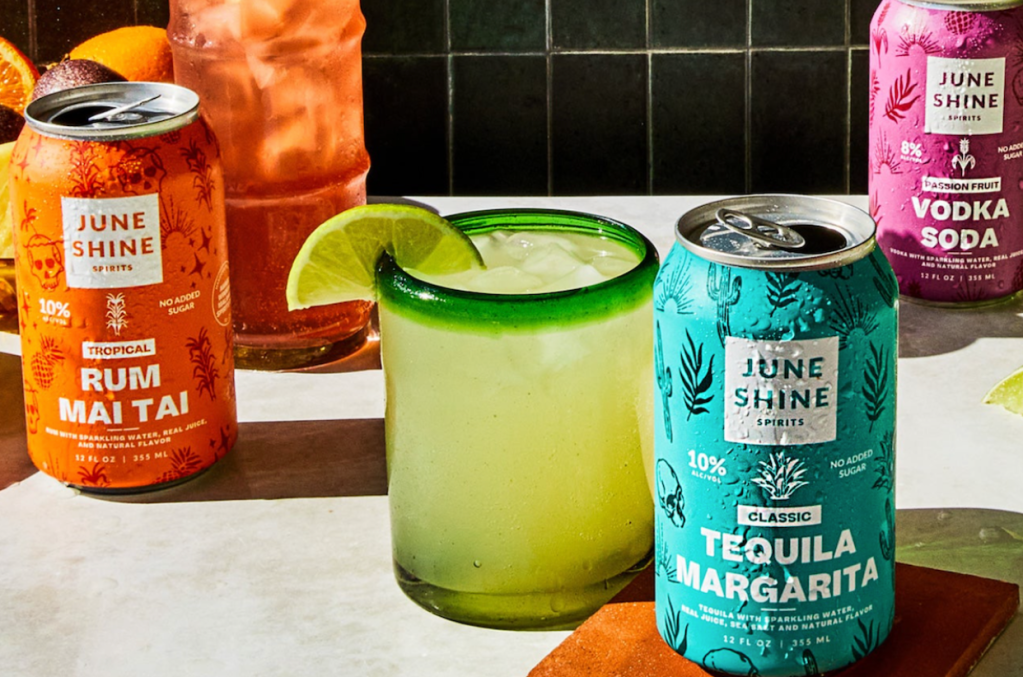
Photo credit: Image via JuneShine – Array
- [Share on Facebook (Opens in new window) Facebook](https://www.upworthy.com/juneshine-eco-friendly-drinks/?share=facebook&nb=1)
- [Share on LinkedIn (Opens in new window) LinkedIn](https://www.upworthy.com/juneshine-eco-friendly-drinks/?share=linkedin&nb=1)
- [Share on X (Opens in new window)X](https://www.upworthy.com/juneshine-eco-friendly-drinks/?share=x&nb=1)
- [Flipboard](https://share.flipboard.com/bookmarklet/popout?v=2&title=These%20delicious%20canned%20cocktails%20use%20better%20tasting%20ingredients%20that%20are%20better%20for%20the%20environment&url=https://www.upworthy.com/juneshine-eco-friendly-drinks/&cid=article_share_flipboard)
- [Share on Mail (Opens in new window) Mail](mailto:?subject=%5BShared%20Post%5D%20These%20delicious%20canned%20cocktails%20use%20better%20tasting%20ingredients%20that%20are%20better%20for%20the%20environment&body=https%3A%2F%2Fwww.upworthy.com%2Fjuneshine-eco-friendly-drinks%2F&share=email)
Today, we’re all more selective about what we eat and [drink](https://www.upworthy.com/this-beer-made-from-old-food-is-the-perfect-way-to-drink-responsibly). But it’s not because we’re pickier or that our tastes have become more extravagant. What’s changed is that we have a greater understanding of how our choices impact the world around us. So when it comes to choosing food and drinks, simply *tasting* good is not good *enough*. We want products that are good for us *and* good for everyone else, too.
Of course, it’s easy to find *food* that is healthy and ethical. Every grocery store in the country has an entire section of organic, sustainably produced products. But beverages? Particularly healthy and ethical beverages of the adult variety? Those are a lot harder to come by. That’s why a couple of guys named Greg Serrao and Forrest Dein created [JuneShine](https://juneshine.com/?sscid=31k6_i2a6w&) hard kombucha and spirits.
Founded in 2018, JuneShine is a San Diego-based craft cocktail company that’s making some big waves in the beverage industry. And it’s not *just* because their drinks taste great—although that does help. You see, JuneShine specializes in alcoholic beverages made from [better ingredients](https://shareasale.com/r.cfm?b=1689401&u=2238517&m=104880&urllink=juneshine.com%2F&afftrack=prod-902975) that are [better for the planet](https://shareasale.com/r.cfm?b=1689401&u=2238517&m=104880&urllink=juneshine.com%2F&afftrack=prod-902975). JuneShine is also carbon neutral, which means their production leaves no carbon footprint, and the company [donates 1% of all sales](https://shareasale.com/r.cfm?b=1689401&u=2238517&m=104880&urllink=juneshine.com%2F&afftrack=prod-902975) to environmental nonprofits working to fight climate change.
JuneShine started out making organic hard kombucha but expanded to organic craft cocktails. So if you want to feel better about the alcohol you drink, you need to give JuneShine a try.
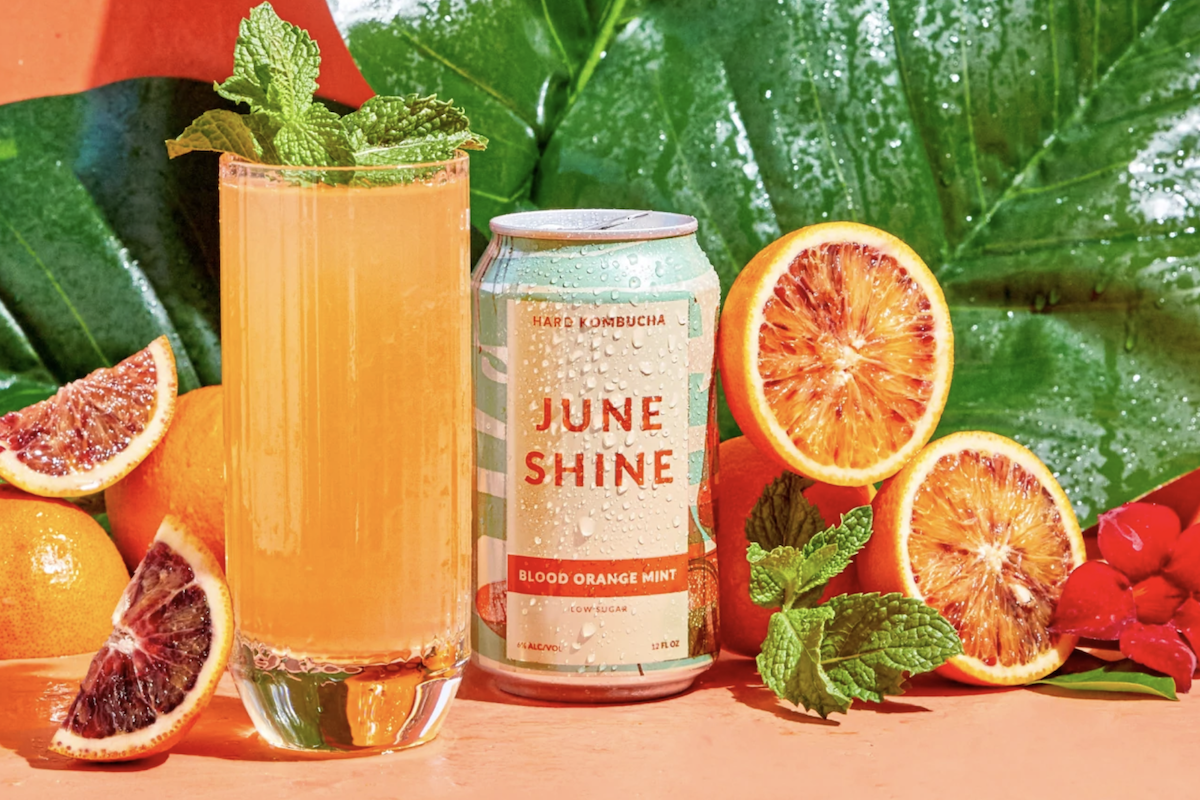
For the uninitiated, kombucha is a fermented beverage made from green or black tea. Because it contains probiotics, some people drink it to boost gut health. However, with its tangy, fruity flavor and mild effervescence, many people just drink it because it tastes great.
As for hard kombucha, it’s exactly what it sounds like: kombucha, but it’s brewed to 6% alcohol by volume (about the same as a light IPA). This refreshing carbonated beverage is made with organic, real fruit juice and spices, is brewed with naturally occurring probiotics, is gluten-free, and contains no additives, preservatives or colorings, unlike most alcoholic beverages.
[JuneShine hard kombucha](https://shareasale.com/r.cfm?b=1689401&u=2238517&m=104880&urllink=juneshine.com%2Fcollections%2Fdrinks&afftrack=prod-902973) is sustainably brewed using organic ingredients and renewable solar energy. Refreshing and never too sweet, JuneShine’s hard kombucha is 6% ABV and comes in 12-ounce cans. Currently, the lineup features eight different flavors: the six “JuneShine Originals” (Midnight Painkiller, Blood Orange Mint, Hopical Citrus, Grapefruit Paloma, Acai Berry and Honey Ginger Lemon) plus two limited edition JuneShine ambassador collaborations (P.O.G. and Prickly Pear Margarita).
[Click here](https://shareasale.com/r.cfm?b=1689401&u=2238517&m=104880&urllink=juneshine.com%2Fcollections%2Fdrinks&afftrack=prod-902973) to order.

Love the classics, but tired of all the added sugars and artificial flavors you get in most *canned* cocktails? [JuneShine Spirits](https://shareasale.com/r.cfm?b=1689401&u=2238517&m=104880&urllink=juneshine.com%2Fcollections%2Fspirits&afftrack=prod-902974) are the perfect solution. They are handcrafted with premium, award-winning spirits, real juice, and sparkling water with no added sugar. They come in 12-ounce cans and are 8-10% ABV.
The Classic Tequila Margarita has real tequila from Casa Orendain in Mexico, tart lime, and a hint of sweet orange. The Tropical Rum Mai Tai contains spiced rum from San Diego-based, award-winning Malahat Spirits, with orange, pineapple, and orange juice. Last but not least, the Passion Fruit Vodka Soda features premium, US-distilled vodka, sparkling water, and a perfectly balanced trio of pineapple, lemon, and passion fruit juices.
[Click here](https://shareasale.com/r.cfm?b=1689401&u=2238517&m=104880&urllink=juneshine.com%2Fcollections%2Fspirits&afftrack=prod-902974) to order.
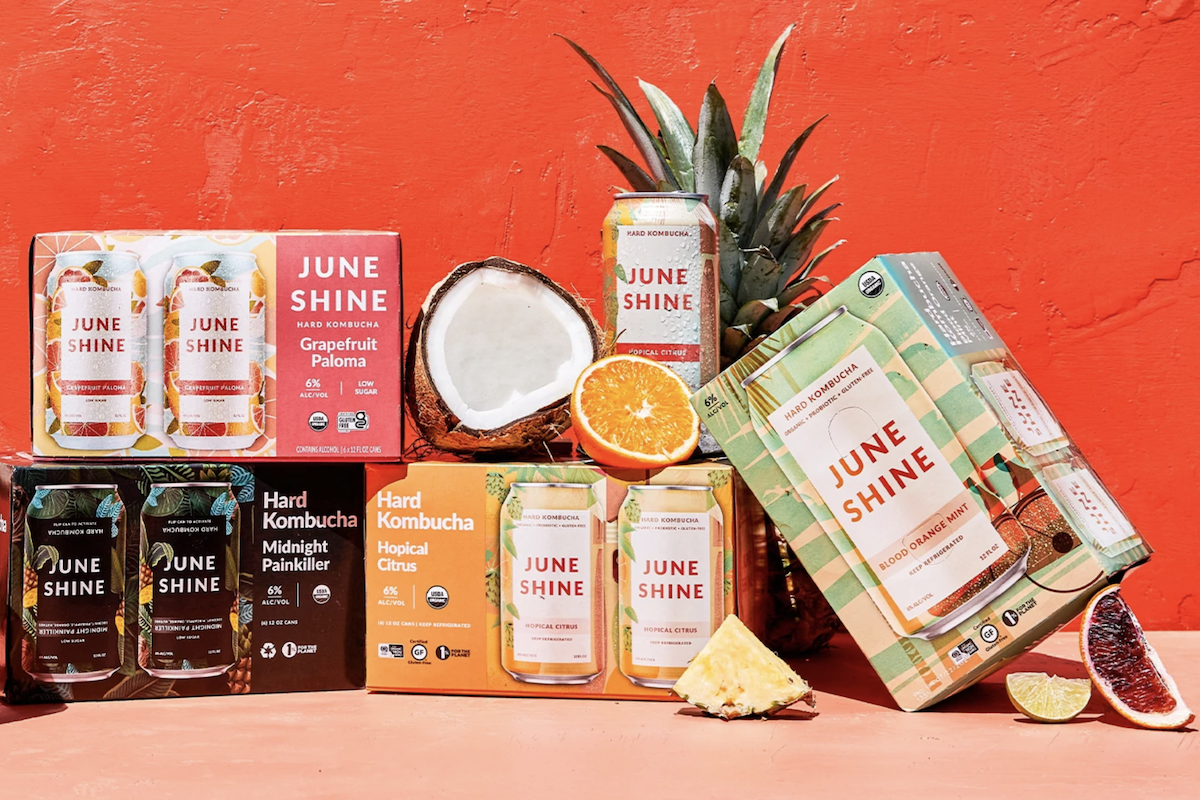
Can’t decide which JuneShine beverages you want to try? Then don’t! Get a little bit of everything with [JuneShine Samplers](https://shareasale.com/r.cfm?b=1689401&u=2238517&m=104880&urllink=juneshine.com%2Fcollections%2Fsamplers&afftrack=prod-902972). These sampler packs come with 12, 24 or 36 cans of JuneShine’s bestsellers, or you can create your own custom sampler pack with flavors of your choosing.
If you’re looking for a [better way to get your buzz on](https://shareasale.com/r.cfm?b=1689401&u=2238517&m=104880&urllink=juneshine.com%2F&afftrack=prod-902975)—one that’s better for you and for the planet—order a sampler pack from JuneShine. These refreshing hard kombuchas and craft cocktails will open up a world of flavors you never even knew existed.
[Add to Google News](https://news.google.com/publications/CAAqJggKIiBDQklTRWdnTWFnNEtESFZ3ZDI5eWRHaDVMbU52YlNnQVAB)
- [Share on Facebook (Opens in new window) Facebook](https://www.upworthy.com/juneshine-eco-friendly-drinks/?share=facebook&nb=1)
- [Share on LinkedIn (Opens in new window) LinkedIn](https://www.upworthy.com/juneshine-eco-friendly-drinks/?share=linkedin&nb=1)
- [Share on X (Opens in new window)X](https://www.upworthy.com/juneshine-eco-friendly-drinks/?share=x&nb=1)
- [Flipboard](https://share.flipboard.com/bookmarklet/popout?v=2&title=These%20delicious%20canned%20cocktails%20use%20better%20tasting%20ingredients%20that%20are%20better%20for%20the%20environment&url=https://www.upworthy.com/juneshine-eco-friendly-drinks/&cid=article_share_flipboard)
- [Share on Mail (Opens in new window) Mail](mailto:?subject=%5BShared%20Post%5D%20These%20delicious%20canned%20cocktails%20use%20better%20tasting%20ingredients%20that%20are%20better%20for%20the%20environment&body=https%3A%2F%2Fwww.upworthy.com%2Fjuneshine-eco-friendly-drinks%2F&share=email)
## Tags
[affiliate](https://www.upworthy.com/tag/affiliate/) [drink](https://www.upworthy.com/tag/drink/) [food](https://www.upworthy.com/tag/food/) [juneshine](https://www.upworthy.com/tag/juneshine/)
## More for You
- In Partnership With [Pura](https://bit.ly/4snx1H1) →
[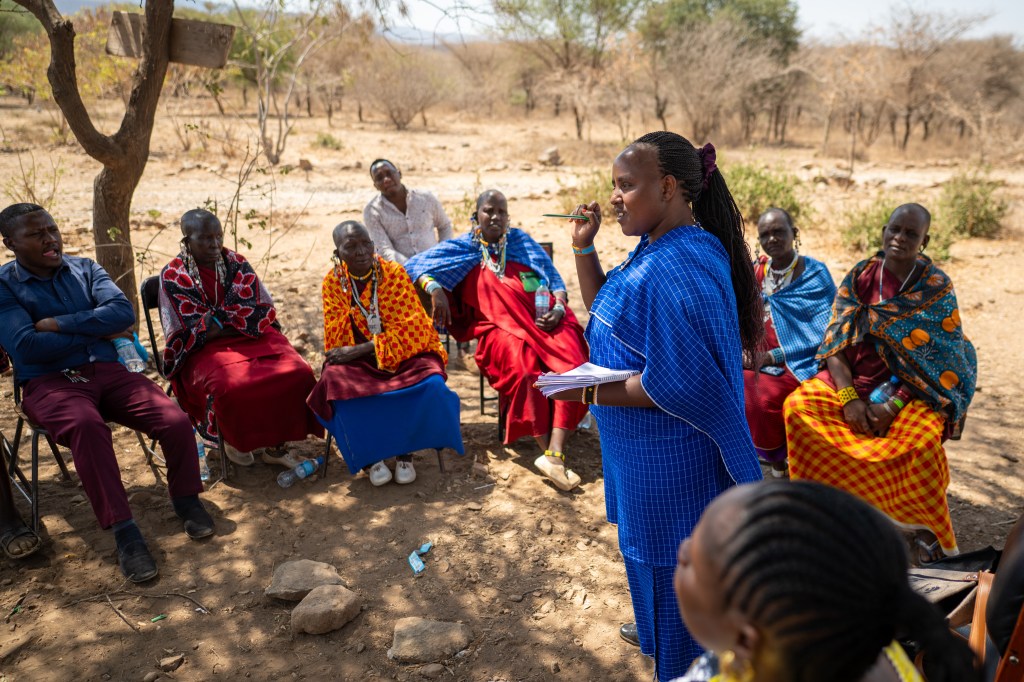](https://www.upworthy.com/pura-malalafund-transforming-girls-education/)
Parent-teacher associations in Maasai community. Captured by James Roh for Pura
[Education](https://www.upworthy.com/category/skills/education/), [Identity](https://www.upworthy.com/category/culture/identity/)
## [Transforming girls’ education across the world takes a village.](https://www.upworthy.com/pura-malalafund-transforming-girls-education/)
From Pakistan to Tanzania, the most effective education solutions are community-led. Here’s how local leaders, in partnership with Malala Fund and supported by Pura, are mobilizing entire communities.
[Sarah Watts](https://www.upworthy.com/author/sarah-watts/)
***
3/30/2026
When asked to describe what Tanzania smells like, Grace Isekore closes her eyes and breathes in deep. For a moment, she’s somewhere else entirely. Tanzania is a rich tapestry of sights and scents, from the smell of sea mist that permeates the coastline to the earthy cardamom and cloves she cooks with in her kitchen. But when Grace emerges from her reverie, her answer is unexpected.
“Tanzania smells like peace,” she says, her eyes still closed. “I see a beautiful country where we are free to move, free to speak. And there is peace within the community.”
For Grace, that sense of peace isn’t just something she smells; it’s something she works toward every day. As a project coordinator with Pastoral Women’s Council (PWC), a women-led organization that empowers pastoralist communities in northern Tanzania, she has seen firsthand how girls flourish when they have the opportunity to attend school. Like scent, education not only connects girls to their own culture, but also helps broaden their horizons, realizing new possibilities for themselves and others. That transformation reshapes entire communities and ripples outward, with the potential to change countries and transform the world for the better.
## **Different scents, different approaches, and communities driving change**
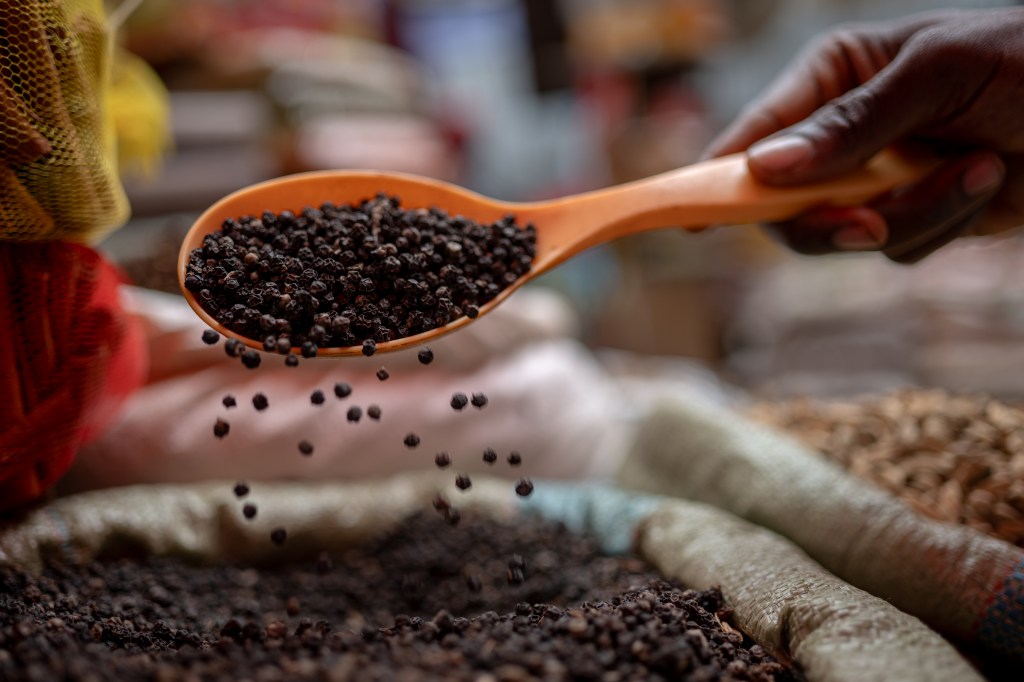
Spices in Tanzania. Captured by James Roh for Pura
For Grace and others around the world, education is freedom, as well as a pathway to a stronger community. Rooted in that shared belief, Pura, a home fragrance company, was inspired to build on their four-year partnership with Malala Fund to create something truly unique: a fragrance collection that connects people through scent to communities in Tanzania, Nigeria, Pakistan, and Brazil, where barriers to girls’ education are among the highest.
Using ingredients from each region, the new [Pura x Malala Fund Collection](https://bit.ly/4bpclsk) uses scent to transport people to these regions directly. “Future in Bloom,” for example, invokes Pakistan’s lush valleys through notes of jasmine, cedarwood, and mango; while Tanzania’s fragrance, “Heart on Fire,” evokes the spirit and joyfulness of the girls who live there through cardamom, lemon, and green tea.
The new Collection honors the work Malala Fund does every day, partnering with locally-led organizations in these four countries to ensure every girl can access and complete 12 years of education. Each scent celebrates the joy, tenacity, and courage of the women and girls driving change on the ground, while also augmenting Pura’s annual grant to Malala Fund by donating eight percent of net revenue from the [Pura x Malala Fund Collection](https://bit.ly/4bpclsk) to Malala Fund directly.
Just as each country’s scent is unique, so too are their needs related to education. But with support from Malala Fund and Pura, local leaders are coming up with creative ways to mobilize entire communities (parents, teachers, elders, and the students themselves, in their pursuit of solutions, understanding that educating girls helps everyone thrive. Here’s how their efforts are creating real, durable impact in Tanzania and Pakistan, and creating a ripple effect that changes the world for the better.
## **Parent-teacher associations help Maasai girls and their communities in Tanzania problem-solve**
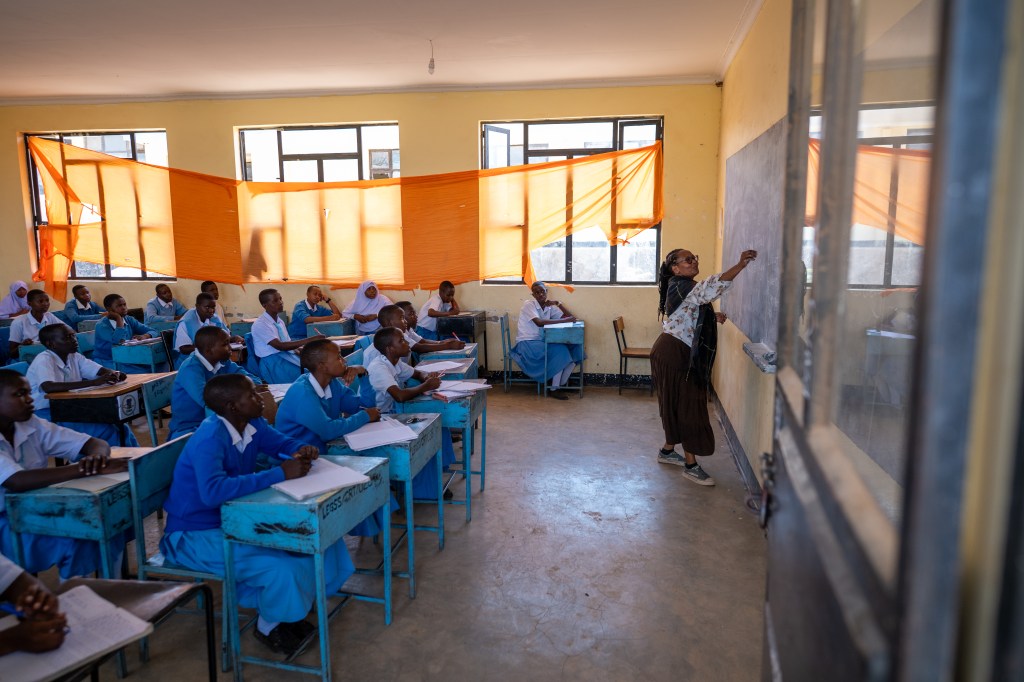
A girl’s school in Tanzania. Captured by James Roh for Pura
Northern Tanzania, Grace’s home, is home to pastoralist communities like the Maasai, a nomadic people who have moved with the seasons to nurture the land and care for their livestock for centuries. The nomadic nature of this lifestyle creates significant and unique barriers to girls’ education. Longstanding gender roles have enabled Maasai to survive in the harsh environment and have placed great value on both women and men. Over time, as nomadic life has been threatened by the privatization of land and stationary education models have been implemented, the reality of pastoralist livelihood has shifted and introduced new complexities. Now, the sheer distance to schools is both a practical challenge and one that often comes with danger from the landscape, predators, and potential exposure to assault along the journey. Girls shoulder the responsibility of household chores and there is often cultural pressure around early marriage – both leading to boys’ education being prioritized over girls’.
“There are very, very good \[pastoralist\] cultural practices, which are passed from generation to generation,” says Janet Kimori, an English teacher at Lekule Girls Secondary School in Longido, Tanzania. But when cultural practices act as educational barriers, “you have to sit down and look for where you are going to assist. As a school, as an individual, the school administration—all of us will chip in and know how we are going to deal with this problem.”
PWC works to ensure girls are able to exercise their right to an education while also preserving pastoralist culture. One successful approach, the organization found, has been the formation of Parent Teacher Associations (PTAs), created with help from Malala Fund. In PTA meetings, students, parents, teachers, elders, and government officials meet, discuss educational barriers, and come up with community-led solutions that preserve and honor their culture while advancing educational outcomes.

PTA meeting in Tanzania. Captured by James Roh for Pura
One recent PTA meeting highlights how these community-led solutions are often the most effective. At Lekule Girls Secondary School, the lack of fresh water forces girls to walk long distances to collect water for the school’s kitchen during the school day, and these long journeys not only disrupt class time but can leave girls vulnerable to sexual assault in isolated areas. Through facilitated discussion, PTA members landed on a solution: installing a borehole to pipe in fresh water to the school. Reliable access to water creates a better learning environment for the girls, but it also benefits the community at large, as local governments are then more likely to invest in health clinics and other community resources nearby.
With a solution in place, the PTA was then able to discuss ideas and map out a course of action. The women would raise money for the cost of the borehole, while the men would recruit workers to dig the hole and lay the pipe. Together, they would ask government officials to match their investment.
The benefits of PTA meetings within the pastoralist communities are undeniable. “The girls are talking and addressing issues in a confident way, and parents feel they are part of the resource team to solve challenges happening at school,” Grace says. One unexpected benefit: The larger cultural impact these PTA meetings have created. Thanks to the success of PTAs within pastoralist communities, the models are now being endorsed on a national level, and schools across Tanzania are starting to use them to solve problems in their own communities. When a community creates opportunities for girls to learn, everyone benefits.
## **Safe spaces in rural Pakistan help students and their parents connect, then drive change**
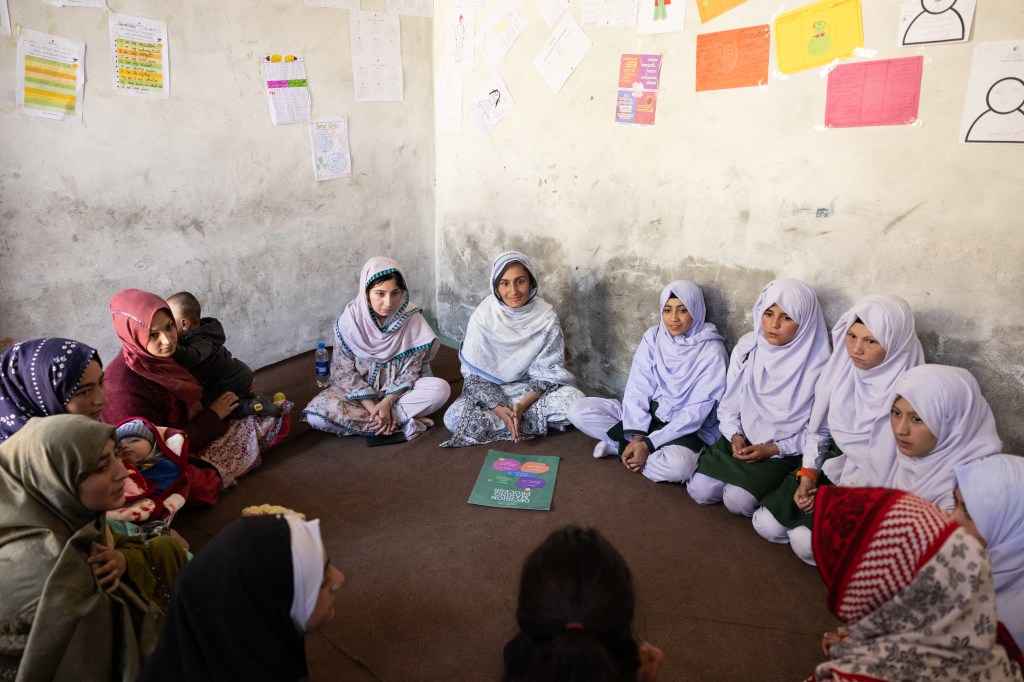
Safe space for girls meeting in Pakistan. Captured by Insiya Syed.
A continent away in Pakistan, the country’s northernmost region of Gilgit-Baltistan seems like a land untouched by time. The region’s looming mountains, snow-capped peaks, lush valleys and crystalline lakes draw nature lovers and landscape photographers from around the world, but living among this kind of breathtaking scenery has its drawbacks. Schools in the region are few and far between, and the area’s harsh climate often makes roads inaccessible for travel. Poverty and gender-based discrimination are additional obstacles, making school even further out of reach, and girls are affected disproportionately. Going up against these barriers requires a persistent, quiet strength that’s found in the women who live there and reflected in Pakistan’s signature scent.
Saheli Circles are how local leaders in Gilgit-Baltistan are bridging the gap between girls and education. An Urdu term for “female friend,” Saheli Circles are after-school safe spaces where girls explore subjects like art and climate change, while also developing skills that help them manage emotions, set goals, and build positive relationships. Girls study in groups, visit the library, play sports, and tackle filmmaking and photography projects, all designed to develop self confidence and teach the girls how to advocate for issues that matter to them. But the work doesn’t stop there.
“What we’re trying to achieve here will only be impactful if it trickles down to the home environment and the school environment,” says Marvi Sumro, founder and program director of Innovate, Educate, and Inspire Pakistan (IEI), the local organization that developed the Saheli Circles model and partnered with Malala Fund in 2021 to make it a reality. Ever since, Saheli Circles have grown to involve teachers, elders, and parents to encourage relationship building that’s essential for young girls and adolescents. “Our spaces can give mothers and daughters an opportunity to interact a little differently—do an art activity, or have a cup of tea together, or some good conversation,” Marvi says.
The relationship building is what makes the biggest positive impact throughout the community. Recently, one Saheli Circle was able to bring together parents, teachers, and administrators to advocate for better education at their local school, and together they convinced the department of education to hire a science teacher. Another Saheli Circle organized a fund where members of the community can contribute monthly to pay for uniforms, books, and other school expenses for the girls in their village, eliminating those small, hidden costs that are often a barrier to education for many. A third Saheli Circle was able to produce a short film about how gender-based household chores can take away valuable study time from girls, leaving them at a disadvantage. “The girls put the film together and showed it to the mothers, and the response from the mothers was just beautiful,” Marvi says.

Girls smiling in Pakistan. Captured by Insiya Syed.
The education and relationship building that the girls receive in Saheli Circles connects them to larger opportunities and economic freedom that are not possible in their hometown. “For girls in Gilgit-Baltistan, education is extremely important because of the fact that we’re so far away from where the economy is, where the opportunity is. Education becomes this bridge for us, for our girls, to access all the opportunity and economy that exists in \[larger cities\].”
From rural Tanzania to remote Pakistan, local organizations prove every day that prioritizing girls’ education benefits everyone. Communities that lift up girls are able to secure resources like clean water and well-staffed schools, as well as build stronger relationships.
These outcomes are only possible because of the women and girls who work tirelessly in these regions to overcome barriers and drive progress. The [Pura x Malala Fund Collection](https://bit.ly/4bpclsk) is a way to honor them, celebrate their achievements, and unite people the world over around a shared belief that education is freedom. Like scent, that belief can build, travel, and has the possibility to transform the world.
***Experience the [Pura x Malala Fund Collection](https://bit.ly/4snx1H1) here, and connect with the stories of real girls leading change across the globe.***
[Keep Reading →](http://%post%)
- [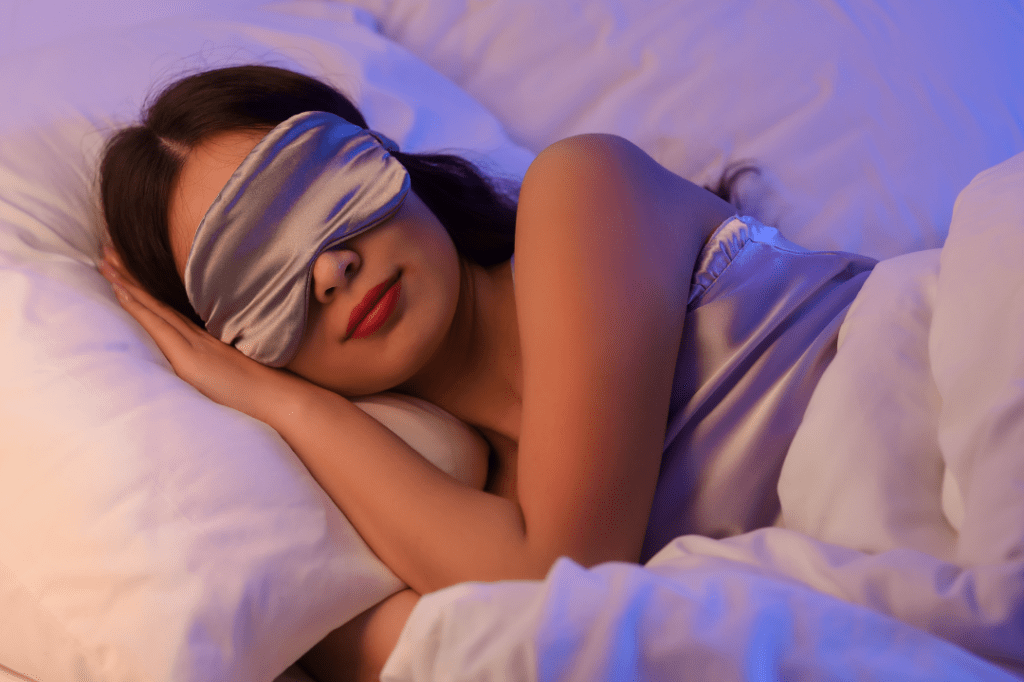](https://www.upworthy.com/5-types-of-sleepers-different-brain-wiring/)
Photo credit: [Canva](https://www.canva.com/photos) – What type of sleeper are you?
[Making Sense of Science](https://www.upworthy.com/category/science/making-sense-of-science/), [Science](https://www.upworthy.com/category/science/)
## [Scientists identify 5 types of sleepers, and each has different brain wiring](https://www.upworthy.com/5-types-of-sleepers-different-brain-wiring/)
The real reason you wake up at 3 a.m.
[Kat Hong](https://www.upworthy.com/author/kat-hong/)
***
4/9/2026
To be honest, most [sleep advice](https://www.upworthy.com/relaxation-techniques-for-sleep-ex1/) sounds like it was written for people who already [sleep well](https://www.upworthy.com/placebo-sleep-study/). We’re offered platitudes like “Stick to a [consistent bedtime](https://www.upworthy.com/1940s-restful-bedtime-routine/).” Revolutionary. Or, “[Avoid screens before bed](https://www.upworthy.com/14-boring-habits-transform-your-life/).” Sure. “[Try to relax](https://www.upworthy.com/easy-melatonin-boosting-shower-trick-may-be-the-answer-for-getting-deep-sleep/).” Oh, thanks. Never thought of that.
For millions of people, this sort of [run-of-the-mill sleep advice](https://www.upworthy.com/how-to-stop-waking-up-each-night-at-3-or-4-in-the-morning-ex1/) feels like being handed a pamphlet about umbrellas in the middle of a tropical storm. The advice isn’t wrong, not really. But it’s basic. Generic. It fails to account for the wildly diverse reasons people struggle with sleep in the first place.
Sleep, however, remains an essential problem for many. Roughly one in three American adults [fails to get the recommended 7+ hours of sleep per night](https://archive.cdc.gov/www_cdc_gov/media/releases/2016/p0215-enough-sleep.html). Nearly half [report trouble staying asleep on three or more nights a week](https://www.usnews.com/news/health-news/articles/2026-04-03/missing-from-most-doctor-patient-talks-sleep-issues). A record-high [57% of Americans say they would simply feel better if they could get more sleep](https://news.gallup.com/poll/642704/americans-sleeping-less-stressed.aspx).
A [new study from Concordia University](https://pmc.ncbi.nlm.nih.gov/articles/PMC12503254/) feels radical for a simple reason: Instead of lumping all sleepers into “good” and “bad” categories, researchers identified five distinct sleep profiles, each with its own causes, brain patterns, and emotional fingerprints. Once you know which one sounds like you, the advice actually starts to make sense.
## A quick look at the science
Researchers in Montreal [studied 770 healthy adults aged 22 to 36](https://journals.plos.org/plosbiology/article?id=10.1371%2Fjournal.pbio.3003399). They analyzed a large, diverse group of real people, not statistical abnormalities. Scientists combined MRI brain scans, sleep quality surveys, cognitive tests, mood assessments, and lifestyle data to build the [most complete picture of human sleep patterns ever assembled](https://journals.plos.org/plosbiology/article?id=10.1371%2Fjournal.pbio.3003399).
What they found: Your sleep isn’t just about what happens when you close your eyes. It’s deeply intertwined with your brain wiring, your emotional life, and how you move through the world during the day. These findings align with the current sleep-deprivation crisis. [Six in ten adults aren’t getting enough sleep](https://news.harvard.edu/gazette/story/2025/11/are-you-getting-enough-sleep-probably-not/), according to the National Sleep Foundation, and the Centers for Disease Control and Prevention reports that [one in three adults is chronically sleep-deprived](https://sleepeducation.org/cdc-americans-sleep-deprived/). But not all of those sleepers are struggling for the same reasons, and that distinction matters more than previously realized.
Your sleep profile isn’t a quirky, fun fact like an astrological sign. Knowing which profile you belong to could unlock a good night’s rest—not just tonight, but for a lifetime.
## The 5 sleep profiles
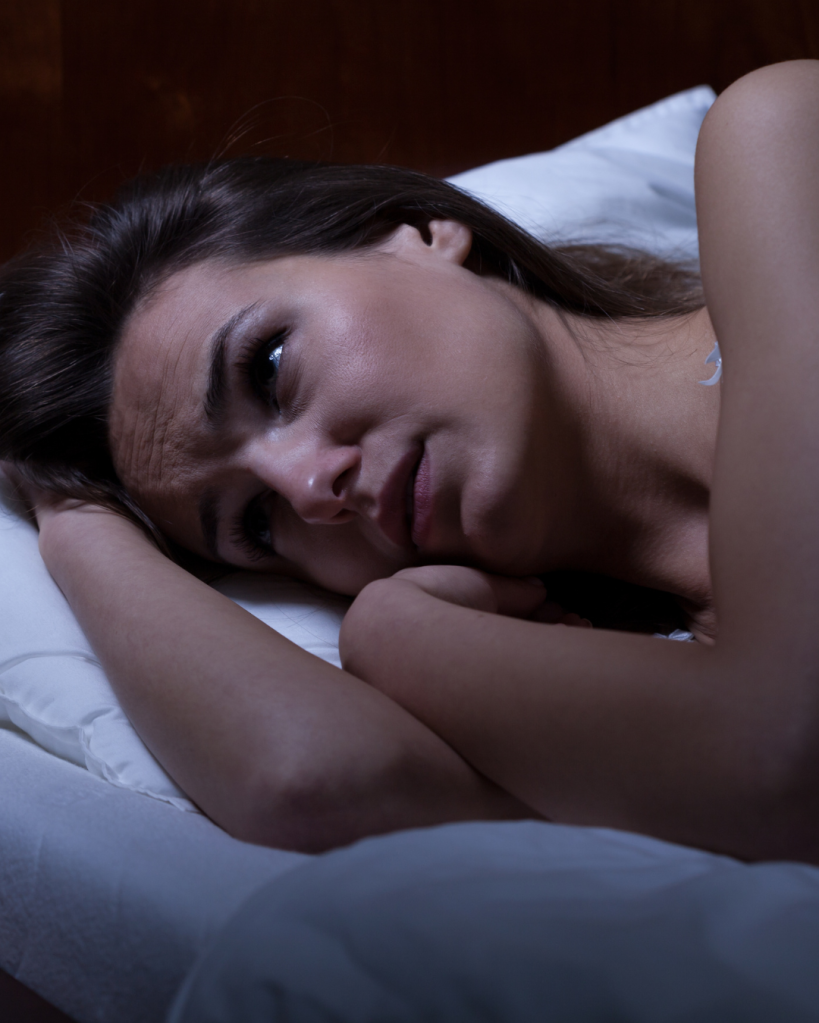
Are you a Struggling Sleeper? [Photo credit: Canva](https://www.canva.com/photos)
## Profile 1: The Struggling Sleeper (LC1)
Does this sound familiar? You get into bed exhausted, lie there for an hour, and suddenly your brain wants to review every awkward conversation you’ve had since 2009. When you do sleep, it’s shallow. You wake up wondering why you even bothered.
LC1, known as the Struggling Sleeper, is the [most prevalent and clinically significant sleep profile](https://journals.plos.org/plosbiology/article?id=10.1371%2Fjournal.pbio.3003399). It is defined by a potent combination: sleep difficulty and underlying mental health struggles, including anxiety, depression, low mood, and poor concentration. These factors are so closely linked that it’s almost impossible to tell which came first. Research has [consistently shown](https://pmc.ncbi.nlm.nih.gov/articles/PMC3669059/) that insomnia and anxiety and depression have a bidirectional relationship, with each feeding and amplifying the other in a self-reinforcing cycle. Treating only the sleep without addressing the emotional root is like mopping the floor while the faucet is still running.
Brain scans reveal another neurological layer: Individuals with LC1 exhibit hyperactivity in emotional processing regions and reduced connectivity in areas tied to rumination and focus. The brain gets stuck in a loop. So when it’s 2 a.m. and you’re mentally planning contingencies for catastrophes that haven’t happened, this is your brain’s wiring, not a personal failure.
Somehow, Resilient Sleepers make it through the night. [Photo credit: Canva](https://www.canva.com/photos)
## Profile 2: The Resilient Sleeper (LC2)
This one’s surprising. While Resilient Sleepers often carry real psychological stress—attention difficulties, low mood, pressure that would flatten most people—somehow, they sleep.
This profile offers a fascinating contrast to LC1. People in LC2 [experience similar levels of psychological burden as those in Profile 1](https://pmc.ncbi.nlm.nih.gov/articles/PMC12503254/), but their sleep does not break down under that pressure. Researchers think this may reflect a neural resilience pathway—a different kind of wiring that prevents stress from taking over the sleep system.
Their brain scans [reveal something intriguing](https://pmc.ncbi.nlm.nih.gov/articles/PMC12503254/): strong attention and control networks that act as a buffer, preventing emotional noise from flooding the sleep system at night. You might even underestimate your own sleep quality, thinking it’s worse than it actually is. Researchers believe this profile could be key to understanding what the brain can learn to defend, and whether those defenses can be developed in other sleepers.
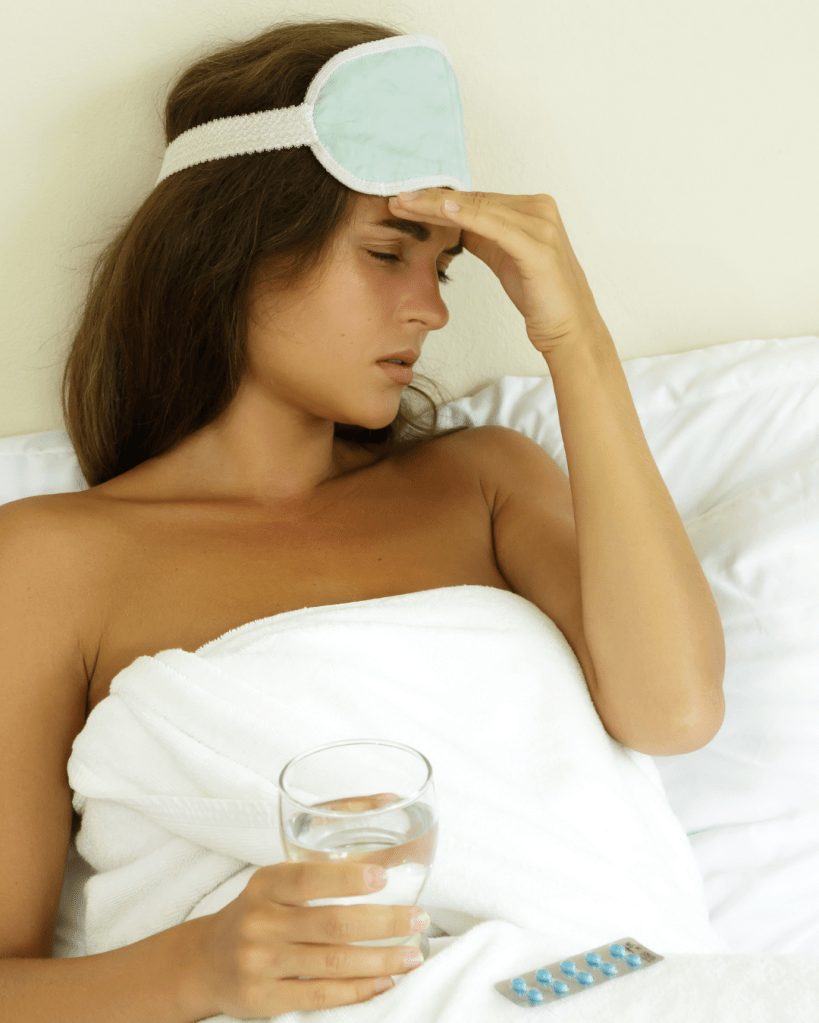
For the Medicated Sleeper, sleeping aids are non-negotiable. [Photo credit: Canva](https://www.canva.com/photos)
## Profile 3: The Medicated Sleeper (LC3)
Melatonin gummies, sleepy tea, a glass of wine, a Benadryl “just this once” that became every night—if sleep aids have quietly become non-negotiable, you probably recognize this profile.
[Medicated Sleepers](https://pmc.ncbi.nlm.nih.gov/articles/PMC12503254/) are often doing well by most measures—they’re socially active and physically healthy—but simply can’t fall asleep on their own without a little chemical assist. The trade-off? [Mild declines in visual memory and emotional regulation](https://www.cnn.com/2025/10/15/health/5-sleep-types-mental-health-study-wellness), as sedating medications have been shown to affect both perceptual and emotional processing.
An important note: The [researchers found](https://pmc.ncbi.nlm.nih.gov/articles/PMC12503254/) that LC3, LC4, and LC5 were less robust than LC1 and LC2, suggesting these profiles may be more variable across populations and should be interpreted with caution.
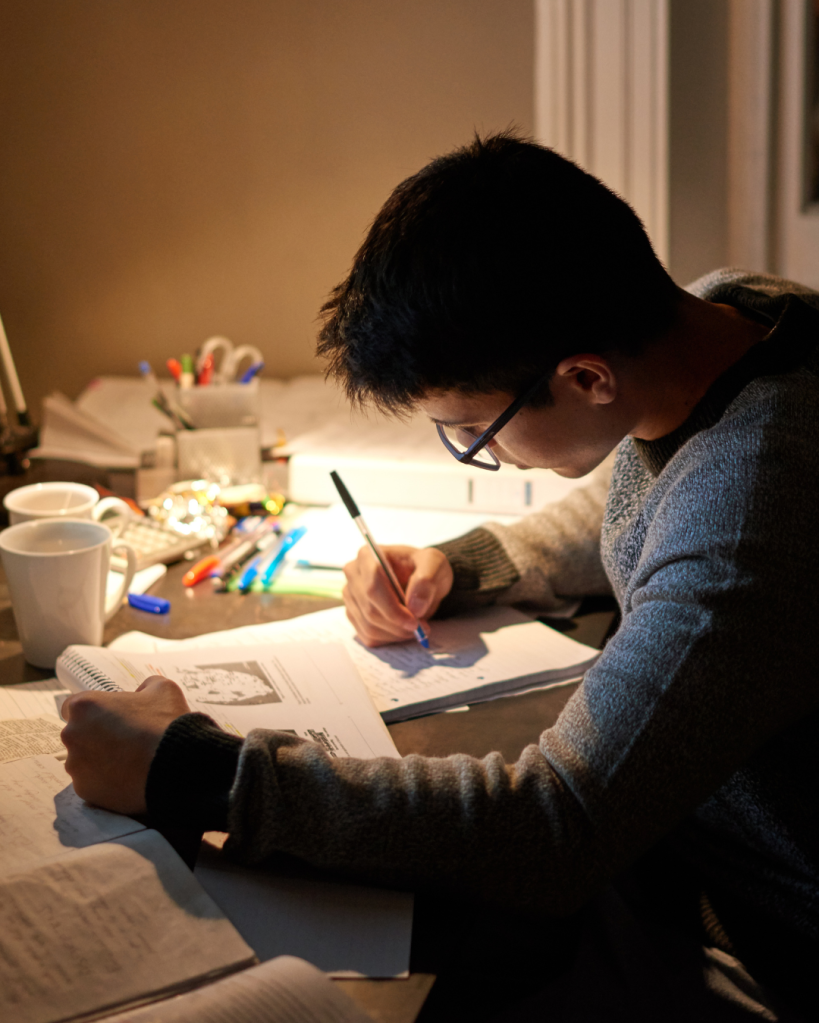
Short Sleepers don’t need less sleep—they’re sleep-deprived. [Photo credit: Canva](https://www.canva.com/photos)
## Profile 4: The Short Sleeper (LC4)
You’re efficient. You’ve adapted. So five and a half hours of sleep is fine—you’ve been running on it for years.
Here’s the hard truth: The brain scans of Short Sleepers [look nearly identical to those of people who have pulled a full all-nighter](https://pmc.ncbi.nlm.nih.gov/articles/PMC12503254/). No, not just tired people—people who literally haven’t slept. As you can imagine, the cognitive costs of this sleeper profile accumulate quickly, often below the threshold of what we can feel but well above what researchers can measure.
LC4 is characterized by regularly sleeping fewer than six to seven hours per night, and the cognitive impacts are measurable: slower reaction times, decreased problem-solving ability, lower emotional patience, and difficulty managing interpersonal frustration. You may pride yourself on needing little sleep, having built an identity around efficiency. But your partner notices you snap more easily. You’ve forgotten three appointments this month. You’re not superhuman. You’re sleep-deprived, and your brain is working overtime to hide it from you.
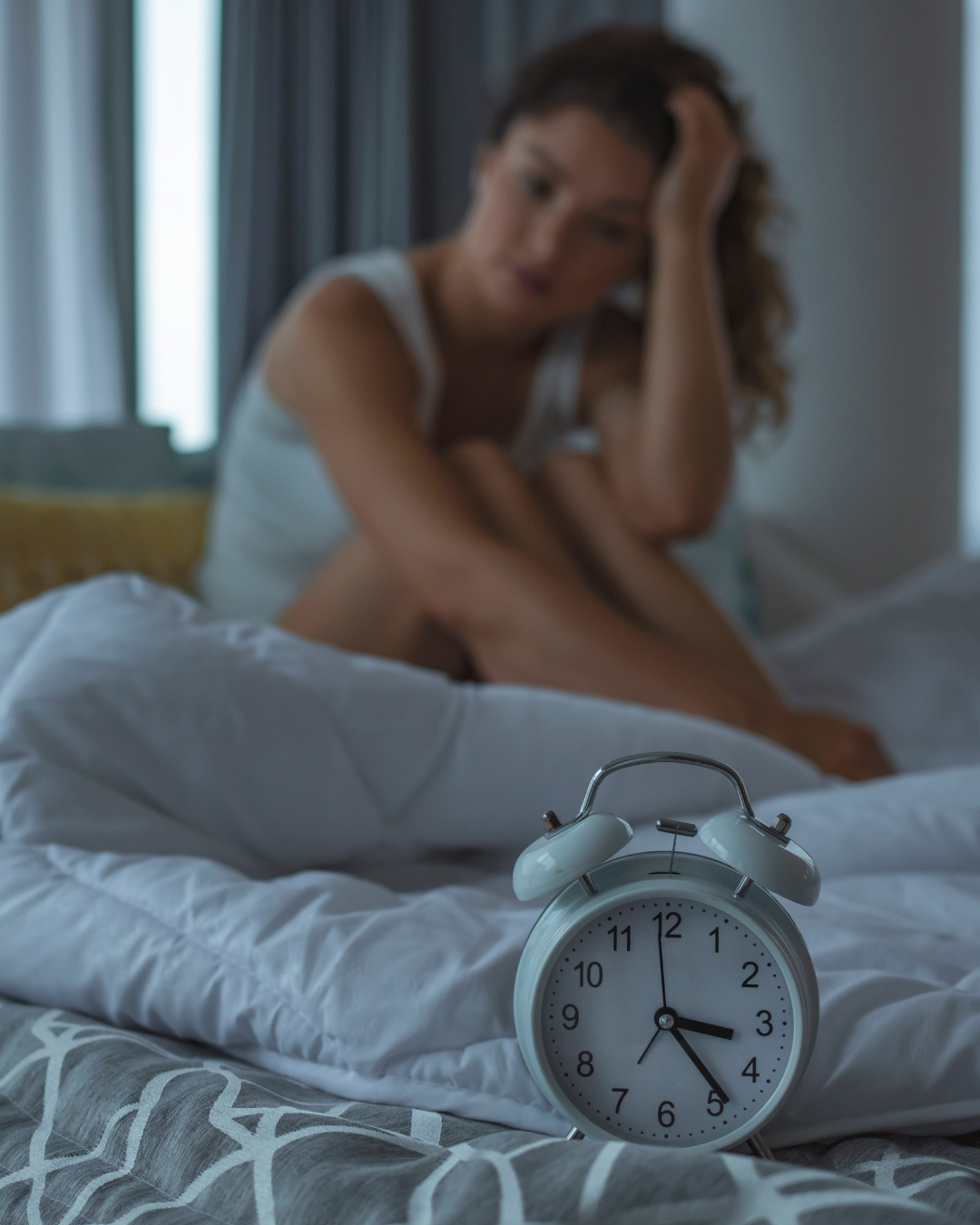
Fractured sleep? You might be a Disturbed Sleeper. [Photo credit: Canva](https://www.canva.com/photos)
## Profile 5: The Disturbed Sleeper
You spend eight hours in bed, but you wake up exhausted. Throughout the night, everything in the world seems to keep you from rest—discomfort, noise sensitivity, a partner who snores—and despite spending plenty of time technically “sleeping,” Disturbed Sleepers rarely feel rested. The quality of sleep is just too fractured.
LC5 is characterized by [nighttime disturbances and interruptions in physical sleep](https://www.powershealth.org/about-us/newsroom/health-library/2025/10/09/turns-out-there-are-5-sleep-styles-and-each-affects-your-brain-differently), and its downstream effects include anxiety, substance use as a coping mechanism, and poor performance across various cognitive domains.
This was the only profile in the study to [show a notable gender difference](https://pmc.ncbi.nlm.nih.gov/articles/PMC12503254/), with women scoring significantly higher—consistent with research showing that women experience greater sleep fragmentation over their lifetimes.
## Why your sleep type matters
The stakes go well beyond feeling groggy. Each of these profiles carries unique long-term health risks, and the brain research is truly concerning.
## The dementia connection
Every night, while you’re asleep, your brain quietly does something extraordinary. It activates what scientists call the [glymphatic system](https://pmc.ncbi.nlm.nih.gov/articles/PMC7698404/)—a built-in janitorial crew of fluid channels that weave between your brain cells. Their job? [To flush out toxic proteins that accumulate during the day](https://www.nature.com/articles/s41467-026-68374-8), including amyloid beta and tau. These are the same proteins that clump and tangle in the brains of people with Alzheimer’s disease.
This cleanup process happens primarily during deep, slow-wave sleep—the kind that disrupted, shortened, or fragmented sleep tends to steal first. And [even one night of sleep deprivation measurably impairs that clearance](https://www.nature.com/articles/s41467-026-68374-8). Not a year of bad habits. One night.
When this system fails over time—as it does in people with the Struggling Sleeper, Short Sleeper, and Disturbed Sleeper profiles—toxic proteins don’t just linger; [they build up](https://www.science.org/doi/10.1126/science.abb8739). They cluster together. They trigger inflammation, worsening the problem. It’s a slow, silent spiral that can develop for years before anyone notices anything wrong.
## The anxiety-depression loop
The relationship between sleep and mental health isn’t a one-way street where anxiety causes bad sleep. It’s more like a revolving door. [Decades of research](https://pubmed.ncbi.nlm.nih.gov/18374745/) have confirmed that insomnia predicts the onset of depression, and depression predicts the worsening of insomnia. [Each one fuels the other](https://pmc.ncbi.nlm.nih.gov/articles/PMC5992096/), back and forth, in a cycle that can go on for years.
If you treat depression alone and ignore sleep, [you’ll often get incomplete results](https://pmc.ncbi.nlm.nih.gov/articles/PMC3669059/). If you treat only the sleep and overlook the underlying anxiety, the same issue occurs. The two are so closely connected that addressing one without the other usually leaves the whole thing unchanged.
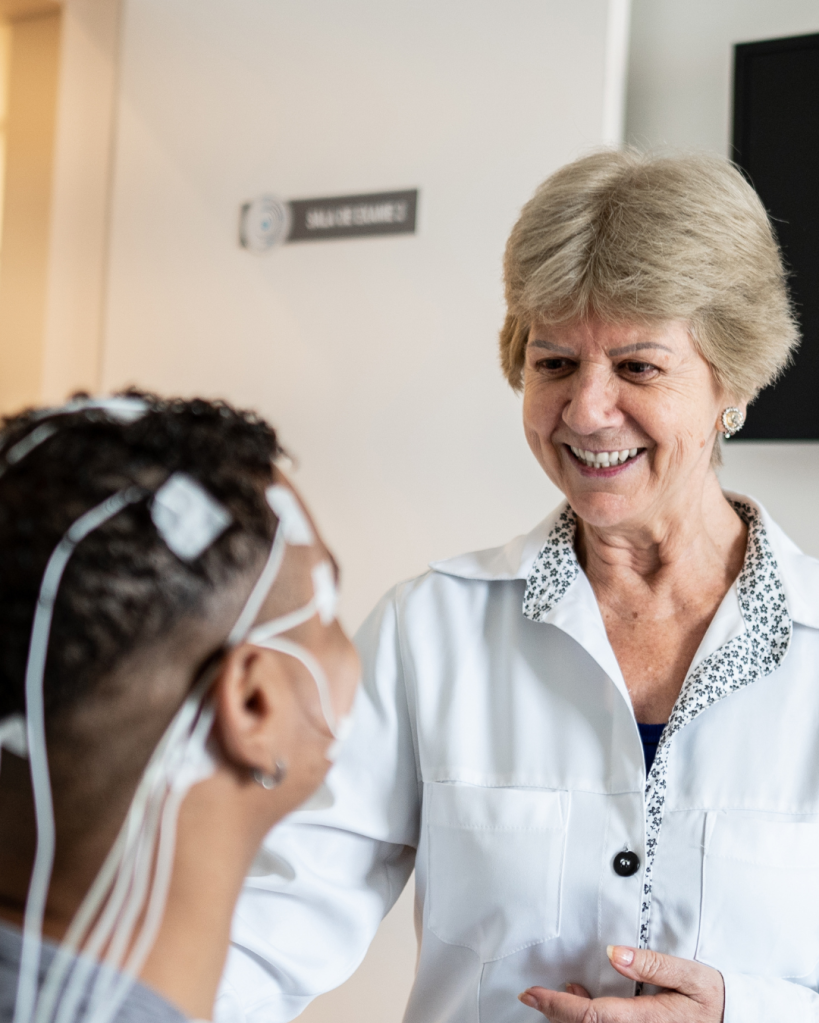
Different sleep problems require different solutions. [Photo credit: Canva](https://www.canva.com/photos)
## Okay, so what can you actually do about it?
The biggest takeaway from the research is the idea that [sleep problems don’t all stem from the same place](https://pmc.ncbi.nlm.nih.gov/articles/PMC12503254/). They can’t all be fixed in the same way. What helps a Struggling Sleeper might do nothing for a Short Sleeper. What a Disturbed Sleeper needs is a completely different conversation from what a Medicated Sleeper needs. Here’s a rundown of what your sleeper profile requires for genuine rest:
## If you’re a Struggling Sleeper (Profile 1):
The most important thing to understand is that you can’t just treat the sleep and ignore what’s underneath it. The [anxiety and the insomnia are in a relationship](https://pubmed.ncbi.nlm.nih.gov/18374745/), and both of them need to be addressed at the same time. The [treatment with the strongest evidence is CBT-I](https://pmc.ncbi.nlm.nih.gov/articles/PMC3481424/) (Cognitive Behavioral Therapy for Insomnia), [but it could also help to keep a “worry list.”](https://sleep.hms.harvard.edu/education-training/public-education/sleep-and-health-education-program/sleep-health-education-68) Before bed, spend 15 minutes writing down everything that’s rattling around in your mind. Getting it on paper moves it out of your brain.
## If you’re a Resilient Sleeper (Profile 2):
Congrats! You’re doing something right, even if you’re not sure what it is.
Take a minute to take stock of your stress-management habits; something in your routine is actively protecting your sleep. Jot this down, whatever it is, and try not to trade it away when life gets busy. It’s doing more for your mental health than you realize.
One gentle caution: Resilience isn’t a permanent condition. Major life disruptions—loss, burnout, significant transitions—can shift your profile over time. Keep checking in.
## If you’re a Medicated Sleeper (Profile 3):
No judgment here: a lot of people are in this category, and most of them didn’t plan to be.
But it’s worth having an honest conversation with a doctor about whatever you’re taking, because [many over-the-counter sleep aids are designed for occasional use, not nightly use](https://pmc.ncbi.nlm.nih.gov/articles/PMC4805417/). Long-term reliance changes how your brain reaches sleep, and that shift is worth understanding. [CBT-I is worth trying here, too](https://pmc.ncbi.nlm.nih.gov/articles/PMC5976005/): Studies specifically show it reduces dependence on sleep medications while improving overall outcomes.
## If you’re a Short Sleeper (Profile 4):
Let’s name the thing directly: The belief that you’ve adapted to six hours is one of the most common and most convincing lies the sleep-deprived brain tells itself.
True Short Sleepers—people who genuinely thrive on less than seven hours due to a rare genetic trait—[represent less than 3% of the population](https://journals.plos.org/plosbiology/article?id=10.1371%2Fjournal.pbio.3003399). Everyone else who “only needs six hours” has simply stopped noticing the deficit. Treat 7–8 hours the way you treat eating or exercise: a non-negotiable, not a nice-to-have.
## If you’re a Disturbed Sleeper (Profile 5):
Sleep hygiene alone probably isn’t going to fix this, because the root is often physical, and physical problems need physical solutions.
If you wake up multiple times a night, snore, or feel unrested despite spending plenty of time in bed, [consider getting evaluated for sleep apnea](https://pmc.ncbi.nlm.nih.gov/articles/PMC12503254/). If chronic pain is disrupting your sleep, [address it directly rather than just managing around it at night](https://www.nhs.uk/every-mind-matters/mental-wellbeing-tips/how-to-fall-asleep-faster-and-sleep-better/).
A [consistent sleep and wake schedule](https://www.mayoclinic.org/healthy-lifestyle/adult-health/in-depth/sleep/art-20048379) also helps anchor your circadian rhythm, making it easier for your body to build the biological pressure for sleep that actually gets you through the night.
You deserve genuine rest. [Photo credit: Canva](https://www.canva.com/photos)
## One size doesn’t fit all (and it never did)
Knowing your profile isn’t just interesting self-knowledge. It’s a starting point for solving the problem and finally getting the kind of sleep that makes everything else in life feel a little more possible.
So, which one sounds like you?
[Keep Reading →](http://%post%)
- [](https://www.upworthy.com/one-sentence-haults-argument-ex1/)
Photo credit: [Canva](http://canva.com/photos) – A group of people in the midst of a lively debate
[People Skills](https://www.upworthy.com/category/science/people-skills/), [Science](https://www.upworthy.com/category/science/)
## [Expert shares the 1 sentence that can instantly stop an argument from boiling over](https://www.upworthy.com/one-sentence-haults-argument-ex1/)
The trick is that you have to really mean it.
[Tod Perry](https://www.upworthy.com/author/tod-perry/)
[Upworthy Staff](https://www.upworthy.com/author/upworthy-staff/)
***
4/8/2026
We live in an age of conflict. Sharp [political](https://www.upworthy.com/americans-with-angry-offensive-political-signs-and-flags-are-more-likely-to-be-psychopaths) and social divides are everywhere, and while it’s easy to theoretically write off people who disagree with us on fundamental core issues and values, the reality is that we often must co-exist with them and learn to manage our conflicts in a healthy way. Sometimes that means putting aside our differences and “agreeing to disagree.” Something it means hashing them out.
The quickest way to stop having a [constructive dialog](https://www.upworthy.com/tag/arguments) with someone is when they become defensive. This usually results in them digging in their heels and making you defensive. This can result in a [vicious cycle](https://www.verywellmind.com/what-is-defensiveness-5115075#:~:text=While%20defensive%20behaviors%20might%20help,other%20person%20defensive%20as%20well.) of back-and-forth defensive behavior that can feel impossible to break. Once that happens, the walls go up, the gloves come off and resolving the situation becomes tough.
**[Amanda Ripley](https://www.amandaripley.com/), author of [“High Conflict: Why We Get Trapped and How We Get Out,”](https://www.google.com/aclk?sa=L&ai=DChsSEwi-3u6h7N6TAxXTJkQIHYerGnMYACICCAEQABoCZHo&co=1&ase=2&gclid=CjwKCAjw-dfOBhAjEiwAq0RwI-4sbqIJvUhUT6lFlkqle6NVaqJUv0pDqHfq7fFF6AdXFiAS2Y8UThoCgcMQAvD_BwE&cid=CAAS0gHkaHOpbEPVWVIonPXbASrRCAXA7LkB47N-_4Kc3xDj-4ivY75v3lQDrmBOn1GdsWbFi7lMV_IPnGwsjtOXLkzrvMNXZ7ZVgoSgk1TW0meWhQEASP_t0MWEOWIiWNQ8ZU9GujTLxpgA3SyX6sB6J4LvsL5V8ofq_cKk1Uc736gEGzv8535aFs0PaV4O2qI1cEnWaXzz8hORD1UP9JST83R93UwlmLD7Ei8q-56SOHctcqedDfe394JOLBTm00mUpG4w37zcFdFSyGFGjXHaU8vDZnA&cce=2&category=acrcp_v1_33&sig=AOD64_3sSp8f6a1l_2bfqn3gMAB-o9I8Kw&q&nis=4&adurl&ved=2ahUKEwj1wOih7N6TAxWTEEQIHXJFI_QQ0Qx6BAgMEAE) says in her book that you can prevent someone you disagree with from becoming defensive by being [curious](https://www.upworthy.com/tag/kids-curiosity) about their opinion.**
Ripley is a bestselling author and the co-founder of [Good Conflict](https://www.thegoodconflict.com/), a media and training company that helps people reimagine conflict. Not surprisingly, she’s in high demand on news programs, conferences, and media summits these days.
## How to have a constructive conversation
Let’s say you believe the room should be painted red and your spouse says it should be blue. Instead of saying, “I think blue is ugly,” you can say, “It’s interesting that you say that…” and ask them to explain why they chose blue.
**The key phrase is: “It’s interesting that you say that…”**
It shows genuine curiosity in their point of view. That’s critical to avoid someone shutting down on you.

Two men shake hands while a woman looks on. Photo credit: [Canva](http://canva.com/photos)
When you show the other person that you genuinely care about their thoughts and appreciate their reasoning, they let down their guard. This makes them feel heard and encourages them to hear your side as well. This approach also encourages the person you disagree with to consider coming up with a collaborative solution instead of arguing to defend their position.
It’s important to assume the other person has the best intentions while listening to them make their case. “To be genuinely curious, we need to refrain from judgment and making negative assumptions about others. Assume the other person didn’t intend to annoy you. Assume they are doing the best they can. Assume the very best about them. You’ll appreciate it when others do it for you,” Kaitlyn Skelly at [The Ripple Effect Education writes.](https://therippleeffecteducation.ca/tell-me-more/)
Look out for [signs of defensiveness](https://www.verywellmind.com/what-is-defensiveness-5115075) like blaming, criticizing, making excuses, or being passive-aggressive. These are warning signals that your conversation is veering off the rails.
## Phrases you can use to avoid an argument
The curiosity approach can also involve affirming the other person’s perspective while adding your own, using a phrase like, “On the one hand, I see what you’re saying. On the other hand…”
Here are some other phrases you can use:
*“I wonder if…”*
*“It’s interesting that you say that because I see it differently…”*
*“I might be wrong, but…”*
*“How funny! I had a different reaction…”*
*“I hadn’t thought of it like that! For me, though, it seems…”*
*“I think I understand your point, though I look at it a little differently…”*

Two men high-fiving one another. Photo credit: [Canva](http://canva.com/photos)
## What’s the best way to disagree with people?
A 2016 study from [Yale University](https://onlinelibrary.wiley.com/doi/full/10.1111/cogs.12380) supports Ripley’s ideas. The study found that when people argue to “win,” they take a hard line and only see one correct answer in the conflict. Whereas those who want to “learn” are more likely to see that there is more than one solution to the problem. At that point, competition magically turns into collaboration.
“Being willing to hear out other perspectives and engage in dialogue that isn’t simply meant to convince the other person you’re right can lead to all sorts of unexpected insights,” psychologist and marketing professor [Matthew Fisher](https://www.smu.edu/cox/academics/faculty/matthew-fisher) at Southern Methodist University [tells CNBC.](https://www.cnbc.com/2023/01/19/yale-researchers-how-highly-successful-people-argue.html)
The key words are “willing” and “genuine.” These phrases aren’t magic bullets designed to help you level your opponents. You have to actually, truly be willing to learn about their perspective and be open to changing your mind.
> [@danbharris](https://www.tiktok.com/@danbharris?refer=embed "@danbharris")
>
> Let me know in the comments if this data rings true to you and your experience of conflict. And check out danharris.com for more from Amanda Ripley including what she has to say about “conflict entrepreneurs,”people who inflame turmoil to benefit themselves. [\#conflict](https://www.tiktok.com/tag/conflict?refer=embed "conflict") [\#healthyconflict](https://www.tiktok.com/tag/healthyconflict?refer=embed "healthyconflict") [\#communication](https://www.tiktok.com/tag/communication?refer=embed "communication") [\#tenpercenthappier](https://www.tiktok.com/tag/tenpercenthappier?refer=embed "tenpercenthappier") [\#10percenthappier](https://www.tiktok.com/tag/10percenthappier?refer=embed "10percenthappier")
>
> [♬ original sound – dan harris](https://www.tiktok.com/music/original-sound-7425637321568963370?refer=embed "♬ original sound - dan harris")
Another common tip that usually comes from the world of couple’s counseling is to stop seeing the other person as your adversary. If you can imagine the two of you on the same team versus the problem, your conversations will be more productive.
In a world of strong opinions and differing perspectives, curiosity can be a superpower that helps you have more constructive conversations with those with whom you disagree. All it takes is a little humility and an open mind, and you can turn conflict into collaboration, building bridges instead of walls.
*This article originally appeared two years ago. It has been updated.*
[Keep Reading →](http://%post%)
- [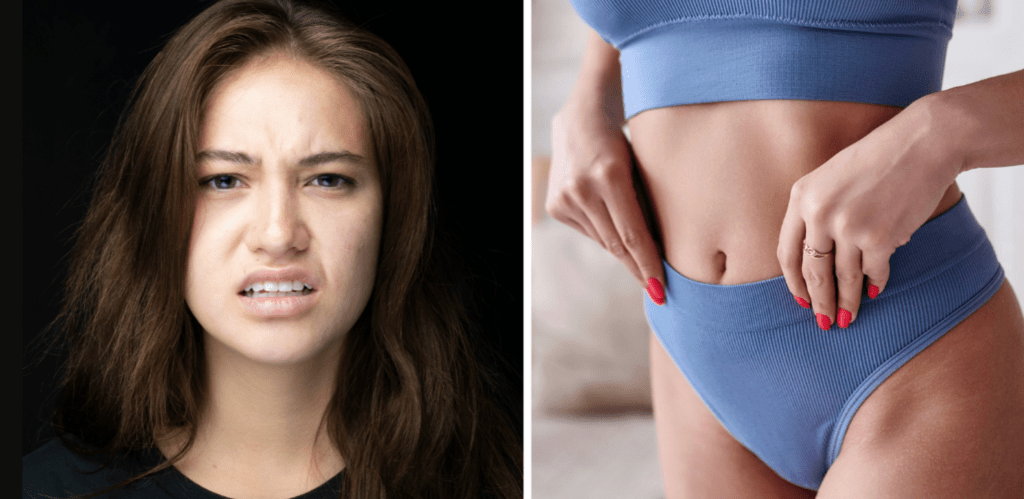](https://www.upworthy.com/what-nurses-think-about-your-privates-ex1/)
Photo credit: [Unsplash](https://unsplash.com/images/stock/public-domain) – A woman in her underwear
[Health](https://www.upworthy.com/category/science/health/), [Science](https://www.upworthy.com/category/science/)
## [Waxers, doctors, and nurses share their unfiltered inner thoughts about your ‘privates.’](https://www.upworthy.com/what-nurses-think-about-your-privates-ex1/)
They’re professionals, but they’re also human beings.
[Evan Porter](https://www.upworthy.com/author/evan-porter/)
[Upworthy Staff](https://www.upworthy.com/author/upworthy-staff/)
***
4/8/2026
Look, let’s just get it out there: It’s uncomfortable any time you have to get fully or partially naked for a medical exam or cosmetic procedure. Right? It’s natural and part of the process, but while you know that the person on the other end is a professional who’s just there to do their job, they’re also a human being. Getting naked in front of them in any other context would be extremely weird, and it’s hard to completely shut that part of your brain off no matter the setting.
It’s amazing how [body dysmorphia](https://www.nhs.uk/mental-health/conditions/body-dysmorphia/#:~:text=Body%20dysmorphic%20disorder%20\(BDD\)%2C,affects%20both%20men%20and%20women.) really knows no bounds. We tend to think of insecurities as focusing on things like the flatness of our stomachs or the size of our [noses](https://www.upworthy.com/this-womans-nose-could-be-the-key-to-spotting-parkinsons-early-rp). But perhaps the thing that people are most self-conscious about is the thing we actually talk about the least.
According to one study, [about 30%](https://www.livescience.com/40192-penis-shame-guys-heads.html) of men are “dissatisfied” with the size, shape, or appearance of their penis. That number is even higher when it comes to how women feel about their vaginas. A [survey](https://www.refinery29.com/en-us/2019/03/226659/vagina-attitudes-survey) done by *[Refinery29](https://www.refinery29.com/en-us/)* showed that almost half of women had “concerns” about the appearance of their vulva.
The numbers say anywhere from a third to a half or more of all people think there’s something wrong with the way our private parts look. Which begs the question: If we all think we’re [weird](https://www.upworthy.com/weird-things-about-america), is anybody really weird at all?
A fascinating Reddit [thread](https://www.reddit.com/r/AskReddit/comments/1h0l73b/waxers_how_often_are_you_surprised_by_how_a/) recently polled experts on this very topic—people who tend to see an awful lot of genitals in their line of work: Waxing technicians or estheticians. The responses were oddly inspiring.
**The prompt asked, “Waxers, how often are you surprised by how a clients genitals look?”**
Professional waxers chimed in with their stories and observations. As did doctors, nurses, pelvic floor therapists, urologists, and lots of other pros who work closely with people’s unmentionables.
Here are a few of the best responses:
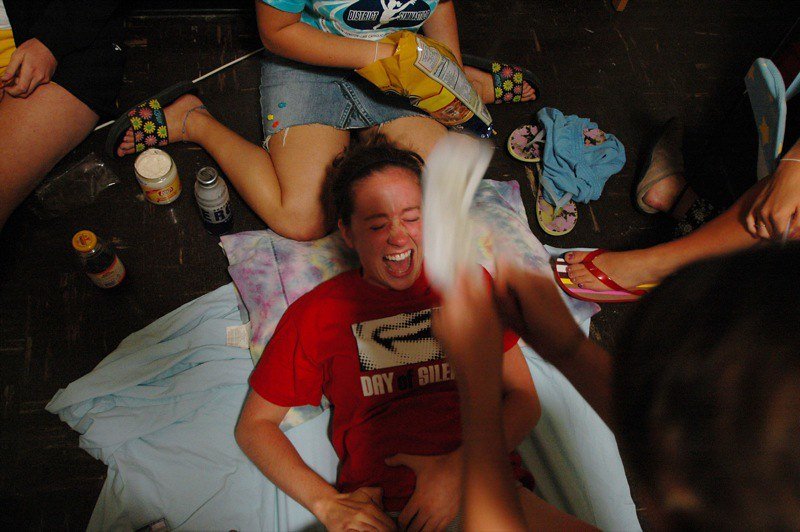
Young women having fun at a sleepover. Photo credit: [Laura Woolf via Flickr](https://www.flickr.com/photos/131748327@N04/)
*“Gonna chime in as a doctor – and I would imagine it’s the same for professional waxers. WE. DONT. CARE. And in my case I would be surprised if you’d show me something I’ve never seen before.”* – feelgoodx
*“I use to be very self conscious and insecure about my genitals. I honestly thought I had a weird vagina. But working in this industry has taught me that every one is a snowflake. I’ve seen it all and nothing surprises me. Just clean yourself before coming in.” –* Wild-Clementine
*Not a waxer but I am a labor and delivery nurse. I see a vulva every single day I work, often multiple, and frequently about 3 feet from my face with a spotlight on it lol. Not much surprises me. Most are out of my memory by the time they’re clothed or covered up. When it comes to genitals you want to be unremarkable.” –* tlotd
*“Very, very rarely. Shaved, not shaved, lots o’ labia, no labia, etc—it’s all the same to me. I’m just here to work.” –* Important-Tackle
*“never. i have seen it all. scars, hyperpigmentation, unevenness; none of it surprises me. just please wash yourself before coming to me.” –* pastelmorning
*“Nothing surprises me, I’m mostly just focusing on the hair, but i do have a client who has a tuft of hair on the underside of his shaft near the tip of his penis we call his downstairs soul patch.” –* noorisms
Two big takeaways:
First, outside of obvious mutilations or pathologies, nothing stands out to people who are extremely knowledgeable about genitals. Differences in size, shape, and structure are totally normal and barely even register on the radar\!
Second, no matter what you look like down there, good hygiene is always appreciated. A solid tip that extends far beyond the borders of the esthetician’s office\!
**Being embarrassed, self-conscious, or even ashamed of the way your parts look doesn’t seem like a big deal, but it can be.**
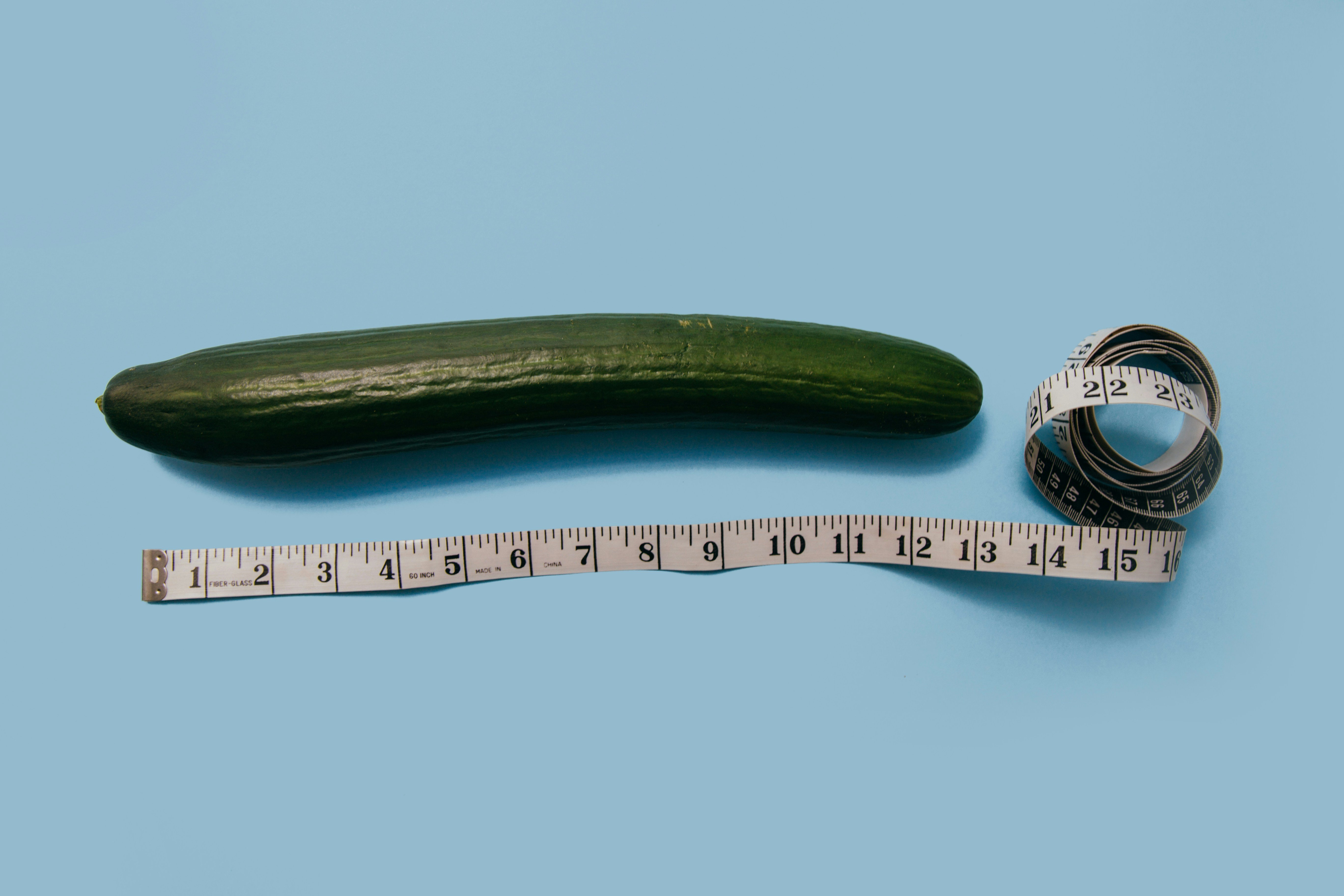
A cucumber sits next to a tape measure. Photo credit: [charlesdeluvio via Unsplash](https://unsplash.com/@charlesdeluvio?utm_source=RebelMouse&utm_medium=referral)
It’s bizarre and tragic that unrealistic beauty standards actually affect the way we perceive our own nether regions. Pornography, media, and inconsiderate past partners all play a role in people developing anxiety about the way their genitals look.
Both [men](https://www.menshealth.com/sex-women/a26425192/micropenis-what-to-do/) and women can have their sex lives [negatively impacted](https://www.zikoko.com/ships/sex-life-i-hate-the-way-my-vagina-looks/) by bad self-image and anxiety over the way they look naked. When the shame is really bad, it can hold them back in relationships, or even stop them from seeking them in the first place.
This shame or embarrassment unfortunately extends into the medical arena, as well.
Fear of being judged or humiliated can stop women in particular from not just going in for a wax, but from going to the gynecologist, getting breast exams, or asking [potentially-embarrassing](https://blog.ochsner.org/articles/20-questions-im-too-embarrassed-to-ask-my-gynecologist) but critical and life-saving health questions. For their part, men are prone to skipping [prostate exam](https://www.medstarhealth.org/blog/prostate-cancer-screening-treatment)s, testicular exams, or conversations about potentially embarrassing topics like erectile dysfunction or bladder problems. None of these things are fun or comfortable, but they’re critical for our health\!
Experts say sharing your vulnerability with your doctor or cosmetic professional can help. Letting them know you’re nervous or embarrassment can signal them to offer you comfort measures. It also helps to be really direct and detailed with what you want or what you want to discuss.
According to [Cedars Sinai](https://www.cedars-sinai.org/blog/embarrassing-health-questions.html), “Does sex hurt? Tell your doctor exactly where you feel the pain. Notice that your poop stinks? Try to describe the odor in detail.” If you’re too embarrassed to talk about it, try writing it down. At some point though, you’ll have to get the exam. Just get through it, it gets easier once you build a relationship with your doctor (or waxer!) over time.
If you’ve ever been a little self-conscious, take it from the experts, from the people who have seen hundreds if not thousands of genitals up close and personal, in the most unflattering lighting and from the worst angles possible: You’re totally normal\!
*This article originally appeared two years ago. It has been updated.*
[Keep Reading →](http://%post%)
- [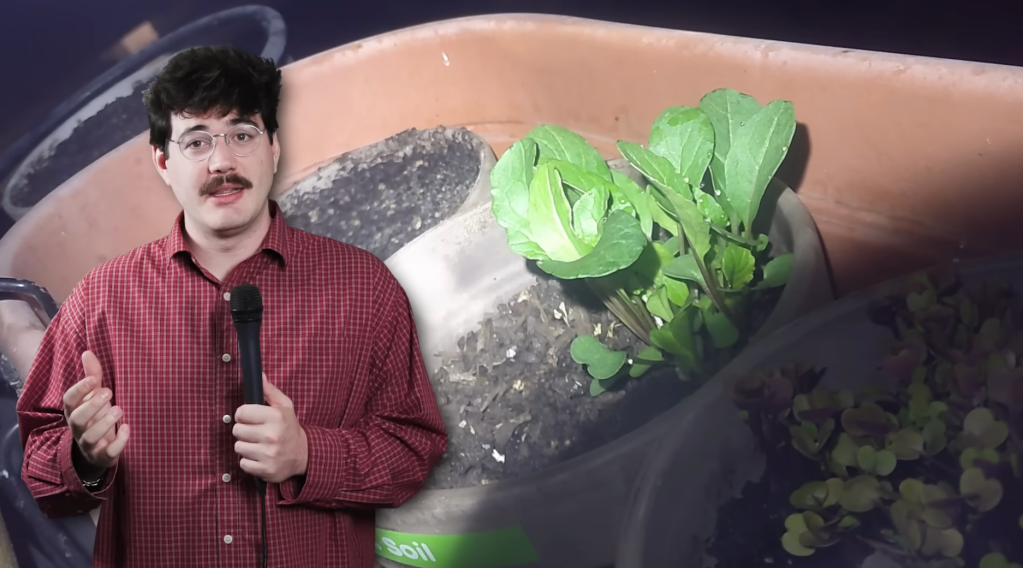](https://www.upworthy.com/man-grows-vegetables-with-soil-he-created-from-mcdonalds-taco-bell-and-kfc-meals/)
Photo credit: [Ted Nivison/YouTube](https://www.youtube.com/watch?v=EityXW46bbw) – Ted Nivison grows arugula from “soil” he created using fast food.
[Nutrition](https://www.upworthy.com/category/science/nutrition/), [Science](https://www.upworthy.com/category/science/)
## [Man grows vegetables with soil he created from McDonald’s, Taco Bell, and KFC meals](https://www.upworthy.com/man-grows-vegetables-with-soil-he-created-from-mcdonalds-taco-bell-and-kfc-meals/)
“My entire apartment smells like McDonald’s.”
[Jacalyn Wetzel](https://www.upworthy.com/author/jacalyn-wetzel/)
***
4/8/2026
There’s a nationwide running joke that the food we get from [fast-food places](https://www.upworthy.com/man-plants-seeds-from-tomato-on-mcdonalds-burger/) isn’t actually food. That doesn’t stop Americans from consuming it. But we do so assuming that this food, which can fossilize in the back of a minivan, is still edible. One man decided to see whether [fast food](https://www.upworthy.com/sad-mcdonalds-play-place/) contains enough nutrients to grow vegetables if it’s turned into soil.
[Ted Nivison](https://www.youtube.com/watch?v=EityXW46bbw) is not a scientist, and does not play one on television. For this experiment, though, he dons a metaphorical lab coat and gloves. After spending time growing his own vegetables, he wanted to see what would happen if he changed up the soil. But instead of adding something practical, like Miracle-Gro, he decided to get innovative.
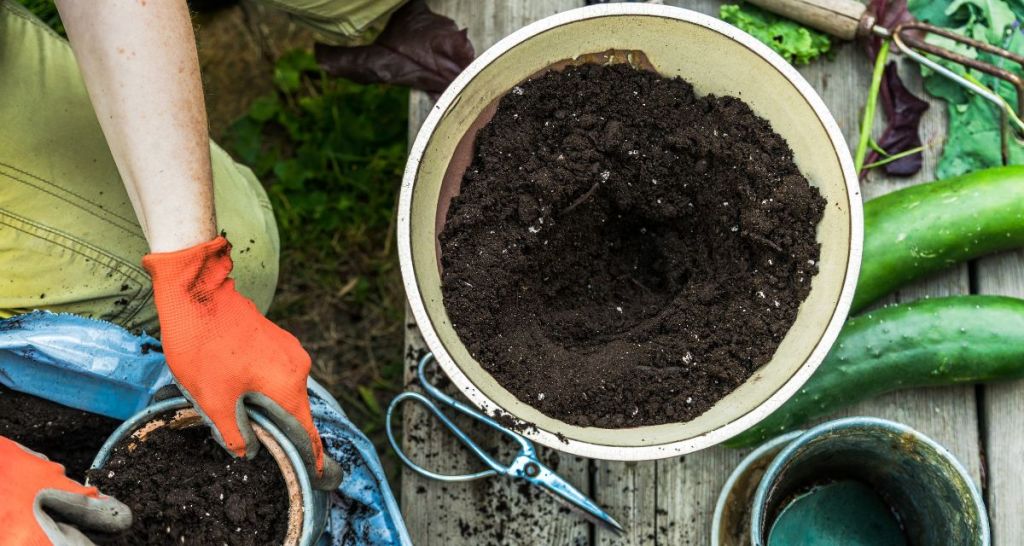
Potting soil in buckets.
[Photo credit: Canva](https://www.canva.com/photos/)
Nivison set his sights on making his own soil from fast-food scraps. In a [YouTube video](https://youtu.be/EityXW46bbw?si=84rARgo6RP58ps7E), he’s seen placing a large box on his kitchen counter.
“This is a Lomi. This is a device that lets you turn food scraps into usable soil, or at least what the company calls ‘Lomi Earth,’” he explains. “Obviously, by food scraps, they mean things like vegetables and fruit, but this device can turn any food scraps into soil. So what would happen if I turned fast food into soil? Could I grow a plant from that?”
Surprisingly, the answer to his question was yes. The curious man went to the nearest McDonald’s and dumped two double cheeseburgers, two large fries, 20 chicken nuggets, and a pack of apple slices into the soil-making device. The small machine takes up to 20 hours to turn food into dirt, so Nivison ran some errands before returning to check on the progress.

Burgers, fries, and two drinks in a box.
[Photo credit: Canva](https://www.canva.com/photos/)
“I don’t know what I expected to happen here,” he says before it cuts to a clip of him returning home. “I’ve left the Lomi going and my entire apartment smells like McDonald’s.”
When the video cuts back to the present, Nivison reveals, “I had to open up the windows in my apartment just to filter out the air that I was smelling, and I gotta say, the resulting dirt is a little bit creepy.”
He opens the lid to reveal a bright, reddish-brown, dry, clumpy soil that he says smells like Cheetos. The amateur scientist also describes the soil as greasy. This doesn’t dissuade him, though he muses that a plant might taste the soil and say, “I guess I’m not going to live.”
Unfortunately, the McDonald’s haul didn’t produce enough soil to fill a pot, so he decided to mix things up by creating soil from Taco Bell and KFC, too.

Three tacos on a plate.
[Photo credit: Canva](https://www.canva.com/photos/)
The soil from Taco Bell looks closest to actual potting soil, which he attributes to the food having more vegetables. But the soil from KFC was so incredibly greasy that you could hear it as he moved it around.
To conduct the experiment, he set up a control group, a nod to his high school science education. Then he split the dirt into multiple clay pots with varying levels of traditional potting soil mixed in. One pot contained soil created solely from the fast-food concoction.
It turns out the more Lomi dirt used, the harder the soil became when it was watered. Nivison speculates that this is due to the grease content:
“With 100% Lomi dirt, it looks like the surface of Mars. And I don’t even think the guy in *The Martian* would’ve been able to grow potatoes from this. This is worse than Mars dirt. It is gross. When I watered it, none of the water would seep into the dirt. It just sat on top, turning into something like a swamp.”
After seeing the progress of the plant grown in 10% fast-food dirt, he decided to increase the amount, making sure not to exceed 50%. Seeds planted in 50% to 100% fast-food dirt molded, but so did the seeds planted in 15% Lomi dirt. Unexpectedly, the arugula planted in 20% fast-food dirt sprouted, though it eventually stopped growing.
If you thought the control plant grew the best, you’d be just as shocked as Nivison. The control plant never got beyond the small initial sprouts. It was the plant soaking up that 10% mixture of greasy fast food that outgrew them all. All that experimenting made for a fairly hungry scientist, so he made an arugula salad.
[Keep Reading →](http://%post%)
- [](https://www.upworthy.com/14-boring-habits-transform-your-life/)
Photo credit: [Canva](https://www.canva.com/photos%20) – You’re not trying to be perfect. You’re trying to become unbreakable.
[People Skills](https://www.upworthy.com/category/science/people-skills/), [Science](https://www.upworthy.com/category/science/)
## [14 boring habits that can quietly rebuild your life, according to science](https://www.upworthy.com/14-boring-habits-transform-your-life/)
“This system assumes chaos is inevitable.”
[Kat Hong](https://www.upworthy.com/author/kat-hong/)
***
4/8/2026
Most [self-help advice](https://www.upworthy.com/15-micro-habits-2-minutes-or-less/) gets one major aspect wrong: the [habits](https://www.upworthy.com/expert-shares-the-one-small-habit-that-makes-you-instantly-likable/) that actually change your life aren’t the dramatic ones. They’re not [5 a.m. cold plunges](https://www.upworthy.com/28-simple-daily-habits-that-people-say-drastically-reduced-their-stress-levels/) or [75-day fitness challenges](https://www.upworthy.com/what-is-the-30-day-sprint-method-how-this-viral-goal-setting-technique-works/). They’re much more subtle, and almost embarrassingly ordinary. But that’s the point.
Done consistently, the small stuff shapes how you feel, how you show up to the world, and the [person you become over time](https://www.upworthy.com/study-finds-people-age-bursts-ex1/). YouTube user [Ideas to Thrive](https://www.youtube.com/@ideastothrive) understands this essential truth. In a recent video, “[17 Boring Habits That Quietly Rebuilt My Life](https://www.youtube.com/watch?v=2uSQrUvofA4),” they detail 17 “embarrassingly easy habits that are too small to fail.”
The ideas are simple: create bite-sized routines that fit seamlessly into your day, and build different versions of those systems for different days, whether good or chaotic. The goal is to stick with these practices, daily or weekly, even on turbulent days when nothing seems to go right. They write:
> “Traditional productivity advice assumes perfect conditions. This system assumes chaos is inevitable and builds protocols for bad days. You’re not trying to be perfect. You’re trying to be unbreakable.”
Here are 14 deceptively simple habits worth trying, courtesy of [Ideas to Thrive](https://www.youtube.com/@ideastothrive):
## Health and wellness

Intensity, not length, is important here. [Photo credit: Canva](https://www.canva.com/photos)
## 1\. Start with embarrassingly easy workouts
Jump-starting a healthier lifestyle doesn’t require a gym membership. You don’t need a plan, a new playlist, or special gear. You just need a dedicated block during the day to move: a short walk, five squats while the coffee brews in the morning, or committing to taking the stairs instead of the elevator.
If this all sounds too small, too trivial to matter, listen to this: In a study tracking nearly 72,000 adults, [Harvard Health found that just 15 minutes of vigorous activity per week](https://www.health.harvard.edu/healthy-aging-and-longevity/short-bursts-of-exercise-may-offer-big-health-benefits) is associated with an 18% lower risk of dying, while 19 minutes per week was linked to a [40% lower risk of developing heart disease](https://www.uhhospitals.org/blog/articles/2023/04/short-bursts-of-activity-can-have-huge-health-benefits). The takeaway? Even short bursts of intense exercise increase blood flow and improve blood sugar regulation.
A [10-minute workout done three times a week](https://www.uclahealth.org/news/article/research-shows-short-intense-workouts-are-beneficial) has been shown to boost endurance by nearly 20%. Importantly, it’s the intensity, not the duration, that drives measurable health benefits. You don’t need an hour per week, just minutes.
## 2\. Drink water before anything else
Before your morning coffee, juice, or that special loose-leaf tea your father-in-law got you (thanks, Perry!), drink a glass of water. Then have another about 30 minutes before your first meal.
You’ll want these glasses to be [roughly 500 milliliters full](https://www.sciencedaily.com/releases/2015/08/150826101645.htm). Why? Your stomach has [special nerves that let your brain know when you’re full](https://www.health.harvard.edu/blog/does-drinking-water-before-meals-really-help-you-lose-weight-202402203018). Drinking water before a meal can help those nerves send signals earlier. Plus, it’s a simple trick with real benefits. [Research published in *Clinical Nutrition Research* found](https://pmc.ncbi.nlm.nih.gov/articles/PMC6209729/) that pre-meal water improves satiety and can support weight loss. It’s not magic, just biology.
## 3\. Put your phone in another room at night
This one’s tricky. What about your morning alarm? (Buy one. It’s good to know the time without constantly checking your phone.) What about that nightly Sudoku game you *have* to do? (Try a book of puzzles, or the one printed in the newspaper.) The [research on this topic](https://pmc.ncbi.nlm.nih.gov/articles/PMC9643910/) is [extensive and clear](https://sleepeducation.org/screen-time-and-sleep-what-new-studies-reveal/): smartphones in the bedroom disrupt sleep. By removing your phone, you eliminate both the temptation to scroll and the device lighting up with notifications during the night.
According to the *Indian Journal of Medical Research*, [87% of Americans sleep with their phones in the bedroom](https://pmc.ncbi.nlm.nih.gov/articles/PMC9707689/), despite consistent evidence linking the habit to poorer sleep outcomes. A [randomized controlled trial](https://pmc.ncbi.nlm.nih.gov/articles/PMC7010281/) found that restricting bedtime phone use improved sleep quality, shortened sleep onset, and enhanced mood. Luckily, the fix isn’t a fancy gadget. It’s as simple as leaving your phone on the kitchen counter.
## 4\. While you’re at it, write down tomorrow’s one task before bed
Before you sleep, jot down the single most important thing you need to do the next day. That’s it: one thing. Psychologists call the anxiety caused by unfinished tasks the [Zeigarnik Effect](https://super-productivity.com/blog/zeigarnik-effect-productivity/), first identified by Russian psychologist Bluma Zeigarnik in 1927. It explains how [unfinished tasks stay active in our working memory](https://scitechdaily.com/boost-your-productivity-with-the-zeigarnik-effect/), using up mental energy and potentially disrupting sleep.
Writing down a plan to complete them can help ease these restless thoughts, reassuring your brain that it’s okay to let go because a clear plan is in place. [Further research shows](https://ripslawlibrarian.wordpress.com/2025/04/30/the-zeigarnik-effect/) that having a written plan boosts productivity, as the act of planning helps lighten your mental load.
The takeaway? Your brain can’t file away a task until it trusts there’s a plan. Give it one sentence tonight.
## 5\. Take a 10-minute walk after lunch
That 2 p.m. slump? It’s not just because of the family-style Jersey Mike’s hoagie you wolfed down (*no judgment*, though it didn’t help). Afternoon sleepiness is real, but a short walk can actually help tremendously.
Post-meal walking is one of the most [well-studied micro-habits in metabolic health](https://www.news-medical.net/health/Walking-After-Meals-Small-Habit-Big-Metabolic-Gains.aspx). A [New Zealand study found that a quick 10-minute walk after each main meal](https://pubmed.ncbi.nlm.nih.gov/40594496/) can lower daily blood glucose levels more effectively than a single 30-minute walk taken at any time of day. The Cleveland Clinic notes that [even a five-minute walk after eating](https://health.clevelandclinic.org/walking-after-eating) can have a measurable effect on blood sugar.
That’s the entire prescription: 10 minutes around the block. How much simpler can it get?
## Productivity and mindset

What are you grateful for? [Photo credit: Canva](https://www.canva.com/photos)
## 6\. Write three sentences to yourself before bed
Here’s a gentle, minimal journaling practice: Write three sentences to yourself in a notebook before bed. Answer the following:
- What are you thinking about?
- What are you grateful for?
- What do you want to release before resting?
[Bedtime worry and rumination about incomplete tasks](https://sleep.me/post/journaling-before-bed-benefits) aren’t trivial; they’re significant contributors to difficulty falling asleep. A [brief journaling session before bed acts as a form of cognitive off-loading](https://pmc.ncbi.nlm.nih.gov/articles/PMC5758411/), moving those swirling thoughts from active working memory onto the page and signaling to the brain that they’ve been “handled.”
A [study in the *Journal of Experimental Psychology*](https://pmc.ncbi.nlm.nih.gov/articles/PMC5758411/) found that taking a few moments to jot down a quick to-do list before bed can help you fall asleep faster. Gratitude journaling, [done specifically before bed](https://childmind.org/blog/the-power-of-journaling/), has also been shown to improve sleep onset and reduce nighttime disturbances. Your brain wasn’t designed to hold everything. Three sentences are enough to start letting go.
## 7\. Track your habits with color
Find a visual tracker that works for you, whether on paper or in a digital app, and assign yourself colors:
- Green for done
- Yellow for partially complete
- Red for skipped
Yes, it may sound like an elementary school exercise (what’s next, a pizza party for finishing your books?), but there’s real science behind it. Research on digital behavior change interventions shows that [visual tools illustrating the gap between current behavior and a goal](https://pmc.ncbi.nlm.nih.gov/articles/PMC11161714/), such as a green bar for steps completed and a red line for the daily target, can boost motivation through clear, visual feedback. The idea is that [color-coded systems tap into these feedback loops](https://pmc.ncbi.nlm.nih.gov/articles/PMC11161714/), with the brain processing color patterns faster than text or numbers.
Visual feedback can be powerful. Soon, you’ll start noticing patterns you didn’t even realize were there.
## 8\. Set aside 20 minutes on Sunday for a quick self-review
No one’s under fire; this isn’t a productivity audit. You are not in trouble. But a little self-reflection never hurt, did it?
Without deliberate reflection, it’s easy to stay on autopilot. Reviews [create the feedback loop](https://nesslabs.com/weekly-review) necessary for intentional progress. During these sessions, ask yourself:
- What went well this week?
- What didn’t?
- What does next week look like?
- Should I adjust my self-improvement expectations?
[Reviewing the week](https://www.podhealthllc.com/blog/11-step-weekly-self-review) allows you to “bank” wins, process setbacks, and make small, purposeful improvements (a strategy shown to reduce burnout). David Allen, the productivity researcher behind *Getting Things Done*, [notes that the weekly review](https://super-productivity.com/blog/gtd-weekly-review-guide/) “will sharpen your intuitive focus on your important projects as you deal with the flood of new input and potential distractions coming at you the rest of the week.”
By spending 20 minutes looking back each week, you can avoid going 20 weeks in the wrong direction.
## 9\. Close all your browser tabs at the end of the day
Every open tab is an unfinished thought. Research from Princeton University and the University of California, Los Angeles shows that visual clutter—digital or physical—[overloads the brain and elevates stress](https://thetabextension.com/blog/digital-minimalism-knowledge-workers-tab-management-2025/). Closing your tabs at the same time each day [creates a shutdown ritual](https://super-productivity.com/blog/zeigarnik-effect-productivity/) that helps separate work from rest, a clear boundary that prevents lingering anxiety during off-hours. This distinction is especially important for those who work from home. Productivity experts also note that [fewer digital distractions means fewer choices and less noise](https://thetabextension.com/blog/digital-minimalism-knowledge-workers-tab-management-2025), which in turn reduces decision fatigue and increases the likelihood that tasks get done.
Your browser is not a filing cabinet. Close those tabs. Start fresh tomorrow.
## 10\. Read 10 pages per day
That’s it: 10 pages. That’s about 15 minutes of active reading. Do that every day, and you’ll finish between 12 and 18 books a year (unless you’re working your way through the *Dune* series. Those books are seriously hefty). It’s good for you, too: a landmark study in *Personality and Social Psychology Bulletin* found that just [six minutes of reading can reduce stress levels by up to 68%](https://www.anxietycentre.com/research/reading-reduces-stress-by-68-percent/).
Ten pages a day is more than just a light reading habit; it’s an insurance policy for your brain’s health.
## Social and emotional life
Saying “no” is a deliberate practice. [Photo credit: Canva](https://www.canva.com/photos)
## 11\. Say no to one thing per week
Despite the wisdom in *Year of Yes* by Shonda Rhimes, treating “no” as a weekly maintenance habit isn’t an act of selfishness; it’s an act of self-preservation. Chronic people-pleasing [drains the same mental and emotional resources](https://elitedna.com/the-power-of-saying-no-how-to-set-boundaries-for-improving-mental-health/) that support creativity, focus, and recovery. [Research consistently shows](https://www.mentalhealth.com/library/the-beauty-of-saying-no) that excessive stress—the kind caused by overcommitting—is a major trigger for depression, anxiety disorders, and burnout.
*Psychology Today* [notes that saying no](https://www.psychologytoday.com/us/blog/mind-matters-from-menninger/202111/the-power-of-saying-no) “can create more mental health stability by helping with self-care and building your self-esteem and confidence by setting boundaries.” This is a deliberate practice. Decline at least one request, invitation, or obligation each week that doesn’t align with your priorities. When you set limits on what drains you, you [create space for restorative activities](https://www.therapynowsf.com/blog/the-power-of-saying-no-improve-your-mental-health-and-set-boundaries).
## 12\. Send one thoughtful message a week
Every week, send one intentional message to someone in your life—a text, email, or note that’s personal, specific, and sincere. Social connection is one of the strongest predictors of health and longevity. A [landmark study cited by Stanford University’s Center for Compassion and Altruism Research and Education](https://ccare.stanford.edu/uncategorized/connectedness-health-the-science-of-social-connection-infographic/) found that a lack of social connection is more harmful to health than obesity, smoking, and high blood pressure.
A [study published in *Communication Research*](https://www.texashealth.org/areyouawellbeing/Behavioral-Health/Study-Shows-One-Short-Chat-a-Day-with-Friends-Can-Help-Mental-Health), involving 900 participants across five university campuses, found that even a single intentional outreach to a friend or loved one on any given day can significantly improve well-being, reduce stress, enhance connection, and lessen loneliness. Importantly, the research showed that no particular type of message—whether catching up, showing care, joking, or giving a compliment—was more effective than another. The key factor was the act of reaching out with intention.
## Home and money

Don’t rely on willpower alone for this one. [Photo credit: Canva](https://www.canva.com/photos)
## 13\. Automate your savings
Don’t rely on willpower alone for this one. Set up an automatic transfer from every paycheck into savings, even if it’s a small percentage.
[Richard Thaler and Shlomo Benartzi’s groundbreaking research](https://www.journals.uchicago.edu/doi/10.1086/380085) found that automated savings programs significantly increase how much people save over time. The reason? It’s far easier to commit to saving money in the future than to cut current spending. [Automation removes the friction of decision-making](https://clear.dol.gov/study/save-more-tomorrow%E2%84%A2-using-behavioral-economics-increase-employee-saving-thaler-benartzi-2004). It turns out the best savings plan is the one that runs without you having to make a single decision.
## 14\. Do a two-minute tidy every night
Dishes in the sink. Clothes on the chair. Scattered envelopes on the dining room table. Spend two minutes before bed restoring basic order to your space: reset surfaces, return items to their places, and clear clutter.
Research [conducted by UCLA](https://ifstudies.org/blog/a-cluttered-home-causes-more-stress-for-women-than-men), involving 32 dual-income families, found that individuals who described their homes as cluttered or full of unfinished projects showed elevated cortisol patterns linked to chronic stress, especially among women.
[Allen’s *Getting Things Done* methodology](https://gettingthingsdone.com/) helps explain why the two-minute rule works so well. As [he explains](https://www.thesimplicityhabit.com/the-2-minute-decluttering-rule/), any task that can be completed in under two minutes should be done immediately rather than delayed, preventing small messes from building into overwhelming chaos.
## One small step at a time
None of these habits will change your life overnight. You won’t wake up with a different bank account. Your apartment won’t magically become more organized; you’ll probably still lose focus around 3:33 p.m. each day. But that’s not really how change works, is it? It happens in the small, consistent moments that may not look impressive on paper but add up to real momentum.
You don’t need to overhaul your entire life. [Ideas to Thrive](https://www.youtube.com/@ideastothrive) recommends starting with a handful of habits, then slowly adding more. Pick a few and see where they take you.
[Keep Reading →](http://%post%)
- [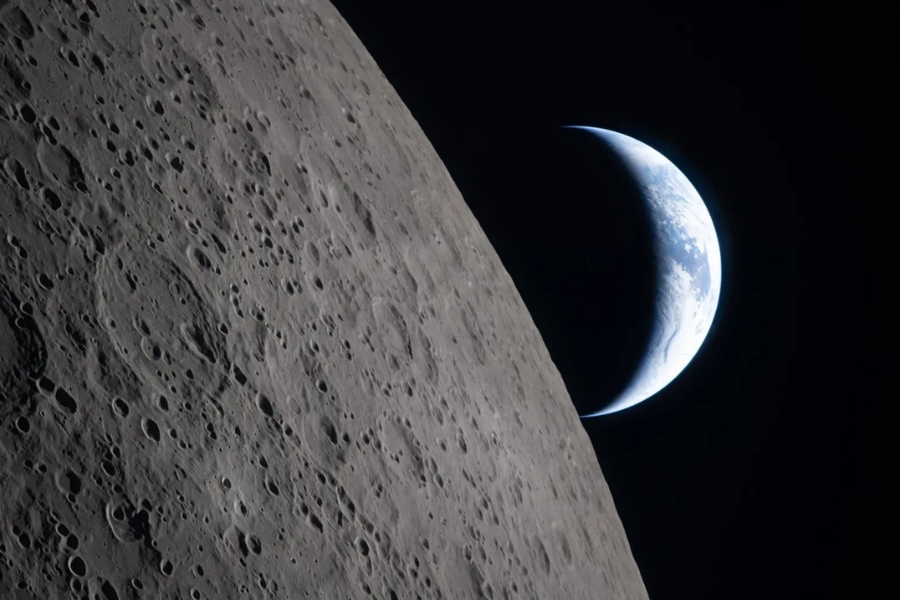](https://www.upworthy.com/professor-demonstrates-the-distance-to-the-moon-using-ball-and-string/)
Photo credit: [NASA](https://www.nasa.gov/news-release/nasas-artemis-ii-crew-beams-official-moon-flyby-photos-to-earth/) – How far away is the Moon from Earth, really?
[Making Sense of Science](https://www.upworthy.com/category/science/making-sense-of-science/), [Science](https://www.upworthy.com/category/science/)
## [Professor uses two balls and string to show how far the Moon actually is from Earth](https://www.upworthy.com/professor-demonstrates-the-distance-to-the-moon-using-ball-and-string/)
The physical demonstration showed it’s farther than most of us imagine.
[Annie Reneau](https://www.upworthy.com/author/annie-reneau/)
***
4/8/2026
On April 6, 2026, [the Orion spacecraft](https://www.upworthy.com/science-journalist-childlike-joy-artemis-launch/) officially took four astronauts [farther from Earth](https://www.nasa.gov/news-release/nasas-artemis-ii-crew-eclipses-record-for-farthest-human-spaceflight/) than any human has gone before. While the [Artemis II mission](https://www.upworthy.com/artemis-ii-pilot-victor-glover-easter-message/) did not include a [Moon landing](https://www.upworthy.com/astronauts-falling-on-the-moon/), it did involve making a pass around the Moon (in addition to making the world cry over [naming a Moon crater](https://www.upworthy.com/astronauts-emotional-naming-of-a-moon-crater/) after the late wife of one of the astronauts).
But how far did they go, exactly? We can look at the historic number of miles the Orion flew from Earth—approximately 252,756—but that distance is a little tough for us to visualize. Thankfully, [Professor Anu Ojha’s](https://www.gov.uk/government/people/anu-ojha) scientific demonstration [at The Royal Institution](https://www.youtube.com/shorts/ZUe9cI6rPGA) makes it a lot easier.
## The Moon is farther away from Earth than many people imagine
First, Ojha explained that the distance between the Earth and Moon varies because the Moon’s orbit around the Earth is elliptical. But very roughly speaking, he said, the Moon’s orbital distance from the Earth is equal to 10 circumferences of the Earth.
He held up an inflatable globe to represent Earth and explained that he had wrapped a piece of string around it 10 times. At the end of the string, he attached a ball that was the correct scale compared to the Earth.
“It’s about the same size as Australia or Canada or China,” he explained. “About a quarter of the diameter of the Earth.”
He showed a graphic that depicted the Earth and Moon in proper scale, but with a totally inaccurate distance between them. Then, holding the globe, he asked a student to take the Moon ball at the end of the string and start walking away from him.
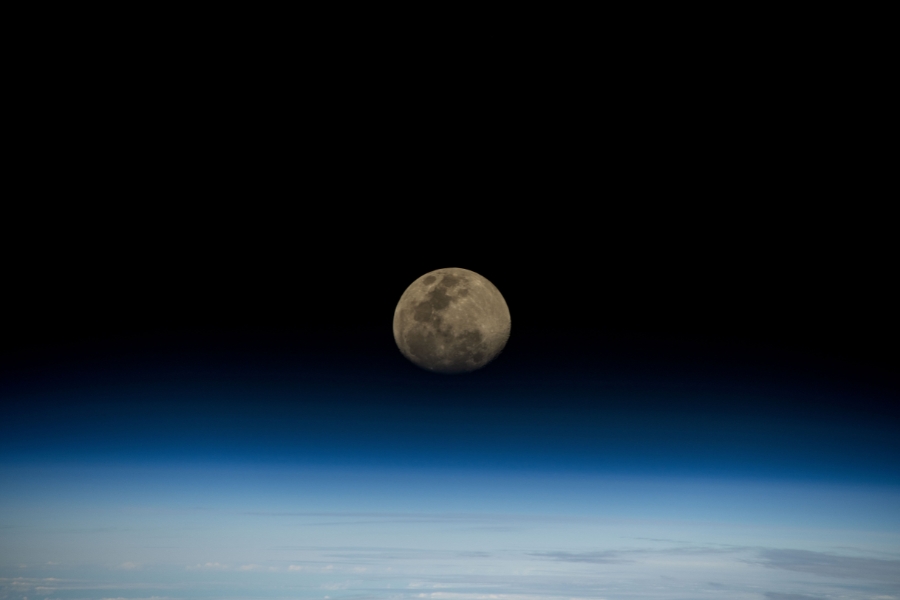
Photo from the ISS of the moon “rising” over the Earth’s atmosphere (Photo credit: [NASA](https://www.nasa.gov/image-detail/gmt318_16_25_nick-hague_moon-british-indian-ocean/))
After the string unwound about six or seven feet, he asked the student to stop. “That’s the sort of visualization we get from this image,” he explained. “But, you know, there’s a lot of string left here.”
Ojha had the student keep walking, and keep walking, and keep walking until he had fully unwound the string. We can barely see the student as he walked up a flight of stairs into a darkened area of the classroom, but it’s clear the distance between the Earth and Moon is much farther than we are used to picturing it.
## The International Space Station’s location compared to the Moon drives the point home
After showing how far the Moon—”our nearest naturally occurring neighbor in space”—is from Earth, Ojha put it into even clearer perspective.
“How far away did I say the international boundary of space was?” he asked the students, who responded, “100 kilometers.”
“That’s 1 millimeter on this scale,” Ojha said. “International Space Station (ISS) 400km—a finger width. The Moon is a thousand times the distance to the orbit of the International Space Station.”
But he wasn’t done. He also said that if we go to the next nearest planet, Venus, we are talking about a distance more than 100 times the distance between the Earth and the Moon.
“So we start to see the challenges that we are facing in directly exploring even our own solar system, let alone the universe,” he said.
This demonstration also makes it clearer why space missions to the Moon haven’t been a regular occurrence. Many of us had no idea how much further the Moon was than the ISS. They’re not even close to comparable trips.
## Physical science demonstrations for the win
People appreciated the old-school science lesson:
“There is no substitute for physical demonstration in a room.”
“A lot of people just don’t realise the sheer scale of astronomical units, there’s too much ‘space’ out there to wrap their heads around it.”
“Most people can only understand what they can GRASP. This kind of physical demo is the most efficient.”
“I used to do that thing with my elementary school students where we go out to the football field and lay down planets showing how far away everything is from the sun. Blew their minds every time.”
“Everything I learn about space tends to come with the subtext of ‘It’s big. No, not the scale you’re thinking, bigger.’”
“Crazy how even with such a distance and small mass the Moon can still have such a massive effect on our water (and other such things).”
Our understanding of the cosmos is always growing and evolving, of course. But the math that tells us the scale of the objects in space has been around a long time and still has the power to boggle our minds. The universe is awesome, literally. Isn’t it wonderful how the awe that space exploration inspires in us is a reminder of everything that makes us human?
[Keep Reading →](http://%post%)
- [](https://www.upworthy.com/first-person-cured-of-dipg-ex1/)
Photo credit: [Lesja Jemeljanova via Facebook](https://www.facebook.com/onewayhope/photos/doctors-and-medical-researchers-are-highlighting-a-hopeful-development-after-a-1/1178578397825026/) – Lucas Jemeljanova poses with his family a year before being diagnosed with cancer
[Innovation](https://www.upworthy.com/category/science/innovation/), [Science](https://www.upworthy.com/category/science/)
## [A 13-year-old boy has become the first person to be cured of this deadly brain cancer](https://www.upworthy.com/first-person-cured-of-dipg-ex1/)
DIPG used to be a death sentence. Now there might be some hope.
[Sarah Watts](https://www.upworthy.com/author/sarah-watts/)
[Upworthy Staff](https://www.upworthy.com/author/upworthy-staff/)
***
4/7/2026
It’s a parent’s worst nightmare: Taking your child to the doctor and receiving a life-changing [diagnosis](https://www.upworthy.com/after-a-scary-diagnosis-a-connection-with-a-hairdresser-offered-this-man-a-lifeline). It only adds to the heartbreak when they find out there may be no effective treatment at all, and that all they can do is hope for the best.
Few diagnoses strike fear in the heart of parents and doctors more than a cancer called diffuse intrinsic pontine glioma, or DIPG. Primarily found in children, DIPG is a highly aggressive brain tumor that is uniformly fatal, with [less than 10 percent of children](https://dipg.org/facts/what-is-dipg/) surviving longer than two years after diagnosis. The [tumors](https://www.upworthy.com/the-first-long-term-survivor-in-a-new-brain-tumor-study-is-giving-doctors-hope) grow fast and on extremely vital areas like the spine and brain stem, making them exceptionally hard to remove. Though young patients have been treated with radiation, chemotherapy, and surgeries, no one had ever been cured of the fatal [cancer](https://www.upworthy.com/cancer-deaths-are-down-an-incredible-33-since-199).
**But for the first time ever, a 13-year-old boy from Belgium named Lucas Jemeljanova has [beaten the odds](https://www.sciencealert.com/world-first-13-year-old-child-cured-of-a-deadly-brain-cancer).**
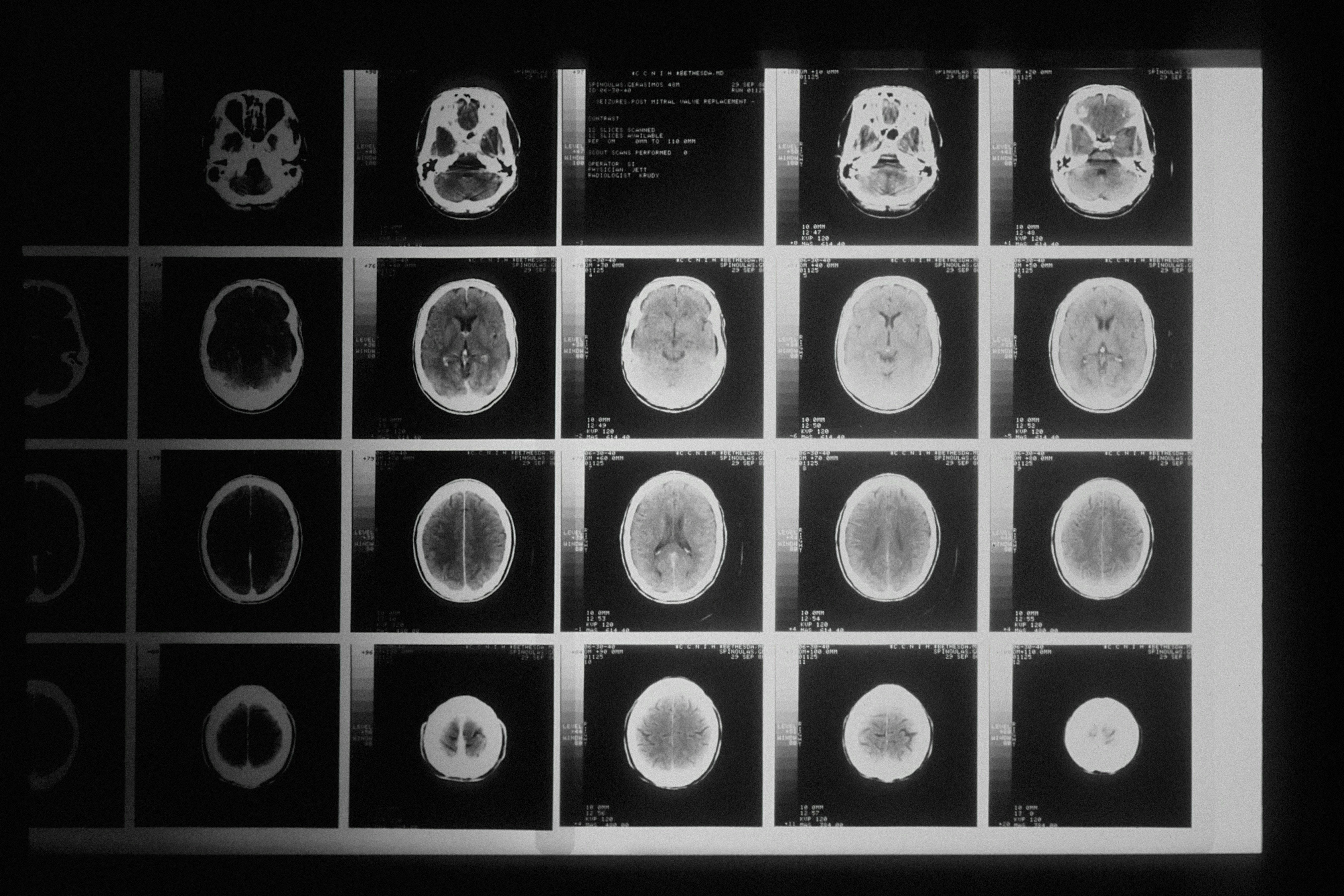
Various brain scans. Photo credit:
Diagnosed with DIPG at age six, Lucas’ doctor Jacques Grill told Lucas’ parents, Cedric and Olesja, that he was unlikely to live very long. Instead of giving up hope, Cedric and Olesja flew Lucas to France to participate in a clinical trial called BIOMEDE, which tested new potential drugs against DIPG.
Lucas was randomly assigned a medication called everolimus in the clinical trial, a chemotherapy drug that works by blocking a protein called mTOR. mTOR helps cancer cells divide and grow new blood vessels, while everolimus decreases blood supply to the tumor cells and stops cancer cells from reproducing. [Everolimus](https://www.cancerresearchuk.org/about-cancer/treatment/drugs/everolimus#:~:text=Everolimus%20is%20a%20type%20of%20targeted%20drug%20called%20an%20mTOR,of%20some%20types%20of%20cancer.), a tablet that’s taken once per day, has been approved in the UK and the US to treat cancers in the breast, kidneys, stomach, pancreas, and others—but until the BIOMEDE clinical trial, it had never before been used to treat DIPG.
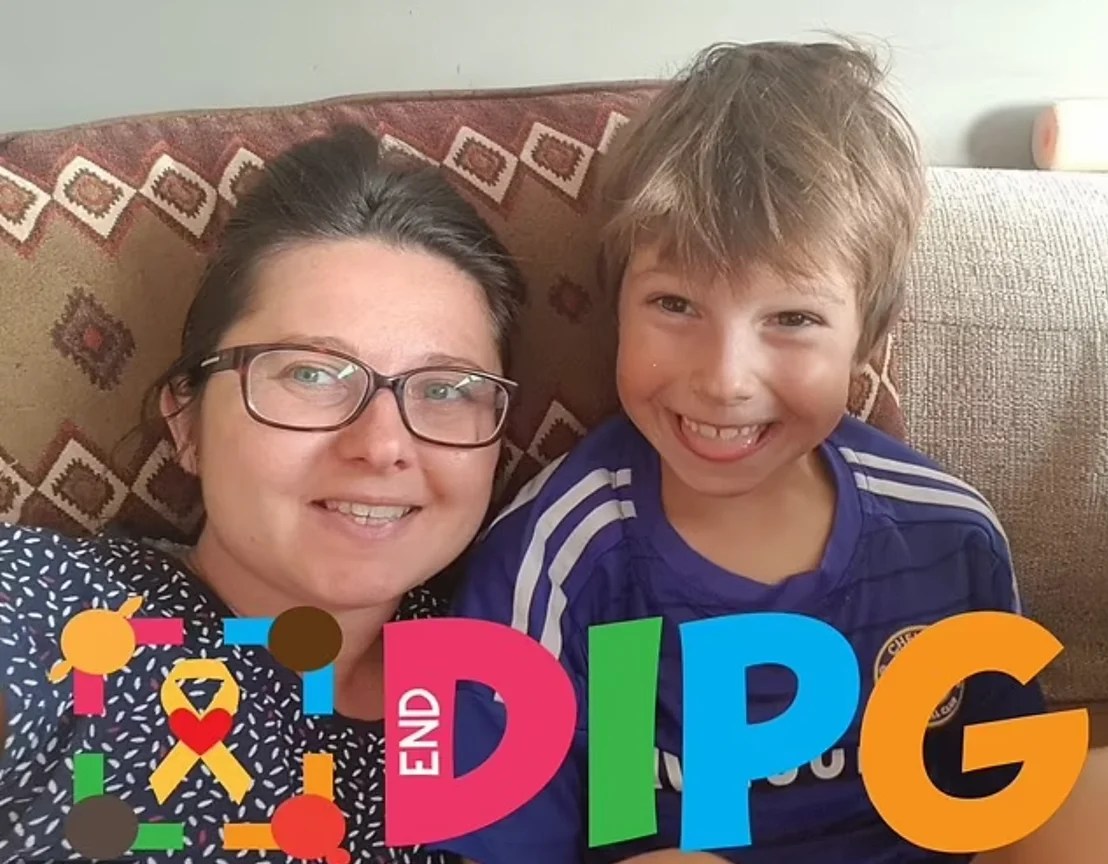
Lucas Jemeljanova poses with his mother. Photo credit: Lesja Jemeljanova via [Facebook](https://www.facebook.com/onewayhope/photos/doctors-and-medical-researchers-are-highlighting-a-hopeful-development-after-a-1/1178578397825026/)
**Though doctors weren’t sure how Lucas would react to the medication, it quickly became clear that the results were good.**
“Over a series of MRI scans, I watched as the tumor completely disappeared,” Grill said [in an interview](https://www.sciencealert.com/world-first-13-year-old-child-cured-of-a-deadly-brain-cancer). Even more remarkably, the tumor has not returned since. Lucas, who is now thirteen, is considered officially cured of DIPG.
Even after the tumor was gone, Grill, who is the head of the Brain Tumor Program in the Department of Child and Teenage Oncology at Gustave Roussy cancer research hospital in Paris, was reluctant to stop Lucas’ treatments. Until about a year and a half ago, Lucas was still taking everolimus once every day.
“I didn’t know when to stop, or how, because there was no other reference in the world,” Grill said.
While Lucas is the only one in the clinical trial whose tumor has completely disappeared, seven other children have been considered “long responders” to everolimus, meaning their tumors have not progressed for more than three years after starting treatment.
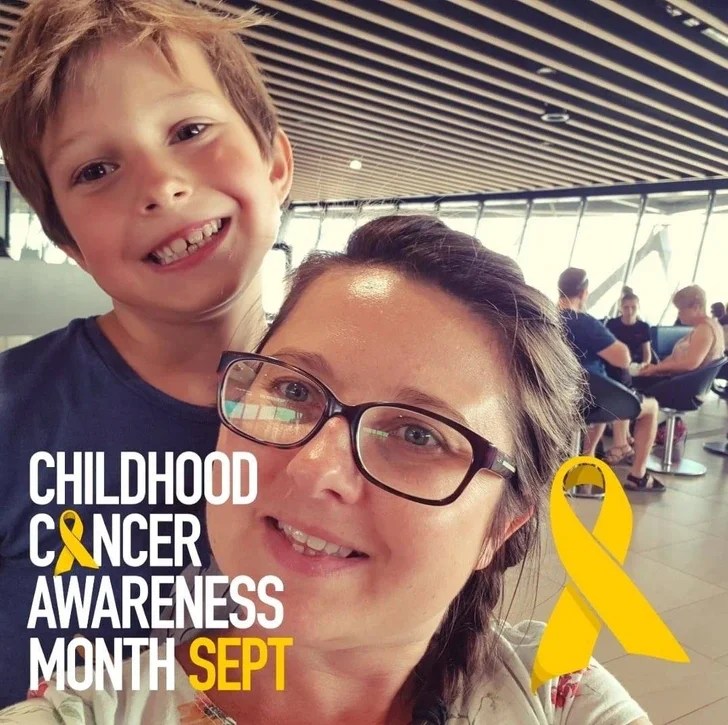
Lucas with his mother. Photo credit: Lesja Jemeljanova via [Facebook](https://www.facebook.com/onewayhope/photos/doctors-and-medical-researchers-are-highlighting-a-hopeful-development-after-a-1/1178578397825026/)
So why did everolimus work so well for Lucas? Doctors think that an extremely rare genetic mutation in Lucas’ tumor “made its cells far more sensitive to the drug,” Grill said, while the drug worked well in other children because of the “biological peculiarities” of their tumors.
While everolimus is by no means a cure, the trial has provided real hope for parents and families of children diagnosed with DIPG. Doctors must now work to better understand why Lucas’ tumor responded so well to the drug and how they can replicate those results in tumor “organoids”—artificially-grown cells that resemble an organ. After that, said Marie-Anne Debily, a researcher in the BIOMEDE trial, “the next step will be to find a drug that works as well on tumor cells.”
A [more recent clinical trial](https://www.usatoday.com/story/news/health/2024/11/13/diffuse-intrinsic-pontine-glioma-dipg-brain-cancer-treatment/76229722007/) tested a new immunotherapy treatment on young DIPG patients and showed promising results. Many of the patients’ tumors shrank and several participants saw functional improvements in their symptoms and day-to-day lives. But only one of the 11 patients has seen success that rivals Lucas’ — a young man identified only as Drew, who has been thriving tumor-free for over four years after receiving treatment.
Once considered a definitive death sentence, there is real hope for the first time. But there’s much more research and work to be done. Until then, however, Lucas’ doctors are thrilled.
“Lucas’ case offers real hope,” said Debily.

Lucas with his parents and sister. Photo credit: Lesja Jemeljanova via [Facebook](https://www.facebook.com/onewayhope/photos/doctors-and-medical-researchers-are-highlighting-a-hopeful-development-after-a-1/1178578397825026/)
*This article originally appeared two years ago. It has been updated.*
[Keep Reading →](http://%post%)
- [](https://www.upworthy.com/mel-robbins-let-them-theory-explained-ex1/)
Photo credit: [via TEDx SF/Flickr and TEDx SF/Flickr](https://assets.rebelmouse.io/eyJhbGciOiJIUzI1NiIsInR5cCI6IkpXVCJ9.eyJpbWFnZSI6Imh0dHBzOi8vYXNzZXRzLnJibC5tcy81MTYzNzYxNi9vcmlnaW4uanBnIiwiZXhwaXJlc19hdCI6MTc3NzI4MjYyMn0.Sa-3diEPwYqP1R-x7CI1f31WuHuTJxCt4rcAhe5kL0Q/img.jpg?width=980) – Mel Robbins making a TED Talk.
[People Skills](https://www.upworthy.com/category/science/people-skills/), [Science](https://www.upworthy.com/category/science/)
## [Motivation expert explains how two simple words can free you from taking things so personally](https://www.upworthy.com/mel-robbins-let-them-theory-explained-ex1/)
You don’t need to take responsibility for everything and everyone.
[Tod Perry](https://www.upworthy.com/author/tod-perry/)
[Upworthy Staff](https://www.upworthy.com/author/upworthy-staff/)
***
4/7/2026
Towards the end of [The Beatles’](https://www.upworthy.com/the-beatles-last-song-now-and-then) illustrious but brief career, [Paul McCartney](https://www.upworthy.com/paul-mccartney-acoustic-guitar/) wrote [Let it Be,](https://www.radiox.co.uk/artists/beatles/let-it-be-meaning-story-lyrics/) a song about finding peace by letting events take their natural course. It was a sentiment that seemed to mirror the feeling of resignation the band had with its imminent demise.
The bittersweet song has had an appeal that has lasted generations, and that may be because it reflects an essential psychological concept: [the locus of control.](https://www.verywellmind.com/what-is-locus-of-control-2795434) “It’s about understanding where our influence ends and accepting that some things are beyond our control,” Jennifer Chappell Marsh, a marriage and family therapist, told [*The Huffington Post*](https://www.huffpost.com/entry/what-is-let-them-theory_l_65aee029e4b0f55c6e307860). “We can’t control others, so instead, we should focus on our own actions and responses.”
## The ‘Let Them’ theory, explained
This idea of giving up control (or the illusion of it) when it does us no good was perfectly distilled into two words that everyone can understand: “Let Them.” This is officially known as the “Let Them” theory. Podcast host, author, motivational speaker and former lawyer [Mel Robbins](https://www.upworthy.com/never-hit-the-snooze-button) explained this theory perfectly in a vial Instagram video posted in May 2023.
> [View this post on Instagram](https://www.instagram.com/reel/CsLvs-voVTO/?utm_source=ig_embed&utm_campaign=loading)
“I just heard about this thing called the ‘Let Them Theory,’ I freaking love this,” Robbins starts the video.
“If your friends are not inviting you out to brunch this weekend, let them. If the person that you’re really attracted to is not interested in a commitment, let them. If your kids do not want to get up and go to that thing with you this week, let them.” Robbins says in the clip. “So much time and energy is wasted on forcing other people to match our expectations.”
“If they’re not showing up how you want them to show up, do not try to force them to change; let them be themselves because they are revealing who they are to you. Just let them – and then you get to choose what you do next,” she continued.
## **Put the ‘Let Them’ theory into practice**
The phrase is a great one to keep in your mental health tool kit because it’s a reminder that, for the most part, we can’t control other people. And if we can, is it worth wasting the emotional energy? Especially when we can allow people to behave as they wish and then we can react to them however we choose?
> [@melrobbins](https://www.tiktok.com/@melrobbins?refer=embed "@melrobbins")
>
> Stop wasting energy on trying to get other people to meet YOUR expectations. Instead, try using the “Let Them Theory.” 💥 Listen now on the melrobbinspodcast!! “The “Let Them Theory”: A Life Changing Mindset Hack That 15 Million People Can’t Stop Talking About” 🔗 in bio [\#melrobbins](https://www.tiktok.com/tag/melrobbins?refer=embed "melrobbins") [\#letthemtheory](https://www.tiktok.com/tag/letthemtheory?refer=embed "letthemtheory") [\#letgo](https://www.tiktok.com/tag/letgo?refer=embed "letgo") [\#lettinggo](https://www.tiktok.com/tag/lettinggo?refer=embed "lettinggo") [\#podcast](https://www.tiktok.com/tag/podcast?refer=embed "podcast") [\#podcastepisode](https://www.tiktok.com/tag/podcastepisode?refer=embed "podcastepisode")
>
> [♬ original sound – Mel Robbins](https://www.tiktok.com/music/original-sound-7238584208384150277?refer=embed "♬ original sound - Mel Robbins")
How you respond to their behavior can significantly impact how they treat you in the future.
It’s also incredibly freeing to relieve yourself of the responsibility of changing people or feeling responsible for their actions. As the old Polish proverb goes, “Not my circus, not my monkeys.”
“Yes! It’s much like a concept propelled by the book [The Subtle Art of Not Giving a F\*\*k](https://markmanson.net/books/subtle-art). Save your energy and set your boundaries accordingly. It’s realizing that we only have “control” over ourselves and it’s so freeing,” one viewer wrote.
## **Finding Peace Through Acceptance**
“Let It Be” brought Paul McCartney solace as he dealt with losing his band in a very public breakup. The same state of mind can help all of us, whether it’s dealing with parents living in the past, friends who change and you don’t feel like you know them anymore, or someone who cuts you off in traffic because they’re in a huge rush to go who knows where.
The moment someone gets on your nerves and you feel a jolt of anxiety run up your back, take a big breath and say, “Let them.”
*This article originally appeared two years ago.* *It has been updated.*
[Keep Reading →](http://%post%)

[Family](https://www.upworthy.com/category/family/)
## Boomer grandma challenges family norms by asking why she has to do the traveling for visits

[Skills](https://www.upworthy.com/category/skills/)
## 7 tips to keep your house smelling good without air fresheners

[Culture](https://www.upworthy.com/category/culture/)
## 15 old-school casserole recipes that feel like home for boomers and Gen Xers
[Culture](https://www.upworthy.com/category/culture/)
## 8 Depression-era Thanksgiving meal ideas that still hold up today
[Family](https://www.upworthy.com/category/family/)
## Do you think its better to have a ‘living room family’ or a ‘bedroom family’?
### Get stories worth sharing delivered to your inbox.
Advertisement
## Featured
[All Featured Stories →](https://www.upworthy.com/juneshine-eco-friendly-drinks/)

[Family](https://www.upworthy.com/category/family/)
## Big brother steps in for his sister’s father-daughter dance and then steals the show
Heather Wake & Upworthy Staff

[Family](https://www.upworthy.com/category/family/)
## Mom plans entire family vacation but is met with nothing but complaints. Other moms rallied.
Heather Wake & Upworthy Staff

[Culture](https://www.upworthy.com/category/culture/)
## Woman who moved from Ireland to Boston shares why the American dream is ‘all a lie.’
Tod Perry & Upworthy Staff

[Culture](https://www.upworthy.com/category/culture/)
## Mom breaks down in tears after another parent called her about her daughter’s lunch
Jacalyn Wetzel & Upworthy Staff
Upworthy shares the best of humanity every day through stories that remind us of what we all have in common.
Company
[About](https://www.upworthy.com/about-us/)
[Contact](https://www.upworthy.com/contact-us/)
[Shop](https://books.disney.com/book/upworthy-good-people-stories-from-the-best-of-humanity/)
[Newsletter](https://www.upworthy.com/newsletter/)
[Editorial Masthead](https://www.upworthy.com/editorial-staff/)
[GOOD (Sister Site)](https://www.good.is/)
Topics
[Culture](https://www.upworthy.com/category/culture/)
[Family](https://www.upworthy.com/category/family/)
[Nature](https://www.upworthy.com/category/nature/)
[Science](https://www.upworthy.com/category/science/)
***
© Copyright 2026
[Privacy Policy](https://www.upworthy.com/privacy-policy)
- [Instagram](https://www.instagram.com/upworthy/)
- [LinkedIn](https://www.linkedin.com/company/upworthy/)
- [Facebook](https://www.facebook.com/upworthy)
- [TikTok](https://www.tiktok.com/@upworthy)
- [YouTube](https://www.youtube.com/user/upworthy)
 |
| Readable Markdown | Today, we’re all more selective about what we eat and [drink](https://www.upworthy.com/this-beer-made-from-old-food-is-the-perfect-way-to-drink-responsibly). But it’s not because we’re pickier or that our tastes have become more extravagant. What’s changed is that we have a greater understanding of how our choices impact the world around us. So when it comes to choosing food and drinks, simply *tasting* good is not good *enough*. We want products that are good for us *and* good for everyone else, too.
Of course, it’s easy to find *food* that is healthy and ethical. Every grocery store in the country has an entire section of organic, sustainably produced products. But beverages? Particularly healthy and ethical beverages of the adult variety? Those are a lot harder to come by. That’s why a couple of guys named Greg Serrao and Forrest Dein created [JuneShine](https://juneshine.com/?sscid=31k6_i2a6w&) hard kombucha and spirits.
Founded in 2018, JuneShine is a San Diego-based craft cocktail company that’s making some big waves in the beverage industry. And it’s not *just* because their drinks taste great—although that does help. You see, JuneShine specializes in alcoholic beverages made from [better ingredients](https://shareasale.com/r.cfm?b=1689401&u=2238517&m=104880&urllink=juneshine.com%2F&afftrack=prod-902975) that are [better for the planet](https://shareasale.com/r.cfm?b=1689401&u=2238517&m=104880&urllink=juneshine.com%2F&afftrack=prod-902975). JuneShine is also carbon neutral, which means their production leaves no carbon footprint, and the company [donates 1% of all sales](https://shareasale.com/r.cfm?b=1689401&u=2238517&m=104880&urllink=juneshine.com%2F&afftrack=prod-902975) to environmental nonprofits working to fight climate change.
JuneShine started out making organic hard kombucha but expanded to organic craft cocktails. So if you want to feel better about the alcohol you drink, you need to give JuneShine a try.

For the uninitiated, kombucha is a fermented beverage made from green or black tea. Because it contains probiotics, some people drink it to boost gut health. However, with its tangy, fruity flavor and mild effervescence, many people just drink it because it tastes great.
As for hard kombucha, it’s exactly what it sounds like: kombucha, but it’s brewed to 6% alcohol by volume (about the same as a light IPA). This refreshing carbonated beverage is made with organic, real fruit juice and spices, is brewed with naturally occurring probiotics, is gluten-free, and contains no additives, preservatives or colorings, unlike most alcoholic beverages.
[JuneShine hard kombucha](https://shareasale.com/r.cfm?b=1689401&u=2238517&m=104880&urllink=juneshine.com%2Fcollections%2Fdrinks&afftrack=prod-902973) is sustainably brewed using organic ingredients and renewable solar energy. Refreshing and never too sweet, JuneShine’s hard kombucha is 6% ABV and comes in 12-ounce cans. Currently, the lineup features eight different flavors: the six “JuneShine Originals” (Midnight Painkiller, Blood Orange Mint, Hopical Citrus, Grapefruit Paloma, Acai Berry and Honey Ginger Lemon) plus two limited edition JuneShine ambassador collaborations (P.O.G. and Prickly Pear Margarita).
[Click here](https://shareasale.com/r.cfm?b=1689401&u=2238517&m=104880&urllink=juneshine.com%2Fcollections%2Fdrinks&afftrack=prod-902973) to order.

Love the classics, but tired of all the added sugars and artificial flavors you get in most *canned* cocktails? [JuneShine Spirits](https://shareasale.com/r.cfm?b=1689401&u=2238517&m=104880&urllink=juneshine.com%2Fcollections%2Fspirits&afftrack=prod-902974) are the perfect solution. They are handcrafted with premium, award-winning spirits, real juice, and sparkling water with no added sugar. They come in 12-ounce cans and are 8-10% ABV.
The Classic Tequila Margarita has real tequila from Casa Orendain in Mexico, tart lime, and a hint of sweet orange. The Tropical Rum Mai Tai contains spiced rum from San Diego-based, award-winning Malahat Spirits, with orange, pineapple, and orange juice. Last but not least, the Passion Fruit Vodka Soda features premium, US-distilled vodka, sparkling water, and a perfectly balanced trio of pineapple, lemon, and passion fruit juices.
[Click here](https://shareasale.com/r.cfm?b=1689401&u=2238517&m=104880&urllink=juneshine.com%2Fcollections%2Fspirits&afftrack=prod-902974) to order.

Can’t decide which JuneShine beverages you want to try? Then don’t! Get a little bit of everything with [JuneShine Samplers](https://shareasale.com/r.cfm?b=1689401&u=2238517&m=104880&urllink=juneshine.com%2Fcollections%2Fsamplers&afftrack=prod-902972). These sampler packs come with 12, 24 or 36 cans of JuneShine’s bestsellers, or you can create your own custom sampler pack with flavors of your choosing.
If you’re looking for a [better way to get your buzz on](https://shareasale.com/r.cfm?b=1689401&u=2238517&m=104880&urllink=juneshine.com%2F&afftrack=prod-902975)—one that’s better for you and for the planet—order a sampler pack from JuneShine. These refreshing hard kombuchas and craft cocktails will open up a world of flavors you never even knew existed.
- [](https://www.upworthy.com/pura-malalafund-transforming-girls-education/)
Parent-teacher associations in Maasai community. Captured by James Roh for Pura
When asked to describe what Tanzania smells like, Grace Isekore closes her eyes and breathes in deep. For a moment, she’s somewhere else entirely. Tanzania is a rich tapestry of sights and scents, from the smell of sea mist that permeates the coastline to the earthy cardamom and cloves she cooks with in her kitchen. But when Grace emerges from her reverie, her answer is unexpected.
“Tanzania smells like peace,” she says, her eyes still closed. “I see a beautiful country where we are free to move, free to speak. And there is peace within the community.”
For Grace, that sense of peace isn’t just something she smells; it’s something she works toward every day. As a project coordinator with Pastoral Women’s Council (PWC), a women-led organization that empowers pastoralist communities in northern Tanzania, she has seen firsthand how girls flourish when they have the opportunity to attend school. Like scent, education not only connects girls to their own culture, but also helps broaden their horizons, realizing new possibilities for themselves and others. That transformation reshapes entire communities and ripples outward, with the potential to change countries and transform the world for the better.
## **Different scents, different approaches, and communities driving change**

Spices in Tanzania. Captured by James Roh for Pura
For Grace and others around the world, education is freedom, as well as a pathway to a stronger community. Rooted in that shared belief, Pura, a home fragrance company, was inspired to build on their four-year partnership with Malala Fund to create something truly unique: a fragrance collection that connects people through scent to communities in Tanzania, Nigeria, Pakistan, and Brazil, where barriers to girls’ education are among the highest.
Using ingredients from each region, the new [Pura x Malala Fund Collection](https://bit.ly/4bpclsk) uses scent to transport people to these regions directly. “Future in Bloom,” for example, invokes Pakistan’s lush valleys through notes of jasmine, cedarwood, and mango; while Tanzania’s fragrance, “Heart on Fire,” evokes the spirit and joyfulness of the girls who live there through cardamom, lemon, and green tea.
The new Collection honors the work Malala Fund does every day, partnering with locally-led organizations in these four countries to ensure every girl can access and complete 12 years of education. Each scent celebrates the joy, tenacity, and courage of the women and girls driving change on the ground, while also augmenting Pura’s annual grant to Malala Fund by donating eight percent of net revenue from the [Pura x Malala Fund Collection](https://bit.ly/4bpclsk) to Malala Fund directly.
Just as each country’s scent is unique, so too are their needs related to education. But with support from Malala Fund and Pura, local leaders are coming up with creative ways to mobilize entire communities (parents, teachers, elders, and the students themselves, in their pursuit of solutions, understanding that educating girls helps everyone thrive. Here’s how their efforts are creating real, durable impact in Tanzania and Pakistan, and creating a ripple effect that changes the world for the better.
## **Parent-teacher associations help Maasai girls and their communities in Tanzania problem-solve**

A girl’s school in Tanzania. Captured by James Roh for Pura
Northern Tanzania, Grace’s home, is home to pastoralist communities like the Maasai, a nomadic people who have moved with the seasons to nurture the land and care for their livestock for centuries. The nomadic nature of this lifestyle creates significant and unique barriers to girls’ education. Longstanding gender roles have enabled Maasai to survive in the harsh environment and have placed great value on both women and men. Over time, as nomadic life has been threatened by the privatization of land and stationary education models have been implemented, the reality of pastoralist livelihood has shifted and introduced new complexities. Now, the sheer distance to schools is both a practical challenge and one that often comes with danger from the landscape, predators, and potential exposure to assault along the journey. Girls shoulder the responsibility of household chores and there is often cultural pressure around early marriage – both leading to boys’ education being prioritized over girls’.
“There are very, very good \[pastoralist\] cultural practices, which are passed from generation to generation,” says Janet Kimori, an English teacher at Lekule Girls Secondary School in Longido, Tanzania. But when cultural practices act as educational barriers, “you have to sit down and look for where you are going to assist. As a school, as an individual, the school administration—all of us will chip in and know how we are going to deal with this problem.”
PWC works to ensure girls are able to exercise their right to an education while also preserving pastoralist culture. One successful approach, the organization found, has been the formation of Parent Teacher Associations (PTAs), created with help from Malala Fund. In PTA meetings, students, parents, teachers, elders, and government officials meet, discuss educational barriers, and come up with community-led solutions that preserve and honor their culture while advancing educational outcomes.

PTA meeting in Tanzania. Captured by James Roh for Pura
One recent PTA meeting highlights how these community-led solutions are often the most effective. At Lekule Girls Secondary School, the lack of fresh water forces girls to walk long distances to collect water for the school’s kitchen during the school day, and these long journeys not only disrupt class time but can leave girls vulnerable to sexual assault in isolated areas. Through facilitated discussion, PTA members landed on a solution: installing a borehole to pipe in fresh water to the school. Reliable access to water creates a better learning environment for the girls, but it also benefits the community at large, as local governments are then more likely to invest in health clinics and other community resources nearby.
With a solution in place, the PTA was then able to discuss ideas and map out a course of action. The women would raise money for the cost of the borehole, while the men would recruit workers to dig the hole and lay the pipe. Together, they would ask government officials to match their investment.
The benefits of PTA meetings within the pastoralist communities are undeniable. “The girls are talking and addressing issues in a confident way, and parents feel they are part of the resource team to solve challenges happening at school,” Grace says. One unexpected benefit: The larger cultural impact these PTA meetings have created. Thanks to the success of PTAs within pastoralist communities, the models are now being endorsed on a national level, and schools across Tanzania are starting to use them to solve problems in their own communities. When a community creates opportunities for girls to learn, everyone benefits.
## **Safe spaces in rural Pakistan help students and their parents connect, then drive change**

Safe space for girls meeting in Pakistan. Captured by Insiya Syed.
A continent away in Pakistan, the country’s northernmost region of Gilgit-Baltistan seems like a land untouched by time. The region’s looming mountains, snow-capped peaks, lush valleys and crystalline lakes draw nature lovers and landscape photographers from around the world, but living among this kind of breathtaking scenery has its drawbacks. Schools in the region are few and far between, and the area’s harsh climate often makes roads inaccessible for travel. Poverty and gender-based discrimination are additional obstacles, making school even further out of reach, and girls are affected disproportionately. Going up against these barriers requires a persistent, quiet strength that’s found in the women who live there and reflected in Pakistan’s signature scent.
Saheli Circles are how local leaders in Gilgit-Baltistan are bridging the gap between girls and education. An Urdu term for “female friend,” Saheli Circles are after-school safe spaces where girls explore subjects like art and climate change, while also developing skills that help them manage emotions, set goals, and build positive relationships. Girls study in groups, visit the library, play sports, and tackle filmmaking and photography projects, all designed to develop self confidence and teach the girls how to advocate for issues that matter to them. But the work doesn’t stop there.
“What we’re trying to achieve here will only be impactful if it trickles down to the home environment and the school environment,” says Marvi Sumro, founder and program director of Innovate, Educate, and Inspire Pakistan (IEI), the local organization that developed the Saheli Circles model and partnered with Malala Fund in 2021 to make it a reality. Ever since, Saheli Circles have grown to involve teachers, elders, and parents to encourage relationship building that’s essential for young girls and adolescents. “Our spaces can give mothers and daughters an opportunity to interact a little differently—do an art activity, or have a cup of tea together, or some good conversation,” Marvi says.
The relationship building is what makes the biggest positive impact throughout the community. Recently, one Saheli Circle was able to bring together parents, teachers, and administrators to advocate for better education at their local school, and together they convinced the department of education to hire a science teacher. Another Saheli Circle organized a fund where members of the community can contribute monthly to pay for uniforms, books, and other school expenses for the girls in their village, eliminating those small, hidden costs that are often a barrier to education for many. A third Saheli Circle was able to produce a short film about how gender-based household chores can take away valuable study time from girls, leaving them at a disadvantage. “The girls put the film together and showed it to the mothers, and the response from the mothers was just beautiful,” Marvi says.

Girls smiling in Pakistan. Captured by Insiya Syed.
The education and relationship building that the girls receive in Saheli Circles connects them to larger opportunities and economic freedom that are not possible in their hometown. “For girls in Gilgit-Baltistan, education is extremely important because of the fact that we’re so far away from where the economy is, where the opportunity is. Education becomes this bridge for us, for our girls, to access all the opportunity and economy that exists in \[larger cities\].”
From rural Tanzania to remote Pakistan, local organizations prove every day that prioritizing girls’ education benefits everyone. Communities that lift up girls are able to secure resources like clean water and well-staffed schools, as well as build stronger relationships.
These outcomes are only possible because of the women and girls who work tirelessly in these regions to overcome barriers and drive progress. The [Pura x Malala Fund Collection](https://bit.ly/4bpclsk) is a way to honor them, celebrate their achievements, and unite people the world over around a shared belief that education is freedom. Like scent, that belief can build, travel, and has the possibility to transform the world.
***Experience the [Pura x Malala Fund Collection](https://bit.ly/4snx1H1) here, and connect with the stories of real girls leading change across the globe.***
- [](https://www.upworthy.com/5-types-of-sleepers-different-brain-wiring/)
Photo credit: [Canva](https://www.canva.com/photos) – What type of sleeper are you?
To be honest, most [sleep advice](https://www.upworthy.com/relaxation-techniques-for-sleep-ex1/) sounds like it was written for people who already [sleep well](https://www.upworthy.com/placebo-sleep-study/). We’re offered platitudes like “Stick to a [consistent bedtime](https://www.upworthy.com/1940s-restful-bedtime-routine/).” Revolutionary. Or, “[Avoid screens before bed](https://www.upworthy.com/14-boring-habits-transform-your-life/).” Sure. “[Try to relax](https://www.upworthy.com/easy-melatonin-boosting-shower-trick-may-be-the-answer-for-getting-deep-sleep/).” Oh, thanks. Never thought of that.
For millions of people, this sort of [run-of-the-mill sleep advice](https://www.upworthy.com/how-to-stop-waking-up-each-night-at-3-or-4-in-the-morning-ex1/) feels like being handed a pamphlet about umbrellas in the middle of a tropical storm. The advice isn’t wrong, not really. But it’s basic. Generic. It fails to account for the wildly diverse reasons people struggle with sleep in the first place.
Sleep, however, remains an essential problem for many. Roughly one in three American adults [fails to get the recommended 7+ hours of sleep per night](https://archive.cdc.gov/www_cdc_gov/media/releases/2016/p0215-enough-sleep.html). Nearly half [report trouble staying asleep on three or more nights a week](https://www.usnews.com/news/health-news/articles/2026-04-03/missing-from-most-doctor-patient-talks-sleep-issues). A record-high [57% of Americans say they would simply feel better if they could get more sleep](https://news.gallup.com/poll/642704/americans-sleeping-less-stressed.aspx).
A [new study from Concordia University](https://pmc.ncbi.nlm.nih.gov/articles/PMC12503254/) feels radical for a simple reason: Instead of lumping all sleepers into “good” and “bad” categories, researchers identified five distinct sleep profiles, each with its own causes, brain patterns, and emotional fingerprints. Once you know which one sounds like you, the advice actually starts to make sense.
## A quick look at the science
Researchers in Montreal [studied 770 healthy adults aged 22 to 36](https://journals.plos.org/plosbiology/article?id=10.1371%2Fjournal.pbio.3003399). They analyzed a large, diverse group of real people, not statistical abnormalities. Scientists combined MRI brain scans, sleep quality surveys, cognitive tests, mood assessments, and lifestyle data to build the [most complete picture of human sleep patterns ever assembled](https://journals.plos.org/plosbiology/article?id=10.1371%2Fjournal.pbio.3003399).
What they found: Your sleep isn’t just about what happens when you close your eyes. It’s deeply intertwined with your brain wiring, your emotional life, and how you move through the world during the day. These findings align with the current sleep-deprivation crisis. [Six in ten adults aren’t getting enough sleep](https://news.harvard.edu/gazette/story/2025/11/are-you-getting-enough-sleep-probably-not/), according to the National Sleep Foundation, and the Centers for Disease Control and Prevention reports that [one in three adults is chronically sleep-deprived](https://sleepeducation.org/cdc-americans-sleep-deprived/). But not all of those sleepers are struggling for the same reasons, and that distinction matters more than previously realized.
Your sleep profile isn’t a quirky, fun fact like an astrological sign. Knowing which profile you belong to could unlock a good night’s rest—not just tonight, but for a lifetime.
## The 5 sleep profiles

Are you a Struggling Sleeper? [Photo credit: Canva](https://www.canva.com/photos)
## Profile 1: The Struggling Sleeper (LC1)
Does this sound familiar? You get into bed exhausted, lie there for an hour, and suddenly your brain wants to review every awkward conversation you’ve had since 2009. When you do sleep, it’s shallow. You wake up wondering why you even bothered.
LC1, known as the Struggling Sleeper, is the [most prevalent and clinically significant sleep profile](https://journals.plos.org/plosbiology/article?id=10.1371%2Fjournal.pbio.3003399). It is defined by a potent combination: sleep difficulty and underlying mental health struggles, including anxiety, depression, low mood, and poor concentration. These factors are so closely linked that it’s almost impossible to tell which came first. Research has [consistently shown](https://pmc.ncbi.nlm.nih.gov/articles/PMC3669059/) that insomnia and anxiety and depression have a bidirectional relationship, with each feeding and amplifying the other in a self-reinforcing cycle. Treating only the sleep without addressing the emotional root is like mopping the floor while the faucet is still running.
Brain scans reveal another neurological layer: Individuals with LC1 exhibit hyperactivity in emotional processing regions and reduced connectivity in areas tied to rumination and focus. The brain gets stuck in a loop. So when it’s 2 a.m. and you’re mentally planning contingencies for catastrophes that haven’t happened, this is your brain’s wiring, not a personal failure.

Somehow, Resilient Sleepers make it through the night. [Photo credit: Canva](https://www.canva.com/photos)
## Profile 2: The Resilient Sleeper (LC2)
This one’s surprising. While Resilient Sleepers often carry real psychological stress—attention difficulties, low mood, pressure that would flatten most people—somehow, they sleep.
This profile offers a fascinating contrast to LC1. People in LC2 [experience similar levels of psychological burden as those in Profile 1](https://pmc.ncbi.nlm.nih.gov/articles/PMC12503254/), but their sleep does not break down under that pressure. Researchers think this may reflect a neural resilience pathway—a different kind of wiring that prevents stress from taking over the sleep system.
Their brain scans [reveal something intriguing](https://pmc.ncbi.nlm.nih.gov/articles/PMC12503254/): strong attention and control networks that act as a buffer, preventing emotional noise from flooding the sleep system at night. You might even underestimate your own sleep quality, thinking it’s worse than it actually is. Researchers believe this profile could be key to understanding what the brain can learn to defend, and whether those defenses can be developed in other sleepers.

For the Medicated Sleeper, sleeping aids are non-negotiable. [Photo credit: Canva](https://www.canva.com/photos)
## Profile 3: The Medicated Sleeper (LC3)
Melatonin gummies, sleepy tea, a glass of wine, a Benadryl “just this once” that became every night—if sleep aids have quietly become non-negotiable, you probably recognize this profile.
[Medicated Sleepers](https://pmc.ncbi.nlm.nih.gov/articles/PMC12503254/) are often doing well by most measures—they’re socially active and physically healthy—but simply can’t fall asleep on their own without a little chemical assist. The trade-off? [Mild declines in visual memory and emotional regulation](https://www.cnn.com/2025/10/15/health/5-sleep-types-mental-health-study-wellness), as sedating medications have been shown to affect both perceptual and emotional processing.
An important note: The [researchers found](https://pmc.ncbi.nlm.nih.gov/articles/PMC12503254/) that LC3, LC4, and LC5 were less robust than LC1 and LC2, suggesting these profiles may be more variable across populations and should be interpreted with caution.

Short Sleepers don’t need less sleep—they’re sleep-deprived. [Photo credit: Canva](https://www.canva.com/photos)
## Profile 4: The Short Sleeper (LC4)
You’re efficient. You’ve adapted. So five and a half hours of sleep is fine—you’ve been running on it for years.
Here’s the hard truth: The brain scans of Short Sleepers [look nearly identical to those of people who have pulled a full all-nighter](https://pmc.ncbi.nlm.nih.gov/articles/PMC12503254/). No, not just tired people—people who literally haven’t slept. As you can imagine, the cognitive costs of this sleeper profile accumulate quickly, often below the threshold of what we can feel but well above what researchers can measure.
LC4 is characterized by regularly sleeping fewer than six to seven hours per night, and the cognitive impacts are measurable: slower reaction times, decreased problem-solving ability, lower emotional patience, and difficulty managing interpersonal frustration. You may pride yourself on needing little sleep, having built an identity around efficiency. But your partner notices you snap more easily. You’ve forgotten three appointments this month. You’re not superhuman. You’re sleep-deprived, and your brain is working overtime to hide it from you.

Fractured sleep? You might be a Disturbed Sleeper. [Photo credit: Canva](https://www.canva.com/photos)
## Profile 5: The Disturbed Sleeper
You spend eight hours in bed, but you wake up exhausted. Throughout the night, everything in the world seems to keep you from rest—discomfort, noise sensitivity, a partner who snores—and despite spending plenty of time technically “sleeping,” Disturbed Sleepers rarely feel rested. The quality of sleep is just too fractured.
LC5 is characterized by [nighttime disturbances and interruptions in physical sleep](https://www.powershealth.org/about-us/newsroom/health-library/2025/10/09/turns-out-there-are-5-sleep-styles-and-each-affects-your-brain-differently), and its downstream effects include anxiety, substance use as a coping mechanism, and poor performance across various cognitive domains.
This was the only profile in the study to [show a notable gender difference](https://pmc.ncbi.nlm.nih.gov/articles/PMC12503254/), with women scoring significantly higher—consistent with research showing that women experience greater sleep fragmentation over their lifetimes.
## Why your sleep type matters
The stakes go well beyond feeling groggy. Each of these profiles carries unique long-term health risks, and the brain research is truly concerning.
## The dementia connection
Every night, while you’re asleep, your brain quietly does something extraordinary. It activates what scientists call the [glymphatic system](https://pmc.ncbi.nlm.nih.gov/articles/PMC7698404/)—a built-in janitorial crew of fluid channels that weave between your brain cells. Their job? [To flush out toxic proteins that accumulate during the day](https://www.nature.com/articles/s41467-026-68374-8), including amyloid beta and tau. These are the same proteins that clump and tangle in the brains of people with Alzheimer’s disease.
This cleanup process happens primarily during deep, slow-wave sleep—the kind that disrupted, shortened, or fragmented sleep tends to steal first. And [even one night of sleep deprivation measurably impairs that clearance](https://www.nature.com/articles/s41467-026-68374-8). Not a year of bad habits. One night.
When this system fails over time—as it does in people with the Struggling Sleeper, Short Sleeper, and Disturbed Sleeper profiles—toxic proteins don’t just linger; [they build up](https://www.science.org/doi/10.1126/science.abb8739). They cluster together. They trigger inflammation, worsening the problem. It’s a slow, silent spiral that can develop for years before anyone notices anything wrong.
## The anxiety-depression loop
The relationship between sleep and mental health isn’t a one-way street where anxiety causes bad sleep. It’s more like a revolving door. [Decades of research](https://pubmed.ncbi.nlm.nih.gov/18374745/) have confirmed that insomnia predicts the onset of depression, and depression predicts the worsening of insomnia. [Each one fuels the other](https://pmc.ncbi.nlm.nih.gov/articles/PMC5992096/), back and forth, in a cycle that can go on for years.
If you treat depression alone and ignore sleep, [you’ll often get incomplete results](https://pmc.ncbi.nlm.nih.gov/articles/PMC3669059/). If you treat only the sleep and overlook the underlying anxiety, the same issue occurs. The two are so closely connected that addressing one without the other usually leaves the whole thing unchanged.

Different sleep problems require different solutions. [Photo credit: Canva](https://www.canva.com/photos)
## Okay, so what can you actually do about it?
The biggest takeaway from the research is the idea that [sleep problems don’t all stem from the same place](https://pmc.ncbi.nlm.nih.gov/articles/PMC12503254/). They can’t all be fixed in the same way. What helps a Struggling Sleeper might do nothing for a Short Sleeper. What a Disturbed Sleeper needs is a completely different conversation from what a Medicated Sleeper needs. Here’s a rundown of what your sleeper profile requires for genuine rest:
## If you’re a Struggling Sleeper (Profile 1):
The most important thing to understand is that you can’t just treat the sleep and ignore what’s underneath it. The [anxiety and the insomnia are in a relationship](https://pubmed.ncbi.nlm.nih.gov/18374745/), and both of them need to be addressed at the same time. The [treatment with the strongest evidence is CBT-I](https://pmc.ncbi.nlm.nih.gov/articles/PMC3481424/) (Cognitive Behavioral Therapy for Insomnia), [but it could also help to keep a “worry list.”](https://sleep.hms.harvard.edu/education-training/public-education/sleep-and-health-education-program/sleep-health-education-68) Before bed, spend 15 minutes writing down everything that’s rattling around in your mind. Getting it on paper moves it out of your brain.
## If you’re a Resilient Sleeper (Profile 2):
Congrats! You’re doing something right, even if you’re not sure what it is.
Take a minute to take stock of your stress-management habits; something in your routine is actively protecting your sleep. Jot this down, whatever it is, and try not to trade it away when life gets busy. It’s doing more for your mental health than you realize.
One gentle caution: Resilience isn’t a permanent condition. Major life disruptions—loss, burnout, significant transitions—can shift your profile over time. Keep checking in.
## If you’re a Medicated Sleeper (Profile 3):
No judgment here: a lot of people are in this category, and most of them didn’t plan to be.
But it’s worth having an honest conversation with a doctor about whatever you’re taking, because [many over-the-counter sleep aids are designed for occasional use, not nightly use](https://pmc.ncbi.nlm.nih.gov/articles/PMC4805417/). Long-term reliance changes how your brain reaches sleep, and that shift is worth understanding. [CBT-I is worth trying here, too](https://pmc.ncbi.nlm.nih.gov/articles/PMC5976005/): Studies specifically show it reduces dependence on sleep medications while improving overall outcomes.
## If you’re a Short Sleeper (Profile 4):
Let’s name the thing directly: The belief that you’ve adapted to six hours is one of the most common and most convincing lies the sleep-deprived brain tells itself.
True Short Sleepers—people who genuinely thrive on less than seven hours due to a rare genetic trait—[represent less than 3% of the population](https://journals.plos.org/plosbiology/article?id=10.1371%2Fjournal.pbio.3003399). Everyone else who “only needs six hours” has simply stopped noticing the deficit. Treat 7–8 hours the way you treat eating or exercise: a non-negotiable, not a nice-to-have.
## If you’re a Disturbed Sleeper (Profile 5):
Sleep hygiene alone probably isn’t going to fix this, because the root is often physical, and physical problems need physical solutions.
If you wake up multiple times a night, snore, or feel unrested despite spending plenty of time in bed, [consider getting evaluated for sleep apnea](https://pmc.ncbi.nlm.nih.gov/articles/PMC12503254/). If chronic pain is disrupting your sleep, [address it directly rather than just managing around it at night](https://www.nhs.uk/every-mind-matters/mental-wellbeing-tips/how-to-fall-asleep-faster-and-sleep-better/).
A [consistent sleep and wake schedule](https://www.mayoclinic.org/healthy-lifestyle/adult-health/in-depth/sleep/art-20048379) also helps anchor your circadian rhythm, making it easier for your body to build the biological pressure for sleep that actually gets you through the night.

You deserve genuine rest. [Photo credit: Canva](https://www.canva.com/photos)
## One size doesn’t fit all (and it never did)
Knowing your profile isn’t just interesting self-knowledge. It’s a starting point for solving the problem and finally getting the kind of sleep that makes everything else in life feel a little more possible.
So, which one sounds like you?
- [](https://www.upworthy.com/one-sentence-haults-argument-ex1/)
Photo credit: [Canva](http://canva.com/photos) – A group of people in the midst of a lively debate
We live in an age of conflict. Sharp [political](https://www.upworthy.com/americans-with-angry-offensive-political-signs-and-flags-are-more-likely-to-be-psychopaths) and social divides are everywhere, and while it’s easy to theoretically write off people who disagree with us on fundamental core issues and values, the reality is that we often must co-exist with them and learn to manage our conflicts in a healthy way. Sometimes that means putting aside our differences and “agreeing to disagree.” Something it means hashing them out.
The quickest way to stop having a [constructive dialog](https://www.upworthy.com/tag/arguments) with someone is when they become defensive. This usually results in them digging in their heels and making you defensive. This can result in a [vicious cycle](https://www.verywellmind.com/what-is-defensiveness-5115075#:~:text=While%20defensive%20behaviors%20might%20help,other%20person%20defensive%20as%20well.) of back-and-forth defensive behavior that can feel impossible to break. Once that happens, the walls go up, the gloves come off and resolving the situation becomes tough.
**[Amanda Ripley](https://www.amandaripley.com/), author of [“High Conflict: Why We Get Trapped and How We Get Out,”](https://www.google.com/aclk?sa=L&ai=DChsSEwi-3u6h7N6TAxXTJkQIHYerGnMYACICCAEQABoCZHo&co=1&ase=2&gclid=CjwKCAjw-dfOBhAjEiwAq0RwI-4sbqIJvUhUT6lFlkqle6NVaqJUv0pDqHfq7fFF6AdXFiAS2Y8UThoCgcMQAvD_BwE&cid=CAAS0gHkaHOpbEPVWVIonPXbASrRCAXA7LkB47N-_4Kc3xDj-4ivY75v3lQDrmBOn1GdsWbFi7lMV_IPnGwsjtOXLkzrvMNXZ7ZVgoSgk1TW0meWhQEASP_t0MWEOWIiWNQ8ZU9GujTLxpgA3SyX6sB6J4LvsL5V8ofq_cKk1Uc736gEGzv8535aFs0PaV4O2qI1cEnWaXzz8hORD1UP9JST83R93UwlmLD7Ei8q-56SOHctcqedDfe394JOLBTm00mUpG4w37zcFdFSyGFGjXHaU8vDZnA&cce=2&category=acrcp_v1_33&sig=AOD64_3sSp8f6a1l_2bfqn3gMAB-o9I8Kw&q&nis=4&adurl&ved=2ahUKEwj1wOih7N6TAxWTEEQIHXJFI_QQ0Qx6BAgMEAE) says in her book that you can prevent someone you disagree with from becoming defensive by being [curious](https://www.upworthy.com/tag/kids-curiosity) about their opinion.**
Ripley is a bestselling author and the co-founder of [Good Conflict](https://www.thegoodconflict.com/), a media and training company that helps people reimagine conflict. Not surprisingly, she’s in high demand on news programs, conferences, and media summits these days.
## How to have a constructive conversation
Let’s say you believe the room should be painted red and your spouse says it should be blue. Instead of saying, “I think blue is ugly,” you can say, “It’s interesting that you say that…” and ask them to explain why they chose blue.
**The key phrase is: “It’s interesting that you say that…”**
It shows genuine curiosity in their point of view. That’s critical to avoid someone shutting down on you.

Two men shake hands while a woman looks on. Photo credit: [Canva](http://canva.com/photos)
When you show the other person that you genuinely care about their thoughts and appreciate their reasoning, they let down their guard. This makes them feel heard and encourages them to hear your side as well. This approach also encourages the person you disagree with to consider coming up with a collaborative solution instead of arguing to defend their position.
It’s important to assume the other person has the best intentions while listening to them make their case. “To be genuinely curious, we need to refrain from judgment and making negative assumptions about others. Assume the other person didn’t intend to annoy you. Assume they are doing the best they can. Assume the very best about them. You’ll appreciate it when others do it for you,” Kaitlyn Skelly at [The Ripple Effect Education writes.](https://therippleeffecteducation.ca/tell-me-more/)
Look out for [signs of defensiveness](https://www.verywellmind.com/what-is-defensiveness-5115075) like blaming, criticizing, making excuses, or being passive-aggressive. These are warning signals that your conversation is veering off the rails.
## Phrases you can use to avoid an argument
The curiosity approach can also involve affirming the other person’s perspective while adding your own, using a phrase like, “On the one hand, I see what you’re saying. On the other hand…”
Here are some other phrases you can use:
*“I wonder if…”*
*“It’s interesting that you say that because I see it differently…”*
*“I might be wrong, but…”*
*“How funny! I had a different reaction…”*
*“I hadn’t thought of it like that! For me, though, it seems…”*
*“I think I understand your point, though I look at it a little differently…”*

Two men high-fiving one another. Photo credit: [Canva](http://canva.com/photos)
## What’s the best way to disagree with people?
A 2016 study from [Yale University](https://onlinelibrary.wiley.com/doi/full/10.1111/cogs.12380) supports Ripley’s ideas. The study found that when people argue to “win,” they take a hard line and only see one correct answer in the conflict. Whereas those who want to “learn” are more likely to see that there is more than one solution to the problem. At that point, competition magically turns into collaboration.
“Being willing to hear out other perspectives and engage in dialogue that isn’t simply meant to convince the other person you’re right can lead to all sorts of unexpected insights,” psychologist and marketing professor [Matthew Fisher](https://www.smu.edu/cox/academics/faculty/matthew-fisher) at Southern Methodist University [tells CNBC.](https://www.cnbc.com/2023/01/19/yale-researchers-how-highly-successful-people-argue.html)
The key words are “willing” and “genuine.” These phrases aren’t magic bullets designed to help you level your opponents. You have to actually, truly be willing to learn about their perspective and be open to changing your mind.
Another common tip that usually comes from the world of couple’s counseling is to stop seeing the other person as your adversary. If you can imagine the two of you on the same team versus the problem, your conversations will be more productive.
In a world of strong opinions and differing perspectives, curiosity can be a superpower that helps you have more constructive conversations with those with whom you disagree. All it takes is a little humility and an open mind, and you can turn conflict into collaboration, building bridges instead of walls.
*This article originally appeared two years ago. It has been updated.*
- [](https://www.upworthy.com/what-nurses-think-about-your-privates-ex1/)
Photo credit: [Unsplash](https://unsplash.com/images/stock/public-domain) – A woman in her underwear
Look, let’s just get it out there: It’s uncomfortable any time you have to get fully or partially naked for a medical exam or cosmetic procedure. Right? It’s natural and part of the process, but while you know that the person on the other end is a professional who’s just there to do their job, they’re also a human being. Getting naked in front of them in any other context would be extremely weird, and it’s hard to completely shut that part of your brain off no matter the setting.
It’s amazing how [body dysmorphia](https://www.nhs.uk/mental-health/conditions/body-dysmorphia/#:~:text=Body%20dysmorphic%20disorder%20\(BDD\)%2C,affects%20both%20men%20and%20women.) really knows no bounds. We tend to think of insecurities as focusing on things like the flatness of our stomachs or the size of our [noses](https://www.upworthy.com/this-womans-nose-could-be-the-key-to-spotting-parkinsons-early-rp). But perhaps the thing that people are most self-conscious about is the thing we actually talk about the least.
According to one study, [about 30%](https://www.livescience.com/40192-penis-shame-guys-heads.html) of men are “dissatisfied” with the size, shape, or appearance of their penis. That number is even higher when it comes to how women feel about their vaginas. A [survey](https://www.refinery29.com/en-us/2019/03/226659/vagina-attitudes-survey) done by *[Refinery29](https://www.refinery29.com/en-us/)* showed that almost half of women had “concerns” about the appearance of their vulva.
The numbers say anywhere from a third to a half or more of all people think there’s something wrong with the way our private parts look. Which begs the question: If we all think we’re [weird](https://www.upworthy.com/weird-things-about-america), is anybody really weird at all?
A fascinating Reddit [thread](https://www.reddit.com/r/AskReddit/comments/1h0l73b/waxers_how_often_are_you_surprised_by_how_a/) recently polled experts on this very topic—people who tend to see an awful lot of genitals in their line of work: Waxing technicians or estheticians. The responses were oddly inspiring.
**The prompt asked, “Waxers, how often are you surprised by how a clients genitals look?”**
Professional waxers chimed in with their stories and observations. As did doctors, nurses, pelvic floor therapists, urologists, and lots of other pros who work closely with people’s unmentionables.
Here are a few of the best responses:

Young women having fun at a sleepover. Photo credit: [Laura Woolf via Flickr](https://www.flickr.com/photos/131748327@N04/)
*“Gonna chime in as a doctor – and I would imagine it’s the same for professional waxers. WE. DONT. CARE. And in my case I would be surprised if you’d show me something I’ve never seen before.”* – feelgoodx
*“I use to be very self conscious and insecure about my genitals. I honestly thought I had a weird vagina. But working in this industry has taught me that every one is a snowflake. I’ve seen it all and nothing surprises me. Just clean yourself before coming in.” –* Wild-Clementine
*Not a waxer but I am a labor and delivery nurse. I see a vulva every single day I work, often multiple, and frequently about 3 feet from my face with a spotlight on it lol. Not much surprises me. Most are out of my memory by the time they’re clothed or covered up. When it comes to genitals you want to be unremarkable.” –* tlotd
*“Very, very rarely. Shaved, not shaved, lots o’ labia, no labia, etc—it’s all the same to me. I’m just here to work.” –* Important-Tackle
*“never. i have seen it all. scars, hyperpigmentation, unevenness; none of it surprises me. just please wash yourself before coming to me.” –* pastelmorning
*“Nothing surprises me, I’m mostly just focusing on the hair, but i do have a client who has a tuft of hair on the underside of his shaft near the tip of his penis we call his downstairs soul patch.” –* noorisms
Two big takeaways:
First, outside of obvious mutilations or pathologies, nothing stands out to people who are extremely knowledgeable about genitals. Differences in size, shape, and structure are totally normal and barely even register on the radar\!
Second, no matter what you look like down there, good hygiene is always appreciated. A solid tip that extends far beyond the borders of the esthetician’s office\!
**Being embarrassed, self-conscious, or even ashamed of the way your parts look doesn’t seem like a big deal, but it can be.**

A cucumber sits next to a tape measure. Photo credit: [charlesdeluvio via Unsplash](https://unsplash.com/@charlesdeluvio?utm_source=RebelMouse&utm_medium=referral)
It’s bizarre and tragic that unrealistic beauty standards actually affect the way we perceive our own nether regions. Pornography, media, and inconsiderate past partners all play a role in people developing anxiety about the way their genitals look.
Both [men](https://www.menshealth.com/sex-women/a26425192/micropenis-what-to-do/) and women can have their sex lives [negatively impacted](https://www.zikoko.com/ships/sex-life-i-hate-the-way-my-vagina-looks/) by bad self-image and anxiety over the way they look naked. When the shame is really bad, it can hold them back in relationships, or even stop them from seeking them in the first place.
This shame or embarrassment unfortunately extends into the medical arena, as well.
Fear of being judged or humiliated can stop women in particular from not just going in for a wax, but from going to the gynecologist, getting breast exams, or asking [potentially-embarrassing](https://blog.ochsner.org/articles/20-questions-im-too-embarrassed-to-ask-my-gynecologist) but critical and life-saving health questions. For their part, men are prone to skipping [prostate exam](https://www.medstarhealth.org/blog/prostate-cancer-screening-treatment)s, testicular exams, or conversations about potentially embarrassing topics like erectile dysfunction or bladder problems. None of these things are fun or comfortable, but they’re critical for our health\!
Experts say sharing your vulnerability with your doctor or cosmetic professional can help. Letting them know you’re nervous or embarrassment can signal them to offer you comfort measures. It also helps to be really direct and detailed with what you want or what you want to discuss.
According to [Cedars Sinai](https://www.cedars-sinai.org/blog/embarrassing-health-questions.html), “Does sex hurt? Tell your doctor exactly where you feel the pain. Notice that your poop stinks? Try to describe the odor in detail.” If you’re too embarrassed to talk about it, try writing it down. At some point though, you’ll have to get the exam. Just get through it, it gets easier once you build a relationship with your doctor (or waxer!) over time.
If you’ve ever been a little self-conscious, take it from the experts, from the people who have seen hundreds if not thousands of genitals up close and personal, in the most unflattering lighting and from the worst angles possible: You’re totally normal\!
*This article originally appeared two years ago. It has been updated.*
- [](https://www.upworthy.com/man-grows-vegetables-with-soil-he-created-from-mcdonalds-taco-bell-and-kfc-meals/)
Photo credit: [Ted Nivison/YouTube](https://www.youtube.com/watch?v=EityXW46bbw) – Ted Nivison grows arugula from “soil” he created using fast food.
There’s a nationwide running joke that the food we get from [fast-food places](https://www.upworthy.com/man-plants-seeds-from-tomato-on-mcdonalds-burger/) isn’t actually food. That doesn’t stop Americans from consuming it. But we do so assuming that this food, which can fossilize in the back of a minivan, is still edible. One man decided to see whether [fast food](https://www.upworthy.com/sad-mcdonalds-play-place/) contains enough nutrients to grow vegetables if it’s turned into soil.
[Ted Nivison](https://www.youtube.com/watch?v=EityXW46bbw) is not a scientist, and does not play one on television. For this experiment, though, he dons a metaphorical lab coat and gloves. After spending time growing his own vegetables, he wanted to see what would happen if he changed up the soil. But instead of adding something practical, like Miracle-Gro, he decided to get innovative.

Potting soil in buckets.
[Photo credit: Canva](https://www.canva.com/photos/)
Nivison set his sights on making his own soil from fast-food scraps. In a [YouTube video](https://youtu.be/EityXW46bbw?si=84rARgo6RP58ps7E), he’s seen placing a large box on his kitchen counter.
“This is a Lomi. This is a device that lets you turn food scraps into usable soil, or at least what the company calls ‘Lomi Earth,’” he explains. “Obviously, by food scraps, they mean things like vegetables and fruit, but this device can turn any food scraps into soil. So what would happen if I turned fast food into soil? Could I grow a plant from that?”
Surprisingly, the answer to his question was yes. The curious man went to the nearest McDonald’s and dumped two double cheeseburgers, two large fries, 20 chicken nuggets, and a pack of apple slices into the soil-making device. The small machine takes up to 20 hours to turn food into dirt, so Nivison ran some errands before returning to check on the progress.

Burgers, fries, and two drinks in a box.
[Photo credit: Canva](https://www.canva.com/photos/)
“I don’t know what I expected to happen here,” he says before it cuts to a clip of him returning home. “I’ve left the Lomi going and my entire apartment smells like McDonald’s.”
When the video cuts back to the present, Nivison reveals, “I had to open up the windows in my apartment just to filter out the air that I was smelling, and I gotta say, the resulting dirt is a little bit creepy.”
He opens the lid to reveal a bright, reddish-brown, dry, clumpy soil that he says smells like Cheetos. The amateur scientist also describes the soil as greasy. This doesn’t dissuade him, though he muses that a plant might taste the soil and say, “I guess I’m not going to live.”
Unfortunately, the McDonald’s haul didn’t produce enough soil to fill a pot, so he decided to mix things up by creating soil from Taco Bell and KFC, too.

Three tacos on a plate.
[Photo credit: Canva](https://www.canva.com/photos/)
The soil from Taco Bell looks closest to actual potting soil, which he attributes to the food having more vegetables. But the soil from KFC was so incredibly greasy that you could hear it as he moved it around.
To conduct the experiment, he set up a control group, a nod to his high school science education. Then he split the dirt into multiple clay pots with varying levels of traditional potting soil mixed in. One pot contained soil created solely from the fast-food concoction.
It turns out the more Lomi dirt used, the harder the soil became when it was watered. Nivison speculates that this is due to the grease content:
“With 100% Lomi dirt, it looks like the surface of Mars. And I don’t even think the guy in *The Martian* would’ve been able to grow potatoes from this. This is worse than Mars dirt. It is gross. When I watered it, none of the water would seep into the dirt. It just sat on top, turning into something like a swamp.”
After seeing the progress of the plant grown in 10% fast-food dirt, he decided to increase the amount, making sure not to exceed 50%. Seeds planted in 50% to 100% fast-food dirt molded, but so did the seeds planted in 15% Lomi dirt. Unexpectedly, the arugula planted in 20% fast-food dirt sprouted, though it eventually stopped growing.
If you thought the control plant grew the best, you’d be just as shocked as Nivison. The control plant never got beyond the small initial sprouts. It was the plant soaking up that 10% mixture of greasy fast food that outgrew them all. All that experimenting made for a fairly hungry scientist, so he made an arugula salad.
- [](https://www.upworthy.com/14-boring-habits-transform-your-life/)
Photo credit: [Canva](https://www.canva.com/photos%20) – You’re not trying to be perfect. You’re trying to become unbreakable.
Most [self-help advice](https://www.upworthy.com/15-micro-habits-2-minutes-or-less/) gets one major aspect wrong: the [habits](https://www.upworthy.com/expert-shares-the-one-small-habit-that-makes-you-instantly-likable/) that actually change your life aren’t the dramatic ones. They’re not [5 a.m. cold plunges](https://www.upworthy.com/28-simple-daily-habits-that-people-say-drastically-reduced-their-stress-levels/) or [75-day fitness challenges](https://www.upworthy.com/what-is-the-30-day-sprint-method-how-this-viral-goal-setting-technique-works/). They’re much more subtle, and almost embarrassingly ordinary. But that’s the point.
Done consistently, the small stuff shapes how you feel, how you show up to the world, and the [person you become over time](https://www.upworthy.com/study-finds-people-age-bursts-ex1/). YouTube user [Ideas to Thrive](https://www.youtube.com/@ideastothrive) understands this essential truth. In a recent video, “[17 Boring Habits That Quietly Rebuilt My Life](https://www.youtube.com/watch?v=2uSQrUvofA4),” they detail 17 “embarrassingly easy habits that are too small to fail.”
The ideas are simple: create bite-sized routines that fit seamlessly into your day, and build different versions of those systems for different days, whether good or chaotic. The goal is to stick with these practices, daily or weekly, even on turbulent days when nothing seems to go right. They write:
> “Traditional productivity advice assumes perfect conditions. This system assumes chaos is inevitable and builds protocols for bad days. You’re not trying to be perfect. You’re trying to be unbreakable.”
Here are 14 deceptively simple habits worth trying, courtesy of [Ideas to Thrive](https://www.youtube.com/@ideastothrive):
## Health and wellness

Intensity, not length, is important here. [Photo credit: Canva](https://www.canva.com/photos)
## 1\. Start with embarrassingly easy workouts
Jump-starting a healthier lifestyle doesn’t require a gym membership. You don’t need a plan, a new playlist, or special gear. You just need a dedicated block during the day to move: a short walk, five squats while the coffee brews in the morning, or committing to taking the stairs instead of the elevator.
If this all sounds too small, too trivial to matter, listen to this: In a study tracking nearly 72,000 adults, [Harvard Health found that just 15 minutes of vigorous activity per week](https://www.health.harvard.edu/healthy-aging-and-longevity/short-bursts-of-exercise-may-offer-big-health-benefits) is associated with an 18% lower risk of dying, while 19 minutes per week was linked to a [40% lower risk of developing heart disease](https://www.uhhospitals.org/blog/articles/2023/04/short-bursts-of-activity-can-have-huge-health-benefits). The takeaway? Even short bursts of intense exercise increase blood flow and improve blood sugar regulation.
A [10-minute workout done three times a week](https://www.uclahealth.org/news/article/research-shows-short-intense-workouts-are-beneficial) has been shown to boost endurance by nearly 20%. Importantly, it’s the intensity, not the duration, that drives measurable health benefits. You don’t need an hour per week, just minutes.
## 2\. Drink water before anything else
Before your morning coffee, juice, or that special loose-leaf tea your father-in-law got you (thanks, Perry!), drink a glass of water. Then have another about 30 minutes before your first meal.
You’ll want these glasses to be [roughly 500 milliliters full](https://www.sciencedaily.com/releases/2015/08/150826101645.htm). Why? Your stomach has [special nerves that let your brain know when you’re full](https://www.health.harvard.edu/blog/does-drinking-water-before-meals-really-help-you-lose-weight-202402203018). Drinking water before a meal can help those nerves send signals earlier. Plus, it’s a simple trick with real benefits. [Research published in *Clinical Nutrition Research* found](https://pmc.ncbi.nlm.nih.gov/articles/PMC6209729/) that pre-meal water improves satiety and can support weight loss. It’s not magic, just biology.
## 3\. Put your phone in another room at night
This one’s tricky. What about your morning alarm? (Buy one. It’s good to know the time without constantly checking your phone.) What about that nightly Sudoku game you *have* to do? (Try a book of puzzles, or the one printed in the newspaper.) The [research on this topic](https://pmc.ncbi.nlm.nih.gov/articles/PMC9643910/) is [extensive and clear](https://sleepeducation.org/screen-time-and-sleep-what-new-studies-reveal/): smartphones in the bedroom disrupt sleep. By removing your phone, you eliminate both the temptation to scroll and the device lighting up with notifications during the night.
According to the *Indian Journal of Medical Research*, [87% of Americans sleep with their phones in the bedroom](https://pmc.ncbi.nlm.nih.gov/articles/PMC9707689/), despite consistent evidence linking the habit to poorer sleep outcomes. A [randomized controlled trial](https://pmc.ncbi.nlm.nih.gov/articles/PMC7010281/) found that restricting bedtime phone use improved sleep quality, shortened sleep onset, and enhanced mood. Luckily, the fix isn’t a fancy gadget. It’s as simple as leaving your phone on the kitchen counter.
## 4\. While you’re at it, write down tomorrow’s one task before bed
Before you sleep, jot down the single most important thing you need to do the next day. That’s it: one thing. Psychologists call the anxiety caused by unfinished tasks the [Zeigarnik Effect](https://super-productivity.com/blog/zeigarnik-effect-productivity/), first identified by Russian psychologist Bluma Zeigarnik in 1927. It explains how [unfinished tasks stay active in our working memory](https://scitechdaily.com/boost-your-productivity-with-the-zeigarnik-effect/), using up mental energy and potentially disrupting sleep.
Writing down a plan to complete them can help ease these restless thoughts, reassuring your brain that it’s okay to let go because a clear plan is in place. [Further research shows](https://ripslawlibrarian.wordpress.com/2025/04/30/the-zeigarnik-effect/) that having a written plan boosts productivity, as the act of planning helps lighten your mental load.
The takeaway? Your brain can’t file away a task until it trusts there’s a plan. Give it one sentence tonight.
## 5\. Take a 10-minute walk after lunch
That 2 p.m. slump? It’s not just because of the family-style Jersey Mike’s hoagie you wolfed down (*no judgment*, though it didn’t help). Afternoon sleepiness is real, but a short walk can actually help tremendously.
Post-meal walking is one of the most [well-studied micro-habits in metabolic health](https://www.news-medical.net/health/Walking-After-Meals-Small-Habit-Big-Metabolic-Gains.aspx). A [New Zealand study found that a quick 10-minute walk after each main meal](https://pubmed.ncbi.nlm.nih.gov/40594496/) can lower daily blood glucose levels more effectively than a single 30-minute walk taken at any time of day. The Cleveland Clinic notes that [even a five-minute walk after eating](https://health.clevelandclinic.org/walking-after-eating) can have a measurable effect on blood sugar.
That’s the entire prescription: 10 minutes around the block. How much simpler can it get?
## Productivity and mindset

What are you grateful for? [Photo credit: Canva](https://www.canva.com/photos)
## 6\. Write three sentences to yourself before bed
Here’s a gentle, minimal journaling practice: Write three sentences to yourself in a notebook before bed. Answer the following:
- What are you thinking about?
- What are you grateful for?
- What do you want to release before resting?
[Bedtime worry and rumination about incomplete tasks](https://sleep.me/post/journaling-before-bed-benefits) aren’t trivial; they’re significant contributors to difficulty falling asleep. A [brief journaling session before bed acts as a form of cognitive off-loading](https://pmc.ncbi.nlm.nih.gov/articles/PMC5758411/), moving those swirling thoughts from active working memory onto the page and signaling to the brain that they’ve been “handled.”
A [study in the *Journal of Experimental Psychology*](https://pmc.ncbi.nlm.nih.gov/articles/PMC5758411/) found that taking a few moments to jot down a quick to-do list before bed can help you fall asleep faster. Gratitude journaling, [done specifically before bed](https://childmind.org/blog/the-power-of-journaling/), has also been shown to improve sleep onset and reduce nighttime disturbances. Your brain wasn’t designed to hold everything. Three sentences are enough to start letting go.
## 7\. Track your habits with color
Find a visual tracker that works for you, whether on paper or in a digital app, and assign yourself colors:
- Green for done
- Yellow for partially complete
- Red for skipped
Yes, it may sound like an elementary school exercise (what’s next, a pizza party for finishing your books?), but there’s real science behind it. Research on digital behavior change interventions shows that [visual tools illustrating the gap between current behavior and a goal](https://pmc.ncbi.nlm.nih.gov/articles/PMC11161714/), such as a green bar for steps completed and a red line for the daily target, can boost motivation through clear, visual feedback. The idea is that [color-coded systems tap into these feedback loops](https://pmc.ncbi.nlm.nih.gov/articles/PMC11161714/), with the brain processing color patterns faster than text or numbers.
Visual feedback can be powerful. Soon, you’ll start noticing patterns you didn’t even realize were there.
## 8\. Set aside 20 minutes on Sunday for a quick self-review
No one’s under fire; this isn’t a productivity audit. You are not in trouble. But a little self-reflection never hurt, did it?
Without deliberate reflection, it’s easy to stay on autopilot. Reviews [create the feedback loop](https://nesslabs.com/weekly-review) necessary for intentional progress. During these sessions, ask yourself:
- What went well this week?
- What didn’t?
- What does next week look like?
- Should I adjust my self-improvement expectations?
[Reviewing the week](https://www.podhealthllc.com/blog/11-step-weekly-self-review) allows you to “bank” wins, process setbacks, and make small, purposeful improvements (a strategy shown to reduce burnout). David Allen, the productivity researcher behind *Getting Things Done*, [notes that the weekly review](https://super-productivity.com/blog/gtd-weekly-review-guide/) “will sharpen your intuitive focus on your important projects as you deal with the flood of new input and potential distractions coming at you the rest of the week.”
By spending 20 minutes looking back each week, you can avoid going 20 weeks in the wrong direction.
## 9\. Close all your browser tabs at the end of the day
Every open tab is an unfinished thought. Research from Princeton University and the University of California, Los Angeles shows that visual clutter—digital or physical—[overloads the brain and elevates stress](https://thetabextension.com/blog/digital-minimalism-knowledge-workers-tab-management-2025/). Closing your tabs at the same time each day [creates a shutdown ritual](https://super-productivity.com/blog/zeigarnik-effect-productivity/) that helps separate work from rest, a clear boundary that prevents lingering anxiety during off-hours. This distinction is especially important for those who work from home. Productivity experts also note that [fewer digital distractions means fewer choices and less noise](https://thetabextension.com/blog/digital-minimalism-knowledge-workers-tab-management-2025), which in turn reduces decision fatigue and increases the likelihood that tasks get done.
Your browser is not a filing cabinet. Close those tabs. Start fresh tomorrow.
## 10\. Read 10 pages per day
That’s it: 10 pages. That’s about 15 minutes of active reading. Do that every day, and you’ll finish between 12 and 18 books a year (unless you’re working your way through the *Dune* series. Those books are seriously hefty). It’s good for you, too: a landmark study in *Personality and Social Psychology Bulletin* found that just [six minutes of reading can reduce stress levels by up to 68%](https://www.anxietycentre.com/research/reading-reduces-stress-by-68-percent/).
Ten pages a day is more than just a light reading habit; it’s an insurance policy for your brain’s health.
## Social and emotional life

Saying “no” is a deliberate practice. [Photo credit: Canva](https://www.canva.com/photos)
## 11\. Say no to one thing per week
Despite the wisdom in *Year of Yes* by Shonda Rhimes, treating “no” as a weekly maintenance habit isn’t an act of selfishness; it’s an act of self-preservation. Chronic people-pleasing [drains the same mental and emotional resources](https://elitedna.com/the-power-of-saying-no-how-to-set-boundaries-for-improving-mental-health/) that support creativity, focus, and recovery. [Research consistently shows](https://www.mentalhealth.com/library/the-beauty-of-saying-no) that excessive stress—the kind caused by overcommitting—is a major trigger for depression, anxiety disorders, and burnout.
*Psychology Today* [notes that saying no](https://www.psychologytoday.com/us/blog/mind-matters-from-menninger/202111/the-power-of-saying-no) “can create more mental health stability by helping with self-care and building your self-esteem and confidence by setting boundaries.” This is a deliberate practice. Decline at least one request, invitation, or obligation each week that doesn’t align with your priorities. When you set limits on what drains you, you [create space for restorative activities](https://www.therapynowsf.com/blog/the-power-of-saying-no-improve-your-mental-health-and-set-boundaries).
## 12\. Send one thoughtful message a week
Every week, send one intentional message to someone in your life—a text, email, or note that’s personal, specific, and sincere. Social connection is one of the strongest predictors of health and longevity. A [landmark study cited by Stanford University’s Center for Compassion and Altruism Research and Education](https://ccare.stanford.edu/uncategorized/connectedness-health-the-science-of-social-connection-infographic/) found that a lack of social connection is more harmful to health than obesity, smoking, and high blood pressure.
A [study published in *Communication Research*](https://www.texashealth.org/areyouawellbeing/Behavioral-Health/Study-Shows-One-Short-Chat-a-Day-with-Friends-Can-Help-Mental-Health), involving 900 participants across five university campuses, found that even a single intentional outreach to a friend or loved one on any given day can significantly improve well-being, reduce stress, enhance connection, and lessen loneliness. Importantly, the research showed that no particular type of message—whether catching up, showing care, joking, or giving a compliment—was more effective than another. The key factor was the act of reaching out with intention.
## Home and money

Don’t rely on willpower alone for this one. [Photo credit: Canva](https://www.canva.com/photos)
## 13\. Automate your savings
Don’t rely on willpower alone for this one. Set up an automatic transfer from every paycheck into savings, even if it’s a small percentage.
[Richard Thaler and Shlomo Benartzi’s groundbreaking research](https://www.journals.uchicago.edu/doi/10.1086/380085) found that automated savings programs significantly increase how much people save over time. The reason? It’s far easier to commit to saving money in the future than to cut current spending. [Automation removes the friction of decision-making](https://clear.dol.gov/study/save-more-tomorrow%E2%84%A2-using-behavioral-economics-increase-employee-saving-thaler-benartzi-2004). It turns out the best savings plan is the one that runs without you having to make a single decision.
## 14\. Do a two-minute tidy every night
Dishes in the sink. Clothes on the chair. Scattered envelopes on the dining room table. Spend two minutes before bed restoring basic order to your space: reset surfaces, return items to their places, and clear clutter.
Research [conducted by UCLA](https://ifstudies.org/blog/a-cluttered-home-causes-more-stress-for-women-than-men), involving 32 dual-income families, found that individuals who described their homes as cluttered or full of unfinished projects showed elevated cortisol patterns linked to chronic stress, especially among women.
[Allen’s *Getting Things Done* methodology](https://gettingthingsdone.com/) helps explain why the two-minute rule works so well. As [he explains](https://www.thesimplicityhabit.com/the-2-minute-decluttering-rule/), any task that can be completed in under two minutes should be done immediately rather than delayed, preventing small messes from building into overwhelming chaos.
## One small step at a time
None of these habits will change your life overnight. You won’t wake up with a different bank account. Your apartment won’t magically become more organized; you’ll probably still lose focus around 3:33 p.m. each day. But that’s not really how change works, is it? It happens in the small, consistent moments that may not look impressive on paper but add up to real momentum.
You don’t need to overhaul your entire life. [Ideas to Thrive](https://www.youtube.com/@ideastothrive) recommends starting with a handful of habits, then slowly adding more. Pick a few and see where they take you.
- [](https://www.upworthy.com/professor-demonstrates-the-distance-to-the-moon-using-ball-and-string/)
Photo credit: [NASA](https://www.nasa.gov/news-release/nasas-artemis-ii-crew-beams-official-moon-flyby-photos-to-earth/) – How far away is the Moon from Earth, really?
On April 6, 2026, [the Orion spacecraft](https://www.upworthy.com/science-journalist-childlike-joy-artemis-launch/) officially took four astronauts [farther from Earth](https://www.nasa.gov/news-release/nasas-artemis-ii-crew-eclipses-record-for-farthest-human-spaceflight/) than any human has gone before. While the [Artemis II mission](https://www.upworthy.com/artemis-ii-pilot-victor-glover-easter-message/) did not include a [Moon landing](https://www.upworthy.com/astronauts-falling-on-the-moon/), it did involve making a pass around the Moon (in addition to making the world cry over [naming a Moon crater](https://www.upworthy.com/astronauts-emotional-naming-of-a-moon-crater/) after the late wife of one of the astronauts).
But how far did they go, exactly? We can look at the historic number of miles the Orion flew from Earth—approximately 252,756—but that distance is a little tough for us to visualize. Thankfully, [Professor Anu Ojha’s](https://www.gov.uk/government/people/anu-ojha) scientific demonstration [at The Royal Institution](https://www.youtube.com/shorts/ZUe9cI6rPGA) makes it a lot easier.
## The Moon is farther away from Earth than many people imagine
First, Ojha explained that the distance between the Earth and Moon varies because the Moon’s orbit around the Earth is elliptical. But very roughly speaking, he said, the Moon’s orbital distance from the Earth is equal to 10 circumferences of the Earth.
He held up an inflatable globe to represent Earth and explained that he had wrapped a piece of string around it 10 times. At the end of the string, he attached a ball that was the correct scale compared to the Earth.
“It’s about the same size as Australia or Canada or China,” he explained. “About a quarter of the diameter of the Earth.”
He showed a graphic that depicted the Earth and Moon in proper scale, but with a totally inaccurate distance between them. Then, holding the globe, he asked a student to take the Moon ball at the end of the string and start walking away from him.

Photo from the ISS of the moon “rising” over the Earth’s atmosphere (Photo credit: [NASA](https://www.nasa.gov/image-detail/gmt318_16_25_nick-hague_moon-british-indian-ocean/))
After the string unwound about six or seven feet, he asked the student to stop. “That’s the sort of visualization we get from this image,” he explained. “But, you know, there’s a lot of string left here.”
Ojha had the student keep walking, and keep walking, and keep walking until he had fully unwound the string. We can barely see the student as he walked up a flight of stairs into a darkened area of the classroom, but it’s clear the distance between the Earth and Moon is much farther than we are used to picturing it.
## The International Space Station’s location compared to the Moon drives the point home
After showing how far the Moon—”our nearest naturally occurring neighbor in space”—is from Earth, Ojha put it into even clearer perspective.
“How far away did I say the international boundary of space was?” he asked the students, who responded, “100 kilometers.”
“That’s 1 millimeter on this scale,” Ojha said. “International Space Station (ISS) 400km—a finger width. The Moon is a thousand times the distance to the orbit of the International Space Station.”
But he wasn’t done. He also said that if we go to the next nearest planet, Venus, we are talking about a distance more than 100 times the distance between the Earth and the Moon.
“So we start to see the challenges that we are facing in directly exploring even our own solar system, let alone the universe,” he said.
This demonstration also makes it clearer why space missions to the Moon haven’t been a regular occurrence. Many of us had no idea how much further the Moon was than the ISS. They’re not even close to comparable trips.
## Physical science demonstrations for the win
People appreciated the old-school science lesson:
“There is no substitute for physical demonstration in a room.”
“A lot of people just don’t realise the sheer scale of astronomical units, there’s too much ‘space’ out there to wrap their heads around it.”
“Most people can only understand what they can GRASP. This kind of physical demo is the most efficient.”
“I used to do that thing with my elementary school students where we go out to the football field and lay down planets showing how far away everything is from the sun. Blew their minds every time.”
“Everything I learn about space tends to come with the subtext of ‘It’s big. No, not the scale you’re thinking, bigger.’”
“Crazy how even with such a distance and small mass the Moon can still have such a massive effect on our water (and other such things).”
Our understanding of the cosmos is always growing and evolving, of course. But the math that tells us the scale of the objects in space has been around a long time and still has the power to boggle our minds. The universe is awesome, literally. Isn’t it wonderful how the awe that space exploration inspires in us is a reminder of everything that makes us human?
- [](https://www.upworthy.com/first-person-cured-of-dipg-ex1/)
Photo credit: [Lesja Jemeljanova via Facebook](https://www.facebook.com/onewayhope/photos/doctors-and-medical-researchers-are-highlighting-a-hopeful-development-after-a-1/1178578397825026/) – Lucas Jemeljanova poses with his family a year before being diagnosed with cancer
It’s a parent’s worst nightmare: Taking your child to the doctor and receiving a life-changing [diagnosis](https://www.upworthy.com/after-a-scary-diagnosis-a-connection-with-a-hairdresser-offered-this-man-a-lifeline). It only adds to the heartbreak when they find out there may be no effective treatment at all, and that all they can do is hope for the best.
Few diagnoses strike fear in the heart of parents and doctors more than a cancer called diffuse intrinsic pontine glioma, or DIPG. Primarily found in children, DIPG is a highly aggressive brain tumor that is uniformly fatal, with [less than 10 percent of children](https://dipg.org/facts/what-is-dipg/) surviving longer than two years after diagnosis. The [tumors](https://www.upworthy.com/the-first-long-term-survivor-in-a-new-brain-tumor-study-is-giving-doctors-hope) grow fast and on extremely vital areas like the spine and brain stem, making them exceptionally hard to remove. Though young patients have been treated with radiation, chemotherapy, and surgeries, no one had ever been cured of the fatal [cancer](https://www.upworthy.com/cancer-deaths-are-down-an-incredible-33-since-199).
**But for the first time ever, a 13-year-old boy from Belgium named Lucas Jemeljanova has [beaten the odds](https://www.sciencealert.com/world-first-13-year-old-child-cured-of-a-deadly-brain-cancer).**

Various brain scans. Photo credit:
Diagnosed with DIPG at age six, Lucas’ doctor Jacques Grill told Lucas’ parents, Cedric and Olesja, that he was unlikely to live very long. Instead of giving up hope, Cedric and Olesja flew Lucas to France to participate in a clinical trial called BIOMEDE, which tested new potential drugs against DIPG.
Lucas was randomly assigned a medication called everolimus in the clinical trial, a chemotherapy drug that works by blocking a protein called mTOR. mTOR helps cancer cells divide and grow new blood vessels, while everolimus decreases blood supply to the tumor cells and stops cancer cells from reproducing. [Everolimus](https://www.cancerresearchuk.org/about-cancer/treatment/drugs/everolimus#:~:text=Everolimus%20is%20a%20type%20of%20targeted%20drug%20called%20an%20mTOR,of%20some%20types%20of%20cancer.), a tablet that’s taken once per day, has been approved in the UK and the US to treat cancers in the breast, kidneys, stomach, pancreas, and others—but until the BIOMEDE clinical trial, it had never before been used to treat DIPG.

Lucas Jemeljanova poses with his mother. Photo credit: Lesja Jemeljanova via [Facebook](https://www.facebook.com/onewayhope/photos/doctors-and-medical-researchers-are-highlighting-a-hopeful-development-after-a-1/1178578397825026/)
**Though doctors weren’t sure how Lucas would react to the medication, it quickly became clear that the results were good.**
“Over a series of MRI scans, I watched as the tumor completely disappeared,” Grill said [in an interview](https://www.sciencealert.com/world-first-13-year-old-child-cured-of-a-deadly-brain-cancer). Even more remarkably, the tumor has not returned since. Lucas, who is now thirteen, is considered officially cured of DIPG.
Even after the tumor was gone, Grill, who is the head of the Brain Tumor Program in the Department of Child and Teenage Oncology at Gustave Roussy cancer research hospital in Paris, was reluctant to stop Lucas’ treatments. Until about a year and a half ago, Lucas was still taking everolimus once every day.
“I didn’t know when to stop, or how, because there was no other reference in the world,” Grill said.
While Lucas is the only one in the clinical trial whose tumor has completely disappeared, seven other children have been considered “long responders” to everolimus, meaning their tumors have not progressed for more than three years after starting treatment.

Lucas with his mother. Photo credit: Lesja Jemeljanova via [Facebook](https://www.facebook.com/onewayhope/photos/doctors-and-medical-researchers-are-highlighting-a-hopeful-development-after-a-1/1178578397825026/)
So why did everolimus work so well for Lucas? Doctors think that an extremely rare genetic mutation in Lucas’ tumor “made its cells far more sensitive to the drug,” Grill said, while the drug worked well in other children because of the “biological peculiarities” of their tumors.
While everolimus is by no means a cure, the trial has provided real hope for parents and families of children diagnosed with DIPG. Doctors must now work to better understand why Lucas’ tumor responded so well to the drug and how they can replicate those results in tumor “organoids”—artificially-grown cells that resemble an organ. After that, said Marie-Anne Debily, a researcher in the BIOMEDE trial, “the next step will be to find a drug that works as well on tumor cells.”
A [more recent clinical trial](https://www.usatoday.com/story/news/health/2024/11/13/diffuse-intrinsic-pontine-glioma-dipg-brain-cancer-treatment/76229722007/) tested a new immunotherapy treatment on young DIPG patients and showed promising results. Many of the patients’ tumors shrank and several participants saw functional improvements in their symptoms and day-to-day lives. But only one of the 11 patients has seen success that rivals Lucas’ — a young man identified only as Drew, who has been thriving tumor-free for over four years after receiving treatment.
Once considered a definitive death sentence, there is real hope for the first time. But there’s much more research and work to be done. Until then, however, Lucas’ doctors are thrilled.
“Lucas’ case offers real hope,” said Debily.

Lucas with his parents and sister. Photo credit: Lesja Jemeljanova via [Facebook](https://www.facebook.com/onewayhope/photos/doctors-and-medical-researchers-are-highlighting-a-hopeful-development-after-a-1/1178578397825026/)
*This article originally appeared two years ago. It has been updated.*
- [](https://www.upworthy.com/mel-robbins-let-them-theory-explained-ex1/)
Towards the end of [The Beatles’](https://www.upworthy.com/the-beatles-last-song-now-and-then) illustrious but brief career, [Paul McCartney](https://www.upworthy.com/paul-mccartney-acoustic-guitar/) wrote [Let it Be,](https://www.radiox.co.uk/artists/beatles/let-it-be-meaning-story-lyrics/) a song about finding peace by letting events take their natural course. It was a sentiment that seemed to mirror the feeling of resignation the band had with its imminent demise.
The bittersweet song has had an appeal that has lasted generations, and that may be because it reflects an essential psychological concept: [the locus of control.](https://www.verywellmind.com/what-is-locus-of-control-2795434) “It’s about understanding where our influence ends and accepting that some things are beyond our control,” Jennifer Chappell Marsh, a marriage and family therapist, told [*The Huffington Post*](https://www.huffpost.com/entry/what-is-let-them-theory_l_65aee029e4b0f55c6e307860). “We can’t control others, so instead, we should focus on our own actions and responses.”
## The ‘Let Them’ theory, explained
This idea of giving up control (or the illusion of it) when it does us no good was perfectly distilled into two words that everyone can understand: “Let Them.” This is officially known as the “Let Them” theory. Podcast host, author, motivational speaker and former lawyer [Mel Robbins](https://www.upworthy.com/never-hit-the-snooze-button) explained this theory perfectly in a vial Instagram video posted in May 2023.
“I just heard about this thing called the ‘Let Them Theory,’ I freaking love this,” Robbins starts the video.
“If your friends are not inviting you out to brunch this weekend, let them. If the person that you’re really attracted to is not interested in a commitment, let them. If your kids do not want to get up and go to that thing with you this week, let them.” Robbins says in the clip. “So much time and energy is wasted on forcing other people to match our expectations.”
“If they’re not showing up how you want them to show up, do not try to force them to change; let them be themselves because they are revealing who they are to you. Just let them – and then you get to choose what you do next,” she continued.
## **Put the ‘Let Them’ theory into practice**
The phrase is a great one to keep in your mental health tool kit because it’s a reminder that, for the most part, we can’t control other people. And if we can, is it worth wasting the emotional energy? Especially when we can allow people to behave as they wish and then we can react to them however we choose?
How you respond to their behavior can significantly impact how they treat you in the future.
It’s also incredibly freeing to relieve yourself of the responsibility of changing people or feeling responsible for their actions. As the old Polish proverb goes, “Not my circus, not my monkeys.”
“Yes! It’s much like a concept propelled by the book [The Subtle Art of Not Giving a F\*\*k](https://markmanson.net/books/subtle-art). Save your energy and set your boundaries accordingly. It’s realizing that we only have “control” over ourselves and it’s so freeing,” one viewer wrote.
## **Finding Peace Through Acceptance**
“Let It Be” brought Paul McCartney solace as he dealt with losing his band in a very public breakup. The same state of mind can help all of us, whether it’s dealing with parents living in the past, friends who change and you don’t feel like you know them anymore, or someone who cuts you off in traffic because they’re in a huge rush to go who knows where.
The moment someone gets on your nerves and you feel a jolt of anxiety run up your back, take a big breath and say, “Let them.”
*This article originally appeared two years ago.* *It has been updated.* |
| Shard | 174 (laksa) |
| Root Hash | 3593961702568576174 |
| Unparsed URL | com,upworthy!www,/juneshine-eco-friendly-drinks/ s443 |