ℹ️ Skipped - page is already crawled
| Filter | Status | Condition | Details |
|---|---|---|---|
| HTTP status | PASS | download_http_code = 200 | HTTP 200 |
| Age cutoff | PASS | download_stamp > now() - 6 MONTH | 0.6 months ago |
| History drop | PASS | isNull(history_drop_reason) | No drop reason |
| Spam/ban | PASS | fh_dont_index != 1 AND ml_spam_score = 0 | ml_spam_score=0 |
| Canonical | PASS | meta_canonical IS NULL OR = '' OR = src_unparsed | Not set |
| Property | Value |
|---|---|
| URL | https://www.tuasaude.com/en/how-to-tell-if-you-have-a-fever/ |
| Last Crawled | 2026-04-04 13:03:56 (18 days ago) |
| First Indexed | 2020-10-06 22:40:23 (5 years ago) |
| HTTP Status Code | 200 |
| Content | |
| Meta Title | Normal Body Temperature (& What Is Considered a Fever) - Tua Saúde |
| Meta Description | It is considered a fever when axillary temperature is higher than 100.4ºF (38ºC). However, this may vary depending on where the temperature was measured. Learn more on how to tell if you have a fever, how to correctly measure your body temperature and when to take remedies to lower a fever |
| Meta Canonical | null |
| Boilerpipe Text | Average body temperature can vary between 95.7ºF (35.4ºC) and 98.9ºF (37.2ºC), but a high temperature is only considered to be a fever when the temperature under the armpit (the axillary temperature) is higher than 100.4ºF (38ºC). This is because temperatures between 98.9 and 100.4ºF can be easily achieved when it’s very hot outside or when you have many layers of clothes on.
The most accurate way to determine whether you have a fever is by using a thermometer to measure your temperature. Placing a hand on the forehead or neck to assess whether a fever is present is not sufficient.
If your axillary temperature exceeds 102.2ºF (39ºC), you should seek medical attention, as a high fever can cause seizures or put your life in danger.
How to measure your temperature
Different types of thermometers require different methods for use. You should be familiar with how the thermometer works in order to get an accurate temperature reading. The most common types of thermometers are used in the following way:
Glass or digital thermometer
: place the metal tip into the armpit, anus or mouth in direct contact with the skin or the mucous membranes and wait for at least 3 minutes, or until the thermometer makes a sound before you check your temperature;
Infrared thermometer
: place the tip of the thermometer on your forehead or inside the ear canal and press the button. After the beep, the temperature will come up on the thermometer immediately.
Body temperature should be measured at rest. You should not check your temperature after exercising or after a shower or bath as these situations will cause a temporary increase in temperature, and will not provide an accurate reading of actual body temperature.
Digital thermometers are the most comfortable and accurate thermometers to use in adults. However, any thermometer is trustworthy, as long as it is used correctly. The only type of thermometer we do not advise is the mercury thermometer, as it can cause poisoning if it breaks.
How to measure a baby’s temperature
A baby’s body temperature should be measured with a thermometer, as fever can be hard to detect with just palpation. Digital or infrared thermometers are quick and most accurate for use in babies.
The best place to measure the baby’s temperature correctly is the anus, and it is best to use a digital thermometer with a soft tip to avoid injury. However, if the parents do not feel comfortable with this, they may measure the temperature in the armpit and confirm that temperature with the anal temperature at the pediatrician’s office. Learn about
how to care for a baby with a fever.
What is considered a fever in adults?
A normal body temperature, measured with an axillary thermometer, varies between 95.7ºF (35.4ºC) and 98.9ºF (37.2ºC), but this can increase when with an infection that causes fever. The main body temperature variations are:
Low-grade fever:
Between 99.5ºF (37.5ºC) and 100.4ºF (38ºC). In these cases, generally, other symptoms may appear, such as shivering, shaking, or facial redness. Many times, you can resolve this increase in temperature by removing a layer of clothing, by taking a warm bath or by drinking water;
Fever
: When the axillary temperature is above 100.4ºF (38ºC). In adults, it can be treated with acetaminophen and by ensuring you are only wearing one later of clothing. You can also place cold compresses on the forehead. If the temperature does not resolve, even slightly, within three hours or if it continues to rise, you are advised to seek medical attention.
High-grade fever
: this is when the axillary temperature is above 105.8ºF (41ºC), which is considered to be a medical emergency. You should be assessed as soon as possible, especially if it does not resolve at home with medication.
Your body temperature may also be below usual if it is under 95.7ºF (35.4ºC). This generally happens when you are exposed to cold temperatures for a long time, also known as hypothermia. In these cases, you will need to remove yourself from the cold envronment, put on several layers of clothing, and drink warm fluids like tea.
What is considered a fever in babies and children?
Babies and children have a slightly different body temperature to adults, as it usually varies between 96.8ºF (36ºC) and 98.6ºF (37ºC). The main temperature variations in children are:
Low-grade fever
: between 98.8ºF (37.1ºC) and 99.5ºF (37.5ºC). In these cases, remove a layer of clothing and give the child a bath in lukewarm water;
Fever
: A rectal temperature above 100.04ºF (37.8ºC) or axillary temperature above 100.4ºF (38ºC). In these cases, the caregivers should consult a health care professional about starting over-the-counter medication and to assess whether they need to go to the emergency department;
Low body temperature
(hypothermia): temperature below 95.9ºF (35.5ºC). In these cases, make sure to put on another layer of clothes on the child and avoid cold drafts. If the body temperature does not increase within 30 minutes, go to the emergency department.
Fluctuations in babies’ and children’s body temperatures are not always due to illness or infection, as the body temperature may vary according to the number of clothes worn, teeth erupting, a reaction to a vaccine, or due to a hot of environment.
When should you to take medication
Removing extra clothing and taking a warm bath are good ways to lower body temperature. Still, when this is not sufficient, the doctor may recommend you take an antipyretic to reduce the fever. The medication most people take in these situations is acetaminophen. Frequency or how many capsules you take vary on the dose of each pill, but you should not exceed 4000mg in 24 hours.
Babies and children should only take medication for fever under medical supervision as dosing will vary according to age and weight.
Was this information helpful?
Update History
We regularly update our content with the latest scientific information to maintain an exceptional level of quality.
18 February, 2022
(Current version)
Updated by
- Registered Nurse
4 February, 2022
30 December, 2021
24 March, 2021
6 October, 2020
Clinical review by
Manuel Reis
- Registered Nurse
Created on
October, 2020
References
Potter, Patrícia A.; Perry, Anne G.
Fundamentos de Enfermagem
. 9.ed ed. Rio de Janeiro: Elsevier; 2017.
NHS. High temperature (fever) in adults. NHS. Accessed 19 Jun 2020 https://www.nhs.uk/conditions/fever-in-adults/ |
| Markdown | Ads
- [Tua Saúde](https://www.tuasaude.com/en/)
- [Doctor Says](https://www.tuasaude.com/en/doctor-says/)
- [Health A-Z](https://www.tuasaude.com/en/t/health-a-to-z/)
- [Nutrition](https://www.tuasaude.com/en/t/nutrition/)
- [Pregnancy](https://www.tuasaude.com/en/t/pregnancy/)
- [Well-Being](https://www.tuasaude.com/en/t/well-being/)
Follow Tua Saúde on social media
- [Follow us on Instagram](https://www.instagram.com/tuasaudeen/ "Follow us on Instagram")
- [Follow us on Facebook](https://www.facebook.com/tuasaudeen/ "Follow us on Facebook")
- [Follow us on Pinterest](https://pt.pinterest.com/tuasaudeen/ "Follow us on Pinterest")
Health A-Z
[See more](https://www.tuasaude.com/en/t/health-a-to-z/)
[Symptoms](https://www.tuasaude.com/en/t/symptoms/)
[Medications](https://www.tuasaude.com/en/t/medications/)
[Tests](https://www.tuasaude.com/en/t/tests/)
[Natural Treatments](https://www.tuasaude.com/en/t/natural-treatments/)
[Sexual Health](https://www.tuasaude.com/en/t/sexual-health/)
[Men's Health](https://www.tuasaude.com/en/t/mens-health/)
[First Aid](https://www.tuasaude.com/en/t/first-aid/)
[Diseases and Conditions](https://www.tuasaude.com/en/t/diseases-and-conditions/)
[H. pylori](https://www.tuasaude.com/en/t/h-pylori/) [Urinary Tract Infection](https://www.tuasaude.com/en/t/urinary-tract-infection/) [Gastritis](https://www.tuasaude.com/en/t/gastritis/) [Yeast Infection](https://www.tuasaude.com/en/t/yeast-infection/) [Constipation](https://www.tuasaude.com/en/t/constipation/) [Cold & Flu](https://www.tuasaude.com/en/t/cold-flu/)
[Women's Health](https://www.tuasaude.com/en/t/womens-health/)
[Menstruation](https://www.tuasaude.com/en/t/menstruation/) [Menopause](https://www.tuasaude.com/en/t/menopause/)
[Baby Health](https://www.tuasaude.com/en/t/baby-health/)
[Newborns](https://www.tuasaude.com/en/t/newborn/) [Infants & Toddlers](https://www.tuasaude.com/en/t/infants-and-toddlers/)
Nutrition
[See more](https://www.tuasaude.com/en/t/nutrition/)
[Diets](https://www.tuasaude.com/en/t/diets/)
[Low-Carb Diet](https://www.tuasaude.com/en/t/low-carb-diet/) [Intermittent Fasting](https://www.tuasaude.com/en/t/intermittent-fasting/) [Ketogenic Diet](https://www.tuasaude.com/en/t/ketogenic-diet/)
[Weight Loss](https://www.tuasaude.com/en/t/weight-loss/)
[ How to Lose Belly Fat in 1 Week: Exercises & 11 Diet Tips](https://www.tuasaude.com/en/lose-belly-fat-in-1-week/)
[ How Many Calories Do I Burn a Day? (Use Our Calculator to Find O](https://www.tuasaude.com/en/how-many-calories-do-i-burn-a-day/)
[ How to Lose Weight Faster: 6 Essential Tips](https://www.tuasaude.com/en/how-to-lose-weight-fast/)
[ 14 Best Weight Loss Tea Recipes](https://www.tuasaude.com/en/weight-loss-tea/)
[Food](https://www.tuasaude.com/en/t/food/)
[ High Protein Foods: 16 Animal & 17 Plant-Based Sources](https://www.tuasaude.com/en/high-protein-foods/)
[ 12 Natural Laxatives: What to Eat to Get Rid of Constipation Fas](https://www.tuasaude.com/en/natural-laxatives/)
[ High Carb Foods: 28 Healthy Options to Eat in Moderation](https://www.tuasaude.com/en/high-carb-foods/)
[ 14 Best Fruits For Diabetics: Fruit List (& Fruit to Avoid)](https://www.tuasaude.com/en/best-fruits-for-diabetics/)
[Nutritional Supplements](https://www.tuasaude.com/en/t/nutritional-supplements/)
[ 15 Health Benefits of Spirulina (plus How to Take & Side Effects](https://www.tuasaude.com/en/spirulina-benefits/)
[ Iron Supplements: When & How to Take (plus Types of Iron)](https://www.tuasaude.com/en/iron-supplements/)
[ 8 Best Supplements for Weight Loss (& How to Take Them)](https://www.tuasaude.com/en/best-supplements-for-weight-loss/)
[ Fertility Supplements: 11 Vitamins to Help You Get Pregnant](https://www.tuasaude.com/en/fertility-supplements/)
Pregnancy
[See more](https://www.tuasaude.com/en/t/pregnancy/)
[Healthy Pregnancy](https://www.tuasaude.com/en/t/healthy-pregnancy/)
[Nutrition During Pregnancy](https://www.tuasaude.com/en/t/nutrition-during-pregnancy/) [Pregnancy-Related Conditions](https://www.tuasaude.com/en/t/pregnancy-related-conditions-discomforts/)
[Labor & Delivery](https://www.tuasaude.com/en/t/labor-delivery/)
[Postpartum](https://www.tuasaude.com/en/t/postpartum/)
[Pregnancy by Week](https://www.tuasaude.com/en/t/pregnancy-by-week/)
[ 14 Pregnancy Symptoms (by week) & Early Signs You're Pregnant](https://www.tuasaude.com/en/pregnancy-symptoms/)
[ Pregnancy Symptoms Week One: 5 Early Signs in the First Week](https://www.tuasaude.com/en/pregnancy-symptoms-week-1/)
[Breastfeeding](https://www.tuasaude.com/en/t/breastfeeding/)
[ 10 Foods to Avoid While Breastfeeding](https://www.tuasaude.com/en/foods-to-avoid-while-breastfeeding/)
[ How to Increase Milk Supply: 9 Tips to Boost Production](https://www.tuasaude.com/en/how-to-increase-milk-supply/)
[ Breastfeeding Diet: Food to Eat & Avoid (w/ Meal Plan)](https://www.tuasaude.com/en/breastfeeding-diet/)
[ How to Dry Up Breast Milk: 9 Natural Ways (& Medications)](https://www.tuasaude.com/en/how-to-dry-up-breast-milk/)
Well-Being
[See more](https://www.tuasaude.com/en/t/well-being/)
[Mental Health](https://www.tuasaude.com/en/t/mental-health/)
[Anxiety](https://www.tuasaude.com/en/t/anxiety/) [Depression](https://www.tuasaude.com/en/t/depression/) [Borderline Personality](https://www.tuasaude.com/en/t/borderline-personality-disorder/) [Bipolar Disorder](https://www.tuasaude.com/en/t/bipolar-disorder/) [IQ](https://www.tuasaude.com/en/t/iq/)
[Beauty & Cosmetics](https://www.tuasaude.com/en/t/beauty-and-cosmetics/)
[Acne](https://www.tuasaude.com/en/t/acne/) [Dry Skin](https://www.tuasaude.com/en/t/dry-skin/) [Boil](https://www.tuasaude.com/en/t/boil/) [Dandruff](https://www.tuasaude.com/en/t/dandruff/) [Tattoos](https://www.tuasaude.com/en/t/tattoos/)
[Oral Health](https://www.tuasaude.com/en/t/oral-health/)
[ Bitter Taste in Mouth: 19 Causes & How to Treat](https://www.tuasaude.com/en/bitter-taste-in-mouth/)
[ Numb Lips, Mouth or Tongue: 12 Causes & What to Do](https://www.tuasaude.com/en/numb-lips-tongue-mouth/)
[ White Tongue: 6 Causes & How to Get Rid of It](https://www.tuasaude.com/en/white-tongue/)
[ Bump on the Roof of the Mouth: 9 Causes (& What to Do)](https://www.tuasaude.com/en/bump-on-roof-of-mouth/)
[Fitness](https://www.tuasaude.com/en/t/fitness/)
[ Body Types Quiz: What Ectomorph, Mesomorph & Endomorph Mean](https://www.tuasaude.com/en/body-type/)
[ How to Gain Muscle: 8 Essential Tips You Need to Know](https://www.tuasaude.com/en/how-to-build-muscle/)
[ Chest Workout: 5 Most Effective Exercises to Build Muscle](https://www.tuasaude.com/en/chest-workout/)
[ Leg Workout: Warm-Up & 15 Exercises (For Home & Gym)](https://www.tuasaude.com/en/leg-workout/)
[Sleep](https://www.tuasaude.com/en/t/sleep/)
[ How to Fall Asleep Fast: 10 Tips for a Good Sleep](https://www.tuasaude.com/en/how-to-fall-asleep-fast/)
[ 10 Top Teas for Sleep: Chamomile, Valerian & More](https://www.tuasaude.com/en/tea-for-sleep/)
[ Sleeping Pills: Supplements, Prescriptions & Herbs](https://www.tuasaude.com/en/sleeping-pills/)
[ How to Stay Awake: 10 Tips (plus Supplement Suggestions)](https://www.tuasaude.com/en/how-to-stay-awake/)
- [Tua Saúde](https://www.tuasaude.com/en/)
- [Health A-Z](https://www.tuasaude.com/en/t/health-a-to-z/)
- [Symptoms](https://www.tuasaude.com/en/t/symptoms/)
- [Fever](https://www.tuasaude.com/en/t/fever/)
Share
# Normal Body Temperature (& What Is Considered a Fever)
Updated in February 2022

Clinical review: [Manuel Reis](https://www.tuasaude.com/en/manuel-reis/) **Registered Nurse OE \#79026**
Created by: [Manuel Reis](https://www.tuasaude.com/en/manuel-reis/) Registered Nurse
Average body temperature can vary between 95.7ºF (35.4ºC) and 98.9ºF (37.2ºC), but a high temperature is only considered to be a fever when the temperature under the armpit (the axillary temperature) is higher than 100.4ºF (38ºC). This is because temperatures between 98.9 and 100.4ºF can be easily achieved when it’s very hot outside or when you have many layers of clothes on.
The most accurate way to determine whether you have a fever is by using a thermometer to measure your temperature. Placing a hand on the forehead or neck to assess whether a fever is present is not sufficient.
If your axillary temperature exceeds 102.2ºF (39ºC), you should seek medical attention, as a high fever can cause seizures or put your life in danger.
## How to measure your temperature
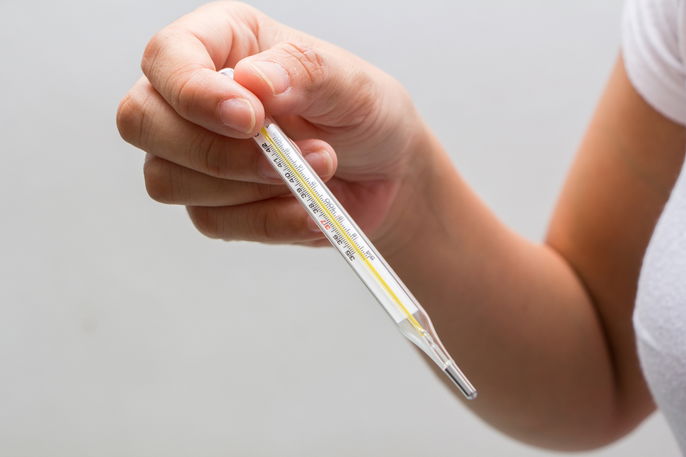
Different types of thermometers require different methods for use. You should be familiar with how the thermometer works in order to get an accurate temperature reading. The most common types of thermometers are used in the following way:
- **Glass or digital thermometer**: place the metal tip into the armpit, anus or mouth in direct contact with the skin or the mucous membranes and wait for at least 3 minutes, or until the thermometer makes a sound before you check your temperature;
- **Infrared thermometer**: place the tip of the thermometer on your forehead or inside the ear canal and press the button. After the beep, the temperature will come up on the thermometer immediately.
Body temperature should be measured at rest. You should not check your temperature after exercising or after a shower or bath as these situations will cause a temporary increase in temperature, and will not provide an accurate reading of actual body temperature.
Digital thermometers are the most comfortable and accurate thermometers to use in adults. However, any thermometer is trustworthy, as long as it is used correctly. The only type of thermometer we do not advise is the mercury thermometer, as it can cause poisoning if it breaks.
### How to measure a baby’s temperature
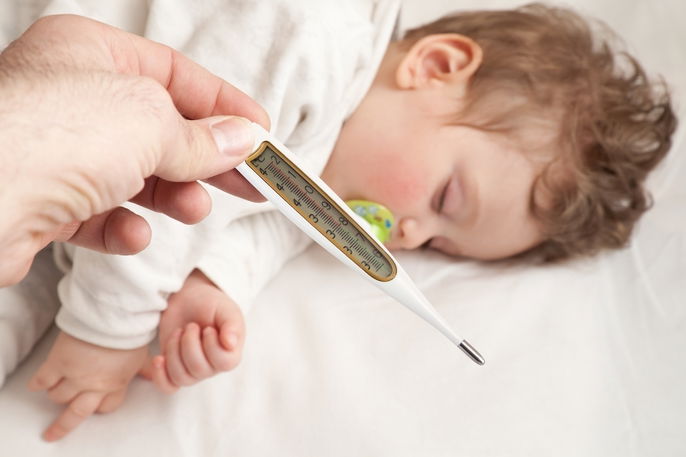
A baby’s body temperature should be measured with a thermometer, as fever can be hard to detect with just palpation. Digital or infrared thermometers are quick and most accurate for use in babies.
The best place to measure the baby’s temperature correctly is the anus, and it is best to use a digital thermometer with a soft tip to avoid injury. However, if the parents do not feel comfortable with this, they may measure the temperature in the armpit and confirm that temperature with the anal temperature at the pediatrician’s office. Learn about [how to care for a baby with a fever.](https://www.tuasaude.com/en/baby-fever/)
## What is considered a fever in adults?
A normal body temperature, measured with an axillary thermometer, varies between 95.7ºF (35.4ºC) and 98.9ºF (37.2ºC), but this can increase when with an infection that causes fever. The main body temperature variations are:
- **Low-grade fever:** Between 99.5ºF (37.5ºC) and 100.4ºF (38ºC). In these cases, generally, other symptoms may appear, such as shivering, shaking, or facial redness. Many times, you can resolve this increase in temperature by removing a layer of clothing, by taking a warm bath or by drinking water;
- **Fever**: When the axillary temperature is above 100.4ºF (38ºC). In adults, it can be treated with acetaminophen and by ensuring you are only wearing one later of clothing. You can also place cold compresses on the forehead. If the temperature does not resolve, even slightly, within three hours or if it continues to rise, you are advised to seek medical attention.
- **High-grade fever**: this is when the axillary temperature is above 105.8ºF (41ºC), which is considered to be a medical emergency. You should be assessed as soon as possible, especially if it does not resolve at home with medication.
Your body temperature may also be below usual if it is under 95.7ºF (35.4ºC). This generally happens when you are exposed to cold temperatures for a long time, also known as hypothermia. In these cases, you will need to remove yourself from the cold envronment, put on several layers of clothing, and drink warm fluids like tea.
## What is considered a fever in babies and children?
Babies and children have a slightly different body temperature to adults, as it usually varies between 96.8ºF (36ºC) and 98.6ºF (37ºC). The main temperature variations in children are:
- **Low-grade fever**: between 98.8ºF (37.1ºC) and 99.5ºF (37.5ºC). In these cases, remove a layer of clothing and give the child a bath in lukewarm water;
- **Fever**: A rectal temperature above 100.04ºF (37.8ºC) or axillary temperature above 100.4ºF (38ºC). In these cases, the caregivers should consult a health care professional about starting over-the-counter medication and to assess whether they need to go to the emergency department;
- **Low body temperature** (hypothermia): temperature below 95.9ºF (35.5ºC). In these cases, make sure to put on another layer of clothes on the child and avoid cold drafts. If the body temperature does not increase within 30 minutes, go to the emergency department.
Fluctuations in babies’ and children’s body temperatures are not always due to illness or infection, as the body temperature may vary according to the number of clothes worn, teeth erupting, a reaction to a vaccine, or due to a hot of environment.
## When should you to take medication
Removing extra clothing and taking a warm bath are good ways to lower body temperature. Still, when this is not sufficient, the doctor may recommend you take an antipyretic to reduce the fever. The medication most people take in these situations is acetaminophen. Frequency or how many capsules you take vary on the dose of each pill, but you should not exceed 4000mg in 24 hours.
Babies and children should only take medication for fever under medical supervision as dosing will vary according to age and weight.
Share
Update History
We regularly update our content with the latest scientific information to maintain an exceptional level of quality.
- 18 February, 2022 (Current version)
Updated by [Manuel Reis](https://www.tuasaude.com/en/manuel-reis/) - Registered Nurse
- 4 February, 2022
Updated by [Daisy Oliveira](https://www.tuasaude.com/en/daisy-oliveira/) - Registered Nurse
- 30 December, 2021
Updated by [Manuel Reis](https://www.tuasaude.com/en/manuel-reis/) - Registered Nurse
- 24 March, 2021
Updated by [Manuel Reis](https://www.tuasaude.com/en/manuel-reis/) - Registered Nurse
- 6 October, 2020
Clinical review by [Manuel Reis](https://www.tuasaude.com/en/manuel-reis/) - Registered Nurse
Updated by [Manuel Reis](https://www.tuasaude.com/en/manuel-reis/) - Registered Nurse
- Created on October, 2020
by [Manuel Reis](https://www.tuasaude.com/en/manuel-reis/) - Registered Nurse
## References
- Potter, Patrícia A.; Perry, Anne G. *Fundamentos de Enfermagem*. 9.ed ed. Rio de Janeiro: Elsevier; 2017.
- NHS. High temperature (fever) in adults. NHS. Accessed 19 Jun 2020 https://www.nhs.uk/conditions/fever-in-adults/
## More on this subject
[ Abdominal Pain Right Side Abdominal Pain: 15 Causes, Symptoms & Treatment](https://www.tuasaude.com/en/right-side-abdominal-pain/)
[ Diarrhea What to Eat When You Have Diarrhea: Top Foods & Meal Plan](https://www.tuasaude.com/en/what-to-eat-when-you-have-diarrhea/)
[ Pregnancy When Did I Conceive? Calculate Your Conception Date in Seconds](https://www.tuasaude.com/en/conception-date/)
[ Headache Headache on Left Side of Head: 13 Causes, Symptoms & Treatment](https://www.tuasaude.com/en/left-side-headache/)
[ Tingling What Causes Tingling Throughout the Body? 16 Possible Reasons](https://www.tuasaude.com/en/tingling-throughout-the-body/)
[ Diarrhea Yellow Diarrhea: 14 Causes (& How to Treat It)](https://www.tuasaude.com/en/yellow-diarrhea/)
[ Abdominal Pain Pain in Lower Left Abdomen: 15 Causes, Symptoms & Treatment](https://www.tuasaude.com/en/pain-in-left-lower-abdomen/)
[ Men's Health Red Spots on Penis: 16 Causes, Symptoms & How to Treat](https://www.tuasaude.com/en/red-spots-on-penis/)
- [Follow us on Instagram](https://www.instagram.com/tuasaudeen/ "Follow us on Instagram")
- [Follow us on Facebook](https://www.facebook.com/tuasaudeen/ "Follow us on Facebook")
- [Follow us on Pinterest](https://pt.pinterest.com/tuasaudeen/ "Follow us on Pinterest")
Tua Saúde is an informative space that intends to inform and educate readers about topics related to health, nutrition and wellbeing. This information should not be used to substitute a clinical diagnosis or treatment, nor does it replace the medical advice provided by a doctor.
**Address:** Rua Voluntários da Pátria, nº 138, Block 1, Unit 201, Botafogo, Rio de Janeiro/RJ - Zip Code - 22270-010
- [Who We Are](https://www.tuasaude.com/en/about-us/ "Who We Are")
- [Mission and Values](https://www.tuasaude.com/en/mission-and-values/ "Mission and Values")
- [Creative Process](https://www.tuasaude.com/en/creative-process/ "Creative Process")
- [Medical Review](https://www.tuasaude.com/en/medical-review/ "Medical Review")
- [Privacy Policy](https://www.tuasaude.com/en/privacy-policy/ "Privacy Policy")
- [Terms of Use](https://www.tuasaude.com/en/terms/ "Terms of Use")
- [Contact](https://www.tuasaude.com/en/contact/ "Contact")
[](https://aacihealthcare.com/certificates/c190-3-2023-trust-usa/)
This seal certifies that our website contains trusted health-related content.
Last site update: 02/04/2026
© 2007 - 2026 Tua Saúde. All rights reserved.
English
[Português](https://www.tuasaude.com/como-medir-a-temperatura/) [Español](https://www.tuasaude.com/es/como-medir-la-temperatura/) [Français](https://www.tuasaude.com/fr/fievre-a-partir-de-combien/)
Tua Saúde is a brand of the [Rede D’Or Group](https://www.rededorsaoluiz.com.br/)
Brazil's largest network of private hospitals
Our brands [Rede D'Or São Luiz](https://www.rededorsaoluiz.com.br/) [Oncologia D’Or](https://www.rededorsaoluiz.com.br/onco/oncologiador/) [SulAmérica](https://portal.sulamericaseguros.com.br/) [Richet Laboratórios](https://www.rededorsaoluiz.com.br/richet/) |
| Readable Markdown | Average body temperature can vary between 95.7ºF (35.4ºC) and 98.9ºF (37.2ºC), but a high temperature is only considered to be a fever when the temperature under the armpit (the axillary temperature) is higher than 100.4ºF (38ºC). This is because temperatures between 98.9 and 100.4ºF can be easily achieved when it’s very hot outside or when you have many layers of clothes on.
The most accurate way to determine whether you have a fever is by using a thermometer to measure your temperature. Placing a hand on the forehead or neck to assess whether a fever is present is not sufficient.
If your axillary temperature exceeds 102.2ºF (39ºC), you should seek medical attention, as a high fever can cause seizures or put your life in danger.

## How to measure your temperature
Different types of thermometers require different methods for use. You should be familiar with how the thermometer works in order to get an accurate temperature reading. The most common types of thermometers are used in the following way:
- **Glass or digital thermometer**: place the metal tip into the armpit, anus or mouth in direct contact with the skin or the mucous membranes and wait for at least 3 minutes, or until the thermometer makes a sound before you check your temperature;
- **Infrared thermometer**: place the tip of the thermometer on your forehead or inside the ear canal and press the button. After the beep, the temperature will come up on the thermometer immediately.
Body temperature should be measured at rest. You should not check your temperature after exercising or after a shower or bath as these situations will cause a temporary increase in temperature, and will not provide an accurate reading of actual body temperature.
Digital thermometers are the most comfortable and accurate thermometers to use in adults. However, any thermometer is trustworthy, as long as it is used correctly. The only type of thermometer we do not advise is the mercury thermometer, as it can cause poisoning if it breaks.
### How to measure a baby’s temperature
A baby’s body temperature should be measured with a thermometer, as fever can be hard to detect with just palpation. Digital or infrared thermometers are quick and most accurate for use in babies.
The best place to measure the baby’s temperature correctly is the anus, and it is best to use a digital thermometer with a soft tip to avoid injury. However, if the parents do not feel comfortable with this, they may measure the temperature in the armpit and confirm that temperature with the anal temperature at the pediatrician’s office. Learn about [how to care for a baby with a fever.](https://www.tuasaude.com/en/baby-fever/)
## What is considered a fever in adults?
A normal body temperature, measured with an axillary thermometer, varies between 95.7ºF (35.4ºC) and 98.9ºF (37.2ºC), but this can increase when with an infection that causes fever. The main body temperature variations are:
- **Low-grade fever:** Between 99.5ºF (37.5ºC) and 100.4ºF (38ºC). In these cases, generally, other symptoms may appear, such as shivering, shaking, or facial redness. Many times, you can resolve this increase in temperature by removing a layer of clothing, by taking a warm bath or by drinking water;
- **Fever**: When the axillary temperature is above 100.4ºF (38ºC). In adults, it can be treated with acetaminophen and by ensuring you are only wearing one later of clothing. You can also place cold compresses on the forehead. If the temperature does not resolve, even slightly, within three hours or if it continues to rise, you are advised to seek medical attention.
- **High-grade fever**: this is when the axillary temperature is above 105.8ºF (41ºC), which is considered to be a medical emergency. You should be assessed as soon as possible, especially if it does not resolve at home with medication.
Your body temperature may also be below usual if it is under 95.7ºF (35.4ºC). This generally happens when you are exposed to cold temperatures for a long time, also known as hypothermia. In these cases, you will need to remove yourself from the cold envronment, put on several layers of clothing, and drink warm fluids like tea.

## What is considered a fever in babies and children?
Babies and children have a slightly different body temperature to adults, as it usually varies between 96.8ºF (36ºC) and 98.6ºF (37ºC). The main temperature variations in children are:
- **Low-grade fever**: between 98.8ºF (37.1ºC) and 99.5ºF (37.5ºC). In these cases, remove a layer of clothing and give the child a bath in lukewarm water;
- **Fever**: A rectal temperature above 100.04ºF (37.8ºC) or axillary temperature above 100.4ºF (38ºC). In these cases, the caregivers should consult a health care professional about starting over-the-counter medication and to assess whether they need to go to the emergency department;
- **Low body temperature** (hypothermia): temperature below 95.9ºF (35.5ºC). In these cases, make sure to put on another layer of clothes on the child and avoid cold drafts. If the body temperature does not increase within 30 minutes, go to the emergency department.
Fluctuations in babies’ and children’s body temperatures are not always due to illness or infection, as the body temperature may vary according to the number of clothes worn, teeth erupting, a reaction to a vaccine, or due to a hot of environment.
## When should you to take medication
Removing extra clothing and taking a warm bath are good ways to lower body temperature. Still, when this is not sufficient, the doctor may recommend you take an antipyretic to reduce the fever. The medication most people take in these situations is acetaminophen. Frequency or how many capsules you take vary on the dose of each pill, but you should not exceed 4000mg in 24 hours.
Babies and children should only take medication for fever under medical supervision as dosing will vary according to age and weight.
Update History
We regularly update our content with the latest scientific information to maintain an exceptional level of quality.
- 18 February, 2022 (Current version)
Updated by - Registered Nurse
- 4 February, 2022
- 30 December, 2021
- 24 March, 2021
- 6 October, 2020
Clinical review by [Manuel Reis](https://www.tuasaude.com/en/manuel-reis/) - Registered Nurse
- Created on October, 2020
## References
- Potter, Patrícia A.; Perry, Anne G. *Fundamentos de Enfermagem*. 9.ed ed. Rio de Janeiro: Elsevier; 2017.
- NHS. High temperature (fever) in adults. NHS. Accessed 19 Jun 2020 https://www.nhs.uk/conditions/fever-in-adults/ |
| ML Classification | |
| ML Categories | null |
| ML Page Types | null |
| ML Intent Types | null |
| Content Metadata | |
| Language | en |
| Author | Manuel Reis |
| Publish Time | 2022-02-18 16:45:27 (4 years ago) |
| Original Publish Time | 2020-10-06 22:40:23 (5 years ago) |
| Republished | Yes |
| Word Count (Total) | 1,913 |
| Word Count (Content) | 1,091 |
| Links | |
| External Links | 9 |
| Internal Links | 111 |
| Technical SEO | |
| Meta Nofollow | No |
| Meta Noarchive | No |
| JS Rendered | No |
| Redirect Target | null |
| Performance | |
| Download Time (ms) | 121 |
| TTFB (ms) | 76 |
| Download Size (bytes) | 44,950 |
| Shard | 164 (laksa) |
| Root Hash | 15222387487170882964 |
| Unparsed URL | com,tuasaude!www,/en/how-to-tell-if-you-have-a-fever/ s443 |