ℹ️ Skipped - page is already crawled
| Filter | Status | Condition | Details |
|---|---|---|---|
| HTTP status | PASS | download_http_code = 200 | HTTP 200 |
| Age cutoff | PASS | download_stamp > now() - 6 MONTH | 0.2 months ago |
| History drop | PASS | isNull(history_drop_reason) | No drop reason |
| Spam/ban | PASS | fh_dont_index != 1 AND ml_spam_score = 0 | ml_spam_score=0 |
| Canonical | PASS | meta_canonical IS NULL OR = '' OR = src_unparsed | Not set |
| Property | Value |
|---|---|
| URL | https://www.tinnitusaz.com/tinnitus-causes-and-what-you-can-do-about-it |
| Last Crawled | 2026-04-13 13:09:32 (7 days ago) |
| First Indexed | 2022-02-19 12:05:52 (4 years ago) |
| HTTP Status Code | 200 |
| Meta Title | Tinnitus Causes Explained in Tempe AZ: Symptoms, Triggers & Solutions | Tinnitus & Hearing Center of Arizona |
| Meta Description | Explore top tinnitus causes and effective Tinnitus Relief strategies—from noise exposure to lifestyle adjustments—in Tempe at our expert audiology center. |
| Meta Canonical | null |
| Boilerpipe Text | Let's talk about some of the common tinnitus causes and what you can do about it. Tinnitus is a sensation of noise or "ringing" in the ears - a common problem that affects approximately 15 to 20 percent of individuals, so roughly 1 out of 6 people suffer from it. With those kinds of numbers, we feel it's a topic worth exploring, and in fact, it's an important part of our practice at Tinnitus & Hearing Center of Arizona.
The Rohe Method ® of Tinnitus Treatment
was created as a unique blend of Cognitive Behavior Therapy (CBT) and Tinnitus Retraining Therapy to facilitate retraining the brain. Retraining activates plasticity in the brain, which allows the nervous system to change its function in various ways, typically for learning or self-repair.
Tinnitus is not an actual condition; it is a symptom of some type of underlying condition, such as an ear injury, circulatory system disorder or age-related hearing loss.
Although tinnitus is annoying and can be incredibly frustrating, in the majority of cases it is not normally a sign of anything physically serious. It may worsen with age, for some individuals; if treated, tinnitus may improve. Sometimes it helps to treat an identified underlying cause such as a hearing loss or TMJ disorder, which a trained audiologist can help identify. Other treatments mask or reduce the noise, which can make tinnitus less intrusive and bothersome.
Tinnitus Symptoms
Tinnitus involves hearing sounds when there are no external sounds that are present. Tinnitus perception is considered a central deficit in the brain where cancellation of meaningless signals within the auditory pathways does not take place. The symptoms of tinnitus include the following kinds of phantom noises that you can sense inside your ears or head:
Humming
Hissing
Clicking
Roaring/Whooshing
Buzzing
Ringing
These phantom noises can sound like a low level roar or hiss up to a very high pitched squeal or ringing. You also might hear tinnitus in one ear or in both ears. The sound, in some cases, can be so loud that it may interfere with your ability to be able to hear external sound, sleep or concentrate. Tinnitus may either come and go, or be present at all times.
A great video about how tinnitus is perceived in the brain, with visual examples. The treatment method mentioned is Acoustic CR Neuromodulation, which is what
Desyncra
uses, a method that we offer at our clinic.
PDF Download
The Two Types of Tinnitus
There are two types of tinnitus: One type is called
subjective tinnitus
, which is the type of tinnitus that only can be heard by you. It is the most common form of tinnitus. This may be caused by problems in the inner, middle or outer ear. It may be caused by problems with the part of the brain where the nerve signals are interpreted in the form of sound (auditory pathways) or with the hearing (auditory) nerves themselves.
Objective tinnitus
is the type of tinnitus that your doctor is able to hear when she or he performs an examination. It is a non-ringing sound - more typically rushing, clicking, thumping, or other atonal sounds. It is a less common type of tinnitus that might be caused by vascular issues such as turbulent blood flow through blood vessels in the neck or abnormal muscle contractions (activated by grinding your teeth for instance) that compresses some part of the auditory system. This type of tinnitus more often has an identifiable cause and may be treatable.
When you should visit your Audiologist about your Tinnitus
If you have tinnitus and it is bothering you, affecting your sleep, or affecting your ability to hear naturally or concentrate.
You develop tinnitus following an upper respiratory infection, like a cold, and it doesn't improve within one week.
You have dizziness or hearing loss with your tinnitus.
You have tinnitus that arises without any apparent cause or comes on suddenly.
What Causes Tinnitus?
Cell damage within the inner ear hair is one of the most common causes of tinnitus. Delicate, tiny hairs within the inner ear known as the cilia move in relation to sound wave pressure. That triggers cells to release an electrical signal via a nerve in the ear (auditory nerve) over to the brain. Those signals are interpreted by the brain as sound. If the hairs inside of the inner ear are broken or bent, random electrical impulses may be leaked to the brain and cause tinnitus.
Other issues that cause tinnitus include chronic health conditions, other ear problems and conditions or injuries that affect the hearing center inside the brain or the nerves inside the ear. Many health conditions may cause or even worsen tinnitus. An exact cause, in many cases, is never found.
Radio Interview with Dr. Allen Rohe discussing Tinnitus Solutions
Common Tinnitus Causes
Tinnitus, in many individuals, is caused by one of the following conditions:
Hearing loss that is related to age. For many individuals, hearing continues to slowly worsen with age, normally starting at about 60 years old. Presbycusis is the medical term that is used for this kind of hearing loss. Usually causes a high pitch ringing sound.
Being exposed to loud noises. Common sources that may lead to noise-induced hearing loss include firearms, chain saws, and heavy equipment. Portable music players, like an iPod or an MP3 player, may cause hearing loss as well if they are played very loud over an extended period of time. Tinnitus can also be caused by short-term exposures to noise, such as a loud concert. It will normally go away for some, but not everyone. Both long-term and short-term exposure to loud sound may cause permanent damage and loss of hearing. Usually causes a high pitch ringing sound.
Earwax blockage. Your ear canal is protected by earwax which normally traps dirt, collects dead skin cells, and can slow down bacterial growth. When there has been an excessive accumulation of earwax, irritation to the eardrum lining or blockage of outside sounds may lead to tinnitus perception.
Changes to the middle ear bones. Stiffening of the bones inside the middle ear (otosclerosis) might affect hearing and could cause tinnitus perception. This condition, which is caused by an abnormal growth of bone, is easily identified on a hearing test and also has a tendency to run in families.
Other Tinnitus Causes
Some other common causes of tinnitus include the following:
Meniere's disease. Tinnitus may be an early indication of Meniere's disease. This inner ear disorder can be caused by abnormal pressure build-up in the inner ear fluids. It is sometimes also referred to as endolymphatic hydrops, and may be accompanied by sensations of fullness in the ear and dizziness or vertigo. Often described as a low pitched roaring sound early on. A hearing test and other lab tests can help to establish a diagnosis.
TMJ disorders. Temporomandibular joint problems. This is the joint that is on both sides of the head in the front of the ears, where the lower jawbone meets the skull and is well known to create tinnitus symptoms in some people. Often a low pitch sound, or clicking, ringing, or popping - accompanied by a feeling of fullness and sometimes pain in the ear.
Neck injuries or head injuries. Neck or head trauma may affect the hearing nerves, the inner ear, or brain function that is linked with hearing. Generally, these injuries cause tinnitus in one ear only.
Acoustic neuroma. This type of noncancerous (benign) tumor may develop on the cranial nerve running from the inner ear to the brain. Also referred to as an acoustic/vestibular schwannoma, generally the condition causes tinnitus and hearing loss in one ear only.
Eustachian tube dysfunction. With this condition, the tube that aerates the middle ear stays expanded at all times, and that can make the ear feel full. This type of dysfunction may be caused by radiation therapy, pregnancy, or losing a lot of weight.
Muscle spasms inside the ear. The middle ear muscles may tense up (spasm), and that can cause tinnitus, a fullness feeling in the ear, and hearing loss. Sometimes it occurs for no reason, but may also be caused by multiple sclerosis or other neurologic diseases. Fluttering sensations may indicate stapedius muscle contractions. Clicking can suggest contractions of the tensor tympani or nasopharyngeal muscles that control opening of the eustachian tube.
Somatic or body-based sounds (Head and Upper Cervical). Dental, TMJ, or muscular involvement. Can be caused by whiplash injury. The sternocleidomastoid, masseter, splenius capitus, middle and upper trapezius, and temporalis muscles are often the culprits. Properties suggest a somatic component: intermittency, large fluctuations in loudness, and variability of location. Seeing a dentist or physical therapist may be helpful in reducing the severity of the tinnitus symptoms.
Metabolic causes. Hyperthyroidism (Grave's Disease). An auto-immune response that over stimulates the thyroid. Tinnitus is usually associated with increased cardiac output and causes a pulsing or rushing noise. Hypothyroidism (Hashimoto's Disease) is an inflammatory condition that also affects the thyroid. The tinnitus is usually a constant sound.
Perilymphatic fistula. Tends to be high frequency (hissing, crickets) and may be caused by barotrauma, head trauma, valsalva (plugging the nose and forcefully blowing out to make the ears "pop"), and erosion to the bony labyrinth caused by inflammatory or neoplastic processes or following middle ear surgery (stapedectomy). May be diagnosed with a fistula test that produces nystagmus when air pressure is applied into the ear canal.
Other factors. Cervical misalignment, menses/menopause, renal disease, kidney transplants, Lyme disease, and poor circulation.
Pulsatile T innitus and the Link with B lood Vessel Disorders
A blood vessel disorder may cause tinnitus in rare cases. The type of tinnitus is referred to as pulsatile tinnitus. The causes may include the following:
Atherosclerosis. Growing older, as well as the buildup of cholesterol and other types of deposits will result in major blood vessels near the inner and middle ear to lose some elasticity - or the capability of being able to expand slightly or flex with every heartbeat. This causes the flow of blood to be more forceful and make it easier for the ear to detect beats. Generally, this form of tinnitus can be heard in both ears.
Neck and head tumors. A tumor pressing on the blood vessels in your neck (vascular neoplasm) or head may cause tinnitus as well as other types of symptoms.
High blood pressure. Hypertension as well as other factors which increase blood pressure, like caffeine, alcohol, and stress, can cause tinnitus to become more noticeable.
The turbulent flow of blood. Kinking or narrowing of a neck artery (or carotid artery) or a vein in the neck (jugular vein) may cause irregular, turbulent blood flow, that can cause tinnitus.
Capillary malformation. Arteriovenous malformation (AVM) is a condition where there are abnormal connections between veins and arteries that may cause tinnitus. Generally, this kind of tinnitus occurs in one ear only.
Medications that may cause tinnitus
There are a number of different medications that may worsen or cause tinnitus. In general, the higher the dose of the medication, the worse the tinnitus will become. Frequently, the unwanted noise will disappear once you stop using the drug. Some of the medications that are known to cause or make tinnitus worse include the following:
Antibiotics, which include neomycin, vancomycin (Firvanq, Vancocin HCL), erythromycin, and polymyxin B.
Cancer medications, which include cisplatin and methotrexate (Trexall).
Water pills (diuretics) like furosemide (Lasix), ethacrynic acid (Edecrin), or bumetanide (Bumex).
Quinine medications that are used for treating malaria and other types of health conditions.
Some antidepressants might make tinnitus worse.
Taking unusually high doses of aspirin (12 or more per day).
Also, some herbal supplements may cause tinnitus, as well as caffeine and nicotine.
Risk factors
Anybody may develop tinnitus. However, the following factors can increase your risk:
Exposure to loud noise. Exposure for long periods of time to loud noise may damage the tiny sensory hair cells inside the ear that send sound to the brain. Individuals who work in a noisy environment - like construction or factory workers, soldiers, or musicians - are at especially high risk.
Age. As people grow older, the amount of functioning nerve fibers inside the ears decline, which can potentially cause hearing issues that are associated with tinnitus quite often.
Gender. Men have a higher chance of experiencing tinnitus.
Smoking. Smokers are at a higher risk for developing tinnitus than non-smokers.
Cardiovascular problems. Certain conditions that affect the flow of blood, like narrow arteries (atherosclerosis) or high blood pressure can increase the risk for developing tinnitus.
The Impact of Tinnitus
Tinnitus may have a significant impact on your quality of life. Although it can affect various people in different ways, if you develop tinnitus, you might experience any of the following as well:
Irritability and anxiety
Depression
Memory problems
Trouble concentrating
Sleep problems
Stress
Fatigue
Treating those linked conditions might not directly affect tinnitus, but can improve how you feel.
Prevention
Tinnitus in many cases is caused by something that cannot be prevented. However, there are still precautions that may be taken to help prevent certain types of tinnitus from developing.
Use hearing protection. Exposure to loud noises over time may damage the nerves inside of your ears, and cause tinnitus and hearing loss. You should wear hearing protection at all times if you use firearms (particularly shotguns or pistols), work within an industry where loud machinery is used, are a musician, or use a chain saw.
Turn the volume down. Being exposed to amplified music over the long term without wearing any form of ear protection or when music is listened to through headphones at really high volumes, may cause tinnitus and hearing loss.
Take good care of your cardiovascular health. Eating right, exercising on a regular basis, and taking other steps to ensure your blood vessels stay healthy can help to prevent blood vessel disorders that are linked to tinnitus.
What To Do About Your Tinnitus
Tinnitus can be successfully managed and thankfully there are a variety of therapies and tinnitus treatments that you can read about in detail here. These include:
Cognitive Behavior Therapy (CBT)
- CBT is designed to modify cognitions and behaviors that fuel the reaction to the tinnitus, which can escalate anxiety, insomnia, fear, or stress.
Tinnitus Retraining Therapy (TRT)
- a blend of sound therapy and a specific course of directive counseling aimed towards desensitization and demystifying.
The Rohe Method
®
- a unique treatment designed and trademarked by Dr. Allen Rohe of the Tinnitus & Hearing Center of Arizona, called the
Rohe Method
®
, in which sessions can be conducted online via Skype teleconference, or in his clinic in Tempe, Arizona. With guidance from Dr. Rohe, there have been hundreds of patients that have obtained tremendous relief from the noise in their ears, as well as a substantial reduction in the anxiety and insomnia that affect so many of his patients.
The good news is that there is hope and relief for tinnitus, and research continues to progress. Some exciting research to watch is going on in Ireland at this time,
https://www.neuromoddevices.com/
.
It's worth mentioning here that Dr. Rohe is currently the only audiologist in the US that is trained and experienced in audiology, Tinnitus Retraining Therapy and Cognitive Behavior Therapy, making him uniquely qualified to address all aspects and options for your tinnitus treatment, whether in his Tempe AZ clinic, or online via Skype conference.
To schedule a consultation, please call the Tinnitus & Hearing Center of Arizona at
(480) 764-3682
, or use their
online scheduler here
.
The information provided in this article is not meant to be medical advice and is for educational purposes only. If you would like to learn more about this and other hearing-related topics, feel free to contact Tinnitus & Hearing Center of Arizona by
clicking here
or by calling
480-764-3682
.
REQUEST APPOINTMENT |
| Markdown | - [REVIEWS](https://www.tinnitusaz.com/patient-reviews)
- [SERVICES](https://www.tinnitusaz.com/hearing-doctor-in-tempe-services)
- [Tinnitus Treatment](https://www.tinnitusaz.com/tinnitus-treatment-in-tempe-az)
- [Hearing Loss Rehabilitation](https://www.tinnitusaz.com/hearing-loss-rehabilitation-in-tempe-az)
- [Misophonia & Hyperacusis](https://www.tinnitusaz.com/misophonia-hyperacusis-in-tempe-az)
- [Audiology For Children](https://www.tinnitusaz.com/audiology-for-children-in-tempe-az)
- [Hearing Aid Repairs](https://www.tinnitusaz.com/hearing-aid-repairs-maintenance-in-tempe)
- [Audiology For Musicians](https://www.tinnitusaz.com/hearing-specialists-for-musicians-tempe-az)
- [Phonak Hearing Aids](https://www.tinnitusaz.com/phonak-hearing-aids)
- [Oticon Hearing Aids](https://www.tinnitusaz.com/oticon-hearing-aids)
- [Starkey Hearing Aids](https://www.tinnitusaz.com/starkey-hearing-aids-in-tempe)
- [ABOUT](https://www.tinnitusaz.com/about-us)
- [Why Choose Us?](https://www.tinnitusaz.com/why-choose-us)
- [Dr. Allen Rohe](https://www.tinnitusaz.com/meet-dr-allen-rohe)
- [Audiologist Amy Rohe, M.A.](https://www.tinnitusaz.com/meet-dr-amy-rohe)
- [The Rohe Method](https://www.tinnitusaz.com/the-rohe-method)
- [TREATMENT](https://www.tinnitusaz.com/tinnitus-causes-and-what-you-can-do-about-it)
- [Lenire](https://www.tinnitusaz.com/lenire-treatment-for-tinnitus)
- [Hearing Aids](https://www.tinnitusaz.com/hearing-aids-in-tempe-az)
- [Invisible Hearing Aids](https://www.tinnitusaz.com/invisible-hearing-aids-in-tempe-az)
- [NeuroTechnology](https://www.tinnitusaz.com/restore-hearing-clarity-in-tempe-az)
- [Custom Hearing Protection](https://www.tinnitusaz.com/custom-hearing-protection-in-tempe-az)
- [Redux](https://www.tinnitusaz.com/redux-in-tempe-az)
- [RESOURCES](https://www.tinnitusaz.com/resources)
- [Virtual Consultation](https://www.tinnitusaz.com/request-your-virtual-consultation)
- [FAQs](https://www.tinnitusaz.com/faqs)
- [Patient Forms](https://www.tinnitusaz.com/new-patient-forms)
- [Make A Payment](https://www.tinnitusaz.com/payment)
- [Contact](https://www.tinnitusaz.com/contact-us)
- [Blog](https://www.tinnitusaz.com/blog)
- [Educational Reports](https://www.tinnitusaz.com/educational-reports)
- [Videos](https://www.tinnitusaz.com/informational-videos)
- [REQUEST APPOINTMENT](https://www.tinnitusaz.com/appointment-request)
[](https://www.tinnitusaz.com/)
## [480-831-6159](tel:4808316159)
[](https://www.tinnitusaz.com/)
## [480-831-6159](tel:4808316159)
- [REVIEWS](https://www.tinnitusaz.com/patient-reviews)
- [SERVICES](https://www.tinnitusaz.com/hearing-doctor-in-tempe-services)
- [Tinnitus Treatment](https://www.tinnitusaz.com/tinnitus-treatment-in-tempe-az)
- [Hearing Loss Rehabilitation](https://www.tinnitusaz.com/hearing-loss-rehabilitation-in-tempe-az)
- [Misophonia & Hyperacusis](https://www.tinnitusaz.com/misophonia-hyperacusis-in-tempe-az)
- [Audiology For Children](https://www.tinnitusaz.com/audiology-for-children-in-tempe-az)
- [Hearing Aid Repairs](https://www.tinnitusaz.com/hearing-aid-repairs-maintenance-in-tempe)
- [Audiology For Musicians](https://www.tinnitusaz.com/hearing-specialists-for-musicians-tempe-az)
- [Phonak Hearing Aids](https://www.tinnitusaz.com/phonak-hearing-aids)
- [Oticon Hearing Aids](https://www.tinnitusaz.com/oticon-hearing-aids)
- [Starkey Hearing Aids](https://www.tinnitusaz.com/starkey-hearing-aids-in-tempe)
- [ABOUT](https://www.tinnitusaz.com/about-us)
- [Why Choose Us?](https://www.tinnitusaz.com/why-choose-us)
- [Dr. Allen Rohe](https://www.tinnitusaz.com/meet-dr-allen-rohe)
- [Audiologist Amy Rohe, M.A.](https://www.tinnitusaz.com/meet-dr-amy-rohe)
- [The Rohe Method](https://www.tinnitusaz.com/the-rohe-method)
- [TREATMENT](https://www.tinnitusaz.com/tinnitus-causes-and-what-you-can-do-about-it)
- [Lenire](https://www.tinnitusaz.com/lenire-treatment-for-tinnitus)
- [Hearing Aids](https://www.tinnitusaz.com/hearing-aids-in-tempe-az)
- [Invisible Hearing Aids](https://www.tinnitusaz.com/invisible-hearing-aids-in-tempe-az)
- [NeuroTechnology](https://www.tinnitusaz.com/restore-hearing-clarity-in-tempe-az)
- [Custom Hearing Protection](https://www.tinnitusaz.com/custom-hearing-protection-in-tempe-az)
- [Redux](https://www.tinnitusaz.com/redux-in-tempe-az)
- [RESOURCES](https://www.tinnitusaz.com/resources)
- [Virtual Consultation](https://www.tinnitusaz.com/request-your-virtual-consultation)
- [FAQs](https://www.tinnitusaz.com/faqs)
- [Patient Forms](https://www.tinnitusaz.com/new-patient-forms)
- [Make A Payment](https://www.tinnitusaz.com/payment)
- [Contact](https://www.tinnitusaz.com/contact-us)
- [Blog](https://www.tinnitusaz.com/blog)
- [Educational Reports](https://www.tinnitusaz.com/educational-reports)
- [Videos](https://www.tinnitusaz.com/informational-videos)
- [REQUEST APPOINTMENT](https://www.tinnitusaz.com/appointment-request)
### Tinnitus Causes Explained in Tempe AZ: Symptoms, Triggers & Solutions
May 14, 2019

***
***
***
# Tinnitus Causes Explained in Tempe AZ: Symptoms, Triggers & Solutions
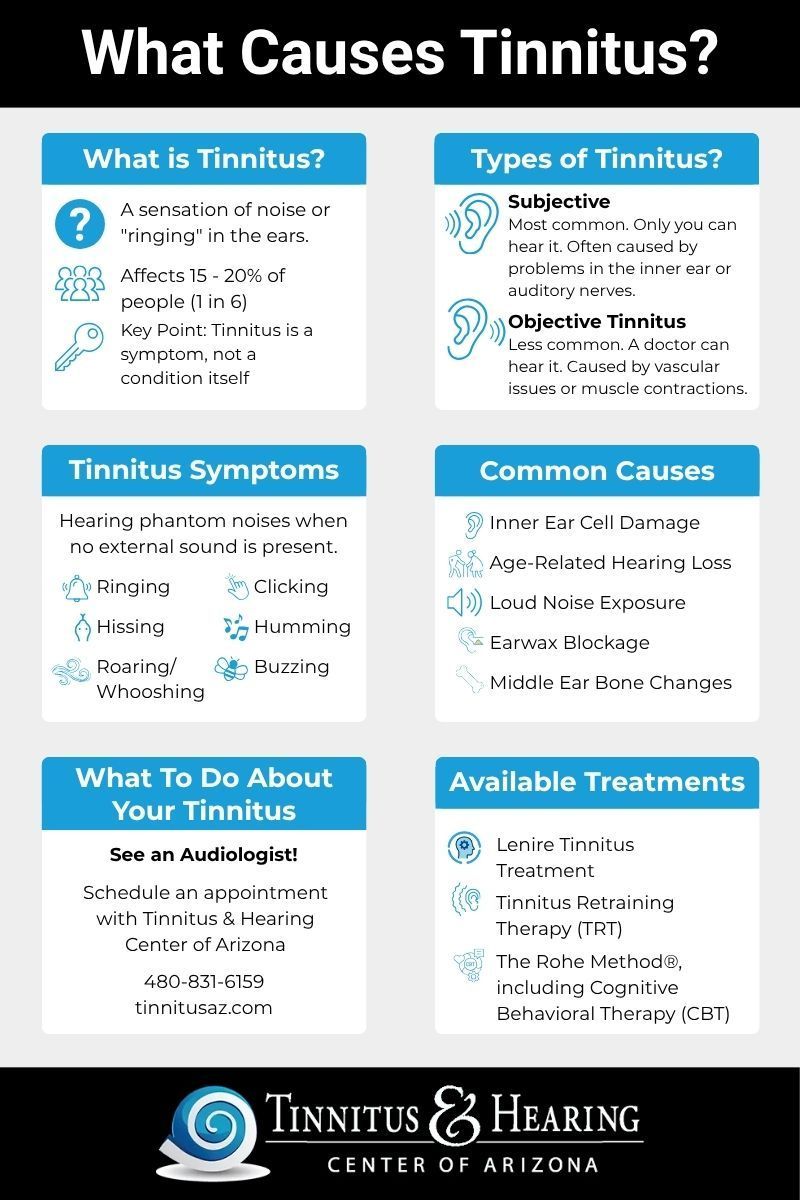
Let's talk about some of the common tinnitus causes and what you can do about it. Tinnitus is a sensation of noise or "ringing" in the ears - a common problem that affects approximately 15 to 20 percent of individuals, so roughly 1 out of 6 people suffer from it. With those kinds of numbers, we feel it's a topic worth exploring, and in fact, it's an important part of our practice at Tinnitus & Hearing Center of Arizona. [The Rohe Method ® of Tinnitus Treatment](https://www.tinnitusaz.com/rohe-method.html) was created as a unique blend of Cognitive Behavior Therapy (CBT) and Tinnitus Retraining Therapy to facilitate retraining the brain. Retraining activates plasticity in the brain, which allows the nervous system to change its function in various ways, typically for learning or self-repair.

Tinnitus is not an actual condition; it is a symptom of some type of underlying condition, such as an ear injury, circulatory system disorder or age-related hearing loss.
Although tinnitus is annoying and can be incredibly frustrating, in the majority of cases it is not normally a sign of anything physically serious. It may worsen with age, for some individuals; if treated, tinnitus may improve. Sometimes it helps to treat an identified underlying cause such as a hearing loss or TMJ disorder, which a trained audiologist can help identify. Other treatments mask or reduce the noise, which can make tinnitus less intrusive and bothersome.
## Tinnitus Symptoms
Tinnitus involves hearing sounds when there are no external sounds that are present. Tinnitus perception is considered a central deficit in the brain where cancellation of meaningless signals within the auditory pathways does not take place. The symptoms of tinnitus include the following kinds of phantom noises that you can sense inside your ears or head:
- Humming
- Hissing
- Clicking
- Roaring/Whooshing
- Buzzing
- Ringing
These phantom noises can sound like a low level roar or hiss up to a very high pitched squeal or ringing. You also might hear tinnitus in one ear or in both ears. The sound, in some cases, can be so loud that it may interfere with your ability to be able to hear external sound, sleep or concentrate. Tinnitus may either come and go, or be present at all times.
| | | |
|---|---|---|
| | *A great video about how tinnitus is perceived in the brain, with visual examples. The treatment method mentioned is Acoustic CR Neuromodulation, which is what **Desyncra** uses, a method that we offer at our clinic.* | |
[PDF Download](https://irp.cdn-website.com/8ad04201/files/uploaded/What+Causes+Tinnitus+Sept+-25.pdf)
## The Two Types of Tinnitus

There are two types of tinnitus: One type is called **subjective tinnitus** , which is the type of tinnitus that only can be heard by you. It is the most common form of tinnitus. This may be caused by problems in the inner, middle or outer ear. It may be caused by problems with the part of the brain where the nerve signals are interpreted in the form of sound (auditory pathways) or with the hearing (auditory) nerves themselves.
**Objective tinnitus** is the type of tinnitus that your doctor is able to hear when she or he performs an examination. It is a non-ringing sound - more typically rushing, clicking, thumping, or other atonal sounds. It is a less common type of tinnitus that might be caused by vascular issues such as turbulent blood flow through blood vessels in the neck or abnormal muscle contractions (activated by grinding your teeth for instance) that compresses some part of the auditory system. This type of tinnitus more often has an identifiable cause and may be treatable.
### When you should visit your Audiologist about your Tinnitus
###
- If you have tinnitus and it is bothering you, affecting your sleep, or affecting your ability to hear naturally or concentrate.
- You develop tinnitus following an upper respiratory infection, like a cold, and it doesn't improve within one week.
- You have dizziness or hearing loss with your tinnitus.
- You have tinnitus that arises without any apparent cause or comes on suddenly.
###
### What Causes Tinnitus?
Cell damage within the inner ear hair is one of the most common causes of tinnitus. Delicate, tiny hairs within the inner ear known as the cilia move in relation to sound wave pressure. That triggers cells to release an electrical signal via a nerve in the ear (auditory nerve) over to the brain. Those signals are interpreted by the brain as sound. If the hairs inside of the inner ear are broken or bent, random electrical impulses may be leaked to the brain and cause tinnitus.
Other issues that cause tinnitus include chronic health conditions, other ear problems and conditions or injuries that affect the hearing center inside the brain or the nerves inside the ear. Many health conditions may cause or even worsen tinnitus. An exact cause, in many cases, is never found.
| | | |
|---|---|---|
| | *Radio Interview with Dr. Allen Rohe discussing Tinnitus Solutions* | |
### Common Tinnitus Causes
Tinnitus, in many individuals, is caused by one of the following conditions:
- Hearing loss that is related to age. For many individuals, hearing continues to slowly worsen with age, normally starting at about 60 years old. Presbycusis is the medical term that is used for this kind of hearing loss. Usually causes a high pitch ringing sound.
- Being exposed to loud noises. Common sources that may lead to noise-induced hearing loss include firearms, chain saws, and heavy equipment. Portable music players, like an iPod or an MP3 player, may cause hearing loss as well if they are played very loud over an extended period of time. Tinnitus can also be caused by short-term exposures to noise, such as a loud concert. It will normally go away for some, but not everyone. Both long-term and short-term exposure to loud sound may cause permanent damage and loss of hearing. Usually causes a high pitch ringing sound.
- Earwax blockage. Your ear canal is protected by earwax which normally traps dirt, collects dead skin cells, and can slow down bacterial growth. When there has been an excessive accumulation of earwax, irritation to the eardrum lining or blockage of outside sounds may lead to tinnitus perception.
- Changes to the middle ear bones. Stiffening of the bones inside the middle ear (otosclerosis) might affect hearing and could cause tinnitus perception. This condition, which is caused by an abnormal growth of bone, is easily identified on a hearing test and also has a tendency to run in families.
### Other Tinnitus Causes
Some other common causes of tinnitus include the following:
- Meniere's disease. Tinnitus may be an early indication of Meniere's disease. This inner ear disorder can be caused by abnormal pressure build-up in the inner ear fluids. It is sometimes also referred to as endolymphatic hydrops, and may be accompanied by sensations of fullness in the ear and dizziness or vertigo. Often described as a low pitched roaring sound early on. A hearing test and other lab tests can help to establish a diagnosis.
- TMJ disorders. Temporomandibular joint problems. This is the joint that is on both sides of the head in the front of the ears, where the lower jawbone meets the skull and is well known to create tinnitus symptoms in some people. Often a low pitch sound, or clicking, ringing, or popping - accompanied by a feeling of fullness and sometimes pain in the ear.
- Neck injuries or head injuries. Neck or head trauma may affect the hearing nerves, the inner ear, or brain function that is linked with hearing. Generally, these injuries cause tinnitus in one ear only.
- Acoustic neuroma. This type of noncancerous (benign) tumor may develop on the cranial nerve running from the inner ear to the brain. Also referred to as an acoustic/vestibular schwannoma, generally the condition causes tinnitus and hearing loss in one ear only.
- Eustachian tube dysfunction. With this condition, the tube that aerates the middle ear stays expanded at all times, and that can make the ear feel full. This type of dysfunction may be caused by radiation therapy, pregnancy, or losing a lot of weight.
- Muscle spasms inside the ear. The middle ear muscles may tense up (spasm), and that can cause tinnitus, a fullness feeling in the ear, and hearing loss. Sometimes it occurs for no reason, but may also be caused by multiple sclerosis or other neurologic diseases. Fluttering sensations may indicate stapedius muscle contractions. Clicking can suggest contractions of the tensor tympani or nasopharyngeal muscles that control opening of the eustachian tube.
- Somatic or body-based sounds (Head and Upper Cervical). Dental, TMJ, or muscular involvement. Can be caused by whiplash injury. The sternocleidomastoid, masseter, splenius capitus, middle and upper trapezius, and temporalis muscles are often the culprits. Properties suggest a somatic component: intermittency, large fluctuations in loudness, and variability of location. Seeing a dentist or physical therapist may be helpful in reducing the severity of the tinnitus symptoms.
- Metabolic causes. Hyperthyroidism (Grave's Disease). An auto-immune response that over stimulates the thyroid. Tinnitus is usually associated with increased cardiac output and causes a pulsing or rushing noise. Hypothyroidism (Hashimoto's Disease) is an inflammatory condition that also affects the thyroid. The tinnitus is usually a constant sound.
- Perilymphatic fistula. Tends to be high frequency (hissing, crickets) and may be caused by barotrauma, head trauma, valsalva (plugging the nose and forcefully blowing out to make the ears "pop"), and erosion to the bony labyrinth caused by inflammatory or neoplastic processes or following middle ear surgery (stapedectomy). May be diagnosed with a fistula test that produces nystagmus when air pressure is applied into the ear canal.
- Other factors. Cervical misalignment, menses/menopause, renal disease, kidney transplants, Lyme disease, and poor circulation.
### Pulsatile T innitus and the Link with B lood Vessel Disorders
A blood vessel disorder may cause tinnitus in rare cases. The type of tinnitus is referred to as pulsatile tinnitus. The causes may include the following:
- Atherosclerosis. Growing older, as well as the buildup of cholesterol and other types of deposits will result in major blood vessels near the inner and middle ear to lose some elasticity - or the capability of being able to expand slightly or flex with every heartbeat. This causes the flow of blood to be more forceful and make it easier for the ear to detect beats. Generally, this form of tinnitus can be heard in both ears.
- Neck and head tumors. A tumor pressing on the blood vessels in your neck (vascular neoplasm) or head may cause tinnitus as well as other types of symptoms.
- High blood pressure. Hypertension as well as other factors which increase blood pressure, like caffeine, alcohol, and stress, can cause tinnitus to become more noticeable.
- The turbulent flow of blood. Kinking or narrowing of a neck artery (or carotid artery) or a vein in the neck (jugular vein) may cause irregular, turbulent blood flow, that can cause tinnitus.
- Capillary malformation. Arteriovenous malformation (AVM) is a condition where there are abnormal connections between veins and arteries that may cause tinnitus. Generally, this kind of tinnitus occurs in one ear only.
### Medications that may cause tinnitus
There are a number of different medications that may worsen or cause tinnitus. In general, the higher the dose of the medication, the worse the tinnitus will become. Frequently, the unwanted noise will disappear once you stop using the drug. Some of the medications that are known to cause or make tinnitus worse include the following:
- Antibiotics, which include neomycin, vancomycin (Firvanq, Vancocin HCL), erythromycin, and polymyxin B.
- Cancer medications, which include cisplatin and methotrexate (Trexall).
- Water pills (diuretics) like furosemide (Lasix), ethacrynic acid (Edecrin), or bumetanide (Bumex).
- Quinine medications that are used for treating malaria and other types of health conditions.
- Some antidepressants might make tinnitus worse.
- Taking unusually high doses of aspirin (12 or more per day).
Also, some herbal supplements may cause tinnitus, as well as caffeine and nicotine.
### Risk factors
Anybody may develop tinnitus. However, the following factors can increase your risk:
- Exposure to loud noise. Exposure for long periods of time to loud noise may damage the tiny sensory hair cells inside the ear that send sound to the brain. Individuals who work in a noisy environment - like construction or factory workers, soldiers, or musicians - are at especially high risk.
- Age. As people grow older, the amount of functioning nerve fibers inside the ears decline, which can potentially cause hearing issues that are associated with tinnitus quite often.
- Gender. Men have a higher chance of experiencing tinnitus.
- Smoking. Smokers are at a higher risk for developing tinnitus than non-smokers.
- Cardiovascular problems. Certain conditions that affect the flow of blood, like narrow arteries (atherosclerosis) or high blood pressure can increase the risk for developing tinnitus.
### The Impact of Tinnitus
Tinnitus may have a significant impact on your quality of life. Although it can affect various people in different ways, if you develop tinnitus, you might experience any of the following as well:
- Irritability and anxiety
- Depression
- Memory problems
- Trouble concentrating
- Sleep problems
- Stress
- Fatigue
Treating those linked conditions might not directly affect tinnitus, but can improve how you feel.
### Prevention
Tinnitus in many cases is caused by something that cannot be prevented. However, there are still precautions that may be taken to help prevent certain types of tinnitus from developing.
- Use hearing protection. Exposure to loud noises over time may damage the nerves inside of your ears, and cause tinnitus and hearing loss. You should wear hearing protection at all times if you use firearms (particularly shotguns or pistols), work within an industry where loud machinery is used, are a musician, or use a chain saw.
- Turn the volume down. Being exposed to amplified music over the long term without wearing any form of ear protection or when music is listened to through headphones at really high volumes, may cause tinnitus and hearing loss.
- Take good care of your cardiovascular health. Eating right, exercising on a regular basis, and taking other steps to ensure your blood vessels stay healthy can help to prevent blood vessel disorders that are linked to tinnitus.
### What To Do About Your Tinnitus

Tinnitus can be successfully managed and thankfully there are a variety of therapies and tinnitus treatments that you can read about in detail here. These include:
- [Cognitive Behavior Therapy (CBT)](https://www.tinnitusaz.com/cognitive-therapy-cbt-tinnitus.html) - CBT is designed to modify cognitions and behaviors that fuel the reaction to the tinnitus, which can escalate anxiety, insomnia, fear, or stress.
- [**Tinnitus Retraining Therapy (TRT)**](https://www.tinnitusaz.com/trt.html) - a blend of sound therapy and a specific course of directive counseling aimed towards desensitization and demystifying.
- [The Rohe Method](https://www.tinnitusaz.com/rohe-method.html) [®](https://www.tinnitusaz.com/rohe-method.html) - a unique treatment designed and trademarked by Dr. Allen Rohe of the Tinnitus & Hearing Center of Arizona, called the **Rohe Method** [®](https://www.tinnitusaz.com/rohe-method.html), in which sessions can be conducted online via Skype teleconference, or in his clinic in Tempe, Arizona. With guidance from Dr. Rohe, there have been hundreds of patients that have obtained tremendous relief from the noise in their ears, as well as a substantial reduction in the anxiety and insomnia that affect so many of his patients.
The good news is that there is hope and relief for tinnitus, and research continues to progress. Some exciting research to watch is going on in Ireland at this time, <https://www.neuromoddevices.com/>.
It's worth mentioning here that Dr. Rohe is currently the only audiologist in the US that is trained and experienced in audiology, Tinnitus Retraining Therapy and Cognitive Behavior Therapy, making him uniquely qualified to address all aspects and options for your tinnitus treatment, whether in his Tempe AZ clinic, or online via Skype conference.
To schedule a consultation, please call the Tinnitus & Hearing Center of Arizona at [(480) 764-3682](tel:+14807643682) , or use their [online scheduler here](https://www.tinnitusaz.com/online-scheduler.html).
The information provided in this article is not meant to be medical advice and is for educational purposes only. If you would like to learn more about this and other hearing-related topics, feel free to contact Tinnitus & Hearing Center of Arizona by [clicking here](https://www.tinnitusaz.com/appointment-request/) or by calling [480-764-3682](tel:+14807643682).
[REQUEST APPOINTMENT](https://www.tinnitusaz.com/appointment-request/)
[\< Older Post](https://www.tinnitusaz.com/cheap-hearing-aids-are-a-bad-deal)
[Newer Post \>](https://www.tinnitusaz.com/hearing-loss-and-hearing-tests-in-scottsdale-az)
[](https://www.tinnitusaz.com/real-ear-measurement-rem-the-gold-standard-in-hearing-aid-verification)
### [Real-Ear Measurement (REM): The Gold Standard in Hearing Aid Verification](https://www.tinnitusaz.com/real-ear-measurement-rem-the-gold-standard-in-hearing-aid-verification)
March 29, 2026
If you’ve ever thought about hearing aids and wondered, “How do I know they’re actually set up correctly for my ears?” you’re asking an excellent question.
[](https://www.tinnitusaz.com/press-release-tinnitus-hearing-center-of-arizona-introduces-oticon-zealtm)
### [Press Release: Tinnitus & Hearing Center of Arizona Introduces Oticon ZealTM](https://www.tinnitusaz.com/press-release-tinnitus-hearing-center-of-arizona-introduces-oticon-zealtm)
March 27, 2026
New AI-Powered Hearing Aid Combines Premium Sound Quality and All-Day Rechargeability in Nearly Invisible Design
[](https://www.tinnitusaz.com/discovering-the-link-between-tinnitus-and-anxiety-draft-delete)
### [Discovering the Link Between Tinnitus and Anxiety](https://www.tinnitusaz.com/discovering-the-link-between-tinnitus-and-anxiety-draft-delete)
By alyssa brekken • February 2, 2026
Anxiety can cause many ailments, including tinnitus. Meanwhile, tinnitus can worsen anxiety. The two together can fuel a vicious cycle, but there are ways to tame down each and help alleviate the tinnitus and anxiety relationship. The Vicious Cycle: How Tinnitus Fuels Anxiety Those who have or have had tinnitus will likely agree that the constant noise is hard to get relief from. For many, it can worsen anxiety, and for some, it can directly cause it. Unfortunately, tinnitus and mental health issues often feed on each other. When general anxiety elevates to a fight-or-flight response, it creates an elevation in heart rate and shortness of breath, which heightens tinnitus. Alone or together, tinnitus and anxiety often make it hard to relax, to fall asleep, and to stay asleep. For some, the combination of tinnitus and anxiety also leads to social avoidance and isolation. That worsens the anxiety and contributes to depression. Concern may grow that the tinnitus will never go away and that it may be a sign of something more serious. This can lead to insecurity about the future and a feeling of hopelessness. The Amplifier: How Anxiety Worsens Tinnitus Stress hormones, including adrenaline, cortisol, and epinephrine, affect the nervous system and can affect the auditory system itself, leading to a reduction of blood circulation in the ears. The overstimulation of the nervous system can also cause cell damage through a lack of oxygen, worsening tinnitus, and contributing to a loss of hearing. For those who experience panic attacks, both a temporary ringing and long-term tinnitus, along with a pulsating in the ear canals, may begin as a panic attack heightens. The sound and pulsations can contribute to anxiety and cause a fear of potential threats. As such, the tinnitus amplifies and becomes louder, more noticeable, and more irritating.
[](https://www.tinnitusaz.com/give-thanks-for-better-hearing-why-local-audiology-care-matters)
### [Give Thanks for Better Hearing: Why Local Audiology Care Matters](https://www.tinnitusaz.com/give-thanks-for-better-hearing-why-local-audiology-care-matters)
November 26, 2025
If you’re experiencing hearing loss, you have probably wondered whether you really need a prescription hearing aid or if you can just grab one from a big box store or the internet.
[](https://www.tinnitusaz.com/discovering-the-link-between-tinnitus-and-anxiety)
### [Discovering the Link Between Tinnitus and Anxiety](https://www.tinnitusaz.com/discovering-the-link-between-tinnitus-and-anxiety)
By Allen Rohe • November 10, 2025
Anxiety and tinnitus often go hand in hand. Explore the link between stress and ear ringing and learn how holistic treatment can bring relief.
[](https://www.tinnitusaz.com/exercises-for-tinnitus)
### [Home Exercises for Tinnitus Relief: TMJ Exercises & More](https://www.tinnitusaz.com/exercises-for-tinnitus)
By Allen Rohe • November 4, 2025
Try these simple TMJ and neck exercises to relieve tinnitus symptoms naturally at home. Learn how physical therapy can support long-term tinnitus management.
[](https://www.tinnitusaz.com/does-insurance-cover-tinnitus-treatment)
### [Why Doesn't Insurance Cover Tinnitus Treatment?](https://www.tinnitusaz.com/does-insurance-cover-tinnitus-treatment)
By alyssa brekken • October 23, 2025
Wondering why tinnitus treatment isn't covered by insurance? Learn what most policies exclude, why it happens, and how you can still get effective care in Arizona.
[](https://www.tinnitusaz.com/misophonia-phonophobia-and-hyperacusis-auditory-sensitivity-explained)
### [Misophonia, Phonophobia, and Hyperacusis: Auditory Sensitivity Explained](https://www.tinnitusaz.com/misophonia-phonophobia-and-hyperacusis-auditory-sensitivity-explained)
By SEO Salem • October 16, 2025
Learn the key differences between misophonia, phonophobia, and hyperacusis. Discover how these auditory conditions relate to tinnitus and what treatments are available.
[](https://www.tinnitusaz.com/4-things-that-pleasantly-surprise-new-hearing-aid-users)
### [4 Things That Pleasantly Surprise New Hearing Aid Users](https://www.tinnitusaz.com/4-things-that-pleasantly-surprise-new-hearing-aid-users)
June 13, 2025
We’re still surprised how many people have outdated ideas about what hearing aids are like. It’s common for patients to come in expecting large, uncomfortable devices that distort sounds or make everything seem tinny or artificial. In fact, one of the first things many of our patients say is, “I can’t believe how natural everything sounds!” Or they might remark on how comfortable they are to wear. We love pleasantly surprising people\!
[](https://www.tinnitusaz.com/learn-what-misophonia-is)
### [What Is Misophonia? Causes, Symptoms & Treatment](https://www.tinnitusaz.com/learn-what-misophonia-is)
By SEO Salem • May 12, 2025
Curious about misophonia? Explore the causes, common triggers, symptoms, and treatment options for sound-triggered emotional responses from our Arizona audiologists.
- [1 (current)]()
- [2]()
- [3]()
- [...]()
- [8]()
[REQUEST APPOINTMENT](https://www.tinnitusaz.com/appointment-request)
## **What To Expect On Your First Visit**
[]()
#### CONSULTATION
We will carefully listen to your concerns and goals.
#### STEP BY STEP HELP
Thorough explanation of our process.
#### TESTING
Testing to determine course of action.
#### COMPREHENSIVE TREATMENT
A comprehensive treatment plan tailored to you.
##### OUR TEMPE OFFICE
[2034 E. Southern Avenue, Suite](https://g.page/tinnitusaz?share) [I](https://g.page/tinnitusaz?share)
[Tempe, AZ 85282](https://g.page/tinnitusaz?share)
Mon - Thurs 9am - 5pm
Fri 9am - 1pm
[GET DIRECTIONS](https://g.page/tinnitusaz?share) [PATIENT FORMS](https://www.tinnitusaz.com/new-patient-forms) [NEW PATIENT ASSESSMENT](https://www.tinnitusaz.com/appointment-request)
##### CONTACT US
## [480-831-6159](tel:480-831-6159) [480-347-0945](tel:480-347-0945) (fax)

#### WE SERVICE ALL THE FOLLOWING TOWNS AND SURROUNDING AREAS
Tempe, Scottsdale, Chandler, Mesa, Phoenix, Gilbert, Sun Lakes, Paradise Valley, Cave Creek, Queen Creek, San Tan Valley, Flagstaff, Sedona, Tucson
***
##### PROUDLY PROVIDING SERVICE TO THE FOLLOWING RETIREMENT COMMUNITIES
Sun Lakes, Sun City, Friendship Village
## [480-831-6159](tel:480-831-6159)
- [REQUEST APPOINTMENT](https://www.tinnitusaz.com/appointment-request)
- [NEW PATIENT FORMS](https://www.tinnitusaz.com/new-patient-forms)
- [DIRECTIONS](https://g.page/tinnitusaz?share)
- [Make A Payment](https://www.tinnitusaz.com/payment)
- [Contact](https://www.tinnitusaz.com/contact-us)
***
***
Share by:
[](https://statcounter.com/ "Web Analytics")
Please ensure Javascript is enabled for purposes of [website accessibility](https://userway.org/)
 |
| Readable Markdown | Let's talk about some of the common tinnitus causes and what you can do about it. Tinnitus is a sensation of noise or "ringing" in the ears - a common problem that affects approximately 15 to 20 percent of individuals, so roughly 1 out of 6 people suffer from it. With those kinds of numbers, we feel it's a topic worth exploring, and in fact, it's an important part of our practice at Tinnitus & Hearing Center of Arizona. [The Rohe Method ® of Tinnitus Treatment](https://www.tinnitusaz.com/rohe-method.html) was created as a unique blend of Cognitive Behavior Therapy (CBT) and Tinnitus Retraining Therapy to facilitate retraining the brain. Retraining activates plasticity in the brain, which allows the nervous system to change its function in various ways, typically for learning or self-repair.

Tinnitus is not an actual condition; it is a symptom of some type of underlying condition, such as an ear injury, circulatory system disorder or age-related hearing loss.
Although tinnitus is annoying and can be incredibly frustrating, in the majority of cases it is not normally a sign of anything physically serious. It may worsen with age, for some individuals; if treated, tinnitus may improve. Sometimes it helps to treat an identified underlying cause such as a hearing loss or TMJ disorder, which a trained audiologist can help identify. Other treatments mask or reduce the noise, which can make tinnitus less intrusive and bothersome.
## Tinnitus Symptoms
Tinnitus involves hearing sounds when there are no external sounds that are present. Tinnitus perception is considered a central deficit in the brain where cancellation of meaningless signals within the auditory pathways does not take place. The symptoms of tinnitus include the following kinds of phantom noises that you can sense inside your ears or head:
- Humming
- Hissing
- Clicking
- Roaring/Whooshing
- Buzzing
- Ringing
These phantom noises can sound like a low level roar or hiss up to a very high pitched squeal or ringing. You also might hear tinnitus in one ear or in both ears. The sound, in some cases, can be so loud that it may interfere with your ability to be able to hear external sound, sleep or concentrate. Tinnitus may either come and go, or be present at all times.
| | | |
|---|---|---|
| | *A great video about how tinnitus is perceived in the brain, with visual examples. The treatment method mentioned is Acoustic CR Neuromodulation, which is what **Desyncra** uses, a method that we offer at our clinic.* | |

[PDF Download](https://irp.cdn-website.com/8ad04201/files/uploaded/What+Causes+Tinnitus+Sept+-25.pdf)
## The Two Types of Tinnitus

There are two types of tinnitus: One type is called **subjective tinnitus** , which is the type of tinnitus that only can be heard by you. It is the most common form of tinnitus. This may be caused by problems in the inner, middle or outer ear. It may be caused by problems with the part of the brain where the nerve signals are interpreted in the form of sound (auditory pathways) or with the hearing (auditory) nerves themselves.
**Objective tinnitus** is the type of tinnitus that your doctor is able to hear when she or he performs an examination. It is a non-ringing sound - more typically rushing, clicking, thumping, or other atonal sounds. It is a less common type of tinnitus that might be caused by vascular issues such as turbulent blood flow through blood vessels in the neck or abnormal muscle contractions (activated by grinding your teeth for instance) that compresses some part of the auditory system. This type of tinnitus more often has an identifiable cause and may be treatable.
### When you should visit your Audiologist about your Tinnitus
- If you have tinnitus and it is bothering you, affecting your sleep, or affecting your ability to hear naturally or concentrate.
- You develop tinnitus following an upper respiratory infection, like a cold, and it doesn't improve within one week.
- You have dizziness or hearing loss with your tinnitus.
- You have tinnitus that arises without any apparent cause or comes on suddenly.
### What Causes Tinnitus?
Cell damage within the inner ear hair is one of the most common causes of tinnitus. Delicate, tiny hairs within the inner ear known as the cilia move in relation to sound wave pressure. That triggers cells to release an electrical signal via a nerve in the ear (auditory nerve) over to the brain. Those signals are interpreted by the brain as sound. If the hairs inside of the inner ear are broken or bent, random electrical impulses may be leaked to the brain and cause tinnitus.
Other issues that cause tinnitus include chronic health conditions, other ear problems and conditions or injuries that affect the hearing center inside the brain or the nerves inside the ear. Many health conditions may cause or even worsen tinnitus. An exact cause, in many cases, is never found.
| | | |
|---|---|---|
| | *Radio Interview with Dr. Allen Rohe discussing Tinnitus Solutions* | |
### Common Tinnitus Causes
Tinnitus, in many individuals, is caused by one of the following conditions:
- Hearing loss that is related to age. For many individuals, hearing continues to slowly worsen with age, normally starting at about 60 years old. Presbycusis is the medical term that is used for this kind of hearing loss. Usually causes a high pitch ringing sound.
- Being exposed to loud noises. Common sources that may lead to noise-induced hearing loss include firearms, chain saws, and heavy equipment. Portable music players, like an iPod or an MP3 player, may cause hearing loss as well if they are played very loud over an extended period of time. Tinnitus can also be caused by short-term exposures to noise, such as a loud concert. It will normally go away for some, but not everyone. Both long-term and short-term exposure to loud sound may cause permanent damage and loss of hearing. Usually causes a high pitch ringing sound.
- Earwax blockage. Your ear canal is protected by earwax which normally traps dirt, collects dead skin cells, and can slow down bacterial growth. When there has been an excessive accumulation of earwax, irritation to the eardrum lining or blockage of outside sounds may lead to tinnitus perception.
- Changes to the middle ear bones. Stiffening of the bones inside the middle ear (otosclerosis) might affect hearing and could cause tinnitus perception. This condition, which is caused by an abnormal growth of bone, is easily identified on a hearing test and also has a tendency to run in families.
### Other Tinnitus Causes
Some other common causes of tinnitus include the following:
- Meniere's disease. Tinnitus may be an early indication of Meniere's disease. This inner ear disorder can be caused by abnormal pressure build-up in the inner ear fluids. It is sometimes also referred to as endolymphatic hydrops, and may be accompanied by sensations of fullness in the ear and dizziness or vertigo. Often described as a low pitched roaring sound early on. A hearing test and other lab tests can help to establish a diagnosis.
- TMJ disorders. Temporomandibular joint problems. This is the joint that is on both sides of the head in the front of the ears, where the lower jawbone meets the skull and is well known to create tinnitus symptoms in some people. Often a low pitch sound, or clicking, ringing, or popping - accompanied by a feeling of fullness and sometimes pain in the ear.
- Neck injuries or head injuries. Neck or head trauma may affect the hearing nerves, the inner ear, or brain function that is linked with hearing. Generally, these injuries cause tinnitus in one ear only.
- Acoustic neuroma. This type of noncancerous (benign) tumor may develop on the cranial nerve running from the inner ear to the brain. Also referred to as an acoustic/vestibular schwannoma, generally the condition causes tinnitus and hearing loss in one ear only.
- Eustachian tube dysfunction. With this condition, the tube that aerates the middle ear stays expanded at all times, and that can make the ear feel full. This type of dysfunction may be caused by radiation therapy, pregnancy, or losing a lot of weight.
- Muscle spasms inside the ear. The middle ear muscles may tense up (spasm), and that can cause tinnitus, a fullness feeling in the ear, and hearing loss. Sometimes it occurs for no reason, but may also be caused by multiple sclerosis or other neurologic diseases. Fluttering sensations may indicate stapedius muscle contractions. Clicking can suggest contractions of the tensor tympani or nasopharyngeal muscles that control opening of the eustachian tube.
- Somatic or body-based sounds (Head and Upper Cervical). Dental, TMJ, or muscular involvement. Can be caused by whiplash injury. The sternocleidomastoid, masseter, splenius capitus, middle and upper trapezius, and temporalis muscles are often the culprits. Properties suggest a somatic component: intermittency, large fluctuations in loudness, and variability of location. Seeing a dentist or physical therapist may be helpful in reducing the severity of the tinnitus symptoms.
- Metabolic causes. Hyperthyroidism (Grave's Disease). An auto-immune response that over stimulates the thyroid. Tinnitus is usually associated with increased cardiac output and causes a pulsing or rushing noise. Hypothyroidism (Hashimoto's Disease) is an inflammatory condition that also affects the thyroid. The tinnitus is usually a constant sound.
- Perilymphatic fistula. Tends to be high frequency (hissing, crickets) and may be caused by barotrauma, head trauma, valsalva (plugging the nose and forcefully blowing out to make the ears "pop"), and erosion to the bony labyrinth caused by inflammatory or neoplastic processes or following middle ear surgery (stapedectomy). May be diagnosed with a fistula test that produces nystagmus when air pressure is applied into the ear canal.
- Other factors. Cervical misalignment, menses/menopause, renal disease, kidney transplants, Lyme disease, and poor circulation.
### Pulsatile T innitus and the Link with B lood Vessel Disorders
A blood vessel disorder may cause tinnitus in rare cases. The type of tinnitus is referred to as pulsatile tinnitus. The causes may include the following:
- Atherosclerosis. Growing older, as well as the buildup of cholesterol and other types of deposits will result in major blood vessels near the inner and middle ear to lose some elasticity - or the capability of being able to expand slightly or flex with every heartbeat. This causes the flow of blood to be more forceful and make it easier for the ear to detect beats. Generally, this form of tinnitus can be heard in both ears.
- Neck and head tumors. A tumor pressing on the blood vessels in your neck (vascular neoplasm) or head may cause tinnitus as well as other types of symptoms.
- High blood pressure. Hypertension as well as other factors which increase blood pressure, like caffeine, alcohol, and stress, can cause tinnitus to become more noticeable.
- The turbulent flow of blood. Kinking or narrowing of a neck artery (or carotid artery) or a vein in the neck (jugular vein) may cause irregular, turbulent blood flow, that can cause tinnitus.
- Capillary malformation. Arteriovenous malformation (AVM) is a condition where there are abnormal connections between veins and arteries that may cause tinnitus. Generally, this kind of tinnitus occurs in one ear only.
### Medications that may cause tinnitus
There are a number of different medications that may worsen or cause tinnitus. In general, the higher the dose of the medication, the worse the tinnitus will become. Frequently, the unwanted noise will disappear once you stop using the drug. Some of the medications that are known to cause or make tinnitus worse include the following:
- Antibiotics, which include neomycin, vancomycin (Firvanq, Vancocin HCL), erythromycin, and polymyxin B.
- Cancer medications, which include cisplatin and methotrexate (Trexall).
- Water pills (diuretics) like furosemide (Lasix), ethacrynic acid (Edecrin), or bumetanide (Bumex).
- Quinine medications that are used for treating malaria and other types of health conditions.
- Some antidepressants might make tinnitus worse.
- Taking unusually high doses of aspirin (12 or more per day).
Also, some herbal supplements may cause tinnitus, as well as caffeine and nicotine.
### Risk factors

Anybody may develop tinnitus. However, the following factors can increase your risk:
- Exposure to loud noise. Exposure for long periods of time to loud noise may damage the tiny sensory hair cells inside the ear that send sound to the brain. Individuals who work in a noisy environment - like construction or factory workers, soldiers, or musicians - are at especially high risk.
- Age. As people grow older, the amount of functioning nerve fibers inside the ears decline, which can potentially cause hearing issues that are associated with tinnitus quite often.
- Gender. Men have a higher chance of experiencing tinnitus.
- Smoking. Smokers are at a higher risk for developing tinnitus than non-smokers.
- Cardiovascular problems. Certain conditions that affect the flow of blood, like narrow arteries (atherosclerosis) or high blood pressure can increase the risk for developing tinnitus.
### The Impact of Tinnitus
Tinnitus may have a significant impact on your quality of life. Although it can affect various people in different ways, if you develop tinnitus, you might experience any of the following as well:
- Irritability and anxiety
- Depression
- Memory problems
- Trouble concentrating
- Sleep problems
- Stress
- Fatigue
Treating those linked conditions might not directly affect tinnitus, but can improve how you feel.
### Prevention
Tinnitus in many cases is caused by something that cannot be prevented. However, there are still precautions that may be taken to help prevent certain types of tinnitus from developing.
- Use hearing protection. Exposure to loud noises over time may damage the nerves inside of your ears, and cause tinnitus and hearing loss. You should wear hearing protection at all times if you use firearms (particularly shotguns or pistols), work within an industry where loud machinery is used, are a musician, or use a chain saw.
- Turn the volume down. Being exposed to amplified music over the long term without wearing any form of ear protection or when music is listened to through headphones at really high volumes, may cause tinnitus and hearing loss.
- Take good care of your cardiovascular health. Eating right, exercising on a regular basis, and taking other steps to ensure your blood vessels stay healthy can help to prevent blood vessel disorders that are linked to tinnitus.
### What To Do About Your Tinnitus

Tinnitus can be successfully managed and thankfully there are a variety of therapies and tinnitus treatments that you can read about in detail here. These include:
- [Cognitive Behavior Therapy (CBT)](https://www.tinnitusaz.com/cognitive-therapy-cbt-tinnitus.html) - CBT is designed to modify cognitions and behaviors that fuel the reaction to the tinnitus, which can escalate anxiety, insomnia, fear, or stress.
- [**Tinnitus Retraining Therapy (TRT)**](https://www.tinnitusaz.com/trt.html) - a blend of sound therapy and a specific course of directive counseling aimed towards desensitization and demystifying.
- [The Rohe Method](https://www.tinnitusaz.com/rohe-method.html) [®](https://www.tinnitusaz.com/rohe-method.html) - a unique treatment designed and trademarked by Dr. Allen Rohe of the Tinnitus & Hearing Center of Arizona, called the **Rohe Method** [®](https://www.tinnitusaz.com/rohe-method.html), in which sessions can be conducted online via Skype teleconference, or in his clinic in Tempe, Arizona. With guidance from Dr. Rohe, there have been hundreds of patients that have obtained tremendous relief from the noise in their ears, as well as a substantial reduction in the anxiety and insomnia that affect so many of his patients.
The good news is that there is hope and relief for tinnitus, and research continues to progress. Some exciting research to watch is going on in Ireland at this time, <https://www.neuromoddevices.com/>.
It's worth mentioning here that Dr. Rohe is currently the only audiologist in the US that is trained and experienced in audiology, Tinnitus Retraining Therapy and Cognitive Behavior Therapy, making him uniquely qualified to address all aspects and options for your tinnitus treatment, whether in his Tempe AZ clinic, or online via Skype conference.To schedule a consultation, please call the Tinnitus & Hearing Center of Arizona at [(480) 764-3682](tel:+14807643682) , or use their [online scheduler here](https://www.tinnitusaz.com/online-scheduler.html).
The information provided in this article is not meant to be medical advice and is for educational purposes only. If you would like to learn more about this and other hearing-related topics, feel free to contact Tinnitus & Hearing Center of Arizona by [clicking here](https://www.tinnitusaz.com/appointment-request/) or by calling [480-764-3682](tel:+14807643682).
[REQUEST APPOINTMENT](https://www.tinnitusaz.com/appointment-request/) |
| Shard | 151 (laksa) |
| Root Hash | 5496483218471037951 |
| Unparsed URL | com,tinnitusaz!www,/tinnitus-causes-and-what-you-can-do-about-it s443 |