ℹ️ Skipped - page is already crawled
| Filter | Status | Condition | Details |
|---|---|---|---|
| HTTP status | PASS | download_http_code = 200 | HTTP 200 |
| Age cutoff | PASS | download_stamp > now() - 6 MONTH | 0.1 months ago |
| History drop | PASS | isNull(history_drop_reason) | No drop reason |
| Spam/ban | PASS | fh_dont_index != 1 AND ml_spam_score = 0 | ml_spam_score=0 |
| Canonical | PASS | meta_canonical IS NULL OR = '' OR = src_unparsed | Not set |
| Property | Value | |||||||||
|---|---|---|---|---|---|---|---|---|---|---|
| URL | https://www.thekitchn.com/how-to-cook-pasta-cooking-lessons-from-the-kitchn-198907 | |||||||||
| Last Crawled | 2026-04-21 16:04:09 (3 days ago) | |||||||||
| First Indexed | 2017-10-19 17:26:09 (8 years ago) | |||||||||
| HTTP Status Code | 200 | |||||||||
| Content | ||||||||||
| Meta Title | How To Cook Dried Pasta (Easy Step-by-Step Guide) | The Kitchn | |||||||||
| Meta Description | Discover some helpful hints that will help make your cooking run a little smoother and your pasta taste a little better. | |||||||||
| Meta Canonical | null | |||||||||
| Boilerpipe Text | Recipes
Main Dishes
Pasta & Noodles
Dana Velden
Dana Velden
Dana Velden's first book, Finding Yourself in the Kitchen: Kitchen Meditations and Inspired Recipes from a Mindful Cook (Rodale Books) is available where ever books are sold. She lives in Oakland, CA.
updated
Apr 8, 2023
Cook Mode+
Save this to your Recipe Box — so everything you want to cook is in one place!
We
independently
select these products—if you buy from one of our links, we may earn a commission. All prices were accurate at the time of publishing.
Can there be anything more simple than cooking up a pot of pasta? The only thing you have to do is boil water, right? Well, yes, that’s certainly the basic outline. But there are a few other tricks and helpful hints that will help make your cooking run a little smoother and your
pasta taste a little better
.
This post is specifically about cooking classic dried durum wheat pasta. While they have many things in common, the instructions for cooking whole grain
rice
,
quinoa
and other alternative kinds of pastas are slightly different. We’ll cover those in another post.
The Pasta
Choosing the right pasta is the very first step and most important choice you will make in your pasta adventures. There is a very wide range of available dried pastas out there, from super cheap supermarket brands to
fancy imported pastas
that will push the boundaries of your budget. Generally speaking, you don’t have to spend a lot of money to get good pasta, but try out some different kinds until you find a brand with the right combination of taste, texture, availability, and price to suit your tastes and needs.
Consider the Sauce
Here’s the most important thing to know about cooking pasta:
have the sauce ready
to go before you throw your pasta into the water. You want your pot of water coming to a boil just as your pan of sauce ready to go — just keep the sauce warm on a burner right next to the pot. (Or, in the case of uncooked sauces, in a bowl next to the stove.)
The Best Pot for Cooking Pasta
Choose a pot that’s large enough so that the water can boil rapidly without spilling over and so that the pasta has plenty of room. It’s also helpful to have a designated pasta pot so that you can just eyeball how much water to put in it and avoid measuring it manually every time. Some people prefer a high-sided pot for
spaghetti
and other long, thin pasta shapes so that as much of the pasta as possible is submerged in the water and can immediately begin to cook and soften, allowing the pasta to submerge as quickly as possible.
How Much Water To Use?
The classic way to prepare pasta is to cook it in lots of very salty boiling water. The usual portions are 4 to 6 quarts of water and 1 to 2 tablespoons of salt for every pound of pasta. There is some debate as to wether you need all that water, and indeed I tend to use a little less — about 4 quarts of water and 1 tablespoon of salt per pound of pasta. I suggest cooking pasta with the standard proportions first and then adjust as you like.
Why Salt the Pasta Water?
Pasta water really does need to be salty. The usual recommendation is for it to taste “salty like the sea” and that’s not an exaggeration. This seasons the pasta from the inside out, enhancing the final flavor of the dish. I usually
add the salt to the pasta pot
as it’s coming to a boil so that I don’t forget, though you can add it after the water comes to a boil if you prefer.
Knowing When the Pasta is Done
In general, the cooking time listed on the package of your pasta is a good, if approximate, place to start. I usually test my pasta about a minute or two early, just to be safe. Simply fish a piece of pasta out of the pot and place it on your cutting board to cool slightly. Be careful as it will be very hot! I often cut it in half to make it easier to taste. Cutting the pasta will also gives me a sense of how firm it still is and will tell me if it is even close to being ready.
If the pasta seems soft enough, I pop it into my mouth as a final test. It should be chewy without any crunch and no longer taste raw —
cooked pasta
has an almost sweet flavor. While many people like their pasta al dente, if you like it a little softer and less chewy, then by all means cook your pasta that way!
Additionally, if you are serving it with a saucy sauce such as a
bolognese
or red sauce, you may want to finish cooking the pasta by simmering it in the sauce for a minute or two. If that’s the case, be sure to remove the pasta from the water when it still has a little bit of crunch in the very middle so that it can finish cooking in the sauce without over cooking.
Save a Scoop of Water!
The water that your pasta was cooking in is full of starch and salt. Use this to your advantage and scoop out a cup or so of the cooking water before you drain the pasta. While it doesn’t work with all sauces, a little splash of this water can help loosen the sauce — making it saucy, in other words! This works especially well with oil-based sauces such as
pesto
and creamy sauces such as
Alfredo
.
Ingredients
1
pound
dry pasta
4 to 6
quarts
water
1 to 2
tablespoon
salt
Sauce of choice
Equipment
6-quart or larger pot
Measuring cups and spoons
Long-handled spoon or tongs
Colander, sieve, or skimmer/spider
Prepare the sauce:
Prepare or heat up your sauce. When your sauce is just about ready, turn it down to low to keep it warm.
Bring the water to a boil:
Fill a pot with water and add salt. Cover the pot and bring the water to a boil.
Add the pasta:
Add the pasta to the boiling water and stir to keep it from sticking.
Bring the water back to the boil:
Bring the pasta back to the boil (you can cover the pot to hasten this process but keep an eye on it as the trapped foam from the pasta can cause it to overflow.)
Begin timing the pasta:
Begin timing your pasta when it comes back to the boil. (If you used a lid, remove it and cook the pasta uncovered.)
Check the pasta for doneness:
About 2 minutes earlier than the package instructions say, start testing your pasta. Carefully remove a piece of pasta with a sieve or fork and place it on your cutting board. Using the knife, cut it in half and check for doneness. Taste a piece. Continue to cook for another minute if needed.
Remove the pasta from the water:
When the pasta has cooked to your liking, turn off the heat. Using a tongs, sieve, or skimmer, lift the pasta out of the water, pausing for a few seconds to drain off most of the water. Transfer the pasta to the pan with the sauce. You will probably have to do this in batches to get all of the pasta out of the water. Alternatively, place a colander in the sink while the pasta is cooking. When the pasta is done, reserve a cup of cooking water (if needed), drain the pasta and dump it into the sauce.
Toss and serve. Toss the pasta with the sauce until it is well coated and has finished cooking. Serve and enjoy!
Recipe Notes
If you are cooking the pasta for a cold pasta salad, drain the pasta in a colander, rinse with cool water, and drain well. Place pasta in a bowl and toss with a little oil to prevent sticking.
Want more smart tutorials for getting things done around the home?
See more How To posts
We’re looking for great examples of your own household intelligence too!
Submit your own tutorials or ideas here!
Filed in:
More to Love from The Kitchn
This 3-Cheese White Lasagna Is Pure Comfort
If creamy pasta makes you weak in the knees, white lasagna is going to be right up your alley. Unlike lasagnas made with marinara, you won’t find a drop of red sauce in sight. Here you get layers of hearty pasta, ricotta cheese, mozzarella, Italian sausage crumbles, and an entire pound of fresh spinach.But what makes white lasagna so special is the creamy white sauce that’s blanketed throughout the casserole.
Kelli Foster
Dec 14, 2024
Tortellini Alfredo
How to make cheesy-filled pasta even cheesier.
Christine Gallary
Mar 30, 2022 | |||||||||
| Markdown | 
[The logomark and logotype for the Kitchn brand.](https://www.thekitchn.com/)
[Newsletter](https://www.thekitchn.com/email)
[Join for free](https://www.thekitchn.com/join)[Sign In](https://www.thekitchn.com/sign-in)
- [Dinner Tonight](https://www.thekitchn.com/collection/dinner)
[See all Dinner](https://www.thekitchn.com/collection/dinner)
Editor Faves
- [Our Most Popular Dinner Recipes](https://www.thekitchn.com/most-popular-dinner-recipes-23749145)
- [Best Chicken Recipes](https://www.thekitchn.com/collection/chicken)
- [20-Minute Pastas](https://www.thekitchn.com/collection/pasta-noodles/20-minute-recipes)
- [Cozy Soups & Stews](https://www.thekitchn.com/collection/soups-stews)
Quick & Easy
- [One-Pot Wonders](https://www.thekitchn.com/one-pot-meals-for-dinner-23745120)
- [Ready in 30 Minutes](https://www.thekitchn.com/collection/dinner/30-minute-recipes)
- [Vegetarian](https://www.thekitchn.com/10-dinners-that-are-mostly-vegetables-250208)
- [Kid-Friendly](https://www.thekitchn.com/family-dinner-ideas-265030)
- [Slow Cooker Chicken](https://www.thekitchn.com/best-slow-cooker-chicken-recipes-23746316)
- [Recipes](https://www.thekitchn.com/recipes)
[See all Recipes](https://www.thekitchn.com/recipes)
By Meal
- [Dinner](https://www.thekitchn.com/collection/dinner)
- [Sides](https://www.thekitchn.com/collection/side-dish)
- [Desserts](https://www.thekitchn.com/collection/desserts)
- [Apps & Snacks](https://www.thekitchn.com/collection/appetizers-snacks)
- [Breakfast & Brunch](https://www.thekitchn.com/collection/breakfast)
- [Cocktails](https://www.thekitchn.com/collection/cocktails)
Popular Ingredients
- [Chicken](https://www.thekitchn.com/collection/chicken)
- [Beef](https://www.thekitchn.com/collection/beef)
- [Fish & Seafood](https://www.thekitchn.com/collection/fish-seafood)
- [Pork](https://www.thekitchn.com/collection/pork)
- [Eggs](https://www.thekitchn.com/collection/eggs)
- [Rice & Grains](https://www.thekitchn.com/collection/rice-grains)
- [Potatoes](https://www.thekitchn.com/collection/potatoes)
- [Broccoli](https://www.thekitchn.com/collection/broccoli)
- [Mushrooms](https://www.thekitchn.com/collection/mushrooms)
- [Cabbage](https://www.thekitchn.com/collection/cabbage)
Holidays & Parties
- [Thanksgiving](https://www.thekitchn.com/collection/thanksgiving)
- [Hanukkah](https://www.thekitchn.com/collection/hanukkah)
- [Christmas](https://www.thekitchn.com/collection/christmas)
- [Party Food](https://www.thekitchn.com/party-appetizers-23748009)
- [Easy Cocktails](https://www.thekitchn.com/collection/cocktails)
- [Groceries](https://www.thekitchn.com/groceries)
[See all Groceries](https://www.thekitchn.com/groceries)
- [Grocery Reviews](https://www.thekitchn.com/groceries/product-review)
- [Costco Favorites & Store News](https://www.thekitchn.com/collection/costco)
- [Aldi Favorites & Store News](https://www.thekitchn.com/collection/aldi)
- [Trader Joe's Favorites & Store News](https://www.thekitchn.com/collection/trader-joes)
- [Grocery Diaries](https://www.thekitchn.com/collection/grocery-diaries)
- [Budget & Shopping Tips](https://www.thekitchn.com/collection/shopping-advice)
- [In the Kitchen](https://www.thekitchn.com/kitchen)
[See all Kitchen](https://www.thekitchn.com/kitchen)
- [Cleaning](https://www.thekitchn.com/collection/cleaning)
- [Organizing & Storage](https://www.thekitchn.com/collection/organizing-storage)
- [Design & Renovation](https://www.thekitchn.com/collection/home-design-renovation)
- [Ingredient Substitutions](https://www.thekitchn.com/collection/substitutions)
- [Knife Skills](https://www.thekitchn.com/collection/cutting-peeling)
- [Food Storage 101](https://www.thekitchn.com/collection/freezing-storing)
- [Shopping](https://www.thekitchn.com/collection/shopping)
[See all Shopping](https://www.thekitchn.com/collection/shopping)
- [The Gift List](https://www.thekitchn.com/collection/gift-ideas)
- [Sales & Deals](https://www.thekitchn.com/collection/sales-events)
- [Grocery Reviews](https://www.thekitchn.com/groceries/product-review)
- [What's Cooking](https://www.thekitchn.com/whats-cooking)
**[Get our 26 best spring recipes in our digital issue\!](https://www.thekitchn.com/special-issue/spring-gatherings)**
- [Recipes](https://www.thekitchn.com/recipes)
- [Main Dishes](https://www.thekitchn.com/collection/main-dish)
- [Pasta & Noodles](https://www.thekitchn.com/collection/pasta-noodles)
# How To Cook Dried Pasta
[Dana Velden](https://www.thekitchn.com/authors/dana-velden)
[Dana Velden](https://www.thekitchn.com/authors/dana-velden)
Dana Velden's first book, Finding Yourself in the Kitchen: Kitchen Meditations and Inspired Recipes from a Mindful Cook (Rodale Books) is available where ever books are sold. She lives in Oakland, CA.
updated Apr 8, 2023
[(18)](https://www.thekitchn.com/how-to-cook-pasta-cooking-lessons-from-the-kitchn-198907#comments-198907)
[Read reviews\!](https://www.thekitchn.com/how-to-cook-pasta-cooking-lessons-from-the-kitchn-198907#comments-198907)

Credit: [Dana Velden](https://www.apartmenttherapy.com/authors/danavelden)
[Serves4 to 6Makes1 pound](https://www.thekitchn.com/how-to-cook-pasta-cooking-lessons-from-the-kitchn-198907#post-recipe-13436)
Cook Mode+
Save
Save this to your Recipe Box — so everything you want to cook is in one place\!
Send to Me
Print
Share
[Jump to Recipe](https://www.thekitchn.com/how-to-cook-pasta-cooking-lessons-from-the-kitchn-198907#post-recipe-13436)
We [independently](https://www.thekitchn.com/about/the-kitchn-commerce-guidelines) select these products—if you buy from one of our links, we may earn a commission. All prices were accurate at the time of publishing.
Credit: [Dana Velden](https://www.apartmenttherapy.com/authors/danavelden)
Can there be anything more simple than cooking up a pot of pasta? The only thing you have to do is boil water, right? Well, yes, that’s certainly the basic outline. But there are a few other tricks and helpful hints that will help make your cooking run a little smoother and your [pasta taste a little better](https://www.thekitchn.com/how-to-cook-pasta-22954247).
Credit: [Dana Velden](https://www.apartmenttherapy.com/authors/danavelden)
This post is specifically about cooking classic dried durum wheat pasta. While they have many things in common, the instructions for cooking whole grain [rice](https://www.thekitchn.com/how-to-cook-rice-on-the-stove-44333), [quinoa](https://www.thekitchn.com/how-to-cook-quinoa-cooking-lessons-from-the-kitchn-63344) and other alternative kinds of pastas are slightly different. We’ll cover those in another post.
## The Pasta
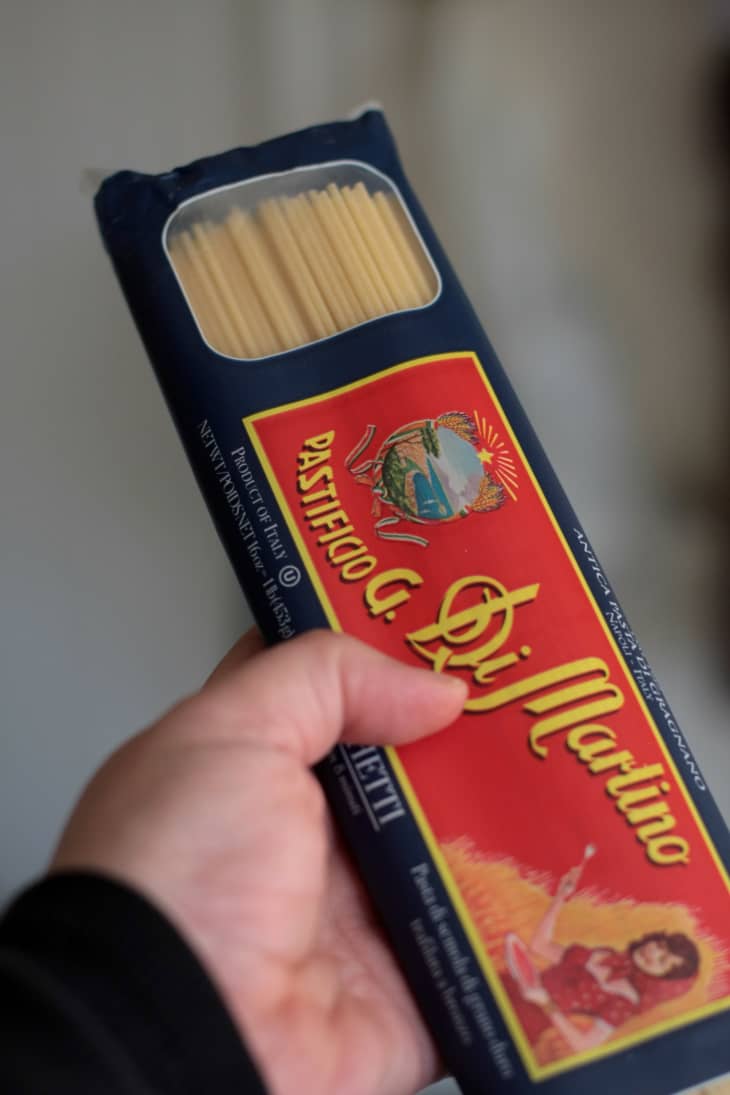
Choosing the right pasta is the very first step and most important choice you will make in your pasta adventures. There is a very wide range of available dried pastas out there, from super cheap supermarket brands to [fancy imported pastas](https://www.thekitchn.com/the-everyday-pasta-brand-italians-buy-and-you-should-too-257659) that will push the boundaries of your budget. Generally speaking, you don’t have to spend a lot of money to get good pasta, but try out some different kinds until you find a brand with the right combination of taste, texture, availability, and price to suit your tastes and needs.
## Consider the Sauce
Here’s the most important thing to know about cooking pasta: [have the sauce ready](https://www.thekitchn.com/5-easy-pasta-sauces-every-home-cook-should-know-257600) to go before you throw your pasta into the water. You want your pot of water coming to a boil just as your pan of sauce ready to go — just keep the sauce warm on a burner right next to the pot. (Or, in the case of uncooked sauces, in a bowl next to the stove.)
## The Best Pot for Cooking Pasta
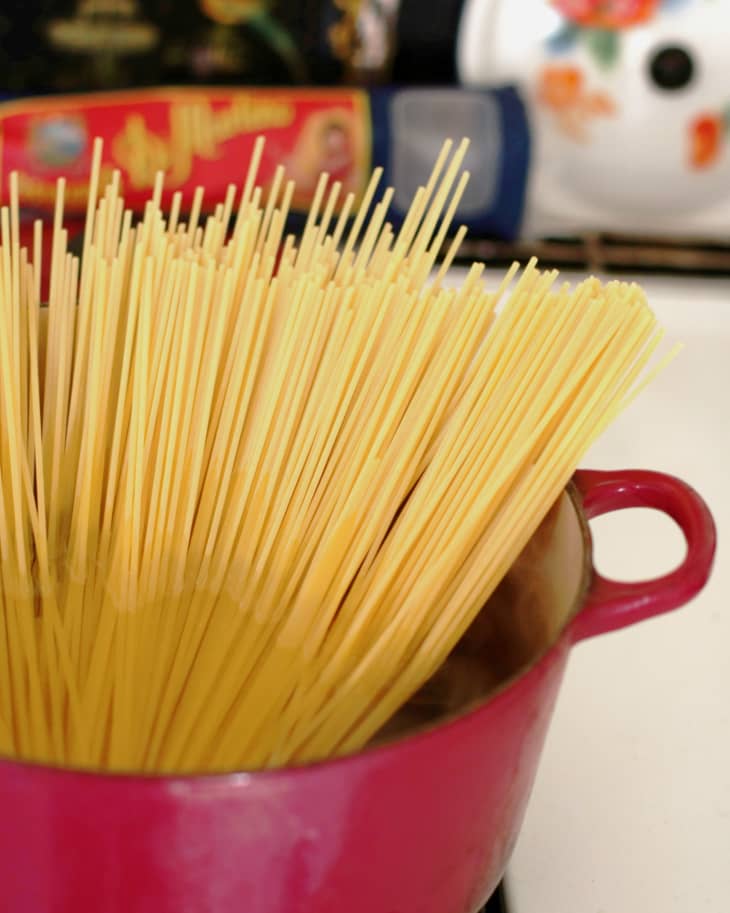
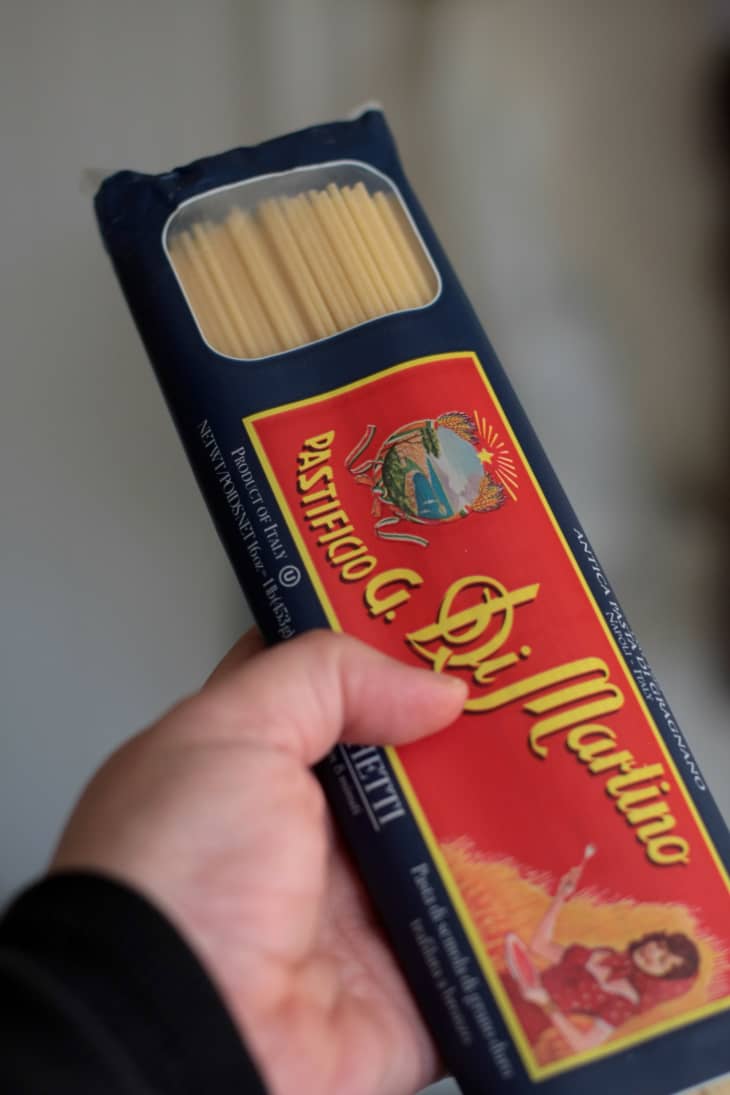
Choose a pot that’s large enough so that the water can boil rapidly without spilling over and so that the pasta has plenty of room. It’s also helpful to have a designated pasta pot so that you can just eyeball how much water to put in it and avoid measuring it manually every time. Some people prefer a high-sided pot for [spaghetti](https://www.thekitchn.com/spaghetti-recipe-23256140) and other long, thin pasta shapes so that as much of the pasta as possible is submerged in the water and can immediately begin to cook and soften, allowing the pasta to submerge as quickly as possible.
Credit: [Dana Velden](https://www.apartmenttherapy.com/authors/danavelden)
## How Much Water To Use?
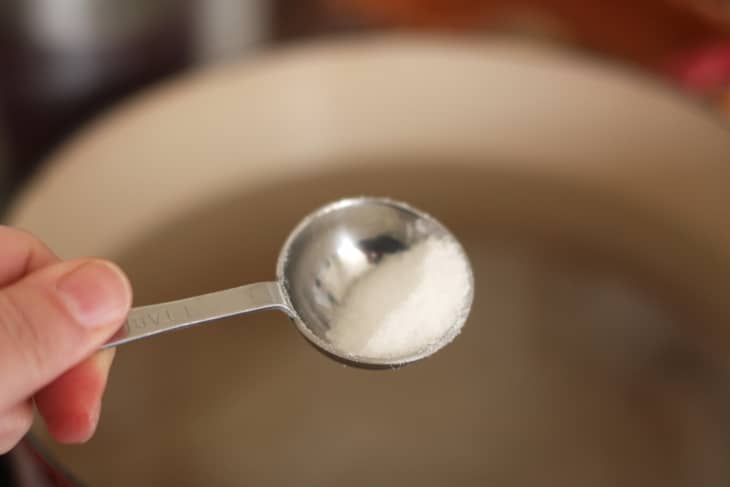
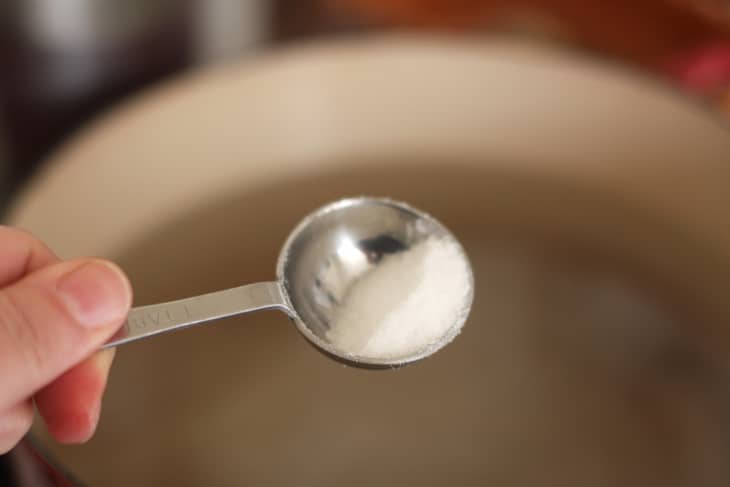
The classic way to prepare pasta is to cook it in lots of very salty boiling water. The usual portions are 4 to 6 quarts of water and 1 to 2 tablespoons of salt for every pound of pasta. There is some debate as to wether you need all that water, and indeed I tend to use a little less — about 4 quarts of water and 1 tablespoon of salt per pound of pasta. I suggest cooking pasta with the standard proportions first and then adjust as you like.
Credit: [Dana Velden](https://www.apartmenttherapy.com/authors/danavelden)
## Why Salt the Pasta Water?
Pasta water really does need to be salty. The usual recommendation is for it to taste “salty like the sea” and that’s not an exaggeration. This seasons the pasta from the inside out, enhancing the final flavor of the dish. I usually [add the salt to the pasta pot](https://www.thekitchn.com/does-salting-pa-158293) as it’s coming to a boil so that I don’t forget, though you can add it after the water comes to a boil if you prefer.
## Knowing When the Pasta is Done
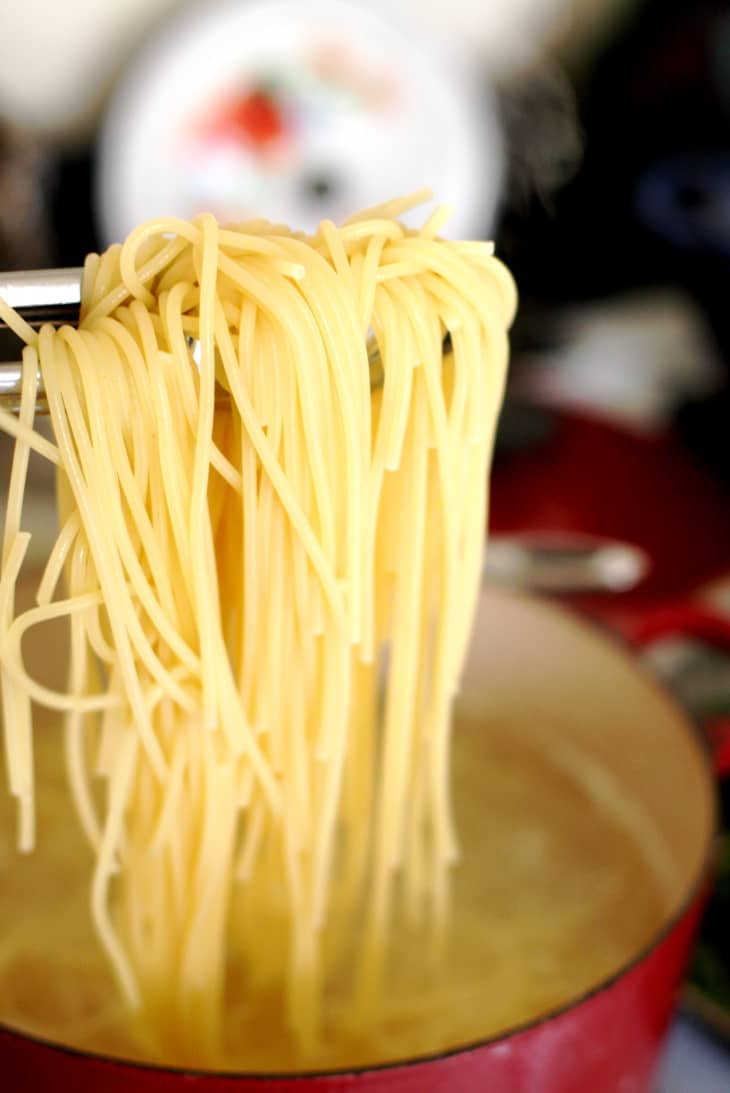
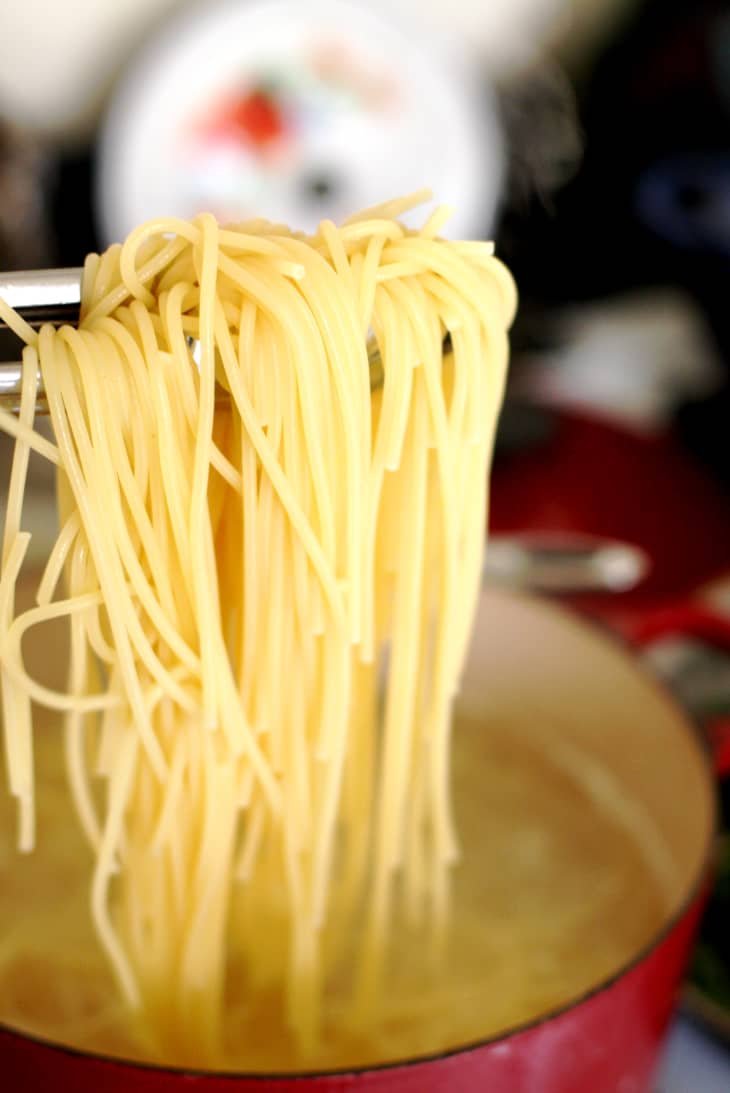
In general, the cooking time listed on the package of your pasta is a good, if approximate, place to start. I usually test my pasta about a minute or two early, just to be safe. Simply fish a piece of pasta out of the pot and place it on your cutting board to cool slightly. Be careful as it will be very hot! I often cut it in half to make it easier to taste. Cutting the pasta will also gives me a sense of how firm it still is and will tell me if it is even close to being ready.
If the pasta seems soft enough, I pop it into my mouth as a final test. It should be chewy without any crunch and no longer taste raw — [cooked pasta](https://www.thekitchn.com/the-best-way-to-cook-dried-pasta-23086266) has an almost sweet flavor. While many people like their pasta al dente, if you like it a little softer and less chewy, then by all means cook your pasta that way\!
Additionally, if you are serving it with a saucy sauce such as a [bolognese](https://www.thekitchn.com/recipe-slow-cooked-bolognese-sauce-recipes-from-the-kitchn-69968) or red sauce, you may want to finish cooking the pasta by simmering it in the sauce for a minute or two. If that’s the case, be sure to remove the pasta from the water when it still has a little bit of crunch in the very middle so that it can finish cooking in the sauce without over cooking.
Credit: [Dana Velden](https://www.apartmenttherapy.com/authors/danavelden)
## Save a Scoop of Water\!
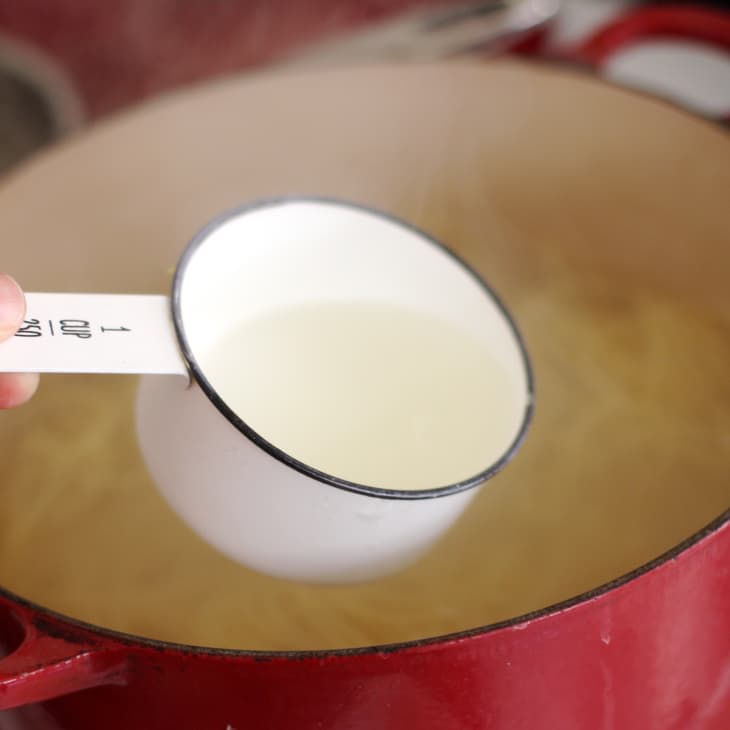
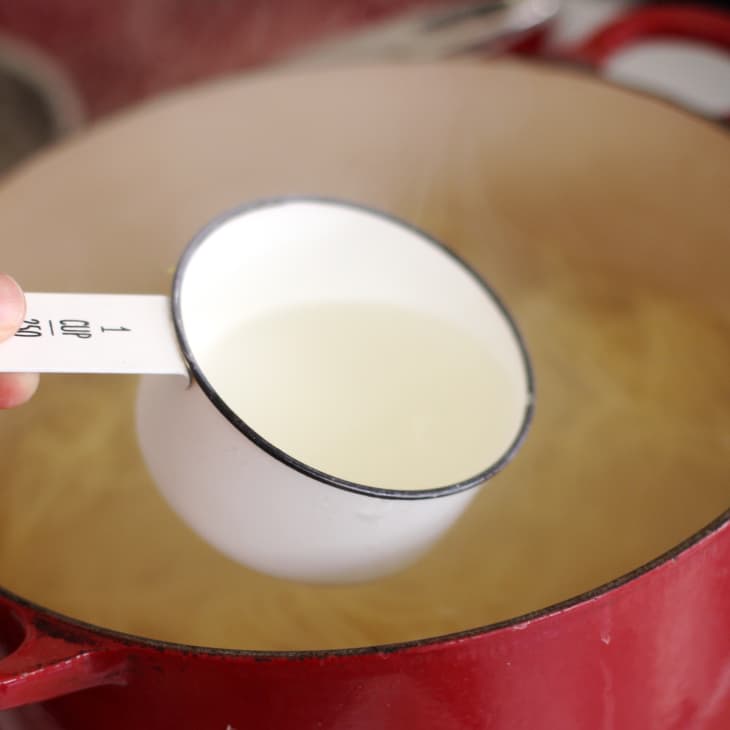
The water that your pasta was cooking in is full of starch and salt. Use this to your advantage and scoop out a cup or so of the cooking water before you drain the pasta. While it doesn’t work with all sauces, a little splash of this water can help loosen the sauce — making it saucy, in other words! This works especially well with oil-based sauces such as [pesto](https://www.thekitchn.com/how-to-make-perfect-pesto-every-time-175471) and creamy sauces such as [Alfredo](https://www.thekitchn.com/alfredo-sauce-267560).
[Comments](https://www.thekitchn.com/how-to-cook-pasta-cooking-lessons-from-the-kitchn-198907#comments-198907)
[(18)](https://www.thekitchn.com/how-to-cook-pasta-cooking-lessons-from-the-kitchn-198907#comments-198907)
[Read reviews\!](https://www.thekitchn.com/how-to-cook-pasta-cooking-lessons-from-the-kitchn-198907#comments-198907)
## How to Cook Pasta
Makes 1 pound
Serves 4 to 6
#### Nutritional Info
View
- red-meat-free
- no-oil-added
- dairy-free
- pork-free
- vegetarian
- alcohol-free
- pescatarian
- soy-free
- egg-free
- peanut-free
- sulphite-free
- sugar-conscious
- vegan
- low-fat
- fish-free
- tree-nut-free
- shellfish-free
Per serving, based on 6 servings. (% daily value)
- Calories 280
- Fat 1\.1 g (1.8%)
- Saturated 0\.2 g (1.0%)
- Carbs 56\.4 g (18.8%)
- Fiber 2\.4 g (9.7%)
- Sugars 2\.0 g
- Protein 9\.9 g (19.7%)
- Sodium 1780\.2 mg (74.2%)
[](https://www.edamam.com/ "Powered by Edamam")
### Ingredients
- 1 pound dry pasta
- 4 to 6 quarts water
- 1 to 2 tablespoon salt
- Sauce of choice
[Shop Recipe](https://www.thekitchn.com/how-to-cook-pasta-cooking-lessons-from-the-kitchn-198907)
#### Equipment
- 6-quart or larger pot
- Measuring cups and spoons
- Long-handled spoon or tongs
- Colander, sieve, or skimmer/spider
### Instructions
Show Images
1. **Prepare the sauce:** Prepare or heat up your sauce. When your sauce is just about ready, turn it down to low to keep it warm.
2. **Bring the water to a boil:** Fill a pot with water and add salt. Cover the pot and bring the water to a boil.

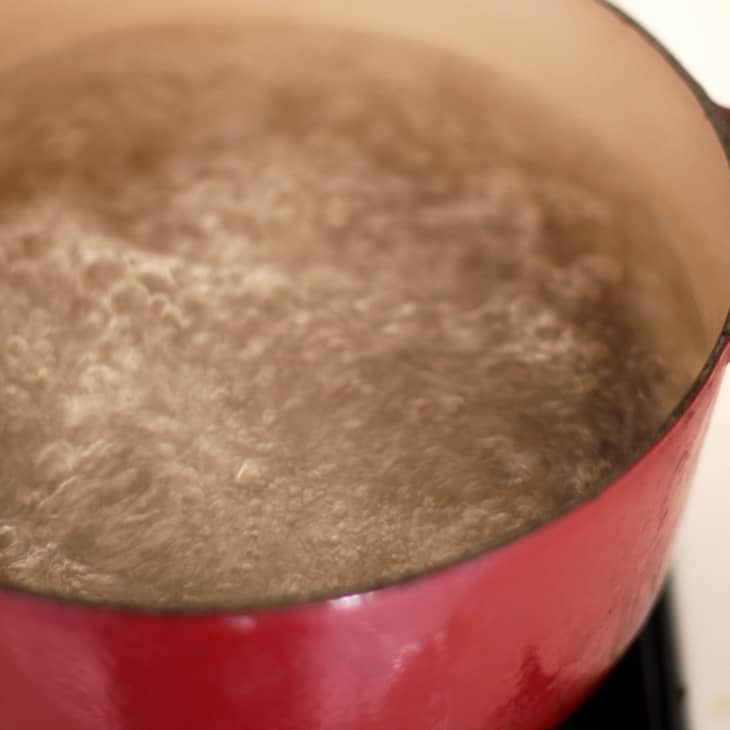
3. **Add the pasta:** Add the pasta to the boiling water and stir to keep it from sticking.

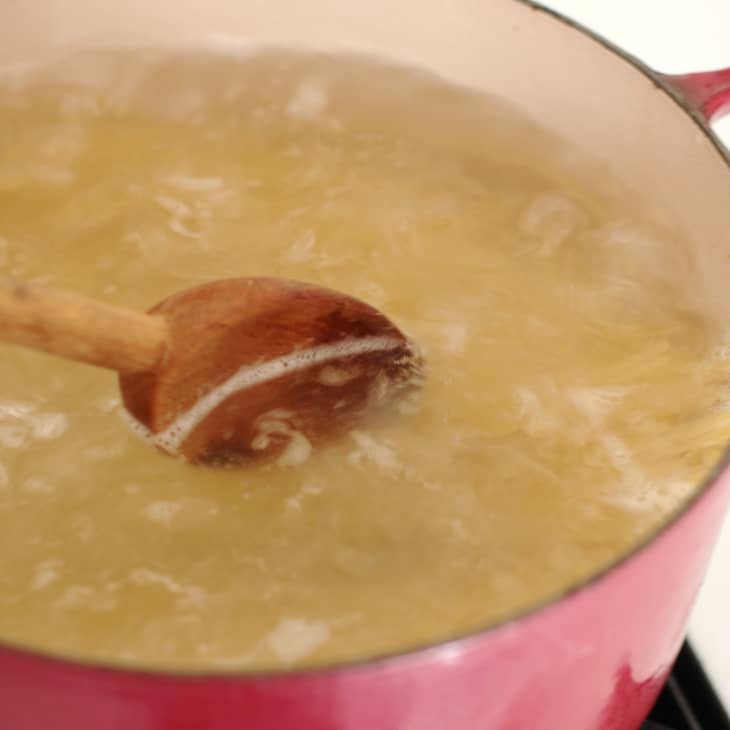
4. **Bring the water back to the boil:** Bring the pasta back to the boil (you can cover the pot to hasten this process but keep an eye on it as the trapped foam from the pasta can cause it to overflow.)
5. **Begin timing the pasta:** Begin timing your pasta when it comes back to the boil. (If you used a lid, remove it and cook the pasta uncovered.)
6. **Check the pasta for doneness:** About 2 minutes earlier than the package instructions say, start testing your pasta. Carefully remove a piece of pasta with a sieve or fork and place it on your cutting board. Using the knife, cut it in half and check for doneness. Taste a piece. Continue to cook for another minute if needed.

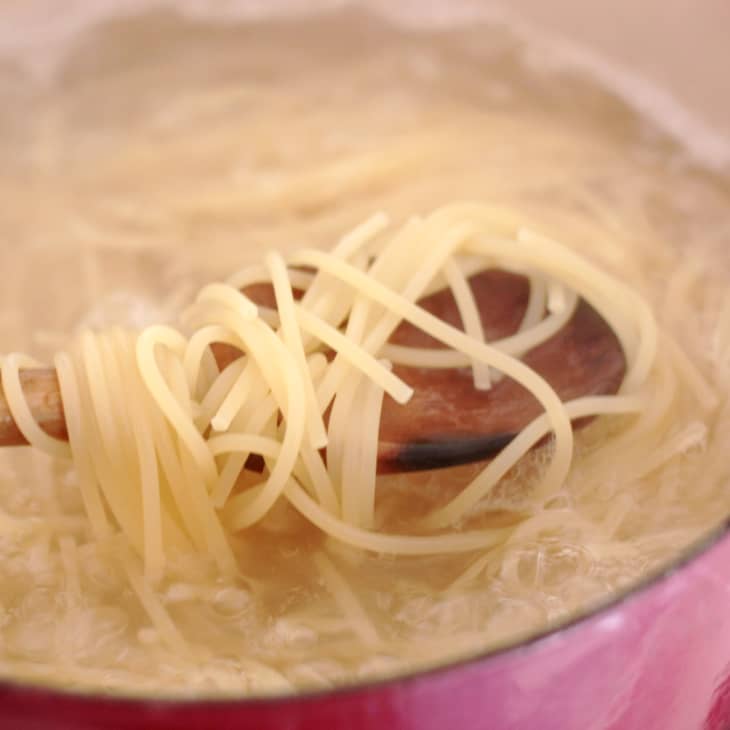
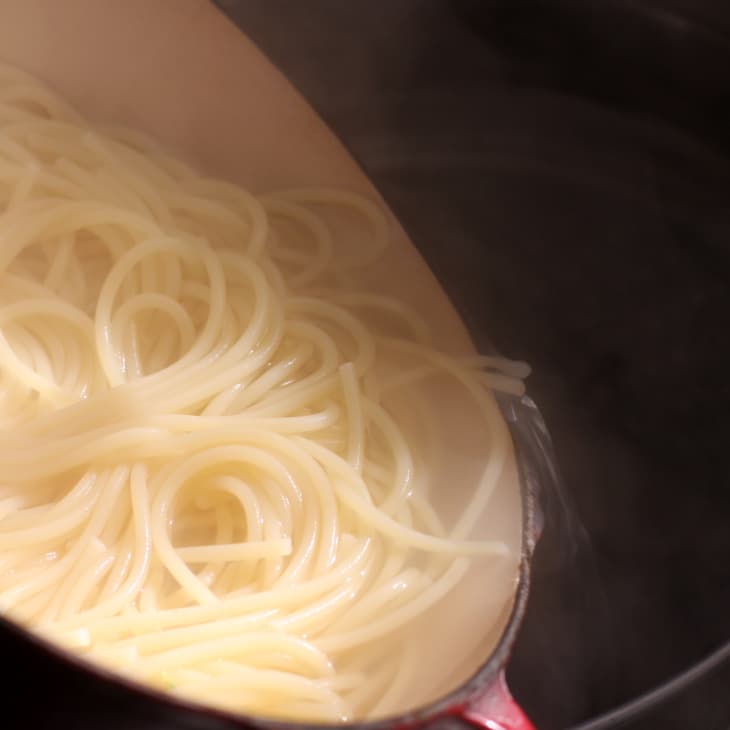
7. **Remove the pasta from the water:** When the pasta has cooked to your liking, turn off the heat. Using a tongs, sieve, or skimmer, lift the pasta out of the water, pausing for a few seconds to drain off most of the water. Transfer the pasta to the pan with the sauce. You will probably have to do this in batches to get all of the pasta out of the water. Alternatively, place a colander in the sink while the pasta is cooking. When the pasta is done, reserve a cup of cooking water (if needed), drain the pasta and dump it into the sauce.

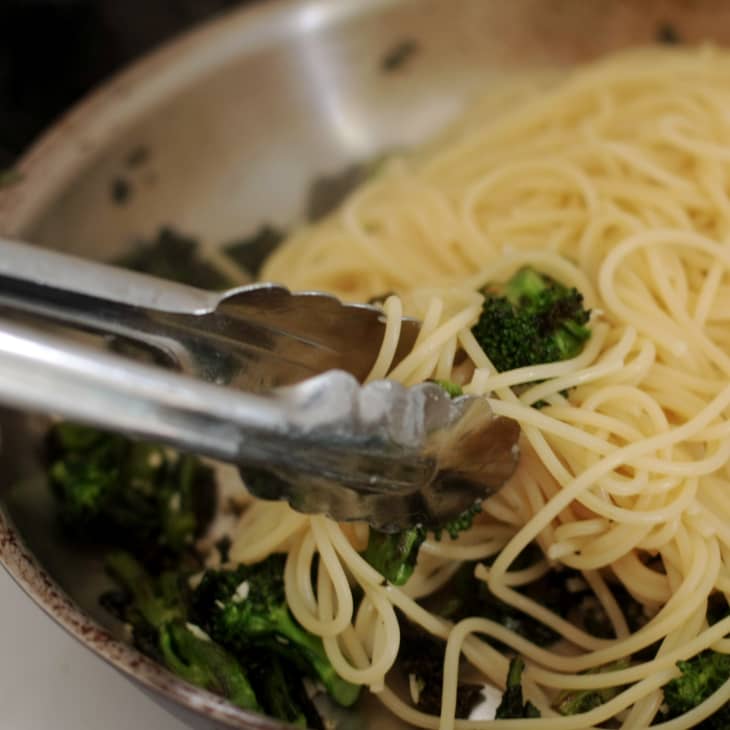
8. Toss and serve. Toss the pasta with the sauce until it is well coated and has finished cooking. Serve and enjoy\!

### Recipe Notes
If you are cooking the pasta for a cold pasta salad, drain the pasta in a colander, rinse with cool water, and drain well. Place pasta in a bowl and toss with a little oil to prevent sticking.
Want more smart tutorials for getting things done around the home?
**[See more How To posts](https://www.thekitchn.com/collection/how-to)**
We’re looking for great examples of your own household intelligence too!
**Submit your own tutorials or ideas here\!**
Reviews (18)
Filed in:
[Recipes](https://www.thekitchn.com/recipes)
[recipe](https://www.thekitchn.com/collection/recipe)
[dinner](https://www.thekitchn.com/collection/dinner)
[how to](https://www.thekitchn.com/collection/how-to)
[main dish](https://www.thekitchn.com/collection/main-dish)
## More to Love from The Kitchn
[Sheet Pan Mac and Cheese with Brussels Sprouts Is the Best of Both Worlds](https://www.thekitchn.com/sheet-pan-mac-cheese-brussels-sprouts-23215360)
Every bite is full of crispy-creamy goodness.
Grace Elkus
Sep 30, 2021
[This 3-Cheese White Lasagna Is Pure Comfort](https://www.thekitchn.com/white-lasagna-recipe-23213953)
If creamy pasta makes you weak in the knees, white lasagna is going to be right up your alley. Unlike lasagnas made with marinara, you won’t find a drop of red sauce in sight. Here you get layers of hearty pasta, ricotta cheese, mozzarella, Italian sausage crumbles, and an entire pound of fresh spinach.But what makes white lasagna so special is the creamy white sauce that’s blanketed throughout the casserole.
Kelli Foster
Dec 14, 2024
[I Promise “Shaking Beef” Pasta Will Be Your Family's New Most Requested Dinner](https://www.thekitchn.com/shaking-beef-pasta-recipe-23714820)
Packed with flavor.
Vy Tran
Mar 13, 2025
[Japchae Is the Ultimate Korean Stir-Fried Noodle Dish](https://www.thekitchn.com/japchae-recipe-2-23470982)
It's the perfect combo of sweet, savory, and toasty.
Christine Gallary
Jul 18, 2023
[This Lemon-Butter Pasta Sauce Is So Good, I've Already Made It Twice in One Week](https://www.thekitchn.com/tortellini-piccata-recipe-23613064)
It's ready in under 30 minutes.
Kelli Foster
Dec 7, 2023
[Tortellini Alfredo](https://www.thekitchn.com/tortellini-alfredo-recipe-23281162)
How to make cheesy-filled pasta even cheesier.
Christine Gallary
Mar 30, 2022
["Bruschetta Chicken Pasta" Is the One-Pot Italian Dinner You'll Make on Repeat](https://www.thekitchn.com/bruschetta-chicken-pasta-23739019)
Perfect for summer\!
Janette Zepeda
Aug 11, 2025
[Creamy Salmon Pasta Will Make You Swoon](https://www.thekitchn.com/salmon-pasta-recipe-2-23746927)
It's nothing short of luxurious.
Kelli Foster
Jul 31, 2021
[The Surprising Ingredient You Should Be Adding to Your Pesto This Summer](https://www.thekitchn.com/pasta-with-tomatoes-and-tahini-pesto-recipe-23386902)
It creates a creamy, rich sauce that's also vegan and dairy-free.
Sheela Prakash
Jul 11, 2022
[Why I Make These "Longevity Noodles" Every Lunar New Year](https://www.thekitchn.com/longevity-noodles-recipe-23704216)
The longer the noodles, the better the chance of a long life.
Christine Gallary
Jan 21, 2025
[All Hail Creamy Caesar Spaghetti\!](https://www.thekitchn.com/caesar-spaghetti-recipe-23310745)
Two favorites in one.
Lauren Radel
Apr 14, 2022
[The 15-Minute Chinese Dinner I Make Over and Over](https://www.thekitchn.com/beef-lo-mein-recipe-23769117)
Cooks in 15 minutes.
Lawrence Wang
Feb 9, 2026
[This Creamy Lemon-Dill Sauce Is So Good, I've Already Made It Twice This Month](https://www.thekitchn.com/lemon-dill-tortellini-recipe-23621410)
Embrace the magic that is store-bought tortellini.
Kristina Razon
Jan 14, 2024
[Everyone Should Make My Mom’s Curried Chicken Pasta (Even Though She Does It Best)](https://www.thekitchn.com/curried-angel-hair-chicken-pasta-23160996)
It entered my family's dinner rotation after one too many nights of eating rice.
Nicole Rufus
May 5, 2021
[The Secret to This Garlicky Chicken Scampi Pasta Is Wondra Flour](https://www.thekitchn.com/chicken-scampi-recipe-23213997)
Thanks for the guidance, Jacques Pépin\!
Meleyna Nomura
Sep 6, 2021
[This Creamy Pasta Is My Go-To Dinner on Even the Busiest Nights](https://www.thekitchn.com/calabrian-chili-pasta-recipe-23581487)
It never fails me.
Sheela Prakash
Oct 2, 2023
[The wordmark and logotype for the Kitchn brand.](https://www.thekitchn.com/)
More From Us
- [Our Team](https://www.thekitchn.com/team)
- [About Us](https://www.thekitchn.com/about/about-us)
- [Contact](https://www.thekitchn.com/about/contact)
- [Site Map](https://www.thekitchn.com/sitemap)
Follow along
GET ON THE LIST
Our daily email is filled with delicious recipes, trusted cooking tips, must-have groceries, and so much more.
[The logomark and logotype for the Apartment Therapy brand.](https://www.apartmenttherapy.com/)
[The logomark and logotype for the Kitchn brand.](https://www.thekitchn.com/)
[The logomark and logotype for the Cubby brand.](https://www.cubbyathome.com/)
[The logomark for the Dorm Therapy brand.](https://www.dormtherapy.com/)
AT Media's Family of Brands
[Logo for the corporate Apartment Therapy Media brand.](https://www.apartmenttherapymedia.com/)
- [About AT Media](https://www.apartmenttherapymedia.com/about-us/our-story)
- [Jobs](https://www.apartmenttherapymedia.com/jobs/)
- [Partner with Us](https://www.apartmenttherapymedia.com/partner-with-us/homemade-studios)
© 2026 Apartment Therapy, LLC / [Terms of Use](https://www.thekitchn.com/about/terms)[Privacy Policy](https://www.thekitchn.com/about/privacy-policy)[EU and US State Data Subject Requests](https://privacyportal.onetrust.com/webform/aca0e9e8-93f2-47a5-ba3f-00029564ca26/2828b2f1-a01b-4c03-b487-2e8d4ffd63f3)[Manage Preferences](https://www.thekitchn.com/how-to-cook-pasta-cooking-lessons-from-the-kitchn-198907) | |||||||||
| Readable Markdown | - [Recipes](https://www.thekitchn.com/recipes)
- [Main Dishes](https://www.thekitchn.com/collection/main-dish)
- [Pasta & Noodles](https://www.thekitchn.com/collection/pasta-noodles)
[Dana Velden](https://www.thekitchn.com/authors/dana-velden)
[Dana Velden](https://www.thekitchn.com/authors/dana-velden)
Dana Velden's first book, Finding Yourself in the Kitchen: Kitchen Meditations and Inspired Recipes from a Mindful Cook (Rodale Books) is available where ever books are sold. She lives in Oakland, CA.
updated Apr 8, 2023

Cook Mode+
Save this to your Recipe Box — so everything you want to cook is in one place\!
We [independently](https://www.thekitchn.com/about/the-kitchn-commerce-guidelines) select these products—if you buy from one of our links, we may earn a commission. All prices were accurate at the time of publishing.

Can there be anything more simple than cooking up a pot of pasta? The only thing you have to do is boil water, right? Well, yes, that’s certainly the basic outline. But there are a few other tricks and helpful hints that will help make your cooking run a little smoother and your [pasta taste a little better](https://www.thekitchn.com/how-to-cook-pasta-22954247).

This post is specifically about cooking classic dried durum wheat pasta. While they have many things in common, the instructions for cooking whole grain [rice](https://www.thekitchn.com/how-to-cook-rice-on-the-stove-44333), [quinoa](https://www.thekitchn.com/how-to-cook-quinoa-cooking-lessons-from-the-kitchn-63344) and other alternative kinds of pastas are slightly different. We’ll cover those in another post.
The Pasta
Choosing the right pasta is the very first step and most important choice you will make in your pasta adventures. There is a very wide range of available dried pastas out there, from super cheap supermarket brands to [fancy imported pastas](https://www.thekitchn.com/the-everyday-pasta-brand-italians-buy-and-you-should-too-257659) that will push the boundaries of your budget. Generally speaking, you don’t have to spend a lot of money to get good pasta, but try out some different kinds until you find a brand with the right combination of taste, texture, availability, and price to suit your tastes and needs.
Consider the Sauce
Here’s the most important thing to know about cooking pasta: [have the sauce ready](https://www.thekitchn.com/5-easy-pasta-sauces-every-home-cook-should-know-257600) to go before you throw your pasta into the water. You want your pot of water coming to a boil just as your pan of sauce ready to go — just keep the sauce warm on a burner right next to the pot. (Or, in the case of uncooked sauces, in a bowl next to the stove.)
The Best Pot for Cooking Pasta
Choose a pot that’s large enough so that the water can boil rapidly without spilling over and so that the pasta has plenty of room. It’s also helpful to have a designated pasta pot so that you can just eyeball how much water to put in it and avoid measuring it manually every time. Some people prefer a high-sided pot for [spaghetti](https://www.thekitchn.com/spaghetti-recipe-23256140) and other long, thin pasta shapes so that as much of the pasta as possible is submerged in the water and can immediately begin to cook and soften, allowing the pasta to submerge as quickly as possible.

How Much Water To Use?
The classic way to prepare pasta is to cook it in lots of very salty boiling water. The usual portions are 4 to 6 quarts of water and 1 to 2 tablespoons of salt for every pound of pasta. There is some debate as to wether you need all that water, and indeed I tend to use a little less — about 4 quarts of water and 1 tablespoon of salt per pound of pasta. I suggest cooking pasta with the standard proportions first and then adjust as you like.

Why Salt the Pasta Water?
Pasta water really does need to be salty. The usual recommendation is for it to taste “salty like the sea” and that’s not an exaggeration. This seasons the pasta from the inside out, enhancing the final flavor of the dish. I usually [add the salt to the pasta pot](https://www.thekitchn.com/does-salting-pa-158293) as it’s coming to a boil so that I don’t forget, though you can add it after the water comes to a boil if you prefer.
Knowing When the Pasta is Done
In general, the cooking time listed on the package of your pasta is a good, if approximate, place to start. I usually test my pasta about a minute or two early, just to be safe. Simply fish a piece of pasta out of the pot and place it on your cutting board to cool slightly. Be careful as it will be very hot! I often cut it in half to make it easier to taste. Cutting the pasta will also gives me a sense of how firm it still is and will tell me if it is even close to being ready.
If the pasta seems soft enough, I pop it into my mouth as a final test. It should be chewy without any crunch and no longer taste raw — [cooked pasta](https://www.thekitchn.com/the-best-way-to-cook-dried-pasta-23086266) has an almost sweet flavor. While many people like their pasta al dente, if you like it a little softer and less chewy, then by all means cook your pasta that way\!
Additionally, if you are serving it with a saucy sauce such as a [bolognese](https://www.thekitchn.com/recipe-slow-cooked-bolognese-sauce-recipes-from-the-kitchn-69968) or red sauce, you may want to finish cooking the pasta by simmering it in the sauce for a minute or two. If that’s the case, be sure to remove the pasta from the water when it still has a little bit of crunch in the very middle so that it can finish cooking in the sauce without over cooking.

Save a Scoop of Water\!
The water that your pasta was cooking in is full of starch and salt. Use this to your advantage and scoop out a cup or so of the cooking water before you drain the pasta. While it doesn’t work with all sauces, a little splash of this water can help loosen the sauce — making it saucy, in other words! This works especially well with oil-based sauces such as [pesto](https://www.thekitchn.com/how-to-make-perfect-pesto-every-time-175471) and creamy sauces such as [Alfredo](https://www.thekitchn.com/alfredo-sauce-267560).
### Ingredients
- 1 pound dry pasta
- 4 to 6 quarts water
- 1 to 2 tablespoon salt
- Sauce of choice
#### Equipment
- 6-quart or larger pot
- Measuring cups and spoons
- Long-handled spoon or tongs
- Colander, sieve, or skimmer/spider
1. **Prepare the sauce:** Prepare or heat up your sauce. When your sauce is just about ready, turn it down to low to keep it warm.
2. **Bring the water to a boil:** Fill a pot with water and add salt. Cover the pot and bring the water to a boil.

3. **Add the pasta:** Add the pasta to the boiling water and stir to keep it from sticking.

4. **Bring the water back to the boil:** Bring the pasta back to the boil (you can cover the pot to hasten this process but keep an eye on it as the trapped foam from the pasta can cause it to overflow.)
5. **Begin timing the pasta:** Begin timing your pasta when it comes back to the boil. (If you used a lid, remove it and cook the pasta uncovered.)
6. **Check the pasta for doneness:** About 2 minutes earlier than the package instructions say, start testing your pasta. Carefully remove a piece of pasta with a sieve or fork and place it on your cutting board. Using the knife, cut it in half and check for doneness. Taste a piece. Continue to cook for another minute if needed.

7. **Remove the pasta from the water:** When the pasta has cooked to your liking, turn off the heat. Using a tongs, sieve, or skimmer, lift the pasta out of the water, pausing for a few seconds to drain off most of the water. Transfer the pasta to the pan with the sauce. You will probably have to do this in batches to get all of the pasta out of the water. Alternatively, place a colander in the sink while the pasta is cooking. When the pasta is done, reserve a cup of cooking water (if needed), drain the pasta and dump it into the sauce.

8. Toss and serve. Toss the pasta with the sauce until it is well coated and has finished cooking. Serve and enjoy\!

### Recipe Notes
If you are cooking the pasta for a cold pasta salad, drain the pasta in a colander, rinse with cool water, and drain well. Place pasta in a bowl and toss with a little oil to prevent sticking.
Want more smart tutorials for getting things done around the home?
**[See more How To posts](https://www.thekitchn.com/collection/how-to)**
We’re looking for great examples of your own household intelligence too!
**Submit your own tutorials or ideas here\!**
Filed in:
## More to Love from The Kitchn

[This 3-Cheese White Lasagna Is Pure Comfort](https://www.thekitchn.com/white-lasagna-recipe-23213953)
If creamy pasta makes you weak in the knees, white lasagna is going to be right up your alley. Unlike lasagnas made with marinara, you won’t find a drop of red sauce in sight. Here you get layers of hearty pasta, ricotta cheese, mozzarella, Italian sausage crumbles, and an entire pound of fresh spinach.But what makes white lasagna so special is the creamy white sauce that’s blanketed throughout the casserole.
Kelli Foster
Dec 14, 2024
[Tortellini Alfredo](https://www.thekitchn.com/tortellini-alfredo-recipe-23281162)
How to make cheesy-filled pasta even cheesier.
Christine Gallary
Mar 30, 2022 | |||||||||
| ML Classification | ||||||||||
| ML Categories |
Raw JSON{
"/Food_and_Drink": 998,
"/Food_and_Drink/Cooking_and_Recipes": 994,
"/Food_and_Drink/Cooking_and_Recipes/Culinary_Training": 383
} | |||||||||
| ML Page Types |
Raw JSON{
"/Article": 999,
"/Article/How_to": 944
} | |||||||||
| ML Intent Types |
Raw JSON{
"Informational": 999
} | |||||||||
| Content Metadata | ||||||||||
| Language | en | |||||||||
| Author | Dana Velden | |||||||||
| Publish Time | not set | |||||||||
| Original Publish Time | 2017-10-19 17:26:09 (8 years ago) | |||||||||
| Republished | No | |||||||||
| Word Count (Total) | 2,274 | |||||||||
| Word Count (Content) | 1,497 | |||||||||
| Links | ||||||||||
| External Links | 22 | |||||||||
| Internal Links | 98 | |||||||||
| Technical SEO | ||||||||||
| Meta Nofollow | No | |||||||||
| Meta Noarchive | No | |||||||||
| JS Rendered | Yes | |||||||||
| Redirect Target | null | |||||||||
| Performance | ||||||||||
| Download Time (ms) | 813 | |||||||||
| TTFB (ms) | 776 | |||||||||
| Download Size (bytes) | 87,161 | |||||||||
| Shard | 150 (laksa) | |||||||||
| Root Hash | 1151582128824893550 | |||||||||
| Unparsed URL | com,thekitchn!www,/how-to-cook-pasta-cooking-lessons-from-the-kitchn-198907 s443 | |||||||||