ℹ️ Skipped - page is already crawled
| Filter | Status | Condition | Details |
|---|---|---|---|
| HTTP status | PASS | download_http_code = 200 | HTTP 200 |
| Age cutoff | PASS | download_stamp > now() - 6 MONTH | 0 months ago |
| History drop | PASS | isNull(history_drop_reason) | No drop reason |
| Spam/ban | PASS | fh_dont_index != 1 AND ml_spam_score = 0 | ml_spam_score=0 |
| Canonical | PASS | meta_canonical IS NULL OR = '' OR = src_unparsed | Not set |
| Property | Value |
|---|---|
| URL | https://www.thehealthy.com/mental-health/anxiety/how-to-deal-with-anxiety/ |
| Last Crawled | 2026-04-16 15:25:22 (10 hours ago) |
| First Indexed | 2019-09-07 07:33:12 (6 years ago) |
| HTTP Status Code | 200 |
| Meta Title | How to Deal With Anxiety: Top Tricks from Therapists | The Healthy |
| Meta Description | What's the worst part of having anxiety? Worrying about how much you worry. Here's how to deal with anxiety. |
| Meta Canonical | null |
| Boilerpipe Text | agrobacter/Getty Images
Deal with it in down dog
It’s the mental health vicious cycle: Exercise has been scientifically proven as one of the best
remedies for anxiety and depression
, yet getting sweaty is often the last thing anxious people feel like doing. Enter yoga. You can do it in the privacy of your own home and it’s gentle enough that most people can do it. “The endorphins that exercise helps to release are crucial for people with anxiety as they often have a small ‘window of tolerance,’ meaning stressors that seem small to others feel very big to them,” says Kelsey Torgerson, a licensed clinical social worker and anxiety and anger management specialist in St. Louis. Torgerson says she personally does yoga four times a week. “Yoga increases that window of tolerance and builds stress management skills.” Having a full-blown panic attack and need to know how to deal with anxiety? Use these
tips for dealing with an anxiety attack
in the moment.
Worawee Meepian/Shutterstock
Get off social media
Feeling anxious and stressed out? A lot of people will take a brain break by scrolling through Facebook, Instagram, or Twitter. Unfortunately, this “rest” may be doing you more harm than good when it comes to anxiety, says Rebecca Burton, a licensed marriage and family counselor. “Staying continually plugged in means you are susceptible to the anxiety-provoking events of the day, whether it’s that a good friend is ill or a large-scale disaster is unfolding,” she says. Not to mention how
comparing yourself to others on social media
can be anxiety-inducing in its own right. Why don’t you have 6-pack abs, an immaculate kitchen, and children that spout wise sayings every 30 minutes? But disconnecting can be harder than it sounds, as social media addiction is a legit problem. Instead of constantly checking your notifications, plan breaks, Burton advises. Here’s
what to never say to someone with anxiety
.
Westend61/Getty Images
Accept anxiety as a part of life
“When a client tells me they have anxiety, I say ‘Great!, which often takes them by surprise,” says Akshay Nanavati, speaker and author of
Fearvana: The Revolutionary Science of How to Turn Fear into Health, Wealth and Happiness
. “Embracing and harnessing your anxiety will help you control it rather than it controlling you.” He explains that suffering is part of life and you can learn how to build a positive relationship with pain. There’s a myth that life is supposed to be all happiness and if you have a problem it’s because you are doing something wrong. Not so, he says. And one of the worst parts of anxiety is the fear of impending pain but it’s silly to start the suffering early. Accept that there will be struggles and know you are strong enough to deal with them when they happen. If your anxiety feels too overwhelming and you can’t put it in perspective, it may be time to see your doctor about therapy and/or medication. (In the meantime, try these
natural at-home remedies for anxiety-relief
.)
Kelvin Murray/Getty Images
Just do it
Procrastination and anxiety go hand-in-hand as a lot of
anxiety
comes from worrying about future events. For things you have direct control over, like your job performance or to-do list, start working on them, even if you don’t feel quite ready, says Denise Limongello, a licensed psychotherapist and life coach based in Manhattan. “Many studies indicate that people often respond to anxiety with avoidance,” she says. “It might be tempting to avoid doing the thing that makes you anxious but instead of putting it off, do it right away.” And for things you simply can’t control, like hurricanes and your mother-in-law, doing whatever you can do to prepare for them will
help ease your anxiety
. Can’t pinpoint your anxiety to one specific worry? You may have generalized anxiety disorder, a mental illness where you feel surrounded by a cloud of formless worry all the time. But there’s hope: Here’s what you need to know about
generalized anxiety disorder and how to get help
.
JGI/Tom Grill/Getty Images
Learn to recognize your physical signs of anxiety
Ever read a tip online and think, “Sure, that’s great for other people but it just doesn’t work for me?” Each person feels anxiety a little differently, and therefore each person will respond better to some techniques than to others, Torgerson says. It seems obvious now but
dealing with anxiety
isn’t a one-size-fits-all thing. Start by figuring out how your body reacts to anxiety. Do you tense up and freeze or do you want to run away? Do you feel it mostly in your stomach or chest? Do you breathe heavily? Feel nauseous? Do your palms go clammy? All of this is information you can use, she says. “As soon as you notice
your
first sign of anxiety, immediately take some deep breaths then do something you know will help you calm down, not just what works for someone else,” she says. “Being proactive goes a long way in helping to manage your anxiety.” (Physical symptoms are just one sign of anxiety, however. These are
signs you may have an anxiety disorder
.)
visualspace/Getty Images
Create a healthy routine
An easy way for you to learn how to deal with anxiety is to create a healthy routine. “Anxiety feeds on poor sleep,
junk food
, alcohol, and drugs, and
inactivity
,” Burton says. The fact that you feel better when you’re taking care of yourself isn’t news but these daily habits can be the first thing to go during a period of intense anxiety. So instead of worrying about how you’ve let exercise slip or whether your insomnia will be bad tonight, choose just one habit to focus on maintaining for one week. Be specific and write your goal down. Examples could be: No electronics after 10 p.m, eating three servings of vegetables per day, or taking a 20-minute walk three times per week. “As the habits you choose become more ingrained, you can add more to the list,” Burton says. “Getting your habits under control will improve your physical well-being and reduce your anxiety by improving your sense of self-efficacy—that feeling of being able to control your own life when situations around you feel stressful.” Read these
16 quotes about anxiety that will help you cope a little better
.
Alistair Berg/Getty Images
See anxiety as a feature, not a flaw
Anxiety can be gut-wrenchingly painful, no doubt about it. But it does have some upsides you can harness to help you, Nanavati says. Instead of being paralyzed by your worries, see them as a call to action for how to deal with anxiety. “A growth mindset is one that believes any event or circumstance is an opportunity for growth and that anyone can achieve anything with the right amount of effort,” he says. Instead of blaming your circumstances or questioning your abilities, let your anxiety motivate you to change the things that are worrying you. Often, it’s the anxiety itself that’s worrying people but remember that some level of anxiety can be helpful, like making you be proactive and work towards goals. Not sure how to do this? Start by repeating these
magical phrases that instantly calm anxiety
.
Cunaplus_M.Faba/Getty Images
Set a breathing alarm
Taking a few cleansing breaths or doing a mini-meditation every few hours is great for reducing anxiety—but only if you remember to do it. This is why Torgerson recommends setting a reminder alert on your phone to go off at preset intervals. “When their reminder goes off, I tell them to take three deep diaphragmatic breaths, breathing slowly through their nose for three counts, and out of their mouth for five,” she says. Or download a meditation app and set it to remind you to do a mini-meditation every day. It’s a simple thing, but just remembering to take a few minutes out of your busy day for yourself can go a long way. Or you can take a few minutes at a certain time each day to “visit” with your worries in what’s called “worry postponement.” Set a specific time; just make sure your visit doesn’t run long. And it’s worth it in more ways than one: Check out these
proven health benefits of just five minutes of meditation
.
Me789 Studio/Getty Images
Act it out
If you’re
worried about a particular situation
, like giving a presentation at work or running into an ex-boyfriend, rehearsing it will both improve your performance when it happens and reduce your anxiety in the present, says Limongello. “Studies show that exercises such as role-playing can lead to increased confidence and reduced anxiety,” she says, adding that you can practice solo or role play with a trusted friend.
Halfpoint Images/Getty Images
Give yourself a break
Worrying about worrying is a real problem, and people who are anxious by nature are often shamed—by others and themselves—with labels like “worrywart,” “killjoy,” or “party pooper.” But calling yourself names and feeling ashamed of your anxiety only makes the problem worse, Nanavati says. (And make sure you’re not
confusing your stress for anxiety
—you should aim to reduce both but your body experiences each one differently.) “Buddha said we are all struck by two darts: The first is a painful event and the second is how we respond to that pain,” he explains. “Instead of being mad at yourself or asking ‘Why me?’ recognize that you control how you respond to your emotions.” Don’t get caught up in the self-reinforcing anxiety cycle of “What if” and refocus on positive thoughts.
Maskot/Getty Images
Do
anything
Anxiety can be downright paralyzing, which in turn can cause even more anxiety. Combat this by doing something,
anything
, to break the cycle, Burton says. “Anxiety is fear plus helplessness. Depending on the scope of the situation, and how much it impacts you, choose to get involved to the extent that you can. Whether it’s calling your sick friend to offer tangible help or giving blood after a disaster, finding a way to actively contribute can help you feel a sense of empowerment in anxiety-provoking situations,” she says.
Next, learn the
things all people with anxiety will understand
. |
| Markdown | [Skip to main content](https://www.thehealthy.com/mental-health/anxiety/how-to-deal-with-anxiety/#content)
![]()
MENU
[](https://www.thehealthy.com/)
[](https://www.rd.com/)
- [Exercise](https://www.thehealthy.com/exercise/)
- [Nutrition](https://www.thehealthy.com/nutrition/)
- [Mental Health](https://www.thehealthy.com/mental-health/)
- [Self-Care](https://www.thehealthy.com/mental-health/self-care/)
- [Book Offer](https://www.amazon.com/Foods-That-Harm-Heal-Disease/dp/1621453820/ref=sr_1_1?crid=SMLSEN0MR73K&dib=eyJ2IjoiMSJ9.YUbF7_qM7C8j7OAx2MdtqMy-BGFII056LXrh20jVBYzMgyR_HO7W0go3Mh8Ajl6th64Sb10ZsqSKP3FD7vUfgxGwrWrU3kqwai7gbcpVcyvzvbFfESwM88_LBoXYdZQbNxjqFf1BGADh-tjHgY9onesbhriWNdc4EP-VunBiZefbwfYav9v_R5QFbmJI3-QlMvw-KkUdJMswWvVwPLbCFgQSkMS-GNcqdpKUTuzuqy0.RFMkNfktpjGOxRApbq4WPDBpOMTaP8q71BxW_fxHdI8&dib_tag=se&keywords=foods+that+harm&qid=1719524611&sprefix=foods+that+harm%2Caps%2C112&sr=8-1)
[ What's the Best Way to Deal with Anxiety?](https://www.thehealthy.com/mental-health/anxiety/manage-anxiety/)
[ How to Manage Anxiety, According to an Expert](https://www.thehealthy.com/mental-health/anxiety/how-to-manage-anxiety-according-to-an-expert/)
[ 12 Simple but Powerful Ways Therapists Ward off Depression and Anxiety](https://www.thehealthy.com/mental-health/depression/depression-and-anxiety-treatments/)
[ 9 Ways to Cope With Anxiety, According to Crisis Counselors](https://www.thehealthy.com/mental-health/anxiety/coping-anxiety/)
[ 10 Tips for Understanding and Managing Anxiety and Panic Disorder](https://www.thehealthy.com/mental-health/anxiety/manage-anxiety-and-panic-disorder/)
[ 7 Strategies to Manage Social Anxiety](https://www.thehealthy.com/mental-health/anxiety/how-to-overcome-social-anxiety/)
[ 11 5-Second Strategies to Stop Anxiety in Its Tracks](https://www.thehealthy.com/mental-health/anxiety/stop-anxiety-strategies/)
[ I Have Anxiety—and Here's How It Actually Helps Me](https://www.thehealthy.com/mental-health/anxiety/how-anxiety-helps-me/)
[ 6 Breathing Exercises for Anxiety That Can Help You Feel Calmer](https://www.thehealthy.com/mental-health/breathing-exercises-for-anxiety/)
[ 14 Magic Phrases to Instantly Calm Your Anxiety](https://www.thehealthy.com/mental-health/anxiety/phrases-to-calm-anxiety/)
[ Here's How to Use Meditation for Anxiety and Restore Your Inner Calm](https://www.thehealthy.com/mental-health/anxiety/meditation-for-anxiety/)
[ 10 Small (but Effective!) Ways to Slay Social Anxiety](https://www.thehealthy.com/mental-health/anxiety/conquer-social-anxiety/)
[ 10 Trusted Home Remedies for Natural Anxiety Relief](https://www.thehealthy.com/mental-health/anxiety/natural-anxiety-relief/)
[ 7 Tips from Black Therapists on Coping with Anxiety Due to Covid-19 and Racial Trauma](https://www.thehealthy.com/mental-health/tips-black-therapists-anxiety-covid-19-racial-trauma/)
[ 16 Anxiety Quotes that May Help You Cope a Little Better](https://www.thehealthy.com/mental-health/anxiety/anxiety-quotes/)
[ New Study: This Is the \#1 Tactic To Reduce Anxiety](https://www.thehealthy.com/mental-health/anxiety/news-exercise-reduces-anxiety-symptoms-june-2024-study/)
[ Waking Up With Anxiety at Night? Here's What Experts Recommend](https://www.thehealthy.com/mental-health/anxiety/anxiety-at-night/)
[ 8 Mini Meditations to Relieve Stress and Anxiety](https://www.thehealthy.com/mental-health/stress/relieve-stress-meditations/)
[ I'm a Psychotherapist—Here Are My 5 Keys to Letting Stress Go](https://www.thehealthy.com/mental-health/stress/i-am-a-psychologist-and-here-is-how-i-manage-stress-every-day/)
[ When Your Partner Has Anxiety, Here Are 9 Ways You Can Help](https://www.thehealthy.com/family/relationships/anxiety-in-relationships/)
[Home](https://www.thehealthy.com/)
[Mental Health](https://www.thehealthy.com/mental-health/)
[Anxiety](https://www.thehealthy.com/mental-health/anxiety/)
# Top Tricks from Therapists on How to Deal with Anxiety

By [Charlotte Hilton Andersen](https://www.thehealthy.com/author/charlotte-hilton-andersen/)
Medically reviewed by [Ashley Matskevich, MD](https://www.thehealthy.com/author/ashley-matskevich/)
Updated on Oct. 12, 2020
**Getting your [Trinity Audio](https://trinityaudio.ai/) player ready...**
What's one of the worst things about having anxiety? Worrying about how much you worry. Here's how to stop.
Our editors and experts handpick every product we feature. We may earn a commission from your purchases.
agrobacter/Getty Images
## Deal with it in down dog
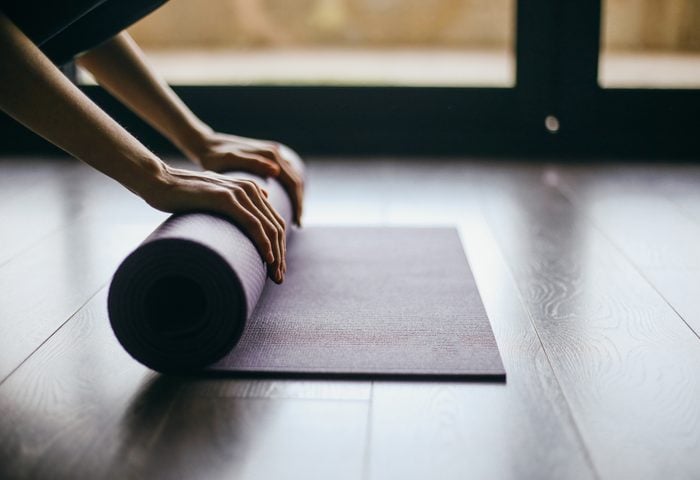
It’s the mental health vicious cycle: Exercise has been scientifically proven as one of the best [remedies for anxiety and depression](https://www.thehealthy.com/mental-health/depression/hour-of-exercise-depression-risk/), yet getting sweaty is often the last thing anxious people feel like doing. Enter yoga. You can do it in the privacy of your own home and it’s gentle enough that most people can do it. “The endorphins that exercise helps to release are crucial for people with anxiety as they often have a small ‘window of tolerance,’ meaning stressors that seem small to others feel very big to them,” says Kelsey Torgerson, a licensed clinical social worker and anxiety and anger management specialist in St. Louis. Torgerson says she personally does yoga four times a week. “Yoga increases that window of tolerance and builds stress management skills.” Having a full-blown panic attack and need to know how to deal with anxiety? Use these [tips for dealing with an anxiety attack](https://www.thehealthy.com/mental-health/anxiety/manage-anxiety-and-panic-disorder/) in the moment.
Worawee Meepian/Shutterstock
## Get off social media
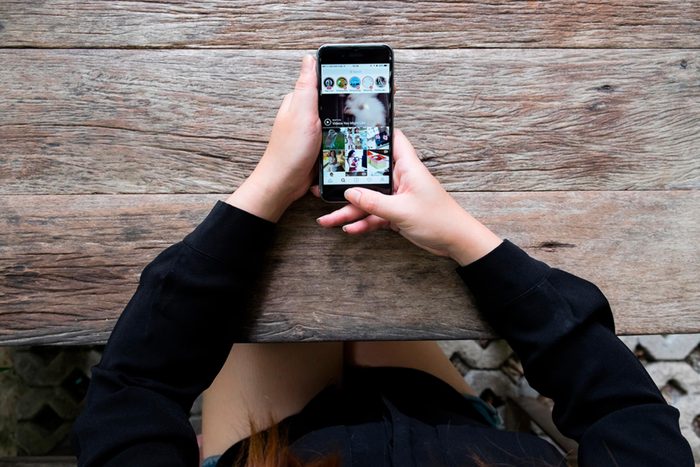
Feeling anxious and stressed out? A lot of people will take a brain break by scrolling through Facebook, Instagram, or Twitter. Unfortunately, this “rest” may be doing you more harm than good when it comes to anxiety, says Rebecca Burton, a licensed marriage and family counselor. “Staying continually plugged in means you are susceptible to the anxiety-provoking events of the day, whether it’s that a good friend is ill or a large-scale disaster is unfolding,” she says. Not to mention how [comparing yourself to others on social media](https://www.thehealthy.com/mental-health/negative-effects-of-social-media/) can be anxiety-inducing in its own right. Why don’t you have 6-pack abs, an immaculate kitchen, and children that spout wise sayings every 30 minutes? But disconnecting can be harder than it sounds, as social media addiction is a legit problem. Instead of constantly checking your notifications, plan breaks, Burton advises. Here’s [what to never say to someone with anxiety](https://www.thehealthy.com/mental-health/anxiety/what-not-to-say-to-people-with-anxiety/).
Westend61/Getty Images
## Accept anxiety as a part of life
“When a client tells me they have anxiety, I say ‘Great!, which often takes them by surprise,” says Akshay Nanavati, speaker and author of [*Fearvana: The Revolutionary Science of How to Turn Fear into Health, Wealth and Happiness*](https://www.amazon.com/Fearvana-Revolutionary-Science-Health-Happiness-ebook/dp/B01KFRRZOG?ie=UTF8&tag=healthtmb-20). “Embracing and harnessing your anxiety will help you control it rather than it controlling you.” He explains that suffering is part of life and you can learn how to build a positive relationship with pain. There’s a myth that life is supposed to be all happiness and if you have a problem it’s because you are doing something wrong. Not so, he says. And one of the worst parts of anxiety is the fear of impending pain but it’s silly to start the suffering early. Accept that there will be struggles and know you are strong enough to deal with them when they happen. If your anxiety feels too overwhelming and you can’t put it in perspective, it may be time to see your doctor about therapy and/or medication. (In the meantime, try these [natural at-home remedies for anxiety-relief](https://www.thehealthy.com/mental-health/anxiety/natural-anxiety-relief/).)

Kelvin Murray/Getty Images
## Just do it
Procrastination and anxiety go hand-in-hand as a lot of [anxiety](https://www.thehealthy.com/mental-health/anxiety/anxiety-disorder-symptoms/) comes from worrying about future events. For things you have direct control over, like your job performance or to-do list, start working on them, even if you don’t feel quite ready, says Denise Limongello, a licensed psychotherapist and life coach based in Manhattan. “Many studies indicate that people often respond to anxiety with avoidance,” she says. “It might be tempting to avoid doing the thing that makes you anxious but instead of putting it off, do it right away.” And for things you simply can’t control, like hurricanes and your mother-in-law, doing whatever you can do to prepare for them will [help ease your anxiety](https://www.thehealthy.com/mental-health/anxiety/coping-anxiety/). Can’t pinpoint your anxiety to one specific worry? You may have generalized anxiety disorder, a mental illness where you feel surrounded by a cloud of formless worry all the time. But there’s hope: Here’s what you need to know about [generalized anxiety disorder and how to get help](https://www.thehealthy.com/mental-health/anxiety/gad-generalized-anxiety-disorder/).
JGI/Tom Grill/Getty Images
## Learn to recognize your physical signs of anxiety
Ever read a tip online and think, “Sure, that’s great for other people but it just doesn’t work for me?” Each person feels anxiety a little differently, and therefore each person will respond better to some techniques than to others, Torgerson says. It seems obvious now but [dealing with anxiety](https://www.thehealthy.com/mental-health/anxiety/phrases-to-calm-anxiety/) isn’t a one-size-fits-all thing. Start by figuring out how your body reacts to anxiety. Do you tense up and freeze or do you want to run away? Do you feel it mostly in your stomach or chest? Do you breathe heavily? Feel nauseous? Do your palms go clammy? All of this is information you can use, she says. “As soon as you notice *your* first sign of anxiety, immediately take some deep breaths then do something you know will help you calm down, not just what works for someone else,” she says. “Being proactive goes a long way in helping to manage your anxiety.” (Physical symptoms are just one sign of anxiety, however. These are [signs you may have an anxiety disorder](https://www.thehealthy.com/mental-health/anxiety/anxiety-disorder-symptoms/).)
visualspace/Getty Images
## Create a healthy routine
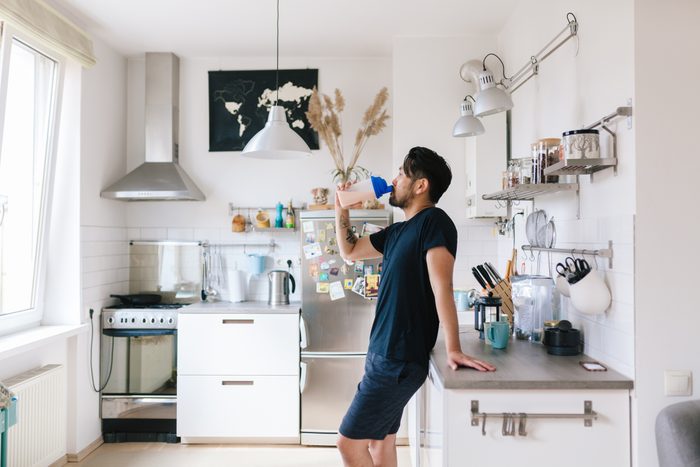
An easy way for you to learn how to deal with anxiety is to create a healthy routine. “Anxiety feeds on poor sleep, [junk food](https://www.thehealthy.com/nutrition/8-ways-to-train-your-brain-to-hate-junk-food/), alcohol, and drugs, and [inactivity](https://www.thehealthy.com/exercise/sedentary-lifestyle-more-exercise/),” Burton says. The fact that you feel better when you’re taking care of yourself isn’t news but these daily habits can be the first thing to go during a period of intense anxiety. So instead of worrying about how you’ve let exercise slip or whether your insomnia will be bad tonight, choose just one habit to focus on maintaining for one week. Be specific and write your goal down. Examples could be: No electronics after 10 p.m, eating three servings of vegetables per day, or taking a 20-minute walk three times per week. “As the habits you choose become more ingrained, you can add more to the list,” Burton says. “Getting your habits under control will improve your physical well-being and reduce your anxiety by improving your sense of self-efficacy—that feeling of being able to control your own life when situations around you feel stressful.” Read these [16 quotes about anxiety that will help you cope a little better](https://www.thehealthy.com/mental-health/anxiety/anxiety-quotes/).
Alistair Berg/Getty Images
## See anxiety as a feature, not a flaw
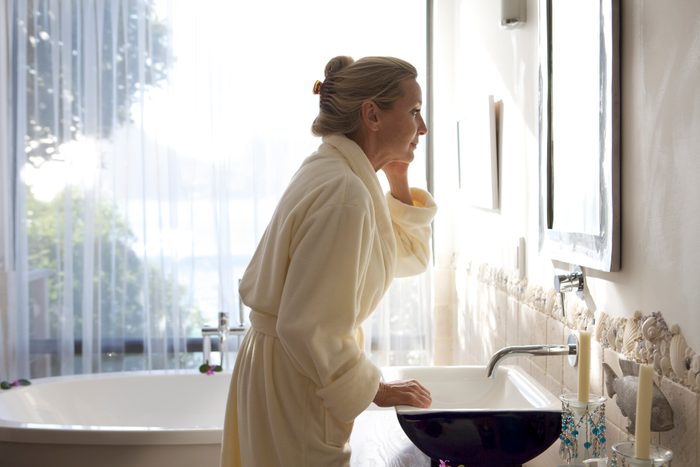
Anxiety can be gut-wrenchingly painful, no doubt about it. But it does have some upsides you can harness to help you, Nanavati says. Instead of being paralyzed by your worries, see them as a call to action for how to deal with anxiety. “A growth mindset is one that believes any event or circumstance is an opportunity for growth and that anyone can achieve anything with the right amount of effort,” he says. Instead of blaming your circumstances or questioning your abilities, let your anxiety motivate you to change the things that are worrying you. Often, it’s the anxiety itself that’s worrying people but remember that some level of anxiety can be helpful, like making you be proactive and work towards goals. Not sure how to do this? Start by repeating these [magical phrases that instantly calm anxiety](https://www.thehealthy.com/mental-health/anxiety/phrases-to-calm-anxiety/).
Cunaplus\_M.Faba/Getty Images
## Set a breathing alarm
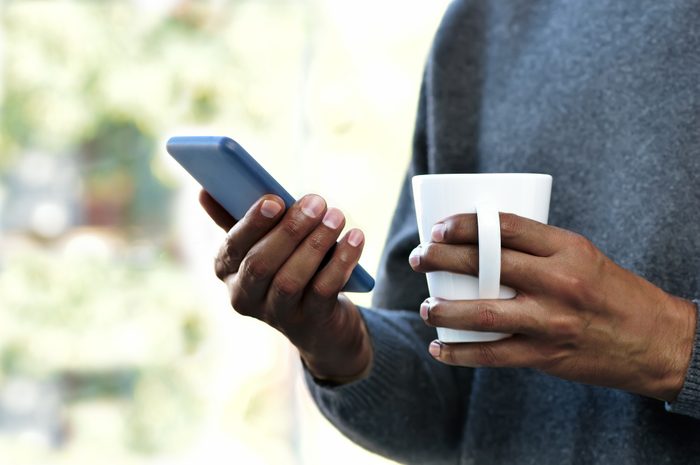
Taking a few cleansing breaths or doing a mini-meditation every few hours is great for reducing anxiety—but only if you remember to do it. This is why Torgerson recommends setting a reminder alert on your phone to go off at preset intervals. “When their reminder goes off, I tell them to take three deep diaphragmatic breaths, breathing slowly through their nose for three counts, and out of their mouth for five,” she says. Or download a meditation app and set it to remind you to do a mini-meditation every day. It’s a simple thing, but just remembering to take a few minutes out of your busy day for yourself can go a long way. Or you can take a few minutes at a certain time each day to “visit” with your worries in what’s called “worry postponement.” Set a specific time; just make sure your visit doesn’t run long. And it’s worth it in more ways than one: Check out these [proven health benefits of just five minutes of meditation](https://www.thehealthy.com/alternative-medicine/benefits-of-meditation/).
Me789 Studio/Getty Images
## Act it out
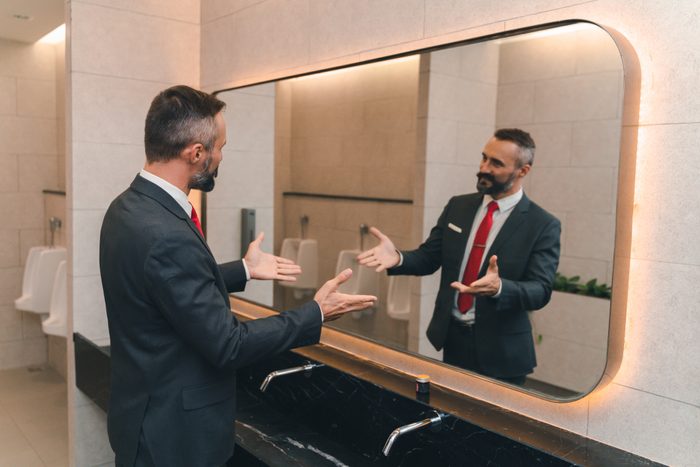
If you’re [worried about a particular situation](https://www.thehealthy.com/mental-health/8-steps-to-conquering-worry/), like giving a presentation at work or running into an ex-boyfriend, rehearsing it will both improve your performance when it happens and reduce your anxiety in the present, says Limongello. “Studies show that exercises such as role-playing can lead to increased confidence and reduced anxiety,” she says, adding that you can practice solo or role play with a trusted friend.
Halfpoint Images/Getty Images
## Give yourself a break
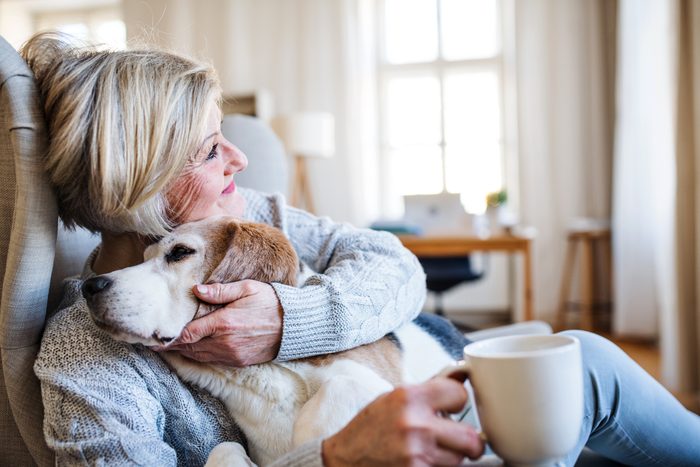
Worrying about worrying is a real problem, and people who are anxious by nature are often shamed—by others and themselves—with labels like “worrywart,” “killjoy,” or “party pooper.” But calling yourself names and feeling ashamed of your anxiety only makes the problem worse, Nanavati says. (And make sure you’re not [confusing your stress for anxiety](https://www.thehealthy.com/mental-health/anxiety/stress-vs-anxiety/)—you should aim to reduce both but your body experiences each one differently.) “Buddha said we are all struck by two darts: The first is a painful event and the second is how we respond to that pain,” he explains. “Instead of being mad at yourself or asking ‘Why me?’ recognize that you control how you respond to your emotions.” Don’t get caught up in the self-reinforcing anxiety cycle of “What if” and refocus on positive thoughts.

Maskot/Getty Images
## Do *anything*
Anxiety can be downright paralyzing, which in turn can cause even more anxiety. Combat this by doing something, *anything*, to break the cycle, Burton says. “Anxiety is fear plus helplessness. Depending on the scope of the situation, and how much it impacts you, choose to get involved to the extent that you can. Whether it’s calling your sick friend to offer tangible help or giving blood after a disaster, finding a way to actively contribute can help you feel a sense of empowerment in anxiety-provoking situations,” she says.
Next, learn the [things all people with anxiety will understand](https://www.thehealthy.com/mental-health/anxiety/living-with-anxiety/).
Sources
- [Kelsey Torgerson](https://www.compassionatecounselingstl.com/staff), MSW, a licensed clinical social worker and anxiety and anger management specialist in St. Louis
- [Rebecca Burton](http://www.rebeccacanhelp.com/), a licensed marriage and family counselor
- [Akshay Nanavati](https://fearvana.com/), speaker and author of [*Fearvana: The Revolutionary Science of How to Turn Fear into Health, Wealth and Happiness*](https://www.amazon.com/FEARVANA-Revolutionary-Science-Health-Happiness/dp/1630476056/?tag=healthtmb-20)
- [Denise Limongello](https://www.deniselimongello.com/), LMSW, a licensed psychotherapist and life coach based in Manhattan
Medically reviewed by [Ashley Matskevich, MD](https://www.thehealthy.com/author/ashley-matskevich/), on August 12, 2019
Author
Charlotte Hilton Andersen
Charlotte Hilton Andersen, MS, is an award-winning journalist, author, and ghostwriter who for nearly two decades has covered health, fitness, parenting, relationships, and other wellness and lifestyle topics for major outlets, including Reader’s Digest, O, The Oprah Magazine, Women’s Health, and many more. Charlotte has made appearances with t...
[Read More](https://www.thehealthy.com/author/charlotte-hilton-andersen/)
Medical Reviewer
Ashley Matskevich, MD
Ashley Matskevich, MD, is a practicing Board Certified Psychiatrist in Boston, who believes strongly in the combination of therapy and when indicated, evidence-based medicine. Dr. Matskevich graduated from the University of Florida, where she majored in English Literature. She then attended the University of Miami Miller School of Medicine, whe...
[Read More](https://www.thehealthy.com/author/ashley-matskevich/)

[](https://www.thehealthy.com/mental-health/anxiety/how-to-deal-with-anxiety/%20https://www.thehealthy.com/%20)
- [How to Eat Sustainably](https://www.thehealthy.com/food/how-to-eat-sustainably/)
- [Mental Health](https://www.thehealthy.com/mental-health/)
- [Seasonal Fruits and Vegetables Guide](https://www.thehealthy.com/food/fruits-vegetables-in-season-every-month-of-year/)
- [Digestive Health](https://www.thehealthy.com/digestive-health/)
Our Brands
- [Reader’s Digest](https://www.rd.com/)
- [Taste of Home](https://www.tasteofhome.com/)
- [Family Handyman](https://www.familyhandyman.com/)
- [Birds & Blooms](https://www.birdsandblooms.com/)
- [About The Healthy](https://www.thehealthy.com/about-the-healthy/)
- [Advertise with Us](https://www.trustedmediabrands.com/brands/the-healthy/)
- [Contact Us](https://www.thehealthy.com/contact-us/)
- [Terms of Use](https://www.trustedmediabrands.com/terms-of-use/)
- [Privacy Policy](https://www.trustedmediabrands.com/privacy-policy/)
- [Your CA Privacy Rights](https://www.trustedmediabrands.com/ca-privacy-notice/)
- [Accessibility Statement](https://www.trustedmediabrands.com/our-commitment-to-accessibility/)
- [About Ads](https://www.trustedmediabrands.com/privacy-policy/#advertising)
- [Cookie Settings]()
- [License our Content](https://info.wrightsmedia.com/the-healthy-licensing)
© 2026 Trusted Media Brands, Inc.
### Sign Up For Our Newsletter

We are no longer supporting IE (Internet Explorer) as we strive to provide site experiences for browsers that support new web standards and security practices.
We recommend our users to update the browser.
[]()
- [Google Chrome](https://www.google.com/chrome/)
- [Apple Safari](https://www.apple.com/safari/)
- [Mozilla Firefox](https://www.mozilla.org/en-US/firefox/)
- [Microsoft Edge](https://www.microsoft.com/en-us/edge)

- [Health A-ZMore Items](https://www.thehealthy.com/mental-health/anxiety/how-to-deal-with-anxiety/)
- [» View All Health Topics](https://www.thehealthy.com/health-a-z/)
- [Allergies](https://www.thehealthy.com/allergies/)
- [Alzheimer’s Disease](https://www.thehealthy.com/alzheimers/)
- [Arthritis](https://www.thehealthy.com/arthritis/)
- [Back Pain](https://www.thehealthy.com/pain/back-pain/)
- [Cancer](https://www.thehealthy.com/cancer/)
- [Cold and Flu](https://www.thehealthy.com/cold-flu/)
- [Diabetes](https://www.thehealthy.com/diabetes/)
- [Fatigue](https://www.thehealthy.com/fatigue/)
- [Headaches and Migraines](https://www.thehealthy.com/headaches/)
- [Heart Disease](https://www.thehealthy.com/heart-disease/)
- [Irritable Bowel Syndrome](https://www.thehealthy.com/digestive-health/ibs/)
- [Menopause](https://www.thehealthy.com/menopause/)
- [Pain Management](https://www.thehealthy.com/pain/)
- [Respiratory Conditions](https://www.thehealthy.com/respiratory/)
- [Skin Health](https://www.thehealthy.com/skin-health/)
- [Sleep](https://www.thehealthy.com/sleep/)
- [BodyMore Items](https://www.thehealthy.com/mental-health/anxiety/how-to-deal-with-anxiety/)
- [Beauty](https://www.thehealthy.com/beauty/)
- [Exercise](https://www.thehealthy.com/exercise/)
- [Food](https://www.thehealthy.com/food/)
- [Nutrition](https://www.thehealthy.com/nutrition/)
- [Vitamins and Supplements](https://www.thehealthy.com/nutrition/vitamins/)
- [Weight Loss](https://www.thehealthy.com/weight-loss/)
- [MindMore Items](https://www.thehealthy.com/mental-health/anxiety/how-to-deal-with-anxiety/)
- [Anxiety](https://www.thehealthy.com/mental-health/anxiety/)
- [Depression](https://www.thehealthy.com/mental-health/depression/)
- [Healthy Aging](https://www.thehealthy.com/aging/healthy-aging/)
- [Mental Health](https://www.thehealthy.com/mental-health/)
- [Mind and Memory](https://www.thehealthy.com/aging/mind-memory/)
- [CareMore Items](https://www.thehealthy.com/mental-health/anxiety/how-to-deal-with-anxiety/)
- [Caregiving](https://www.thehealthy.com/healthcare/caregiving/)
- [Eye Care](https://www.thehealthy.com/eye-care/)
- [First Aid](https://www.thehealthy.com/first-aid/)
- [Healthcare](https://www.thehealthy.com/healthcare/)
- [Home Remedies](https://www.thehealthy.com/home-remedies/)
- [Oral and Dental Care](https://www.thehealthy.com/dental/)
- [Self Care](https://www.thehealthy.com/mental-health/self-care/)
- [ConnectionsMore Items](https://www.thehealthy.com/mental-health/anxiety/how-to-deal-with-anxiety/)
- [Children’s Health](https://www.thehealthy.com/family/childrens-health/)
- [Family](https://www.thehealthy.com/family/)
- [Relationships](https://www.thehealthy.com/family/relationships/)
- [Sexual Health](https://www.thehealthy.com/sex/)
- [Newsletters](https://www.thehealthy.com/newslettersignuppage/)
- [Follow UsMore Items](https://www.thehealthy.com/mental-health/anxiety/how-to-deal-with-anxiety/)
- [Facebook](https://www.facebook.com/TheHealthy/)
- [Instagram](https://www.instagram.com/thehealthy/)
- [Twitter](https://twitter.com/thehealthy)
- [Feedly](https://feedly.com/i/subscription/feed%2Fhttps%3A%2F%2Fwww.thehealthy.com%2Ffeed%2F) |
| Readable Markdown | 
agrobacter/Getty Images
## Deal with it in down dog
It’s the mental health vicious cycle: Exercise has been scientifically proven as one of the best [remedies for anxiety and depression](https://www.thehealthy.com/mental-health/depression/hour-of-exercise-depression-risk/), yet getting sweaty is often the last thing anxious people feel like doing. Enter yoga. You can do it in the privacy of your own home and it’s gentle enough that most people can do it. “The endorphins that exercise helps to release are crucial for people with anxiety as they often have a small ‘window of tolerance,’ meaning stressors that seem small to others feel very big to them,” says Kelsey Torgerson, a licensed clinical social worker and anxiety and anger management specialist in St. Louis. Torgerson says she personally does yoga four times a week. “Yoga increases that window of tolerance and builds stress management skills.” Having a full-blown panic attack and need to know how to deal with anxiety? Use these [tips for dealing with an anxiety attack](https://www.thehealthy.com/mental-health/anxiety/manage-anxiety-and-panic-disorder/) in the moment.

Worawee Meepian/Shutterstock
## Get off social media
Feeling anxious and stressed out? A lot of people will take a brain break by scrolling through Facebook, Instagram, or Twitter. Unfortunately, this “rest” may be doing you more harm than good when it comes to anxiety, says Rebecca Burton, a licensed marriage and family counselor. “Staying continually plugged in means you are susceptible to the anxiety-provoking events of the day, whether it’s that a good friend is ill or a large-scale disaster is unfolding,” she says. Not to mention how [comparing yourself to others on social media](https://www.thehealthy.com/mental-health/negative-effects-of-social-media/) can be anxiety-inducing in its own right. Why don’t you have 6-pack abs, an immaculate kitchen, and children that spout wise sayings every 30 minutes? But disconnecting can be harder than it sounds, as social media addiction is a legit problem. Instead of constantly checking your notifications, plan breaks, Burton advises. Here’s [what to never say to someone with anxiety](https://www.thehealthy.com/mental-health/anxiety/what-not-to-say-to-people-with-anxiety/).

Westend61/Getty Images
## Accept anxiety as a part of life
“When a client tells me they have anxiety, I say ‘Great!, which often takes them by surprise,” says Akshay Nanavati, speaker and author of [*Fearvana: The Revolutionary Science of How to Turn Fear into Health, Wealth and Happiness*](https://www.amazon.com/Fearvana-Revolutionary-Science-Health-Happiness-ebook/dp/B01KFRRZOG?ie=UTF8&tag=healthtmb-20). “Embracing and harnessing your anxiety will help you control it rather than it controlling you.” He explains that suffering is part of life and you can learn how to build a positive relationship with pain. There’s a myth that life is supposed to be all happiness and if you have a problem it’s because you are doing something wrong. Not so, he says. And one of the worst parts of anxiety is the fear of impending pain but it’s silly to start the suffering early. Accept that there will be struggles and know you are strong enough to deal with them when they happen. If your anxiety feels too overwhelming and you can’t put it in perspective, it may be time to see your doctor about therapy and/or medication. (In the meantime, try these [natural at-home remedies for anxiety-relief](https://www.thehealthy.com/mental-health/anxiety/natural-anxiety-relief/).)

Kelvin Murray/Getty Images
## Just do it
Procrastination and anxiety go hand-in-hand as a lot of [anxiety](https://www.thehealthy.com/mental-health/anxiety/anxiety-disorder-symptoms/) comes from worrying about future events. For things you have direct control over, like your job performance or to-do list, start working on them, even if you don’t feel quite ready, says Denise Limongello, a licensed psychotherapist and life coach based in Manhattan. “Many studies indicate that people often respond to anxiety with avoidance,” she says. “It might be tempting to avoid doing the thing that makes you anxious but instead of putting it off, do it right away.” And for things you simply can’t control, like hurricanes and your mother-in-law, doing whatever you can do to prepare for them will [help ease your anxiety](https://www.thehealthy.com/mental-health/anxiety/coping-anxiety/). Can’t pinpoint your anxiety to one specific worry? You may have generalized anxiety disorder, a mental illness where you feel surrounded by a cloud of formless worry all the time. But there’s hope: Here’s what you need to know about [generalized anxiety disorder and how to get help](https://www.thehealthy.com/mental-health/anxiety/gad-generalized-anxiety-disorder/).

JGI/Tom Grill/Getty Images
## Learn to recognize your physical signs of anxiety
Ever read a tip online and think, “Sure, that’s great for other people but it just doesn’t work for me?” Each person feels anxiety a little differently, and therefore each person will respond better to some techniques than to others, Torgerson says. It seems obvious now but [dealing with anxiety](https://www.thehealthy.com/mental-health/anxiety/phrases-to-calm-anxiety/) isn’t a one-size-fits-all thing. Start by figuring out how your body reacts to anxiety. Do you tense up and freeze or do you want to run away? Do you feel it mostly in your stomach or chest? Do you breathe heavily? Feel nauseous? Do your palms go clammy? All of this is information you can use, she says. “As soon as you notice *your* first sign of anxiety, immediately take some deep breaths then do something you know will help you calm down, not just what works for someone else,” she says. “Being proactive goes a long way in helping to manage your anxiety.” (Physical symptoms are just one sign of anxiety, however. These are [signs you may have an anxiety disorder](https://www.thehealthy.com/mental-health/anxiety/anxiety-disorder-symptoms/).)

visualspace/Getty Images
## Create a healthy routine
An easy way for you to learn how to deal with anxiety is to create a healthy routine. “Anxiety feeds on poor sleep, [junk food](https://www.thehealthy.com/nutrition/8-ways-to-train-your-brain-to-hate-junk-food/), alcohol, and drugs, and [inactivity](https://www.thehealthy.com/exercise/sedentary-lifestyle-more-exercise/),” Burton says. The fact that you feel better when you’re taking care of yourself isn’t news but these daily habits can be the first thing to go during a period of intense anxiety. So instead of worrying about how you’ve let exercise slip or whether your insomnia will be bad tonight, choose just one habit to focus on maintaining for one week. Be specific and write your goal down. Examples could be: No electronics after 10 p.m, eating three servings of vegetables per day, or taking a 20-minute walk three times per week. “As the habits you choose become more ingrained, you can add more to the list,” Burton says. “Getting your habits under control will improve your physical well-being and reduce your anxiety by improving your sense of self-efficacy—that feeling of being able to control your own life when situations around you feel stressful.” Read these [16 quotes about anxiety that will help you cope a little better](https://www.thehealthy.com/mental-health/anxiety/anxiety-quotes/).

Alistair Berg/Getty Images
## See anxiety as a feature, not a flaw
Anxiety can be gut-wrenchingly painful, no doubt about it. But it does have some upsides you can harness to help you, Nanavati says. Instead of being paralyzed by your worries, see them as a call to action for how to deal with anxiety. “A growth mindset is one that believes any event or circumstance is an opportunity for growth and that anyone can achieve anything with the right amount of effort,” he says. Instead of blaming your circumstances or questioning your abilities, let your anxiety motivate you to change the things that are worrying you. Often, it’s the anxiety itself that’s worrying people but remember that some level of anxiety can be helpful, like making you be proactive and work towards goals. Not sure how to do this? Start by repeating these [magical phrases that instantly calm anxiety](https://www.thehealthy.com/mental-health/anxiety/phrases-to-calm-anxiety/).

Cunaplus\_M.Faba/Getty Images
## Set a breathing alarm
Taking a few cleansing breaths or doing a mini-meditation every few hours is great for reducing anxiety—but only if you remember to do it. This is why Torgerson recommends setting a reminder alert on your phone to go off at preset intervals. “When their reminder goes off, I tell them to take three deep diaphragmatic breaths, breathing slowly through their nose for three counts, and out of their mouth for five,” she says. Or download a meditation app and set it to remind you to do a mini-meditation every day. It’s a simple thing, but just remembering to take a few minutes out of your busy day for yourself can go a long way. Or you can take a few minutes at a certain time each day to “visit” with your worries in what’s called “worry postponement.” Set a specific time; just make sure your visit doesn’t run long. And it’s worth it in more ways than one: Check out these [proven health benefits of just five minutes of meditation](https://www.thehealthy.com/alternative-medicine/benefits-of-meditation/).

Me789 Studio/Getty Images
## Act it out
If you’re [worried about a particular situation](https://www.thehealthy.com/mental-health/8-steps-to-conquering-worry/), like giving a presentation at work or running into an ex-boyfriend, rehearsing it will both improve your performance when it happens and reduce your anxiety in the present, says Limongello. “Studies show that exercises such as role-playing can lead to increased confidence and reduced anxiety,” she says, adding that you can practice solo or role play with a trusted friend.

Halfpoint Images/Getty Images
## Give yourself a break
Worrying about worrying is a real problem, and people who are anxious by nature are often shamed—by others and themselves—with labels like “worrywart,” “killjoy,” or “party pooper.” But calling yourself names and feeling ashamed of your anxiety only makes the problem worse, Nanavati says. (And make sure you’re not [confusing your stress for anxiety](https://www.thehealthy.com/mental-health/anxiety/stress-vs-anxiety/)—you should aim to reduce both but your body experiences each one differently.) “Buddha said we are all struck by two darts: The first is a painful event and the second is how we respond to that pain,” he explains. “Instead of being mad at yourself or asking ‘Why me?’ recognize that you control how you respond to your emotions.” Don’t get caught up in the self-reinforcing anxiety cycle of “What if” and refocus on positive thoughts.

Maskot/Getty Images
## Do *anything*
Anxiety can be downright paralyzing, which in turn can cause even more anxiety. Combat this by doing something, *anything*, to break the cycle, Burton says. “Anxiety is fear plus helplessness. Depending on the scope of the situation, and how much it impacts you, choose to get involved to the extent that you can. Whether it’s calling your sick friend to offer tangible help or giving blood after a disaster, finding a way to actively contribute can help you feel a sense of empowerment in anxiety-provoking situations,” she says.
Next, learn the [things all people with anxiety will understand](https://www.thehealthy.com/mental-health/anxiety/living-with-anxiety/). |
| Shard | 94 (laksa) |
| Root Hash | 3769767774695690894 |
| Unparsed URL | com,thehealthy!www,/mental-health/anxiety/how-to-deal-with-anxiety/ s443 |