ℹ️ Skipped - page is already crawled
| Filter | Status | Condition | Details |
|---|---|---|---|
| HTTP status | PASS | download_http_code = 200 | HTTP 200 |
| Age cutoff | PASS | download_stamp > now() - 6 MONTH | 1.3 months ago |
| History drop | PASS | isNull(history_drop_reason) | No drop reason |
| Spam/ban | PASS | fh_dont_index != 1 AND ml_spam_score = 0 | ml_spam_score=0 |
| Canonical | PASS | meta_canonical IS NULL OR = '' OR = src_unparsed | Not set |
| Property | Value |
|---|---|
| URL | https://www.thedailymeal.com/1653526/pasta-water-boiling-mistake-explained/ |
| Last Crawled | 2026-03-07 16:24:17 (1 month ago) |
| First Indexed | 2024-10-12 23:55:23 (1 year ago) |
| HTTP Status Code | 200 |
| Meta Title | For Better Pasta, Boil It In More Water (It's That Simple) |
| Meta Description | If your pot doesn't have enough water for the noodles you are cooking, they will quickly absorb the liquid, taking on a glue-like consistency. |
| Meta Canonical | null |
| Boilerpipe Text | larisa Stefanjuk/Shutterstock
Do you know
how to boil water
? It sounds like a funny question but when it comes to making pasta, this simple task becomes very important. Do it wrong and you could end up with sticky, clumpy, undercooked, or overcooked noodles that are unusable. The key to
cooking pasta perfectly
all starts with the size of the pot. A one-pound box of noodles calls for 4 to 6 quarts of boiling water that has been adequately salted with 1 to 2 tablespoons.
The reason you need this much water is because pasta noodles expand as they cook, but there is more that's going on. The dry noodles will change the temperature of the water once you pour them into the pot, this temperature fluctuation becomes greater if you are using a small pot, which means less water. You need only enough water to fully submerge the noodles, but also enough so that the noodles can move around while cooking.
Use more water for better pasta
Westend61/Getty Images
If your pasta pot doesn't have enough water for the amount of noodles you are cooking, they will quickly absorb the liquid, taking on a glue-like consistency. This happens because pasta releases starch as it cooks, making the water thick and creamy — qualities we love when we add this liquid to a sauce. But when you don't have enough water in the pot, that starch becomes concentrated, which in turn makes your pasta clump together. More boiling water equals less starch.
But your noodles also require enough room to boogie as they boil so choose a big enough pot so they can. Constant movement along with a quick stir as the water bubbles is key to avoiding that starchy build-up. When you have the right size pot and the perfect amount of boiling water, your pasta is going to cook evenly, alleviating concerns about gumminess and ensuring a perfect al dente bite when you make that next
pasta with Bolognese sauce
.
Two exceptions for when you should use less water for pasta
Zapylaiev Kostiantyn/Shutterstock
That said, there are a couple of instances where less water will work when cooking pasta but both require slightly different cooking techniques. The first instance of using less water requires continuous stirring. This method ensures the starch doesn't develop and cake around the noodles causing them to clump together. However, this approach doesn't work so well with fresh pasta or long noodles like spaghetti and linguini. But if you don't mind the hands-on cooking time and prefer not to use more water than absolutely necessary, this is a good option.
The other instance requires you to start by placing your noodles in cold water and bringing the two ingredients to a gradual boil. This method also requires a little stirring, but it works because they are not absorbing the water as quickly as they do when you place them in boiling water. Giving both the water and the pasta the same start time causes the water to get starchy and their surfaces to become starchier. This in turn ensures the noodles aren't going to stick to each other.
Ultimately, how much water you're boiling may seem like a tiny detail, but it can completely change the taste of your favorite dishes. |
| Markdown | [](https://www.thedailymeal.com/)
- [Exclusives](https://www.thedailymeal.com/category/exclusives/)
- [Recipes](https://www.thedailymeal.com/category/recipes/)
- [Appetizers & Snacks](https://www.thedailymeal.com/category/appetizers-and-snacks/)
- [Breakfast & Brunch](https://www.thedailymeal.com/category/breakfast-and-brunch/)
- [Lunch](https://www.thedailymeal.com/category/lunch/)
- [Dinner](https://www.thedailymeal.com/category/dinner/)
- [Side Dishes](https://www.thedailymeal.com/category/side-dishes/)
- [Desserts](https://www.thedailymeal.com/category/desserts/)
- [Breads](https://www.thedailymeal.com/category/breads/)
- [Candy & Treats](https://www.thedailymeal.com/category/candy-and-treats/)
- [Occasions](https://www.thedailymeal.com/category/occasions/)
- [Drinks](https://www.thedailymeal.com/category/drinks/)
- [Kitchen](https://www.thedailymeal.com/category/kitchen/)
- [Cooking](https://www.thedailymeal.com/category/cooking/)
- [Kitchen Tools](https://www.thedailymeal.com/category/kitchen-tools/)
- [Cookbooks](https://www.thedailymeal.com/category/cookbooks/)
- [Storage & Preservation](https://www.thedailymeal.com/category/storage-and-preservation/)
- [Cleaning](https://www.thedailymeal.com/category/cleaning-cooking/)
- [Grilling & Smoking](https://www.thedailymeal.com/category/grilling-and-smoking/)
- [Baking](https://www.thedailymeal.com/category/baking/)
- [Tips](https://www.thedailymeal.com/category/tips-cooking/)
- [Beverages](https://www.thedailymeal.com/category/beverages/)
- [Design Ideas](https://www.thedailymeal.com/category/design-ideas/)
- [Culture](https://www.thedailymeal.com/category/culture/)
- [Food History](https://www.thedailymeal.com/category/food-history/)
- [Traditions](https://www.thedailymeal.com/category/traditions/)
- [Food Scenes](https://www.thedailymeal.com/category/food-scenes/)
- [Global Cuisines](https://www.thedailymeal.com/category/global-cuisines/)
- [Entertainment](https://www.thedailymeal.com/category/entertainment/)
- [Celebrity Chefs](https://www.thedailymeal.com/category/celebrity-chefs/)
- [TV & Movies](https://www.thedailymeal.com/category/tv-and-movies/)
- [Facts](https://www.thedailymeal.com/category/facts/)
- [Guides](https://www.thedailymeal.com/category/guides/)
- [How-Tos](https://www.thedailymeal.com/category/how-tos/)
- [Food Science](https://www.thedailymeal.com/category/food-science/)
- [Healthy Eating](https://www.thedailymeal.com/category/healthy-eating/)
- [Grocery](https://www.thedailymeal.com/category/grocery/)
- [Shopping](https://www.thedailymeal.com/category/shopping/)
- [Stores & Chains](https://www.thedailymeal.com/category/stores-and-chains/)
- [Restaurants](https://www.thedailymeal.com/category/restaurants/)
- [Fast Food](https://www.thedailymeal.com/category/fast-food/)
- [Fast Casual](https://www.thedailymeal.com/category/fast-casual/)
- [Casual Dining](https://www.thedailymeal.com/category/casual-dining/)
- [Pizzerias](https://www.thedailymeal.com/category/pizzerias/)
- [Buffet-Style Restaurants](https://www.thedailymeal.com/category/buffet-style-restaurants/)
- [Food Trucks & Carts](https://www.thedailymeal.com/category/food-trucks-and-carts/)
- [Cafes](https://www.thedailymeal.com/category/cafes/)
- [Fine Dining](https://www.thedailymeal.com/category/fine-dining/)
- [Holidays](https://www.thedailymeal.com/category/holidays/)
- [Christmas](https://www.thedailymeal.com/category/christmas/)
- [Mother's Day](https://www.thedailymeal.com/category/mothers-day/)
- [New Year's](https://www.thedailymeal.com/category/new-years/)
- [Easter](https://www.thedailymeal.com/category/easter/)
- [Birthdays](https://www.thedailymeal.com/category/birthdays/)
- [Valentine's Day](https://www.thedailymeal.com/category/valentines-day/)
- [Thanksgiving](https://www.thedailymeal.com/category/thanksgiving/)
- [Halloween](https://www.thedailymeal.com/category/halloween/)
- [St. Patrick's Day](https://www.thedailymeal.com/category/st-patricks-day/)
- [Passover](https://www.thedailymeal.com/category/passover/)
- [Gardening](https://www.thedailymeal.com/category/gardening/)
- [Features](https://www.thedailymeal.com/category/features/)
- [Newsletter](https://subscribe.thedailymeal.com/newsletter?utm_source=thedailymeal&utm_medium=side-nav "Newsletter")
- [About](https://www.thedailymeal.com/about/)
- [Editorial Policies](https://www.thedailymeal.com/policies/)
- [Our Experts](https://www.thedailymeal.com/our-experts/)
- [Privacy Policy](https://www.thedailymeal.com/privacy-policy/)
- [Terms of Use](https://www.static.com/terms)
© 2026 [Static Media](https://www.static.com/). All Rights Reserved
[](https://www.thedailymeal.com/)
[](https://www.thedailymeal.com/)
You Might Be Making This Huge Mistake When Boiling Pasta
[Exclusives](https://www.thedailymeal.com/category/exclusives/) [Recipes](https://www.thedailymeal.com/category/recipes/) [Kitchen](https://www.thedailymeal.com/category/kitchen/) [Culture](https://www.thedailymeal.com/category/culture/) [Entertainment](https://www.thedailymeal.com/category/entertainment/) [Facts](https://www.thedailymeal.com/category/facts/) [Grocery](https://www.thedailymeal.com/category/grocery/) [Restaurants](https://www.thedailymeal.com/category/restaurants/) [Holidays](https://www.thedailymeal.com/category/holidays/) [Gardening](https://www.thedailymeal.com/category/gardening/) [Features](https://www.thedailymeal.com/category/features/)
- [Newsletter](https://subscribe.thedailymeal.com/newsletter?utm_source=thedailymeal&utm_medium=top-nav "Newsletter")
- [Kitchen](https://www.thedailymeal.com/category/kitchen/)
- [Cooking](https://www.thedailymeal.com/category/cooking/)
# You Might Be Making This Huge Mistake When Boiling Pasta
By [Karen Hart](https://www.thedailymeal.com/author/karenhart/)
Sept. 9, 2024 5:15 pm EST

larisa Stefanjuk/Shutterstock
Do you know [how to boil water](https://www.thedailymeal.com/cook/how-boil-water-really-0/)? It sounds like a funny question but when it comes to making pasta, this simple task becomes very important. Do it wrong and you could end up with sticky, clumpy, undercooked, or overcooked noodles that are unusable. The key to [cooking pasta perfectly](https://www.thedailymeal.com/how-to-cook-perfect-pasta/) all starts with the size of the pot. A one-pound box of noodles calls for 4 to 6 quarts of boiling water that has been adequately salted with 1 to 2 tablespoons.
The reason you need this much water is because pasta noodles expand as they cook, but there is more that's going on. The dry noodles will change the temperature of the water once you pour them into the pot, this temperature fluctuation becomes greater if you are using a small pot, which means less water. You need only enough water to fully submerge the noodles, but also enough so that the noodles can move around while cooking.
## Use more water for better pasta
Westend61/Getty Images
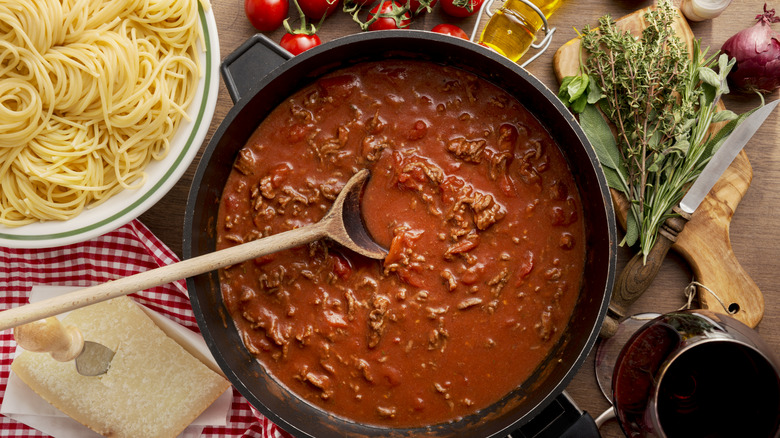
If your pasta pot doesn't have enough water for the amount of noodles you are cooking, they will quickly absorb the liquid, taking on a glue-like consistency. This happens because pasta releases starch as it cooks, making the water thick and creamy — qualities we love when we add this liquid to a sauce. But when you don't have enough water in the pot, that starch becomes concentrated, which in turn makes your pasta clump together. More boiling water equals less starch.
But your noodles also require enough room to boogie as they boil so choose a big enough pot so they can. Constant movement along with a quick stir as the water bubbles is key to avoiding that starchy build-up. When you have the right size pot and the perfect amount of boiling water, your pasta is going to cook evenly, alleviating concerns about gumminess and ensuring a perfect al dente bite when you make that next [pasta with Bolognese sauce](https://www.thedailymeal.com/pasta-bolognese-sauce-0-recipe/).
## Two exceptions for when you should use less water for pasta
Zapylaiev Kostiantyn/Shutterstock
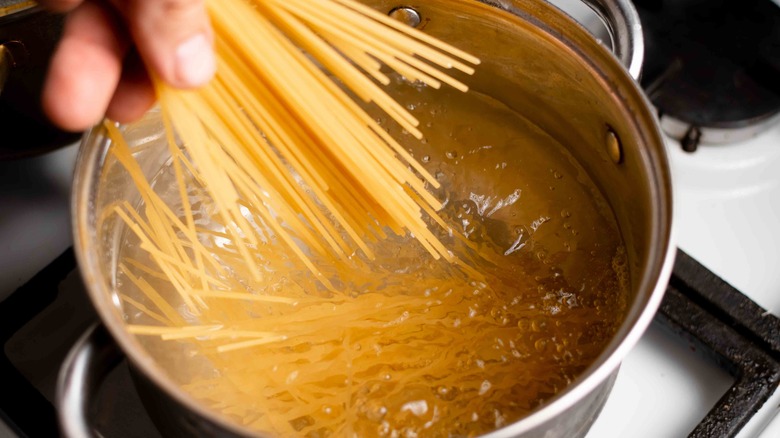
That said, there are a couple of instances where less water will work when cooking pasta but both require slightly different cooking techniques. The first instance of using less water requires continuous stirring. This method ensures the starch doesn't develop and cake around the noodles causing them to clump together. However, this approach doesn't work so well with fresh pasta or long noodles like spaghetti and linguini. But if you don't mind the hands-on cooking time and prefer not to use more water than absolutely necessary, this is a good option.
The other instance requires you to start by placing your noodles in cold water and bringing the two ingredients to a gradual boil. This method also requires a little stirring, but it works because they are not absorbing the water as quickly as they do when you place them in boiling water. Giving both the water and the pasta the same start time causes the water to get starchy and their surfaces to become starchier. This in turn ensures the noodles aren't going to stick to each other.
Ultimately, how much water you're boiling may seem like a tiny detail, but it can completely change the taste of your favorite dishes. |
| Readable Markdown | 
larisa Stefanjuk/Shutterstock
Do you know [how to boil water](https://www.thedailymeal.com/cook/how-boil-water-really-0/)? It sounds like a funny question but when it comes to making pasta, this simple task becomes very important. Do it wrong and you could end up with sticky, clumpy, undercooked, or overcooked noodles that are unusable. The key to [cooking pasta perfectly](https://www.thedailymeal.com/how-to-cook-perfect-pasta/) all starts with the size of the pot. A one-pound box of noodles calls for 4 to 6 quarts of boiling water that has been adequately salted with 1 to 2 tablespoons.
The reason you need this much water is because pasta noodles expand as they cook, but there is more that's going on. The dry noodles will change the temperature of the water once you pour them into the pot, this temperature fluctuation becomes greater if you are using a small pot, which means less water. You need only enough water to fully submerge the noodles, but also enough so that the noodles can move around while cooking.
## Use more water for better pasta

Westend61/Getty Images
If your pasta pot doesn't have enough water for the amount of noodles you are cooking, they will quickly absorb the liquid, taking on a glue-like consistency. This happens because pasta releases starch as it cooks, making the water thick and creamy — qualities we love when we add this liquid to a sauce. But when you don't have enough water in the pot, that starch becomes concentrated, which in turn makes your pasta clump together. More boiling water equals less starch.
But your noodles also require enough room to boogie as they boil so choose a big enough pot so they can. Constant movement along with a quick stir as the water bubbles is key to avoiding that starchy build-up. When you have the right size pot and the perfect amount of boiling water, your pasta is going to cook evenly, alleviating concerns about gumminess and ensuring a perfect al dente bite when you make that next [pasta with Bolognese sauce](https://www.thedailymeal.com/pasta-bolognese-sauce-0-recipe/).
## Two exceptions for when you should use less water for pasta

Zapylaiev Kostiantyn/Shutterstock
That said, there are a couple of instances where less water will work when cooking pasta but both require slightly different cooking techniques. The first instance of using less water requires continuous stirring. This method ensures the starch doesn't develop and cake around the noodles causing them to clump together. However, this approach doesn't work so well with fresh pasta or long noodles like spaghetti and linguini. But if you don't mind the hands-on cooking time and prefer not to use more water than absolutely necessary, this is a good option.
The other instance requires you to start by placing your noodles in cold water and bringing the two ingredients to a gradual boil. This method also requires a little stirring, but it works because they are not absorbing the water as quickly as they do when you place them in boiling water. Giving both the water and the pasta the same start time causes the water to get starchy and their surfaces to become starchier. This in turn ensures the noodles aren't going to stick to each other.
Ultimately, how much water you're boiling may seem like a tiny detail, but it can completely change the taste of your favorite dishes. |
| Shard | 130 (laksa) |
| Root Hash | 14658895069311768930 |
| Unparsed URL | com,thedailymeal!www,/1653526/pasta-water-boiling-mistake-explained/ s443 |