ℹ️ Skipped - page is already crawled
| Filter | Status | Condition | Details |
|---|---|---|---|
| HTTP status | PASS | download_http_code = 200 | HTTP 200 |
| Age cutoff | PASS | download_stamp > now() - 6 MONTH | 0.2 months ago |
| History drop | PASS | isNull(history_drop_reason) | No drop reason |
| Spam/ban | PASS | fh_dont_index != 1 AND ml_spam_score = 0 | ml_spam_score=0 |
| Canonical | PASS | meta_canonical IS NULL OR = '' OR = src_unparsed | Not set |
| Property | Value | |||||||||||||||||||||||||||
|---|---|---|---|---|---|---|---|---|---|---|---|---|---|---|---|---|---|---|---|---|---|---|---|---|---|---|---|---|
| URL | https://www.theatlantic.com/china/archive/2013/04/when-margaret-thatcher-came-to-china/274796/ | |||||||||||||||||||||||||||
| Last Crawled | 2026-04-15 23:41:12 (7 days ago) | |||||||||||||||||||||||||||
| First Indexed | 2017-02-22 08:16:45 (9 years ago) | |||||||||||||||||||||||||||
| HTTP Status Code | 200 | |||||||||||||||||||||||||||
| Content | ||||||||||||||||||||||||||||
| Meta Title | When Margaret Thatcher Came to China - The Atlantic | |||||||||||||||||||||||||||
| Meta Description | What happened when the Iron Lady attempted to preserve British rule over Hong Kong. | |||||||||||||||||||||||||||
| Meta Canonical | null | |||||||||||||||||||||||||||
| Boilerpipe Text | What happened when the Iron Lady attempted to preserve British rule over Hong Kong.
April 9, 2013
A man looks at a 1984 photograph of Deng Xiaoping meeting British Prime Minister Margaret Thatcher in Beijing on the handover of Hong Kong. (Bobby Yip/Reuters)]
Most accounts of British foreign policy under former Prime Minister Margaret Thatcher, who died yesterday at the age of 87, cite her stalwart defense of the Falkland Islands, prickly relationship with Europe, and warm partnership with the contemporaneous American president, Ronald Reagan. But from a Chinese perspective, Thatcher will best be remembered as the British leader who negotiated the return of Hong Kong to Chinese sovereignty. A decade and a half later, the handover seems like a historical inevitability; a vestigial colonial power making way for a rising China. Hong Kong's status, though, by no means was inevitable; instead, it reflected the results of a tense negotiation in which the formidable Iron Lady met her match with the tiny, owlish Chinese leader: Deng Xiaoping.
For the British, who assumed control of Hong Kong Island and Kowloon following the Opium Wars in the 1840s, Hong Kong was merely another jewel in the country's massive empire. Yet for China, the loss of Hong Kong began "a century of humiliation", a calamitous period of war, territorial cessation, and decline that culminated with the reunification of the country under Communist rule in 1949. Once Deng Xiaoping assumed control of China in 1978 and put an end to the disastrous social experiments that characterized the Maoist years, negotiating the return of Hong Kong became a major government priority.
In an
entertaining 1992 account
of the negotiations published in the
Independent
, Robert Cottrell summarized Deng's state of mind regarding Hong Kong:
Deng returned to the offensive by repeating his rejection of continued British rule in more categorical terms. If he agreed to let Britain stay in Hong Kong beyond 1997, he said, he would be no better than the traitors of the Qing dynasty who had first yielded Chinese soil to Britain under treaties which were illegal and invalid. He could not do it. China must resume sovereignty over Hong Kong, and sovereignty must include administration. The British flag would have to go. The British governor would have to go. And it would be China alone which decided what policies were 'suitable' for Hong Kong in the future. None the less, he said, China hoped that Britain would 'co-operate' in the transition, and it was prepared to enter into 'discussions' to that end. But it would not be bound by their results. If they failed to produce an agreement acceptable to China within two years, then China would announce its own policies for Hong Kong unilaterally.
Thatcher tried to hold the line with Deng, insisting that any unilateral action by China to assume control over Hong Kong would be in violation of international treaty. But in the end, the diminutive Chinese ruler got what he wanted, and on a rainy July night in 1997, Thatcher was present for the formal transfer of sovereignty to the People's Republic.
Towards the end of her life, Thatcher
expressed regret
about how things turned out in Hong Kong, telling the
Daily Telegraph
that she felt "sad" and "disappointed" in regards to the handover. In truth, though, there was little Thatcher could do: The emotional appeal of Hong Kong to the Chinese public -- as well as the leadership -- was simply too strong. | |||||||||||||||||||||||||||
| Markdown | [Skip to content](https://www.theatlantic.com/china/archive/2013/04/when-margaret-thatcher-came-to-china/274796/#main-content)
## Site Navigation
- [Popular](https://www.theatlantic.com/most-popular/)[Latest](https://www.theatlantic.com/latest/)[Newsletters](https://www.theatlantic.com/newsletters/)
## Sections
- [Ideas](https://www.theatlantic.com/ideas/)
- [Politics](https://www.theatlantic.com/politics/)
- [Economy](https://www.theatlantic.com/economy/)
- [Global](https://www.theatlantic.com/international/)
- [National Security](https://www.theatlantic.com/national-security/)
- [Washington Week](https://www.theatlantic.com/category/washington-week-atlantic/)
- [Features](https://www.theatlantic.com/category/features/)
- [Technology](https://www.theatlantic.com/technology/)
- [AI Watchdog](https://www.theatlantic.com/category/ai-watchdog/)
- [Science](https://www.theatlantic.com/science/)
- [Planet](https://www.theatlantic.com/projects/planet/)
- [Health](https://www.theatlantic.com/health/)
- [Philosophy](https://www.theatlantic.com/category/philosophy/)
- [Education](https://www.theatlantic.com/education/)
- [Culture](https://www.theatlantic.com/culture/)
- [Comedy](https://www.theatlantic.com/category/comedy/)
- [Family](https://www.theatlantic.com/family/)
- [Books](https://www.theatlantic.com/books/)
- [Fiction](https://www.theatlantic.com/category/fiction/)
- [Photography](https://www.theatlantic.com/photo/)
- [Events](https://www.theatlantic.com/atlantic-across-america/)
- [Explore The Atlantic Archive](https://www.theatlantic.com/archive/)
- [Play The Atlantic Games](https://www.theatlantic.com/games/)
- [Listen to Podcasts and Articles](https://www.theatlantic.com/audio/)
## The Print Edition
[](https://www.theatlantic.com/magazine/)
[Latest Issue](https://www.theatlantic.com/magazine/)[Past Issues](https://www.theatlantic.com/magazine/backissues/)
***
[Give a Gift](https://accounts.theatlantic.com/products/gift)
- [Popular](https://www.theatlantic.com/most-popular/)
- [Latest](https://www.theatlantic.com/latest/)
- [Newsletters](https://www.theatlantic.com/newsletters/)
- [Sign In](https://accounts.theatlantic.com/login/)
- [Subscribe](https://www.theatlantic.com/subscribe/navbar/)
[China](https://www.theatlantic.com/china/)
# When Margaret Thatcher Came to China
What happened when the Iron Lady attempted to preserve British rule over Hong Kong.
By [Matt Schiavenza](https://www.theatlantic.com/author/matthew-schiavenza/)
April 9, 2013
Share
Save
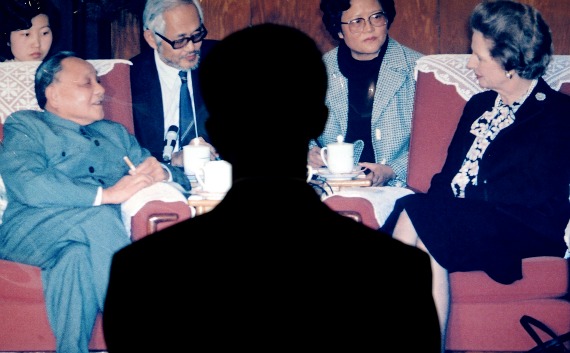
A man looks at a 1984 photograph of Deng Xiaoping meeting British Prime Minister Margaret Thatcher in Beijing on the handover of Hong Kong. (Bobby Yip/Reuters)\]
Most accounts of British foreign policy under former Prime Minister Margaret Thatcher, who died yesterday at the age of 87, cite her stalwart defense of the Falkland Islands, prickly relationship with Europe, and warm partnership with the contemporaneous American president, Ronald Reagan. But from a Chinese perspective, Thatcher will best be remembered as the British leader who negotiated the return of Hong Kong to Chinese sovereignty. A decade and a half later, the handover seems like a historical inevitability; a vestigial colonial power making way for a rising China. Hong Kong's status, though, by no means was inevitable; instead, it reflected the results of a tense negotiation in which the formidable Iron Lady met her match with the tiny, owlish Chinese leader: Deng Xiaoping.
For the British, who assumed control of Hong Kong Island and Kowloon following the Opium Wars in the 1840s, Hong Kong was merely another jewel in the country's massive empire. Yet for China, the loss of Hong Kong began "a century of humiliation", a calamitous period of war, territorial cessation, and decline that culminated with the reunification of the country under Communist rule in 1949. Once Deng Xiaoping assumed control of China in 1978 and put an end to the disastrous social experiments that characterized the Maoist years, negotiating the return of Hong Kong became a major government priority.
In an [entertaining 1992 account](http://www.independent.co.uk/arts-entertainment/how-mrs-thatcher-lost-hong-kong-ten-years-ago-fired-up-by-her-triumph-in-the-falklands-war-margaret-thatcher-flew-to-peking-for-a-lastditch-attempt-to-keep-hong-kong-under-british-rule--only-to-meet-her-match-in-deng-xiaoping-two-years-later-she-signed-the-agreement-handing-the-territory-to-china-1543375.html) of the negotiations published in the *Independent*, Robert Cottrell summarized Deng's state of mind regarding Hong Kong:
> Deng returned to the offensive by repeating his rejection of continued British rule in more categorical terms. If he agreed to let Britain stay in Hong Kong beyond 1997, he said, he would be no better than the traitors of the Qing dynasty who had first yielded Chinese soil to Britain under treaties which were illegal and invalid. He could not do it. China must resume sovereignty over Hong Kong, and sovereignty must include administration. The British flag would have to go. The British governor would have to go. And it would be China alone which decided what policies were 'suitable' for Hong Kong in the future. None the less, he said, China hoped that Britain would 'co-operate' in the transition, and it was prepared to enter into 'discussions' to that end. But it would not be bound by their results. If they failed to produce an agreement acceptable to China within two years, then China would announce its own policies for Hong Kong unilaterally.
Thatcher tried to hold the line with Deng, insisting that any unilateral action by China to assume control over Hong Kong would be in violation of international treaty. But in the end, the diminutive Chinese ruler got what he wanted, and on a rainy July night in 1997, Thatcher was present for the formal transfer of sovereignty to the People's Republic.
Towards the end of her life, Thatcher [expressed regret](http://www.telegraph.co.uk/news/uknews/1554095/My-regrets-over-Hong-Kong-by-Lady-Thatcher.html) about how things turned out in Hong Kong, telling the *Daily Telegraph* that she felt "sad" and "disappointed" in regards to the handover. In truth, though, there was little Thatcher could do: The emotional appeal of Hong Kong to the Chinese public -- as well as the leadership -- was simply too strong.
![]()
![]()
![]()
![]()
### About the Author
[Matt Schiavenza](https://www.theatlantic.com/author/matthew-schiavenza/)
[Matt Schiavenza](https://www.theatlantic.com/author/matthew-schiavenza/) is the senior content manager at the Asia Society and a former contributing writer for *The Atlantic*.
## Popular Links
- ### About
- [Our History](https://www.theatlantic.com/history/)
- [Careers](https://www.theatlantic.com/jobs/)
- ### Contact
- [Help Center](https://support.theatlantic.com/)
- [Contact Us](https://www.theatlantic.com/contact/)
- [Atlantic Brand Partners](https://atlanticbrandpartners.com/)
- [Press](https://www.theatlantic.com/press-releases/)
- [Reprints & Permissions](https://support.theatlantic.com/hc/en-us/articles/360011460753-Permissions-to-reprint-or-reproduce-content-from-The-Atlantic)
- ### Podcasts
- [Radio Atlantic](https://www.theatlantic.com/podcasts/radio-atlantic/)
- [The David Frum Show](https://www.theatlantic.com/podcasts/the-david-frum-show/)
- [Galaxy Brain](https://www.theatlantic.com/podcasts/galaxy-brain/)
- [Autocracy in America](https://www.theatlantic.com/podcasts/autocracy-in-america/)
- [How to Age Up](https://www.theatlantic.com/podcasts/how-to-build-a-happy-life/)
- ### Subscription
- [Purchase](https://www.theatlantic.com/subscribe/footer-cover/)
- [Give a Gift](https://www.theatlantic.com/subscribe/footer-gift/)
- [Manage Subscription](https://accounts.theatlantic.com/)
- [Group Subscriptions](https://www.theatlantic.com/group-subscriptions/)
- [Atlantic Editions](https://www.theatlantic.com/atlantic-editions/)
- [Newsletters](https://www.theatlantic.com/newsletters/)
- ### Follow
### About
- [Our History](https://www.theatlantic.com/history/)
- [Careers](https://www.theatlantic.com/jobs/)
### Contact
- [Help Center](https://support.theatlantic.com/)
- [Contact Us](https://www.theatlantic.com/contact/)
- [Atlantic Brand Partners](https://atlanticbrandpartners.com/)
- [Press](https://www.theatlantic.com/press-releases/)
- [Reprints & Permissions](https://support.theatlantic.com/hc/en-us/articles/360011460753-Permissions-to-reprint-or-reproduce-content-from-The-Atlantic)
### Podcasts
- [Radio Atlantic](https://www.theatlantic.com/podcasts/radio-atlantic/)
- [The David Frum Show](https://www.theatlantic.com/podcasts/the-david-frum-show/)
- [Galaxy Brain](https://www.theatlantic.com/podcasts/galaxy-brain/)
- [Autocracy in America](https://www.theatlantic.com/podcasts/autocracy-in-america/)
- [How to Age Up](https://www.theatlantic.com/podcasts/how-to-build-a-happy-life/)
### Subscription
- [Purchase](https://www.theatlantic.com/subscribe/footer-cover/)
- [Give a Gift](https://www.theatlantic.com/subscribe/footer-gift/)
- [Manage Subscription](https://accounts.theatlantic.com/)
- [Group Subscriptions](https://www.theatlantic.com/group-subscriptions/)
- [Atlantic Editions](https://www.theatlantic.com/atlantic-editions/)
- [Newsletters](https://www.theatlantic.com/newsletters/)
### Follow
## Site Information
- [Privacy Policy](https://www.theatlantic.com/privacy-policy/)
- [Your Privacy Choices](https://www.theatlantic.com/do-not-sell-my-personal-information/)
- [Advertising Guidelines](https://www.theatlantic.com/advertising-guidelines/)
- [Terms & Conditions](https://www.theatlantic.com/terms-and-conditions/)
- [Terms of Sale](https://www.theatlantic.com/terms-of-sale/)
- [Responsible Disclosure](https://www.theatlantic.com/responsible-disclosure-policy/)
- [Site Map](https://www.theatlantic.com/site-map/)
TheAtlantic.com © 2026 The Atlantic Monthly Group. All Rights Reserved.
This site is protected by reCAPTCHA and the Google [Privacy Policy](https://policies.google.com/privacy) and [Terms of Service](https://policies.google.com/terms) apply | |||||||||||||||||||||||||||
| Readable Markdown | What happened when the Iron Lady attempted to preserve British rule over Hong Kong.
April 9, 2013

A man looks at a 1984 photograph of Deng Xiaoping meeting British Prime Minister Margaret Thatcher in Beijing on the handover of Hong Kong. (Bobby Yip/Reuters)\]
Most accounts of British foreign policy under former Prime Minister Margaret Thatcher, who died yesterday at the age of 87, cite her stalwart defense of the Falkland Islands, prickly relationship with Europe, and warm partnership with the contemporaneous American president, Ronald Reagan. But from a Chinese perspective, Thatcher will best be remembered as the British leader who negotiated the return of Hong Kong to Chinese sovereignty. A decade and a half later, the handover seems like a historical inevitability; a vestigial colonial power making way for a rising China. Hong Kong's status, though, by no means was inevitable; instead, it reflected the results of a tense negotiation in which the formidable Iron Lady met her match with the tiny, owlish Chinese leader: Deng Xiaoping.
For the British, who assumed control of Hong Kong Island and Kowloon following the Opium Wars in the 1840s, Hong Kong was merely another jewel in the country's massive empire. Yet for China, the loss of Hong Kong began "a century of humiliation", a calamitous period of war, territorial cessation, and decline that culminated with the reunification of the country under Communist rule in 1949. Once Deng Xiaoping assumed control of China in 1978 and put an end to the disastrous social experiments that characterized the Maoist years, negotiating the return of Hong Kong became a major government priority.
In an [entertaining 1992 account](http://www.independent.co.uk/arts-entertainment/how-mrs-thatcher-lost-hong-kong-ten-years-ago-fired-up-by-her-triumph-in-the-falklands-war-margaret-thatcher-flew-to-peking-for-a-lastditch-attempt-to-keep-hong-kong-under-british-rule--only-to-meet-her-match-in-deng-xiaoping-two-years-later-she-signed-the-agreement-handing-the-territory-to-china-1543375.html) of the negotiations published in the *Independent*, Robert Cottrell summarized Deng's state of mind regarding Hong Kong:
> Deng returned to the offensive by repeating his rejection of continued British rule in more categorical terms. If he agreed to let Britain stay in Hong Kong beyond 1997, he said, he would be no better than the traitors of the Qing dynasty who had first yielded Chinese soil to Britain under treaties which were illegal and invalid. He could not do it. China must resume sovereignty over Hong Kong, and sovereignty must include administration. The British flag would have to go. The British governor would have to go. And it would be China alone which decided what policies were 'suitable' for Hong Kong in the future. None the less, he said, China hoped that Britain would 'co-operate' in the transition, and it was prepared to enter into 'discussions' to that end. But it would not be bound by their results. If they failed to produce an agreement acceptable to China within two years, then China would announce its own policies for Hong Kong unilaterally.
Thatcher tried to hold the line with Deng, insisting that any unilateral action by China to assume control over Hong Kong would be in violation of international treaty. But in the end, the diminutive Chinese ruler got what he wanted, and on a rainy July night in 1997, Thatcher was present for the formal transfer of sovereignty to the People's Republic.
Towards the end of her life, Thatcher [expressed regret](http://www.telegraph.co.uk/news/uknews/1554095/My-regrets-over-Hong-Kong-by-Lady-Thatcher.html) about how things turned out in Hong Kong, telling the *Daily Telegraph* that she felt "sad" and "disappointed" in regards to the handover. In truth, though, there was little Thatcher could do: The emotional appeal of Hong Kong to the Chinese public -- as well as the leadership -- was simply too strong. | |||||||||||||||||||||||||||
| ML Classification | ||||||||||||||||||||||||||||
| ML Categories |
Raw JSON{
"/Law_and_Government": 486,
"/Law_and_Government/Government": 423,
"/News": 328,
"/News/Politics": 284,
"/Law_and_Government/Government/Executive_Branch": 276,
"/People_and_Society": 206,
"/News/Politics/Campaigns_and_Elections": 194,
"/People_and_Society/Social_Sciences": 153,
"/People_and_Society/Social_Sciences/Political_Science": 146
} | |||||||||||||||||||||||||||
| ML Page Types |
Raw JSON{
"/Article": 999,
"/Article/Story": 551
} | |||||||||||||||||||||||||||
| ML Intent Types |
Raw JSON{
"Informational": 999
} | |||||||||||||||||||||||||||
| Content Metadata | ||||||||||||||||||||||||||||
| Language | en | |||||||||||||||||||||||||||
| Author | Matt Schiavenza | |||||||||||||||||||||||||||
| Publish Time | 2013-04-09 11:30:00 (13 years ago) | |||||||||||||||||||||||||||
| Original Publish Time | 2013-04-01 00:00:00 (13 years ago) | |||||||||||||||||||||||||||
| Republished | No | |||||||||||||||||||||||||||
| Word Count (Total) | 849 | |||||||||||||||||||||||||||
| Word Count (Content) | 577 | |||||||||||||||||||||||||||
| Links | ||||||||||||||||||||||||||||
| External Links | 14 | |||||||||||||||||||||||||||
| Internal Links | 79 | |||||||||||||||||||||||||||
| Technical SEO | ||||||||||||||||||||||||||||
| Meta Nofollow | No | |||||||||||||||||||||||||||
| Meta Noarchive | No | |||||||||||||||||||||||||||
| JS Rendered | No | |||||||||||||||||||||||||||
| Redirect Target | null | |||||||||||||||||||||||||||
| Performance | ||||||||||||||||||||||||||||
| Download Time (ms) | 463 | |||||||||||||||||||||||||||
| TTFB (ms) | 462 | |||||||||||||||||||||||||||
| Download Size (bytes) | 29,877 | |||||||||||||||||||||||||||
| Shard | 21 (laksa) | |||||||||||||||||||||||||||
| Root Hash | 13119341252700813021 | |||||||||||||||||||||||||||
| Unparsed URL | com,theatlantic!www,/china/archive/2013/04/when-margaret-thatcher-came-to-china/274796/ s443 | |||||||||||||||||||||||||||