ℹ️ Skipped - page is already crawled
| Filter | Status | Condition | Details |
|---|---|---|---|
| HTTP status | PASS | download_http_code = 200 | HTTP 200 |
| Age cutoff | PASS | download_stamp > now() - 6 MONTH | 0.1 months ago |
| History drop | PASS | isNull(history_drop_reason) | No drop reason |
| Spam/ban | PASS | fh_dont_index != 1 AND ml_spam_score = 0 | ml_spam_score=0 |
| Canonical | PASS | meta_canonical IS NULL OR = '' OR = src_unparsed | Not set |
| Property | Value |
|---|---|
| URL | https://www.studysmarter.co.uk/explanations/politics/uk-government/brexit/ |
| Last Crawled | 2026-04-13 22:04:07 (3 days ago) |
| First Indexed | 2022-11-04 11:10:43 (3 years ago) |
| HTTP Status Code | 200 |
| Meta Title | Brexit: Definition, Timeline & Reasons | StudySmarter |
| Meta Description | Brexit: ✓Definition ✓About ✓Timeline ✓Consequences ✓ Reasons | StudySmarter Original |
| Meta Canonical | null |
| Boilerpipe Text | Brexit Definition
Brexit is
a portmanteau (combination) of the words ‘Britain' and 'exit’. It refers to the United Kingdom’s departure from the European Union (EU), following a referendum in June 2016. The term derives from previous speculation about a possible "Grexit", or Greek exit from
the EU
during the global financial crisis of the 2010s.
The UK joined the European Economic Community (EEC) in 1973. The EEC was renamed the European Community and integrated into
the EU
after its establishment in 1993, before being completely abolished in 2003, when
the EU
absorbed all of its remaining institutions.
The UK was one of the most significant contributors to the EU budget and one of the EU's leading military powers alongside France. It also had considerable soft power on the global stage and powerful intelligence capabilities, making it a crucial asset and influential force within the EU and its foreign policy. The world was shocked when the UK voted to leave the Union on 23 June 2016.
Reasons for Brexit
Prime Minister
David Cameron
had
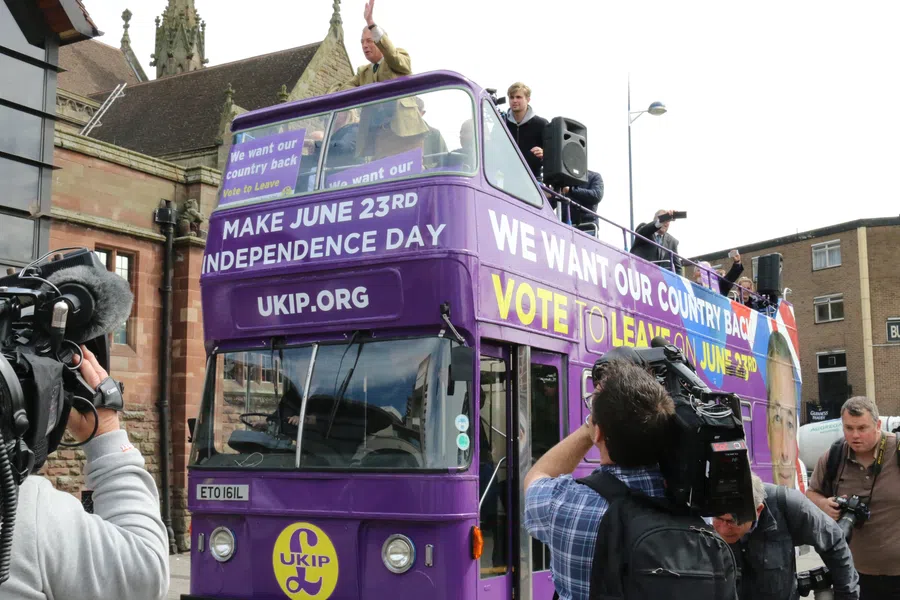
promised to call a referendum on Britain's EU membership during his 2015 election campaign to answer criticism from eurosceptics in his own party and to prevent further defections to Nigel Farage's
UKIP
party. Before the referendum, Cameron had tried to renegotiate Britain's EU membership conditions. EU leaders complied with some of Cameron's requests, such as reimbursing the UK for money spent on eurozone bail-outs, excluding the UK from the EU's 'ever-closer union' obligation, and permitting Britain freed not to pay social benefits to migrant workers who had been in the UK for less than 7 years. However, they refused to budge on issues such as immigration, citing the EU's commitment to freedom of movement.
Immigration
was a significant concern for many Britons, due to a considerable rise in migration from EU countries since the early 1990s - from an average of 61,000 per year to 268,000 in 2014.
1
As
Cameron had failed to satisfy anti-immigration voices in his own party and beyond, the 'Leave' campaigns, l
ed by Conservative London Mayor Boris
Johnson
and
UKIP
leader Nigel Farage,
exploited this concern by predicting an enormous influx of immigrants if Britain stayed in the EU
.
Nigel Farage's famous 'Breaking Point' poster can be seen as an extreme form of this exploitation. The poster was condemned by MP's from all major UK parties, including other Brexiteers such as Michael Gove, with Labour MP Yvette Cooper stating
Just when you thought leave campaigners couldn't stoop any lower, they are now exploiting the misery of the Syrian refugee crisis in the most dishonest and immoral way.
The poster showed an image of Syrian refugees along the Slovenian border during the 2015 Migrant crisis, claiming 'The EU has failed us all.'
Fig 1. Nigel Farage's UKIP party campaigns to leave the European Union
Furthermore, the leave campaign successfully linked this concern to the idea of 'taking back control' from the EU. This idea resonated with nationalist sentiments amongst older voters and those concerned about excessive EU regulations and environmental standards, and believed that that EU laws and regulations were a threat to
British Sovereignty.
The leave campaign also took advantage of the fact that the UK was a net contributor to the EU budget and claimed that by leaving the EU, the UK could afford to spend an extra £350 million on the NHS, with
Boris Johnson
telling
The Guardian
We grossly underestimated the sum over which we would be able to take back control
7
Overall, voter turnout in areas expected to vote leave were much larger than areas who were expected to vote remain. Around
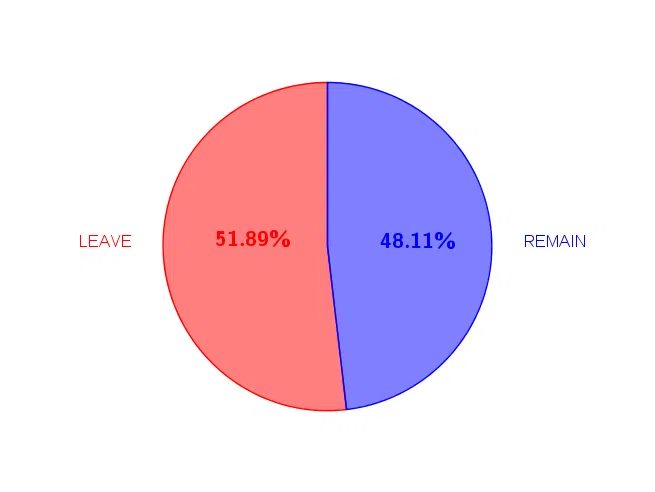
64% of registered voters aged 18-24 voted, compared to 90% of over-65s. This played a major role in the results, as polls showed that older voters generally supported Brexit. The result was a clear win for the 'leavel' campaign.
Fig. 2 The Brexit referendum results
The Remain campaign had initially been confident as it had the support of the government and was endorsed by the Bank of England and the security establishment. They focused mainly on the security and economic benefits of remaining in the EU and warned of costly economic damages if the UK left the single market. Their campaign was labelled 'project fear' by their opposition, who accused them of using scare tactics to convince people to vote remain. The association of the remain campaign with imminent economic doom, fear mongering and their initial over-confidence, as well as the countervailing charismatic image of politicians like Nigel Farage and
Boris Johnson
, may have also encouraged higher turnout amongst leave-inclined voters.
Brexit Timeline
David Cameron (11 May 2010
– 13
July 2016)
David Cameron
announced his intention to resign as
Prime Minister
on the 24 June 2016, after 51.9% of voters voted to leave the EU. Having passionately campaigned to remain in the EU against prominent members of his own party, Cameron's popularity had faltered both within the
Conservative party
and amongst voters. He therefore believed that new leadership was required to lead Britain through Brexit, stating
A negotiation with the European Union will need to begin under a new Prime Minister, and I think it is right that this new Prime Minister takes the decision about when to trigger Article 50 and start the formal and legal process of leaving the EU.
2
Article 50
A legal mechanism outlined in the Lisbon Treaty (2009) signed by EU members, to be used when a member of the EU wishes to leave. It outlines the steps which must be completed to withdraw from the bloc. Legally,
the government of the state wishing to leave must take the step in triggering the article.
In the UK, the Prime Minister has the power to trigger article 50.
David Cameron officially resigned as Prime Minister on July 13, 2016, after Theresa May secured leadership of the
Conservative party
on July 11, 2016.
Theresa May (
13 July 2016 – 24 July 2019)
Despite supporting the 'Remain' Campaign, Theresa May promised to deliver Brexit, saying
Brexit means Brexit, and we’re going to make a success of it.
8
May officially triggered Article 50 on March 29, 2017, beginning a two-year negotiation period between the UK and the EU on the specifics of Brexit. May also called a snap election in June 2017 hoping to gain a larger majority for her party in Parliament and therefore more support for her negotiating position.
The result was a loss of the conservative governing majority, forcing the party to rely on the support of the Northern Irish Democratic Unionist party (DUP). Disagreements within the Conservative party surrounding the Brexit proposal also undermined May's attempts to build consensus around the withdrawal agreement.
On 12 July 2018 the
UK government
published its first proposal for the agreement, agreed by Cabinet ministers. Its suggestions included continued access to the EU's single market,
a 'facilitated customs agreement' between the bloc and the UK
and no hard border between Northern Ireland and the Republic of Ireland.
The proposal failed to gain support from either conservative MPs or the EU, with the EU's chief negotiator, Michel Barnier, accusing Britain of 'cherry-picking' the benefits of EU membership without any of the responsibilities. Brexit secretary David Davis and his secretary Steve Baker both resigned in protest against the proposal, followed by foreign secretary Boris Johnson.
A revised withdrawal agreement was finally with EU leaders in November 2018, which, amongst other things, required the UK to fulfil the financial commitments it had agreed to prior to the Brexit vote totalling around £42 billion, whilst still observing EU laws and customs until the minimum term of December 2020. It also outlined a
commitment to frictionless trade in goods through a common rulebook, the centrepiece of the Chequers plan
3
The UK's withdrawal was set for 29, March 2019, however it still required the approval of the UK parliament. May faced strong opposition from all major parties in parliament, including her own. The main issue was the Irish 'backstop', which aimed to avoid a hard border between Ireland and Northern Ireland by implementing a legally-binding customs plan with the EU which would come into force if the UK and EU failed to reach a comprehensive deal by December 2020. Many politicians, including the DUP (on whom May's governing majority depended), were deeply opposed to the backstop.
May's withdrawal agreement was rejected by Parliament on January 15 2019 by 432 to 202 votes, and then again on 12 March by 391 to 242 votes. May requested an extension on the negotiation period from the EU, which was granted until May 22 on the basis that Parliament agreed to the Withdrawal agreement by March 29, and if not, the UK must put forward new suggestions by April 12.
In a desperate attempt to get her deal through Parliament, May promised to resign if her deal was approved. On March 29, a third vote was held. The
UK government
was defeated once again. A second extension of the negotiation period was granted by the EU until October 31, 2019, which required the UK to part-take in the European parliamentary elections.
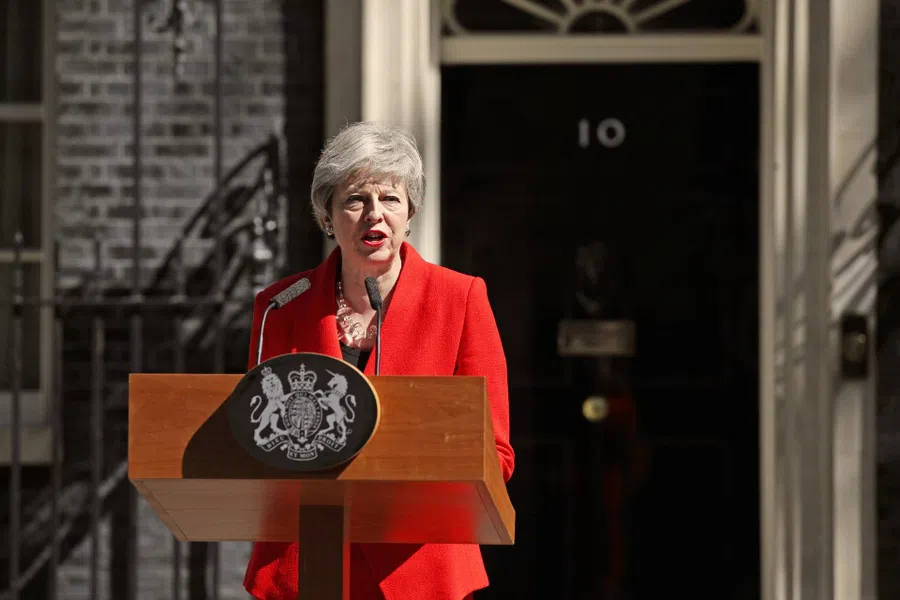
On May 24, Theresa May announced her resignation as PM and party leader, due to multiple votes of no confidence, insurrection by her Cabinet and her failure to get the Withdrawal Agreement approved by Parliament.
Fig. 3 Theresa May announcing her resignation
Boris Johnson (24 July
2019 – September 2022)
Boris Johnson assumed the leadership of the Conservative Party after May's resignation, and thus also became Prime Minister. Johnson's attempt to prorogue Parliament was declared as unlawful by the Supreme Court and he was criticised for proposing a 'no-deal' Brexit in the event that no deal could be reached before the deadline.
On 17 October 2019, the Irish Backstop was replaced by the
Northern Ireland Protocol
and on 22 October, a revised Withdrawal Agreement was approved by Parliament.
Johnson managed to gain the support of
Labour Party
leader Jeremy Corbyn to pass the
Early Parliamentary General Election Act 2019,
allowing a general election to be held earlier than scheduled in order to meet the new deadline of January 31. The election was held on 22 December, and gave the Conservatives a comfortable 80 seat parliamentary majority. After amendments suggested by the
House of Commons
and the
House of Lords
had been completed, on January 23, 2020, the
European Union Act 2020
was finally given royal assent and was supported by European Parliaments Constitutional Committee. On January 30, the EU council ratified the UK's Withdrawal agreement with 621 to 49 votes, and the UK withdrew from the EU on January 31, 2020.
Brexit - Key takeaways
The UK voted to leave the European Union on 23 June 23 2016.
The Leave campaign focused on issues such as immigration, s
overeignty and 'taking back control'.
The Remain Campaign focused mainly on the negative economic effects of Brexit.
The process of delivering Brexit played out under three Prime Ministers, David Cameron, Theresa May and Boris Johnson.
Theresa May resigned after failing to pass her government's withdrawal deal through Parliament, after two extension periods, mainly due to the Northern Irish 'backstop'.
Boris Johnson finalised the Brexit deal after securing a new agreement regarding the Irish border, and an early parliamentary election which gave him a mandate to pass the withdrawal agreement through Parliament
The UK withdrew from the EU on 31 January 2020, after the
European Union Act of that year was ratified by the European and UK parliaments.
References
"EU Migration to and from the UK". www.migrationobservatory.ox.ac.uk. Archived from the original on 2 April 2015.
GOV.UK. 2016. EU referendum outcome: PM statement, 24 June 2016. [online]
Boffey, Daniel; Rankin, Jennifer (25 November 2018). "Brexit deal explained: backstops, trade and citizens' rights". The Guardian.
Fig. 2 The Brexit referendum results (https://commons.wikimedia.org/wiki/File:Brexit-graph.png) by Matman from Lublin (https://commons.wikimedia.org/wiki/User:Matman_from_Lublin) licenced by CC-BY-SA-4.0 (https://spdx.org/licenses/CC-BY-SA-4.0.html) on Wikimedia Commons
Fig. 3 Theresa May declaring her resignation, 24/05/2019 (https://commons.wikimedia.org/wiki/File:Theresa_May_declares_resignation.jpg) by UK Government (https://www.gov.uk/government/speeches/prime-ministers-statement-in-downing-street-24-may-2019) Licenced by OGL v3.0 (https://www.nationalarchives.gov.uk/doc/open-government-licence/version/3/) on Wikimedia Commons.
Nigel Farage arrives in town (https://commons.wikimedia.org/wiki/File:Nigel%27_Farage_arrives_in_town_(27327048352).jpg) by Derek Bennett (https://www.flickr.com/people/127522638@N07) licensed by CC BY 2.0 (https://creativecommons.org/licenses/by/2.0/deed.en)
https://www.theguardian.com/politics/2018/jan/15/boris-johnson-let-us-have-a-grown-up-conversation-with-our-american-friends-interview
https://apnews.com/article/0ce5961e56cf4b9991f0214c7528f4e9
Frequently Asked Questions about Brexit
When did Brexit happen?
The UK voted to leave the Union on June 23, 2016, and officially left the EU on January 31, 2020.
What is Brexit?
Refers to the United Kingdom’s departure from the European Union (EU), following a referendum in June 2016.
What is the reason behind the uk Brexit?
The main reasons for Brexit included worries surrounding immigration, national Sovereignty and the amount of money the UK was contributing to the EU.
What is the advantages and disadvantages of Brexit?
After Brexit, UK citizens no longer have the freedom of movement across EU nations, and the UK no longer has access to the EU single market. However, the UK now has full Sovereignty and does not have to adhere to any EU laws.
Save Article
How we ensure our content is accurate and trustworthy?
At StudySmarter, we have created a learning platform that serves millions of students. Meet
the people who work hard to deliver fact based content as well as making sure it is verified.
Content Creation Process:
Lily Hulatt is a Digital Content Specialist with over three years of experience in content strategy and curriculum design. She gained her PhD in English Literature from Durham University in 2022, taught in Durham University’s English Studies Department, and has contributed to a number of publications. Lily specialises in English Literature, English Language, History, and Philosophy.
Get to know Lily
Content Quality Monitored by:
Gabriel Freitas is an AI Engineer with a solid experience in software development, machine learning algorithms, and generative AI, including large language models’ (LLMs) applications. Graduated in Electrical Engineering at the University of São Paulo, he is currently pursuing an MSc in Computer Engineering at the University of Campinas, specializing in machine learning topics. Gabriel has a strong background in software engineering and has worked on projects involving computer vision, embedded AI, and LLM applications.
Get to know Gabriel |
| Markdown | [](https://www.studysmarter.co.uk/)
- [Find study content](https://www.studysmarter.co.uk/explanations/politics/uk-government/brexit/)
Learning Materials
Discover learning materials by subject, university or textbook.
- [ Explanations](https://www.studysmarter.co.uk/explanations/)
All Subjects
- [Anthropology](https://www.studysmarter.co.uk/explanations/anthropology/)
- [Archaeology](https://www.studysmarter.co.uk/explanations/archaeology/)
- [Architecture](https://www.studysmarter.co.uk/explanations/architecture/)
- [Art and Design](https://www.studysmarter.co.uk/explanations/art-and-design/)
- [Bengali](https://www.studysmarter.co.uk/explanations/bengali/)
- [Biology](https://www.studysmarter.co.uk/explanations/biology/)
- [Business Studies](https://www.studysmarter.co.uk/explanations/business-studies/)
- [Chemistry](https://www.studysmarter.co.uk/explanations/chemistry/)
- [Chinese](https://www.studysmarter.co.uk/explanations/chinese/)
- [Combined Science](https://www.studysmarter.co.uk/explanations/combined-science/)
- [Computer Science](https://www.studysmarter.co.uk/explanations/computer-science/)
- [Economics](https://www.studysmarter.co.uk/explanations/economics/)
- [Engineering](https://www.studysmarter.co.uk/explanations/engineering/)
- [English](https://www.studysmarter.co.uk/explanations/english/)
- [English Literature](https://www.studysmarter.co.uk/explanations/english-literature/)
- [Environmental Science](https://www.studysmarter.co.uk/explanations/environmental-science/)
- [French](https://www.studysmarter.co.uk/explanations/french/)
- [Geography](https://www.studysmarter.co.uk/explanations/geography/)
- [German](https://www.studysmarter.co.uk/explanations/german/)
- [Greek](https://www.studysmarter.co.uk/explanations/greek/)
- [History](https://www.studysmarter.co.uk/explanations/history/)
- [Hospitality and Tourism](https://www.studysmarter.co.uk/explanations/hospitality-and-tourism/)
- [Human Geography](https://www.studysmarter.co.uk/explanations/human-geography/)
- [Japanese](https://www.studysmarter.co.uk/explanations/japanese/)
- [Italian](https://www.studysmarter.co.uk/explanations/italian/)
- [Law](https://www.studysmarter.co.uk/explanations/law/)
- [Macroeconomics](https://www.studysmarter.co.uk/explanations/macroeconomics/)
- [Marketing](https://www.studysmarter.co.uk/explanations/marketing/)
- [Math](https://www.studysmarter.co.uk/explanations/math/)
- [Media Studies](https://www.studysmarter.co.uk/explanations/media-studies/)
- [Medicine](https://www.studysmarter.co.uk/explanations/medicine/)
- [Microeconomics](https://www.studysmarter.co.uk/explanations/microeconomics/)
- [Music](https://www.studysmarter.co.uk/explanations/music/)
- [Nursing](https://www.studysmarter.co.uk/explanations/nursing/)
- [Nutrition and Food Science](https://www.studysmarter.co.uk/explanations/nutrition-and-food-science/)
- [Physics](https://www.studysmarter.co.uk/explanations/physics/)
- [Politics](https://www.studysmarter.co.uk/explanations/politics/)
- [Polish](https://www.studysmarter.co.uk/explanations/polish/)
- [Psychology](https://www.studysmarter.co.uk/explanations/psychology/)
- [Religious Studies](https://www.studysmarter.co.uk/explanations/religious-studies/)
- [Sociology](https://www.studysmarter.co.uk/explanations/social-studies/)
- [Spanish](https://www.studysmarter.co.uk/explanations/spanish/)
- [Sports Sciences](https://www.studysmarter.co.uk/explanations/sports-science/)
- [Translation](https://www.studysmarter.co.uk/explanations/translation/)
- [Features](https://www.studysmarter.co.uk/explanations/politics/uk-government/brexit/)
Features
Discover all of these amazing features with a free account.
- [ Flashcards](https://www.studysmarter.co.uk/features/flashcards/)
- [ StudySmarter AI](https://www.studysmarter.co.uk/ai/)
- [ Notes](https://www.studysmarter.co.uk/features/features-notes/)
- [ Study Plans](https://www.studysmarter.co.uk/features/study-plan/)
- [ Study Sets](https://www.studysmarter.co.uk/features/study-sets/)
- [ Exams](https://www.studysmarter.co.uk/exams/)
What’s new?
-  [Flashcards](https://www.studysmarter.co.uk/features/flashcards/)
Study your flashcards with three learning modes.
-  [Study Sets](https://www.studysmarter.co.uk/features/study-sets/)
All of your learning materials stored in one place.
-  [Notes](https://www.studysmarter.co.uk/features/features-notes/)
Create and edit notes or documents.
-  [Study Plans](https://www.studysmarter.co.uk/features/study-plan/)
Organise your studies and prepare for exams.
- [Resources](https://www.studysmarter.co.uk/explanations/politics/uk-government/brexit/)
Discover
All the hacks around your studies and career - in one place.
- [ Find a job](https://talents.studysmarter.co.uk/jobs/)
- [ Student Deals](https://deals.studysmarter.de/)
- [ Magazine](https://www.studysmarter.co.uk/magazine/)
- [ Mobile App](https://app.studysmarter.de/)
Featured
-  [Magazine](https://www.studysmarter.co.uk/magazine/)
Trusted advice for anyone who wants to ace their studies & career.
-  [Job Board](https://talents.studysmarter.co.uk/jobs/)
The largest student job board with the most exciting opportunities.
-  [StudySmarter Deals](https://deals.studysmarter.co.uk/)
Verified student deals from top brands.
-  [Our App](https://app.studysmarter.de/)
Discover our mobile app to take your studies anywhere.
[Login](https://app.studysmarter.de/signup-website/?lang=en&web_campaign=schule_politics_uk-government_brexit&is_pupil=true&maintopic_id=21605737&summary_id=40461629&course_subject=6613636&web_source=website&_smtype=3&domain=uk&conversion_element=data-sng-block) [Sign up](https://app.studysmarter.de/signup-website/?lang=en&web_campaign=schule_politics_uk-government_brexit&is_pupil=true&maintopic_id=21605737&summary_id=40461629&course_subject=6613636&web_source=website&_smtype=3&domain=uk&conversion_element=data-sng-block)
[Log out](https://www.studysmarter.co.uk/explanations/politics/uk-government/brexit/) [Go to App](https://app.studysmarter.de/signup-website/?lang=en&web_campaign=schule_politics_uk-government_brexit&is_pupil=true&maintopic_id=21605737&summary_id=40461629&course_subject=6613636&web_source=website&_smtype=3&domain=uk&conversion_element=data-sng-block)
[Go to App](https://app.studysmarter.de/signup-website/?lang=en&web_campaign=schule_politics_uk-government_brexit&is_pupil=true&maintopic_id=21605737&summary_id=40461629&course_subject=6613636&web_source=website&_smtype=3&domain=uk&conversion_element=data-sng-block)
Learning Materials
- [ Explanations](https://www.studysmarter.co.uk/explanations/)
Explanations
- [Anthropology](https://www.studysmarter.co.uk/explanations/anthropology/)
- [Archaeology](https://www.studysmarter.co.uk/explanations/archaeology/)
- [Architecture](https://www.studysmarter.co.uk/explanations/architecture/)
- [Art and Design](https://www.studysmarter.co.uk/explanations/art-and-design/)
- [Bengali](https://www.studysmarter.co.uk/explanations/bengali/)
- [Biology](https://www.studysmarter.co.uk/explanations/biology/)
- [Business Studies](https://www.studysmarter.co.uk/explanations/business-studies/)
- [Chemistry](https://www.studysmarter.co.uk/explanations/chemistry/)
- [Chinese](https://www.studysmarter.co.uk/explanations/chinese/)
- [Combined Science](https://www.studysmarter.co.uk/explanations/combined-science/)
- [Computer Science](https://www.studysmarter.co.uk/explanations/computer-science/)
- [Economics](https://www.studysmarter.co.uk/explanations/economics/)
- [Engineering](https://www.studysmarter.co.uk/explanations/engineering/)
- [English](https://www.studysmarter.co.uk/explanations/english/)
- [English Literature](https://www.studysmarter.co.uk/explanations/english-literature/)
- [Environmental Science](https://www.studysmarter.co.uk/explanations/environmental-science/)
- [French](https://www.studysmarter.co.uk/explanations/french/)
- [Geography](https://www.studysmarter.co.uk/explanations/geography/)
- [German](https://www.studysmarter.co.uk/explanations/german/)
- [Greek](https://www.studysmarter.co.uk/explanations/greek/)
- [History](https://www.studysmarter.co.uk/explanations/history/)
- [Hospitality and Tourism](https://www.studysmarter.co.uk/explanations/hospitality-and-tourism/)
- [Human Geography](https://www.studysmarter.co.uk/explanations/human-geography/)
- [Japanese](https://www.studysmarter.co.uk/explanations/japanese/)
- [Italian](https://www.studysmarter.co.uk/explanations/italian/)
- [Law](https://www.studysmarter.co.uk/explanations/law/)
- [Macroeconomics](https://www.studysmarter.co.uk/explanations/macroeconomics/)
- [Marketing](https://www.studysmarter.co.uk/explanations/marketing/)
- [Math](https://www.studysmarter.co.uk/explanations/math/)
- [Media Studies](https://www.studysmarter.co.uk/explanations/media-studies/)
- [Medicine](https://www.studysmarter.co.uk/explanations/medicine/)
- [Microeconomics](https://www.studysmarter.co.uk/explanations/microeconomics/)
- [Music](https://www.studysmarter.co.uk/explanations/music/)
- [Nursing](https://www.studysmarter.co.uk/explanations/nursing/)
- [Nutrition and Food Science](https://www.studysmarter.co.uk/explanations/nutrition-and-food-science/)
- [Physics](https://www.studysmarter.co.uk/explanations/physics/)
- [Politics](https://www.studysmarter.co.uk/explanations/politics/)
- [Polish](https://www.studysmarter.co.uk/explanations/polish/)
- [Psychology](https://www.studysmarter.co.uk/explanations/psychology/)
- [Religious Studies](https://www.studysmarter.co.uk/explanations/religious-studies/)
- [Sociology](https://www.studysmarter.co.uk/explanations/social-studies/)
- [Spanish](https://www.studysmarter.co.uk/explanations/spanish/)
- [Sports Sciences](https://www.studysmarter.co.uk/explanations/sports-science/)
- [Translation](https://www.studysmarter.co.uk/explanations/translation/)
Features
- [ Flashcards](https://www.studysmarter.co.uk/features/flashcards/)
- [ StudySmarter AI](https://www.studysmarter.co.uk/ai/)
- [ Notes](https://www.studysmarter.co.uk/features/features-notes/)
- [ Study Plans](https://www.studysmarter.co.uk/features/study-plan/)
- [ Study Sets](https://www.studysmarter.co.uk/features/study-sets/)
- [ Exams](https://www.studysmarter.co.uk/exams/)
Discover
- [ Find a job](https://talents.studysmarter.co.uk/jobs/)
- [ Student Deals](https://deals.studysmarter.de/)
- [ Magazine](https://www.studysmarter.co.uk/magazine/)
- [ Mobile App](https://app.studysmarter.de/)
- [Explanations](https://www.studysmarter.co.uk/explanations/ "Explanations")
- [Politics](https://www.studysmarter.co.uk/explanations/politics/ "Politics")
- [UK Government](https://www.studysmarter.co.uk/explanations/politics/uk-government/ "UK Government")
- Brexit
# Brexit
Someone once asked how Christmas dinner would be different after Brexit. Simple, No Brussels! When the UK voted to leave the European Union, it became the first member state ever to do so. With no precedent to follow, Brexit left Europe and Britain scrambling to come up with a deal on which they could agree. This article will define Brexit, cover its main reasons, and provide a simple timeline of political events leading up to and following Britain's separation from the European Union.
[Get started](https://app.studysmarter.de/signup-website/?lang=en&web_campaign=schule_politics_uk-government_brexit&is_pupil=true&maintopic_id=21605737&summary_id=40461629&course_subject=6613636&web_source=website&_smtype=3&domain=uk&conversion_element=hero-cta-fc-btn)
Millions of flashcards designed to help you ace your studies
[Sign up for free](https://app.studysmarter.de/signup-website/?lang=en&web_campaign=schule_politics_uk-government_brexit&is_pupil=true&maintopic_id=21605737&summary_id=40461629&course_subject=6613636&web_source=website&_smtype=3&domain=uk&conversion_element=hero-cta)
[\+ Add tag Immunology Cell Biology Mo Which of these was a main concern for leave voters? Show Answer](https://app.studysmarter.de/signup-website/?lang=en&web_campaign=schule_politics_uk-government_brexit&is_pupil=true&maintopic_id=21605737&summary_id=40461629&course_subject=6613636&web_source=website&_smtype=3&domain=uk&conversion_element=hero-flashcard-section)
[\+ Add tag Immunology Cell Biology Mo Which of these was a main concern for leave voters? Show Answer](https://app.studysmarter.de/signup-website/?lang=en&web_campaign=schule_politics_uk-government_brexit&is_pupil=true&maintopic_id=21605737&summary_id=40461629&course_subject=6613636&web_source=website&_smtype=3&domain=uk&conversion_element=hero-flashcard-section)

Generate flashcards

Summarize page

Generate flashcards from highlight
Review generated flashcards
[Sign up for free](https://app.studysmarter.de/signup-website/?lang=en&web_campaign=schule_politics_uk-government_brexit&is_pupil=true&maintopic_id=21605737&summary_id=40461629&course_subject=6613636&web_source=website&_smtype=3&domain=uk&conversion_element=data-sng-block&target=ai-assistant)
to start learning or create your own AI flashcards
[Sign up for free](https://app.studysmarter.de/signup-website/?lang=en&web_campaign=schule_politics_uk-government_brexit&is_pupil=true&maintopic_id=21605737&summary_id=40461629&course_subject=6613636&web_source=website&_smtype=3&domain=uk&conversion_element=data-sng-block&target=ai-assistant)
You have reached the daily AI limit
Start learning or create your own AI flashcards

StudySmarter Editorial Team
Team Brexit Teachers
- **12 minutes** reading time
- Checked by **StudySmarter Editorial Team**
[Save Article](https://app.studysmarter.de/signup-website/?lang=en&web_campaign=schule_politics_uk-government_brexit&is_pupil=true&maintopic_id=21605737&summary_id=40461629&course_subject=6613636&&web_source=website&_smtype=3&domain=uk&conversion_element=save-content-button&_device_id=)
[Save Article](https://app.studysmarter.de/signup-website/?lang=en&web_campaign=schule_politics_uk-government_brexit&is_pupil=true&maintopic_id=21605737&summary_id=40461629&course_subject=6613636&web_source=website&_smtype=3&domain=uk&conversion_element=data-sng-block)
Sign up for free to save, edit & create flashcards.
[Save Article](https://app.studysmarter.de/signup-website/?lang=en&web_campaign=schule_politics_uk-government_brexit&is_pupil=true&maintopic_id=21605737&summary_id=40461629&course_subject=6613636&&web_source=website&_smtype=3&domain=uk&conversion_element=save-content-button&_device_id=)
[Save Article](https://app.studysmarter.de/signup-website/?lang=en&web_campaign=schule_politics_uk-government_brexit&is_pupil=true&maintopic_id=21605737&summary_id=40461629&course_subject=6613636&web_source=website&_smtype=3&domain=uk&conversion_element=data-sng-block)
- Fact Checked Content
- Last Updated: 31.10.2022
- Published at: 04.11.2022
- 12 min reading time
- [Civil Liberties vs Civil Rights](https://www.studysmarter.co.uk/explanations/politics/civil-liberties-vs-civil-rights/)
- [Comparative Politics](https://www.studysmarter.co.uk/explanations/politics/comparative-politics/)
- [Foundations of American Democracy](https://www.studysmarter.co.uk/explanations/politics/foundations-of-american-democracy/)
- [Political Ideology](https://www.studysmarter.co.uk/explanations/politics/political-ideology/)
- [Political Participation](https://www.studysmarter.co.uk/explanations/politics/political-participation/)
- [Public Governance](https://www.studysmarter.co.uk/explanations/politics/public-governance/)
- [UK Government](https://www.studysmarter.co.uk/explanations/politics/uk-government/)
- [Act of Settlement 1701](https://www.studysmarter.co.uk/explanations/politics/uk-government/act-of-settlement-1701/)
- [Boris Johnson](https://www.studysmarter.co.uk/explanations/politics/uk-government/boris-johnson/)
- [Brexit](https://www.studysmarter.co.uk/explanations/politics/uk-government/brexit/)
- [Civil Rights UK](https://www.studysmarter.co.uk/explanations/politics/uk-government/civil-rights-uk/)
- [David Cameron](https://www.studysmarter.co.uk/explanations/politics/uk-government/david-cameron/)
- [Devolution](https://www.studysmarter.co.uk/explanations/politics/uk-government/devolution/)
- [European Communities Act 1972](https://www.studysmarter.co.uk/explanations/politics/uk-government/european-communities-act-1972/)
- [Executive Government UK](https://www.studysmarter.co.uk/explanations/politics/uk-government/executive-government-uk/)
- [House of Commons](https://www.studysmarter.co.uk/explanations/politics/uk-government/house-of-commons/)
- [House of Lords](https://www.studysmarter.co.uk/explanations/politics/uk-government/house-of-lords/)
- [Human Rights Act 1998](https://www.studysmarter.co.uk/explanations/politics/uk-government/human-rights-act-1998/)
- [Liz Truss](https://www.studysmarter.co.uk/explanations/politics/uk-government/liz-truss/)
- [Margaret Thatcher](https://www.studysmarter.co.uk/explanations/politics/uk-government/margaret-thatcher/)
- [Ministerial Responsibility](https://www.studysmarter.co.uk/explanations/politics/uk-government/ministerial-responsibility/)
- [Passage of a Bill](https://www.studysmarter.co.uk/explanations/politics/uk-government/passage-of-a-bill/)
- [Prime Minister](https://www.studysmarter.co.uk/explanations/politics/uk-government/prime-minister/)
- [Rishi Sunak](https://www.studysmarter.co.uk/explanations/politics/uk-government/rishi-sunak/)
- [Role of Prime Minister](https://www.studysmarter.co.uk/explanations/politics/uk-government/role-of-prime-minister/)
- [Scottish Parliament](https://www.studysmarter.co.uk/explanations/politics/uk-government/scottish-parliament/)
- [Select Committees](https://www.studysmarter.co.uk/explanations/politics/uk-government/select-committees/)
- [Supreme Court UK](https://www.studysmarter.co.uk/explanations/politics/uk-government/supreme-court-uk/)
- [The Northern Ireland Assembly](https://www.studysmarter.co.uk/explanations/politics/uk-government/the-northern-ireland-assembly/)
- [The UK Cabinet](https://www.studysmarter.co.uk/explanations/politics/uk-government/the-uk-cabinet/)
- [UK Constitution](https://www.studysmarter.co.uk/explanations/politics/uk-government/uk-constitution/)
- [UK Judicial System](https://www.studysmarter.co.uk/explanations/politics/uk-government/uk-judicial-system/)
- [UK Parliament](https://www.studysmarter.co.uk/explanations/politics/uk-government/uk-parliament/)
- [UK Political Leaders](https://www.studysmarter.co.uk/explanations/politics/uk-government/uk-political-leaders/)
- [Welsh Parliament](https://www.studysmarter.co.uk/explanations/politics/uk-government/welsh-parliament/)
- [UK Politics](https://www.studysmarter.co.uk/explanations/politics/uk-politics/)
- [US Government Structure](https://www.studysmarter.co.uk/explanations/politics/us-government-structure/)
- [World Politics](https://www.studysmarter.co.uk/explanations/politics/world-politics/)
Contents
- [Civil Liberties vs Civil Rights](https://www.studysmarter.co.uk/explanations/politics/civil-liberties-vs-civil-rights/)
- [Comparative Politics](https://www.studysmarter.co.uk/explanations/politics/comparative-politics/)
- [Foundations of American Democracy](https://www.studysmarter.co.uk/explanations/politics/foundations-of-american-democracy/)
- [Political Ideology](https://www.studysmarter.co.uk/explanations/politics/political-ideology/)
- [Political Participation](https://www.studysmarter.co.uk/explanations/politics/political-participation/)
- [Public Governance](https://www.studysmarter.co.uk/explanations/politics/public-governance/)
- [UK Government](https://www.studysmarter.co.uk/explanations/politics/uk-government/)
- [Act of Settlement 1701](https://www.studysmarter.co.uk/explanations/politics/uk-government/act-of-settlement-1701/)
- [Boris Johnson](https://www.studysmarter.co.uk/explanations/politics/uk-government/boris-johnson/)
- [Brexit](https://www.studysmarter.co.uk/explanations/politics/uk-government/brexit/)
- [Civil Rights UK](https://www.studysmarter.co.uk/explanations/politics/uk-government/civil-rights-uk/)
- [David Cameron](https://www.studysmarter.co.uk/explanations/politics/uk-government/david-cameron/)
- [Devolution](https://www.studysmarter.co.uk/explanations/politics/uk-government/devolution/)
- [European Communities Act 1972](https://www.studysmarter.co.uk/explanations/politics/uk-government/european-communities-act-1972/)
- [Executive Government UK](https://www.studysmarter.co.uk/explanations/politics/uk-government/executive-government-uk/)
- [House of Commons](https://www.studysmarter.co.uk/explanations/politics/uk-government/house-of-commons/)
- [House of Lords](https://www.studysmarter.co.uk/explanations/politics/uk-government/house-of-lords/)
- [Human Rights Act 1998](https://www.studysmarter.co.uk/explanations/politics/uk-government/human-rights-act-1998/)
- [Liz Truss](https://www.studysmarter.co.uk/explanations/politics/uk-government/liz-truss/)
- [Margaret Thatcher](https://www.studysmarter.co.uk/explanations/politics/uk-government/margaret-thatcher/)
- [Ministerial Responsibility](https://www.studysmarter.co.uk/explanations/politics/uk-government/ministerial-responsibility/)
- [Passage of a Bill](https://www.studysmarter.co.uk/explanations/politics/uk-government/passage-of-a-bill/)
- [Prime Minister](https://www.studysmarter.co.uk/explanations/politics/uk-government/prime-minister/)
- [Rishi Sunak](https://www.studysmarter.co.uk/explanations/politics/uk-government/rishi-sunak/)
- [Role of Prime Minister](https://www.studysmarter.co.uk/explanations/politics/uk-government/role-of-prime-minister/)
- [Scottish Parliament](https://www.studysmarter.co.uk/explanations/politics/uk-government/scottish-parliament/)
- [Select Committees](https://www.studysmarter.co.uk/explanations/politics/uk-government/select-committees/)
- [Supreme Court UK](https://www.studysmarter.co.uk/explanations/politics/uk-government/supreme-court-uk/)
- [The Northern Ireland Assembly](https://www.studysmarter.co.uk/explanations/politics/uk-government/the-northern-ireland-assembly/)
- [The UK Cabinet](https://www.studysmarter.co.uk/explanations/politics/uk-government/the-uk-cabinet/)
- [UK Constitution](https://www.studysmarter.co.uk/explanations/politics/uk-government/uk-constitution/)
- [UK Judicial System](https://www.studysmarter.co.uk/explanations/politics/uk-government/uk-judicial-system/)
- [UK Parliament](https://www.studysmarter.co.uk/explanations/politics/uk-government/uk-parliament/)
- [UK Political Leaders](https://www.studysmarter.co.uk/explanations/politics/uk-government/uk-political-leaders/)
- [Welsh Parliament](https://www.studysmarter.co.uk/explanations/politics/uk-government/welsh-parliament/)
- [UK Politics](https://www.studysmarter.co.uk/explanations/politics/uk-politics/)
- [US Government Structure](https://www.studysmarter.co.uk/explanations/politics/us-government-structure/)
- [World Politics](https://www.studysmarter.co.uk/explanations/politics/world-politics/)
Contents
- Fact Checked Content
- Last Updated: 31.10.2022
- 12 min reading time
- Content creation process designed by

Lily Hulatt
- Content
sources
cross-checked by

Gabriel Freitas
- Content quality checked by

Gabriel Freitas
Sign up for free to save, edit & create flashcards.
[Save Article](https://app.studysmarter.de/signup-website/?lang=en&web_campaign=schule_politics_uk-government_brexit&is_pupil=true&maintopic_id=21605737&summary_id=40461629&course_subject=6613636&&web_source=website&_smtype=3&domain=uk&conversion_element=save-content-button&_device_id=)
[Save Article](https://app.studysmarter.de/signup-website/?lang=en&web_campaign=schule_politics_uk-government_brexit&is_pupil=true&maintopic_id=21605737&summary_id=40461629&course_subject=6613636&web_source=website&_smtype=3&domain=uk&conversion_element=data-sng-block)
Jump to a key chapter
- [Brexit Definition](https://www.studysmarter.co.uk/explanations/politics/uk-government/brexit/#anchor-0)
- [Reasons for Brexit](https://www.studysmarter.co.uk/explanations/politics/uk-government/brexit/#anchor-1)
- [Brexit Timeline](https://www.studysmarter.co.uk/explanations/politics/uk-government/brexit/#anchor-2)
- [Brexit - Key takeaways](https://www.studysmarter.co.uk/explanations/politics/uk-government/brexit/#anchor-3)
- [References](https://www.studysmarter.co.uk/explanations/politics/uk-government/brexit/#anchor-4)
- [Similar topics in Politics](https://www.studysmarter.co.uk/explanations/politics/uk-government/brexit/#anchor-5)
- [Related topics to UK Government](https://www.studysmarter.co.uk/explanations/politics/uk-government/brexit/#anchor-6)
- [Flashcards in Brexit](https://www.studysmarter.co.uk/explanations/politics/uk-government/brexit/#anchor-7)
- [Learn faster with the 1 flashcards about Brexit](https://www.studysmarter.co.uk/explanations/politics/uk-government/brexit/#anchor-8)
- [Frequently Asked Questions about Brexit](https://www.studysmarter.co.uk/explanations/politics/uk-government/brexit/#anchor-9)
- [About StudySmarter](https://www.studysmarter.co.uk/explanations/politics/uk-government/brexit/#anchor-10)
## Brexit Definition
**Brexit is** a portmanteau (combination) of the words ‘Britain' and 'exit’. It refers to the United Kingdom’s departure from the European Union (EU), following a referendum in June 2016. The term derives from previous speculation about a possible "Grexit", or Greek exit from [the EU](https://www.studysmarter.co.uk/explanations/politics/world-politics/the-eu/) during the global financial crisis of the 2010s.
The UK joined the European Economic Community (EEC) in 1973. The EEC was renamed the European Community and integrated into [the EU](https://www.studysmarter.co.uk/explanations/politics/world-politics/the-eu/) after its establishment in 1993, before being completely abolished in 2003, when [the EU](https://www.studysmarter.co.uk/explanations/politics/world-politics/the-eu/) absorbed all of its remaining institutions.
The UK was one of the most significant contributors to the EU budget and one of the EU's leading military powers alongside France. It also had considerable soft power on the global stage and powerful intelligence capabilities, making it a crucial asset and influential force within the EU and its foreign policy. The world was shocked when the UK voted to leave the Union on 23 June 2016.
## Reasons for Brexit
[Prime Minister](https://www.studysmarter.co.uk/explanations/politics/uk-government/prime-minister/) [David Cameron](https://www.studysmarter.co.uk/explanations/politics/uk-government/david-cameron/) had promised to call a referendum on Britain's EU membership during his 2015 election campaign to answer criticism from eurosceptics in his own party and to prevent further defections to Nigel Farage's [UKIP](https://www.studysmarter.co.uk/explanations/politics/uk-politics/ukip/) party. Before the referendum, Cameron had tried to renegotiate Britain's EU membership conditions. EU leaders complied with some of Cameron's requests, such as reimbursing the UK for money spent on eurozone bail-outs, excluding the UK from the EU's 'ever-closer union' obligation, and permitting Britain freed not to pay social benefits to migrant workers who had been in the UK for less than 7 years. However, they refused to budge on issues such as immigration, citing the EU's commitment to freedom of movement.
**Immigration** was a significant concern for many Britons, due to a considerable rise in migration from EU countries since the early 1990s - from an average of 61,000 per year to 268,000 in 2014.1 As Cameron had failed to satisfy anti-immigration voices in his own party and beyond, the 'Leave' campaigns, led by Conservative London Mayor Boris Johnson and [UKIP](https://www.studysmarter.co.uk/explanations/politics/uk-politics/ukip/) leader Nigel Farage, exploited this concern by predicting an enormous influx of immigrants if Britain stayed in the EU.
Nigel Farage's famous 'Breaking Point' poster can be seen as an extreme form of this exploitation. The poster was condemned by MP's from all major UK parties, including other Brexiteers such as Michael Gove, with Labour MP Yvette Cooper stating
Just when you thought leave campaigners couldn't stoop any lower, they are now exploiting the misery of the Syrian refugee crisis in the most dishonest and immoral way.
The poster showed an image of Syrian refugees along the Slovenian border during the 2015 Migrant crisis, claiming 'The EU has failed us all.'
Do you want to see this and many more great infographics?
[Sign up now for free](https://app.studysmarter.de/signup-website/?lang=en&web_campaign=schule_politics_uk-government_brexit&is_pupil=true&maintopic_id=21605737&summary_id=40461629&course_subject=6613636&&web_source=website&_smtype=3&domain=uk&conversion_element=lock-image-cta&_device_id=)
Fig 1. Nigel Farage's UKIP party campaigns to leave the European Union
Furthermore, the leave campaign successfully linked this concern to the idea of 'taking back control' from the EU. This idea resonated with nationalist sentiments amongst older voters and those concerned about excessive EU regulations and environmental standards, and believed that that EU laws and regulations were a threat to **British Sovereignty.** The leave campaign also took advantage of the fact that the UK was a net contributor to the EU budget and claimed that by leaving the EU, the UK could afford to spend an extra £350 million on the NHS, with [Boris Johnson](https://www.studysmarter.co.uk/explanations/politics/uk-government/boris-johnson/) telling *The Guardian*
We grossly underestimated the sum over which we would be able to take back control7
Overall, voter turnout in areas expected to vote leave were much larger than areas who were expected to vote remain. Around 64% of registered voters aged 18-24 voted, compared to 90% of over-65s. This played a major role in the results, as polls showed that older voters generally supported Brexit. The result was a clear win for the 'leavel' campaign.
Do you want to see this and many more great infographics?
[Sign up now for free](https://app.studysmarter.de/signup-website/?lang=en&web_campaign=schule_politics_uk-government_brexit&is_pupil=true&maintopic_id=21605737&summary_id=40461629&course_subject=6613636&&web_source=website&_smtype=3&domain=uk&conversion_element=lock-image-cta&_device_id=)
Fig. 2 The Brexit referendum results
The Remain campaign had initially been confident as it had the support of the government and was endorsed by the Bank of England and the security establishment. They focused mainly on the security and economic benefits of remaining in the EU and warned of costly economic damages if the UK left the single market. Their campaign was labelled 'project fear' by their opposition, who accused them of using scare tactics to convince people to vote remain. The association of the remain campaign with imminent economic doom, fear mongering and their initial over-confidence, as well as the countervailing charismatic image of politicians like Nigel Farage and [Boris Johnson](https://www.studysmarter.co.uk/explanations/politics/uk-government/boris-johnson/), may have also encouraged higher turnout amongst leave-inclined voters.
## Brexit Timeline
### David Cameron (11 May 2010 – 13 July 2016)
[David Cameron](https://www.studysmarter.co.uk/explanations/politics/uk-government/david-cameron/) announced his intention to resign as [Prime Minister](https://www.studysmarter.co.uk/explanations/politics/uk-government/prime-minister/) on the 24 June 2016, after 51.9% of voters voted to leave the EU. Having passionately campaigned to remain in the EU against prominent members of his own party, Cameron's popularity had faltered both within the [Conservative party](https://www.studysmarter.co.uk/explanations/politics/uk-politics/conservative-party/) and amongst voters. He therefore believed that new leadership was required to lead Britain through Brexit, stating
A negotiation with the European Union will need to begin under a new Prime Minister, and I think it is right that this new Prime Minister takes the decision about when to trigger Article 50 and start the formal and legal process of leaving the EU.2
**Article 50**
A legal mechanism outlined in the Lisbon Treaty (2009) signed by EU members, to be used when a member of the EU wishes to leave. It outlines the steps which must be completed to withdraw from the bloc. Legally, the government of the state wishing to leave must take the step in triggering the article. In the UK, the Prime Minister has the power to trigger article 50.
David Cameron officially resigned as Prime Minister on July 13, 2016, after Theresa May secured leadership of the [Conservative party](https://www.studysmarter.co.uk/explanations/politics/uk-politics/conservative-party/) on July 11, 2016.
### **Theresa May (**13 July 2016 – 24 July 2019)
Despite supporting the 'Remain' Campaign, Theresa May promised to deliver Brexit, saying
Brexit means Brexit, and we’re going to make a success of it.8
May officially triggered Article 50 on March 29, 2017, beginning a two-year negotiation period between the UK and the EU on the specifics of Brexit. May also called a snap election in June 2017 hoping to gain a larger majority for her party in Parliament and therefore more support for her negotiating position.
The result was a loss of the conservative governing majority, forcing the party to rely on the support of the Northern Irish Democratic Unionist party (DUP). Disagreements within the Conservative party surrounding the Brexit proposal also undermined May's attempts to build consensus around the withdrawal agreement.
On 12 July 2018 the [UK government](https://www.studysmarter.co.uk/explanations/politics/uk-government/) published its first proposal for the agreement, agreed by Cabinet ministers. Its suggestions included continued access to the EU's single market, a 'facilitated customs agreement' between the bloc and the UK and no hard border between Northern Ireland and the Republic of Ireland.
The proposal failed to gain support from either conservative MPs or the EU, with the EU's chief negotiator, Michel Barnier, accusing Britain of 'cherry-picking' the benefits of EU membership without any of the responsibilities. Brexit secretary David Davis and his secretary Steve Baker both resigned in protest against the proposal, followed by foreign secretary Boris Johnson.
A revised withdrawal agreement was finally with EU leaders in November 2018, which, amongst other things, required the UK to fulfil the financial commitments it had agreed to prior to the Brexit vote totalling around £42 billion, whilst still observing EU laws and customs until the minimum term of December 2020. It also outlined a
commitment to frictionless trade in goods through a common rulebook, the centrepiece of the Chequers plan 3
The UK's withdrawal was set for 29, March 2019, however it still required the approval of the UK parliament. May faced strong opposition from all major parties in parliament, including her own. The main issue was the Irish 'backstop', which aimed to avoid a hard border between Ireland and Northern Ireland by implementing a legally-binding customs plan with the EU which would come into force if the UK and EU failed to reach a comprehensive deal by December 2020. Many politicians, including the DUP (on whom May's governing majority depended), were deeply opposed to the backstop.
May's withdrawal agreement was rejected by Parliament on January 15 2019 by 432 to 202 votes, and then again on 12 March by 391 to 242 votes. May requested an extension on the negotiation period from the EU, which was granted until May 22 on the basis that Parliament agreed to the Withdrawal agreement by March 29, and if not, the UK must put forward new suggestions by April 12.
In a desperate attempt to get her deal through Parliament, May promised to resign if her deal was approved. On March 29, a third vote was held. The [UK government](https://www.studysmarter.co.uk/explanations/politics/uk-government/) was defeated once again. A second extension of the negotiation period was granted by the EU until October 31, 2019, which required the UK to part-take in the European parliamentary elections.
On May 24, Theresa May announced her resignation as PM and party leader, due to multiple votes of no confidence, insurrection by her Cabinet and her failure to get the Withdrawal Agreement approved by Parliament.
Do you want to see this and many more great infographics?
[Sign up now for free](https://app.studysmarter.de/signup-website/?lang=en&web_campaign=schule_politics_uk-government_brexit&is_pupil=true&maintopic_id=21605737&summary_id=40461629&course_subject=6613636&&web_source=website&_smtype=3&domain=uk&conversion_element=lock-image-cta&_device_id=)
Fig. 3 Theresa May announcing her resignation
Team up with friends and make studying fun
[Sign up for free](https://app.studysmarter.de/signup-website/?lang=en&web_campaign=schule_politics_uk-government_brexit&is_pupil=true&maintopic_id=21605737&summary_id=40461629&course_subject=6613636&&web_source=website&_smtype=3&domain=uk&conversion_element=dynamic-banner-content&_device_id=)
### Boris Johnson (24 July 2019 – September 2022)
Boris Johnson assumed the leadership of the Conservative Party after May's resignation, and thus also became Prime Minister. Johnson's attempt to prorogue Parliament was declared as unlawful by the Supreme Court and he was criticised for proposing a 'no-deal' Brexit in the event that no deal could be reached before the deadline. On 17 October 2019, the Irish Backstop was replaced by the **Northern Ireland Protocol** and on 22 October, a revised Withdrawal Agreement was approved by Parliament.
Johnson managed to gain the support of [Labour Party](https://www.studysmarter.co.uk/explanations/politics/uk-politics/labour-party/) leader Jeremy Corbyn to pass the **Early Parliamentary General Election Act 2019,** allowing a general election to be held earlier than scheduled in order to meet the new deadline of January 31. The election was held on 22 December, and gave the Conservatives a comfortable 80 seat parliamentary majority. After amendments suggested by the [House of Commons](https://www.studysmarter.co.uk/explanations/politics/uk-government/house-of-commons/) and the [House of Lords](https://www.studysmarter.co.uk/explanations/politics/uk-government/house-of-lords/) had been completed, on January 23, 2020, the **European Union Act 2020** was finally given royal assent and was supported by European Parliaments Constitutional Committee. On January 30, the EU council ratified the UK's Withdrawal agreement with 621 to 49 votes, and the UK withdrew from the EU on January 31, 2020.
## Brexit - Key takeaways
- The UK voted to leave the European Union on 23 June 23 2016.
- The Leave campaign focused on issues such as immigration, sovereignty and 'taking back control'.
- The Remain Campaign focused mainly on the negative economic effects of Brexit.
- The process of delivering Brexit played out under three Prime Ministers, David Cameron, Theresa May and Boris Johnson.
- Theresa May resigned after failing to pass her government's withdrawal deal through Parliament, after two extension periods, mainly due to the Northern Irish 'backstop'.
- Boris Johnson finalised the Brexit deal after securing a new agreement regarding the Irish border, and an early parliamentary election which gave him a mandate to pass the withdrawal agreement through Parliament
- The UK withdrew from the EU on 31 January 2020, after the European Union Act of that year was ratified by the European and UK parliaments.
## References
1. "EU Migration to and from the UK". www.migrationobservatory.ox.ac.uk. Archived from the original on 2 April 2015.
2. GOV.UK. 2016. EU referendum outcome: PM statement, 24 June 2016. \[online\]
3. Boffey, Daniel; Rankin, Jennifer (25 November 2018). "Brexit deal explained: backstops, trade and citizens' rights". The Guardian.
4. Fig. 2 The Brexit referendum results (https://commons.wikimedia.org/wiki/File:Brexit-graph.png) by Matman from Lublin (https://commons.wikimedia.org/wiki/User:Matman\_from\_Lublin) licenced by CC-BY-SA-4.0 (https://spdx.org/licenses/CC-BY-SA-4.0.html) on Wikimedia Commons
5. Fig. 3 Theresa May declaring her resignation, 24/05/2019 (https://commons.wikimedia.org/wiki/File:Theresa\_May\_declares\_resignation.jpg) by UK Government (https://www.gov.uk/government/speeches/prime-ministers-statement-in-downing-street-24-may-2019) Licenced by OGL v3.0 (https://www.nationalarchives.gov.uk/doc/open-government-licence/version/3/) on Wikimedia Commons.
6. Nigel Farage arrives in town (https://commons.wikimedia.org/wiki/File:Nigel%27\_Farage\_arrives\_in\_town\_(27327048352).jpg) by Derek Bennett (https://www.flickr.com/people/127522638@N07) licensed by CC BY 2.0 (https://creativecommons.org/licenses/by/2.0/deed.en)
7. https://www.theguardian.com/politics/2018/jan/15/boris-johnson-let-us-have-a-grown-up-conversation-with-our-american-friends-interview
8. https://apnews.com/article/0ce5961e56cf4b9991f0214c7528f4e9
## Similar topics in Politics
- [Civil Liberties vs Civil Rights](https://www.studysmarter.co.uk/explanations/politics/civil-liberties-vs-civil-rights/)
- [Political Ideology](https://www.studysmarter.co.uk/explanations/politics/political-ideology/)
- [Political Participation](https://www.studysmarter.co.uk/explanations/politics/political-participation/)
- [World Politics](https://www.studysmarter.co.uk/explanations/politics/world-politics/)
- [UK Government](https://www.studysmarter.co.uk/explanations/politics/uk-government/)
- [Foundations of American Democracy](https://www.studysmarter.co.uk/explanations/politics/foundations-of-american-democracy/)
- [US Government Structure](https://www.studysmarter.co.uk/explanations/politics/us-government-structure/)
- [Comparative Politics](https://www.studysmarter.co.uk/explanations/politics/comparative-politics/)
- [UK Politics](https://www.studysmarter.co.uk/explanations/politics/uk-politics/)
- [Public Governance](https://www.studysmarter.co.uk/explanations/politics/public-governance/)
## Related topics to UK Government
- [Ministerial Responsibility](https://www.studysmarter.co.uk/explanations/politics/uk-government/ministerial-responsibility/)
- [UK Parliament](https://www.studysmarter.co.uk/explanations/politics/uk-government/uk-parliament/)
- [David Cameron](https://www.studysmarter.co.uk/explanations/politics/uk-government/david-cameron/)
- [The UK Cabinet](https://www.studysmarter.co.uk/explanations/politics/uk-government/the-uk-cabinet/)
- [Passage of a Bill](https://www.studysmarter.co.uk/explanations/politics/uk-government/passage-of-a-bill/)
- [House of Commons](https://www.studysmarter.co.uk/explanations/politics/uk-government/house-of-commons/)
- [Executive Government UK](https://www.studysmarter.co.uk/explanations/politics/uk-government/executive-government-uk/)
- [Select Committees](https://www.studysmarter.co.uk/explanations/politics/uk-government/select-committees/)
- [Margaret Thatcher](https://www.studysmarter.co.uk/explanations/politics/uk-government/margaret-thatcher/)
- [House of Lords](https://www.studysmarter.co.uk/explanations/politics/uk-government/house-of-lords/)
- [Supreme Court UK](https://www.studysmarter.co.uk/explanations/politics/uk-government/supreme-court-uk/)
- [Boris Johnson](https://www.studysmarter.co.uk/explanations/politics/uk-government/boris-johnson/)
- [Welsh Parliament](https://www.studysmarter.co.uk/explanations/politics/uk-government/welsh-parliament/)
- [Rishi Sunak](https://www.studysmarter.co.uk/explanations/politics/uk-government/rishi-sunak/)
- [Devolution](https://www.studysmarter.co.uk/explanations/politics/uk-government/devolution/)
- [Liz Truss](https://www.studysmarter.co.uk/explanations/politics/uk-government/liz-truss/)
- [Prime Minister](https://www.studysmarter.co.uk/explanations/politics/uk-government/prime-minister/)
- [UK Political Leaders](https://www.studysmarter.co.uk/explanations/politics/uk-government/uk-political-leaders/)
- [UK Judicial System](https://www.studysmarter.co.uk/explanations/politics/uk-government/uk-judicial-system/)
- [UK Constitution](https://www.studysmarter.co.uk/explanations/politics/uk-government/uk-constitution/)
- [European Communities Act 1972](https://www.studysmarter.co.uk/explanations/politics/uk-government/european-communities-act-1972/)
- [Act of Settlement 1701](https://www.studysmarter.co.uk/explanations/politics/uk-government/act-of-settlement-1701/)
- [Brexit](https://www.studysmarter.co.uk/explanations/politics/uk-government/brexit/)
- [Role of Prime Minister](https://www.studysmarter.co.uk/explanations/politics/uk-government/role-of-prime-minister/)
- [The Northern Ireland Assembly](https://www.studysmarter.co.uk/explanations/politics/uk-government/the-northern-ireland-assembly/)
- [Scottish Parliament](https://www.studysmarter.co.uk/explanations/politics/uk-government/scottish-parliament/)
- [Civil Rights UK](https://www.studysmarter.co.uk/explanations/politics/uk-government/civil-rights-uk/)
- [Human Rights Act 1998](https://www.studysmarter.co.uk/explanations/politics/uk-government/human-rights-act-1998/)
[Flashcards in Brexit 1](https://app.studysmarter.de/signup-website/?lang=en&web_campaign=schule_politics_uk-government_brexit&is_pupil=true&maintopic_id=21605737&summary_id=40461629&course_subject=6613636&web_source=website&_smtype=3&domain=uk&conversion_element=flashcards-list-body-link&target=flashcard-list)
[Start learning](https://app.studysmarter.de/signup-website/?lang=en&web_campaign=schule_politics_uk-government_brexit&is_pupil=true&maintopic_id=21605737&summary_id=40461629&course_subject=6613636&web_source=website&_smtype=3&domain=uk&conversion_element=data-sng-block&target=flashcard-list)
[Which of these was a main concern for leave voters? Immigration](https://app.studysmarter.de/signup-website/?lang=en&web_campaign=schule_politics_uk-government_brexit&is_pupil=true&maintopic_id=21605737&summary_id=40461629&course_subject=6613636&web_source=website&_smtype=3&domain=uk&conversion_element=flashcards-list-body-link&target=flashcard-list)
## Learn faster with the 1 flashcards about Brexit
Sign up for free to gain access to all our flashcards.
[Sign up with Email](https://app.studysmarter.de/signup-website/?lang=en&web_campaign=schule_politics_uk-government_brexit&is_pupil=true&maintopic_id=21605737&summary_id=40461629&course_subject=6613636&web_source=website&_smtype=3&domain=uk&conversion_element=flashcards-list-login-email-btn&target=flashcard-list)
Already have an account? **[Log in](https://app.studysmarter.de/signup-website/?lang=en&web_campaign=schule_politics_uk-government_brexit&is_pupil=true&maintopic_id=21605737&summary_id=40461629&course_subject=6613636&web_source=website&_smtype=3&domain=uk&conversion_element=flashcards-list-login-text&target=flashcard-list)**
## Frequently Asked Questions about Brexit
When did Brexit happen?
The UK voted to leave the Union on June 23, 2016, and officially left the EU on January 31, 2020.
What is Brexit?
Refers to the United Kingdom’s departure from the European Union (EU), following a referendum in June 2016.
What is the reason behind the uk Brexit?
The main reasons for Brexit included worries surrounding immigration, national Sovereignty and the amount of money the UK was contributing to the EU.
What is the advantages and disadvantages of Brexit?
After Brexit, UK citizens no longer have the freedom of movement across EU nations, and the UK no longer has access to the EU single market. However, the UK now has full Sovereignty and does not have to adhere to any EU laws.
[Save Article](https://app.studysmarter.de/signup-website/?lang=en&web_campaign=schule_politics_uk-government_brexit&is_pupil=true&maintopic_id=21605737&summary_id=40461629&course_subject=6613636&&web_source=website&_smtype=3&domain=uk&conversion_element=save-content-button&_device_id=)
### How we ensure our content is accurate and trustworthy?
At StudySmarter, we have created a learning platform that serves millions of students. Meet the people who work hard to deliver fact based content as well as making sure it is verified.
Content Creation Process:

Lily Hulatt
Digital Content Specialist
Lily Hulatt is a Digital Content Specialist with over three years of experience in content strategy and curriculum design. She gained her PhD in English Literature from Durham University in 2022, taught in Durham University’s English Studies Department, and has contributed to a number of publications. Lily specialises in English Literature, English Language, History, and Philosophy.
[Get to know Lily](https://www.linkedin.com/in/lily-hulatt-9b6728198/)
Content Quality Monitored by:

Gabriel Freitas
AI Engineer
Gabriel Freitas is an AI Engineer with a solid experience in software development, machine learning algorithms, and generative AI, including large language models’ (LLMs) applications. Graduated in Electrical Engineering at the University of São Paulo, he is currently pursuing an MSc in Computer Engineering at the University of Campinas, specializing in machine learning topics. Gabriel has a strong background in software engineering and has worked on projects involving computer vision, embedded AI, and LLM applications.
[Get to know Gabriel](https://www.linkedin.com/in/gabriel-ha-freitas/)
Discover learning materials with the free StudySmarter app
[Sign up for free](https://app.studysmarter.de/signup-website/?lang=en&web_campaign=schule_politics_uk-government_brexit&is_pupil=true&maintopic_id=21605737&summary_id=40461629&course_subject=6613636&web_source=website&_smtype=3&domain=uk&conversion_element=related-studyset-cta-button)

## About StudySmarter
StudySmarter is a globally recognized educational technology company, offering a holistic learning platform designed for students of all ages and educational levels. Our platform provides learning support for a wide range of subjects, including STEM, Social Sciences, and Languages and also helps students to successfully master various tests and exams worldwide, such as GCSE, A Level, SAT, ACT, Abitur, and more. We offer an extensive library of learning materials, including interactive flashcards, comprehensive textbook solutions, and detailed explanations. The cutting-edge technology and tools we provide help students create their own learning materials. StudySmarter’s content is not only expert-verified but also regularly updated to ensure accuracy and relevance.
[Learn more](https://app.studysmarter.de/signup-website/?lang=en&web_campaign=schule_politics_uk-government_brexit&is_pupil=true&maintopic_id=21605737&summary_id=40461629&course_subject=6613636&web_source=website&_smtype=3&domain=uk&conversion_element=about-us-cta)

StudySmarter Editorial Team
Team Politics Teachers
- **12 minutes** reading time
- Checked by **StudySmarter Editorial Team**
[Save Explanation](https://app.studysmarter.de/signup-website/?lang=en&web_campaign=schule_politics_uk-government_brexit&is_pupil=true&maintopic_id=21605737&summary_id=40461629&course_subject=6613636&&web_source=website&_smtype=3&domain=uk&conversion_element=save-content-button&_device_id=)
[Save Explanation](https://app.studysmarter.de/signup-website/?lang=en&web_campaign=schule_politics_uk-government_brexit&is_pupil=true&maintopic_id=21605737&summary_id=40461629&course_subject=6613636&web_source=website&_smtype=3&domain=uk&conversion_element=data-sng-block)
Study anywhere. Anytime.Across all devices.
[Sign-up for free](https://app.studysmarter.de/signup-website/?lang=en&web_campaign=schule_politics_uk-government_brexit&is_pupil=true&maintopic_id=21605737&summary_id=40461629&course_subject=6613636&web_source=website&_smtype=3&domain=uk&conversion_element=footer-gradient-btn)
Create a free account to save this explanation.
Save explanations to your personalised space and access them anytime, anywhere\!
[Sign up with Email](https://app.studysmarter.de/signup-website/?lang=en&web_campaign=schule_politics_uk-government_brexit&is_pupil=true&maintopic_id=21605737&summary_id=40461629&course_subject=6613636&web_source=website&_smtype=3&domain=uk&conversion_element=webapp-popup-email)
[Sign up with Apple](https://app.studysmarter.de/signup-website/?lang=en&web_campaign=schule_politics_uk-government_brexit&is_pupil=true&maintopic_id=21605737&summary_id=40461629&course_subject=6613636&web_source=website&_smtype=3&domain=uk&conversion_element=webapp-popup-apple)
By signing up, you agree to the [Terms and Conditions](https://www.studysmarter.co.uk/terms/) and the [Privacy Policy](https://www.studysmarter.co.uk/privacy/) of StudySmarter.
Already have an account? [Log in](https://app.studysmarter.de/signup-website/?course_subject=6613636&summary_id=40461629&language=en&_device_id=&target=signup-login)
Sign up to highlight and take notes. It’s 100% free.
[Get Started Free](https://app.studysmarter.de/signup-website/?lang=en&web_campaign=schule_politics_uk-government_brexit&is_pupil=true&maintopic_id=21605737&summary_id=40461629&course_subject=6613636&web_source=website&_smtype=3&domain=uk&conversion_element=section-content-wrap)
[](https://www.studysmarter.co.uk/)
-  English (UK)
- [ English (US)](https://www.vaia.com/en-us/)
- [ German](https://www.studysmarter.de/)
- [ French](https://www.studysmarter.fr/)
- [ Spanish](https://www.studysmarter.es/)
- [ Italian](https://www.studysmarter.it/)
Company
- [Career](https://www.studysmarter.co.uk/career/)
- [About Us](https://www.studysmarter.co.uk/about-us/)
Product
- [Exams](https://www.studysmarter.co.uk/exams/)
- [Explanations](https://www.studysmarter.co.uk/explanations/)
- [For Companies](https://business.studysmarter.co.uk/)
- [Magazine](https://www.studysmarter.co.uk/magazine/)
Help
- [Contact](mailto:hello@studysmarter.de)
- [Help Center](https://studysmarter.zendesk.com/hc/en-us)
- [Cancel Premium](https://www.studysmarter.co.uk/cancel-premium/)
[](https://app.studysmarter.de/signup-website/?lang=en&web_campaign=schule_politics_uk-government_brexit&is_pupil=true&maintopic_id=21605737&summary_id=40461629&course_subject=6613636&web_source=website&_smtype=3&domain=uk&conversion_element=data-sng-block) [](https://app.studysmarter.de/signup-website/?lang=en&web_campaign=schule_politics_uk-government_brexit&is_pupil=true&maintopic_id=21605737&summary_id=40461629&course_subject=6613636&web_source=website&_smtype=3&domain=uk&conversion_element=data-sng-block)
© 2026 StudySmarter GmbH
- [Terms](https://www.studysmarter.co.uk/terms/)
- [Privacy](https://www.studysmarter.co.uk/privacy/)
- [Transparency](https://www.studysmarter.co.uk/transparency/)
Explore our app and discover over 50 million learning materials for free.
Sign up for free
94% of StudySmarter users achieve better grades with our free platform.
Download now\! |
| Readable Markdown | ## Brexit Definition
**Brexit is** a portmanteau (combination) of the words ‘Britain' and 'exit’. It refers to the United Kingdom’s departure from the European Union (EU), following a referendum in June 2016. The term derives from previous speculation about a possible "Grexit", or Greek exit from [the EU](https://www.studysmarter.co.uk/explanations/politics/world-politics/the-eu/) during the global financial crisis of the 2010s.
The UK joined the European Economic Community (EEC) in 1973. The EEC was renamed the European Community and integrated into [the EU](https://www.studysmarter.co.uk/explanations/politics/world-politics/the-eu/) after its establishment in 1993, before being completely abolished in 2003, when [the EU](https://www.studysmarter.co.uk/explanations/politics/world-politics/the-eu/) absorbed all of its remaining institutions.
The UK was one of the most significant contributors to the EU budget and one of the EU's leading military powers alongside France. It also had considerable soft power on the global stage and powerful intelligence capabilities, making it a crucial asset and influential force within the EU and its foreign policy. The world was shocked when the UK voted to leave the Union on 23 June 2016.
## Reasons for Brexit
[Prime Minister](https://www.studysmarter.co.uk/explanations/politics/uk-government/prime-minister/) [David Cameron](https://www.studysmarter.co.uk/explanations/politics/uk-government/david-cameron/) had promised to call a referendum on Britain's EU membership during his 2015 election campaign to answer criticism from eurosceptics in his own party and to prevent further defections to Nigel Farage's [UKIP](https://www.studysmarter.co.uk/explanations/politics/uk-politics/ukip/) party. Before the referendum, Cameron had tried to renegotiate Britain's EU membership conditions. EU leaders complied with some of Cameron's requests, such as reimbursing the UK for money spent on eurozone bail-outs, excluding the UK from the EU's 'ever-closer union' obligation, and permitting Britain freed not to pay social benefits to migrant workers who had been in the UK for less than 7 years. However, they refused to budge on issues such as immigration, citing the EU's commitment to freedom of movement.
**Immigration** was a significant concern for many Britons, due to a considerable rise in migration from EU countries since the early 1990s - from an average of 61,000 per year to 268,000 in 2014.1 As Cameron had failed to satisfy anti-immigration voices in his own party and beyond, the 'Leave' campaigns, led by Conservative London Mayor Boris Johnson and [UKIP](https://www.studysmarter.co.uk/explanations/politics/uk-politics/ukip/) leader Nigel Farage, exploited this concern by predicting an enormous influx of immigrants if Britain stayed in the EU.
Nigel Farage's famous 'Breaking Point' poster can be seen as an extreme form of this exploitation. The poster was condemned by MP's from all major UK parties, including other Brexiteers such as Michael Gove, with Labour MP Yvette Cooper stating
Just when you thought leave campaigners couldn't stoop any lower, they are now exploiting the misery of the Syrian refugee crisis in the most dishonest and immoral way.
The poster showed an image of Syrian refugees along the Slovenian border during the 2015 Migrant crisis, claiming 'The EU has failed us all.'
Fig 1. Nigel Farage's UKIP party campaigns to leave the European Union
Furthermore, the leave campaign successfully linked this concern to the idea of 'taking back control' from the EU. This idea resonated with nationalist sentiments amongst older voters and those concerned about excessive EU regulations and environmental standards, and believed that that EU laws and regulations were a threat to **British Sovereignty.** The leave campaign also took advantage of the fact that the UK was a net contributor to the EU budget and claimed that by leaving the EU, the UK could afford to spend an extra £350 million on the NHS, with [Boris Johnson](https://www.studysmarter.co.uk/explanations/politics/uk-government/boris-johnson/) telling *The Guardian*
We grossly underestimated the sum over which we would be able to take back control7
Overall, voter turnout in areas expected to vote leave were much larger than areas who were expected to vote remain. Around 64% of registered voters aged 18-24 voted, compared to 90% of over-65s. This played a major role in the results, as polls showed that older voters generally supported Brexit. The result was a clear win for the 'leavel' campaign.
Fig. 2 The Brexit referendum results
The Remain campaign had initially been confident as it had the support of the government and was endorsed by the Bank of England and the security establishment. They focused mainly on the security and economic benefits of remaining in the EU and warned of costly economic damages if the UK left the single market. Their campaign was labelled 'project fear' by their opposition, who accused them of using scare tactics to convince people to vote remain. The association of the remain campaign with imminent economic doom, fear mongering and their initial over-confidence, as well as the countervailing charismatic image of politicians like Nigel Farage and [Boris Johnson](https://www.studysmarter.co.uk/explanations/politics/uk-government/boris-johnson/), may have also encouraged higher turnout amongst leave-inclined voters.
Brexit Timeline
### David Cameron (11 May 2010 – 13 July 2016)
[David Cameron](https://www.studysmarter.co.uk/explanations/politics/uk-government/david-cameron/) announced his intention to resign as [Prime Minister](https://www.studysmarter.co.uk/explanations/politics/uk-government/prime-minister/) on the 24 June 2016, after 51.9% of voters voted to leave the EU. Having passionately campaigned to remain in the EU against prominent members of his own party, Cameron's popularity had faltered both within the [Conservative party](https://www.studysmarter.co.uk/explanations/politics/uk-politics/conservative-party/) and amongst voters. He therefore believed that new leadership was required to lead Britain through Brexit, stating
A negotiation with the European Union will need to begin under a new Prime Minister, and I think it is right that this new Prime Minister takes the decision about when to trigger Article 50 and start the formal and legal process of leaving the EU.2
**Article 50**
A legal mechanism outlined in the Lisbon Treaty (2009) signed by EU members, to be used when a member of the EU wishes to leave. It outlines the steps which must be completed to withdraw from the bloc. Legally, the government of the state wishing to leave must take the step in triggering the article. In the UK, the Prime Minister has the power to trigger article 50.
David Cameron officially resigned as Prime Minister on July 13, 2016, after Theresa May secured leadership of the [Conservative party](https://www.studysmarter.co.uk/explanations/politics/uk-politics/conservative-party/) on July 11, 2016.
### **Theresa May (**13 July 2016 – 24 July 2019)
Despite supporting the 'Remain' Campaign, Theresa May promised to deliver Brexit, saying
Brexit means Brexit, and we’re going to make a success of it.8
May officially triggered Article 50 on March 29, 2017, beginning a two-year negotiation period between the UK and the EU on the specifics of Brexit. May also called a snap election in June 2017 hoping to gain a larger majority for her party in Parliament and therefore more support for her negotiating position.
The result was a loss of the conservative governing majority, forcing the party to rely on the support of the Northern Irish Democratic Unionist party (DUP). Disagreements within the Conservative party surrounding the Brexit proposal also undermined May's attempts to build consensus around the withdrawal agreement.
On 12 July 2018 the [UK government](https://www.studysmarter.co.uk/explanations/politics/uk-government/) published its first proposal for the agreement, agreed by Cabinet ministers. Its suggestions included continued access to the EU's single market, a 'facilitated customs agreement' between the bloc and the UK and no hard border between Northern Ireland and the Republic of Ireland.
The proposal failed to gain support from either conservative MPs or the EU, with the EU's chief negotiator, Michel Barnier, accusing Britain of 'cherry-picking' the benefits of EU membership without any of the responsibilities. Brexit secretary David Davis and his secretary Steve Baker both resigned in protest against the proposal, followed by foreign secretary Boris Johnson.
A revised withdrawal agreement was finally with EU leaders in November 2018, which, amongst other things, required the UK to fulfil the financial commitments it had agreed to prior to the Brexit vote totalling around £42 billion, whilst still observing EU laws and customs until the minimum term of December 2020. It also outlined a
commitment to frictionless trade in goods through a common rulebook, the centrepiece of the Chequers plan 3
The UK's withdrawal was set for 29, March 2019, however it still required the approval of the UK parliament. May faced strong opposition from all major parties in parliament, including her own. The main issue was the Irish 'backstop', which aimed to avoid a hard border between Ireland and Northern Ireland by implementing a legally-binding customs plan with the EU which would come into force if the UK and EU failed to reach a comprehensive deal by December 2020. Many politicians, including the DUP (on whom May's governing majority depended), were deeply opposed to the backstop.
May's withdrawal agreement was rejected by Parliament on January 15 2019 by 432 to 202 votes, and then again on 12 March by 391 to 242 votes. May requested an extension on the negotiation period from the EU, which was granted until May 22 on the basis that Parliament agreed to the Withdrawal agreement by March 29, and if not, the UK must put forward new suggestions by April 12.
In a desperate attempt to get her deal through Parliament, May promised to resign if her deal was approved. On March 29, a third vote was held. The [UK government](https://www.studysmarter.co.uk/explanations/politics/uk-government/) was defeated once again. A second extension of the negotiation period was granted by the EU until October 31, 2019, which required the UK to part-take in the European parliamentary elections.
On May 24, Theresa May announced her resignation as PM and party leader, due to multiple votes of no confidence, insurrection by her Cabinet and her failure to get the Withdrawal Agreement approved by Parliament.
Fig. 3 Theresa May announcing her resignation
### Boris Johnson (24 July 2019 – September 2022)
Boris Johnson assumed the leadership of the Conservative Party after May's resignation, and thus also became Prime Minister. Johnson's attempt to prorogue Parliament was declared as unlawful by the Supreme Court and he was criticised for proposing a 'no-deal' Brexit in the event that no deal could be reached before the deadline. On 17 October 2019, the Irish Backstop was replaced by the **Northern Ireland Protocol** and on 22 October, a revised Withdrawal Agreement was approved by Parliament.
Johnson managed to gain the support of [Labour Party](https://www.studysmarter.co.uk/explanations/politics/uk-politics/labour-party/) leader Jeremy Corbyn to pass the **Early Parliamentary General Election Act 2019,** allowing a general election to be held earlier than scheduled in order to meet the new deadline of January 31. The election was held on 22 December, and gave the Conservatives a comfortable 80 seat parliamentary majority. After amendments suggested by the [House of Commons](https://www.studysmarter.co.uk/explanations/politics/uk-government/house-of-commons/) and the [House of Lords](https://www.studysmarter.co.uk/explanations/politics/uk-government/house-of-lords/) had been completed, on January 23, 2020, the **European Union Act 2020** was finally given royal assent and was supported by European Parliaments Constitutional Committee. On January 30, the EU council ratified the UK's Withdrawal agreement with 621 to 49 votes, and the UK withdrew from the EU on January 31, 2020.
## Brexit - Key takeaways
- The UK voted to leave the European Union on 23 June 23 2016.
- The Leave campaign focused on issues such as immigration, sovereignty and 'taking back control'.
- The Remain Campaign focused mainly on the negative economic effects of Brexit.
- The process of delivering Brexit played out under three Prime Ministers, David Cameron, Theresa May and Boris Johnson.
- Theresa May resigned after failing to pass her government's withdrawal deal through Parliament, after two extension periods, mainly due to the Northern Irish 'backstop'.
- Boris Johnson finalised the Brexit deal after securing a new agreement regarding the Irish border, and an early parliamentary election which gave him a mandate to pass the withdrawal agreement through Parliament
- The UK withdrew from the EU on 31 January 2020, after the European Union Act of that year was ratified by the European and UK parliaments.
## References
1. "EU Migration to and from the UK". www.migrationobservatory.ox.ac.uk. Archived from the original on 2 April 2015.
2. GOV.UK. 2016. EU referendum outcome: PM statement, 24 June 2016. \[online\]
3. Boffey, Daniel; Rankin, Jennifer (25 November 2018). "Brexit deal explained: backstops, trade and citizens' rights". The Guardian.
4. Fig. 2 The Brexit referendum results (https://commons.wikimedia.org/wiki/File:Brexit-graph.png) by Matman from Lublin (https://commons.wikimedia.org/wiki/User:Matman\_from\_Lublin) licenced by CC-BY-SA-4.0 (https://spdx.org/licenses/CC-BY-SA-4.0.html) on Wikimedia Commons
5. Fig. 3 Theresa May declaring her resignation, 24/05/2019 (https://commons.wikimedia.org/wiki/File:Theresa\_May\_declares\_resignation.jpg) by UK Government (https://www.gov.uk/government/speeches/prime-ministers-statement-in-downing-street-24-may-2019) Licenced by OGL v3.0 (https://www.nationalarchives.gov.uk/doc/open-government-licence/version/3/) on Wikimedia Commons.
6. Nigel Farage arrives in town (https://commons.wikimedia.org/wiki/File:Nigel%27\_Farage\_arrives\_in\_town\_(27327048352).jpg) by Derek Bennett (https://www.flickr.com/people/127522638@N07) licensed by CC BY 2.0 (https://creativecommons.org/licenses/by/2.0/deed.en)
7. https://www.theguardian.com/politics/2018/jan/15/boris-johnson-let-us-have-a-grown-up-conversation-with-our-american-friends-interview
8. https://apnews.com/article/0ce5961e56cf4b9991f0214c7528f4e9
## Frequently Asked Questions about Brexit
When did Brexit happen?
The UK voted to leave the Union on June 23, 2016, and officially left the EU on January 31, 2020.
What is Brexit?
Refers to the United Kingdom’s departure from the European Union (EU), following a referendum in June 2016.
What is the reason behind the uk Brexit?
The main reasons for Brexit included worries surrounding immigration, national Sovereignty and the amount of money the UK was contributing to the EU.
What is the advantages and disadvantages of Brexit?
After Brexit, UK citizens no longer have the freedom of movement across EU nations, and the UK no longer has access to the EU single market. However, the UK now has full Sovereignty and does not have to adhere to any EU laws.
[Save Article](https://app.studysmarter.de/signup-website/?lang=en&web_campaign=schule_politics_uk-government_brexit&is_pupil=true&maintopic_id=21605737&summary_id=40461629&course_subject=6613636&&web_source=website&_smtype=3&domain=uk&conversion_element=save-content-button&_device_id=)
### How we ensure our content is accurate and trustworthy?
At StudySmarter, we have created a learning platform that serves millions of students. Meet the people who work hard to deliver fact based content as well as making sure it is verified.
Content Creation Process:
Lily Hulatt is a Digital Content Specialist with over three years of experience in content strategy and curriculum design. She gained her PhD in English Literature from Durham University in 2022, taught in Durham University’s English Studies Department, and has contributed to a number of publications. Lily specialises in English Literature, English Language, History, and Philosophy.
[Get to know Lily](https://www.linkedin.com/in/lily-hulatt-9b6728198/)
Content Quality Monitored by:
Gabriel Freitas is an AI Engineer with a solid experience in software development, machine learning algorithms, and generative AI, including large language models’ (LLMs) applications. Graduated in Electrical Engineering at the University of São Paulo, he is currently pursuing an MSc in Computer Engineering at the University of Campinas, specializing in machine learning topics. Gabriel has a strong background in software engineering and has worked on projects involving computer vision, embedded AI, and LLM applications.
[Get to know Gabriel](https://www.linkedin.com/in/gabriel-ha-freitas/) |
| Shard | 39 (laksa) |
| Root Hash | 3738670086249643039 |
| Unparsed URL | uk,co,studysmarter!www,/explanations/politics/uk-government/brexit/ s443 |