ℹ️ Skipped - page is already crawled
| Filter | Status | Condition | Details |
|---|---|---|---|
| HTTP status | PASS | download_http_code = 200 | HTTP 200 |
| Age cutoff | PASS | download_stamp > now() - 6 MONTH | 0.9 months ago |
| History drop | PASS | isNull(history_drop_reason) | No drop reason |
| Spam/ban | PASS | fh_dont_index != 1 AND ml_spam_score = 0 | ml_spam_score=0 |
| Canonical | PASS | meta_canonical IS NULL OR = '' OR = src_unparsed | Not set |
| Property | Value | ||||||||||||||||||
|---|---|---|---|---|---|---|---|---|---|---|---|---|---|---|---|---|---|---|---|
| URL | https://www.straitstimes.com/singapore/confronting-suicide-the-conversations-we-need | ||||||||||||||||||
| Last Crawled | 2026-03-28 15:12:18 (26 days ago) | ||||||||||||||||||
| First Indexed | 2024-10-17 12:56:10 (1 year ago) | ||||||||||||||||||
| HTTP Status Code | 200 | ||||||||||||||||||
| Content | |||||||||||||||||||
| Meta Title | Confronting suicide: The conversations we need | The Straits Times | ||||||||||||||||||
| Meta Description | This episode dives into suicide prevention, stigma and the changes needed to get to Zero-Suicide. Read more at straitstimes.com. | ||||||||||||||||||
| Meta Canonical | null | ||||||||||||||||||
| Boilerpipe Text | SINGAPORE - As one reads Project Hayat, a 160-page white paper report outlining a national suicide prevention strategy for Singapore, the statistics hit hard.
In Singapore, suicide was the leading cause of death for persons aged between 10 and 29 for five consecutive years, from 2019 to 2023. It accounted for about 30 per cent of all deaths within this age group in 2023, according to Samaritans of Singapore (SOS).
The ray of light in these grim numbers was
a 32.4 per cent drop in the number of suicides in 2023 from 2022,
when there were 476 suicides – the highest number since SOS began recording suicide data in 2000.
The Project Hayat White Paper
was launched in conjunction with World Suicide Prevention Day on Sept 10 by advocacy group SG Mental Health Matters,
founded by former Nominated MP Anthea Ong. “Hayat” means life in Malay, and the project is the first study on suicide prevention in Singapore.
The stigma and shame attached to suicide hinder the open conversations that need to happen so that those who are thinking about suicide or have been affected by it can get help.
Why does it still exist? Why don’t we talk about suicide as much as we do about mental health?
To get some answers, I hosted Dr Rayner Tan, 35, co-lead and research lead for Project Hayat, and SOS counsellor Shantini Sathiyanesan, 38, in the latest podcast episode of The Usual Place.
They shared about cultural norms around suicide, what people are worried about saying to people with suicidal thoughts, and how to look out for someone who may be at risk.
Dr Tan, who is an assistant professor at the Saw Swee Hock School of Public Health at the National University of Singapore, pointed out that one in 13 adults in Singapore had thought about suicide at some point in their lives. This figure was released by the Institute of Mental Health (IMH) in 2021.
“What is stigma? It’s this mark on a person that makes them ‘less than’, a discounted person,” said Dr Tan.
Project Hayat’s co-lead and assistant professor at the Saw Swee Hock School of Public Health Dr Rayner Tan unpacks the stigma surrounding suicide and why society should make space for people to talk about it.
ST PHOTO: KEVIN LIM
“But the thought of suicide is something that so many people go through,” he said, highlighting the IMH statistic. “I think we just don’t talk about it enough in a way that allows people to think about these things, like asking the suicide question or even to come out and say that (they) ever had suicidal ideation.”
Ms Shantini who shared her own experiences with suicidality on the show, said that people still “tip-toe” around talking about suicide.
“Many times it’s out of the fear. They are worried (because) they don’t know what to do or that they’re going to make the situation worse.
“These are misinterpretations. The silence and avoidance makes the stigma even stronger, because the person who is struggling feels like they are not heard or supported.” said Ms Shantini.
Over a period of two years, this high-flyer with a vibrant social life felt the world crashing down on her as she experienced one crisis after another.
Samaritans of Singapore counsellor Shantini Sathiyanesan opens up about how she has become a “wounded healer” following her experience with suicidality, to become a beacon of light and support for others.
ST PHOTO: KEVIN LIM
“That’s when I struggled with suicidal thoughts. I felt like I was a burden... felt like my life had no purpose,” said Ms Shantini. During that period, her grandmother died and she called her engagement called off, among other issues, as she described in detail in the podcast.
What kept her going were simple acts of kindness from friends, colleagues and even strangers, who did not judge her as she was going through a dark season.
She calls herself a “wounded healer” now, as she has moved from a place of feeling lost to becoming a beacon of light and support for others.
She said it’s important to ask someone the “suicide question” if you see them struggling – in a low mood or has poor appetite, for example – or making statements like “I’m better off dead” or “Nobody loves me”.
In short, tell them you are concerned about them and ask if they are contemplating taking their life.
A 2024 Save.Me Study by Singapore Management University found that only one in three people would do something to help someone who is suicidal.
For every two in three persons who would not support and save someone who is in a crisis or suicidal, more than 70 per cent cite their fear of making the suicidal person feel worse, their lack of ability to do anything, and their lack of knowledge.
“There’s this misconception that if I ask this, it’s going to plant the thought in their head or it’s going to make them do it,” Ms Shantini explained. “But it’s actually the opposite – you’re giving them an opportunity to talk about it, and that itself is so freeing.”
Dr Tan said you don’t have to be a counsellor or a psychologist to help someone who talks about suicide. Talk to them about the help resources that are available, because sometimes they might not know where to start, he added.
As Ms Shantini said: “At SOS, we always say this – suicide prevention is everyone’s business. It’s not just (a matter for) certain stakeholders. With the different hats that you wear, you can make that difference. It’s the small gestures and things that you can do for someone.”
What are some ways you think we, as a community in Singapore, can reduce the stigma around suicide and mental health? Write to me at
natashaz@sph.com.sg
or DM me on Instagram.
I’ll see you next time at The Usual Place,
Nat
------
(From left) The Usual Place host Natasha Ann Zachariah, Project Hayat’s co-lead Dr Rayner Tan, who is from the National University of Singapore’s Saw Swee Hock School of Public Health, and Samaritans of Singapore counsellor Shantini Sathiyanesan.
ST PHOTO: KEVIN LIM
The Project Hayat White Paper is available here: www.sgmentalhealthmatters.com
MENTAL WELL-BEING
• Institute of Mental Health’s Mental Health Helpline: 6389-2222 (24 hours)
• Samaritans of Singapore: 1-767 (24 hours) / 9151-1767 (24 hours CareText via WhatsApp)
• Singapore Association for Mental Health: 1800-283-7019
• Silver Ribbon Singapore: 6386-1928
• Tinkle Friend: 1800-274-4788
• Chat, Centre of Excellence for Youth Mental Health: 6493-6500/1
• Women’s Helpline (Aware): 1800-777-5555 (weekdays, 10am to 6pm)
COUNSELLING
• Touchline (Counselling): 1800-377-2252
• Touch Care Line (for caregivers): 6804-6555
• Care Corner Counselling Centre: 6353-1180
• Counselling and Care Centre: 6536-6366
• We Care Community Services: 3165-8017
ONLINE RESOURCES
•
moht.com.sg/mindline-sg
•
eC2.sg
•
tinklefriend.sg
•
chat.mentalhealth.sg
•
carey.carecorner.org.sg
(for those aged 13 to 25)
•
limitless.sg/talk
(for those aged 12 to 25)
------
Follow Natasha on her IG account and DM her your thoughts on this topic:
https://str.sg/8Wav
Host: Natasha Zachariah (
natashaz@sph.com.sg
)
Read Natasha’s articles:
https://str.sg/iSXm
Follow Natasha on LinkedIn:
https://str.sg/v6DN
Filmed by: Studio+65
Edited by ST Podcast producers: Eden Soh & Teo Tong Kai
Executive producers: Ernest Luis
Follow The Usual Place Podcast here and get notified for new episode drops:
Channel:
https://str.sg/5nfm
Apple Podcasts:
https://str.sg/9ijX
Spotify:
https://str.sg/cd2P
YouTube:
https://str.sg/wEr7u
Feedback to:
podcast@sph.com.sg
---
Follow more ST podcast channels:
All-in-one ST Podcasts channel:
https://str.sg/wvz7
ST Podcast website:
http://str.sg/stpodcasts
ST Podcasts YouTube:
https://str.sg/4Vwsa
---
Get The Straits Times’ app, which has a dedicated podcast player section:
The App Store:
https://str.sg/icyB
Google Play:
https://str.sg/icyX | ||||||||||||||||||
| Markdown | [](https://www.straitstimes.com/)
myST+
Menu
Choose edition
Singapore
International
[Search](https://www.straitstimes.com/search)
[singapore](https://www.straitstimes.com/singapore)
[asia](https://www.straitstimes.com/asia)
[world](https://www.straitstimes.com/world)
[opinion](https://www.straitstimes.com/opinion)
[life](https://www.straitstimes.com/life)
[business](https://www.straitstimes.com/business)
[sport](https://www.straitstimes.com/sport)
[Visual](https://www.straitstimes.com/visual)
[Podcasts](https://www.straitstimes.com/st-podcasts)
[SPH Rewards](https://rewards.sph.com.sg/)
[STClassifieds](https://www.stclassifieds.sg/?utm_source=Straits%20Times&utm_medium=banner&utm_campaign=ST_link_20131219)
[Paid press releases](https://www.straitstimes.com/paid-press-releases)
[Advertise with us](https://www.sph.com.sg/advertising-solutions)
[FAQs](https://consumerfaq.sph.com.sg/kb?lang=en)
[Contact us](<mailto:stics@sph.com.sg?subject=Reach%20Us&body=--%0D%0A Your browser info has automatically been included so that we can place your feedback in context; no personal data will be shared:%0D %0D%0AUser type : Anonymous %0D%0AVisitor ID : -nil- %0D%0ADevice Code : Web %0D%0A>)
The Usual Place Podcast
# Confronting suicide: The conversations we need
[Sign up now:](https://www.straitstimes.com/newsletter-signup?ref=inline-article) Get ST's newsletters delivered to your inbox
What are the conversations we need when confronting suicide?
[Natasha Ann Zachariah](https://www.straitstimes.com/authors/natasha-ann-zachariah?ref=article-byline)
[](https://google.com/preferences/source?q=https://www.straitstimes.com)
Published Oct 17, 2024, 05:15 PM
Updated Oct 17, 2024, 05:42 PM
SINGAPORE - As one reads Project Hayat, a 160-page white paper report outlining a national suicide prevention strategy for Singapore, the statistics hit hard.
In Singapore, suicide was the leading cause of death for persons aged between 10 and 29 for five consecutive years, from 2019 to 2023. It accounted for about 30 per cent of all deaths within this age group in 2023, according to Samaritans of Singapore (SOS).
The ray of light in these grim numbers was [a 32.4 per cent drop in the number of suicides in 2023 from 2022,](https://www.straitstimes.com/singapore/number-of-suicides-in-singapore-drops-in-2023-lowest-since-2000?ref=inline-article) when there were 476 suicides – the highest number since SOS began recording suicide data in 2000.
The Project Hayat White Paper [was launched in conjunction with World Suicide Prevention Day on Sept 10 by advocacy group SG Mental Health Matters,](https://sgmentalhealthmatters.com/suicide-prevention?ref=inline-article) founded by former Nominated MP Anthea Ong. “Hayat” means life in Malay, and the project is the first study on suicide prevention in Singapore.
The stigma and shame attached to suicide hinder the open conversations that need to happen so that those who are thinking about suicide or have been affected by it can get help.
Why does it still exist? Why don’t we talk about suicide as much as we do about mental health?
To get some answers, I hosted Dr Rayner Tan, 35, co-lead and research lead for Project Hayat, and SOS counsellor Shantini Sathiyanesan, 38, in the latest podcast episode of The Usual Place.
They shared about cultural norms around suicide, what people are worried about saying to people with suicidal thoughts, and how to look out for someone who may be at risk.
Dr Tan, who is an assistant professor at the Saw Swee Hock School of Public Health at the National University of Singapore, pointed out that one in 13 adults in Singapore had thought about suicide at some point in their lives. This figure was released by the Institute of Mental Health (IMH) in 2021.
“What is stigma? It’s this mark on a person that makes them ‘less than’, a discounted person,” said Dr Tan.
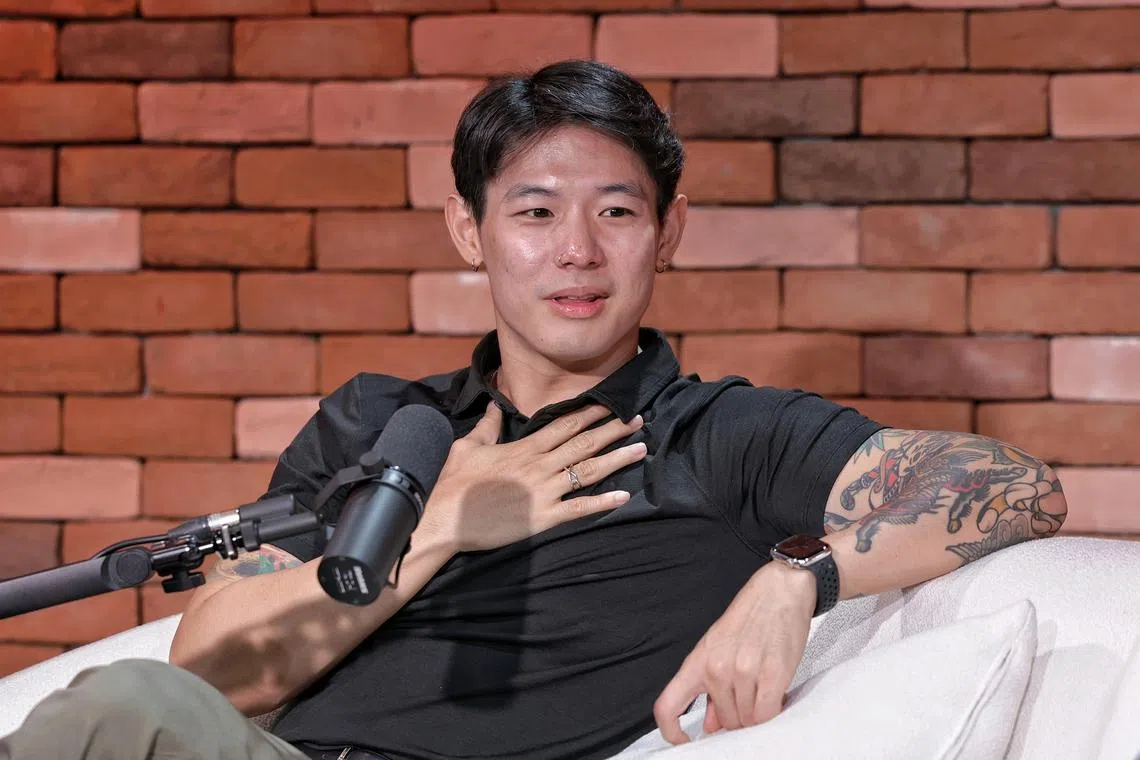
Project Hayat’s co-lead and assistant professor at the Saw Swee Hock School of Public Health Dr Rayner Tan unpacks the stigma surrounding suicide and why society should make space for people to talk about it.
ST PHOTO: KEVIN LIM
“But the thought of suicide is something that so many people go through,” he said, highlighting the IMH statistic. “I think we just don’t talk about it enough in a way that allows people to think about these things, like asking the suicide question or even to come out and say that (they) ever had suicidal ideation.”
Ms Shantini who shared her own experiences with suicidality on the show, said that people still “tip-toe” around talking about suicide.
“Many times it’s out of the fear. They are worried (because) they don’t know what to do or that they’re going to make the situation worse.
“These are misinterpretations. The silence and avoidance makes the stigma even stronger, because the person who is struggling feels like they are not heard or supported.” said Ms Shantini.
Over a period of two years, this high-flyer with a vibrant social life felt the world crashing down on her as she experienced one crisis after another.
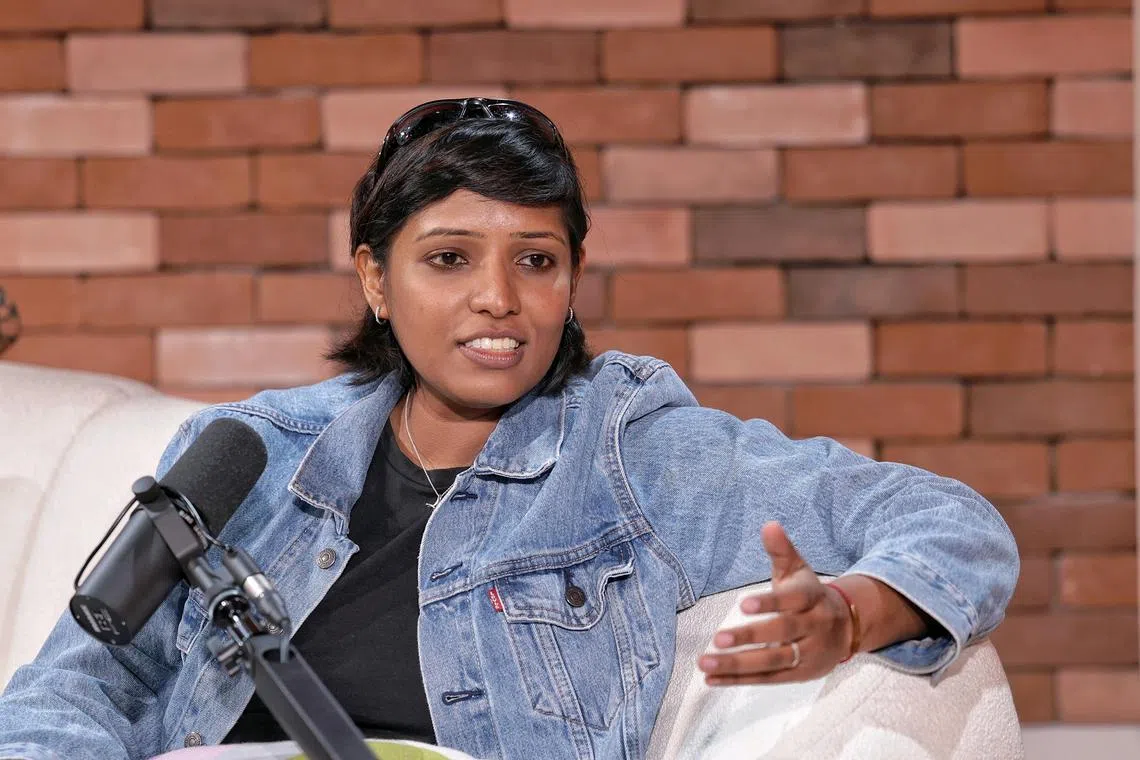
Samaritans of Singapore counsellor Shantini Sathiyanesan opens up about how she has become a “wounded healer” following her experience with suicidality, to become a beacon of light and support for others.
ST PHOTO: KEVIN LIM
“That’s when I struggled with suicidal thoughts. I felt like I was a burden... felt like my life had no purpose,” said Ms Shantini. During that period, her grandmother died and she called her engagement called off, among other issues, as she described in detail in the podcast.
What kept her going were simple acts of kindness from friends, colleagues and even strangers, who did not judge her as she was going through a dark season.
She calls herself a “wounded healer” now, as she has moved from a place of feeling lost to becoming a beacon of light and support for others.
She said it’s important to ask someone the “suicide question” if you see them struggling – in a low mood or has poor appetite, for example – or making statements like “I’m better off dead” or “Nobody loves me”.
In short, tell them you are concerned about them and ask if they are contemplating taking their life.
A 2024 Save.Me Study by Singapore Management University found that only one in three people would do something to help someone who is suicidal.
For every two in three persons who would not support and save someone who is in a crisis or suicidal, more than 70 per cent cite their fear of making the suicidal person feel worse, their lack of ability to do anything, and their lack of knowledge.
“There’s this misconception that if I ask this, it’s going to plant the thought in their head or it’s going to make them do it,” Ms Shantini explained. “But it’s actually the opposite – you’re giving them an opportunity to talk about it, and that itself is so freeing.”
Dr Tan said you don’t have to be a counsellor or a psychologist to help someone who talks about suicide. Talk to them about the help resources that are available, because sometimes they might not know where to start, he added.
As Ms Shantini said: “At SOS, we always say this – suicide prevention is everyone’s business. It’s not just (a matter for) certain stakeholders. With the different hats that you wear, you can make that difference. It’s the small gestures and things that you can do for someone.”
What are some ways you think we, as a community in Singapore, can reduce the stigma around suicide and mental health? Write to me at [natashaz@sph.com.sg](mailto:natashaz@sph.com.sg) or DM me on Instagram.
I’ll see you next time at The Usual Place,
Nat
\------
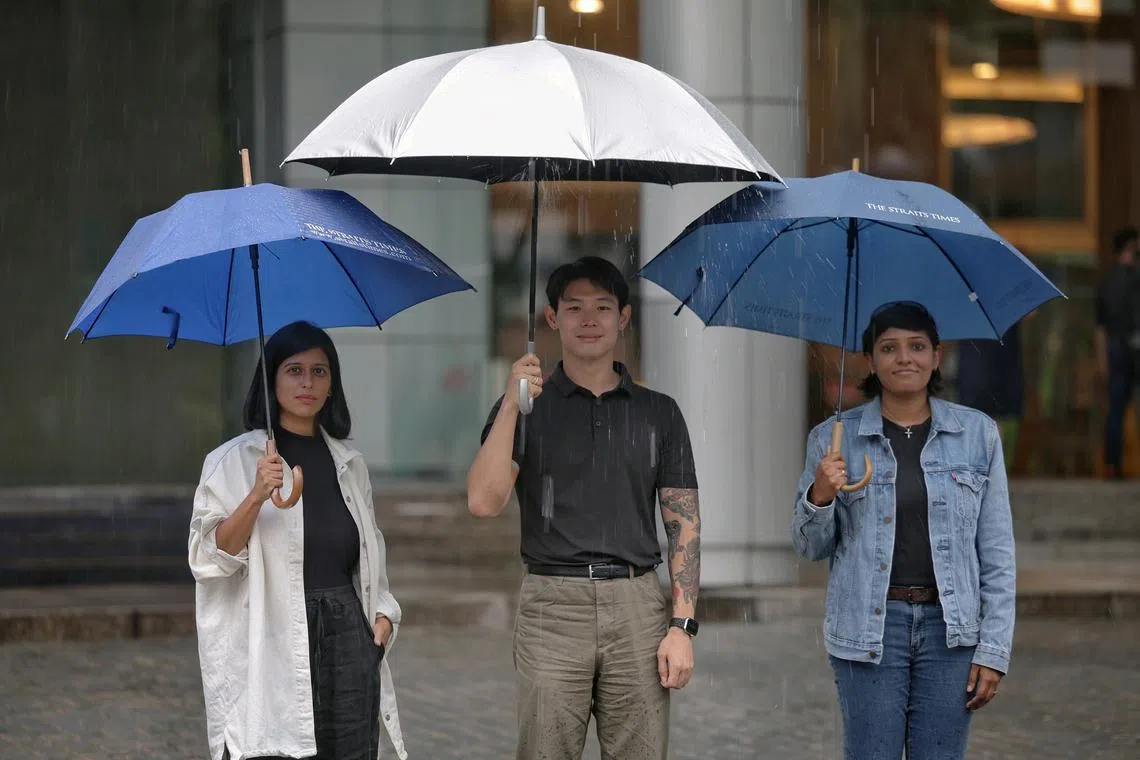
(From left) The Usual Place host Natasha Ann Zachariah, Project Hayat’s co-lead Dr Rayner Tan, who is from the National University of Singapore’s Saw Swee Hock School of Public Health, and Samaritans of Singapore counsellor Shantini Sathiyanesan.
ST PHOTO: KEVIN LIM
The Project Hayat White Paper is available here: www.sgmentalhealthmatters.com
### Helplines
MENTAL WELL-BEING
• Institute of Mental Health’s Mental Health Helpline: 6389-2222 (24 hours)
• Samaritans of Singapore: 1-767 (24 hours) / 9151-1767 (24 hours CareText via WhatsApp)
• Singapore Association for Mental Health: 1800-283-7019
• Silver Ribbon Singapore: 6386-1928
• Tinkle Friend: 1800-274-4788
• Chat, Centre of Excellence for Youth Mental Health: 6493-6500/1
• Women’s Helpline (Aware): 1800-777-5555 (weekdays, 10am to 6pm)
COUNSELLING
• Touchline (Counselling): 1800-377-2252
• Touch Care Line (for caregivers): 6804-6555
• Care Corner Counselling Centre: 6353-1180
• Counselling and Care Centre: 6536-6366
• We Care Community Services: 3165-8017
ONLINE RESOURCES
• [moht.com.sg/mindline-sg](https://moht.com.sg/mindline-sg/?ref=inline-article)
• [eC2.sg](https://ec2.sg/?ref=inline-article)
• [tinklefriend.sg](https://tinklefriend.sg/?ref=inline-article)
• [chat.mentalhealth.sg](https://chat.mentalhealth.sg/?ref=inline-article)
• [carey.carecorner.org.sg](https://carey.carecorner.org.sg/?ref=inline-article) (for those aged 13 to 25)
• [limitless.sg/talk](https://limitless.sg/talk/?ref=inline-article) (for those aged 12 to 25)
\------
Follow Natasha on her IG account and DM her your thoughts on this topic: [https://str.sg/8Wav](https://str.sg/8Wav?ref=inline-article)
Host: Natasha Zachariah ([natashaz@sph.com.sg](mailto:natashaz@sph.com.sg))
Read Natasha’s articles: [https://str.sg/iSXm](https://str.sg/iSXm?ref=inline-article)
Follow Natasha on LinkedIn: [https://str.sg/v6DN](https://str.sg/v6DN?ref=inline-article)
Filmed by: Studio+65
Edited by ST Podcast producers: Eden Soh & Teo Tong Kai
Executive producers: Ernest Luis
Follow The Usual Place Podcast here and get notified for new episode drops:
Channel: [https://str.sg/5nfm](https://str.sg/5nfm?ref=inline-article)
Apple Podcasts: [https://str.sg/9ijX](https://str.sg/9ijX?ref=inline-article)
Spotify: [https://str.sg/cd2P](https://str.sg/cd2P?ref=inline-article)
YouTube: [https://str.sg/wEr7u](https://str.sg/wEr7u?ref=inline-article)
Feedback to: [podcast@sph.com.sg](mailto:podcast@sph.com.sg)
\---
Follow more ST podcast channels:
All-in-one ST Podcasts channel: [https://str.sg/wvz7](https://str.sg/wvz7?ref=inline-article)
ST Podcast website: [http://str.sg/stpodcasts](http://str.sg/stpodcasts?ref=inline-article)
ST Podcasts YouTube: [https://str.sg/4Vwsa](https://str.sg/4Vwsa?ref=inline-article)
\---
Get The Straits Times’ app, which has a dedicated podcast player section:
The App Store: [https://str.sg/icyB](https://str.sg/icyB?ref=inline-article)
Google Play: [https://str.sg/icyX](https://str.sg/icyX?ref=inline-article)
###### See more on
[The Usual Place Podcast](https://www.straitstimes.com/tags/the-usual-place-podcast?ref=see-more-on)
[ST Podcasts](https://www.straitstimes.com/tags/st-podcasts?ref=see-more-on)
[Suicides](https://www.straitstimes.com/tags/suicides?ref=see-more-on)
[ST Current Affairs Podcast](https://www.straitstimes.com/tags/st-current-affairs-podcast?ref=see-more-on)
[Mental health](https://www.straitstimes.com/tags/mental-health?ref=see-more-on)
Back to top
[E-paper](https://e-paper.sph.com.sg/st)
[Newsletters](https://www.straitstimes.com/newsletter-signup)
[Podcasts](https://www.straitstimes.com/st-podcasts)
[RSS Feed](https://www.straitstimes.com/RSS-Feeds)
[About Us](https://www.straitstimes.com/singapore/about-the-straits-times-leadership)
[Terms & Conditions](https://www.sph.com.sg/legal/website_tnc/)
[Personal Data Protection Notice](https://www.sph.com.sg/tnc/pdpa/)
[Need help? Reach us here.](<mailto:stics@sph.com.sg?subject=Reach%20Us&body=--%0D%0A Your browser info has automatically been included so that we can place your feedback in context; no personal data will be shared:%0D %0D%0AUser type : Anonymous %0D%0AVisitor ID : -nil- %0D%0ADevice Code : Web %0D%0A>)
[Advertise with us](https://www.sph.com.sg/advertising-solutions)
Download the app
Get unlimited access to exclusive stories and incisive insights from the ST newsroom
Subscribe
[](https://subscribe.sph.com.sg/publications-st/?utm_campaign=st_subscription&utm_medium=sph-publication&utm_source=st&utm_content=subscribebutton-footer)
MDDI (P) 046/10/2025. Published by SPH Media Limited, Co. Regn. No.202120748H. Copyright © 2026 SPH Media Limited. All rights reserved. | ||||||||||||||||||
| Readable Markdown | SINGAPORE - As one reads Project Hayat, a 160-page white paper report outlining a national suicide prevention strategy for Singapore, the statistics hit hard.
In Singapore, suicide was the leading cause of death for persons aged between 10 and 29 for five consecutive years, from 2019 to 2023. It accounted for about 30 per cent of all deaths within this age group in 2023, according to Samaritans of Singapore (SOS).
The ray of light in these grim numbers was [a 32.4 per cent drop in the number of suicides in 2023 from 2022,](https://www.straitstimes.com/singapore/number-of-suicides-in-singapore-drops-in-2023-lowest-since-2000?ref=inline-article) when there were 476 suicides – the highest number since SOS began recording suicide data in 2000.
The Project Hayat White Paper [was launched in conjunction with World Suicide Prevention Day on Sept 10 by advocacy group SG Mental Health Matters,](https://sgmentalhealthmatters.com/suicide-prevention?ref=inline-article) founded by former Nominated MP Anthea Ong. “Hayat” means life in Malay, and the project is the first study on suicide prevention in Singapore.
The stigma and shame attached to suicide hinder the open conversations that need to happen so that those who are thinking about suicide or have been affected by it can get help.
Why does it still exist? Why don’t we talk about suicide as much as we do about mental health?
To get some answers, I hosted Dr Rayner Tan, 35, co-lead and research lead for Project Hayat, and SOS counsellor Shantini Sathiyanesan, 38, in the latest podcast episode of The Usual Place.
They shared about cultural norms around suicide, what people are worried about saying to people with suicidal thoughts, and how to look out for someone who may be at risk.
Dr Tan, who is an assistant professor at the Saw Swee Hock School of Public Health at the National University of Singapore, pointed out that one in 13 adults in Singapore had thought about suicide at some point in their lives. This figure was released by the Institute of Mental Health (IMH) in 2021.
“What is stigma? It’s this mark on a person that makes them ‘less than’, a discounted person,” said Dr Tan.

Project Hayat’s co-lead and assistant professor at the Saw Swee Hock School of Public Health Dr Rayner Tan unpacks the stigma surrounding suicide and why society should make space for people to talk about it.
ST PHOTO: KEVIN LIM
“But the thought of suicide is something that so many people go through,” he said, highlighting the IMH statistic. “I think we just don’t talk about it enough in a way that allows people to think about these things, like asking the suicide question or even to come out and say that (they) ever had suicidal ideation.”
Ms Shantini who shared her own experiences with suicidality on the show, said that people still “tip-toe” around talking about suicide.
“Many times it’s out of the fear. They are worried (because) they don’t know what to do or that they’re going to make the situation worse.
“These are misinterpretations. The silence and avoidance makes the stigma even stronger, because the person who is struggling feels like they are not heard or supported.” said Ms Shantini.
Over a period of two years, this high-flyer with a vibrant social life felt the world crashing down on her as she experienced one crisis after another.

Samaritans of Singapore counsellor Shantini Sathiyanesan opens up about how she has become a “wounded healer” following her experience with suicidality, to become a beacon of light and support for others.
ST PHOTO: KEVIN LIM
“That’s when I struggled with suicidal thoughts. I felt like I was a burden... felt like my life had no purpose,” said Ms Shantini. During that period, her grandmother died and she called her engagement called off, among other issues, as she described in detail in the podcast.
What kept her going were simple acts of kindness from friends, colleagues and even strangers, who did not judge her as she was going through a dark season.
She calls herself a “wounded healer” now, as she has moved from a place of feeling lost to becoming a beacon of light and support for others.
She said it’s important to ask someone the “suicide question” if you see them struggling – in a low mood or has poor appetite, for example – or making statements like “I’m better off dead” or “Nobody loves me”.
In short, tell them you are concerned about them and ask if they are contemplating taking their life.
A 2024 Save.Me Study by Singapore Management University found that only one in three people would do something to help someone who is suicidal.
For every two in three persons who would not support and save someone who is in a crisis or suicidal, more than 70 per cent cite their fear of making the suicidal person feel worse, their lack of ability to do anything, and their lack of knowledge.
“There’s this misconception that if I ask this, it’s going to plant the thought in their head or it’s going to make them do it,” Ms Shantini explained. “But it’s actually the opposite – you’re giving them an opportunity to talk about it, and that itself is so freeing.”
Dr Tan said you don’t have to be a counsellor or a psychologist to help someone who talks about suicide. Talk to them about the help resources that are available, because sometimes they might not know where to start, he added.
As Ms Shantini said: “At SOS, we always say this – suicide prevention is everyone’s business. It’s not just (a matter for) certain stakeholders. With the different hats that you wear, you can make that difference. It’s the small gestures and things that you can do for someone.”
What are some ways you think we, as a community in Singapore, can reduce the stigma around suicide and mental health? Write to me at [natashaz@sph.com.sg](mailto:natashaz@sph.com.sg) or DM me on Instagram.
I’ll see you next time at The Usual Place,
Nat
\------

(From left) The Usual Place host Natasha Ann Zachariah, Project Hayat’s co-lead Dr Rayner Tan, who is from the National University of Singapore’s Saw Swee Hock School of Public Health, and Samaritans of Singapore counsellor Shantini Sathiyanesan.
ST PHOTO: KEVIN LIM
The Project Hayat White Paper is available here: www.sgmentalhealthmatters.com
MENTAL WELL-BEING
• Institute of Mental Health’s Mental Health Helpline: 6389-2222 (24 hours)
• Samaritans of Singapore: 1-767 (24 hours) / 9151-1767 (24 hours CareText via WhatsApp)
• Singapore Association for Mental Health: 1800-283-7019
• Silver Ribbon Singapore: 6386-1928
• Tinkle Friend: 1800-274-4788
• Chat, Centre of Excellence for Youth Mental Health: 6493-6500/1
• Women’s Helpline (Aware): 1800-777-5555 (weekdays, 10am to 6pm)
COUNSELLING
• Touchline (Counselling): 1800-377-2252
• Touch Care Line (for caregivers): 6804-6555
• Care Corner Counselling Centre: 6353-1180
• Counselling and Care Centre: 6536-6366
• We Care Community Services: 3165-8017
ONLINE RESOURCES
• [moht.com.sg/mindline-sg](https://moht.com.sg/mindline-sg/?ref=inline-article)
• [eC2.sg](https://ec2.sg/?ref=inline-article)
• [tinklefriend.sg](https://tinklefriend.sg/?ref=inline-article)
• [chat.mentalhealth.sg](https://chat.mentalhealth.sg/?ref=inline-article)
• [carey.carecorner.org.sg](https://carey.carecorner.org.sg/?ref=inline-article) (for those aged 13 to 25)
• [limitless.sg/talk](https://limitless.sg/talk/?ref=inline-article) (for those aged 12 to 25)
\------
Follow Natasha on her IG account and DM her your thoughts on this topic: [https://str.sg/8Wav](https://str.sg/8Wav?ref=inline-article)
Host: Natasha Zachariah ([natashaz@sph.com.sg](mailto:natashaz@sph.com.sg))
Read Natasha’s articles: [https://str.sg/iSXm](https://str.sg/iSXm?ref=inline-article)
Follow Natasha on LinkedIn: [https://str.sg/v6DN](https://str.sg/v6DN?ref=inline-article)
Filmed by: Studio+65
Edited by ST Podcast producers: Eden Soh & Teo Tong Kai
Executive producers: Ernest Luis
Follow The Usual Place Podcast here and get notified for new episode drops:
Channel: [https://str.sg/5nfm](https://str.sg/5nfm?ref=inline-article)
Apple Podcasts: [https://str.sg/9ijX](https://str.sg/9ijX?ref=inline-article)
Spotify: [https://str.sg/cd2P](https://str.sg/cd2P?ref=inline-article)
YouTube: [https://str.sg/wEr7u](https://str.sg/wEr7u?ref=inline-article)
Feedback to: [podcast@sph.com.sg](mailto:podcast@sph.com.sg)
\---
Follow more ST podcast channels:
All-in-one ST Podcasts channel: [https://str.sg/wvz7](https://str.sg/wvz7?ref=inline-article)
ST Podcast website: [http://str.sg/stpodcasts](http://str.sg/stpodcasts?ref=inline-article)
ST Podcasts YouTube: [https://str.sg/4Vwsa](https://str.sg/4Vwsa?ref=inline-article)
\---
Get The Straits Times’ app, which has a dedicated podcast player section:
The App Store: [https://str.sg/icyB](https://str.sg/icyB?ref=inline-article)
Google Play: [https://str.sg/icyX](https://str.sg/icyX?ref=inline-article) | ||||||||||||||||||
| ML Classification | |||||||||||||||||||
| ML Categories |
Raw JSON{
"/People_and_Society": 783,
"/People_and_Society/Social_Issues_and_Advocacy": 749,
"/Health": 579,
"/Health/Mental_Health": 576,
"/Health/Mental_Health/Depression": 519,
"/People_and_Society/Social_Issues_and_Advocacy/Human_Rights_and_Liberties": 304
} | ||||||||||||||||||
| ML Page Types |
Raw JSON{
"/Audio": 765,
"/Audio/Podcast": 583
} | ||||||||||||||||||
| ML Intent Types |
Raw JSON{
"Informational": 999
} | ||||||||||||||||||
| Content Metadata | |||||||||||||||||||
| Language | en | ||||||||||||||||||
| Author | Natasha Ann Zachariah | ||||||||||||||||||
| Publish Time | 2024-10-17 09:15:00 (1 year ago) | ||||||||||||||||||
| Original Publish Time | 2024-10-17 09:15:00 (1 year ago) | ||||||||||||||||||
| Republished | No | ||||||||||||||||||
| Word Count (Total) | 1,440 | ||||||||||||||||||
| Word Count (Content) | 1,271 | ||||||||||||||||||
| Links | |||||||||||||||||||
| External Links | 61 | ||||||||||||||||||
| Internal Links | 32 | ||||||||||||||||||
| Technical SEO | |||||||||||||||||||
| Meta Nofollow | No | ||||||||||||||||||
| Meta Noarchive | No | ||||||||||||||||||
| JS Rendered | No | ||||||||||||||||||
| Redirect Target | null | ||||||||||||||||||
| Performance | |||||||||||||||||||
| Download Time (ms) | 324 | ||||||||||||||||||
| TTFB (ms) | 323 | ||||||||||||||||||
| Download Size (bytes) | 36,843 | ||||||||||||||||||
| Shard | 196 (laksa) | ||||||||||||||||||
| Root Hash | 3908856208180310596 | ||||||||||||||||||
| Unparsed URL | com,straitstimes!www,/singapore/confronting-suicide-the-conversations-we-need s443 | ||||||||||||||||||