ℹ️ Skipped - page is already crawled
| Filter | Status | Condition | Details |
|---|---|---|---|
| HTTP status | PASS | download_http_code = 200 | HTTP 200 |
| Age cutoff | PASS | download_stamp > now() - 6 MONTH | 0 months ago |
| History drop | PASS | isNull(history_drop_reason) | No drop reason |
| Spam/ban | PASS | fh_dont_index != 1 AND ml_spam_score = 0 | ml_spam_score=0 |
| Canonical | PASS | meta_canonical IS NULL OR = '' OR = src_unparsed | Not set |
| Property | Value |
|---|---|
| URL | https://www.singhealth.com.sg/news/singapore-health/diarrhoea-after-antibiotics |
| Last Crawled | 2026-04-17 10:14:50 (1 day ago) |
| First Indexed | 2022-06-30 12:41:47 (3 years ago) |
| HTTP Status Code | 200 |
| Meta Title | Diarrhoea after antibiotics? |
| Meta Description | null |
| Meta Canonical | null |
| Boilerpipe Text | 29 Jun 2022 | Singapore Health
By Goh Bee Lian
Tummy bacteria may explain why a common antibiotic
brings on diarrhoea in some people.
Amoxicillin-clavulanate is a common and affordable antibiotic used to treat bacterial infections, from severe conditions such as pneumonia to relatively minor issues like urinary tract and skin infections.
However, the antibiotic (also known by its trade name Augmentin) can cause diarrhoea in some patients. This is a problem as these patients may then be prescribed a more expensive drug, or a stronger antibiotic that may otherwise be used for more resistant bacteria or more severe infections. This in turn drives the problem of antimicrobial resistance.
“Knowing why it causes diarrhoea may help us identify those at risk of antibioticassociated diarrhoea, and devise treatment strategies to minimise or avoid such adverse effects,” said Dr
Shirin Kalimuddin, Senior Consultant, Department of Infectious Diseases, Singapore General Hospital (SGH)
.
Dr Shirin and a team from SGH and the Singapore-MIT Alliance for Research and Technology (SMART), Massachusetts Institute of Technology’s (MIT) research enterprise in Singapore, embarked on a study to look into antibiotic-associated diarrhoea. The study was published in January 2022 in scientific journal iScience.
In 2019, the study recruited 30 healthy, young volunteers who were given the antibiotic twice a day for three days. This is the standard treatment for bacterial infections, said Dr Shirin, the study’s Principal Investigator. The participants’ stool samples were collected and analysed before and up to four weeks after the antibiotic was given.
The study found that 13, or 43 per cent, of the participants had diarrhoea after taking the antibiotics. This group also had significantly lower levels of the
Faecalibacterium Prausnitzii (F Prausnitzii)
bacteria in their stool samples throughout the study (on average, they had a mean 7.5 per cent of the bacteria), compared to those who did not experience diarrhoea (15 per cent of the bacteria).
F Prausnitzii
is the most abundant species within the
Ruminococcaceae
bacterial family, which is the most important in maintaining gut health.
“Our findings provide evidence that a person’s gut microbial composition can influence the risk of developing antibioticassociated diarrhoea,” said Professor Eric Alm, co-author of the study, and Principal Investigator in SMART’s Antimicrobial Resistance (AMR) interdisciplinary research group.
The team further devised a simple polymerase chain reaction (PCR) test to determine the levels of
F Prausnitzii
in the stool samples, and the tendency of patients to develop diarrhoea with amoxicillinclavulanate treatment.
Although currently a preliminary research study, its ability to detect certain types of gut bacteria with the PCR test provides a springboard for the development of a point-of-care test. A larger scale study would need to be done before the findings can be incorporated into clinical practice.
“This study gives us a platform to go on to do more therapeutic focus studies — for example, whether
Ruminococcaceae
as a probiotic would actually help prevent antibiotic-associated diarrhoea. I think this gives us a window into what the possibilities are,” said Dr Shirin.
Beyond detecting the presence of healthy bacteria that are less susceptible to being killed by certain antibiotics, point-of-care tests could be developed to help doctors prescribe an antibiotic that not only kills pathogens, but also saves healthy bacteria.
“Imagine being able to see what types of bacteria a patient has, and then figure out which antibiotics are compatible with those healthy bacteria,” said Prof Alm.
One in three patients experiences diarrhoea after taking amoxicillin-clavulanate. As an indication of how commonly used the antibiotic is, Dr Shirin said that half a ton of the medication is used yearly at the hospitals on SGH Campus.
Get the latest updates about Singapore Health in your mailbox! Click here to subscribe. |
| Markdown | SingHealth Institutions will NEVER ask you to transfer money over a call. If in doubt, call the 24/7 ScamShield helpline at 1799, or visit the ScamShield website at [www.scamshield.gov.sg](https://www.scamshield.gov.sg/).
[]()
- [Arabic](https://www.singhealth.com.sg/news/singapore-health/diarrhoea-after-antibiotics)
- [Chinese (Traditional)](https://www.singhealth.com.sg/news/singapore-health/diarrhoea-after-antibiotics)
- [Hindi](https://www.singhealth.com.sg/news/singapore-health/diarrhoea-after-antibiotics)
- [Chinese (Simplified)](https://www.singhealth.com.sg/news/singapore-health/diarrhoea-after-antibiotics)
- [English](https://www.singhealth.com.sg/news/singapore-health/diarrhoea-after-antibiotics)
- [Indonesian](https://www.singhealth.com.sg/news/singapore-health/diarrhoea-after-antibiotics)
Non-English translations are machine-generated; verify independently for potential inaccuracies.
[Education](https://www.singhealth.com.sg/education.html)
[Research & Innovation](https://www.singhealth.com.sg/research-innovation.html)
[Giving](https://www.singhealth.com.sg/giving.html)
[Subscribe Enews](https://form.gov.sg/647ea0620583e30011498bec)
[Appointments](https://www.singhealth.com.sg/appointments.html)
[Subscribe Enews](https://form.gov.sg/647ea0620583e30011498bec)
[Appointments](https://www.singhealth.com.sg/appointments.html)
[](https://www.singhealth.com.sg/)
[Symptoms & Treatments](https://www.singhealth.com.sg/symptoms-treatments.html)
[Find a Doctor](https://www.singhealth.com.sg/doctor.html)
[Our Institutions]()
[Our Specialties](https://www.singhealth.com.sg/our-specialties.html)
[Patient Services](https://www.singhealth.com.sg/patient-services.html)
[Community Care]()
I Want To…
Back to All Menu Options
[General Hospitals]()
- [ Singapore General Hospital](https://www.singhealth.com.sg/our-institutions.html#sgh)
- [ Changi General Hospital](https://www.singhealth.com.sg/our-institutions.html#cgh)
- [ Sengkang General Hospital](https://www.singhealth.com.sg/our-institutions.html#skh)
- [ Eastern General Hospital](https://www.singhealth.com.sg/our-institutions.html#egh)
- [ KK Women’s and Children Hospital](https://www.singhealth.com.sg/our-institutions.html#kkh)
[National Specialty Centres]()
- [ National Cancer Centre Singapore](https://www.singhealth.com.sg/our-institutions.html#nccs)
- [ National Dental Centre Singapore](https://www.singhealth.com.sg/our-institutions.html#ndcs)
- [ National Heart Centre Singapore](https://www.singhealth.com.sg/our-institutions.html#nhcs)
- [ National Neuroscience Institute](https://www.singhealth.com.sg/our-institutions.html#nni)
- [ Singapore National Eye Centre](https://www.singhealth.com.sg/our-institutions.html#snec)
[Community Hospitals]()
- [ SingHealth Community Hospitals](https://www.singhealth.com.sg/our-institutions.html#sch)
[Polyclinic]()
- [ SingHealth Polyclinics](https://www.singhealth.com.sg/our-institutions.html#shp)
[View All Institutions](https://www.singhealth.com.sg/our-institutions.html)

[Locations via Google Map](https://www.google.com/maps/d/edit?mid=1K7_ZT0G6pgUAFlIulu8Kw6EOp7SCGww&usp=sharing)
[Manage Your Health]()
- [Know about HealthUp\!](https://www.singhealth.com.sg/community-care/level-up-with-healthup/about-healthup.html)
- [Get Support from SingHealth Healthier SG Team](https://www.singhealth.com.sg/about-singhealth/who-we-are/community-population-health/supporting-healthier-sg.html)
- [Health Screening](https://www.singhealth.com.sg/community-care/level-up-with-healthup/health-screening.html)
[Connect to Community Resources]()
- [Find a Community Health Post](https://www.singhealth.com.sg/community-care/connect-with-our-place-based-care-team/find-a-community-health-posts.html)
- [Find a GP Clinic](https://www.singhealth.com.sg/community-care/connect-with-our-place-based-care-team/find-a-gp.html)
- [Find Family Services @ Family Nexus](https://www.singhealth.com.sg/community-care/connect-with-our-place-based-care-team/family-nexus.html)
- [Community Partnerships](https://www.singhealth.com.sg/about-singhealth/who-we-are/community-population-health/community-partnership-council.html)
[View More](https://www.singhealth.com.sg/community-care.html)
[Other Useful Resources]()
- [What is GPFirst?](https://www.singhealth.com.sg/community-care/find-resources-in-your-community/what-is-gpfirst.html)
- [Advance Care Planning](https://www.singhealth.com.sg/community-care/find-resources-in-your-community/acp.html)
- [CareLine](https://www.singhealth.com.sg/community-care/find-resources-in-your-community/careline.html)
- [Connect Your Patients with Us](https://www.singhealth.com.sg/community-care/find-resources-in-your-community/what-is-gpfirst.html)
[About Community & Population Health]()
- [Population Health](https://www.singhealth.com.sg/about-singhealth/who-we-are/community-population-health/population-health.html)
- [Supporting Healthier SG](https://www.singhealth.com.sg/about-singhealth/who-we-are/community-population-health/supporting-healthier-sg.html)
- [Supporting Person Centred Care](https://www.singhealth.com.sg/about-singhealth/who-we-are/community-population-health/esther-network.html)
- [Population Health Research](https://www.singhealth.com.sg/about-singhealth/who-we-are/community-population-health/population-health-research.html)
[View More](https://www.singhealth.com.sg/about-singhealth/who-we-are/community-population-health.html)
[HealthUp! ](https://www.singhealth.com.sg/community-care/level-up-with-healthup/about-healthup.html) [Connect with Our Care Team ](https://www.singhealth.com.sg/community-care/connect-with-our-place-based-care-team.html) [Find Resources in Your Community ](https://www.singhealth.com.sg/community-care/find-resources-in-your-community.html)
[For Patients]()
- [Find a Doctor](https://www.singhealth.com.sg/doctor.html)
- [Symptoms & Treatments](https://www.singhealth.com.sg/symptoms-treatments/symptoms-treatments-medical-conditions.html)
- [Book/Change Appointment](https://www.singhealth.com.sg/appointments.html)
- [Browse Patient Services](https://www.singhealth.com.sg/patient-services.html)
[For Doctors]()
- [Find A Researcher](https://www.singhealthdukenus.com.sg/research/our-researchers.html)
- [See Events](https://www.singhealth.com.sg/about-singhealth/events.html)
- [Apply for Residency](https://www.singhealthacademy.edu.sg/residency.html)
[For Students]()
- [Browse SingHealth Academy](https://www.singhealthacademy.edu.sg/)
[For Job Seekers]()
- [See Job Offerings](https://www.singhealth.com.sg/careers/career-opportunities.html)
- [Working at SingHealth](https://www.singhealth.com.sg/careers/why-choose-us.html)
- [Learn about our People](https://www.singhealth.com.sg/careers/singhealth-hq/our-people.html)
Let us help you find what you’re looking for.
*Your input contains markup or script. Please proceed with a valid query.*
- [Symptoms & Treatments](https://www.singhealth.com.sg/symptoms-treatments.html)
- [Find a Doctor](https://www.singhealth.com.sg/doctor.html)
- [Our Institutions]()
- [Our Specialties](https://www.singhealth.com.sg/our-specialties.html)
- [Patient Services](https://www.singhealth.com.sg/patient-services.html)
- [Community Care]()
- [I Want To…]()
[Education](https://www.singhealth.com.sg/education.html) [Research & Innovation](https://www.singhealth.com.sg/research-innovation.html) [Giving](https://www.singhealth.com.sg/giving.html)
[SingHealth](https://www.singhealth.com.sg/content/singhealth-web/singhealth) [News](https://www.singhealth.com.sg/content/singhealth-web/singhealth/en/about-singhealth/news) [Diarrhoea after antibiotics?]()
[](https://wa.me/?text=Hi%20everyone,%20please%20check%20this%20out:%20https://www.singhealth.com.sg//news/singapore-health/diarrhoea-after-antibiotics.html)
[](https://www.facebook.com/sharer/sharer.php?u=https://www.singhealth.com.sg//news/singapore-health/diarrhoea-after-antibiotics.html)
[](https://twitter.com/share?url=https://www.singhealth.com.sg/news/singapore-health/diarrhoea-after-antibiotics&text=Hi%20everyone,%20please%20check%20this%20out:)
[](mailto:example@example.com?body=https://www.singhealth.com.sg/news/singapore-health/diarrhoea-after-antibiotics)
[]()
# Diarrhoea after antibiotics?
29 Jun 2022 \| Singapore Health
By Goh Bee Lian

## Tummy bacteria may explain why a common antibiotic brings on diarrhoea in some people.
Amoxicillin-clavulanate is a common and affordable antibiotic used to treat bacterial infections, from severe conditions such as pneumonia to relatively minor issues like urinary tract and skin infections.
However, the antibiotic (also known by its trade name Augmentin) can cause diarrhoea in some patients. This is a problem as these patients may then be prescribed a more expensive drug, or a stronger antibiotic that may otherwise be used for more resistant bacteria or more severe infections. This in turn drives the problem of antimicrobial resistance.
“Knowing why it causes diarrhoea may help us identify those at risk of antibioticassociated diarrhoea, and devise treatment strategies to minimise or avoid such adverse effects,” said Dr [Shirin Kalimuddin, Senior Consultant, Department of Infectious Diseases, Singapore General Hospital (SGH)](https://www.sgh.com.sg/doctor/infectious-diseases/kalimuddin-shirin).
Dr Shirin and a team from SGH and the Singapore-MIT Alliance for Research and Technology (SMART), Massachusetts Institute of Technology’s (MIT) research enterprise in Singapore, embarked on a study to look into antibiotic-associated diarrhoea. The study was published in January 2022 in scientific journal iScience.
In 2019, the study recruited 30 healthy, young volunteers who were given the antibiotic twice a day for three days. This is the standard treatment for bacterial infections, said Dr Shirin, the study’s Principal Investigator. The participants’ stool samples were collected and analysed before and up to four weeks after the antibiotic was given.
The study found that 13, or 43 per cent, of the participants had diarrhoea after taking the antibiotics. This group also had significantly lower levels of the *Faecalibacterium Prausnitzii (F Prausnitzii)* bacteria in their stool samples throughout the study (on average, they had a mean 7.5 per cent of the bacteria), compared to those who did not experience diarrhoea (15 per cent of the bacteria). *F Prausnitzii* is the most abundant species within the *Ruminococcaceae* bacterial family, which is the most important in maintaining gut health.
“Our findings provide evidence that a person’s gut microbial composition can influence the risk of developing antibioticassociated diarrhoea,” said Professor Eric Alm, co-author of the study, and Principal Investigator in SMART’s Antimicrobial Resistance (AMR) interdisciplinary research group.
The team further devised a simple polymerase chain reaction (PCR) test to determine the levels of *F Prausnitzii* in the stool samples, and the tendency of patients to develop diarrhoea with amoxicillinclavulanate treatment.
Although currently a preliminary research study, its ability to detect certain types of gut bacteria with the PCR test provides a springboard for the development of a point-of-care test. A larger scale study would need to be done before the findings can be incorporated into clinical practice.
“This study gives us a platform to go on to do more therapeutic focus studies — for example, whether *Ruminococcaceae* as a probiotic would actually help prevent antibiotic-associated diarrhoea. I think this gives us a window into what the possibilities are,” said Dr Shirin.
Beyond detecting the presence of healthy bacteria that are less susceptible to being killed by certain antibiotics, point-of-care tests could be developed to help doctors prescribe an antibiotic that not only kills pathogens, but also saves healthy bacteria.
“Imagine being able to see what types of bacteria a patient has, and then figure out which antibiotics are compatible with those healthy bacteria,” said Prof Alm.
One in three patients experiences diarrhoea after taking amoxicillin-clavulanate. As an indication of how commonly used the antibiotic is, Dr Shirin said that half a ton of the medication is used yearly at the hospitals on SGH Campus.
[Get the latest updates about Singapore Health in your mailbox! Click here to subscribe.](https://form.gov.sg/60ab7c406614cb00119aa205)
Tags
[News Article](https://www.singhealth.com.sg/content/singhealth-web/singhealth/en/search.html?keyword=news+article) [Singapore Health](https://www.singhealth.com.sg/content/singhealth-web/singhealth/en/search.html?keyword=singapore+health) [SingHealth](https://www.singhealth.com.sg/content/singhealth-web/singhealth/en/search.html?keyword=singhealth) [Singapore General Hospital](https://www.singhealth.com.sg/content/singhealth-web/singhealth/en/search.html?keyword=singapore%20general%20hospital) [Singapore Health](https://www.singhealth.com.sg/content/singhealth-web/singhealth/en/search.html?keyword=singapore+health)
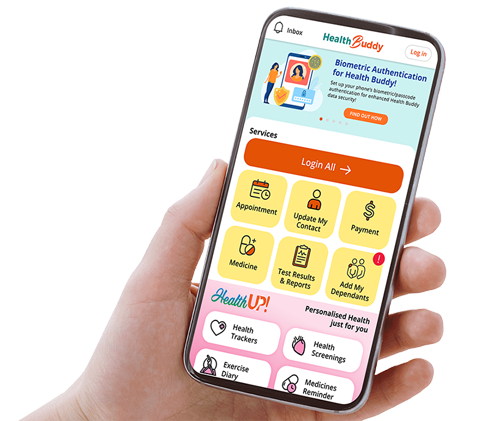
Health Made Easier with 
Manage your appointments, refill your medicine and more with our Health Buddy App today\!
Stay Healthy The Easy Way

Get trusted health advice, offers and more.
[Sign up today\!](https://form.gov.sg/647ea0620583e30011498bec)
Please provide a valid email address.
Stay Ahead in Healthcare Industry

Subscribe to our exclusive updates for healthcare professionals.
[Subscribe](https://form.gov.sg/6422b9a272f469001147f915)
Please provide a valid email address.
[](https://www.singhealth.com.sg/)
[](https://www.sgh.com.sg/)
[](https://www.cgh.com.sg/)
[](https://www.skh.com.sg/)
[](https://www.egh.com.sg/)
[](https://www.kkh.com.sg/)
[](https://www.nccs.com.sg/)
[](https://www.ndcs.com.sg/)
[](https://www.nhcs.com.sg/)
[](https://www.nni.com.sg/)
[](https://www.snec.com.sg/)
[](https://www.singhealth.com.sg/sch)
[](https://polyclinic.singhealth.com.sg/)
[](https://www.singhealthdukenus.com.sg/)
[About Us](https://www.singhealth.com.sg/about-singhealth.html "About Us")
[Contact Us](https://www.singhealth.com.sg/patient-services/contact-us.html "Contact Us")
[Events](https://www.singhealth.com.sg/about-singhealth/events.html "Events")
[News](https://www.singhealth.com.sg/about-singhealth/news.html "News")
[Careers](https://www.singhealth.com.sg/careers.html "Careers")
[FAQs](https://www.singhealth.com.sg/patient-services/health-buddy/faqs.html "FAQs")
Keep Healthy With
[ HealthXchange](https://www.healthxchange.sg/) [ Health Videos](https://www.youtube.com/@SingaporeHealth)
Follow SingHealth
[](https://www.facebook.com/singhealth "Facebook") [](https://www.tiktok.com/@singhealth?_t=8ohAFy7fToO&_r=1 "TikTok") [](https://www.linkedin.com/company/singhealth/ "Linkedin") [](https://www.instagram.com/SingHealth.SG "Instagram") [](https://www.youtube.com/user/SingaporeHealth "YouTube")
10 Hospital Boulevard, \#19-01 SingHealth Tower. Singapore 168582
   
© 2026 Singapore Health Services Pte Ltd. All Rights Reserved.
[Terms of Use](https://www.singhealth.com.sg/about-singhealth/corporate-governance/terms-of-use.html "Terms of Use")
[Sitemap](https://www.singhealth.com.sg/sitemap.html "Sitemap")
[PDPA](https://www.singhealth.com.sg/about-singhealth/corporate-governance/personal-data-protection-act.html "PDPA")
[Rate Our Website](https://form.gov.sg/6433702091f2a60011669e68 "Rate Our Website")
[Report Vulnerability](https://www.synapxe.sg/report-vulnerability "Report Vulnerability") |
| Readable Markdown | 29 Jun 2022 \| Singapore Health
By Goh Bee Lian  Tummy bacteria may explain why a common antibiotic brings on diarrhoea in some people. Amoxicillin-clavulanate is a common and affordable antibiotic used to treat bacterial infections, from severe conditions such as pneumonia to relatively minor issues like urinary tract and skin infections. However, the antibiotic (also known by its trade name Augmentin) can cause diarrhoea in some patients. This is a problem as these patients may then be prescribed a more expensive drug, or a stronger antibiotic that may otherwise be used for more resistant bacteria or more severe infections. This in turn drives the problem of antimicrobial resistance. “Knowing why it causes diarrhoea may help us identify those at risk of antibioticassociated diarrhoea, and devise treatment strategies to minimise or avoid such adverse effects,” said Dr [Shirin Kalimuddin, Senior Consultant, Department of Infectious Diseases, Singapore General Hospital (SGH)](https://www.sgh.com.sg/doctor/infectious-diseases/kalimuddin-shirin). Dr Shirin and a team from SGH and the Singapore-MIT Alliance for Research and Technology (SMART), Massachusetts Institute of Technology’s (MIT) research enterprise in Singapore, embarked on a study to look into antibiotic-associated diarrhoea. The study was published in January 2022 in scientific journal iScience. In 2019, the study recruited 30 healthy, young volunteers who were given the antibiotic twice a day for three days. This is the standard treatment for bacterial infections, said Dr Shirin, the study’s Principal Investigator. The participants’ stool samples were collected and analysed before and up to four weeks after the antibiotic was given. The study found that 13, or 43 per cent, of the participants had diarrhoea after taking the antibiotics. This group also had significantly lower levels of the *Faecalibacterium Prausnitzii (F Prausnitzii)* bacteria in their stool samples throughout the study (on average, they had a mean 7.5 per cent of the bacteria), compared to those who did not experience diarrhoea (15 per cent of the bacteria). *F Prausnitzii* is the most abundant species within the *Ruminococcaceae* bacterial family, which is the most important in maintaining gut health. “Our findings provide evidence that a person’s gut microbial composition can influence the risk of developing antibioticassociated diarrhoea,” said Professor Eric Alm, co-author of the study, and Principal Investigator in SMART’s Antimicrobial Resistance (AMR) interdisciplinary research group. The team further devised a simple polymerase chain reaction (PCR) test to determine the levels of *F Prausnitzii* in the stool samples, and the tendency of patients to develop diarrhoea with amoxicillinclavulanate treatment. Although currently a preliminary research study, its ability to detect certain types of gut bacteria with the PCR test provides a springboard for the development of a point-of-care test. A larger scale study would need to be done before the findings can be incorporated into clinical practice. “This study gives us a platform to go on to do more therapeutic focus studies — for example, whether *Ruminococcaceae* as a probiotic would actually help prevent antibiotic-associated diarrhoea. I think this gives us a window into what the possibilities are,” said Dr Shirin. Beyond detecting the presence of healthy bacteria that are less susceptible to being killed by certain antibiotics, point-of-care tests could be developed to help doctors prescribe an antibiotic that not only kills pathogens, but also saves healthy bacteria. “Imagine being able to see what types of bacteria a patient has, and then figure out which antibiotics are compatible with those healthy bacteria,” said Prof Alm. One in three patients experiences diarrhoea after taking amoxicillin-clavulanate. As an indication of how commonly used the antibiotic is, Dr Shirin said that half a ton of the medication is used yearly at the hospitals on SGH Campus. [Get the latest updates about Singapore Health in your mailbox! Click here to subscribe.](https://form.gov.sg/60ab7c406614cb00119aa205) |
| Shard | 93 (laksa) |
| Root Hash | 12117085593994098693 |
| Unparsed URL | sg,com,singhealth!www,/news/singapore-health/diarrhoea-after-antibiotics s443 |