ℹ️ Skipped - page is already crawled
| Filter | Status | Condition | Details |
|---|---|---|---|
| HTTP status | PASS | download_http_code = 200 | HTTP 200 |
| Age cutoff | PASS | download_stamp > now() - 6 MONTH | 0.4 months ago |
| History drop | PASS | isNull(history_drop_reason) | No drop reason |
| Spam/ban | PASS | fh_dont_index != 1 AND ml_spam_score = 0 | ml_spam_score=0 |
| Canonical | PASS | meta_canonical IS NULL OR = '' OR = src_unparsed | Not set |
| Property | Value | ||||||
|---|---|---|---|---|---|---|---|
| URL | https://www.sciencenews.org/article/black-hole-first-picture-event-horizon-telescope | ||||||
| Last Crawled | 2026-04-16 03:56:36 (12 days ago) | ||||||
| First Indexed | 2019-04-10 13:13:12 (7 years ago) | ||||||
| HTTP Status Code | 200 | ||||||
| Content | |||||||
| Meta Title | The first picture of a black hole opens a new era of astrophysics | ||||||
| Meta Description | Astronomers used a network of telescopes around the world to take a picture of the supermassive black hole in the galaxy M87. | ||||||
| Meta Canonical | null | ||||||
| Boilerpipe Text | This is what a black hole looks like.
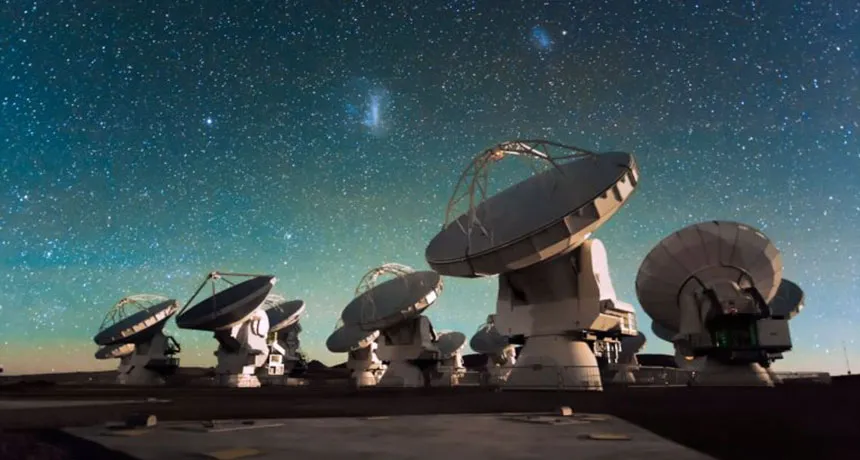
A world-spanning network of telescopes called the
Event Horizon Telescope
zoomed in on the supermassive monster in the galaxy M87 to create this first-ever picture of a black hole.
“We have seen what we thought was unseeable. We have seen and taken a picture of a black hole,” Sheperd Doeleman, EHT Director and astrophysicist at the Harvard-Smithsonian Center for Astrophysics in Cambridge, Mass., said April 10 in Washington, D.C., at one of seven concurrent news conferences. The results were also published in six papers in the
Astrophysical Journal Letters
.
“We’ve been studying black holes so long, sometimes it’s easy to forget that none of us have actually seen one,” France Córdova, director of the National Science Foundation, said in the Washington, D.C., news conference. Seeing one “is a Herculean task,” she said.
That’s because black holes are notoriously hard to see. Their gravity is so extreme that nothing, not even light, can escape across the boundary at a black hole’s edge, known as the event horizon. But some black holes, especially supermassive ones dwelling in galaxies’ centers, stand out by voraciously accreting bright disks of gas and other material. The EHT image reveals the shadow of M87’s black hole on its accretion disk. Appearing as a fuzzy, asymmetrical ring, it unveils for the first time a dark abyss of one of the universe’s most mysterious objects.
“It’s been such a buildup,” Doeleman said. “It was just astonishment and wonder… to know that you’ve uncovered a part of the universe that was off limits to us.”
The much-anticipated big reveal of the image “lives up to the hype, that’s for sure,” says Yale University astrophysicist Priyamvada Natarajan, who is not on the EHT team. “It really brings home how fortunate we are as a species at this particular time, with the capacity of the human mind to comprehend the universe, to have built all the science and technology to make it happen.” (
SN Online: 4/10/19
)
The image aligns with expectations of what a black hole should look like based on Einstein’s general theory of relativity, which predicts how spacetime is warped by the extreme mass of a black hole. The picture is “one more strong piece of evidence supporting the existence of black holes. And that, of course, helps verify general relativity,” says physicist Clifford Will of the University of Florida in Gainesville who is not on the EHT team. “Being able to actually see this shadow and to detect it is a tremendous first step.”
Earlier studies have tested general relativity by looking at the
motions of stars
(
SN: 8/18/18, p. 12
) or
gas clouds
(
SN: 11/24/18, p. 16
) near a black hole, but never at its edge. “It’s as good as it gets,” Will says. Tiptoe any closer and you’d be inside the black hole — unable to report back on the results of any experiments.
A BLACK HOLE’S HOME
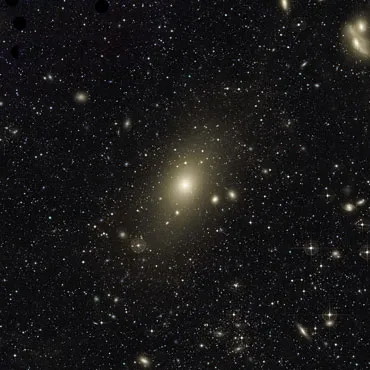
The galaxy M87 sits about 55 million light-years from Earth in the constellation Virgo. Unlike the Milky Way’s stunning spirals, M87 is a blobby giant elliptical galaxy. The Event Horizon Telescope just took the first image of the black hole at M87’s center.
Chris Mihos/Case Western Reserve Univ.,ESO
“Black hole environments are a likely place where general relativity would break down,” says EHT team member Feryal Özel, an astrophysicist at the University of Arizona in Tucson. So testing general relativity in such extreme conditions could reveal deviations from Einstein’s predictions.
Just because this first image upholds general relativity “doesn’t mean general relativity is completely fine,” she says. Many physicists think that general relativity won’t be the last word on gravity because it’s incompatible with another essential physics theory, quantum mechanics, which describes physics on very small scales.
The image also provides a new measurement of the black hole’s size and heft. “Our mass determination by just directly looking at the shadow has helped resolve a longstanding controversy,” Sera Markoff, a theoretical astrophysicist at the University of Amsterdam, said in the Washington, D.C., news conference. Estimates made using different techniques have ranged between 3.5 billion and 7.22 billion times the mass of the sun. But the new EHT measurements show that its mass is about 6.5 billion solar masses.
The team has also determined the behemoth’s size — its diameter stretches 38 billion kilometers — and that the black hole spins clockwise. “M87 is a monster even by supermassive black hole standards,” Markoff said.
EHT trained its sights on both M87’s black hole and Sagittarius A*, the supermassive black hole at the center of the Milky Way. But, it turns out, it was easier to image M87’s monster. That black hole is 55 million light-years from Earth in the constellation Virgo, about 2,000 times as far as Sgr A*. But it’s also about 1,000 times as massive as the Milky Way’s giant, which weighs the equivalent of roughly 4 million suns. That extra heft nearly balances out M87’s distance. “The size in the sky is pretty darn similar,” says EHT team member Feryal Özel.
The first real picture of the supermassive black hole at the center of galaxy M87. How? We explain.
Due to its gravitational oomph, gases swirling around M87’s black hole move and vary in brightness more slowly than they do around the Milky Way’s. “During a single observation, Sgr A* doesn’t sit still, whereas M87 does,” says Özel, an astrophysicist at the University of Arizona in Tucson. “Just based on this ‘Does the black hole sit still and pose for me?’ point of view, we knew M87 would cooperate more.”
After more data analysis, the team hopes to solve some long-standing mysteries about black holes, such as how M87’s behemoth spews a bright jet of charged particles thousands of light-years into space.
This first image is like the “shot heard round the world” that kicked off the American Revolutionary War, says Harvard University astrophysicist Avi Loeb who isn’t on the EHT team. “It’s very significant; it gives a glimpse of what the future might hold, but it doesn’t give us all the information that we want.”
Sign up for our newsletter
We summarize the week's scientific breakthroughs every Thursday.
Hopes are still high for a much-anticipated glimpse of Sgr A*. The EHT team was able to collect some data on the Milky Way’s behemoth and are continuing to analyze that data, in the hopes of adding its image to the new black hole portrait gallery.
Since the appearance of that black hole changes so quickly, the team is having to develop new techniques to analyze the data. “We’re very excited to work on Sgr A*,” Daniel Marrone, an astrophysicist at the University of Arizona in Tucson, said in the Washington, D.C., news conference. “We’re doing that shortly. We’re not promising anything but we hope to get that very soon.”
Studying such different environments could reveal more details of how black holes behave, Loeb says. “The Milky Way is a very different galaxy from M87.”
FROM HERE TO ETERNITY
Some black holes launch jets of charged particles thousands of light-years into space, like the one shown in this image from a simulation. Data collected to create the first image of a black hole, the one in galaxy M87, may help reveal how the jets are produced.
Jordy Davelaar et al./Radboud University, BlackHoleCam
The next look at the M87 and Milky Way behemoths will have to wait.
Scientists got a lucky stretch of good weather at all eight sites that made up the Event Horizon Telescope in 2017. Then bad weather in 2018 and technical difficulties, which cancelled the 2019 observing run, stymied the team.
The good news is that by 2020, there will be more observatories to work with. The
Greenland Telescope
joined the consortium in 2018, and the
Kitt Peak National Observatory
outside Tucson, Ariz., and the
NOrthern Extended Millimeter Array
(NOEMA) in the French Alps will join EHT in 2020.
Adding more telescopes could allow the team to extend the image, to better capture the jets that spew from the black hole. The researchers also plan to make observations using light of slightly higher frequency, which can further sharpen the image. And even bigger plans are on the horizon: “World domination is not enough for us; we also want to go to space,” Doeleman said.
These extra eyes may be just what’s needed to bring black holes into even greater focus.
Staff writer Maria Temming contributed to this story. | ||||||
| Markdown | [Skip to content](https://www.sciencenews.org/article/black-hole-first-picture-event-horizon-telescope#content)
**Subscribe today**
Every print subscription comes with full digital access
[Subscribe Now](https://www.sciencenews.org/subscribe1?key=9MNAVBNA&utm_source=banner&utm_medium=site&utm_campaign=full_digital_access)
Menu
- [All Topics](https://www.sciencenews.org/topics/)
- [Health](https://www.sciencenews.org/topic/health-medicine)
- [Humans](https://www.sciencenews.org/topic/humans)
- [Anthropology](https://www.sciencenews.org/topic/anthropology)
- [Health & Medicine](https://www.sciencenews.org/topic/health-medicine)
- [Archaeology](https://www.sciencenews.org/topic/archaeology)
- [Psychology](https://www.sciencenews.org/topic/psychology)
- [View All](https://www.sciencenews.org/topic/humans)
- [Life](https://www.sciencenews.org/topic/life)
- [Animals](https://www.sciencenews.org/topic/animals)
- [Plants](https://www.sciencenews.org/topic/plants)
- [Ecosystems](https://www.sciencenews.org/topic/ecosystems)
- [Paleontology](https://www.sciencenews.org/topic/paleontology)
- [Neuroscience](https://www.sciencenews.org/topic/neuroscience)
- [Genetics](https://www.sciencenews.org/topic/genetics)
- [Microbes](https://www.sciencenews.org/topic/microbes)
- [View All](https://www.sciencenews.org/topic/life)
- [Earth](https://www.sciencenews.org/topic/earth)
- [Agriculture](https://www.sciencenews.org/topic/agriculture)
- [Climate](https://www.sciencenews.org/topic/climate)
- [Oceans](https://www.sciencenews.org/topic/oceans)
- [Environment](https://www.sciencenews.org/topic/environment)
- [View All](https://www.sciencenews.org/topic/earth)
- [Physics](https://www.sciencenews.org/topic/physics)
- [Materials Science](https://www.sciencenews.org/topic/materials-science)
- [Quantum Physics](https://www.sciencenews.org/topic/quantum-physics)
- [Particle Physics](https://www.sciencenews.org/topic/particle-physics)
- [View All](https://www.sciencenews.org/topic/physics)
- [Space](https://www.sciencenews.org/topic/space)
- [Astronomy](https://www.sciencenews.org/topic/astronomy)
- [Planetary Science](https://www.sciencenews.org/topic/planetary-science)
- [Cosmology](https://www.sciencenews.org/topic/cosmology)
- [View All](https://www.sciencenews.org/topic/space)
- [Magazine](https://www.sciencenews.org/sn-magazine)
- [Menu](https://www.sciencenews.org/article/black-hole-first-picture-event-horizon-telescope)
- [All Stories](https://www.sciencenews.org/all-stories)
- [Multimedia](https://www.sciencenews.org/article/tag/multimedia)
- [Reviews](https://www.sciencenews.org/article-type/reviews-previews)
- [Puzzles](https://www.sciencenews.org/article-type/puzzles)
- [Collections](https://www.sciencenews.org/collections)
- [Educator Portal](https://www.sciencenews.org/learning)
- [Century of Science](https://www.sciencenews.org/century)
- [Unsung characters](https://www.sciencenews.org/century/connection/unsung-characters)
- [Coronavirus Outbreak](https://www.sciencenews.org/collections/2019-novel-coronavirus-outbreak)
- [Newsletters](https://www.sciencenews.org/newsletters)
- [Investors Lab](https://www.sciencenews.org/investors-lab)
- [About](https://www.sciencenews.org/about-science-news)
- [SN Explores](https://www.snexplores.org/)
- [Our Store](https://www.societyforscience.org/store/)
Open search Close search
SIGN IN
[Donate](https://www.sciencenews.org/give?key=9MDONBUT)
[Home INDEPENDENT JOURNALISM SINCE 1921](https://www.sciencenews.org/)
[SIGN IN](https://www.sciencenews.org/sign-in)
[Home INDEPENDENT JOURNALISM SINCE 1921](https://www.sciencenews.org/)
- [All Topics](https://www.sciencenews.org/topics/)
- [Earth](https://www.sciencenews.org/topic/earth)
- [Agriculture](https://www.sciencenews.org/topic/agriculture)
- [Climate](https://www.sciencenews.org/topic/climate)
- [Oceans](https://www.sciencenews.org/topic/oceans)
- [Environment](https://www.sciencenews.org/topic/environment)
- [Humans](https://www.sciencenews.org/topic/humans)
- [Anthropology](https://www.sciencenews.org/topic/anthropology)
- [Health & Medicine](https://www.sciencenews.org/topic/health-medicine)
- [Archaeology](https://www.sciencenews.org/topic/archaeology)
- [Psychology](https://www.sciencenews.org/topic/psychology)
- [Life](https://www.sciencenews.org/topic/life)
- [Animals](https://www.sciencenews.org/topic/animals)
- [Plants](https://www.sciencenews.org/topic/plants)
- [Ecosystems](https://www.sciencenews.org/topic/ecosystems)
- [Paleontology](https://www.sciencenews.org/topic/paleontology)
- [Neuroscience](https://www.sciencenews.org/topic/neuroscience)
- [Genetics](https://www.sciencenews.org/topic/genetics)
- [Microbes](https://www.sciencenews.org/topic/microbes)
- [Physics](https://www.sciencenews.org/topic/physics)
- [Materials Science](https://www.sciencenews.org/topic/materials-science)
- [Quantum Physics](https://www.sciencenews.org/topic/quantum-physics)
- [Particle Physics](https://www.sciencenews.org/topic/particle-physics)
- [Space](https://www.sciencenews.org/topic/space)
- [Astronomy](https://www.sciencenews.org/topic/astronomy)
- [Planetary Science](https://www.sciencenews.org/topic/planetary-science)
- [Cosmology](https://www.sciencenews.org/topic/cosmology)
- [Tech](https://www.sciencenews.org/topic/tech)
- [Computing](https://www.sciencenews.org/topic/computing)
- [Artificial Intelligence](https://www.sciencenews.org/topic/artificial-intelligence)
- [Chemistry](https://www.sciencenews.org/topic/chemistry)
- [Math](https://www.sciencenews.org/topic/math)
- [Science & Society](https://www.sciencenews.org/topic/science-society)
- [Health](https://www.sciencenews.org/topic/health-medicine)
- [Humans](https://www.sciencenews.org/topic/humans)
- [Humans](https://www.sciencenews.org/topic/humans)
- [Anthropology](https://www.sciencenews.org/topic/anthropology)
- [Health & Medicine](https://www.sciencenews.org/topic/health-medicine)
- [Archaeology](https://www.sciencenews.org/topic/archaeology)
- [Psychology](https://www.sciencenews.org/topic/psychology)
- ## Recent posts in Humans
- [Health & Medicine](https://www.sciencenews.org/topic/health-medicine)
### [Breath carries clues to gut health](https://www.sciencenews.org/article/breath-tests-clues-to-gut-health)
By [Meghan Rosen](https://www.sciencenews.org/author/meghan-rosen "Posts by Meghan Rosen")
11 hours ago
- [Health & Medicine](https://www.sciencenews.org/topic/health-medicine)
### [Some GLP-1 drugs are more effective for those with specific gene variants](https://www.sciencenews.org/article/glp-1-weight-loss-genetics-side-effects)
By [Tina Hesman Saey](https://www.sciencenews.org/author/tina-hesman-saey "Posts by Tina Hesman Saey")
13 hours ago
- [Health & Medicine](https://www.sciencenews.org/topic/health-medicine)
### [New mutations help the H5N1 bird flu virus infect cows but not people](https://www.sciencenews.org/article/mutations-h5n1-bird-flu-adapt-cows)
By [Tina Hesman Saey](https://www.sciencenews.org/author/tina-hesman-saey "Posts by Tina Hesman Saey")
April 14, 2026
- [Life](https://www.sciencenews.org/topic/life)
- [Life](https://www.sciencenews.org/topic/life)
- [Animals](https://www.sciencenews.org/topic/animals)
- [Plants](https://www.sciencenews.org/topic/plants)
- [Ecosystems](https://www.sciencenews.org/topic/ecosystems)
- [Paleontology](https://www.sciencenews.org/topic/paleontology)
- [Neuroscience](https://www.sciencenews.org/topic/neuroscience)
- [Genetics](https://www.sciencenews.org/topic/genetics)
- [Microbes](https://www.sciencenews.org/topic/microbes)
- ## Recent posts in Life
- [Health & Medicine](https://www.sciencenews.org/topic/health-medicine)
### [Some GLP-1 drugs are more effective for those with specific gene variants](https://www.sciencenews.org/article/glp-1-weight-loss-genetics-side-effects)
By [Tina Hesman Saey](https://www.sciencenews.org/author/tina-hesman-saey "Posts by Tina Hesman Saey")
13 hours ago
- [Health & Medicine](https://www.sciencenews.org/topic/health-medicine)
### [New mutations help the H5N1 bird flu virus infect cows but not people](https://www.sciencenews.org/article/mutations-h5n1-bird-flu-adapt-cows)
By [Tina Hesman Saey](https://www.sciencenews.org/author/tina-hesman-saey "Posts by Tina Hesman Saey")
April 14, 2026
- [Life](https://www.sciencenews.org/topic/life)
### [Smithsonian secrets most likely to blow your mind](https://www.sciencenews.org/article/smithsonian-secrets-life-photography)
By [Meghan Rosen](https://www.sciencenews.org/author/meghan-rosen "Posts by Meghan Rosen") and [Stephen Voss](https://www.sciencenews.org/author/stephen-voss "Posts by Stephen Voss")
April 14, 2026
- [Earth](https://www.sciencenews.org/topic/earth)
- [Earth](https://www.sciencenews.org/topic/earth)
- [Agriculture](https://www.sciencenews.org/topic/agriculture)
- [Climate](https://www.sciencenews.org/topic/climate)
- [Oceans](https://www.sciencenews.org/topic/oceans)
- [Environment](https://www.sciencenews.org/topic/environment)
- ## Recent posts in Earth
- [Animals](https://www.sciencenews.org/topic/animals)
### [For gray whales, San Francisco Bay is becoming a deadly pit stop](https://www.sciencenews.org/article/gray-whale-deaths-boat-strikes-sf)
By [Gennaro Tomma](https://www.sciencenews.org/author/gennaro-tomma "Posts by Gennaro Tomma")
April 13, 2026
- [Climate](https://www.sciencenews.org/topic/climate)
### [Emperor penguins are marching toward extinction. Antarctica fur seals too](https://www.sciencenews.org/article/emperor-penguins-endangered-extinction-iucn)
By [Carolyn Gramling](https://www.sciencenews.org/author/carolyn-gramling "Posts by Carolyn Gramling")
April 9, 2026
- [Environment](https://www.sciencenews.org/topic/environment)
### [Hawaii is turning ocean plastic into roads to fight pollution](https://www.sciencenews.org/article/hawaii-plastic-pollution-recycle-roads)
By [Sara Novak](https://www.sciencenews.org/author/sara-novak "Posts by Sara Novak")
April 8, 2026
- [Physics](https://www.sciencenews.org/topic/physics)
- [Physics](https://www.sciencenews.org/topic/physics)
- [Materials Science](https://www.sciencenews.org/topic/materials-science)
- [Quantum Physics](https://www.sciencenews.org/topic/quantum-physics)
- [Particle Physics](https://www.sciencenews.org/topic/particle-physics)
- ## Recent posts in Physics
- [Cosmology](https://www.sciencenews.org/topic/cosmology)
### [Exploding black holes could explain an antimatter mystery](https://www.sciencenews.org/article/exploding-black-holes-antimatter)
By [Emily Conover](https://www.sciencenews.org/author/emily-conover "Posts by Emily Conover")
April 10, 2026
- [Quantum Physics](https://www.sciencenews.org/topic/quantum-physics)
### [Just 10,000 quantum bits might crack internet encryption schemes](https://www.sciencenews.org/article/quantum-bits-crack-internet-encryption)
By [Emily Conover](https://www.sciencenews.org/author/emily-conover "Posts by Emily Conover")
April 1, 2026
- [Quantum Physics](https://www.sciencenews.org/topic/quantum-physics)
### [Quantum physics can confirm where someone is located](https://www.sciencenews.org/article/quantum-physics-location-security)
By [Emily Conover](https://www.sciencenews.org/author/emily-conover "Posts by Emily Conover")
March 30, 2026
- [Space](https://www.sciencenews.org/topic/space)
- [Space](https://www.sciencenews.org/topic/space)
- [Astronomy](https://www.sciencenews.org/topic/astronomy)
- [Planetary Science](https://www.sciencenews.org/topic/planetary-science)
- [Cosmology](https://www.sciencenews.org/topic/cosmology)
- ## Recent posts in Space
- [Space](https://www.sciencenews.org/topic/space)
### [Artemis II ends its historic lunar journey](https://www.sciencenews.org/article/artemis-ii-moon-finale)
By [Lisa Grossman](https://www.sciencenews.org/author/lisa-grossman "Posts by Lisa Grossman")
April 10, 2026
- [Cosmology](https://www.sciencenews.org/topic/cosmology)
### [Exploding black holes could explain an antimatter mystery](https://www.sciencenews.org/article/exploding-black-holes-antimatter)
By [Emily Conover](https://www.sciencenews.org/author/emily-conover "Posts by Emily Conover")
April 10, 2026
- [Space](https://www.sciencenews.org/topic/space)
### [Even before splashdown, Artemis II is delivering a scientific treasure trove](https://www.sciencenews.org/article/splashdown-artemis-ii-science-moon)
By [Lisa Grossman](https://www.sciencenews.org/author/lisa-grossman "Posts by Lisa Grossman")
April 8, 2026
[News](https://www.sciencenews.org/article-type/news) [Astronomy](https://www.sciencenews.org/topic/astronomy)
# The first picture of a black hole opens a new era of astrophysics
The supermassive beast lies in a galaxy called M87 more than 50 million light-years away
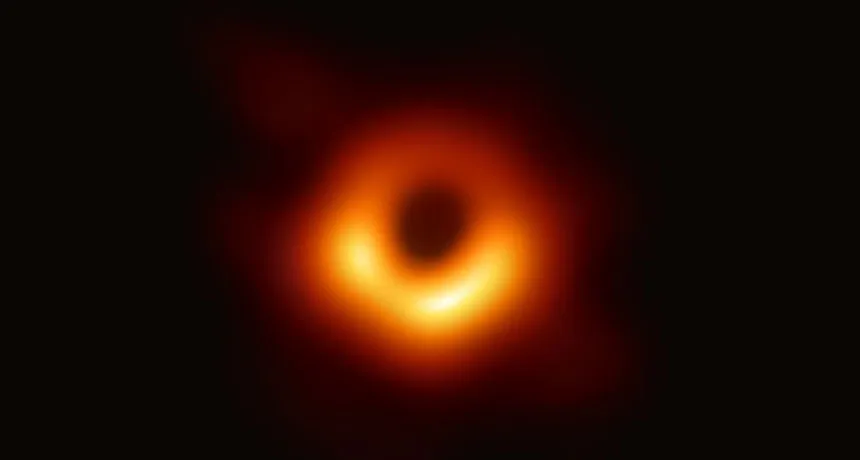
**INTO THE ABYSS** The first image of a black hole shows a bright ring with a dark, central spot. That ring is a bright disk of gas orbiting the supermassive behemoth in the galaxy M87, and the spot is the black hole’s shadow.
Event Horizon Telescope collaboration
By [Lisa Grossman](https://www.sciencenews.org/author/lisa-grossman "Posts by Lisa Grossman") and [Emily Conover](https://www.sciencenews.org/author/emily-conover "Posts by Emily Conover")
April 10, 2019 at 9:10 am - More than **2 years ago**
## Share this:
- [Share](https://www.sciencenews.org/article/black-hole-first-picture-event-horizon-telescope)
- [Share via email (Opens in new window) Email](mailto:?subject=The%20first%20picture%20of%20a%20black%20hole%20opens%20a%20new%20era%20of%20astrophysics&body=I%20saw%20this%20on%20Science%20News%3A%20https%3A%2F%2Fwww.sciencenews.org%2Farticle%2Fblack-hole-first-picture-event-horizon-telescope%3Futm_source%3Dinternal%26utm_medium%3Demail%26utm_campaign%3Demail_share)
- [Share on Facebook (Opens in new window) Facebook](https://www.sciencenews.org/article/black-hole-first-picture-event-horizon-telescope?share=facebook)
- [Share on Reddit (Opens in new window) Reddit](https://www.sciencenews.org/article/black-hole-first-picture-event-horizon-telescope?share=reddit)
- [Share on X (Opens in new window) X](https://www.sciencenews.org/article/black-hole-first-picture-event-horizon-telescope?share=twitter)
- [Print (Opens in new window) Print](https://www.sciencenews.org/article/black-hole-first-picture-event-horizon-telescope#print?share=print)
This is what a black hole looks like.
A world-spanning network of telescopes called the [Event Horizon Telescope](https://eventhorizontelescope.org/) zoomed in on the supermassive monster in the galaxy M87 to create this first-ever picture of a black hole.
“We have seen what we thought was unseeable. We have seen and taken a picture of a black hole,” Sheperd Doeleman, EHT Director and astrophysicist at the Harvard-Smithsonian Center for Astrophysics in Cambridge, Mass., said April 10 in Washington, D.C., at one of seven concurrent news conferences. The results were also published in six papers in the *Astrophysical Journal Letters*.
“We’ve been studying black holes so long, sometimes it’s easy to forget that none of us have actually seen one,” France Córdova, director of the National Science Foundation, said in the Washington, D.C., news conference. Seeing one “is a Herculean task,” she said.
### More on black holes
LUC NOVOVITCH/ALAMY STOCK PHOTO
- [How scientists took the first picture of a black hole](https://www.sciencenews.org/article/event-horizon-telescope-black-hole-picture)
- [All you need to know about the history of black holes](https://www.sciencenews.org/article/history-black-holes-science-news)
- [Editor’s pick: Event Horizon Telescope](https://www.sciencenews.org/editors-picks/event-horizon-telescope)
That’s because black holes are notoriously hard to see. Their gravity is so extreme that nothing, not even light, can escape across the boundary at a black hole’s edge, known as the event horizon. But some black holes, especially supermassive ones dwelling in galaxies’ centers, stand out by voraciously accreting bright disks of gas and other material. The EHT image reveals the shadow of M87’s black hole on its accretion disk. Appearing as a fuzzy, asymmetrical ring, it unveils for the first time a dark abyss of one of the universe’s most mysterious objects.
“It’s been such a buildup,” Doeleman said. “It was just astonishment and wonder… to know that you’ve uncovered a part of the universe that was off limits to us.”
The much-anticipated big reveal of the image “lives up to the hype, that’s for sure,” says Yale University astrophysicist Priyamvada Natarajan, who is not on the EHT team. “It really brings home how fortunate we are as a species at this particular time, with the capacity of the human mind to comprehend the universe, to have built all the science and technology to make it happen.” (*[SN Online: 4/10/19](https://www.sciencenews.org/article/event-horizon-telescope-black-hole-picture?tgt=nr)*)
The image aligns with expectations of what a black hole should look like based on Einstein’s general theory of relativity, which predicts how spacetime is warped by the extreme mass of a black hole. The picture is “one more strong piece of evidence supporting the existence of black holes. And that, of course, helps verify general relativity,” says physicist Clifford Will of the University of Florida in Gainesville who is not on the EHT team. “Being able to actually see this shadow and to detect it is a tremendous first step.”
Earlier studies have tested general relativity by looking at the [motions of stars](https://www.sciencenews.org/article/star-orbiting-black-hole-einstein-gravity-general-relativity) (*SN: 8/18/18, p. 12*) or [gas clouds](https://www.sciencenews.org/article/three-gas-clouds-nearly-grazed-edge-milky-way-black-hole) (*SN: 11/24/18, p. 16*) near a black hole, but never at its edge. “It’s as good as it gets,” Will says. Tiptoe any closer and you’d be inside the black hole — unable to report back on the results of any experiments.
**A BLACK HOLE’S HOME** The galaxy M87 sits about 55 million light-years from Earth in the constellation Virgo. Unlike the Milky Way’s stunning spirals, M87 is a blobby giant elliptical galaxy. The Event Horizon Telescope just took the first image of the black hole at M87’s center.Chris Mihos/Case Western Reserve Univ.,ESO
“Black hole environments are a likely place where general relativity would break down,” says EHT team member Feryal Özel, an astrophysicist at the University of Arizona in Tucson. So testing general relativity in such extreme conditions could reveal deviations from Einstein’s predictions.
Just because this first image upholds general relativity “doesn’t mean general relativity is completely fine,” she says. Many physicists think that general relativity won’t be the last word on gravity because it’s incompatible with another essential physics theory, quantum mechanics, which describes physics on very small scales.
### Popular Stories
1. [](https://www.sciencenews.org/article/glp1-medications-microdose-longevity)
[Health & Medicine](https://www.sciencenews.org/topic/health-medicine)
### [GLP-1 microdosers are chasing longevity](https://www.sciencenews.org/article/glp1-medications-microdose-longevity)
By [Jamie Ducharme](https://www.sciencenews.org/author/jamie-ducharme "Posts by Jamie Ducharme")
March 20, 2026
2. [](https://www.sciencenews.org/article/quantum-physics-location-security)
[Quantum Physics](https://www.sciencenews.org/topic/quantum-physics)
### [Quantum physics can confirm where someone is located](https://www.sciencenews.org/article/quantum-physics-location-security)
By [Emily Conover](https://www.sciencenews.org/author/emily-conover "Posts by Emily Conover")
March 30, 2026
3. [](https://www.sciencenews.org/article/moon-new-crater-nasa-orbiter)
[Space](https://www.sciencenews.org/topic/space)
### [In a rare event, the moon got a massive new crater](https://www.sciencenews.org/article/moon-new-crater-nasa-orbiter)
By [Lisa Grossman](https://www.sciencenews.org/author/lisa-grossman "Posts by Lisa Grossman")
March 23, 2026
The image also provides a new measurement of the black hole’s size and heft. “Our mass determination by just directly looking at the shadow has helped resolve a longstanding controversy,” Sera Markoff, a theoretical astrophysicist at the University of Amsterdam, said in the Washington, D.C., news conference. Estimates made using different techniques have ranged between 3.5 billion and 7.22 billion times the mass of the sun. But the new EHT measurements show that its mass is about 6.5 billion solar masses.
The team has also determined the behemoth’s size — its diameter stretches 38 billion kilometers — and that the black hole spins clockwise. “M87 is a monster even by supermassive black hole standards,” Markoff said.
EHT trained its sights on both M87’s black hole and Sagittarius A\*, the supermassive black hole at the center of the Milky Way. But, it turns out, it was easier to image M87’s monster. That black hole is 55 million light-years from Earth in the constellation Virgo, about 2,000 times as far as Sgr A\*. But it’s also about 1,000 times as massive as the Milky Way’s giant, which weighs the equivalent of roughly 4 million suns. That extra heft nearly balances out M87’s distance. “The size in the sky is pretty darn similar,” says EHT team member Feryal Özel.
The first real picture of the supermassive black hole at the center of galaxy M87. How? We explain.
Due to its gravitational oomph, gases swirling around M87’s black hole move and vary in brightness more slowly than they do around the Milky Way’s. “During a single observation, Sgr A\* doesn’t sit still, whereas M87 does,” says Özel, an astrophysicist at the University of Arizona in Tucson. “Just based on this ‘Does the black hole sit still and pose for me?’ point of view, we knew M87 would cooperate more.”
After more data analysis, the team hopes to solve some long-standing mysteries about black holes, such as how M87’s behemoth spews a bright jet of charged particles thousands of light-years into space.
This first image is like the “shot heard round the world” that kicked off the American Revolutionary War, says Harvard University astrophysicist Avi Loeb who isn’t on the EHT team. “It’s very significant; it gives a glimpse of what the future might hold, but it doesn’t give us all the information that we want.”
### Sign up for our newsletter
We summarize the week's scientific breakthroughs every Thursday.
Hopes are still high for a much-anticipated glimpse of Sgr A\*. The EHT team was able to collect some data on the Milky Way’s behemoth and are continuing to analyze that data, in the hopes of adding its image to the new black hole portrait gallery.
Since the appearance of that black hole changes so quickly, the team is having to develop new techniques to analyze the data. “We’re very excited to work on Sgr A\*,” Daniel Marrone, an astrophysicist at the University of Arizona in Tucson, said in the Washington, D.C., news conference. “We’re doing that shortly. We’re not promising anything but we hope to get that very soon.”
Studying such different environments could reveal more details of how black holes behave, Loeb says. “The Milky Way is a very different galaxy from M87.”
**FROM HERE TO ETERNITY** Some black holes launch jets of charged particles thousands of light-years into space, like the one shown in this image from a simulation. Data collected to create the first image of a black hole, the one in galaxy M87, may help reveal how the jets are produced. Jordy Davelaar et al./Radboud University, BlackHoleCam
The next look at the M87 and Milky Way behemoths will have to wait.
Scientists got a lucky stretch of good weather at all eight sites that made up the Event Horizon Telescope in 2017. Then bad weather in 2018 and technical difficulties, which cancelled the 2019 observing run, stymied the team.
Sponsor Message
The good news is that by 2020, there will be more observatories to work with. The [Greenland Telescope](https://www.cfa.harvard.edu/greenland12m/) joined the consortium in 2018, and the [Kitt Peak National Observatory](https://www.noao.edu/kpno/) outside Tucson, Ariz., and the [NOrthern Extended Millimeter Array](https://www.iram-institute.org/EN/noema-project.php?ContentID=9&rub=9&srub=0&ssrub=0&sssrub=0) (NOEMA) in the French Alps will join EHT in 2020.
Adding more telescopes could allow the team to extend the image, to better capture the jets that spew from the black hole. The researchers also plan to make observations using light of slightly higher frequency, which can further sharpen the image. And even bigger plans are on the horizon: “World domination is not enough for us; we also want to go to space,” Doeleman said.
These extra eyes may be just what’s needed to bring black holes into even greater focus.
***
*Staff writer Maria Temming contributed to this story.*
Questions or comments on this article? E-mail us at [feedback@sciencenews.org](mailto:feedback@sciencenews.org) \| [Reprints FAQ](https://www.sciencenews.org/permission-republish)
A version of this article appears in the [April 27, 2019](https://www.sciencenews.org/sn-magazine/april-27-2019) issue of Science News.
### Citations
[Editor's Pick: Event Horizon Telescope](https://www.sciencenews.org/editors-picks/event-horizon-telescope)
The Event Horizon Telescope Collaboration *et al*. [First M87 Event Horizon Telescope Results. I. The Shadow of the Supermassive Black Hole](https://iopscience.iop.org/article/10.3847/2041-8213/ab0ec7). *The Astrophysical Journal Letters*. Published online April 10, 2019. doi:10.3847/2041-8213/ab0cc7.
The Event Horizon Telescope Collaboration *et al*. [First M87 Event Horizon Telescope Results. II. Array and Instrumentation](https://iopscience.iop.org/article/10.3847/2041-8213/ab0c96). *The Astrophysical Journal Letters*. Published online April 10, 2019. doi:10.3847/2041-8213/ab0c96.
The Event Horizon Telescope Collaboration *et al*. [First M87 Event Horizon Telescope Results. III. Data Processing and Calibration](https://iopscience.iop.org/article/10.3847/2041-8213/ab0c57). *The Astrophysical Journal Letters*. Published online April 10, 2019. doi:10.3847/2041-8213/ab0c57.
The Event Horizon Telescope Collaboration *et al*. [First M87 Event Horizon Telescope Results. IV. Imaging the Central Supermassive Black Hole](https://iopscience.iop.org/article/10.3847/2041-8213/ab0e85). *The Astrophysical Journal Letters*. Published online April 10, 2019. doi:10.3847/2041-8213/ab0e85.
The Event Horizon Telescope Collaboration *et al.* [First M87 Event Horizon Telescope Results. V. Physical Origin of the Asymmetric Ring](https://iopscience.iop.org/article/10.3847/2041-8213/ab0f43). *The Astrophysical Journal Letters*. Published online April 10, 2019. doi:10.3847/2041-8213/ab0f43.
The Event Horizon Telescope Collaboration *et al.* [First M87 Event Horizon Telescope Results. VI. The Shadow and Mass of the Central Black Hole](https://iopscience.iop.org/article/10.3847/2041-8213/ab1141). *The Astrophysical Journal Letters*. Published online April 10, 2019. doi:10.3847/2041-8213/ab1141.
[](https://www.sciencenews.org/author/lisa-grossman)
### About [Lisa Grossman](https://www.sciencenews.org/author/lisa-grossman "Posts by Lisa Grossman")
- [E-mail](mailto:lgrossman@sciencenews.org)
- [X](https://x.com/astrolisa)
Lisa Grossman is the astronomy writer. She has a degree in astronomy from Cornell University and a graduate certificate in science writing from University of California, Santa Cruz. She lives in Minneapolis.
[](https://www.sciencenews.org/author/emily-conover)
### About [Emily Conover](https://www.sciencenews.org/author/emily-conover "Posts by Emily Conover")
- [E-mail](mailto:econover@sciencenews.org)
- [X](https://x.com/emcconover)
Senior physics writer Emily Conover has a Ph.D. in physics from the University of Chicago. She is a two-time winner of the D.C. Science Writers’ Association Newsbrief award and a winner of the Acoustical Society of America’s Science Communication Award.
We are at a critical time and ***supporting science journalism is more important than ever***. Science News and our parent organization, the Society for Science, need your help to strengthen scientific literacy and ensure that important societal decisions are made with science in mind.
Please [subscribe to Science News and **add \$16**](https://www.sciencenews.org/subscribe1-print-digital?key=9MENDCON&utm_source=end-of-article&utm_medium=site&utm_campaign=non-sub-control) to expand science literacy and understanding.
## More Stories from Science News on [Astronomy](https://www.sciencenews.org/topic/astronomy)
1. [](https://www.sciencenews.org/article/primitive-star-galaxy-early-universe)
[Astronomy](https://www.sciencenews.org/topic/astronomy)
### [A rare star in a tiny galaxy preserves a record of the early universe](https://www.sciencenews.org/article/primitive-star-galaxy-early-universe)
By [Jay Bennett](https://www.sciencenews.org/author/jay-bennett "Posts by Jay Bennett")
March 27, 2026
2. [](https://www.sciencenews.org/article/superluminous-supernova-magnetar)
[Astronomy](https://www.sciencenews.org/topic/astronomy)
### [A strange ‘chirp’ in a brilliant stellar blast points to a magnetar](https://www.sciencenews.org/article/superluminous-supernova-magnetar)
By [Jay Bennett](https://www.sciencenews.org/author/jay-bennett "Posts by Jay Bennett")
March 11, 2026
3. [](https://www.sciencenews.org/article/venus-massive-lava-tube-caves)
[Planetary Science](https://www.sciencenews.org/topic/planetary-science)
### [Venus has a massive lava tube](https://www.sciencenews.org/article/venus-massive-lava-tube-caves)
By [Tom Metcalfe](https://www.sciencenews.org/author/tom-metcalfe "Posts by Tom Metcalfe")
February 23, 2026
4. [](https://www.sciencenews.org/article/inside-out-planetary-system)
[Astronomy](https://www.sciencenews.org/topic/astronomy)
### [This inside-out planetary system has astronomers scratching their heads](https://www.sciencenews.org/article/inside-out-planetary-system)
By [Adam Mann](https://www.sciencenews.org/author/adam-mann "Posts by Adam Mann")
February 12, 2026
5. [](https://www.sciencenews.org/article/dark-matter-clump-milky-way)
[Physics](https://www.sciencenews.org/topic/physics)
### [A massive clump of dark matter may lurk in the Milky Way](https://www.sciencenews.org/article/dark-matter-clump-milky-way)
By [Emily Conover](https://www.sciencenews.org/author/emily-conover "Posts by Emily Conover")
January 29, 2026
6. [](https://www.sciencenews.org/article/double-explosion-by-star-superkilonova)
[Astronomy](https://www.sciencenews.org/topic/astronomy)
### [A double cosmic explosion could be the first known ‘superkilonova’](https://www.sciencenews.org/article/double-explosion-by-star-superkilonova)
By [Lisa Grossman](https://www.sciencenews.org/author/lisa-grossman "Posts by Lisa Grossman")
January 9, 2026
7. [](https://www.sciencenews.org/article/betelgeuse-supergiant-star-brightness)
[Space](https://www.sciencenews.org/topic/space)
### [Betelgeuse’s buddy leaves a wake in the giant star’s atmosphere](https://www.sciencenews.org/article/betelgeuse-supergiant-star-brightness)
By [Lisa Grossman](https://www.sciencenews.org/author/lisa-grossman "Posts by Lisa Grossman")
January 7, 2026
8. [](https://www.sciencenews.org/article/polar-structure-galaxies-stars-disks)
[Astronomy](https://www.sciencenews.org/topic/astronomy)
### [Galaxies with ‘hoop skirts’ are more common than we thought](https://www.sciencenews.org/article/polar-structure-galaxies-stars-disks)
By [Lisa Grossman](https://www.sciencenews.org/author/lisa-grossman "Posts by Lisa Grossman")
January 7, 2026
[Science News](https://www.sciencenews.org/)
Science News was founded in 1921 as an independent, nonprofit source of accurate information on the latest news of science, medicine and technology. Today, our mission remains the same: to empower people to evaluate the news and the world around them. It is published by the Society for Science, a nonprofit 501(c)(3) membership organization dedicated to public engagement in scientific research and education (EIN 53-0196483).
- [Science News Explores](https://www.snexplores.org/)
- [Science News Learning](https://www.sciencenews.org/learning/)
### Subscriber Services
- [Subscribe](https://www.sciencenews.org/subscribe1?key=9MFSUB&utm_source=sciencenews&utm_medium=footer&utm_campaign=sn-footer&tfa_3134=sn-footer)
- [Renew](https://sfsdata.com/SubscriberServices/AccountStart.html?PUB=SCN)
- [Give a Gift Subscription](https://www.sciencenews.org/give-a-gift?key=9MFGIFT&utm_source=link&utm_medium=footer&utm_campaign=gift)
- [Customer Service](https://sfsdata.com/SubscriberServices/AccountStart.html?PUB=SCN)
- [Follow Science News on Facebook](https://facebook.com/sciencenews)
- [Follow Science News on X](https://twitter.com/sciencenews)
- [Follow Science News via RSS](https://www.sciencenews.org/feed/)
- [Follow Science News on Instagram](https://www.instagram.com/sciencenewsmagazine/)
- [Follow Science News on YouTube](https://www.youtube.com/channel/UCBX5er6E37_yWB3gCM32p3g)
- [Follow Science News on TikTok](https://www.tiktok.com/@sciencenewsofficial)
- [Follow Science News on Reddit](https://www.reddit.com/u/Science_News)
- [Follow Science News on Threads](https://www.threads.com/@sciencenewsmagazine)
### More Information
- [FAQ](https://www.sciencenews.org/about-science-news/frequently-asked-questions)
- [Newsletters](https://www.sciencenews.org/newsletters)
- [Rights & Permissions](https://www.sciencenews.org/permission-republish)
- [Advertise](https://www.sciencenews.org/advertise-science-news)
- [Contact](https://www.sciencenews.org/about-science-news/contact-us)
### Society for Science
- [About the Society](https://www.societyforscience.org/)
- [Society Store](https://www.societyforscience.org/store/)
- [Donate](https://www.sciencenews.org/give)
- [Careers](https://www.societyforscience.org/jobs-and-internships)
© Society for Science & the Public 2000–2026. All rights reserved.
1776 Massachusetts Ave NW, Washington, DC 20036 [202\.785.2255](tel:202.785.2255)
[Terms of Service](https://www.sciencenews.org/terms-of-service) [Privacy Policy](https://www.sciencenews.org/privacy-policy)
Privacy Manager
Close
## Log in
Subscribers, enter your e-mail address for full access to the *Science News* archives and digital editions.
Not a subscriber?
[Become one now](https://www.sciencenews.org/subscription?utm_source=sciencenews&utm_medium=login&utm_campaign=sn-login&tfa_3134=sn-login).
Use up and down arrow keys to explore.Use right arrow key to move into the list.Use left arrow key to move back to the parent list.Use tab key to enter the current list item.Use escape to exit the menu.Use the Shift key with the Tab key to tab back to the search input.

## Looks like your ad blocker is on.
×
We rely on ads to keep creating quality content for you to enjoy for free.
Please support our site by disabling your ad blocker.
Disable
Continue without supporting us
#### Choose your Ad Blocker
- Adblock Plus
- Adblock
- Adguard
- Ad Remover
- Brave
- Ghostery
- uBlock Origin
- uBlock
- UltraBlock
- Other
1. In the extension bar, click the AdBlock Plus icon
2. Click the large blue toggle for this website
3. Click refresh
1. In the extension bar, click the AdBlock icon
2. Under "Pause on this site" click "Always"
1. In the extension bar, click on the Adguard icon
2. Click on the large green toggle for this website
1. In the extension bar, click on the Ad Remover icon
2. Click "Disable on This Website"
1. In the extension bar, click on the orange lion icon
2. Click the toggle on the top right, shifting from "Up" to "Down"
1. In the extension bar, click on the Ghostery icon
2. Click the "Anti-Tracking" shield so it says "Off"
3. Click the "Ad-Blocking" stop sign so it says "Off"
4. Refresh the page
1. In the extension bar, click on the uBlock Origin icon
2. Click on the big, blue power button
3. Refresh the page
1. In the extension bar, click on the uBlock icon
2. Click on the big, blue power button
3. Refresh the page
1. In the extension bar, click on the UltraBlock icon
2. Check the "Disable UltraBlock" checkbox
1. Please disable your Ad Blocker
2. Disable any DNS blocking tools such as AdGuardDNS or NextDNS
3. Disable any privacy or tracking protection extensions such as Firefox Enhanced Tracking Protection or DuckDuckGo Privacy.
If the prompt is still appearing, please disable any tools or services you are using that block internet ads (e.g. DNS Servers, tracking protection or privacy extensions).
Go Back | ||||||
| Readable Markdown | This is what a black hole looks like.
A world-spanning network of telescopes called the [Event Horizon Telescope](https://eventhorizontelescope.org/) zoomed in on the supermassive monster in the galaxy M87 to create this first-ever picture of a black hole.
“We have seen what we thought was unseeable. We have seen and taken a picture of a black hole,” Sheperd Doeleman, EHT Director and astrophysicist at the Harvard-Smithsonian Center for Astrophysics in Cambridge, Mass., said April 10 in Washington, D.C., at one of seven concurrent news conferences. The results were also published in six papers in the *Astrophysical Journal Letters*.
“We’ve been studying black holes so long, sometimes it’s easy to forget that none of us have actually seen one,” France Córdova, director of the National Science Foundation, said in the Washington, D.C., news conference. Seeing one “is a Herculean task,” she said.
That’s because black holes are notoriously hard to see. Their gravity is so extreme that nothing, not even light, can escape across the boundary at a black hole’s edge, known as the event horizon. But some black holes, especially supermassive ones dwelling in galaxies’ centers, stand out by voraciously accreting bright disks of gas and other material. The EHT image reveals the shadow of M87’s black hole on its accretion disk. Appearing as a fuzzy, asymmetrical ring, it unveils for the first time a dark abyss of one of the universe’s most mysterious objects.
“It’s been such a buildup,” Doeleman said. “It was just astonishment and wonder… to know that you’ve uncovered a part of the universe that was off limits to us.”
The much-anticipated big reveal of the image “lives up to the hype, that’s for sure,” says Yale University astrophysicist Priyamvada Natarajan, who is not on the EHT team. “It really brings home how fortunate we are as a species at this particular time, with the capacity of the human mind to comprehend the universe, to have built all the science and technology to make it happen.” (*[SN Online: 4/10/19](https://www.sciencenews.org/article/event-horizon-telescope-black-hole-picture?tgt=nr)*)
The image aligns with expectations of what a black hole should look like based on Einstein’s general theory of relativity, which predicts how spacetime is warped by the extreme mass of a black hole. The picture is “one more strong piece of evidence supporting the existence of black holes. And that, of course, helps verify general relativity,” says physicist Clifford Will of the University of Florida in Gainesville who is not on the EHT team. “Being able to actually see this shadow and to detect it is a tremendous first step.”
Earlier studies have tested general relativity by looking at the [motions of stars](https://www.sciencenews.org/article/star-orbiting-black-hole-einstein-gravity-general-relativity) (*SN: 8/18/18, p. 12*) or [gas clouds](https://www.sciencenews.org/article/three-gas-clouds-nearly-grazed-edge-milky-way-black-hole) (*SN: 11/24/18, p. 16*) near a black hole, but never at its edge. “It’s as good as it gets,” Will says. Tiptoe any closer and you’d be inside the black hole — unable to report back on the results of any experiments.

**A BLACK HOLE’S HOME** The galaxy M87 sits about 55 million light-years from Earth in the constellation Virgo. Unlike the Milky Way’s stunning spirals, M87 is a blobby giant elliptical galaxy. The Event Horizon Telescope just took the first image of the black hole at M87’s center.Chris Mihos/Case Western Reserve Univ.,ESO
“Black hole environments are a likely place where general relativity would break down,” says EHT team member Feryal Özel, an astrophysicist at the University of Arizona in Tucson. So testing general relativity in such extreme conditions could reveal deviations from Einstein’s predictions.
Just because this first image upholds general relativity “doesn’t mean general relativity is completely fine,” she says. Many physicists think that general relativity won’t be the last word on gravity because it’s incompatible with another essential physics theory, quantum mechanics, which describes physics on very small scales.
The image also provides a new measurement of the black hole’s size and heft. “Our mass determination by just directly looking at the shadow has helped resolve a longstanding controversy,” Sera Markoff, a theoretical astrophysicist at the University of Amsterdam, said in the Washington, D.C., news conference. Estimates made using different techniques have ranged between 3.5 billion and 7.22 billion times the mass of the sun. But the new EHT measurements show that its mass is about 6.5 billion solar masses.
The team has also determined the behemoth’s size — its diameter stretches 38 billion kilometers — and that the black hole spins clockwise. “M87 is a monster even by supermassive black hole standards,” Markoff said.
EHT trained its sights on both M87’s black hole and Sagittarius A\*, the supermassive black hole at the center of the Milky Way. But, it turns out, it was easier to image M87’s monster. That black hole is 55 million light-years from Earth in the constellation Virgo, about 2,000 times as far as Sgr A\*. But it’s also about 1,000 times as massive as the Milky Way’s giant, which weighs the equivalent of roughly 4 million suns. That extra heft nearly balances out M87’s distance. “The size in the sky is pretty darn similar,” says EHT team member Feryal Özel.
The first real picture of the supermassive black hole at the center of galaxy M87. How? We explain.
Due to its gravitational oomph, gases swirling around M87’s black hole move and vary in brightness more slowly than they do around the Milky Way’s. “During a single observation, Sgr A\* doesn’t sit still, whereas M87 does,” says Özel, an astrophysicist at the University of Arizona in Tucson. “Just based on this ‘Does the black hole sit still and pose for me?’ point of view, we knew M87 would cooperate more.”
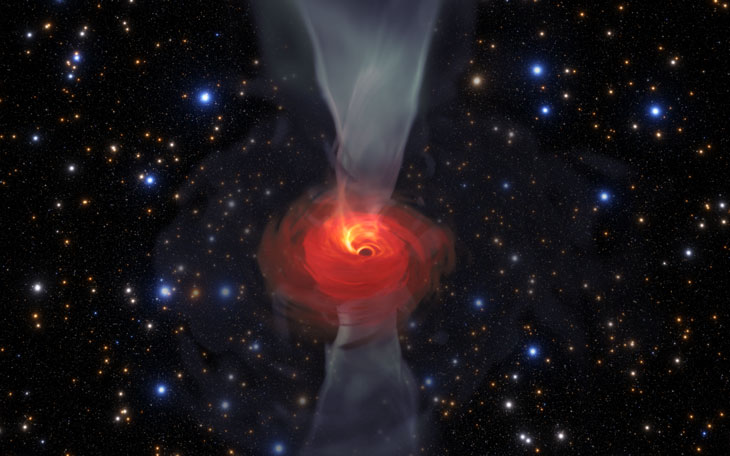
After more data analysis, the team hopes to solve some long-standing mysteries about black holes, such as how M87’s behemoth spews a bright jet of charged particles thousands of light-years into space.
This first image is like the “shot heard round the world” that kicked off the American Revolutionary War, says Harvard University astrophysicist Avi Loeb who isn’t on the EHT team. “It’s very significant; it gives a glimpse of what the future might hold, but it doesn’t give us all the information that we want.”
Sign up for our newsletter
We summarize the week's scientific breakthroughs every Thursday.
Hopes are still high for a much-anticipated glimpse of Sgr A\*. The EHT team was able to collect some data on the Milky Way’s behemoth and are continuing to analyze that data, in the hopes of adding its image to the new black hole portrait gallery.
Since the appearance of that black hole changes so quickly, the team is having to develop new techniques to analyze the data. “We’re very excited to work on Sgr A\*,” Daniel Marrone, an astrophysicist at the University of Arizona in Tucson, said in the Washington, D.C., news conference. “We’re doing that shortly. We’re not promising anything but we hope to get that very soon.”
Studying such different environments could reveal more details of how black holes behave, Loeb says. “The Milky Way is a very different galaxy from M87.”

**FROM HERE TO ETERNITY** Some black holes launch jets of charged particles thousands of light-years into space, like the one shown in this image from a simulation. Data collected to create the first image of a black hole, the one in galaxy M87, may help reveal how the jets are produced. Jordy Davelaar et al./Radboud University, BlackHoleCam
The next look at the M87 and Milky Way behemoths will have to wait.
Scientists got a lucky stretch of good weather at all eight sites that made up the Event Horizon Telescope in 2017. Then bad weather in 2018 and technical difficulties, which cancelled the 2019 observing run, stymied the team.
The good news is that by 2020, there will be more observatories to work with. The [Greenland Telescope](https://www.cfa.harvard.edu/greenland12m/) joined the consortium in 2018, and the [Kitt Peak National Observatory](https://www.noao.edu/kpno/) outside Tucson, Ariz., and the [NOrthern Extended Millimeter Array](https://www.iram-institute.org/EN/noema-project.php?ContentID=9&rub=9&srub=0&ssrub=0&sssrub=0) (NOEMA) in the French Alps will join EHT in 2020.
Adding more telescopes could allow the team to extend the image, to better capture the jets that spew from the black hole. The researchers also plan to make observations using light of slightly higher frequency, which can further sharpen the image. And even bigger plans are on the horizon: “World domination is not enough for us; we also want to go to space,” Doeleman said.
These extra eyes may be just what’s needed to bring black holes into even greater focus.
***
*Staff writer Maria Temming contributed to this story.* | ||||||
| ML Classification | |||||||
| ML Categories |
Raw JSON{
"/Science": 996,
"/Science/Astronomy": 993
} | ||||||
| ML Page Types |
Raw JSON{
"/Article": 998,
"/Article/News_Update": 947
} | ||||||
| ML Intent Types |
Raw JSON{
"Informational": 999
} | ||||||
| Content Metadata | |||||||
| Language | en-us | ||||||
| Author | null | ||||||
| Publish Time | 2019-04-10 13:10:20 (7 years ago) | ||||||
| Original Publish Time | 2019-04-10 13:10:20 (7 years ago) | ||||||
| Republished | No | ||||||
| Word Count (Total) | 3,217 | ||||||
| Word Count (Content) | 1,418 | ||||||
| Links | |||||||
| External Links | 32 | ||||||
| Internal Links | 117 | ||||||
| Technical SEO | |||||||
| Meta Nofollow | No | ||||||
| Meta Noarchive | No | ||||||
| JS Rendered | Yes | ||||||
| Redirect Target | null | ||||||
| Performance | |||||||
| Download Time (ms) | 840 | ||||||
| TTFB (ms) | 815 | ||||||
| Download Size (bytes) | 173,417 | ||||||
| Shard | 70 (laksa) | ||||||
| Root Hash | 11628747150769427070 | ||||||
| Unparsed URL | org,sciencenews!www,/article/black-hole-first-picture-event-horizon-telescope s443 | ||||||