ℹ️ Skipped - page is already crawled
| Filter | Status | Condition | Details |
|---|---|---|---|
| HTTP status | PASS | download_http_code = 200 | HTTP 200 |
| Age cutoff | PASS | download_stamp > now() - 6 MONTH | 0 months ago |
| History drop | PASS | isNull(history_drop_reason) | No drop reason |
| Spam/ban | PASS | fh_dont_index != 1 AND ml_spam_score = 0 | ml_spam_score=0 |
| Canonical | PASS | meta_canonical IS NULL OR = '' OR = src_unparsed | Not set |
| Property | Value |
|---|---|
| URL | https://www.rmg.co.uk/stories/space-astronomy/how-many-people-have-walked-on-moon |
| Last Crawled | 2026-04-19 04:32:06 (21 hours ago) |
| First Indexed | 2025-05-22 03:06:59 (11 months ago) |
| HTTP Status Code | 200 |
| Meta Title | How many people have walked on the Moon? | Royal Museums Greenwich |
| Meta Description | Including the Apollo 11 mission, 12 men have walked on the Moon. But who were they? |
| Meta Canonical | null |
| Boilerpipe Text | How many people have walked on the Moon?
The first crewed lunar landing in 1969 was a historic triumph for the USA and humankind. Including the Apollo 11 mission, 12 men have walked on the Moon. But who were they?
Who was the first person on the Moon?
At 02:56 GMT on 21 July 1969, American astronaut Neil Armstrong became the first person to walk on the Moon. He stepped out of the Apollo 11 lunar module and onto the Moon's surface, in an area called the 'Sea of Tranquility.'
Armstrong reported the lunar module's safe landing at 20:17 GMT with the words: "Houston, Tranquility Base here. The Eagle has landed." As he put his left foot onto the Moon, Armstrong declared: "That's one small step for man, one giant leap for mankind."
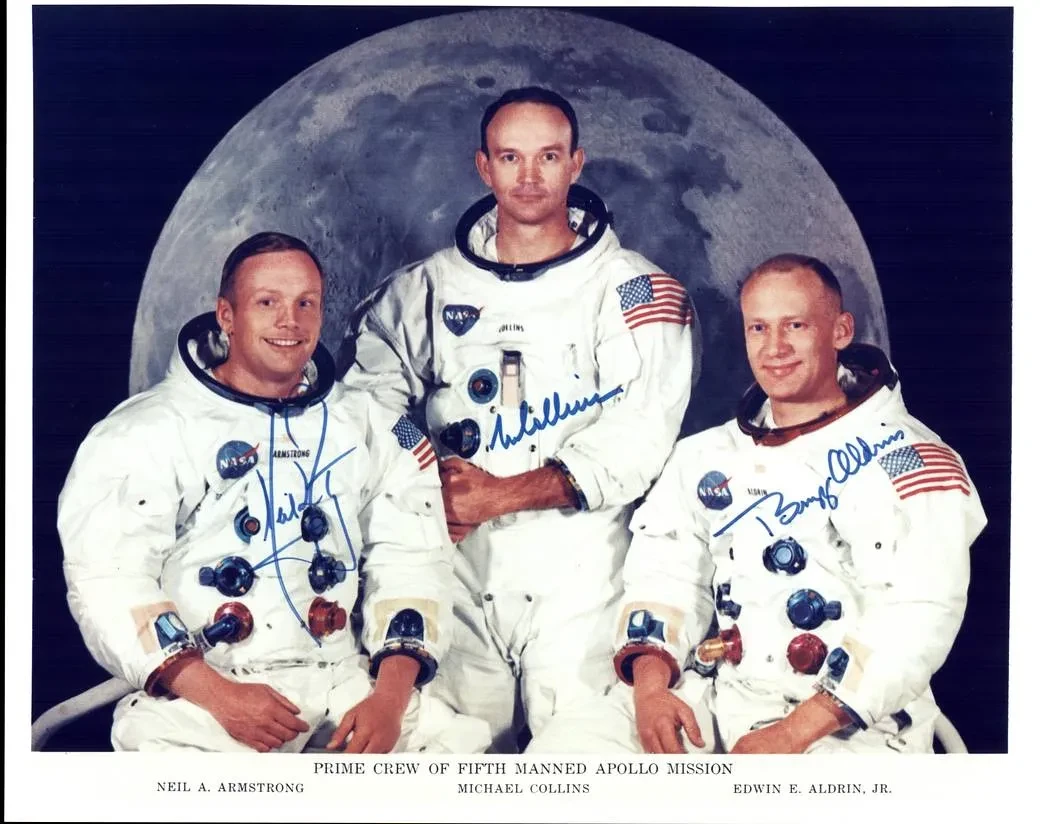
At 03:15 GMT, Armstrong was joined by the lunar module pilot, Edwin "Buzz" Aldrin. The two colleagues collected data and soil samples before planting the US flag at 03:41 GMT. They also unveiled a plaque bearing President Nixon's signature and an inscription reading:
"Here men from the planet Earth first set foot upon the Moon July 1969 AD. We came in peace for all mankind."
As Aldrin and Armstrong collected samples, Michael Collins told Mission Control that he had successfully orbited the Moon in the mothership Columbia, and take-off was scheduled for 17:50 GMT.
Find out more about the Apollo 11 crew
Neil Armstrong Facts
This content is hosted by a third party
Please allow all cookies to watch the video.
Manage cookie preferences
Early life
Neil Armstrong was born on 5 August 1930 in Ohio, United States. He began flying at a young age after being fascinated by planes in an air show. On his 16th birthday, he received his pilot's licence and later studied aerospace engineering at Purdue University.
Neil Armstrong's Education
During college, Armstrong joined the Navy and became a fighter pilot and fought in the Korean War, flying fighter jets from aircraft carriers. After graduating, he became a test pilot. Armstrong learnt to fly over 200 different types of aircraft, including the X15 rocket plane which could reach top speeds of over 4,000 miles per hour.
Neil Armstrong joins NASA
Armstrong became a member of NASA when it was established on 1 October 1958. He was selected for Project Gemini, NASA's second human spaceflight programme on 17 September 1962. It paved the way for the Apollo 11 mission to the Moon.
Neil Armstrong on the Moon
At 02:56 GMT on 21 July 1969, Armstrong became the first person to step onto the Moon. He was joined by Aldrin 19 minutes later. The two spent about two hours together outside the lunar module, taking photographs and collecting 21.5 kg of lunar material to be tested back on Earth. The video recording of his moonwalk was transmitted to Mission Control in Houston and watched by 530 million people on television across the world.
Armstrong's career after the Moon landing
Neil Armstrong had a varied career following his trip to the Moon. He retired from NASA in 1971, announcing he would not fly in space again. He then became the Professor of Aerospace Engineering at the University of Cincinnati in the US. He also acted as a spokesman for several businesses, only accepting roles within American companies. These companies include car manufacturer, Chrysler and General Time Corporation.
Armstrong's death
Neil Armstrong died of heart complications on 25 August 2012 in Cincinnati, Ohio. NASA administrator and former astronaut, Charles Bolden said of Armstrong,
"As long as there are history books, Neil Armstrong will be included in them, remembered for taking humankind's first small step on a world beyond our own."
Neil Armstrong's legacy
Following his death, NASA named a lunar crater and an asteroid after Armstrong. As well as many schools and streets across America, The Armstrong Air and Space Museum in his hometown of Wapakoneta and the airport in New Knoxville, Ohio (where he took his first flying lessons) are also both named in his honour.
How many people have been on the Moon?
A total of 12 male astronauts have landed on the Moon, all of whom were part of the US Apollo mission programme. These six crewed lunar landings occurred between July 1969 and December 1972. The following astronauts have been to the Moon (in order of setting foot on the lunar surface):
Apollo 11
Neil Armstrong, Buzz Aldrin
Apollo 12
Pete Conrad, Alan Bean
Apollo 14
Alan Shepard, Edgar Mitchell
Apollo 15
David Scott, James Irwin
Apollo 16
John Young, Charles Duke
Apollo 17
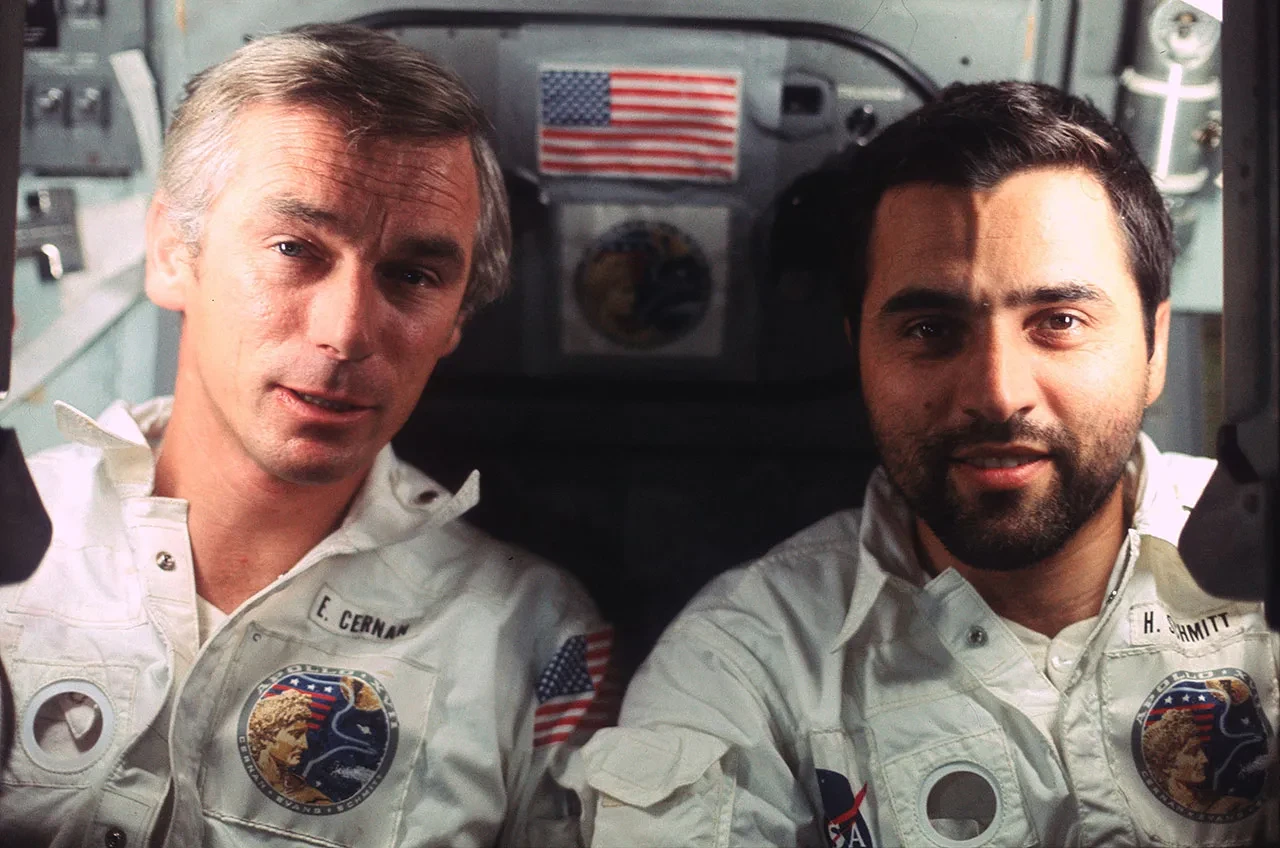
Gene Cernan, Harrison Schmitt
This number of men who have been on the Moon was almost 14. As part of the Apollo 13 mission, Jim Lovell and Fred Haise were scheduled to walk on the Moon, but the lunar landing had to be aborted after an oxygen tank exploded two days later. The Apollo 13 mission did set a record as the farthest humans have ever travelled from Earth. Haise was meant to again walk on the Moon as part of the Apollo 19 mission. However, the programme was cancelled due to budgetary cuts and the US focus on renovating the Skylab space station.
Michael Cernan and Harrison Schmitt before the Apollo 17 mission to the moon
How long does it take to get to the Moon?
A range of factors determine how long it takes to reach the Moon, such as the type of rocket, the distance between the Earth and Moon, and the flight path the spacecraft takes.
Earth's distance from the Moon
As the Moon's journey around the Earth is elliptical, the distance changes within its 27 days orbit. At its closest approach, the Moon reaches 225,623 miles and at its furthest, it is 252,088 miles away from the Earth.
Find out more about how far away the Moon is
Crewed missions
Crewed missions tend to take longer than passenger-free spacecraft due to the additional size and weight needed to support human life. Whether the object orbits or lands on the Moon will also determine the speed.
The first human-made object to reach the Moon
Launched on 2 January 1959, the Soviet Union probe Luna 1 travelled to within almost 4000 miles of the Moon's surface in 34 hours. The mission's original objective was to land on the Moon, but the probe went too fast. It ended up in orbit around the Sun somewhere between Earth and Mars, where it remains today.
The first crewed mission to reach the Moon
The Apollo 11 mission in 1969, crewed by three astronauts took four days, six hours and 45 minutes. Apollo 10 holds the record for the highest velocity reached by a crewed spacecraft at 24,791 miles per hour.
The fastest object to pass the Moon
The quickest flight to the Moon without stopping was the New Horizons probe launched by NASA on 19 January 2006. This passed the Moon in 8 hours and 35 minutes on its way to Pluto. However, the spacecraft didn't even slow down or approach lunar orbit.
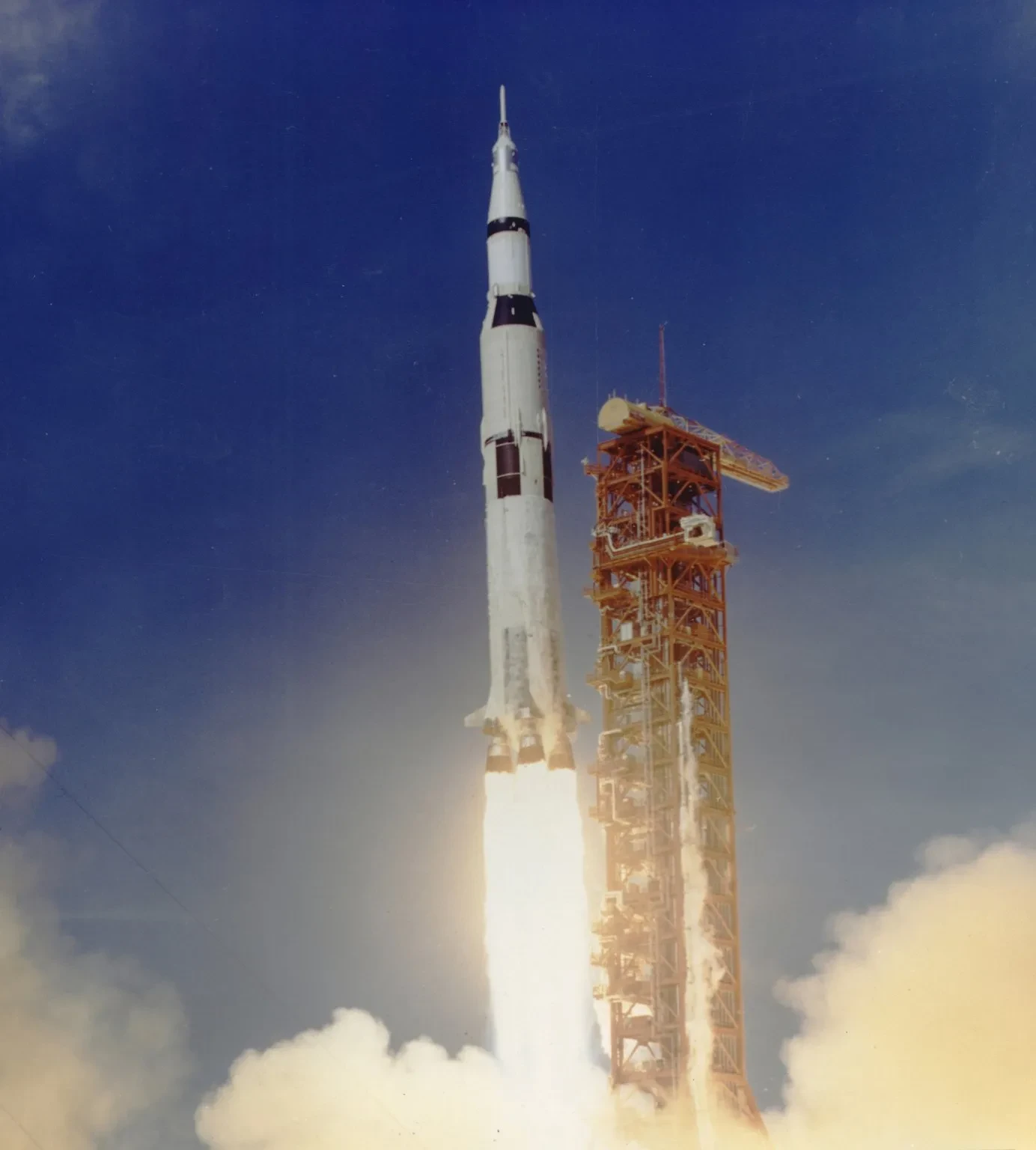
Apollo 11 Launched Via Saturn V Rocket. 16 July 1969 at the Kennedy Space Centre (via
NASA
)
Discover great photos of the Moon
Visit the Insight Investment Astronomy Photographer of the Year exhibition
Who was the last person to walk on the Moon?
The last two people to land on the Moon were Eugene Cernan and Harrison Schmitt, both astronauts part of NASA's Apollo 17 mission. They landed in the Taurus-Littrow valley on 11 December 1972 and departed on 14 December. During this time, they explored the lunar surface for around seven hours each day, collecting samples and driving in a lunar rover vehicle. They spent 22 hours on the Moon in total. Cernan's final words before lifting off were
"As we leave the Moon at Taurus-Littrow, we leave as we came and, God willing, as we shall return, with peace and hope for all mankind."
Moon landing facts
The objective of the Apollo programme wasn't originally a lunar landing. When it was announced in 1960, the Apollo project's goal was to send a three-person crew to orbit the Moon, not land on it. It wasn't until US President John F. Kennedy delivered his famous speech in May 1961 that a return journey from the Moon's surface became the programme's intention.
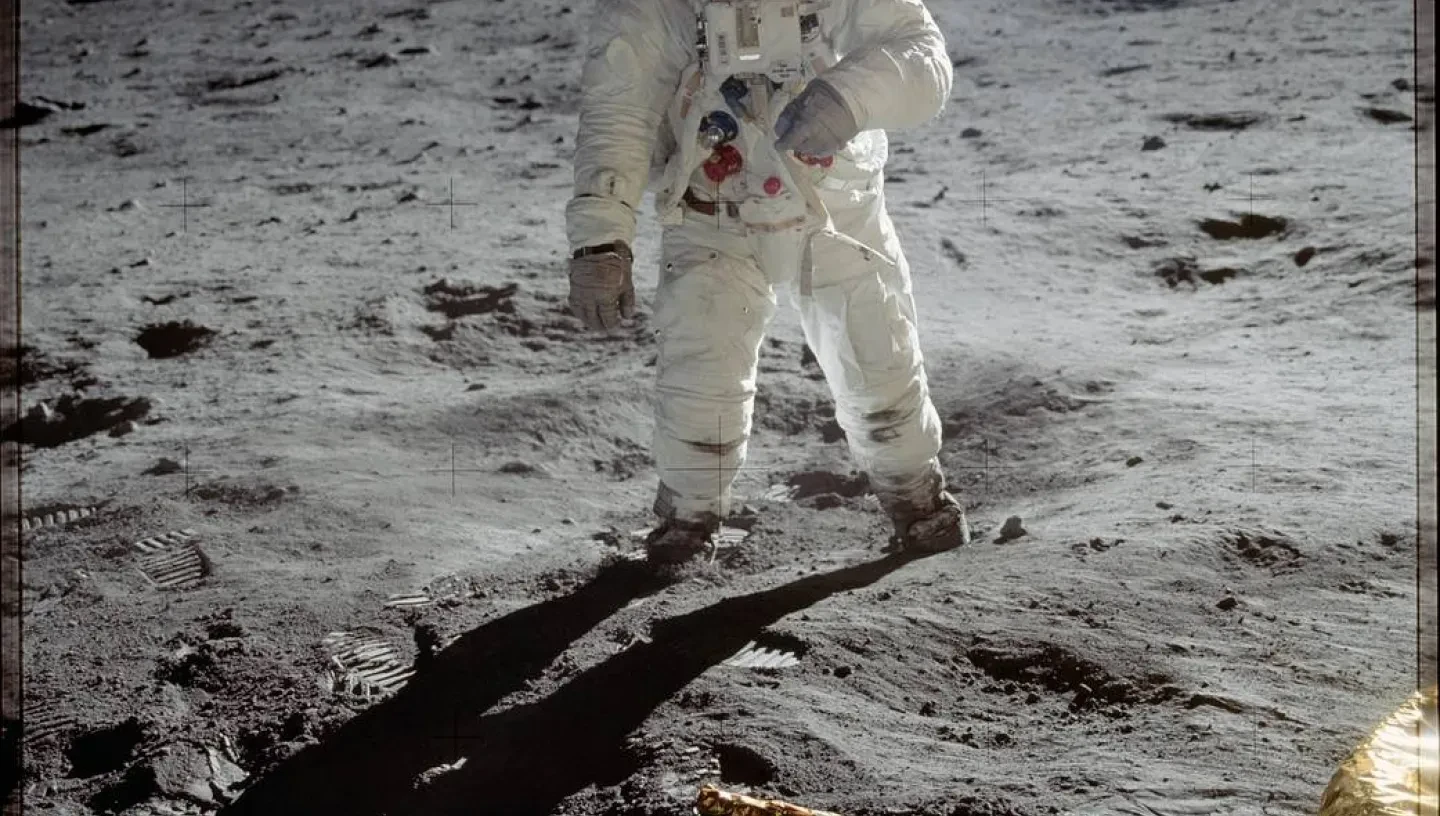
As Neil Armstrong was the photographer of the trip, almost all of the still images are of astronaut Buzz Aldrin walking on the Moon, not Neil Armstrong.
Saturn V, the rocket used in the Apollo missions, remains the largest rocket ever successfully to launch, weighing over 2.9 million kilograms. It also never lost any crew members or payloads between 1967 and 1973.
During the final stage of the lunar landing, Neil had to take over and control the lunar module manually in order to avoid a rocky landing site. If it had taken him 23 seconds more, the fuel levels would have been too low to continue the mission.
Armstrong's first step onto the Moon wasn't small at all. As Armstrong landed the Lunar Module onto the Moon's surface so lightly, the shock absorbers did not compress. This meant his first step was over a metre jump.
Before the Apollo missions, NASA was unsure as to whether the Moon environment contained microbes or toxins. When the crews of Apollo 11, 12 and 14 returned to Earth, they were placed in quarantine for several weeks. With the Apollo 12 mission in November 1969, the astronauts were even forced to spend Thanksgiving inside a quarantined zone, so a turkey dinner was specially prepared for them. Fortunately for the crews of Apollo 15, 16 and 17, NASA concluded there was no risk of contamination and scrapped its quarantine measures in 1971.
Photograph by Neil Armstrong of Apollo 11 astronaut Buzz Aldrin
How many flags are on the Moon?
A total of six flags have been planted on the Moon – one for each US Apollo landing. Unfortunately, Apollo 11's flag was too close to the landing module and was knocked over by the exhaust when the module launched again. More recently, higher resolution images from the Lunar Reconnaissance Orbiter show that the other five remain standing. The flags were made of ordinary nylon, so they have all long since been bleached white by the Sun's UV radiation. |
| Markdown | [Skip to main content](https://www.rmg.co.uk/stories/space-astronomy/how-many-people-have-walked-on-moon#main-content)
- [Membership](https://www.rmg.co.uk/membership)
- [Donate](https://tickets.rmg.co.uk/webstore/shop/viewItems.aspx?cg=RMGDON&c=DEVDON)
- [Shop](https://shop.rmg.co.uk/)
- [Venue hire](https://www.rmg.co.uk/venue-hire)
- [Search](https://www.rmg.co.uk/stories/space-astronomy/how-many-people-have-walked-on-moon#search)
Main navigation
Menu
[Search](https://www.rmg.co.uk/stories/space-astronomy/how-many-people-have-walked-on-moon#search)
Close
- Plan your visit
Back
[Plan your visit](https://www.rmg.co.uk/plan-your-visit)
- [Tickets and prices](https://www.rmg.co.uk/plan-your-visit/tickets-prices)
- [Getting here](https://www.rmg.co.uk/plan-your-visit/getting-here)
- [Accessibility](https://www.rmg.co.uk/plan-your-visit/facilities-access)
- [Family visits](https://www.rmg.co.uk/plan-your-visit/families)
- [Group visits](https://www.rmg.co.uk/plan-your-visit/groups)
- [School visits](https://www.rmg.co.uk/schools-communities/school-sessions)
 Cutty Sark
[Cutty Sark Open daily 10am-5pm Last entry 4.15pm Adult: £22 \| Child: £11 Members go free](https://www.rmg.co.uk/cutty-sark)
 Free National Maritime Museum
[National Maritime Museum Open daily 10am-5pm Last entry 4.15pm Free entry Booking recommended](https://www.rmg.co.uk/national-maritime-museum)
 Free Queen's House
[Queen's House Open daily 10am-5pm Last entry 4.15pm Free entry Booking recommended](https://www.rmg.co.uk/queens-house)
 Royal Observatory
[Royal Observatory Open daily 10am-5pm Last entry 4.15pm Adult: £24 \| Child: £12 Members go free](https://www.rmg.co.uk/royal-observatory)
- What's on
Back
[What's on](https://www.rmg.co.uk/whats-on)
- [Exhibitions](https://www.rmg.co.uk/whats-on?type=exhibitions)
- [For families](https://www.rmg.co.uk/whats-on?audience=families)
- [Member events](https://www.rmg.co.uk/whats-on?audience=members)
- [Talks and tours](https://www.rmg.co.uk/whats-on?page=1&type=talks%20and%20tours)
 National Maritime Museum Exhibitions
[ZWO Astronomy Photographer of the Year exhibition](https://www.rmg.co.uk/whats-on/astronomy-photographer-year/exhibition)
See the world's greatest space photography at the National Maritime Museum
 Prince Philip Maritime Collections Centre Events and festivals
[Experimental Saturdays](https://www.rmg.co.uk/whats-on/prince-philip-maritime-collections-centre/experimental-saturdays)
Experimental Saturdays brings people together at the Prince Philip Maritime Collections Centre for workshops that spark conversation, creativity and connection
 National Maritime Museum Family fun
[Astronomers Take Over](https://www.rmg.co.uk/whats-on/national-maritime-museum/astronomers-take-over)
This brand-new interactive gallery gives curious minds aged 4 to 104 the space to play, learn and explore\!
- Stories
Back
[Stories](https://www.rmg.co.uk/stories)
- [Maritime history](https://www.rmg.co.uk/stories/maritime-history)
- [Space and astronomy](https://www.rmg.co.uk/stories/space-astronomy)
- [Art and culture](https://www.rmg.co.uk/stories/art-culture)
- [The ocean](https://www.rmg.co.uk/stories/ocean)
- [Time](https://www.rmg.co.uk/stories/time)
- [Royal history](https://www.rmg.co.uk/stories/royal-history)

[Must-see artworks in the Queen's House](https://www.rmg.co.uk/stories/art-culture/highlights-queens-house-refresh)
What to look out for in the inspiring new take on the Queen’s House’s displays in 2026
[Artemis Programme: what you need to know about NASA’s Moon missions](https://www.rmg.co.uk/stories/space-astronomy/nasa-moon-mission-artemis-program-launch-date)
NASA's Artemis missions aim to land humans on the Moon again, create a lunar base, and lay the groundwork for a future trip to Mars
[Making Waves: Dr Dawn Wright](https://www.rmg.co.uk/stories/ocean/making-waves-dr-dawn-wright)
Oceanographer and chief scientist Dr Dawn Wright on diving to the deepest part of the ocean – and why we need to stand up for our blue planet
- Collections
Back
[Collections](https://www.rmg.co.uk/collections)
- [Conservation](https://www.rmg.co.uk/collections/conservation)
- [Research](https://www.rmg.co.uk/collections/research-collections)
- [Donating items to our collection](https://www.rmg.co.uk/collections/donate-item-our-collections)
[Collections Online](https://www.rmg.co.uk/collections/collections-online)
Search our online database and explore our objects, paintings, archives and library collections from home

[The Prince Philip Maritime Collections Centre](https://www.rmg.co.uk/collections/prince-philip-maritime-collections-centre)
Come behind the scenes at our state-of-the-art conservation studio

[Caird Library](https://www.rmg.co.uk/collections/caird-library)
Visit the world's largest maritime library and archive collection at the National Maritime Museum
- Learn
Back
[Learn](https://www.rmg.co.uk/schools-communities)
- [School trips and workshops](https://www.rmg.co.uk/schools-communities/school-sessions)
- [Self-guided school visits](https://www.rmg.co.uk/schools-communities/self-guided-school-visits)
- [Online resources and activities](https://www.rmg.co.uk/schools-communities/schools-resources)
- [Booking an on-site schools session](https://www.rmg.co.uk/schools-communities/booking-onsite-schools-session)
- [Booking a digital schools session](https://www.rmg.co.uk/schools-communities/booking-digital-schools-session)
- [Young people and youth groups](https://www.rmg.co.uk/schools-communities/young-people)
- Support us
Back
[Support us](https://www.rmg.co.uk/support-us)
- [Become a member](https://www.rmg.co.uk/membership)
- [Donate](https://www.rmg.co.uk/support-us/donate)
- [Corporate partnerships](https://www.rmg.co.uk/support-us/corporate-partnerships)
- [Become a patron](https://www.rmg.co.uk/support-us/become-patron)
- [Leave a legacy](https://www.rmg.co.uk/support-us/legacy)
- [Commemoration and celebration](https://www.rmg.co.uk/support-us/commemorative-giving)
## Our sites
- [Cutty Sark](https://www.rmg.co.uk/cutty-sark)
- [National Maritime Museum](https://www.rmg.co.uk/national-maritime-museum)
- [Queen's House](https://www.rmg.co.uk/queens-house)
- [Royal Observatory](https://www.rmg.co.uk/royal-observatory)
- [Membership](https://www.rmg.co.uk/membership)
- [Donate](https://tickets.rmg.co.uk/webstore/shop/viewItems.aspx?cg=RMGDON&c=DEVDON)
- [Shop](https://shop.rmg.co.uk/)
- [Venue hire](https://www.rmg.co.uk/venue-hire)
- [Search](https://www.rmg.co.uk/stories/space-astronomy/how-many-people-have-walked-on-moon#search)
- [Stories](https://www.rmg.co.uk/stories)
- [Space and astronomy](https://www.rmg.co.uk/stories/space-astronomy)
# How many people have walked on the Moon?
Find out about the astronauts who have visited the Moon
### How many people have walked on the Moon?
The first crewed lunar landing in 1969 was a historic triumph for the USA and humankind. Including the Apollo 11 mission, 12 men have walked on the Moon. But who were they?
### Who was the first person on the Moon?
At 02:56 GMT on 21 July 1969, American astronaut Neil Armstrong became the first person to walk on the Moon. He stepped out of the Apollo 11 lunar module and onto the Moon's surface, in an area called the 'Sea of Tranquility.'
Armstrong reported the lunar module's safe landing at 20:17 GMT with the words: "Houston, Tranquility Base here. The Eagle has landed." As he put his left foot onto the Moon, Armstrong declared: "That's one small step for man, one giant leap for mankind."
At 03:15 GMT, Armstrong was joined by the lunar module pilot, Edwin "Buzz" Aldrin. The two colleagues collected data and soil samples before planting the US flag at 03:41 GMT. They also unveiled a plaque bearing President Nixon's signature and an inscription reading:
> "Here men from the planet Earth first set foot upon the Moon July 1969 AD. We came in peace for all mankind."
As Aldrin and Armstrong collected samples, Michael Collins told Mission Control that he had successfully orbited the Moon in the mothership Columbia, and take-off was scheduled for 17:50 GMT.
[Find out more about the Apollo 11 crew](https://www.rmg.co.uk/discover/explore/apollo-11-crew)
### Neil Armstrong Facts
## This content is hosted by a third party
Please allow all cookies to watch the video.
[Manage cookie preferences](https://www.rmg.co.uk/stories/space-astronomy/how-many-people-have-walked-on-moon)
#### Early life
Neil Armstrong was born on 5 August 1930 in Ohio, United States. He began flying at a young age after being fascinated by planes in an air show. On his 16th birthday, he received his pilot's licence and later studied aerospace engineering at Purdue University.
#### Neil Armstrong's Education
During college, Armstrong joined the Navy and became a fighter pilot and fought in the Korean War, flying fighter jets from aircraft carriers. After graduating, he became a test pilot. Armstrong learnt to fly over 200 different types of aircraft, including the X15 rocket plane which could reach top speeds of over 4,000 miles per hour.
#### Neil Armstrong joins NASA
Armstrong became a member of NASA when it was established on 1 October 1958. He was selected for Project Gemini, NASA's second human spaceflight programme on 17 September 1962. It paved the way for the Apollo 11 mission to the Moon.
#### Neil Armstrong on the Moon
At 02:56 GMT on 21 July 1969, Armstrong became the first person to step onto the Moon. He was joined by Aldrin 19 minutes later. The two spent about two hours together outside the lunar module, taking photographs and collecting 21.5 kg of lunar material to be tested back on Earth. The video recording of his moonwalk was transmitted to Mission Control in Houston and watched by 530 million people on television across the world.
#### Armstrong's career after the Moon landing
Neil Armstrong had a varied career following his trip to the Moon. He retired from NASA in 1971, announcing he would not fly in space again. He then became the Professor of Aerospace Engineering at the University of Cincinnati in the US. He also acted as a spokesman for several businesses, only accepting roles within American companies. These companies include car manufacturer, Chrysler and General Time Corporation.
#### Armstrong's death
Neil Armstrong died of heart complications on 25 August 2012 in Cincinnati, Ohio. NASA administrator and former astronaut, Charles Bolden said of Armstrong,
> "As long as there are history books, Neil Armstrong will be included in them, remembered for taking humankind's first small step on a world beyond our own."
#### Neil Armstrong's legacy
Following his death, NASA named a lunar crater and an asteroid after Armstrong. As well as many schools and streets across America, The Armstrong Air and Space Museum in his hometown of Wapakoneta and the airport in New Knoxville, Ohio (where he took his first flying lessons) are also both named in his honour.
### How many people have been on the Moon?
A total of 12 male astronauts have landed on the Moon, all of whom were part of the US Apollo mission programme. These six crewed lunar landings occurred between July 1969 and December 1972. The following astronauts have been to the Moon (in order of setting foot on the lunar surface):
#### Apollo 11
Neil Armstrong, Buzz Aldrin
#### Apollo 12
Pete Conrad, Alan Bean
#### Apollo 14
Alan Shepard, Edgar Mitchell
#### Apollo 15
David Scott, James Irwin
#### Apollo 16
John Young, Charles Duke
#### Apollo 17
Gene Cernan, Harrison Schmitt
This number of men who have been on the Moon was almost 14. As part of the Apollo 13 mission, Jim Lovell and Fred Haise were scheduled to walk on the Moon, but the lunar landing had to be aborted after an oxygen tank exploded two days later. The Apollo 13 mission did set a record as the farthest humans have ever travelled from Earth. Haise was meant to again walk on the Moon as part of the Apollo 19 mission. However, the programme was cancelled due to budgetary cuts and the US focus on renovating the Skylab space station.
Michael Cernan and Harrison Schmitt before the Apollo 17 mission to the moon
### How long does it take to get to the Moon?
A range of factors determine how long it takes to reach the Moon, such as the type of rocket, the distance between the Earth and Moon, and the flight path the spacecraft takes.
#### Earth's distance from the Moon
As the Moon's journey around the Earth is elliptical, the distance changes within its 27 days orbit. At its closest approach, the Moon reaches 225,623 miles and at its furthest, it is 252,088 miles away from the Earth.
[Find out more about how far away the Moon is](https://www.rmg.co.uk/discover/explore/space-stargazing/how-far-away-moon)
#### Crewed missions
Crewed missions tend to take longer than passenger-free spacecraft due to the additional size and weight needed to support human life. Whether the object orbits or lands on the Moon will also determine the speed.
#### The first human-made object to reach the Moon
Launched on 2 January 1959, the Soviet Union probe Luna 1 travelled to within almost 4000 miles of the Moon's surface in 34 hours. The mission's original objective was to land on the Moon, but the probe went too fast. It ended up in orbit around the Sun somewhere between Earth and Mars, where it remains today.
#### The first crewed mission to reach the Moon
The Apollo 11 mission in 1969, crewed by three astronauts took four days, six hours and 45 minutes. Apollo 10 holds the record for the highest velocity reached by a crewed spacecraft at 24,791 miles per hour.
#### The fastest object to pass the Moon
The quickest flight to the Moon without stopping was the New Horizons probe launched by NASA on 19 January 2006. This passed the Moon in 8 hours and 35 minutes on its way to Pluto. However, the spacecraft didn't even slow down or approach lunar orbit.
Apollo 11 Launched Via Saturn V Rocket. 16 July 1969 at the Kennedy Space Centre (via [NASA](https://images-assets.nasa.gov/image/6901000/6901000~orig.jpg))
### Discover great photos of the Moon
[Visit the Insight Investment Astronomy Photographer of the Year exhibition](https://www.rmg.co.uk/whats-on/astronomy-photographer-year/exhibition)
### Who was the last person to walk on the Moon?
The last two people to land on the Moon were Eugene Cernan and Harrison Schmitt, both astronauts part of NASA's Apollo 17 mission. They landed in the Taurus-Littrow valley on 11 December 1972 and departed on 14 December. During this time, they explored the lunar surface for around seven hours each day, collecting samples and driving in a lunar rover vehicle. They spent 22 hours on the Moon in total. Cernan's final words before lifting off were
> "As we leave the Moon at Taurus-Littrow, we leave as we came and, God willing, as we shall return, with peace and hope for all mankind."
### Moon landing facts
- The objective of the Apollo programme wasn't originally a lunar landing. When it was announced in 1960, the Apollo project's goal was to send a three-person crew to orbit the Moon, not land on it. It wasn't until US President John F. Kennedy delivered his famous speech in May 1961 that a return journey from the Moon's surface became the programme's intention.
- As Neil Armstrong was the photographer of the trip, almost all of the still images are of astronaut Buzz Aldrin walking on the Moon, not Neil Armstrong.
- Saturn V, the rocket used in the Apollo missions, remains the largest rocket ever successfully to launch, weighing over 2.9 million kilograms. It also never lost any crew members or payloads between 1967 and 1973.
- During the final stage of the lunar landing, Neil had to take over and control the lunar module manually in order to avoid a rocky landing site. If it had taken him 23 seconds more, the fuel levels would have been too low to continue the mission.
- Armstrong's first step onto the Moon wasn't small at all. As Armstrong landed the Lunar Module onto the Moon's surface so lightly, the shock absorbers did not compress. This meant his first step was over a metre jump.
- Before the Apollo missions, NASA was unsure as to whether the Moon environment contained microbes or toxins. When the crews of Apollo 11, 12 and 14 returned to Earth, they were placed in quarantine for several weeks. With the Apollo 12 mission in November 1969, the astronauts were even forced to spend Thanksgiving inside a quarantined zone, so a turkey dinner was specially prepared for them. Fortunately for the crews of Apollo 15, 16 and 17, NASA concluded there was no risk of contamination and scrapped its quarantine measures in 1971.
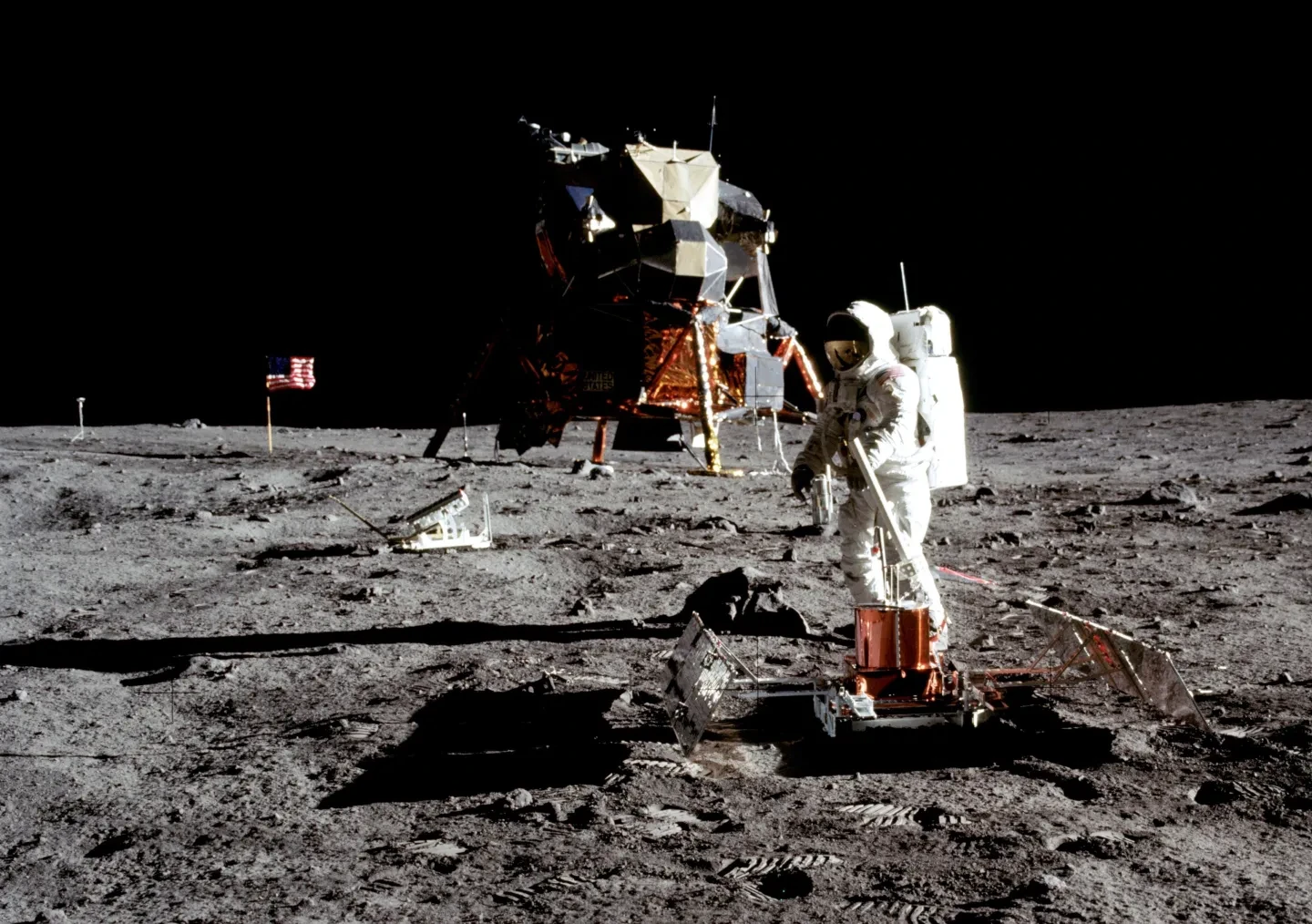
Photograph by Neil Armstrong of Apollo 11 astronaut Buzz Aldrin
### How many flags are on the Moon?
A total of six flags have been planted on the Moon – one for each US Apollo landing. Unfortunately, Apollo 11's flag was too close to the landing module and was knocked over by the exhaust when the module launched again. More recently, higher resolution images from the Lunar Reconnaissance Orbiter show that the other five remain standing. The flags were made of ordinary nylon, so they have all long since been bleached white by the Sun's UV radiation.
## Shop stylish Moon-inspired gifts
Learn more about our closest celestial neighbour the Moon in our books published by Royal Museums Greenwich
Shop
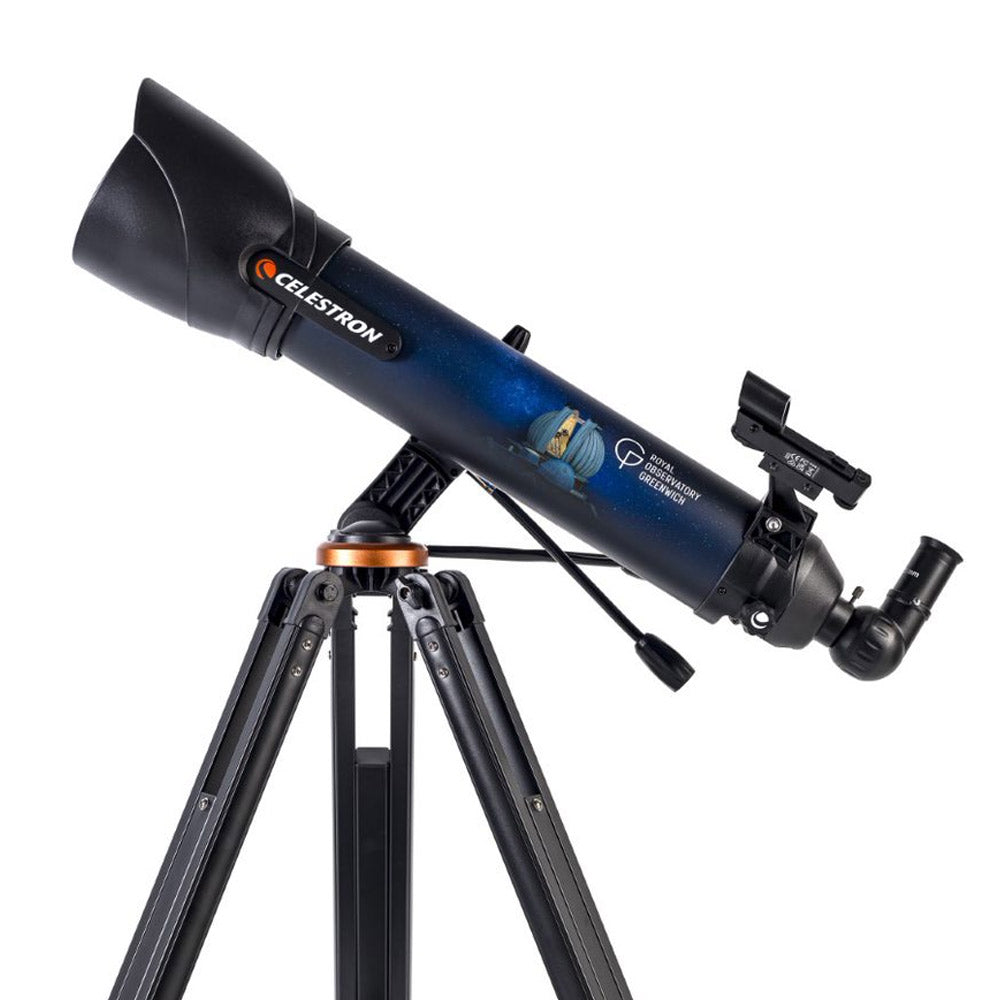
[Royal Observatory Greenwich StarSense DX 100 Celestron Telescope](https://shop.rmg.co.uk/products/royal-observatory-greenwich-starsense-dx-100-celestron-telescope)
£299.99
Celestron has reinvented the manual telescope with StarSense; the first telescope that uses your smartphone to analyse the night sky and calculate its position in real time...
[Buy now: Royal Observatory Greenwich StarSense DX 100 Celestron Telescope](https://shop.rmg.co.uk/products/royal-observatory-greenwich-starsense-dx-100-celestron-telescope)

Shop
[Stargazing & Moongazing Book Set](https://shop.rmg.co.uk/products/stargazing-moongazing-book-set)
£17.00
The perfect companions for exploring the night sky. Available for the special price of £17.00 when purchased together. Stargazing: Beginners Guide To Astronomy Moongazing: Beginner's Guide to Exploring The Moon In "Stargazing: Beginner's Guide to Astronomy", astronomers from Royal Observatory Greenwich provide an introduction to the world of telescopes, planets, stars, dark skies and celestial maps...
[Buy now: Stargazing & Moongazing Book Set](https://shop.rmg.co.uk/products/stargazing-moongazing-book-set)

Shop
[Royal Observatory Greenwich Illuminates: Moons](https://shop.rmg.co.uk/products/royal-observatory-greenwich-illuminates-moons-by-anna-gammon-ross)
£10.99 £5.00
Moons come, quite literally, in all shapes and sizes. Our Moon is just one of more than 200 moons in the Solar System that we've identified so far...
[Buy now: Royal Observatory Greenwich Illuminates: Moons](https://shop.rmg.co.uk/products/royal-observatory-greenwich-illuminates-moons-by-anna-gammon-ross)
Close
[Want to search our collection? Search here.](https://www.rmg.co.uk/collections)
## Our sites
- [Cutty Sark](https://www.rmg.co.uk/cutty-sark)
- [National Maritime Museum](https://www.rmg.co.uk/national-maritime-museum)
- [Queen's House](https://www.rmg.co.uk/queens-house)
- [Royal Observatory](https://www.rmg.co.uk/royal-observatory)
## About us
- [What we do](https://www.rmg.co.uk/about-us)
- [Contact us](https://www.rmg.co.uk/contact)
- [Jobs & volunteering](https://www.rmg.co.uk/about-us/jobs)
- [Press office](https://www.rmg.co.uk/about-us/news-press)
- [Sustainability](https://www.rmg.co.uk/about-us/sustainability)
## Commercial services
- [Brand licensing](https://www.rmg.co.uk/commercial/brand-licensing)
- [Image licensing](https://www.rmg.co.uk/commercial/image-licensing)
- [Filming & photography](https://www.rmg.co.uk/venue-hire/filming-photography)
- [Publishing](https://www.rmg.co.uk/commercial/publishing)
- [Venue hire](https://www.rmg.co.uk/venue-hire)
## Legal
- [Terms & Conditions](https://www.rmg.co.uk/policies/terms-conditions)
- [Privacy Notice](https://www.rmg.co.uk/policies/privacy-notice)
- [Accessibility](https://www.rmg.co.uk/policies/accessibility)
- [Cookie Policy](https://www.rmg.co.uk/policies/cookie-policy)
[Follow us on Facebook](https://www.facebook.com/royalmuseumsgreenwich)
[Follow us on X](http://www.twitter.com/RMGreenwich)
[Follow us on Instagram](http://www.instagram.com/royalmuseumsgreenwich)
[Follow us on Youtube](http://www.youtube.com/user/RoyalMuseumsGrnwich)
[Follow us on Weibo](https://www.weibo.com/u/7241857181)
[Sign up to our newsletter](https://landing.rmg.co.uk/newsletter/subscribe.html)
Back to top |
| Readable Markdown | ### How many people have walked on the Moon?
The first crewed lunar landing in 1969 was a historic triumph for the USA and humankind. Including the Apollo 11 mission, 12 men have walked on the Moon. But who were they?
### Who was the first person on the Moon?
At 02:56 GMT on 21 July 1969, American astronaut Neil Armstrong became the first person to walk on the Moon. He stepped out of the Apollo 11 lunar module and onto the Moon's surface, in an area called the 'Sea of Tranquility.'
Armstrong reported the lunar module's safe landing at 20:17 GMT with the words: "Houston, Tranquility Base here. The Eagle has landed." As he put his left foot onto the Moon, Armstrong declared: "That's one small step for man, one giant leap for mankind."
At 03:15 GMT, Armstrong was joined by the lunar module pilot, Edwin "Buzz" Aldrin. The two colleagues collected data and soil samples before planting the US flag at 03:41 GMT. They also unveiled a plaque bearing President Nixon's signature and an inscription reading:
> "Here men from the planet Earth first set foot upon the Moon July 1969 AD. We came in peace for all mankind."
As Aldrin and Armstrong collected samples, Michael Collins told Mission Control that he had successfully orbited the Moon in the mothership Columbia, and take-off was scheduled for 17:50 GMT.
[Find out more about the Apollo 11 crew](https://www.rmg.co.uk/discover/explore/apollo-11-crew)

### Neil Armstrong Facts
## This content is hosted by a third party
Please allow all cookies to watch the video.
[Manage cookie preferences](https://www.rmg.co.uk/stories/space-astronomy/how-many-people-have-walked-on-moon)
#### Early life
Neil Armstrong was born on 5 August 1930 in Ohio, United States. He began flying at a young age after being fascinated by planes in an air show. On his 16th birthday, he received his pilot's licence and later studied aerospace engineering at Purdue University.
#### Neil Armstrong's Education
During college, Armstrong joined the Navy and became a fighter pilot and fought in the Korean War, flying fighter jets from aircraft carriers. After graduating, he became a test pilot. Armstrong learnt to fly over 200 different types of aircraft, including the X15 rocket plane which could reach top speeds of over 4,000 miles per hour.
#### Neil Armstrong joins NASA
Armstrong became a member of NASA when it was established on 1 October 1958. He was selected for Project Gemini, NASA's second human spaceflight programme on 17 September 1962. It paved the way for the Apollo 11 mission to the Moon.
#### Neil Armstrong on the Moon
At 02:56 GMT on 21 July 1969, Armstrong became the first person to step onto the Moon. He was joined by Aldrin 19 minutes later. The two spent about two hours together outside the lunar module, taking photographs and collecting 21.5 kg of lunar material to be tested back on Earth. The video recording of his moonwalk was transmitted to Mission Control in Houston and watched by 530 million people on television across the world.
#### Armstrong's career after the Moon landing
Neil Armstrong had a varied career following his trip to the Moon. He retired from NASA in 1971, announcing he would not fly in space again. He then became the Professor of Aerospace Engineering at the University of Cincinnati in the US. He also acted as a spokesman for several businesses, only accepting roles within American companies. These companies include car manufacturer, Chrysler and General Time Corporation.
#### Armstrong's death
Neil Armstrong died of heart complications on 25 August 2012 in Cincinnati, Ohio. NASA administrator and former astronaut, Charles Bolden said of Armstrong,
> "As long as there are history books, Neil Armstrong will be included in them, remembered for taking humankind's first small step on a world beyond our own."
#### Neil Armstrong's legacy
Following his death, NASA named a lunar crater and an asteroid after Armstrong. As well as many schools and streets across America, The Armstrong Air and Space Museum in his hometown of Wapakoneta and the airport in New Knoxville, Ohio (where he took his first flying lessons) are also both named in his honour.
### How many people have been on the Moon?
A total of 12 male astronauts have landed on the Moon, all of whom were part of the US Apollo mission programme. These six crewed lunar landings occurred between July 1969 and December 1972. The following astronauts have been to the Moon (in order of setting foot on the lunar surface):
#### Apollo 11
Neil Armstrong, Buzz Aldrin
#### Apollo 12
Pete Conrad, Alan Bean
#### Apollo 14
Alan Shepard, Edgar Mitchell
#### Apollo 15
David Scott, James Irwin
#### Apollo 16
John Young, Charles Duke
#### Apollo 17
Gene Cernan, Harrison Schmitt
This number of men who have been on the Moon was almost 14. As part of the Apollo 13 mission, Jim Lovell and Fred Haise were scheduled to walk on the Moon, but the lunar landing had to be aborted after an oxygen tank exploded two days later. The Apollo 13 mission did set a record as the farthest humans have ever travelled from Earth. Haise was meant to again walk on the Moon as part of the Apollo 19 mission. However, the programme was cancelled due to budgetary cuts and the US focus on renovating the Skylab space station.

Michael Cernan and Harrison Schmitt before the Apollo 17 mission to the moon
### How long does it take to get to the Moon?
A range of factors determine how long it takes to reach the Moon, such as the type of rocket, the distance between the Earth and Moon, and the flight path the spacecraft takes.
#### Earth's distance from the Moon
As the Moon's journey around the Earth is elliptical, the distance changes within its 27 days orbit. At its closest approach, the Moon reaches 225,623 miles and at its furthest, it is 252,088 miles away from the Earth.
[Find out more about how far away the Moon is](https://www.rmg.co.uk/discover/explore/space-stargazing/how-far-away-moon)
#### Crewed missions
Crewed missions tend to take longer than passenger-free spacecraft due to the additional size and weight needed to support human life. Whether the object orbits or lands on the Moon will also determine the speed.
#### The first human-made object to reach the Moon
Launched on 2 January 1959, the Soviet Union probe Luna 1 travelled to within almost 4000 miles of the Moon's surface in 34 hours. The mission's original objective was to land on the Moon, but the probe went too fast. It ended up in orbit around the Sun somewhere between Earth and Mars, where it remains today.
#### The first crewed mission to reach the Moon
The Apollo 11 mission in 1969, crewed by three astronauts took four days, six hours and 45 minutes. Apollo 10 holds the record for the highest velocity reached by a crewed spacecraft at 24,791 miles per hour.
#### The fastest object to pass the Moon
The quickest flight to the Moon without stopping was the New Horizons probe launched by NASA on 19 January 2006. This passed the Moon in 8 hours and 35 minutes on its way to Pluto. However, the spacecraft didn't even slow down or approach lunar orbit.

Apollo 11 Launched Via Saturn V Rocket. 16 July 1969 at the Kennedy Space Centre (via [NASA](https://images-assets.nasa.gov/image/6901000/6901000~orig.jpg))
### Discover great photos of the Moon
[Visit the Insight Investment Astronomy Photographer of the Year exhibition](https://www.rmg.co.uk/whats-on/astronomy-photographer-year/exhibition)
### Who was the last person to walk on the Moon?
The last two people to land on the Moon were Eugene Cernan and Harrison Schmitt, both astronauts part of NASA's Apollo 17 mission. They landed in the Taurus-Littrow valley on 11 December 1972 and departed on 14 December. During this time, they explored the lunar surface for around seven hours each day, collecting samples and driving in a lunar rover vehicle. They spent 22 hours on the Moon in total. Cernan's final words before lifting off were
> "As we leave the Moon at Taurus-Littrow, we leave as we came and, God willing, as we shall return, with peace and hope for all mankind."
### Moon landing facts
- The objective of the Apollo programme wasn't originally a lunar landing. When it was announced in 1960, the Apollo project's goal was to send a three-person crew to orbit the Moon, not land on it. It wasn't until US President John F. Kennedy delivered his famous speech in May 1961 that a return journey from the Moon's surface became the programme's intention.
- As Neil Armstrong was the photographer of the trip, almost all of the still images are of astronaut Buzz Aldrin walking on the Moon, not Neil Armstrong.
- Saturn V, the rocket used in the Apollo missions, remains the largest rocket ever successfully to launch, weighing over 2.9 million kilograms. It also never lost any crew members or payloads between 1967 and 1973.
- During the final stage of the lunar landing, Neil had to take over and control the lunar module manually in order to avoid a rocky landing site. If it had taken him 23 seconds more, the fuel levels would have been too low to continue the mission.
- Armstrong's first step onto the Moon wasn't small at all. As Armstrong landed the Lunar Module onto the Moon's surface so lightly, the shock absorbers did not compress. This meant his first step was over a metre jump.
- Before the Apollo missions, NASA was unsure as to whether the Moon environment contained microbes or toxins. When the crews of Apollo 11, 12 and 14 returned to Earth, they were placed in quarantine for several weeks. With the Apollo 12 mission in November 1969, the astronauts were even forced to spend Thanksgiving inside a quarantined zone, so a turkey dinner was specially prepared for them. Fortunately for the crews of Apollo 15, 16 and 17, NASA concluded there was no risk of contamination and scrapped its quarantine measures in 1971.

Photograph by Neil Armstrong of Apollo 11 astronaut Buzz Aldrin
### How many flags are on the Moon?
A total of six flags have been planted on the Moon – one for each US Apollo landing. Unfortunately, Apollo 11's flag was too close to the landing module and was knocked over by the exhaust when the module launched again. More recently, higher resolution images from the Lunar Reconnaissance Orbiter show that the other five remain standing. The flags were made of ordinary nylon, so they have all long since been bleached white by the Sun's UV radiation. |
| Shard | 132 (laksa) |
| Root Hash | 892193438395260132 |
| Unparsed URL | uk,co,rmg!www,/stories/space-astronomy/how-many-people-have-walked-on-moon s443 |