ℹ️ Skipped - page is already crawled
| Filter | Status | Condition | Details |
|---|---|---|---|
| HTTP status | PASS | download_http_code = 200 | HTTP 200 |
| Age cutoff | PASS | download_stamp > now() - 6 MONTH | 0 months ago |
| History drop | PASS | isNull(history_drop_reason) | No drop reason |
| Spam/ban | PASS | fh_dont_index != 1 AND ml_spam_score = 0 | ml_spam_score=0 |
| Canonical | PASS | meta_canonical IS NULL OR = '' OR = src_unparsed | Not set |
| Property | Value |
|---|---|
| URL | https://www.rch.org.au/kidsinfo/fact_sheets/hand_foot_and_mouth_disease/ |
| Last Crawled | 2026-04-20 06:13:43 (10 hours ago) |
| First Indexed | 2019-01-30 08:43:32 (7 years ago) |
| HTTP Status Code | 200 |
| Meta Title | Kids Health Info : Hand, foot and mouth disease |
| Meta Description | null |
| Meta Canonical | null |
| Boilerpipe Text | Key points
Hand, foot and mouth disease is an infection caused by a virus.
The virus causes a rash with spots or blisters on the hands, feet and buttocks, along with mouth ulcers.
Mouth ulcers can make it painful for your child to eat and drink.
In most cases, the infection lasts around a week.
If your child has hand, foot and mouth disease, you can care for them at home by ensuring they drink lots of fluids and giving them regular pain-relief medicine.
The virus spreads easily from one person to another, so good hygiene measures, like regular hand washing, are important for you and your child.
What is hand, foot and mouth disease?
Hand, foot and mouth disease is a viral infection caused by the Coxsackie virus. Most children with this illness will get a rash with spots or blisters on their hands and feet, along with mouth ulcers.
There is no vaccine to prevent hand, foot and mouth disease.
While hand, foot and mouth disease is most common in pre-school children, anyone can become infected. It is possible to get the virus more than once, but the symptoms will be less severe.
Signs and symptoms of hand, foot and mouth disease
The most common symptoms of hand, foot and mouth disease are:
a rash with spots or blisters on the hands, feet and buttocks
blisters around the mouth and ulcers inside the mouth
tiredness
fever
.
Figure one: Close-up image of hand with hand, foot and mouth disease spots and blisters. Image has been reproduced with permission from ©
DermNet
2025
.
Mouth blisters and ulcers can be painful – especially when your child is trying to eat and drink. Many children are often grumpy while unwell and do not sleep well.
Hand, foot and mouth disease usually lasts from seven to 10 days.
Sometimes, hand, foot and mouth disease can cause eczema to flare up.
Very rarely, the illness can affect the brain or heart. In these cases, your child will seem unwell, often acting drowsy and looking pale. They may have stomach pain and shortness of breath, or rarely, seizures. If your child experiences these symptoms
they should see a doctor.
How to care for hand, foot and mouth at home
Hand, foot and mouth disease is a mild illness that rarely causes complications. Antibiotics will not help, as they do not work on viruses.
In most cases, hand, foot and mouth disease will get better on its own. To care for your child at home, you can:
encourage them to drink frequent sips of water or rehydration fluids like electrolytes to stop them getting
dehydrated
. You can try giving them a regular icy pole if they do not
want to drink juice or oral rehydration solution.
leave blisters to dry naturally – do not pierce or squeeze them
give them
pain relief medicine
, such as paracetamol or ibuprofen. Do not give your child aspirin.
If your child is unwell with a fever and a rash that does not turn skin colour (blanch) when you press on it, this may be a sign of
meningococcal
infection and requires
urgent medical attention.
When to get help
Call an ambulance (000) if:
your child has a fever (temperature of 38°C or more) and a rash that does not turn skin-colour (blanch) when you press on it.
Go to a hospital if:
your child is dehydrated and not drinking fluids despite giving them pain-relief medicine.
your child looks very unwell and has symptoms like drowsiness, paleness, stomach pain, shortness of breath or seizures.
See a doctor or health professional if:
your child is not drinking enough fluids, but you are unsure if they are dehydrated.
your child's red rash spots are larger than 3mm or are oozing pus (yellow milky fluid).
Look after your child at home if:
they have a mild fever and seem otherwise well.
they are drinking enough fluids.
Common questions about hand, foot and mouth disease
How does hand, foot and mouth disease spread?
Hand, foot and mouth disease spreads easily through fluid from the blisters, saliva and poo for up to a month after the infected person is better. To stop the spread of the virus, follow good hygiene measures like regular hand washing and do not
share items like cups or cutlery.
Is there a difference in caring for hand, foot and mouth in babies compared to older children?
The main difference in caring for children of different ages with hand, foot and mouth disease is how you keep them drinking fluids. If your child is young and refusing to drink enough, you may need to give them fluids using a syringe. Older children
may find drinking with a straw or eating icy poles easier.
Is hand, foot and mouth disease in people the same as foot and mouth disease found in animals?
Foot and mouth disease in animals is an entirely different disease from hand, foot and mouth disease in humans.
Can children get hand, foot and mouth disease more than once?
Your child can get hand, foot and mouth disease more than once. This is because there are different types of hand, foot and mouth disease viruses, and each can cause a new infection.
Can adults get hand, foot and mouth disease?
Adults can get hand, foot and mouth disease, but it is usually much milder than in children.
Is hand, foot and mouth disease dangerous for pregnant women?
Hand, foot and mouth disease is not known to be dangerous for pregnant women or their unborn babies.
How long is hand, foot and mouth disease contagious for?
Hand, foot and mouth disease is contagious for up to a month after symptoms first show, but it spreads most easily in the first week of infection.
Can my child go to child care or school with hand, foot and mouth?
Your child should not go to childcare or school with hand, foot and mouth disease until the fluid in their blisters has dried up. Otherwise, they will be very contagious to other children.
This podcast is also available in audio format below, and on
Apple Podcasts
and
Spotify
.
For more information
Speak to your child’s doctor or Maternal and Child Health Nurse
Kids Health Info: Pain relief for children
Kids Health Info: Dehydration
Kids Health Info: Viral illnesses
Kids Health Info: Stopping the spread of germs
NSW Health: Hand, foot and mouth disease fact sheet
Better Health Channel: Hand, foot and mouth disease
Developed by The Royal Children’s Hospital Emergency department. We acknowledge the input of RCH consumers and carers.
Reviewed May 2025
Please always seek the most recent advice from a registered and practising clinician. |
| Markdown | null |
| Readable Markdown | ## Key points
- Hand, foot and mouth disease is an infection caused by a virus.
- The virus causes a rash with spots or blisters on the hands, feet and buttocks, along with mouth ulcers.
- Mouth ulcers can make it painful for your child to eat and drink.
- In most cases, the infection lasts around a week.
- If your child has hand, foot and mouth disease, you can care for them at home by ensuring they drink lots of fluids and giving them regular pain-relief medicine.
- The virus spreads easily from one person to another, so good hygiene measures, like regular hand washing, are important for you and your child.
## What is hand, foot and mouth disease?
Hand, foot and mouth disease is a viral infection caused by the Coxsackie virus. Most children with this illness will get a rash with spots or blisters on their hands and feet, along with mouth ulcers.
There is no vaccine to prevent hand, foot and mouth disease.
While hand, foot and mouth disease is most common in pre-school children, anyone can become infected. It is possible to get the virus more than once, but the symptoms will be less severe.
## Signs and symptoms of hand, foot and mouth disease
The most common symptoms of hand, foot and mouth disease are:
- a rash with spots or blisters on the hands, feet and buttocks
- blisters around the mouth and ulcers inside the mouth
- tiredness
- [fever](https://www.rch.org.au/kidsinfo/fact_sheets/fever_in_children/).
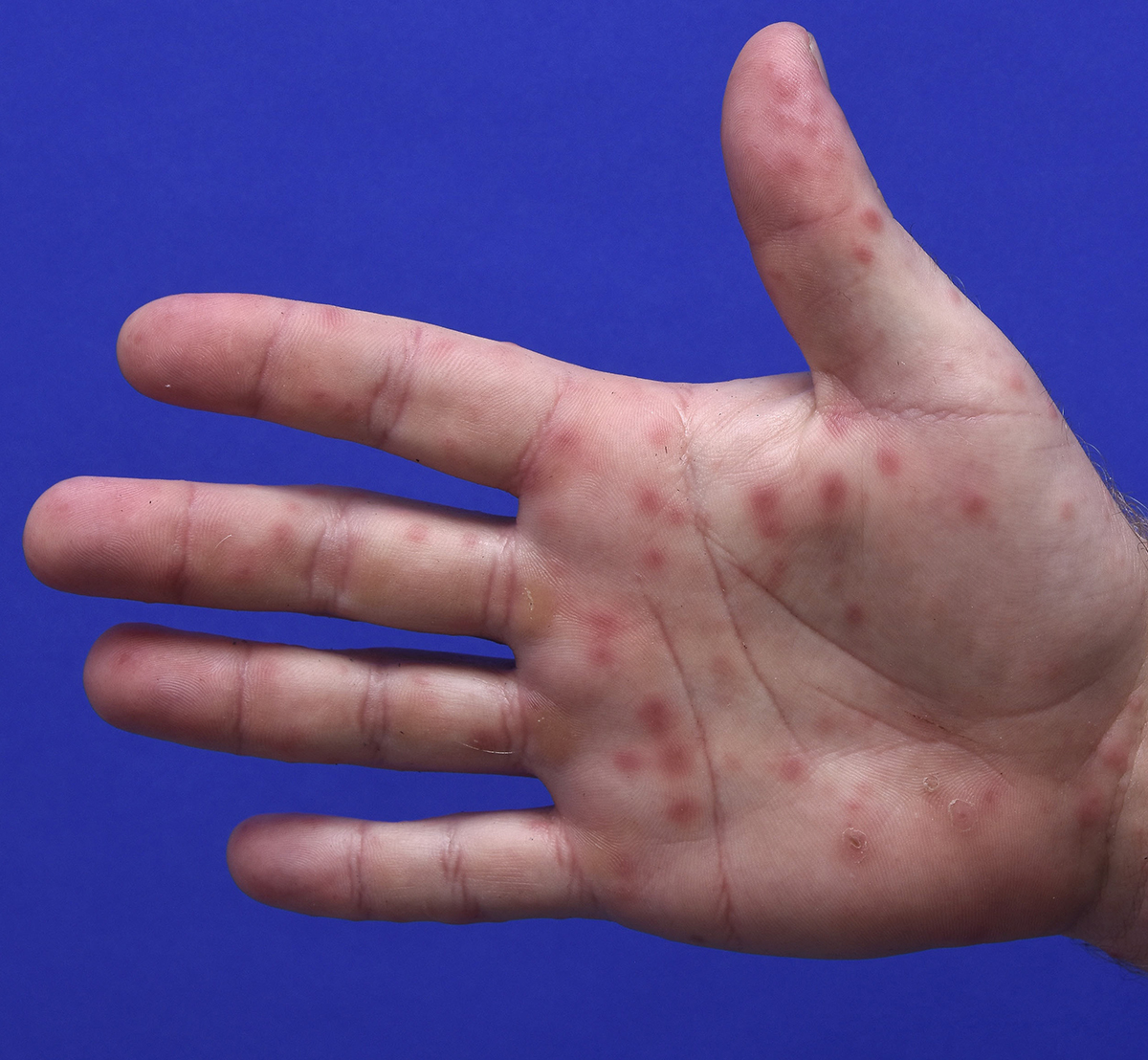
*Figure one: Close-up image of hand with hand, foot and mouth disease spots and blisters. Image has been reproduced with permission from ©[DermNet](https://www.dermnetnz.org/ "DermNet")*2025*.*
Mouth blisters and ulcers can be painful – especially when your child is trying to eat and drink. Many children are often grumpy while unwell and do not sleep well.
Hand, foot and mouth disease usually lasts from seven to 10 days.
Sometimes, hand, foot and mouth disease can cause eczema to flare up.
Very rarely, the illness can affect the brain or heart. In these cases, your child will seem unwell, often acting drowsy and looking pale. They may have stomach pain and shortness of breath, or rarely, seizures. If your child experiences these symptoms they should see a doctor.
## How to care for hand, foot and mouth at home
Hand, foot and mouth disease is a mild illness that rarely causes complications. Antibiotics will not help, as they do not work on viruses.
In most cases, hand, foot and mouth disease will get better on its own. To care for your child at home, you can:
- encourage them to drink frequent sips of water or rehydration fluids like electrolytes to stop them getting [dehydrated](https://www.rch.org.au/kidsinfo/fact_sheets/Dehydration/). You can try giving them a regular icy pole if they do not want to drink juice or oral rehydration solution.
- leave blisters to dry naturally – do not pierce or squeeze them
- give them [pain relief medicine](https://www.rch.org.au/kidsinfo/fact_sheets/Pain_relief_for_children/), such as paracetamol or ibuprofen. Do not give your child aspirin.
If your child is unwell with a fever and a rash that does not turn skin colour (blanch) when you press on it, this may be a sign of [meningococcal](https://www.rch.org.au/kidsinfo/fact_sheets/meningococcal_infection/) infection and requires urgent medical attention.
## When to get help
| |
|---|
| **Call an ambulance (000) if:** |
| your child has a fever (temperature of 38°C or more) and a rash that does not turn skin-colour (blanch) when you press on it. |
| **Go to a hospital if:** |
| your child is dehydrated and not drinking fluids despite giving them pain-relief medicine. your child looks very unwell and has symptoms like drowsiness, paleness, stomach pain, shortness of breath or seizures. |
| **See a doctor or health professional if:** |
| your child is not drinking enough fluids, but you are unsure if they are dehydrated. your child's red rash spots are larger than 3mm or are oozing pus (yellow milky fluid). |
| **Look after your child at home if:** |
| they have a mild fever and seem otherwise well. they are drinking enough fluids. |
## Common questions about hand, foot and mouth disease
#### How does hand, foot and mouth disease spread?
Hand, foot and mouth disease spreads easily through fluid from the blisters, saliva and poo for up to a month after the infected person is better. To stop the spread of the virus, follow good hygiene measures like regular hand washing and do not share items like cups or cutlery.
#### Is there a difference in caring for hand, foot and mouth in babies compared to older children?
The main difference in caring for children of different ages with hand, foot and mouth disease is how you keep them drinking fluids. If your child is young and refusing to drink enough, you may need to give them fluids using a syringe. Older children may find drinking with a straw or eating icy poles easier.
#### Is hand, foot and mouth disease in people the same as foot and mouth disease found in animals?
Foot and mouth disease in animals is an entirely different disease from hand, foot and mouth disease in humans.
#### Can children get hand, foot and mouth disease more than once?
Your child can get hand, foot and mouth disease more than once. This is because there are different types of hand, foot and mouth disease viruses, and each can cause a new infection.
#### Can adults get hand, foot and mouth disease?
Adults can get hand, foot and mouth disease, but it is usually much milder than in children.
#### Is hand, foot and mouth disease dangerous for pregnant women?
Hand, foot and mouth disease is not known to be dangerous for pregnant women or their unborn babies.
#### How long is hand, foot and mouth disease contagious for?
Hand, foot and mouth disease is contagious for up to a month after symptoms first show, but it spreads most easily in the first week of infection.
#### Can my child go to child care or school with hand, foot and mouth?
Your child should not go to childcare or school with hand, foot and mouth disease until the fluid in their blisters has dried up. Otherwise, they will be very contagious to other children.
This podcast is also available in audio format below, and on [Apple Podcasts](https://podcasts.apple.com/au/podcast/episode-6-winter-wellness-what-is-hand-foot-mouth-disease/id1522239706?i=1000706587804 "Apple Podcasts") and [Spotify](https://open.spotify.com/episode/6DuktFPmOgaQXWt1SCa5fU?si=4889713765194d5d "Spotify").
## For more information
- Speak to your child’s doctor or Maternal and Child Health Nurse
- [Kids Health Info: Pain relief for children](https://www.rch.org.au/kidsinfo/fact_sheets/Pain_relief_for_children/)
- [Kids Health Info: Dehydration](https://www.rch.org.au/kidsinfo/fact_sheets/Dehydration/)
- [Kids Health Info: Viral illnesses](https://www.rch.org.au/kidsinfo/fact_sheets/viral_illnesses/)
- [Kids Health Info: Stopping the spread of germs](https://www.rch.org.au/kidsinfo/fact_sheets/Stopping_the_spread_of_germs/)
- [NSW Health: Hand, foot and mouth disease fact sheet](http://www.health.nsw.gov.au/Infectious/factsheets/Pages/handfootmouth.aspx)
- [Better Health Channel: Hand, foot and mouth disease](https://www.betterhealth.vic.gov.au/health/conditionsandtreatments/hand-foot-and-mouth-disease)
Developed by The Royal Children’s Hospital Emergency department. We acknowledge the input of RCH consumers and carers.
**Reviewed May 2025**
**Please always seek the most recent advice from a registered and practising clinician.** |
| Shard | 170 (laksa) |
| Root Hash | 1993641059437562570 |
| Unparsed URL | au,org,rch!www,/kidsinfo/fact_sheets/hand_foot_and_mouth_disease/ s443 |