ℹ️ Skipped - page is already crawled
| Filter | Status | Condition | Details |
|---|---|---|---|
| HTTP status | PASS | download_http_code = 200 | HTTP 200 |
| Age cutoff | PASS | download_stamp > now() - 6 MONTH | 0.1 months ago |
| History drop | PASS | isNull(history_drop_reason) | No drop reason |
| Spam/ban | PASS | fh_dont_index != 1 AND ml_spam_score = 0 | ml_spam_score=0 |
| Canonical | PASS | meta_canonical IS NULL OR = '' OR = src_unparsed | Not set |
| Property | Value |
|---|---|
| URL | https://www.propublica.org/article/nike-jobs-indonesia-living-wages |
| Last Crawled | 2026-04-15 00:33:01 (1 day ago) |
| First Indexed | 2026-03-03 10:43:11 (1 month ago) |
| HTTP Status Code | 200 |
| Meta Title | Nike Is Moving Jobs to Low-Wage Regions of Indonesia — ProPublica |
| Meta Description | After moving manufacturing to the developing world to save on labor, Nike and other apparel brands are shifting employment in their Indonesian supply chain away from high-wage parts of the country and into less-developed areas. |
| Meta Canonical | null |
| Boilerpipe Text | Reporting Highlights
Living Wage:
Nike says people who make its products should earn enough to live on with some discretionary money left over — or their employers should have a plan to get them there.
Shifting Employment:
The supply chain in Indonesia grew in places where the minimum wage falls short of one leading estimate for the living wage, while it shrank in areas that pay better.
Company Response:
Nike says that less-developed regions where it operates shouldn’t be excluded from economic growth, adding in a statement, “Growth and progress go hand in hand.’”
These highlights were written by the reporters and editors who worked on this story.
If you’re among the more than 1 million people who make Nike’s sneakers and apparel around the world, the company says you should be able to support your family. You should earn enough to pay your living expenses and have some discretionary money left over. If your factory wages don’t cut it, your employer should have a plan to get you there.
But Nike’s expansion in Indonesia over the last decade has directly undermined these goals, an analysis by ProPublica and The Oregonian/OregonLive found.
Over the last decade, employment at factories supplying the world’s largest athletic apparel brand expanded dramatically in regions of Indonesia where, according to one leading estimate, the minimum wage is less than the amount workers need to live on. Meanwhile, Nike’s supply chain shrank overall in places that pay this estimated living wage, our analysis found.
The trend shows how the movement of multinational corporations to countries with ever-lower labor costs is being replaced, in some cases, by movements within a country that can achieve major savings and improve the bottom line.
Nike’s suppliers employ 280,000 people in Indonesia, the company’s second-largest production center.
From 2015 through last year, these suppliers shed around 36,000 jobs in places where the monthly minimum wage exceeds or comes close to a living wage. In these high-wage areas, which include the capital of Jakarta, the minimum typically equates to about $300 a month.
By contrast, the company’s supplier workforce grew by nearly 112,000 in parts of Central and West Java with local minimum wages that are typically about $165 a month — far from what’s considered enough to live on. Dozens of workers employed by Nike suppliers in Indonesia told the news organizations the
minimum is about all they make
.
“If it’s very labor intensive, then you go where labor is cheapest,” said Nurina Merdikawati, a lecturer in the Indonesia Project at Australian National University. In Indonesia, she said, “that’s going to be Central Java.”
Other brands have also moved to Central Java and other low-wage regions of Indonesia in recent years and continue expanding there, local news organizations have reported.
Series Timeline
Oct. 4, 2024
After our reporting on the use of corporate jets by Nike leadership, the company had its fleet removed from a federal flight tracking data source.
Sept. 10, 2024
All the shareholder proposals at Nike’s annual meeting failed.
Sept. 6, 2024
Ahead of the company’s annual meeting, we reported on shareholder efforts to force a public accounting of Nike’s efforts to address factory working conditions and climate change.
Aug. 13, 2024
Even as Nike leaders touted their commitment to the environment, they made heavy use of corporate jets, whose greenhouse gas emissions grew. We tracked flight paths, including to frequent stops at a Bay Area airfield near a home owned by then-CEO John Donahoe.
July 11, 2024
We reported the full extent of what a worker called “the sustainability bloodbath”: 20% of employees who worked primarily on Nike’s sustainability initiatives were laid off, and another 10% left through voluntary departures or transfers.
December 2023
Nike’s Sustainable Innovation team learns that it will be eliminated, the first in what will become a series of cuts to company sustainability efforts.
For Nike, the trend threatens the jobs of the existing factory workforce elsewhere in the country. Last October, more than 2,000 workers were laid off by Victory Chingluh, one of Nike’s longtime suppliers near Jakarta. In 2024, another 1,500 workers were cut by a Nike shoe supplier nearby, Adis Dimension, according to local news reports.
Labor advocates say the geographic shift is concerning because the Jakarta area has a stronger union presence that ensures working conditions and wages get closer attention than in less-developed places like Central Java.
At Victory Chingluh, three employees told the news organizations that the fear of more job cuts hangs over their work. They said the company is building a new factory in Cirebon, in West Java, where the minimum wage is 45% lower.
Employees said when they were offered a choice between keeping their jobs and accepting severance packages during layoffs last year, workers were willing to take the buyout, fearing that they wouldn’t get anything if the factory closed altogether.
That happened in 2018 when one Nike supplier near Jakarta, Kahoindah Citragarment, shut down without paying workers their full severance after Nike pulled its orders, an investigation by the Worker Rights Consortium found. The factory’s South Korean parent company, Hojeon, eventually agreed to pay workers $4.5 million after labor advocates argued they were legally owed separation pay. Hojeon did not respond to requests for comment.
At Victory Chingluh, two union leaders said in December that they anticipated another 5,000 layoffs at a company that once employed about 15,000.
“Almost all employees here are worried about that,” one of them said, speaking on the condition of anonymity because they feared repercussions from talking to reporters.
The leaders said they’ve been told the factory being built in Cirebon could be ready by 2027. They said they’ve been told it’s for an expansion — even though their factory recently lost thousands of jobs.
Victory Chingluh did not respond to questions. Nike said in a statement that it works closely with suppliers during layoffs to minimize disruptions. “We mandate that suppliers pay all statutory severance, social security, and other separation benefits required by local law and often assemble working groups — which may include civil society, unions, and local governments — to aid in proper execution,” the company said.
Adi Renaldi for The Oregonian/OregonLive
Factory workers buy food and snacks near an entrance to Victory Chingluh, a Nike supplier near Jakarta that laid off more than 2,000 people last year.
Business leaders near Jakarta have voiced concern about the wage disparity between their region and Central Java, more than 150 miles away, saying that mandated pay increases around Jakarta could lead to mass layoffs and cause manufacturers to shift production.
“There is a real possibility that many labor-intensive industries will move to other regions,” Herry Rumawatine, the head of a local employers association, told the
Jakarta Globe
in January.
Asked whether the geographic shifts in Nike’s Indonesian supply chain were aimed at improving the bottom line, the company said that creating “operational efficiencies” is part of doing business in a competitive environment.
However, the company said treating Nike’s geographic shift primarily as a move to save money “creates an incomplete picture” and cited “other plausible drivers” such as automation or changing production needs.
Less-developed regions shouldn’t be excluded from opportunities for economic growth, Nike said, and it expects its suppliers everywhere to meet its code of conduct.
“Growth and progress go hand in hand,” Nike wrote, “and we remain committed to investing in ways that expand opportunity while strengthening labor standards and worker protections where we operate worldwide.”
Nike suggests that people who work for its foreign suppliers are well paid. In particular, the company says workers at its strategic suppliers earn an average of nearly double the local minimum wage.
As The Oregonian/OregonLive reported in partnership with ProPublica in January,
Nike does not pay workers anywhere close
to this amount in Indonesia. In interviews across three regions of the country, roughly 100 workers said they made the minimum wage or a little bit more.
Nike told the news organizations that its figure is a global average and variations naturally exist. But the company also told the news organizations that it’s important not just to compare what its suppliers pay relative to the minimum wage. Nike’s focus, one company official said, is on whether workers make a living wage and, if not, whether their employers are trying to get there.
Although Nike does not explicitly require its suppliers to pay this amount, it says every worker “has a right to compensation for a regular work week that is sufficient to meet workers’ basic needs and provide some discretionary income.” The company reported that two-thirds of its key suppliers — it did not say which ones — paid above living wage benchmarks in 2022.
Jason Judd, executive director of the Global Labor Institute at Cornell University, said living wage pledges from companies like Nike are so flexible that they’re almost meaningless. Only asking factories to be working toward living wages, as Nike does, “could go on for 20 years,” Judd said, “until you’ve found yet another lower-wage province.”
Nike’s recent move to Central Java is notable because while wages are far lower there than in urban Jakarta, food and housing are not dramatically cheaper, according to estimates from the WageIndicator Foundation, a Dutch nonprofit. The foundation says a living wage in Central Java starts around $245 a month; in the parts of the province that are home to Nike suppliers, the local minimum wage ranges from only $136 to $215.
Workers in Central Java said second jobs are common, including selling fish and gasoline. One said workers covertly sold snacks inside the factory, out of sight of managers who might fire them if caught.
“At its core, this is about cost reduction and power,” Wiranta Ginting, deputy international coordinator for the Asia Floor Wage Alliance, a labor group, said in an email.
It isn’t clear exactly how much Nike may have saved on labor by growing aggressively in low-wage regions. But some rough calculations are possible, based on addresses Nike has published for its suppliers, the numbers it says they employ and the minimum wage they must pay in each municipality.
If each factory worker made exactly the minimum wage and worked only on Nike products, then the company’s shift into lower-cost areas would have saved about $200 million on labor in 2025 alone. The estimate is based on what Nike’s suppliers paid last year versus what they would have paid in labor costs had the company expanded uniformly across regions where it had factories in 2015.
It’s only a broad indicator of potential savings.
Nike said the analysis “rests on a series of oversimplified assumptions that limit the reliability of its conclusions.”
For example, the company said that to assume the workforce could have grown where suppliers were located in 2015 “does not reflect the realities of manufacturing operations, which are constrained by factors such as facility capacity, workforce availability, skills, technology, and changes in product mix.”
The geographic shift into lower-wage regions of Indonesia shows one way Nike can try to wring more profit from its vast supply chain. The company, which reported $46.3 billion in revenue last year, is struggling with declining annual sales and profits, problems compounded by uncertainty around President Donald Trump’s tariffs, which Nike had estimated would cost $1.5 billion a year before a recent Supreme Court decision struck them down. Its stock has dropped more than 60% from a 2021 peak.
“Margin expansion is a top priority for me and my leadership team,” CEO Elliott Hill told Wall Street analysts in a December earnings call.
Nike CEO Elliott Hill in February
Francesca Volpi/Bloomberg via Getty Images
Officials in low-wage Central Java have welcomed the industrial expansion. The province’s then-governor said in 2022 that 97 factories had opened there. Another 10 garment and footwear factories were under construction last year, according to local news reports, with 17 more expected to be built this year.
Nike’s explanation of its move into the region was in keeping with assertions decades ago by its co-founder, Phil Knight, that Nike’s arrival was a positive force for local economies and workers in developing countries.
“Increased manufacturing in Central Java is not an accident and, in many ways, is something to be celebrated,” Nike told The Oregonian/OregonLive and ProPublica. “The Indonesian government has taken meaningful, intentional steps to transform Central Java into an industrial hub, with an eye toward extending the economic growth that has benefited other regions of the country for more than 30 years.”
The company added that “manufacturing growth in regions with lower prevailing wages can lead to raised standards, increased worker skills, and positive contributions to local communities.”
Nike’s move has ripple effects around relatively high-wage Jakarta, Indonesia’s biggest city, where the company has sourced sneakers since 1988. Factory workers and union officials there said they’re reluctant to demand wage increases.
They said they fear better pay will mean fewer jobs.
“It’s clear that every company will expand where it’s cheaper,” a union official at a Nike supplier near Jakarta said.
The differences between Indonesia’s well-established urban production centers and the less-developed areas where Nike has expanded employment go beyond wages.
“Greater Jakarta is an older industrial region with a long history of unionization and collective bargaining, reflected in higher minimum wages won through years of worker organizing and mass mobilization,” Ginting, the Asia Floor Wage Alliance representative, said in his email.
By contrast, he said, factories in the new apparel hot spots of Central Java often recruit younger workers, have less union representation and face less scrutiny from labor inspectors.
Scott Nova, executive director of the Worker Rights Consortium, said problems on the factory floor are more prevalent in this region. Nova’s international watchdog group has conducted investigations at the region’s apparel factories for the past five years.
Despite some recent progress, Nova said by email, workers at many factories “suffer gender-based violence and other abuses at higher rates than in the country’s older production centers.”
“Because unions have a tenuous foothold in the region and face harsh employer resistance,” he added, “workers often cannot fight back.”
An investigation by Nova’s group found that women at a Central Javanese factory producing Nike-licensed goods for Fanatics, a privately owned brand, had been sexually harassed for years. The labor rights group told Fanatics in 2022 it had heard from women who said they had to endure unwanted touching and verbal harassment by supervisors.
After the factory owner pledged to fix the problems, the consortium found even more egregious abuse in 2023 at another Central Java factory owned by the same company, South Korea-based Ontide. The company
struck a binding deal
with labor unions in 2024 called the Central Java Agreement for Gender Justice, which mandates harassment training and monitoring.
Ontide did not respond to a request for comment. However, Ontide sustainability director John Yoon said in a press release announcing the gender justice agreement that it would protect workers. “As part of our commitment to our workers’ safety and well-being, we are pleased to be seeing initial results,” the release said.
Fanatics said in a statement to The Oregonian/OregonLive and ProPublica that there has been “excellent progress” in implementing the agreement. “We are proud of this work, which has been recognized by the Agreement signatories, and which will continue into 2026,” the company said.
Nova, of the Worker Rights Consortium, called the outcome at Ontide “a ray of hope.”
But workers told the news organizations that problems have persisted at other factories in Central Java. Ten workers at one supplier said many women’s toilets hadn’t been working for months. Two workers at other factories said they received written reprimands after they told their employers they were injured on the job.
Asked about these workers’ accounts, Nike said that a “safe and healthy work environment is a fundamental human right” and that it audits factories annually for compliance with its code of conduct. It said it has not found more problems at suppliers in Central Java than in other parts of Indonesia. The company added that it works quickly with its suppliers when needed to put improvement plans in place.
At Selalu Cinta, a Central Java factory that employs 18,000 people and has made Nike Burrow slippers, Blazer Mid ’77 sneakers and other shoes, hundreds of workers signed petitions asking the factory to remove a manager they said repeatedly screamed at and intimidated workers.
Leaders at the factory have failed to remove him, 10 workers told the news organizations.
Nike said it required Selalu Cinta to engage in an independent third-party investigation and is overseeing corrective actions in consultation with unions. Nike said it plans follow-up verification. Selalu Cinta officials did not respond to requests for comment.
A woman who worked for the manager said in an interview last summer that her parents depended on her wages, forcing her to keep her job despite what she described as her boss’ frequent tantrums.
“Working like that,” she said, “feels like you’re in hell.”
How We Tracked Nike’s Factories
Overall employment at Nike suppliers in Indonesia grew by 39% from 2015 to 2025. To see where in Indonesia that growth occurred, we used factory-level data
self-reported
by Nike in November 2015 and November 2025.
Because Nike said it began working to increase its disclosure of materials and components factories in 2021, we excluded any factories of this kind that appeared on Nike’s list in 2025 but not in 2015, to avoid counting Nike’s expanded disclosure as employment growth. This eliminated 12 materials factories from 2025, removing about 3,500 workers from the analysis.
ProPublica and The Oregonian/OregonLive assigned minimum and living wages to each factory based on their locations. Wage and location data was manually reviewed, and when information was incomplete or inconsistent, classification was based on the data that appeared to be the most reliable.
The city or regency of each factory was identified using factory addresses and verified against Google Maps, factory websites, shipping records and other public disclosures.
We assigned minimum wages at the municipal level based on 2025 government decrees. Some municipalities specify a single minimum wage across all sectors. Others specify wages by sector (in which case we used the sectoral wage that best matched what each factory produces) and/or by nature of the work and employer (in which case we used the rate for labor-intensive multinational companies).
Unlike minimum wages, which are defined by law, living wage estimates can vary. We used estimates from the WageIndicator Foundation, an independent Dutch nonprofit. While the group calculates living wages as a range, we used the group’s lowest estimate for 2025 of what a worker would need to provide a decent standard of living for a typical family.
Factories were classified as “at or above living wage” if the applicable minimum wage was at least 95% of WageIndicator Foundation’s lowest living wage estimate for the province.
Wages were converted from Indonesian rupiah to U.S. dollars using the mean of monthly average daily USD/IDR exchange rates for 2025 from the
Federal Reserve
.
For the graphic, factory coordinates were manually reviewed, then grouped when multiple factories were close to one another. Factories were grouped when located within 15 kilometers of at least one other factory, forming density-based clusters that were represented on the map as the geometric center of those points. We verified that factories in different wage classifications were not lumped together. For municipalities without a Nike factory, we assigned the highest 2025 minimum wage that could apply if a Nike factory was located there.
To estimate potential savings based on where Nike expanded production between 2015 and 2025, we compared actual 2025 supplier payroll (based on reported number of factory workers and municipal minimum wages) to a counterfactual scenario in which employment grew proportionally across the same municipalities where Nike had factories in 2015. The calculation reflects what Nike’s suppliers would have paid in labor costs under each scenario if all workers earned the applicable minimum wage and factory employment were dedicated to Nike production. Because suppliers can produce for multiple brands and some workers earn above minimum wage, the estimate merely provides a broad sense of potential savings rather than a precise measure of how much the company and its suppliers actually saved in labor costs. |
| Markdown | [Skip to content](https://www.propublica.org/article/nike-jobs-indonesia-living-wages#main)
[Skip to content](https://www.propublica.org/article/nike-jobs-indonesia-living-wages#main)
Menu
[Donate](https://give.propublica.org/campaign/748664/donate?c_src=UpRed)
Menu
[Donate](https://give.propublica.org/campaign/748664/donate?c_src=UpRed)
Close
[Donate](https://give.propublica.org/campaign/748664/donate?c_src=UpRed)
**Topics**
- [Racial Justice](https://www.propublica.org/topics/racial-justice)
- [Health Care](https://www.propublica.org/topics/health-care)
- [Politics](https://www.propublica.org/topics/politics)
- [Criminal Justice](https://www.propublica.org/topics/criminal-justice)
- [more…](https://www.propublica.org/topics)
**Browse by Place**
- [Midwest](https://www.propublica.org/midwest)
- [Northwest](https://www.propublica.org/northwest)
- [South](https://www.propublica.org/south)
- [Southwest](https://www.propublica.org/southwest)
- [Texas](https://www.propublica.org/texas)
**Type**
- [Graphics & Data](https://www.propublica.org/newsapps)
- [Newsletters](https://www.propublica.org/newsletters)
- [Series](https://www.propublica.org/series)
- [Videos](https://www.propublica.org/video)
- [Local Reporting Network](https://www.propublica.org/local-reporting-network)
- [Electionland](https://www.propublica.org/electionland)
**Info**
- [About Us](https://www.propublica.org/about)
- [Impact](https://www.propublica.org/impact)
- [Jobs & Fellowships](https://www.propublica.org/jobs)
- [Contact Us](https://www.propublica.org/contact)
**Follow ProPublica**
- [Bluesky](https://bsky.app/profile/propublica.org)
- [Instagram](https://www.instagram.com/propublica)
- [Facebook](https://www.facebook.com/propublica/)
- [(Twitter)](https://x.com/propublica)
- [YouTube](https://www.youtube.com/user/propublica)
- [Threads](https://www.threads.net/@propublica)
- [LinkedIn](https://www.linkedin.com/company/propublica/posts/)
- [RSS](https://www.propublica.org/feeds/propublica/main)
©Mapbox ©OpenStreetMap
500 ft.
Courtesy of Planet Labs PBC
Airbus ©2015
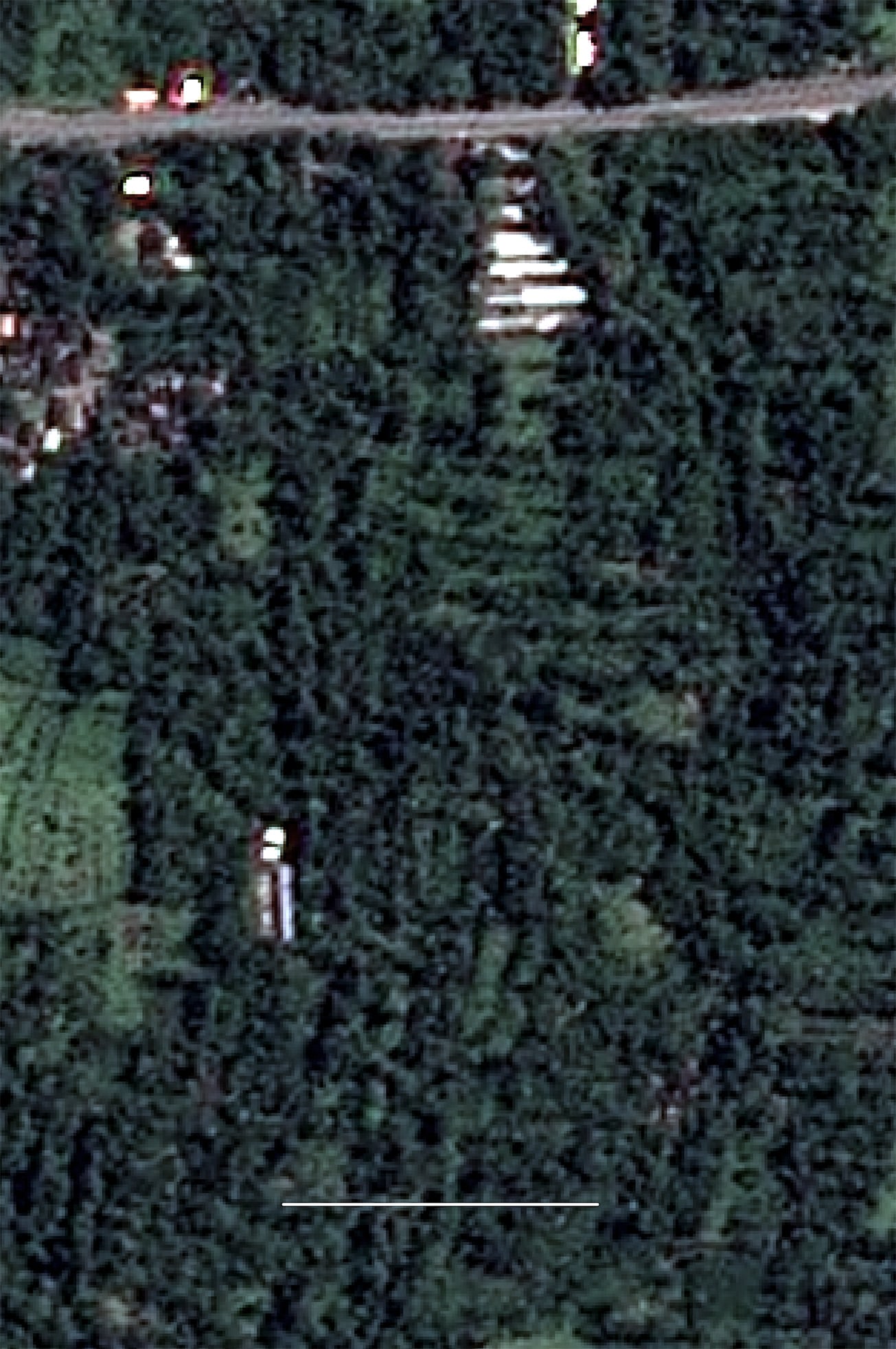
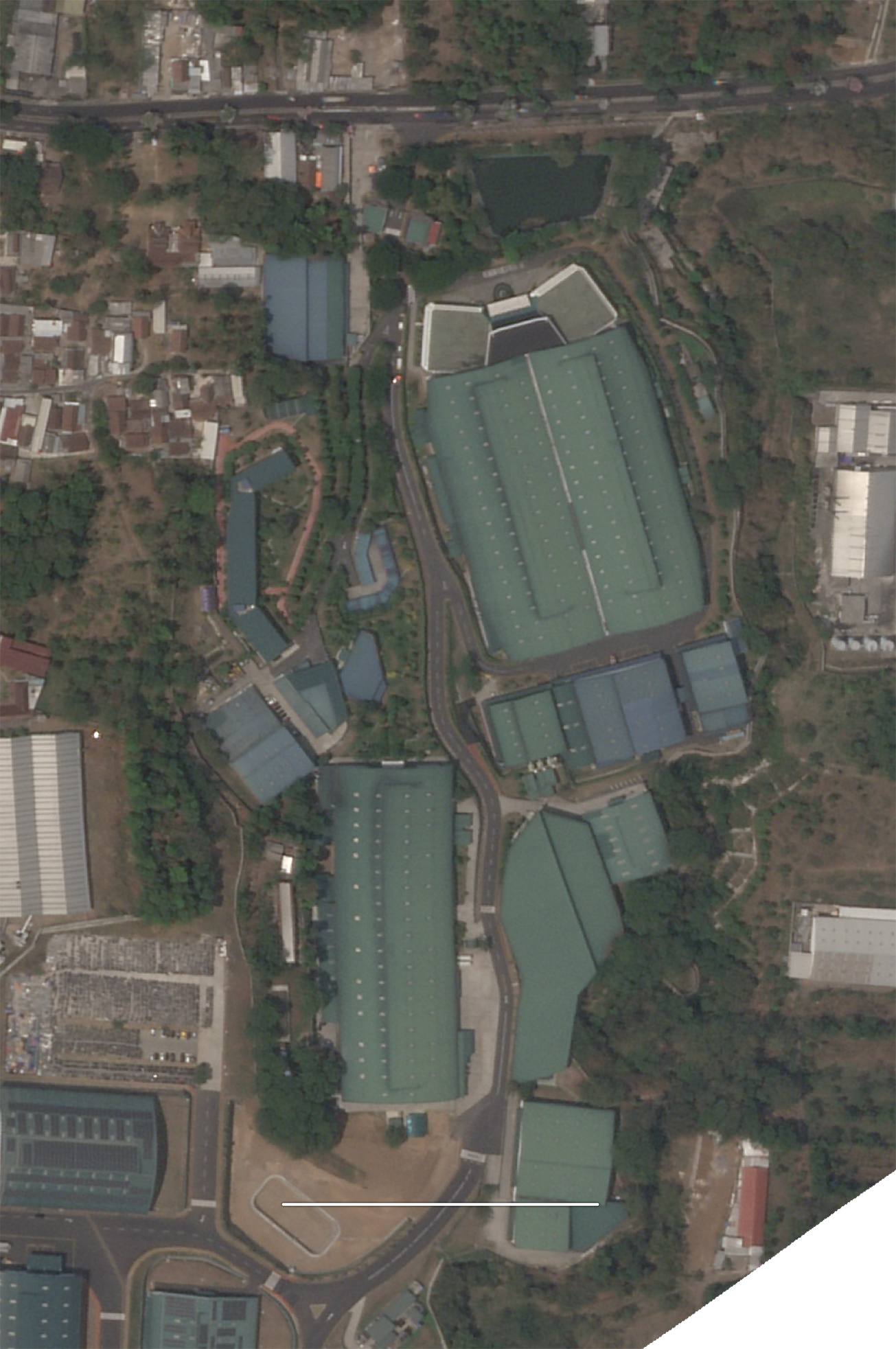
This is the sprawling campus of Selalu Cinta, an Indonesian factory that makes Nike sneakers and slippers and employs 18,000 people.
Ten years ago, the land was undeveloped, a tangle of palms and underbrush.
The factory is in Central Java, far from high-wage areas near Jakarta.
Over the past decade, employment at Nike’s factories grew dramatically in lower-cost areas where minimum wages are not considered enough to make ends meet.
And employment overall shrank where the minimum wage is considered enough to meet basic needs.
[Labor](https://www.propublica.org/topics/labor)
# Nike Is Moving Jobs to Low-Wage Regions of Indonesia
## After moving manufacturing to the developing world to save on labor, Nike and other apparel brands are shifting employment in their Indonesian supply chain away from high-wage parts of the country and into less-developed areas.
by [Rob Davis](https://www.propublica.org/people/rob-davis) and [Nick McMillan](https://www.propublica.org/people/nick-mcmillan), [ProPublica](https://www.propublica.org/), and [Matthew Kish](https://www.oregonlive.com/staff/matthewkish/posts.html), [The Oregonian/OregonLive](https://www.oregonlive.com/)
March 3, 2026, 5:00 am
Share
Change Appearance
Change Appearance
Republish
## Republish This Story for Free
[Creative Commons License (CC BY-NC-ND 3.0)](https://creativecommons.org/licenses/by-nc-nd/3.0/)
***
Thank you for your interest in republishing this story. You are free to republish it so long as you do the following:
- You have to credit *ProPublica and any co-reporting partners*. In the byline, we prefer "Author Name, Publication(s)." At the top of the text of your story, include a line that reads: "This story was originally published by ProPublica." You must link the word "ProPublica" to the original URL of the story.
- If you're republishing online, you must link to the URL of this story on propublica.org, include all of the links from our story, including our newsletter sign up language and link, and use our [PixelPing tag](https://www.propublica.org/pixelping).
- If you use canonical metadata, please use the ProPublica URL. For more information about canonical metadata, [refer to this Google SEO link](https://support.google.com/webmasters/answer/139066?hl=en).
- You can't edit our material, except to reflect relative changes in time, location and editorial style. (For example, "yesterday" can be changed to "last week," and "Portland, Ore." to "Portland" or "here.")
- You cannot republish our photographs or illustrations without specific permission. Please contact [mediarights@propublica.org](mailto:mediarights@propublica.org).
- It's okay to put our stories on pages with ads, but not ads specifically sold against our stories. You can't state or imply that donations to your organization support ProPublica's work.
- You can't sell our material separately or syndicate it. This includes publishing or syndicating our work on platforms or apps such as Apple News, Google News, etc.
- You can't republish our material wholesale, or automatically; you need to select stories to be republished individually. (To inquire about syndication or licensing opportunities, contact [licensing@propublica.org](mailto:licensing@propublica.org).)
- You can't use our work to populate a website designed to improve rankings on search engines or solely to gain revenue from network-based advertisements.
- We do not generally permit translation of our stories into another language.
- Any website our stories appear on must include a prominent and effective way to contact you.
HTML
\<h1\>Nike Wants Factory Workers to Earn a Decent Living. In Indonesia, It’s Moved Into Areas Where Workers Don’t.\</h1\> \<p\>If you’re among the more than 1 million people who make Nike’s sneakers and apparel around the world, the company says you should be able to support your family. You should earn enough to pay your living expenses and have some discretionary money left over. If your factory wages don’t cut it, your employer should have a plan to get you there.\</p\> \<p\>But Nike’s expansion in Indonesia over the last decade has directly undermined these goals, an analysis by ProPublica and The Oregonian/OregonLive found.\</p\> \<p\>Over the last decade, employment at factories supplying the world’s largest athletic apparel brand expanded dramatically in regions of Indonesia where, according to one leading estimate, the minimum wage is less than the amount workers need to live on. Meanwhile, Nike’s supply chain shrank overall in places that pay this estimated living wage, our analysis found.\</p\> \<p\>The trend shows how the movement of multinational corporations to countries with ever-lower labor costs is being replaced, in some cases, by movements within a country that can achieve major savings and improve the bottom line.\</p\> \<p\>Nike’s suppliers employ 280,000 people in Indonesia, the company’s second-largest production center.\</p\> \<p\>From 2015 through last year, these suppliers shed around 36,000 jobs in places where the monthly minimum wage exceeds or comes close to a living wage. In these high-wage areas, which include the capital of Jakarta, the minimum typically equates to about \$300 a month.\</p\> \<p\>By contrast, the company’s supplier workforce grew by nearly 112,000 in parts of Central and West Java with local minimum wages that are typically about \$165 a month — far from what’s considered enough to live on. Dozens of workers employed by Nike suppliers in Indonesia told the news organizations the \<a href="https://www.propublica.org/article/nike-wages-clothing-shoe-factory-indonesia"\>minimum is about all they make\</a\>.\</p\> \<p\>“If it’s very labor intensive, then you go where labor is cheapest,” said Nurina Merdikawati, a lecturer in the Indonesia Project at Australian National University. In Indonesia, she said, “that’s going to be Central Java.”\</p\> \<p\>Other brands have also moved to Central Java and other low-wage regions of Indonesia in recent years and continue expanding there, local news organizations have reported.\</p\> \<p\>For Nike, the trend threatens the jobs of the existing factory workforce elsewhere in the country. Last October, more than 2,000 workers were laid off by Victory Chingluh, one of Nike’s longtime suppliers near Jakarta. In 2024, another 1,500 workers were cut by a Nike shoe supplier nearby, Adis Dimension, according to local news reports.\</p\> \<p\>Labor advocates say the geographic shift is concerning because the Jakarta area has a stronger union presence that ensures working conditions and wages get closer attention than in less-developed places like Central Java.\</p\> \<p\>At Victory Chingluh, three employees told the news organizations that the fear of more job cuts hangs over their work. They said the company is building a new factory in Cirebon, in West Java, where the minimum wage is 45% lower.\</p\> \<p\>Employees said when they were offered a choice between keeping their jobs and accepting severance packages during layoffs last year, workers were willing to take the buyout, fearing that they wouldn’t get anything if the factory closed altogether.\</p\> \<p\>That happened in 2018 when one Nike supplier near Jakarta, Kahoindah Citragarment, shut down without paying workers their full severance after Nike pulled its orders, an investigation by the Worker Rights Consortium found. The factory’s South Korean parent company, Hojeon, eventually agreed to pay workers \$4.5 million after labor advocates argued they were legally owed separation pay. Hojeon did not respond to requests for comment.\</p\> \<p\>At Victory Chingluh, two union leaders said in December that they anticipated another 5,000 layoffs at a company that once employed about 15,000.\</p\> \<p\>“Almost all employees here are worried about that,” one of them said, speaking on the condition of anonymity because they feared repercussions from talking to reporters.\</p\> \<p\>The leaders said they’ve been told the factory being built in Cirebon could be ready by 2027. They said they’ve been told it’s for an expansion — even though their factory recently lost thousands of jobs.\</p\> \<p\>Victory Chingluh did not respond to questions. Nike said in a statement that it works closely with suppliers during layoffs to minimize disruptions. “We mandate that suppliers pay all statutory severance, social security, and other separation benefits required by local law and often assemble working groups — which may include civil society, unions, and local governments — to aid in proper execution,” the company said.\</p\> \<p\>Business leaders near Jakarta have voiced concern about the wage disparity between their region and Central Java, more than 150 miles away, saying that mandated pay increases around Jakarta could lead to mass layoffs and cause manufacturers to shift production.\</p\> \<p\>“There is a real possibility that many labor-intensive industries will move to other regions,” Herry Rumawatine, the head of a local employers association, told the \<a href="https://jakartaglobe.id/business/apindo-warns-of-mass-layoffs-as-tangerang-sets-63-minimum-wage-increase\#google\_vignette"\>Jakarta Globe\</a\> in January.\</p\> \<p\>Asked whether the geographic shifts in Nike’s Indonesian supply chain were aimed at improving the bottom line, the company said that creating “operational efficiencies” is part of doing business in a competitive environment.\</p\> \<p\>However, the company said treating Nike’s geographic shift primarily as a move to save money “creates an incomplete picture” and cited “other plausible drivers” such as automation or changing production needs.\</p\> \<p\>Less-developed regions shouldn’t be excluded from opportunities for economic growth, Nike said, and it expects its suppliers everywhere to meet its code of conduct.\</p\> \<p\>“Growth and progress go hand in hand,” Nike wrote, “and we remain committed to investing in ways that expand opportunity while strengthening labor standards and worker protections where we operate worldwide.”\</p\> \<hr /\> \<p\>Nike suggests that people who work for its foreign suppliers are well paid. In particular, the company says workers at its strategic suppliers earn an average of nearly double the local minimum wage.\</p\> \<p\>As The Oregonian/OregonLive reported in partnership with ProPublica in January, \<a href="https://www.propublica.org/article/nike-wages-clothing-shoe-factory-indonesia"\>Nike does not pay workers anywhere close\</a\> to this amount in Indonesia. In interviews across three regions of the country, roughly 100 workers said they made the minimum wage or a little bit more.\</p\> \<p\>Nike told the news organizations that its figure is a global average and variations naturally exist. But the company also told the news organizations that it’s important not just to compare what its suppliers pay relative to the minimum wage. Nike’s focus, one company official said, is on whether workers make a living wage and, if not, whether their employers are trying to get there.\</p\> \<p\>Although Nike does not explicitly require its suppliers to pay this amount, it says every worker “has a right to compensation for a regular work week that is sufficient to meet workers’ basic needs and provide some discretionary income.” The company reported that two-thirds of its key suppliers — it did not say which ones — paid above living wage benchmarks in 2022.\</p\> \<p\>Jason Judd, executive director of the Global Labor Institute at Cornell University, said living wage pledges from companies like Nike are so flexible that they’re almost meaningless. Only asking factories to be working toward living wages, as Nike does, “could go on for 20 years,” Judd said, “until you’ve found yet another lower-wage province.”\</p\> \<p\>Nike’s recent move to Central Java is notable because while wages are far lower there than in urban Jakarta, food and housing are not dramatically cheaper, according to estimates from the WageIndicator Foundation, a Dutch nonprofit. The foundation says a living wage in Central Java starts around \$245 a month; in the parts of the province that are home to Nike suppliers, the local minimum wage ranges from only \$136 to \$215.\</p\> \<p\>Workers in Central Java said second jobs are common, including selling fish and gasoline. One said workers covertly sold snacks inside the factory, out of sight of managers who might fire them if caught.\</p\> \<p\>“At its core, this is about cost reduction and power,” Wiranta Ginting, deputy international coordinator for the Asia Floor Wage Alliance, a labor group, said in an email.\</p\> \<p\>It isn’t clear exactly how much Nike may have saved on labor by growing aggressively in low-wage regions. But some rough calculations are possible, based on addresses Nike has published for its suppliers, the numbers it says they employ and the minimum wage they must pay in each municipality.\</p\> \<p\>If each factory worker made exactly the minimum wage and worked only on Nike products, then the company’s shift into lower-cost areas would have saved about \$200 million on labor in 2025 alone. The estimate is based on what Nike’s suppliers paid last year versus what they would have paid in labor costs had the company expanded uniformly across regions where it had factories in 2015.\</p\> \<p\>It’s only a broad indicator of potential savings.\</p\> \<p\>Nike said the analysis “rests on a series of oversimplified assumptions that limit the reliability of its conclusions.”\</p\> \<p\>For example, the company said that to assume the workforce could have grown where suppliers were located in 2015 “does not reflect the realities of manufacturing operations, which are constrained by factors such as facility capacity, workforce availability, skills, technology, and changes in product mix.”\</p\> \<p\>The geographic shift into lower-wage regions of Indonesia shows one way Nike can try to wring more profit from its vast supply chain. The company, which reported \$46.3 billion in revenue last year, is struggling with declining annual sales and profits, problems compounded by uncertainty around President Donald Trump’s tariffs, which Nike had estimated would cost \$1.5 billion a year before a recent Supreme Court decision struck them down. Its stock has dropped more than 60% from a 2021 peak.\</p\> \<p\>“Margin expansion is a top priority for me and my leadership team,” CEO Elliott Hill told Wall Street analysts in a December earnings call.\</p\> \<p\>Officials in low-wage Central Java have welcomed the industrial expansion. The province’s then-governor said in 2022 that 97 factories had opened there. Another 10 garment and footwear factories were under construction last year, according to local news reports, with 17 more expected to be built this year.\</p\> \<p\>Nike’s explanation of its move into the region was in keeping with assertions decades ago by its co-founder, Phil Knight, that Nike’s arrival was a positive force for local economies and workers in developing countries.\</p\> \<p\>“Increased manufacturing in Central Java is not an accident and, in many ways, is something to be celebrated,” Nike told The Oregonian/OregonLive and ProPublica. “The Indonesian government has taken meaningful, intentional steps to transform Central Java into an industrial hub, with an eye toward extending the economic growth that has benefited other regions of the country for more than 30 years.”\</p\> \<p\>The company added that “manufacturing growth in regions with lower prevailing wages can lead to raised standards, increased worker skills, and positive contributions to local communities.”\</p\> \<p\>Nike’s move has ripple effects around relatively high-wage Jakarta, Indonesia’s biggest city, where the company has sourced sneakers since 1988. Factory workers and union officials there said they’re reluctant to demand wage increases.\</p\> \<p\>They said they fear better pay will mean fewer jobs.\</p\> \<p\>“It’s clear that every company will expand where it’s cheaper,” a union official at a Nike supplier near Jakarta said.\</p\> \<hr /\> \<p\>The differences between Indonesia’s well-established urban production centers and the less-developed areas where Nike has expanded employment go beyond wages.\</p\> \<p\>“Greater Jakarta is an older industrial region with a long history of unionization and collective bargaining, reflected in higher minimum wages won through years of worker organizing and mass mobilization,” Ginting, the Asia Floor Wage Alliance representative, said in his email.\</p\> \<p\>By contrast, he said, factories in the new apparel hot spots of Central Java often recruit younger workers, have less union representation and face less scrutiny from labor inspectors.\</p\> \<p\>Scott Nova, executive director of the Worker Rights Consortium, said problems on the factory floor are more prevalent in this region. Nova’s international watchdog group has conducted investigations at the region’s apparel factories for the past five years.\</p\> \<p\>Despite some recent progress, Nova said by email, workers at many factories “suffer gender-based violence and other abuses at higher rates than in the country’s older production centers.”\</p\> \<p\>“Because unions have a tenuous foothold in the region and face harsh employer resistance,” he added, “workers often cannot fight back.”\</p\> \<p\>An investigation by Nova’s group found that women at a Central Javanese factory producing Nike-licensed goods for Fanatics, a privately owned brand, had been sexually harassed for years. The labor rights group told Fanatics in 2022 it had heard from women who said they had to endure unwanted touching and verbal harassment by supervisors.\</p\> \<p\>After the factory owner pledged to fix the problems, the consortium found even more egregious abuse in 2023 at another Central Java factory owned by the same company, South Korea-based Ontide. The company \<a href="https://www.oregonlive.com/business/2025/03/labor-activists-hail-groundbreaking-deal-to-combat-sexual-violence-in-nike-fanatics-factories.html"\>struck a binding deal\</a\> with labor unions in 2024 called the Central Java Agreement for Gender Justice, which mandates harassment training and monitoring.\</p\> \<p\>Ontide did not respond to a request for comment. However, Ontide sustainability director John Yoon said in a press release announcing the gender justice agreement that it would protect workers. “As part of our commitment to our workers’ safety and well-being, we are pleased to be seeing initial results,” the release said.\</p\> \<p\>Fanatics said in a statement to The Oregonian/OregonLive and ProPublica that there has been “excellent progress” in implementing the agreement. “We are proud of this work, which has been recognized by the Agreement signatories, and which will continue into 2026,” the company said.\</p\> \<p\>Nova, of the Worker Rights Consortium, called the outcome at Ontide “a ray of hope.”\</p\> \<p\>But workers told the news organizations that problems have persisted at other factories in Central Java. Ten workers at one supplier said many women’s toilets hadn’t been working for months. Two workers at other factories said they received written reprimands after they told their employers they were injured on the job.\</p\> \<p\>Asked about these workers’ accounts, Nike said that a “safe and healthy work environment is a fundamental human right” and that it audits factories annually for compliance with its code of conduct. It said it has not found more problems at suppliers in Central Java than in other parts of Indonesia. The company added that it works quickly with its suppliers when needed to put improvement plans in place.\</p\> \<p\>At Selalu Cinta, a Central Java factory that employs 18,000 people and has made Nike Burrow slippers, Blazer Mid ’77 sneakers and other shoes, hundreds of workers signed petitions asking the factory to remove a manager they said repeatedly screamed at and intimidated workers.\</p\> \<p\>Leaders at the factory have failed to remove him, 10 workers told the news organizations.\</p\> \<p\>Nike said it required Selalu Cinta to engage in an independent third-party investigation and is overseeing corrective actions in consultation with unions. Nike said it plans follow-up verification. Selalu Cinta officials did not respond to requests for comment.\</p\> \<p\>A woman who worked for the manager said in an interview last summer that her parents depended on her wages, forcing her to keep her job despite what she described as her boss’ frequent tantrums.\</p\> \<p\>“Working like that,” she said, “feels like you’re in hell.”\</p\> \<hr /\> \<h3\>How We Tracked Nike’s Factories\</h3\> \<p\>Overall employment at Nike suppliers in Indonesia grew by 39% from 2015 to 2025. To see where in Indonesia that growth occurred, we used factory-level data \<a href="https://manufacturingmap.nikeinc.com/"\>self-reported\</a\> by Nike in November 2015 and November 2025.\</p\> \<p\>Because Nike said it began working to increase its disclosure of materials and components factories in 2021, we excluded any factories of this kind that appeared on Nike’s list in 2025 but not in 2015, to avoid counting Nike’s expanded disclosure as employment growth. This eliminated 12 materials factories from 2025, removing about 3,500 workers from the analysis.\</p\> \<p\>ProPublica and The Oregonian/OregonLive assigned minimum and living wages to each factory based on their locations. Wage and location data was manually reviewed, and when information was incomplete or inconsistent, classification was based on the data that appeared to be the most reliable.\</p\> \<p\>The city or regency of each factory was identified using factory addresses and verified against Google Maps, factory websites, shipping records and other public disclosures.\</p\> \<p\>We assigned minimum wages at the municipal level based on 2025 government decrees. Some municipalities specify a single minimum wage across all sectors. Others specify wages by sector (in which case we used the sectoral wage that best matched what each factory produces) and/or by nature of the work and employer (in which case we used the rate for labor-intensive multinational companies).\</p\> \<p\>Unlike minimum wages, which are defined by law, living wage estimates can vary. We used estimates from the WageIndicator Foundation, an independent Dutch nonprofit. While the group calculates living wages as a range, we used the group’s lowest estimate for 2025 of what a worker would need to provide a decent standard of living for a typical family.\</p\> \<p\>Factories were classified as “at or above living wage” if the applicable minimum wage was at least 95% of WageIndicator Foundation’s lowest living wage estimate for the province.\</p\> \<p\>Wages were converted from Indonesian rupiah to U.S. dollars using the mean of monthly average daily USD/IDR exchange rates for 2025 from the \<a href="https://fred.stlouisfed.org/series/CCUSMA02IDM618N"\>Federal Reserve\</a\>.\</p\> \<p\>For the graphic, factory coordinates were manually reviewed, then grouped when multiple factories were close to one another. Factories were grouped when located within 15 kilometers of at least one other factory, forming density-based clusters that were represented on the map as the geometric center of those points. We verified that factories in different wage classifications were not lumped together. For municipalities without a Nike factory, we assigned the highest 2025 minimum wage that could apply if a Nike factory was located there.\</p\> \<p\>To estimate potential savings based on where Nike expanded production between 2015 and 2025, we compared actual 2025 supplier payroll (based on reported number of factory workers and municipal minimum wages) to a counterfactual scenario in which employment grew proportionally across the same municipalities where Nike had factories in 2015. The calculation reflects what Nike’s suppliers would have paid in labor costs under each scenario if all workers earned the applicable minimum wage and factory employment were dedicated to Nike production. Because suppliers can produce for multiple brands and some workers earn above minimum wage, the estimate merely provides a broad sense of potential savings rather than a precise measure of how much the company and its suppliers actually saved in labor costs.\</p\> \<link rel="canonical" href="https://www.propublica.org/article/nike-jobs-indonesia-living-wages" /\> \<meta name="syndication-source" content="https://www.propublica.org/article/nike-jobs-indonesia-living-wages" /\> \<script type="text/javascript" src="https://pixel.propublica.org/pixel.js" async\>\</script\>
Copy HTML
*This article was produced by ProPublica in partnership with The Oregonian/OregonLive.* [*Sign up for Dispatches*](https://www.propublica.org/newsletters/dispatches) *to get stories like this one as soon as they are published.*
### Reporting Highlights
- **Living Wage:** Nike says people who make its products should earn enough to live on with some discretionary money left over — or their employers should have a plan to get them there.
- **Shifting Employment:** The supply chain in Indonesia grew in places where the minimum wage falls short of one leading estimate for the living wage, while it shrank in areas that pay better.
- **Company Response:** Nike says that less-developed regions where it operates shouldn’t be excluded from economic growth, adding in a statement, “Growth and progress go hand in hand.’”
These highlights were written by the reporters and editors who worked on this story.
If you’re among the more than 1 million people who make Nike’s sneakers and apparel around the world, the company says you should be able to support your family. You should earn enough to pay your living expenses and have some discretionary money left over. If your factory wages don’t cut it, your employer should have a plan to get you there.
But Nike’s expansion in Indonesia over the last decade has directly undermined these goals, an analysis by ProPublica and The Oregonian/OregonLive found.
Over the last decade, employment at factories supplying the world’s largest athletic apparel brand expanded dramatically in regions of Indonesia where, according to one leading estimate, the minimum wage is less than the amount workers need to live on. Meanwhile, Nike’s supply chain shrank overall in places that pay this estimated living wage, our analysis found.
The trend shows how the movement of multinational corporations to countries with ever-lower labor costs is being replaced, in some cases, by movements within a country that can achieve major savings and improve the bottom line.
Nike’s suppliers employ 280,000 people in Indonesia, the company’s second-largest production center.
From 2015 through last year, these suppliers shed around 36,000 jobs in places where the monthly minimum wage exceeds or comes close to a living wage. In these high-wage areas, which include the capital of Jakarta, the minimum typically equates to about \$300 a month.
By contrast, the company’s supplier workforce grew by nearly 112,000 in parts of Central and West Java with local minimum wages that are typically about \$165 a month — far from what’s considered enough to live on. Dozens of workers employed by Nike suppliers in Indonesia told the news organizations the [minimum is about all they make](https://www.propublica.org/article/nike-wages-clothing-shoe-factory-indonesia).
“If it’s very labor intensive, then you go where labor is cheapest,” said Nurina Merdikawati, a lecturer in the Indonesia Project at Australian National University. In Indonesia, she said, “that’s going to be Central Java.”
Other brands have also moved to Central Java and other low-wage regions of Indonesia in recent years and continue expanding there, local news organizations have reported.
**Series Timeline**
### **Oct. 4, 2024**
After our reporting on the use of corporate jets by Nike leadership, the company had its fleet removed from a federal flight tracking data source.
### **Sept. 10, 2024**
All the shareholder proposals at Nike’s annual meeting failed.
### **Sept. 6, 2024**
Ahead of the company’s annual meeting, we reported on shareholder efforts to force a public accounting of Nike’s efforts to address factory working conditions and climate change.
### **Aug. 13, 2024**
Even as Nike leaders touted their commitment to the environment, they made heavy use of corporate jets, whose greenhouse gas emissions grew. We tracked flight paths, including to frequent stops at a Bay Area airfield near a home owned by then-CEO John Donahoe.
### **July 11, 2024**
We reported the full extent of what a worker called “the sustainability bloodbath”: 20% of employees who worked primarily on Nike’s sustainability initiatives were laid off, and another 10% left through voluntary departures or transfers.
### **December 2023**
Nike’s Sustainable Innovation team learns that it will be eliminated, the first in what will become a series of cuts to company sustainability efforts.
For Nike, the trend threatens the jobs of the existing factory workforce elsewhere in the country. Last October, more than 2,000 workers were laid off by Victory Chingluh, one of Nike’s longtime suppliers near Jakarta. In 2024, another 1,500 workers were cut by a Nike shoe supplier nearby, Adis Dimension, according to local news reports.
Labor advocates say the geographic shift is concerning because the Jakarta area has a stronger union presence that ensures working conditions and wages get closer attention than in less-developed places like Central Java.
At Victory Chingluh, three employees told the news organizations that the fear of more job cuts hangs over their work. They said the company is building a new factory in Cirebon, in West Java, where the minimum wage is 45% lower.
Employees said when they were offered a choice between keeping their jobs and accepting severance packages during layoffs last year, workers were willing to take the buyout, fearing that they wouldn’t get anything if the factory closed altogether.
That happened in 2018 when one Nike supplier near Jakarta, Kahoindah Citragarment, shut down without paying workers their full severance after Nike pulled its orders, an investigation by the Worker Rights Consortium found. The factory’s South Korean parent company, Hojeon, eventually agreed to pay workers \$4.5 million after labor advocates argued they were legally owed separation pay. Hojeon did not respond to requests for comment.
At Victory Chingluh, two union leaders said in December that they anticipated another 5,000 layoffs at a company that once employed about 15,000.
“Almost all employees here are worried about that,” one of them said, speaking on the condition of anonymity because they feared repercussions from talking to reporters.
The leaders said they’ve been told the factory being built in Cirebon could be ready by 2027. They said they’ve been told it’s for an expansion — even though their factory recently lost thousands of jobs.
Victory Chingluh did not respond to questions. Nike said in a statement that it works closely with suppliers during layoffs to minimize disruptions. “We mandate that suppliers pay all statutory severance, social security, and other separation benefits required by local law and often assemble working groups — which may include civil society, unions, and local governments — to aid in proper execution,” the company said.

Adi Renaldi for The Oregonian/OregonLive Factory workers buy food and snacks near an entrance to Victory Chingluh, a Nike supplier near Jakarta that laid off more than 2,000 people last year.
Business leaders near Jakarta have voiced concern about the wage disparity between their region and Central Java, more than 150 miles away, saying that mandated pay increases around Jakarta could lead to mass layoffs and cause manufacturers to shift production.
“There is a real possibility that many labor-intensive industries will move to other regions,” Herry Rumawatine, the head of a local employers association, told the [Jakarta Globe](https://jakartaglobe.id/business/apindo-warns-of-mass-layoffs-as-tangerang-sets-63-minimum-wage-increase#google_vignette) in January.
Asked whether the geographic shifts in Nike’s Indonesian supply chain were aimed at improving the bottom line, the company said that creating “operational efficiencies” is part of doing business in a competitive environment.
However, the company said treating Nike’s geographic shift primarily as a move to save money “creates an incomplete picture” and cited “other plausible drivers” such as automation or changing production needs.
Less-developed regions shouldn’t be excluded from opportunities for economic growth, Nike said, and it expects its suppliers everywhere to meet its code of conduct.
“Growth and progress go hand in hand,” Nike wrote, “and we remain committed to investing in ways that expand opportunity while strengthening labor standards and worker protections where we operate worldwide.”
***
Nike suggests that people who work for its foreign suppliers are well paid. In particular, the company says workers at its strategic suppliers earn an average of nearly double the local minimum wage.
As The Oregonian/OregonLive reported in partnership with ProPublica in January, [Nike does not pay workers anywhere close](https://www.propublica.org/article/nike-wages-clothing-shoe-factory-indonesia) to this amount in Indonesia. In interviews across three regions of the country, roughly 100 workers said they made the minimum wage or a little bit more.
Nike told the news organizations that its figure is a global average and variations naturally exist. But the company also told the news organizations that it’s important not just to compare what its suppliers pay relative to the minimum wage. Nike’s focus, one company official said, is on whether workers make a living wage and, if not, whether their employers are trying to get there.
Although Nike does not explicitly require its suppliers to pay this amount, it says every worker “has a right to compensation for a regular work week that is sufficient to meet workers’ basic needs and provide some discretionary income.” The company reported that two-thirds of its key suppliers — it did not say which ones — paid above living wage benchmarks in 2022.
Jason Judd, executive director of the Global Labor Institute at Cornell University, said living wage pledges from companies like Nike are so flexible that they’re almost meaningless. Only asking factories to be working toward living wages, as Nike does, “could go on for 20 years,” Judd said, “until you’ve found yet another lower-wage province.”
Nike’s recent move to Central Java is notable because while wages are far lower there than in urban Jakarta, food and housing are not dramatically cheaper, according to estimates from the WageIndicator Foundation, a Dutch nonprofit. The foundation says a living wage in Central Java starts around \$245 a month; in the parts of the province that are home to Nike suppliers, the local minimum wage ranges from only \$136 to \$215.
Workers in Central Java said second jobs are common, including selling fish and gasoline. One said workers covertly sold snacks inside the factory, out of sight of managers who might fire them if caught.
“At its core, this is about cost reduction and power,” Wiranta Ginting, deputy international coordinator for the Asia Floor Wage Alliance, a labor group, said in an email.
It isn’t clear exactly how much Nike may have saved on labor by growing aggressively in low-wage regions. But some rough calculations are possible, based on addresses Nike has published for its suppliers, the numbers it says they employ and the minimum wage they must pay in each municipality.
If each factory worker made exactly the minimum wage and worked only on Nike products, then the company’s shift into lower-cost areas would have saved about \$200 million on labor in 2025 alone. The estimate is based on what Nike’s suppliers paid last year versus what they would have paid in labor costs had the company expanded uniformly across regions where it had factories in 2015.
It’s only a broad indicator of potential savings.
Nike said the analysis “rests on a series of oversimplified assumptions that limit the reliability of its conclusions.”
For example, the company said that to assume the workforce could have grown where suppliers were located in 2015 “does not reflect the realities of manufacturing operations, which are constrained by factors such as facility capacity, workforce availability, skills, technology, and changes in product mix.”
The geographic shift into lower-wage regions of Indonesia shows one way Nike can try to wring more profit from its vast supply chain. The company, which reported \$46.3 billion in revenue last year, is struggling with declining annual sales and profits, problems compounded by uncertainty around President Donald Trump’s tariffs, which Nike had estimated would cost \$1.5 billion a year before a recent Supreme Court decision struck them down. Its stock has dropped more than 60% from a 2021 peak.
“Margin expansion is a top priority for me and my leadership team,” CEO Elliott Hill told Wall Street analysts in a December earnings call.

Nike CEO Elliott Hill in February Francesca Volpi/Bloomberg via Getty Images
Officials in low-wage Central Java have welcomed the industrial expansion. The province’s then-governor said in 2022 that 97 factories had opened there. Another 10 garment and footwear factories were under construction last year, according to local news reports, with 17 more expected to be built this year.
Nike’s explanation of its move into the region was in keeping with assertions decades ago by its co-founder, Phil Knight, that Nike’s arrival was a positive force for local economies and workers in developing countries.
“Increased manufacturing in Central Java is not an accident and, in many ways, is something to be celebrated,” Nike told The Oregonian/OregonLive and ProPublica. “The Indonesian government has taken meaningful, intentional steps to transform Central Java into an industrial hub, with an eye toward extending the economic growth that has benefited other regions of the country for more than 30 years.”
The company added that “manufacturing growth in regions with lower prevailing wages can lead to raised standards, increased worker skills, and positive contributions to local communities.”
Nike’s move has ripple effects around relatively high-wage Jakarta, Indonesia’s biggest city, where the company has sourced sneakers since 1988. Factory workers and union officials there said they’re reluctant to demand wage increases.
They said they fear better pay will mean fewer jobs.
“It’s clear that every company will expand where it’s cheaper,” a union official at a Nike supplier near Jakarta said.
***
The differences between Indonesia’s well-established urban production centers and the less-developed areas where Nike has expanded employment go beyond wages.
“Greater Jakarta is an older industrial region with a long history of unionization and collective bargaining, reflected in higher minimum wages won through years of worker organizing and mass mobilization,” Ginting, the Asia Floor Wage Alliance representative, said in his email.
By contrast, he said, factories in the new apparel hot spots of Central Java often recruit younger workers, have less union representation and face less scrutiny from labor inspectors.
Scott Nova, executive director of the Worker Rights Consortium, said problems on the factory floor are more prevalent in this region. Nova’s international watchdog group has conducted investigations at the region’s apparel factories for the past five years.
Despite some recent progress, Nova said by email, workers at many factories “suffer gender-based violence and other abuses at higher rates than in the country’s older production centers.”
“Because unions have a tenuous foothold in the region and face harsh employer resistance,” he added, “workers often cannot fight back.”
An investigation by Nova’s group found that women at a Central Javanese factory producing Nike-licensed goods for Fanatics, a privately owned brand, had been sexually harassed for years. The labor rights group told Fanatics in 2022 it had heard from women who said they had to endure unwanted touching and verbal harassment by supervisors.
After the factory owner pledged to fix the problems, the consortium found even more egregious abuse in 2023 at another Central Java factory owned by the same company, South Korea-based Ontide. The company [struck a binding deal](https://www.oregonlive.com/business/2025/03/labor-activists-hail-groundbreaking-deal-to-combat-sexual-violence-in-nike-fanatics-factories.html) with labor unions in 2024 called the Central Java Agreement for Gender Justice, which mandates harassment training and monitoring.
Ontide did not respond to a request for comment. However, Ontide sustainability director John Yoon said in a press release announcing the gender justice agreement that it would protect workers. “As part of our commitment to our workers’ safety and well-being, we are pleased to be seeing initial results,” the release said.
Fanatics said in a statement to The Oregonian/OregonLive and ProPublica that there has been “excellent progress” in implementing the agreement. “We are proud of this work, which has been recognized by the Agreement signatories, and which will continue into 2026,” the company said.
Nova, of the Worker Rights Consortium, called the outcome at Ontide “a ray of hope.”
But workers told the news organizations that problems have persisted at other factories in Central Java. Ten workers at one supplier said many women’s toilets hadn’t been working for months. Two workers at other factories said they received written reprimands after they told their employers they were injured on the job.
Asked about these workers’ accounts, Nike said that a “safe and healthy work environment is a fundamental human right” and that it audits factories annually for compliance with its code of conduct. It said it has not found more problems at suppliers in Central Java than in other parts of Indonesia. The company added that it works quickly with its suppliers when needed to put improvement plans in place.
At Selalu Cinta, a Central Java factory that employs 18,000 people and has made Nike Burrow slippers, Blazer Mid ’77 sneakers and other shoes, hundreds of workers signed petitions asking the factory to remove a manager they said repeatedly screamed at and intimidated workers.
Leaders at the factory have failed to remove him, 10 workers told the news organizations.
Nike said it required Selalu Cinta to engage in an independent third-party investigation and is overseeing corrective actions in consultation with unions. Nike said it plans follow-up verification. Selalu Cinta officials did not respond to requests for comment.
A woman who worked for the manager said in an interview last summer that her parents depended on her wages, forcing her to keep her job despite what she described as her boss’ frequent tantrums.
“Working like that,” she said, “feels like you’re in hell.”
***
### How We Tracked Nike’s Factories
Overall employment at Nike suppliers in Indonesia grew by 39% from 2015 to 2025. To see where in Indonesia that growth occurred, we used factory-level data [self-reported](https://manufacturingmap.nikeinc.com/) by Nike in November 2015 and November 2025.
Because Nike said it began working to increase its disclosure of materials and components factories in 2021, we excluded any factories of this kind that appeared on Nike’s list in 2025 but not in 2015, to avoid counting Nike’s expanded disclosure as employment growth. This eliminated 12 materials factories from 2025, removing about 3,500 workers from the analysis.
ProPublica and The Oregonian/OregonLive assigned minimum and living wages to each factory based on their locations. Wage and location data was manually reviewed, and when information was incomplete or inconsistent, classification was based on the data that appeared to be the most reliable.
The city or regency of each factory was identified using factory addresses and verified against Google Maps, factory websites, shipping records and other public disclosures.
We assigned minimum wages at the municipal level based on 2025 government decrees. Some municipalities specify a single minimum wage across all sectors. Others specify wages by sector (in which case we used the sectoral wage that best matched what each factory produces) and/or by nature of the work and employer (in which case we used the rate for labor-intensive multinational companies).
Unlike minimum wages, which are defined by law, living wage estimates can vary. We used estimates from the WageIndicator Foundation, an independent Dutch nonprofit. While the group calculates living wages as a range, we used the group’s lowest estimate for 2025 of what a worker would need to provide a decent standard of living for a typical family.
Factories were classified as “at or above living wage” if the applicable minimum wage was at least 95% of WageIndicator Foundation’s lowest living wage estimate for the province.
Wages were converted from Indonesian rupiah to U.S. dollars using the mean of monthly average daily USD/IDR exchange rates for 2025 from the [Federal Reserve](https://fred.stlouisfed.org/series/CCUSMA02IDM618N).
For the graphic, factory coordinates were manually reviewed, then grouped when multiple factories were close to one another. Factories were grouped when located within 15 kilometers of at least one other factory, forming density-based clusters that were represented on the map as the geometric center of those points. We verified that factories in different wage classifications were not lumped together. For municipalities without a Nike factory, we assigned the highest 2025 minimum wage that could apply if a Nike factory was located there.
To estimate potential savings based on where Nike expanded production between 2015 and 2025, we compared actual 2025 supplier payroll (based on reported number of factory workers and municipal minimum wages) to a counterfactual scenario in which employment grew proportionally across the same municipalities where Nike had factories in 2015. The calculation reflects what Nike’s suppliers would have paid in labor costs under each scenario if all workers earned the applicable minimum wage and factory employment were dedicated to Nike production. Because suppliers can produce for multiple brands and some workers earn above minimum wage, the estimate merely provides a broad sense of potential savings rather than a precise measure of how much the company and its suppliers actually saved in labor costs.
## Corrections
- Correction
**March 3, 2026:** This story originally misstated how Nike characterizes workers’ wages. The company has said that, among its strategic suppliers, workers earn an average of nearly double the minimum wage; Nike did not say that most workers for which it has data earn double the minimum wage.
Freelance journalist Adi Renaldi contributed reporting and translation. [Alex Mierjeski](https://www.propublica.org/people/alex-mierjeski) contributed research. Graphics and development by [Lucas Waldron](https://www.propublica.org/people/lucas-waldron).
Filed under — [Labor](https://www.propublica.org/topics/labor)
## Contributors
- ### [Rob Davis](https://www.propublica.org/people/rob-davis)
- [Bluesky](https://bsky.app/profile/robwdavis.bsky.social)
- [LinkedIn](https://www.linkedin.com/in/rob-w-davis)
I cover the environment and business in the Pacific Northwest.
[More Stories: Rob Davis](https://www.propublica.org/people/rob-davis)
Have a Tip for a Story?
If you live in the Pacific Northwest and have details about an abuse of power by a business, a government agency or an elected official, I want to hear from you.
[](https://www.propublica.org/people/rob-davis)
- ### [Nick McMillan](https://www.propublica.org/people/nick-mcmillan)
I am a computational journalist at ProPublica.
[More Stories: Nick McMillan](https://www.propublica.org/people/nick-mcmillan)
Need to Get in Touch?
#### What We’re Watching
During Donald Trump’s second presidency, ProPublica will focus on the areas most in need of scrutiny. Here are some of the issues our reporters will be watching — and how to get in touch with them securely.
[](https://www.propublica.org/article/second-trump-presidency-issues-contact)
[Learn more about our reporting team.](https://www.propublica.org/article/second-trump-presidency-issues-contact) We will continue to share our areas of interest as the news develops.

##### Sharon Lerner
I cover health and the environment and the agencies that govern them, including the Environmental Protection Agency.
[Contact me](https://www.propublica.org/people/sharon-lerner)

##### Andy Kroll
I cover justice and the rule of law, including the Justice Department, U.S. attorneys and the courts.
[Contact me](https://www.propublica.org/people/andy-kroll)

##### Melissa Sanchez
I report on immigration and labor, and I am based in Chicago.
[Contact me](https://www.propublica.org/people/melissa-sanchez)
##### Jesse Coburn
I cover housing and transportation, including the companies working in those fields and the regulators overseeing them.
[Contact me](https://www.propublica.org/people/jesse-coburn)
[](https://www.propublica.org/tips/federal-workers/)
If you don’t have a specific tip or story in mind, we could still use your help. Sign up to be a member of our [federal worker source network](https://www.propublica.org/tips/federal-workers/) to stay in touch.
[Slide 1](https://www.propublica.org/article/nike-jobs-indonesia-living-wages) [Slide 2](https://www.propublica.org/article/nike-jobs-indonesia-living-wages) [Slide 3](https://www.propublica.org/article/nike-jobs-indonesia-living-wages) [Slide 4](https://www.propublica.org/article/nike-jobs-indonesia-living-wages) [Slide 5](https://www.propublica.org/article/nike-jobs-indonesia-living-wages) [Slide 6](https://www.propublica.org/article/nike-jobs-indonesia-living-wages)
## More in Labor
**[More in Labor](https://www.propublica.org/topics/labor)**
[](https://www.propublica.org/article/h-2a-visa-farmworker-exploitation-regulators)
### [The Dramatic Rise of Farm Labor Contractors Has Led to Rampant Abuses. Here’s Why Regulators Have Failed to Stop Them.](https://www.propublica.org/article/h-2a-visa-farmworker-exploitation-regulators)
[](https://www.propublica.org/article/nike-wages-clothing-shoe-factory-indonesia)
### [Nike Says Its Factory Workers Make Nearly Double the Minimum Wage. In Indonesia, Workers Say, “It’s Not True.”](https://www.propublica.org/article/nike-wages-clothing-shoe-factory-indonesia)
[](https://www.propublica.org/article/nike-factory-worker-rights-indonesia-advocate)
### [She Was a Key Voice of the 1990s Labor Movement in Nike’s Indonesia Factories. Today She Relies on Donations From Abroad.](https://www.propublica.org/article/nike-factory-worker-rights-indonesia-advocate)
[](https://www.propublica.org/article/fair-food-program-farmworker-abuse-exploitation)
### [Farmworkers Are Frequently Exploited. But Few Farms Participate in a Program That Experts Say Could Prevent Abuse.](https://www.propublica.org/article/fair-food-program-farmworker-abuse-exploitation)
[](https://www.propublica.org/article/h-2a-farmworker-visa-safety-suggestions-experts)
### [Employers Have Exploited and Abused H-2A Farmworkers for Years. It Doesn’t Have to Be That Way.](https://www.propublica.org/article/h-2a-farmworker-visa-safety-suggestions-experts)
[](https://www.propublica.org/article/texas-e-verify-requirements-immigration)
### [Texas Talks Tough on Immigration. But Lawmakers Won’t Force Most Private Companies to Check Employment Authorization.](https://www.propublica.org/article/texas-e-verify-requirements-immigration)
## Most Read
- [](https://www.propublica.org/article/trump-midterm-elections-takeover)
### [Inside Trump’s Effort to “Take Over” the Midterm Elections](https://www.propublica.org/article/trump-midterm-elections-takeover)
- [](https://www.propublica.org/article/prospect-medical-malpractice-bankruptcy-hospitals-doctors-philadelphia)
### [For-Profit Hospital Chain Never Put Aside Money for Malpractice Insurance to Compensate Injured Patients](https://www.propublica.org/article/prospect-medical-malpractice-bankruptcy-hospitals-doctors-philadelphia)
- [](https://www.propublica.org/article/caught-in-crackdown-ice-cbp-doj-trump-arrests-convictions)
### [Caught in the Crackdown: As Arrests at Anti-ICE Protests Piled Up, Prosecutions Crumbled](https://www.propublica.org/article/caught-in-crackdown-ice-cbp-doj-trump-arrests-convictions)
- [](https://www.propublica.org/article/impersonating-propublica-reporter)
### [Who’s Been Impersonating This ProPublica Reporter?](https://www.propublica.org/article/impersonating-propublica-reporter)
- [](https://www.propublica.org/article/russ-vought-trump-shadow-president-omb)
### [The Shadow President](https://www.propublica.org/article/russ-vought-trump-shadow-president-omb)
**Stay informed with the Daily Digest.**
**Investigative Journalism in the Public Interest**
© Copyright 2026 Pro Publica Inc.
**Sites**
- [ProPublica](https://www.propublica.org/)
- [Local Reporting Network](https://www.propublica.org/local-reporting-network)
- [Texas Tribune Partnership](https://www.propublica.org/texas)
- [Electionland](https://www.propublica.org/electionland)
**Sections**
- [Topics](https://www.propublica.org/topics)
- [Series](https://www.propublica.org/series)
- [Videos](https://www.propublica.org/video)
- [News Apps](https://www.propublica.org/newsapps)
- [Get Involved](https://www.propublica.org/getinvolved)
- [The Nerd Blog](https://www.propublica.org/nerds)
- [@ProPublica](https://www.propublica.org/atpropublica)
- [Events](https://events.propublica.org/)
**Info**
- [About](https://www.propublica.org/about)
- [Board and Advisors](https://www.propublica.org/leadership)
- [Officers and Staff](https://www.propublica.org/staff)
- [Diversity](https://www.propublica.org/diversity)
- [Jobs](https://www.propublica.org/jobs) and [Fellowships](https://www.propublica.org/fellowships)
- [Media Center](https://www.propublica.org/media-center)
- [Reports](https://www.propublica.org/reports)
- [Impact](https://www.propublica.org/impact)
- [Awards](https://www.propublica.org/awards)
- [Corrections](https://www.propublica.org/corrections)
**Policies**
- [Code of Ethics](https://www.propublica.org/code-of-ethics)
- [Advertising Policy](https://www.propublica.org/advertising)
- [Gift Acceptance](https://www.propublica.org/gift-acceptance-practices)
- [Privacy Policy](https://www.propublica.org/legal)
**Follow**
- [Newsletters](https://www.propublica.org/newsletters)
- [iOS](https://itunes.apple.com/us/app/propublica/id355298887?mt=8) and [Android](https://play.google.com/store/apps/details?id=com.propublica&hl=en)
- [RSS Feed](https://www.propublica.org/feeds/propublica/main)
**More**
- [Send Us Tips](https://www.propublica.org/tips/)
- [Steal Our Stories](https://www.propublica.org/steal-our-stories)
- [Browse via Tor](http://p53lf57qovyuvwsc6xnrppyply3vtqm7l6pcobkmyqsiofyeznfu5uqd.onion/)
- [Contact Us](https://www.propublica.org/contact)
- [Donate](https://www.propublica.org/donate)
- [More Ways to Give](https://www.propublica.org/support/other-ways-to-give)
## Journalism That Holds Power to Account
Sign up for ProPublica’s Big Story newsletter and get our latest stories delivered straight to your inbox.
Notifications |
| Readable Markdown | ### Reporting Highlights
- **Living Wage:** Nike says people who make its products should earn enough to live on with some discretionary money left over — or their employers should have a plan to get them there.
- **Shifting Employment:** The supply chain in Indonesia grew in places where the minimum wage falls short of one leading estimate for the living wage, while it shrank in areas that pay better.
- **Company Response:** Nike says that less-developed regions where it operates shouldn’t be excluded from economic growth, adding in a statement, “Growth and progress go hand in hand.’”
These highlights were written by the reporters and editors who worked on this story.
If you’re among the more than 1 million people who make Nike’s sneakers and apparel around the world, the company says you should be able to support your family. You should earn enough to pay your living expenses and have some discretionary money left over. If your factory wages don’t cut it, your employer should have a plan to get you there.
But Nike’s expansion in Indonesia over the last decade has directly undermined these goals, an analysis by ProPublica and The Oregonian/OregonLive found.
Over the last decade, employment at factories supplying the world’s largest athletic apparel brand expanded dramatically in regions of Indonesia where, according to one leading estimate, the minimum wage is less than the amount workers need to live on. Meanwhile, Nike’s supply chain shrank overall in places that pay this estimated living wage, our analysis found.
The trend shows how the movement of multinational corporations to countries with ever-lower labor costs is being replaced, in some cases, by movements within a country that can achieve major savings and improve the bottom line.
Nike’s suppliers employ 280,000 people in Indonesia, the company’s second-largest production center.
From 2015 through last year, these suppliers shed around 36,000 jobs in places where the monthly minimum wage exceeds or comes close to a living wage. In these high-wage areas, which include the capital of Jakarta, the minimum typically equates to about \$300 a month.
By contrast, the company’s supplier workforce grew by nearly 112,000 in parts of Central and West Java with local minimum wages that are typically about \$165 a month — far from what’s considered enough to live on. Dozens of workers employed by Nike suppliers in Indonesia told the news organizations the [minimum is about all they make](https://www.propublica.org/article/nike-wages-clothing-shoe-factory-indonesia).
“If it’s very labor intensive, then you go where labor is cheapest,” said Nurina Merdikawati, a lecturer in the Indonesia Project at Australian National University. In Indonesia, she said, “that’s going to be Central Java.”
Other brands have also moved to Central Java and other low-wage regions of Indonesia in recent years and continue expanding there, local news organizations have reported.
**Series Timeline**
### **Oct. 4, 2024**
After our reporting on the use of corporate jets by Nike leadership, the company had its fleet removed from a federal flight tracking data source.
### **Sept. 10, 2024**
All the shareholder proposals at Nike’s annual meeting failed.
### **Sept. 6, 2024**
Ahead of the company’s annual meeting, we reported on shareholder efforts to force a public accounting of Nike’s efforts to address factory working conditions and climate change.
### **Aug. 13, 2024**
Even as Nike leaders touted their commitment to the environment, they made heavy use of corporate jets, whose greenhouse gas emissions grew. We tracked flight paths, including to frequent stops at a Bay Area airfield near a home owned by then-CEO John Donahoe.
### **July 11, 2024**
We reported the full extent of what a worker called “the sustainability bloodbath”: 20% of employees who worked primarily on Nike’s sustainability initiatives were laid off, and another 10% left through voluntary departures or transfers.
### **December 2023**
Nike’s Sustainable Innovation team learns that it will be eliminated, the first in what will become a series of cuts to company sustainability efforts.
For Nike, the trend threatens the jobs of the existing factory workforce elsewhere in the country. Last October, more than 2,000 workers were laid off by Victory Chingluh, one of Nike’s longtime suppliers near Jakarta. In 2024, another 1,500 workers were cut by a Nike shoe supplier nearby, Adis Dimension, according to local news reports.
Labor advocates say the geographic shift is concerning because the Jakarta area has a stronger union presence that ensures working conditions and wages get closer attention than in less-developed places like Central Java.
At Victory Chingluh, three employees told the news organizations that the fear of more job cuts hangs over their work. They said the company is building a new factory in Cirebon, in West Java, where the minimum wage is 45% lower.
Employees said when they were offered a choice between keeping their jobs and accepting severance packages during layoffs last year, workers were willing to take the buyout, fearing that they wouldn’t get anything if the factory closed altogether.
That happened in 2018 when one Nike supplier near Jakarta, Kahoindah Citragarment, shut down without paying workers their full severance after Nike pulled its orders, an investigation by the Worker Rights Consortium found. The factory’s South Korean parent company, Hojeon, eventually agreed to pay workers \$4.5 million after labor advocates argued they were legally owed separation pay. Hojeon did not respond to requests for comment.
At Victory Chingluh, two union leaders said in December that they anticipated another 5,000 layoffs at a company that once employed about 15,000.
“Almost all employees here are worried about that,” one of them said, speaking on the condition of anonymity because they feared repercussions from talking to reporters.
The leaders said they’ve been told the factory being built in Cirebon could be ready by 2027. They said they’ve been told it’s for an expansion — even though their factory recently lost thousands of jobs.
Victory Chingluh did not respond to questions. Nike said in a statement that it works closely with suppliers during layoffs to minimize disruptions. “We mandate that suppliers pay all statutory severance, social security, and other separation benefits required by local law and often assemble working groups — which may include civil society, unions, and local governments — to aid in proper execution,” the company said.

Adi Renaldi for The Oregonian/OregonLive Factory workers buy food and snacks near an entrance to Victory Chingluh, a Nike supplier near Jakarta that laid off more than 2,000 people last year.
Business leaders near Jakarta have voiced concern about the wage disparity between their region and Central Java, more than 150 miles away, saying that mandated pay increases around Jakarta could lead to mass layoffs and cause manufacturers to shift production.
“There is a real possibility that many labor-intensive industries will move to other regions,” Herry Rumawatine, the head of a local employers association, told the [Jakarta Globe](https://jakartaglobe.id/business/apindo-warns-of-mass-layoffs-as-tangerang-sets-63-minimum-wage-increase#google_vignette) in January.
Asked whether the geographic shifts in Nike’s Indonesian supply chain were aimed at improving the bottom line, the company said that creating “operational efficiencies” is part of doing business in a competitive environment.
However, the company said treating Nike’s geographic shift primarily as a move to save money “creates an incomplete picture” and cited “other plausible drivers” such as automation or changing production needs.
Less-developed regions shouldn’t be excluded from opportunities for economic growth, Nike said, and it expects its suppliers everywhere to meet its code of conduct.
“Growth and progress go hand in hand,” Nike wrote, “and we remain committed to investing in ways that expand opportunity while strengthening labor standards and worker protections where we operate worldwide.”
***
Nike suggests that people who work for its foreign suppliers are well paid. In particular, the company says workers at its strategic suppliers earn an average of nearly double the local minimum wage.
As The Oregonian/OregonLive reported in partnership with ProPublica in January, [Nike does not pay workers anywhere close](https://www.propublica.org/article/nike-wages-clothing-shoe-factory-indonesia) to this amount in Indonesia. In interviews across three regions of the country, roughly 100 workers said they made the minimum wage or a little bit more.
Nike told the news organizations that its figure is a global average and variations naturally exist. But the company also told the news organizations that it’s important not just to compare what its suppliers pay relative to the minimum wage. Nike’s focus, one company official said, is on whether workers make a living wage and, if not, whether their employers are trying to get there.
Although Nike does not explicitly require its suppliers to pay this amount, it says every worker “has a right to compensation for a regular work week that is sufficient to meet workers’ basic needs and provide some discretionary income.” The company reported that two-thirds of its key suppliers — it did not say which ones — paid above living wage benchmarks in 2022.
Jason Judd, executive director of the Global Labor Institute at Cornell University, said living wage pledges from companies like Nike are so flexible that they’re almost meaningless. Only asking factories to be working toward living wages, as Nike does, “could go on for 20 years,” Judd said, “until you’ve found yet another lower-wage province.”
Nike’s recent move to Central Java is notable because while wages are far lower there than in urban Jakarta, food and housing are not dramatically cheaper, according to estimates from the WageIndicator Foundation, a Dutch nonprofit. The foundation says a living wage in Central Java starts around \$245 a month; in the parts of the province that are home to Nike suppliers, the local minimum wage ranges from only \$136 to \$215.
Workers in Central Java said second jobs are common, including selling fish and gasoline. One said workers covertly sold snacks inside the factory, out of sight of managers who might fire them if caught.
“At its core, this is about cost reduction and power,” Wiranta Ginting, deputy international coordinator for the Asia Floor Wage Alliance, a labor group, said in an email.
It isn’t clear exactly how much Nike may have saved on labor by growing aggressively in low-wage regions. But some rough calculations are possible, based on addresses Nike has published for its suppliers, the numbers it says they employ and the minimum wage they must pay in each municipality.
If each factory worker made exactly the minimum wage and worked only on Nike products, then the company’s shift into lower-cost areas would have saved about \$200 million on labor in 2025 alone. The estimate is based on what Nike’s suppliers paid last year versus what they would have paid in labor costs had the company expanded uniformly across regions where it had factories in 2015.
It’s only a broad indicator of potential savings.
Nike said the analysis “rests on a series of oversimplified assumptions that limit the reliability of its conclusions.”
For example, the company said that to assume the workforce could have grown where suppliers were located in 2015 “does not reflect the realities of manufacturing operations, which are constrained by factors such as facility capacity, workforce availability, skills, technology, and changes in product mix.”
The geographic shift into lower-wage regions of Indonesia shows one way Nike can try to wring more profit from its vast supply chain. The company, which reported \$46.3 billion in revenue last year, is struggling with declining annual sales and profits, problems compounded by uncertainty around President Donald Trump’s tariffs, which Nike had estimated would cost \$1.5 billion a year before a recent Supreme Court decision struck them down. Its stock has dropped more than 60% from a 2021 peak.
“Margin expansion is a top priority for me and my leadership team,” CEO Elliott Hill told Wall Street analysts in a December earnings call.

Nike CEO Elliott Hill in February Francesca Volpi/Bloomberg via Getty Images
Officials in low-wage Central Java have welcomed the industrial expansion. The province’s then-governor said in 2022 that 97 factories had opened there. Another 10 garment and footwear factories were under construction last year, according to local news reports, with 17 more expected to be built this year.
Nike’s explanation of its move into the region was in keeping with assertions decades ago by its co-founder, Phil Knight, that Nike’s arrival was a positive force for local economies and workers in developing countries.
“Increased manufacturing in Central Java is not an accident and, in many ways, is something to be celebrated,” Nike told The Oregonian/OregonLive and ProPublica. “The Indonesian government has taken meaningful, intentional steps to transform Central Java into an industrial hub, with an eye toward extending the economic growth that has benefited other regions of the country for more than 30 years.”
The company added that “manufacturing growth in regions with lower prevailing wages can lead to raised standards, increased worker skills, and positive contributions to local communities.”
Nike’s move has ripple effects around relatively high-wage Jakarta, Indonesia’s biggest city, where the company has sourced sneakers since 1988. Factory workers and union officials there said they’re reluctant to demand wage increases.
They said they fear better pay will mean fewer jobs.
“It’s clear that every company will expand where it’s cheaper,” a union official at a Nike supplier near Jakarta said.
***
The differences between Indonesia’s well-established urban production centers and the less-developed areas where Nike has expanded employment go beyond wages.
“Greater Jakarta is an older industrial region with a long history of unionization and collective bargaining, reflected in higher minimum wages won through years of worker organizing and mass mobilization,” Ginting, the Asia Floor Wage Alliance representative, said in his email.
By contrast, he said, factories in the new apparel hot spots of Central Java often recruit younger workers, have less union representation and face less scrutiny from labor inspectors.
Scott Nova, executive director of the Worker Rights Consortium, said problems on the factory floor are more prevalent in this region. Nova’s international watchdog group has conducted investigations at the region’s apparel factories for the past five years.
Despite some recent progress, Nova said by email, workers at many factories “suffer gender-based violence and other abuses at higher rates than in the country’s older production centers.”
“Because unions have a tenuous foothold in the region and face harsh employer resistance,” he added, “workers often cannot fight back.”
An investigation by Nova’s group found that women at a Central Javanese factory producing Nike-licensed goods for Fanatics, a privately owned brand, had been sexually harassed for years. The labor rights group told Fanatics in 2022 it had heard from women who said they had to endure unwanted touching and verbal harassment by supervisors.
After the factory owner pledged to fix the problems, the consortium found even more egregious abuse in 2023 at another Central Java factory owned by the same company, South Korea-based Ontide. The company [struck a binding deal](https://www.oregonlive.com/business/2025/03/labor-activists-hail-groundbreaking-deal-to-combat-sexual-violence-in-nike-fanatics-factories.html) with labor unions in 2024 called the Central Java Agreement for Gender Justice, which mandates harassment training and monitoring.
Ontide did not respond to a request for comment. However, Ontide sustainability director John Yoon said in a press release announcing the gender justice agreement that it would protect workers. “As part of our commitment to our workers’ safety and well-being, we are pleased to be seeing initial results,” the release said.
Fanatics said in a statement to The Oregonian/OregonLive and ProPublica that there has been “excellent progress” in implementing the agreement. “We are proud of this work, which has been recognized by the Agreement signatories, and which will continue into 2026,” the company said.
Nova, of the Worker Rights Consortium, called the outcome at Ontide “a ray of hope.”
But workers told the news organizations that problems have persisted at other factories in Central Java. Ten workers at one supplier said many women’s toilets hadn’t been working for months. Two workers at other factories said they received written reprimands after they told their employers they were injured on the job.
Asked about these workers’ accounts, Nike said that a “safe and healthy work environment is a fundamental human right” and that it audits factories annually for compliance with its code of conduct. It said it has not found more problems at suppliers in Central Java than in other parts of Indonesia. The company added that it works quickly with its suppliers when needed to put improvement plans in place.
At Selalu Cinta, a Central Java factory that employs 18,000 people and has made Nike Burrow slippers, Blazer Mid ’77 sneakers and other shoes, hundreds of workers signed petitions asking the factory to remove a manager they said repeatedly screamed at and intimidated workers.
Leaders at the factory have failed to remove him, 10 workers told the news organizations.
Nike said it required Selalu Cinta to engage in an independent third-party investigation and is overseeing corrective actions in consultation with unions. Nike said it plans follow-up verification. Selalu Cinta officials did not respond to requests for comment.
A woman who worked for the manager said in an interview last summer that her parents depended on her wages, forcing her to keep her job despite what she described as her boss’ frequent tantrums.
“Working like that,” she said, “feels like you’re in hell.”
***
### How We Tracked Nike’s Factories
Overall employment at Nike suppliers in Indonesia grew by 39% from 2015 to 2025. To see where in Indonesia that growth occurred, we used factory-level data [self-reported](https://manufacturingmap.nikeinc.com/) by Nike in November 2015 and November 2025.
Because Nike said it began working to increase its disclosure of materials and components factories in 2021, we excluded any factories of this kind that appeared on Nike’s list in 2025 but not in 2015, to avoid counting Nike’s expanded disclosure as employment growth. This eliminated 12 materials factories from 2025, removing about 3,500 workers from the analysis.
ProPublica and The Oregonian/OregonLive assigned minimum and living wages to each factory based on their locations. Wage and location data was manually reviewed, and when information was incomplete or inconsistent, classification was based on the data that appeared to be the most reliable.
The city or regency of each factory was identified using factory addresses and verified against Google Maps, factory websites, shipping records and other public disclosures.
We assigned minimum wages at the municipal level based on 2025 government decrees. Some municipalities specify a single minimum wage across all sectors. Others specify wages by sector (in which case we used the sectoral wage that best matched what each factory produces) and/or by nature of the work and employer (in which case we used the rate for labor-intensive multinational companies).
Unlike minimum wages, which are defined by law, living wage estimates can vary. We used estimates from the WageIndicator Foundation, an independent Dutch nonprofit. While the group calculates living wages as a range, we used the group’s lowest estimate for 2025 of what a worker would need to provide a decent standard of living for a typical family.
Factories were classified as “at or above living wage” if the applicable minimum wage was at least 95% of WageIndicator Foundation’s lowest living wage estimate for the province.
Wages were converted from Indonesian rupiah to U.S. dollars using the mean of monthly average daily USD/IDR exchange rates for 2025 from the [Federal Reserve](https://fred.stlouisfed.org/series/CCUSMA02IDM618N).
For the graphic, factory coordinates were manually reviewed, then grouped when multiple factories were close to one another. Factories were grouped when located within 15 kilometers of at least one other factory, forming density-based clusters that were represented on the map as the geometric center of those points. We verified that factories in different wage classifications were not lumped together. For municipalities without a Nike factory, we assigned the highest 2025 minimum wage that could apply if a Nike factory was located there.
To estimate potential savings based on where Nike expanded production between 2015 and 2025, we compared actual 2025 supplier payroll (based on reported number of factory workers and municipal minimum wages) to a counterfactual scenario in which employment grew proportionally across the same municipalities where Nike had factories in 2015. The calculation reflects what Nike’s suppliers would have paid in labor costs under each scenario if all workers earned the applicable minimum wage and factory employment were dedicated to Nike production. Because suppliers can produce for multiple brands and some workers earn above minimum wage, the estimate merely provides a broad sense of potential savings rather than a precise measure of how much the company and its suppliers actually saved in labor costs. |
| Shard | 170 (laksa) |
| Root Hash | 5622001754273795970 |
| Unparsed URL | org,propublica!www,/article/nike-jobs-indonesia-living-wages s443 |