ℹ️ Skipped - page is already crawled
| Filter | Status | Condition | Details |
|---|---|---|---|
| HTTP status | PASS | download_http_code = 200 | HTTP 200 |
| Age cutoff | PASS | download_stamp > now() - 6 MONTH | 0.2 months ago |
| History drop | PASS | isNull(history_drop_reason) | No drop reason |
| Spam/ban | PASS | fh_dont_index != 1 AND ml_spam_score = 0 | ml_spam_score=0 |
| Canonical | PASS | meta_canonical IS NULL OR = '' OR = src_unparsed | Not set |
| Property | Value |
|---|---|
| URL | https://www.pewresearch.org/internet/2023/06/29/blacklivesmatter-turns-10/ |
| Last Crawled | 2026-04-15 19:36:30 (6 days ago) |
| First Indexed | 2023-06-29 14:09:43 (2 years ago) |
| HTTP Status Code | 200 |
| Meta Title | Social Media, Online Activism and 10 Years of #BlackLivesMatter | Pew Research Center |
| Meta Description | More than 44 million #BlackLivesMatter tweets from nearly 10 million distinct users currently exist on Twitter today. Over half of all existing tweets that include the #BlackLivesMatter hashtag were posted from May to September 2020. |
| Meta Canonical | null |
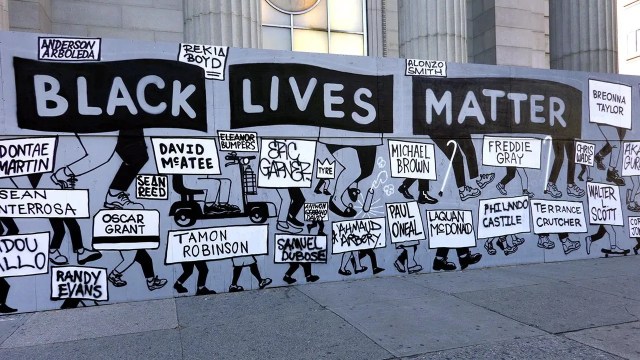
| Boilerpipe Text | A Black Lives Matter street sign in New York City depicting the names of Black victims of police violence. (Joan Slatkin/Education Images/Universal Images Group via Getty Images)
How we did this
This report studies the evolution of the #BlackLivesMatter hashtag on Twitter and explores how the American public engages with political and social issues on social media. It uses a mixed-methods approach, including a survey of U.S. adults and an analysis of publicly available tweets.
The Twitter findings are based on an analysis of over 44 million publicly available tweets containing the #BlackLivesMatter hashtag from the last 10 years. Researchers from the Center used the Twitter API to collect tweets with this hashtag that were publicly available on the site as of spring 2023. Using this dataset, we analyzed how often Twitter users post and retweet the hashtag; whether these tweets express support or opposition to the Black Lives Matter movement; whether they mention policing or police violence; and the other hashtags that are mentioned alongside #BlackLivesMatter. For more details on how these tweets were identified and sampled, read
the methodology.
The survey findings in this report are based on a survey conducted May 15-21, 2023, among 5,101 U.S. adults. Everyone who took part in the survey is a member of the Center’s American Trends Panel (ATP), an online survey panel that is recruited through national, random sampling of residential addresses. This way, nearly all U.S. adults have a chance of selection. The survey is weighted to be representative of the U.S. adult population by gender, race, ethnicity, partisan affiliation, education and other categories. Read more about the
ATP’s methodology
. Here are the
survey questions used for this report
, along with responses, and
its methodology
.
In July 2013, activists first used the
#BlackLivesMatter hashtag to spark conversation
about racism, violence and the criminal justice system following George Zimmerman’s acquittal in the
shooting death of Trayvon Martin
in Sanford, Florida.
Ten years later, Black Lives Matter stands as a model of a new generation of social movements intrinsically linked to social media. The enduring power of the hashtag itself is clear: More than 44 million #BlackLivesMatter tweets from nearly 10 million distinct users currently exist on Twitter today, according to a Pew Research Center analysis of publicly available tweets from July 2013 through March 2023.
1
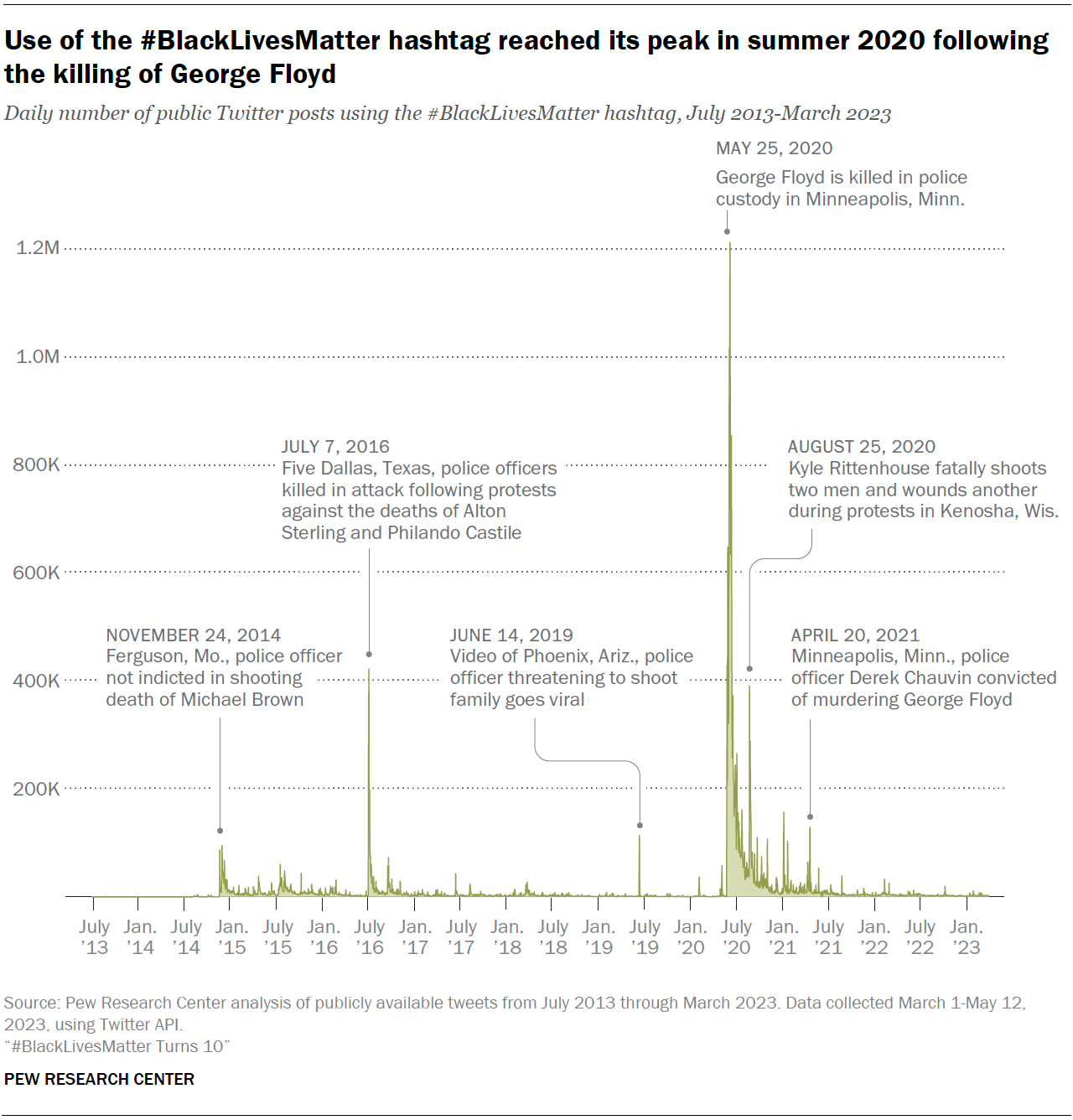
Use of the hashtag has fluctuated over the years, often in response to instances of police violence against Black Americans. And perhaps no event is more directly tied to the use of the hashtag than the murder of George Floyd by Minneapolis police officer Derek Chauvin on May 25, 2020.
Over half of all existing tweets that include the #BlackLivesMatter hashtag were posted from May to September 2020. And of the nearly 10 million distinct users who have tweeted the #BlackLivesMatter hashtag, 6.8 million of them – most of whom had never used the hashtag previously – posted it during that five-month period.
Jump to:
Use of #BlackLivesMatter on Twitter over the last 10 years
Americans’ views of and experiences with activism on social media
Views of the Black Lives Matter movement
Summer 2020 marked a high point in the number of tweets mentioning #BlackLivesMatter. But the hashtag remains an ongoing presence on Twitter to this day. Since October 2020, it has been used in nearly a quarter-million tweets per month.
Here are some of the key findings of this analysis of a decade of #BlackLivesMatter on Twitter:
Most #BlackLivesMatter tweets express support for the Black Lives Matter movement.
Some 72% of all #BlackLivesMatter tweets have expressed clear support for the movement or its broader objectives. Just 11% have expressed opposition, with the remainder not expressing clear opposition or support.
Policing and police violence have been a consistent topic of focus in these tweets.
One-third of all #BlackLivesMatter tweets over the last decade have mentioned police, victims of police violence or violent confrontations between civilians and law enforcement. Despite the many changes in the political and social landscape that have occurred during that time, policing has been a consistent focus of the #BlackLivesMatter conversation since 2013.
Over the years, #BlackLivesMatter has been associated with a diverse set of other hashtags and causes.
Some 55% of all #BlackLivesMatter tweets also include other hashtags. In the movement’s early years, the most common of these other hashtags referred primarily to specific instances or victims of police violence against Black Americans. More recently, they have expanded to include a variety of issues and causes.
Much of the #BlackLivesMatter historical record is no longer available.
Black Lives Matter is one of the most prominent social movements to develop and evolve entirely within the social media era. But our analysis indicates that around one-third of all #BlackLivesMatter tweets that were known to be posted from 2013 to 2021 – and as much as 40% of those posted during the summer of 2020 – are no longer accessible on Twitter.
Survey results: Black Lives Matter and social media activism
Along with this analysis of tweets, the Center also fielded a survey of 5,101 U.S. adults from May 15 to 21, 2023. It asked about Americans’ political activity on social media, and their views on social media’s role in national conversations about race and racial inequality.
The survey finds that exposure to Black Lives Matter on social media is widespread. Fully 77% of social media users say they have come across content related to Black Lives Matter on these sites. And this is true for majorities of users across most demographic groups.
Americans are much more likely to
see
posts related to Black Lives Matter than they are to
personally post or share
their views on the subject. And when they do choose to post, they are more likely show their support:
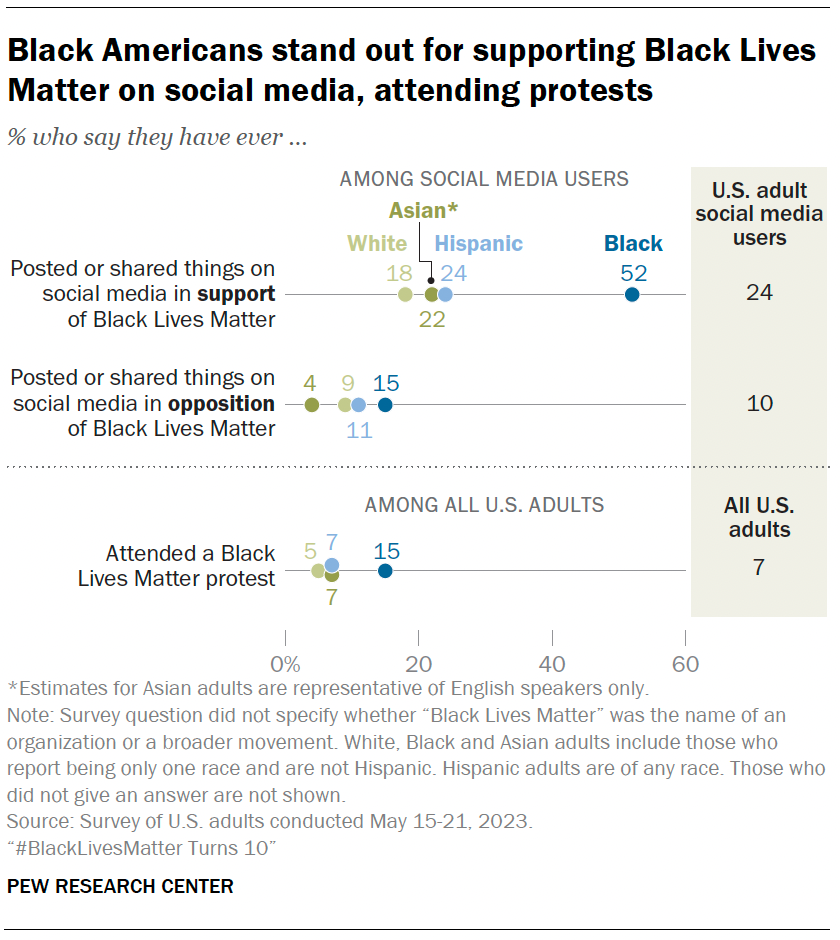
24% of social media users say they have ever posted or shared things in
support
of Black Lives Matter;
10% of users say they have done so in
opposition.
Black social media users stand out for showing their support: 52% say they have posted or shared things in support of Black Lives Matter on social media. That share drops to about one-in-five each among Hispanic, Asian and White users.
The survey also finds that 7% of Americans overall say they have ever attended a Black Lives Matter protest. And that share rises to 15% among those who are Black.
Younger Black people are especially likely to be vocal supporters of Black Lives Matter on social media. Some 61% of Black social media users ages 18 to 49 say they have posted or shared things in support of Black Lives Matter. This group also stands out for attending Black Lives Matter protests, with 17% of Black Americans in this age range saying they have been to one.
Views of social media and the press as tools for bringing attention to police violence against Black people
Three years since
nationwide protests and debates following the murder of George Floyd
, an 81% majority of Americans believe police violence against Black people in the U.S. is a problem. But while 85% of Black adults describe it as a
major
problem, that share falls to 56% among Hispanic adults and 50% among Asian adults.
2
An even smaller share of White adults feel this way (36%).
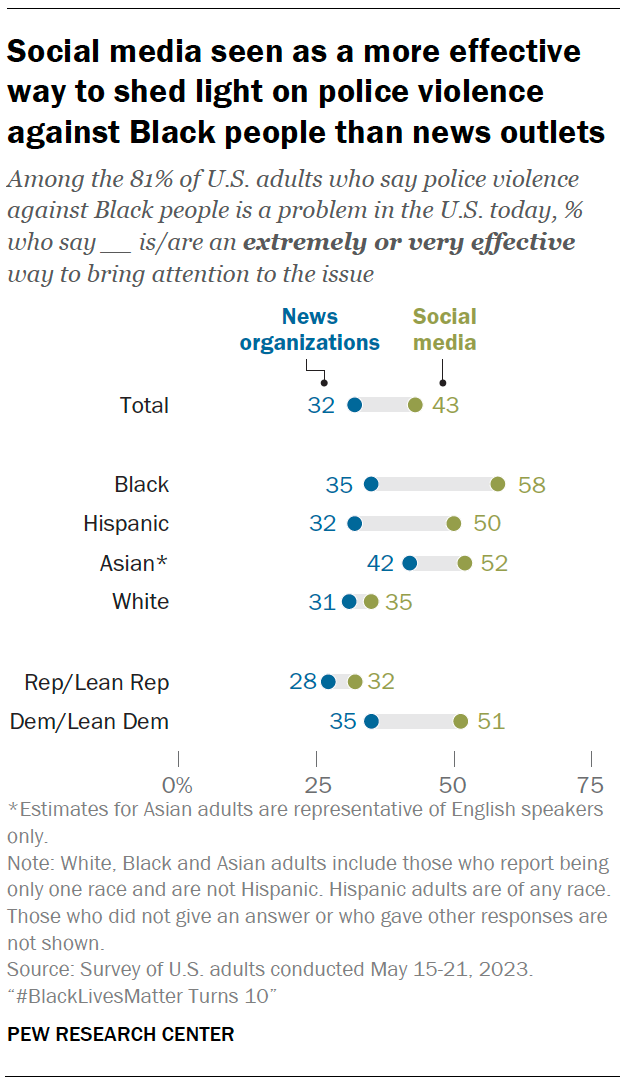
But how effective are social media or news organizations for bringing awareness to this issue? Among those who agree that police violence against Black people is a problem in the U.S., social media holds a modest edge:
43% say
social media
is an extremely or very effective way of bringing attention to this issue;
32% say
news organizations
are extremely or very effective.
The degree to which people view social media as an effective tool for spreading awareness varies by race and ethnicity, as well as by political attitudes.
About half or more Black, Asian and Hispanic adults describe social media as an extremely or very effective way to bring attention to police violence against Black adults, compared with a much smaller share of White adults (35%) who say this.
And Democrats and Democratic leaners who view police violence as a problem are more likely than their Republican counterparts to say social media is an extremely or very effective way to shed light on police violence against Black people (51% vs. 32%).
By comparison, views of news organizations’ ability to bring attention to these issues do not vary as greatly by race or ethnicity or by political party.
At the same time, the survey shows the public has complex views of the impact of social media on political engagement more broadly. Many Americans acknowledge how social media can be helpful in raising awareness, saying the following statements describe social media very or somewhat well:
67% say “social media highlights important issues that might not get a lot of attention otherwise”;
67% say “social media helps give a voice to underrepresented groups”;
47% say “social media make it easier to hold powerful people accountable.”
But larger shares believe these platforms can be a distraction and are ineffective:
82% say “social media distracts people from issues that are truly important”;
76% say “social media makes people think they’re making a difference when they really aren’t.”
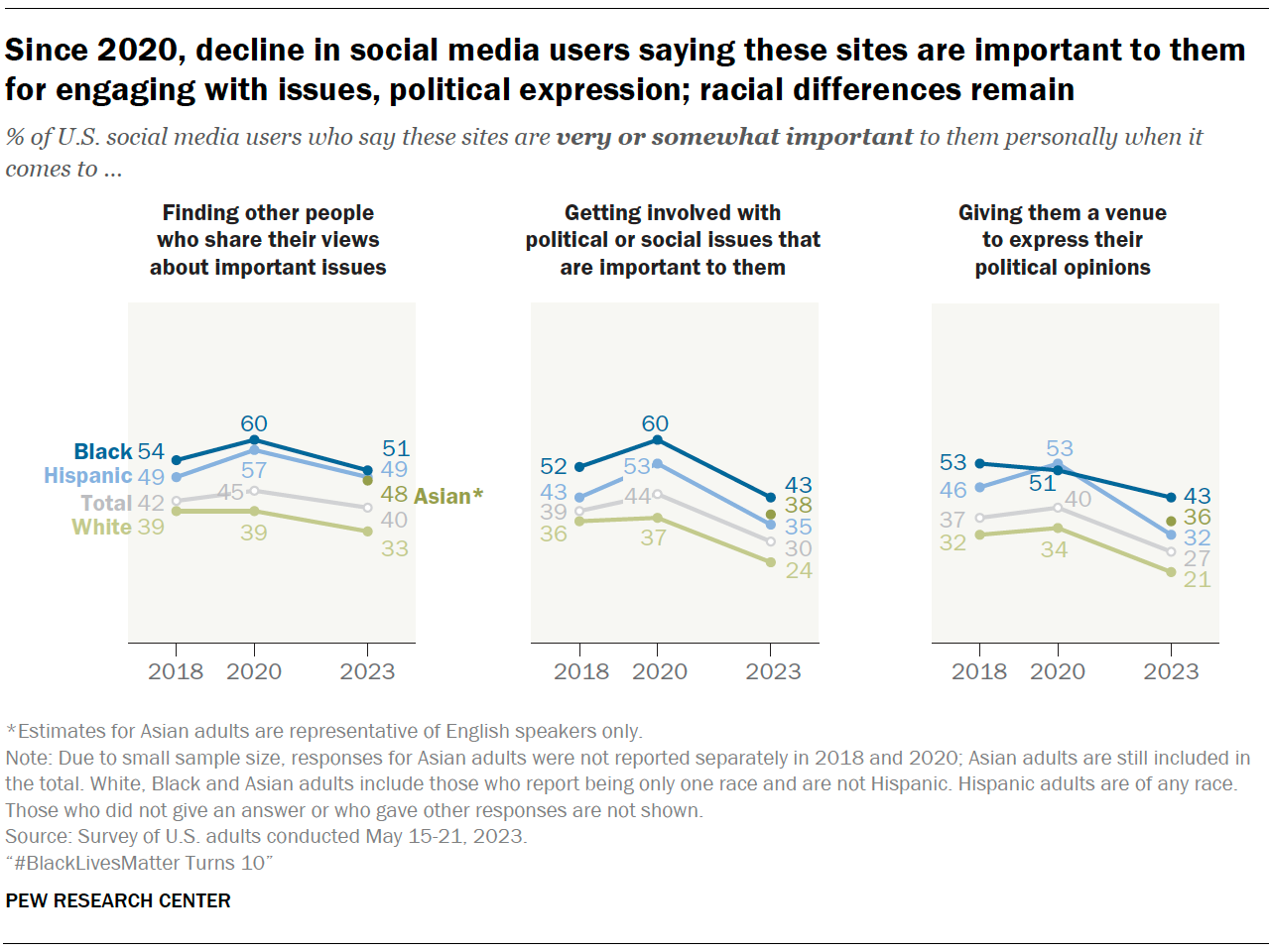
Overall, four-in-ten social media users say these platforms are very or somewhat important to them personally when it comes to finding others who share their views about important issues. Smaller shares place high importance on using social media to get involved with political or social issues (30%) or express their political opinions (27%).
But the level of importance users place on these sites for their own political engagement has declined over time.
The share of social media users who describe these sites as very or somewhat important to them for getting involved with issues they care about dropped from 44% in 2020 to 30% today. This decline is also present in views about social media being personally important for expressing their political views or finding like-minded people.
3
As was
true in previous Center surveys about social media activism
, the value users place on social media for their own political engagement varies by race and ethnicity.
4
About half each among Black, Hispanic and Asian social media users say these sites are important to them for finding others who share their views about important issues, compared with one-third of White users. A similar pattern is present when asked about getting involved with issues or expressing their political beliefs on social media.
Other key survey findings:
This survey also asked about five specific activities people may have recently participated in on social media, and it finds that some activities are more common than others. Among U.S. social media users, in the past year:
34% say they have taken part in a group that shares an interest in an issue or cause;
26% have encouraged others to take action on issues that are important to them;
14% have looked for information about rallies or protests happening in their area;
14% have changed their profile picture to show their support for a cause or issues;
12% have used hashtags related to a political or social issue.
In total, 46% of social media users have done at least one of these activities. Certain groups – particularly those who are Black – are more likely to report recently using social media for these purposes. |
| Markdown | Numbers, Facts and Trends Shaping Your World
- [Newsletters](https://www.pewresearch.org/follow-us/)
- [Press](https://www.pewresearch.org/press/)
- [My Account](https://www.pewresearch.org/my-account)
- [Donate](https://pewresearchcenter.networkforgood.com/)
- [Contacted By Us?](https://www.pewresearch.org/contactedbyus/)
Read our research on:
- [Beliefs & Practices](https://www.pewresearch.org/topic/religion/beliefs-practices/)
- [Donald Trump](https://www.pewresearch.org/topic/politics-policy/leaders/donald-trump/)
- [Middle East](https://www.pewresearch.org/regions-countries/middle-east-north-africa/)
[](https://www.pewresearch.org/)
- Research Topics
##### Topics
[Politics & Policy](https://www.pewresearch.org/topic/politics-policy/)
[International Affairs](https://www.pewresearch.org/topic/international-affairs/)
[Immigration & Migration](https://www.pewresearch.org/topic/immigration-migration/)
[Race & Ethnicity](https://www.pewresearch.org/topic/race-ethnicity/)
[Religion](https://www.pewresearch.org/topic/religion/)
[Age & Generations](https://www.pewresearch.org/topic/generations-age/)
[Gender & LGBTQ](https://www.pewresearch.org/topic/gender-lgbtq/)
[Family & Relationships](https://www.pewresearch.org/topic/family-relationships/)
[Economy & Work](https://www.pewresearch.org/topic/economy-work/)
[Science](https://www.pewresearch.org/topic/science/)
[Internet & Technology](https://www.pewresearch.org/topic/internet-technology/)
[News Habits & Media](https://www.pewresearch.org/topic/news-habits-media/)
[Methodological Research](https://www.pewresearch.org/topic/methodological-research/)
[Full Topic List](https://www.pewresearch.org/topics-categorized/)
##### Regions & Countries
[Asia & the Pacific](https://www.pewresearch.org/regions-countries/asia-pacific/)
[Europe & Russia](https://www.pewresearch.org/regions-countries/europe-russia/)
[Latin America](https://www.pewresearch.org/regions-countries/latin-america/)
[Middle East & North Africa](https://www.pewresearch.org/regions-countries/middle-east-north-africa/)
[North America](https://www.pewresearch.org/regions-countries/north-america/)
[Sub-Saharan Africa](https://www.pewresearch.org/regions-countries/sub-saharan-africa/)
[Multiple Regions / Worldwide](https://www.pewresearch.org/regions-countries/multiple-regions-worldwide/)
##### Formats
[Feature](https://www.pewresearch.org/publications/?_formats=feature)
[Fact Sheet](https://www.pewresearch.org/publications/?_formats=fact-sheet)
[Video](https://www.pewresearch.org/publications/?_formats=video)
[Data Essay](https://www.pewresearch.org/publications/?_formats=data-essay)
- [Publications](https://www.pewresearch.org/publications/)
- [Our Methods](https://www.pewresearch.org/our-methods/)
- [Short Reads](https://www.pewresearch.org/short-reads/)
- [Tools & Datasets](https://www.pewresearch.org/tools-and-datasets/)
- [Experts](https://www.pewresearch.org/experts/)
- [About Us](https://www.pewresearch.org/about/)
- - [Research Topics](https://www.pewresearch.org/topics/)
- [Publications](https://www.pewresearch.org/publications/)
- [Short Reads](https://www.pewresearch.org/short-reads/)
- [Tools & Datasets](https://www.pewresearch.org/tools-and-resources/)
- [About Pew Research Center](https://www.pewresearch.org/about/)
- [Newsletters](https://www.pewresearch.org/newsletters/)
- [Press](https://www.pewresearch.org/about/press/)
- [My Account](https://www.pewresearch.org/my-account/)
- [Contacted By Us?](https://www.pewresearch.org/contactedbyus/)
[](https://www.pewresearch.org/)
- Read Our Research On:
- [Beliefs & Practices](https://www.pewresearch.org/topic/religion/beliefs-practices/)
- [Donald Trump](https://www.pewresearch.org/topic/politics-policy/leaders/donald-trump/)
- [Middle East](https://www.pewresearch.org/regions-countries/middle-east-north-africa/)
[Home](https://www.pewresearch.org/)
\>
[Research Topics](https://www.pewresearch.org/topics)
\>
[Race & Ethnicity](https://www.pewresearch.org/topic/race-ethnicity/)
\>
[Race Relations](https://www.pewresearch.org/topic/race-ethnicity/race-relations/)
- Report
\|
June 29, 2023
# \#BlackLivesMatter Turns 10
## *Social media, online activism and 10 years of \#BlackLivesMatter*
- [Mail](https://%mail%)
By [Samuel Bestvater](https://www.pewresearch.org/staff/samuel-bestvater/), [Risa Gelles-Watnick](https://www.pewresearch.org/staff/risa-gelles-watnick/), [Meltem Odabaş](https://www.pewresearch.org/staff/meltem-odabas/), [Monica Anderson](https://www.pewresearch.org/staff/monica-anderson/) and [Aaron Smith](https://www.pewresearch.org/staff/aaron-smith/)
Table of Contents
1. [\#BlackLivesMatter Turns 10](https://www.pewresearch.org/internet/2023/06/29/blacklivesmatter-turns-10/)
- [Survey results: Black Lives Matter and social media activism](https://www.pewresearch.org/internet/2023/06/29/blacklivesmatter-turns-10/#survey-results-black-lives-matter-and-social-media-activism)
2. [1\. Ten years of \#BlackLivesMatter on Twitter](https://www.pewresearch.org/data-labs/2023/06/29/ten-years-of-blacklivesmatter-on-twitter/)
3. [2\. Americans’ views of and experiences with activism on social media](https://www.pewresearch.org/data-labs/2023/06/29/americans-views-of-and-experiences-with-activism-on-social-media/)
4. [Appendix](https://www.pewresearch.org/data-labs/2023/06/29/blm-turns-10-appendix/)
5. [Acknowledgments](https://www.pewresearch.org/data-labs/2023/06/29/blm-turns-10-acknowledgments/)
6. [Methodology](https://www.pewresearch.org/data-labs/2023/06/29/blm-turns-10-methodology/)
[](https://www.pewresearch.org/internet/2023/06/29/blacklivesmatter-turns-10/pi_23-05-30_blacklivesmatter_feature-jpg/)
A Black Lives Matter street sign in New York City depicting the names of Black victims of police violence. (Joan Slatkin/Education Images/Universal Images Group via Getty Images)
How we did this
This report studies the evolution of the \#BlackLivesMatter hashtag on Twitter and explores how the American public engages with political and social issues on social media. It uses a mixed-methods approach, including a survey of U.S. adults and an analysis of publicly available tweets.
The Twitter findings are based on an analysis of over 44 million publicly available tweets containing the \#BlackLivesMatter hashtag from the last 10 years. Researchers from the Center used the Twitter API to collect tweets with this hashtag that were publicly available on the site as of spring 2023. Using this dataset, we analyzed how often Twitter users post and retweet the hashtag; whether these tweets express support or opposition to the Black Lives Matter movement; whether they mention policing or police violence; and the other hashtags that are mentioned alongside \#BlackLivesMatter. For more details on how these tweets were identified and sampled, read [the methodology.](https://www.pewresearch.org/internet/2023/06/29/blm-turns-10-methodology/)
The survey findings in this report are based on a survey conducted May 15-21, 2023, among 5,101 U.S. adults. Everyone who took part in the survey is a member of the Center’s American Trends Panel (ATP), an online survey panel that is recruited through national, random sampling of residential addresses. This way, nearly all U.S. adults have a chance of selection. The survey is weighted to be representative of the U.S. adult population by gender, race, ethnicity, partisan affiliation, education and other categories. Read more about the [ATP’s methodology](https://www.pewresearch.org/methods/u-s-survey-research/american-trends-panel/). Here are the [survey questions used for this report](https://www.pewresearch.org/internet/wp-content/uploads/sites/9/2023/06/PI_2023.06.29_BLM-turns-10_TOPLINE.pdf), along with responses, and [its methodology](https://www.pewresearch.org/internet/2023/06/29/blm-turns-10-methodology/).
In July 2013, activists first used the [\#BlackLivesMatter hashtag to spark conversation](https://www.newyorker.com/magazine/2016/03/14/where-is-black-lives-matter-headed) about racism, violence and the criminal justice system following George Zimmerman’s acquittal in the [shooting death of Trayvon Martin](https://abcnews.go.com/alerts/TrayvonMartin) in Sanford, Florida.
Ten years later, Black Lives Matter stands as a model of a new generation of social movements intrinsically linked to social media. The enduring power of the hashtag itself is clear: More than 44 million \#BlackLivesMatter tweets from nearly 10 million distinct users currently exist on Twitter today, according to a Pew Research Center analysis of publicly available tweets from July 2013 through March 2023.[1](https://www.pewresearch.org/internet/2023/06/29/blacklivesmatter-turns-10/#fn-92567-1)
Use of the hashtag has fluctuated over the years, often in response to instances of police violence against Black Americans. And perhaps no event is more directly tied to the use of the hashtag than the murder of George Floyd by Minneapolis police officer Derek Chauvin on May 25, 2020.
[](https://www.pewresearch.org/internet/2023/06/29/blacklivesmatter-turns-10/pi_2023-06-29_blm-turns-10_0-01-png/)
Over half of all existing tweets that include the \#BlackLivesMatter hashtag were posted from May to September 2020. And of the nearly 10 million distinct users who have tweeted the \#BlackLivesMatter hashtag, 6.8 million of them – most of whom had never used the hashtag previously – posted it during that five-month period.
#### Jump to:
- [Use of \#BlackLivesMatter on Twitter over the last 10 years](https://www.pewresearch.org/internet/2023/06/29/ten-years-of-blacklivesmatter-on-twitter/)
- [Americans’ views of and experiences with activism on social media](https://www.pewresearch.org/internet/2023/06/29/americans-views-of-and-experiences-with-activism-on-social-media/)
- [Views of the Black Lives Matter movement](https://www.pewresearch.org/social-trends/2023/06/14/views-on-the-black-lives-matter-movement/)
Summer 2020 marked a high point in the number of tweets mentioning \#BlackLivesMatter. But the hashtag remains an ongoing presence on Twitter to this day. Since October 2020, it has been used in nearly a quarter-million tweets per month.
Here are some of the key findings of this analysis of a decade of \#BlackLivesMatter on Twitter:
- **Most \#BlackLivesMatter tweets express support for the Black Lives Matter movement.** Some 72% of all \#BlackLivesMatter tweets have expressed clear support for the movement or its broader objectives. Just 11% have expressed opposition, with the remainder not expressing clear opposition or support.
- **Policing and police violence have been a consistent topic of focus in these tweets.** One-third of all \#BlackLivesMatter tweets over the last decade have mentioned police, victims of police violence or violent confrontations between civilians and law enforcement. Despite the many changes in the political and social landscape that have occurred during that time, policing has been a consistent focus of the \#BlackLivesMatter conversation since 2013.
- **Over the years, \#BlackLivesMatter has been associated with a diverse set of other hashtags and causes.** Some 55% of all \#BlackLivesMatter tweets also include other hashtags. In the movement’s early years, the most common of these other hashtags referred primarily to specific instances or victims of police violence against Black Americans. More recently, they have expanded to include a variety of issues and causes.
- **Much of the \#BlackLivesMatter historical record is no longer available.** Black Lives Matter is one of the most prominent social movements to develop and evolve entirely within the social media era. But our analysis indicates that around one-third of all \#BlackLivesMatter tweets that were known to be posted from 2013 to 2021 – and as much as 40% of those posted during the summer of 2020 – are no longer accessible on Twitter.
### Survey results: Black Lives Matter and social media activism
Along with this analysis of tweets, the Center also fielded a survey of 5,101 U.S. adults from May 15 to 21, 2023. It asked about Americans’ political activity on social media, and their views on social media’s role in national conversations about race and racial inequality.
The survey finds that exposure to Black Lives Matter on social media is widespread. Fully 77% of social media users say they have come across content related to Black Lives Matter on these sites. And this is true for majorities of users across most demographic groups.
[](https://www.pewresearch.org/internet/2023/06/29/blacklivesmatter-turns-10/pi_2023-06-29_blm-turns-10_0-02-png/)
Americans are much more likely to *see* posts related to Black Lives Matter than they are to *personally post or share* their views on the subject. And when they do choose to post, they are more likely show their support:
- 24% of social media users say they have ever posted or shared things in **support** of Black Lives Matter;
- 10% of users say they have done so in **opposition.**
Black social media users stand out for showing their support: 52% say they have posted or shared things in support of Black Lives Matter on social media. That share drops to about one-in-five each among Hispanic, Asian and White users.
The survey also finds that 7% of Americans overall say they have ever attended a Black Lives Matter protest. And that share rises to 15% among those who are Black.
Younger Black people are especially likely to be vocal supporters of Black Lives Matter on social media. Some 61% of Black social media users ages 18 to 49 say they have posted or shared things in support of Black Lives Matter. This group also stands out for attending Black Lives Matter protests, with 17% of Black Americans in this age range saying they have been to one.
#### Views of social media and the press as tools for bringing attention to police violence against Black people
Three years since [nationwide protests and debates following the murder of George Floyd](https://www.nytimes.com/interactive/2020/07/03/us/george-floyd-protests-crowd-size.html), an 81% majority of Americans believe police violence against Black people in the U.S. is a problem. But while 85% of Black adults describe it as a *major* problem, that share falls to 56% among Hispanic adults and 50% among Asian adults.[2](https://www.pewresearch.org/internet/2023/06/29/blacklivesmatter-turns-10/#fn-92567-2) An even smaller share of White adults feel this way (36%).
[](https://www.pewresearch.org/internet/2023/06/29/blacklivesmatter-turns-10/pi_2023-06-29_blm-turns-10_0-03-png/)
But how effective are social media or news organizations for bringing awareness to this issue? Among those who agree that police violence against Black people is a problem in the U.S., social media holds a modest edge:
- 43% say **social media** is an extremely or very effective way of bringing attention to this issue;
- 32% say **news organizations** are extremely or very effective.
The degree to which people view social media as an effective tool for spreading awareness varies by race and ethnicity, as well as by political attitudes.
About half or more Black, Asian and Hispanic adults describe social media as an extremely or very effective way to bring attention to police violence against Black adults, compared with a much smaller share of White adults (35%) who say this.
And Democrats and Democratic leaners who view police violence as a problem are more likely than their Republican counterparts to say social media is an extremely or very effective way to shed light on police violence against Black people (51% vs. 32%).
By comparison, views of news organizations’ ability to bring attention to these issues do not vary as greatly by race or ethnicity or by political party.
At the same time, the survey shows the public has complex views of the impact of social media on political engagement more broadly. Many Americans acknowledge how social media can be helpful in raising awareness, saying the following statements describe social media very or somewhat well:
- 67% say “social media highlights important issues that might not get a lot of attention otherwise”;
- 67% say “social media helps give a voice to underrepresented groups”;
- 47% say “social media make it easier to hold powerful people accountable.”
But larger shares believe these platforms can be a distraction and are ineffective:
- 82% say “social media distracts people from issues that are truly important”;
- 76% say “social media makes people think they’re making a difference when they really aren’t.”
#### Value users place on social media for finding like-minded people, sharing political views
Overall, four-in-ten social media users say these platforms are very or somewhat important to them personally when it comes to finding others who share their views about important issues. Smaller shares place high importance on using social media to get involved with political or social issues (30%) or express their political opinions (27%).
But the level of importance users place on these sites for their own political engagement has declined over time.
The share of social media users who describe these sites as very or somewhat important to them for getting involved with issues they care about dropped from 44% in 2020 to 30% today. This decline is also present in views about social media being personally important for expressing their political views or finding like-minded people.[3](https://www.pewresearch.org/internet/2023/06/29/blacklivesmatter-turns-10/#fn-92567-3)
[](https://www.pewresearch.org/internet/2023/06/29/blacklivesmatter-turns-10/pi_2023-06-29_blm-turns-10_0-04-png/)
As was [true in previous Center surveys about social media activism](https://www.pewresearch.org/internet/2018/07/11/public-attitudes-toward-political-engagement-on-social-media/), the value users place on social media for their own political engagement varies by race and ethnicity.[4](https://www.pewresearch.org/internet/2023/06/29/blacklivesmatter-turns-10/#fn-92567-4) About half each among Black, Hispanic and Asian social media users say these sites are important to them for finding others who share their views about important issues, compared with one-third of White users. A similar pattern is present when asked about getting involved with issues or expressing their political beliefs on social media.
#### Other key survey findings:
This survey also asked about five specific activities people may have recently participated in on social media, and it finds that some activities are more common than others. Among U.S. social media users, in the past year:
- 34% say they have taken part in a group that shares an interest in an issue or cause;
- 26% have encouraged others to take action on issues that are important to them;
- 14% have looked for information about rallies or protests happening in their area;
- 14% have changed their profile picture to show their support for a cause or issues;
- 12% have used hashtags related to a political or social issue.
In total, 46% of social media users have done at least one of these activities. Certain groups – particularly those who are Black – are more likely to report recently using social media for these purposes.
[Next: Ten years of \#BlackLivesMatter on Twitter](https://www.pewresearch.org/data-labs/2023/06/29/ten-years-of-blacklivesmatter-on-twitter/)
← Prev Page
1 [2](https://www.pewresearch.org/data-labs/2023/06/29/ten-years-of-blacklivesmatter-on-twitter/ "1. Ten years of #BlackLivesMatter on Twitter") [3](https://www.pewresearch.org/data-labs/2023/06/29/americans-views-of-and-experiences-with-activism-on-social-media/ "2. Americans’ views of and experiences with activism on social media") [4](https://www.pewresearch.org/data-labs/2023/06/29/blm-turns-10-appendix/ "Appendix") [5](https://www.pewresearch.org/data-labs/2023/06/29/blm-turns-10-acknowledgments/ "Acknowledgments") [6](https://www.pewresearch.org/data-labs/2023/06/29/blm-turns-10-methodology/ "Methodology")
[Next Page →](https://www.pewresearch.org/data-labs/2023/06/29/ten-years-of-blacklivesmatter-on-twitter/)
1. Pew Research Center has previously analyzed the \#BlackLivesMatter hashtag through two data collection efforts. One covered the period from Jan. 1, 2013, to May 1, 2018, and a second covered the period from May 1, 2018, to June 7, 2020. Both used automated coding software developed by Crimson Hexagon, a social media analytics firm now part of [Brandwatch](https://www.brandwatch.com/p/crimson-hexagon/). This new analysis uses data collected directly from the Twitter API using Twitter’s integrated search tools. Due to differences in how these tools provide access to archived Twitter data and the fact that our analyses were performed at different points in time, the findings in these studies may not be directly comparable. However, each has broadly similar findings – such as that the \#BlackLivesMatter hashtag has periodic increases in daily use, often in response to news of fatal encounters between law enforcement and Black Americans. Please read this report’s [full methodology](https://www.pewresearch.org/internet/2023/06/29/blm-turns-10-methodology/) for more information.[↩](https://www.pewresearch.org/internet/2023/06/29/blacklivesmatter-turns-10/#fnref-92567-1)
2. Estimates for Asian adults are representative of English speakers only.[↩](https://www.pewresearch.org/internet/2023/06/29/blacklivesmatter-turns-10/#fnref-92567-2)
3. It is important to note that the Center’s last survey was conducted in June 2020 in the weeks following the killing of George Floyd which was a particularly active time for both online and offline activism.[↩](https://www.pewresearch.org/internet/2023/06/29/blacklivesmatter-turns-10/#fnref-92567-3)
4. Due to small sample size, responses for Asian adults were not reported separately in 2018 and 2020; Asian adults are still included in the total.[↩](https://www.pewresearch.org/internet/2023/06/29/blacklivesmatter-turns-10/#fnref-92567-4)
- [Report PDF](https://www.pewresearch.org/wp-content/uploads/sites/20/2023/06/PI_2023.06.29_BLM-turns-10_FINAL.pdf)
- [Topline](https://www.pewresearch.org/wp-content/uploads/sites/20/2023/06/PI_2023.06.29_BLM-turns-10_TOPLINE.pdf)
- [American Trends Panel Wave 127](https://www.pewresearch.org/dataset/american-trends-panel-wave-127/)

### Sign up for our weekly newsletter
Fresh data delivered Saturday mornings
Topics
- [Online Activism](https://www.pewresearch.org/topic/internet-technology/politics-online/online-activism/)
- [Police](https://www.pewresearch.org/topic/other-topics/occupational-groups/police-2/)
- [Politics Online](https://www.pewresearch.org/topic/internet-technology/politics-online/)
- [Race Relations](https://www.pewresearch.org/topic/race-ethnicity/race-relations/)
- [Racial Bias & Discrimination](https://www.pewresearch.org/topic/race-ethnicity/racial-bias-discrimination/)
- [Social Media](https://www.pewresearch.org/topic/internet-technology/platforms-services/social-media/)
- [Twitter (X)](https://www.pewresearch.org/topic/internet-technology/platforms-services/social-media/twitter-x/)
### Related
short reads
Mar 25, 2026
[![]()](https://www.pewresearch.org/short-reads/2026/03/25/how-americans-value-racial-diversity-ahead-of-the-countrys-250th-anniversary/)
## [How Americans view racial diversity ahead of the country’s 250th anniversary](https://www.pewresearch.org/short-reads/2026/03/25/how-americans-value-racial-diversity-ahead-of-the-countrys-250th-anniversary/)
data essay
May 7, 2025
[![]()](https://www.pewresearch.org/race-and-ethnicity/2025/05/07/views-of-race-policing-and-black-lives-matter-in-the-5-years-since-george-floyds-killing/)
## [Views of Race, Policing and Black Lives Matter in the 5 Years Since George Floyd’s Killing](https://www.pewresearch.org/race-and-ethnicity/2025/05/07/views-of-race-policing-and-black-lives-matter-in-the-5-years-since-george-floyds-killing/)
report
Nov 30, 2023
[![]()](https://www.pewresearch.org/race-and-ethnicity/2023/11/30/discrimination-experiences-shape-most-asian-americans-lives/)
## [Discrimination Experiences Shape Most Asian Americans’ Lives](https://www.pewresearch.org/race-and-ethnicity/2023/11/30/discrimination-experiences-shape-most-asian-americans-lives/)
short reads
Jul 12, 2023
[![]()](https://www.pewresearch.org/short-reads/2023/07/12/8-facts-about-black-lives-matter/)
## [8 facts about Black Lives Matter](https://www.pewresearch.org/short-reads/2023/07/12/8-facts-about-black-lives-matter/)
report
Jun 14, 2023
[![A Black Lives Matter mural painted on Fulton Street in Brooklyn, New York City, in June 2020. (John Lamparski/SOPA Images/LightRocket via Getty Images)]()](https://www.pewresearch.org/social-trends/2023/06/14/support-for-the-black-lives-matter-movement-has-dropped-considerably-from-its-peak-in-2020/)
## [Support for the Black Lives Matter Movement Has Dropped Considerably From Its Peak in 2020](https://www.pewresearch.org/social-trends/2023/06/14/support-for-the-black-lives-matter-movement-has-dropped-considerably-from-its-peak-in-2020/)
### Most Popular
1
[What Do Americans Consider Immoral?](https://www.pewresearch.org/religion/2026/03/19/what-do-americans-consider-immoral/)
2
[U.S.-style birthright citizenship is uncommon around the world](https://www.pewresearch.org/short-reads/2026/03/31/us-style-birthright-citizenship-is-uncommon-around-the-world/)
3
[Americans Broadly Disapprove of U.S. Military Action in Iran](https://www.pewresearch.org/politics/2026/03/25/americans-broadly-disapprove-of-u-s-military-action-in-iran/)
4
[Negative views of Israel, Netanyahu continue to rise among Americans – especially young people](https://www.pewresearch.org/short-reads/2026/04/07/negative-views-of-israel-netanyahu-continue-to-rise-among-americans-especially-young-people/)
5
[Are you in the American middle class? Find out with our income calculator](https://www.pewresearch.org/short-reads/2024/09/16/are-you-in-the-american-middle-class/)
## Report Materials
- [Report PDF](https://www.pewresearch.org/wp-content/uploads/sites/20/2023/06/PI_2023.06.29_BLM-turns-10_FINAL.pdf)
- [Topline](https://www.pewresearch.org/wp-content/uploads/sites/20/2023/06/PI_2023.06.29_BLM-turns-10_TOPLINE.pdf)
- [American Trends Panel Wave 127](https://www.pewresearch.org/dataset/american-trends-panel-wave-127/)
## Table of Contents
1. [\#BlackLivesMatter Turns 10](https://www.pewresearch.org/internet/2023/06/29/blacklivesmatter-turns-10/)
- [Survey results: Black Lives Matter and social media activism](https://www.pewresearch.org/internet/2023/06/29/blacklivesmatter-turns-10/#survey-results-black-lives-matter-and-social-media-activism)
2. [1\. Ten years of \#BlackLivesMatter on Twitter](https://www.pewresearch.org/data-labs/2023/06/29/ten-years-of-blacklivesmatter-on-twitter/)
3. [2\. Americans’ views of and experiences with activism on social media](https://www.pewresearch.org/data-labs/2023/06/29/americans-views-of-and-experiences-with-activism-on-social-media/)
4. [Appendix](https://www.pewresearch.org/data-labs/2023/06/29/blm-turns-10-appendix/)
5. [Acknowledgments](https://www.pewresearch.org/data-labs/2023/06/29/blm-turns-10-acknowledgments/)
6. [Methodology](https://www.pewresearch.org/data-labs/2023/06/29/blm-turns-10-methodology/)
[](https://www.pewresearch.org/)
### Help us improve our website
We’d love your feedback. Our questions take about 5-10 minutes to answer.
[Share website feedback](https://www.surveymonkey.com/r/GSFFD9V?vURL=https%3A%2F%2Fwww.pewresearch.org%2Finternet%2F2023%2F06%2F29%2Fblacklivesmatter-turns-10%2F&vDevice=desktop&vWing=b&vVLY=no&vLIB=no&vRef=false&vCtry=GB&vRS=ENG&vC=false)
[](https://www.pewresearch.org/)
901 E St. NW, Suite 300
Washington, DC 20004
USA
[(+1) 202-419-4300 \| Main](tel:+12024194300)
[(+1) 202-857-8562 \| Fax](tel:+12028578562)
[(+1) 202-419-4372 \| **Media Inquiries**](tel:+12024194372)
## Research Topics
[Politics & Policy](https://www.pewresearch.org/topic/politics-policy/)
[International Affairs](https://www.pewresearch.org/topic/international-affairs/)
[Immigration & Migration](https://www.pewresearch.org/topic/immigration-migration/)
[Race & Ethnicity](https://www.pewresearch.org/topic/race-ethnicity/)
[Religion](https://www.pewresearch.org/topic/religion/)
[Age & Generations](https://www.pewresearch.org/topic/generations-age/)
[Gender & LGBTQ](https://www.pewresearch.org/topic/gender-lgbtq/)
[Family & Relationships](https://www.pewresearch.org/topic/family-relationships/)
[Economy & Work](https://www.pewresearch.org/topic/economy-work/)
[Science](https://www.pewresearch.org/topic/science/)
[Internet & Technology](https://www.pewresearch.org/topic/internet-technology/)
[News Habits & Media](https://www.pewresearch.org/topic/news-habits-media/)
[Methodological Research](https://www.pewresearch.org/topic/methodological-research/)
## Follow Us
- [Email Newsletters](https://www.pewresearch.org/about/follow-us/)
- [YouTube](https://www.youtube.com/user/PewResearchCenter/featured/)
- [Instagram](https://www.instagram.com/pewresearch/)
- [Facebook](https://www.facebook.com/pewresearch/)
- [LinkedIn](https://www.linkedin.com/company/pew-research-center/)
- [X](https://x.com/pewresearch)
- [Bluesky](https://bsky.app/profile/pewresearch.org)
- [Threads](https://www.threads.com/@pewresearch)
- [RSS Feed](https://www.pewresearch.org/feed/)
**[ABOUT PEW RESEARCH CENTER](https://www.pewresearch.org/about)** Pew Research Center is a nonpartisan, nonadvocacy fact tank that informs the public about the issues, attitudes and trends shaping the world. It does not take policy positions. The Center conducts public opinion polling, demographic research, computational social science research and other data-driven research. Pew Research Center is a subsidiary of [The Pew Charitable Trusts](https://www.pew.org/), its primary funder.
© 2026 Pew Research Center
- [About](https://www.pewresearch.org/about/)
- [Terms & Conditions](https://www.pewresearch.org/about/terms-and-conditions/)
- [Privacy Policy](https://www.pewresearch.org/about/privacy-policy/)
- [Cookie Policy](https://www.pewresearch.org/about/cookie-policy/)
- [Feedback](https://www.pewresearch.org/contact-form/)
- [Careers](https://www.pewresearch.org/about/careers/)
- [Contact Us](https://www.pewresearch.org/about/contact/)
### Privacy Notice
We use cookies and other technologies to help improve your experience; some are necessary for the site to work, and some are optional. Learn more in our [privacy policy](https://www.pewresearch.org/about/privacy-policy/).
Essential Cookies
These cookies are required for the website to function and cannot be switched off.
Analytics Cookies
These cookies are used to collect information about how you use our website.
Marketing Cookies
These cookies are used to track your activity and show you personalized content.
Preferences
These cookies allow the website to remember choices you make.
Accept All Cookies
Accept only necessary cookies
Cookie Settings
Save Preferences |
| Readable Markdown | [](https://www.pewresearch.org/internet/2023/06/29/blacklivesmatter-turns-10/pi_23-05-30_blacklivesmatter_feature-jpg/)
A Black Lives Matter street sign in New York City depicting the names of Black victims of police violence. (Joan Slatkin/Education Images/Universal Images Group via Getty Images)
How we did this
This report studies the evolution of the \#BlackLivesMatter hashtag on Twitter and explores how the American public engages with political and social issues on social media. It uses a mixed-methods approach, including a survey of U.S. adults and an analysis of publicly available tweets.
The Twitter findings are based on an analysis of over 44 million publicly available tweets containing the \#BlackLivesMatter hashtag from the last 10 years. Researchers from the Center used the Twitter API to collect tweets with this hashtag that were publicly available on the site as of spring 2023. Using this dataset, we analyzed how often Twitter users post and retweet the hashtag; whether these tweets express support or opposition to the Black Lives Matter movement; whether they mention policing or police violence; and the other hashtags that are mentioned alongside \#BlackLivesMatter. For more details on how these tweets were identified and sampled, read [the methodology.](https://www.pewresearch.org/internet/2023/06/29/blm-turns-10-methodology/)
The survey findings in this report are based on a survey conducted May 15-21, 2023, among 5,101 U.S. adults. Everyone who took part in the survey is a member of the Center’s American Trends Panel (ATP), an online survey panel that is recruited through national, random sampling of residential addresses. This way, nearly all U.S. adults have a chance of selection. The survey is weighted to be representative of the U.S. adult population by gender, race, ethnicity, partisan affiliation, education and other categories. Read more about the [ATP’s methodology](https://www.pewresearch.org/methods/u-s-survey-research/american-trends-panel/). Here are the [survey questions used for this report](https://www.pewresearch.org/internet/wp-content/uploads/sites/9/2023/06/PI_2023.06.29_BLM-turns-10_TOPLINE.pdf), along with responses, and [its methodology](https://www.pewresearch.org/internet/2023/06/29/blm-turns-10-methodology/).
In July 2013, activists first used the [\#BlackLivesMatter hashtag to spark conversation](https://www.newyorker.com/magazine/2016/03/14/where-is-black-lives-matter-headed) about racism, violence and the criminal justice system following George Zimmerman’s acquittal in the [shooting death of Trayvon Martin](https://abcnews.go.com/alerts/TrayvonMartin) in Sanford, Florida.
Ten years later, Black Lives Matter stands as a model of a new generation of social movements intrinsically linked to social media. The enduring power of the hashtag itself is clear: More than 44 million \#BlackLivesMatter tweets from nearly 10 million distinct users currently exist on Twitter today, according to a Pew Research Center analysis of publicly available tweets from July 2013 through March 2023.[1](https://www.pewresearch.org/internet/2023/06/29/blacklivesmatter-turns-10/#fn-92567-1)
Use of the hashtag has fluctuated over the years, often in response to instances of police violence against Black Americans. And perhaps no event is more directly tied to the use of the hashtag than the murder of George Floyd by Minneapolis police officer Derek Chauvin on May 25, 2020.
[](https://www.pewresearch.org/internet/2023/06/29/blacklivesmatter-turns-10/pi_2023-06-29_blm-turns-10_0-01-png/)
Over half of all existing tweets that include the \#BlackLivesMatter hashtag were posted from May to September 2020. And of the nearly 10 million distinct users who have tweeted the \#BlackLivesMatter hashtag, 6.8 million of them – most of whom had never used the hashtag previously – posted it during that five-month period.
#### Jump to:
- [Use of \#BlackLivesMatter on Twitter over the last 10 years](https://www.pewresearch.org/internet/2023/06/29/ten-years-of-blacklivesmatter-on-twitter/)
- [Americans’ views of and experiences with activism on social media](https://www.pewresearch.org/internet/2023/06/29/americans-views-of-and-experiences-with-activism-on-social-media/)
- [Views of the Black Lives Matter movement](https://www.pewresearch.org/social-trends/2023/06/14/views-on-the-black-lives-matter-movement/)
Summer 2020 marked a high point in the number of tweets mentioning \#BlackLivesMatter. But the hashtag remains an ongoing presence on Twitter to this day. Since October 2020, it has been used in nearly a quarter-million tweets per month.
Here are some of the key findings of this analysis of a decade of \#BlackLivesMatter on Twitter:
- **Most \#BlackLivesMatter tweets express support for the Black Lives Matter movement.** Some 72% of all \#BlackLivesMatter tweets have expressed clear support for the movement or its broader objectives. Just 11% have expressed opposition, with the remainder not expressing clear opposition or support.
- **Policing and police violence have been a consistent topic of focus in these tweets.** One-third of all \#BlackLivesMatter tweets over the last decade have mentioned police, victims of police violence or violent confrontations between civilians and law enforcement. Despite the many changes in the political and social landscape that have occurred during that time, policing has been a consistent focus of the \#BlackLivesMatter conversation since 2013.
- **Over the years, \#BlackLivesMatter has been associated with a diverse set of other hashtags and causes.** Some 55% of all \#BlackLivesMatter tweets also include other hashtags. In the movement’s early years, the most common of these other hashtags referred primarily to specific instances or victims of police violence against Black Americans. More recently, they have expanded to include a variety of issues and causes.
- **Much of the \#BlackLivesMatter historical record is no longer available.** Black Lives Matter is one of the most prominent social movements to develop and evolve entirely within the social media era. But our analysis indicates that around one-third of all \#BlackLivesMatter tweets that were known to be posted from 2013 to 2021 – and as much as 40% of those posted during the summer of 2020 – are no longer accessible on Twitter.
### Survey results: Black Lives Matter and social media activism
Along with this analysis of tweets, the Center also fielded a survey of 5,101 U.S. adults from May 15 to 21, 2023. It asked about Americans’ political activity on social media, and their views on social media’s role in national conversations about race and racial inequality.
The survey finds that exposure to Black Lives Matter on social media is widespread. Fully 77% of social media users say they have come across content related to Black Lives Matter on these sites. And this is true for majorities of users across most demographic groups.
[](https://www.pewresearch.org/internet/2023/06/29/blacklivesmatter-turns-10/pi_2023-06-29_blm-turns-10_0-02-png/)
Americans are much more likely to *see* posts related to Black Lives Matter than they are to *personally post or share* their views on the subject. And when they do choose to post, they are more likely show their support:
- 24% of social media users say they have ever posted or shared things in **support** of Black Lives Matter;
- 10% of users say they have done so in **opposition.**
Black social media users stand out for showing their support: 52% say they have posted or shared things in support of Black Lives Matter on social media. That share drops to about one-in-five each among Hispanic, Asian and White users.
The survey also finds that 7% of Americans overall say they have ever attended a Black Lives Matter protest. And that share rises to 15% among those who are Black.
Younger Black people are especially likely to be vocal supporters of Black Lives Matter on social media. Some 61% of Black social media users ages 18 to 49 say they have posted or shared things in support of Black Lives Matter. This group also stands out for attending Black Lives Matter protests, with 17% of Black Americans in this age range saying they have been to one.
#### Views of social media and the press as tools for bringing attention to police violence against Black people
Three years since [nationwide protests and debates following the murder of George Floyd](https://www.nytimes.com/interactive/2020/07/03/us/george-floyd-protests-crowd-size.html), an 81% majority of Americans believe police violence against Black people in the U.S. is a problem. But while 85% of Black adults describe it as a *major* problem, that share falls to 56% among Hispanic adults and 50% among Asian adults.[2](https://www.pewresearch.org/internet/2023/06/29/blacklivesmatter-turns-10/#fn-92567-2) An even smaller share of White adults feel this way (36%).
[](https://www.pewresearch.org/internet/2023/06/29/blacklivesmatter-turns-10/pi_2023-06-29_blm-turns-10_0-03-png/)
But how effective are social media or news organizations for bringing awareness to this issue? Among those who agree that police violence against Black people is a problem in the U.S., social media holds a modest edge:
- 43% say **social media** is an extremely or very effective way of bringing attention to this issue;
- 32% say **news organizations** are extremely or very effective.
The degree to which people view social media as an effective tool for spreading awareness varies by race and ethnicity, as well as by political attitudes.
About half or more Black, Asian and Hispanic adults describe social media as an extremely or very effective way to bring attention to police violence against Black adults, compared with a much smaller share of White adults (35%) who say this.
And Democrats and Democratic leaners who view police violence as a problem are more likely than their Republican counterparts to say social media is an extremely or very effective way to shed light on police violence against Black people (51% vs. 32%).
By comparison, views of news organizations’ ability to bring attention to these issues do not vary as greatly by race or ethnicity or by political party.
At the same time, the survey shows the public has complex views of the impact of social media on political engagement more broadly. Many Americans acknowledge how social media can be helpful in raising awareness, saying the following statements describe social media very or somewhat well:
- 67% say “social media highlights important issues that might not get a lot of attention otherwise”;
- 67% say “social media helps give a voice to underrepresented groups”;
- 47% say “social media make it easier to hold powerful people accountable.”
But larger shares believe these platforms can be a distraction and are ineffective:
- 82% say “social media distracts people from issues that are truly important”;
- 76% say “social media makes people think they’re making a difference when they really aren’t.”
Overall, four-in-ten social media users say these platforms are very or somewhat important to them personally when it comes to finding others who share their views about important issues. Smaller shares place high importance on using social media to get involved with political or social issues (30%) or express their political opinions (27%).
But the level of importance users place on these sites for their own political engagement has declined over time.
The share of social media users who describe these sites as very or somewhat important to them for getting involved with issues they care about dropped from 44% in 2020 to 30% today. This decline is also present in views about social media being personally important for expressing their political views or finding like-minded people.[3](https://www.pewresearch.org/internet/2023/06/29/blacklivesmatter-turns-10/#fn-92567-3)
[](https://www.pewresearch.org/internet/2023/06/29/blacklivesmatter-turns-10/pi_2023-06-29_blm-turns-10_0-04-png/)
As was [true in previous Center surveys about social media activism](https://www.pewresearch.org/internet/2018/07/11/public-attitudes-toward-political-engagement-on-social-media/), the value users place on social media for their own political engagement varies by race and ethnicity.[4](https://www.pewresearch.org/internet/2023/06/29/blacklivesmatter-turns-10/#fn-92567-4) About half each among Black, Hispanic and Asian social media users say these sites are important to them for finding others who share their views about important issues, compared with one-third of White users. A similar pattern is present when asked about getting involved with issues or expressing their political beliefs on social media.
#### Other key survey findings:
This survey also asked about five specific activities people may have recently participated in on social media, and it finds that some activities are more common than others. Among U.S. social media users, in the past year:
- 34% say they have taken part in a group that shares an interest in an issue or cause;
- 26% have encouraged others to take action on issues that are important to them;
- 14% have looked for information about rallies or protests happening in their area;
- 14% have changed their profile picture to show their support for a cause or issues;
- 12% have used hashtags related to a political or social issue.
In total, 46% of social media users have done at least one of these activities. Certain groups – particularly those who are Black – are more likely to report recently using social media for these purposes. |
| Shard | 74 (laksa) |
| Root Hash | 4302129426480924274 |
| Unparsed URL | org,pewresearch!www,/internet/2023/06/29/blacklivesmatter-turns-10/ s443 |