ℹ️ Skipped - page is already crawled
| Filter | Status | Condition | Details |
|---|---|---|---|
| HTTP status | PASS | download_http_code = 200 | HTTP 200 |
| Age cutoff | PASS | download_stamp > now() - 6 MONTH | 0.4 months ago |
| History drop | PASS | isNull(history_drop_reason) | No drop reason |
| Spam/ban | PASS | fh_dont_index != 1 AND ml_spam_score = 0 | ml_spam_score=0 |
| Canonical | PASS | meta_canonical IS NULL OR = '' OR = src_unparsed | Not set |
| Property | Value |
|---|---|
| URL | https://www.oakstreethealth.com/coping-with-anxiety-8-ways-to-relieve-stress-and-anxiety-2319496 |
| Last Crawled | 2026-04-08 08:03:38 (12 days ago) |
| First Indexed | 2025-09-25 07:49:55 (6 months ago) |
| HTTP Status Code | 200 |
| Meta Title | Coping With Anxiety: 8 Ways to Relieve Stress and Anxiety | Oak Street Health |
| Meta Description | Read about "Coping With Anxiety: 8 Ways to Relieve Stress and Anxiety" on the Oak Street Health blog, where you can find information and advice on Primary Care, Wellness and Health Insurance. |
| Meta Canonical | null |
| Boilerpipe Text | Article at a glance
Anxiety is often described as a feeling of unease or intense worry. All of us experience it from time to time, but intense, prolonged anxiety can interfere with daily life.
When anxiety affects our daily routines, relationships, and peace-of-mind, there are ways to relieve symptoms, including seeking professional help and implementing at-home stress reduction techniques.
Some of the most effective at-home anxiety relief tips include breathing techniques, meditation, essential oils, eating the MIND diet, focusing on sleep health, and regular exercise.
Have you ever felt a pounding heart, intense worry, or an inability to relax when facing a stressful situation? These are all common anxiety symptoms, and most of us have probably experienced them at one point or another. In fact,
10–20% of older adults
experience intense anxiety at least one time a year. However, there are many evidence-based treatment options and at-home relief techniques to try.
What is Anxiety?
Anxiety
is a feeling of dread, unease, or fear about the future. Anxious feelings are a normal part of life, and many of us feel them at one point or another. Someone may, for example, feel anxious about finances,
navigating Medicare
and health insurance options, or a loved one’s illness. In healthy amounts, anxiety can provide energy and motivation to research those insurance options or spend more time with that loved one.
But when anxiety becomes debilitating or is present for weeks or months, it’s not so helpful. In these situations, someone may develop an
anxiety disorder
, a condition where anxiety doesn’t go away after a stressor disappears. Disorders often cause periods of intense anxiety that disrupt daily life and make it hard to live in the present moment.
Symptoms of Anxiety
When we think of anxiety symptoms, we often think of the mental symptoms, such as:
Racing mind
Overwhelming, tense thoughts
Lower self-esteem
Feelings of dread or fear
Feeling like the world is speeding up
Behavioral changes, such as avoiding social situations or activities someone used to enjoy
Hoarding
Coping in unhealthy ways by increasing use of alcohol or drugs
Constantly fearing the worst or impending danger
While mental symptoms are common, anxiety can also impact our bodies physically. When we feel anxious, we produce stress hormones. The body’s reaction to those hormones causes a ripple effect on various parts of the body, harming tissues of the heart and digestive tract. When that ripple effect occurs, physical symptoms of anxiety can manifest, such as:
Shallow, difficult breathing
Muscle tension
Racing or irregular heartbeat
Difficulty sleeping or insomnia
Upset stomach
Nausea
Increased sweating
High blood pressure
If left untreated, anxiety disorders can increase the risk of or worsen other medical conditions, including
heart disease
,
irritable bowel syndrome
(IBS), and autoimmune conditions like
arthritis
.
Common Causes of Anxiety Disorders
While the exact cause of anxiety remains unclear, it likely stems from a combination of genetics, environment, stress levels, and brain chemistry. That said, there are some common triggers that can lead to more severe forms of anxiety, like a disorder or panic attack:
An imbalance of certain chemicals in the brain, including
the
“
happiness hormones” serotonin
and dopamine
Traumatic events, especially in childhood
Family history of mental health conditions
An inability to manage stress
Life events, such as a stark change in finances or
a cancer diagnosis
Social isolation
Poor sleep
Sedentary lifestyle
History of substance abuse
Sleep disturbances
As we age, the triggers of our anxiety change. A
2024 study
identified a fear of falling as a cause of anxiety for older adults, but not for younger age groups. At the same time, what causes anxiety for young adults, such as career concerns or raising children, may be less likely to impact older populations. While anxiety is triggered in different ways for different people and age groups, it should be taken seriously regardless of what the trigger is. If you’re experiencing anxiety in any way, shape, or form, please consider opening up to your provider or loved ones so that you can find help.
8 Ways to Relieve Anxiety
No matter why or how often anxiety impacts someone, strategies and resources to relieve symptoms should be readily available. Here are some of the tips that can help treat or manage a stressor directly or prevent anxiety altogether:
1: Seek Professional Help
To ease anxiety, especially if intense or persistent, consider working with a mental health professional. These professionals are trained to help individuals overcome mental disorders and help folks find ways to cope. They practice a variety of different treatment modalities including talk therapy, exposure therapy (when someone is exposed to a trigger to overcome it), and relaxation techniques. Licensed therapists, counselors, and psychologists can also refer patients to a psychiatrist for medication, if recommended as part of an individual’s treatment plan.
Professional help is one of the most proven ways to overcome anxiety. Those who seek professional help report
a 20% reduction in anxiety disorder symptoms
and a 23% increase in overall quality of life.
To find a therapist in your area, visit:
Good Therapy
The Recovery Village
Psychology Today
Talkspace
2: MIND Diet
Poor nutrition can make anxiety worse. As a result, organizations like the
American Psychiatric Association
and many healthcare providers recommend tailoring
what you eat
to support overall mental health.
While many dietary interventions can help with anxiety, the Mediterranean-DASH intervention for neurodegenerative delay (MIND diet) addresses mental health and cognitive concerns directly. In one study, those who adhered to the MIND diet were
97% less likely
to develop an anxiety disorder than those who didn’t. Plus, this diet reduces the
risk of cognitive issues
, like
Alzheimer’s
and other forms of
dementia
.
The
MIND diet
is a mix of the
Mediterranean
and
DASH diets
. The most important foods for this diet include:
Berries
Leafy greens
Fish and lean meat
Nuts
Olive oil
Beans
The MIND diet recommends avoiding or limiting:
Red meat
Processed foods
Desserts
Pastries
Butter and margarine
Dairy products, like cheese and ice cream
Controlling portion size is also an effective way to indirectly limit anxiety as overeating or undereating may cause physical stress on the body which worsens anxiety.
3: Meditation
Meditation has many
mental health benefits
, including:
Decreasing symptoms of anxiety and
depression
Increasing connectedness (feeling
less lonely
)
Developing coping skills to deal with difficult life phases or bad news
To meditate, set a timer for five to twenty minutes with the intent to control your thoughts during that time, either to think of nothing or something positive.
However, many find it intimidating to set a timer and meditate on their own. To help, there are free guided meditations available. A few to try include:
This
five minute meditation
for anxiety
This
10 minute meditation
to reduce stress
This
15 minute meditation
for anxiety and depression
There are also various apps and sites to help guide you through meditation such as:
Insight Timer
Calm
Headspace
4: Gentle Movement
Another positive way to cope with anxiety is to
incorporate exercise
into your week. Regular physical activity helps
manage mental health symptoms
. The
CDC outlines
that the immediate effects of physical activity include less anxiety and improved sleep quality.
If new to exercise, start with shorter sessions and gradually increase how long and how often you exercise. Time spent exercising can be devoted to many different types of workouts, including yoga, tai chi, brisk walks, and strength training sessions. When first developing an exercise routine, a good
health goal
could be to try out different exercise types, find one or two you like, and make time to do them weekly.
5: Open Up to Others
Social isolation can make mental health symptoms worse. As a result, many find it useful to
open up to others
, whether that comes in the form of discussing anxiety with a loved one, joining a support group, or seeking professional help. Opening up can be challenging, but it offers benefits beyond just lessening anxiety. It can also improve your mood and provide intellectual stimulation.
The
National Alliance on Mental Illness
can help you find a support group and provides resources on how to develop strong relationships when struggling with mental health. It’s also important to note that you can always discuss your mental health with your provider, and they can help you develop a strategy to cope and work through your anxiety.
6: Breathwork
Deep breathing or focusing on your breath is a great way to stay rooted in the present and to minimize anxiety. A range of
techniques and exercises
can be useful at helping individuals control their breath. However,
one study
found that
breathing techniques
that reduced anxiety the most shared some common traits, such as:
Lasting five minutes or longer
Focusing on slow breathing, not fast breathing
Being guided by a breathwork facilitator
The study also found that breathwork worked better over time, suggesting it should be a consistent practice. Some free guided breathing exercises that meet these requirements include:
Belly breathing
Box breathing
4–7‑8 breathing
7: Focus on Sleep
A good night’s rest can do wonders for mental health. A recent study looked at predictors of anxiety disorders in
16,669 participants
and found that poor sleep increases the risk of developing an anxiety disorder and worsens already present disorders.
Some ways
to facilitate
better sleep
include:
Going to sleep and waking up at the same time each day, even on weekends
Sleeping in a quiet, cool room
Avoiding caffeine in the evening
Eating lighter meals right before bed
Exercising regularly
Avoiding electronics for 30 minutes or longer before bed
8: Essential Oils
Certain
essential oils
can help relieve symptoms of anxiety, including:
Lavender
Jasmine
Bergamot
Clary sage
Peppermint
Chamomile
Rose
Orange
Lemon
Frankincense
While many people report essential oils as helpful, there is less evidence for this technique than the others on this list. Still, it may be a good option to accompany therapy and other lifestyle changes.
When to Seek Out Help
Whenever anxiety interferes with daily life or persists after the initial anxiety trigger disappears, it’s a good idea to get help. Working with a licensed mental health professional can help you manage anxiety, as well as gain tools to better cope in day-to-day life.
Finding the Right Provider
When looking for the right provider, there are a few things to keep in mind:
If that provider specializes in managing anxiety disorders
If they have experience treating patients of a similar age or in a similar life phase
The provider’s availability
If they are an in-network provider for someone’s insurance
Many people also find it useful to schedule a quick, often free, call with a provider before working with them. In that call, an individual can get a sense of the therapist’s approach to anxiety and if they feel comfortable opening up to that provider.
Even more, your primary care doctor can extend referrals for mental health specialists they trust as well as help you build a plan for managing your anxiety.
Anxiety Treatment and Insurance Coverage
Many private insurance and
Medicaid plans
cover mental healthcare, though covered treatments differ. Check with an individual plan to see what is covered.
However, Medicare expanded
mental health coverage in 2025
, meaning more services are covered under their Original and Advantage plans than ever before.
Mental health services
covered by Medicare
include:
Partial or full hospitalization for mental health
An annual mental health screening by a primary care provider
Individual and group therapy and counseling with in-network providers
Mental health treatment devices approved by the Food and Drug Administration (FDA)
Family counseling when deemed medically necessary
Psychiatric evaluation and medication management
Prescription drugs that aren’t self-administered, such as injections
Intensive outpatient programs
Substance abuse treatment
If someone elects a
Medicare Part D plan
or has prescription drug coverage through their Advantage plan, many medications for anxiety are also covered.
Additional Resources
When dealing with stress, anxiety,
depression
, or any other mental health conditions, feeling overwhelmed is a common experience. You don’t have to deal with those negative thoughts and symptoms alone. There are free resources that can help you and/or your friends, family members, and other loved ones, such as:
National Alliance on Mental Health (NAMI)
Substance Abuse and Mental Health Services Administration (SAMHSA)
988 Lifeline
For immediate assistance, call, text, or visit:
1–800–662-HELP (4357)
1–800–273‑8255 (TALK)
Suicide Prevention Lifeline for Hearing Impaired: 1–800–799‑4889
The Samaritans: (877) 870‑4673 (HOPE)
Text HOME to 741741
988 Lifeline Chat
FAQ
How do I overcome anxiety?
Overcoming anxiety often requires commitment and a few different strategies. The most effective include therapy, meditation, eating a healthy diet, regular movement, breathwork, and getting enough sleep.
What are five ways to overcome anxiety?
Five of the most common and effective ways to overcome anxiety are therapy, regular exercise, breathwork, meditation, and focusing on sleep health.
Does anxiety ever go away?
Anxiety can go away when a life event that is causing the anxiety, such as financial difficulties or an illness disappear. When anxiety persists or interferes with daily life, mental health professionals can help manage, reduce, or eliminate anxiety. |
| Markdown | [Skip to content](https://www.oakstreethealth.com/coping-with-anxiety-8-ways-to-relieve-stress-and-anxiety-2319496#site-main)
Change language. Current: English
- English
- [Español](https://www.oakstreethealth.com/es)
Change location. Current:
- [About Us](https://www.oakstreethealth.com/about-us)
- [Services](https://www.oakstreethealth.com/services)
- [Careers](https://jobs.cvshealth.com/us/en/oak-street-health)
Change language. Current: English
- English
- [Español](https://www.oakstreethealth.com/es/medicos/tamika-banks)
Change location. Current:
- [Find a Clinic](https://www.oakstreethealth.com/locations)
- [Find a Doctor](https://www.oakstreethealth.com/doctors)
- [Find an Event](https://www.oakstreethealth.com/events)
- [About Us](https://www.oakstreethealth.com/about-us)
- [Services](https://www.oakstreethealth.com/services)
- [Careers](https://jobs.cvshealth.com/us/en/oak-street-health)
[(888) 898-6762](tel:8888986762)
[Become a Patient](https://www.oakstreethealth.com/book-appointment)
[(888) 898-6762](tel:8888986762)
[Become a Patient](https://www.oakstreethealth.com/book-appointment)
1. [Blog](https://www.oakstreethealth.com/blog "Go to the Blog page")
2. [Mental Wellness](https://www.oakstreethealth.com/blog/mental-wellness "Go to the Mental Wellness page")
Published Sep 24, 2025
# Coping With Anxiety: 8 Ways to Relieve Stress and Anxiety




Written by [Angela Myers](https://www.oakstreethealth.com/authors/angela-myers)
Reviewed by [Dr. Shamard Charles, MD-MPH](https://www.oakstreethealth.com/authors/shamard-charles)
## In this article
- [What is Anxiety?](https://www.oakstreethealth.com/coping-with-anxiety-8-ways-to-relieve-stress-and-anxiety-2319496#what-is-anxiety)
- [8 Ways to Relieve Anxiety](https://www.oakstreethealth.com/coping-with-anxiety-8-ways-to-relieve-stress-and-anxiety-2319496#8-ways-to-relieve-anxiety)
- [When to Seek Out Help](https://www.oakstreethealth.com/coping-with-anxiety-8-ways-to-relieve-stress-and-anxiety-2319496#when-to-seek-out-help)
- [Additional Resources](https://www.oakstreethealth.com/coping-with-anxiety-8-ways-to-relieve-stress-and-anxiety-2319496#additional-resources)
- [FAQ](https://www.oakstreethealth.com/coping-with-anxiety-8-ways-to-relieve-stress-and-anxiety-2319496#faq)
## Article at a glance
- Anxiety is often described as a feeling of unease or intense worry. All of us experience it from time to time, but intense, prolonged anxiety can interfere with daily life.
- When anxiety affects our daily routines, relationships, and peace-of-mind, there are ways to relieve symptoms, including seeking professional help and implementing at-home stress reduction techniques.
- Some of the most effective at-home anxiety relief tips include breathing techniques, meditation, essential oils, eating the MIND diet, focusing on sleep health, and regular exercise.
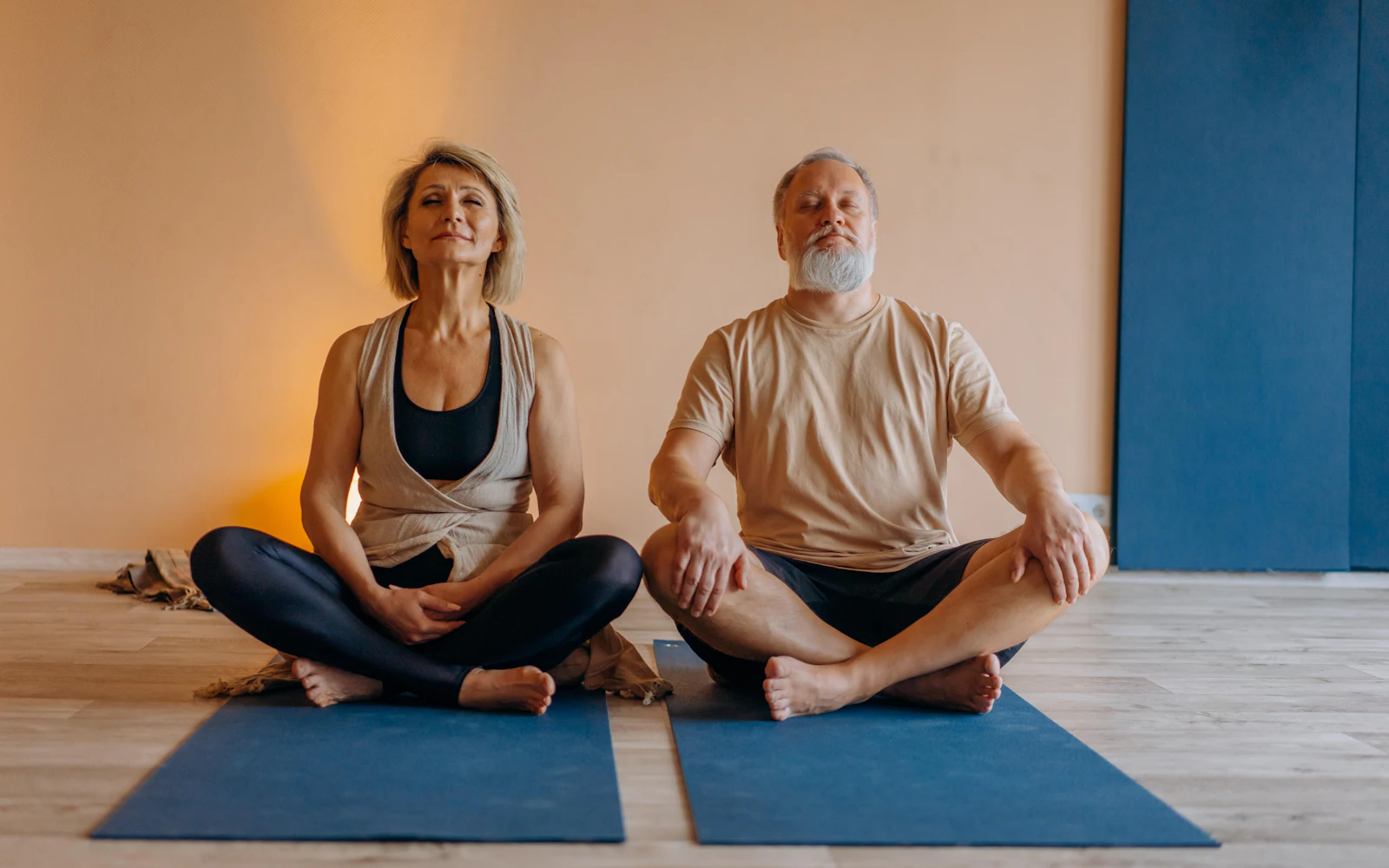

Have you ever felt a pounding heart, intense worry, or an inability to relax when facing a stressful situation? These are all common anxiety symptoms, and most of us have probably experienced them at one point or another. In fact, [10–20% of older adults](https://aagponline.org/patient-article/anxiety-and-older-adults-overcoming-worry-and-fear/) experience intense anxiety at least one time a year. However, there are many evidence-based treatment options and at-home relief techniques to try.
## What is Anxiety?
[Anxiety](https://www.fda.gov/consumers/womens-health-topics/women-and-anxiety) is a feeling of dread, unease, or fear about the future. Anxious feelings are a normal part of life, and many of us feel them at one point or another. Someone may, for example, feel anxious about finances, [navigating Medicare](https://www.oakstreethealth.com/what-is-medicare-navigating-costs-eligibility-more-948294) and health insurance options, or a loved one’s illness. In healthy amounts, anxiety can provide energy and motivation to research those insurance options or spend more time with that loved one.
But when anxiety becomes debilitating or is present for weeks or months, it’s not so helpful. In these situations, someone may develop an [anxiety disorder](https://medlineplus.gov/anxiety.html), a condition where anxiety doesn’t go away after a stressor disappears. Disorders often cause periods of intense anxiety that disrupt daily life and make it hard to live in the present moment.
### Symptoms of Anxiety
When we think of anxiety symptoms, we often think of the mental symptoms, such as:
- Racing mind
- Overwhelming, tense thoughts
- Lower self-esteem
- Feelings of dread or fear
- Feeling like the world is speeding up
- Behavioral changes, such as avoiding social situations or activities someone used to enjoy
- Hoarding
- Coping in unhealthy ways by increasing use of alcohol or drugs
- Constantly fearing the worst or impending danger
While mental symptoms are common, anxiety can also impact our bodies physically. When we feel anxious, we produce stress hormones. The body’s reaction to those hormones causes a ripple effect on various parts of the body, harming tissues of the heart and digestive tract. When that ripple effect occurs, physical symptoms of anxiety can manifest, such as:
- Shallow, difficult breathing
- Muscle tension
- Racing or irregular heartbeat
- Difficulty sleeping or insomnia
- Upset stomach
- Nausea
- Increased sweating
- High blood pressure
If left untreated, anxiety disorders can increase the risk of or worsen other medical conditions, including [heart disease](https://pmc.ncbi.nlm.nih.gov/articles/PMC7809320/), [irritable bowel syndrome](https://pmc.ncbi.nlm.nih.gov/articles/PMC10237074/) (IBS), and autoimmune conditions like [arthritis](https://pmc.ncbi.nlm.nih.gov/articles/PMC7483642/).
### Common Causes of Anxiety Disorders
While the exact cause of anxiety remains unclear, it likely stems from a combination of genetics, environment, stress levels, and brain chemistry. That said, there are some common triggers that can lead to more severe forms of anxiety, like a disorder or panic attack:
- An imbalance of certain chemicals in the brain, including [the “happiness hormones” serotonin](https://www.oakstreethealth.com/what-is-serotonin-roles-effects-and-how-to-balance-it-2254319#causes-of-low-serotonin-levels) and dopamine
- Traumatic events, especially in childhood
- Family history of mental health conditions
- An inability to manage stress
- Life events, such as a stark change in finances or [a cancer diagnosis](https://www.oakstreethealth.com/9-tips-for-coping-with-cancer-diagnosis-1543495)
- Social isolation
- Poor sleep
- Sedentary lifestyle
- History of substance abuse
- Sleep disturbances
As we age, the triggers of our anxiety change. A [2024 study](https://pmc.ncbi.nlm.nih.gov/articles/PMC11654959/) identified a fear of falling as a cause of anxiety for older adults, but not for younger age groups. At the same time, what causes anxiety for young adults, such as career concerns or raising children, may be less likely to impact older populations. While anxiety is triggered in different ways for different people and age groups, it should be taken seriously regardless of what the trigger is. If you’re experiencing anxiety in any way, shape, or form, please consider opening up to your provider or loved ones so that you can find help.
![Older man outside in plaid shirt]()

## 8 Ways to Relieve Anxiety
No matter why or how often anxiety impacts someone, strategies and resources to relieve symptoms should be readily available. Here are some of the tips that can help treat or manage a stressor directly or prevent anxiety altogether:
### 1: Seek Professional Help
To ease anxiety, especially if intense or persistent, consider working with a mental health professional. These professionals are trained to help individuals overcome mental disorders and help folks find ways to cope. They practice a variety of different treatment modalities including talk therapy, exposure therapy (when someone is exposed to a trigger to overcome it), and relaxation techniques. Licensed therapists, counselors, and psychologists can also refer patients to a psychiatrist for medication, if recommended as part of an individual’s treatment plan.
Professional help is one of the most proven ways to overcome anxiety. Those who seek professional help report [a 20% reduction in anxiety disorder symptoms](https://pmc.ncbi.nlm.nih.gov/articles/PMC10041188/) and a 23% increase in overall quality of life.
To find a therapist in your area, visit:
- [Good Therapy](https://www.goodtherapy.org/)
- [The Recovery Village](https://www.therecoveryvillage.com/)
- [Psychology Today](https://www.psychologytoday.com/us/therapists/ma/boston?gad_source=1&gad_campaignid=2045395334&gbraid=0AAAAAD_gfuzr-CBlNFJToKHS24sxRMQC4&gclid=Cj0KCQjwjJrCBhCXARIsAI5x66VSq7IWR6kAh-dG3PvWnhtReABfLxVpaTJDUIJX4odCSv30ZtpCneEaArvtEALw_wcB)
- [Talkspace](https://www.talkspace.com/)
### 2: MIND Diet
Poor nutrition can make anxiety worse. As a result, organizations like the [American Psychiatric Association](https://www.psychiatry.org/news-room/apa-blogs/how-nutrition-impacts-mental-health) and many healthcare providers recommend tailoring [what you eat](https://www.oakstreethealth.com/6-ways-nutrition-benefits-mental-health-2253263) to support overall mental health.
While many dietary interventions can help with anxiety, the Mediterranean-DASH intervention for neurodegenerative delay (MIND diet) addresses mental health and cognitive concerns directly. In one study, those who adhered to the MIND diet were [97% less likely](https://pmc.ncbi.nlm.nih.gov/articles/PMC10170723/) to develop an anxiety disorder than those who didn’t. Plus, this diet reduces the [risk of cognitive issues](https://www.nia.nih.gov/health/alzheimers-and-dementia/what-do-we-know-about-diet-and-prevention-alzheimers-disease), like [Alzheimer’s](https://www.oakstreethealth.com/alzheimers-disease-signs-and-symptoms-598306) and other forms of [dementia](https://www.oakstreethealth.com/stages-of-dementia-everything-you-need-to-know-1151314).
The [MIND diet](https://health.osu.edu/wellness/exercise-and-nutrition/the-mind-diet) is a mix of the [Mediterranean](https://www.oakstreethealth.com/discovering-mediterranean-diet-benefits-top-5-tips-for-starting-a-mediterranean-diet-1512037) and [DASH diets](https://www.oakstreethealth.com/how-to-eat-a-heart-healthy-diet-1129524). The most important foods for this diet include:
- Berries
- Leafy greens
- Fish and lean meat
- Nuts
- Olive oil
- Beans
The MIND diet recommends avoiding or limiting:
- Red meat
- Processed foods
- Desserts
- Pastries
- Butter and margarine
- Dairy products, like cheese and ice cream
Controlling portion size is also an effective way to indirectly limit anxiety as overeating or undereating may cause physical stress on the body which worsens anxiety.
### 3: Meditation
Meditation has many [mental health benefits](https://pmc.ncbi.nlm.nih.gov/articles/PMC10355843/), including:
- Decreasing symptoms of anxiety and [depression](https://www.oakstreethealth.com/depression-in-older-adults-what-you-need-to-know-1021741)
- Increasing connectedness (feeling [less lonely](https://www.oakstreethealth.com/loneliness-in-older-adults-ideas-for-coping-with-loneliness-1041542))
- Developing coping skills to deal with difficult life phases or bad news
To meditate, set a timer for five to twenty minutes with the intent to control your thoughts during that time, either to think of nothing or something positive.
However, many find it intimidating to set a timer and meditate on their own. To help, there are free guided meditations available. A few to try include:
- This [five minute meditation](https://www.youtube.com/watch?v=p7Rfz3M0hIo) for anxiety
- This [10 minute meditation](https://www.youtube.com/watch?v=tuPW7oOudVc) to reduce stress
- This [15 minute meditation](https://www.youtube.com/watch?v=6wl4j4gd2WI) for anxiety and depression
There are also various apps and sites to help guide you through meditation such as:
- [Insight Timer](https://insighttimer.com/)
- [Calm](https://www.calm.com/ua-homepage?pid=googleadwords_int&af_channel=googlesem&af_c_id=14668023573&af_adset_id=129858268760&af_ad_id=719909067293&af_siteid=g&af_sub_siteid=&af_keyword=kwd-100623440&af_sub3=c&af_sub4=Cj0KCQjwjJrCBhCXARIsAI5x66XeFo0-72GYubDHjaWRUu2qnZ6sF0UTMDtsOKVk25iEycj9cRbcp48aAuMKEALw_wcB&utm_medium=paid&utm_source=googlesem&utm_campaign=14668023573&utm_content=ua-homepage&utm_term=kwd-100623440&gad_source=1&gad_campaignid=14668023573&gbraid=0AAAAAC6g0qcbLYvQ1FH54GekzFHLLPQId&gclid=Cj0KCQjwjJrCBhCXARIsAI5x66XeFo0-72GYubDHjaWRUu2qnZ6sF0UTMDtsOKVk25iEycj9cRbcp48aAuMKEALw_wcB)
- [Headspace](https://www.headspace.com/?gad_source=1&gad_campaignid=1919439341&gbraid=0AAAAADLlnJ3gq6aOmUbUUDSzaRgSxaqgW&gclid=Cj0KCQjwjJrCBhCXARIsAI5x66V0JDMGLeNgapfarnpMbko3FdXF7dmi8EwkUhw9jgh8pmxbn2GGUboaAhz-EALw_wcB)
### 4: Gentle Movement
Another positive way to cope with anxiety is to [incorporate exercise](https://www.oakstreethealth.com/importance-of-physical-activity-benefits-advice-and-more-543590) into your week. Regular physical activity helps [manage mental health symptoms](https://pmc.ncbi.nlm.nih.gov/articles/PMC9902068/). The [CDC outlines](https://www.cdc.gov/physical-activity-basics/health-benefits/older-adults.html) that the immediate effects of physical activity include less anxiety and improved sleep quality.
If new to exercise, start with shorter sessions and gradually increase how long and how often you exercise. Time spent exercising can be devoted to many different types of workouts, including yoga, tai chi, brisk walks, and strength training sessions. When first developing an exercise routine, a good [health goal](https://www.oakstreethealth.com/5-ways-to-set-better-health-goals-in-2024-1601021) could be to try out different exercise types, find one or two you like, and make time to do them weekly.
### 5: Open Up to Others
Social isolation can make mental health symptoms worse. As a result, many find it useful to [open up to others](https://www.oakstreethealth.com/talking-about-mental-health-9-tips-for-older-adults-1458900), whether that comes in the form of discussing anxiety with a loved one, joining a support group, or seeking professional help. Opening up can be challenging, but it offers benefits beyond just lessening anxiety. It can also improve your mood and provide intellectual stimulation.
The [National Alliance on Mental Illness](https://www.nami.org/Support-Education/Support-Groups/) can help you find a support group and provides resources on how to develop strong relationships when struggling with mental health. It’s also important to note that you can always discuss your mental health with your provider, and they can help you develop a strategy to cope and work through your anxiety.
![graphic of 4-7-8 anxiety breathing technique]()
### 6: Breathwork
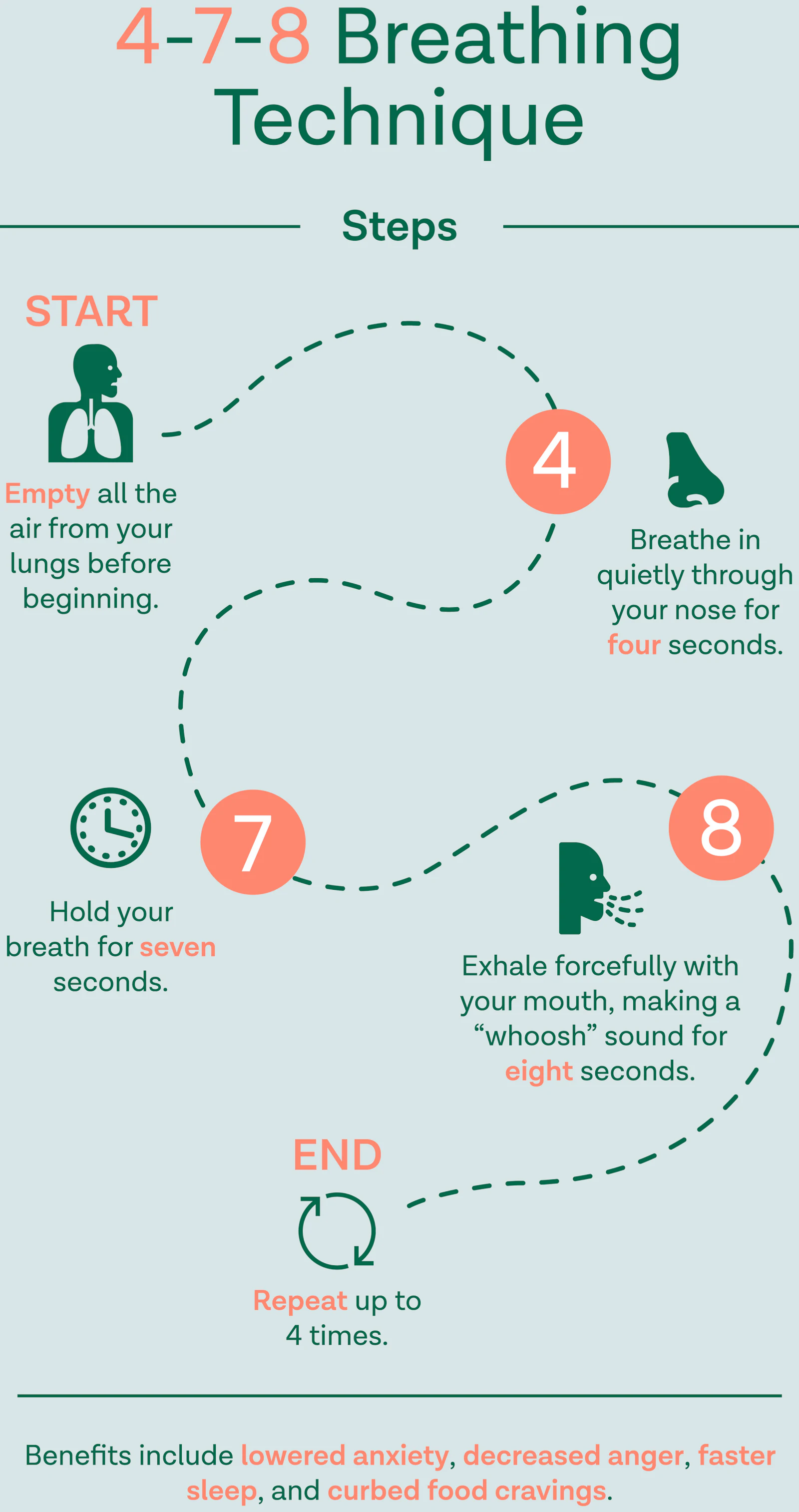
Deep breathing or focusing on your breath is a great way to stay rooted in the present and to minimize anxiety. A range of [techniques and exercises](https://pmc.ncbi.nlm.nih.gov/articles/PMC9954474/) can be useful at helping individuals control their breath. However, [one study](https://pmc.ncbi.nlm.nih.gov/articles/PMC10741869/) found that [breathing techniques](https://www.oakstreethealth.com/breathing-techniques-for-anxiety-1456266) that reduced anxiety the most shared some common traits, such as:
- Lasting five minutes or longer
- Focusing on slow breathing, not fast breathing
- Being guided by a breathwork facilitator
The study also found that breathwork worked better over time, suggesting it should be a consistent practice. Some free guided breathing exercises that meet these requirements include:
- [Belly breathing](https://www.youtube.com/watch?v=7Ep5mKuRmAA)
- [Box breathing](https://www.youtube.com/watch?v=tEmt1Znux58)
- [4–7‑8 breathing](https://www.youtube.com/watch?v=akqgL9bW6a0)
### 7: Focus on Sleep
A good night’s rest can do wonders for mental health. A recent study looked at predictors of anxiety disorders in [16,669 participants](https://pubmed.ncbi.nlm.nih.gov/38924831/) and found that poor sleep increases the risk of developing an anxiety disorder and worsens already present disorders.
[Some ways](https://www.cdc.gov/sleep/about/index.html#cdc_behavioral_basics_steps-what-to-do) to facilitate [better sleep](https://www.oakstreethealth.com/tips-for-better-sleep-714325) include:
- Going to sleep and waking up at the same time each day, even on weekends
- Sleeping in a quiet, cool room
- Avoiding caffeine in the evening
- Eating lighter meals right before bed
- Exercising regularly
- Avoiding electronics for 30 minutes or longer before bed
### 8: Essential Oils
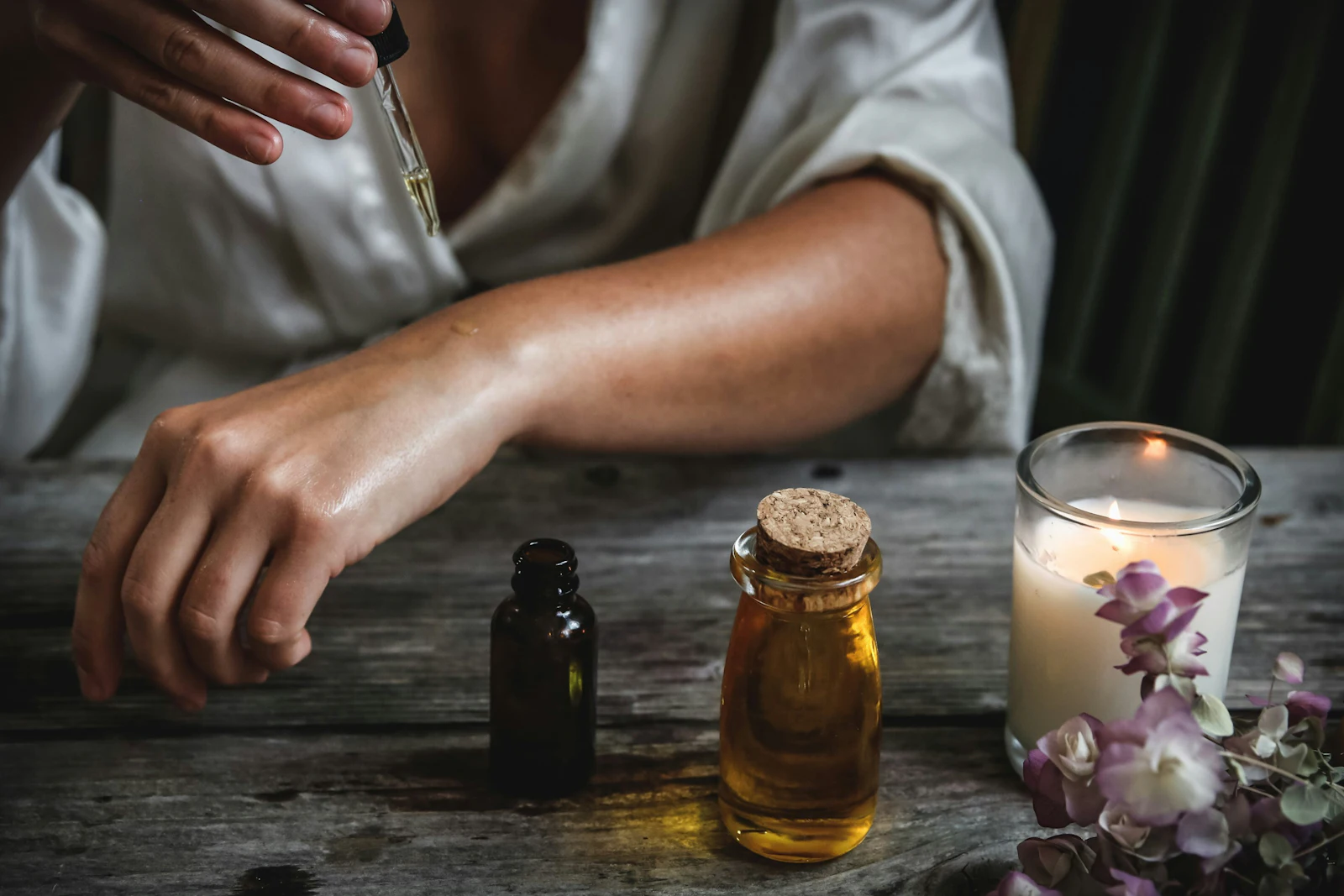
Certain [essential oils](https://www.oakstreethealth.com/10-essential-oils-for-stress-1777753) can help relieve symptoms of anxiety, including:
- Lavender
- Jasmine
- Bergamot
- Clary sage
- Peppermint
- Chamomile
- Rose
- Orange
- Lemon
- Frankincense
While many people report essential oils as helpful, there is less evidence for this technique than the others on this list. Still, it may be a good option to accompany therapy and other lifestyle changes.
![dropping essential oils on arm for relief]()
## When to Seek Out Help
Whenever anxiety interferes with daily life or persists after the initial anxiety trigger disappears, it’s a good idea to get help. Working with a licensed mental health professional can help you manage anxiety, as well as gain tools to better cope in day-to-day life.
### Finding the Right Provider
When looking for the right provider, there are a few things to keep in mind:
- If that provider specializes in managing anxiety disorders
- If they have experience treating patients of a similar age or in a similar life phase
- The provider’s availability
- If they are an in-network provider for someone’s insurance
Many people also find it useful to schedule a quick, often free, call with a provider before working with them. In that call, an individual can get a sense of the therapist’s approach to anxiety and if they feel comfortable opening up to that provider.
Even more, your primary care doctor can extend referrals for mental health specialists they trust as well as help you build a plan for managing your anxiety.
### Anxiety Treatment and Insurance Coverage
Many private insurance and [Medicaid plans](https://www.oakstreethealth.com/medicare-vs-medicaid-whats-the-difference-939170) cover mental healthcare, though covered treatments differ. Check with an individual plan to see what is covered.
However, Medicare expanded [mental health coverage in 2025](https://www.oakstreethealth.com/2025-medicare-changes-beneficiaries-should-know-2244328#8-changes-to-medicare-in-2025), meaning more services are covered under their Original and Advantage plans than ever before.
Mental health services [covered by Medicare](https://www.medicare.gov/coverage/mental-health-care-outpatient) include:
- Partial or full hospitalization for mental health
- An annual mental health screening by a primary care provider
- Individual and group therapy and counseling with in-network providers
- Mental health treatment devices approved by the Food and Drug Administration (FDA)
- Family counseling when deemed medically necessary
- Psychiatric evaluation and medication management
- Prescription drugs that aren’t self-administered, such as injections
- Intensive outpatient programs
- Substance abuse treatment
If someone elects a [Medicare Part D plan](https://www.oakstreethealth.com/breaking-it-down-what-is-medicare-part-d-949056) or has prescription drug coverage through their Advantage plan, many medications for anxiety are also covered.
## Additional Resources
When dealing with stress, anxiety, [depression](https://www.oakstreethealth.com/depression-in-older-adults-what-you-need-to-know-1021741), or any other mental health conditions, feeling overwhelmed is a common experience. You don’t have to deal with those negative thoughts and symptoms alone. There are free resources that can help you and/or your friends, family members, and other loved ones, such as:
- [National Alliance on Mental Health (NAMI)](https://www.nami.org/home)
- [Substance Abuse and Mental Health Services Administration (SAMHSA)](https://www.samhsa.gov/find-help/national-helpline)
- [988 Lifeline](https://988lifeline.org/)
For immediate assistance, call, text, or visit:
- [1–800–662-HELP (4357)](https://www.samhsa.gov/find-help/national-helpline)
- [1–800–273‑8255 (TALK)](https://988lifeline.org/)
- Suicide Prevention Lifeline for Hearing Impaired: 1–800–799‑4889
- The Samaritans: (877) 870‑4673 (HOPE)
- [Text HOME to 741741](https://www.crisistextline.org/)
- [988 Lifeline Chat](https://988lifeline.org/chat/)
## FAQ
### How do I overcome anxiety?
Overcoming anxiety often requires commitment and a few different strategies. The most effective include therapy, meditation, eating a healthy diet, regular movement, breathwork, and getting enough sleep.
### What are five ways to overcome anxiety?
Five of the most common and effective ways to overcome anxiety are therapy, regular exercise, breathwork, meditation, and focusing on sleep health.
### Does anxiety ever go away?
Anxiety can go away when a life event that is causing the anxiety, such as financial difficulties or an illness disappear. When anxiety persists or interferes with daily life, mental health professionals can help manage, reduce, or eliminate anxiety.
- <https://aagponline.org/patient-article/anxiety-and-older-adults-overcoming-worry-and-fear/>
- <https://www.fda.gov/consumers/womens-health-topics/women-and-anxiety>
- <https://medlineplus.gov/anxiety.html>
- <https://pmc.ncbi.nlm.nih.gov/articles/PMC7809320/>
- <https://pmc.ncbi.nlm.nih.gov/articles/PMC10237074/>
- <https://pmc.ncbi.nlm.nih.gov/articles/PMC7483642/>
- <https://pmc.ncbi.nlm.nih.gov/articles/PMC11654959/>
- <https://pmc.ncbi.nlm.nih.gov/articles/PMC10041188/>
- <https://www.psychiatry.org/news-room/apa-blogs/how-nutrition-impacts-mental-health>
- <https://pmc.ncbi.nlm.nih.gov/articles/PMC10170723/>
- <https://www.nia.nih.gov/health/alzheimers-and-dementia/what-do-we-know-about-diet-and-prevention-alzheimers-disease>
- <https://health.osu.edu/wellness/exercise-and-nutrition/the-mind-diet>
- <https://pmc.ncbi.nlm.nih.gov/articles/PMC10355843/>
- <https://pmc.ncbi.nlm.nih.gov/articles/PMC9902068/>
- <https://www.cdc.gov/physical-activity-basics/health-benefits/older-adults.html>
- <https://www.nami.org/Support-Education/Support-Groups/>
- <https://pmc.ncbi.nlm.nih.gov/articles/PMC9954474/>
- <https://pmc.ncbi.nlm.nih.gov/articles/PMC10741869/>
- <https://pubmed.ncbi.nlm.nih.gov/38924831/>
- <https://www.cdc.gov/sleep/about/index.html#cdc_behavioral_basics_steps-what-to-do>
- <https://www.medicare.gov/coverage/mental-health-care-outpatient>
## Health insights for older adults delivered straight to your inbox.
## Share this page
Copy Link
- [Share on Facebook](https://www.facebook.com/sharer/sharer.php?u=https%3A%2F%2Fwww.oakstreethealth.com%2Fcoping-with-anxiety-8-ways-to-relieve-stress-and-anxiety-2319496)
- [Share on LinkedIn](https://linkedin.com/shareArticle?url=https%3A%2F%2Fwww.oakstreethealth.com%2Fcoping-with-anxiety-8-ways-to-relieve-stress-and-anxiety-2319496)
- [Share on X](https://x.com/share?url=https%3A%2F%2Fwww.oakstreethealth.com%2Fcoping-with-anxiety-8-ways-to-relieve-stress-and-anxiety-2319496)
## Related articles
[View all articles](https://www.oakstreethealth.com/blog)
- ### [Grief Doesn't Have To Last Forever: 6 Tips To Cope](https://www.oakstreethealth.com/grief-doesnt-have-to-last-forever-6-tips-to-cope-2460443)
Mental Wellness
Published Apr 2, 2026
Learn practical coping skills for grief and loss, including ways to find support, practice self-care, and other ways to heal over time.


- ### [7 Ways To Protect Your Mental Health After You Turn 60](https://www.oakstreethealth.com/7-ways-to-protect-your-mental-health-after-you-turn-60-2460480)
Mental Wellness
Published Apr 2, 2026
Learn practical ways older adults can protect their mental health, improve emotional well-being, and support quality of life as they age.


- ### [12 Warning Signs of Depression in Older Adults (+ How to Find Help)](https://www.oakstreethealth.com/12-warning-signs-of-depression-in-older-adults-how-to-find-help-2460496)
Mental Wellness
Published Mar 31, 2026
Discover the 12 common warning signs of depression in older adults and where to find support and treatment.


## Related links
- [9Best Memory Improvement Tips and Techniques](https://www.oakstreethealth.com/best-memory-improvement-tips-and-techniques-910425)
- [How To Help Constipation: Tips For Relief](https://www.oakstreethealth.com/how-to-help-constipation-1217296)
- [Top 7 Breathing Techniques For Anxiety And Reducing Stress](https://www.oakstreethealth.com/breathing-techniques-for-anxiety-1456266)
- [10 Essential Oils For Stress](https://www.oakstreethealth.com/10-essential-oils-for-stress-1777753)
- [7 Natural Ways to Soothe Shingles, According to Experts](https://www.oakstreethealth.com/7-natural-ways-to-soothe-shingles-according-to-experts-2460406)
### [Find a doctor near me](https://www.oakstreethealth.com/doctors)
Looking to find a new primary care provider or general physician? Oak Street Health has what you need.

### [Find a clinic near me](https://www.oakstreethealth.com/locations)
Our primary care teams focus on health and wellness for Medicare-eligible adults across the nation.

## Doctors
- [Primary Care Doctors](https://www.oakstreethealth.com/primary-care-doctors-near-me)
- [Internists & Internal Medicine Doctors](https://www.oakstreethealth.com/internal-medicine-doctors-near-me)
- [Medicare Doctor](https://www.oakstreethealth.com/medicare-doctor-near-me)
- [High Blood Pressure Doctor](https://www.oakstreethealth.com/high-blood-pressure-doctor-near-me)
- [Geriatricians & Geriatric Doctors](https://www.oakstreethealth.com/geriatric-doctors-near-me)
- [Doctors Accepting New Patients](https://www.oakstreethealth.com/doctors-accepting-new-patients-near-me)
- [Family Medicine Doctors](https://www.oakstreethealth.com/family-medicine-doctors-near-me)
- [COPD & Lung Disease Doctor](https://www.oakstreethealth.com/copd-lung-disease-doctor-near-me)
## Clinics
- [Annual Wellness Physical Exam](https://www.oakstreethealth.com/annual-physical-exam-near-me)
- [Medical Clinics & Centers for Seniors](https://www.oakstreethealth.com/medical-clinic-near-me)
- [Primary Care Center](https://www.oakstreethealth.com/primary-care-center-near-me)
- [Senior Health Care Clinics & Centers](https://www.oakstreethealth.com/health-centers-near-me)
- [Vaccine Centers & Clinics](https://www.oakstreethealth.com/vaccines-near-me)
- [Pharmacy](https://www.oakstreethealth.com/services/pharmacy)
- [Laboratory & Testing Services](https://www.oakstreethealth.com/services/laboratory-testing-services)
- [Family Medical Clinics](https://www.oakstreethealth.com/family-medical-clinics-near-me)
## Services
- [Primary Care](https://www.oakstreethealth.com/services/primary-care)
- [Chronic Condition Care](https://www.oakstreethealth.com/services/chronic-condition-care)
- [Immunizations](https://www.oakstreethealth.com/services/immunizations)
- [Wellness & Preventive Care](https://www.oakstreethealth.com/services/wellness-preventive-care)
## Company
- [About Us](https://www.oakstreethealth.com/about-us)
- [Careers](https://jobs.cvshealth.com/us/en/oak-street-health)
- [News](https://www.oakstreethealth.com/news)
- [Blog](https://www.oakstreethealth.com/blog)
- [Accountable Care Organization](https://www.oakstreethealth.com/aco-reach)
- [Contact Us](https://www.oakstreethealth.com/contact-us)
## Patients
- [New Patients](https://www.oakstreethealth.com/book-appointment)
- [Current Patients](https://www.oakstreethealth.com/patients)
## Insurance
- [Medicare Plans Accepted](https://www.oakstreethealth.com/insurance/medicare-plans-accepted)
- [Insurance Agents](https://www.oakstreethealth.com/insurance-agents)
## Legal
- [Patient Privacy](https://www.oakstreethealth.com/hipaa-notice)
- [Privacy Policy](https://www.oakstreethealth.com/privacy-policy)
- [Terms of Use](https://www.oakstreethealth.com/terms-of-use)
- [Language Assistance](https://www.oakstreethealth.com/language-assistance)
- [Nondiscrimination Notice](https://www.oakstreethealth.com/nondiscrimination-notice)
- [Website Security Program](https://www.cvshealth.com/vulnerability-disclosure-program)
- [TX Consumer Health Privacy Notice](https://nappy-waxbill.files.svdcdn.com/production/documents/TX-Consumer-Health-Privacy-Notice.pdf?dm=1775506585)
© 2026 Oak Street Health 525 W Monroe St, 5th floor, Chicago, IL 60661
## Social Media
## Talk to someone
We want to make sure you're connected to the right person as quickly as possible.
## Call (855) 932‑2073
If you are interested in scheduling an appointment, please call **(855) 932‑2073** to speak to an agent or search our primary care physicians near you and select an appointment time.
[Become a Patient](https://www.oakstreethealth.com/book-appointment)
## Send us a message
If you are not a patient, fill out the contact form to help us assist you.
[Contact Us](https://www.oakstreethealth.com/contact-us)
## Set your location
Your location helps us show nearby clinics and doctors. If you are searching for results in another area, update your location below.
City, State, or ZIP Code
Update
Use my current location
##
[\ ](https://www.oakstreethealth.com/)
\ |
| Readable Markdown | ## Article at a glance
- Anxiety is often described as a feeling of unease or intense worry. All of us experience it from time to time, but intense, prolonged anxiety can interfere with daily life.
- When anxiety affects our daily routines, relationships, and peace-of-mind, there are ways to relieve symptoms, including seeking professional help and implementing at-home stress reduction techniques.
- Some of the most effective at-home anxiety relief tips include breathing techniques, meditation, essential oils, eating the MIND diet, focusing on sleep health, and regular exercise.

Have you ever felt a pounding heart, intense worry, or an inability to relax when facing a stressful situation? These are all common anxiety symptoms, and most of us have probably experienced them at one point or another. In fact, [10–20% of older adults](https://aagponline.org/patient-article/anxiety-and-older-adults-overcoming-worry-and-fear/) experience intense anxiety at least one time a year. However, there are many evidence-based treatment options and at-home relief techniques to try.
## What is Anxiety?
[Anxiety](https://www.fda.gov/consumers/womens-health-topics/women-and-anxiety) is a feeling of dread, unease, or fear about the future. Anxious feelings are a normal part of life, and many of us feel them at one point or another. Someone may, for example, feel anxious about finances, [navigating Medicare](https://www.oakstreethealth.com/what-is-medicare-navigating-costs-eligibility-more-948294) and health insurance options, or a loved one’s illness. In healthy amounts, anxiety can provide energy and motivation to research those insurance options or spend more time with that loved one.
But when anxiety becomes debilitating or is present for weeks or months, it’s not so helpful. In these situations, someone may develop an [anxiety disorder](https://medlineplus.gov/anxiety.html), a condition where anxiety doesn’t go away after a stressor disappears. Disorders often cause periods of intense anxiety that disrupt daily life and make it hard to live in the present moment.
### Symptoms of Anxiety
When we think of anxiety symptoms, we often think of the mental symptoms, such as:
- Racing mind
- Overwhelming, tense thoughts
- Lower self-esteem
- Feelings of dread or fear
- Feeling like the world is speeding up
- Behavioral changes, such as avoiding social situations or activities someone used to enjoy
- Hoarding
- Coping in unhealthy ways by increasing use of alcohol or drugs
- Constantly fearing the worst or impending danger
While mental symptoms are common, anxiety can also impact our bodies physically. When we feel anxious, we produce stress hormones. The body’s reaction to those hormones causes a ripple effect on various parts of the body, harming tissues of the heart and digestive tract. When that ripple effect occurs, physical symptoms of anxiety can manifest, such as:
- Shallow, difficult breathing
- Muscle tension
- Racing or irregular heartbeat
- Difficulty sleeping or insomnia
- Upset stomach
- Nausea
- Increased sweating
- High blood pressure
If left untreated, anxiety disorders can increase the risk of or worsen other medical conditions, including [heart disease](https://pmc.ncbi.nlm.nih.gov/articles/PMC7809320/), [irritable bowel syndrome](https://pmc.ncbi.nlm.nih.gov/articles/PMC10237074/) (IBS), and autoimmune conditions like [arthritis](https://pmc.ncbi.nlm.nih.gov/articles/PMC7483642/).
### Common Causes of Anxiety Disorders
While the exact cause of anxiety remains unclear, it likely stems from a combination of genetics, environment, stress levels, and brain chemistry. That said, there are some common triggers that can lead to more severe forms of anxiety, like a disorder or panic attack:
- An imbalance of certain chemicals in the brain, including [the “happiness hormones” serotonin](https://www.oakstreethealth.com/what-is-serotonin-roles-effects-and-how-to-balance-it-2254319#causes-of-low-serotonin-levels) and dopamine
- Traumatic events, especially in childhood
- Family history of mental health conditions
- An inability to manage stress
- Life events, such as a stark change in finances or [a cancer diagnosis](https://www.oakstreethealth.com/9-tips-for-coping-with-cancer-diagnosis-1543495)
- Social isolation
- Poor sleep
- Sedentary lifestyle
- History of substance abuse
- Sleep disturbances
As we age, the triggers of our anxiety change. A [2024 study](https://pmc.ncbi.nlm.nih.gov/articles/PMC11654959/) identified a fear of falling as a cause of anxiety for older adults, but not for younger age groups. At the same time, what causes anxiety for young adults, such as career concerns or raising children, may be less likely to impact older populations. While anxiety is triggered in different ways for different people and age groups, it should be taken seriously regardless of what the trigger is. If you’re experiencing anxiety in any way, shape, or form, please consider opening up to your provider or loved ones so that you can find help.
## 8 Ways to Relieve Anxiety
No matter why or how often anxiety impacts someone, strategies and resources to relieve symptoms should be readily available. Here are some of the tips that can help treat or manage a stressor directly or prevent anxiety altogether:
### 1: Seek Professional Help
To ease anxiety, especially if intense or persistent, consider working with a mental health professional. These professionals are trained to help individuals overcome mental disorders and help folks find ways to cope. They practice a variety of different treatment modalities including talk therapy, exposure therapy (when someone is exposed to a trigger to overcome it), and relaxation techniques. Licensed therapists, counselors, and psychologists can also refer patients to a psychiatrist for medication, if recommended as part of an individual’s treatment plan.
Professional help is one of the most proven ways to overcome anxiety. Those who seek professional help report [a 20% reduction in anxiety disorder symptoms](https://pmc.ncbi.nlm.nih.gov/articles/PMC10041188/) and a 23% increase in overall quality of life.
To find a therapist in your area, visit:
- [Good Therapy](https://www.goodtherapy.org/)
- [The Recovery Village](https://www.therecoveryvillage.com/)
- [Psychology Today](https://www.psychologytoday.com/us/therapists/ma/boston?gad_source=1&gad_campaignid=2045395334&gbraid=0AAAAAD_gfuzr-CBlNFJToKHS24sxRMQC4&gclid=Cj0KCQjwjJrCBhCXARIsAI5x66VSq7IWR6kAh-dG3PvWnhtReABfLxVpaTJDUIJX4odCSv30ZtpCneEaArvtEALw_wcB)
- [Talkspace](https://www.talkspace.com/)
### 2: MIND Diet
Poor nutrition can make anxiety worse. As a result, organizations like the [American Psychiatric Association](https://www.psychiatry.org/news-room/apa-blogs/how-nutrition-impacts-mental-health) and many healthcare providers recommend tailoring [what you eat](https://www.oakstreethealth.com/6-ways-nutrition-benefits-mental-health-2253263) to support overall mental health.
While many dietary interventions can help with anxiety, the Mediterranean-DASH intervention for neurodegenerative delay (MIND diet) addresses mental health and cognitive concerns directly. In one study, those who adhered to the MIND diet were [97% less likely](https://pmc.ncbi.nlm.nih.gov/articles/PMC10170723/) to develop an anxiety disorder than those who didn’t. Plus, this diet reduces the [risk of cognitive issues](https://www.nia.nih.gov/health/alzheimers-and-dementia/what-do-we-know-about-diet-and-prevention-alzheimers-disease), like [Alzheimer’s](https://www.oakstreethealth.com/alzheimers-disease-signs-and-symptoms-598306) and other forms of [dementia](https://www.oakstreethealth.com/stages-of-dementia-everything-you-need-to-know-1151314).
The [MIND diet](https://health.osu.edu/wellness/exercise-and-nutrition/the-mind-diet) is a mix of the [Mediterranean](https://www.oakstreethealth.com/discovering-mediterranean-diet-benefits-top-5-tips-for-starting-a-mediterranean-diet-1512037) and [DASH diets](https://www.oakstreethealth.com/how-to-eat-a-heart-healthy-diet-1129524). The most important foods for this diet include:
- Berries
- Leafy greens
- Fish and lean meat
- Nuts
- Olive oil
- Beans
The MIND diet recommends avoiding or limiting:
- Red meat
- Processed foods
- Desserts
- Pastries
- Butter and margarine
- Dairy products, like cheese and ice cream
Controlling portion size is also an effective way to indirectly limit anxiety as overeating or undereating may cause physical stress on the body which worsens anxiety.
### 3: Meditation
Meditation has many [mental health benefits](https://pmc.ncbi.nlm.nih.gov/articles/PMC10355843/), including:
- Decreasing symptoms of anxiety and [depression](https://www.oakstreethealth.com/depression-in-older-adults-what-you-need-to-know-1021741)
- Increasing connectedness (feeling [less lonely](https://www.oakstreethealth.com/loneliness-in-older-adults-ideas-for-coping-with-loneliness-1041542))
- Developing coping skills to deal with difficult life phases or bad news
To meditate, set a timer for five to twenty minutes with the intent to control your thoughts during that time, either to think of nothing or something positive.
However, many find it intimidating to set a timer and meditate on their own. To help, there are free guided meditations available. A few to try include:
- This [five minute meditation](https://www.youtube.com/watch?v=p7Rfz3M0hIo) for anxiety
- This [10 minute meditation](https://www.youtube.com/watch?v=tuPW7oOudVc) to reduce stress
- This [15 minute meditation](https://www.youtube.com/watch?v=6wl4j4gd2WI) for anxiety and depression
There are also various apps and sites to help guide you through meditation such as:
- [Insight Timer](https://insighttimer.com/)
- [Calm](https://www.calm.com/ua-homepage?pid=googleadwords_int&af_channel=googlesem&af_c_id=14668023573&af_adset_id=129858268760&af_ad_id=719909067293&af_siteid=g&af_sub_siteid=&af_keyword=kwd-100623440&af_sub3=c&af_sub4=Cj0KCQjwjJrCBhCXARIsAI5x66XeFo0-72GYubDHjaWRUu2qnZ6sF0UTMDtsOKVk25iEycj9cRbcp48aAuMKEALw_wcB&utm_medium=paid&utm_source=googlesem&utm_campaign=14668023573&utm_content=ua-homepage&utm_term=kwd-100623440&gad_source=1&gad_campaignid=14668023573&gbraid=0AAAAAC6g0qcbLYvQ1FH54GekzFHLLPQId&gclid=Cj0KCQjwjJrCBhCXARIsAI5x66XeFo0-72GYubDHjaWRUu2qnZ6sF0UTMDtsOKVk25iEycj9cRbcp48aAuMKEALw_wcB)
- [Headspace](https://www.headspace.com/?gad_source=1&gad_campaignid=1919439341&gbraid=0AAAAADLlnJ3gq6aOmUbUUDSzaRgSxaqgW&gclid=Cj0KCQjwjJrCBhCXARIsAI5x66V0JDMGLeNgapfarnpMbko3FdXF7dmi8EwkUhw9jgh8pmxbn2GGUboaAhz-EALw_wcB)
### 4: Gentle Movement
Another positive way to cope with anxiety is to [incorporate exercise](https://www.oakstreethealth.com/importance-of-physical-activity-benefits-advice-and-more-543590) into your week. Regular physical activity helps [manage mental health symptoms](https://pmc.ncbi.nlm.nih.gov/articles/PMC9902068/). The [CDC outlines](https://www.cdc.gov/physical-activity-basics/health-benefits/older-adults.html) that the immediate effects of physical activity include less anxiety and improved sleep quality.
If new to exercise, start with shorter sessions and gradually increase how long and how often you exercise. Time spent exercising can be devoted to many different types of workouts, including yoga, tai chi, brisk walks, and strength training sessions. When first developing an exercise routine, a good [health goal](https://www.oakstreethealth.com/5-ways-to-set-better-health-goals-in-2024-1601021) could be to try out different exercise types, find one or two you like, and make time to do them weekly.
### 5: Open Up to Others
Social isolation can make mental health symptoms worse. As a result, many find it useful to [open up to others](https://www.oakstreethealth.com/talking-about-mental-health-9-tips-for-older-adults-1458900), whether that comes in the form of discussing anxiety with a loved one, joining a support group, or seeking professional help. Opening up can be challenging, but it offers benefits beyond just lessening anxiety. It can also improve your mood and provide intellectual stimulation.
The [National Alliance on Mental Illness](https://www.nami.org/Support-Education/Support-Groups/) can help you find a support group and provides resources on how to develop strong relationships when struggling with mental health. It’s also important to note that you can always discuss your mental health with your provider, and they can help you develop a strategy to cope and work through your anxiety.
### 6: Breathwork
Deep breathing or focusing on your breath is a great way to stay rooted in the present and to minimize anxiety. A range of [techniques and exercises](https://pmc.ncbi.nlm.nih.gov/articles/PMC9954474/) can be useful at helping individuals control their breath. However, [one study](https://pmc.ncbi.nlm.nih.gov/articles/PMC10741869/) found that [breathing techniques](https://www.oakstreethealth.com/breathing-techniques-for-anxiety-1456266) that reduced anxiety the most shared some common traits, such as:
- Lasting five minutes or longer
- Focusing on slow breathing, not fast breathing
- Being guided by a breathwork facilitator
The study also found that breathwork worked better over time, suggesting it should be a consistent practice. Some free guided breathing exercises that meet these requirements include:
- [Belly breathing](https://www.youtube.com/watch?v=7Ep5mKuRmAA)
- [Box breathing](https://www.youtube.com/watch?v=tEmt1Znux58)
- [4–7‑8 breathing](https://www.youtube.com/watch?v=akqgL9bW6a0)
### 7: Focus on Sleep
A good night’s rest can do wonders for mental health. A recent study looked at predictors of anxiety disorders in [16,669 participants](https://pubmed.ncbi.nlm.nih.gov/38924831/) and found that poor sleep increases the risk of developing an anxiety disorder and worsens already present disorders.
[Some ways](https://www.cdc.gov/sleep/about/index.html#cdc_behavioral_basics_steps-what-to-do) to facilitate [better sleep](https://www.oakstreethealth.com/tips-for-better-sleep-714325) include:
- Going to sleep and waking up at the same time each day, even on weekends
- Sleeping in a quiet, cool room
- Avoiding caffeine in the evening
- Eating lighter meals right before bed
- Exercising regularly
- Avoiding electronics for 30 minutes or longer before bed
### 8: Essential Oils
Certain [essential oils](https://www.oakstreethealth.com/10-essential-oils-for-stress-1777753) can help relieve symptoms of anxiety, including:
- Lavender
- Jasmine
- Bergamot
- Clary sage
- Peppermint
- Chamomile
- Rose
- Orange
- Lemon
- Frankincense
While many people report essential oils as helpful, there is less evidence for this technique than the others on this list. Still, it may be a good option to accompany therapy and other lifestyle changes.
## When to Seek Out Help
Whenever anxiety interferes with daily life or persists after the initial anxiety trigger disappears, it’s a good idea to get help. Working with a licensed mental health professional can help you manage anxiety, as well as gain tools to better cope in day-to-day life.
### Finding the Right Provider
When looking for the right provider, there are a few things to keep in mind:
- If that provider specializes in managing anxiety disorders
- If they have experience treating patients of a similar age or in a similar life phase
- The provider’s availability
- If they are an in-network provider for someone’s insurance
Many people also find it useful to schedule a quick, often free, call with a provider before working with them. In that call, an individual can get a sense of the therapist’s approach to anxiety and if they feel comfortable opening up to that provider.
Even more, your primary care doctor can extend referrals for mental health specialists they trust as well as help you build a plan for managing your anxiety.
### Anxiety Treatment and Insurance Coverage
Many private insurance and [Medicaid plans](https://www.oakstreethealth.com/medicare-vs-medicaid-whats-the-difference-939170) cover mental healthcare, though covered treatments differ. Check with an individual plan to see what is covered.
However, Medicare expanded [mental health coverage in 2025](https://www.oakstreethealth.com/2025-medicare-changes-beneficiaries-should-know-2244328#8-changes-to-medicare-in-2025), meaning more services are covered under their Original and Advantage plans than ever before.
Mental health services [covered by Medicare](https://www.medicare.gov/coverage/mental-health-care-outpatient) include:
- Partial or full hospitalization for mental health
- An annual mental health screening by a primary care provider
- Individual and group therapy and counseling with in-network providers
- Mental health treatment devices approved by the Food and Drug Administration (FDA)
- Family counseling when deemed medically necessary
- Psychiatric evaluation and medication management
- Prescription drugs that aren’t self-administered, such as injections
- Intensive outpatient programs
- Substance abuse treatment
If someone elects a [Medicare Part D plan](https://www.oakstreethealth.com/breaking-it-down-what-is-medicare-part-d-949056) or has prescription drug coverage through their Advantage plan, many medications for anxiety are also covered.
## Additional Resources
When dealing with stress, anxiety, [depression](https://www.oakstreethealth.com/depression-in-older-adults-what-you-need-to-know-1021741), or any other mental health conditions, feeling overwhelmed is a common experience. You don’t have to deal with those negative thoughts and symptoms alone. There are free resources that can help you and/or your friends, family members, and other loved ones, such as:
- [National Alliance on Mental Health (NAMI)](https://www.nami.org/home)
- [Substance Abuse and Mental Health Services Administration (SAMHSA)](https://www.samhsa.gov/find-help/national-helpline)
- [988 Lifeline](https://988lifeline.org/)
For immediate assistance, call, text, or visit:
- [1–800–662-HELP (4357)](https://www.samhsa.gov/find-help/national-helpline)
- [1–800–273‑8255 (TALK)](https://988lifeline.org/)
- Suicide Prevention Lifeline for Hearing Impaired: 1–800–799‑4889
- The Samaritans: (877) 870‑4673 (HOPE)
- [Text HOME to 741741](https://www.crisistextline.org/)
- [988 Lifeline Chat](https://988lifeline.org/chat/)
## FAQ
### How do I overcome anxiety?
Overcoming anxiety often requires commitment and a few different strategies. The most effective include therapy, meditation, eating a healthy diet, regular movement, breathwork, and getting enough sleep.
### What are five ways to overcome anxiety?
Five of the most common and effective ways to overcome anxiety are therapy, regular exercise, breathwork, meditation, and focusing on sleep health.
### Does anxiety ever go away?
Anxiety can go away when a life event that is causing the anxiety, such as financial difficulties or an illness disappear. When anxiety persists or interferes with daily life, mental health professionals can help manage, reduce, or eliminate anxiety. |
| Shard | 90 (laksa) |
| Root Hash | 2850806954816554890 |
| Unparsed URL | com,oakstreethealth!www,/coping-with-anxiety-8-ways-to-relieve-stress-and-anxiety-2319496 s443 |