ℹ️ Skipped - page is already crawled
| Filter | Status | Condition | Details |
|---|---|---|---|
| HTTP status | PASS | download_http_code = 200 | HTTP 200 |
| Age cutoff | PASS | download_stamp > now() - 6 MONTH | 0.3 months ago |
| History drop | PASS | isNull(history_drop_reason) | No drop reason |
| Spam/ban | PASS | fh_dont_index != 1 AND ml_spam_score = 0 | ml_spam_score=0 |
| Canonical | FAIL | meta_canonical IS NULL OR = '' OR = src_unparsed | com,medicine!www,/health/normal-body-temperature-fever-whats-normal-whats-not h80 |
| Property | Value |
|---|---|
| URL | https://www.medicine.com/health/normal-body-temperature-fever-whats-normal-whats-not |
| Last Crawled | 2026-04-12 04:04:36 (8 days ago) |
| First Indexed | 2020-03-26 21:54:04 (6 years ago) |
| HTTP Status Code | 200 |
| Meta Title | Normal body temperature and fever - what's normal and what's not? - Medicine.com |
| Meta Description | You have a fever when your core body temperature is raised above what is normal. Learn more about how to tell if you have a fever and what to do next. |
| Meta Canonical | com,medicine!www,/health/normal-body-temperature-fever-whats-normal-whats-not h80 |
| Boilerpipe Text | Normal body temperature is usually reported to be 98.6°F (37°C). However, what’s normal for you may be slightly higher or lower than this figure. Research in recent years shows that it’s more appropriate to think of normal body temperature as a range, rather than being one universal normal temperature.
Body temperature can vary for a number of reasons including age. The normal temperature range for children under 2 years of age, for example, tends to be higher than that seen in those over 65. Your body temperature is also likely to fluctuate during the day and may be lower at night than it is in the afternoon. It’ll also go up when you exercise.
The part of your brain called your hypothalamus is responsible for regulating your body temperature.
What is a fever?
A fever is when your core body temperature is temporarily raised above 98.6°F (37°C).
Temperature
Fever
100.4°F (38°C)
High Fever
103.1°F (39.5°C)
Very High Fever
105.8°F (41°C)
Why do we get a fever?
A fever is a natural response and is usually a sign that your body is fighting a viral or bacterial infection. Fever stimulates your immune system to help your body fight infection. The increase in body temperature makes it harder for the invading virus or bacteria to survive.
What are the symptoms of a fever?
When you have a fever you may:
Feel warm and sweaty or cold and shivery
Have flushed cheeks
Show signs of dehydration, including having dark urine or not producing much urine
Lose your appetite
Have a headache
Feel sore, achy and tired
Have a rapid heartbeat or palpitations
Experience febrile seizures (in those 6 months to 5 years)
How do you measure a fever?
Body temperature is measured with a thermometer and there are quite a range of different types available. Glass mercury thermometers, which were once very popular, are no longer recommended because they can break and release mercury. However, here are some options worth considering:
Digital thermometers.
These thermometers can be used by all ages. They can generally be placed under the armpit to get a temperature reading in children under 5 years old and used in the mouth in older children and adults. These thermometers may also be used rectally (in the bottom), particularly in small babies.
Ear thermometers (electronic or infrared tympanic thermometers).
These thermometers are more expensive and are not suitable for small babies, but they are quick and easy to use.
Forehead thermometers (temporal artery thermometers).
These thermometers are also expensive. They are also quick and easy to use and can be used even on a sleeping child.
Combination thermometers.
If you can’t decide on the best option for you, then some do double duty, such as those that can take readings from both the ear and the forehead.
No matter what type of thermometer you choose, it’s important to read the instructions. It’s particularly important to check the instruction manual for what the expected normal range of temperature readings is for your thermometer, so that you know if you have a fever or not.
What’s considered a normal temperature reading is likely to vary according to the site you tested at (oral, rectal, under the arm), the age of the person being tested and the type of thermometer you are using.
How do you treat a fever?
If your fever is making you uncomfortable, then here are some steps to help:
1.
Do not take a cold bath, cold sponge bath or attempt to make yourself cold. This can make you shiver, which can increase your body temperature. Instead use lukewarm water (90°F (32.2°C) to 95°F (35°C)) for a bath or sponge bath and make sure it doesn’t get cold.
2.
Remove extra layers of clothing. Choose loose, comfortable clothing.
3.
Adjust the temperature in the room so that it is not too warm.
4.
Drink more fluids to avoid dehydration. When you have a fever you tend to sweat more and excessive sweating can lead to dehydration. Pale yellow urine means you’re unlikely to be dehydrated, but darker urine can be a sign that you are. It is normal to urinate anywhere between 4 and 10 times per day.
5.
You don’t need to automatically reach for medication at the first sign of a fever, however, if your fever is making you miserable then it may be appropriate to take medication to reduce it. Check with your healthcare professional first about the best medication for you and always make sure to read and follow the instructions that come with your medication. Over-the-counter antipyretic (anti-fever) medications include:
Acetaminophen
(Tylenol, paracetamol)
Acetaminophen is commonly used to reduce fevers. Some experts are also recommending it over ibuprofen as the treatment of choice for reducing fevers in patients with
COVID-19
, the disease caused by the new coronavirus (SARS-CoV-2). Acetaminophen is a key ingredient in many cold and flu products, so it’s important to read the labels and make sure you’re not taking more than one product containing it.
Ibuprofen
(Advil, Motrin IB)
Some reports have suggested that nonsteroidal anti-inflammatory drugs, such as ibuprofen, could worsen COVID-19 symptoms. However, further research is required and the US Food and Drug Administration (FDA) has reported that it will communicate more information on the matter when it is available. The World Health Organization (WHO) is also investigating.
Aspirin
Aspirin is not recommended for reducing fevers in children with viral illnesses who are younger than 19 years old because of the risk of Reye syndrome.
When to seek help
If you are worried about a fever, particularly in a child, then it is ok to ring your healthcare professional for advice. Especially if your child is less than 3 months old and has a rectal temperature of 100.4 F (38 C) or higher, in which case you should call your healthcare professional right away. The same also applies to children between 3 months and 3 years of age with a fever over 102.2 F (39 C). For adults, the advice is to ring your healthcare professional if your temperature is 103.0°F (39.4°C) or over. If a fever has lasted more than 3 days it is also worth calling for advice.
You should also call your healthcare provider if a fever is accompanied by other symptoms such as:
A stiff neck or eyes being sensitive to light
Floppiness, sleepiness or drowsiness, particularly in babies and children
Being unresponsive or lethargic
An unusual high-pitched cry in a baby
Breathing difficulties
Severe headaches
Refusal to drink and not urinating
Excessive vomiting
Severe pain
Article references
InformedHealth.org. NCBI Bookshelf. How is body temperature regulated and what is fever? November 17, 2016. Available at:
https://www.ncbi.nlm.nih.gov/books/NBK279457/
. [Accessed March 26, 2020].
Obermeyer Z, Samra JK, Mullainathan S. Individual differences in normal body temperature: longitudinal big data analysis of patient records. BMJ 2017;359:j5468 doi:
https://doi.org/10.1136/bmj.j5468
.
Health Navigator. Fever. Available at:
https://www.healthnavigator.org.nz/health-a-z/f/fever-general/
. [Accessed March 26, 2020].
Evans SS, Repasky EA, Fisher DT. Fever and the thermal regulation of immunity: the immune system feels the heat. Nat Rev Immunol 15,
335–349 (2015).
https://doi.org/10.1038/nri3843
.
NHS Inform. Fever in adults. Available at:
https://www.nhsinform.scot/illnesses-and-conditions/infections-and-poisoning/fever-in-adults
. [Accessed March 26, 2020].
Health Navigator. Fever in children. Available at:
https://www.healthnavigator.org.nz/health-a-z/f/fever-children/#Takingatemperature
. [Accessed March 26, 2020].
Wirecutter. The Best Thermometer for Kids and Adults. Available at:
https://thewirecutter.com/reviews/best-thermometer-for-kids-and-adults/
. [Accessed March 26, 2020].
Kids Health. Thermometers - How To Use Them. Available at:
https://www.kidshealth.org.nz/thermometers-how-use-them
. [Accessed March 26, 2020].
Britannica. Shivering. Available at:
https://www.britannica.com/science/shivering
. [Accessed March 26, 2020].
BBC. Bitesize. Maintaining stable body conditions. Available at:
https://www.bbc.co.uk/bitesize/guides/znc6fg8/revision/4
. [Accessed March 26, 2020].
Bladder & Bowel Community. Urinary Frequency. Available at:
https://www.bladderandbowel.org/bladder/bladder-conditions-and-symptoms/frequency/
. [Accessed March 26, 2020].
Beutler AI, Chesnut GT, Mattingly JC, et al. Aspirin Use in Children for Fever or Viral Syndromes.
Am Fam Physician.
2009 Dec 15;80(12):1472-1474. Available at:
https://www.aafp.org/afp/2009/1215/p1472.html
.
Food and Drug Administration (FDA). FDA advises patients on use of non-steroidal anti-inflammatory drugs (NSAIDs) for COVID-19. March 19, 2020. Available at:
https://www.fda.gov/drugs/drug-safety-and-availability/fda-advises-patients-use-non-steroidal-anti-inflammatory-drugs-nsaids-covid-19
. [Accessed March 26, 2020].
World Health Organization (WHO) (March 19, 20200. Q: Could #ibuprofen worsen disease for people with #COVID19? A: Based on currently available information, WHO does not recommend against the use of of ibuprofen. At present, based on currently available information, WHO does not recommend against the use of ibuprofen...[Twitter POST]. Retrieved from:
https://twitter.com/WHO/status/1240409217997189128
.
Day M. Covid-19: ibuprofen should not be used for managing symptoms, say doctors and scientists. BMJ 2020;368:m1086 doi:
https://doi.org/10.1136/bmj.m1086
.
Kids Health. Fevers. Available at:
https://kidshealth.org/en/parents/fever.html
. [Accessed March 26, 2020].
Tylenol. Adult Fever Symptoms, Treatment And When To Call A Doctor. Available at:
https://www.tylenol.ca/symptoms/Upper-Respiratory/cold-flu/adult-fever-symptoms-treatment-and-when-call-doctor
. [Accessed March 26, 2020]. |
| Markdown | [Skip to Content](https://www.medicine.com/health/normal-body-temperature-fever-whats-normal-whats-not#main)
[Medicine.com](https://www.medicine.com/)
- [Health Guides](https://www.medicine.com/guide)
- [Medication & Supplements](https://www.medicine.com/drug)
- [Symptom Checker](https://www.medicine.com/symptom-checker)
- [Pill Finder](https://www.medicine.com/pill-finder)
- [Drug Interactions Checker](https://www.medicine.com/interaction-checker)
[Close](https://www.medicine.com/health/normal-body-temperature-fever-whats-normal-whats-not#URL)
Menu
Looking to save on your medications? [Find out how](https://www.medicine.com/buy)
Health Guides
- [Allergies](https://www.medicine.com/guide/allergies)
- [Asthma](https://www.medicine.com/guide/asthma)
- [COVID-19](https://www.medicine.com/guide/covid-19)
- [Diabetes](https://www.medicine.com/guide/diabetes)
- [Heart Disease](https://www.medicine.com/guide/heart-disease)
- [Sleep Disorders](https://www.medicine.com/guide/sleep-disorders)
- [View all Health Guides](https://www.medicine.com/guide)
Medications A–Z
- [Amlodipine](https://www.medicine.com/drug/amlodipine/hcp)
- [Gabapentin](https://www.medicine.com/drug/gabapentin/hcp)
- [Lisinopril](https://www.medicine.com/drug/lisinopril/hcp)
- [Losartan](https://www.medicine.com/drug/losartan/hcp)
- [Metoprolol](https://www.medicine.com/drug/metoprolol/hcp)
- [Omeprazole](https://www.medicine.com/drug/omeprazole/hcp)
- [Simvastatin](https://www.medicine.com/drug/simvastatin/hcp)
- [Tramadol](https://www.medicine.com/drug/tramadol/hcp)
- [View all Medications](https://www.medicine.com/drug)
Resources & Tools
- [Medications A–Z](https://www.medicine.com/drug)
- [Conditions A–Z](https://www.medicine.com/condition)
- [Symptom Checker](https://www.medicine.com/symptom-checker)
- [Pill Finder](https://www.medicine.com/pill-finder)
- [Drug Interactions Checker](https://www.medicine.com/interaction-checker)
- [Health News](https://www.medicine.com/health)
- [For Health Professionals](https://www.medicine.com/drug/hcp)
Spotlight
- [ What are the health benefits of tea?](https://www.medicine.com/health/what-are-health-benefits-tea)
- [ Healthy heart diet guide](https://www.medicine.com/health/healthy-heart-diet-guide)
- [ How to keep cool and survive a heatwave](https://www.medicine.com/health/how-keep-cool-survive-heatwave)
- [ 7 Lifestyle changes to help reduce obstructive sleep apnea](https://www.medicine.com/health/7-lifestyle-changes-help-reduce-obstructive-sleep-apnea)
- [View all Articles](https://www.medicine.com/health)
- [Sitemap](https://www.medicine.com/sitemap)
- [About us](https://www.medicine.com/company/about)
- [Editorial team](https://www.medicine.com/company/editorial-team)
- [Privacy policy](https://www.medicine.com/legal/privacy-policy)
- [Contact us](https://www.medicine.com/company/contact)
[Facebook](https://www.facebook.com/medicinecom)
[Twitter](https://twitter.com/medicine)
# Normal body temperature and fever - what's normal and what's not?
Reviewed by [Medicine.com](https://www.medicine.com/company/editorial-team) on March 26, 2020 **Written by Medicine.com**
- [Facebook](https://www.facebook.com/sharer/sharer.php?display=popup&u=http%3A%2F%2Fwww.medicine.com%2Fhealth%2Fnormal-body-temperature-fever-whats-normal-whats-not)
- [Twitter](https://twitter.com/intent/tweet?url=http%3A%2F%2Fwww.medicine.com%2Fhealth%2Fnormal-body-temperature-fever-whats-normal-whats-not&text=You%20have%20a%20fever%20when%20your%20core%20body%20temperature%20is%20raised%20above%20what%20is%20normal.%20Learn%20more%20about%20how%20to%20tell%20if%20you%20have%20a%20fever%20and%20what%20to%20do%20next.)
- [Email](mailto:?subject=Normal%20body%20temperature%20and%20fever%20-%20what%27s%20normal%20and%20what%27s%20not%3F%20-%20Medicine.com&body=You%20have%20a%20fever%20when%20your%20core%20body%20temperature%20is%20raised%20above%20what%20is%20normal.%20Learn%20more%20about%20how%20to%20tell%20if%20you%20have%20a%20fever%20and%20what%20to%20do%20next.%20Read%20more:%20http%3A%2F%2Fwww.medicine.com%2Fhealth%2Fnormal-body-temperature-fever-whats-normal-whats-not)
- [Print](https://www.medicine.com/health/normal-body-temperature-fever-whats-normal-whats-not)
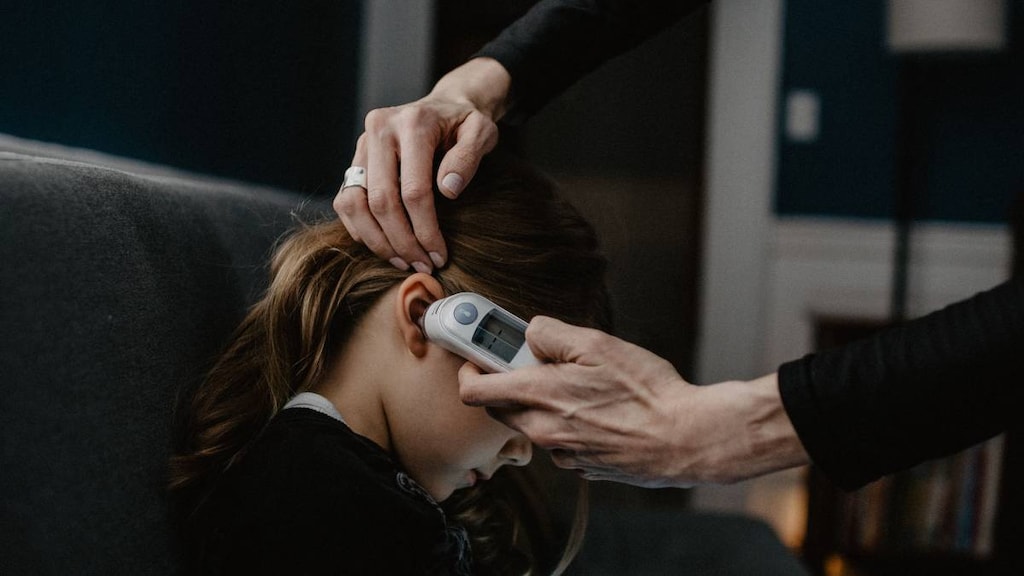
Normal body temperature is usually reported to be 98.6°F (37°C). However, what’s normal for you may be slightly higher or lower than this figure. Research in recent years shows that it’s more appropriate to think of normal body temperature as a range, rather than being one universal normal temperature.
Body temperature can vary for a number of reasons including age. The normal temperature range for children under 2 years of age, for example, tends to be higher than that seen in those over 65. Your body temperature is also likely to fluctuate during the day and may be lower at night than it is in the afternoon. It’ll also go up when you exercise.
The part of your brain called your hypothalamus is responsible for regulating your body temperature.
## What is a fever?
A fever is when your core body temperature is temporarily raised above 98.6°F (37°C).
| | |
|---|---|
| | **Temperature** |
| **Fever** | 100\.4°F (38°C) |
| **High Fever** | 103\.1°F (39.5°C) |
| **Very High Fever** | 105\.8°F (41°C) |
## Why do we get a fever?
A fever is a natural response and is usually a sign that your body is fighting a viral or bacterial infection. Fever stimulates your immune system to help your body fight infection. The increase in body temperature makes it harder for the invading virus or bacteria to survive.
## What are the symptoms of a fever?
When you have a fever you may:
- Feel warm and sweaty or cold and shivery
- Have flushed cheeks
- Show signs of dehydration, including having dark urine or not producing much urine
- Lose your appetite
- Have a headache
- Feel sore, achy and tired
- Have a rapid heartbeat or palpitations
- Experience febrile seizures (in those 6 months to 5 years)
## How do you measure a fever?
Body temperature is measured with a thermometer and there are quite a range of different types available. Glass mercury thermometers, which were once very popular, are no longer recommended because they can break and release mercury. However, here are some options worth considering:
- **Digital thermometers.** These thermometers can be used by all ages. They can generally be placed under the armpit to get a temperature reading in children under 5 years old and used in the mouth in older children and adults. These thermometers may also be used rectally (in the bottom), particularly in small babies.
- **Ear thermometers (electronic or infrared tympanic thermometers).** These thermometers are more expensive and are not suitable for small babies, but they are quick and easy to use.
- **Forehead thermometers (temporal artery thermometers).** These thermometers are also expensive. They are also quick and easy to use and can be used even on a sleeping child.
- **Combination thermometers.** If you can’t decide on the best option for you, then some do double duty, such as those that can take readings from both the ear and the forehead.
No matter what type of thermometer you choose, it’s important to read the instructions. It’s particularly important to check the instruction manual for what the expected normal range of temperature readings is for your thermometer, so that you know if you have a fever or not.
What’s considered a normal temperature reading is likely to vary according to the site you tested at (oral, rectal, under the arm), the age of the person being tested and the type of thermometer you are using.
## How do you treat a fever?
If your fever is making you uncomfortable, then here are some steps to help:
**1\.** Do not take a cold bath, cold sponge bath or attempt to make yourself cold. This can make you shiver, which can increase your body temperature. Instead use lukewarm water (90°F (32.2°C) to 95°F (35°C)) for a bath or sponge bath and make sure it doesn’t get cold.
**2\.** Remove extra layers of clothing. Choose loose, comfortable clothing.
**3\.** Adjust the temperature in the room so that it is not too warm.
**4\.** Drink more fluids to avoid dehydration. When you have a fever you tend to sweat more and excessive sweating can lead to dehydration. Pale yellow urine means you’re unlikely to be dehydrated, but darker urine can be a sign that you are. It is normal to urinate anywhere between 4 and 10 times per day.
**5\.** You don’t need to automatically reach for medication at the first sign of a fever, however, if your fever is making you miserable then it may be appropriate to take medication to reduce it. Check with your healthcare professional first about the best medication for you and always make sure to read and follow the instructions that come with your medication. Over-the-counter antipyretic (anti-fever) medications include:
- [Acetaminophen](https://www.medicine.com/drug/acetaminophen/hcp "Acetaminophen") (Tylenol, paracetamol)
Acetaminophen is commonly used to reduce fevers. Some experts are also recommending it over ibuprofen as the treatment of choice for reducing fevers in patients with [COVID-19](https://www.medicine.com/condition/covid-19 "COVID-19"), the disease caused by the new coronavirus (SARS-CoV-2). Acetaminophen is a key ingredient in many cold and flu products, so it’s important to read the labels and make sure you’re not taking more than one product containing it.
- [Ibuprofen](https://www.medicine.com/drug/ibuprofen/hcp "Ibuprofen") (Advil, Motrin IB)
Some reports have suggested that nonsteroidal anti-inflammatory drugs, such as ibuprofen, could worsen COVID-19 symptoms. However, further research is required and the US Food and Drug Administration (FDA) has reported that it will communicate more information on the matter when it is available. The World Health Organization (WHO) is also investigating.
- [Aspirin](https://www.medicine.com/drug/aspirin/hcp "Aspirin")
Aspirin is not recommended for reducing fevers in children with viral illnesses who are younger than 19 years old because of the risk of Reye syndrome.
## When to seek help
If you are worried about a fever, particularly in a child, then it is ok to ring your healthcare professional for advice. Especially if your child is less than 3 months old and has a rectal temperature of 100.4 F (38 C) or higher, in which case you should call your healthcare professional right away. The same also applies to children between 3 months and 3 years of age with a fever over 102.2 F (39 C). For adults, the advice is to ring your healthcare professional if your temperature is 103.0°F (39.4°C) or over. If a fever has lasted more than 3 days it is also worth calling for advice.
You should also call your healthcare provider if a fever is accompanied by other symptoms such as:
- A stiff neck or eyes being sensitive to light
- Floppiness, sleepiness or drowsiness, particularly in babies and children
- Being unresponsive or lethargic
- An unusual high-pitched cry in a baby
- Breathing difficulties
- Severe headaches
- Refusal to drink and not urinating
- Excessive vomiting
- Severe pain
### Article references
1. InformedHealth.org. NCBI Bookshelf. How is body temperature regulated and what is fever? November 17, 2016. Available at: <https://www.ncbi.nlm.nih.gov/books/NBK279457/>. \[Accessed March 26, 2020\].
2. Obermeyer Z, Samra JK, Mullainathan S. Individual differences in normal body temperature: longitudinal big data analysis of patient records. BMJ 2017;359:j5468 doi: [https://doi.org/10.1136/bmj.j5468](https://www.bmj.com/content/359/bmj.j5468).
3. Health Navigator. Fever. Available at: <https://www.healthnavigator.org.nz/health-a-z/f/fever-general/>. \[Accessed March 26, 2020\].
4. Evans SS, Repasky EA, Fisher DT. Fever and the thermal regulation of immunity: the immune system feels the heat. Nat Rev Immunol 15,335–349 (2015). [https://doi.org/10.1038/nri3843](https://www.nature.com/articles/nri3843).
5. NHS Inform. Fever in adults. Available at: <https://www.nhsinform.scot/illnesses-and-conditions/infections-and-poisoning/fever-in-adults>. \[Accessed March 26, 2020\].
6. Health Navigator. Fever in children. Available at: <https://www.healthnavigator.org.nz/health-a-z/f/fever-children/#Takingatemperature>. \[Accessed March 26, 2020\].
7. Wirecutter. The Best Thermometer for Kids and Adults. Available at: <https://thewirecutter.com/reviews/best-thermometer-for-kids-and-adults/>. \[Accessed March 26, 2020\].
8. Kids Health. Thermometers - How To Use Them. Available at: <https://www.kidshealth.org.nz/thermometers-how-use-them>. \[Accessed March 26, 2020\].
9. Britannica. Shivering. Available at: <https://www.britannica.com/science/shivering>. \[Accessed March 26, 2020\].
10. BBC. Bitesize. Maintaining stable body conditions. Available at: <https://www.bbc.co.uk/bitesize/guides/znc6fg8/revision/4>. \[Accessed March 26, 2020\].
11. Bladder & Bowel Community. Urinary Frequency. Available at: <https://www.bladderandbowel.org/bladder/bladder-conditions-and-symptoms/frequency/>. \[Accessed March 26, 2020\].
12. Beutler AI, Chesnut GT, Mattingly JC, et al. Aspirin Use in Children for Fever or Viral Syndromes. *Am Fam Physician.* 2009 Dec 15;80(12):1472-1474. Available at: <https://www.aafp.org/afp/2009/1215/p1472.html>.
13. Food and Drug Administration (FDA). FDA advises patients on use of non-steroidal anti-inflammatory drugs (NSAIDs) for COVID-19. March 19, 2020. Available at: <https://www.fda.gov/drugs/drug-safety-and-availability/fda-advises-patients-use-non-steroidal-anti-inflammatory-drugs-nsaids-covid-19>. \[Accessed March 26, 2020\].
14. World Health Organization (WHO) (March 19, 20200. Q: Could \#ibuprofen worsen disease for people with \#COVID19? A: Based on currently available information, WHO does not recommend against the use of of ibuprofen. At present, based on currently available information, WHO does not recommend against the use of ibuprofen...\[Twitter POST\]. Retrieved from: <https://twitter.com/WHO/status/1240409217997189128>.
15. Day M. Covid-19: ibuprofen should not be used for managing symptoms, say doctors and scientists. BMJ 2020;368:m1086 doi: [https://doi.org/10.1136/bmj.m1086](https://www.bmj.com/content/368/bmj.m1086).
16. Kids Health. Fevers. Available at: <https://kidshealth.org/en/parents/fever.html>. \[Accessed March 26, 2020\].
17. Tylenol. Adult Fever Symptoms, Treatment And When To Call A Doctor. Available at: <https://www.tylenol.ca/symptoms/Upper-Respiratory/cold-flu/adult-fever-symptoms-treatment-and-when-call-doctor>. \[Accessed March 26, 2020\].
- [Facebook](https://www.facebook.com/sharer/sharer.php?display=popup&u=http%3A%2F%2Fwww.medicine.com%2Fhealth%2Fnormal-body-temperature-fever-whats-normal-whats-not)
- [Twitter](https://twitter.com/intent/tweet?url=http%3A%2F%2Fwww.medicine.com%2Fhealth%2Fnormal-body-temperature-fever-whats-normal-whats-not&text=You%20have%20a%20fever%20when%20your%20core%20body%20temperature%20is%20raised%20above%20what%20is%20normal.%20Learn%20more%20about%20how%20to%20tell%20if%20you%20have%20a%20fever%20and%20what%20to%20do%20next.)
- [Email](mailto:?subject=Normal%20body%20temperature%20and%20fever%20-%20what%27s%20normal%20and%20what%27s%20not%3F%20-%20Medicine.com&body=You%20have%20a%20fever%20when%20your%20core%20body%20temperature%20is%20raised%20above%20what%20is%20normal.%20Learn%20more%20about%20how%20to%20tell%20if%20you%20have%20a%20fever%20and%20what%20to%20do%20next.%20Read%20more:%20http%3A%2F%2Fwww.medicine.com%2Fhealth%2Fnormal-body-temperature-fever-whats-normal-whats-not)
- [Print](https://www.medicine.com/health/normal-body-temperature-fever-whats-normal-whats-not)
## Read this next
- [ COVID-19 vaccines and myocarditis - the risks explained The risk of myocarditis following COVID-19 vaccination is rare and is lower than the risk of myocarditis following COVID-19 infection itself.](https://www.medicine.com/health/covid-19-vaccines-myocarditis-risks-explained)
- [ 5 Top tips for managing postural orthostatic tachycardia syndrome (POTS) symptoms Lifestyle changes are an effective way to help manage your postural orthostatic tachycardia syndrome (POTS) symptoms. Here are 5 top tips to try.](https://www.medicine.com/health/5-top-tips-managing-pots-symptoms)
- [ Two COVID-19 vaccine doses needed when dealing with the Delta variant - And a third helps even more Researchers have been investigating how vaccines perform against the Delta variant. Here’s what they’ve found.](https://www.medicine.com/health/two-covid-19-vaccine-doses-needed-when-dealing-delta-variant-third-helps-even-more)
- [ COVID-19: How to look after your face mask It is important to keep your face mask clean and fresh. Here are some tips for the best way to regularly clean and sanitize your face mask.](https://www.medicine.com/health/covid-19-how-look-after-mask)
- [ COVID-19 Guide COVID-19 is the disease caused by the coronavirus SARS-CoV-2 (severe acute respiratory syndrome coronavirus 2).](https://www.medicine.com/condition/covid-19)
[View more articles](https://www.medicine.com/health)

Cheaper Meds, Faster Delivery.
Apply for early access to the new **Medicine.com Pharmacy**
[Join the waitlist](https://www.medicine.com/buy)
Knowledge is the best medicine.
- [Facebook](https://www.facebook.com/medicinecom)
- [Twitter](https://twitter.com/medicine)
- [Health Guides](https://www.medicine.com/guide)
- [Medications](https://www.medicine.com/drug)
- [Conditions](https://www.medicine.com/condition)
- [Pill Finder](https://www.medicine.com/pill-finder)
- [Symptom Checker](https://www.medicine.com/symptom-checker)
- [About us](https://www.medicine.com/company/about)
- [Editorial team](https://www.medicine.com/company/editorial-team)
- [Contact us](https://www.medicine.com/company/contact)
- [Sitemap](https://www.medicine.com/sitemap)
- [Advertising policy](https://www.medicine.com/legal/advertising-policy)
- [Editorial policy](https://www.medicine.com/legal/editorial-policy)
- [Privacy policy](https://www.medicine.com/legal/privacy-policy)
- [Terms of use](https://www.medicine.com/legal/terms-conditions)
This material is provided for educational purposes only and is not intended for medical advice, diagnosis, or treatment. Review our [medical disclaimer](https://www.medicine.com/legal/medical-disclaimer).
© 2026 Medicine.com – All rights reserved.
 |
| Readable Markdown | 
Normal body temperature is usually reported to be 98.6°F (37°C). However, what’s normal for you may be slightly higher or lower than this figure. Research in recent years shows that it’s more appropriate to think of normal body temperature as a range, rather than being one universal normal temperature.
Body temperature can vary for a number of reasons including age. The normal temperature range for children under 2 years of age, for example, tends to be higher than that seen in those over 65. Your body temperature is also likely to fluctuate during the day and may be lower at night than it is in the afternoon. It’ll also go up when you exercise.
The part of your brain called your hypothalamus is responsible for regulating your body temperature.
## What is a fever?
A fever is when your core body temperature is temporarily raised above 98.6°F (37°C).
| | |
|---|---|
| | **Temperature** |
| **Fever** | 100\.4°F (38°C) |
| **High Fever** | 103\.1°F (39.5°C) |
| **Very High Fever** | 105\.8°F (41°C) |
## Why do we get a fever?
A fever is a natural response and is usually a sign that your body is fighting a viral or bacterial infection. Fever stimulates your immune system to help your body fight infection. The increase in body temperature makes it harder for the invading virus or bacteria to survive.
## What are the symptoms of a fever?
When you have a fever you may:
- Feel warm and sweaty or cold and shivery
- Have flushed cheeks
- Show signs of dehydration, including having dark urine or not producing much urine
- Lose your appetite
- Have a headache
- Feel sore, achy and tired
- Have a rapid heartbeat or palpitations
- Experience febrile seizures (in those 6 months to 5 years)
## How do you measure a fever?
Body temperature is measured with a thermometer and there are quite a range of different types available. Glass mercury thermometers, which were once very popular, are no longer recommended because they can break and release mercury. However, here are some options worth considering:
- **Digital thermometers.** These thermometers can be used by all ages. They can generally be placed under the armpit to get a temperature reading in children under 5 years old and used in the mouth in older children and adults. These thermometers may also be used rectally (in the bottom), particularly in small babies.
- **Ear thermometers (electronic or infrared tympanic thermometers).** These thermometers are more expensive and are not suitable for small babies, but they are quick and easy to use.
- **Forehead thermometers (temporal artery thermometers).** These thermometers are also expensive. They are also quick and easy to use and can be used even on a sleeping child.
- **Combination thermometers.** If you can’t decide on the best option for you, then some do double duty, such as those that can take readings from both the ear and the forehead.
No matter what type of thermometer you choose, it’s important to read the instructions. It’s particularly important to check the instruction manual for what the expected normal range of temperature readings is for your thermometer, so that you know if you have a fever or not.
What’s considered a normal temperature reading is likely to vary according to the site you tested at (oral, rectal, under the arm), the age of the person being tested and the type of thermometer you are using.
## How do you treat a fever?
If your fever is making you uncomfortable, then here are some steps to help:
**1\.** Do not take a cold bath, cold sponge bath or attempt to make yourself cold. This can make you shiver, which can increase your body temperature. Instead use lukewarm water (90°F (32.2°C) to 95°F (35°C)) for a bath or sponge bath and make sure it doesn’t get cold.
**2\.** Remove extra layers of clothing. Choose loose, comfortable clothing.
**3\.** Adjust the temperature in the room so that it is not too warm.
**4\.** Drink more fluids to avoid dehydration. When you have a fever you tend to sweat more and excessive sweating can lead to dehydration. Pale yellow urine means you’re unlikely to be dehydrated, but darker urine can be a sign that you are. It is normal to urinate anywhere between 4 and 10 times per day.
**5\.** You don’t need to automatically reach for medication at the first sign of a fever, however, if your fever is making you miserable then it may be appropriate to take medication to reduce it. Check with your healthcare professional first about the best medication for you and always make sure to read and follow the instructions that come with your medication. Over-the-counter antipyretic (anti-fever) medications include:
- [Acetaminophen](https://www.medicine.com/drug/acetaminophen/hcp "Acetaminophen") (Tylenol, paracetamol)
Acetaminophen is commonly used to reduce fevers. Some experts are also recommending it over ibuprofen as the treatment of choice for reducing fevers in patients with [COVID-19](https://www.medicine.com/condition/covid-19 "COVID-19"), the disease caused by the new coronavirus (SARS-CoV-2). Acetaminophen is a key ingredient in many cold and flu products, so it’s important to read the labels and make sure you’re not taking more than one product containing it.
- [Ibuprofen](https://www.medicine.com/drug/ibuprofen/hcp "Ibuprofen") (Advil, Motrin IB)
Some reports have suggested that nonsteroidal anti-inflammatory drugs, such as ibuprofen, could worsen COVID-19 symptoms. However, further research is required and the US Food and Drug Administration (FDA) has reported that it will communicate more information on the matter when it is available. The World Health Organization (WHO) is also investigating.
- [Aspirin](https://www.medicine.com/drug/aspirin/hcp "Aspirin")
Aspirin is not recommended for reducing fevers in children with viral illnesses who are younger than 19 years old because of the risk of Reye syndrome.
## When to seek help
If you are worried about a fever, particularly in a child, then it is ok to ring your healthcare professional for advice. Especially if your child is less than 3 months old and has a rectal temperature of 100.4 F (38 C) or higher, in which case you should call your healthcare professional right away. The same also applies to children between 3 months and 3 years of age with a fever over 102.2 F (39 C). For adults, the advice is to ring your healthcare professional if your temperature is 103.0°F (39.4°C) or over. If a fever has lasted more than 3 days it is also worth calling for advice.
You should also call your healthcare provider if a fever is accompanied by other symptoms such as:
- A stiff neck or eyes being sensitive to light
- Floppiness, sleepiness or drowsiness, particularly in babies and children
- Being unresponsive or lethargic
- An unusual high-pitched cry in a baby
- Breathing difficulties
- Severe headaches
- Refusal to drink and not urinating
- Excessive vomiting
- Severe pain
### Article references
1. InformedHealth.org. NCBI Bookshelf. How is body temperature regulated and what is fever? November 17, 2016. Available at: <https://www.ncbi.nlm.nih.gov/books/NBK279457/>. \[Accessed March 26, 2020\].
2. Obermeyer Z, Samra JK, Mullainathan S. Individual differences in normal body temperature: longitudinal big data analysis of patient records. BMJ 2017;359:j5468 doi: [https://doi.org/10.1136/bmj.j5468](https://www.bmj.com/content/359/bmj.j5468).
3. Health Navigator. Fever. Available at: <https://www.healthnavigator.org.nz/health-a-z/f/fever-general/>. \[Accessed March 26, 2020\].
4. Evans SS, Repasky EA, Fisher DT. Fever and the thermal regulation of immunity: the immune system feels the heat. Nat Rev Immunol 15,335–349 (2015). [https://doi.org/10.1038/nri3843](https://www.nature.com/articles/nri3843).
5. NHS Inform. Fever in adults. Available at: <https://www.nhsinform.scot/illnesses-and-conditions/infections-and-poisoning/fever-in-adults>. \[Accessed March 26, 2020\].
6. Health Navigator. Fever in children. Available at: <https://www.healthnavigator.org.nz/health-a-z/f/fever-children/#Takingatemperature>. \[Accessed March 26, 2020\].
7. Wirecutter. The Best Thermometer for Kids and Adults. Available at: <https://thewirecutter.com/reviews/best-thermometer-for-kids-and-adults/>. \[Accessed March 26, 2020\].
8. Kids Health. Thermometers - How To Use Them. Available at: <https://www.kidshealth.org.nz/thermometers-how-use-them>. \[Accessed March 26, 2020\].
9. Britannica. Shivering. Available at: <https://www.britannica.com/science/shivering>. \[Accessed March 26, 2020\].
10. BBC. Bitesize. Maintaining stable body conditions. Available at: <https://www.bbc.co.uk/bitesize/guides/znc6fg8/revision/4>. \[Accessed March 26, 2020\].
11. Bladder & Bowel Community. Urinary Frequency. Available at: <https://www.bladderandbowel.org/bladder/bladder-conditions-and-symptoms/frequency/>. \[Accessed March 26, 2020\].
12. Beutler AI, Chesnut GT, Mattingly JC, et al. Aspirin Use in Children for Fever or Viral Syndromes. *Am Fam Physician.* 2009 Dec 15;80(12):1472-1474. Available at: <https://www.aafp.org/afp/2009/1215/p1472.html>.
13. Food and Drug Administration (FDA). FDA advises patients on use of non-steroidal anti-inflammatory drugs (NSAIDs) for COVID-19. March 19, 2020. Available at: <https://www.fda.gov/drugs/drug-safety-and-availability/fda-advises-patients-use-non-steroidal-anti-inflammatory-drugs-nsaids-covid-19>. \[Accessed March 26, 2020\].
14. World Health Organization (WHO) (March 19, 20200. Q: Could \#ibuprofen worsen disease for people with \#COVID19? A: Based on currently available information, WHO does not recommend against the use of of ibuprofen. At present, based on currently available information, WHO does not recommend against the use of ibuprofen...\[Twitter POST\]. Retrieved from: <https://twitter.com/WHO/status/1240409217997189128>.
15. Day M. Covid-19: ibuprofen should not be used for managing symptoms, say doctors and scientists. BMJ 2020;368:m1086 doi: [https://doi.org/10.1136/bmj.m1086](https://www.bmj.com/content/368/bmj.m1086).
16. Kids Health. Fevers. Available at: <https://kidshealth.org/en/parents/fever.html>. \[Accessed March 26, 2020\].
17. Tylenol. Adult Fever Symptoms, Treatment And When To Call A Doctor. Available at: <https://www.tylenol.ca/symptoms/Upper-Respiratory/cold-flu/adult-fever-symptoms-treatment-and-when-call-doctor>. \[Accessed March 26, 2020\]. |
| Shard | 127 (laksa) |
| Root Hash | 9518282697937903527 |
| Unparsed URL | com,medicine!www,/health/normal-body-temperature-fever-whats-normal-whats-not s443 |