ℹ️ Skipped - page is already crawled
| Filter | Status | Condition | Details |
|---|---|---|---|
| HTTP status | PASS | download_http_code = 200 | HTTP 200 |
| Age cutoff | PASS | download_stamp > now() - 6 MONTH | 0.2 months ago |
| History drop | PASS | isNull(history_drop_reason) | No drop reason |
| Spam/ban | PASS | fh_dont_index != 1 AND ml_spam_score = 0 | ml_spam_score=0 |
| Canonical | PASS | meta_canonical IS NULL OR = '' OR = src_unparsed | Not set |
| Property | Value |
|---|---|
| URL | https://www.mathscareers.org.uk/beautiful-equation/ |
| Last Crawled | 2026-04-17 21:04:43 (5 days ago) |
| First Indexed | 2020-12-02 07:18:40 (5 years ago) |
| HTTP Status Code | 200 |
| Content | |
| Meta Title | A beautiful equation - Maths Careers |
| Meta Description | null |
| Meta Canonical | null |
| Boilerpipe Text | Can maths be beautiful? Most people understand the beauty of a painting or a piece of music, but what about the squiggles of a mathematical equation? We call great works of art “beautiful” if they are aesthetically pleasing or express fundamental ideas in a profound way, and mathematicians feel the same way about particularly elegant proofs. Many say the most beautiful result of all is Euler’s equation:
+ 1 = 0. Leonhard Euler (pronounced “oiler”) was a Swiss mathematician in the 18th century, and is considered to be one of the greatest of all time. But to discover the beauty of Euler’s equation, you have to understand its meaning.
Irrational and imaginary
Let’s start with the numbers. You should be familiar with
from your maths lessons at school. Divide the circumference of a circle by its diameter and the answer will always be 3.14159…, a decimal number that trails on forever. Numbers like
are called “irrational” because they can’t be written as a ratio or fraction.
The number
e
is also one you might have met at school. It crops up in many different areas of maths, science, and business, because the function f(x) = e
x
has the useful property of being its own derivative. In other words,
f'(x) = f(x) = e
x
.
This comes in handy for modelling processes like radioactive decay or interest payments, where the rate of change is proportional to the value you start with. Like
, e is an irrational number that begins 2.71828… and goes on forever.
Numbers that never end are pretty strange, but
i
is even weirder. Multiplies of i are called “imaginary numbers”, but they’re no less real than the “ordinary” numbers. Mathematicians first used them to solve a problem with square roots, but they crop up in everything from electrical engineering to computer graphics.
To understand why we need imaginary numbers, work out the square root of 4. The obvious answer is 2, but -2 is also a root of 4 because multiplying two negative numbers gives a positive. But what’s the square root of -4? It can’t be 2 or -2, because squaring both of these gives 4. To solve the problem, we define the square root of -1 as i, so i
2
= -1. This makes the square root of -4 equal to 2i, the square root of -9 equal to 3i, and so on. A number with both “real” and “imaginary” parts is called a complex number, and written as
a + bi.
By now you might be wondering what any of this has to do with “beauty”. These numbers are clearly useful, but it’s their combination that makes them beautiful. Rearranging Euler’s equation, we get
. It seems almost impossible that these three strange numbers can unite to produce such a simple result – what does it even mean to raise e to the power of
?
Euler’s explanation
We know that a calculation like 2
3
can be written as 2 × 2 × 2, but
isn’t as simple. Euler realised he needed a new method of exponentiation to handle complex numbers, and turned to the infinite for help.
The Taylor series of function turns a simple f(x) into an infinite sum. Any function that satisfies certain conditions can be expressed as a Taylor series, including
:
Here n! means “n factorial”, and n! = n × (n-1) × (n-2) × … 2 × 1. If you don’t believe this infinite sum adds up to e
x
, try putting x = 1. You can work out each term on a calculator, and you’ll find that the more terms you add, the closer the result is to 2.71828…
Euler realised that he could use the same formula for e
ix
to get a similar result. Powers of
i
follow a certain pattern: i
1
= i, i
2
= -1, i
3
= -i, and i
4
= 1. When you reach i
5
the pattern repeats, because i
5
= i
1
× i
4
= i. Using this pattern, we can write:
And by grouping real and imaginary parts we get:
It turns out that the two groups form their own Taylor series. The first group is the Taylor series for cos(x), while the second group is the Taylor series for sin(x), which has been multiplied by
i
. This must mean that:
e
ix
= cos(x) + i × sin(x).
We’ve cracked it. Now all that remains is to substitute
:
= cos(
) + i × sin(
) = -1 + 0,
since cos(
) = -1 and sin(
) = 0.
So finally:
= -1
thus:
+ 1 = 0
Euler’s equation expresses a universal truth, valid in any language or culture. It contains five of the most important numbers in maths: 0, 1, e, i, and
, along with the fundamental concepts of addition, multiplication, and exponentiation. These vital numbers and concepts also crop up in branches of science, engineering, and technology. All these ideas in just a few squiggles – if that’s not beautiful, what is? |
| Markdown | [Skip to main content](https://www.mathscareers.org.uk/beautiful-equation/#ajax-content-wrap)
- [x-twitter](https://x.com/mathscareers)
- [facebook](https://www.facebook.com/MathsCareers/)
- [I Maths](https://www.mathscareers.org.uk/i-love-maths/)
- [Business & Money](https://www.mathscareers.org.uk/business-money/)
- [Careers](https://www.mathscareers.org.uk/careers/)
- [Environment & Health](https://www.mathscareers.org.uk/environment-health/)
- [Science & Engineering](https://www.mathscareers.org.uk/science-engineering/)
- [Sport & Entertainment](https://www.mathscareers.org.uk/sport-entertainment/)
[Close Search](https://www.mathscareers.org.uk/beautiful-equation/)
[](https://www.mathscareers.org.uk/)
[search](https://www.mathscareers.org.uk/beautiful-equation/#searchbox)
[Menu](https://www.mathscareers.org.uk/beautiful-equation/#slide-out-widget-area)
- [11-16](https://www.mathscareers.org.uk/11-16/)
- [16-19](https://www.mathscareers.org.uk/16-19/)
- [19+](https://www.mathscareers.org.uk/19up/)
- [search](https://www.mathscareers.org.uk/beautiful-equation/#searchbox)
[16-19](https://www.mathscareers.org.uk/16-19-age/)[I love Maths](https://www.mathscareers.org.uk/i-love-maths/)
# A beautiful equation
By [Eugene Kidwell](https://www.mathscareers.org.uk/author/eugene/ "Posts by Eugene Kidwell")25th February 2014February 17th, 2020[No Comments](https://www.mathscareers.org.uk/beautiful-equation/#respond)
[Home](https://www.mathscareers.org.uk/) / **A beautiful equation**
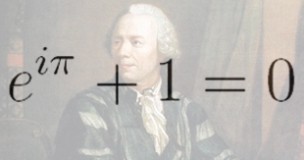
Can maths be beautiful? Most people understand the beauty of a painting or a piece of music, but what about the squiggles of a mathematical equation? We call great works of art “beautiful” if they are aesthetically pleasing or express fundamental ideas in a profound way, and mathematicians feel the same way about particularly elegant proofs. Many say the most beautiful result of all is Euler’s equation:  + 1 = 0. Leonhard Euler (pronounced “oiler”) was a Swiss mathematician in the 18th century, and is considered to be one of the greatest of all time. But to discover the beauty of Euler’s equation, you have to understand its meaning.
### Irrational and imaginary
Let’s start with the numbers. You should be familiar with  from your maths lessons at school. Divide the circumference of a circle by its diameter and the answer will always be 3.14159…, a decimal number that trails on forever. Numbers like  are called “irrational” because they can’t be written as a ratio or fraction.
The number *e* is also one you might have met at school. It crops up in many different areas of maths, science, and business, because the function f(x) = ex has the useful property of being its own derivative. In other words,
f'(x) = f(x) = ex.
This comes in handy for modelling processes like radioactive decay or interest payments, where the rate of change is proportional to the value you start with. Like , e is an irrational number that begins 2.71828… and goes on forever.
Numbers that never end are pretty strange, but *i* is even weirder. Multiplies of i are called “imaginary numbers”, but they’re no less real than the “ordinary” numbers. Mathematicians first used them to solve a problem with square roots, but they crop up in everything from electrical engineering to computer graphics.
To understand why we need imaginary numbers, work out the square root of 4. The obvious answer is 2, but -2 is also a root of 4 because multiplying two negative numbers gives a positive. But what’s the square root of -4? It can’t be 2 or -2, because squaring both of these gives 4. To solve the problem, we define the square root of -1 as i, so i2 = -1. This makes the square root of -4 equal to 2i, the square root of -9 equal to 3i, and so on. A number with both “real” and “imaginary” parts is called a complex number, and written as
a + bi.
By now you might be wondering what any of this has to do with “beauty”. These numbers are clearly useful, but it’s their combination that makes them beautiful. Rearranging Euler’s equation, we get . It seems almost impossible that these three strange numbers can unite to produce such a simple result – what does it even mean to raise e to the power of ?
### Euler’s explanation
We know that a calculation like 23 can be written as 2 × 2 × 2, but  isn’t as simple. Euler realised he needed a new method of exponentiation to handle complex numbers, and turned to the infinite for help.
The Taylor series of function turns a simple f(x) into an infinite sum. Any function that satisfies certain conditions can be expressed as a Taylor series, including :

Here n! means “n factorial”, and n! = n × (n-1) × (n-2) × … 2 × 1. If you don’t believe this infinite sum adds up to ex, try putting x = 1. You can work out each term on a calculator, and you’ll find that the more terms you add, the closer the result is to 2.71828…
Euler realised that he could use the same formula for eix to get a similar result. Powers of *i* follow a certain pattern: i1 = i, i2 = -1, i3 = -i, and i4 = 1. When you reach i5 the pattern repeats, because i5 = i1 × i4 = i. Using this pattern, we can write:

And by grouping real and imaginary parts we get:

It turns out that the two groups form their own Taylor series. The first group is the Taylor series for cos(x), while the second group is the Taylor series for sin(x), which has been multiplied by *i*. This must mean that:
eix = cos(x) + i × sin(x).
We’ve cracked it. Now all that remains is to substitute :
 = cos() + i × sin() = -1 + 0,
since cos() = -1 and sin() = 0.
So finally:
 = -1
thus:
 + 1 = 0
Euler’s equation expresses a universal truth, valid in any language or culture. It contains five of the most important numbers in maths: 0, 1, e, i, and , along with the fundamental concepts of addition, multiplication, and exponentiation. These vital numbers and concepts also crop up in branches of science, engineering, and technology. All these ideas in just a few squiggles – if that’s not beautiful, what is?
[Love1](https://www.mathscareers.org.uk/beautiful-equation/ "Love this") [Share](https://www.mathscareers.org.uk/beautiful-equation/ "Share this") [Share](https://www.mathscareers.org.uk/beautiful-equation/ "Share this") [Share](https://www.mathscareers.org.uk/beautiful-equation/ "Share this")
#### Categories
- [11-16](https://www.mathscareers.org.uk/11-16-age/)
- [16-19](https://www.mathscareers.org.uk/16-19-age/)
- [19+](https://www.mathscareers.org.uk/19-plus/)
- [Business & Money](https://www.mathscareers.org.uk/business-money/)
- [Careers](https://www.mathscareers.org.uk/careers/)
- [Competitions](https://www.mathscareers.org.uk/competition/)
- [Environment & Health](https://www.mathscareers.org.uk/environment-health/)
- [I love Maths](https://www.mathscareers.org.uk/i-love-maths/)
- [News](https://www.mathscareers.org.uk/news/)
- [Profiles](https://www.mathscareers.org.uk/profiles/)
- [Science & Engineering](https://www.mathscareers.org.uk/science-engineering/)
- [Sport & Entertainment](https://www.mathscareers.org.uk/sport-entertainment/)
#### Tags
[adult learner](https://www.mathscareers.org.uk/tag/adult-learner/) [algorithm](https://www.mathscareers.org.uk/tag/algorithm/) [algorithms](https://www.mathscareers.org.uk/tag/algorithms/) [bearings](https://www.mathscareers.org.uk/tag/bearings/) [buildings](https://www.mathscareers.org.uk/tag/buildings/) [cancer](https://www.mathscareers.org.uk/tag/cancer/) [careers advisor](https://www.mathscareers.org.uk/tag/careers-advisor/) [Christmas](https://www.mathscareers.org.uk/tag/christmas/) [coding](https://www.mathscareers.org.uk/tag/coding/) [Competition](https://www.mathscareers.org.uk/tag/competition/) [Competition winners](https://www.mathscareers.org.uk/tag/competition-winners/) [coordinates](https://www.mathscareers.org.uk/tag/coordinates/) [cymru](https://www.mathscareers.org.uk/tag/cymru/) [data science](https://www.mathscareers.org.uk/tag/data-science/) [environment](https://www.mathscareers.org.uk/tag/environment/) [Flexagon](https://www.mathscareers.org.uk/tag/flexagon/) [fractions](https://www.mathscareers.org.uk/tag/fractions/) [games](https://www.mathscareers.org.uk/tag/games/) [game theory](https://www.mathscareers.org.uk/tag/game-theory/) [gcse](https://www.mathscareers.org.uk/tag/gcse/) [health](https://www.mathscareers.org.uk/tag/health/) [ks4](https://www.mathscareers.org.uk/tag/ks4/) [machine learning](https://www.mathscareers.org.uk/tag/machine-learning/) [modelling](https://www.mathscareers.org.uk/tag/modelling/) [music](https://www.mathscareers.org.uk/tag/music/) [National 5](https://www.mathscareers.org.uk/tag/national-5/) [navigation](https://www.mathscareers.org.uk/tag/navigation/) [pi](https://www.mathscareers.org.uk/tag/pi/) [profile](https://www.mathscareers.org.uk/tag/profile/) [Pythagoras](https://www.mathscareers.org.uk/tag/pythagoras/) [python](https://www.mathscareers.org.uk/tag/python/) [scale](https://www.mathscareers.org.uk/tag/scale/) [space](https://www.mathscareers.org.uk/tag/space/) [square root](https://www.mathscareers.org.uk/tag/square-root/) [statistics](https://www.mathscareers.org.uk/tag/statistics/) [teacher](https://www.mathscareers.org.uk/tag/teacher/) [teachers](https://www.mathscareers.org.uk/tag/teachers/) [Weather Forecasting](https://www.mathscareers.org.uk/tag/weather-forecasting/) [whales](https://www.mathscareers.org.uk/tag/whales/)
#### Archives
- [March 2026](https://www.mathscareers.org.uk/2026/03/)
- [February 2026](https://www.mathscareers.org.uk/2026/02/)
- [October 2025](https://www.mathscareers.org.uk/2025/10/)
- [April 2025](https://www.mathscareers.org.uk/2025/04/)
- [March 2025](https://www.mathscareers.org.uk/2025/03/)
- [February 2025](https://www.mathscareers.org.uk/2025/02/)
- [December 2024](https://www.mathscareers.org.uk/2024/12/)
- [November 2024](https://www.mathscareers.org.uk/2024/11/)
- [October 2024](https://www.mathscareers.org.uk/2024/10/)
- [September 2024](https://www.mathscareers.org.uk/2024/09/)
- [August 2024](https://www.mathscareers.org.uk/2024/08/)
- [June 2024](https://www.mathscareers.org.uk/2024/06/)
- [May 2024](https://www.mathscareers.org.uk/2024/05/)
- [April 2024](https://www.mathscareers.org.uk/2024/04/)
- [March 2024](https://www.mathscareers.org.uk/2024/03/)
- [February 2024](https://www.mathscareers.org.uk/2024/02/)
- [January 2024](https://www.mathscareers.org.uk/2024/01/)
- [December 2023](https://www.mathscareers.org.uk/2023/12/)
- [October 2023](https://www.mathscareers.org.uk/2023/10/)
- [May 2023](https://www.mathscareers.org.uk/2023/05/)
- [April 2023](https://www.mathscareers.org.uk/2023/04/)
- [March 2023](https://www.mathscareers.org.uk/2023/03/)
- [February 2023](https://www.mathscareers.org.uk/2023/02/)
- [December 2022](https://www.mathscareers.org.uk/2022/12/)
- [November 2022](https://www.mathscareers.org.uk/2022/11/)
- [August 2022](https://www.mathscareers.org.uk/2022/08/)
- [May 2022](https://www.mathscareers.org.uk/2022/05/)
- [April 2022](https://www.mathscareers.org.uk/2022/04/)
- [March 2022](https://www.mathscareers.org.uk/2022/03/)
- [February 2022](https://www.mathscareers.org.uk/2022/02/)
- [December 2021](https://www.mathscareers.org.uk/2021/12/)
- [November 2021](https://www.mathscareers.org.uk/2021/11/)
- [October 2021](https://www.mathscareers.org.uk/2021/10/)
- [September 2021](https://www.mathscareers.org.uk/2021/09/)
- [June 2021](https://www.mathscareers.org.uk/2021/06/)
- [May 2021](https://www.mathscareers.org.uk/2021/05/)
- [April 2021](https://www.mathscareers.org.uk/2021/04/)
- [March 2021](https://www.mathscareers.org.uk/2021/03/)
- [February 2021](https://www.mathscareers.org.uk/2021/02/)
- [January 2021](https://www.mathscareers.org.uk/2021/01/)
- [December 2020](https://www.mathscareers.org.uk/2020/12/)
- [November 2020](https://www.mathscareers.org.uk/2020/11/)
- [October 2019](https://www.mathscareers.org.uk/2019/10/)
- [July 2019](https://www.mathscareers.org.uk/2019/07/)
- [April 2019](https://www.mathscareers.org.uk/2019/04/)
- [March 2019](https://www.mathscareers.org.uk/2019/03/)
- [February 2019](https://www.mathscareers.org.uk/2019/02/)
- [January 2019](https://www.mathscareers.org.uk/2019/01/)
- [December 2018](https://www.mathscareers.org.uk/2018/12/)
- [October 2018](https://www.mathscareers.org.uk/2018/10/)
- [September 2018](https://www.mathscareers.org.uk/2018/09/)
- [August 2018](https://www.mathscareers.org.uk/2018/08/)
- [July 2018](https://www.mathscareers.org.uk/2018/07/)
- [June 2018](https://www.mathscareers.org.uk/2018/06/)
- [April 2018](https://www.mathscareers.org.uk/2018/04/)
- [March 2018](https://www.mathscareers.org.uk/2018/03/)
- [February 2018](https://www.mathscareers.org.uk/2018/02/)
- [January 2018](https://www.mathscareers.org.uk/2018/01/)
- [November 2017](https://www.mathscareers.org.uk/2017/11/)
- [October 2017](https://www.mathscareers.org.uk/2017/10/)
- [September 2017](https://www.mathscareers.org.uk/2017/09/)
- [August 2017](https://www.mathscareers.org.uk/2017/08/)
- [July 2017](https://www.mathscareers.org.uk/2017/07/)
- [April 2017](https://www.mathscareers.org.uk/2017/04/)
- [March 2017](https://www.mathscareers.org.uk/2017/03/)
- [February 2017](https://www.mathscareers.org.uk/2017/02/)
- [January 2017](https://www.mathscareers.org.uk/2017/01/)
- [December 2016](https://www.mathscareers.org.uk/2016/12/)
- [November 2016](https://www.mathscareers.org.uk/2016/11/)
- [October 2016](https://www.mathscareers.org.uk/2016/10/)
- [September 2016](https://www.mathscareers.org.uk/2016/09/)
- [August 2016](https://www.mathscareers.org.uk/2016/08/)
- [July 2016](https://www.mathscareers.org.uk/2016/07/)
- [June 2016](https://www.mathscareers.org.uk/2016/06/)
- [April 2016](https://www.mathscareers.org.uk/2016/04/)
- [March 2016](https://www.mathscareers.org.uk/2016/03/)
- [February 2016](https://www.mathscareers.org.uk/2016/02/)
- [January 2016](https://www.mathscareers.org.uk/2016/01/)
- [December 2015](https://www.mathscareers.org.uk/2015/12/)
- [November 2015](https://www.mathscareers.org.uk/2015/11/)
- [October 2015](https://www.mathscareers.org.uk/2015/10/)
- [September 2015](https://www.mathscareers.org.uk/2015/09/)
- [August 2015](https://www.mathscareers.org.uk/2015/08/)
- [July 2015](https://www.mathscareers.org.uk/2015/07/)
- [June 2015](https://www.mathscareers.org.uk/2015/06/)
- [May 2015](https://www.mathscareers.org.uk/2015/05/)
- [April 2015](https://www.mathscareers.org.uk/2015/04/)
- [March 2015](https://www.mathscareers.org.uk/2015/03/)
- [February 2015](https://www.mathscareers.org.uk/2015/02/)
- [January 2015](https://www.mathscareers.org.uk/2015/01/)
- [November 2014](https://www.mathscareers.org.uk/2014/11/)
- [September 2014](https://www.mathscareers.org.uk/2014/09/)
- [June 2014](https://www.mathscareers.org.uk/2014/06/)
- [May 2014](https://www.mathscareers.org.uk/2014/05/)
- [March 2014](https://www.mathscareers.org.uk/2014/03/)
- [February 2014](https://www.mathscareers.org.uk/2014/02/)
- [November 2013](https://www.mathscareers.org.uk/2013/11/)
- [August 2013](https://www.mathscareers.org.uk/2013/08/)
- [June 2013](https://www.mathscareers.org.uk/2013/06/)
- ### Previous PostA bug's life
- ### Next PostRos Herman
### Related Posts
[](https://www.mathscareers.org.uk/pi-day-10-circles-in-the-natural-world/) [11-16](https://www.mathscareers.org.uk/11-16-age/)[16-19](https://www.mathscareers.org.uk/16-19-age/)[I love Maths](https://www.mathscareers.org.uk/i-love-maths/) [Pi Day: 10 Circles in the Natural World](https://www.mathscareers.org.uk/pi-day-10-circles-in-the-natural-world/)
### Pi Day: 10 Circles in the Natural World

[Joanna](https://www.mathscareers.org.uk/author/joanna/)5th March 2026
[](https://www.mathscareers.org.uk/11-transferable-skills-youll-gain-from-a-maths-degree/) [11-16](https://www.mathscareers.org.uk/11-16-age/)[16-19](https://www.mathscareers.org.uk/16-19-age/)[Careers](https://www.mathscareers.org.uk/careers/) [11 Transferable Skills You’ll Gain from a Maths Degree](https://www.mathscareers.org.uk/11-transferable-skills-youll-gain-from-a-maths-degree/)
### 11 Transferable Skills You’ll Gain from a Maths Degree

[Joanna](https://www.mathscareers.org.uk/author/joanna/)3rd February 2026
[](https://www.mathscareers.org.uk/maths-in-medicine-and-health-poster-competition-2025-26/) [11-16](https://www.mathscareers.org.uk/11-16-age/)[16-19](https://www.mathscareers.org.uk/16-19-age/)[Competitions](https://www.mathscareers.org.uk/competition/) [Maths in Medicine and Health Poster Competition 2025/26](https://www.mathscareers.org.uk/maths-in-medicine-and-health-poster-competition-2025-26/)
### Maths in Medicine and Health Poster Competition 2025/26

[Joanna](https://www.mathscareers.org.uk/author/joanna/)13th October 2025
[](https://www.mathscareers.org.uk/)
[](https://ima.org.uk/)
- [About us](https://www.mathscareers.org.uk/about-us/)
- [Our sponsors](https://www.mathscareers.org.uk/our-sponsors/)
- [IMA](https://ima.org.uk/)
- [Profiles](https://www.mathscareers.org.uk/profiles/)
- [Contact us](https://www.mathscareers.org.uk/contact-us/)
- [Speaker request form](https://www.mathscareers.org.uk/speaker-request-form/)
- [Materials Request](https://www.mathscareers.org.uk/materials-request/)
- [IMA eStudent Scheme](https://www.mathscareers.org.uk/?p=5907)
- [e16plus Newsletter](https://www.mathscareers.org.uk/e-16-newsletter/)
- [Inclusion](https://www.mathscareers.org.uk/inclusion/)
- [Teachers](https://www.mathscareers.org.uk/teachers/)
- [Cymru](https://www.mathscareers.org.uk/cymru/)
© 2026 Maths Careers. *Web design by [Measured Designs](https://www.measureddesigns.com/ "WordPress Web design")*.
- [x-twitter](https://x.com/mathscareers)
- [facebook](https://www.facebook.com/MathsCareers/)
[Close Menu](https://www.mathscareers.org.uk/beautiful-equation/)
- [11-16](https://www.mathscareers.org.uk/11-16/)
- [16-19](https://www.mathscareers.org.uk/16-19/)
- [19+](https://www.mathscareers.org.uk/19up/)
- [I Maths](https://www.mathscareers.org.uk/i-love-maths/)
- [Business & Money](https://www.mathscareers.org.uk/business-money/)
- [Careers](https://www.mathscareers.org.uk/careers/)
- [Environment & Health](https://www.mathscareers.org.uk/environment-health/)
- [Science & Engineering](https://www.mathscareers.org.uk/science-engineering/)
- [Sport & Entertainment](https://www.mathscareers.org.uk/sport-entertainment/)
- [x-twitter](https://x.com/mathscareers)
- [facebook](https://www.facebook.com/MathsCareers/) |
| Readable Markdown | Can maths be beautiful? Most people understand the beauty of a painting or a piece of music, but what about the squiggles of a mathematical equation? We call great works of art “beautiful” if they are aesthetically pleasing or express fundamental ideas in a profound way, and mathematicians feel the same way about particularly elegant proofs. Many say the most beautiful result of all is Euler’s equation:  + 1 = 0. Leonhard Euler (pronounced “oiler”) was a Swiss mathematician in the 18th century, and is considered to be one of the greatest of all time. But to discover the beauty of Euler’s equation, you have to understand its meaning.
### Irrational and imaginary
Let’s start with the numbers. You should be familiar with  from your maths lessons at school. Divide the circumference of a circle by its diameter and the answer will always be 3.14159…, a decimal number that trails on forever. Numbers like  are called “irrational” because they can’t be written as a ratio or fraction.
The number *e* is also one you might have met at school. It crops up in many different areas of maths, science, and business, because the function f(x) = ex has the useful property of being its own derivative. In other words,
f'(x) = f(x) = ex.
This comes in handy for modelling processes like radioactive decay or interest payments, where the rate of change is proportional to the value you start with. Like , e is an irrational number that begins 2.71828… and goes on forever.
Numbers that never end are pretty strange, but *i* is even weirder. Multiplies of i are called “imaginary numbers”, but they’re no less real than the “ordinary” numbers. Mathematicians first used them to solve a problem with square roots, but they crop up in everything from electrical engineering to computer graphics.
To understand why we need imaginary numbers, work out the square root of 4. The obvious answer is 2, but -2 is also a root of 4 because multiplying two negative numbers gives a positive. But what’s the square root of -4? It can’t be 2 or -2, because squaring both of these gives 4. To solve the problem, we define the square root of -1 as i, so i2 = -1. This makes the square root of -4 equal to 2i, the square root of -9 equal to 3i, and so on. A number with both “real” and “imaginary” parts is called a complex number, and written as
a + bi.
By now you might be wondering what any of this has to do with “beauty”. These numbers are clearly useful, but it’s their combination that makes them beautiful. Rearranging Euler’s equation, we get . It seems almost impossible that these three strange numbers can unite to produce such a simple result – what does it even mean to raise e to the power of ?
### Euler’s explanation
We know that a calculation like 23 can be written as 2 × 2 × 2, but  isn’t as simple. Euler realised he needed a new method of exponentiation to handle complex numbers, and turned to the infinite for help.
The Taylor series of function turns a simple f(x) into an infinite sum. Any function that satisfies certain conditions can be expressed as a Taylor series, including :

Here n! means “n factorial”, and n! = n × (n-1) × (n-2) × … 2 × 1. If you don’t believe this infinite sum adds up to ex, try putting x = 1. You can work out each term on a calculator, and you’ll find that the more terms you add, the closer the result is to 2.71828…
Euler realised that he could use the same formula for eix to get a similar result. Powers of *i* follow a certain pattern: i1 = i, i2 = -1, i3 = -i, and i4 = 1. When you reach i5 the pattern repeats, because i5 = i1 × i4 = i. Using this pattern, we can write:

And by grouping real and imaginary parts we get:

It turns out that the two groups form their own Taylor series. The first group is the Taylor series for cos(x), while the second group is the Taylor series for sin(x), which has been multiplied by *i*. This must mean that:
eix = cos(x) + i × sin(x).
We’ve cracked it. Now all that remains is to substitute :
 = cos() + i × sin() = -1 + 0,
since cos() = -1 and sin() = 0.
So finally:
 = -1
thus:
 + 1 = 0
Euler’s equation expresses a universal truth, valid in any language or culture. It contains five of the most important numbers in maths: 0, 1, e, i, and , along with the fundamental concepts of addition, multiplication, and exponentiation. These vital numbers and concepts also crop up in branches of science, engineering, and technology. All these ideas in just a few squiggles – if that’s not beautiful, what is? |
| ML Classification | |
| ML Categories | null |
| ML Page Types | null |
| ML Intent Types | null |
| Content Metadata | |
| Language | en-gb |
| Author | Eugene Kidwell |
| Publish Time | 2014-02-25 07:15:42 (12 years ago) |
| Original Publish Time | 2014-02-25 07:15:42 (12 years ago) |
| Republished | No |
| Word Count (Total) | 1,335 |
| Word Count (Content) | 852 |
| Links | |
| External Links | 4 |
| Internal Links | 174 |
| Technical SEO | |
| Meta Nofollow | No |
| Meta Noarchive | No |
| JS Rendered | No |
| Redirect Target | null |
| Performance | |
| Download Time (ms) | 1,038 |
| TTFB (ms) | 1,036 |
| Download Size (bytes) | 22,832 |
| Shard | 115 (laksa) |
| Root Hash | 4044845676944951915 |
| Unparsed URL | uk,org,mathscareers!www,/beautiful-equation/ s443 |