ℹ️ Skipped - page is already crawled
| Filter | Status | Condition | Details |
|---|---|---|---|
| HTTP status | PASS | download_http_code = 200 | HTTP 200 |
| Age cutoff | PASS | download_stamp > now() - 6 MONTH | 0.1 months ago |
| History drop | PASS | isNull(history_drop_reason) | No drop reason |
| Spam/ban | PASS | fh_dont_index != 1 AND ml_spam_score = 0 | ml_spam_score=0 |
| Canonical | PASS | meta_canonical IS NULL OR = '' OR = src_unparsed | Not set |
| Property | Value |
|---|---|
| URL | https://www.matherhospital.org/wellness-at-mather/diseases-conditions/sound-asleep-but-wide-awake/ |
| Last Crawled | 2026-04-19 15:42:49 (3 days ago) |
| First Indexed | 2019-06-01 09:41:29 (6 years ago) |
| HTTP Status Code | 200 |
| Content | |
| Meta Title | Sound Asleep but Wide Awake - Mather Hospital |
| Meta Description | null |
| Meta Canonical | null |
| Boilerpipe Text | Have you ever lain in bed wide awake, aware of what’s happening around you – but you couldn’t move a muscle? If the answer is yes, then you’ve probably experienced the bizarre phenomenon that is sleep paralysis.
Sleep paralysis is more common than you’d probably think. It typically occurs when you wake up amid a rapid eye movement (REM) cycle. During REM your body is so relaxed that your muscles go into a near paralysis state, known as atonia. Atonia is what protects your body from making any physical movements while you sleep so that you can’t harm yourself. In people that experience sleep walking or sleep behavior disorders, for instance, atonia is not properly occurring, leaving the mind asleep but the body awake to move around.
In sleep paralysis however, the opposite happens – the body remains in the atonic state while the brain begins to function. This experience can be extremely frightening, while a person realizes that they’re awake but can’t move or speak. Sometimes hallucinations can be tied to this sensation, or you may feel breathless or weighed down, while at other times people may feel as if they’re falling or floating away from their bodies. Typically these episodes don’t last more than a few minutes, but to someone experiencing it, it can feel like longer.
Sleep paralysis happens when a person is falling asleep, or when a person is waking up. This is when the body goes into or out of REM sleep. Hypnagogic sleep paralysis occurs when your body has trouble transitioning into the REM cycle (falling asleep) and hypnopompic occurs when your body has trouble transitioning out of it (waking up).
Studies estimate that most people experience sleep paralysis at least once, although they may not even be aware of it. When it does happen though, everyone’s experience is different. Some people may try to wiggle their toes and/or fingers to snap out of it, but there is not much you can do to wake your body in that moment; you just have to wait it out.
Some researchers believe that the frequency of these episodes is directly correlated to stress and lack of sleep. So if this is something that you experience often, try to get more quality sleep, especially by de-stressing before bedtime.
“The occurrence of sleep paralysis is much more common than we know because often the symptoms are quite subtle, “ said Nick Patel, DO, board certified pulmonologist in Mather Hospital’s
Sleep Disorder Center
. “ It’s a sign of poor sleep stage transitioning, which can be associated with numerous conditions. Poor sleep hygiene and stress are the most common. However, it may be associated with conditions such as narcolepsy and require more aggressive evaluation and therapy.”
Although sleep paralysis can be terrifying, it’s not something to fear. But if this is something you experience often or if you have other symptoms associated with the episodes, you should see a doctor as this can be a sign of other sleep disorders. Otherwise, just remain calm and know that it will pass. |
| Markdown | [Skip to content](https://www.matherhospital.org/wellness-at-mather/diseases-conditions/sound-asleep-but-wide-awake/#content)
Mather Hospital
Port Jefferson, New York
[](https://www.matherhospital.org/)
- [Directions](https://www.matherhospital.org/patients-visitors/visitor-information/directions/)
- [Pay a bill](https://www.matherhospital.org/patients-visitors/for-patients/paying-for-your-hospital-care/)
- [Patient portal](https://matherhospital.followmyhealth.com/Login/Home/Index?authproviders=0&returnArea=PatientAccess#/default)
~ top bar
- [Find a doctor](https://doctors.matherhospital.org/)
- [Find a physician](https://doctors.matherhospital.org/)
- [Care & treatment](https://www.matherhospital.org/care-treatment/)
- [Patients & visitors](https://www.matherhospital.org/patients-visitors/)
- [Request an appointment](https://www.matherhospital.org/request-an-appointment-2/)
- [Graduate medical education](https://www.matherhospital.org/graduate-medical-education-program-at-a-glance/)
- [Mather Medical Group](https://www.mathermedicalgroup.org/)
- [Make a Gift](https://www.matherhospital.org/donate-now/jtm-foundation/)
- [Find a physician](https://px.mather.connecthealthcare.com/)
- [Care & treatment](https://www.matherhospital.org/care-treatment/)
- [Patients & visitors](https://www.matherhospital.org/patients-visitors/)
- [Request an appointment](https://www.matherhospital.org/request-an-appointment-2/)
# Sound Asleep but Wide Awake

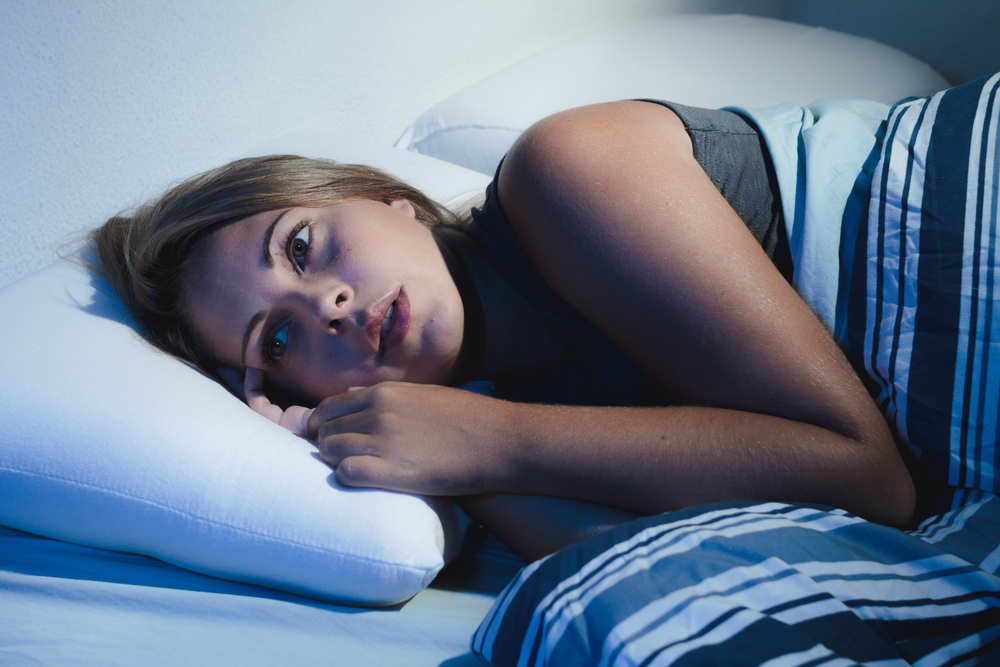Have you ever lain in bed wide awake, aware of what’s happening around you – but you couldn’t move a muscle? If the answer is yes, then you’ve probably experienced the bizarre phenomenon that is sleep paralysis.
Sleep paralysis is more common than you’d probably think. It typically occurs when you wake up amid a rapid eye movement (REM) cycle. During REM your body is so relaxed that your muscles go into a near paralysis state, known as atonia. Atonia is what protects your body from making any physical movements while you sleep so that you can’t harm yourself. In people that experience sleep walking or sleep behavior disorders, for instance, atonia is not properly occurring, leaving the mind asleep but the body awake to move around.
In sleep paralysis however, the opposite happens – the body remains in the atonic state while the brain begins to function. This experience can be extremely frightening, while a person realizes that they’re awake but can’t move or speak. Sometimes hallucinations can be tied to this sensation, or you may feel breathless or weighed down, while at other times people may feel as if they’re falling or floating away from their bodies. Typically these episodes don’t last more than a few minutes, but to someone experiencing it, it can feel like longer.
Sleep paralysis happens when a person is falling asleep, or when a person is waking up. This is when the body goes into or out of REM sleep. Hypnagogic sleep paralysis occurs when your body has trouble transitioning into the REM cycle (falling asleep) and hypnopompic occurs when your body has trouble transitioning out of it (waking up).
Studies estimate that most people experience sleep paralysis at least once, although they may not even be aware of it. When it does happen though, everyone’s experience is different. Some people may try to wiggle their toes and/or fingers to snap out of it, but there is not much you can do to wake your body in that moment; you just have to wait it out.
Some researchers believe that the frequency of these episodes is directly correlated to stress and lack of sleep. So if this is something that you experience often, try to get more quality sleep, especially by de-stressing before bedtime.
“The occurrence of sleep paralysis is much more common than we know because often the symptoms are quite subtle, “ said Nick Patel, DO, board certified pulmonologist in Mather Hospital’s [Sleep Disorder Center](https://www.matherhospital.org/care-treatment/sleep-disorders-center/). “ It’s a sign of poor sleep stage transitioning, which can be associated with numerous conditions. Poor sleep hygiene and stress are the most common. However, it may be associated with conditions such as narcolepsy and require more aggressive evaluation and therapy.”
Although sleep paralysis can be terrifying, it’s not something to fear. But if this is something you experience often or if you have other symptoms associated with the episodes, you should see a doctor as this can be a sign of other sleep disorders. Otherwise, just remain calm and know that it will pass.
**Subscribe to Wellness@Mather and receive our monthly newsletter**
***
By submitting this form, you are consenting to receive marketing emails from: . You can revoke your consent to receive emails at any time by using the SafeUnsubscribe® link, found at the bottom of every email. [Emails are serviced by Constant Contact](https://www.constantcontact.com/legal/about-constant-contact)
Quick Links
- [Blog homepage](https://www.matherhospital.org/our-blogs/wellness-at-mather-blog/)
- [About Mather](https://www.matherhospital.org/about-mather/)
- [Need a doctor?](https://www.matherhospital.org/find-a-doctor/)
Recent Posts
- [Preventing urinary tract infections](https://www.matherhospital.org/wellness-at-mather/preventing-urinary-tract-infections/)
- [Gut health wake-up call](https://www.matherhospital.org/wellness-at-mather/gut-health-wake-up-call/)
- [Understanding the winter blues](https://www.matherhospital.org/wellness-at-mather/understanding-the-winter-blues/)
- [Beyond the ache: how exercise can truly alleviate chronic back pain](https://www.matherhospital.org/wellness-at-mather/beyond-the-ache-how-exercise-can-truly-alleviate-chronic-back-pain/)
- [“Is this normal?” Navigating menopause weight gain](https://www.matherhospital.org/wellness-at-mather/is-this-normal-navigating-menopause-weight-gain/)
Category Archives
### (631) 473-1320
| |
|---|
| A member of [](https://www.northwell.edu/) JTM Foundation Tax ID 11-2714670 |
- [About Mather](https://www.matherhospital.org/about-mather/mission-vision/)
- [Careers at Mather](https://www.matherhospital.org/careers-at-mather/)
- [Community resources](https://www.matherhospital.org/community-resources/)
- [Contact us](https://www.matherhospital.org/contact-us/)
- [For Providers](https://www.matherhospital.org/for-physicians/)
- [Volunteer](https://www.matherhospital.org/volunteer/)
- [Ways to give](https://www.matherhospital.org/donate-now/jtm-foundation/ways-to-give/)
- [JTM Foundation](https://www.matherhospital.org/donate-now/jtm-foundation/)
- [News & publications](https://www.matherhospital.org/about-mather/news/press-releases/)
- [Nursing excellence](https://www.matherhospital.org/about-mather/nursing-excellence/nursing-welcome/)
- [Our blogs](https://www.matherhospital.org/our-blogs/)
- [Physician portal](https://jtmmhphysicianportal.northwell.edu/)
- [Policies & notices](https://www.matherhospital.org/about-mather/policies-notices/)
- [Support Mather](https://www.matherhospital.org/donate-now/jtm-foundation/)
| | | | | |
|---|---|---|---|---|
| [](https://www.facebook.com/matherhospital) | [](https://www.instagram.com/matherhospital/?hl=en) | [](https://twitter.com/matherhospital) | [](https://www.linkedin.com/company/matherhospital) | [](https://www.youtube.com/user/MatherHospital) |
[Go to Top](https://www.matherhospital.org/wellness-at-mather/diseases-conditions/sound-asleep-but-wide-awake/)
[Mather Hospital](https://www.matherhospital.org/?blackhole=87d76e37f3 "Do NOT follow this link or you will be banned from the site!")

##### Our website uses cookies
This website uses cookies to give you the very best experience. Your continued use of this site is considered permission by you to use cookies in this manner. Please review our [Read More](https://www.matherhospital.org/privacy-policy/) for more information about the data we collect and the types of cookies we use.
[Accept & close]()
Privacy & Cookies Policy
Close
#### Privacy Overview
This website uses cookies to improve your experience while you navigate through the website. Out of these cookies, the cookies that are categorized as necessary are stored on your browser as they are essential for the working of basic functionalities of the website. We also use third-party cookies that help us analyze and understand how you use this website. These cookies will be stored in your browser only with your consent. You also have the option to opt-out of these cookies. But opting out of some of these cookies may have an effect on your browsing experience.
[Necessary]()
Necessary
Always Enabled
This is an necessary category.
[Non Necessary]()
non-necessary
This is an non-necessary category.
[Save & Accept]()
X |
| Readable Markdown | Have you ever lain in bed wide awake, aware of what’s happening around you – but you couldn’t move a muscle? If the answer is yes, then you’ve probably experienced the bizarre phenomenon that is sleep paralysis.
Sleep paralysis is more common than you’d probably think. It typically occurs when you wake up amid a rapid eye movement (REM) cycle. During REM your body is so relaxed that your muscles go into a near paralysis state, known as atonia. Atonia is what protects your body from making any physical movements while you sleep so that you can’t harm yourself. In people that experience sleep walking or sleep behavior disorders, for instance, atonia is not properly occurring, leaving the mind asleep but the body awake to move around.
In sleep paralysis however, the opposite happens – the body remains in the atonic state while the brain begins to function. This experience can be extremely frightening, while a person realizes that they’re awake but can’t move or speak. Sometimes hallucinations can be tied to this sensation, or you may feel breathless or weighed down, while at other times people may feel as if they’re falling or floating away from their bodies. Typically these episodes don’t last more than a few minutes, but to someone experiencing it, it can feel like longer.
Sleep paralysis happens when a person is falling asleep, or when a person is waking up. This is when the body goes into or out of REM sleep. Hypnagogic sleep paralysis occurs when your body has trouble transitioning into the REM cycle (falling asleep) and hypnopompic occurs when your body has trouble transitioning out of it (waking up).
Studies estimate that most people experience sleep paralysis at least once, although they may not even be aware of it. When it does happen though, everyone’s experience is different. Some people may try to wiggle their toes and/or fingers to snap out of it, but there is not much you can do to wake your body in that moment; you just have to wait it out.
Some researchers believe that the frequency of these episodes is directly correlated to stress and lack of sleep. So if this is something that you experience often, try to get more quality sleep, especially by de-stressing before bedtime.
“The occurrence of sleep paralysis is much more common than we know because often the symptoms are quite subtle, “ said Nick Patel, DO, board certified pulmonologist in Mather Hospital’s [Sleep Disorder Center](https://www.matherhospital.org/care-treatment/sleep-disorders-center/). “ It’s a sign of poor sleep stage transitioning, which can be associated with numerous conditions. Poor sleep hygiene and stress are the most common. However, it may be associated with conditions such as narcolepsy and require more aggressive evaluation and therapy.”
Although sleep paralysis can be terrifying, it’s not something to fear. But if this is something you experience often or if you have other symptoms associated with the episodes, you should see a doctor as this can be a sign of other sleep disorders. Otherwise, just remain calm and know that it will pass. |
| ML Classification | |
| ML Categories | null |
| ML Page Types | null |
| ML Intent Types | null |
| Content Metadata | |
| Language | en-us |
| Author | null |
| Publish Time | 2017-05-03 14:17:37 (8 years ago) |
| Original Publish Time | 2017-05-03 14:17:37 (8 years ago) |
| Republished | No |
| Word Count (Total) | 964 |
| Word Count (Content) | 511 |
| Links | |
| External Links | 14 |
| Internal Links | 31 |
| Technical SEO | |
| Meta Nofollow | No |
| Meta Noarchive | No |
| JS Rendered | No |
| Redirect Target | null |
| Performance | |
| Download Time (ms) | 131 |
| TTFB (ms) | 131 |
| Download Size (bytes) | 31,551 |
| Shard | 128 (laksa) |
| Root Hash | 9186123875372831928 |
| Unparsed URL | org,matherhospital!www,/wellness-at-mather/diseases-conditions/sound-asleep-but-wide-awake/ s443 |