ℹ️ Skipped - page is already crawled
| Filter | Status | Condition | Details |
|---|---|---|---|
| HTTP status | PASS | download_http_code = 200 | HTTP 200 |
| Age cutoff | PASS | download_stamp > now() - 6 MONTH | 0 months ago |
| History drop | PASS | isNull(history_drop_reason) | No drop reason |
| Spam/ban | PASS | fh_dont_index != 1 AND ml_spam_score = 0 | ml_spam_score=0 |
| Canonical | PASS | meta_canonical IS NULL OR = '' OR = src_unparsed | Not set |
| Property | Value |
|---|---|
| URL | https://www.magicalnepal.com/trip/everest-base-camp-trek/ |
| Last Crawled | 2026-04-12 03:51:04 (12 hours ago) |
| First Indexed | 2018-05-02 14:22:28 (7 years ago) |
| HTTP Status Code | 200 |
| Meta Title | Everest Base Camp Trek, All Inclusive Package And Cost 2026 |
| Meta Description | Experience the Everest Base Camp trek in Nepal with expert local guides. all-inclusive, hassle-free journey from Kathmandu with Magical Nepal! |
| Meta Canonical | null |
| Boilerpipe Text | Introduction to Everest Base Camp Trek
In an ideal world, most of us would love to stand on the top of the world, 8,848m high on Mt Everest.
Realistically, most of us will not be able to achieve this! But if you have good fitness and strong determination, you can trek it to Everest Base Camp!
And between you and me, the views of Everest from Kalapatthar are the most spectacular you can get without having to spend weeks trudging up to the summit!
In an ideal world, most of us would love to stand on the top of the world, 8,848m high on Mt Everest.
Realistically, most of us will not be able to achieve this! But if you have good fitness and strong determination, you can make it to Everest Base Camp!
And between you and me, the views of Everest from Kalapatthar are the most spectacular you can get without having to spend weeks trudging up to the summit!
Hopefully, you have gone through our sections about the Everest Base Camp Trek and have gathered all the information you need to help you decide when you would like to do this trek, what to bring with you on the EBC trek, and some of the highlights of the trek itself. We believe this is one of the
best trekking routes
in the world!
This is not a luxury tour; this is an experience of a lifetime!
Accommodation is on a twin-share basis. Hot showers, wifi, and power sources are provided, with a small charge. The rooms might not be luxurious, but where else can you get views of the Himalayas mountains from your window?
Enjoy fresh Himalayan foods in teahouses along the trail. Where else can you be part of such beauty that is the Khumbu Valley while enjoying steaming hot DalBhat?
A good level of fitness is required. But we will ensure you are well-acclimatized to the altitude. We suggest you keep well hydrated on the trek, keeping alcohol to a minimum.
If you don’t want to trek but wish to see Everest, check out
Everest Base Camp Helicopter Tour.
Starts at: Lukla
The trip starts with a flight to Lukla Airport
Trek Region: Everest
Duration: 14 Days
12 days trekking, 2 days in kathmandu. We recommend 2 contingency day
Max Altitude: 5,545 m/ 18,192 ft
You will reach Kalapathar 5545 m / 18192 ft
Ends at: Lukla
Transport: Flight
All required transportation is included in the trek
Trip Grade: Strenuous
Involves daily walking of 5–7 hours at high altitudes up to 5,545m (Kala Patthar).
No technical climbing skills needed, but stamina, and mental endurance are essential.
Accommodation: Tea House
Basic Clean Teahouses along the trail run by the families and communites
Everest Base Camp Trek Highlights
Why Book the Everest Base Camp Trek with Magical Nepal?
Everest Base Camp Trek Itinerary
Accommodation: Hotel
Meals: Not Included
Overnight: Kathmandu
You arrive in Kathmandu, the vibrant city of Nepal. As you step out of the plane, our airport representative will be waiting for you just outside the arrival gate.
You will be transferred to your hotel in a private vehicle and can rest and refresh after your journey. This day is kept free and flexible so you can relax, walk around the nearby areas or take care of any last minute shopping for your EBC trek.
Later in the day we will have a
pre-trek briefing
on your Everest Base Camp Trek. This is when you will meet your guide and fellow trekkers, go through the itinerary, check your gear, and get essential information about the trail. It’s a great opportunity to ask questions and get prepared.
The adventure starts as you get ready to follow in the footsteps of legendary mountaineers to the base of the highest mountain in the world — Mount Everest.
Trek time: 3 to 4 hours
Flight time: 35 to 40 minutes
Accommodation: Tea House
Trek Distance: 6.2 km/3.8 miles
Meals: Breakfast, Lunch and Dinner
Overnight: Phakding
Due to changes in the regulations and upgrades at the domestic airport in Kathmandu, flights to Lukla will likely operate out of Manthali Airport in Ramechhap District in Major season time March April and Mid September to Mid November.
This involves a four-hour drive from Kathmandu at night. The flight from Manthali will depart early in the morning and take 20 minutes.
Our journey starts with the legendary
Lukla flight
—a 30-minute flight with breathtaking views of terraced hills, deep valleys, and the distant peaks of the Everest region. Lukla’s Tenzing-Hillary Airport, located at 2,860m, is renowned for its unique setting and serves as the gateway to the Everest trek in Nepal.
From Lukla, the trek is gentle as we descend through pine forests and scattered
Sherpa villages
. The trail follows the
Dudh Koshi River
, passing chortens, mani walls, and prayer flags fluttering in the wind. After about 4 hours of easy walkin,g we will reach
Phakding
, a peaceful riverside village surrounded by greenery.
This is a great first day of trekking—easy on the legs and lots of Himalayan atmosphere.
Trek time: 5 to 6 hours
Accommodation: Tea House
Trek Distance: 7.4 km/4.6 miles
Meals: Breakfast, Lunch and Dinner
Overnight: Namche Bazaar
Today’s trek gets more elevation and adventure as we continue along the Dudh Koshi, crossing several suspension bridges – some with prayer flags and perched high above the river gorge. One of the highlights is the
Hillary Suspension Bridge
, just before our climb begins.
Just beyond the village of
Monjo
, we will officially enter the
Sagarmatha National Park
, a UNESCO World Heritage Site. Make sure you have your permits ready at the checkpoint here.
The final push to
Namche
is steep but worth it. As we climb through the forest, the air gets thinner, and the views open up – maybe even our
first view of Everest
on a clear day.
In
Namche
, the biggest town in the Khumbu, we will be greeted by a bustling, bowl-shaped village with bakeries, cafes, gear shop,s and local lodges. At an
altitude of 3,440 m
/
11,286 ft,
this is where we will start your acclimatization for the days ahead.
Trek time: 6 to 7 hours
Accommodation: Tea House
Meals: Breakfast, Lunch and Dinner
Overnight: Namche Bazaar
Acclimatization is key on the
Everest Base Camp Trek
, and
Namche altitude
is perfect for our first rest day. But don’t expect to slack off—“active rest” is the way to go.
A great and easy option is to hike to the
Everest View Hotel
(3,880 m), which has amazing views of
Everest
,
Lhotse
, and
Ama Dablam
. On the way, we can also visit Khunde and Khumjung, traditional Sherpa villages where we will see ancient monasteries, yak farm,s and maybe even the Yeti skull in the Khumjung monastery.
This day is also a cultural day.
Sherpa heritage
is rich in this area, and visiting the
Sherpa Museum
or local schools built by Sir Edmund Hillary will give us a better understanding of life in the Himalayas.
Some of the mountains on view today are Kwangde (6,011m), Thamserku (6,623m), Kangtega (6,782m), Nuptse (7,861m), Lhotse (8,516m), Ama Dablam (6,812m), and, of course, Mount Everest (8,848m).
Trek time: 5 to 6 hours
Accommodation: Tea House
Trek Distance: 9.2 km/5.7 miles
Meals: Breakfast, Lunch and Dinner
Overnight: Tengboche
The trail from Namche to
Tengboche
has some of the best views of the whole trek. We’ll start with a gentle ridge walk and then descend to the
Imja Khola
. Along the way, we will have views of
Ama Dablam
, Everest and other peaks – this is the kind of Himalayan scenery you’ve been dreaming of.
After crossing the river, we will start a steady climb through rhododendron forests and pine-scented air. At the top of the climb is Tengboche Monastery, the spiritual heart of the Khumbu. Set against the backdrop of giant peaks, this is the largest monastery in the region and a must-see on the
Everest trek
.
Get there in time to see the monks doing their daily rituals or just soak up the peaceful atmosphere surrounded by prayer wheels, incense, and Himalayan silence.
Trek time: 4 to 5 hours
Accommodation: Tea House
Trek Distance: 12 km/7.45 miles
Meals: Breakfast, Lunch and Dinner
Overnight: Dingboche
Leaving the peaceful
Tengboche Monastery
behind, the trail today offers stunning views of
Ama Dablam
, one of the most beautiful peaks in the area. As we descend into the
Imja Valley,
we’ll walk alongside the Imja Khola river, surrounded by rugged beauty and Himalayan views.
The trail starts to climb as we approach
Pangboche
, a village with one of the oldest monasteries in the Khumbu. From her,e the greenery starts to fade and the alpine shrubs and open landscapes appear – we’re entering higher elevations.
After a steady clim,b we reach Dingboche, a beautiful village in a wide valley with stone-walled fields to protect the crops from the mountain wind. At 4,380m /14370 ft, this is our acclimatization base, and the slower pace is important for our bodies to adjust.
Trek time: 6 hours
Accommodation: Tea House
Meals: Breakfast, Lunch and Dinner
Overnight: Dingboche
Today is an
EBC acclimatization day
. Although it’s a rest day from trekking, staying active is a must. Most trekkers take a side hike up to
Nangkartshang Peak
, a rocky hill just above Dingboche that offers great views of
Makalu
,
Lhotse
, and
Ama Dablam
.
This hike will boost our fitness and get our lungs ready for the thin air ahead. High altitude trekking in Nepal requires gradual acclimatization, and this day is a part of a safe ascent.
Back in Dingboche, we can relax, rehydrat,e and enjoy the views. Spend time with fellow trekkers or watch the yaks grazing nearby. It’s a quiet day to regain strength and prepare for the final ascent of the Everest Base Camp Trek.
Trek time: 4 to 5 hours
Accommodation: Tea House
Trek Distance: 8.5 km/5.2 miles
Meals: Breakfast, Lunch and Dinner
Overnight: Lobuche
Today’s walk is short but steep. We’ll be walking through a dry, glacier-carved landscape to
Thukla Pass
, the highlight of the trek.
At the top of the pass, we’ll find climbers’ memorials, including plaques for Scott Fischer and Babu Chiri Sherpa. This place is usually quiet, as many trekkers stop here for a few minutes.
The trail continues through moraine fields as you approach
Lobuche
, a small village surrounded by big mountains like
Lobuche East
,
Nuptse,
and Pumori. The air is thinner, nights are colder, and you might get headaches so make sure to drink and rest well.
Trek time: 6 to 7 Hours
Accommodation: Tea House
Trek Distance: 15 km/9.3 miles
Meals: Breakfast, Lunch and Dinner
Overnight: Gorakshep
One of the most anticipated days of the
EBC trek
! We’ll start early for a gentle but steady walk to
Gorakshep
, the last village before Everest Base Camp. The terrain is rough, with glacial moraine and sandy paths—your trekking poles will be useful here.
After a short rest and lunch at Gorakshep, we’ll hike to
Kalapatthar
, the most famous
Everest viewpoint
. While
Everest Base Camp
is famous, Kalapatthar is where we get the
best Everest view
—a clear and unobstructed view of the summit and Lhotse and Nuptse.
The climb is steep and tough, especially in the thin air, but the reward is worth it. Trekkers often do this for
sunset or sunrise
when the golden light illuminates Everest in all its glory.
If the weather is not clear, we may leave Kalapatthar for the morning as sunrise over Everest is equally awe-inspiring as the sunset. If we decide on this option, we will hike to Everest Base Camp today. Please be aware trekking groups do not go right into the base camp where expeditions are set up.
This is, so we do not disturb the climbers’ activity or risk their health. (We don’t want to give them our colds and flu when they embark on such an epic journey!) But we get a good view of all the ongoing activity.
Trek time: 7 to 8 Hours
Accommodation: Tea House
Trek Distance: 19.6 km/6 miles
Meals: Breakfast, Lunch and Dinner
Overnight: Pheriche
This is the moment we’ve been waiting for—the
Everest Base Camp
moment. After an early breakfast, we’ll hike along the Khumbu Glacier to the foot of the highest mountain in the world. The terrain is rocky, and the air is thin, but your excitement will push us forward.
Finally you’ll arrive at the famous Everest Base Camp rock with prayer flags and full of celebrations. At 5,364 m / we’re standing on the same ground where the expeditions to the summit start. Take your time for photos and enjoy the moment.
After celebrations, you’ll retrace your steps to Gorakshe,
p
then continue our descent to
Pheriche
—a quieter village lower in elevation with warmer air and better sleep. This is the start of your descent phase after we’ve achieved the main goal of the
Everest Base Camp Trek
.
Trek time: 6 to 7 Hours
Accommodation: Tea House
Trek Distance: 16 km/9.9 miles
Meals: Breakfast, Lunch and Dinner
Overnight: Namche Bazaar
After Everest Base Camp and Kalapatthar, the descent to
Namche Bazaar
starts. The trail follows the
EBC return route,
and we’ll get to see the landscapes we passed on the way up from a different angle. With every step, the air gets thicker, and breathing gets easier – and we get an energy boost.
We’ll pass
Pangboche
and
Tengboche,
and the monastery might invite us to stop for a quiet moment. The trail goes through forests and suspension bridges, and then
Namche Bazaar
comes into view.
Coming back to this lively Sherpa town feels like coming home. After days of remote villages and cold nights, Namche’s cafes, bakeries and warm lodges are a comfort and a taste of civilization. Many trekkers celebrate here with a meal and share stories with fellow trekkers.
Trek time: 7 Hours
Accommodation: Tea House
Trek Distance: 16 km/9.9 miles
Meals: Breakfast
Overnight: Lukla
Today is our
last day of walking
. The Namche to Lukla trek starts with a big descent, back through
Monjo
and
Phakding
, and then a gradual climb into
Lukla
. Along the way, prayer flags flutter, rivers rush by and stone-carved mani walls give us one last dose of Himalayan magic.
The trail will feel different this time – less about the effort, more about the reflection. We’ve walked in the footsteps of the mountaineering legends, experienced Sherpa culture and tested your limits in the highest mountains in the world.
Arriving in Lukla is emotional. It’s the end of the trail, where the boots come off and the backpacks rest. Many trekkers have a celebratory dinner with their guides and porters and express their gratitude and the bond that has been built over nearly two weeks on the trail.
Flight time: 35 to 40 minutes
Accommodation: Hotel
Meals: Breakfast
Overnight: Kathmandu
Weather permitting, your Lukla flight to Kathmandu brings you back to where it all started. As the plane takes off from the mountain runway you will get a last view of the mountains we have been walking on.
Back in Kathmandu, the city buzz is a big contrast to the mountains. You will return to your hotel—perhaps in the heart of Thamel— and enjoy the comforts: hot shower, soft bed, and your favorite food.
This day is also a day for
post-trek celebrations
. Many trekkers visit local markets, visit UNESCO sites like Swayambhunath or Patan Durbar Square or get a spa treatment. We can help you arrange a city tour or a relaxing extension trip to nearby destinations like Pokhara or Chitwan.
Your
Everest Base Camp trek ends
with mixed emotions. Whether you’re going to your next destination or back home, the memories of this trek will stay with you. We will arrange your airport drop-off so you have a smooth and hassle-free goodbye.
This isn’t the end of a trip – it’s the beginning of a deeper connection with Nepal. The lessons, landscapes, and people you met along the way are part of your story.
Not satisfied with this Itinerary?
Are you interested on planning custom trip? It only takes 2 minutes.
Includes
Local transfers for your international flight x 2 (arrival/departure)
Local transfers for your domestic flight x 2
Kathmandu Lukla Kathmandu Flight
Guide for 12 Days, Porter for 11 Days
Sagarmatha National Park Entry Permit and Local Entry Permits
2 nights accommodation in a Kathmandu (Kathmandu Business Hotel or similar)
11 nights accommodation in mountain teahouses
Staff insurance and necessary ground transport for support staff
12 x set breakfast, 11 x set lunch and 11 x set dinner while on trek.
Veg
Wide variety of Vegeterian food is available on the trek
Vegan
Wide variety of Vegan food is available on the trek
Lunch and dinner in Kathmandu
Personnel expenses of any kind and travel insurance
Any Hot and Cold drinks
Tips to the Guide and Porter (Expected)
Items
Details
Quantity
Underwear
Underwear Breathable synthetic
3
Socks
Wool BYO
3
Bra
Sports BYO
Base layers – Pants
Merino wool BYO
1
Trekking shirt
Synthetic lightweight BYO or purchase it in Kathmandu
2
Rain pants
Synthetic lightweight Frogg Toggs are excellent
1
Trekking pants
Synthetic lightweight BYO or purchase in Ktm
2
Hiking Shoes/Boots
BYO Salmon Quest 4D or Xultra 3 or 4
1
Camp shoes
Down booties BYO or purchase in Ktm
1
Gloves
One pair of thin merino wool. 2nd pair thick insulated
2
Hat
Sun hat or peak cap with neck protection. BYO
1
Down Jacket
BYO
1
Wind Breaker
BYO
1
Note:
Sleeping bags and down jackets can be rented in Kathmandu, while all other trekking equipment can be easily purchased. We at
Magical Nepal
will assist you in getting all your essentials sorted, ensuring you’re well-prepared for your adventure.
Read before your book, Everest Base Camp Trek
To help you decide if the Everest Base Camp Trek is for you, we have provided information on flight details, trek difficulty, and the best time to visit. Each section also has a video to help you plan your trip smoothly.
If you are still unsure if this trek is for you, then email or
WhatsApp us
. We will get back to you within 24 hours to answer any more questions.
On the EBC trek, you will stay two nights in a hotel in Kathmandu and 12 nights in teahouses in the mountains.
What to expect in Kathmandu for Accommodation
We provide our guests with accommodation in a good hotel on a twin-share basis. If you require a higher standard of the hotel, let us know, and we can provide this at an extra charge. Your hotel will have an attached bathroom, good bedclothes, and the usual things you can expect from a good standard. They are located in the heart of the tourist area, Thamel. There is a wide range of restaurants, cafes, and bars nearby and shops for souvenirs and essentials.
Breakfast in Kathmandu in your hotel is included, and there may be either a buffet style or a menu to choose from.
What to expect in a teahouse in EBC Trek
A teahouse is like a simple guest house on the Everest Base Camp hike. It provides trekkers with accommodation, meals, and a place to socialize. These provide pretty basic accommodation, either in twin rooms or in dormitories. Toilets and bathrooms are shared, with either a Western-style toilet or a squat style.
Showers normally only have cold water; you will be expected to pay for it in those with hot water on offer.
The sleeping rooms consist of beds, blankets, and not much else. Bringing your own sleeping bag is always recommended. There are no ‘single rooms’ unless it is off-season, and you are lucky. Sharing a room is perfectly normal. There is no heating in the sleeping rooms.
Some sort of stove usually warms the dining area. Light is provided by solar. Most teahouses have the ability to charge your gadgets, for which you have to pay. Breakfast and dinner are taken in the teahouses at communal tables where you can discuss the day’s journey with others.
Some Everest Base Camp trek menus offer a variety of food. Boiled water is usually available, rather than in plastic bottles, which hurts the environment. There is a small charge for boiled water. Bringing your own sterilization tablets/ life straw is a good idea.
Luxury lodges on the Everest Base Camp trail
Some luxury lodges are at lower altitudes within the Everest Region. While these are not up to Marriott or Hyatt standards, they are extremely comfortable with a good range of amenities. If this interests you, we can point you to our
Everest Luxury Lodge Trek
for more information.
Are There Hot Showers and Electricity on EBC Trek?
Yes, hot showers are available, but you must pay for them. Why? Gas canisters are brought in from nearby cities and carried to teahouses. That is an expensive journey.
You will be expected to pay around $3 to $5 per shower, depending on the height of your lodge. We recommend you conserve energy (and your money) and don’t shower too often. And the effort to take off and put on clothes might be too much in the cooler weather.
As for electricity, most teahouses now depend on solar power, installed at a considerable cost. Therefore, they will ask you to pay to charge your equipment – $3 to $5 per item. We suggest you carry your own power bank or portable solar charger.
Note:
Accommodation is on a twin-sharing basis
The Private Room is available at an additional charge during checkout.
There are plenty of good, multi-cuisine options on the EBC trek, from pizza to chowmein and porridge to omelets. However, In Everest Base Camp trek altitude above 3,000m (basically above Namche Bazaar), we recommend you not to eat meat because, normally, teahouses do not have refrigerators. You will eat at the tea house you are staying.
In the larger towns, such as Namche and Lukla, there are more options available – even bakery items fresh from the baker’s oven and a pub.
You can expect eggs, toast or Tibetan-style bread, porridge, or noodles for breakfast.
The local dish of dal bhat is preferred by the guide and porters. Dal bhat consists of vegetable curry, lentil (dal) soup, and rice. Very filling and a staple throughout Nepal.
The dinner menu at your overnight teahouse can vary, particularly at lower altitudes. There will be soups of different kinds, noodles and pasta in different forms, fried potatoes, fried rice, pizza (of different qualities), more dal bhat, and for dessert, perhaps custard or rice pudding.
At each stop, there will be soft drinks and tea, and coffee
Breakfast Options
Porridge
Tibetan bread
Eggs
Pancakes
Muesli
Tea
Coffee
Lunch and Dinner Options
Dal Bhat
Rice, lentils & veggies
Momo
Tibetan dumplings
Thukpa
Noodle soup
Chowmein
With egg or vegetables
Fried Rice
With egg or vegetables
Spaghetti / Macaroni
With tomato sauce, cheese, vegetables
Potato Dishes
Boiled, fried, mashed, or roasted potatoes – often with cheese or garlic
Soups
Garlic (altitude remedy), tomato, vegetable, mushroom, or lentil
Pizza
Veg, cheese, or mixed (availability depends on the village)
Food Safety Tips:
Stick to cooked, hot foods
Avoid meat at higher elevations
Dal Bhat is often the safest and most filling option
Drink only purified water
Spring Season (March to May)
Temperature:
Mild and comfortable, ranging between
10–20°C
during the day
Visibility:
Clear mountain views in the morning, occasional clouds in the afternoon
Nature Highlights:
Rhododendron and wildflower blooms throughout the trail
Crowds:
Less crowded
Ideal For:
Nature lovers and those who want good weather and moderate traffic
Autumn Season (Sept to Nov)
Weather:
Stable and dry, clear skies and Himalayan views
Temperature:
15–22°C
Cultural Vibe:
Nepalese festivals like Dashain and Tihar
Crowds:
Busiest time, hence busier trails
Ideal For:
Photographers, festival-goers and those who want the clearest mountain views
Winter Season (Dec to Feb)
Trail Conditions:
Very quiet
Temperature:
Cold, especially in higher elevations, warm layers essential
Visibility:
Excellent views due to clear skies and dry air
Crowds:
Least crowded season for trekking
Ideal For:
Adventurers who don’t mind the cold and want solitude on the trail
Monsoon Season (June to August)
Weather:
Frequent rainfall and cloudy skies, especially in lower elevations
Trail Conditions:
Muddy and slippery paths, possible flight delays to Lukla
Scenery:
Lush green landscapes, alpine flowers, fewer trekkers
Visibility:
Limited mountain views due to clouds and mist
Crowds:
Very low tourist traffic
Ideal For:
Off-season trekkers who want solitude and are comfortable with unpredictable weather
The generic answer to
best time for Everest Base Camp trek
is ‘spring and autumn,’ but of course, the weather at such a uniquely high altitude is never guaranteed. While trekkers and climbers visit year-round, there are definite times when the weather offers the best possible experience. Below, we break down what to expect in each season.
Everest Base Camp Trek in Spring (March to May)
Everest Base Camp trek in spring
is one the best time and for good reason. The skies are clear and the temperatures are perfect for trekking. Daytime temperatures can get up to 15-20°C (59-68°F) at lower altitudes and nighttime temperatures can drop to -5 to 5°C (23-41°F). The trails are alive with blooming rhododendrons and other alpine flowers making the scenery even more beautiful.
Pros:
Clear mountain views and good weather.
Comfortable daytime temperatures.
Beautiful landscapes with flowers.
Cons:
Trails and lodges are crowded.
Everest Base Camp Trek in Monsoon (June to August)
Everest Base Camp trek in monsoon is marked by heavy rain especially in the lower altitudes of the Everest region. The trails can be slippery and muddy and flights to and from Lukla can be delayed or cancelled due to bad weather.
But for those who are willing to brave the rain, there are perks like less trekkers on the trails and lush green landscapes. Daytime temperatures can be 18-25°C (64-77°F) and nighttime temperatures can be 8-12°C (46-54°F) at lower elevations.
Pros:
Less trekkers on the trails and less crowded lodges.
Landscape is green and good for photography.
Cons:
High chance of flight delays or cancellations.
Rain and slippery trails.
Everest Base Camp Trek in Autumn
(September to November)
Autumn is also considered the best time to trek to Everest Base Camp with stable weather and great views. The skies are clear after the monsoon and the mountain vistas are panoramic.
Daytime temperatures can be 12-18°C (54-64°F) and nighttime temperatures can drop to -10 to 0°C (14-32°F). This is also the time of major festivals in Nepal like
Dashain
and
Tihar
which adds cultural aspect to your trek.
Pros:
Clear skies and good visibility.
Comfortable trekking temperatures.
Experience Nepali festivals.
Cons:
Nights are cold, especially at higher altitudes.
Trails and lodges are crowded.
Everest Base Camp Trek in Winter (December to February)
Winter treks to Everest Base Camp are for those who want solitude and adventure. Daytime temperatures can be 5-10°C (41-50°F,) and nighttime temperatures can drop to -15 to -20°C (5-4°F). The weather is generally stable with clear skies, but heavy snowfall can block the trails and make the trek more challenging.
Pros:
Fewer trekkers on the trails and in lodges.
Beautiful snow landscapes and clear skies.
Cons:
Some lodges might be closed as locals migrate to lower altitudes.
Very cold temperatures especially at night.
Off-Season Considerations
Spring and autumn are the peak seasons but trekking in the off season (monsoon and winter) can be a unique experience. Monsoon treks offer greenery and solitude and winter treks offer a snowy landscape. But both seasons come with unpredictable weather and logistical challenges. Proper planning and preparation is key if you decide to trek during these times.
The best time to trek to Everest Base Camp depends on your priorities. If you want stable weather and good views, spring and autumn are your best bet.
If you want solitude and adventure, off season might be worth considering. Whatever you choose, make sure you are prepared. The time you choose to trek, proper preparation and knowledge of the season will ensure a safe and enjoyable trip.
While the scenery and mountain views may change daily, some things do not. For example, each day on the trek starts and ends similarly:-
We start our day early, at around 6 or 7 am, when we all meet for breakfast in the teahouse (lodge) dining room. Breakfast is ordered the night before so the teahouse owner can have it ready for us on time.
After breakfast, prepare your duffel bag, which the porter will carry. He will set off at his own pace. All you need to carry is a day pack with what you think you might require for the day, such as a water bottle, sunscreen, snacks, etc.
Then start hiking with your guide. The way will be familiar because your guide will have explained the day’s highlights the night before. You will continue walking until the lunch stop on the trail. This will most likely be at a small settlement. After lunch, follow the trail until the overnight teahouse.
At the teahouse, it’s time to choose the items off the menu for dinner before relaxing with other travelers or writing your diary. The guide will explain the route and landscape for the next day during or after dinner. Don’t forget to order breakfast before heading off to bed.
The Government of Nepal imposes permit entrance fees to preserve the beauty surrounding Mt. Everest and other mountains in the Himalayan range.
All national parks in Nepal need a permit, and the Sagarmatha National Park is no different. When you compare the cost of the permits to the overall cost of your trip to Nepal and the Everest Region, the amount is relatively small. It is an investment in the future of this beautiful area with its snow, forests, ice, pastures, and culture.
Sir Edmund Hillary and Tenzing Norgay may have been the people to put the Khumbu on the map, but since then, countless mountaineers and trekkers have enjoyed the beauty of the likes of Mt. Everest, Ama Dablam, Goyko Lakes, and much more. Let’s ensure this area stays as it is for future trekkers and Nepali people.
If you’re planning to trek to Everest Base Camp (EBC), you need to get the necessary permits in advance. Here’s a step by step guide to help you through the process.
Khumbu Pasang Lhamu Rural Municipality Entrance Permit
Cost
: NPR 2,000 per person
Required for all trekkers entering the Khumbu region. Can be obtained in Lukla or Monjo.
Sagarmatha National Park Entry Permit
Cost
: NPR 3,000 per person
Required for entering the Sagarmatha National Park, a UNESCO World Heritage Site. Can be obtained in Kathmandu at the Department of National Parks and Wildlife Conservation office or in Monjo.
How to Get These EBC Trek Permits
Getting these permits might seem complicated but it’s easy if you follow these steps:
Prepare Required Documents
:
A valid passport
Visit the Relevant Offices
:
For Sagarmatha National Park Entry Permit:
Department of National Parks and Wildlife Conservation office in Kathmandu, or
Sagarmatha National Park counter in Monjo.
For Khumbu Pasang Lhamu Rural Municipality Entrance Permit:
Get this permit in Lukla or Monjo.
Magical Nepal will help you with all the permits for your treks.
Our booking system will collect all the necessary document and process the permits for you.
Rules and Regulations in the Everest Region
To trek safely and sustainably in the Everest region follow these rules:
Respect Local Culture
: The Khumbu region is Sherpa country, so always ask permission before taking pictures of locals or entering monasteries.
Do Not Litter
: Carry all your waste with you and dispose of it properly. Keep the trails clean.
Stay on the Trail
: Avoid shortcuts to minimize environmental damage and for your own safety.
Follow Local Instructions
: Follow instructions from local authorities, park rangers and your guide.
No Fires
: Do not light fires in the national park, it can cause huge damage to the ecosystem.
Wildlife
: Sagarmatha National Park is home to unique wildlife like the Himalayan Thar and Snow Leopard. Observe them from a distance without disturbing their habitat.
Click here to learn more about Everest base camp trek permits
As soon as you arrive at the airport at Lukla, you are at an altitude of 2,860m – having left Kathmandu at 1,440m an hour earlier. By the time you reach Namche, you have reached 3,440m above sea level. At this height, some may begin to see their bodies react to the altitude.
Our guides are well-trained in the signs of altitude sickness and what to do should any trekker suffer. Our trek leaders and guides will also carry an oximeter to monitor your oxygen level should there be any questions. But avoidance is better than cure, so keep well hydrated and alert the guide to any changes in your body.
To avoid problems, we have a day for acclimatization at Namche Bazaar and another at Dingboche.
Acclimatization days don’t mean you are doing nothing. It means walking around at a higher altitude and sleeping at a lower altitude to accustom your body to the height. On our EBC trek, we have built-in interesting things to do and see on these two days.
Altitude Variation in EBC Trek
and What Magical Nepal Does to Minimize Altitude Sickness
You enter the Everest Region at Lukla airport at 2,860m/ 9,383ft. On that arrival day, you hike for four hours to the first overnight stop at Phakding, which is at 2,651m/ 8,697ft. As you can see, you are already at quite some height.
Therefore, there are two acclimatization days to minimize the chances of altitude-related problems. The first is at Namche Bazaar at 3,700m/ 12,139ft, and the second is at Dingboche at 3,956m/ 12,979ft. This way, your body gets used to the high altitude and the stress it is under.
Of course, nothing is guaranteed, so if there are any problems, Magical Nepal’s guides are trained in first aid and have been guiding treks in the Himalayas for at least seven years. They will keep their eyes open for any symptoms you may have, but if you feel unwell, regardless of how slight it feels, you should report this to your guide immediately. They aim to make this the best experience you have had – which includes keeping you well and safe.
Emergency Procedures for AMS
Acute Mountain Sickness (AMS)
is a common risk during high-altitude treks like Everest Base Camp. Recognizing the symptoms early and taking immediate action can prevent serious complications. Symptoms of AMS include headache, nausea, dizziness, shortness of breath, and loss of appetite.
What to Do if AMS Symptoms Appear:
Stop Ascending:
Rest at your current altitude to allow your body to acclimatize.
Hydrate and Eat Well:
Drink plenty of water and eat energy-rich foods.
Take Medication:
Over-the-counter medications like acetazolamide (Diamox) can help alleviate symptoms. Consult your doctor before the trek.
Descend if Necessary:
If symptoms persist or worsen, descend to a lower altitude immediately.
Seek Medical Help:
In severe cases, such as High Altitude Pulmonary Edema (HAPE) or High Altitude Cerebral Edema (HACE), seek immediate medical attention. Portable oxygen and Gamow bags are life-saving tools.
The
Everest Base Camp (EBC) Trek
is a
challenging yet achievable
adventure for trekkers with moderate fitness levels. While it does not require technical climbing skills, the trek presents physical and environmental challenges that demand proper preparation.
Trek Difficulty Level
Strenuous (Moderate to Difficult)
– The EBC trek involves
high-altitude trekking
, daily ascents and descents, and long walking hours.
Trekking Distance
– The round trip covers
approximately 130 km (80 miles)
from Lukla to Everest Base Camp and back.
Altitude Challenge
– The highest point is
Kala Patthar (5,545m)
, and trekkers must acclimatize properly to avoid altitude sickness.
Daily Walking Hours
– Expect
5–7 hours of trekking per day
, with some longer days, especially during ascents to high-altitude points.
Physical Fitness Requirements
Cardiovascular Endurance
– Strong stamina is crucial. Activities like
hiking, running, swimming, and cycling
can help improve endurance.
Leg Strength
– Strengthening
quadriceps, calves, and hamstrings
through exercises like squats and lunges will help with steep ascents and descents.
Core Stability
– A strong core improves balance and reduces fatigue. Core exercises like planks and sit-ups are recommended.
Mental Resilience
– Trekking in extreme conditions requires determination, patience, and a positive mindset.
Training Plan
– At least
2-3 months of pre-trek training
, including
hiking with a loaded backpack
, is advisable.
Who Can Do the EBC Trek?
Beginner Trekkers
– With proper training and acclimatization, beginners can complete the trek.
Experienced Trekkers
– Those with previous trekking experience will find the EBC trek demanding but manageable.
People of All Ages
– Trekkers from
12 to 70+ years
have successfully completed the trek with adequate preparation.
The Everest Base Camp Hike is not only a journey through breathtaking landscapes but also an opportunity to experience the rich cultural heritage of the Sherpa community. Known as the guardians of the Himalayas, the Sherpa people are celebrated for their resilience, hospitality, and profound spiritual connection to the mountains.
Traditions:
Witness Sherpa hospitality as locals welcome you into their homes and tea houses, sharing traditional dishes like
yak butter tea
,
tsampa
, and
momo
.
Festivals:
If your trek during festivals like
Mani Rimdu
or
Dumji
, you’ll experience vibrant ceremonies filled with music, dance, and prayers.
Explore Iconic Monasteries and Religious Sites
Along the trail, you’ll encounter sacred sites that reflect the spiritual heart of the Khumbu region:
Tengboche Monastery:
Located at 3,867 meters, this iconic monastery offers a serene space for trekkers to observe Buddhist ceremonies and enjoy stunning views of Ama Dablam.
Khumbu Valley Monasteries:
Pass by smaller monasteries, stupas, and prayer wheels that dot the trail, each carrying centuries of history.
Etiquette Tips for Visiting Religious Sites:
Always walk clockwise around stupas and prayer wheels.
Remove your shoes and remain quiet when entering monasteries.
Avoid pointing with your fingers—use your whole hand instead.
Dos and Don’ts in the Khumbu Region
Respecting local customs enriches your trekking experience and builds meaningful connections with the Sherpa community.
Do’s:
Greet locals with “Namaste” or “Tashi Delek” and smile warmly.
Support local businesses by purchasing handmade crafts or eating at Sherpa-run tea houses.
Don’ts:
Touch prayer flags or religious artifacts unnecessarily.
Give money or candy to children—opt to donate to local schools instead.
Extend Your Journey with Cultural Exploration
Consider spending extra time in Namche Bazaar to visit the Khumbu Museum, shop at the vibrant local market, or meet the locals. These experiences provide a deeper understanding of the Sherpa way of life and their harmonious coexistence with the mountains.
Standard Route: Lukla to Everest Base Camp (12–14 Days)
The
Everest Base Camp trek
starts with a short flight to Lukla and takes 12 to 14 days, depending on acclimatization days. This is the most popular option, balancing safety, scenery and a good pace.
Scenic Highlights Along the Way:
Namche Bazaar:
A bustling trading hub with tea houses, cafes and local markets.
Tengboche Monastery (3,867 m):
Spiritual centre of the Khumbu with stunning views of Ama Dablam and Everest.
Kala Patthar (5,545 m):
The best sunrise viewpoint of Everest’s summit.
Sagarmatha National Park:
A UNESCO World Heritage Site with unique flora and fauna, including Himalayan tahr and danphe.
Trek Duration Varieties
Not everyone has the same amount of time, fitness level or travel style. To help you choose the right plan, here are the most popular
duration-based Everest Base Camp treks
, explained in quick points and short overviews:
Short EBC Trek (10–12 Days)
This is perfect for those with limited time who still want to reach Base Camp. The trek follows the main route but ends with a
helicopter return
from Gorakshep or Lobuche, saving two to three days on the descent.
Covers all the main highlights: Namche Bazaar, Tengboche Monastery, Everest Base Camp and Kala Patthar.
Pros: Faster return, breathtaking aerial views.
Cons: Less time for acclimatization, more expensive.
Classic EBC Trek (12–14 Days)
This is the most popular itinerary and the right balance of adventure and safety. With acclimatization days in Namche Bazaar and Dingboche, it gives your body time to adjust while you enjoy Sherpa culture and Himalayan scenery at a steady pace.
Pros: Safe acclimatization, immersive experience, culturally rewarding.
Best for first time high altitude trekkers who don’t want to rush.
Everest Base Camp Helicopter Tour (1 Day)
If trekking isn’t possible but you still want to see Everest, the helicopter tour is the quickest way. You fly from Kathmandu (or Lukla) with fly over tour to Everest Base Camp and Kala Patthar for panoramic views and land at Everest View Hotel before returning the same day.
Pros: Fastest and easiest way to see Everest, minimal effort.
Cons: Most expensive, limited cultural immersion.
Best for luxury travelers or those short on time.
Extended EBC Treks (16–20 Days)
For those with more days, extended itineraries add side trips or high passes. Options include combining the trek with
Gokyo Lakes
(17–18 days) or doing the full
Three Passes Trek
(18–20 days). These routes are tougher but reward you with solitude, diverse scenery and a greater sense of achievement.
Pros: More variety, fewer crowds.
Cons: Longer, more demanding.
Historical Jiri to EBC Route (19–21 Days)
This route follows the trail of the early Everest expeditions. Starting from Jiri or Salleri, it adds a week of trekking through lush mid-hills before joining the classic trail.
Pros: Authentic, gradual acclimatization, rich cultural immersion.
Cons: Physically tougher and time-consuming.
Extensions and Side Trips
For trekkers with extra days or special interests you can personalize your adventure:
Helicopter Return Options:
Save time on the descent and enjoy unforgettable aerial views of Everest and the Khumbu Glacier.
Island Peak Climb (6,189 m):
Add 3–4 days for a non-technical climbing experience with stunning summit views.
Ama Dablam Base Camp:
A half-day detour from Pangboche for iconic photo opportunities of Ama Dablam.
Lukla Airport (actually called the Tenzing Hillary Airport after the first two men to ascend Everest) sits at an altitude of 2,846m (9,337 ft). To safely fly into the airport, good weather is required at the starting and ending points. We always recommend that our guests leave for two days at the end of their trek as a contingency plan in case the weather closes. You don’t want to miss your international flight.
As a result of this uncertainty about whether – the weather needs to be good at Kathmandu and Lukla as well as everywhere in between – and the fact that there can be a build-up of tourists waiting for flights should the weather turn bad, another airport has been recently utilized for flights to Lukla.
Ramechhap Airport Flight for the EBC trek
is situated on the Terai and is closer to Lukla than Kathmandu. The weather at Ramechhap is generally better than that at Kathmandu. Thus, there is less build-up of delayed flights.
On the downside, the airport is an hour’s drive from Kathmandu. This requires tourists to drive (organized bus) through the night to reach Ramechhap in time for their early morning flight to Lukla. Departures by bus from Kathmandu are around 3 AM. We can look at this positively – another adventure and new scenery to see on route. If you have doubts, please ask us.
A common question is:
Can children or seniors trek to Everest Base Camp?
The answer is yes — with the right preparation,
families, seniors and solo travelers
can all enjoy this iconic Himalayan journey.
Trekking with Kids and Families
Children above 10–12 years old, with good fitness and enthusiasm, can complete the Everest Base Camp trek. In fact, at Magical Nepal we have guided children as young as
7–9 years old
to Base Camp. Parents should:
Plan extra acclimatization days and keep daily walking distances shorter.
Bring familiar snacks, warm layers and small activities for rest time in teahouses.
Rely on experienced guides who pay special attention to young trekkers’ safety and morale.
Trekking for Seniors
Trekkers in their 50s, 60s and even 70s — some of whom we have proudly hosted — have reached Base Camp. Success depends on preparation and pacing. Seniors should:
Undergo medical check-ups before traveling and get clearance for high-altitude trekking.
Focus training on stamina, balance and leg strength.
Take the trek at a slower pace and hire a porter to reduce physical strain.
Solo Travelers
Everest Base Camp is one of the most social trekking routes in Nepal. While trekking completely alone is no longer permitted, solo travelers can:
Join guided groups for companionship, cost-sharing and safety.
Enjoy the vibrant social culture of the trail where many friendships are formed over shared experiences.
Key Advice Across All Ages
Acclimatization days are essential for everyone — kids, seniors and first-time trekkers alike. Pre-trek training that mimics real conditions (long hikes, uphill climbs, carrying a backpack) is highly recommended. Above all, success comes from steady pacing, consistent effort and good preparation — not speed.With proper planning and support, Everest Base Camp trek is open to people of all ages. Families create lifelong memories, seniors get a sense of achievement and solo travelers find a personal adventure. At Magical Nepal we have already guided trekkers as young as 7–9 years old and seniors in their 70s and above. We will ensure every trekker — 7 or 70+ — gets the guidance, safety and motivation to complete the journey of a lifetime.
If you are interested in staying longer in Nepal, we can organize that for you too. If you are keen to extend your trip to the Everest Region, we recommend
Island Peak
. This is considered a trekking peak. Some climbing gear is required, but you do not have to be an experienced climber to do this climb. It is ideal for those who want to try climbing but have little or no experience and want to see Mount Everest simultaneously. You can combine both treks. Please ask us about dates and prices.
If you would like to visit another part of Nepal, we can recommend both Chitwan National Park and Bardiya National Park. Or if your time is short, we can provide Kathmandu Heritage sightseeing with a guide, taking you into a fascinating ancient world and culture.
We use porters to carry clients’ bags. Porters are also human, so they also have a limit on how much they can carry (more than us, for sure, but there is a limit to their capabilities). A porter’s weight limit is 20 kg, and we will provide you with a kit bag/ duffle bag designed to make it easier for them to carry. Porters are 2:1 ratio. For two clients, one porter
These amazing people are used to walking at altitude and on these rough trails, so they walk faster than the average trekker. As they head off ahead of you and reach the teahouse first, where they will deposit your bag, please ensure you carry what you need for the day with you.
Our porters will start work for you at Lukla airport.
If you would like to visit another part of Nepal, we can recommend both Chitwan National Park and Bardiya National Park. Or if your time is short, we can provide Kathmandu Heritage sightseeing with a guide, taking you into a fascinating ancient world and culture.
Helicopters are sometimes used to reach the Everest Region more quickly. There are several options available. For those not able to spend the time trekking, there is a short half-day tour, with a landing on Kalapathar for close-up views of Everest and Everest View Hotel for breakfast. Ask us about the
Breakfast on Everest Heli Tour
.
For those who do want to trek, there is the option to arrive at Lukla by helicopter. Naturally, arriving by helicopter rather than plane adds to the expense, and there must be others in your group to make up the numbers (unless you want to charter a whole helicopter). Please ask us about this option.
As more and more people are interested in
responsible trekking in Nepal
it’s time to think about the environmental and social impact of your Everest Base Camp trek. Choosing sustainable practices not only protects the fragile Himalayan ecosystem but also supports the local communities who make this trek possible.
Eco-Responsible Tips:
Carry a reusable water bottle and use purification tablets or filters instead of buying single-use plastic bottles.
Conserve energy by limiting hot showers and device charging in teahouses, as both rely on expensive and limited resources.
Pack out your trash and don’t leave waste on the trail.
Supporting Porter & Guide Welfare:
Make sure your trekking company follows fair porter treatment, including reasonable weight limits (20 kg per porter) and proper insurance.
Respect their work and build connections — they are often from the very villages you trek through.
Cultural Respect & Community Support:
Stay in locally run teahouses and buy handicrafts or snacks from Sherpa-owned shops.
Learn simple greetings like “Namaste” or “Tashi Delek” to connect with locals.
Ask before photographing people, religious sites, or ceremonies.
By following these tips you’ll help preserve the Khumbu’s natural beauty, support Sherpa livelihoods and make sure the Everest Base Camp trek remains an inspiring journey for generations to come.
When planning your Everest Base Camp trek, you’ll need to decide whether to trek independently or hire a guide. Each option has its pros and cons.
Independent Trekking:
Pros:
Greater flexibility in your itinerary.
Lower cost if you’re experienced and know the route.
Cons:
Requires thorough research and self-reliance.
Navigational challenges and increased risk in emergencies.
Guided Trekking:
Pros:
Professional guidance ensures safety and smoother logistics.
Insightful cultural and historical knowledge from guides.
Assistance with permits, accommodation, and emergencies.
Cons:
Higher cost compared to independent trekking.
Less flexibility in adjusting the itinerary.
For most trekkers, especially first-timers, a guided trek offers peace of mind and a more enriching experience. Choose a reputable trekking company to ensure quality service and safety.
One of the biggest concerns for trekkers is safety at high altitude. Knowing
what happens if you get sick on the Everest Base Camp trek
can provide peace of mind and help you prepare in advance. High-altitude trekking always involves risks like Acute Mountain Sickness (AMS), High Altitude Pulmonary Edema (HAPE), or High Altitude Cerebral Edema (HACE), but a clear emergency plan ensures you can trek with confidence.
Helicopter Evacuation:
In case of severe altitude sickness, injury, or sudden illness,
helicopter evacuation from Everest Base Camp or nearby villages
(like Pheriche, Dingboche, or Lobuche) is the fastest and most reliable option.
Most
insurance
policies must cover emergency evacuation up to 6,000 m. Without this, helicopter rescue costs can reach thousands of dollars.
Weather permitting, helicopters can land even at high-altitude points and transport trekkers to hospitals in Kathmandu within hours.
Medical Aid Posts & Facilities:
The
Himalayan Rescue Association (HRA)
runs well-known aid posts in Pheriche and Machhermo, staffed with doctors trained specifically in altitude-related illnesses.
Basic first aid and oxygen are also available in some teahouses and larger villages along the EBC trail.
In emergencies, trekkers may be stabilized at these posts before evacuation.
Guides’ Medical Training:
Our licensed trekking guides are trained to identify and respond to early symptoms of AMS, HAPE, and HACE.
They carry
pulse oximeters, first-aid kits, and altitude medication protocols
to monitor your health daily.
Many guides have years of high-altitude experience, which is crucial for making fast decisions about rest, descent, or evacuation.
Communication Protocols:
Communication in the Everest region can be challenging, but guides use
satellite phones, radio networks, and local mobile signals
to request help.
In the event of an emergency, we will contact the Kathmandu office to arrange helicopter evacuation and coordinate with your insurance provider.
This ensures quick authorization and minimal delays during critical situations.
By trekking with Magical Nepal, you’ll have access to
trained guides, medical support, and established evacuation procedures
. This means that even if the unexpected happens on the Everest Base Camp trek, you can rely on a rapid response, professional medical guidance, and safe evacuation back to Kathmandu.
Save yourself stress and extra costs by managing your money well before the Everest Base Camp trek. Here are some tips:
Exchange in Kathmandu:
ATMs and exchange counters are scarce and unreliable in the mountains. Do most of your currency exchange in Kathmandu before you leave.
Carry NPR:
All teahouses, shops and local services only accept rupees, not foreign currency. Larger notes (500/1000) are fine in cities but carry smaller denominations for villages.
Thamel ATMs:
Thamel has multiple ATMs and money exchange counters with good rates. But most ATMs have a withdrawal limit (often NPR 35,000 per transaction) and charge fees.
Avoid Airport Exchange:
The exchange counters at Kathmandu airport have lower rates than city based exchanges.
Bring Backup Cash:
Power cuts and technical issues are common in rural Nepal. Always carry enough rupees in cash before flying to Lukla.
Emergency Reserve:
Keep a small stash of extra cash for unexpected costs like hot showers, charging or helicopter evacuation deposit payments.
By following these tips, trekkers won’t run out of cash on the trail and can focus on the adventure ahead.
The cost of the
Everest Base Camp trek with Magical Nepal is USD 1,459 per person
. This price provides excellent value as it includes accommodation, meals on the trek, domestic flights, permits, and professional guide and porter services.
Group Discounts:
Discount for larger groups
for families, friends or travel clubs.
Booking with Magical Nepal:
Booking is easy and takes only a few minutes.
Choose your dates
– select from our guaranteed departure schedule or request a private trek.
Secure your spot
– pay a deposit online (credit card accepted) or full amount if you prefer.
Submit documents
– we need a copy of your passport to book Lukla flights and trekking permits.
Get confirmation
– once booked you will get
personalized trip briefing, packing list and 24/7 support contact
.
By booking with Magical Nepal you are getting
transparent pricing, no hidden fees and expert logistical support throughout the trip.
It is expected in restaurants and cafes to tip 10% of the bill. Tipping your driver, porter, guide, and other staff on your trek is also normal. Please tip drivers of private vehicles separately. $1 to $5, depending on the length of the journey. Normally tips for the trekking crew are given as a group and depend on the group’s satisfaction.
Flights to the Everest Region now depart from Ramchhap airport due to congestion at the Kathmandu airport. Ramchhap is a several hours drive from Kathmandu, so we leave Kathmandu at 1 AM to reach there for the early morning flights. There are no day or evening flights due to the high winds in the mountains in the afternoons.
Flights can be delayed or canceled due to bad weather. We recommend you build in a 2 or 3-night contingency plan. That means do not book your international flight for Tuesday if your planned flight from Lukla is on Monday. Best to book it on Thursday or Friday.
If you wish to take a helicopter flight from Kathmandu to Lukla, there will be an additional charge of around $250 to $300.
There is no additional fee for the package rate for solo travelers. However, if you are traveling alone and wish for a single room, please add on the single supplement during checkout.
Porters can only carry 20kg. So please pack lightly. We will provide you with a bag/duffle bag that is easy for porters to carry.
Airlines have a weight limit of 15kg per person. Any excess can be paid at the airline counter at the airport. Note that this is only possible if the flight is not overweight already. Again, please pack lightly.
Please provide us with a copy of your passport at the booking stage, as we require this for domestic flight booking.
Meals on the trek are included in the price. This does not include hot or cold drinks, alcohol, or extra snacks. In Kathmandu, breakfast is included, but not lunch or dinner.
There are extra expenses for hot showers ($3 to $5) and charging your battery ($1 to $3).
You can buy a wifi card in Lukla or Namche Bazaar at
http://everestlink.com.np/
for $25. 10 or 20 GB of data are provided for use over 30 days in the Everest Region. We cannot guarantee the wifi quality – it will depend on the weather and location.
Weather can change dramatically and quickly in the mountains, so please bear with us if there are delays. Please follow the advice of your guide if he needs to change the itinerary in any way due to the weather.
Drones are not permitted unless you have a special permit to fly them in the Everest Region. This is because there are many unscheduled helicopter flights in the sky. It is tricky to obtain permission, so leave it at home unless you need a drone.
Remember your insurance!
Most of all – enjoy your amazing adventure!
Everest Base Camp Trek Map |
| Markdown | [](https://www.magicalnepal.com/)
☰
- [Multi Day Treks](https://www.magicalnepal.com/trip/everest-base-camp-trek/)
Popular Treks in Nepal
Annapurna
Everest
Manaslu
Langtang
Kanchenjunga
Dolpo
Makalu
Rolwaling
Far West
Ganesh Himal
[Confused? Let's Talk](https://api.whatsapp.com/send/?phone=9779851402018)
Two weeks Trek
- [Everest Base Camp Trek](https://www.magicalnepal.com/trip/everest-base-camp-trek/) 14 days
- [Manaslu Circuit Trek](https://www.magicalnepal.com/trip/manaslu-circuit-trek/) 13 days
- [Annapurna Circuit Trek](https://www.magicalnepal.com/trip/annapurna-circuit-trek/) 13 days
- [Annapurna Base Camp Trek](https://www.magicalnepal.com/trip/annapurna-base-camp-trek/) 10 days
One week Treks
- [Langtang Valley Trek](https://www.magicalnepal.com/trip/langtang-valley-trek/) 8 days
- [Ghorepani Poon Hill Trek](https://www.magicalnepal.com/trip/ghorepani-poonhill-trek/) 4 days
- [Mardi Base Camp Trek](https://www.magicalnepal.com/trip/mardi-himal-base-camp-trek/) 6 days
- [Everest View Trek](https://www.magicalnepal.com/trip/tengboche-everest-view-trek/) 7 days
Remote and Unexplored
- [Kanchenjunga Circuit Trek](https://www.magicalnepal.com/trip/around-kanchenjunga-circuit-trek/) 18 days
- [Manaslu Tsum Valley Trek](https://www.magicalnepal.com/trip/manaslu-circuit-tsum-valley-trek/) 18 days
- [Narphu Valley Trek](https://www.magicalnepal.com/trip/nar-phu-valley-trek/) 16 days
Beginner Friendly Climbing
- [Island Peak Climbing](https://www.magicalnepal.com/trip/island-peak-climbing/) 18 days
- [Lobuche east peak climbing](https://www.magicalnepal.com/trip/lobuche-east-peak-climbing/) 18 days
- [Mera Peak Climbing](https://www.magicalnepal.com/trip/mera-peak-climbing/) 17 days
Camping Off the Grid – Extreme Wilderness
- [Dhaulagiri Circuit Trek](https://www.magicalnepal.com/trip/dhaulagiri-circuit-trek/) 16 days
- [Sherpani Col Pass Trek](https://www.magicalnepal.com/trip/sherpani-col-pass-trek/) 22 days
- [Upper Dolpo Circuit Trek](https://www.magicalnepal.com/trip/upper-dolpo-circuit-trek/) 24 days
[Confused? Let's Talk](https://api.whatsapp.com/send/?phone=9779851402018)
Trekking
- [Annapurna Base Camp Trek](https://www.magicalnepal.com/trip/annapurna-base-camp-trek/) 10 days
- [Annapurna Circuit Trek](https://www.magicalnepal.com/trip/annapurna-circuit-trek/) 13 days
- [Ghorepani Poon Hill Trek](https://www.magicalnepal.com/trip/ghorepani-poonhill-trek/) 4 days
- [Upper Mustang Trek](https://www.magicalnepal.com/trip/upper-mustang-trek/) 14 days
- [Dhaulagiri Circuit Trek](https://www.magicalnepal.com/trip/dhaulagiri-circuit-trek/) 16 days
- [Nar Phu Valley Trek](https://www.magicalnepal.com/trip/nar-phu-valley-trek/) 14 days
- [Khopra Ridge Trek](https://www.magicalnepal.com/trip/khopra-ridge-trek/) 9 days
- [Mardi Himal Base Camp](https://www.magicalnepal.com/trip/mardi-himal-base-camp-trek/) 6 days
- [Nar Phu to Upper Mustang](https://www.magicalnepal.com/trip/nar-phu-teri-la-upper-mustang-trek/) 24 days
- [Tiji Festival Trek](https://www.magicalnepal.com/trip/tiji-festival-trek/) 15 days
Peak & Expedition
- [Saribung Expedition](https://www.magicalnepal.com/trip/saribung-peak-expedition/) 26 days
- [Himlung Expedition](https://www.magicalnepal.com/trip/himlung-himal-expedition/) 27 days
Tour
- [Annapurna Base Camp Helicopter Tour](https://www.magicalnepal.com/trip/annapurna-base-camp-helicopter-tour/) 1\.5 Hours
[Confused? Let's Talk](https://api.whatsapp.com/send/?phone=9779851402018)
Trekking
- [Everest Base Camp Trek](https://www.magicalnepal.com/trip/everest-base-camp-trek/) 14 days
- [Gokyo Lake Trek](https://www.magicalnepal.com/trip/gokyo-lake-trek/) 12 days
- [Everest View Trek](https://www.magicalnepal.com/trip/tengboche-everest-view-trek/) 9 days
- [Everest Three Pass Trek](https://www.magicalnepal.com/trip/everest-three-high-pass-trek/) 17 days
- [Jiri Everest Base Camp Trek](https://www.magicalnepal.com/trip/jiri-to-everest-base-camp-trek/) 20 days
- [Gokyo Chola Pass EBC Trek](https://www.magicalnepal.com/trip/gokyo-chola-pass-everest-base-camp-trek/) 16 days
Short EBC trek with Helicopter Return
- [7 Days Everest Base Camp Trek](https://www.magicalnepal.com/trip/7-days-everest-base-camp-trek/) 7 Days
- [8 Days Everest Base Camp](https://www..magicalnepal.com/trip/8-days-everest-base-camp-trek/) 8 Days
- [9 Days Everest Base Camp](https://www.magicalnepal.com/trip/9-days-everest-base-camp-trek/) 9 Days
- [Everest Base Camp with Helicopter Return](https://www.magicalnepal.com/trip/everest-base-camp-trek-with-helicopter-return/) 10 Days
Peak Climbing
- [Island Peak Climbing](https://www.magicalnepal.com/trip/island-peak-climbing/) 18 Days
- [Lobuche Peak Climbing](https://www.magicalnepal.com/trip/lobuche-east-peak-climbing/) 17 Days
- [Mera Peak Climbing](https://www.magicalnepal.com/trip/mera-peak-climbing/) 17 Days
- [Mera and Island Peak Climb](https://www.magicalnepal.com/trip/mera-peak-and-island-peak-climbing-via-ama-lapcha-pass/) 21 Days
Luxury Treks
- [Everest Luxury Lodge Trek](https://www.magicalnepal.com/trip/everest-base-camp-luxury-lodge-trek/) 14 Days
- [Luxury EBC trek with helicopter return](https://www.magicalnepal.com/trip/luxury-everest-base-camp-trek-with-helicopter-back-kathmandu/) 10 Days
Expedition
- [Baruntse Expedition](https://www.magicalnepal.com/trip/baruntse-expedition/) 35 Days
Helicopter Tours
- [Everest Base Camp Helicopter Tours](https://www.magicalnepal.com/trip/everest-base-camp-helicopter-tour/) 4 hours
- [Kathmandu To Lukla Helicopter Flight](https://www.magicalnepal.com/trip/kathmandu-lukla-helicopter-flight/) 45 minutes
[Confused? Let's Talk](https://api.whatsapp.com/send/?phone=9779851402018)
Trekking
- [Manaslu Circuit Trek](https://www.magicalnepal.com/trip/manaslu-circuit-trek/) 13 days
- [Tsum Valley Trek](https://www.magicalnepal.com/trip/tsum-valley-trek/) 11 days
- [Manaslu Tsum Valley Trek](https://www.magicalnepal.com/trip/manaslu-circuit-tsum-valley-trek/) 18 days
- [Manaslu and Annapurna Circuit Trek](https://www.magicalnepal.com/trip/manaslu-annapurna-circuit-trek/) 20 days
- [Sereng Gompa Manaslu Circuit Trek](https://www.magicalnepal.com/trip/sereng-gompa-manaslu-circuit-trek/) 16 days
[Confused? Let's Talk](https://api.whatsapp.com/send/?phone=9779851402018)
Trekking
- [Langtang Valley Trek](https://www.magicalnepal.com/trip/langtang-valley-trek/) 8 Days
- [Gosaikunda Lake Trek](https://www.magicalnepal.com/trip/gosaikunda-lake-trek/) 8 Days
- [Tamang Heritage Trek](https://www.magicalnepal.com/trip/tamang-heritage-trek/) 11 Days
- [Helambu Trek](https://www.magicalnepal.com/trip/helambu-trek/) 7 Days
Tour
- [Langtang Helicopter Tour](https://www.magicalnepal.com/trip/langtang-helicopter-tour/) 2 Hours
- [Gosaikuna Lake Helicopter Tour](https://www.magicalnepal.com/trip/gosaikunda-lake-helicopter-tour/) 2 Hours
Peak Climbing
- [Yala Peak Climbing](https://www.magicalnepal.com/trip/yala-peak-climbing/) 11 days
[Confused? Let's Talk](https://api.whatsapp.com/send/?phone=9779851402018)
Trekking
- [Kanchenjunga Circuit Trek](https://www.magicalnepal.com/trip/around-kanchenjunga-circuit-trek/) 18 days
- [Kanchenjunga South Base Camp Trek](https://www.magicalnepal.com/trip/kanchenjunga-south-base-camp-trek/) 10 days
- [Kanchenjunga North Base Camp Trek](https://www.magicalnepal.com/trip/kanchenjunga-north-base-camp-trek/) 17 days
[Confused? Let's Talk](https://api.whatsapp.com/send/?phone=9779851402018)
Trekking
- [Upper Dolpo Circuit Trek](https://www.magicalnepal.com/trip/upper-dolpo-circuit-trek/) 24 Days
- [Lower Dolpo Circuit Trek](https://www.magicalnepal.com/trip/lower-dolpo-circuit-trek/) 15 Days
- [Dolpo To Mustang Trek](https://www.magicalnepal.com/trip/upper-dolpo-upper-mustang-traverse-trek/) 30 Days
- [Dolpo To Rara Lake Trek](https://www.magicalnepal.com/trip/upper-dolpo-rara-lake-traverse-trek/) 22 Days
Expedition
- [Putha Hiunchuli Expedition](https://www.magicalnepal.com/trip/putha-hiunchuli-expedition/) 28 days
[Confused? Let's Talk](https://api.whatsapp.com/send/?phone=9779851402018)
Trekking
- [Makalu Base Camp Trek](https://www.magicalnepal.com/trip/makalu-base-camp-trek/) 19 Days
- [Lumba Sumba Pass Trek](https://www.magicalnepal.com/trip/lumba-sumba-pass-trek/) 19 Days
- [Sherpani Col Pass Trek](https://www.magicalnepal.com/trip/sherpani-col-pass-trek/) 22 Days
[Confused? Let's Talk](https://api.whatsapp.com/send/?phone=9779851402018)
Trekking
- [Tashi Lapcha Pass Trek](https://www.magicalnepal.com/trip/tashi-lapcha-pass-trek/) 16 Days
- [Tsho Rolpa Lake Trek](https://www.magicalnepal.com/trip/tsho-rolpa-lake-trek/) 15 Days
[Confused? Let's Talk](https://api.whatsapp.com/send/?phone=9779851402018)
Trekking
- [Limi Valley Trek](https://www.magicalnepal.com/trip/humla-limi-valley-trek/) 18 days
- [Rara lake Trek](https://www.magicalnepal.com/trip/jumla-rara-lake-trek/) 12 days
[Confused? Let's Talk](https://api.whatsapp.com/send/?phone=9779851402018)
Trekking
- [Ganesh Himal Base Camp Trek](https://www.magicalnepal.com/trip/ganesh-himal-base-camp-ruby-valley-trek/) 16 days
- [Three Pass Three Kunda Trek](https://www.magicalnepal.com/trip/three-pass-three-kunda-ruby-valley-trek/) 16 days
- [Nepal Tour](https://www.magicalnepal.com/trip/everest-base-camp-trek/)
Nepal Tour
[Confused? Let's Talk](https://api.whatsapp.com/send/?phone=9779851402018)
Kathmandu
- [Kathmandu Valley Cultural Day Tour](https://www.magicalnepal.com/nepal/kathmandu/tour/kathmandu-day-tour/) 1 Day
- [Chisapani Nagarkot Hike – 3 Days Hiking](https://www.magicalnepal.com/nepal/kathmandu/tour/chisapani-nagarkot-hike/) 3 Days
Pokhara
- [Pokhara Tour – 2 Nights 3 Days](https://www.magicalnepal.com/nepal/pokhara/tour/2-nights-3-days-luxury/) 3 Days
Chitwan
- [Chitwan – 2 Nights 3 Days](https://www.magicalnepal.com/nepal/chitwan/tour/2-nights-3-days-chitwan/) 3 Days
- [Chitwan – 3 Nights 4 Days](https://www.magicalnepal.com/nepal/chitwan/tour/3-nights-4-days-chitwan/) 4 Days
Helicopter Tours
- [Everest base Camp Trek with Helicopter Return](https://www.magicalnepal.com/trip/everest-base-camp-helicopter-tour/) 4 Hours
- [Annapurna Base Camp Helicopter Tour](https://www.magicalnepal.com/trip/annapurna-base-camp-helicopter-tour/) 1\.5 Hours
- [Langtang Helicopter Tour](https://www.magicalnepal.com/trip/langtang-helicopter-tour/) 2 Hours
- [Gosaikunda Lake Helicopter Tour](https://www.magicalnepal.com/trip/gosaikunda-lake-helicopter-tour/) 2 Hours
- [Bhutan](https://www.magicalnepal.com/trip/everest-base-camp-trek/)
- [Glimpse of Bhutan](https://www.magicalnepal.com/bhutan/tour/2-nights-3-days-bhutan-tour/)2 night 3 days
- [Essence of Bhutan](https://www.magicalnepal.com/bhutan/tour/3-nights-4-days/)3 night 4 days
- [Bhutan Serenity Tour](https://www.magicalnepal.com/bhutan/tour/4-nights-5-days/)4 night 5 days
- [Bhutan Explorer](https://www.magicalnepal.com/bhutan/tour/5-nights-6-days/)5 night 6 days
- [Complete Bhutan Circuit](https://www.magicalnepal.com/bhutan/tour/6-nights-7-days/)6 night 7 days
- [Tibet](https://www.magicalnepal.com/trip/everest-base-camp-trek/)
- [Tibet Highlights Tour](https://www.magicalnepal.com/tibet/tour/4-nights-5-days/)4 night 5 days
- [Tibet Lasha Everest Base Camp](https://www.magicalnepal.com/tibet/tour/7-nights-8-days/) 7 night 8 days
- [Kailash Mansarovar Yatra](https://www.magicalnepal.com/tibet/tour/kailash-mansarovar-yatra/)15 days
- [Yoga Trek](https://www.magicalnepal.com/trip/mohare-danda-poon-hill-yoga-trek/)
- [Podcast](https://www.magicalnepal.com/podcast/)
- [Login](https://app.magicalnepal.com/?_gl=1*851xd6*_gcl_au*MTUwNzAwOTEzOS4xNzQ3MjIwNTYx)
[Home](https://www.magicalnepal.com/) – [Trip](https://www.magicalnepal.com/trip/) – Everest Base Camp Trek
# Everest Base Camp Trek
·
[See more reviews in Trip Advisor](https://www.tripadvisor.com/Attraction_Review-g293890-d13115769-Reviews-Magical_Nepal-Kathmandu_Kathmandu_Valley_Bagmati_Zone_Central_Region.html)
## Login
×
\[gmail\_login\_button\]
Overview
- [Overview](https://www.magicalnepal.com/trip/everest-base-camp-trek/#overview)
- [Itinerary](https://www.magicalnepal.com/trip/everest-base-camp-trek/#itinerary)
- [Includes](https://www.magicalnepal.com/trip/everest-base-camp-trek/#includes)
- [Packing List](https://www.magicalnepal.com/trip/everest-base-camp-trek/#packinglist)
- [Trip Details](https://www.magicalnepal.com/trip/everest-base-camp-trek/#tripdetails)
- [Map](https://www.magicalnepal.com/trip/everest-base-camp-trek/#map)
- [Booking](https://www.magicalnepal.com/trip/everest-base-camp-trek/#booking)
- [Reviews](https://www.magicalnepal.com/trip/everest-base-camp-trek/#reviews)
- [FAQs](https://www.magicalnepal.com/trip/everest-base-camp-trek/#faqs)
Book a Trip
Ask a Question
[](https://www.magicalnepal.com/wp-content/uploads/2025/02/pheriche-everest-base-camp-trek-1024x683.jpg)
[](https://www.magicalnepal.com/wp-content/uploads/2025/02/Gorakshep_Everest_Zone_Nepal-1024x683.jpg)
[](https://www.magicalnepal.com/wp-content/uploads/2024/04/Kalapathar-everest-1024x768.jpeg)
[](https://www.magicalnepal.com/wp-content/uploads/2024/04/Everest-base-camp-trek-landmark-768x1024.jpeg)
[](https://www.magicalnepal.com/wp-content/uploads/2023/11/Everest-Base-Camp-Trek-1024x768.jpeg)
[](https://www.magicalnepal.com/wp-content/uploads/2023/06/Everest-Base-camp-1024x768.jpeg)
[](https://www.magicalnepal.com/wp-content/uploads/2023/04/everest-base-camp--1024x768.jpeg)
[](https://www.magicalnepal.com/wp-content/uploads/2021/05/Everest-Base-Camp-Trek-in-March.jpeg)
## Introduction to Everest Base Camp Trek
In an ideal world, most of us would love to stand on the top of the world, 8,848m high on Mt Everest.
Realistically, most of us will not be able to achieve this! But if you have good fitness and strong determination, you can trek it to Everest Base Camp\!
And between you and me, the views of Everest from Kalapatthar are the most spectacular you can get without having to spend weeks trudging up to the summit\!
In an ideal world, most of us would love to stand on the top of the world, 8,848m high on Mt Everest.
Realistically, most of us will not be able to achieve this! But if you have good fitness and strong determination, you can make it to Everest Base Camp\!
And between you and me, the views of Everest from Kalapatthar are the most spectacular you can get without having to spend weeks trudging up to the summit\!
Hopefully, you have gone through our sections about the Everest Base Camp Trek and have gathered all the information you need to help you decide when you would like to do this trek, what to bring with you on the EBC trek, and some of the highlights of the trek itself. We believe this is one of the [best trekking routes](https://www.magicalnepal.com/blog/best-treks-nepal/) in the world\!
This is not a luxury tour; this is an experience of a lifetime\!
Accommodation is on a twin-share basis. Hot showers, wifi, and power sources are provided, with a small charge. The rooms might not be luxurious, but where else can you get views of the Himalayas mountains from your window?
Enjoy fresh Himalayan foods in teahouses along the trail. Where else can you be part of such beauty that is the Khumbu Valley while enjoying steaming hot DalBhat?
A good level of fitness is required. But we will ensure you are well-acclimatized to the altitude. We suggest you keep well hydrated on the trek, keeping alcohol to a minimum.
If you don’t want to trek but wish to see Everest, check out [Everest Base Camp Helicopter Tour.](https://www.magicalnepal.com/trip/everest-base-camp-helicopter-tour/)
See more

Starts at: Lukla
The trip starts with a flight to Lukla Airport

Trek Region: Everest

Duration: 14 Days
12 days trekking, 2 days in kathmandu. We recommend 2 contingency day

Max Altitude: 5,545 m/ 18,192 ft
You will reach Kalapathar 5545 m / 18192 ft

Ends at: Lukla

Transport: Flight
All required transportation is included in the trek

Trip Grade: Strenuous
Involves daily walking of 5–7 hours at high altitudes up to 5,545m (Kala Patthar). No technical climbing skills needed, but stamina, and mental endurance are essential.

Accommodation: Tea House
Basic Clean Teahouses along the trail run by the families and communites
## Everest Base Camp Trek Highlights
-  Stand at the base of Mt Everest Summit in awe of its majesty and size
-  Witness the sun setting over Everest from Kalapatthar, known as the Everest viewpoint
-  Fly into the high-altitude Hilary Tenzing Airport at Lukla, an experience in itself
-  Visit Sherpa villages with their Tibetan-like peoples and yak herders
-  Stay in Namche Bazaar, the starting point for all Everest expeditions
-  Be stunned by the chilling beauty of the Khumbu Glacier and Khumbu Icefalls
-  Use the essential acclimatization days to learn something about the lifestyle of the Sherpas
-  Pass through Sagarmatha National Park with its unique flora and fauna
-  Follow the footsteps of Sir Edmund Hillary and many other famous mountaineers
-  Visit Tengboche Monastery with its strong spiritual connection
## Why Book the Everest Base Camp Trek with Magical Nepal?
-  All of our expert guides are working with us since 6 to 7 years. They know everest region very well.
-  100% Guaranteed trip departures: All of the Everest Base Camp trips we put on our calendar will run. With us, you never pay to be cancelled off.
-  Group Visibility: Get to know what group you are hiking with ahead of time. We ensure group visibility where there is no confusion about where to begin the adventure.
-  Personalized Trip Briefing: A complete briefing on the trip will be conducted on arrival in Kathmandu about your trek route, altitude techniques, packing, and everything else.
-  24/7 Customer Care: Our team of multilingual representatives supported by dedicated staff on WhatsApp and mail can help you at any time, before, during or after your trip. You will receive the top notch support from our office in Kathmandu.
-  Private Airport Transfers: Get free airport transfer by a personal vehicle when you start and end your Everest experience in a comfortable way.
-  Included Gear: We offer basic equipment such as sleeping bags and down jackets without charging additional fee- a treat in the comfort of high altitudes.
-  Complimentary Duffle Bag: Book with a porter and get a waterproof Magical Nepal-branded duffle bag.
-  Easy Booking Process: Book and pay with your credit card in a small or large group and easily upload your documents through our personal and safe system. No exchanges of emails and amusing back-and-forth.
Show All
Hide All
## Everest Base Camp Trek Itinerary

### **Day 1:** Welcome to Kathmandu\!
Kathmandu – 1,300 m / 4,265 ft

Accommodation: Hotel

Meals: Not Included

Overnight: Kathmandu
You arrive in Kathmandu, the vibrant city of Nepal. As you step out of the plane, our airport representative will be waiting for you just outside the arrival gate.
You will be transferred to your hotel in a private vehicle and can rest and refresh after your journey. This day is kept free and flexible so you can relax, walk around the nearby areas or take care of any last minute shopping for your EBC trek.
Later in the day we will have a **pre-trek briefing** on your Everest Base Camp Trek. This is when you will meet your guide and fellow trekkers, go through the itinerary, check your gear, and get essential information about the trail. It’s a great opportunity to ask questions and get prepared.
The adventure starts as you get ready to follow in the footsteps of legendary mountaineers to the base of the highest mountain in the world — Mount Everest.

## Kathmandu
Info
Kathmandu, the vibrant capital of Nepal, is a city where ancient history, spiritual energy, and modern life intertwine. Nestled in a scenic valley surrounded by green hills and Himalayan views, it is the cultural, economic, and spiritual hub of the country. With a history stretching back over 2,000 years, Kathmandu offers a captivating mix of medieval temples, bustling bazaars, sacred stupas, and artistic heritage.
### **Day 2:** Kathmandu to Lukla (Flight) to Phakding
Phakding – 2,651 m / 8,697 ft – 4 hrs

Trek time: 3 to 4 hours

Flight time: 35 to 40 minutes

Accommodation: Tea House

Trek Distance: 6.2 km/3.8 miles


Meals: Breakfast, Lunch and Dinner

Overnight: Phakding
Due to changes in the regulations and upgrades at the domestic airport in Kathmandu, flights to Lukla will likely operate out of Manthali Airport in Ramechhap District in Major season time March April and Mid September to Mid November.
This involves a four-hour drive from Kathmandu at night. The flight from Manthali will depart early in the morning and take 20 minutes.
Our journey starts with the legendary **Lukla flight**—a 30-minute flight with breathtaking views of terraced hills, deep valleys, and the distant peaks of the Everest region. Lukla’s Tenzing-Hillary Airport, located at 2,860m, is renowned for its unique setting and serves as the gateway to the Everest trek in Nepal.

From Lukla, the trek is gentle as we descend through pine forests and scattered **Sherpa villages**. The trail follows the **Dudh Koshi River**, passing chortens, mani walls, and prayer flags fluttering in the wind. After about 4 hours of easy walkin,g we will reach **Phakding**, a peaceful riverside village surrounded by greenery.
This is a great first day of trekking—easy on the legs and lots of Himalayan atmosphere.

## Lukla
Info
Lukla is a small Himalayan town in Nepal at 2,860m / 9383 ft and is the main gateway to Everest Base Camp treks. Famous for its Tenzing-Hillary Airport, it has daily flights from Kathmandu and Ramechhap. The town is full of teahouses, shops and trails where trekkers, guides and yaks prepare for the journey ahead. Surrounded by green hills and mountain views, Lukla is a mix of adventure and Sherpa culture. It’s the perfect place to acclimatize, eat a warm meal and start your trek into the Everest region. [Read More](https://www.magicalnepal.com/blog/lukla/ "Read More")

## Phakding
Info
Phakding is a small village situated along the banks of the Dudh Koshi River. It is surrounded by lush forests and offers stunning views of the hills. Known for its cozy teahouses, it serves as the first stop for trekkers heading to Everest Base Camp.
### **Day 3:** Phakding to Namche Bazaar
Namche Bazaar – 3,440 m / 11,286 ft – 5 to 6 hrs

Trek time: 5 to 6 hours

Accommodation: Tea House

Trek Distance: 7.4 km/4.6 miles

Meals: Breakfast, Lunch and Dinner

Overnight: Namche Bazaar
Today’s trek gets more elevation and adventure as we continue along the Dudh Koshi, crossing several suspension bridges – some with prayer flags and perched high above the river gorge. One of the highlights is the **Hillary Suspension Bridge**, just before our climb begins.
Just beyond the village of **Monjo**, we will officially enter the **Sagarmatha National Park**, a UNESCO World Heritage Site. Make sure you have your permits ready at the checkpoint here.

The final push to **Namche** is steep but worth it. As we climb through the forest, the air gets thinner, and the views open up – maybe even our **first view of Everest** on a clear day.
In **Namche**, the biggest town in the Khumbu, we will be greeted by a bustling, bowl-shaped village with bakeries, cafes, gear shop,s and local lodges. At an **altitude of 3,440 m**/ **11,286 ft,** this is where we will start your acclimatization for the days ahead.

## Namche Bazaar
Info
Namche Bazaar, often called the “Gateway to Everest,” is a vibrant Sherpa town nestled on a hillside. It offers modern amenities, including bakeries, shops, and internet cafes, alongside stunning views of Everest and other peaks. It’s also a popular acclimatization stop for trekkers. [Read More](https://www.magicalnepal.com/blog/namche-bazaar/ "Read More")
### **Day 4:** Acclimatization Day in Namche Bazaar
Namche – 3,700 m / 12,139 ft – 4 to 5 hrs

Trek time: 6 to 7 hours

Accommodation: Tea House


Meals: Breakfast, Lunch and Dinner

Overnight: Namche Bazaar
Acclimatization is key on the **Everest Base Camp Trek**, and **Namche altitude** is perfect for our first rest day. But don’t expect to slack off—“active rest” is the way to go.
A great and easy option is to hike to the **Everest View Hotel** (3,880 m), which has amazing views of **Everest**, **Lhotse**, and **Ama Dablam**. On the way, we can also visit Khunde and Khumjung, traditional Sherpa villages where we will see ancient monasteries, yak farm,s and maybe even the Yeti skull in the Khumjung monastery.
This day is also a cultural day. **Sherpa heritage** is rich in this area, and visiting the **Sherpa Museum** or local schools built by Sir Edmund Hillary will give us a better understanding of life in the Himalayas.
Some of the mountains on view today are Kwangde (6,011m), Thamserku (6,623m), Kangtega (6,782m), Nuptse (7,861m), Lhotse (8,516m), Ama Dablam (6,812m), and, of course, Mount Everest (8,848m).
### **Day 5:** Namche to Tengboche
Tengboche – 3,956 m / 12,979 ft – 5 to 6 hrs

Trek time: 5 to 6 hours

Accommodation: Tea House

Trek Distance: 9.2 km/5.7 miles


Meals: Breakfast, Lunch and Dinner

Overnight: Tengboche
The trail from Namche to **Tengboche** has some of the best views of the whole trek. We’ll start with a gentle ridge walk and then descend to the **Imja Khola**. Along the way, we will have views of **Ama Dablam**, Everest and other peaks – this is the kind of Himalayan scenery you’ve been dreaming of.
After crossing the river, we will start a steady climb through rhododendron forests and pine-scented air. At the top of the climb is Tengboche Monastery, the spiritual heart of the Khumbu. Set against the backdrop of giant peaks, this is the largest monastery in the region and a must-see on the **Everest trek**.
Get there in time to see the monks doing their daily rituals or just soak up the peaceful atmosphere surrounded by prayer wheels, incense, and Himalayan silence.

## Tengboche
Info
Tengboche is home to the famous Tengboche Monastery, one of the largest in the Khumbu region. At an elevation of 3,867 meters, it offers stunning views of Everest, Lhotse, and Ama Dablam. The serene environment and spiritual significance make it a key stop on the trek.
### **Day 6:** Tengboche to Dingboche
Dingboche – 4,380 m / 14,370 ft – 4 to 5 hrs

Trek time: 4 to 5 hours

Accommodation: Tea House

Trek Distance: 12 km/7.45 miles

Meals: Breakfast, Lunch and Dinner

Overnight: Dingboche
Leaving the peaceful **Tengboche Monastery** behind, the trail today offers stunning views of **Ama Dablam**, one of the most beautiful peaks in the area. As we descend into the **Imja Valley,** we’ll walk alongside the Imja Khola river, surrounded by rugged beauty and Himalayan views.
The trail starts to climb as we approach **Pangboche**, a village with one of the oldest monasteries in the Khumbu. From her,e the greenery starts to fade and the alpine shrubs and open landscapes appear – we’re entering higher elevations.
After a steady clim,b we reach Dingboche, a beautiful village in a wide valley with stone-walled fields to protect the crops from the mountain wind. At 4,380m /14370 ft, this is our acclimatization base, and the slower pace is important for our bodies to adjust.

## Dingboche
Info
Dingboche is a beautiful village located at 4,410 meters, known for its expansive fields enclosed by stone walls. It offers stunning views of Ama Dablam and serves as a popular acclimatization stop for trekkers. The village provides teahouses and a peaceful environment.
### **Day 7:** Acclimatization Day in Dingboche
Dingboche – 4,380 m / 14,370 ft – 3 to 4 hrs

Trek time: 6 hours

Accommodation: Tea House


Meals: Breakfast, Lunch and Dinner

Overnight: Dingboche
Today is an **EBC acclimatization day**. Although it’s a rest day from trekking, staying active is a must. Most trekkers take a side hike up to **Nangkartshang Peak**, a rocky hill just above Dingboche that offers great views of **Makalu**, **Lhotse**, and **Ama Dablam**.
This hike will boost our fitness and get our lungs ready for the thin air ahead. High altitude trekking in Nepal requires gradual acclimatization, and this day is a part of a safe ascent.
Back in Dingboche, we can relax, rehydrat,e and enjoy the views. Spend time with fellow trekkers or watch the yaks grazing nearby. It’s a quiet day to regain strength and prepare for the final ascent of the Everest Base Camp Trek.
### **Day 8:** Dingboche to Lobuche
Lobuche – 4,938 m / 16,200 ft – 4 to 5 hrs

Trek time: 4 to 5 hours

Accommodation: Tea House

Trek Distance: 8.5 km/5.2 miles

Meals: Breakfast, Lunch and Dinner

Overnight: Lobuche
Today’s walk is short but steep. We’ll be walking through a dry, glacier-carved landscape to **Thukla Pass**, the highlight of the trek.

At the top of the pass, we’ll find climbers’ memorials, including plaques for Scott Fischer and Babu Chiri Sherpa. This place is usually quiet, as many trekkers stop here for a few minutes.
The trail continues through moraine fields as you approach **Lobuche**, a small village surrounded by big mountains like **Lobuche East**, **Nuptse,** and Pumori. The air is thinner, nights are colder, and you might get headaches so make sure to drink and rest well.

## Lobuche
Info
Lobuche is a small settlement at 4,940 meters, situated close to the Khumbu Glacier. It offers basic accommodations and serves as the last stop before Gorakshep. The area provides stunning views of Nuptse and other surrounding peaks.
### **Day 9:** Lobuche to Gorakshep (Afternoon hike to Kalapatthar)
Gorakshep – 5160 m / 16929 ft – 6 to 7 hrs

Trek time: 6 to 7 Hours

Accommodation: Tea House

Trek Distance: 15 km/9.3 miles

Meals: Breakfast, Lunch and Dinner

Overnight: Gorakshep
One of the most anticipated days of the **EBC trek**! We’ll start early for a gentle but steady walk to **Gorakshep**, the last village before Everest Base Camp. The terrain is rough, with glacial moraine and sandy paths—your trekking poles will be useful here.
After a short rest and lunch at Gorakshep, we’ll hike to **Kalapatthar**, the most famous **Everest viewpoint**. While **Everest Base Camp** is famous, Kalapatthar is where we get the **best Everest view**—a clear and unobstructed view of the summit and Lhotse and Nuptse.
The climb is steep and tough, especially in the thin air, but the reward is worth it. Trekkers often do this for **sunset or sunrise** when the golden light illuminates Everest in all its glory.
If the weather is not clear, we may leave Kalapatthar for the morning as sunrise over Everest is equally awe-inspiring as the sunset. If we decide on this option, we will hike to Everest Base Camp today. Please be aware trekking groups do not go right into the base camp where expeditions are set up.
This is, so we do not disturb the climbers’ activity or risk their health. (We don’t want to give them our colds and flu when they embark on such an epic journey!) But we get a good view of all the ongoing activity.

## Gorakshep
Info
Gorakshep, situated at 5,160 meters, is the highest settlement with teahouses on the EBC trail. It serves as the launching point for hikes to Everest Base Camp and Kalapatthar. The barren yet beautiful landscape is surrounded by towering peaks, offering breathtaking views.

## Kala Patthar
Info
Kala Patthar at 5,545m (18,192ft) is the highest point on the Everest Base Camp trail where you don’t need a climbing permit. This rocky viewpoint is famous for the most up close views of Mount Everest and is a popular sunrise or sunset hike from Gorakshep. From the top you get breathtaking views of several Himalayan giants including Mount Everest 8,848.86m (29,031.7ft), Nuptse 7,861m (25,791ft), Pumori 7,161m (23,494ft) and the Khumbu Glacier. Though the climb is steep and the landscape barren the 360 degree views of the snow capped giants makes Kala Patthar a must visit of the Everest region. [Read More](https://www.magicalnepal.com/blog/kala-patthar/ "Read More")
### **Day 10:** Gorakshep to Pheriche (Morning hike to EBC)
Pheriche – 4,371 m / 14,340 ft – 8 to 9 hrs

Trek time: 7 to 8 Hours

Accommodation: Tea House

Trek Distance: 19.6 km/6 miles

Meals: Breakfast, Lunch and Dinner

Overnight: Pheriche
This is the moment we’ve been waiting for—the **Everest Base Camp** moment. After an early breakfast, we’ll hike along the Khumbu Glacier to the foot of the highest mountain in the world. The terrain is rocky, and the air is thin, but your excitement will push us forward.
Finally you’ll arrive at the famous Everest Base Camp rock with prayer flags and full of celebrations. At 5,364 m / we’re standing on the same ground where the expeditions to the summit start. Take your time for photos and enjoy the moment.
After celebrations, you’ll retrace your steps to Gorakshe,**p** then continue our descent to **Pheriche**—a quieter village lower in elevation with warmer air and better sleep. This is the start of your descent phase after we’ve achieved the main goal of the **Everest Base Camp Trek**.

## Pheriche
Info
Pheriche, located at 4,371 meters, is a small village known for its windy conditions and the Himalayan Rescue Association’s aid post. It is a popular stop for trekkers on their way down, offering teahouses and stunning views of the valley and mountains.
### **Day 11:** Pheriche to Namche Bazaar
Namche – 3,440 m / 11,286 ft – 6 to 7 hrs

Trek time: 6 to 7 Hours

Accommodation: Tea House

Trek Distance: 16 km/9.9 miles

Meals: Breakfast, Lunch and Dinner

Overnight: Namche Bazaar
After Everest Base Camp and Kalapatthar, the descent to **Namche Bazaar** starts. The trail follows the **EBC return route,** and we’ll get to see the landscapes we passed on the way up from a different angle. With every step, the air gets thicker, and breathing gets easier – and we get an energy boost.
We’ll pass **Pangboche** and **Tengboche,** and the monastery might invite us to stop for a quiet moment. The trail goes through forests and suspension bridges, and then **Namche Bazaar** comes into view.
Coming back to this lively Sherpa town feels like coming home. After days of remote villages and cold nights, Namche’s cafes, bakeries and warm lodges are a comfort and a taste of civilization. Many trekkers celebrate here with a meal and share stories with fellow trekkers.
### **Day 12:** Namche to Lukla
Lukla – 2,860 m / 9,383 ft -7 hr

Trek time: 7 Hours

Accommodation: Tea House

Trek Distance: 16 km/9.9 miles

Meals: Breakfast

Overnight: Lukla
Today is our **last day of walking**. The Namche to Lukla trek starts with a big descent, back through **Monjo** and **Phakding**, and then a gradual climb into **Lukla**. Along the way, prayer flags flutter, rivers rush by and stone-carved mani walls give us one last dose of Himalayan magic.
The trail will feel different this time – less about the effort, more about the reflection. We’ve walked in the footsteps of the mountaineering legends, experienced Sherpa culture and tested your limits in the highest mountains in the world.
Arriving in Lukla is emotional. It’s the end of the trail, where the boots come off and the backpacks rest. Many trekkers have a celebratory dinner with their guides and porters and express their gratitude and the bond that has been built over nearly two weeks on the trail.

## Lukla
Info
Lukla, at 2,860 meters, is the starting and ending point of the Everest Base Camp trek. Known for its small but famous airport, it is a vibrant town with teahouses, shops, and an energetic atmosphere. Trekkers often reflect on their achievements here.
### **Day 13:** Lukla to Kathmandu (Flight)
Kathmandu – 30 min

Flight time: 35 to 40 minutes

Accommodation: Hotel

Meals: Breakfast

Overnight: Kathmandu
Weather permitting, your Lukla flight to Kathmandu brings you back to where it all started. As the plane takes off from the mountain runway you will get a last view of the mountains we have been walking on.
Back in Kathmandu, the city buzz is a big contrast to the mountains. You will return to your hotel—perhaps in the heart of Thamel— and enjoy the comforts: hot shower, soft bed, and your favorite food.
This day is also a day for **post-trek celebrations**. Many trekkers visit local markets, visit UNESCO sites like Swayambhunath or Patan Durbar Square or get a spa treatment. We can help you arrange a city tour or a relaxing extension trip to nearby destinations like Pokhara or Chitwan.

### **Day 14:** Final Departure
Departure
Your **Everest Base Camp trek ends** with mixed emotions. Whether you’re going to your next destination or back home, the memories of this trek will stay with you. We will arrange your airport drop-off so you have a smooth and hassle-free goodbye.
This isn’t the end of a trip – it’s the beginning of a deeper connection with Nepal. The lessons, landscapes, and people you met along the way are part of your story.
#### Not satisfied with this Itinerary?
Are you interested on planning custom trip? It only takes 2 minutes.
Plan Your Trip
## Includes

Local transfers for your international flight x 2 (arrival/departure)
***

Local transfers for your domestic flight x 2
***

Kathmandu Lukla Kathmandu Flight
***

Guide for 12 Days, Porter for 11 Days
***

Sagarmatha National Park Entry Permit and Local Entry Permits
***

2 nights accommodation in a Kathmandu (Kathmandu Business Hotel or similar)
***

11 nights accommodation in mountain teahouses
***

Staff insurance and necessary ground transport for support staff
***

12 x set breakfast, 11 x set lunch and 11 x set dinner while on trek.

Veg
Wide variety of Vegeterian food is available on the trek

Vegan
Wide variety of Vegan food is available on the trek
***

Lunch and dinner in Kathmandu
***

Personnel expenses of any kind and travel insurance
***

Any Hot and Cold drinks
***

Tips to the Guide and Porter (Expected)
***
## Packing List for Everest Base Camp Trek

### Daily Wear
-  Layered Clothing: Lightweight moisture-wicking base layers, thermal layers for warmth, and insulating layers.
-  Trekking Pants: Comfortable and quick-drying.
-  Shirts: Long-sleeve for sun protection and short-sleeve for warm weather.
-  Warm Hat & Gloves: For colder evenings and high-altitude areas.
-  Sturdy Hiking Boots: Waterproof and comfortable for trekking.
-  Casual Shoes: For town and indoor activities.
-  Socks: Wool or synthetic, including a few pairs of thicker hiking socks.
-  Scarf/Buff: For warmth
***

### Gear
-  Daypack: For day hikes and excursions.
-  Trekking Poles: Helpful for uneven terrain.
-  Sleeping Bag: If you plan to camp or stay in basic accommodations.
-  Water Bottle: Reusable, preferably insulated.
-  Headlamp/Flashlight: For early mornings and evenings.
-  Power Bank: To keep devices charged during treks.
***

### Garment
| Items | Details | Quantity |
|---|---|---|
| Underwear | Underwear Breathable synthetic | 3 |
| Socks | Wool BYO | 3 |
| Bra | Sports BYO | |
| Base layers – Pants | Merino wool BYO | 1 |
| Trekking shirt | Synthetic lightweight BYO or purchase it in Kathmandu | 2 |
| Rain pants | Synthetic lightweight Frogg Toggs are excellent | 1 |
| Trekking pants | Synthetic lightweight BYO or purchase in Ktm | 2 |
| Hiking Shoes/Boots | BYO Salmon Quest 4D or Xultra 3 or 4 | 1 |
| Camp shoes | Down booties BYO or purchase in Ktm | 1 |
| Gloves | One pair of thin merino wool. 2nd pair thick insulated | 2 |
| Hat | Sun hat or peak cap with neck protection. BYO | 1 |
| Down Jacket | BYO | 1 |
| Wind Breaker | BYO | 1 |
***

### Hygiene and Safety
-  Toiletries: Biodegradable soap, toothbrush, toothpaste, and any personal hygiene items.
-  Sunscreen: High SPF for sun protection.
-  Lip Balm: With SPF to prevent chapping.
-  Insect Repellent: Especially in warmer months.
-  First Aid Kit: Include any personal medications, band-aids, antiseptic wipes, and blister treatment.
***

### Electronics
-  Camera/Smartphone: To capture stunning scenery.
-  Book or E -reader – BYO Kindle or book
-  Notebook/Pen: For journaling your experiences.
**Note:** Sleeping bags and down jackets can be rented in Kathmandu, while all other trekking equipment can be easily purchased. We at **Magical Nepal** will assist you in getting all your essentials sorted, ensuring you’re well-prepared for your adventure.

## Kathmandu to Lukla Flight
Due to recent government regulations, there are no direct flights from Kathmandu to Ramechap in Mid March to Mid May and Mid September to Mid December. As a result, we must undertake a six-hour drive from Kathmandu to Ramechap. Since there are no good hotels in the area, we will need to depart at 1:00 AM to catch our flight to Lukla from Ramechap.
## Read before your book, Everest Base Camp Trek
To help you decide if the Everest Base Camp Trek is for you, we have provided information on flight details, trek difficulty, and the best time to visit. Each section also has a video to help you plan your trip smoothly.
If you are still unsure if this trek is for you, then email or [WhatsApp us](https://web.whatsapp.com/send/?phone=9779851402018). We will get back to you within 24 hours to answer any more questions.

## Accommodation for the Everest Base Camp Trek
On the EBC trek, you will stay two nights in a hotel in Kathmandu and 12 nights in teahouses in the mountains.
### What to expect in Kathmandu for Accommodation
We provide our guests with accommodation in a good hotel on a twin-share basis. If you require a higher standard of the hotel, let us know, and we can provide this at an extra charge. Your hotel will have an attached bathroom, good bedclothes, and the usual things you can expect from a good standard. They are located in the heart of the tourist area, Thamel. There is a wide range of restaurants, cafes, and bars nearby and shops for souvenirs and essentials.
Breakfast in Kathmandu in your hotel is included, and there may be either a buffet style or a menu to choose from.
### What to expect in a teahouse in EBC Trek
A teahouse is like a simple guest house on the Everest Base Camp hike. It provides trekkers with accommodation, meals, and a place to socialize. These provide pretty basic accommodation, either in twin rooms or in dormitories. Toilets and bathrooms are shared, with either a Western-style toilet or a squat style.
Showers normally only have cold water; you will be expected to pay for it in those with hot water on offer.
The sleeping rooms consist of beds, blankets, and not much else. Bringing your own sleeping bag is always recommended. There are no ‘single rooms’ unless it is off-season, and you are lucky. Sharing a room is perfectly normal. There is no heating in the sleeping rooms.
Some sort of stove usually warms the dining area. Light is provided by solar. Most teahouses have the ability to charge your gadgets, for which you have to pay. Breakfast and dinner are taken in the teahouses at communal tables where you can discuss the day’s journey with others.
Some Everest Base Camp trek menus offer a variety of food. Boiled water is usually available, rather than in plastic bottles, which hurts the environment. There is a small charge for boiled water. Bringing your own sterilization tablets/ life straw is a good idea.
### Luxury lodges on the Everest Base Camp trail
Some luxury lodges are at lower altitudes within the Everest Region. While these are not up to Marriott or Hyatt standards, they are extremely comfortable with a good range of amenities. If this interests you, we can point you to our [Everest Luxury Lodge Trek](https://www.magicalnepal.com/trip/everest-base-camp-luxury-lodge-trek/) for more information.
#### Are There Hot Showers and Electricity on EBC Trek?
Yes, hot showers are available, but you must pay for them. Why? Gas canisters are brought in from nearby cities and carried to teahouses. That is an expensive journey.
You will be expected to pay around \$3 to \$5 per shower, depending on the height of your lodge. We recommend you conserve energy (and your money) and don’t shower too often. And the effort to take off and put on clothes might be too much in the cooler weather.
As for electricity, most teahouses now depend on solar power, installed at a considerable cost. Therefore, they will ask you to pay to charge your equipment – \$3 to \$5 per item. We suggest you carry your own power bank or portable solar charger.
#### Note:
- Accommodation is on a twin-sharing basis
- The Private Room is available at an additional charge during checkout.

## Available Food in Everest Base Camp Trek
There are plenty of good, multi-cuisine options on the EBC trek, from pizza to chowmein and porridge to omelets. However, In Everest Base Camp trek altitude above 3,000m (basically above Namche Bazaar), we recommend you not to eat meat because, normally, teahouses do not have refrigerators. You will eat at the tea house you are staying.
In the larger towns, such as Namche and Lukla, there are more options available – even bakery items fresh from the baker’s oven and a pub.
You can expect eggs, toast or Tibetan-style bread, porridge, or noodles for breakfast.
The local dish of dal bhat is preferred by the guide and porters. Dal bhat consists of vegetable curry, lentil (dal) soup, and rice. Very filling and a staple throughout Nepal.
The dinner menu at your overnight teahouse can vary, particularly at lower altitudes. There will be soups of different kinds, noodles and pasta in different forms, fried potatoes, fried rice, pizza (of different qualities), more dal bhat, and for dessert, perhaps custard or rice pudding.
At each stop, there will be soft drinks and tea, and coffee

Breakfast Options
Porridge
Tibetan bread
Eggs
Pancakes
Muesli
Tea
Coffee

Lunch and Dinner Options
Dal Bhat
Rice, lentils & veggies
Momo
Tibetan dumplings
Thukpa
Noodle soup
Chowmein
With egg or vegetables
Fried Rice
With egg or vegetables
Spaghetti / Macaroni
With tomato sauce, cheese, vegetables
Potato Dishes
Boiled, fried, mashed, or roasted potatoes – often with cheese or garlic
Soups
Garlic (altitude remedy), tomato, vegetable, mushroom, or lentil
Pizza
Veg, cheese, or mixed (availability depends on the village)

#### Food Safety Tips:
- Stick to cooked, hot foods
- Avoid meat at higher elevations
- Dal Bhat is often the safest and most filling option
- Drink only purified water

## Best time to Trek to Everest Base Camp

#### Spring Season (March to May)
- **Temperature:** Mild and comfortable, ranging between **10–20°C** during the day
- **Visibility:** Clear mountain views in the morning, occasional clouds in the afternoon
- **Nature Highlights:** Rhododendron and wildflower blooms throughout the trail
- **Crowds:** Less crowded
- **Ideal For:** Nature lovers and those who want good weather and moderate traffic

#### Autumn Season (Sept to Nov)
- **Weather:** Stable and dry, clear skies and Himalayan views
- **Temperature:** 15–22°C
- **Cultural Vibe:** Nepalese festivals like Dashain and Tihar
- **Crowds:** Busiest time, hence busier trails
- **Ideal For:** Photographers, festival-goers and those who want the clearest mountain views

#### Winter Season (Dec to Feb)
- **Trail Conditions:** Very quiet
- **Temperature:** Cold, especially in higher elevations, warm layers essential
- **Visibility:** Excellent views due to clear skies and dry air
- **Crowds:** Least crowded season for trekking
- **Ideal For:** Adventurers who don’t mind the cold and want solitude on the trail

#### Monsoon Season (June to August)
- **Weather:** Frequent rainfall and cloudy skies, especially in lower elevations
- **Trail Conditions:** Muddy and slippery paths, possible flight delays to Lukla
- **Scenery:** Lush green landscapes, alpine flowers, fewer trekkers
- **Visibility:** Limited mountain views due to clouds and mist
- **Crowds:** Very low tourist traffic
- **Ideal For:** Off-season trekkers who want solitude and are comfortable with unpredictable weather
The generic answer to [best time for Everest Base Camp trek](https://www.magicalnepal.com/travel-guide/everest/best-time-trek-everest-base-camp/) is ‘spring and autumn,’ but of course, the weather at such a uniquely high altitude is never guaranteed. While trekkers and climbers visit year-round, there are definite times when the weather offers the best possible experience. Below, we break down what to expect in each season.
### Everest Base Camp Trek in Spring (March to May)
[Everest Base Camp trek in spring](https://www.magicalnepal.com/travel-guide/everest/everest-base-camp-trek-spring/) is one the best time and for good reason. The skies are clear and the temperatures are perfect for trekking. Daytime temperatures can get up to 15-20°C (59-68°F) at lower altitudes and nighttime temperatures can drop to -5 to 5°C (23-41°F). The trails are alive with blooming rhododendrons and other alpine flowers making the scenery even more beautiful.
**Pros:**
- Clear mountain views and good weather.
- Comfortable daytime temperatures.
- Beautiful landscapes with flowers.
**Cons:**
- Trails and lodges are crowded.
### Everest Base Camp Trek in Monsoon (June to August)
Everest Base Camp trek in monsoon is marked by heavy rain especially in the lower altitudes of the Everest region. The trails can be slippery and muddy and flights to and from Lukla can be delayed or cancelled due to bad weather.
But for those who are willing to brave the rain, there are perks like less trekkers on the trails and lush green landscapes. Daytime temperatures can be 18-25°C (64-77°F) and nighttime temperatures can be 8-12°C (46-54°F) at lower elevations.
**Pros:**
- Less trekkers on the trails and less crowded lodges.
- Landscape is green and good for photography.
**Cons:**
- High chance of flight delays or cancellations.
- Rain and slippery trails.
### [Everest Base Camp Trek in Autumn](https://www.magicalnepal.com/travel-guide/everest/everest-base-camp-trek-autumn/) (September to November)
Autumn is also considered the best time to trek to Everest Base Camp with stable weather and great views. The skies are clear after the monsoon and the mountain vistas are panoramic.
Daytime temperatures can be 12-18°C (54-64°F) and nighttime temperatures can drop to -10 to 0°C (14-32°F). This is also the time of major festivals in Nepal like [Dashain](https://www.magicalnepal.com/nepal/festivals/dashain/) and [Tihar](https://www.magicalnepal.com/nepal/festivals/tihar/) which adds cultural aspect to your trek.

**Pros:**
- Clear skies and good visibility.
- Comfortable trekking temperatures.
- Experience Nepali festivals.
**Cons:**
- Nights are cold, especially at higher altitudes.
- Trails and lodges are crowded.
### Everest Base Camp Trek in Winter (December to February)
Winter treks to Everest Base Camp are for those who want solitude and adventure. Daytime temperatures can be 5-10°C (41-50°F,) and nighttime temperatures can drop to -15 to -20°C (5-4°F). The weather is generally stable with clear skies, but heavy snowfall can block the trails and make the trek more challenging.
**Pros:**
- Fewer trekkers on the trails and in lodges.
- Beautiful snow landscapes and clear skies.
**Cons:**
- Some lodges might be closed as locals migrate to lower altitudes.
- Very cold temperatures especially at night.
### Off-Season Considerations
Spring and autumn are the peak seasons but trekking in the off season (monsoon and winter) can be a unique experience. Monsoon treks offer greenery and solitude and winter treks offer a snowy landscape. But both seasons come with unpredictable weather and logistical challenges. Proper planning and preparation is key if you decide to trek during these times.
The best time to trek to Everest Base Camp depends on your priorities. If you want stable weather and good views, spring and autumn are your best bet.
If you want solitude and adventure, off season might be worth considering. Whatever you choose, make sure you are prepared. The time you choose to trek, proper preparation and knowledge of the season will ensure a safe and enjoyable trip.

## A Typical Day on the Everest Base Camp Trek
While the scenery and mountain views may change daily, some things do not. For example, each day on the trek starts and ends similarly:-
We start our day early, at around 6 or 7 am, when we all meet for breakfast in the teahouse (lodge) dining room. Breakfast is ordered the night before so the teahouse owner can have it ready for us on time.
After breakfast, prepare your duffel bag, which the porter will carry. He will set off at his own pace. All you need to carry is a day pack with what you think you might require for the day, such as a water bottle, sunscreen, snacks, etc.

Then start hiking with your guide. The way will be familiar because your guide will have explained the day’s highlights the night before. You will continue walking until the lunch stop on the trail. This will most likely be at a small settlement. After lunch, follow the trail until the overnight teahouse.
At the teahouse, it’s time to choose the items off the menu for dinner before relaxing with other travelers or writing your diary. The guide will explain the route and landscape for the next day during or after dinner. Don’t forget to order breakfast before heading off to bed.

## Permits for Everest Base Camp Trek
The Government of Nepal imposes permit entrance fees to preserve the beauty surrounding Mt. Everest and other mountains in the Himalayan range.
All national parks in Nepal need a permit, and the Sagarmatha National Park is no different. When you compare the cost of the permits to the overall cost of your trip to Nepal and the Everest Region, the amount is relatively small. It is an investment in the future of this beautiful area with its snow, forests, ice, pastures, and culture.
Sir Edmund Hillary and Tenzing Norgay may have been the people to put the Khumbu on the map, but since then, countless mountaineers and trekkers have enjoyed the beauty of the likes of Mt. Everest, Ama Dablam, Goyko Lakes, and much more. Let’s ensure this area stays as it is for future trekkers and Nepali people.
If you’re planning to trek to Everest Base Camp (EBC), you need to get the necessary permits in advance. Here’s a step by step guide to help you through the process.
1. **Khumbu Pasang Lhamu Rural Municipality Entrance Permit**
- **Cost**: NPR 2,000 per person
- Required for all trekkers entering the Khumbu region. Can be obtained in Lukla or Monjo.
2. **Sagarmatha National Park Entry Permit**
- **Cost**: NPR 3,000 per person
- Required for entering the Sagarmatha National Park, a UNESCO World Heritage Site. Can be obtained in Kathmandu at the Department of National Parks and Wildlife Conservation office or in Monjo.
### How to Get These EBC Trek Permits
Getting these permits might seem complicated but it’s easy if you follow these steps:
1. **Prepare Required Documents**:
- A valid passport
2. **Visit the Relevant Offices**:
- For Sagarmatha National Park Entry Permit:
- Department of National Parks and Wildlife Conservation office in Kathmandu, or
- Sagarmatha National Park counter in Monjo.
- For Khumbu Pasang Lhamu Rural Municipality Entrance Permit:
- Get this permit in Lukla or Monjo.
**Magical Nepal will help you with all the permits for your treks.** **Our booking system will collect all the necessary document and process the permits for you.**
### Rules and Regulations in the Everest Region
To trek safely and sustainably in the Everest region follow these rules:
1. **Respect Local Culture**: The Khumbu region is Sherpa country, so always ask permission before taking pictures of locals or entering monasteries.
2. **Do Not Litter**: Carry all your waste with you and dispose of it properly. Keep the trails clean.
3. **Stay on the Trail**: Avoid shortcuts to minimize environmental damage and for your own safety.
4. **Follow Local Instructions**: Follow instructions from local authorities, park rangers and your guide.
5. **No Fires**: Do not light fires in the national park, it can cause huge damage to the ecosystem.
6. **Wildlife**: Sagarmatha National Park is home to unique wildlife like the Himalayan Thar and Snow Leopard. Observe them from a distance without disturbing their habitat.
[Click here to learn more about Everest base camp trek permits](https://www.magicalnepal.com/travel-guide/everest/everest-base-camp-trek-permit/)

## Acclimatization during the EBC Trek
As soon as you arrive at the airport at Lukla, you are at an altitude of 2,860m – having left Kathmandu at 1,440m an hour earlier. By the time you reach Namche, you have reached 3,440m above sea level. At this height, some may begin to see their bodies react to the altitude.
Our guides are well-trained in the signs of altitude sickness and what to do should any trekker suffer. Our trek leaders and guides will also carry an oximeter to monitor your oxygen level should there be any questions. But avoidance is better than cure, so keep well hydrated and alert the guide to any changes in your body.
To avoid problems, we have a day for acclimatization at Namche Bazaar and another at Dingboche.
Acclimatization days don’t mean you are doing nothing. It means walking around at a higher altitude and sleeping at a lower altitude to accustom your body to the height. On our EBC trek, we have built-in interesting things to do and see on these two days.
### [Altitude Variation in EBC Trek](https://www.magicalnepal.com/travel-guide/everest/everest-base-camp-altitude/) and What Magical Nepal Does to Minimize Altitude Sickness
You enter the Everest Region at Lukla airport at 2,860m/ 9,383ft. On that arrival day, you hike for four hours to the first overnight stop at Phakding, which is at 2,651m/ 8,697ft. As you can see, you are already at quite some height.
Therefore, there are two acclimatization days to minimize the chances of altitude-related problems. The first is at Namche Bazaar at 3,700m/ 12,139ft, and the second is at Dingboche at 3,956m/ 12,979ft. This way, your body gets used to the high altitude and the stress it is under.
Of course, nothing is guaranteed, so if there are any problems, Magical Nepal’s guides are trained in first aid and have been guiding treks in the Himalayas for at least seven years. They will keep their eyes open for any symptoms you may have, but if you feel unwell, regardless of how slight it feels, you should report this to your guide immediately. They aim to make this the best experience you have had – which includes keeping you well and safe.
### Emergency Procedures for AMS
[Acute Mountain Sickness (AMS)](https://www.magicalnepal.com/travel-guide/everest/everest-base-camp-trek-altitude-sickness/) is a common risk during high-altitude treks like Everest Base Camp. Recognizing the symptoms early and taking immediate action can prevent serious complications. Symptoms of AMS include headache, nausea, dizziness, shortness of breath, and loss of appetite.
**What to Do if AMS Symptoms Appear:**
- **Stop Ascending:** Rest at your current altitude to allow your body to acclimatize.
- **Hydrate and Eat Well:** Drink plenty of water and eat energy-rich foods.
- **Take Medication:** Over-the-counter medications like acetazolamide (Diamox) can help alleviate symptoms. Consult your doctor before the trek.
- **Descend if Necessary:** If symptoms persist or worsen, descend to a lower altitude immediately.
- **Seek Medical Help:** In severe cases, such as High Altitude Pulmonary Edema (HAPE) or High Altitude Cerebral Edema (HACE), seek immediate medical attention. Portable oxygen and Gamow bags are life-saving tools.

## Difficulty and Physical Fitness Required for Everest Base Camp Trek
The **Everest Base Camp (EBC) Trek** is a **challenging yet achievable** adventure for trekkers with moderate fitness levels. While it does not require technical climbing skills, the trek presents physical and environmental challenges that demand proper preparation.
### **Trek Difficulty Level**
- **Strenuous (Moderate to Difficult)** – The EBC trek involves **high-altitude trekking**, daily ascents and descents, and long walking hours.
- **Trekking Distance** – The round trip covers **approximately 130 km (80 miles)** from Lukla to Everest Base Camp and back.
- **Altitude Challenge** – The highest point is **Kala Patthar (5,545m)**, and trekkers must acclimatize properly to avoid altitude sickness.
- **Daily Walking Hours** – Expect **5–7 hours of trekking per day**, with some longer days, especially during ascents to high-altitude points.
### **Physical Fitness Requirements**
- **Cardiovascular Endurance** – Strong stamina is crucial. Activities like **hiking, running, swimming, and cycling** can help improve endurance.
- **Leg Strength** – Strengthening **quadriceps, calves, and hamstrings** through exercises like squats and lunges will help with steep ascents and descents.
- **Core Stability** – A strong core improves balance and reduces fatigue. Core exercises like planks and sit-ups are recommended.
- **Mental Resilience** – Trekking in extreme conditions requires determination, patience, and a positive mindset.
- **Training Plan** – At least **2-3 months of pre-trek training**, including **hiking with a loaded backpack**, is advisable.
### **Who Can Do the EBC Trek?**
- **Beginner Trekkers** – With proper training and acclimatization, beginners can complete the trek.
- **Experienced Trekkers** – Those with previous trekking experience will find the EBC trek demanding but manageable.
- **People of All Ages** – Trekkers from **12 to 70+ years** have successfully completed the trek with adequate preparation.

## Cultural Insights of Everest Region: Sherpa Traditions and Local Experiences
The Everest Base Camp Hike is not only a journey through breathtaking landscapes but also an opportunity to experience the rich cultural heritage of the Sherpa community. Known as the guardians of the Himalayas, the Sherpa people are celebrated for their resilience, hospitality, and profound spiritual connection to the mountains.

- **Traditions:** Witness Sherpa hospitality as locals welcome you into their homes and tea houses, sharing traditional dishes like *yak butter tea*, *tsampa*, and *momo*.
- **Festivals:** If your trek during festivals like *Mani Rimdu* or *Dumji*, you’ll experience vibrant ceremonies filled with music, dance, and prayers.
### Explore Iconic Monasteries and Religious Sites
Along the trail, you’ll encounter sacred sites that reflect the spiritual heart of the Khumbu region:
- **Tengboche Monastery:** Located at 3,867 meters, this iconic monastery offers a serene space for trekkers to observe Buddhist ceremonies and enjoy stunning views of Ama Dablam.
- **Khumbu Valley Monasteries:** Pass by smaller monasteries, stupas, and prayer wheels that dot the trail, each carrying centuries of history.
**Etiquette Tips for Visiting Religious Sites:**
- Always walk clockwise around stupas and prayer wheels.
- Remove your shoes and remain quiet when entering monasteries.
- Avoid pointing with your fingers—use your whole hand instead.
### Dos and Don’ts in the Khumbu Region
Respecting local customs enriches your trekking experience and builds meaningful connections with the Sherpa community.
- **Do’s:**
- Greet locals with “Namaste” or “Tashi Delek” and smile warmly.
- Support local businesses by purchasing handmade crafts or eating at Sherpa-run tea houses.
- **Don’ts:**
- Touch prayer flags or religious artifacts unnecessarily.
- Give money or candy to children—opt to donate to local schools instead.
### Extend Your Journey with Cultural Exploration
Consider spending extra time in Namche Bazaar to visit the Khumbu Museum, shop at the vibrant local market, or meet the locals. These experiences provide a deeper understanding of the Sherpa way of life and their harmonious coexistence with the mountains.

## Route and Alternatives for the Everest Base Camp Trek
### Standard Route: Lukla to Everest Base Camp (12–14 Days)
The **Everest Base Camp trek** starts with a short flight to Lukla and takes 12 to 14 days, depending on acclimatization days. This is the most popular option, balancing safety, scenery and a good pace.
**Scenic Highlights Along the Way:**
- **Namche Bazaar:** A bustling trading hub with tea houses, cafes and local markets.
- **Tengboche Monastery (3,867 m):** Spiritual centre of the Khumbu with stunning views of Ama Dablam and Everest.
- **Kala Patthar (5,545 m):** The best sunrise viewpoint of Everest’s summit.
- **Sagarmatha National Park:** A UNESCO World Heritage Site with unique flora and fauna, including Himalayan tahr and danphe.
***
### Trek Duration Varieties
Not everyone has the same amount of time, fitness level or travel style. To help you choose the right plan, here are the most popular **duration-based Everest Base Camp treks**, explained in quick points and short overviews:
**Short EBC Trek (10–12 Days)**
This is perfect for those with limited time who still want to reach Base Camp. The trek follows the main route but ends with a **[helicopter return](https://www.magicalnepal.com/trip/everest-base-camp-trek-with-helicopter-return/)** from Gorakshep or Lobuche, saving two to three days on the descent.
- Covers all the main highlights: Namche Bazaar, Tengboche Monastery, Everest Base Camp and Kala Patthar.
- Pros: Faster return, breathtaking aerial views.
- Cons: Less time for acclimatization, more expensive.
**Classic EBC Trek (12–14 Days)**
This is the most popular itinerary and the right balance of adventure and safety. With acclimatization days in Namche Bazaar and Dingboche, it gives your body time to adjust while you enjoy Sherpa culture and Himalayan scenery at a steady pace.
- Pros: Safe acclimatization, immersive experience, culturally rewarding.
- Best for first time high altitude trekkers who don’t want to rush.
**Everest Base Camp Helicopter Tour (1 Day)**
If trekking isn’t possible but you still want to see Everest, the helicopter tour is the quickest way. You fly from Kathmandu (or Lukla) with fly over tour to Everest Base Camp and Kala Patthar for panoramic views and land at Everest View Hotel before returning the same day.
- Pros: Fastest and easiest way to see Everest, minimal effort.
- Cons: Most expensive, limited cultural immersion.
- Best for luxury travelers or those short on time.
**Extended EBC Treks (16–20 Days)**
For those with more days, extended itineraries add side trips or high passes. Options include combining the trek with **Gokyo Lakes** (17–18 days) or doing the full **Three Passes Trek** (18–20 days). These routes are tougher but reward you with solitude, diverse scenery and a greater sense of achievement.
- Pros: More variety, fewer crowds.
- Cons: Longer, more demanding.
**Historical Jiri to EBC Route (19–21 Days)**
This route follows the trail of the early Everest expeditions. Starting from Jiri or Salleri, it adds a week of trekking through lush mid-hills before joining the classic trail.
- Pros: Authentic, gradual acclimatization, rich cultural immersion.
- Cons: Physically tougher and time-consuming.
***
### Extensions and Side Trips
For trekkers with extra days or special interests you can personalize your adventure:
**Helicopter Return Options:** Save time on the descent and enjoy unforgettable aerial views of Everest and the Khumbu Glacier.
**Island Peak Climb (6,189 m):** Add 3–4 days for a non-technical climbing experience with stunning summit views.
**Ama Dablam Base Camp:** A half-day detour from Pangboche for iconic photo opportunities of Ama Dablam.

## Tell Me About the Flight to Lukla
Lukla Airport (actually called the Tenzing Hillary Airport after the first two men to ascend Everest) sits at an altitude of 2,846m (9,337 ft). To safely fly into the airport, good weather is required at the starting and ending points. We always recommend that our guests leave for two days at the end of their trek as a contingency plan in case the weather closes. You don’t want to miss your international flight.
As a result of this uncertainty about whether – the weather needs to be good at Kathmandu and Lukla as well as everywhere in between – and the fact that there can be a build-up of tourists waiting for flights should the weather turn bad, another airport has been recently utilized for flights to Lukla.

### Ramechhap Airport Flight for the EBC trek
is situated on the Terai and is closer to Lukla than Kathmandu. The weather at Ramechhap is generally better than that at Kathmandu. Thus, there is less build-up of delayed flights.
On the downside, the airport is an hour’s drive from Kathmandu. This requires tourists to drive (organized bus) through the night to reach Ramechhap in time for their early morning flight to Lukla. Departures by bus from Kathmandu are around 3 AM. We can look at this positively – another adventure and new scenery to see on route. If you have doubts, please ask us.

## Everest Base Camp Trek for Different Age Groups
A common question is: *Can children or seniors trek to Everest Base Camp?* The answer is yes — with the right preparation, **families, seniors and solo travelers** can all enjoy this iconic Himalayan journey.
**Trekking with Kids and Families**
Children above 10–12 years old, with good fitness and enthusiasm, can complete the Everest Base Camp trek. In fact, at Magical Nepal we have guided children as young as **7–9 years old** to Base Camp. Parents should:
- Plan extra acclimatization days and keep daily walking distances shorter.
- Bring familiar snacks, warm layers and small activities for rest time in teahouses.
- Rely on experienced guides who pay special attention to young trekkers’ safety and morale.
**Trekking for Seniors**
Trekkers in their 50s, 60s and even 70s — some of whom we have proudly hosted — have reached Base Camp. Success depends on preparation and pacing. Seniors should:
- Undergo medical check-ups before traveling and get clearance for high-altitude trekking.
- Focus training on stamina, balance and leg strength.
- Take the trek at a slower pace and hire a porter to reduce physical strain.
**Solo Travelers**
Everest Base Camp is one of the most social trekking routes in Nepal. While trekking completely alone is no longer permitted, solo travelers can:
- Join guided groups for companionship, cost-sharing and safety.
- Enjoy the vibrant social culture of the trail where many friendships are formed over shared experiences.
**Key Advice Across All Ages**
Acclimatization days are essential for everyone — kids, seniors and first-time trekkers alike. Pre-trek training that mimics real conditions (long hikes, uphill climbs, carrying a backpack) is highly recommended. Above all, success comes from steady pacing, consistent effort and good preparation — not speed.With proper planning and support, Everest Base Camp trek is open to people of all ages. Families create lifelong memories, seniors get a sense of achievement and solo travelers find a personal adventure. At Magical Nepal we have already guided trekkers as young as 7–9 years old and seniors in their 70s and above. We will ensure every trekker — 7 or 70+ — gets the guidance, safety and motivation to complete the journey of a lifetime.

## Extend your trip after Everest Base Camp
If you are interested in staying longer in Nepal, we can organize that for you too. If you are keen to extend your trip to the Everest Region, we recommend [Island Peak](https://www.magicalnepal.com/trip/island-peak-climbing/). This is considered a trekking peak. Some climbing gear is required, but you do not have to be an experienced climber to do this climb. It is ideal for those who want to try climbing but have little or no experience and want to see Mount Everest simultaneously. You can combine both treks. Please ask us about dates and prices.
If you would like to visit another part of Nepal, we can recommend both Chitwan National Park and Bardiya National Park. Or if your time is short, we can provide Kathmandu Heritage sightseeing with a guide, taking you into a fascinating ancient world and culture.

## Porter Weight Limit and Information for Trekking to Everest Base Camp
We use porters to carry clients’ bags. Porters are also human, so they also have a limit on how much they can carry (more than us, for sure, but there is a limit to their capabilities). A porter’s weight limit is 20 kg, and we will provide you with a kit bag/ duffle bag designed to make it easier for them to carry. Porters are 2:1 ratio. For two clients, one porter
These amazing people are used to walking at altitude and on these rough trails, so they walk faster than the average trekker. As they head off ahead of you and reach the teahouse first, where they will deposit your bag, please ensure you carry what you need for the day with you.
Our porters will start work for you at Lukla airport.
If you would like to visit another part of Nepal, we can recommend both Chitwan National Park and Bardiya National Park. Or if your time is short, we can provide Kathmandu Heritage sightseeing with a guide, taking you into a fascinating ancient world and culture.

## Upgrade to Helicopters for Everest Base Camp Trek
Helicopters are sometimes used to reach the Everest Region more quickly. There are several options available. For those not able to spend the time trekking, there is a short half-day tour, with a landing on Kalapathar for close-up views of Everest and Everest View Hotel for breakfast. Ask us about the *Breakfast on Everest Heli Tour*.
For those who do want to trek, there is the option to arrive at Lukla by helicopter. Naturally, arriving by helicopter rather than plane adds to the expense, and there must be others in your group to make up the numbers (unless you want to charter a whole helicopter). Please ask us about this option.

## Responsible Trekking & Sustainability in Everest Region
As more and more people are interested in *responsible trekking in Nepal* it’s time to think about the environmental and social impact of your Everest Base Camp trek. Choosing sustainable practices not only protects the fragile Himalayan ecosystem but also supports the local communities who make this trek possible.
**Eco-Responsible Tips:**
- Carry a reusable water bottle and use purification tablets or filters instead of buying single-use plastic bottles.
- Conserve energy by limiting hot showers and device charging in teahouses, as both rely on expensive and limited resources.
- Pack out your trash and don’t leave waste on the trail.
**Supporting Porter & Guide Welfare:**
- Make sure your trekking company follows fair porter treatment, including reasonable weight limits (20 kg per porter) and proper insurance.
- Respect their work and build connections — they are often from the very villages you trek through.
**Cultural Respect & Community Support:**
- Stay in locally run teahouses and buy handicrafts or snacks from Sherpa-owned shops.
- Learn simple greetings like “Namaste” or “Tashi Delek” to connect with locals.
- Ask before photographing people, religious sites, or ceremonies.
By following these tips you’ll help preserve the Khumbu’s natural beauty, support Sherpa livelihoods and make sure the Everest Base Camp trek remains an inspiring journey for generations to come.

## Booking a Trek: Independent vs. Guided Trek for Everest Base Camp
When planning your Everest Base Camp trek, you’ll need to decide whether to trek independently or hire a guide. Each option has its pros and cons.
**Independent Trekking:**
- **Pros:**
- Greater flexibility in your itinerary.
- Lower cost if you’re experienced and know the route.
- **Cons:**
- Requires thorough research and self-reliance.
- Navigational challenges and increased risk in emergencies.
**Guided Trekking:**
- **Pros:**
- Professional guidance ensures safety and smoother logistics.
- Insightful cultural and historical knowledge from guides.
- Assistance with permits, accommodation, and emergencies.
- **Cons:**
- Higher cost compared to independent trekking.
- Less flexibility in adjusting the itinerary.
For most trekkers, especially first-timers, a guided trek offers peace of mind and a more enriching experience. Choose a reputable trekking company to ensure quality service and safety.

## Emergency & Evacuation Process
One of the biggest concerns for trekkers is safety at high altitude. Knowing **what happens if you get sick on the Everest Base Camp trek** can provide peace of mind and help you prepare in advance. High-altitude trekking always involves risks like Acute Mountain Sickness (AMS), High Altitude Pulmonary Edema (HAPE), or High Altitude Cerebral Edema (HACE), but a clear emergency plan ensures you can trek with confidence.
**Helicopter Evacuation:**
- In case of severe altitude sickness, injury, or sudden illness, **helicopter evacuation from Everest Base Camp or nearby villages** (like Pheriche, Dingboche, or Lobuche) is the fastest and most reliable option.
- Most **insurance** policies must cover emergency evacuation up to 6,000 m. Without this, helicopter rescue costs can reach thousands of dollars.
- Weather permitting, helicopters can land even at high-altitude points and transport trekkers to hospitals in Kathmandu within hours.
**Medical Aid Posts & Facilities:**
- The **Himalayan Rescue Association (HRA)** runs well-known aid posts in Pheriche and Machhermo, staffed with doctors trained specifically in altitude-related illnesses.
- Basic first aid and oxygen are also available in some teahouses and larger villages along the EBC trail.
- In emergencies, trekkers may be stabilized at these posts before evacuation.
**Guides’ Medical Training:**
- Our licensed trekking guides are trained to identify and respond to early symptoms of AMS, HAPE, and HACE.
- They carry **pulse oximeters, first-aid kits, and altitude medication protocols** to monitor your health daily.
- Many guides have years of high-altitude experience, which is crucial for making fast decisions about rest, descent, or evacuation.
**Communication Protocols:**
- Communication in the Everest region can be challenging, but guides use **satellite phones, radio networks, and local mobile signals** to request help.
- In the event of an emergency, we will contact the Kathmandu office to arrange helicopter evacuation and coordinate with your insurance provider.
- This ensures quick authorization and minimal delays during critical situations.
By trekking with Magical Nepal, you’ll have access to **trained guides, medical support, and established evacuation procedures**. This means that even if the unexpected happens on the Everest Base Camp trek, you can rely on a rapid response, professional medical guidance, and safe evacuation back to Kathmandu.

## Money Exchange in Kathmandu
Save yourself stress and extra costs by managing your money well before the Everest Base Camp trek. Here are some tips:
- **Exchange in Kathmandu:** ATMs and exchange counters are scarce and unreliable in the mountains. Do most of your currency exchange in Kathmandu before you leave.
- **Carry NPR:** All teahouses, shops and local services only accept rupees, not foreign currency. Larger notes (500/1000) are fine in cities but carry smaller denominations for villages.
- **Thamel ATMs:** Thamel has multiple ATMs and money exchange counters with good rates. But most ATMs have a withdrawal limit (often NPR 35,000 per transaction) and charge fees.
- **Avoid Airport Exchange:** The exchange counters at Kathmandu airport have lower rates than city based exchanges.
- **Bring Backup Cash:** Power cuts and technical issues are common in rural Nepal. Always carry enough rupees in cash before flying to Lukla.
- **Emergency Reserve:** Keep a small stash of extra cash for unexpected costs like hot showers, charging or helicopter evacuation deposit payments.
By following these tips, trekkers won’t run out of cash on the trail and can focus on the adventure ahead.

## Cost and the Booking Process for EBC Trek
The cost of the **Everest Base Camp trek with Magical Nepal is USD 1,459 per person**. This price provides excellent value as it includes accommodation, meals on the trek, domestic flights, permits, and professional guide and porter services.
**Group Discounts:**
- **Discount for larger groups** for families, friends or travel clubs.
**Booking with Magical Nepal:**
Booking is easy and takes only a few minutes.
1. **Choose your dates** – select from our guaranteed departure schedule or request a private trek.
2. **Secure your spot** – pay a deposit online (credit card accepted) or full amount if you prefer.
3. **Submit documents** – we need a copy of your passport to book Lukla flights and trekking permits.
4. **Get confirmation** – once booked you will get **personalized trip briefing, packing list and 24/7 support contact**.
By booking with Magical Nepal you are getting **transparent pricing, no hidden fees and expert logistical support throughout the trip.**

## Tipping Culture in Nepal
It is expected in restaurants and cafes to tip 10% of the bill. Tipping your driver, porter, guide, and other staff on your trek is also normal. Please tip drivers of private vehicles separately. \$1 to \$5, depending on the length of the journey. Normally tips for the trekking crew are given as a group and depend on the group’s satisfaction.

## Important Notes for EBC Trek
- Flights to the Everest Region now depart from Ramchhap airport due to congestion at the Kathmandu airport. Ramchhap is a several hours drive from Kathmandu, so we leave Kathmandu at 1 AM to reach there for the early morning flights. There are no day or evening flights due to the high winds in the mountains in the afternoons.
- Flights can be delayed or canceled due to bad weather. We recommend you build in a 2 or 3-night contingency plan. That means do not book your international flight for Tuesday if your planned flight from Lukla is on Monday. Best to book it on Thursday or Friday.
- If you wish to take a helicopter flight from Kathmandu to Lukla, there will be an additional charge of around \$250 to \$300.
- There is no additional fee for the package rate for solo travelers. However, if you are traveling alone and wish for a single room, please add on the single supplement during checkout.
- Porters can only carry 20kg. So please pack lightly. We will provide you with a bag/duffle bag that is easy for porters to carry.
- Airlines have a weight limit of 15kg per person. Any excess can be paid at the airline counter at the airport. Note that this is only possible if the flight is not overweight already. Again, please pack lightly.
- Please provide us with a copy of your passport at the booking stage, as we require this for domestic flight booking.
- Meals on the trek are included in the price. This does not include hot or cold drinks, alcohol, or extra snacks. In Kathmandu, breakfast is included, but not lunch or dinner.
- There are extra expenses for hot showers (\$3 to \$5) and charging your battery (\$1 to \$3).
- You can buy a wifi card in Lukla or Namche Bazaar at <http://everestlink.com.np/> for \$25. 10 or 20 GB of data are provided for use over 30 days in the Everest Region. We cannot guarantee the wifi quality – it will depend on the weather and location.
- Weather can change dramatically and quickly in the mountains, so please bear with us if there are delays. Please follow the advice of your guide if he needs to change the itinerary in any way due to the weather.
- Drones are not permitted unless you have a special permit to fly them in the Everest Region. This is because there are many unscheduled helicopter flights in the sky. It is tricky to obtain permission, so leave it at home unless you need a drone.
- Remember your insurance\!
- Most of all – enjoy your amazing adventure\!
## Everest Base Camp Trek Map

[**View the map**](https://magicalnepal.com/everest-base-camp-trek-map)
Best Seller
23% off
Price Per person
- 
Satisfied Client
- 
Personalised Guide
- 
Instant Response
Plan a trip
Ask a Question
[Get Instant Response: +977-9851402018 (WhatsApp)](https://api.whatsapp.com/send/?phone=9779851402018)
## Frequently Asked Questions for Everest Base Camp Trek
-  [General Information](https://www.magicalnepal.com/trip/everest-base-camp-trek/#general-information)
-  [Permits and Logistic](https://www.magicalnepal.com/trip/everest-base-camp-trek/#permits-logistic)
-  [Accommodation and Food](https://www.magicalnepal.com/trip/everest-base-camp-trek/#accommodation-food)
-  [Health and Safety](https://www.magicalnepal.com/trip/everest-base-camp-trek/#health-safety)
-  [Payments & Extra Costs](https://www.magicalnepal.com/trip/everest-base-camp-trek/#payments-extra-costs)
-  [Cultural Insights](https://www.magicalnepal.com/trip/everest-base-camp-trek/#cultural-insights)
### General Information
Expand All
### When is the best time to trek to Everest Base Camp?
The best time to trek to Everest Base Camp is during spring (March to May) and autumn (mid-September to November). These seasons offer clear skies, stable weather, and excellent mountain views, making for the safest and most scenic trekking experience.
### How long does the Everest Base Camp trek take?
The Everest Base Camp trek typically takes 12 to 14 days, including acclimatization days. The standard itinerary covers the round-trip journey from Lukla to Everest Base Camp and back, ensuring gradual altitude gain for safety.
### Where do flights to Lukla depart from, and how long is the flight to Lukla?
Flights to Lukla typically depart from Ramechhap Airport (during peak seasons) or Kathmandu’s Tribhuvan International Airport (during the off-season). The flight takes about 25–30 minutes and offers spectacular views of the Himalayas. Note that during the busy season, you’ll likely need to drive 4–5 hours to Ramechhap early in the morning or the night before your flight.
### Is Everest Base Camp trek suitable for beginners?
Yes, even beginners can do the Everest base camp trek with proper preparation. While challenging, beginners with good fitness and a few months of training can complete the trek.
### What is the daily hiking distance and hours during the trek to Everest Base Camp?
Expect to hike 5–7 hours per day covering 10–15 km depending on elevation and acclimatization. The typical daily schedule includes breakfast, followed by 2–3 hours of trekking, a lunch break, and then another few hours of walking to reach the next teahouse.
### What are the highlights of the Everest Base Camp trek (besides Everest)?
Highlights include Namche Bazaar, Tengboche Monastery, Khumbu Glacier, and panoramic views from Kala Patthar.
### Is it possible to do the Everest Base Camp trek solo?
No, it is not possible to do the Everest Base Camp trek solo as of April 2023. The Nepalese government now requires all foreign nationals to be accompanied by a licensed guide for safety and regulation purposes. This rule applies to most trekking areas, including the Everest region.
### Do I need to book the Everest Base Camp trek in advance?
Yes, it’s highly recommended to book the Everest Base Camp trek in advance, especially during peak seasons (spring and autumn). Advance booking ensures guaranteed flights to Lukla, accommodation availability, and proper time to arrange permits, guides, and other logistics.
### What fitness level is required for the Everest Base Camp trek?
The Everest Base Camp trek requires a moderate to good level of fitness, as you’ll be walking 5–7 hours daily on uneven terrain at high altitude, so prior cardio training and hiking experience are highly recommended.
### How difficult is the Everest Base Camp trek?
The Everest Base Camp trek is moderately difficult, involving long walking hours, steep ascents and descents, and high altitudes reaching over 5,000 meters, which require careful acclimatization to avoid altitude sickness. While the terrain is not technical, the trek demands good physical fitness, mental endurance, and the ability to adapt to basic mountain conditions.
### What is the highest altitude during Everest Base Camp trek?
The highest altitude during the Everest Base Camp Trek is 5,545 meters (18,192 feet) at Kala Patthar, which offers the best panoramic view of Mount Everest. The actual Everest Base Camp itself sits at an altitude of 5,364 meters (17,598 feet).
### Can I see Mount Everest from Everest Base Camp?
You cannot see the summit of Mount Everest clearly from Everest Base Camp itself, with surrounding peaks like Nuptse and Lhotse. For the best panoramic view of Everest, you will hike to Kala Patthar (5,545 meters), which offers an unobstructed and iconic view of the mountain.
### Do I need a visa for Nepal to trek to Everest Base Camp?
Yes, most nationalities can get a visa on arrival at Kathmandu International Airport. Make sure your passport is valid for at least six months.
### What happens if Lukla flights are delayed or canceled?
If Lukla flights are delayed or canceled due to bad weather which is common, you may have to wait in Kathmandu or Lukla for 1–2 days until conditions improve. In some cases, you can opt for a helicopter flight (at an additional cost) if available. Booking with Magical Nepal ensures assistance with rebooking, alternative travel options, and logistical support to minimize disruption to your trek.
### Permits and Logistic
Expand All
### What permits are required for the Everest Base Camp trek?
For the Everest Base Camp trek, you need the Khumbu Pasang Lhamu Rural Municipality Permit and the Sagarmatha National Park Entry Permit, both of which are included in the package and arranged for you.
### Where can I get the permit for the Everest Base Camp trek?
You can obtain the required permits for the Everest Base Camp Trek either in Kathmandu or en route in Monjo. However, if you book with Magical Nepal, we will handle all the permit paperwork on your behalf, ensuring a smooth and hassle-free experience.
### How much luggage can I carry on the ebc trek?
The porter weight limit is 20 kg (44 lbs) per trekker, and you can carry a daypack with essential gear and personal items like water, snacks, a jacket, and valuables for easy access during the trek.
### How do I get to the Everest Base Camp trek starting point?
The trek starts in Lukla, accessible by a short scenic flight, about 30 minutes from Kathmandu or 20 minutes from Ramechhap, depending on the season and flight schedule.
### Can I shorten the Everest Base Camp trek itinerary?
Yes, you can shorten the Everest Base Camp trek by taking a helicopter flight back or choosing a custom itinerary with fewer trekking days. This is ideal for those with limited time or looking for a more comfortable return option.
### Can I extend my Everest Base Camp trek to Gokyo or other regions?
Yes, you can extend their Everest Base Camp trek to include adventures like Gokyo Lakes, the Three Passes Trek, or climbing peaks such as Island Peak or Lobuche Peak for added challenge and breathtaking scenery.
### Are there baggage weight limits on the Lukla flight?
Yes, there are baggage weight limits on the flight to Lukla. Each passenger is typically allowed 15 kg (33 lbs) in total, which includes 10 kg of checked luggage and 5 kg of hand carry. Excess baggage may incur additional charges, so it’s important to pack light and plan accordingly.
### Can I rent gear in Kathmandu or Lukla?
Yes, you can rent trekking gear in both Kathmandu and Lukla. Kathmandu offers a wider selection of gear at more competitive prices, including sleeping bags, down jackets, trekking poles, and more. Lukla has fewer options, so it’s best to rent major items in Kathmandu and use Lukla only for last-minute essentials.
### Do I need a guide for the EBC trek?
As of current regulations, solo trekking to Everest Base Camp without a licensed guide is not permitted. You are required to trek with a licensed guide for safety and compliance. Hiring a porter is optional but highly recommended if you want to lighten your load and conserve energy. Joining a guided or group with Magical Nepal ensures your permits, logistics, safety, and accommodations are well-managed, making the experience smoother and more enjoyable.
### Can I buy a SIM card for use on the trek?
Yes. Ncell and NTC SIM cards can be purchased in Kathmandu and work up to Namche Bazaar, sometimes beyond.
### Are drone cameras allowed on the Everest Region?
Drone use is restricted in Sagarmatha National Park and generally requires a permit from CAAN and park authorities.
### How early should I book Lukla flights?
All Lukla flights are included in your trekking package, and Magical Nepal will handle all the booking arrangements for you. While flights can fill up quickly during peak trekking seasons (spring and autumn), you don’t need to worry, Magical Nepal ensures your flights are secured in advance as part of the overall logistics.
### Accommodation and Food
Expand All
### What kind of accommodation is available during the Everest Base Camp trek?
During the EBC trek you’ll stay in teahouses with twin-bed rooms, shared bathrooms, and heated dining halls. It’s recommended to carry your own sleeping bag for extra warmth and hygiene.
### Do I need to pre-book teahouses on the Everest Region?
You don’t need to pre-book teahouses yourself if you’re trekking with Magical Nepal, as all accommodations are included and arranged in advance. During peak seasons, teahouses can fill up quickly, so booking through Magical Nepal ensures you always have a comfortable place to stay each night on the trail.
### Are single rooms available in teahouses during Everest Base Camp trek?
Single rooms are available in some teahouses, particularly at lower elevations of Everest Region like Lukla, Phakding, and Namche Bazaar. As you ascend higher, availability becomes limited, and teahouses often prioritize accommodating more trekkers during busy seasons. If available, single rooms can usually be arranged for an additional cost. However, in high-altitude villages, you may still be required to share a room regardless of preference due to space constraints.
### Do teahouses provide blankets or sleeping bags during EBC trek?
During your Everest Base Camp trek most teahouses provide blankets, but they may not be very warm or freshly cleaned. It’s highly recommended to bring your own sleeping bag or sleeping bag liner for warmth and hygiene, especially at higher altitudes.
### What is the food like on the Everest Base Camp trail?
Teahouses offer a variety of local and Western meals, including dal bhat (lentils and rice), noodles and pasta, porridge, and pancakes. Hot drinks like tea, coffee, and lemon ginger honey are also widely available to keep you warm and hydrated.
### Is vegetarian or vegan food available on the Everest Region?
Yes, vegetarian food is widely available on the Everest Base Camp trek, including dishes like dal bhat, vegetable fried rice, noodles, soups, and momos. Vegan options are also possible, but it’s best to inform your guide in advance, as some items may contain ghee, butter, or dairy, and substitutions can be arranged accordingly.
### What are the hygiene conditions in teahouses in Everest Base Camp trek?
Hygiene varies by altitude lower-elevation teahouses are generally clean with better facilities, while higher ones are more basic with shared toilets and limited water. Bring your own toilet paper, hand sanitizer, and toiletries for comfort.
### Is drinking water provided at teahouses of Everest Region?
Yes, drinking water is available at teahouses along the Everest Base Camp trek, but it is usually boiled water for a small fee. Bottled water is also sold but can be expensive and environmentally unfriendly, especially at higher altitudes. It’s best to carry a reusable bottle and water purification tablets or a filter for safe and sustainable hydration.
### Are there hot showers available on the trek?
Yes, hot showers are available at most teahouses along the Everest Base Camp trek for an extra fee, usually ranging from USD 3 to 6 depending on the location and altitude. Availability may be limited at higher elevations.
### Can I charge my phone or camera on the Everest trek?
Yes, you can charge your phone or camera at most teahouses along the Everest trek for an additional fee, typically around USD 2 to 5 per device. Charging may be limited at higher altitudes, so consider bringing a power bank or solar charger as a backup.
### Is there Wi-Fi or mobile data on the trail?
Wi-Fi is available in most villages via Everest Link cards, though connectivity can be unreliable. Mobile network coverage is limited and often weak above Namche, so it’s best not to rely on consistent service throughout the trek.
### What kind of toilets are available on the Everest trek?
Toilets on the Everest Base Camp trek are generally basic. Most teahouses offer squat toilets or simple Western-style toilets, often with shared facilities. Bring toilet paper and hand sanitizer.
### Can I do laundry during the Everest trek?
Laundry services are available at some teahouses in lower villages, but they are limited. At higher altitudes, it’s best to bring quick-drying clothes and do basic hand-washing yourself.
### Can I buy snacks and drinks during the Everest Base Camp trek?
Yes, you can buy snacks and drinks at teahouses and small shops along the Everest Base Camp trek. Items like chocolates, energy bars, soft drinks, bottled water, and tea are widely available, but prices increase with altitude. It’s a good idea to carry some favorite snacks from Kathmandu.
### Health and Safety
Expand All
### Do I need travel insurance for Everest Base Camp trek?
Yes, travel insurance is required for Everest Base Camp trek. Make sure your policy covers high-altitude trekking, helicopter evacuation, and trip cancellation for a safe and worry-free experience.
### Do I need vaccinations for the Everest Base Camp trek?
No specific vaccinations are required for the Everest Base Camp trek, but it’s recommended to be up to date on routine vaccines such as tetanus, typhoid, hepatitis A and B, and rabies if you’ll be spending extended time in rural areas. Consult your doctor before traveling.
### What are the signs of altitude sickness on the Everest Base Camp trek?
Common signs include headache, nausea, dizziness, fatigue, loss of appetite, and difficulty sleeping. If symptoms worsen to vomiting, severe breathlessness, confusion, or swelling, seek immediate medical help if you experience the symptoms on the Everest Base Camp trek.
### Can I trek to Everest Base Camp if I have asthma or a heart condition?
It depends on the severity of your asthma. It’s important to consult your doctor before planning the trek. Many people with mild, well-controlled asthma can manage the trek successfully with proper acclimatization and medication.
### What should I pack for the Everest Base Camp trek?
For the Everest Base Camp trek, pack a warm sleeping bag, thermal layers, waterproof and insulated clothing, trekking boots, poles, hat, gloves, sunglasses, headlamp, reusable water bottle, personal toiletries, first aid kit, snacks, and a power bank, layering and quality gear are essential for comfort and safety.
### Are there medical facilities along the Everest trail?
Yes, there are basic medical clinics along the EBC trek in places like Namche Bazaar and Pheriche, with staff trained to treat altitude-related illnesses. However, for serious conditions, helicopter evacuation to Kathmandu may be required. Always carry a first aid kit and travel insurance that covers high-altitude trekking and emergencies.
### Is it safe to drink water on the Everest Base Camp trek?
Tap and stream water on the trek is not safe to drink untreated. Use purification tablets, a filter bottle, or buy boiled water from teahouses to stay safe and hydrated. Avoid drinking untreated water directly from taps or rivers.
### What should I do in case of an emergency on the EBC trek?
In case of an emergency on the Everest trek, inform your guide immediately. They are trained to handle emergencies and can arrange for medical assistance or helicopter evacuation if needed. Magical Nepal will coordinate the emergency response. Always carry travel insurance that covers high-altitude trekking and emergency evacuation.
### How can I prevent altitude sickness on the Everest Base Camp trek?
To prevent altitude sickness on the Everest trek, ascend gradually, take scheduled acclimatization days, stay well-hydrated, eat well, and avoid alcohol. Listen to your body, rest if symptoms appear and consider taking Diamox (after consulting a doctor) to aid acclimatization.
### What medications help with altitude sickness?
Acetazolamide (Diamox) is the most commonly used medication to help prevent and reduce symptoms of altitude sickness. It helps your body acclimatize faster by improving breathing at high altitudes.
### What should I do if I get injured on the EBC trek?
If you get injured on the trek, tell your guide immediately. Magical Nepal will coordinate the emergency response, including medical assistance or helicopter evacuation if necessary.
### Payments & Extra Costs
Expand All
### How much does the Everest Base Camp trek cost?
The Everest Base Camp Trek package with Magical Nepal costs USD 1,459 per person, and includes permits, accommodation, meals (three per day), domestic flights, and guide/porter services.
### What currency should I carry on the Everest Base Camp trek?
You should carry Nepali Rupees (NPR) for the Everest Base Camp trek. Be sure to exchange or withdraw enough cash in Kathmandu, since exchange rates in the mountains are not reasonable and ATMs are unreliable.
### Are there ATMs along the Everest trek?
ATMs are available in Lukla and Namche Bazaar, the two main villages along the Everest trail. However, they can be unreliable or run out of cash, so it’s best to withdraw enough Nepali Rupees in Kathmandu before starting the trek.
### How much should I tip my guide and porter?
A common guideline for tipping on the Everest Base Camp trek is to tip around 10–15% of your total trip cost, divided between your guide and porter.
### Cultural Insights
Expand All
### What cultural experiences can I expect on the Everest Base Camp trek?
On the Everest Base Camp trek, you’ll experience rich Sherpa culture, visit Buddhist monasteries like Tengboche, see mani walls, chortens, and prayer flags, and witness traditional mountain life in remote villages. Interacting with locals and staying in family-run teahouses adds a deeper cultural connection to your journey.
### What religious customs or rituals might I witness on the EBC trek?
During the Everest Base Camp trek, you may witness Buddhist customs and rituals such as monks chanting prayers, spinning prayer wheels, walking clockwise around chortens and mani walls, and observing colorful prayer flags and seasonal festivals like Mani Rimdu, which reflect the region’s deep spiritual heritage.
### Who are the Sherpa people?
The Sherpa people are an ethnic group native to the Himalayan region, especially in areas around Everest. Known for their exceptional mountaineering skills, they have played a vital role in Himalayan trekking and expeditions. Sherpas are traditionally Buddhist, and their culture is deeply rooted in Tibetan traditions, reflected in their language, dress, festivals, and monasteries along the trail.
### Are there monasteries on the Everest Base Camp trek?
Yes, there are several monasteries along the Everest Base Camp trek, with the most famous being the Tengboche Monastery. These monasteries are important centers of Buddhist culture and spirituality, often adorned with prayer flags, mani walls, and beautiful mountain views. Many visit them for blessings and cultural insight during the journey.
### Can I participate in local festivals during the trek?
Yes, if your trek coincides with the timing, you can experience local festivals such as Dumji (celebrated in June by the Sherpa community) or Mani Rimdu (held in October–November at Tengboche Monastery). These festivals feature traditional music, mask dances, and Buddhist rituals, offering a unique cultural experience during your trek.
### What etiquette should I follow in local villages and monasteries?
In local villages and monasteries, follow respectful etiquette by dressing modestly, removing your shoes before entering homes or religious buildings, and walking clockwise around stupas and mani walls. Always ask permission before taking photos, use your right hand when giving or receiving items, and greet locals with “Namaste” or “Tashi Delek” in Sherpa culture.
### How can I support local communities responsibly?
You can support local communities responsibly during the Everest Base Camp trek by hiring local guides and porters, staying in locally owned teahouses, buying handmade goods, and respecting cultural traditions. Additionally, minimize your environmental impact by avoiding single-use plastics and using reusable bottles and eco-friendly products.
×
## Ask a Question
Feel free to ask us anything about this tour. A travel expert will then get back to you as soon as possible.
***
## In the press


## Awards


### About
- [About us](https://www.magicalnepal.com/about-us/)
- [Career](https://www.magicalnepal.com/career/)
- [Contact Us](https://www.magicalnepal.com/contact-us/)
- [Booking Terms](https://www.magicalnepal.com/booking-terms-condition/)
- [Privacy Policy](https://www.magicalnepal.com/privacy-policy/)
- [HTML Sitemap](https://www.magicalnepal.com/html-sitemap/)
### Nepal Treks
- [Everest](https://www.magicalnepal.com/everest-region/)
- [Annapurna](https://www.magicalnepal.com/annapurna-region/)
- [Manaslu](https://www.magicalnepal.com/manaslu-region/)
- [Langtang](https://www.magicalnepal.com/langtang-region/)
- [Kanchenjunga](https://www.magicalnepal.com/kanchenjunga-region/)
- [Dolpo](https://www.magicalnepal.com/dolpo-region/)
- [Makalu](https://www.magicalnepal.com/makalu-region/)
- [Rolwaling](https://www.magicalnepal.com/rolwaling-region/)
- [Far West](https://www.magicalnepal.com/far-west-region/)
- [Ganesh Himal](https://www.magicalnepal.com/ganesh-himal-region/)
### Bhutan & Tibet
- [Glimpse of Bhutan](https://www.magicalnepal.com/bhutan/tour/2-nights-3-days/)
- [Essence of Bhutan](https://www.magicalnepal.com/bhutan/tour/3-nights-4-days/)
- [Bhutan Serenity Tour](https://www.magicalnepal.com/bhutan/tour/4-nights-5-days/)
- [Bhutan Explorer](https://www.magicalnepal.com/bhutan/tour/5-nights-6-days/)
- [Complete Bhutan Circuit](https://www.magicalnepal.com/bhutan/tour/6-nights-7-days/)
### Nepal Tour
- [Kathmanudu Valley Cultural Day Tour](https://magicalnepal.com/nepal/kathmandu/tour/cultural/)
- [Chisapani Nagarkot Hike – 3 Days Hiking](https://www.magicalnepal.com/nepal/kathmandu/tour/chisapani-nagarkot-hike/)
- [Luxury Pokhara Tour](https://www.magicalnepal.com/nepal/pokhara/tour/2-nights-3-days-luxury/)
- [Discover Chitwan: 3 Nights 4 Days Tour](https://www.magicalnepal.com/nepal/chitwan/tour/3-nights-4-days/)
- [Glimpse of Chitwan: 2 Nights 3 Days Tour](https://www.magicalnepal.com/nepal/chitwan/tour/2-nights-3-days/)
Location

Jamal, Kantipath Marg, Kathmandu 4600, Nepal

[]()

Opening Time: 10:00 AM to 5:00 PM
**Front Desk**
[\+977-9763398015](tel:+9779851402018)
Sunday to Friday (10 am – 5 pm )
24 hours SOS Emergency Number Only:

[\+977-9851402018](tel:+9779851402018)
[\+977-9768909550](tel:+9779768909550)
- [Instagram](https://www.instagram.com/magicalnepal/)
- [X](http://x.com/magicalnep)
- [Facebook](https://www.facebook.com/magicalnepal)
- [YouTube](https://www.youtube.com/c/MagicalNepal)
***
Copyright © 2015 – 2025 Magical Nepal. All rights reserved.
Need Help?
##
##
### |
| Readable Markdown | ## Introduction to Everest Base Camp Trek
In an ideal world, most of us would love to stand on the top of the world, 8,848m high on Mt Everest.
Realistically, most of us will not be able to achieve this! But if you have good fitness and strong determination, you can trek it to Everest Base Camp\!
And between you and me, the views of Everest from Kalapatthar are the most spectacular you can get without having to spend weeks trudging up to the summit\!
In an ideal world, most of us would love to stand on the top of the world, 8,848m high on Mt Everest.
Realistically, most of us will not be able to achieve this! But if you have good fitness and strong determination, you can make it to Everest Base Camp\!
And between you and me, the views of Everest from Kalapatthar are the most spectacular you can get without having to spend weeks trudging up to the summit\!
Hopefully, you have gone through our sections about the Everest Base Camp Trek and have gathered all the information you need to help you decide when you would like to do this trek, what to bring with you on the EBC trek, and some of the highlights of the trek itself. We believe this is one of the [best trekking routes](https://www.magicalnepal.com/blog/best-treks-nepal/) in the world\!
This is not a luxury tour; this is an experience of a lifetime\!
Accommodation is on a twin-share basis. Hot showers, wifi, and power sources are provided, with a small charge. The rooms might not be luxurious, but where else can you get views of the Himalayas mountains from your window?
Enjoy fresh Himalayan foods in teahouses along the trail. Where else can you be part of such beauty that is the Khumbu Valley while enjoying steaming hot DalBhat?
A good level of fitness is required. But we will ensure you are well-acclimatized to the altitude. We suggest you keep well hydrated on the trek, keeping alcohol to a minimum.
If you don’t want to trek but wish to see Everest, check out [Everest Base Camp Helicopter Tour.](https://www.magicalnepal.com/trip/everest-base-camp-helicopter-tour/)

Starts at: Lukla
The trip starts with a flight to Lukla Airport

Trek Region: Everest

Duration: 14 Days
12 days trekking, 2 days in kathmandu. We recommend 2 contingency day

Max Altitude: 5,545 m/ 18,192 ft
You will reach Kalapathar 5545 m / 18192 ft

Ends at: Lukla

Transport: Flight
All required transportation is included in the trek

Trip Grade: Strenuous
Involves daily walking of 5–7 hours at high altitudes up to 5,545m (Kala Patthar). No technical climbing skills needed, but stamina, and mental endurance are essential.

Accommodation: Tea House
Basic Clean Teahouses along the trail run by the families and communites
## Everest Base Camp Trek Highlights
## Why Book the Everest Base Camp Trek with Magical Nepal?
## Everest Base Camp Trek Itinerary


Accommodation: Hotel

Meals: Not Included

Overnight: Kathmandu
You arrive in Kathmandu, the vibrant city of Nepal. As you step out of the plane, our airport representative will be waiting for you just outside the arrival gate.
You will be transferred to your hotel in a private vehicle and can rest and refresh after your journey. This day is kept free and flexible so you can relax, walk around the nearby areas or take care of any last minute shopping for your EBC trek.
Later in the day we will have a **pre-trek briefing** on your Everest Base Camp Trek. This is when you will meet your guide and fellow trekkers, go through the itinerary, check your gear, and get essential information about the trail. It’s a great opportunity to ask questions and get prepared.
The adventure starts as you get ready to follow in the footsteps of legendary mountaineers to the base of the highest mountain in the world — Mount Everest.

Trek time: 3 to 4 hours

Flight time: 35 to 40 minutes

Accommodation: Tea House

Trek Distance: 6.2 km/3.8 miles


Meals: Breakfast, Lunch and Dinner

Overnight: Phakding
Due to changes in the regulations and upgrades at the domestic airport in Kathmandu, flights to Lukla will likely operate out of Manthali Airport in Ramechhap District in Major season time March April and Mid September to Mid November.
This involves a four-hour drive from Kathmandu at night. The flight from Manthali will depart early in the morning and take 20 minutes.
Our journey starts with the legendary **Lukla flight**—a 30-minute flight with breathtaking views of terraced hills, deep valleys, and the distant peaks of the Everest region. Lukla’s Tenzing-Hillary Airport, located at 2,860m, is renowned for its unique setting and serves as the gateway to the Everest trek in Nepal.

From Lukla, the trek is gentle as we descend through pine forests and scattered **Sherpa villages**. The trail follows the **Dudh Koshi River**, passing chortens, mani walls, and prayer flags fluttering in the wind. After about 4 hours of easy walkin,g we will reach **Phakding**, a peaceful riverside village surrounded by greenery.
This is a great first day of trekking—easy on the legs and lots of Himalayan atmosphere.

Trek time: 5 to 6 hours

Accommodation: Tea House

Trek Distance: 7.4 km/4.6 miles

Meals: Breakfast, Lunch and Dinner

Overnight: Namche Bazaar
Today’s trek gets more elevation and adventure as we continue along the Dudh Koshi, crossing several suspension bridges – some with prayer flags and perched high above the river gorge. One of the highlights is the **Hillary Suspension Bridge**, just before our climb begins.
Just beyond the village of **Monjo**, we will officially enter the **Sagarmatha National Park**, a UNESCO World Heritage Site. Make sure you have your permits ready at the checkpoint here.

The final push to **Namche** is steep but worth it. As we climb through the forest, the air gets thinner, and the views open up – maybe even our **first view of Everest** on a clear day.
In **Namche**, the biggest town in the Khumbu, we will be greeted by a bustling, bowl-shaped village with bakeries, cafes, gear shop,s and local lodges. At an **altitude of 3,440 m**/ **11,286 ft,** this is where we will start your acclimatization for the days ahead.

Trek time: 6 to 7 hours

Accommodation: Tea House


Meals: Breakfast, Lunch and Dinner

Overnight: Namche Bazaar
Acclimatization is key on the **Everest Base Camp Trek**, and **Namche altitude** is perfect for our first rest day. But don’t expect to slack off—“active rest” is the way to go.
A great and easy option is to hike to the **Everest View Hotel** (3,880 m), which has amazing views of **Everest**, **Lhotse**, and **Ama Dablam**. On the way, we can also visit Khunde and Khumjung, traditional Sherpa villages where we will see ancient monasteries, yak farm,s and maybe even the Yeti skull in the Khumjung monastery.
This day is also a cultural day. **Sherpa heritage** is rich in this area, and visiting the **Sherpa Museum** or local schools built by Sir Edmund Hillary will give us a better understanding of life in the Himalayas.
Some of the mountains on view today are Kwangde (6,011m), Thamserku (6,623m), Kangtega (6,782m), Nuptse (7,861m), Lhotse (8,516m), Ama Dablam (6,812m), and, of course, Mount Everest (8,848m).

Trek time: 5 to 6 hours

Accommodation: Tea House

Trek Distance: 9.2 km/5.7 miles


Meals: Breakfast, Lunch and Dinner

Overnight: Tengboche
The trail from Namche to **Tengboche** has some of the best views of the whole trek. We’ll start with a gentle ridge walk and then descend to the **Imja Khola**. Along the way, we will have views of **Ama Dablam**, Everest and other peaks – this is the kind of Himalayan scenery you’ve been dreaming of.
After crossing the river, we will start a steady climb through rhododendron forests and pine-scented air. At the top of the climb is Tengboche Monastery, the spiritual heart of the Khumbu. Set against the backdrop of giant peaks, this is the largest monastery in the region and a must-see on the **Everest trek**.
Get there in time to see the monks doing their daily rituals or just soak up the peaceful atmosphere surrounded by prayer wheels, incense, and Himalayan silence.

Trek time: 4 to 5 hours

Accommodation: Tea House

Trek Distance: 12 km/7.45 miles

Meals: Breakfast, Lunch and Dinner

Overnight: Dingboche
Leaving the peaceful **Tengboche Monastery** behind, the trail today offers stunning views of **Ama Dablam**, one of the most beautiful peaks in the area. As we descend into the **Imja Valley,** we’ll walk alongside the Imja Khola river, surrounded by rugged beauty and Himalayan views.
The trail starts to climb as we approach **Pangboche**, a village with one of the oldest monasteries in the Khumbu. From her,e the greenery starts to fade and the alpine shrubs and open landscapes appear – we’re entering higher elevations.
After a steady clim,b we reach Dingboche, a beautiful village in a wide valley with stone-walled fields to protect the crops from the mountain wind. At 4,380m /14370 ft, this is our acclimatization base, and the slower pace is important for our bodies to adjust.

Trek time: 6 hours

Accommodation: Tea House


Meals: Breakfast, Lunch and Dinner

Overnight: Dingboche
Today is an **EBC acclimatization day**. Although it’s a rest day from trekking, staying active is a must. Most trekkers take a side hike up to **Nangkartshang Peak**, a rocky hill just above Dingboche that offers great views of **Makalu**, **Lhotse**, and **Ama Dablam**.
This hike will boost our fitness and get our lungs ready for the thin air ahead. High altitude trekking in Nepal requires gradual acclimatization, and this day is a part of a safe ascent.
Back in Dingboche, we can relax, rehydrat,e and enjoy the views. Spend time with fellow trekkers or watch the yaks grazing nearby. It’s a quiet day to regain strength and prepare for the final ascent of the Everest Base Camp Trek.

Trek time: 4 to 5 hours

Accommodation: Tea House

Trek Distance: 8.5 km/5.2 miles

Meals: Breakfast, Lunch and Dinner

Overnight: Lobuche
Today’s walk is short but steep. We’ll be walking through a dry, glacier-carved landscape to **Thukla Pass**, the highlight of the trek.
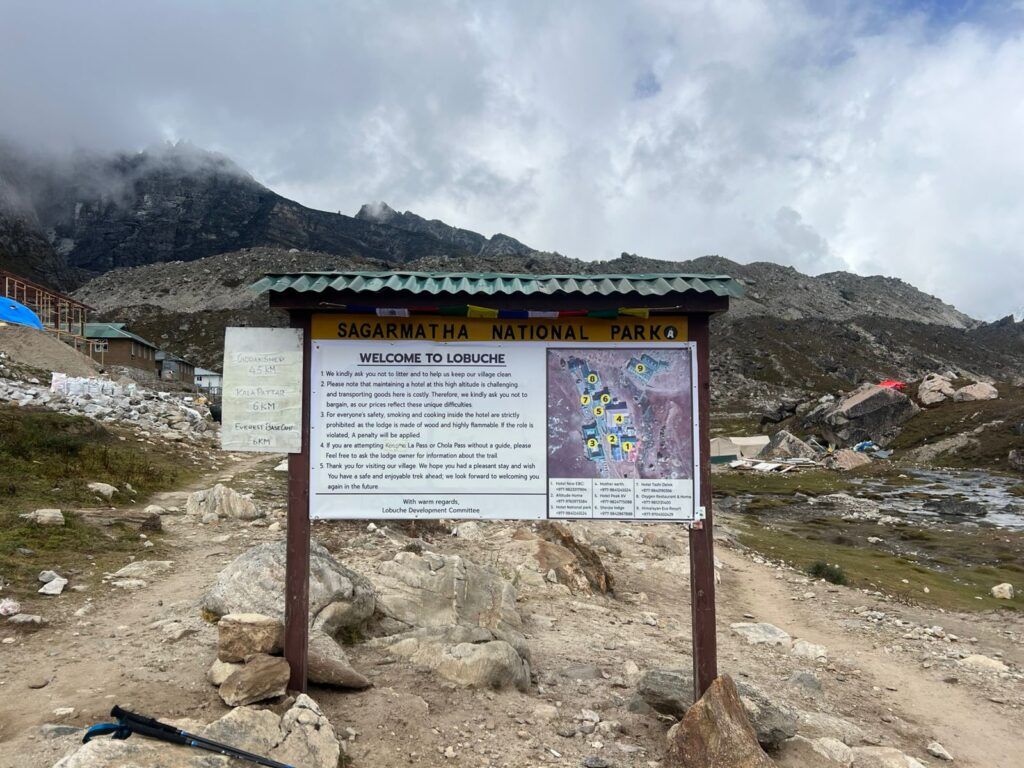
At the top of the pass, we’ll find climbers’ memorials, including plaques for Scott Fischer and Babu Chiri Sherpa. This place is usually quiet, as many trekkers stop here for a few minutes.
The trail continues through moraine fields as you approach **Lobuche**, a small village surrounded by big mountains like **Lobuche East**, **Nuptse,** and Pumori. The air is thinner, nights are colder, and you might get headaches so make sure to drink and rest well.

Trek time: 6 to 7 Hours

Accommodation: Tea House

Trek Distance: 15 km/9.3 miles

Meals: Breakfast, Lunch and Dinner

Overnight: Gorakshep
One of the most anticipated days of the **EBC trek**! We’ll start early for a gentle but steady walk to **Gorakshep**, the last village before Everest Base Camp. The terrain is rough, with glacial moraine and sandy paths—your trekking poles will be useful here.
After a short rest and lunch at Gorakshep, we’ll hike to **Kalapatthar**, the most famous **Everest viewpoint**. While **Everest Base Camp** is famous, Kalapatthar is where we get the **best Everest view**—a clear and unobstructed view of the summit and Lhotse and Nuptse.
The climb is steep and tough, especially in the thin air, but the reward is worth it. Trekkers often do this for **sunset or sunrise** when the golden light illuminates Everest in all its glory.
If the weather is not clear, we may leave Kalapatthar for the morning as sunrise over Everest is equally awe-inspiring as the sunset. If we decide on this option, we will hike to Everest Base Camp today. Please be aware trekking groups do not go right into the base camp where expeditions are set up.
This is, so we do not disturb the climbers’ activity or risk their health. (We don’t want to give them our colds and flu when they embark on such an epic journey!) But we get a good view of all the ongoing activity.

Trek time: 7 to 8 Hours

Accommodation: Tea House

Trek Distance: 19.6 km/6 miles

Meals: Breakfast, Lunch and Dinner

Overnight: Pheriche
This is the moment we’ve been waiting for—the **Everest Base Camp** moment. After an early breakfast, we’ll hike along the Khumbu Glacier to the foot of the highest mountain in the world. The terrain is rocky, and the air is thin, but your excitement will push us forward.
Finally you’ll arrive at the famous Everest Base Camp rock with prayer flags and full of celebrations. At 5,364 m / we’re standing on the same ground where the expeditions to the summit start. Take your time for photos and enjoy the moment.
After celebrations, you’ll retrace your steps to Gorakshe,**p** then continue our descent to **Pheriche**—a quieter village lower in elevation with warmer air and better sleep. This is the start of your descent phase after we’ve achieved the main goal of the **Everest Base Camp Trek**.

Trek time: 6 to 7 Hours

Accommodation: Tea House

Trek Distance: 16 km/9.9 miles

Meals: Breakfast, Lunch and Dinner

Overnight: Namche Bazaar
After Everest Base Camp and Kalapatthar, the descent to **Namche Bazaar** starts. The trail follows the **EBC return route,** and we’ll get to see the landscapes we passed on the way up from a different angle. With every step, the air gets thicker, and breathing gets easier – and we get an energy boost.
We’ll pass **Pangboche** and **Tengboche,** and the monastery might invite us to stop for a quiet moment. The trail goes through forests and suspension bridges, and then **Namche Bazaar** comes into view.
Coming back to this lively Sherpa town feels like coming home. After days of remote villages and cold nights, Namche’s cafes, bakeries and warm lodges are a comfort and a taste of civilization. Many trekkers celebrate here with a meal and share stories with fellow trekkers.

Trek time: 7 Hours

Accommodation: Tea House

Trek Distance: 16 km/9.9 miles

Meals: Breakfast

Overnight: Lukla
Today is our **last day of walking**. The Namche to Lukla trek starts with a big descent, back through **Monjo** and **Phakding**, and then a gradual climb into **Lukla**. Along the way, prayer flags flutter, rivers rush by and stone-carved mani walls give us one last dose of Himalayan magic.
The trail will feel different this time – less about the effort, more about the reflection. We’ve walked in the footsteps of the mountaineering legends, experienced Sherpa culture and tested your limits in the highest mountains in the world.
Arriving in Lukla is emotional. It’s the end of the trail, where the boots come off and the backpacks rest. Many trekkers have a celebratory dinner with their guides and porters and express their gratitude and the bond that has been built over nearly two weeks on the trail.

Flight time: 35 to 40 minutes

Accommodation: Hotel

Meals: Breakfast

Overnight: Kathmandu
Weather permitting, your Lukla flight to Kathmandu brings you back to where it all started. As the plane takes off from the mountain runway you will get a last view of the mountains we have been walking on.
Back in Kathmandu, the city buzz is a big contrast to the mountains. You will return to your hotel—perhaps in the heart of Thamel— and enjoy the comforts: hot shower, soft bed, and your favorite food.
This day is also a day for **post-trek celebrations**. Many trekkers visit local markets, visit UNESCO sites like Swayambhunath or Patan Durbar Square or get a spa treatment. We can help you arrange a city tour or a relaxing extension trip to nearby destinations like Pokhara or Chitwan.

Your **Everest Base Camp trek ends** with mixed emotions. Whether you’re going to your next destination or back home, the memories of this trek will stay with you. We will arrange your airport drop-off so you have a smooth and hassle-free goodbye.
This isn’t the end of a trip – it’s the beginning of a deeper connection with Nepal. The lessons, landscapes, and people you met along the way are part of your story.
#### Not satisfied with this Itinerary?
Are you interested on planning custom trip? It only takes 2 minutes.
## Includes

Local transfers for your international flight x 2 (arrival/departure)
***

Local transfers for your domestic flight x 2
***

Kathmandu Lukla Kathmandu Flight
***

Guide for 12 Days, Porter for 11 Days
***

Sagarmatha National Park Entry Permit and Local Entry Permits
***

2 nights accommodation in a Kathmandu (Kathmandu Business Hotel or similar)
***

11 nights accommodation in mountain teahouses
***

Staff insurance and necessary ground transport for support staff
***

12 x set breakfast, 11 x set lunch and 11 x set dinner while on trek.

Veg
Wide variety of Vegeterian food is available on the trek

Vegan
Wide variety of Vegan food is available on the trek
***

Lunch and dinner in Kathmandu
***

Personnel expenses of any kind and travel insurance
***

Any Hot and Cold drinks
***

Tips to the Guide and Porter (Expected)
***
***
***
| Items | Details | Quantity |
|---|---|---|
| Underwear | Underwear Breathable synthetic | 3 |
| Socks | Wool BYO | 3 |
| Bra | Sports BYO | |
| Base layers – Pants | Merino wool BYO | 1 |
| Trekking shirt | Synthetic lightweight BYO or purchase it in Kathmandu | 2 |
| Rain pants | Synthetic lightweight Frogg Toggs are excellent | 1 |
| Trekking pants | Synthetic lightweight BYO or purchase in Ktm | 2 |
| Hiking Shoes/Boots | BYO Salmon Quest 4D or Xultra 3 or 4 | 1 |
| Camp shoes | Down booties BYO or purchase in Ktm | 1 |
| Gloves | One pair of thin merino wool. 2nd pair thick insulated | 2 |
| Hat | Sun hat or peak cap with neck protection. BYO | 1 |
| Down Jacket | BYO | 1 |
| Wind Breaker | BYO | 1 |
***
***
**Note:** Sleeping bags and down jackets can be rented in Kathmandu, while all other trekking equipment can be easily purchased. We at **Magical Nepal** will assist you in getting all your essentials sorted, ensuring you’re well-prepared for your adventure.
## Read before your book, Everest Base Camp Trek
To help you decide if the Everest Base Camp Trek is for you, we have provided information on flight details, trek difficulty, and the best time to visit. Each section also has a video to help you plan your trip smoothly.
If you are still unsure if this trek is for you, then email or [WhatsApp us](https://web.whatsapp.com/send/?phone=9779851402018). We will get back to you within 24 hours to answer any more questions.
On the EBC trek, you will stay two nights in a hotel in Kathmandu and 12 nights in teahouses in the mountains.
### What to expect in Kathmandu for Accommodation
We provide our guests with accommodation in a good hotel on a twin-share basis. If you require a higher standard of the hotel, let us know, and we can provide this at an extra charge. Your hotel will have an attached bathroom, good bedclothes, and the usual things you can expect from a good standard. They are located in the heart of the tourist area, Thamel. There is a wide range of restaurants, cafes, and bars nearby and shops for souvenirs and essentials.
Breakfast in Kathmandu in your hotel is included, and there may be either a buffet style or a menu to choose from.
### What to expect in a teahouse in EBC Trek
A teahouse is like a simple guest house on the Everest Base Camp hike. It provides trekkers with accommodation, meals, and a place to socialize. These provide pretty basic accommodation, either in twin rooms or in dormitories. Toilets and bathrooms are shared, with either a Western-style toilet or a squat style.
Showers normally only have cold water; you will be expected to pay for it in those with hot water on offer.
The sleeping rooms consist of beds, blankets, and not much else. Bringing your own sleeping bag is always recommended. There are no ‘single rooms’ unless it is off-season, and you are lucky. Sharing a room is perfectly normal. There is no heating in the sleeping rooms.
Some sort of stove usually warms the dining area. Light is provided by solar. Most teahouses have the ability to charge your gadgets, for which you have to pay. Breakfast and dinner are taken in the teahouses at communal tables where you can discuss the day’s journey with others.
Some Everest Base Camp trek menus offer a variety of food. Boiled water is usually available, rather than in plastic bottles, which hurts the environment. There is a small charge for boiled water. Bringing your own sterilization tablets/ life straw is a good idea.
### Luxury lodges on the Everest Base Camp trail
Some luxury lodges are at lower altitudes within the Everest Region. While these are not up to Marriott or Hyatt standards, they are extremely comfortable with a good range of amenities. If this interests you, we can point you to our [Everest Luxury Lodge Trek](https://www.magicalnepal.com/trip/everest-base-camp-luxury-lodge-trek/) for more information.
#### Are There Hot Showers and Electricity on EBC Trek?
Yes, hot showers are available, but you must pay for them. Why? Gas canisters are brought in from nearby cities and carried to teahouses. That is an expensive journey.
You will be expected to pay around \$3 to \$5 per shower, depending on the height of your lodge. We recommend you conserve energy (and your money) and don’t shower too often. And the effort to take off and put on clothes might be too much in the cooler weather.
As for electricity, most teahouses now depend on solar power, installed at a considerable cost. Therefore, they will ask you to pay to charge your equipment – \$3 to \$5 per item. We suggest you carry your own power bank or portable solar charger.
#### Note:
- Accommodation is on a twin-sharing basis
- The Private Room is available at an additional charge during checkout.
There are plenty of good, multi-cuisine options on the EBC trek, from pizza to chowmein and porridge to omelets. However, In Everest Base Camp trek altitude above 3,000m (basically above Namche Bazaar), we recommend you not to eat meat because, normally, teahouses do not have refrigerators. You will eat at the tea house you are staying.
In the larger towns, such as Namche and Lukla, there are more options available – even bakery items fresh from the baker’s oven and a pub.
You can expect eggs, toast or Tibetan-style bread, porridge, or noodles for breakfast.
The local dish of dal bhat is preferred by the guide and porters. Dal bhat consists of vegetable curry, lentil (dal) soup, and rice. Very filling and a staple throughout Nepal.
The dinner menu at your overnight teahouse can vary, particularly at lower altitudes. There will be soups of different kinds, noodles and pasta in different forms, fried potatoes, fried rice, pizza (of different qualities), more dal bhat, and for dessert, perhaps custard or rice pudding.
At each stop, there will be soft drinks and tea, and coffee

Breakfast Options
Porridge
Tibetan bread
Eggs
Pancakes
Muesli
Tea
Coffee

Lunch and Dinner Options
Dal Bhat
Rice, lentils & veggies
Momo
Tibetan dumplings
Thukpa
Noodle soup
Chowmein
With egg or vegetables
Fried Rice
With egg or vegetables
Spaghetti / Macaroni
With tomato sauce, cheese, vegetables
Potato Dishes
Boiled, fried, mashed, or roasted potatoes – often with cheese or garlic
Soups
Garlic (altitude remedy), tomato, vegetable, mushroom, or lentil
Pizza
Veg, cheese, or mixed (availability depends on the village)

#### Food Safety Tips:
- Stick to cooked, hot foods
- Avoid meat at higher elevations
- Dal Bhat is often the safest and most filling option
- Drink only purified water

#### Spring Season (March to May)
- **Temperature:** Mild and comfortable, ranging between **10–20°C** during the day
- **Visibility:** Clear mountain views in the morning, occasional clouds in the afternoon
- **Nature Highlights:** Rhododendron and wildflower blooms throughout the trail
- **Crowds:** Less crowded
- **Ideal For:** Nature lovers and those who want good weather and moderate traffic

#### Autumn Season (Sept to Nov)
- **Weather:** Stable and dry, clear skies and Himalayan views
- **Temperature:** 15–22°C
- **Cultural Vibe:** Nepalese festivals like Dashain and Tihar
- **Crowds:** Busiest time, hence busier trails
- **Ideal For:** Photographers, festival-goers and those who want the clearest mountain views

#### Winter Season (Dec to Feb)
- **Trail Conditions:** Very quiet
- **Temperature:** Cold, especially in higher elevations, warm layers essential
- **Visibility:** Excellent views due to clear skies and dry air
- **Crowds:** Least crowded season for trekking
- **Ideal For:** Adventurers who don’t mind the cold and want solitude on the trail

#### Monsoon Season (June to August)
- **Weather:** Frequent rainfall and cloudy skies, especially in lower elevations
- **Trail Conditions:** Muddy and slippery paths, possible flight delays to Lukla
- **Scenery:** Lush green landscapes, alpine flowers, fewer trekkers
- **Visibility:** Limited mountain views due to clouds and mist
- **Crowds:** Very low tourist traffic
- **Ideal For:** Off-season trekkers who want solitude and are comfortable with unpredictable weather
The generic answer to [best time for Everest Base Camp trek](https://www.magicalnepal.com/travel-guide/everest/best-time-trek-everest-base-camp/) is ‘spring and autumn,’ but of course, the weather at such a uniquely high altitude is never guaranteed. While trekkers and climbers visit year-round, there are definite times when the weather offers the best possible experience. Below, we break down what to expect in each season.
### Everest Base Camp Trek in Spring (March to May)
[Everest Base Camp trek in spring](https://www.magicalnepal.com/travel-guide/everest/everest-base-camp-trek-spring/) is one the best time and for good reason. The skies are clear and the temperatures are perfect for trekking. Daytime temperatures can get up to 15-20°C (59-68°F) at lower altitudes and nighttime temperatures can drop to -5 to 5°C (23-41°F). The trails are alive with blooming rhododendrons and other alpine flowers making the scenery even more beautiful.
**Pros:**
- Clear mountain views and good weather.
- Comfortable daytime temperatures.
- Beautiful landscapes with flowers.
**Cons:**
- Trails and lodges are crowded.
### Everest Base Camp Trek in Monsoon (June to August)
Everest Base Camp trek in monsoon is marked by heavy rain especially in the lower altitudes of the Everest region. The trails can be slippery and muddy and flights to and from Lukla can be delayed or cancelled due to bad weather.
But for those who are willing to brave the rain, there are perks like less trekkers on the trails and lush green landscapes. Daytime temperatures can be 18-25°C (64-77°F) and nighttime temperatures can be 8-12°C (46-54°F) at lower elevations.
**Pros:**
- Less trekkers on the trails and less crowded lodges.
- Landscape is green and good for photography.
**Cons:**
- High chance of flight delays or cancellations.
- Rain and slippery trails.
### [Everest Base Camp Trek in Autumn](https://www.magicalnepal.com/travel-guide/everest/everest-base-camp-trek-autumn/) (September to November)
Autumn is also considered the best time to trek to Everest Base Camp with stable weather and great views. The skies are clear after the monsoon and the mountain vistas are panoramic.
Daytime temperatures can be 12-18°C (54-64°F) and nighttime temperatures can drop to -10 to 0°C (14-32°F). This is also the time of major festivals in Nepal like [Dashain](https://www.magicalnepal.com/nepal/festivals/dashain/) and [Tihar](https://www.magicalnepal.com/nepal/festivals/tihar/) which adds cultural aspect to your trek.

**Pros:**
- Clear skies and good visibility.
- Comfortable trekking temperatures.
- Experience Nepali festivals.
**Cons:**
- Nights are cold, especially at higher altitudes.
- Trails and lodges are crowded.
### Everest Base Camp Trek in Winter (December to February)
Winter treks to Everest Base Camp are for those who want solitude and adventure. Daytime temperatures can be 5-10°C (41-50°F,) and nighttime temperatures can drop to -15 to -20°C (5-4°F). The weather is generally stable with clear skies, but heavy snowfall can block the trails and make the trek more challenging.
**Pros:**
- Fewer trekkers on the trails and in lodges.
- Beautiful snow landscapes and clear skies.
**Cons:**
- Some lodges might be closed as locals migrate to lower altitudes.
- Very cold temperatures especially at night.
### Off-Season Considerations
Spring and autumn are the peak seasons but trekking in the off season (monsoon and winter) can be a unique experience. Monsoon treks offer greenery and solitude and winter treks offer a snowy landscape. But both seasons come with unpredictable weather and logistical challenges. Proper planning and preparation is key if you decide to trek during these times.
The best time to trek to Everest Base Camp depends on your priorities. If you want stable weather and good views, spring and autumn are your best bet.
If you want solitude and adventure, off season might be worth considering. Whatever you choose, make sure you are prepared. The time you choose to trek, proper preparation and knowledge of the season will ensure a safe and enjoyable trip.
While the scenery and mountain views may change daily, some things do not. For example, each day on the trek starts and ends similarly:-
We start our day early, at around 6 or 7 am, when we all meet for breakfast in the teahouse (lodge) dining room. Breakfast is ordered the night before so the teahouse owner can have it ready for us on time.
After breakfast, prepare your duffel bag, which the porter will carry. He will set off at his own pace. All you need to carry is a day pack with what you think you might require for the day, such as a water bottle, sunscreen, snacks, etc.

Then start hiking with your guide. The way will be familiar because your guide will have explained the day’s highlights the night before. You will continue walking until the lunch stop on the trail. This will most likely be at a small settlement. After lunch, follow the trail until the overnight teahouse.
At the teahouse, it’s time to choose the items off the menu for dinner before relaxing with other travelers or writing your diary. The guide will explain the route and landscape for the next day during or after dinner. Don’t forget to order breakfast before heading off to bed.
The Government of Nepal imposes permit entrance fees to preserve the beauty surrounding Mt. Everest and other mountains in the Himalayan range.
All national parks in Nepal need a permit, and the Sagarmatha National Park is no different. When you compare the cost of the permits to the overall cost of your trip to Nepal and the Everest Region, the amount is relatively small. It is an investment in the future of this beautiful area with its snow, forests, ice, pastures, and culture.
Sir Edmund Hillary and Tenzing Norgay may have been the people to put the Khumbu on the map, but since then, countless mountaineers and trekkers have enjoyed the beauty of the likes of Mt. Everest, Ama Dablam, Goyko Lakes, and much more. Let’s ensure this area stays as it is for future trekkers and Nepali people.
If you’re planning to trek to Everest Base Camp (EBC), you need to get the necessary permits in advance. Here’s a step by step guide to help you through the process.
1. **Khumbu Pasang Lhamu Rural Municipality Entrance Permit**
- **Cost**: NPR 2,000 per person
- Required for all trekkers entering the Khumbu region. Can be obtained in Lukla or Monjo.
2. **Sagarmatha National Park Entry Permit**
- **Cost**: NPR 3,000 per person
- Required for entering the Sagarmatha National Park, a UNESCO World Heritage Site. Can be obtained in Kathmandu at the Department of National Parks and Wildlife Conservation office or in Monjo.
### How to Get These EBC Trek Permits
Getting these permits might seem complicated but it’s easy if you follow these steps:
1. **Prepare Required Documents**:
- A valid passport
2. **Visit the Relevant Offices**:
- For Sagarmatha National Park Entry Permit:
- Department of National Parks and Wildlife Conservation office in Kathmandu, or
- Sagarmatha National Park counter in Monjo.
- For Khumbu Pasang Lhamu Rural Municipality Entrance Permit:
- Get this permit in Lukla or Monjo.
**Magical Nepal will help you with all the permits for your treks.** **Our booking system will collect all the necessary document and process the permits for you.**
### Rules and Regulations in the Everest Region
To trek safely and sustainably in the Everest region follow these rules:
1. **Respect Local Culture**: The Khumbu region is Sherpa country, so always ask permission before taking pictures of locals or entering monasteries.
2. **Do Not Litter**: Carry all your waste with you and dispose of it properly. Keep the trails clean.
3. **Stay on the Trail**: Avoid shortcuts to minimize environmental damage and for your own safety.
4. **Follow Local Instructions**: Follow instructions from local authorities, park rangers and your guide.
5. **No Fires**: Do not light fires in the national park, it can cause huge damage to the ecosystem.
6. **Wildlife**: Sagarmatha National Park is home to unique wildlife like the Himalayan Thar and Snow Leopard. Observe them from a distance without disturbing their habitat.
[Click here to learn more about Everest base camp trek permits](https://www.magicalnepal.com/travel-guide/everest/everest-base-camp-trek-permit/)
As soon as you arrive at the airport at Lukla, you are at an altitude of 2,860m – having left Kathmandu at 1,440m an hour earlier. By the time you reach Namche, you have reached 3,440m above sea level. At this height, some may begin to see their bodies react to the altitude.
Our guides are well-trained in the signs of altitude sickness and what to do should any trekker suffer. Our trek leaders and guides will also carry an oximeter to monitor your oxygen level should there be any questions. But avoidance is better than cure, so keep well hydrated and alert the guide to any changes in your body.
To avoid problems, we have a day for acclimatization at Namche Bazaar and another at Dingboche.
Acclimatization days don’t mean you are doing nothing. It means walking around at a higher altitude and sleeping at a lower altitude to accustom your body to the height. On our EBC trek, we have built-in interesting things to do and see on these two days.
### [Altitude Variation in EBC Trek](https://www.magicalnepal.com/travel-guide/everest/everest-base-camp-altitude/) and What Magical Nepal Does to Minimize Altitude Sickness
You enter the Everest Region at Lukla airport at 2,860m/ 9,383ft. On that arrival day, you hike for four hours to the first overnight stop at Phakding, which is at 2,651m/ 8,697ft. As you can see, you are already at quite some height.
Therefore, there are two acclimatization days to minimize the chances of altitude-related problems. The first is at Namche Bazaar at 3,700m/ 12,139ft, and the second is at Dingboche at 3,956m/ 12,979ft. This way, your body gets used to the high altitude and the stress it is under.
Of course, nothing is guaranteed, so if there are any problems, Magical Nepal’s guides are trained in first aid and have been guiding treks in the Himalayas for at least seven years. They will keep their eyes open for any symptoms you may have, but if you feel unwell, regardless of how slight it feels, you should report this to your guide immediately. They aim to make this the best experience you have had – which includes keeping you well and safe.
### Emergency Procedures for AMS
[Acute Mountain Sickness (AMS)](https://www.magicalnepal.com/travel-guide/everest/everest-base-camp-trek-altitude-sickness/) is a common risk during high-altitude treks like Everest Base Camp. Recognizing the symptoms early and taking immediate action can prevent serious complications. Symptoms of AMS include headache, nausea, dizziness, shortness of breath, and loss of appetite.
**What to Do if AMS Symptoms Appear:**
- **Stop Ascending:** Rest at your current altitude to allow your body to acclimatize.
- **Hydrate and Eat Well:** Drink plenty of water and eat energy-rich foods.
- **Take Medication:** Over-the-counter medications like acetazolamide (Diamox) can help alleviate symptoms. Consult your doctor before the trek.
- **Descend if Necessary:** If symptoms persist or worsen, descend to a lower altitude immediately.
- **Seek Medical Help:** In severe cases, such as High Altitude Pulmonary Edema (HAPE) or High Altitude Cerebral Edema (HACE), seek immediate medical attention. Portable oxygen and Gamow bags are life-saving tools.
The **Everest Base Camp (EBC) Trek** is a **challenging yet achievable** adventure for trekkers with moderate fitness levels. While it does not require technical climbing skills, the trek presents physical and environmental challenges that demand proper preparation.
### **Trek Difficulty Level**
- **Strenuous (Moderate to Difficult)** – The EBC trek involves **high-altitude trekking**, daily ascents and descents, and long walking hours.
- **Trekking Distance** – The round trip covers **approximately 130 km (80 miles)** from Lukla to Everest Base Camp and back.
- **Altitude Challenge** – The highest point is **Kala Patthar (5,545m)**, and trekkers must acclimatize properly to avoid altitude sickness.
- **Daily Walking Hours** – Expect **5–7 hours of trekking per day**, with some longer days, especially during ascents to high-altitude points.
### **Physical Fitness Requirements**
- **Cardiovascular Endurance** – Strong stamina is crucial. Activities like **hiking, running, swimming, and cycling** can help improve endurance.
- **Leg Strength** – Strengthening **quadriceps, calves, and hamstrings** through exercises like squats and lunges will help with steep ascents and descents.
- **Core Stability** – A strong core improves balance and reduces fatigue. Core exercises like planks and sit-ups are recommended.
- **Mental Resilience** – Trekking in extreme conditions requires determination, patience, and a positive mindset.
- **Training Plan** – At least **2-3 months of pre-trek training**, including **hiking with a loaded backpack**, is advisable.
### **Who Can Do the EBC Trek?**
- **Beginner Trekkers** – With proper training and acclimatization, beginners can complete the trek.
- **Experienced Trekkers** – Those with previous trekking experience will find the EBC trek demanding but manageable.
- **People of All Ages** – Trekkers from **12 to 70+ years** have successfully completed the trek with adequate preparation.
The Everest Base Camp Hike is not only a journey through breathtaking landscapes but also an opportunity to experience the rich cultural heritage of the Sherpa community. Known as the guardians of the Himalayas, the Sherpa people are celebrated for their resilience, hospitality, and profound spiritual connection to the mountains.

- **Traditions:** Witness Sherpa hospitality as locals welcome you into their homes and tea houses, sharing traditional dishes like *yak butter tea*, *tsampa*, and *momo*.
- **Festivals:** If your trek during festivals like *Mani Rimdu* or *Dumji*, you’ll experience vibrant ceremonies filled with music, dance, and prayers.
### Explore Iconic Monasteries and Religious Sites
Along the trail, you’ll encounter sacred sites that reflect the spiritual heart of the Khumbu region:
- **Tengboche Monastery:** Located at 3,867 meters, this iconic monastery offers a serene space for trekkers to observe Buddhist ceremonies and enjoy stunning views of Ama Dablam.
- **Khumbu Valley Monasteries:** Pass by smaller monasteries, stupas, and prayer wheels that dot the trail, each carrying centuries of history.
**Etiquette Tips for Visiting Religious Sites:**
- Always walk clockwise around stupas and prayer wheels.
- Remove your shoes and remain quiet when entering monasteries.
- Avoid pointing with your fingers—use your whole hand instead.
### Dos and Don’ts in the Khumbu Region
Respecting local customs enriches your trekking experience and builds meaningful connections with the Sherpa community.
- **Do’s:**
- Greet locals with “Namaste” or “Tashi Delek” and smile warmly.
- Support local businesses by purchasing handmade crafts or eating at Sherpa-run tea houses.
- **Don’ts:**
- Touch prayer flags or religious artifacts unnecessarily.
- Give money or candy to children—opt to donate to local schools instead.
### Extend Your Journey with Cultural Exploration
Consider spending extra time in Namche Bazaar to visit the Khumbu Museum, shop at the vibrant local market, or meet the locals. These experiences provide a deeper understanding of the Sherpa way of life and their harmonious coexistence with the mountains.
### Standard Route: Lukla to Everest Base Camp (12–14 Days)
The **Everest Base Camp trek** starts with a short flight to Lukla and takes 12 to 14 days, depending on acclimatization days. This is the most popular option, balancing safety, scenery and a good pace.
**Scenic Highlights Along the Way:**
- **Namche Bazaar:** A bustling trading hub with tea houses, cafes and local markets.
- **Tengboche Monastery (3,867 m):** Spiritual centre of the Khumbu with stunning views of Ama Dablam and Everest.
- **Kala Patthar (5,545 m):** The best sunrise viewpoint of Everest’s summit.
- **Sagarmatha National Park:** A UNESCO World Heritage Site with unique flora and fauna, including Himalayan tahr and danphe.
***
### Trek Duration Varieties
Not everyone has the same amount of time, fitness level or travel style. To help you choose the right plan, here are the most popular **duration-based Everest Base Camp treks**, explained in quick points and short overviews:
**Short EBC Trek (10–12 Days)**
This is perfect for those with limited time who still want to reach Base Camp. The trek follows the main route but ends with a **[helicopter return](https://www.magicalnepal.com/trip/everest-base-camp-trek-with-helicopter-return/)** from Gorakshep or Lobuche, saving two to three days on the descent.
- Covers all the main highlights: Namche Bazaar, Tengboche Monastery, Everest Base Camp and Kala Patthar.
- Pros: Faster return, breathtaking aerial views.
- Cons: Less time for acclimatization, more expensive.
**Classic EBC Trek (12–14 Days)**
This is the most popular itinerary and the right balance of adventure and safety. With acclimatization days in Namche Bazaar and Dingboche, it gives your body time to adjust while you enjoy Sherpa culture and Himalayan scenery at a steady pace.
- Pros: Safe acclimatization, immersive experience, culturally rewarding.
- Best for first time high altitude trekkers who don’t want to rush.
**Everest Base Camp Helicopter Tour (1 Day)**
If trekking isn’t possible but you still want to see Everest, the helicopter tour is the quickest way. You fly from Kathmandu (or Lukla) with fly over tour to Everest Base Camp and Kala Patthar for panoramic views and land at Everest View Hotel before returning the same day.
- Pros: Fastest and easiest way to see Everest, minimal effort.
- Cons: Most expensive, limited cultural immersion.
- Best for luxury travelers or those short on time.
**Extended EBC Treks (16–20 Days)**
For those with more days, extended itineraries add side trips or high passes. Options include combining the trek with **Gokyo Lakes** (17–18 days) or doing the full **Three Passes Trek** (18–20 days). These routes are tougher but reward you with solitude, diverse scenery and a greater sense of achievement.
- Pros: More variety, fewer crowds.
- Cons: Longer, more demanding.
**Historical Jiri to EBC Route (19–21 Days)**
This route follows the trail of the early Everest expeditions. Starting from Jiri or Salleri, it adds a week of trekking through lush mid-hills before joining the classic trail.
- Pros: Authentic, gradual acclimatization, rich cultural immersion.
- Cons: Physically tougher and time-consuming.
***
### Extensions and Side Trips
For trekkers with extra days or special interests you can personalize your adventure:
**Helicopter Return Options:** Save time on the descent and enjoy unforgettable aerial views of Everest and the Khumbu Glacier.
**Island Peak Climb (6,189 m):** Add 3–4 days for a non-technical climbing experience with stunning summit views.
**Ama Dablam Base Camp:** A half-day detour from Pangboche for iconic photo opportunities of Ama Dablam.
Lukla Airport (actually called the Tenzing Hillary Airport after the first two men to ascend Everest) sits at an altitude of 2,846m (9,337 ft). To safely fly into the airport, good weather is required at the starting and ending points. We always recommend that our guests leave for two days at the end of their trek as a contingency plan in case the weather closes. You don’t want to miss your international flight.
As a result of this uncertainty about whether – the weather needs to be good at Kathmandu and Lukla as well as everywhere in between – and the fact that there can be a build-up of tourists waiting for flights should the weather turn bad, another airport has been recently utilized for flights to Lukla.

### Ramechhap Airport Flight for the EBC trek
is situated on the Terai and is closer to Lukla than Kathmandu. The weather at Ramechhap is generally better than that at Kathmandu. Thus, there is less build-up of delayed flights.
On the downside, the airport is an hour’s drive from Kathmandu. This requires tourists to drive (organized bus) through the night to reach Ramechhap in time for their early morning flight to Lukla. Departures by bus from Kathmandu are around 3 AM. We can look at this positively – another adventure and new scenery to see on route. If you have doubts, please ask us.
A common question is: *Can children or seniors trek to Everest Base Camp?* The answer is yes — with the right preparation, **families, seniors and solo travelers** can all enjoy this iconic Himalayan journey.
**Trekking with Kids and Families**
Children above 10–12 years old, with good fitness and enthusiasm, can complete the Everest Base Camp trek. In fact, at Magical Nepal we have guided children as young as **7–9 years old** to Base Camp. Parents should:
- Plan extra acclimatization days and keep daily walking distances shorter.
- Bring familiar snacks, warm layers and small activities for rest time in teahouses.
- Rely on experienced guides who pay special attention to young trekkers’ safety and morale.
**Trekking for Seniors**
Trekkers in their 50s, 60s and even 70s — some of whom we have proudly hosted — have reached Base Camp. Success depends on preparation and pacing. Seniors should:
- Undergo medical check-ups before traveling and get clearance for high-altitude trekking.
- Focus training on stamina, balance and leg strength.
- Take the trek at a slower pace and hire a porter to reduce physical strain.
**Solo Travelers**
Everest Base Camp is one of the most social trekking routes in Nepal. While trekking completely alone is no longer permitted, solo travelers can:
- Join guided groups for companionship, cost-sharing and safety.
- Enjoy the vibrant social culture of the trail where many friendships are formed over shared experiences.
**Key Advice Across All Ages**
Acclimatization days are essential for everyone — kids, seniors and first-time trekkers alike. Pre-trek training that mimics real conditions (long hikes, uphill climbs, carrying a backpack) is highly recommended. Above all, success comes from steady pacing, consistent effort and good preparation — not speed.With proper planning and support, Everest Base Camp trek is open to people of all ages. Families create lifelong memories, seniors get a sense of achievement and solo travelers find a personal adventure. At Magical Nepal we have already guided trekkers as young as 7–9 years old and seniors in their 70s and above. We will ensure every trekker — 7 or 70+ — gets the guidance, safety and motivation to complete the journey of a lifetime.
If you are interested in staying longer in Nepal, we can organize that for you too. If you are keen to extend your trip to the Everest Region, we recommend [Island Peak](https://www.magicalnepal.com/trip/island-peak-climbing/). This is considered a trekking peak. Some climbing gear is required, but you do not have to be an experienced climber to do this climb. It is ideal for those who want to try climbing but have little or no experience and want to see Mount Everest simultaneously. You can combine both treks. Please ask us about dates and prices.
If you would like to visit another part of Nepal, we can recommend both Chitwan National Park and Bardiya National Park. Or if your time is short, we can provide Kathmandu Heritage sightseeing with a guide, taking you into a fascinating ancient world and culture.
We use porters to carry clients’ bags. Porters are also human, so they also have a limit on how much they can carry (more than us, for sure, but there is a limit to their capabilities). A porter’s weight limit is 20 kg, and we will provide you with a kit bag/ duffle bag designed to make it easier for them to carry. Porters are 2:1 ratio. For two clients, one porter
These amazing people are used to walking at altitude and on these rough trails, so they walk faster than the average trekker. As they head off ahead of you and reach the teahouse first, where they will deposit your bag, please ensure you carry what you need for the day with you.
Our porters will start work for you at Lukla airport.
If you would like to visit another part of Nepal, we can recommend both Chitwan National Park and Bardiya National Park. Or if your time is short, we can provide Kathmandu Heritage sightseeing with a guide, taking you into a fascinating ancient world and culture.
Helicopters are sometimes used to reach the Everest Region more quickly. There are several options available. For those not able to spend the time trekking, there is a short half-day tour, with a landing on Kalapathar for close-up views of Everest and Everest View Hotel for breakfast. Ask us about the *Breakfast on Everest Heli Tour*.
For those who do want to trek, there is the option to arrive at Lukla by helicopter. Naturally, arriving by helicopter rather than plane adds to the expense, and there must be others in your group to make up the numbers (unless you want to charter a whole helicopter). Please ask us about this option.
As more and more people are interested in *responsible trekking in Nepal* it’s time to think about the environmental and social impact of your Everest Base Camp trek. Choosing sustainable practices not only protects the fragile Himalayan ecosystem but also supports the local communities who make this trek possible.
**Eco-Responsible Tips:**
- Carry a reusable water bottle and use purification tablets or filters instead of buying single-use plastic bottles.
- Conserve energy by limiting hot showers and device charging in teahouses, as both rely on expensive and limited resources.
- Pack out your trash and don’t leave waste on the trail.
**Supporting Porter & Guide Welfare:**
- Make sure your trekking company follows fair porter treatment, including reasonable weight limits (20 kg per porter) and proper insurance.
- Respect their work and build connections — they are often from the very villages you trek through.
**Cultural Respect & Community Support:**
- Stay in locally run teahouses and buy handicrafts or snacks from Sherpa-owned shops.
- Learn simple greetings like “Namaste” or “Tashi Delek” to connect with locals.
- Ask before photographing people, religious sites, or ceremonies.
By following these tips you’ll help preserve the Khumbu’s natural beauty, support Sherpa livelihoods and make sure the Everest Base Camp trek remains an inspiring journey for generations to come.
When planning your Everest Base Camp trek, you’ll need to decide whether to trek independently or hire a guide. Each option has its pros and cons.
**Independent Trekking:**
- **Pros:**
- Greater flexibility in your itinerary.
- Lower cost if you’re experienced and know the route.
- **Cons:**
- Requires thorough research and self-reliance.
- Navigational challenges and increased risk in emergencies.
**Guided Trekking:**
- **Pros:**
- Professional guidance ensures safety and smoother logistics.
- Insightful cultural and historical knowledge from guides.
- Assistance with permits, accommodation, and emergencies.
- **Cons:**
- Higher cost compared to independent trekking.
- Less flexibility in adjusting the itinerary.
For most trekkers, especially first-timers, a guided trek offers peace of mind and a more enriching experience. Choose a reputable trekking company to ensure quality service and safety.
One of the biggest concerns for trekkers is safety at high altitude. Knowing **what happens if you get sick on the Everest Base Camp trek** can provide peace of mind and help you prepare in advance. High-altitude trekking always involves risks like Acute Mountain Sickness (AMS), High Altitude Pulmonary Edema (HAPE), or High Altitude Cerebral Edema (HACE), but a clear emergency plan ensures you can trek with confidence.
**Helicopter Evacuation:**
- In case of severe altitude sickness, injury, or sudden illness, **helicopter evacuation from Everest Base Camp or nearby villages** (like Pheriche, Dingboche, or Lobuche) is the fastest and most reliable option.
- Most **insurance** policies must cover emergency evacuation up to 6,000 m. Without this, helicopter rescue costs can reach thousands of dollars.
- Weather permitting, helicopters can land even at high-altitude points and transport trekkers to hospitals in Kathmandu within hours.
**Medical Aid Posts & Facilities:**
- The **Himalayan Rescue Association (HRA)** runs well-known aid posts in Pheriche and Machhermo, staffed with doctors trained specifically in altitude-related illnesses.
- Basic first aid and oxygen are also available in some teahouses and larger villages along the EBC trail.
- In emergencies, trekkers may be stabilized at these posts before evacuation.
**Guides’ Medical Training:**
- Our licensed trekking guides are trained to identify and respond to early symptoms of AMS, HAPE, and HACE.
- They carry **pulse oximeters, first-aid kits, and altitude medication protocols** to monitor your health daily.
- Many guides have years of high-altitude experience, which is crucial for making fast decisions about rest, descent, or evacuation.
**Communication Protocols:**
- Communication in the Everest region can be challenging, but guides use **satellite phones, radio networks, and local mobile signals** to request help.
- In the event of an emergency, we will contact the Kathmandu office to arrange helicopter evacuation and coordinate with your insurance provider.
- This ensures quick authorization and minimal delays during critical situations.
By trekking with Magical Nepal, you’ll have access to **trained guides, medical support, and established evacuation procedures**. This means that even if the unexpected happens on the Everest Base Camp trek, you can rely on a rapid response, professional medical guidance, and safe evacuation back to Kathmandu.
Save yourself stress and extra costs by managing your money well before the Everest Base Camp trek. Here are some tips:
- **Exchange in Kathmandu:** ATMs and exchange counters are scarce and unreliable in the mountains. Do most of your currency exchange in Kathmandu before you leave.
- **Carry NPR:** All teahouses, shops and local services only accept rupees, not foreign currency. Larger notes (500/1000) are fine in cities but carry smaller denominations for villages.
- **Thamel ATMs:** Thamel has multiple ATMs and money exchange counters with good rates. But most ATMs have a withdrawal limit (often NPR 35,000 per transaction) and charge fees.
- **Avoid Airport Exchange:** The exchange counters at Kathmandu airport have lower rates than city based exchanges.
- **Bring Backup Cash:** Power cuts and technical issues are common in rural Nepal. Always carry enough rupees in cash before flying to Lukla.
- **Emergency Reserve:** Keep a small stash of extra cash for unexpected costs like hot showers, charging or helicopter evacuation deposit payments.
By following these tips, trekkers won’t run out of cash on the trail and can focus on the adventure ahead.
The cost of the **Everest Base Camp trek with Magical Nepal is USD 1,459 per person**. This price provides excellent value as it includes accommodation, meals on the trek, domestic flights, permits, and professional guide and porter services.
**Group Discounts:**
- **Discount for larger groups** for families, friends or travel clubs.
**Booking with Magical Nepal:**
Booking is easy and takes only a few minutes.
1. **Choose your dates** – select from our guaranteed departure schedule or request a private trek.
2. **Secure your spot** – pay a deposit online (credit card accepted) or full amount if you prefer.
3. **Submit documents** – we need a copy of your passport to book Lukla flights and trekking permits.
4. **Get confirmation** – once booked you will get **personalized trip briefing, packing list and 24/7 support contact**.
By booking with Magical Nepal you are getting **transparent pricing, no hidden fees and expert logistical support throughout the trip.**
It is expected in restaurants and cafes to tip 10% of the bill. Tipping your driver, porter, guide, and other staff on your trek is also normal. Please tip drivers of private vehicles separately. \$1 to \$5, depending on the length of the journey. Normally tips for the trekking crew are given as a group and depend on the group’s satisfaction.
- Flights to the Everest Region now depart from Ramchhap airport due to congestion at the Kathmandu airport. Ramchhap is a several hours drive from Kathmandu, so we leave Kathmandu at 1 AM to reach there for the early morning flights. There are no day or evening flights due to the high winds in the mountains in the afternoons.
- Flights can be delayed or canceled due to bad weather. We recommend you build in a 2 or 3-night contingency plan. That means do not book your international flight for Tuesday if your planned flight from Lukla is on Monday. Best to book it on Thursday or Friday.
- If you wish to take a helicopter flight from Kathmandu to Lukla, there will be an additional charge of around \$250 to \$300.
- There is no additional fee for the package rate for solo travelers. However, if you are traveling alone and wish for a single room, please add on the single supplement during checkout.
- Porters can only carry 20kg. So please pack lightly. We will provide you with a bag/duffle bag that is easy for porters to carry.
- Airlines have a weight limit of 15kg per person. Any excess can be paid at the airline counter at the airport. Note that this is only possible if the flight is not overweight already. Again, please pack lightly.
- Please provide us with a copy of your passport at the booking stage, as we require this for domestic flight booking.
- Meals on the trek are included in the price. This does not include hot or cold drinks, alcohol, or extra snacks. In Kathmandu, breakfast is included, but not lunch or dinner.
- There are extra expenses for hot showers (\$3 to \$5) and charging your battery (\$1 to \$3).
- You can buy a wifi card in Lukla or Namche Bazaar at <http://everestlink.com.np/> for \$25. 10 or 20 GB of data are provided for use over 30 days in the Everest Region. We cannot guarantee the wifi quality – it will depend on the weather and location.
- Weather can change dramatically and quickly in the mountains, so please bear with us if there are delays. Please follow the advice of your guide if he needs to change the itinerary in any way due to the weather.
- Drones are not permitted unless you have a special permit to fly them in the Everest Region. This is because there are many unscheduled helicopter flights in the sky. It is tricky to obtain permission, so leave it at home unless you need a drone.
- Remember your insurance\!
- Most of all – enjoy your amazing adventure\!
## Everest Base Camp Trek Map
 |
| Shard | 88 (laksa) |
| Root Hash | 17979218847025470288 |
| Unparsed URL | com,magicalnepal!www,/trip/everest-base-camp-trek/ s443 |