ℹ️ Skipped - page is already crawled
| Filter | Status | Condition | Details |
|---|---|---|---|
| HTTP status | PASS | download_http_code = 200 | HTTP 200 |
| Age cutoff | PASS | download_stamp > now() - 6 MONTH | 3 months ago |
| History drop | PASS | isNull(history_drop_reason) | No drop reason |
| Spam/ban | PASS | fh_dont_index != 1 AND ml_spam_score = 0 | ml_spam_score=0 |
| Canonical | PASS | meta_canonical IS NULL OR = '' OR = src_unparsed | Not set |
| Property | Value | |||||||||
|---|---|---|---|---|---|---|---|---|---|---|
| URL | https://www.lungcancercenter.com/lung-cancer/symptoms/dry-cough/ | |||||||||
| Last Crawled | 2026-01-29 13:05:59 (2 months ago) | |||||||||
| First Indexed | 2022-02-11 07:01:40 (4 years ago) | |||||||||
| HTTP Status Code | 200 | |||||||||
| Content | ||||||||||
| Meta Title | Dry Cough a Symptom of Lung Cancer | Causes & Treatment | |||||||||
| Meta Description | Dry cough symptoms first occur in the early stages of lung cancer, pneumonia, and mesothelioma, and worsens as the disease progresses. | |||||||||
| Meta Canonical | null | |||||||||
| Boilerpipe Text | What Is a Dry Cough?
A dry cough is a common symptom of lung-related medical conditions. Dry cough symptoms occur when the body attempts to clear the lungs and airways of mucus, but nothing comes out after coughing. Dry cough is often considered to be a sign of an underlying health condition.
In the early stages of lung cancer
or malignant mesothelioma
, doctors may mistake a recurring dry cough as bronchitis or pneumonia. Coughs are one of the most common reasons for a doctor visit but often have benign causes. Cancer patients may also experience dry cough symptoms as a result of treatment side effects.
As symptoms worsen, however, lung cancer patients may already be in an advanced stage. For patients who have a chronic, dry cough, better outcomes result from earlier detection. Many lung cancer or mesothelioma patients experience dry cough symptoms
a few months before being diagnosed
.
Dry Cough Signs and Symptoms
A dry cough often begins with a tickling sensation in the throat. As the patient feels the need to clear their throat, they forcefully expect air. Over a short time, the throat may become irritated and dry. After a few weeks of unproductive coughs, lungs and chest muscles may become strained and result in chest pain and tightness. Patients experiencing chest tightness may feel pressure or weight on their chest. Persistent tightness or unexplained chest pain may require emergency medical care.
Cancer patients may experience other symptoms alongside a dry cough, including:
Shortness of breaths
Coughing up blood
A cough that interferes with sleep patterns
Pneumonia
Bronchitis
Weakness of muscles
At least 50 percent of lung cancer patients experience a cough. The percentage increases as the disease spread to other parts of the body. Dry cough symptoms may
worsen in later stages of lung cancer
.
What Causes Dry Cough?
Various reasons, including cigarette smoke, allergies, environmental irritants, asthma, or a common cold can cause a dry cough. Someone with asthma or bronchitis can experience a dry cough if their airways become swollen.
Certain
lung-related diseases like asbestosis
or mesothelioma can cause dry cough when the lining of the lungs, called the pleura, begins to thicken and put pressure on the lungs. Dry cough, shortness of breath, and chest pain can occur when the pleura presses inward on the lungs.
Mesothelioma patients can experience dry cough from other causes. As pleural tumors grow in size, they can damage nearby nerves and trigger a dry cough. Likewise, the buildup of fluid around the lungs, called pleural effusion, can also cause dry cough.
Patients with lung cancer
or mesothelioma are at a slightly heightened risk for developing chest infections that cause dry cough, including pneumonia. Cancer treatments such as surgery and radiation therapy can produce or worsen the dry cough. There were even times were
asbestos filter cigarettes were a thing
.
Treatment For Coughing
Dry cough symptoms in cancer patients are often treated with palliate care to reduce pain. Medications, home remedies, and medical procedures can help control dry cough. A doctor may prescribe an over-the-counter medicine to suppress the cough. Patients can take certain prescription pain killers or steroids to control the pain.
Palliative procedures include the draining of fluid buildup to rely pressure on the lungs.
Cancer patients can benefit from
complementary therapies, including acupuncture, yoga, meditation, and aromatherapy.
At-home dry cough remedies include:
Cough drops
Menthol drops
Using a humidifier
Drinking warm fluids, such as herbal teas
Cancer patients can find temporary relief from dry cough symptoms by laying in certain positions that
make breathing easier
, avoiding environmental irritants, and
avoiding smoking
.
Smoke, strong smells, and environmental irritants
can trigger a cough. Some dry cough triggers also cause lung cancer or other serious diseases. Cancer patients may find relief in purchasing scent-free items and wearing a mask or face covering when near smoke and other environmental irritants.
What is the difference between a dry and a wet cough?
Wet coughs often stem from illnesses that affect the respiratory system, creating excess mucus. A wet cough helps the body clear the lungs and airways of yellow or white phlegm (mucus) by producing a productive cough. A dry cough is an unproductive cough that does not open the lungs or airways to expel mucus.
Will it go away on its own?
Often, dry coughs occur in non-life-threatening instances. Coughs that last longer than a week, however, should be
checked out by a doctor
.
How can I tell if my dry cough is a sign of lung cancer?
A person with a dry cough may experience early symptoms of lung cancer if combined with other warning signs, including coughing up blood, shortness of breath, chest pain, hoarseness, unexplained weight loss, and r
epeated respiratory infections
. If you are still curious or worried what the cause of your dry cough could be, you can contact a
Lung Cancer Center Patient Advocate for more assistance. | |||||||||
| Markdown | [Skip to main content](https://www.lungcancercenter.com/lung-cancer/symptoms/dry-cough/#main-content)
[](https://www.lungcancercenter.com/)
[](tel:8339971947)
[833-737-2321](tel:833-737-2321)
- [Lung Cancer](https://www.lungcancercenter.com/lung-cancer/)
- [Types of Lung Cancer](https://www.lungcancercenter.com/lung-cancer/types/)
- [Causes](https://www.lungcancercenter.com/lung-cancer/causes/)
- [Diagnosis](https://www.lungcancercenter.com/lung-cancer/diagnosis/)
- [Symptoms](https://www.lungcancercenter.com/lung-cancer/symptoms/)
- [Early Screening](https://www.lungcancercenter.com/lung-cancer/early-screening/)
- [Stages](https://www.lungcancercenter.com/lung-cancer/stages/)
- [Risk Factors](https://www.lungcancercenter.com/lung-cancer/risk-factors/)
- [Treatment](https://www.lungcancercenter.com/treatment/)
- [Prognosis](https://www.lungcancercenter.com/treatment/prognosis/)
- [Surgery](https://www.lungcancercenter.com/treatment/surgery/)
- [Chemotherapy](https://www.lungcancercenter.com/treatment/chemotherapy/)
- [Radiation](https://www.lungcancercenter.com/treatment/radiation/)
- [Immunotherapy](https://www.lungcancercenter.com/treatment/immunotherapy/)
- [Palliative Care](https://www.lungcancercenter.com/treatment/palliative-care/)
- [Is Stage 4 Lung Cancer Curable?](https://www.lungcancercenter.com/news/is-stage-4-lung-cancer-curable/)
- [Is Stage 3 Lung Cancer Curable?](https://www.lungcancercenter.com/news/is-stage-3-lung-cancer-curable/)
- [Legal](https://www.lungcancercenter.com/legal/)
- [Asbestos Trust Funds](https://www.lungcancercenter.com/legal/asbestos-trust-funds/)
- [Settlements](https://www.lungcancercenter.com/legal/settlements/)
- [Asbestos Claims Payouts](https://www.lungcancercenter.com/legal/asbestos-claims-payouts/)
- [Statute of Limitations](https://www.lungcancercenter.com/legal/statute-limitations/)
- [Who Is Eligible for Legal Action?](https://www.lungcancercenter.com/legal/legal-action/)
- [Compensation](https://www.lungcancercenter.com/legal/compensation/)
- [Lung Cancer Personal Injury Claims](https://www.lungcancercenter.com/legal/personal-injury/)
- [Wrongful Death](https://www.lungcancercenter.com/legal/wrongful-death/)
- [Who's Affected](https://www.lungcancercenter.com/who-lung-cancer-affects/)
- [Tire Rubber Industry](https://www.lungcancercenter.com/who-lung-cancer-affects/tire-rubber-industry/)
- [Iron and Steel Industry](https://www.lungcancercenter.com/who-lung-cancer-affects/iron-steel-industry/)
- [Plumbers and Pipefitters](https://www.lungcancercenter.com/who-lung-cancer-affects/plumbers-pipefitters/)
- [Power Plants and Utility](https://www.lungcancercenter.com/who-lung-cancer-affects/power-plant-utility/)
- [Asbestos Mining and Milling Industry](https://www.lungcancercenter.com/who-lung-cancer-affects/mining-and-milling/)
- [Asbestos Abatement Industry](https://www.lungcancercenter.com/who-lung-cancer-affects/asbestos-abatement-industry/)
- [Aviation and Aerospace](https://www.lungcancercenter.com/who-lung-cancer-affects/aviation-aerospace/)
- [Asbestos Manufacturing](https://www.lungcancercenter.com/who-lung-cancer-affects/asbestos-manufacturing/)
- [Automotive Industry](https://www.lungcancercenter.com/who-lung-cancer-affects/automotive-industry/)
- [Building Occupant or Bystander](https://www.lungcancercenter.com/who-lung-cancer-affects/bystanders/)
- [Chemical Industry](https://www.lungcancercenter.com/who-lung-cancer-affects/chemical/)
- [Construction Industry](https://www.lungcancercenter.com/who-lung-cancer-affects/construction/)
- [First Responders](https://www.lungcancercenter.com/who-lung-cancer-affects/first-responders/)
- [Insulation Industry](https://www.lungcancercenter.com/who-lung-cancer-affects/insulation/)
- [Maritime](https://www.lungcancercenter.com/who-lung-cancer-affects/maritime/)
- [The Petrochemical and Refinery Industry](https://www.lungcancercenter.com/who-lung-cancer-affects/petrochemical-refinery/)
- [Shipyards](https://www.lungcancercenter.com/who-lung-cancer-affects/shipyard/)
- [US Military](https://www.lungcancercenter.com/who-lung-cancer-affects/military/)
- [Railroad Workers](https://www.lungcancercenter.com/who-lung-cancer-affects/railroad-workers/)
- [Textile Industry](https://www.lungcancercenter.com/who-lung-cancer-affects/the-textile-industry/)
- [Mesothelioma](https://www.lungcancercenter.com/mesothelioma/)
- [Causes](https://www.lungcancercenter.com/mesothelioma/causes/)
- [Diagnosis](https://www.lungcancercenter.com/mesothelioma/diagnosis/)
- [Misdiagnosis](https://www.lungcancercenter.com/mesothelioma/misdiagnosis/)
- [Stages](https://www.lungcancercenter.com/mesothelioma/stages/)
- [Survival Rates](https://www.lungcancercenter.com/mesothelioma/survival-rates/)
- [Symptoms](https://www.lungcancercenter.com/mesothelioma/symptoms/)
- [Treatment](https://www.lungcancercenter.com/mesothelioma/treatment/)
- [Types](https://www.lungcancercenter.com/mesothelioma/types/)
- [News](https://www.lungcancercenter.com/news/)
- [Contact](https://www.lungcancercenter.com/contact/)
1. [Lung Cancer](https://www.lungcancercenter.com/lung-cancer/)
2. [Symptoms](https://www.lungcancercenter.com/lung-cancer/symptoms/)
3. Dry Cough & Early Lung Cancer
# Lung Cancer Symptom - Dry Cough
Dry cough symptoms first occur in the early stages of lung cancer, pneumonia, and mesothelioma. What begins as a consistent, dry cough often worsens as lung cancer progresses. Dry cough symptoms can be treated with various palliate treatment methods.
[Get Your Free Lung Cancer Guide](https://www.lungcancercenter.com/free-lung-cancer-guide/)
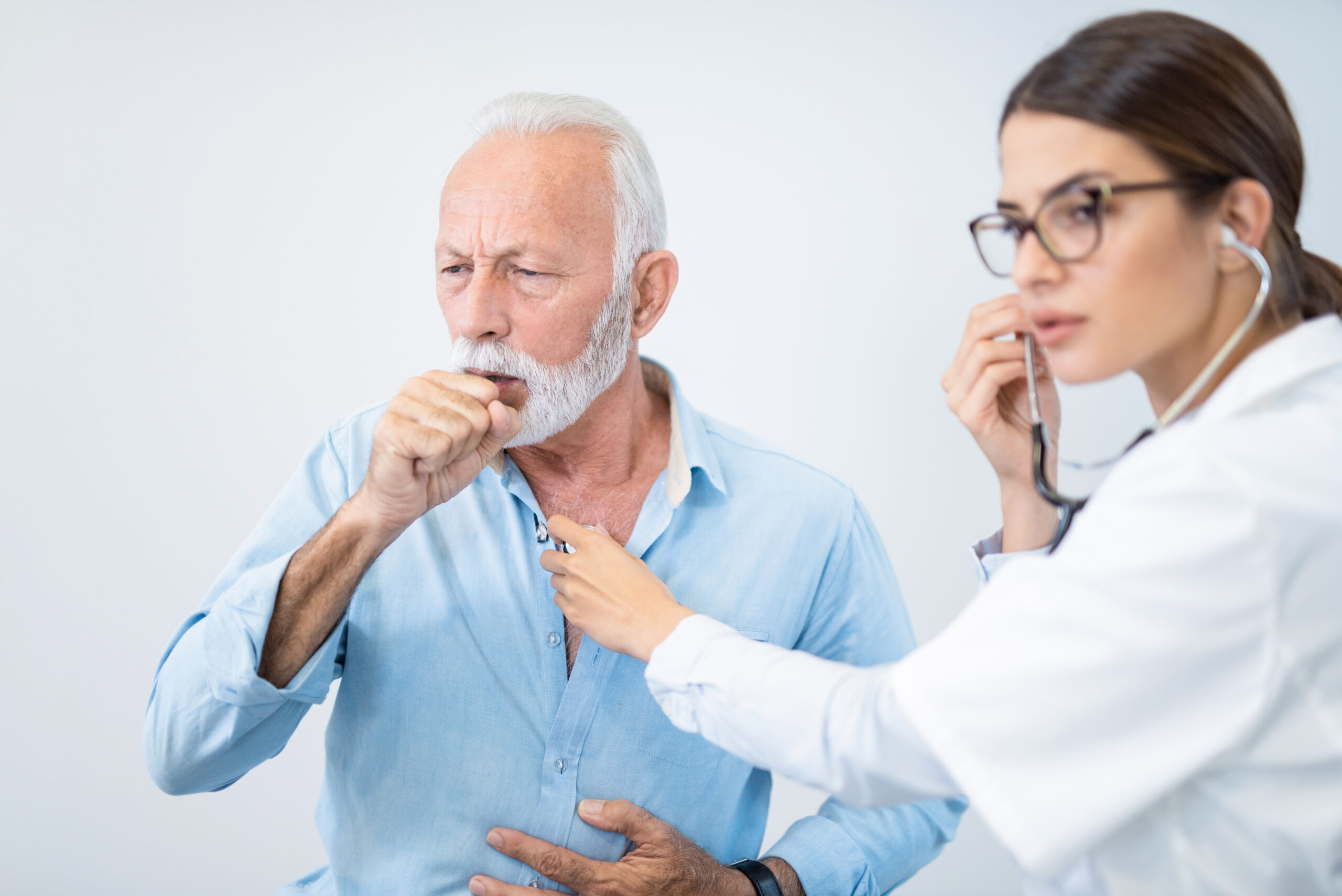
## What Is a Dry Cough?
A dry cough is a common symptom of lung-related medical conditions. Dry cough symptoms occur when the body attempts to clear the lungs and airways of mucus, but nothing comes out after coughing. Dry cough is often considered to be a sign of an underlying health condition.
In the early stages of lung cancer [or malignant mesothelioma](https://www.lungcancercenter.com/mesothelioma/), doctors may mistake a recurring dry cough as bronchitis or pneumonia. Coughs are one of the most common reasons for a doctor visit but often have benign causes. Cancer patients may also experience dry cough symptoms as a result of treatment side effects.
As symptoms worsen, however, lung cancer patients may already be in an advanced stage. For patients who have a chronic, dry cough, better outcomes result from earlier detection. Many lung cancer or mesothelioma patients experience dry cough symptoms [a few months before being diagnosed](https://www.ncbi.nlm.nih.gov/pmc/articles/PMC4298918/).
### Dry Cough Signs and Symptoms
A dry cough often begins with a tickling sensation in the throat. As the patient feels the need to clear their throat, they forcefully expect air. Over a short time, the throat may become irritated and dry. After a few weeks of unproductive coughs, lungs and chest muscles may become strained and result in chest pain and tightness. Patients experiencing chest tightness may feel pressure or weight on their chest. Persistent tightness or unexplained chest pain may require emergency medical care.
Cancer patients may experience other symptoms alongside a dry cough, including:
- [Shortness of breaths](https://www.lungcancercenter.com/lung-cancer/symptoms/shortness-of-breath/)
- [Coughing up blood](https://www.lungcancercenter.com/news/coughing-up-blood-hemoptysis/)
- A cough that interferes with sleep patterns
- Pneumonia
- Bronchitis
- [Weakness of muscles](https://www.lungcancercenter.com/lung-cancer/symptoms/fatigue/)
At least 50 percent of lung cancer patients experience a cough. The percentage increases as the disease spread to other parts of the body. Dry cough symptoms may [worsen in later stages of lung cancer](https://www.lungcancercenter.com/lung-cancer/stages/).
### What Causes Dry Cough?
Various reasons, including cigarette smoke, allergies, environmental irritants, asthma, or a common cold can cause a dry cough. Someone with asthma or bronchitis can experience a dry cough if their airways become swollen.
Certain [lung-related diseases like asbestosis](https://www.lungcancercenter.com/news/is-asbestosis-lung-cancer/) or mesothelioma can cause dry cough when the lining of the lungs, called the pleura, begins to thicken and put pressure on the lungs. Dry cough, shortness of breath, and chest pain can occur when the pleura presses inward on the lungs.
Mesothelioma patients can experience dry cough from other causes. As pleural tumors grow in size, they can damage nearby nerves and trigger a dry cough. Likewise, the buildup of fluid around the lungs, called pleural effusion, can also cause dry cough.
[Patients with lung cancer](https://www.lungcancercenter.com/lung-cancer/) or mesothelioma are at a slightly heightened risk for developing chest infections that cause dry cough, including pneumonia. Cancer treatments such as surgery and radiation therapy can produce or worsen the dry cough. There were even times were [asbestos filter cigarettes were a thing](https://www.lungcancercenter.com/news/asbestos-filter-cigarettes/).
### Treatment For Coughing
Dry cough symptoms in cancer patients are often treated with palliate care to reduce pain. Medications, home remedies, and medical procedures can help control dry cough. A doctor may prescribe an over-the-counter medicine to suppress the cough. Patients can take certain prescription pain killers or steroids to control the pain.
Palliative procedures include the draining of fluid buildup to rely pressure on the lungs. [Cancer patients can benefit from](https://www.lungcancercenter.com/news/5-tips-for-healthy-lung-month/) complementary therapies, including acupuncture, yoga, meditation, and aromatherapy.
At-home dry cough remedies include:
- Cough drops
- Menthol drops
- Using a humidifier
- Drinking warm fluids, such as herbal teas
Cancer patients can find temporary relief from dry cough symptoms by laying in certain positions that [make breathing easier](https://www.lungcancercenter.com/news/breathing-exercises-for-lungs-tips/), avoiding environmental irritants, and [avoiding smoking](https://www.lungcancercenter.com/news/what-happens-when-you-quit-smoking/). [Smoke, strong smells, and environmental irritants](https://www.lungcancercenter.com/smoking-effects/) can trigger a cough. Some dry cough triggers also cause lung cancer or other serious diseases. Cancer patients may find relief in purchasing scent-free items and wearing a mask or face covering when near smoke and other environmental irritants.
### What is the difference between a dry and a wet cough?
Wet coughs often stem from illnesses that affect the respiratory system, creating excess mucus. A wet cough helps the body clear the lungs and airways of yellow or white phlegm (mucus) by producing a productive cough. A dry cough is an unproductive cough that does not open the lungs or airways to expel mucus.
### Will it go away on its own?
Often, dry coughs occur in non-life-threatening instances. Coughs that last longer than a week, however, should be [checked out by a doctor](https://www.lungcancercenter.com/news/when-to-talk-to-your-doctor-about-lung-cancer/).
### How can I tell if my dry cough is a sign of lung cancer?
A person with a dry cough may experience early symptoms of lung cancer if combined with other warning signs, including coughing up blood, shortness of breath, chest pain, hoarseness, unexplained weight loss, and r[epeated respiratory infections](https://www.lungcancercenter.com/lung-cancer/symptoms/lung-infection/). If you are still curious or worried what the cause of your dry cough could be, you can contact a [Lung Cancer Center Patient Advocate for more assistance.](https://www.lungcancercenter.com/contact/)
## Related Pages

#### [Diagnosis](https://www.lungcancercenter.com/lung-cancer/diagnosis/)
[Read More](https://www.lungcancercenter.com/lung-cancer/diagnosis/)

#### [Symptoms](https://www.lungcancercenter.com/lung-cancer/symptoms/)
[Read More](https://www.lungcancercenter.com/lung-cancer/symptoms/)

#### [Causes](https://www.lungcancercenter.com/lung-cancer/causes/)
[Read More](https://www.lungcancercenter.com/lung-cancer/causes/)
Author: Rachel Ernst

[Rachel Ernst](https://www.lungcancercenter.com/news/author/rernst/)
Rachel Ernst
Rachel Ernst is a content writer at Lung Cancer Center. She graduated with her Bachelor’s in Arts from the University of Illinois at Chicago, where she majored in communication and minored in sociology. She hopes to create public awareness about cancer through her writing. In her free time, Rachel likes to be outdoors, watch movies, and spend time with her animals.
Sources
Cleveland Clinic. (2021). Dry Cough and Chest Tightness. Retrieved on February 1, 2022, from <https://my.clevelandclinic.org/health/symptoms/21888-dry-cough-and-chest-tightness>
Harris, K. (2021). When a Cough May Be More Than a Cough. Retrieved on February 1, 2022, from <https://www.osfhealthcare.org/blog/a-cough-may-be-more-than-just-a-cough/>
Mahashur, A. (2015). Chronic dry cough: Diagnostic and management approach. Retrieved on February 1, 2022, from <https://www.ncbi.nlm.nih.gov/pmc/articles/PMC4298918/>
### [Lung Cancer](https://www.lungcancercenter.com/lung-cancer/)
- [Bronchial Carcinoids](https://www.lungcancercenter.com/lung-cancer/bronchial-carcinoids/)
- [Lung Cancer Biomarkers](https://www.lungcancercenter.com/lung-cancer/biomarkers/)
- [Diagnosis](https://www.lungcancercenter.com/lung-cancer/diagnosis/)
- [Causes](https://www.lungcancercenter.com/lung-cancer/causes/)
- [Symptoms](https://www.lungcancercenter.com/lung-cancer/symptoms/)
- [Chronic Smoker’s Cough](https://www.lungcancercenter.com/lung-cancer/symptoms/smokers-cough/)
- [Blood Clots and Lung Cancer](https://www.lungcancercenter.com/lung-cancer/symptoms/blood-clots/)
- [Night Sweats and Fever](https://www.lungcancercenter.com/lung-cancer/symptoms/fever-night-sweats/)
- [Lung Infection](https://www.lungcancercenter.com/lung-cancer/symptoms/lung-infection/)
- [Bone Pain](https://www.lungcancercenter.com/lung-cancer/symptoms/bone-pain/)
- [Fatigue](https://www.lungcancercenter.com/lung-cancer/symptoms/fatigue/)
- [Lung Cancer Weight Loss and Loss of Appetite](https://www.lungcancercenter.com/lung-cancer/symptoms/weight-loss-appetite/)
- [Shortness of Breath (Dyspnea)](https://www.lungcancercenter.com/lung-cancer/symptoms/shortness-of-breath/)
- [Lung Pain](https://www.lungcancercenter.com/lung-cancer/symptoms/lung-pain/)
- [Lung Cancer and Muscle Weakness](https://www.lungcancercenter.com/lung-cancer/symptoms/muscle-weakness/)
- [Dry Cough & Early Lung Cancer](https://www.lungcancercenter.com/lung-cancer/symptoms/dry-cough/)
- [15 Unexpected Signs of Lung Cancer](https://www.lungcancercenter.com/lung-cancer/symptoms/15-unexpected-signs-of-lung-cancer/)
- [Timeline for Lung Cancer](https://www.lungcancercenter.com/lung-cancer/timeline/)
- [Stages of Lung Cancer](https://www.lungcancercenter.com/lung-cancer/stages/)
- [TNM Cancer Staging System](https://www.lungcancercenter.com/lung-cancer/stages/tnm-staging-system/)
- [Stage I](https://www.lungcancercenter.com/lung-cancer/stages/stage-1/)
- [Stage II](https://www.lungcancercenter.com/lung-cancer/stages/stage-2/)
- [Stage III](https://www.lungcancercenter.com/lung-cancer/stages/stage-iii/)
- [Stage IV](https://www.lungcancercenter.com/lung-cancer/stages/stage-iv/)
- [Lung Cancer Complications](https://www.lungcancercenter.com/lung-cancer/complications/)
- [Pulmonary Edema – Fluid in the Lungs](https://www.lungcancercenter.com/lung-cancer/complications/pulmonary-edema/)
- [Lung Cancer and Mental Health – Understanding the Impact](https://www.lungcancercenter.com/lung-cancer/complications/mental-health/)
- [Early Screening](https://www.lungcancercenter.com/lung-cancer/early-screening/)
- [Types of Lung Cancer](https://www.lungcancercenter.com/lung-cancer/types/)
- [Lung Carcinoid Tumors](https://www.lungcancercenter.com/lung-cancer/types/lung-carcinoid-tumors/)
- [Cell Types](https://www.lungcancercenter.com/lung-cancer/types/cell-types/)
- [Asbestosis](https://www.lungcancercenter.com/lung-cancer/types/asbestosis/)
- [Occupational Lung Disease](https://www.lungcancercenter.com/lung-cancer/types/occupational-lung-disease/)
- [Pleural Mesothelioma](https://www.lungcancercenter.com/lung-cancer/types/pleural-mesothelioma/)
- [Lung Cancer and Mesothelioma](https://www.lungcancercenter.com/lung-cancer/types/pleural-mesothelioma/differences-lung-cancer-mesothelioma/)
- [Squamous Cell Carcinoma](https://www.lungcancercenter.com/lung-cancer/types/squamous-cell-carcinoma/)
- [Large Cell Carcinoma](https://www.lungcancercenter.com/lung-cancer/types/large-cell-carcinoma/)
- [Small Cell Lung Cancer](https://www.lungcancercenter.com/lung-cancer/types/small-cell-lung-cancer/)
- [Adenocarcinoma](https://www.lungcancercenter.com/lung-cancer/types/adenocarcinoma/)
- [Non-Small Cell Lung Cancer](https://www.lungcancercenter.com/lung-cancer/types/non-small-cell/)
- [Oat Cell Carcinoma](https://www.lungcancercenter.com/lung-cancer/types/oat-cell-carcinoma/)
- [Risk Factors](https://www.lungcancercenter.com/lung-cancer/risk-factors/)
- [Smoking and Risk of Lung Cancer](https://www.lungcancercenter.com/lung-cancer/risk-factors/smoking-and-risk-of-lung-cancer/)
- [9/11 and Respiratory Cancers 20 Years Later](https://www.lungcancercenter.com/lung-cancer/risk-factors/9-11-and-respiratory-cancers/)
- [Race and Lung Cancer](https://www.lungcancercenter.com/lung-cancer/risk-factors/race/)
- [What’s a Carcinogen?](https://www.lungcancercenter.com/lung-cancer/risk-factors/whats-a-carcinogen/)
- [Asbestos](https://www.lungcancercenter.com/lung-cancer/risk-factors/asbestos/)
- [What Type of Lung Cancer Does Asbestos Cause?](https://www.lungcancercenter.com/lung-cancer/risk-factors/asbestos/what-type-of-lung-cancer-does-asbestos-cause/)
- [When Was Asbestos Banned?](https://www.lungcancercenter.com/lung-cancer/risk-factors/asbestos/when-was-asbestos-banned/)
- [Radon](https://www.lungcancercenter.com/lung-cancer/risk-factors/radon/)
- [Hazardous Chemicals and Air Pollutants](https://www.lungcancercenter.com/lung-cancer/risk-factors/hazardous-air-pollutants/)
- [Smog](https://www.lungcancercenter.com/lung-cancer/risk-factors/hazardous-air-pollutants/smog/)
- [Carbon Monoxide](https://www.lungcancercenter.com/lung-cancer/risk-factors/hazardous-air-pollutants/carbon-monoxide/)
You don’t have to go through this alone. A call today can be the first step toward the help you need.
Get A Free Lung Cancer Guide

[Lung Cancer Guide](https://www.lungcancercenter.com/free-lung-cancer-guide/)
Receive a Free Lung Cancer Case Evaluation

[Lung Cancer Case Evaluation](https://www.lungcancercenter.com/free-case-evaluation/)
## Get The Help You Need
[](https://www.lungcancercenter.com/)
Copyright © 2026 Lung Cancer Center. All rights reserved.
- [About Us](https://www.lungcancercenter.com/about-us/)
- [Privacy Policy](https://www.lungcancercenter.com/about-us/privacy-policy/)
- [Disclaimer](https://www.lungcancercenter.com/about-us/disclaimer/)
[](https://www.facebook.com/CenterLungCancer) [](https://twitter.com/LungCancer_CNTR) [](https://www.linkedin.com/company/lung-cancer-center)
- [Lung Cancer](https://www.lungcancercenter.com/lung-cancer/)
- [Treatment](https://www.lungcancercenter.com/treatment/)
- [Research](https://www.lungcancercenter.com/research/)
- [Legal](https://www.lungcancercenter.com/legal/)
- [Resources](https://www.lungcancercenter.com/news/resources/)
- [News](https://www.lungcancercenter.com/news/)
- [Contact](https://www.lungcancercenter.com/contact/)
This website information is proprietary, protected, and not a substitute for professional medical advice, diagnosis or treatment. The Lungcancercenter.com website and its content are sponsored by a law firm and may be deemed attorney advertising. For more information, visit our [sponsor page](https://www.lungcancercenter.com/about-us/lung-cancer-centers-sponsors/). | |||||||||
| Readable Markdown | ## What Is a Dry Cough?
A dry cough is a common symptom of lung-related medical conditions. Dry cough symptoms occur when the body attempts to clear the lungs and airways of mucus, but nothing comes out after coughing. Dry cough is often considered to be a sign of an underlying health condition.
In the early stages of lung cancer [or malignant mesothelioma](https://www.lungcancercenter.com/mesothelioma/), doctors may mistake a recurring dry cough as bronchitis or pneumonia. Coughs are one of the most common reasons for a doctor visit but often have benign causes. Cancer patients may also experience dry cough symptoms as a result of treatment side effects.
As symptoms worsen, however, lung cancer patients may already be in an advanced stage. For patients who have a chronic, dry cough, better outcomes result from earlier detection. Many lung cancer or mesothelioma patients experience dry cough symptoms [a few months before being diagnosed](https://www.ncbi.nlm.nih.gov/pmc/articles/PMC4298918/).
### Dry Cough Signs and Symptoms
A dry cough often begins with a tickling sensation in the throat. As the patient feels the need to clear their throat, they forcefully expect air. Over a short time, the throat may become irritated and dry. After a few weeks of unproductive coughs, lungs and chest muscles may become strained and result in chest pain and tightness. Patients experiencing chest tightness may feel pressure or weight on their chest. Persistent tightness or unexplained chest pain may require emergency medical care.
Cancer patients may experience other symptoms alongside a dry cough, including:
- [Shortness of breaths](https://www.lungcancercenter.com/lung-cancer/symptoms/shortness-of-breath/)
- [Coughing up blood](https://www.lungcancercenter.com/news/coughing-up-blood-hemoptysis/)
- A cough that interferes with sleep patterns
- Pneumonia
- Bronchitis
- [Weakness of muscles](https://www.lungcancercenter.com/lung-cancer/symptoms/fatigue/)
At least 50 percent of lung cancer patients experience a cough. The percentage increases as the disease spread to other parts of the body. Dry cough symptoms may [worsen in later stages of lung cancer](https://www.lungcancercenter.com/lung-cancer/stages/).
### What Causes Dry Cough?
Various reasons, including cigarette smoke, allergies, environmental irritants, asthma, or a common cold can cause a dry cough. Someone with asthma or bronchitis can experience a dry cough if their airways become swollen.
Certain [lung-related diseases like asbestosis](https://www.lungcancercenter.com/news/is-asbestosis-lung-cancer/) or mesothelioma can cause dry cough when the lining of the lungs, called the pleura, begins to thicken and put pressure on the lungs. Dry cough, shortness of breath, and chest pain can occur when the pleura presses inward on the lungs.
Mesothelioma patients can experience dry cough from other causes. As pleural tumors grow in size, they can damage nearby nerves and trigger a dry cough. Likewise, the buildup of fluid around the lungs, called pleural effusion, can also cause dry cough.
[Patients with lung cancer](https://www.lungcancercenter.com/lung-cancer/) or mesothelioma are at a slightly heightened risk for developing chest infections that cause dry cough, including pneumonia. Cancer treatments such as surgery and radiation therapy can produce or worsen the dry cough. There were even times were [asbestos filter cigarettes were a thing](https://www.lungcancercenter.com/news/asbestos-filter-cigarettes/).
### Treatment For Coughing
Dry cough symptoms in cancer patients are often treated with palliate care to reduce pain. Medications, home remedies, and medical procedures can help control dry cough. A doctor may prescribe an over-the-counter medicine to suppress the cough. Patients can take certain prescription pain killers or steroids to control the pain.
Palliative procedures include the draining of fluid buildup to rely pressure on the lungs. [Cancer patients can benefit from](https://www.lungcancercenter.com/news/5-tips-for-healthy-lung-month/) complementary therapies, including acupuncture, yoga, meditation, and aromatherapy.
At-home dry cough remedies include:
- Cough drops
- Menthol drops
- Using a humidifier
- Drinking warm fluids, such as herbal teas
Cancer patients can find temporary relief from dry cough symptoms by laying in certain positions that [make breathing easier](https://www.lungcancercenter.com/news/breathing-exercises-for-lungs-tips/), avoiding environmental irritants, and [avoiding smoking](https://www.lungcancercenter.com/news/what-happens-when-you-quit-smoking/). [Smoke, strong smells, and environmental irritants](https://www.lungcancercenter.com/smoking-effects/) can trigger a cough. Some dry cough triggers also cause lung cancer or other serious diseases. Cancer patients may find relief in purchasing scent-free items and wearing a mask or face covering when near smoke and other environmental irritants.
### What is the difference between a dry and a wet cough?
Wet coughs often stem from illnesses that affect the respiratory system, creating excess mucus. A wet cough helps the body clear the lungs and airways of yellow or white phlegm (mucus) by producing a productive cough. A dry cough is an unproductive cough that does not open the lungs or airways to expel mucus.
### Will it go away on its own?
Often, dry coughs occur in non-life-threatening instances. Coughs that last longer than a week, however, should be [checked out by a doctor](https://www.lungcancercenter.com/news/when-to-talk-to-your-doctor-about-lung-cancer/).
### How can I tell if my dry cough is a sign of lung cancer?
A person with a dry cough may experience early symptoms of lung cancer if combined with other warning signs, including coughing up blood, shortness of breath, chest pain, hoarseness, unexplained weight loss, and r[epeated respiratory infections](https://www.lungcancercenter.com/lung-cancer/symptoms/lung-infection/). If you are still curious or worried what the cause of your dry cough could be, you can contact a [Lung Cancer Center Patient Advocate for more assistance.](https://www.lungcancercenter.com/contact/) | |||||||||
| ML Classification | ||||||||||
| ML Categories |
Raw JSON{
"/Health": 999,
"/Health/Health_Conditions": 993,
"/Health/Health_Conditions/Respiratory_Conditions": 600
} | |||||||||
| ML Page Types |
Raw JSON{
"/Article": 996,
"/Article/Definitions": 642
} | |||||||||
| ML Intent Types |
Raw JSON{
"Informational": 999
} | |||||||||
| Content Metadata | ||||||||||
| Language | en-us | |||||||||
| Author | null | |||||||||
| Publish Time | 2024-05-24 16:27:58 (1 year ago) | |||||||||
| Original Publish Time | 2022-02-11 07:01:40 (4 years ago) | |||||||||
| Republished | Yes | |||||||||
| Word Count (Total) | 1,512 | |||||||||
| Word Count (Content) | 822 | |||||||||
| Links | ||||||||||
| External Links | 8 | |||||||||
| Internal Links | 122 | |||||||||
| Technical SEO | ||||||||||
| Meta Nofollow | No | |||||||||
| Meta Noarchive | No | |||||||||
| JS Rendered | No | |||||||||
| Redirect Target | null | |||||||||
| Performance | ||||||||||
| Download Time (ms) | 325 | |||||||||
| TTFB (ms) | 323 | |||||||||
| Download Size (bytes) | 27,588 | |||||||||
| Shard | 4 (laksa) | |||||||||
| Root Hash | 14728076494116645204 | |||||||||
| Unparsed URL | com,lungcancercenter!www,/lung-cancer/symptoms/dry-cough/ s443 | |||||||||