ℹ️ Skipped - page is already crawled
| Filter | Status | Condition | Details |
|---|---|---|---|
| HTTP status | PASS | download_http_code = 200 | HTTP 200 |
| Age cutoff | PASS | download_stamp > now() - 6 MONTH | 0 months ago |
| History drop | PASS | isNull(history_drop_reason) | No drop reason |
| Spam/ban | PASS | fh_dont_index != 1 AND ml_spam_score = 0 | ml_spam_score=0 |
| Canonical | PASS | meta_canonical IS NULL OR = '' OR = src_unparsed | Not set |
| Property | Value |
|---|---|
| URL | https://www.hopkinsmedicine.org/health/conditions-and-diseases/fever-in-children |
| Last Crawled | 2026-04-16 02:11:03 (1 day ago) |
| First Indexed | 2019-04-03 23:16:43 (7 years ago) |
| HTTP Status Code | 200 |
| Meta Title | Fever in Children | Johns Hopkins Medicine |
| Meta Description | When your child has a fever, the body resets its thermostat at a higher temperature. This helps the body fight off invading microorganisms. |
| Meta Canonical | null |
| Boilerpipe Text | What is a fever?
A fever is defined by most healthcare provider as a temperature of 100.4°F (38°C) and higher when taken rectally.
The body has several ways to maintain normal body temperature. The organs involved in helping with temperature regulation include the brain, skin, muscle, and blood vessels. The body responds to changes in temperature by:
Increasing or decreasing sweat production.
Moving blood away from, or closer to, the surface of the skin.
Getting rid of, or holding on to, water in the body.
Seeking a cooler or warmer environment.
When your child has a fever, the body works the same way to control the temperature, but it has temporarily reset its thermostat at a higher temperature. The temperature increases for a number of reasons:
Chemicals, called cytokines and mediators, are made in the body in response to an invasion from a microorganism, malignancy, or other intruder.
The body is making more macrophages, which are cells that go to combat when intruders are present in the body. These cells actually "eat-up" the invading organism.
The body is busily trying to make natural antibodies, which fight infection. These antibodies will recognize the infection next time it tries to invade.
Many bacteria are enclosed in an overcoat-like membrane. When this membrane is disrupted or broken, the contents that escape can be toxic to the body and stimulate the brain to raise the temperature.
What conditions can cause a fever?
The following conditions can cause a fever:
Infectious diseases
Certain medicines
Heat stroke
Blood transfusion
Disorders in the brain
Some kinds of cancer
Some autoimmune diseases
What are the benefits of a fever?
Fever is not an illness. It is a symptom, or sign that your body is fighting an illness or infection. Fever stimulates the body's defenses, sending white blood cells and other "fighter" cells to fight and destroy the cause of the infection.
What are the symptoms that my child may have a fever?
Children with fevers may become more uncomfortable as the temperature rises. In addition to a body temperature greater than 100.4°F (38°C), symptoms may include:
Your child may not be as active or talkative as usual.
He or she may seem fussier, less hungry, and thirstier.
Your child may feel warm or hot. Remember that even if your child feels like he or she is "burning up," the measured temperature may not be that high.
The symptoms of a fever may look like other medical conditions. According to the American Academy of Pediatrics, if your child is younger than 3 months of age and has a temperature of 100.4°F (38°C) or higher, you should call your child's healthcare provider immediately. If you are unsure, always check with your child's healthcare provider for a diagnosis.
When should a fever be treated?
In children, a fever that is making them uncomfortable should be treated. Treating your child's fever will not help the body get rid of the infection any faster; it simply will relieve discomfort associated with fever. Children between the ages of 6 months and 5 years can develop seizures from fever (called febrile seizures). If your child does have a febrile seizure, there is a chance that the seizure may occur again, but, usually, children outgrow the febrile seizures. A febrile seizure does not mean your child has epilepsy. There is no evidence that treating the fever will reduce the risk of having a febrile seizure.
What can I do to decrease my child's fever?
Give your child an antifever medicine, such as acetaminophen or ibuprofen.
DO NOT
give your child aspirin, as it has been linked to a serious, potentially fatal disease, called Reye syndrome.
Other ways to reduce a fever:
Dress your child lightly. Excess clothing will trap body heat and cause the temperature to rise.
Encourage your child to drink plenty of fluids, such as juices, soda, punch, or popsicles.
Give your child a lukewarm bath. Do not allow your child to shiver from cold water, as this can raise the body temperature.
NEVER leave your child unattended in the bathtub.
DO NOT
use alcohol baths.
When should I call my child's healthcare provider?
Unless advised otherwise by your child’s healthcare provider, call the provider right away if:
Your child is 3 months old or younger and has a fever of 100.4°F (38°C) or higher. Get medical care right away. Fever in a young baby can be a sign of a dangerous infection.
Your child is of any age and has repeated fevers above 104°F (40°C).
Your child is younger than 2 years of age and a fever of 100.4°F (38°C) continues for more than 1 day.
Your child is 2 years old or older and a fever of 100.4°F (38°C) continues for more than 3 days.
Your baby is fussy or cries and cannot be soothed. |
| Markdown | [Skip to Main Content](https://www.hopkinsmedicine.org/health/conditions-and-diseases/fever-in-children#skip)
[](https://www.hopkinsmedicine.org/)
Johns Hopkins Medicine Menu
- [Health](https://www.hopkinsmedicine.org/health)
- [School of Medicine](https://www.hopkinsmedicine.org/som)
- [Johns Hopkins Medicine Home](https://www.hopkinsmedicine.org/)
- [About](https://www.hopkinsmedicine.org/about)
- [Patient Care](https://www.hopkinsmedicine.org/patient-care)
- [Research](https://www.hopkinsmedicine.org/research)
- [MyChart](https://mychart.hopkinsmedicine.org/)
- [Schedule an Appointment](https://www.hopkinsmedicine.org/patient-care/johns-hopkins-medicine-request-appointment)
- [Find a Doctor](https://www.hopkinsmedicine.org/profiles)
- [Find a Clinical Trial](https://www.hopkinsmedicine.org/clinical-trials)
- [Pay Your Bill](https://www.hopkinsmedicine.org/patient-care/patients-visitors/billing-insurance/pay-bill)
- [Employment](https://www.hopkinsmedicine.org/employment)
Close
Search
Close
[MyChart Login MyChart](https://mychart.hopkinsmedicine.org/)
[Home](https://www.hopkinsmedicine.org/) [Health Home](https://www.hopkinsmedicine.org/health) [Conditions and Diseases](https://www.hopkinsmedicine.org/health/conditions-and-diseases)


# Fever in Children
## What is a fever?
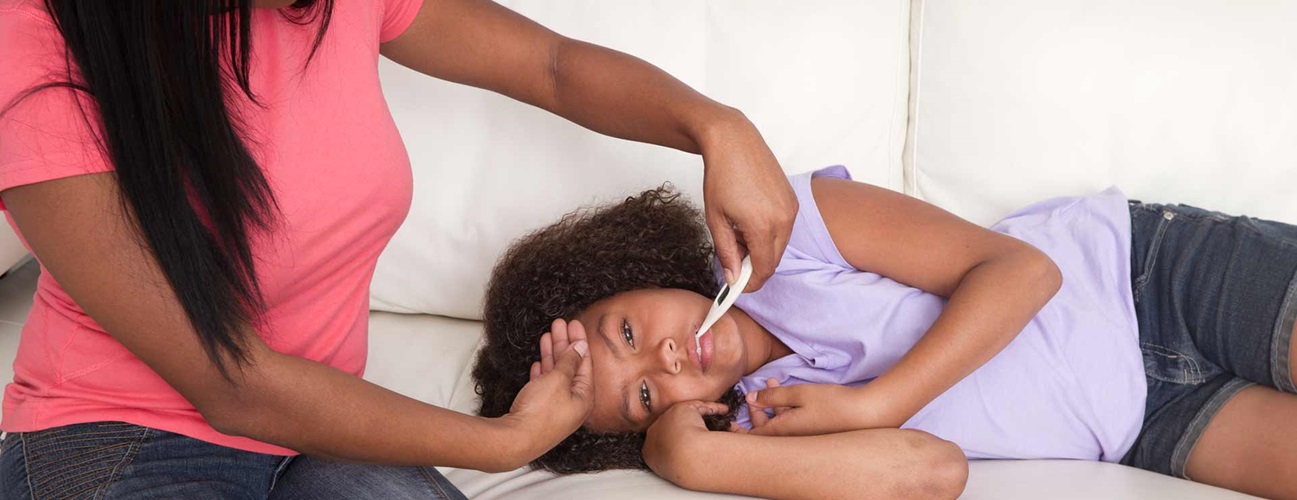
A fever is defined by most healthcare provider as a temperature of 100.4°F (38°C) and higher when taken rectally.
The body has several ways to maintain normal body temperature. The organs involved in helping with temperature regulation include the brain, skin, muscle, and blood vessels. The body responds to changes in temperature by:
- Increasing or decreasing sweat production.
- Moving blood away from, or closer to, the surface of the skin.
- Getting rid of, or holding on to, water in the body.
- Seeking a cooler or warmer environment.
When your child has a fever, the body works the same way to control the temperature, but it has temporarily reset its thermostat at a higher temperature. The temperature increases for a number of reasons:
- Chemicals, called cytokines and mediators, are made in the body in response to an invasion from a microorganism, malignancy, or other intruder.
- The body is making more macrophages, which are cells that go to combat when intruders are present in the body. These cells actually "eat-up" the invading organism.
- The body is busily trying to make natural antibodies, which fight infection. These antibodies will recognize the infection next time it tries to invade.
- Many bacteria are enclosed in an overcoat-like membrane. When this membrane is disrupted or broken, the contents that escape can be toxic to the body and stimulate the brain to raise the temperature.
## What conditions can cause a fever?
The following conditions can cause a fever:
- Infectious diseases
- Certain medicines
- Heat stroke
- Blood transfusion
- Disorders in the brain
- Some kinds of cancer
- Some autoimmune diseases
## What are the benefits of a fever?
Fever is not an illness. It is a symptom, or sign that your body is fighting an illness or infection. Fever stimulates the body's defenses, sending white blood cells and other "fighter" cells to fight and destroy the cause of the infection.
## What are the symptoms that my child may have a fever?
Children with fevers may become more uncomfortable as the temperature rises. In addition to a body temperature greater than 100.4°F (38°C), symptoms may include:
- Your child may not be as active or talkative as usual.
- He or she may seem fussier, less hungry, and thirstier.
- Your child may feel warm or hot. Remember that even if your child feels like he or she is "burning up," the measured temperature may not be that high.
The symptoms of a fever may look like other medical conditions. According to the American Academy of Pediatrics, if your child is younger than 3 months of age and has a temperature of 100.4°F (38°C) or higher, you should call your child's healthcare provider immediately. If you are unsure, always check with your child's healthcare provider for a diagnosis.
## When should a fever be treated?
In children, a fever that is making them uncomfortable should be treated. Treating your child's fever will not help the body get rid of the infection any faster; it simply will relieve discomfort associated with fever. Children between the ages of 6 months and 5 years can develop seizures from fever (called febrile seizures). If your child does have a febrile seizure, there is a chance that the seizure may occur again, but, usually, children outgrow the febrile seizures. A febrile seizure does not mean your child has epilepsy. There is no evidence that treating the fever will reduce the risk of having a febrile seizure.
## What can I do to decrease my child's fever?
Give your child an antifever medicine, such as acetaminophen or ibuprofen. **DO NOT** give your child aspirin, as it has been linked to a serious, potentially fatal disease, called Reye syndrome.
Other ways to reduce a fever:
- Dress your child lightly. Excess clothing will trap body heat and cause the temperature to rise.
- Encourage your child to drink plenty of fluids, such as juices, soda, punch, or popsicles.
- Give your child a lukewarm bath. Do not allow your child to shiver from cold water, as this can raise the body temperature. **NEVER leave your child unattended in the bathtub.**
- **DO NOT** use alcohol baths.
## When should I call my child's healthcare provider?
Unless advised otherwise by your child’s healthcare provider, call the provider right away if:
- Your child is 3 months old or younger and has a fever of 100.4°F (38°C) or higher. Get medical care right away. Fever in a young baby can be a sign of a dangerous infection.
- Your child is of any age and has repeated fevers above 104°F (40°C).
- Your child is younger than 2 years of age and a fever of 100.4°F (38°C) continues for more than 1 day.
- Your child is 2 years old or older and a fever of 100.4°F (38°C) continues for more than 3 days.
- Your baby is fussy or cries and cannot be soothed.
## Find a Doctor
Specializing In:
- [General Pediatrics](https://profiles.hopkinsmedicine.org/search?unified="General+Pediatrics"&sort=networks%2Crelevance%2Cavailability_density_best)
## Find a Treatment Center
- [Pediatric Infectious Diseases Program (Johns Hopkins All Children's Hospital)](https://www.hopkinsmedicine.org/all-childrens-hospital/services/infectious-disease)
- [General Pediatrics (Johns Hopkins Children's Center)](https://www.hopkinsmedicine.org/johns-hopkins-childrens-center/what-we-treat/specialties/general-pediatrics/)
- [General Pediatrics (Johns Hopkins All Children's Hospital)](https://www.hopkinsmedicine.org/all-childrens-hospital/services/pediatric-and-adolescent-medicine/general-pediatrics)
See More
Find Additional Treatment Centers at:
- [Howard County Medical Center](https://www.hopkinsmedicine.org/johns-hopkins-howard-county)
- [Sibley Memorial Hospital](https://www.hopkinsmedicine.org/sibley-memorial-hospital)
- [Suburban Hospital](https://www.hopkinsmedicine.org/suburban-hospital)
## Related

- [Fever](https://www.hopkinsmedicine.org/health/conditions-and-diseases/fever)
- [West Nile Virus](https://www.hopkinsmedicine.org/health/conditions-and-diseases/west-nile-virus)
- [Rocky Mountain Spotted Fever](https://www.hopkinsmedicine.org/health/conditions-and-diseases/rocky-mountain-spotted-fever)
- [Dengue Fever](https://www.hopkinsmedicine.org/health/conditions-and-diseases/dengue-fever)

## Request an Appointment
[Find a Doctor](https://www.hopkinsmedicine.org/profiles/)
- [410-955-5000](tel:410-955-5000) Maryland
- [727-767-8917](tel:727-767-8917) Florida
- [\+1-410-502-7683](tel:+1-410-502-7683) International
[Find a Doctor](https://www.hopkinsmedicine.org/profiles/)
See More
## Find a Doctor
Specializing In:
- [General Pediatrics](https://profiles.hopkinsmedicine.org/search?unified="General+Pediatrics"&sort=networks%2Crelevance%2Cavailability_density_best)
## Find a Treatment Center
- [Pediatric Infectious Diseases Program (Johns Hopkins All Children's Hospital)](https://www.hopkinsmedicine.org/all-childrens-hospital/services/infectious-disease)
- [General Pediatrics (Johns Hopkins Children's Center)](https://www.hopkinsmedicine.org/johns-hopkins-childrens-center/what-we-treat/specialties/general-pediatrics/)
- [General Pediatrics (Johns Hopkins All Children's Hospital)](https://www.hopkinsmedicine.org/all-childrens-hospital/services/pediatric-and-adolescent-medicine/general-pediatrics)
See More
Find Additional Treatment Centers at:
- [Howard County Medical Center](https://www.hopkinsmedicine.org/johns-hopkins-howard-county)
- [Sibley Memorial Hospital](https://www.hopkinsmedicine.org/sibley-memorial-hospital)
- [Suburban Hospital](https://www.hopkinsmedicine.org/suburban-hospital)
## Related
- [ Fevers Fever](https://www.hopkinsmedicine.org/health/conditions-and-diseases/fever)
- [ Bites and stings West Nile Virus](https://www.hopkinsmedicine.org/health/conditions-and-diseases/west-nile-virus)
- [ Fevers Rocky Mountain Spotted Fever](https://www.hopkinsmedicine.org/health/conditions-and-diseases/rocky-mountain-spotted-fever)
## [](https://www.hopkinsmedicine.org/)
Language Assistance Available:
- [Español](https://www.hopkinsmedicine.org/patient-care/patients-visitors/language-assistance-services#spanish)
- [አማርኛ](https://www.hopkinsmedicine.org/patient-care/patients-visitors/language-assistance-services#amharic)
- [繁體中文](https://www.hopkinsmedicine.org/patient-care/patients-visitors/language-assistance-services#chinese)
- [Français](https://www.hopkinsmedicine.org/patient-care/patients-visitors/language-assistance-services#french)
- [Tagalog](https://www.hopkinsmedicine.org/patient-care/patients-visitors/language-assistance-services#tagalog)
- [Русский](https://www.hopkinsmedicine.org/patient-care/patients-visitors/language-assistance-services#russian)
- [Português](https://www.hopkinsmedicine.org/patient-care/patients-visitors/language-assistance-services#portugese)
- [Italiano](https://www.hopkinsmedicine.org/patient-care/patients-visitors/language-assistance-services#italian)
- [Tiếng Việt](https://www.hopkinsmedicine.org/patient-care/patients-visitors/language-assistance-services#vietnamese)
- [Ɓàsɔ́ɔ̀-wùɖù-po-nyɔ̀](https://www.hopkinsmedicine.org/patient-care/patients-visitors/language-assistance-services#KruBassa)
- [Igbo asusu](https://www.hopkinsmedicine.org/patient-care/patients-visitors/language-assistance-services#ibo)
- [èdè Yorùbá](https://www.hopkinsmedicine.org/patient-care/patients-visitors/language-assistance-services#Yoruba)
- [বাংলা](https://www.hopkinsmedicine.org/patient-care/patients-visitors/language-assistance-services#Bengali)
- [日本語](https://www.hopkinsmedicine.org/patient-care/patients-visitors/language-assistance-services#japanese)
- [한국어](https://www.hopkinsmedicine.org/patient-care/patients-visitors/language-assistance-services#korean)
- [Kreyòl Ayisyen](https://www.hopkinsmedicine.org/patient-care/patients-visitors/language-assistance-services#Creole)
- [العربية](https://www.hopkinsmedicine.org/patient-care/patients-visitors/language-assistance-services#Arabic)
- [Deutsch](https://www.hopkinsmedicine.org/patient-care/patients-visitors/language-assistance-services#German)
- [Polski](https://www.hopkinsmedicine.org/patient-care/patients-visitors/language-assistance-services#Polish)
- [Ελληνικά](https://www.hopkinsmedicine.org/patient-care/patients-visitors/language-assistance-services#Greek)
- [ગુજરાતી](https://www.hopkinsmedicine.org/patient-care/patients-visitors/language-assistance-services#Gujarati)
- [ภาษาไทย](https://www.hopkinsmedicine.org/patient-care/patients-visitors/language-assistance-services#Thai)
- [اُردُو](https://www.hopkinsmedicine.org/patient-care/patients-visitors/language-assistance-services#Urdu)
- [فارسی](https://www.hopkinsmedicine.org/patient-care/patients-visitors/language-assistance-services#Persian)
- [हिंदी](https://www.hopkinsmedicine.org/patient-care/patients-visitors/language-assistance-services#Hindi)
- [Deitsch](https://www.hopkinsmedicine.org/patient-care/patients-visitors/language-assistance-services#PennDutch)
- [ខ្មែរ](https://www.hopkinsmedicine.org/patient-care/patients-visitors/language-assistance-services#Cambodian)
Contact & Privacy Information
[Contact Johns Hopkins Medicine](https://www.hopkinsmedicine.org/patient-care/patients-visitors/contact-us)
[Price Transparency](https://www.hopkinsmedicine.org/patient-care/patients-visitors/billing-insurance/pay-bill/charges-fees) \| [Patient Care Locations](https://www.hopkinsmedicine.org/patient-care/locations)
[Notice of Privacy Practices](https://www.hopkinsmedicine.org/patient-privacy-information) \| [Privacy Statement](https://it.johnshopkins.edu/policies/privacystatement)
[Terms & Conditions of Use](https://www.hopkinsmedicine.org/terms-and-conditions-of-use) \| [Non-Discrimination Notice](https://www.hopkinsmedicine.org/patient-care/patients-visitors/non-discrimination-notice)
[Manage Cookie Preferences]()
[Follow Johns Hopkins Medicine on Facebook](https://www.facebook.com/Johns.Hopkins.Medicine)
[Follow Johns Hopkins Medicine on X](https://x.com/HopkinsMedicine)
[Follow Johns Hopkins Medicine on Linkedin](https://www.linkedin.com/company/johns-hopkins-medicine)
[Follow Johns Hopkins Medicine on Instagram](https://www.instagram.com/HopkinsMedicine/)
[Follow Johns Hopkins Medicine on YouTube](https://www.youtube.com/user/JohnsHopkinsMedicine?sub_confirmation=1)
[Follow Johns Hopkins Medicine on Weibo](https://www.weibo.com/hopkinsmedicine)
Copyright © 2026 The Johns Hopkins University, The Johns Hopkins Hospital, and Johns Hopkins Health System. All rights reserved. |
| Readable Markdown | ## What is a fever?
A fever is defined by most healthcare provider as a temperature of 100.4°F (38°C) and higher when taken rectally.
The body has several ways to maintain normal body temperature. The organs involved in helping with temperature regulation include the brain, skin, muscle, and blood vessels. The body responds to changes in temperature by:
- Increasing or decreasing sweat production.
- Moving blood away from, or closer to, the surface of the skin.
- Getting rid of, or holding on to, water in the body.
- Seeking a cooler or warmer environment.
When your child has a fever, the body works the same way to control the temperature, but it has temporarily reset its thermostat at a higher temperature. The temperature increases for a number of reasons:
- Chemicals, called cytokines and mediators, are made in the body in response to an invasion from a microorganism, malignancy, or other intruder.
- The body is making more macrophages, which are cells that go to combat when intruders are present in the body. These cells actually "eat-up" the invading organism.
- The body is busily trying to make natural antibodies, which fight infection. These antibodies will recognize the infection next time it tries to invade.
- Many bacteria are enclosed in an overcoat-like membrane. When this membrane is disrupted or broken, the contents that escape can be toxic to the body and stimulate the brain to raise the temperature.
## What conditions can cause a fever?
The following conditions can cause a fever:
- Infectious diseases
- Certain medicines
- Heat stroke
- Blood transfusion
- Disorders in the brain
- Some kinds of cancer
- Some autoimmune diseases
## What are the benefits of a fever?
Fever is not an illness. It is a symptom, or sign that your body is fighting an illness or infection. Fever stimulates the body's defenses, sending white blood cells and other "fighter" cells to fight and destroy the cause of the infection.
## What are the symptoms that my child may have a fever?
Children with fevers may become more uncomfortable as the temperature rises. In addition to a body temperature greater than 100.4°F (38°C), symptoms may include:
- Your child may not be as active or talkative as usual.
- He or she may seem fussier, less hungry, and thirstier.
- Your child may feel warm or hot. Remember that even if your child feels like he or she is "burning up," the measured temperature may not be that high.
The symptoms of a fever may look like other medical conditions. According to the American Academy of Pediatrics, if your child is younger than 3 months of age and has a temperature of 100.4°F (38°C) or higher, you should call your child's healthcare provider immediately. If you are unsure, always check with your child's healthcare provider for a diagnosis.
## When should a fever be treated?
In children, a fever that is making them uncomfortable should be treated. Treating your child's fever will not help the body get rid of the infection any faster; it simply will relieve discomfort associated with fever. Children between the ages of 6 months and 5 years can develop seizures from fever (called febrile seizures). If your child does have a febrile seizure, there is a chance that the seizure may occur again, but, usually, children outgrow the febrile seizures. A febrile seizure does not mean your child has epilepsy. There is no evidence that treating the fever will reduce the risk of having a febrile seizure.
## What can I do to decrease my child's fever?
Give your child an antifever medicine, such as acetaminophen or ibuprofen. **DO NOT** give your child aspirin, as it has been linked to a serious, potentially fatal disease, called Reye syndrome.
Other ways to reduce a fever:
- Dress your child lightly. Excess clothing will trap body heat and cause the temperature to rise.
- Encourage your child to drink plenty of fluids, such as juices, soda, punch, or popsicles.
- Give your child a lukewarm bath. Do not allow your child to shiver from cold water, as this can raise the body temperature. **NEVER leave your child unattended in the bathtub.**
- **DO NOT** use alcohol baths.
## When should I call my child's healthcare provider?
Unless advised otherwise by your child’s healthcare provider, call the provider right away if:
- Your child is 3 months old or younger and has a fever of 100.4°F (38°C) or higher. Get medical care right away. Fever in a young baby can be a sign of a dangerous infection.
- Your child is of any age and has repeated fevers above 104°F (40°C).
- Your child is younger than 2 years of age and a fever of 100.4°F (38°C) continues for more than 1 day.
- Your child is 2 years old or older and a fever of 100.4°F (38°C) continues for more than 3 days.
- Your baby is fussy or cries and cannot be soothed. |
| Shard | 116 (laksa) |
| Root Hash | 4754538707639265316 |
| Unparsed URL | org,hopkinsmedicine!www,/health/conditions-and-diseases/fever-in-children s443 |