ℹ️ Skipped - page is already crawled
| Filter | Status | Condition | Details |
|---|---|---|---|
| HTTP status | PASS | download_http_code = 200 | HTTP 200 |
| Age cutoff | PASS | download_stamp > now() - 6 MONTH | 0.1 months ago |
| History drop | PASS | isNull(history_drop_reason) | No drop reason |
| Spam/ban | PASS | fh_dont_index != 1 AND ml_spam_score = 0 | ml_spam_score=0 |
| Canonical | PASS | meta_canonical IS NULL OR = '' OR = src_unparsed | Not set |
| Property | Value |
|---|---|
| URL | https://www.hingehealth.com/resources/articles/postpartum-exercise-getting-started/ |
| Last Crawled | 2026-04-08 21:45:06 (2 days ago) |
| First Indexed | 2023-03-31 01:55:08 (3 years ago) |
| HTTP Status Code | 200 |
| Meta Title | Postpartum Exercise: Getting Started After Giving Birth |
| Meta Description | Learn about the benefits of postpartum exercise, when you can start working out, and the best postpartum exercises recommended by PTs. |
| Meta Canonical | null |
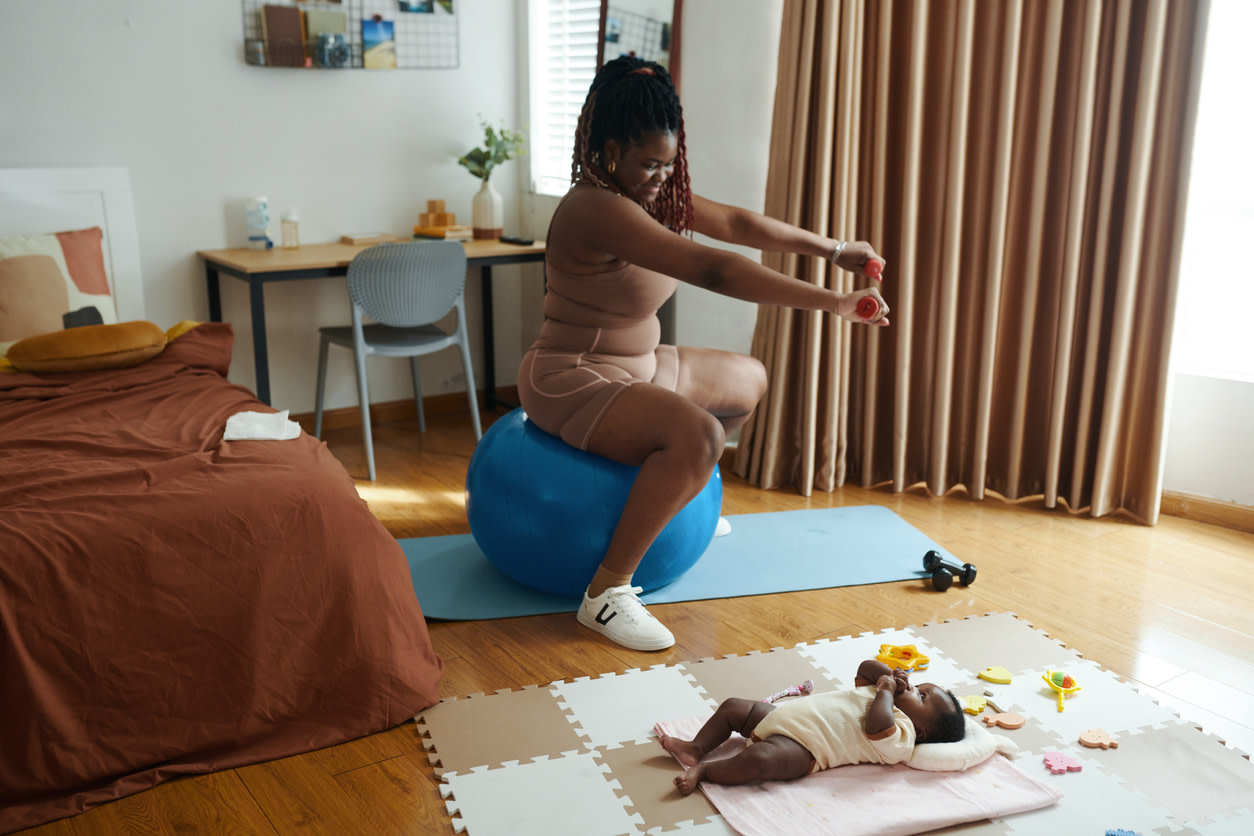
| Boilerpipe Text | You may have exercised faithfully before baby — and managed to keep it up while your belly was growing (no small feat). And you intend to do the same after baby arrives — as you should: postpartum exercise is really good for both your body and mind.
But.
Regardless of how fit you were before and during pregnancy or how clear your visions of returning to your favorite fitness class: Postpartum exercise can be a whole new ball game, at least for a while. Your body is healing after pregnancy. Your core was stretched, muscles may be imbalanced, and your
pelvic floor
may be
weaker
. (And, PS, there’s a newborn sapping your sleep, energy, and motivation.)
Postpartum exercise can help your body recover and provide a much-needed boost of energy. But before resuming your pre-baby routine, it’s important to make sure your body is prepped and ready. Read on to learn more about the benefits of postpartum exercise, when you can start working out, and the best postpartum exercises to help you get started.
Gwen Smith, PT, DPT
Physical Therapist
Dr. Smith is a Hinge Health physical therapist with over 6 years of experience and certified in pelvic floor physical therapy.
Read More
Tamara Grisales, MD
Expert Physician in Urogynecology and Medical Reviewer
Dr. Grisales is a board-certified urogynecologist and surgeon and oversees the Women's Pelvic Health program at Hinge Health.
Read More
Kandis Daroski, PT, DPT
Pelvic Health Physical Therapist and Clinical Reviewer
Dr. Daroski is a former Hinge Health pelvic health physical therapist with a focus on the Hinge Health Women's Pelvic Health Program.
Benefits of Postpartum Exercise
Pregnancy and childbirth affect your body in so many ways. Among the most obvious: changes to your abdominal muscles. They stretch, lengthen, and sometimes even
separate
to make room for your growing baby.
The same is true for your
pelvic floor muscles
. Shaped like a bowl at the base of your core, they help support your uterus, bladder, and other abdominal organs. During pregnancy, your pelvic floor stretches, which can
weaken the muscles
and lead to
pelvic
and
low back pain
,
urinary problems
, and other symptoms.
Postpartum exercise can help strengthen and tone abdominal and pelvic floor muscles. Regular exercise and physical activity can also help:
Reduce
pelvic
and
low back pain
Boost energy
Promote better sleep
Improve your mood and reduce symptoms of postpartum depression
Relieve stress
Promote a healthy weight
Improve your ability to do everyday activities
When Can You Exercise After Giving Birth?
First you need your doctor’s OK — that rule applies to everyone. “Beyond that, the answer really isn’t black and white,” says Gwen Smith, PT, DPT, a Hinge Health physical therapist. Postpartum recovery time is different for everyone. Your childbirth experience can factor into how soon you’re ready to work out, along with your pre-pregnancy fitness level and the type of postpartum exercise you want to do.
In general, if you had a healthy pregnancy and uncomplicated vaginal delivery, you may be able to start
gentle exercises and stretching
a few days after giving birth, or as soon as you feel ready, according to the
American College of Obstetricians and Gynecologists
. If you had a C-section or complicated birth, you might need to wait several weeks before starting gentle exercise. Ask your ob-gyn when it’s safe for you.
It’s generally recommended to wait about 12 weeks after giving birth before beginning high-impact exercises like
running
.
The first goal of postpartum exercise is core recovery. Regaining strength in your abdominal, back, and pelvic floor muscles is key to getting back to your pre-pregnancy workouts. Simple
breathing
and
pelvic floor exercises
can help. They also increase mobility and blood flow to the area to promote healing.
For the first six weeks postpartum, you can try the following exercises, recommended by Hinge Health pelvic floor physical therapists.
Also called deep belly breathing, this exercise can help improve core strength and coordinate abdominal and pelvic floor muscles. Diaphragmatic breathing also decreases anxiety and pain intensity, helps regulate digestion, and reduces stress.
Diaphragmatic Breathing
Kegel Exercise
Abdominal Bracing
Alternating Pelvic Tilts
Seated Chest Opener
Cat Cow
Physical therapy (PT) is for more than just recovering from surgery or injury. It’s one of the top treatments for joint and muscle pain. It helps build strength, improve mobility, and reduce pain. And it doesn't always need to be in person.
Hinge Health members can conveniently access customized plans or chat with their care team at home or on the go — and experience an average 68% reduction in pain* within the first 12 weeks of their program.
Learn more
*.
The information contained in these videos is intended to be used for educational purposes only and does not constitute medical advice or treatment for any specific condition. Hinge Health is not your healthcare provider and is not responsible for any injury sustained or exacerbated by your use of or participation in these exercises. Please consult with your healthcare provider with any questions you may have about your medical condition or treatment.
The Next Step: Progressing Your Postpartum Workout Plan
When you’re ready to include low-impact strength and aerobic exercise in your exercise routine, a pelvic floor physical therapist (PT) can help. “As you transition into a workout routine, it’s important to have a foundation of core strength before you start body weight or heavier loading exercises with resistance,” says Dr. Smith. A PT can tailor your postpartum workout program to ensure that it’s safe and appropriate for you.
You can see a physical therapist in person or
use a program like Hinge Health
to access a PT via telehealth/video visit.
At Hinge Health, physical therapists follow the FITT principle for exercise progression. FITT stands for:
Frequency
(or how often you exercise). Your goal is to build up to 150 minutes of aerobic activity each week. You might divide that into 30-minute workouts, five days a week. Or you could break it into
smaller 10-minute sessions
throughout that day for the same benefit. A PT might also recommend strength training two or three times per week, and stretching exercises every day (such as seated
cat cow
or
seal stretch
).
Intensity
(or how difficult your exercise is). You’ll start with low-intensity aerobic exercise and gradually increase to a moderate to high intensity. (That’s when you’re a little breathless, but still able to hold a conversation.) With strength training, you might slowly increase repetitions or number of sets. It’s important to build intensity slowly, listen to your body, and stop when you feel pain.
Time
(or the duration of each exercise). You might start with 10 to 15 minutes of exercise and work up to 30 minutes in small increments.
Type
(or what kind of exercise you are doing). Choose workouts you enjoy that fit into your lifestyle, such as stroller
walking
with your baby for aerobic workouts or body weight exercises for strength.
Pelvic floor physical therapists can also help you address certain postpartum complications or pelvic symptoms, such as:
Urinary incontinence
(leaking urine)
Bowel incontinence
(leaking stool)
Pelvic pain
Back pain
Abdominal separation
(diastasis recti)
Pelvic organ prolapse
(when one or more pelvic organs drop down from their usual positions and bulge into the vagina)
Difficulty with ergonomics
while lifting, carrying, or holding your baby
PT Tip: Breathe First
“
Diaphragmatic breathing
in the immediate postpartum period is the
most
underrated exercise that every woman should be focusing on,” says Dr. Smith. “Instead of rushing back into jogging or running, allow your body to rest and heal and focus on building up your foundation with diaphragmatic breathing and other gentle exercises.”
How Hinge Health Can Help You
If you have
pelvic pain
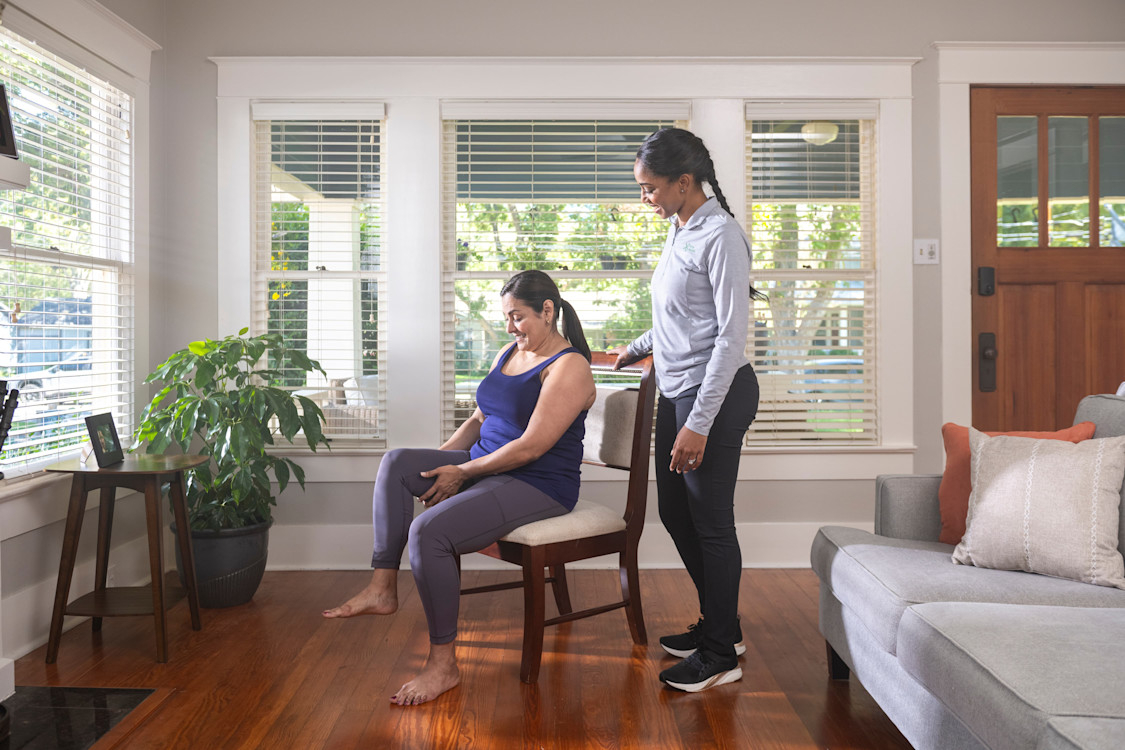
or symptoms that are affecting your quality of life, you can get the relief you've been looking for with Hinge Health’s online exercise therapy program.
The best part: You don’t have to leave your home because our program is digital. That means you can easily get the care you need through our app, when and where it works for you. Through our program, you’ll have access to therapeutic exercises and stretches for your condition. Additionally, you’ll have a personal care team to guide, support, and tailor our program to you.
See if you qualify for Hinge Health and confirm free coverage through your employer or benefit plan
here
.
This article and its contents are provided for educational and informational purposes only and do not constitute medical advice or professional services specific to you or your medical condition.
$0 cost to you
Join more than 1.2 million members and over 2,800 companies that trust Hinge Health to get relief.
References
Çiçek, S., Çeliker Tosun, Ö., Parlas, M., Bilgiç, D., Yavuz, O., Kurt, S., Başer Seçer, M., & Tosun, G. (2023). Is the function of the core muscles affected during pregnancy?
International Urogynecology Journal, 34
(11), 2725–2736.
doi:10.1007/s00192-023-05597-z
Exercise After Pregnancy. (2022). Www.acog.org.
https://www.acog.org/womens-health/faqs/exercise-after-pregnancy
Rogers, R. G., Ninivaggio, C., Gallagher, K., Borders, A. N., Qualls, C., & Leeman, L. M. (2017). Pelvic floor symptoms and quality of life changes during first pregnancy: a prospective cohort study.
International Urogynecology Journal, 28
(11), 1701–1707. doi:10.1007/s00192-017-3330-7 |
| Markdown | [Skip to main content](https://www.hingehealth.com/resources/articles/postpartum-exercise-getting-started/#main)
[Login](https://my.hingehealth.com/users/sign_in "Login")[Request Demo](https://www.hingehealth.com/about/contact/ "Request Demo")[Support](https://www.hingehealth.com/for-members/support/ "Support")
English (United States)
English (United States)
[Login](https://my.hingehealth.com/users/sign_in "Login")[Request Demo](https://www.hingehealth.com/about/contact/ "Request Demo")[Support](https://www.hingehealth.com/for-members/support/ "Support")
English (United States)
English (United States)
- [For Individuals](https://www.hingehealth.com/for-individuals/ "For Individuals")
- Benefit Leaders and Health Plans
- Our Approach
- Learning Center
- About
[Enroll now](https://www.hingehealth.com/for-individuals/)
1. [Hinge Health Learning Center](https://www.hingehealth.com/resources/ "Follow breadcrumb")
2. [Articles](https://www.hingehealth.com/resources/articles/ "Follow breadcrumb")
# Postpartum Exercise: Tips for Working Out After Pregnancy
## Learn about the benefits of postpartum exercise, when you can start working out, and the best postpartum exercises recommended by PTs.
\$0 cost to you
Pelvic pain? Get access to virtual physical therapy.
Published Date: Apr 23, 2024

##### Table of Contents
Why trust Hinge Health
You may have exercised faithfully before baby — and managed to keep it up while your belly was growing (no small feat). And you intend to do the same after baby arrives — as you should: postpartum exercise is really good for both your body and mind.
But.
Regardless of how fit you were before and during pregnancy or how clear your visions of returning to your favorite fitness class: Postpartum exercise can be a whole new ball game, at least for a while. Your body is healing after pregnancy. Your core was stretched, muscles may be imbalanced, and your [pelvic floor](https://www.hingehealth.com/resources/articles/tour-pelvic-floor/ "pelvic floor") may be [weaker](https://www.hingehealth.com/resources/articles/best-exercises-for-pelvic-floor/ "weaker"). (And, PS, there’s a newborn sapping your sleep, energy, and motivation.)
Postpartum exercise can help your body recover and provide a much-needed boost of energy. But before resuming your pre-baby routine, it’s important to make sure your body is prepped and ready. Read on to learn more about the benefits of postpartum exercise, when you can start working out, and the best postpartum exercises to help you get started.
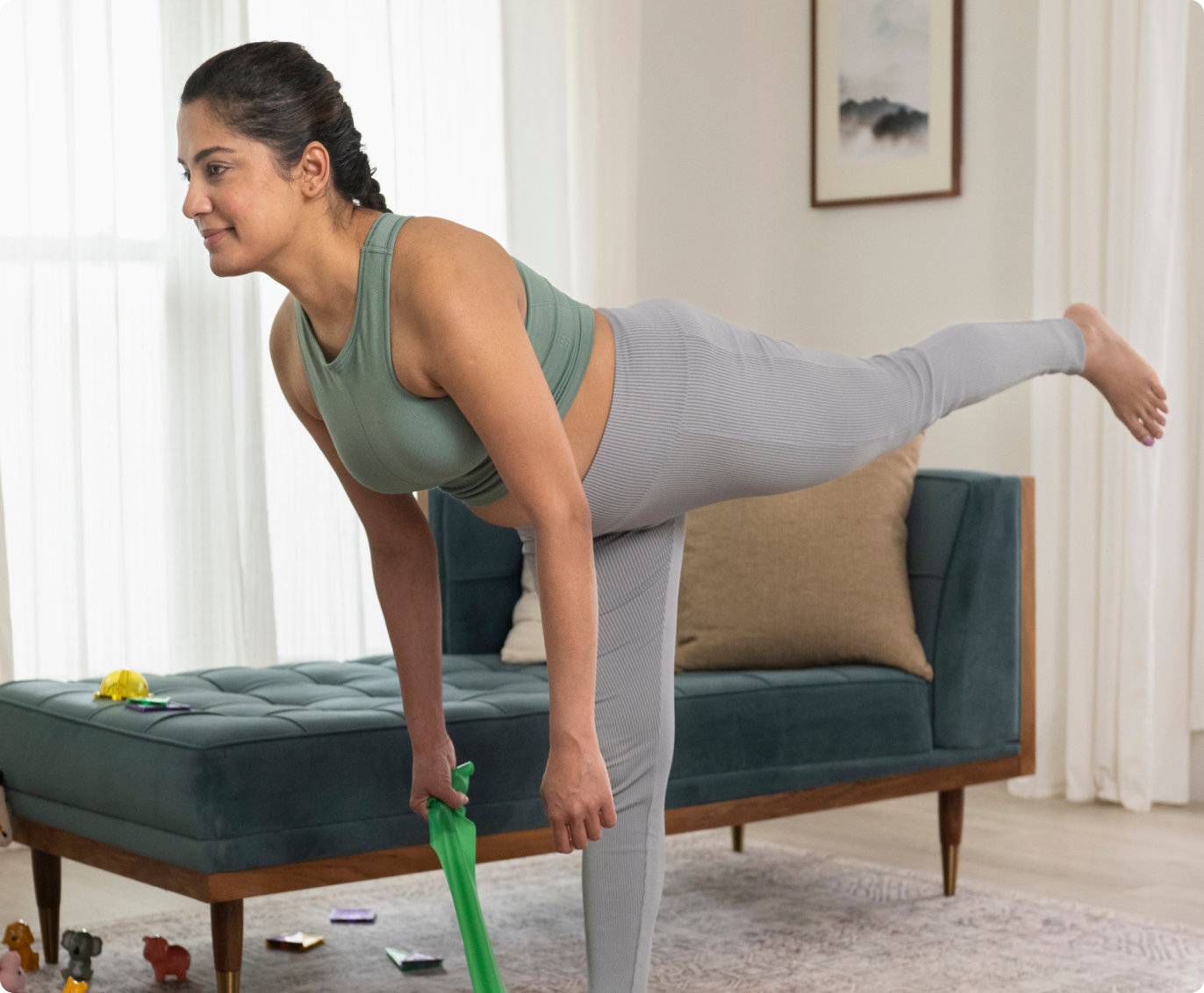
### Fully Covered Pelvic Care
Find relief from pelvic pain, leakage, muscle weakness, & more.
[Check if I'm eligible](https://www.hingehealth.com/for-individuals/pelvic-health)
### Reviewed by our clinical and medical experts
##### Gwen Smith, PT, DPT
Physical Therapist
Dr. Smith is a Hinge Health physical therapist with over 6 years of experience and certified in pelvic floor physical therapy. [Read More](https://www.hingehealth.com/about/our-medical-experts/gwen-smith "link")

##### Tamara Grisales, MD
Expert Physician in Urogynecology and Medical Reviewer
Dr. Grisales is a board-certified urogynecologist and surgeon and oversees the Women's Pelvic Health program at Hinge Health. [Read More](https://www.hingehealth.com/about/our-medical-experts/tamara-grisales/ "link")

##### Kandis Daroski, PT, DPT
Pelvic Health Physical Therapist and Clinical Reviewer
Dr. Daroski is a former Hinge Health pelvic health physical therapist with a focus on the Hinge Health Women's Pelvic Health Program.
## Benefits of Postpartum Exercise
Pregnancy and childbirth affect your body in so many ways. Among the most obvious: changes to your abdominal muscles. They stretch, lengthen, and sometimes even[separate](https://www.hingehealth.com/resources/articles/diastasis-recti-abdominal-separation/ " separate") to make room for your growing baby.
The same is true for your [pelvic floor muscles](https://www.hingehealth.com/resources/articles/tour-pelvic-floor/ "pelvic floor muscles"). Shaped like a bowl at the base of your core, they help support your uterus, bladder, and other abdominal organs. During pregnancy, your pelvic floor stretches, which can [weaken the muscles](https://www.hingehealth.com/resources/articles/best-exercises-for-pelvic-floor/ "weaken the muscles") and lead to [pelvic](https://www.hingehealth.com/resources/articles/pelvic-pain/ "pelvic ")and [low back pain](https://www.hingehealth.com/resources/articles/lower-back-pain-that-radiates-to-front-pelvic-area/ "low back pain"), [urinary problems](https://www.hingehealth.com/resources/articles/urinary-incontinence/ "urinary problems"), and other symptoms. Postpartum exercise can help strengthen and tone abdominal and pelvic floor muscles. Regular exercise and physical activity can also help:
- Reduce [pelvic](https://www.hingehealth.com/resources/articles/pelvic-pain/ "pelvic") and [low back pain](https://www.hingehealth.com/resources/articles/lower-back-pain-that-radiates-to-front-pelvic-area/ "low back pain")
- [Boost energy](https://www.hingehealth.com/resources/articles/movement-snacks/ "Boost energy")
- Promote better sleep
- Improve your mood and reduce symptoms of postpartum depression
- Relieve stress
- Promote a healthy weight
- Improve your ability to do everyday activities
## When Can You Exercise After Giving Birth?
First you need your doctor’s OK — that rule applies to everyone. “Beyond that, the answer really isn’t black and white,” says Gwen Smith, PT, DPT, a Hinge Health physical therapist. Postpartum recovery time is different for everyone. Your childbirth experience can factor into how soon you’re ready to work out, along with your pre-pregnancy fitness level and the type of postpartum exercise you want to do. In general, if you had a healthy pregnancy and uncomplicated vaginal delivery, you may be able to start **gentle exercises and stretching** a few days after giving birth, or as soon as you feel ready, according to the [American College of Obstetricians and Gynecologists](https://www.acog.org/womens-health/faqs/exercise-after-pregnancy "American College of Obstetricians and Gynecologists"). If you had a C-section or complicated birth, you might need to wait several weeks before starting gentle exercise. Ask your ob-gyn when it’s safe for you.
It’s generally recommended to wait about 12 weeks after giving birth before beginning high-impact exercises like [running](https://www.hingehealth.com/resources/articles/postpartum-running/ "running").
## Getting Started
The first goal of postpartum exercise is core recovery. Regaining strength in your abdominal, back, and pelvic floor muscles is key to getting back to your pre-pregnancy workouts. Simple [breathing](https://www.hingehealth.com/resources/articles/diaphragmatic-breathing-pelvic-health/ "breathing") and [pelvic floor exercises](https://www.hingehealth.com/resources/articles/best-exercises-for-pelvic-floor/ "pelvic floor exercises") can help. They also increase mobility and blood flow to the area to promote healing. For the first six weeks postpartum, you can try the following exercises, recommended by Hinge Health pelvic floor physical therapists.
#### Gentle Postpartum Exercises
[Want expert care? Check if you're covered for our free program →](https://www.hingehealth.com/for-individuals/pelvic-health/ "Click to access more exercises")
##### Enjoying this content?
Get access to exercises, articles, virtual physical therapy, and more\!
[See if I'm covered →](https://www.hingehealth.com/for-individuals/pelvic-health/ "Click to learn more")
### Diaphragmatic Breathing
Also called deep belly breathing, this exercise can help improve core strength and coordinate abdominal and pelvic floor muscles. Diaphragmatic breathing also decreases anxiety and pain intensity, helps regulate digestion, and reduces stress.
- Diaphragmatic Breathing
- Kegel Exercise
- Abdominal Bracing
- Alternating Pelvic Tilts
- Seated Chest Opener
- Cat Cow
💡Did you know?
Physical therapy (PT) is for more than just recovering from surgery or injury. It’s one of the top treatments for joint and muscle pain. It helps build strength, improve mobility, and reduce pain. And it doesn't always need to be in person.
Hinge Health members can conveniently access customized plans or chat with their care team at home or on the go — and experience an average 68% reduction in pain\* within the first 12 weeks of their program. [Learn more](https://www.hingehealth.com/acquisition/hinge-health/ "Learn more")\*.
*The information contained in these videos is intended to be used for educational purposes only and does not constitute medical advice or treatment for any specific condition. Hinge Health is not your healthcare provider and is not responsible for any injury sustained or exacerbated by your use of or participation in these exercises. Please consult with your healthcare provider with any questions you may have about your medical condition or treatment.*
## The Next Step: Progressing Your Postpartum Workout Plan
When you’re ready to include low-impact strength and aerobic exercise in your exercise routine, a pelvic floor physical therapist (PT) can help. “As you transition into a workout routine, it’s important to have a foundation of core strength before you start body weight or heavier loading exercises with resistance,” says Dr. Smith. A PT can tailor your postpartum workout program to ensure that it’s safe and appropriate for you.
You can see a physical therapist in person or [use a program like Hinge Health](https://www.hingehealth.com/for-individuals/ "use a program like Hinge Health") to access a PT via telehealth/video visit.
At Hinge Health, physical therapists follow the FITT principle for exercise progression. FITT stands for:
- **Frequency** (or how often you exercise). Your goal is to build up to 150 minutes of aerobic activity each week. You might divide that into 30-minute workouts, five days a week. Or you could break it into [smaller 10-minute sessions](https://www.hingehealth.com/resources/articles/movement-snacks/ "smaller 10-minute sessions") throughout that day for the same benefit. A PT might also recommend strength training two or three times per week, and stretching exercises every day (such as seated [cat cow](https://www.hingehealth.com/resources/articles/cat-cow/ "cat cow") or [seal stretch](https://www.hingehealth.com/resources/articles/seal-stretch/ "seal stretch")).
- **Intensity** (or how difficult your exercise is). You’ll start with low-intensity aerobic exercise and gradually increase to a moderate to high intensity. (That’s when you’re a little breathless, but still able to hold a conversation.) With strength training, you might slowly increase repetitions or number of sets. It’s important to build intensity slowly, listen to your body, and stop when you feel pain.
- **Time** (or the duration of each exercise). You might start with 10 to 15 minutes of exercise and work up to 30 minutes in small increments.
- **Type** (or what kind of exercise you are doing). Choose workouts you enjoy that fit into your lifestyle, such as stroller [walking](https://www.hingehealth.com/resources/articles/what-is-brisk-walking/ "walking") with your baby for aerobic workouts or body weight exercises for strength.
Pelvic floor physical therapists can also help you address certain postpartum complications or pelvic symptoms, such as:
- [Urinary incontinence](https://www.hingehealth.com/resources/articles/urinary-incontinence/ "Urinary incontinence") (leaking urine)
- [Bowel incontinence](https://www.hingehealth.com/resources/articles/fecal-incontinence/ "Bowel incontinence") (leaking stool)
- [Pelvic pain](https://www.hingehealth.com/resources/articles/pelvic-pain/ "Pelvic pain")
- [Back pain](https://www.hingehealth.com/resources/articles/low-back-pain-exercises/ "Back pain")
- [Abdominal separation](https://www.hingehealth.com/resources/articles/diastasis-recti-abdominal-separation/ "Abdominal separation") (diastasis recti)
- [Pelvic organ prolapse](https://www.hingehealth.com/resources/articles/understanding-pelvic-organ-prolapse/ "Pelvic organ prolapse") (when one or more pelvic organs drop down from their usual positions and bulge into the vagina)
- [Difficulty with ergonomics](https://www.hingehealth.com/resources/articles/baby-ergonomics-postpartum-back-pain/ "Difficulty with ergonomics") while lifting, carrying, or holding your baby
## PT Tip: Breathe First
“[Diaphragmatic breathing](https://www.hingehealth.com/resources/articles/diaphragmatic-breathing-pelvic-health/ "Diaphragmatic breathing") in the immediate postpartum period is the *most* underrated exercise that every woman should be focusing on,” says Dr. Smith. “Instead of rushing back into jogging or running, allow your body to rest and heal and focus on building up your foundation with diaphragmatic breathing and other gentle exercises.”
## How Hinge Health Can Help You
If you have [pelvic pain](https://www.hingehealth.com/resources/articles/pelvic-pain/ "pelvic pain") or symptoms that are affecting your quality of life, you can get the relief you've been looking for with Hinge Health’s online exercise therapy program.
The best part: You don’t have to leave your home because our program is digital. That means you can easily get the care you need through our app, when and where it works for you. Through our program, you’ll have access to therapeutic exercises and stretches for your condition. Additionally, you’ll have a personal care team to guide, support, and tailor our program to you.
See if you qualify for Hinge Health and confirm free coverage through your employer or benefit plan [here](https://www.hingehealth.com/for-individuals/pelvic-health/ "here").
*This article and its contents are provided for educational and informational purposes only and do not constitute medical advice or professional services specific to you or your medical condition.*
\$0 cost to you
### Looking for pain relief? Check if your employer or health plan covers our program
Am I covered?
Join more than 1.2 million members and over 2,800 companies that trust Hinge Health to get relief.
## References
1. Çiçek, S., Çeliker Tosun, Ö., Parlas, M., Bilgiç, D., Yavuz, O., Kurt, S., Başer Seçer, M., & Tosun, G. (2023). Is the function of the core muscles affected during pregnancy? *International Urogynecology Journal, 34*(11), 2725–2736. [doi:10.1007/s00192-023-05597-z](https://doi.org/10.1007/s00192-023-05597-z "doi:10.1007/s00192-023-05597-z")
2. Exercise After Pregnancy. (2022). Www.acog.org. [https://www.acog.org/womens-health/faqs/exercise-after-pregnancy](https://www.acog.org/womens-health/faqs/exercise-after-pregnancy "https://www.acog.org/womens-health/faqs/exercise-after-pregnancy")
3. Rogers, R. G., Ninivaggio, C., Gallagher, K., Borders, A. N., Qualls, C., & Leeman, L. M. (2017). Pelvic floor symptoms and quality of life changes during first pregnancy: a prospective cohort study. *International Urogynecology Journal, 28*(11), 1701–1707. doi:10.1007/s00192-017-3330-7
##### Table of Contents
[Benefits of Postpartum Exercise](https://www.hingehealth.com/resources/articles/postpartum-exercise-getting-started/#benefits-of-postpartum-exercise)
[When Can You Exercise After Giving Birth?](https://www.hingehealth.com/resources/articles/postpartum-exercise-getting-started/#when-can-you-exercise-after-giving-birth?)
[Getting Started](https://www.hingehealth.com/resources/articles/postpartum-exercise-getting-started/#getting-started)
[Gentle Postpartum Exercises](https://www.hingehealth.com/resources/articles/postpartum-exercise-getting-started/#15ziyjzbyjcoovxapx89nv-container)
[The Next Step: Progressing Your Postpartum Workout Plan](https://www.hingehealth.com/resources/articles/postpartum-exercise-getting-started/#the-next-step:-progressing-your-postpartum-workout-plan)
[PT Tip: Breathe First](https://www.hingehealth.com/resources/articles/postpartum-exercise-getting-started/#pt-tip:-breathe-first)
[How Hinge Health Can Help You](https://www.hingehealth.com/resources/articles/postpartum-exercise-getting-started/#how-hinge-health-can-help-you)
[References](https://www.hingehealth.com/resources/articles/postpartum-exercise-getting-started/#references)
### Related Articles
[Postpartum hip pain: tips and exercises for hip pain after pregnancy](https://www.hingehealth.com/resources/articles/postpartum-hip-pain/ "Related Article Link")
[Should you exercise when sick? Tips for staying active when you don’t feel well](https://www.hingehealth.com/resources/articles/exercise-when-sick/ "Related Article Link")
[10 Simple Benefits of Working Out in the Morning, According to Physical Therapists](https://www.hingehealth.com/resources/articles/benefits-of-working-out-in-the-morning/ "Related Article Link")
[Postpartum Back Pain: Tips and Exercises for Back Pain After Pregnancy](https://www.hingehealth.com/resources/articles/baby-ergonomics-postpartum-back-pain/ "Related Article Link")
[Exercise During Pregnancy: Benefits, Safety Concerns, PT Tips](https://www.hingehealth.com/resources/articles/exercising-during-pregnancy/ "Related Article Link")
[Postpartum Running: A Guide to Running Again After Giving Birth](https://www.hingehealth.com/resources/articles/postpartum-running/ "Related Article Link")
- [For Individuals](https://www.hingehealth.com/for-individuals/ "For Individuals")
- [For Organizations](https://www.hingehealth.com/for-organizations/ "For Organizations ")
- [Our Approach](https://www.hingehealth.com/for-organizations/our-approach/ "Our Approach")
- [Resource Center](https://www.hingehealth.com/resources/ "Resource Center")
- About
## Member Support
[help@hingehealth.com](mailto:help@hingehealth.com "Contact our support team")
[\+1 (855) 902-2777](tel:+18559022777 "Contact our support team")
455 Market Street, Suite 700 \| San Francisco, CA 94105
© 2026 Hinge Health, Inc. All Rights Reserved.
- [Terms of Use](https://www.hingehealth.com/about/terms-and-conditions/ "Terms of Use")
- [Privacy Policy](https://www.hingehealth.com/about/privacy/ "Privacy Policy")
- [HIPAA Notice](https://www.hingehealth.com/about/hipaa/ "HIPAA Notice")
- [California Notice at Collection](https://www.hingehealth.com/about/privacy/#additional-disclosures-and-notices-at-collection-for-residents-of-california "California Notice at Collection")
- [Personnel and Candidate Privacy Policy](https://www.hingehealth.com/about/personnel-and-candidate-privacy-policy/ "Personnel and Candidate Privacy Policy")
- [Non-Discrimination](https://www.hingehealth.com/about/non-discrimination-and-interpretive-services-notice/ "Non-Discrimination ")
- [Security](https://www.hingehealth.com/security/ "Security")
- [Code of Ethics](https://www.hingehealth.com/about/code-of-ethics/ "Code of Ethics")
- [Your Privacy Choices](https://www.hingehealth.com/resources/articles/postpartum-exercise-getting-started/#footer-legal-links "Your Privacy Choices")
(Your opt out preference signal is honored)
## Member Support
[help@hingehealth.com](mailto:help@hingehealth.com "Contact our support team")
[\+1 (855) 902-2777](tel:+18559022777 "Contact our support team") |
| Readable Markdown | You may have exercised faithfully before baby — and managed to keep it up while your belly was growing (no small feat). And you intend to do the same after baby arrives — as you should: postpartum exercise is really good for both your body and mind.
But.
Regardless of how fit you were before and during pregnancy or how clear your visions of returning to your favorite fitness class: Postpartum exercise can be a whole new ball game, at least for a while. Your body is healing after pregnancy. Your core was stretched, muscles may be imbalanced, and your [pelvic floor](https://www.hingehealth.com/resources/articles/tour-pelvic-floor/ "pelvic floor") may be [weaker](https://www.hingehealth.com/resources/articles/best-exercises-for-pelvic-floor/ "weaker"). (And, PS, there’s a newborn sapping your sleep, energy, and motivation.)
Postpartum exercise can help your body recover and provide a much-needed boost of energy. But before resuming your pre-baby routine, it’s important to make sure your body is prepped and ready. Read on to learn more about the benefits of postpartum exercise, when you can start working out, and the best postpartum exercises to help you get started.

##### Gwen Smith, PT, DPT
Physical Therapist
Dr. Smith is a Hinge Health physical therapist with over 6 years of experience and certified in pelvic floor physical therapy. [Read More](https://www.hingehealth.com/about/our-medical-experts/gwen-smith "link")

##### Tamara Grisales, MD
Expert Physician in Urogynecology and Medical Reviewer
Dr. Grisales is a board-certified urogynecologist and surgeon and oversees the Women's Pelvic Health program at Hinge Health. [Read More](https://www.hingehealth.com/about/our-medical-experts/tamara-grisales/ "link")

##### Kandis Daroski, PT, DPT
Pelvic Health Physical Therapist and Clinical Reviewer
Dr. Daroski is a former Hinge Health pelvic health physical therapist with a focus on the Hinge Health Women's Pelvic Health Program.
## Benefits of Postpartum Exercise
Pregnancy and childbirth affect your body in so many ways. Among the most obvious: changes to your abdominal muscles. They stretch, lengthen, and sometimes even[separate](https://www.hingehealth.com/resources/articles/diastasis-recti-abdominal-separation/ " separate") to make room for your growing baby.
The same is true for your [pelvic floor muscles](https://www.hingehealth.com/resources/articles/tour-pelvic-floor/ "pelvic floor muscles"). Shaped like a bowl at the base of your core, they help support your uterus, bladder, and other abdominal organs. During pregnancy, your pelvic floor stretches, which can [weaken the muscles](https://www.hingehealth.com/resources/articles/best-exercises-for-pelvic-floor/ "weaken the muscles") and lead to [pelvic](https://www.hingehealth.com/resources/articles/pelvic-pain/ "pelvic ")and [low back pain](https://www.hingehealth.com/resources/articles/lower-back-pain-that-radiates-to-front-pelvic-area/ "low back pain"), [urinary problems](https://www.hingehealth.com/resources/articles/urinary-incontinence/ "urinary problems"), and other symptoms. Postpartum exercise can help strengthen and tone abdominal and pelvic floor muscles. Regular exercise and physical activity can also help:
- Reduce [pelvic](https://www.hingehealth.com/resources/articles/pelvic-pain/ "pelvic") and [low back pain](https://www.hingehealth.com/resources/articles/lower-back-pain-that-radiates-to-front-pelvic-area/ "low back pain")
- [Boost energy](https://www.hingehealth.com/resources/articles/movement-snacks/ "Boost energy")
- Promote better sleep
- Improve your mood and reduce symptoms of postpartum depression
- Relieve stress
- Promote a healthy weight
- Improve your ability to do everyday activities
## When Can You Exercise After Giving Birth?
First you need your doctor’s OK — that rule applies to everyone. “Beyond that, the answer really isn’t black and white,” says Gwen Smith, PT, DPT, a Hinge Health physical therapist. Postpartum recovery time is different for everyone. Your childbirth experience can factor into how soon you’re ready to work out, along with your pre-pregnancy fitness level and the type of postpartum exercise you want to do. In general, if you had a healthy pregnancy and uncomplicated vaginal delivery, you may be able to start **gentle exercises and stretching** a few days after giving birth, or as soon as you feel ready, according to the [American College of Obstetricians and Gynecologists](https://www.acog.org/womens-health/faqs/exercise-after-pregnancy "American College of Obstetricians and Gynecologists"). If you had a C-section or complicated birth, you might need to wait several weeks before starting gentle exercise. Ask your ob-gyn when it’s safe for you.
It’s generally recommended to wait about 12 weeks after giving birth before beginning high-impact exercises like [running](https://www.hingehealth.com/resources/articles/postpartum-running/ "running").
The first goal of postpartum exercise is core recovery. Regaining strength in your abdominal, back, and pelvic floor muscles is key to getting back to your pre-pregnancy workouts. Simple [breathing](https://www.hingehealth.com/resources/articles/diaphragmatic-breathing-pelvic-health/ "breathing") and [pelvic floor exercises](https://www.hingehealth.com/resources/articles/best-exercises-for-pelvic-floor/ "pelvic floor exercises") can help. They also increase mobility and blood flow to the area to promote healing. For the first six weeks postpartum, you can try the following exercises, recommended by Hinge Health pelvic floor physical therapists.
Also called deep belly breathing, this exercise can help improve core strength and coordinate abdominal and pelvic floor muscles. Diaphragmatic breathing also decreases anxiety and pain intensity, helps regulate digestion, and reduces stress.
- Diaphragmatic Breathing
- Kegel Exercise
- Abdominal Bracing
- Alternating Pelvic Tilts
- Seated Chest Opener
- Cat Cow
Physical therapy (PT) is for more than just recovering from surgery or injury. It’s one of the top treatments for joint and muscle pain. It helps build strength, improve mobility, and reduce pain. And it doesn't always need to be in person.
Hinge Health members can conveniently access customized plans or chat with their care team at home or on the go — and experience an average 68% reduction in pain\* within the first 12 weeks of their program. [Learn more](https://www.hingehealth.com/acquisition/hinge-health/ "Learn more")\*.
*The information contained in these videos is intended to be used for educational purposes only and does not constitute medical advice or treatment for any specific condition. Hinge Health is not your healthcare provider and is not responsible for any injury sustained or exacerbated by your use of or participation in these exercises. Please consult with your healthcare provider with any questions you may have about your medical condition or treatment.*
## The Next Step: Progressing Your Postpartum Workout Plan
When you’re ready to include low-impact strength and aerobic exercise in your exercise routine, a pelvic floor physical therapist (PT) can help. “As you transition into a workout routine, it’s important to have a foundation of core strength before you start body weight or heavier loading exercises with resistance,” says Dr. Smith. A PT can tailor your postpartum workout program to ensure that it’s safe and appropriate for you.
You can see a physical therapist in person or [use a program like Hinge Health](https://www.hingehealth.com/for-individuals/ "use a program like Hinge Health") to access a PT via telehealth/video visit.
At Hinge Health, physical therapists follow the FITT principle for exercise progression. FITT stands for:
- **Frequency** (or how often you exercise). Your goal is to build up to 150 minutes of aerobic activity each week. You might divide that into 30-minute workouts, five days a week. Or you could break it into [smaller 10-minute sessions](https://www.hingehealth.com/resources/articles/movement-snacks/ "smaller 10-minute sessions") throughout that day for the same benefit. A PT might also recommend strength training two or three times per week, and stretching exercises every day (such as seated [cat cow](https://www.hingehealth.com/resources/articles/cat-cow/ "cat cow") or [seal stretch](https://www.hingehealth.com/resources/articles/seal-stretch/ "seal stretch")).
- **Intensity** (or how difficult your exercise is). You’ll start with low-intensity aerobic exercise and gradually increase to a moderate to high intensity. (That’s when you’re a little breathless, but still able to hold a conversation.) With strength training, you might slowly increase repetitions or number of sets. It’s important to build intensity slowly, listen to your body, and stop when you feel pain.
- **Time** (or the duration of each exercise). You might start with 10 to 15 minutes of exercise and work up to 30 minutes in small increments.
- **Type** (or what kind of exercise you are doing). Choose workouts you enjoy that fit into your lifestyle, such as stroller [walking](https://www.hingehealth.com/resources/articles/what-is-brisk-walking/ "walking") with your baby for aerobic workouts or body weight exercises for strength.
Pelvic floor physical therapists can also help you address certain postpartum complications or pelvic symptoms, such as:
- [Urinary incontinence](https://www.hingehealth.com/resources/articles/urinary-incontinence/ "Urinary incontinence") (leaking urine)
- [Bowel incontinence](https://www.hingehealth.com/resources/articles/fecal-incontinence/ "Bowel incontinence") (leaking stool)
- [Pelvic pain](https://www.hingehealth.com/resources/articles/pelvic-pain/ "Pelvic pain")
- [Back pain](https://www.hingehealth.com/resources/articles/low-back-pain-exercises/ "Back pain")
- [Abdominal separation](https://www.hingehealth.com/resources/articles/diastasis-recti-abdominal-separation/ "Abdominal separation") (diastasis recti)
- [Pelvic organ prolapse](https://www.hingehealth.com/resources/articles/understanding-pelvic-organ-prolapse/ "Pelvic organ prolapse") (when one or more pelvic organs drop down from their usual positions and bulge into the vagina)
- [Difficulty with ergonomics](https://www.hingehealth.com/resources/articles/baby-ergonomics-postpartum-back-pain/ "Difficulty with ergonomics") while lifting, carrying, or holding your baby
## PT Tip: Breathe First
“[Diaphragmatic breathing](https://www.hingehealth.com/resources/articles/diaphragmatic-breathing-pelvic-health/ "Diaphragmatic breathing") in the immediate postpartum period is the *most* underrated exercise that every woman should be focusing on,” says Dr. Smith. “Instead of rushing back into jogging or running, allow your body to rest and heal and focus on building up your foundation with diaphragmatic breathing and other gentle exercises.”
## How Hinge Health Can Help You
If you have [pelvic pain](https://www.hingehealth.com/resources/articles/pelvic-pain/ "pelvic pain") or symptoms that are affecting your quality of life, you can get the relief you've been looking for with Hinge Health’s online exercise therapy program.
The best part: You don’t have to leave your home because our program is digital. That means you can easily get the care you need through our app, when and where it works for you. Through our program, you’ll have access to therapeutic exercises and stretches for your condition. Additionally, you’ll have a personal care team to guide, support, and tailor our program to you.
See if you qualify for Hinge Health and confirm free coverage through your employer or benefit plan [here](https://www.hingehealth.com/for-individuals/pelvic-health/ "here").
*This article and its contents are provided for educational and informational purposes only and do not constitute medical advice or professional services specific to you or your medical condition.*
\$0 cost to you
Join more than 1.2 million members and over 2,800 companies that trust Hinge Health to get relief.

## References
1. Çiçek, S., Çeliker Tosun, Ö., Parlas, M., Bilgiç, D., Yavuz, O., Kurt, S., Başer Seçer, M., & Tosun, G. (2023). Is the function of the core muscles affected during pregnancy? *International Urogynecology Journal, 34*(11), 2725–2736. [doi:10.1007/s00192-023-05597-z](https://doi.org/10.1007/s00192-023-05597-z "doi:10.1007/s00192-023-05597-z")
2. Exercise After Pregnancy. (2022). Www.acog.org. [https://www.acog.org/womens-health/faqs/exercise-after-pregnancy](https://www.acog.org/womens-health/faqs/exercise-after-pregnancy "https://www.acog.org/womens-health/faqs/exercise-after-pregnancy")
3. Rogers, R. G., Ninivaggio, C., Gallagher, K., Borders, A. N., Qualls, C., & Leeman, L. M. (2017). Pelvic floor symptoms and quality of life changes during first pregnancy: a prospective cohort study. *International Urogynecology Journal, 28*(11), 1701–1707. doi:10.1007/s00192-017-3330-7 |
| Shard | 66 (laksa) |
| Root Hash | 7496253765975756066 |
| Unparsed URL | com,hingehealth!www,/resources/articles/postpartum-exercise-getting-started/ s443 |