ℹ️ Skipped - page is already crawled
| Filter | Status | Condition | Details |
|---|---|---|---|
| HTTP status | PASS | download_http_code = 200 | HTTP 200 |
| Age cutoff | PASS | download_stamp > now() - 6 MONTH | 0 months ago |
| History drop | PASS | isNull(history_drop_reason) | No drop reason |
| Spam/ban | PASS | fh_dont_index != 1 AND ml_spam_score = 0 | ml_spam_score=0 |
| Canonical | PASS | meta_canonical IS NULL OR = '' OR = src_unparsed | Not set |
| Property | Value |
|---|---|
| URL | https://www.healthywa.wa.gov.au/Articles/A_E/Anxiety-reversing-the-vicious-cycle |
| Last Crawled | 2026-04-16 19:53:14 (1 day ago) |
| First Indexed | 2018-10-15 19:50:25 (7 years ago) |
| HTTP Status Code | 200 |
| Meta Title | Anxiety – reversing the vicious cycle |
| Meta Description | Information on understanding anxiety and managing the symptoms. |
| Meta Canonical | null |
| Boilerpipe Text | The symptoms of anxiety can have a significant impact on how a person behaves and goes about their daily life. For example, anxious people might try to avoid feeling anxious and escape distressing experiences.
The essence of anxiety is worrying about some potential threat. It is trying to cope with a future event that you think will be negative.
You may do this by paying more attention to possible signs of potential threat, and looking internally to see whether you will be able to cope with that threat.
When you notice your anxious symptoms, you think that you can’t cope with the situation, and therefore become more anxious.
Read the long description for 'The vicious cycle of anxiety' image.
How avoidance contributes to anxiety
As your anxiety increases, you try to reduce the anxiety and prevent what you think might happen by avoiding the situation.
If you cannot avoid the situation, then you use subtle avoidance to reduce the anxiety. For example, you may use certain rituals, like standing close to a door to make a quick escape.
In some way, you might feel less anxious in the short term when you engage in avoidance behaviours. You may take tranquillisers to deal with distressing situations.
However, when you have to deal with the situation the next time, you are less confident that you can cope with it because you avoided it the last time or become dependent on safety behaviours. So you feel more anxious.
Because you feel more anxious, you avoid the situation or engage in subtle avoidance. And so it continues. This cycle can go on until you feel very anxious and avoid going into different types of situations.
Safety behaviours and anxiety
If you feel anxious, or anticipate feeling anxious, it makes sense that you will do things to reduce your anxiety.
In addition to avoidance and subtle avoidance, many people use ‘safety behaviours’ to help cope with anxiety.
These may include relying on medication, always having an exit plan for potentially anxious situations, or making sure you have someone else with you.
These safety behaviours also play a part in the vicious cycle of anxiety. When you become dependent on them, it can be more distressing if one day they are not available to you.
Reversing the vicious cycle of anxiety
Vicious cycles play an important role in maintaining anxiety. However, like the vicious cycle of
depression
, you can turn around this cycle to create a positive cycle that will help you to overcome anxiety.
One important step in reversing the anxiety cycle is gradually confronting feared situations.
If you do this, it will lead to an improved sense of confidence, which will help reduce your anxiety and allow you to go into situations that are important to you.
Some people might encourage you to tackle your biggest fear first – to ‘jump in the deep end’; and get it over and done with. However, many people prefer to take it step-by-step. This is called graded exposure.
You start with situations that are easier for you to handle, then work your way up to more challenging tasks.
This allows you to build your confidence slowly, to use other skills you have learned, to get used to the situations, and to challenge your fears about each situational exposure exercise.
By doing this in a structured and repeated way, you have a good chance of reducing your anxiety about those situations.
Coping skills – breathing and thinking better
When you are gradually confronting feared situations, there will be a short term increase in anxiety. This is normal – everyone feels anxious about doing things they fear.
The important thing to remember is that you can learn other skills as alternatives to avoidance and safety behaviours.
Breathing
Anxiety is often associated with fast, shallow breathing, which contributes to the physical sensation of anxiety. By
slowing down your breathing
and using calming and relaxation techniques, you can reduce your anxiety.
Thinking
There are many types of
negative thoughts
associated with anxiety, such as ‘I will not be able to cope’ or ‘I must avoid this situation’.
Learning to challenge these thoughts with more balanced ones can help you to reduce the experience of anxiety.
When the anxiety cycle is broken, it will look like this.
Read the long description for ' Reversing the vicious cycle of anxiety' image.
Remember
Anxiety is when you worry about a potential threat.
Some people use avoidance or ‘safety behaviours’ to cope with anxiety.
Challenging these behaviours can help you reduce your anxiety to manageable levels.
This information provided by
Acknowledgements
Centre for Clinical Interventions (CCI)
This publication is provided for education and information purposes only. It is not a substitute for professional medical care. Information about a therapy, service, product or treatment does not imply endorsement and is not intended to replace advice from your healthcare professional. Readers should note that over time currency and completeness of the information may change. All users should seek advice from a qualified healthcare professional for a diagnosis and answers to their medical questions.
See also
Centre for Clinical Interventions
Depression – reversing the vicious cycle
Unhelpful thinking styles
Assertive communication
Progressive muscle relaxation
Anxiety and panic |
| Markdown | null |
| Readable Markdown | The symptoms of anxiety can have a significant impact on how a person behaves and goes about their daily life. For example, anxious people might try to avoid feeling anxious and escape distressing experiences.
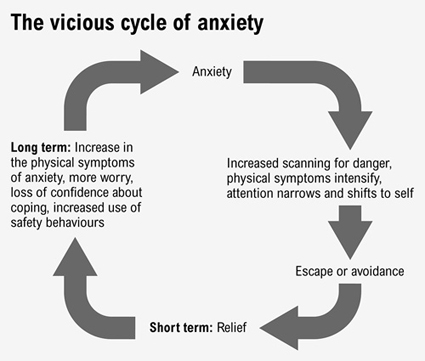
The essence of anxiety is worrying about some potential threat. It is trying to cope with a future event that you think will be negative.
You may do this by paying more attention to possible signs of potential threat, and looking internally to see whether you will be able to cope with that threat.
When you notice your anxious symptoms, you think that you can’t cope with the situation, and therefore become more anxious.
Read the long description for 'The vicious cycle of anxiety' image.
## How avoidance contributes to anxiety
As your anxiety increases, you try to reduce the anxiety and prevent what you think might happen by avoiding the situation.
If you cannot avoid the situation, then you use subtle avoidance to reduce the anxiety. For example, you may use certain rituals, like standing close to a door to make a quick escape.
In some way, you might feel less anxious in the short term when you engage in avoidance behaviours. You may take tranquillisers to deal with distressing situations.
However, when you have to deal with the situation the next time, you are less confident that you can cope with it because you avoided it the last time or become dependent on safety behaviours. So you feel more anxious.
Because you feel more anxious, you avoid the situation or engage in subtle avoidance. And so it continues. This cycle can go on until you feel very anxious and avoid going into different types of situations.
## Safety behaviours and anxiety
If you feel anxious, or anticipate feeling anxious, it makes sense that you will do things to reduce your anxiety.
In addition to avoidance and subtle avoidance, many people use ‘safety behaviours’ to help cope with anxiety.
These may include relying on medication, always having an exit plan for potentially anxious situations, or making sure you have someone else with you.
These safety behaviours also play a part in the vicious cycle of anxiety. When you become dependent on them, it can be more distressing if one day they are not available to you.
## Reversing the vicious cycle of anxiety
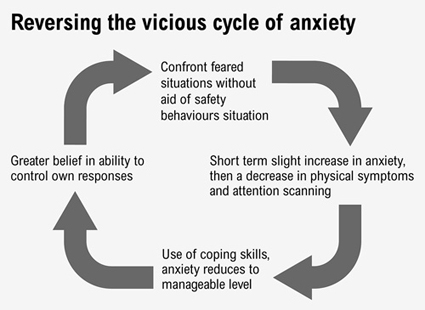
Vicious cycles play an important role in maintaining anxiety. However, like the vicious cycle of [depression](https://www.healthywa.wa.gov.au/Articles/A_E/Depression-reversing-the-vicious-cycle), you can turn around this cycle to create a positive cycle that will help you to overcome anxiety.
One important step in reversing the anxiety cycle is gradually confronting feared situations.
If you do this, it will lead to an improved sense of confidence, which will help reduce your anxiety and allow you to go into situations that are important to you.
Some people might encourage you to tackle your biggest fear first – to ‘jump in the deep end’; and get it over and done with. However, many people prefer to take it step-by-step. This is called graded exposure.
You start with situations that are easier for you to handle, then work your way up to more challenging tasks.
This allows you to build your confidence slowly, to use other skills you have learned, to get used to the situations, and to challenge your fears about each situational exposure exercise.
By doing this in a structured and repeated way, you have a good chance of reducing your anxiety about those situations.
## Coping skills – breathing and thinking better
When you are gradually confronting feared situations, there will be a short term increase in anxiety. This is normal – everyone feels anxious about doing things they fear.
The important thing to remember is that you can learn other skills as alternatives to avoidance and safety behaviours.
### Breathing
Anxiety is often associated with fast, shallow breathing, which contributes to the physical sensation of anxiety. By [slowing down your breathing](https://www.healthywa.wa.gov.au/Articles/A_E/Calming-techniques-breathing-training) and using calming and relaxation techniques, you can reduce your anxiety.
### Thinking
There are many types of [negative thoughts](https://www.healthywa.wa.gov.au/Articles/U_Z/Unhelpful-thinking-styles) associated with anxiety, such as ‘I will not be able to cope’ or ‘I must avoid this situation’.
Learning to challenge these thoughts with more balanced ones can help you to reduce the experience of anxiety.
When the anxiety cycle is broken, it will look like this.
Read the long description for ' Reversing the vicious cycle of anxiety' image.
## Remember
- Anxiety is when you worry about a potential threat.
- Some people use avoidance or ‘safety behaviours’ to cope with anxiety.
- Challenging these behaviours can help you reduce your anxiety to manageable levels.
### This information provided by
[](http://www.cci.health.wa.gov.au/ "Centre for Clinical Interventions (external link)")
***
**Acknowledgements**
Centre for Clinical Interventions (CCI)
***
This publication is provided for education and information purposes only. It is not a substitute for professional medical care. Information about a therapy, service, product or treatment does not imply endorsement and is not intended to replace advice from your healthcare professional. Readers should note that over time currency and completeness of the information may change. All users should seek advice from a qualified healthcare professional for a diagnosis and answers to their medical questions.
### See also
- [Centre for Clinical Interventions](https://www.healthywa.wa.gov.au/Articles/A_E/Centre-for-Clinical-Interventions "Centre for Clinical Interventions")
- [Depression – reversing the vicious cycle](https://www.healthywa.wa.gov.au/Articles/A_E/Depression-reversing-the-vicious-cycle "Depression – reversing the vicious cycle")
- [Unhelpful thinking styles](https://www.healthywa.wa.gov.au/Articles/U_Z/Unhelpful-thinking-styles "Unhelpful thinking styles")
- [Assertive communication](https://www.healthywa.wa.gov.au/Articles/A_E/Assertive-communication "Assertive communication")
- [Progressive muscle relaxation](https://www.healthywa.wa.gov.au/Articles/N_R/Progressive-muscle-relaxation "Progressive muscle relaxation")
- [Anxiety and panic](https://www.healthywa.wa.gov.au/Articles/A_E/Anxiety-and-panic "Anxiety and panic") |
| Shard | 198 (laksa) |
| Root Hash | 13487562457791009398 |
| Unparsed URL | au,gov,wa,healthywa!www,/Articles/A_E/Anxiety-reversing-the-vicious-cycle s443 |