ℹ️ Skipped - page is already crawled
| Filter | Status | Condition | Details |
|---|---|---|---|
| HTTP status | PASS | download_http_code = 200 | HTTP 200 |
| Age cutoff | PASS | download_stamp > now() - 6 MONTH | 0.9 months ago |
| History drop | PASS | isNull(history_drop_reason) | No drop reason |
| Spam/ban | PASS | fh_dont_index != 1 AND ml_spam_score = 0 | ml_spam_score=0 |
| Canonical | PASS | meta_canonical IS NULL OR = '' OR = src_unparsed | Not set |
| Property | Value |
|---|---|
| URL | https://www.health.harvard.edu/blog/does-weather-affect-arthritis-pain-2019011715789 |
| Last Crawled | 2026-03-25 04:57:34 (25 days ago) |
| First Indexed | not set |
| HTTP Status Code | 200 |
| Meta Title | Does weather affect arthritis pain? - Harvard Health |
| Meta Description | null |
| Meta Canonical | null |
| Boilerpipe Text | Medical myths die hard. Maybe that's because there's no agreement on whether a common belief is indeed a myth.
For example, there's the longstanding belief that weather affects arthritis pain. Many of my patients notice a clear connection; some are so convinced of the link, they believe they can predict the weather better than the TV meteorologists. And maybe that's true.
But that's not what the science says. A
recent study
finds no connection between rainy weather and symptoms of back or joint pain. This conclusion was based on a staggering amount of data: more than 11 million medical visits occurring on more than two million rainy days and nine million dry days. Not only was there no clear pattern linking rainy days and more aches and pains, but there were slightly more visits on dry days.
Still not convinced? That's understandable. Maybe it's not rain or shine that matters — maybe it's barometric pressure,
changes
in weather, or humidity that matters most. Or maybe the study missed some key information, such as when symptoms began or got worse — after all, it can take days or even weeks after symptoms begin to see a doctor.
What does past research say about weather and arthritis pain?
The question of whether there's a link between weather and aches and pains has been studied extensively. While a definitive answer is nearly impossible to provide — because it's hard to "prove a negative" (prove that something doesn't exist) — researchers have been unable to make a strong case for a strong connection.
You might also be interested in...
This report focuses primarily on osteoarthritis — the most common type of arthritis — which affects 27 million Americans. Many people believe it’s a crippling and inevitable part of growing old. But things are changing. Treatments are better, and plenty of people age well without much arthritis. If you have osteoarthritis, you can take steps to protect your joints, reduce discomfort, and improve mobility — all of which are detailed in this Special Health Report, Living Well with Osteoarthritis: A guide to keeping your joints healthy. If you don't have osteoarthritis, the report offers strategies for preventing it.
Read More
For example,
a 2014 study in Australia
found no link between back pain and rain, temperature, humidity, or air pressure. This study collected data regarding features of the weather at the time of first symptoms, and compared it to the weather a week and a month before. But,
an earlier study
found that among 200 patients followed for three months, knee pain increased modestly when temperature fell or barometric pressure rose.
Does research matter when you have personal experience?
That's a fair question. And it's something I've even heard in TV commercials about headache medicines: "I don't care about the research. I just know what works for me." But it's worth remembering that humans have a remarkable tendency to remember when two things occur or change together (such as wet, gloomy weather and joint pain), but remember less when things do
not
occur together. That rainy day when you felt no better or worse is unlikely to be so notable that you remember it. If you rely solely on memory rather than on more rigorous, data-based evidence, it's easy to conclude a link exists where, in fact, none does.
In conclusion…
It's true: medical myths die hard. In fact, some seem immortal. One could argue that's as it should be. After all, yesterday's medical myth is only one discovery away from becoming tomorrow's medical fact.
Still, when the evidence is compelling, I think we'd be better off letting go of what's been disproven, give more credence to evidence than folklore, and keep an open mind — just in case the evidence changes.
When my patients tell me they can predict the weather by how their joints feel, I believe them. It's hard to discount it when so many people notice a connection. They could represent an exception to what the studies show. But I also believe the science. Until I see evidence that's even more compelling, I remain a skeptic about the weather/arthritis connection.
You might also be interested in...
Is joint pain holding you back? Perhaps an achy ankle or sore knee is making it difficult to enjoy a run through your favorite park or even taking a short walk. Or maybe a throbbing hip or shoulder prevents you from whacking a golf ball or performing simple tasks like carrying a bag of groceries. The exercises in this report, The Joint Pain Relief Workout: Healing exercises for your shoulders, hips, knees, and ankles, can help relieve ankle, knee, hip, or shoulder pain, and help you become more active again, which can help you stay independent long into your later years.
LEARN MORE
Follow me on Twitter
@RobShmerling |
| Markdown | 
[Skip to main content](https://www.health.harvard.edu/blog/does-weather-affect-arthritis-pain-2019011715789#main-content)
[Harvard Health Publishing ](https://www.health.harvard.edu/)
[Harvard Health Publishing](https://www.health.harvard.edu/)
[HarvardHealthOnline+](https://www.health.harvard.edu/hho-plus?utm_source=site&utm_medium=web&utm_campaign=top_button)
Search
[Customer Service](https://www.health.harvard.edu/customer-service) [Content Licensing](https://www.health.harvard.edu/licensing) [About Us](https://www.health.harvard.edu/about-us)
[Log In](https://www.health.harvard.edu/login)
Open mobile menu
[Free HealthBeat Signup](https://www.health.harvard.edu/healthbeat)
Shop
[Subscriptions](https://www.health.harvard.edu/subscribe) [Special Health Reports](https://www.health.harvard.edu/special-health-reports) [Online Courses](https://www.harvardhealthonlinelearning.com/catalog)
[Pay Subscription Bill](https://www.health.harvard.edu/pay-bill)
[Common Conditions](https://www.health.harvard.edu/category/common-conditions) [Staying Healthy](https://www.health.harvard.edu/category/staying-healthy) [Resources](https://www.health.harvard.edu/resources) [Blog](https://www.health.harvard.edu/blog) [COVID-19 Updates](https://www.health.harvard.edu/diseases-and-conditions/coronavirus-resource-center)
Close menu
[HarvardHealthOnline+](https://www.health.harvard.edu/hho-plus?utm_source=site&utm_medium=web&utm_campaign=mobile_button)
## Main Content
- [Common Conditions](https://www.health.harvard.edu/category/common-conditions)
- [Staying Healthy](https://www.health.harvard.edu/category/staying-healthy)
- [Resources](https://www.health.harvard.edu/resources)
- [Blog](https://www.health.harvard.edu/blog)
## Helpful Links
- [Customer Service](https://www.health.harvard.edu/customer-service)
- [About Us](https://www.health.harvard.edu/about-us)
- [Content Licensing](https://www.health.harvard.edu/licensing)
- [Free Healthbeat Signup](https://www.health.harvard.edu/healthbeat)
- [Subscriptions](https://www.health.harvard.edu/subscribe)
- [Special Health Reports](https://www.health.harvard.edu/special-health-reports)
- [Online Courses](https://www.harvardhealthonlinelearning.com/)
- [Pay Subscription Bill](https://www.health.harvard.edu/pay-bill)
Close
Recent Articles
[ How to treat shoulder impingement](https://www.health.harvard.edu/bones-and-joints/how-to-treat-shoulder-impingement)
[ Beyond protein: 6 other nutrients that help prevent muscle loss](https://www.health.harvard.edu/diet-and-nutrition/beyond-protein-6-other-nutrients-that-help-prevent-muscle-loss)
[ Advancements in knee replacement: More precise and personalized](https://www.health.harvard.edu/bones-and-joints/advancements-in-knee-replacement-more-precise-and-personalized)
[ How to cope with bone-on-bone joint pain](https://www.health.harvard.edu/bones-and-joints/how-to-cope-with-bone-on-bone-joint-pain)
[ Even small changes in physical activity may boost longevity](https://www.health.harvard.edu/exercise-and-fitness/even-small-changes-in-physical-activity-may-boost-longevity)
[ Will lithium supplements be used to fight Alzheimer's one day?](https://www.health.harvard.edu/brain-health/will-lithium-supplements-be-used-to-fight-alzheimers-one-day)
[ Low vitamin D may raise risk for respiratory infections](https://www.health.harvard.edu/diseases-and-conditions/low-vitamin-d-may-raise-risk-for-respiratory-infections)
[ Telltale signs of vaginal infections](https://www.health.harvard.edu/womens-health/telltale-signs-of-vaginal-infections)
[ Cervical dystonia: A challenging neck condition](https://www.health.harvard.edu/diseases-and-conditions/cervical-dystonia-a-challenging-neck-condition)
[ How the gut-brain connection influences mood](https://www.health.harvard.edu/brain-health/how-the-gut-brain-connection-influences-mood)
1 / 10
[Bones and joints](https://www.health.harvard.edu/topics/bones-and-joints)
# Does weather affect arthritis pain?

January 17, 2019
By [Robert H. Shmerling, MD](https://www.health.harvard.edu/authors/robert-h-shmerling-md), Senior Faculty Editor, Harvard Health Publishing; Editorial Advisory Board Member, Harvard Health Publishing
Share
[Share this page to Facebook](https://www.facebook.com/sharer/sharer.php?u=https%3A%2F%2Fwww.health.harvard.edu%2Fblog%2Fdoes-weather-affect-arthritis-pain-2019011715789&display=popup)
[Share this page to X](https://twitter.com/intent/tweet?original_referer=https%3A%2F%2Fwww.health.harvard.edu%2Fblog%2Fdoes-weather-affect-arthritis-pain-2019011715789&text=Does%20weather%20affect%20arthritis%20pain?%20-%20Harvard%20Health&tw_p=tweetbutton&url=https%3A%2F%2Fwww.health.harvard.edu%2Fblog%2Fdoes-weather-affect-arthritis-pain-2019011715789)
[Share this page via Email](<mailto:?subject=Great health news for you from the experts at Harvard&body=Check out this link from Harvard Health: Does weather affect arthritis pain? - https://www.health.harvard.edu/blog/does-weather-affect-arthritis-pain-2019011715789>)
Copy this page to clipboard
Print This Page
Click to Print
Medical myths die hard. Maybe that's because there's no agreement on whether a common belief is indeed a myth.
For example, there's the longstanding belief that weather affects arthritis pain. Many of my patients notice a clear connection; some are so convinced of the link, they believe they can predict the weather better than the TV meteorologists. And maybe that's true.
But that's not what the science says. A [recent study](http://www.bmj.com/content/359/bmj.j5326) finds no connection between rainy weather and symptoms of back or joint pain. This conclusion was based on a staggering amount of data: more than 11 million medical visits occurring on more than two million rainy days and nine million dry days. Not only was there no clear pattern linking rainy days and more aches and pains, but there were slightly more visits on dry days.
Still not convinced? That's understandable. Maybe it's not rain or shine that matters — maybe it's barometric pressure, *changes* in weather, or humidity that matters most. Or maybe the study missed some key information, such as when symptoms began or got worse — after all, it can take days or even weeks after symptoms begin to see a doctor.
## What does past research say about weather and arthritis pain?
The question of whether there's a link between weather and aches and pains has been studied extensively. While a definitive answer is nearly impossible to provide — because it's hard to "prove a negative" (prove that something doesn't exist) — researchers have been unable to make a strong case for a strong connection.
You might also be interested in...
## Living Well with Osteoarthritis: A guide to relieving the pain and caring for your joints
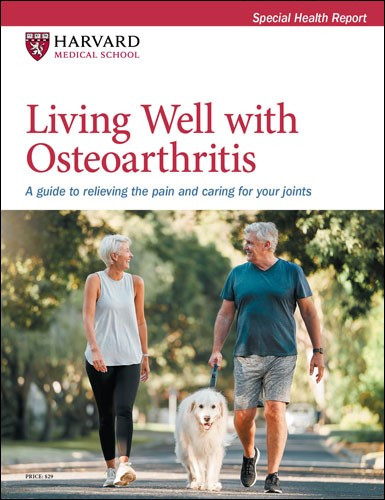
This report focuses primarily on osteoarthritis — the most common type of arthritis — which affects 27 million Americans. Many people believe it’s a crippling and inevitable part of growing old. But things are changing. Treatments are better, and plenty of people age well without much arthritis. If you have osteoarthritis, you can take steps to protect your joints, reduce discomfort, and improve mobility — all of which are detailed in this Special Health Report, Living Well with Osteoarthritis: A guide to keeping your joints healthy. If you don't have osteoarthritis, the report offers strategies for preventing it.
[Read More](https://servedbyadbutler.com/redirect.spark?MID=186626&plid=2650436&setID=812675&channelID=0&CID=862911&banID=521774134&PID=0&textadID=0&tc=1&rnd=5744713129&scheduleID=2266266&adSize=0x0&matches=%5B%22arthritis%22%5D&mt=1774414656297092&spr=1&referrer=https%3A%2F%2Fwww.health.harvard.edu%2Fblog%2Fdoes-weather-affect-arthritis-pain-2019011715789&request_uuid=7e36f918-7185-4033-944e-8bb8eb219678&hc=869cead33aed2be34aabc814c5d623cc2ca66a96&location=)
For example, [a 2014 study in Australia](https://onlinelibrary.wiley.com/doi/full/10.1002/acr.22378) found no link between back pain and rain, temperature, humidity, or air pressure. This study collected data regarding features of the weather at the time of first symptoms, and compared it to the weather a week and a month before. But, [an earlier study](https://www.clinicalkey.com/#!/content/playContent/1-s2.0-S0002934306010266?returnurl=null&referrer=null) found that among 200 patients followed for three months, knee pain increased modestly when temperature fell or barometric pressure rose.
## Does research matter when you have personal experience?
That's a fair question. And it's something I've even heard in TV commercials about headache medicines: "I don't care about the research. I just know what works for me." But it's worth remembering that humans have a remarkable tendency to remember when two things occur or change together (such as wet, gloomy weather and joint pain), but remember less when things do *not* occur together. That rainy day when you felt no better or worse is unlikely to be so notable that you remember it. If you rely solely on memory rather than on more rigorous, data-based evidence, it's easy to conclude a link exists where, in fact, none does.
## In conclusion…
It's true: medical myths die hard. In fact, some seem immortal. One could argue that's as it should be. After all, yesterday's medical myth is only one discovery away from becoming tomorrow's medical fact.
Still, when the evidence is compelling, I think we'd be better off letting go of what's been disproven, give more credence to evidence than folklore, and keep an open mind — just in case the evidence changes.
When my patients tell me they can predict the weather by how their joints feel, I believe them. It's hard to discount it when so many people notice a connection. They could represent an exception to what the studies show. But I also believe the science. Until I see evidence that's even more compelling, I remain a skeptic about the weather/arthritis connection.
You might also be interested in...
## The Joint Pain Relief Workout: Healing exercises for your shoulders, hips, knees, and ankles
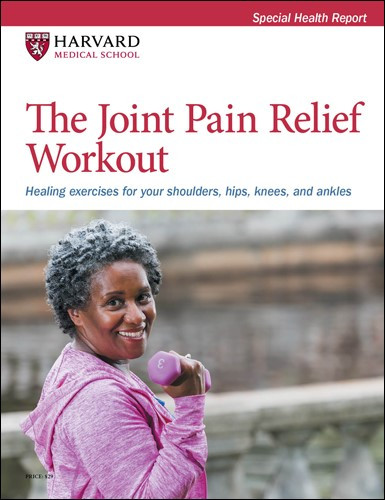
Is joint pain holding you back? Perhaps an achy ankle or sore knee is making it difficult to enjoy a run through your favorite park or even taking a short walk. Or maybe a throbbing hip or shoulder prevents you from whacking a golf ball or performing simple tasks like carrying a bag of groceries. The exercises in this report, The Joint Pain Relief Workout: Healing exercises for your shoulders, hips, knees, and ankles, can help relieve ankle, knee, hip, or shoulder pain, and help you become more active again, which can help you stay independent long into your later years.
[LEARN MORE](https://servedbyadbutler.com/redirect.spark?MID=186626&plid=2650436&setID=812675&channelID=0&CID=862911&banID=522376601&PID=0&textadID=0&tc=1&rnd=5744713129&scheduleID=2486843&adSize=0x0&matches=%5B%22pain%22%5D&mt=1774414656297229&spr=1&referrer=https%3A%2F%2Fwww.health.harvard.edu%2Fblog%2Fdoes-weather-affect-arthritis-pain-2019011715789&request_uuid=7e36f918-7185-4033-944e-8bb8eb219678&hc=b055834927991618ec3cb64b6372a3619849742f&location=)
*Follow me on Twitter* @RobShmerling
## About the Author

Robert H. Shmerling, MD, Senior Faculty Editor, Harvard Health Publishing; Editorial Advisory Board Member, Harvard Health Publishing
Dr. Robert H. Shmerling is the former clinical chief of the division of rheumatology at Beth Israel Deaconess Medical Center (BIDMC), and is a current member of the corresponding faculty in medicine at Harvard Medical School. … [See Full Bio](https://www.health.harvard.edu/authors/robert-h-shmerling-md)
[View all posts by Robert H. Shmerling, MD](https://www.health.harvard.edu/authors/robert-h-shmerling-md)
Share
[Share this page to Facebook](https://www.facebook.com/sharer/sharer.php?u=https%3A%2F%2Fwww.health.harvard.edu%2Fblog%2Fdoes-weather-affect-arthritis-pain-2019011715789&display=popup)
[Share this page to X](https://twitter.com/intent/tweet?original_referer=https%3A%2F%2Fwww.health.harvard.edu%2Fblog%2Fdoes-weather-affect-arthritis-pain-2019011715789&text=Does%20weather%20affect%20arthritis%20pain?%20-%20Harvard%20Health&tw_p=tweetbutton&url=https%3A%2F%2Fwww.health.harvard.edu%2Fblog%2Fdoes-weather-affect-arthritis-pain-2019011715789)
[Share this page via Email](<mailto:?subject=Great health news for you from the experts at Harvard&body=Check out this link from Harvard Health: Does weather affect arthritis pain? - https://www.health.harvard.edu/blog/does-weather-affect-arthritis-pain-2019011715789>)
Copy this page to clipboard
Print This Page
Click to Print
## Disclaimer:
As a service to our readers, Harvard Health Publishing provides access to our library of archived content. Please note the date of last review or update on all articles.
No content on this site, regardless of date, should ever be used as a substitute for direct medical advice from your doctor or other qualified clinician.
Recent Articles
[ How to treat shoulder impingement](https://www.health.harvard.edu/bones-and-joints/how-to-treat-shoulder-impingement)
[ Beyond protein: 6 other nutrients that help prevent muscle loss](https://www.health.harvard.edu/diet-and-nutrition/beyond-protein-6-other-nutrients-that-help-prevent-muscle-loss)
[ Advancements in knee replacement: More precise and personalized](https://www.health.harvard.edu/bones-and-joints/advancements-in-knee-replacement-more-precise-and-personalized)
[ How to cope with bone-on-bone joint pain](https://www.health.harvard.edu/bones-and-joints/how-to-cope-with-bone-on-bone-joint-pain)
[ Even small changes in physical activity may boost longevity](https://www.health.harvard.edu/exercise-and-fitness/even-small-changes-in-physical-activity-may-boost-longevity)
[ Will lithium supplements be used to fight Alzheimer's one day?](https://www.health.harvard.edu/brain-health/will-lithium-supplements-be-used-to-fight-alzheimers-one-day)
[ Low vitamin D may raise risk for respiratory infections](https://www.health.harvard.edu/diseases-and-conditions/low-vitamin-d-may-raise-risk-for-respiratory-infections)
[ Telltale signs of vaginal infections](https://www.health.harvard.edu/womens-health/telltale-signs-of-vaginal-infections)
[ Cervical dystonia: A challenging neck condition](https://www.health.harvard.edu/diseases-and-conditions/cervical-dystonia-a-challenging-neck-condition)
[ How the gut-brain connection influences mood](https://www.health.harvard.edu/brain-health/how-the-gut-brain-connection-influences-mood)
1 / 10
## Related Topics
[ Bones and joints What is chronic inflammation?](https://www.health.harvard.edu/bones-and-joints/what-is-chronic-inflammation)
[ Bones and joints Aspirin and bone health: Is there a connection?](https://www.health.harvard.edu/blog/aspirin-and-bone-health-is-there-a-connection-202212132864)
[ Bones and joints Does running cause arthritis?](https://www.health.harvard.edu/blog/does-running-cause-arthritis-202304262930)
[Bones and joints](https://www.health.harvard.edu/topics/bones-and-joints)
## Free Healthbeat Signup
Get the latest in health news delivered to your inbox\!
[Sign Up](https://www.health.harvard.edu/healthbeat)
## Footer
[Harvard Health Publishing ](https://www.health.harvard.edu/)
[Facebook](https://www.facebook.com/HarvardHealthPublications)
[X (formerly known as Twitter)](https://x.com/harvardhealth)
[Linkedin](https://www.linkedin.com/company/harvard-health-publications/)
[YouTube](https://www.youtube.com/channel/UC-jj29vMMB1ulz_uEU5kUrA)
### My Account
- [Customer Service](https://www.health.harvard.edu/customer-service)
- [Log in](https://www.health.harvard.edu/login)
### Order Now
- [Online Learning Courses](https://www.harvardhealthonlinelearning.com/)
- [Digital Subscriptions](https://www.health.harvard.edu/subscribe)
- [Special Health Reports](https://www.health.harvard.edu/special-health-reports)
- [Print Subscriptions](https://www.health.harvard.edu/newsletters)
### More
- [About Us](https://www.health.harvard.edu/about-us)
- [Permissions](https://www.health.harvard.edu/permissions)
- [Content Licensing](https://www.health.harvard.edu/licensing)
- [Topics](https://www.health.harvard.edu/topics)
- [Trademark Notice](https://trademark.harvard.edu/pages/trademark-notice)
© 2026 [Harvard Health Publishing®](https://trademark.harvard.edu/pages/trademark-notice) of The President and Fellows of Harvard College
[Do not sell my personal information](https://www.health.harvard.edu/privacy-policy#california-residents) \| [Privacy Policy and Terms of Use](https://www.health.harvard.edu/privacy-policy)
[Scroll To Top](https://www.health.harvard.edu/blog/does-weather-affect-arthritis-pain-2019011715789#app)
Close

Thanks for visiting. Don't miss your FREE gift.
**The online course *Inflammation and Diet: How food can lower disease risk* is your absolutely FREE when you sign up to receive health information from Harvard Medical School.**
Sign up to get tips for living a healthy lifestyle, with ways to lessen **digestion** problems…keep **inflammation** under control…learn simple exercises to improve your **balance**…understand your options for **cataract** treatment…all delivered to your email box FREE.
Close

## Unlock a FREE course just for signing up for HEALTHbeat\!

Sign up for HEALTHBeat and receive trusted health information delivered right to your inbox. Benefits include practical tips to keep you healthy and vibrant, up-to-date health news explained simply and clearly, and special promo codes to use for our inline courses, special reports, and more.
As a way of introducing you to the expertise of Harvard Medical School, enjoy this FREE online course, Inflammation and Diet: How food can lower disease risk, where you will learn how your eating pattern can play a key role in reducing or avoiding harmful inflammation in your body.
No purchase necessary. Just enter your email address and click the red button. You’ll receive a confirmation email from us along with a link to your free course.
Close

Stay on top of latest health news from Harvard Medical School.
Plus get a FREE on-line course **Inflammation and Diet: How food can lower disease risk**. No purchase necessary.
Close

Stay on top of latest health news from Harvard Medical School.
Plus get a FREE on-line course **Inflammation and Diet: How food can lower disease risk**. No purchase necessary.
 |
| Readable Markdown | Medical myths die hard. Maybe that's because there's no agreement on whether a common belief is indeed a myth.
For example, there's the longstanding belief that weather affects arthritis pain. Many of my patients notice a clear connection; some are so convinced of the link, they believe they can predict the weather better than the TV meteorologists. And maybe that's true.
But that's not what the science says. A [recent study](http://www.bmj.com/content/359/bmj.j5326) finds no connection between rainy weather and symptoms of back or joint pain. This conclusion was based on a staggering amount of data: more than 11 million medical visits occurring on more than two million rainy days and nine million dry days. Not only was there no clear pattern linking rainy days and more aches and pains, but there were slightly more visits on dry days.
Still not convinced? That's understandable. Maybe it's not rain or shine that matters — maybe it's barometric pressure, *changes* in weather, or humidity that matters most. Or maybe the study missed some key information, such as when symptoms began or got worse — after all, it can take days or even weeks after symptoms begin to see a doctor.
## What does past research say about weather and arthritis pain?
The question of whether there's a link between weather and aches and pains has been studied extensively. While a definitive answer is nearly impossible to provide — because it's hard to "prove a negative" (prove that something doesn't exist) — researchers have been unable to make a strong case for a strong connection.
You might also be interested in...

This report focuses primarily on osteoarthritis — the most common type of arthritis — which affects 27 million Americans. Many people believe it’s a crippling and inevitable part of growing old. But things are changing. Treatments are better, and plenty of people age well without much arthritis. If you have osteoarthritis, you can take steps to protect your joints, reduce discomfort, and improve mobility — all of which are detailed in this Special Health Report, Living Well with Osteoarthritis: A guide to keeping your joints healthy. If you don't have osteoarthritis, the report offers strategies for preventing it.
[Read More](https://servedbyadbutler.com/redirect.spark?MID=186626&plid=2650436&setID=812675&channelID=0&CID=862911&banID=521774134&PID=0&textadID=0&tc=1&rnd=5744713129&scheduleID=2266266&adSize=0x0&matches=%5B%22arthritis%22%5D&mt=1774414656297092&spr=1&referrer=https%3A%2F%2Fwww.health.harvard.edu%2Fblog%2Fdoes-weather-affect-arthritis-pain-2019011715789&request_uuid=7e36f918-7185-4033-944e-8bb8eb219678&hc=869cead33aed2be34aabc814c5d623cc2ca66a96&location=)
For example, [a 2014 study in Australia](https://onlinelibrary.wiley.com/doi/full/10.1002/acr.22378) found no link between back pain and rain, temperature, humidity, or air pressure. This study collected data regarding features of the weather at the time of first symptoms, and compared it to the weather a week and a month before. But, [an earlier study](https://www.clinicalkey.com/#!/content/playContent/1-s2.0-S0002934306010266?returnurl=null&referrer=null) found that among 200 patients followed for three months, knee pain increased modestly when temperature fell or barometric pressure rose.
## Does research matter when you have personal experience?
That's a fair question. And it's something I've even heard in TV commercials about headache medicines: "I don't care about the research. I just know what works for me." But it's worth remembering that humans have a remarkable tendency to remember when two things occur or change together (such as wet, gloomy weather and joint pain), but remember less when things do *not* occur together. That rainy day when you felt no better or worse is unlikely to be so notable that you remember it. If you rely solely on memory rather than on more rigorous, data-based evidence, it's easy to conclude a link exists where, in fact, none does.
## In conclusion…
It's true: medical myths die hard. In fact, some seem immortal. One could argue that's as it should be. After all, yesterday's medical myth is only one discovery away from becoming tomorrow's medical fact.
Still, when the evidence is compelling, I think we'd be better off letting go of what's been disproven, give more credence to evidence than folklore, and keep an open mind — just in case the evidence changes.
When my patients tell me they can predict the weather by how their joints feel, I believe them. It's hard to discount it when so many people notice a connection. They could represent an exception to what the studies show. But I also believe the science. Until I see evidence that's even more compelling, I remain a skeptic about the weather/arthritis connection.
You might also be interested in...

Is joint pain holding you back? Perhaps an achy ankle or sore knee is making it difficult to enjoy a run through your favorite park or even taking a short walk. Or maybe a throbbing hip or shoulder prevents you from whacking a golf ball or performing simple tasks like carrying a bag of groceries. The exercises in this report, The Joint Pain Relief Workout: Healing exercises for your shoulders, hips, knees, and ankles, can help relieve ankle, knee, hip, or shoulder pain, and help you become more active again, which can help you stay independent long into your later years.
[LEARN MORE](https://servedbyadbutler.com/redirect.spark?MID=186626&plid=2650436&setID=812675&channelID=0&CID=862911&banID=522376601&PID=0&textadID=0&tc=1&rnd=5744713129&scheduleID=2486843&adSize=0x0&matches=%5B%22pain%22%5D&mt=1774414656297229&spr=1&referrer=https%3A%2F%2Fwww.health.harvard.edu%2Fblog%2Fdoes-weather-affect-arthritis-pain-2019011715789&request_uuid=7e36f918-7185-4033-944e-8bb8eb219678&hc=b055834927991618ec3cb64b6372a3619849742f&location=)
*Follow me on Twitter* @RobShmerling |
| Shard | 102 (laksa) |
| Root Hash | 2971912334127662702 |
| Unparsed URL | edu,harvard!health,www,/blog/does-weather-affect-arthritis-pain-2019011715789 s443 |