ℹ️ Skipped - page is already crawled
| Filter | Status | Condition | Details |
|---|---|---|---|
| HTTP status | PASS | download_http_code = 200 | HTTP 200 |
| Age cutoff | PASS | download_stamp > now() - 6 MONTH | 0.7 months ago |
| History drop | PASS | isNull(history_drop_reason) | No drop reason |
| Spam/ban | PASS | fh_dont_index != 1 AND ml_spam_score = 0 | ml_spam_score=0 |
| Canonical | PASS | meta_canonical IS NULL OR = '' OR = src_unparsed | Not set |
| Property | Value |
|---|---|
| URL | https://www.goodrx.com/conditions/covid-19/loss-of-taste-smell-not-covid |
| Last Crawled | 2026-04-01 13:21:32 (19 days ago) |
| First Indexed | 2022-01-21 21:16:46 (4 years ago) |
| HTTP Status Code | 200 |
| Meta Title | 10 Causes of Loss of Smell and Taste Besides COVID-19 - GoodRx |
| Meta Description | Loss of smell or taste is a nuisance. While it may happen after COVID-19, there are other causes too. Here’s what can cause loss of taste and smell. |
| Meta Canonical | null |
| Boilerpipe Text | Key takeaways:
COVID-19 infection is only one reason why you might lose your sense of taste or smell. Medications, viruses, and medical conditions can also cause loss of taste and smell.
The chance of full recovery of smell and taste depends on the cause. And it’s different for each person. It can take weeks to months to get your senses back.
Olfactory training can help you recover. In some cases, steroids may help too.
From freshly baked bread to fragrant flowers, your sense of smell adds richness to daily life. That’s why it can feel unsettling when your sense of smell changes. For many people, losing the sense of smell (anosmia) or taste (
ageusia
) makes them immediately think of COVID-19.
While loss of smell or taste can be a
sign of COVID infection
, many other things can affect these senses.
Changes in smell and taste sensation are more common than you might think. Almost
1 in 4
people in the U.S. over the age of 40 report changes in their sense of smell. And 1 in 5 notice changes in their sense of taste. If you’re experiencing changes in taste or smell, here are 10 other causes to consider besides COVID-19.
Yes, many conditions can cause a loss of taste or smell — not just COVID.
Whatever the cause, the problem is linked to changes on the surfaces of your nose or tongue, or in the nerves that control them.
Fortunately, the
most common causes
of loss of smell and taste usually get better with time.
Here are 10 things — besides COVID — that can cause a
loss of taste
and smell.
Common cold viruses like
RSV
and
the flu
infect your body through your nose and mouth. These
upper respiratory infections
cause swelling inside your nose. This can damage the lining of the nose to the point that some people
lose their sense of smell for years
after a viral illness.
But most of the time, you only notice changes in taste and smell while you’re ill. Once you recover, the swelling inside your nose goes away and your usual sense of taste and smell returns.
If you have
seasonal allergies
or year-round allergies, you know that allergies can affect your nose. Allergies cause swelling and inflammation inside your nose. Sneezing, a runny nose, and congestion can all lead to issues with smelling. The longer you’ve had
allergies
, or the more severe your symptoms are, the
more likely you are
to lose your smell because of them.
People with allergies or certain medical conditions are at risk for developing
nasal polyps
. These are noncancerous growths that develop in your nose or sinus. Polyps change the shape of your nasal lining. This puts stress on the nerves inside your nose, which can
affect how well you’re able to smell
.
4. Tobacco and vape products
Smoking can
affect your sense of smell and taste
. It may also
increase your risk
of developing nasal polyps, making it even harder to smell.
Compare prices and information on the most popular COVID-19 medications.
Other
tobacco products
— like e-cigarettes (for vaping), cigars, and
chewing tobacco
— can also affect your sense of smell or taste.
Most people have taken
ibuprofen
(Advil, Motrin) or
acetaminophen
(Tylenol) for aches or pains. But did you know these medications can affect your sense of taste? In fact, some of the most
commonly used medications
in the U.S. can affect taste or smell, including:
Allergy medications:
Loratadine
and
fluticasone
Antibiotics:
Amoxicillin
and
azithromycin
Blood pressure medications:
Lisinopril
and
metoprolol
Cholesterol-lowering medications:
Atorvastatin
and
pravastatin
Reflux medications:
Omeprazole
and
ranitidine
Other common medications that can alter your sense of taste or smell include
levothyroxine
,
metformin
, and
zolpidem
(Ambien) — among many others. Keep in mind that these medications may not just decrease your sense of taste or smell. They may also change your sense of taste or smell altogether. For example, lithium can sometimes cause a
metallic taste
.
Smelling and tasting works because nerves from your brain are connected to your nose and tongue. Health conditions that affect these nerves, or the parts of the brain that control them, can change your sense of smell or taste.
Neurologic conditions that can affect your sense of taste or smell
include
:
Growing older affects all your senses. These changes are often more noticeable in your
eyesight
and
hearing
. But your
sense of smell and taste
can be affected too. As you get older, the nerves that help with smell
don’t renew
as easily.
Areas of the brain that help with smell
also change with age. If your sense of smell changes, your sense of taste is usually affected too.
Also, you’re more likely to take more medications or develop neurological conditions as you get older. These added factors can make it harder to smell or taste
over the years
.
Exposure to chemicals, toxins, and metals can affect both taste and smell. They can affect the nerves or sensory cells in the nose and on the tongue. Exposure to solvents, metal dust, or fumes
at work
or at home can affect your sense of smell and taste.
A very rare cancer called
olfactory neuroblastoma
can also cause loss of smell. It’s responsible for only 2% of cancers of the nose and sinuses. This cancer starts in the olfactory cells in the nasal cavity. It usually causes obstruction in one side of the nose and
nosebleeds
. But it can also result in anosmia (loss of smell).
It’s worth noting that treatments for other cancers — like
chemotherapy
and
radiation
— can also affect your sense of smell or taste.
There’s some evidence to suggest that certain vitamin and mineral deficiencies may be linked to changes in smell or
taste
. These vitamins and minerals include:
Vitamin B12
Vitamin D
Vitamin E
Zinc
Changes in taste and smell can last for different amounts of time, depending on the cause. For example:
Viruses:
Loss of taste or smell from a common cold virus or the flu lasts about 1 to 2 weeks. Loss of smell or taste from COVID illness can take
several weeks
or, in rare cases,
up to a few years
to return.
Allergies or nasal polyps:
Treating allergies or nasal polyps may restore your sense of smell. This can take several
weeks to months
.
Smoking:
You can recover your sense of taste and smell after you quit smoking. How quickly they come back depends on
how long
you smoked. Recovery can take weeks to years.
Head trauma:
When you lose your sense of smell or taste after head trauma, you usually recover those senses within a couple months. But sometimes, these sensations never return.
Neurological disorders or age:
The loss of smell or taste from neurological disorders or getting older is the
least likely to resolve with time
. Your sense of smell and taste might never fully return.
Some people get their sense of taste and smell back
without any treatment
. But many people need extra help.
The first step is to talk with your healthcare team. They can review your medications and medical history with you to pinpoint possible causes for your loss of taste and smell. They can offer treatment for medical conditions that may improve your senses. They may also suggest different medications that don’t affect your senses.
Other treatments that can help with anosmia (loss of smell) include:
Olfactory training:
Also called
smell retraining
, this involves reteaching your brain to remember different smells over a period of months. Olfactory training can be helpful for most people, regardless of what caused their loss of smell or taste.
Steroids:
Medications like
budesonide
can improve the success of olfactory training.
The bottom line
Not being able to smell or taste can be stressful, regardless of the cause. Many people experience a loss of smell or taste at some point in their lives. COVID-19 illness can cause loss of taste or smell. But many things can cause this including allergies, nasal polyps, and certain medications. Your healthcare team can help you pinpoint the cause of your loss of taste or smell and recommend treatment. Olfactory training may help, regardless of what caused your loss of taste or smell.
Aunna Pourang, MD, graduated from the University of Florida College of Medicine’s Medical Honors Program and is board-certified in family medicine (Mayo Clinic). She is also fellowship-trained in integrative medicine (Academy of Integrative Health and Medicine).
Patricia Pinto-Garcia, MD, MPH, is a medical editor at GoodRx. She is a licensed, board-certified pediatrician with more than a decade of experience in academic medicine.
GoodRx Health has strict sourcing policies and relies on primary sources such as medical organizations, governmental agencies, academic institutions, and peer-reviewed scientific journals. Learn more about how we ensure our content is accurate, thorough, and unbiased by reading our
editorial guidelines
. |
| Markdown | [Skip to main content](https://www.goodrx.com/conditions/covid-19/loss-of-taste-smell-not-covid#skip-to-content)
Are you a healthcare professional? [Join GoodRx for HCPs](https://www.goodrx.com/hcp/join?redirectTo=%2Fconditions%2Fcovid-19%2Floss-of-taste-smell-not-covid)
- [Prescription savingsSavings](https://www.goodrx.com/)
Prescription savings
Stop paying too much for your prescriptions. Compare prices, get pharmacy coupons, and save up to 80%.
[Get prescription savings](https://www.goodrx.com/)
Ways to save
- [Search for pharmacy coupons](https://www.goodrx.com/search)
- [Get a prescription savings card](https://www.goodrx.com/discount-card)
- [Join GoodRx Gold](https://www.goodrx.com/gold)
- [Save on brand-name medications](https://www.goodrx.com/brand)
- [Earn GoodRx Rewards](https://www.goodrx.com/go/rewards)
- [Explore ED subscriptions](https://www.goodrx.com/care/services/erectile-dysfunction)
Popular medications
- [Sildenafil](https://www.goodrx.com/sildenafil "Sildenafil coupons")
- [Ozempic](https://www.goodrx.com/ozempic "Ozempic coupons")
- [Wegovy](https://www.goodrx.com/wegovy "Wegovy coupons")
- [Zepbound](https://www.goodrx.com/zepbound "Zepbound coupons")
- [Humira](https://www.goodrx.com/humira "Humira coupons")
Resources
- [Pharmacies near you](https://www.goodrx.com/pharmacy-near-me)
- [Find a Gold pharmacy](https://www.goodrx.com/gold/pharmacy)
- [GoodRx for pets](https://www.goodrx.com/pets)
About GoodRx
- [About us](https://www.goodrx.com/about)
- [How GoodRx works](https://www.goodrx.com/how-goodrx-works)
- [How we help](https://www.goodrx.com/about/how-we-help)
- [What we believe](https://www.goodrx.com/about/what-we-believe)
- [Our impact](https://www.goodrx.com/about/our-impact)
Browse medications
Research prescriptions and over-the-counter [medications from A to Z](https://www.goodrx.com/drugs), compare drug prices, and start saving.
[a](https://www.goodrx.com/drugs/a)[b](https://www.goodrx.com/drugs/b)[c](https://www.goodrx.com/drugs/c)[d](https://www.goodrx.com/drugs/d)[e](https://www.goodrx.com/drugs/e)[f](https://www.goodrx.com/drugs/f)[g](https://www.goodrx.com/drugs/g)[h](https://www.goodrx.com/drugs/h)[i](https://www.goodrx.com/drugs/i)[j](https://www.goodrx.com/drugs/j)[k](https://www.goodrx.com/drugs/k)[l](https://www.goodrx.com/drugs/l)[m](https://www.goodrx.com/drugs/m)[n](https://www.goodrx.com/drugs/n)[o](https://www.goodrx.com/drugs/o)[p](https://www.goodrx.com/drugs/p)[q](https://www.goodrx.com/drugs/q)[r](https://www.goodrx.com/drugs/r)[s](https://www.goodrx.com/drugs/s)[t](https://www.goodrx.com/drugs/t)[u](https://www.goodrx.com/drugs/u)[v](https://www.goodrx.com/drugs/v)[w](https://www.goodrx.com/drugs/w)[x](https://www.goodrx.com/drugs/x)[y](https://www.goodrx.com/drugs/y)[z](https://www.goodrx.com/drugs/z)
- [Online careOnline care](https://www.goodrx.com/care)
Online care
Get professional, affordable online care from licensed healthcare professionals. Choose a one-time visit or a subscription.
ED treatment
- [Tadalafil (generic Cialis)](https://www.goodrx.com/care/services/erectile-dysfunction/tadalafil-online)
- [Sildenafil (generic Viagra)](https://www.goodrx.com/care/services/erectile-dysfunction/sildenafil-online)
- [Explore ED subscriptions](https://www.goodrx.com/care/services/erectile-dysfunction)
Men's hair loss treatment
- [Finasteride (generic Propecia)](https://www.goodrx.com/care/services/hair-loss/finasteride-online)
- [Oral minoxidil](https://www.goodrx.com/care/services/hair-loss/minoxidil-online)
- [Explore hair loss subscriptions](https://www.goodrx.com/care/services/hair-loss)
Weight loss treatment
- [Wegovy pill](https://www.goodrx.com/care/services/glp-1-weight-loss/wegovy-tablets-online)
- [Wegovy pen](https://www.goodrx.com/care/services/glp-1-weight-loss/wegovy-online)
- [Zepbound pen](https://www.goodrx.com/care/services/glp-1-weight-loss/zepbound-pen-online)
- [Zepbound vial](https://www.goodrx.com/care/services/glp-1-weight-loss/zepbound-vial-online)
- [Explore weight loss subscriptions](https://www.goodrx.com/care/services/glp-1-weight-loss)
Other treatment
- [UTI (Urinary Tract Infection)](https://www.goodrx.com/care/services/uti)
- [General cough, cold, and sinus](https://www.goodrx.com/care/services/cold)
- [Birth control](https://www.goodrx.com/care/services/birth-control)
- [Acne treatment & prevention](https://www.goodrx.com/care/services/acne)
- [See all services](https://www.goodrx.com/care)
- [Health infoHealth info](https://www.goodrx.com/health)
Find expert answers to your health questions so you can make the best decisions for yourself and your family.
[Explore GoodRx Health](https://www.goodrx.com/health)
Health conditions
- [Diabetes](https://www.goodrx.com/conditions/diabetes-type-2)
- [Hypertension](https://www.goodrx.com/conditions/hypertension)
- [Allergies](https://www.goodrx.com/conditions/allergies)
- [Autoimmune](https://www.goodrx.com/health-topic/autoimmune)
- [Show all topics](https://www.goodrx.com/health/directory)
Medications & treatment
- [Medications](https://www.goodrx.com/drugs)
- [Classes of medications](https://www.goodrx.com/classes)
- [Medication comparisons](https://www.goodrx.com/compare)
- [GLP-1 medications](https://www.goodrx.com/classes/glp-1-agonists)
- [Dosage guide](https://www.goodrx.com/dosage "Medication dosage guide")
Access & affordability
- [Insurance](https://www.goodrx.com/insurance/health-insurance)
- [Medicare](https://www.goodrx.com/insurance/medicare)
- [Telehealth](https://www.goodrx.com/healthcare-access/telehealth)
- [Show all topics](https://www.goodrx.com/healthcare-access)
Well-being
- [Sleep](https://www.goodrx.com/well-being/sleep)
- [Diet & nutrition](https://www.goodrx.com/well-being/diet-nutrition)
- [Weight loss](https://www.goodrx.com/conditions/weight-loss)
- [Show all topics](https://www.goodrx.com/well-being)
More
- [About GoodRx Health](https://www.goodrx.com/about/health)
- [Our editorial guidelines](https://www.goodrx.com/about/editorial-guidelines)
- [Newsletters](https://www.goodrx.com/newsletters)
- [Videos](https://www.goodrx.com/video)
- [Research](https://www.goodrx.com/healthcare-access/research)
- [Pet health](https://www.goodrx.com/pet-health)
- [Gold membershipGold](https://www.goodrx.com/gold)
Our monthly healthcare membership can help you save thousands on your prescription costs.
[Explore GoodRx Gold](https://www.goodrx.com/gold)
Resources
- [Find a Gold pharmacy](https://www.goodrx.com/gold/pharmacy)
- [Gold FAQs](https://support.goodrx.com/hc/en-us/articles/115004825626-What-is-GoodRx-Gold-How-does-it-work)
[ Enjoy more savings & benefits with Gold Up to \$2,862/yr in savings when you fill 2+ prescriptions a month Free home delivery on eligible medications Discounted virtual care visits for \$19](https://www.goodrx.com/gold)
- [Get weight loss treatmentWeight loss treatment](https://www.goodrx.com/care/services/glp-1-weight-loss)
Search a medication or health topicSearch
Log in
Navigation sidebar menu for GoodRx
Navigation sidebar menu
1. [Home](https://www.goodrx.com/health)
2. [Health Conditions](https://www.goodrx.com/conditions)
3. [COVID-19](https://www.goodrx.com/conditions/covid-19)
COVID-19
# 10 Causes of Loss of Smell and Taste Besides COVID
[](https://www.goodrx.com/about/bio/aunna-pourang)[](https://www.goodrx.com/about/bio/patricia-pinto-garcia)
Written by [Aunna Pourang, MD](https://www.goodrx.com/about/bio/aunna-pourang) \| Reviewed by [Patricia Pinto-Garcia, MD, MPH](https://www.goodrx.com/about/bio/patricia-pinto-garcia)
Updated on September 11, 2025

AntonioGuillem/iStock via Getty Images
[Causes](https://www.goodrx.com/conditions/covid-19/loss-of-taste-smell-not-covid#causes)[Viruses](https://www.goodrx.com/conditions/covid-19/loss-of-taste-smell-not-covid#viruses)[Allergies](https://www.goodrx.com/conditions/covid-19/loss-of-taste-smell-not-covid#allergies)[Nasal polyps](https://www.goodrx.com/conditions/covid-19/loss-of-taste-smell-not-covid#nasal-polyps)[Smoking and vaping](https://www.goodrx.com/conditions/covid-19/loss-of-taste-smell-not-covid#smoking-and-vaping)[Medications](https://www.goodrx.com/conditions/covid-19/loss-of-taste-smell-not-covid#medications)[Medical conditions](https://www.goodrx.com/conditions/covid-19/loss-of-taste-smell-not-covid#medical-conditions)[Age](https://www.goodrx.com/conditions/covid-19/loss-of-taste-smell-not-covid#age)[Toxins](https://www.goodrx.com/conditions/covid-19/loss-of-taste-smell-not-covid#toxins)[Cancer](https://www.goodrx.com/conditions/covid-19/loss-of-taste-smell-not-covid#cancer)[Vitamin deficiency](https://www.goodrx.com/conditions/covid-19/loss-of-taste-smell-not-covid#vitamin-deficiency)[How long it lasts](https://www.goodrx.com/conditions/covid-19/loss-of-taste-smell-not-covid#how-long-it-lasts)[Treatment](https://www.goodrx.com/conditions/covid-19/loss-of-taste-smell-not-covid#treatment)[FAQs](https://www.goodrx.com/conditions/covid-19/loss-of-taste-smell-not-covid#faqs)[Bottom line](https://www.goodrx.com/conditions/covid-19/loss-of-taste-smell-not-covid#bottom-line)[References](https://www.goodrx.com/conditions/covid-19/loss-of-taste-smell-not-covid#references)
## Key takeaways:
- COVID-19 infection is only one reason why you might lose your sense of taste or smell. Medications, viruses, and medical conditions can also cause loss of taste and smell.
- The chance of full recovery of smell and taste depends on the cause. And it’s different for each person. It can take weeks to months to get your senses back.
- Olfactory training can help you recover. In some cases, steroids may help too.
#### Save on related medications
Promotional Disclosure
[loratadine](https://www.goodrx.com/loratadine "loratadine cost and coupons")[claritin](https://www.goodrx.com/claritin "claritin cost and coupons")[ibuprofen](https://www.goodrx.com/ibuprofen "ibuprofen cost and coupons")[motrin](https://www.goodrx.com/motrin "motrin cost and coupons")
From freshly baked bread to fragrant flowers, your sense of smell adds richness to daily life. That’s why it can feel unsettling when your sense of smell changes. For many people, losing the sense of smell (anosmia) or taste ([ageusia](https://www.goodrx.com/well-being/diet-nutrition/how-to-eat-well-when-you-cant-taste-anything)) makes them immediately think of COVID-19.
While loss of smell or taste can be a [sign of COVID infection](https://www.goodrx.com/conditions/covid-19/parosmia-after-covid-loss-of-taste-smell), many other things can affect these senses.
Changes in smell and taste sensation are more common than you might think. Almost [1 in 4](https://www.nidcd.nih.gov/health/statistics/quick-statistics-taste-smell) people in the U.S. over the age of 40 report changes in their sense of smell. And 1 in 5 notice changes in their sense of taste. If you’re experiencing changes in taste or smell, here are 10 other causes to consider besides COVID-19.
## Can loss of taste or smell be something other than COVID?
Yes, many conditions can cause a loss of taste or smell — not just COVID.
Whatever the cause, the problem is linked to changes on the surfaces of your nose or tongue, or in the nerves that control them.
Fortunately, the [most common causes](https://www.frontiersin.org/journals/neurology/articles/10.3389/fneur.2020.569333/full#:~:text=Acute%20viral%20upper%20respiratory%20tract%20infections%20are%20the%20most%20common%20cause%20of%20chronic%20olfactory%20dysfunction) of loss of smell and taste usually get better with time.
Here are 10 things — besides COVID — that can cause a [loss of taste](https://www.goodrx.com/well-being/diet-nutrition/how-to-eat-well-when-you-cant-taste-anything) and smell.
## 1\. Viruses that cause the cold and flu
Common cold viruses like [RSV](https://www.goodrx.com/conditions/rsv) and [the flu](https://www.goodrx.com/conditions/flu) infect your body through your nose and mouth. These [upper respiratory infections](https://www.goodrx.com/conditions/upper-respiratory-infection) cause swelling inside your nose. This can damage the lining of the nose to the point that some people [lose their sense of smell for years](https://www.ncbi.nlm.nih.gov/pmc/articles/PMC8067782/#:~:text=Most%20but%20not%20all%20patients%20eventually%20regain%20their%20sense%20of%20smell%20though%20the%20process%20can%20be%20prolonged%2C%20taking%20up%20to%202%20years%20%5B2%2C%203%2C%206%5D.) after a viral illness.
But most of the time, you only notice changes in taste and smell while you’re ill. Once you recover, the swelling inside your nose goes away and your usual sense of taste and smell returns.

EXPERT PICKS: WHAT TO READ NEXT
- **Sticking with a healthy diet can be hard if you’ve lost your taste.** [Planning ahead](https://www.goodrx.com/well-being/diet-nutrition/how-to-eat-well-when-you-cant-taste-anything) and experimenting with textures can help you eat well.
- **What’s it like to have a distorted sense of smell?** Hear from [someone who experienced it](https://www.goodrx.com/conditions/covid-19/living-with-parosmia-savanah-hunter) after COVID-19.
- **If you have allergies, you may be at risk for nasal polyps**. Learn more about [nasal polyps](https://www.goodrx.com/conditions/nasal-polyps/signs-symptoms), including symptoms and treatments.
## 2\. Allergies
If you have [seasonal allergies](https://www.goodrx.com/conditions/allergies) or year-round allergies, you know that allergies can affect your nose. Allergies cause swelling and inflammation inside your nose. Sneezing, a runny nose, and congestion can all lead to issues with smelling. The longer you’ve had [allergies](https://www.goodrx.com/conditions/allergies/symptoms), or the more severe your symptoms are, the [more likely you are](https://pubmed.ncbi.nlm.nih.gov/36124512/) to lose your smell because of them.
## 3\. Nasal polyps
People with allergies or certain medical conditions are at risk for developing [nasal polyps](https://www.goodrx.com/conditions/nasal-polyps). These are noncancerous growths that develop in your nose or sinus. Polyps change the shape of your nasal lining. This puts stress on the nerves inside your nose, which can [affect how well you’re able to smell](https://pubmed.ncbi.nlm.nih.gov/11453501/).
## 4\. Tobacco and vape products
Smoking can [affect your sense of smell and taste](https://www.ncbi.nlm.nih.gov/pmc/articles/PMC5783692/). It may also [increase your risk](https://pubmed.ncbi.nlm.nih.gov/23012901/#:~:text=Objectives%3A%20Recent%20studies%20on%20the,be%20associated%20with%20nasal%20polyps.) of developing nasal polyps, making it even harder to smell.
Promotion disclosure
COVID-19 medicationsCompare prices and information on the most popular COVID-19 medications.
- Loratadine
Generic Claritin
\$7.85Lowest price
[Save now](https://www.goodrx.com/loratadine)
- Claritin
Loratadine
\$7.85Lowest price
[Save now](https://www.goodrx.com/claritin)
- Comirnaty
\$94.62Lowest price
[Save now](https://www.goodrx.com/comirnaty)
[Compare all medications](https://www.goodrx.com/conditions/covid-19/drugs)
Other [tobacco products](https://www.ncbi.nlm.nih.gov/pmc/articles/PMC10851189/) — like e-cigarettes (for vaping), cigars, and [chewing tobacco](https://www.ncbi.nlm.nih.gov/pmc/articles/PMC6753787/) — can also affect your sense of smell or taste.
## 5\. Medications
Most people have taken [ibuprofen](https://www.goodrx.com/ibuprofen/what-is) (Advil, Motrin) or [acetaminophen](https://www.goodrx.com/acetaminophen/what-is) (Tylenol) for aches or pains. But did you know these medications can affect your sense of taste? In fact, some of the most [commonly used medications](https://www.ncbi.nlm.nih.gov/pmc/articles/PMC6051304/#:~:text=Drugs%20from%20top%20100%20in%20the%20United%20States%20in%2020178%20that%20elicit%20taste%20or%20smell%20complaints%20or%20disorders%20in%20some%20individuals.2%2C%203%2C%204%2C%205%2C%206) in the U.S. can affect taste or smell, including:
- **Allergy medications:** [Loratadine](https://www.goodrx.com/loratadine/what-is) and [fluticasone](https://www.goodrx.com/flonase/what-is)
- **Antibiotics:** [Amoxicillin](https://www.goodrx.com/amoxicillin/what-is) and [azithromycin](https://www.goodrx.com/azithromycin/what-is)
- **Blood pressure medications:** [Lisinopril](https://www.goodrx.com/lisinopril/what-is) and [metoprolol](https://www.goodrx.com/metoprolol/what-is)
- **Cholesterol-lowering medications:** [Atorvastatin](https://www.goodrx.com/atorvastatin/what-is) and [pravastatin](https://www.goodrx.com/pravastatin/what-is)
- **Reflux medications:** [Omeprazole](https://www.goodrx.com/omeprazole/what-is) and [ranitidine](https://www.goodrx.com/ranitidine/what-is)
Other common medications that can alter your sense of taste or smell include [levothyroxine](https://www.goodrx.com/levothyroxine/what-is), [metformin](https://www.goodrx.com/metformin/what-is), and [zolpidem](https://www.goodrx.com/zolpidem/what-is) (Ambien) — among many others. Keep in mind that these medications may not just decrease your sense of taste or smell. They may also change your sense of taste or smell altogether. For example, lithium can sometimes cause a [metallic taste](https://www.goodrx.com/drugs/side-effects/weird-taste-in-your-mouth-these-drugs-could-be-the-cause).
## 6\. Neurological causes
Smelling and tasting works because nerves from your brain are connected to your nose and tongue. Health conditions that affect these nerves, or the parts of the brain that control them, can change your sense of smell or taste.
Neurologic conditions that can affect your sense of taste or smell [include](https://www.mdpi.com/1422-0067/24/3/2117):
- [Brain injury](https://www.goodrx.com/health-topic/neurological/traumatic-brain-injury)
- [Parkinson’s disease](https://www.goodrx.com/conditions/parkinsons-disease)
- [Alzheimer’s disease](https://www.goodrx.com/conditions/alzheimers-disease)
- [Multiple sclerosis](https://www.goodrx.com/conditions/multiple-sclerosis)
## 7\. Aging
Growing older affects all your senses. These changes are often more noticeable in your [eyesight](https://www.goodrx.com/health-topic/eye) and [hearing](https://www.goodrx.com/health-topic/ear/presbycusis). But your [sense of smell and taste](https://www.nia.nih.gov/health/smell-and-taste) can be affected too. As you get older, the nerves that help with smell [don’t renew](https://www.ncbi.nlm.nih.gov/pmc/articles/PMC7358644/) as easily. [Areas of the brain that help with smell](https://pubmed.ncbi.nlm.nih.gov/23010543/) also change with age. If your sense of smell changes, your sense of taste is usually affected too.
Also, you’re more likely to take more medications or develop neurological conditions as you get older. These added factors can make it harder to smell or taste [over the years](https://www.frontiersin.org/articles/10.3389/fneur.2020.569333/full#:~:text=mucosa%20\(99%2C%20100\).-,Anosmia%20in%20Aging%20and%20Age-Related%20Neurodegenerative%20Disease,-Our%20sense%20of).
## 8\. Environmental exposure
Exposure to chemicals, toxins, and metals can affect both taste and smell. They can affect the nerves or sensory cells in the nose and on the tongue. Exposure to solvents, metal dust, or fumes [at work](https://www.ncbi.nlm.nih.gov/pmc/articles/PMC5848455/) or at home can affect your sense of smell and taste.
## 9\. Cancer
A very rare cancer called [olfactory neuroblastoma](https://www.ncbi.nlm.nih.gov/pmc/articles/PMC2811627/) can also cause loss of smell. It’s responsible for only 2% of cancers of the nose and sinuses. This cancer starts in the olfactory cells in the nasal cavity. It usually causes obstruction in one side of the nose and [nosebleeds](https://www.goodrx.com/health-topic/nose/what-causes-nosebleeds). But it can also result in anosmia (loss of smell).
It’s worth noting that treatments for other cancers — like [chemotherapy](https://www.cancer.org/cancer/managing-cancer/side-effects/eating-problems/taste-smell-changes.html) and [radiation](https://pubmed.ncbi.nlm.nih.gov/30411162/) — can also affect your sense of smell or taste.
## 10\. Vitamin deficiencies
There’s some evidence to suggest that certain vitamin and mineral deficiencies may be linked to changes in smell or [taste](https://www.sciencedirect.com/science/article/pii/S2666149723000488). These vitamins and minerals include:
- Vitamin B12
- [Vitamin D](https://www.ncbi.nlm.nih.gov/pmc/articles/PMC7230220/)
- Vitamin E
- [Zinc](https://pubmed.ncbi.nlm.nih.gov/27178656/)
## How long does loss of taste and smell last?
Changes in taste and smell can last for different amounts of time, depending on the cause. For example:
- **Viruses:** Loss of taste or smell from a common cold virus or the flu lasts about 1 to 2 weeks. Loss of smell or taste from COVID illness can take [several weeks](https://www.goodrx.com/conditions/covid-19/parosmia-after-covid-loss-of-taste-smell) or, in rare cases, [up to a few years](https://www.ncbi.nlm.nih.gov/pmc/articles/PMC8067782/#:~:text=Most%20but%20not%20all%20patients%20eventually%20regain%20their%20sense%20of%20smell%20though%20the%20process%20can%20be%20prolonged%2C%20taking%20up%20to%202%20years%20%5B2%2C%203%2C%206%5D.) to return.
- **Allergies or nasal polyps:** Treating allergies or nasal polyps may restore your sense of smell. This can take several [weeks to months](https://pubmed.ncbi.nlm.nih.gov/9109781/).
- **Smoking:** You can recover your sense of taste and smell after you quit smoking. How quickly they come back depends on [how long](https://www.ncbi.nlm.nih.gov/pmc/articles/PMC6730657/) you smoked. Recovery can take weeks to years.
- **Head trauma:** When you lose your sense of smell or taste after head trauma, you usually recover those senses within a couple months. But sometimes, these sensations never return.
- **Neurological disorders or age:** The loss of smell or taste from neurological disorders or getting older is the [least likely to resolve with time](https://www.egms.de/static/en/journals/cto/2012-10/cto000077.shtml#:~:text=Predictive%20factors,by%20the%20patients.). Your sense of smell and taste might never fully return.
## How can I get my taste or smell back?
Some people get their sense of taste and smell back [without any treatment](https://pubmed.ncbi.nlm.nih.gov/31604562/). But many people need extra help.
The first step is to talk with your healthcare team. They can review your medications and medical history with you to pinpoint possible causes for your loss of taste and smell. They can offer treatment for medical conditions that may improve your senses. They may also suggest different medications that don’t affect your senses.
Other treatments that can help with anosmia (loss of smell) include:
- **Olfactory training:** Also called [smell retraining](https://www.enthealth.org/be_ent_smart/smell-retraining-therapy/), this involves reteaching your brain to remember different smells over a period of months. Olfactory training can be helpful for most people, regardless of what caused their loss of smell or taste.
- **Steroids:** Medications like [budesonide](https://pubmed.ncbi.nlm.nih.gov/29901865/) can improve the success of olfactory training.
## Frequently asked questions
### What vitamins help regain taste and smell?
In general, vitamins won’t help you regain your taste or smell. Supplements may help if you have vitamin or mineral deficiencies. But the research [doesn’t](https://pubmed.ncbi.nlm.nih.gov/29260510/) strongly support taking zinc or any other supplements if you don’t have a deficiency.
### Can nasal spray help get my smell back?
[Steroid nasal sprays](https://www.goodrx.com/conditions/allergies/nasal-spray), like Flonase or Nasocort, can help treat medical conditions like allergies and nasal polyps. If your loss of smell is caused by these conditions, a steroid nasal spray may help you get your smell back. But they won’t help if your loss of smell is from another cause. Other types of nasal sprays, like nasal antihistamines or decongestants, won’t speed up recovery.
### What medication is used for loss of taste and smell?
There’s no medication that is FDA-approved to treat a loss of taste or smell. Healthcare professionals may sometimes [prescribe steroids](https://pmc.ncbi.nlm.nih.gov/articles/PMC8387929/) if you’re undergoing olfactory training (smell retraining).
In general, vitamins won’t help you regain your taste or smell. Supplements may help if you have vitamin or mineral deficiencies. But the research [doesn’t](https://pubmed.ncbi.nlm.nih.gov/29260510/) strongly support taking zinc or any other supplements if you don’t have a deficiency.
[Steroid nasal sprays](https://www.goodrx.com/conditions/allergies/nasal-spray), like Flonase or Nasocort, can help treat medical conditions like allergies and nasal polyps. If your loss of smell is caused by these conditions, a steroid nasal spray may help you get your smell back. But they won’t help if your loss of smell is from another cause. Other types of nasal sprays, like nasal antihistamines or decongestants, won’t speed up recovery.
There’s no medication that is FDA-approved to treat a loss of taste or smell. Healthcare professionals may sometimes [prescribe steroids](https://pmc.ncbi.nlm.nih.gov/articles/PMC8387929/) if you’re undergoing olfactory training (smell retraining).
## The bottom line
Not being able to smell or taste can be stressful, regardless of the cause. Many people experience a loss of smell or taste at some point in their lives. COVID-19 illness can cause loss of taste or smell. But many things can cause this including allergies, nasal polyps, and certain medications. Your healthcare team can help you pinpoint the cause of your loss of taste or smell and recommend treatment. Olfactory training may help, regardless of what caused your loss of taste or smell.

## Why trust our experts?


Written by:
[Aunna Pourang, MD](https://www.goodrx.com/about/bio/aunna-pourang)
Aunna Pourang, MD, graduated from the University of Florida College of Medicine’s Medical Honors Program and is board-certified in family medicine (Mayo Clinic). She is also fellowship-trained in integrative medicine (Academy of Integrative Health and Medicine).


Edited by:
[Patricia Pinto-Garcia, MD, MPH](https://www.goodrx.com/about/bio/patricia-pinto-garcia)
Patricia Pinto-Garcia, MD, MPH, is a medical editor at GoodRx. She is a licensed, board-certified pediatrician with more than a decade of experience in academic medicine.
[Our editorial standards](https://www.goodrx.com/about/editorial-guidelines)
[Meet our experts](https://www.goodrx.com/about/health#meet-our-healthcare-experts)
## References
American Cancer Society. (2024). [Taste and smell changes](https://www.cancer.org/cancer/managing-cancer/side-effects/eating-problems/taste-smell-changes.html).
Barresi, M., et al. (2012). [Evaluation of olfactory dysfunction in neurodegenerative diseases](https://pubmed.ncbi.nlm.nih.gov/23010543/). *Journal of the Neurological Sciences*.
### View All References (27)
Bigman, G. (2020). [Age-related smell and taste impairments and vitamin D associations in the U.S. Adults National Health and Nutrition Examination Survey](https://www.ncbi.nlm.nih.gov/pmc/articles/PMC7230220/). *Nutrients*.
Da Ré, A. F., et al. (2017). [Tobacco influence on taste and smell: Systematic review of the literature](https://www.ncbi.nlm.nih.gov/pmc/articles/PMC5783692/). *International Archives of Otorhinolaryngology*.
Deshpande, T. S., et al. (2018). [Radiation-related alterations of taste function in patients with head and neck cancer: A systematic review](https://pubmed.ncbi.nlm.nih.gov/30411162/). *Current Treatment Options in Oncology*.
Dicpinigaitis, P. V. (2021). [Post-viral anosmia (loss of sensation of smell) did not begin with COVID-19\!](https://www.ncbi.nlm.nih.gov/pmc/articles/PMC8067782/) *Lung*.
Doty, R. L., et al. (2019). [Treatments for smell and taste disorders: A critical review](https://pubmed.ncbi.nlm.nih.gov/31604562/). *Handbook of Clinical Neurology*.
ENT Health. (n.d.). [Smell retraining therapy](https://www.enthealth.org/be_ent_smart/smell-retraining-therapy/).
Fatuzzo, I., et al. (2023). [Neurons, nose, and neurodegenerative diseases: Olfactory function and cognitive impairment](https://www.mdpi.com/1422-0067/24/3/2117). *International Journal of Molecular Sciences*.
Görgülü, O., et al. (2012). [Analysis of the roles of smoking and allergy in nasal polyposis](https://pubmed.ncbi.nlm.nih.gov/23012901/). *The Annals of Otology, Rhinology, and Laryngology*.
Hamdam, R. H. B., et al. (2024). [Tobacco products and sensory health: An assessment of taste and smell disorders using 2021 NHIS data](https://pmc.ncbi.nlm.nih.gov/articles/PMC10851189/). *Tobacco Induced Diseases*.
Hummel, T., et al. (2011). [Smell and taste disorders](https://www.egms.de/static/en/journals/cto/2012-10/cto000077.shtml). *German Society of Oto-Rhino-Laryngology, Head and Neck Surgery*.
Kale, Y. S., et al. (2019). [Effect of using tobacco on taste perception](https://www.ncbi.nlm.nih.gov/pmc/articles/PMC6753787/). *Journal of Family Medicine and Primary Care*.
Kondo, K., et al. (2020). [Age-related olfactory dysfunction: Epidemiology, pathophysiology, and clinical management](https://www.ncbi.nlm.nih.gov/pmc/articles/PMC7358644/). *Frontiers in Aging Neuroscience*.
Mott, A. E., et al. (1997). [Topical corticosteroid treatment of anosmia associated with nasal and sinus disease](https://pubmed.ncbi.nlm.nih.gov/9109781/). *Archives of Otolaryngology—Head & Neck Surgery*.
Nagraj, S. K., et al. (2017). [Interventions for managing taste disturbances](https://pubmed.ncbi.nlm.nih.gov/29260510/). Cochrane Database of Systematic Reviews.
National Institute on Aging. (2024). [How smell and taste change as you age](https://www.nia.nih.gov/health/smell-and-taste). National Institutes of Health.
National Institute on Deafness and Other Communication Disorders. (2024). [Quick statistics about taste and smell](https://www.nidcd.nih.gov/health/statistics/quick-statistics-taste-smell).
Nguyen, T. P., et al. (2018). [Budesonide irrigation with olfactory training improves outcomes compared with olfactory training alone in patients with olfactory loss](https://pubmed.ncbi.nlm.nih.gov/29901865/). *International Forum of Allergy & Rhinology*.
Park, S. W., et al. (2018). [Work-related olfactory disorder: A case series and review](https://www.ncbi.nlm.nih.gov/pmc/articles/PMC5848455/). *Annals of Occupational and Environmental Medicine*.
Pisano, M., & Hilas, O. (2016). [Zinc and taste disturbances in older adults: A review of the literature](https://pubmed.ncbi.nlm.nih.gov/27178656/). *The Consultant Pharmacist: The Journal of the American Society of Consultant Pharmacists*.
Rebholz, H., et al. (2020). [Loss of olfactory function—early indicator for Covid-19, other viral infections and neurodegenerative disorders](https://www.frontiersin.org/articles/10.3389/fneur.2020.569333/full). *Frontiers in Neurology*.
Sara, K. B., et al. (2022). [Changes in olfaction & quality of life following standard medical therapy in patients with intermittent & persistent allergic rhinitis](https://pubmed.ncbi.nlm.nih.gov/36124512/). *The Indian Journal of Medical Research*.
Schiffman, S. S. (2018). [Influence of medications on taste and smell](https://www.ncbi.nlm.nih.gov/pmc/articles/PMC6051304/). *World Journal of Otorhinolaryngology—Head and Neck Surgery*.
Siegel, J. K., et al. (2019). [Olfactory dysfunction persists after smoking cessation and signals increased cardiovascular risk](https://www.ncbi.nlm.nih.gov/pmc/articles/PMC6730657/). *International Forum of Allergy & Rhinology*.
Thompson, L. D. R. (2009). [Olfactory neuroblastoma](https://www.ncbi.nlm.nih.gov/pmc/articles/PMC2811627/). *Head and Neck Pathology*.
Vento, S. I., et al. (2001). [Sense of smell in long-standing nasal polyposis](https://pubmed.ncbi.nlm.nih.gov/11453501/). *American Journal of Rhinology*.
Younes, S. (2024). [The impact of micronutrients on the sense of taste](https://www.sciencedirect.com/science/article/pii/S2666149723000488). *Human Nutrition & Metabolism*.
Yuan, S., et al. (2021). [Steroids and olfactory training for postviral olfactory dysfunction: A systematic review](https://pmc.ncbi.nlm.nih.gov/articles/PMC8387929/). *Frontiers in Neuroscience*.
GoodRx Health has strict sourcing policies and relies on primary sources such as medical organizations, governmental agencies, academic institutions, and peer-reviewed scientific journals. Learn more about how we ensure our content is accurate, thorough, and unbiased by reading our [editorial guidelines](https://www.goodrx.com/about/editorial-guidelines).
American Cancer Society. (2024). [Taste and smell changes](https://www.cancer.org/cancer/managing-cancer/side-effects/eating-problems/taste-smell-changes.html).
Barresi, M., et al. (2012). [Evaluation of olfactory dysfunction in neurodegenerative diseases](https://pubmed.ncbi.nlm.nih.gov/23010543/). *Journal of the Neurological Sciences*.
Bigman, G. (2020). [Age-related smell and taste impairments and vitamin D associations in the U.S. Adults National Health and Nutrition Examination Survey](https://www.ncbi.nlm.nih.gov/pmc/articles/PMC7230220/). *Nutrients*.
Da Ré, A. F., et al. (2017). [Tobacco influence on taste and smell: Systematic review of the literature](https://www.ncbi.nlm.nih.gov/pmc/articles/PMC5783692/). *International Archives of Otorhinolaryngology*.
Deshpande, T. S., et al. (2018). [Radiation-related alterations of taste function in patients with head and neck cancer: A systematic review](https://pubmed.ncbi.nlm.nih.gov/30411162/). *Current Treatment Options in Oncology*.
Dicpinigaitis, P. V. (2021). [Post-viral anosmia (loss of sensation of smell) did not begin with COVID-19\!](https://www.ncbi.nlm.nih.gov/pmc/articles/PMC8067782/) *Lung*.
Doty, R. L., et al. (2019). [Treatments for smell and taste disorders: A critical review](https://pubmed.ncbi.nlm.nih.gov/31604562/). *Handbook of Clinical Neurology*.
ENT Health. (n.d.). [Smell retraining therapy](https://www.enthealth.org/be_ent_smart/smell-retraining-therapy/).
Fatuzzo, I., et al. (2023). [Neurons, nose, and neurodegenerative diseases: Olfactory function and cognitive impairment](https://www.mdpi.com/1422-0067/24/3/2117). *International Journal of Molecular Sciences*.
Görgülü, O., et al. (2012). [Analysis of the roles of smoking and allergy in nasal polyposis](https://pubmed.ncbi.nlm.nih.gov/23012901/). *The Annals of Otology, Rhinology, and Laryngology*.
Hamdam, R. H. B., et al. (2024). [Tobacco products and sensory health: An assessment of taste and smell disorders using 2021 NHIS data](https://pmc.ncbi.nlm.nih.gov/articles/PMC10851189/). *Tobacco Induced Diseases*.
Hummel, T., et al. (2011). [Smell and taste disorders](https://www.egms.de/static/en/journals/cto/2012-10/cto000077.shtml). *German Society of Oto-Rhino-Laryngology, Head and Neck Surgery*.
Kale, Y. S., et al. (2019). [Effect of using tobacco on taste perception](https://www.ncbi.nlm.nih.gov/pmc/articles/PMC6753787/). *Journal of Family Medicine and Primary Care*.
Kondo, K., et al. (2020). [Age-related olfactory dysfunction: Epidemiology, pathophysiology, and clinical management](https://www.ncbi.nlm.nih.gov/pmc/articles/PMC7358644/). *Frontiers in Aging Neuroscience*.
Mott, A. E., et al. (1997). [Topical corticosteroid treatment of anosmia associated with nasal and sinus disease](https://pubmed.ncbi.nlm.nih.gov/9109781/). *Archives of Otolaryngology—Head & Neck Surgery*.
Nagraj, S. K., et al. (2017). [Interventions for managing taste disturbances](https://pubmed.ncbi.nlm.nih.gov/29260510/). Cochrane Database of Systematic Reviews.
National Institute on Aging. (2024). [How smell and taste change as you age](https://www.nia.nih.gov/health/smell-and-taste). National Institutes of Health.
National Institute on Deafness and Other Communication Disorders. (2024). [Quick statistics about taste and smell](https://www.nidcd.nih.gov/health/statistics/quick-statistics-taste-smell).
Nguyen, T. P., et al. (2018). [Budesonide irrigation with olfactory training improves outcomes compared with olfactory training alone in patients with olfactory loss](https://pubmed.ncbi.nlm.nih.gov/29901865/). *International Forum of Allergy & Rhinology*.
Park, S. W., et al. (2018). [Work-related olfactory disorder: A case series and review](https://www.ncbi.nlm.nih.gov/pmc/articles/PMC5848455/). *Annals of Occupational and Environmental Medicine*.
Pisano, M., & Hilas, O. (2016). [Zinc and taste disturbances in older adults: A review of the literature](https://pubmed.ncbi.nlm.nih.gov/27178656/). *The Consultant Pharmacist: The Journal of the American Society of Consultant Pharmacists*.
Rebholz, H., et al. (2020). [Loss of olfactory function—early indicator for Covid-19, other viral infections and neurodegenerative disorders](https://www.frontiersin.org/articles/10.3389/fneur.2020.569333/full). *Frontiers in Neurology*.
Sara, K. B., et al. (2022). [Changes in olfaction & quality of life following standard medical therapy in patients with intermittent & persistent allergic rhinitis](https://pubmed.ncbi.nlm.nih.gov/36124512/). *The Indian Journal of Medical Research*.
Schiffman, S. S. (2018). [Influence of medications on taste and smell](https://www.ncbi.nlm.nih.gov/pmc/articles/PMC6051304/). *World Journal of Otorhinolaryngology—Head and Neck Surgery*.
Siegel, J. K., et al. (2019). [Olfactory dysfunction persists after smoking cessation and signals increased cardiovascular risk](https://www.ncbi.nlm.nih.gov/pmc/articles/PMC6730657/). *International Forum of Allergy & Rhinology*.
Thompson, L. D. R. (2009). [Olfactory neuroblastoma](https://www.ncbi.nlm.nih.gov/pmc/articles/PMC2811627/). *Head and Neck Pathology*.
Vento, S. I., et al. (2001). [Sense of smell in long-standing nasal polyposis](https://pubmed.ncbi.nlm.nih.gov/11453501/). *American Journal of Rhinology*.
Younes, S. (2024). [The impact of micronutrients on the sense of taste](https://www.sciencedirect.com/science/article/pii/S2666149723000488). *Human Nutrition & Metabolism*.
Yuan, S., et al. (2021). [Steroids and olfactory training for postviral olfactory dysfunction: A systematic review](https://pmc.ncbi.nlm.nih.gov/articles/PMC8387929/). *Frontiers in Neuroscience*.
#### Subscribe and save
Get prescription saving tips and more from GoodRx Health. Enter your email to sign up
### Latest articles
[ Ivermectin Can Humans Safely Take Ivermectin Tablets? The Risks, Benefits, and Side Effects Written by Sheila Marie, PharmDUpdated on Feb 4, 2026 by Sheila Marie, PharmD • Feb 4, 2026](https://www.goodrx.com/ivermectin/what-is-ivermectin)
[ Research Live Updates: Tracking Fills for Cold, Flu, and COVID Treatments Written by Trinidad Cisneros, PhDUpdated on Feb 3, 2026 by Trinidad Cisneros, PhD • Feb 3, 2026](https://www.goodrx.com/healthcare-access/research/flu-season-tracking-tamiflu-fills)
[ COVID-19 How Long After COVID Can You Get the Updated COVID Vaccine? Written by Karen Hovav, MD, FAAPUpdated on Jan 27, 2026 by Karen Hovav, MD, FAAP • Jan 27, 2026](https://www.goodrx.com/conditions/covid-19/covid-vaccine-after-having-covid)
[  Respiratory Diseases Pulse Oximeter Readings and Accuracy, Plus Tips on Use 1:41 1:41](https://www.goodrx.com/health-topic/respiratory/pulse-oximeter-accuracy-limitations)
[ COVID-19 Allergies or COVID? Here’s How to Tell the Difference Written by Merin Kuruvilla, MDUpdated on Jan 26, 2026 by Merin Kuruvilla, MD • Jan 26, 2026](https://www.goodrx.com/conditions/covid-19/allergies-vs-covid-differences)
[ COVID-19 COVID-19 Brain Fog: Duration, Symptoms, Treatment, and More Written by Ronald W. Dworkin, MD, PhDUpdated on Jan 12, 2026 by Ronald W. Dworkin, MD, PhD • Jan 12, 2026](https://www.goodrx.com/conditions/covid-19/covid-brain-fog)
[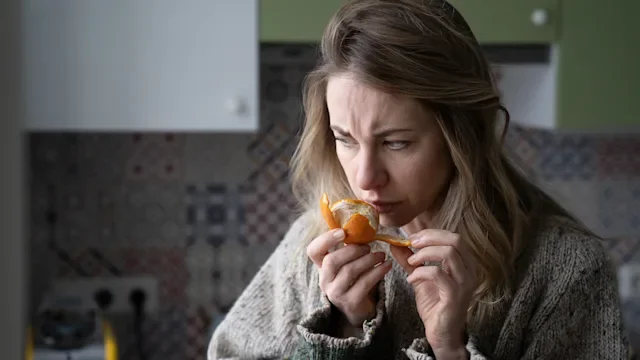 COVID-19 Parosmia and COVID: How Long Changes in Smell Last, Plus Treatment Options Written by Christine Giordano, MDUpdated on Jan 5, 2026 by Christine Giordano, MD • Jan 5, 2026](https://www.goodrx.com/conditions/covid-19/parosmia-after-covid-loss-of-taste-smell)
[ COVID-19 Flurona: Can You Have COVID and Flu at the Same Time? Written by Patricia Pinto-Garcia, MD, MPHUpdated on Jan 5, 2026 by Patricia Pinto-Garcia, MD, MPH • Jan 5, 2026](https://www.goodrx.com/conditions/covid-19/flurona)
[ COVID-19 How Long Does COVID Live on Surfaces Like Food and Clothing? Written by Ana GasconUpdated on Dec 19, 2025 by Ana Gascon • Dec 19, 2025](https://www.goodrx.com/conditions/covid-19/how-long-coronavirus-lives-surfaces-like-food-clothes-wood-glass-steel)
[ COVID-19 Can Your Blood Type Affect COVID-19 Risks? Written by Alina Goldenberg, MD, MAS, FAADUpdated on Dec 19, 2025 by Alina Goldenberg, MD, MAS, FAAD • Dec 19, 2025](https://www.goodrx.com/conditions/covid-19/blood-type-covid-risk)
[ COVID-19 When to Test for COVID-19 After Symptoms and Exposure to Get the Most Accurate Results Written by Angela Dunn, MD, MPHUpdated on Dec 19, 2025 by Angela Dunn, MD, MPH • Dec 19, 2025](https://www.goodrx.com/conditions/covid-19/when-is-the-best-time-to-get-tested-for-covid)
[ COVID-19 Can Nasal Sprays Treat or Prevent COVID? Written by Jennifer Gershman, PharmD, CPh, PACSUpdated on Dec 19, 2025 by Jennifer Gershman, PharmD, CPh, PACS • Dec 19, 2025](https://www.goodrx.com/conditions/covid-19/nasal-spray-covid)
View more
##### Subscribe and save
Get prescription saving tips and more from GoodRx Health. Enter your email to sign up
#### Prices & Discounts
Prices & Discounts
- [Insurance](https://www.goodrx.com/insurance/health-insurance)
- [Mobile apps](https://www.goodrx.com/mobile)
- [GoodRx prescription savings card](https://www.goodrx.com/discount-card)
- [Medications A-Z](https://www.goodrx.com/drugs)
- [Medications by health conditions](https://www.goodrx.com/conditions)
- [Classes of medications](https://www.goodrx.com/classes)
- [Out-of-pocket costs](https://www.goodrx.com/out-of-pocket-costs)
- [Brand-name medications](https://www.goodrx.com/brand)
- [GoodRx for pets](https://www.goodrx.com/pets)
- [GoodRx Gold](https://www.goodrx.com/gold)
- [GoodRx Care](https://www.goodrx.com/care)
#### Tools & Info
Tools & Info
- [How GoodRx works](https://www.goodrx.com/how-goodrx-works)
- [Pharmacies near you](https://www.goodrx.com/pharmacy-near-me)
- [GoodRx for healthcare professionals](https://www.goodrx.com/healthcare-professionals)
#### Health
Health
- [Latest health news](https://www.goodrx.com/health)
- [Video](https://www.goodrx.com/video)
- [Newsletters](https://www.goodrx.com/newsletters)
- [Allergies](https://www.goodrx.com/conditions/allergies)
- [UTI](https://www.goodrx.com/conditions/urinary-tract-infection)
- [Covid-19](https://www.goodrx.com/conditions/covid-19)
- [Seasonal flu](https://www.goodrx.com/conditions/flu)
- [Health questions and answers](https://www.goodrx.com/answers)
#### Support
Support
- [Help & FAQs](https://support.goodrx.com/hc)
- [Accessibility](https://support.goodrx.com/hc/en-us/articles/360032961692-GoodRx-Digital-Accessibility-Statement)
#### Company
Company
- [About GoodRx](https://www.goodrx.com/about)
- [Press](https://www.goodrx.com/press)
- [Research](https://www.goodrx.com/healthcare-access/research)
- [The GoodRx Effect](https://www.goodrx.com/about/our-impact "The GoodRx Effect")
- [GoodRx Helps](https://www.goodrxhelps.org/)
- [Jobs](https://www.goodrx.com/jobs)
- [Investors](https://investors.goodrx.com/)
- [Corporate news](https://www.goodrx.com/corporate)
#### Legal
Legal
- [Privacy Policy](https://www.goodrx.com/about/privacy-policy)
- [Privacy Center](https://www.goodrx.com/about/privacy)
- [Terms of Use](https://support.goodrx.com/hc/en-us/articles/115005225563-Terms-of-Use)
- [Site Disclaimer](https://www.goodrx.com/go/landing-pages-footer-disclaimer-page)
- [Collection Notice](https://support.goodrx.com/hc/en-us/articles/4411678336539)
- [Cookie Preferences](https://www.goodrx.com/conditions/covid-19/loss-of-taste-smell-not-covid)
- [Consumer Health Data Privacy Notice](https://support.goodrx.com/hc/en-us/articles/23203071323291-Consumer-Health-Data-Privacy-Notice)
- [Your Privacy Choices](https://www.goodrx.com/about/privacy/yourprivacychoices)
### Good news for your inbox
Sign up for our newsletter for tips and discounts.
### Download the GoodRx app
[Download the iOS GoodRx app on the App Store, opens in a new window](https://gx9e.app.link/czKZC1PPD4)
[Download the Android GoodRx app on Google Play, opens in a new window](https://gx9e.app.link/ujVxtmXPD4)
### Follow GoodRx
[Instagram, opens in a new window](https://www.instagram.com/goodrx/)
[Twitter, opens in a new window](https://twitter.com/goodrx)
[Facebook, opens in a new window](https://www.facebook.com/goodrx)
[Linkedin, opens in a new window](https://www.linkedin.com/company/goodrx/)
[Threads, opens in a new window](https://www.threads.net/@goodrx)
[Youtube, opens in a new window](https://www.youtube.com/GoodRx/)
[Tiktok, opens in a new window](https://www.tiktok.com/@goodrx)

GoodRx works to make its website accessible to all, including those with disabilities. If you are having difficulty accessing this website, please call or email us at [1-855-268-2822](<tel: +18552682822>) or [ada@goodrx.com](<mailto: ada@goodrx.com>) so that we can provide you with the services you require through alternative means.
Copyright ©2011–2026 GoodRx, Inc.
[](https://www.legitscript.com/websites/?checker_keywords=goodrx.com)[](https://safe.pharmacy/buy-safely/)[](https://www.bbb.org/us/ca/santa-monica/profile/online-pharmacy/goodrx-1216-351397#bbbseal)


 |
| Readable Markdown | ## Key takeaways:
- COVID-19 infection is only one reason why you might lose your sense of taste or smell. Medications, viruses, and medical conditions can also cause loss of taste and smell.
- The chance of full recovery of smell and taste depends on the cause. And it’s different for each person. It can take weeks to months to get your senses back.
- Olfactory training can help you recover. In some cases, steroids may help too.
From freshly baked bread to fragrant flowers, your sense of smell adds richness to daily life. That’s why it can feel unsettling when your sense of smell changes. For many people, losing the sense of smell (anosmia) or taste ([ageusia](https://www.goodrx.com/well-being/diet-nutrition/how-to-eat-well-when-you-cant-taste-anything)) makes them immediately think of COVID-19.
While loss of smell or taste can be a [sign of COVID infection](https://www.goodrx.com/conditions/covid-19/parosmia-after-covid-loss-of-taste-smell), many other things can affect these senses.
Changes in smell and taste sensation are more common than you might think. Almost [1 in 4](https://www.nidcd.nih.gov/health/statistics/quick-statistics-taste-smell) people in the U.S. over the age of 40 report changes in their sense of smell. And 1 in 5 notice changes in their sense of taste. If you’re experiencing changes in taste or smell, here are 10 other causes to consider besides COVID-19.
Yes, many conditions can cause a loss of taste or smell — not just COVID.
Whatever the cause, the problem is linked to changes on the surfaces of your nose or tongue, or in the nerves that control them.
Fortunately, the [most common causes](https://www.frontiersin.org/journals/neurology/articles/10.3389/fneur.2020.569333/full#:~:text=Acute%20viral%20upper%20respiratory%20tract%20infections%20are%20the%20most%20common%20cause%20of%20chronic%20olfactory%20dysfunction) of loss of smell and taste usually get better with time.
Here are 10 things — besides COVID — that can cause a [loss of taste](https://www.goodrx.com/well-being/diet-nutrition/how-to-eat-well-when-you-cant-taste-anything) and smell.
Common cold viruses like [RSV](https://www.goodrx.com/conditions/rsv) and [the flu](https://www.goodrx.com/conditions/flu) infect your body through your nose and mouth. These [upper respiratory infections](https://www.goodrx.com/conditions/upper-respiratory-infection) cause swelling inside your nose. This can damage the lining of the nose to the point that some people [lose their sense of smell for years](https://www.ncbi.nlm.nih.gov/pmc/articles/PMC8067782/#:~:text=Most%20but%20not%20all%20patients%20eventually%20regain%20their%20sense%20of%20smell%20though%20the%20process%20can%20be%20prolonged%2C%20taking%20up%20to%202%20years%20%5B2%2C%203%2C%206%5D.) after a viral illness.
But most of the time, you only notice changes in taste and smell while you’re ill. Once you recover, the swelling inside your nose goes away and your usual sense of taste and smell returns.
If you have [seasonal allergies](https://www.goodrx.com/conditions/allergies) or year-round allergies, you know that allergies can affect your nose. Allergies cause swelling and inflammation inside your nose. Sneezing, a runny nose, and congestion can all lead to issues with smelling. The longer you’ve had [allergies](https://www.goodrx.com/conditions/allergies/symptoms), or the more severe your symptoms are, the [more likely you are](https://pubmed.ncbi.nlm.nih.gov/36124512/) to lose your smell because of them.
People with allergies or certain medical conditions are at risk for developing [nasal polyps](https://www.goodrx.com/conditions/nasal-polyps). These are noncancerous growths that develop in your nose or sinus. Polyps change the shape of your nasal lining. This puts stress on the nerves inside your nose, which can [affect how well you’re able to smell](https://pubmed.ncbi.nlm.nih.gov/11453501/).
## 4\. Tobacco and vape products
Smoking can [affect your sense of smell and taste](https://www.ncbi.nlm.nih.gov/pmc/articles/PMC5783692/). It may also [increase your risk](https://pubmed.ncbi.nlm.nih.gov/23012901/#:~:text=Objectives%3A%20Recent%20studies%20on%20the,be%20associated%20with%20nasal%20polyps.) of developing nasal polyps, making it even harder to smell.
Compare prices and information on the most popular COVID-19 medications.
Other [tobacco products](https://www.ncbi.nlm.nih.gov/pmc/articles/PMC10851189/) — like e-cigarettes (for vaping), cigars, and [chewing tobacco](https://www.ncbi.nlm.nih.gov/pmc/articles/PMC6753787/) — can also affect your sense of smell or taste.
Most people have taken [ibuprofen](https://www.goodrx.com/ibuprofen/what-is) (Advil, Motrin) or [acetaminophen](https://www.goodrx.com/acetaminophen/what-is) (Tylenol) for aches or pains. But did you know these medications can affect your sense of taste? In fact, some of the most [commonly used medications](https://www.ncbi.nlm.nih.gov/pmc/articles/PMC6051304/#:~:text=Drugs%20from%20top%20100%20in%20the%20United%20States%20in%2020178%20that%20elicit%20taste%20or%20smell%20complaints%20or%20disorders%20in%20some%20individuals.2%2C%203%2C%204%2C%205%2C%206) in the U.S. can affect taste or smell, including:
- **Allergy medications:** [Loratadine](https://www.goodrx.com/loratadine/what-is) and [fluticasone](https://www.goodrx.com/flonase/what-is)
- **Antibiotics:** [Amoxicillin](https://www.goodrx.com/amoxicillin/what-is) and [azithromycin](https://www.goodrx.com/azithromycin/what-is)
- **Blood pressure medications:** [Lisinopril](https://www.goodrx.com/lisinopril/what-is) and [metoprolol](https://www.goodrx.com/metoprolol/what-is)
- **Cholesterol-lowering medications:** [Atorvastatin](https://www.goodrx.com/atorvastatin/what-is) and [pravastatin](https://www.goodrx.com/pravastatin/what-is)
- **Reflux medications:** [Omeprazole](https://www.goodrx.com/omeprazole/what-is) and [ranitidine](https://www.goodrx.com/ranitidine/what-is)
Other common medications that can alter your sense of taste or smell include [levothyroxine](https://www.goodrx.com/levothyroxine/what-is), [metformin](https://www.goodrx.com/metformin/what-is), and [zolpidem](https://www.goodrx.com/zolpidem/what-is) (Ambien) — among many others. Keep in mind that these medications may not just decrease your sense of taste or smell. They may also change your sense of taste or smell altogether. For example, lithium can sometimes cause a [metallic taste](https://www.goodrx.com/drugs/side-effects/weird-taste-in-your-mouth-these-drugs-could-be-the-cause).
Smelling and tasting works because nerves from your brain are connected to your nose and tongue. Health conditions that affect these nerves, or the parts of the brain that control them, can change your sense of smell or taste.
Neurologic conditions that can affect your sense of taste or smell [include](https://www.mdpi.com/1422-0067/24/3/2117):
Growing older affects all your senses. These changes are often more noticeable in your [eyesight](https://www.goodrx.com/health-topic/eye) and [hearing](https://www.goodrx.com/health-topic/ear/presbycusis). But your [sense of smell and taste](https://www.nia.nih.gov/health/smell-and-taste) can be affected too. As you get older, the nerves that help with smell [don’t renew](https://www.ncbi.nlm.nih.gov/pmc/articles/PMC7358644/) as easily. [Areas of the brain that help with smell](https://pubmed.ncbi.nlm.nih.gov/23010543/) also change with age. If your sense of smell changes, your sense of taste is usually affected too.
Also, you’re more likely to take more medications or develop neurological conditions as you get older. These added factors can make it harder to smell or taste [over the years](https://www.frontiersin.org/articles/10.3389/fneur.2020.569333/full#:~:text=mucosa%20\(99%2C%20100\).-,Anosmia%20in%20Aging%20and%20Age-Related%20Neurodegenerative%20Disease,-Our%20sense%20of).
Exposure to chemicals, toxins, and metals can affect both taste and smell. They can affect the nerves or sensory cells in the nose and on the tongue. Exposure to solvents, metal dust, or fumes [at work](https://www.ncbi.nlm.nih.gov/pmc/articles/PMC5848455/) or at home can affect your sense of smell and taste.
A very rare cancer called [olfactory neuroblastoma](https://www.ncbi.nlm.nih.gov/pmc/articles/PMC2811627/) can also cause loss of smell. It’s responsible for only 2% of cancers of the nose and sinuses. This cancer starts in the olfactory cells in the nasal cavity. It usually causes obstruction in one side of the nose and [nosebleeds](https://www.goodrx.com/health-topic/nose/what-causes-nosebleeds). But it can also result in anosmia (loss of smell).
It’s worth noting that treatments for other cancers — like [chemotherapy](https://www.cancer.org/cancer/managing-cancer/side-effects/eating-problems/taste-smell-changes.html) and [radiation](https://pubmed.ncbi.nlm.nih.gov/30411162/) — can also affect your sense of smell or taste.
There’s some evidence to suggest that certain vitamin and mineral deficiencies may be linked to changes in smell or [taste](https://www.sciencedirect.com/science/article/pii/S2666149723000488). These vitamins and minerals include:
- Vitamin B12
- [Vitamin D](https://www.ncbi.nlm.nih.gov/pmc/articles/PMC7230220/)
- Vitamin E
- [Zinc](https://pubmed.ncbi.nlm.nih.gov/27178656/)
Changes in taste and smell can last for different amounts of time, depending on the cause. For example:
- **Viruses:** Loss of taste or smell from a common cold virus or the flu lasts about 1 to 2 weeks. Loss of smell or taste from COVID illness can take [several weeks](https://www.goodrx.com/conditions/covid-19/parosmia-after-covid-loss-of-taste-smell) or, in rare cases, [up to a few years](https://www.ncbi.nlm.nih.gov/pmc/articles/PMC8067782/#:~:text=Most%20but%20not%20all%20patients%20eventually%20regain%20their%20sense%20of%20smell%20though%20the%20process%20can%20be%20prolonged%2C%20taking%20up%20to%202%20years%20%5B2%2C%203%2C%206%5D.) to return.
- **Allergies or nasal polyps:** Treating allergies or nasal polyps may restore your sense of smell. This can take several [weeks to months](https://pubmed.ncbi.nlm.nih.gov/9109781/).
- **Smoking:** You can recover your sense of taste and smell after you quit smoking. How quickly they come back depends on [how long](https://www.ncbi.nlm.nih.gov/pmc/articles/PMC6730657/) you smoked. Recovery can take weeks to years.
- **Head trauma:** When you lose your sense of smell or taste after head trauma, you usually recover those senses within a couple months. But sometimes, these sensations never return.
- **Neurological disorders or age:** The loss of smell or taste from neurological disorders or getting older is the [least likely to resolve with time](https://www.egms.de/static/en/journals/cto/2012-10/cto000077.shtml#:~:text=Predictive%20factors,by%20the%20patients.). Your sense of smell and taste might never fully return.
Some people get their sense of taste and smell back [without any treatment](https://pubmed.ncbi.nlm.nih.gov/31604562/). But many people need extra help.
The first step is to talk with your healthcare team. They can review your medications and medical history with you to pinpoint possible causes for your loss of taste and smell. They can offer treatment for medical conditions that may improve your senses. They may also suggest different medications that don’t affect your senses.
Other treatments that can help with anosmia (loss of smell) include:
- **Olfactory training:** Also called [smell retraining](https://www.enthealth.org/be_ent_smart/smell-retraining-therapy/), this involves reteaching your brain to remember different smells over a period of months. Olfactory training can be helpful for most people, regardless of what caused their loss of smell or taste.
- **Steroids:** Medications like [budesonide](https://pubmed.ncbi.nlm.nih.gov/29901865/) can improve the success of olfactory training.
## The bottom line
Not being able to smell or taste can be stressful, regardless of the cause. Many people experience a loss of smell or taste at some point in their lives. COVID-19 illness can cause loss of taste or smell. But many things can cause this including allergies, nasal polyps, and certain medications. Your healthcare team can help you pinpoint the cause of your loss of taste or smell and recommend treatment. Olfactory training may help, regardless of what caused your loss of taste or smell.



Aunna Pourang, MD, graduated from the University of Florida College of Medicine’s Medical Honors Program and is board-certified in family medicine (Mayo Clinic). She is also fellowship-trained in integrative medicine (Academy of Integrative Health and Medicine).


Patricia Pinto-Garcia, MD, MPH, is a medical editor at GoodRx. She is a licensed, board-certified pediatrician with more than a decade of experience in academic medicine.
GoodRx Health has strict sourcing policies and relies on primary sources such as medical organizations, governmental agencies, academic institutions, and peer-reviewed scientific journals. Learn more about how we ensure our content is accurate, thorough, and unbiased by reading our [editorial guidelines](https://www.goodrx.com/about/editorial-guidelines). |
| Shard | 61 (laksa) |
| Root Hash | 16240351626176129661 |
| Unparsed URL | com,goodrx!www,/conditions/covid-19/loss-of-taste-smell-not-covid s443 |