ℹ️ Skipped - page is already crawled
| Filter | Status | Condition | Details |
|---|---|---|---|
| HTTP status | PASS | download_http_code = 200 | HTTP 200 |
| Age cutoff | PASS | download_stamp > now() - 6 MONTH | 0.1 months ago |
| History drop | PASS | isNull(history_drop_reason) | No drop reason |
| Spam/ban | PASS | fh_dont_index != 1 AND ml_spam_score = 0 | ml_spam_score=0 |
| Canonical | PASS | meta_canonical IS NULL OR = '' OR = src_unparsed | Not set |
| Property | Value |
|---|---|
| URL | https://www.fluidrunning.com/understanding-hydrostatic-pressure/ |
| Last Crawled | 2026-04-06 09:40:12 (4 days ago) |
| First Indexed | 2020-08-27 16:55:14 (5 years ago) |
| HTTP Status Code | 200 |
| Meta Title | Understanding Hydrostatic Pressure – Fluid Running |
| Meta Description | null |
| Meta Canonical | null |
| Boilerpipe Text | Hydrostatic pressure defined
“Hydrostatic pressure
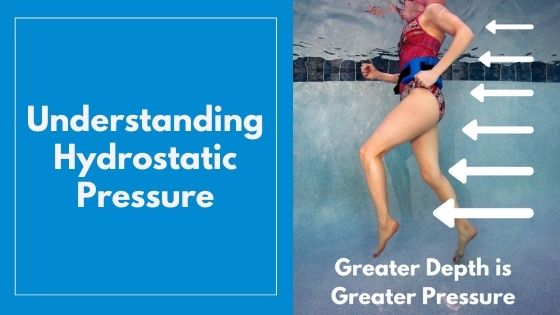
is the pressure exerted by a fluid at rest due to the force of gravity. It’s the pressure you feel when you dive to the bottom of a swimming pool.
Hydrostatic
is a word used to refer to a fluid that is not in motion. So,
hydrostatic pressure
means the pressure “inside” a non-moving fluid—not the pressure exerted by, say, the water coming out of a fire hose. (Thanks Dictionary.com!)”
Difference in water
This hydrostatic pressure has a significant impact on your blood flow and heart rate. When immersed neck-deep in water, hydrostatic pressure pushes blood inward (from the extremities) and upward and therefore cardiac output (the amount of blood the heart pumps through the circulatory system in one minute) increases. Because the heart is pumping more volume, it can’t pump it out as quickly as it can when on land. Target heart rates in deep water average about 10-15 beats per minute lower than on land, even at the same exertion level. Fluid Running, therefore, produces maximal heart efficiency because more blood is pumped with each beat and heart rates are actually lower!
How to calculate heart rate in water
The good news is (and this is important folks), that although heart rates are lower in deep water, it is not an indication of lower exertion. So, when Jennifer stops to do a manual heart rate check (or even if you’re looking at a heart rate monitor) and you calculate your beats per minute (e.g. you count twelve then multiply by 10 = 120) but Jennifer says “now add 10-15 to that number”, you know why! In this example, your heart rate is not 120 but actually anywhere between 130 and 145 because of the added beats due to the effect of hydrostatic pressure. The exact number of extra beats added depends on many factors, including your fitness level and exertion level. The research says that you add 10 beats in your lower aerobic zone and 15 in your higher aerobic zone.
Recover quicker
Another cool benefit of the hydrostatic pressure is that because it forces blood from the extremities and your working muscles to your heart, your heart rate drops quickly when you stop exercising. This means you recover quickly and it is also why we only do a 6-second heart rate check.
Heart works more efficiently
You can learn a lot more about the impact of deep water on your heart (and we’ve listed a scholarly article below) but suffice it to say that we aren’t randomly telling you to add extra beats for no reason. Among the
many
benefits of running in deep water, is the benefit for your heart to work more efficiently and for you to recover more quickly!
https://www.unm.edu/~lkravitz/Article%20folder/aqua.html |
| Markdown | [Skip to content](https://www.fluidrunning.com/understanding-hydrostatic-pressure/#content)
**Free Express U.S. Shipping \$49+**
[Log In](https://www.fluidrunning.com/member/)
**\| [Group](https://www.fluidrunning.com/group/) \| [Try It](https://www.fluidrunning.com/try-it/)**
[](https://www.fluidrunning.com/)
- [How It Works](https://www.fluidrunning.com/how-it-works/)
- [Who It’s For](https://www.fluidrunning.com/who-its-for/)
- [Our Story](https://www.fluidrunning.com/our-story/)
[Shop Now](https://www.fluidrunning.com/shop-products/)
[Shop Now](https://www.fluidrunning.com/shop-products/)
[](https://www.fluidrunning.com/)
**SALE - 20% OFF EVERYTHING**
### Hydrostatic pressure defined
*“Hydrostatic pressure* is the pressure exerted by a fluid at rest due to the force of gravity. It’s the pressure you feel when you dive to the bottom of a swimming pool. *Hydrostatic* is a word used to refer to a fluid that is not in motion. So, *hydrostatic pressure* means the pressure “inside” a non-moving fluid—not the pressure exerted by, say, the water coming out of a fire hose. (Thanks Dictionary.com!)”
#### Difference in water
This hydrostatic pressure has a significant impact on your blood flow and heart rate. When immersed neck-deep in water, hydrostatic pressure pushes blood inward (from the extremities) and upward and therefore cardiac output (the amount of blood the heart pumps through the circulatory system in one minute) increases. Because the heart is pumping more volume, it can’t pump it out as quickly as it can when on land. Target heart rates in deep water average about 10-15 beats per minute lower than on land, even at the same exertion level. Fluid Running, therefore, produces maximal heart efficiency because more blood is pumped with each beat and heart rates are actually lower\!
#### How to calculate heart rate in water
The good news is (and this is important folks), that although heart rates are lower in deep water, it is not an indication of lower exertion. So, when Jennifer stops to do a manual heart rate check (or even if you’re looking at a heart rate monitor) and you calculate your beats per minute (e.g. you count twelve then multiply by 10 = 120) but Jennifer says “now add 10-15 to that number”, you know why! In this example, your heart rate is not 120 but actually anywhere between 130 and 145 because of the added beats due to the effect of hydrostatic pressure. The exact number of extra beats added depends on many factors, including your fitness level and exertion level. The research says that you add 10 beats in your lower aerobic zone and 15 in your higher aerobic zone.
#### Recover quicker
Another cool benefit of the hydrostatic pressure is that because it forces blood from the extremities and your working muscles to your heart, your heart rate drops quickly when you stop exercising. This means you recover quickly and it is also why we only do a 6-second heart rate check.
#### Heart works more efficiently
You can learn a lot more about the impact of deep water on your heart (and we’ve listed a scholarly article below) but suffice it to say that we aren’t randomly telling you to add extra beats for no reason. Among the *many* benefits of running in deep water, is the benefit for your heart to work more efficiently and for you to recover more quickly\!
[https://www.unm.edu/~lkravitz/Article%20folder/aqua.html](https://www.unm.edu/~lkravitz/Article%20folder/aqua.html)
[Get Started With A System](https://www.fluidrunning.com/shop-systems/)
- [How It Works](https://www.fluidrunning.com/how-it-works/)
- [Who It’s For](https://www.fluidrunning.com/who-its-for/)
- [Our Story](https://www.fluidrunning.com/our-story/)
- [Shop Now](https://www.fluidrunning.com/shop-products/)
- [Group](https://www.fluidrunning.com/group/)
- [Try It](https://www.fluidrunning.com/try-it/)
- [My Account](https://www.fluidrunning.com/my-account/)
- [Shopping Cart](https://www.fluidrunning.com/cart/)
- [How It Works](https://www.fluidrunning.com/how-it-works/)
- [Who It’s For](https://www.fluidrunning.com/who-its-for/)
- [Our Story](https://www.fluidrunning.com/our-story/)
- [Shop Now](https://www.fluidrunning.com/shop-products/)
- [Group](https://www.fluidrunning.com/group/)
- [Try It](https://www.fluidrunning.com/try-it/)
- [My Account](https://www.fluidrunning.com/my-account/)
- [Shopping Cart](https://www.fluidrunning.com/cart/)
Shopping Cart

[](https://apps.apple.com/us/app/fluid-running/id1377251019)
[](https://play.google.com/store/apps/details?id=com.fluidrunningh2go.mobileapp&pli=1)
## SHOP
- [Systems](https://www.fluidrunning.com/shop-systems/)
- [Workouts](https://www.fluidrunning.com/shop-workouts/)
- [Equipment](https://www.fluidrunning.com/shop-equipment/)
- [Shipping & Refunds](https://www.fluidrunning.com/shipping-refunds/)
## RESOURCES
- [Success Stories](https://www.fluidrunning.com/success-stories/)
- [In The Press](https://www.fluidrunning.com/in-the-press/)
- [Articles](https://www.fluidrunning.com/articles/)
- [FAQS](https://www.fluidrunning.com/faqs/)
- [Contact](https://www.fluidrunning.com/contact/)
#### **STAY CONNECTED**
Copyright © 2026 Fluid Running
[Privacy Policy](https://www.fluidrunning.com/privacy-policy/) \| [Terms and Conditions](https://www.fluidrunning.com/terms-and-conditions/)
 |
| Readable Markdown | 
### Hydrostatic pressure defined
*“Hydrostatic pressure* is the pressure exerted by a fluid at rest due to the force of gravity. It’s the pressure you feel when you dive to the bottom of a swimming pool. *Hydrostatic* is a word used to refer to a fluid that is not in motion. So, *hydrostatic pressure* means the pressure “inside” a non-moving fluid—not the pressure exerted by, say, the water coming out of a fire hose. (Thanks Dictionary.com!)”
#### Difference in water
This hydrostatic pressure has a significant impact on your blood flow and heart rate. When immersed neck-deep in water, hydrostatic pressure pushes blood inward (from the extremities) and upward and therefore cardiac output (the amount of blood the heart pumps through the circulatory system in one minute) increases. Because the heart is pumping more volume, it can’t pump it out as quickly as it can when on land. Target heart rates in deep water average about 10-15 beats per minute lower than on land, even at the same exertion level. Fluid Running, therefore, produces maximal heart efficiency because more blood is pumped with each beat and heart rates are actually lower\!
#### How to calculate heart rate in water
The good news is (and this is important folks), that although heart rates are lower in deep water, it is not an indication of lower exertion. So, when Jennifer stops to do a manual heart rate check (or even if you’re looking at a heart rate monitor) and you calculate your beats per minute (e.g. you count twelve then multiply by 10 = 120) but Jennifer says “now add 10-15 to that number”, you know why! In this example, your heart rate is not 120 but actually anywhere between 130 and 145 because of the added beats due to the effect of hydrostatic pressure. The exact number of extra beats added depends on many factors, including your fitness level and exertion level. The research says that you add 10 beats in your lower aerobic zone and 15 in your higher aerobic zone.
#### Recover quicker
Another cool benefit of the hydrostatic pressure is that because it forces blood from the extremities and your working muscles to your heart, your heart rate drops quickly when you stop exercising. This means you recover quickly and it is also why we only do a 6-second heart rate check.
#### Heart works more efficiently
You can learn a lot more about the impact of deep water on your heart (and we’ve listed a scholarly article below) but suffice it to say that we aren’t randomly telling you to add extra beats for no reason. Among the *many* benefits of running in deep water, is the benefit for your heart to work more efficiently and for you to recover more quickly\!
[https://www.unm.edu/~lkravitz/Article%20folder/aqua.html](https://www.unm.edu/~lkravitz/Article%20folder/aqua.html) |
| Shard | 171 (laksa) |
| Root Hash | 15705115948566440771 |
| Unparsed URL | com,fluidrunning!www,/understanding-hydrostatic-pressure/ s443 |