ℹ️ Skipped - page is already crawled
| Filter | Status | Condition | Details |
|---|---|---|---|
| HTTP status | PASS | download_http_code = 200 | HTTP 200 |
| Age cutoff | PASS | download_stamp > now() - 6 MONTH | 0.5 months ago |
| History drop | PASS | isNull(history_drop_reason) | No drop reason |
| Spam/ban | PASS | fh_dont_index != 1 AND ml_spam_score = 0 | ml_spam_score=0 |
| Canonical | PASS | meta_canonical IS NULL OR = '' OR = src_unparsed | Not set |
| Property | Value |
|---|---|
| URL | https://www.fastcompany.com/91054836/fukushima-daiichi-nuclear-plant-reactors-melted-fuel |
| Last Crawled | 2026-04-06 08:42:24 (14 days ago) |
| First Indexed | 2024-04-29 11:36:02 (1 year ago) |
| HTTP Status Code | 200 |
| Meta Title | Japan marks 13 years since Fukushima nuclear plant disaster |
| Meta Description | Following a 9.0 magnitude earthquake, a tsunami slammed into the Fukushima Daiichi nuclear power plant—causing radiation leaks and contamination in the area. |
| Meta Canonical | null |
| Boilerpipe Text | Japan on Monday marked 13 years since a massive earthquake and tsunami hit the country’s northern coasts. Nearly 20,000 people died, whole towns were wiped out, and the
Fukushima
Daiichi nuclear power plant was destroyed, creating deep fears of radiation that linger today. As the nation observes the anniversary, the AP explains what is happening now at the plant and in neighboring areas.
What happened 13 years ago?
A magnitude 9.0 earthquake struck on March 11, 2011, causing a tsunami that battered northern coastal towns in Iwate, Miyagi, and Fukushima prefectures. The tsunami, which topped 15 meters (50 feet) in some areas, slammed into the nuclear plant, destroying its power supply and fuel-cooling systems, and causing meltdowns at reactors No. 1, 2, and 3.
Hydrogen explosions caused massive radiation leaks and contamination in the area.
The operator, Tokyo Electric Power Company (TEPCO), says that the tsunami couldn’t have been anticipated. Government and independent investigations and some court decisions have said the accident was the result of human error, safety negligence, lax oversight by regulators, and collusion.
Subscribe to the Daily newsletter.
Fast Company's trending stories delivered to you every day
Japan has since introduced stricter safety standards and, at one point, shifted to a nuclear energy phaseout. Prime Minister Fumio Kishida’s government reversed that policy and has accelerated restarts of workable reactors to maintain nuclear power as a main source of Japan’s power supply.
A deadly January 1 earthquake in Japan’s North Central region destroyed many homes and roads but didn’t damage an idled nuclear power plant. Even so, it caused worry that current evacuation plans that solely focus on radiation leaks could be unworkable.
The nation marked a moment of silence at 2:46 p.m. Monday, with Kishida attending a memorial in Fukushima.
What happened to people in the area?
About 20,000 of more than 160,000 evacuated residents across Fukushima still haven’t returned home.
Decontamination work before the Tokyo Olympics meant to showcase Fukushima’s recovery led to the elimination of some no-go zones, but they remain in 7 of 12 towns that had been fully or partially off-limits.
In Futaba, the hardest-hit town and a cohost of the Fukushima Daiichi plant, a small area was opened in 2022. About 100 people, or 1.5% of the pre-disaster population, have returned to live. The other host town, Okuma, which along with Futaba sacrificed part of its land to build an interim storage site for nuclear waste gathered from the decontamination, has seen 6% of its former residents return.
Annual surveys show the majority of evacuees have no intention of returning home, citing lack of jobs, schools, and lost communities, as well as radiation concerns.
Residents who have raised radiation worries or linked it to their health problems have come under attack for hurting Fukushima’s reputation.
The disaster-hit towns, including those in Iwate and Miyagi prefectures, have seen sharp population drops.
Fukushima Governor Masao Uchibori said on NHK-TV that a growing number of young people want to move to Fukushima to open businesses or help in the reconstruction, and he expressed hope that more residents will return.
What about treated radioactive water discharges?
Last August, Fukushima Daiichi began discharging treated water into the sea, and is currently releasing a fourth 7,800-ton batch of treated water. So far, daily seawater sampling results have met safety standards. The plan has faced protests from local fishers and neighboring countries,
especially China
, which has banned Japanese seafood imports.
Fukushima Daiichi has struggled to handle the contaminated water since the 2011 meltdowns. TEPCO says the start of the process is a milestone and removing the tanks is crucial to make space for facilities needed as decommissioning progresses.
The contaminated cooling water is pumped up, treated, and stored in about 1,000 tanks. The government and TEPCO say the water is diluted with massive seawater before release, making it safer than international standards.
What about local fishing?
Despite earlier fears that the water discharge would further hurt Fukushima’s hard-hit fishing industry, they have not damaged its reputation domestically. China’s ban on Japanese seafood, which mostly hit scallop exporters in Hokkaido, apparently prompted Japanese consumers to eat more Fukushima seafood.
Sampling and monitoring by the International Atomic Energy Agency have also boosted confidence in local fish.
Fukushima fishing returned to normal operations in 2021, and the local catch is now about one-fifth of its pre-disaster level because of a decline in the fishing population and smaller catch sizes.
The government has earmarked 10 billion yen ($680 million) to support Fukushima fisheries.
Any progress removing melted fuel?
The contents of the three reactors is still largely a mystery. Little is known, for instance, about the melted fuel’s condition or exactly where it’s located in the reactors. Not even a spoonful of the fuel has been removed.
About 880 tons of melted nuclear fuel remain inside the three damaged reactors, and Japanese officials say removing it would take 30 to 40 years. Experts call that timeline overly optimistic. The amount of melted fuel is 10 times that removed from Three Mile Island following its 1979 partial-core melt.
Robotic probes have glimpsed inside the three reactors, but their investigation has been hampered by technical glitches, high radiation, and other complications.
It’s crucial for officials to understand the data from melted debris so they can make a plan to remove it safely. TEPCO aims to get the first sample out later this year from the least-damaged No. 2 reactor.
TEPCO has been trying to get the sample by using a robotic arm. Officials have struggled to get the robot past the wreckage, and hope that, by October, they can use a simpler device that looks like a fishing rod.
The fuel in the worst-damaged No. 1 reactor mostly fell from the core to the bottom of its primary containment vessel. Some of it penetrated and mixed with the concrete foundation, making removal extremely difficult.
In February, the plant made its first drone flight into the primary containment vessel to investigate the melted debris and examine how the fuel initially fell from the core. But a second day of exploration was canceled because a data transmission robot failed.
Is a 2051 completion possible?
The government has stuck to its initial target for a completed decommissioning by 2051, but it hasn’t defined what that means.
The lack of data, technology, and plans on what to do with the radioactive melted fuel and other nuclear waste make it difficult to understand what’s in store for the plant and surrounding areas when the cleanup ends, according to TEPCO’s decommissioning company chief, Akira Ono.
An overly ambitious schedule could result in unnecessary radiation exposure for plant workers and excess environmental damage, experts say.
—Mari Yamaguchi, Associated Press
The final deadline for Fast Company's
Innovation by Design Awards
is Friday, April 10, at 11:59 p.m. PT.
Apply today. |
| Markdown | 
LOGIN
[](https://www.fastcompany.com/)
[SUBSCRIBE](https://www.fastcompany.com/subscribe?itm_source=topnav&itm_medium=button&itm_campaign=sticky)
- [Premium](https://www.fastcompany.com/premium?itm_source=dek&itm_medium=lander&itm_campaign=main)
- [Tech](https://www.fastcompany.com/technology)
- [Design](https://www.fastcompany.com/co-design)
- [News](https://www.fastcompany.com/news)
- [Leadership](https://www.fastcompany.com/leadership-2)
- [Work Life](https://www.fastcompany.com/work-life)
- [Games](https://www.fastcompany.com/games)
- [Podcasts](https://www.fastcompany.com/podcasts)
- [Video](https://www.fastcompany.com/videos)
- [INNOVATION FESTIVAL](https://www.fastcompany.com/section/fast-company-innovation-festival)
\|
[Custom Studio](https://www.fastcompany.com/fcw)
- [IBM](https://www.fastcompany.com/fcw/ibm)
- [Texas A\&M University](https://www.fastcompany.com/fcw/texas-am-university)

advertisement
03-11-2024[IMPACT](https://www.fastcompany.com/ideas)
[Japan marks 13 years since disaster struck Fukushima. Damaged nuclear reactors still have tons of melted fuel](https://www.fastcompany.com/91054836/fukushima-daiichi-nuclear-plant-reactors-melted-fuel)
Japan’s government has stuck to its initial target for a completed decommissioning of the plant by 2051, but it hasn’t defined what that means.
SHARE
Facebook
LinkedIn
Bluesky
X
Link
ADD ON GOOGLE
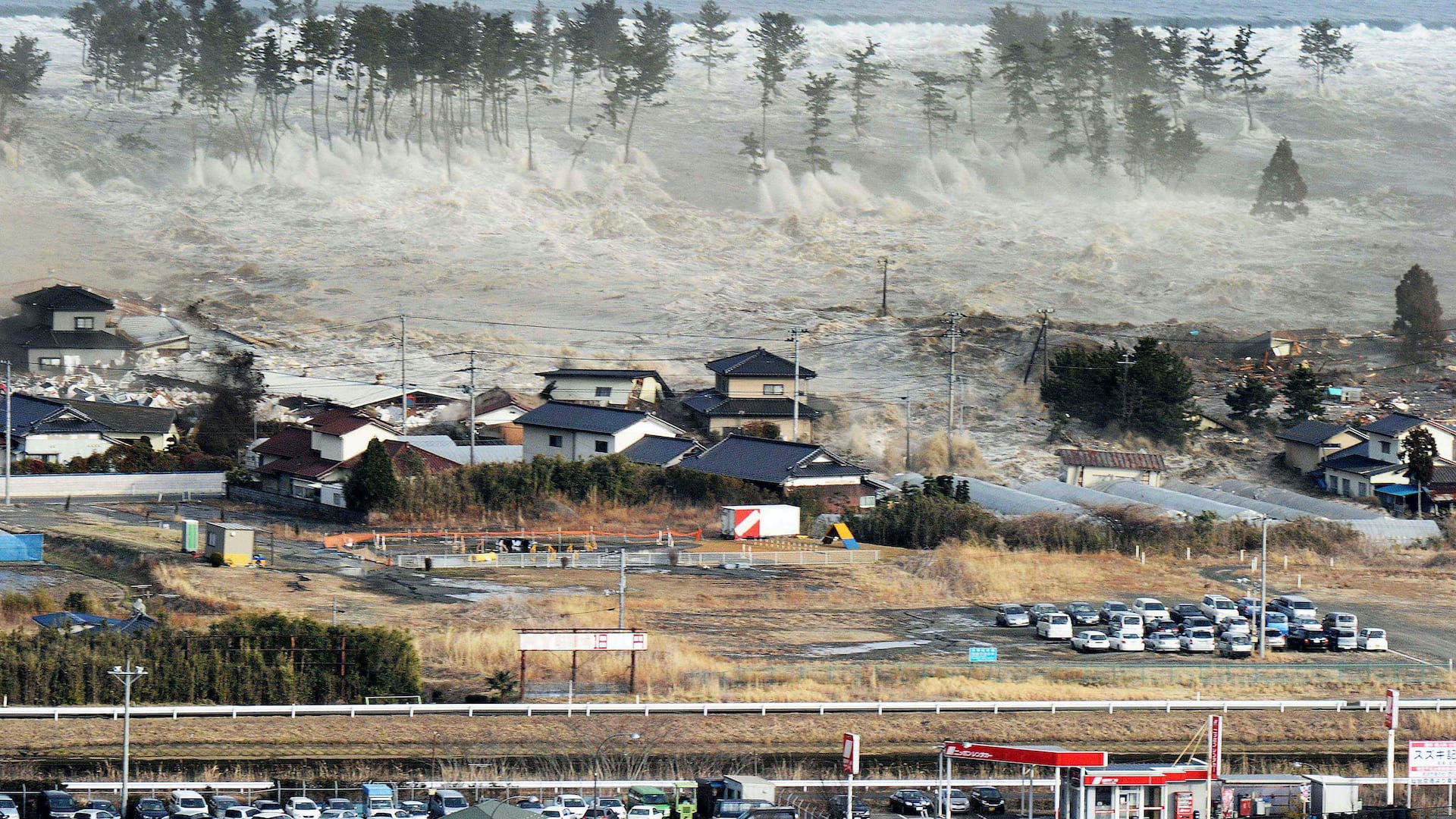
Waves from a tsunami hit residences after a powerful earthquake in Natori, Miyagi prefecture, Japan, on March 11, 2011. Japan on Monday, March 11, 2024, marked 13 years since a massive earthquake and tsunami hit the country’s northern coasts. \[Photo: Kyodo News via AP, File\]
BY [Associated Press](https://www.fastcompany.com/user/associatedpress)
Japan on Monday marked 13 years since a massive earthquake and tsunami hit the country’s northern coasts. Nearly 20,000 people died, whole towns were wiped out, and the [Fukushima](https://www.fastcompany.com/section/fukushima) Daiichi nuclear power plant was destroyed, creating deep fears of radiation that linger today. As the nation observes the anniversary, the AP explains what is happening now at the plant and in neighboring areas.
## What happened 13 years ago?
A magnitude 9.0 earthquake struck on March 11, 2011, causing a tsunami that battered northern coastal towns in Iwate, Miyagi, and Fukushima prefectures. The tsunami, which topped 15 meters (50 feet) in some areas, slammed into the nuclear plant, destroying its power supply and fuel-cooling systems, and causing meltdowns at reactors No. 1, 2, and 3.
Hydrogen explosions caused massive radiation leaks and contamination in the area.
The operator, Tokyo Electric Power Company (TEPCO), says that the tsunami couldn’t have been anticipated. Government and independent investigations and some court decisions have said the accident was the result of human error, safety negligence, lax oversight by regulators, and collusion.

Subscribe to the Daily newsletter.Fast Company's trending stories delivered to you every day
[Privacy Policy](https://www.mansueto.com/privacy-policy/)
\|
[Fast Company Newsletters](https://www.fastcompany.com/newsletters)
Japan has since introduced stricter safety standards and, at one point, shifted to a nuclear energy phaseout. Prime Minister Fumio Kishida’s government reversed that policy and has accelerated restarts of workable reactors to maintain nuclear power as a main source of Japan’s power supply.
A deadly January 1 earthquake in Japan’s North Central region destroyed many homes and roads but didn’t damage an idled nuclear power plant. Even so, it caused worry that current evacuation plans that solely focus on radiation leaks could be unworkable.
The nation marked a moment of silence at 2:46 p.m. Monday, with Kishida attending a memorial in Fukushima.
## What happened to people in the area?
About 20,000 of more than 160,000 evacuated residents across Fukushima still haven’t returned home.
Decontamination work before the Tokyo Olympics meant to showcase Fukushima’s recovery led to the elimination of some no-go zones, but they remain in 7 of 12 towns that had been fully or partially off-limits.
In Futaba, the hardest-hit town and a cohost of the Fukushima Daiichi plant, a small area was opened in 2022. About 100 people, or 1.5% of the pre-disaster population, have returned to live. The other host town, Okuma, which along with Futaba sacrificed part of its land to build an interim storage site for nuclear waste gathered from the decontamination, has seen 6% of its former residents return.
Annual surveys show the majority of evacuees have no intention of returning home, citing lack of jobs, schools, and lost communities, as well as radiation concerns.
Residents who have raised radiation worries or linked it to their health problems have come under attack for hurting Fukushima’s reputation.
The disaster-hit towns, including those in Iwate and Miyagi prefectures, have seen sharp population drops.
Fukushima Governor Masao Uchibori said on NHK-TV that a growing number of young people want to move to Fukushima to open businesses or help in the reconstruction, and he expressed hope that more residents will return.
## What about treated radioactive water discharges?
Last August, Fukushima Daiichi began discharging treated water into the sea, and is currently releasing a fourth 7,800-ton batch of treated water. So far, daily seawater sampling results have met safety standards. The plan has faced protests from local fishers and neighboring countries, [especially China](https://www.fastcompany.com/90624742/highly-irresponsible-china-fishers-blast-japans-plan-to-release-radioactive-water), which has banned Japanese seafood imports.
Fukushima Daiichi has struggled to handle the contaminated water since the 2011 meltdowns. TEPCO says the start of the process is a milestone and removing the tanks is crucial to make space for facilities needed as decommissioning progresses.
The contaminated cooling water is pumped up, treated, and stored in about 1,000 tanks. The government and TEPCO say the water is diluted with massive seawater before release, making it safer than international standards.
## What about local fishing?
Despite earlier fears that the water discharge would further hurt Fukushima’s hard-hit fishing industry, they have not damaged its reputation domestically. China’s ban on Japanese seafood, which mostly hit scallop exporters in Hokkaido, apparently prompted Japanese consumers to eat more Fukushima seafood.
Sampling and monitoring by the International Atomic Energy Agency have also boosted confidence in local fish.
advertisement
Fukushima fishing returned to normal operations in 2021, and the local catch is now about one-fifth of its pre-disaster level because of a decline in the fishing population and smaller catch sizes.
The government has earmarked 10 billion yen (\$680 million) to support Fukushima fisheries.
## Any progress removing melted fuel?
The contents of the three reactors is still largely a mystery. Little is known, for instance, about the melted fuel’s condition or exactly where it’s located in the reactors. Not even a spoonful of the fuel has been removed.
About 880 tons of melted nuclear fuel remain inside the three damaged reactors, and Japanese officials say removing it would take 30 to 40 years. Experts call that timeline overly optimistic. The amount of melted fuel is 10 times that removed from Three Mile Island following its 1979 partial-core melt.
Robotic probes have glimpsed inside the three reactors, but their investigation has been hampered by technical glitches, high radiation, and other complications.
It’s crucial for officials to understand the data from melted debris so they can make a plan to remove it safely. TEPCO aims to get the first sample out later this year from the least-damaged No. 2 reactor.
TEPCO has been trying to get the sample by using a robotic arm. Officials have struggled to get the robot past the wreckage, and hope that, by October, they can use a simpler device that looks like a fishing rod.
The fuel in the worst-damaged No. 1 reactor mostly fell from the core to the bottom of its primary containment vessel. Some of it penetrated and mixed with the concrete foundation, making removal extremely difficult.
In February, the plant made its first drone flight into the primary containment vessel to investigate the melted debris and examine how the fuel initially fell from the core. But a second day of exploration was canceled because a data transmission robot failed.
## Is a 2051 completion possible?
The government has stuck to its initial target for a completed decommissioning by 2051, but it hasn’t defined what that means.
The lack of data, technology, and plans on what to do with the radioactive melted fuel and other nuclear waste make it difficult to understand what’s in store for the plant and surrounding areas when the cleanup ends, according to TEPCO’s decommissioning company chief, Akira Ono.
An overly ambitious schedule could result in unnecessary radiation exposure for plant workers and excess environmental damage, experts say.
*—Mari Yamaguchi, Associated Press*
*The final deadline for Fast Company's [Innovation by Design Awards](https://www.fastcompany.com/apply/innovation-by-design?utm_source=fcwebsite&utm_medium=onsite&utm_campaign=IBD) is Friday, April 10, at 11:59 p.m. PT. [Apply today.](https://www.fastcompany.com/apply/innovation-by-design?utm_source=fcwebsite&utm_medium=onsite&utm_campaign=IBD)*
***
#### Explore Topics
- [fukushima nuclear plant](https://www.fastcompany.com/section/fukushima-nuclear-plant)
advertisement
Featured Video
How American independent bookstores made a massive comeback
Amazon once seemed poised to wipe out the American bookstore. As online shopping exploded in the late 1990s and early 2000s, independent shops struggled to compete with endless inventory and lower prices. By 2009, many believed indie bookstores were on the brink of extinction. But instead of disappearing, they adapted. The future of books, it turns out, isn’t just online. It’s local.
More Videos
0 of 1 minute, 27 secondsVolume 0%
Press shift question mark to access a list of keyboard shortcuts
Keyboard Shortcuts
EnabledDisabled
Shortcuts Open/Close/ or ?
Play/PauseSPACE
Increase Volume↑
Decrease Volume↓
Seek Forward→
Seek Backward←
Captions On/Offc
Fullscreen/Exit Fullscreenf
Mute/Unmutem
Decrease Caption Size\-
Increase Caption Size\+ or =
Seek %0-9
Next Up
Talking techie typeface with Fast Company's creative director
03:02
Auto270p
1080p
720p
406p
270p
180p
Live
00:02
01:24
01:27
More Videos
Close
### How American independent bookstores made a massive comeback
advertisement
#### Technology↓
[Artificial Intelligence](https://www.fastcompany.com/section/artificial-intelligence)
[Energy](https://www.fastcompany.com/section/energy)
[EVs/Transportation](https://www.fastcompany.com/section/evs)
[Innovation](https://www.fastcompany.com/section/innovation)
[Internet Culture](https://www.fastcompany.com/section/internet-culture)
[Security](https://www.fastcompany.com/section/security)
[Social Media](https://www.fastcompany.com/section/social-media)
#### Design↓
[Architecture](https://www.fastcompany.com/section/architecture)
[Branding](https://www.fastcompany.com/section/branding)
[Fashion](https://www.fastcompany.com/section/fashion)
[Marketing](https://www.fastcompany.com/section/marketing)
[Product Design](https://www.fastcompany.com/section/product-design)
[Retail](https://www.fastcompany.com/section/retail)
[User Experience](https://www.fastcompany.com/91054836/section/user-experience)
#### News↓
[Business](https://www.fastcompany.com/section/business)
[Climate Change](https://www.fastcompany.com/section/climate-change)
[Food](https://www.fastcompany.com/section/food)
[Entertainment](https://www.fastcompany.com/section/Entertainment)
[Health](https://www.fastcompany.com/section/health)
[Housing Market](https://www.fastcompany.com/section/housing-market)
[Politics](https://www.fastcompany.com/section/politics)
#### Work Life↓
[Careers](https://www.fastcompany.com/section/careers)
[Emotional Intelligence](https://www.fastcompany.com/section/emotional-intelligence)
[DEI](https://www.fastcompany.com/section/dei)
[Future of Work](https://www.fastcompany.com/section/the-future-of-work)
[Labor](https://www.fastcompany.com/section/labor)
[Health Care](https://www.fastcompany.com/section/healthcare)
[Productivity](https://www.fastcompany.com/section/productivity)
#### Lists↓
[Best Workplaces for Innovators](https://www.fastcompany.com/best-workplaces-for-innovators/list)
[Brands That Matter](https://www.fastcompany.com/brands-that-matter/list)
[Innovation By Design](https://www.fastcompany.com/innovation-by-design/list)
[Most Innovative Companies](https://www.fastcompany.com/most-innovative-companies/list)
[Next Big Things in Tech](https://www.fastcompany.com/next-big-things-in-tech/list)
[World Changing Ideas](https://www.fastcompany.com/world-changing-ideas/list)
[Ignition Schools](https://www.fastcompany.com/section/ignition-schools)
#### Leadership↓
[Modern CEO](https://www.fastcompany.com/section/modern-ceo)
[AI at Work](https://www.fastcompany.com/section/ai-at-work)
[Hiring](https://www.fastcompany.com/section/hiring)
#### More↓
[Games](https://www.fastcompany.com/games)
[Events](https://www.fastcompany.com/events)
[Video](https://www.fastcompany.com/videos)
[Podcasts](https://www.fastcompany.com/podcasts)
Fast Company & Inc © 2026 Mansueto Ventures, LLC
[](https://www.mansueto.com/vendor-policies/)
[Advertise](https://www.fastcompany.com/90516811/fast-company-mediakit)
[Careers](https://www.mansueto.com/careers/)
[Subscribe](https://www.fastcompany.com/subscribe?itm_source=footer&itm_medium=button&itm_campaign=bottom)
[Privacy Policy](https://www.mansueto.com/privacy-policy/)
[Notice of Collection](https://www.mansueto.com/privacy-policy/#collection)
[Permissions](https://kudos.fastcompany.com/)
[Help Center](https://fastcompany.zendesk.com/hc/en-us)
[About Us](https://www.fastcompany.com/about-us)
[Sitemap](https://www.fastcompany.com/sitemap)
[](https://www.newsguardtech.com/ratings/rating-process-criteria/)

Fastcompany.com adheres to NewsGuard’s nine standards of credibility and transparency. [Learn More](https://www.newsguardtech.com/ratings/rating-process-criteria/)


[search by queryly](https://www.queryly.com/)
[Advanced Search]()
 |
| Readable Markdown | Japan on Monday marked 13 years since a massive earthquake and tsunami hit the country’s northern coasts. Nearly 20,000 people died, whole towns were wiped out, and the [Fukushima](https://www.fastcompany.com/section/fukushima) Daiichi nuclear power plant was destroyed, creating deep fears of radiation that linger today. As the nation observes the anniversary, the AP explains what is happening now at the plant and in neighboring areas.
## What happened 13 years ago?
A magnitude 9.0 earthquake struck on March 11, 2011, causing a tsunami that battered northern coastal towns in Iwate, Miyagi, and Fukushima prefectures. The tsunami, which topped 15 meters (50 feet) in some areas, slammed into the nuclear plant, destroying its power supply and fuel-cooling systems, and causing meltdowns at reactors No. 1, 2, and 3.
Hydrogen explosions caused massive radiation leaks and contamination in the area.
The operator, Tokyo Electric Power Company (TEPCO), says that the tsunami couldn’t have been anticipated. Government and independent investigations and some court decisions have said the accident was the result of human error, safety negligence, lax oversight by regulators, and collusion.

Subscribe to the Daily newsletter.Fast Company's trending stories delivered to you every day
Japan has since introduced stricter safety standards and, at one point, shifted to a nuclear energy phaseout. Prime Minister Fumio Kishida’s government reversed that policy and has accelerated restarts of workable reactors to maintain nuclear power as a main source of Japan’s power supply.
A deadly January 1 earthquake in Japan’s North Central region destroyed many homes and roads but didn’t damage an idled nuclear power plant. Even so, it caused worry that current evacuation plans that solely focus on radiation leaks could be unworkable.
The nation marked a moment of silence at 2:46 p.m. Monday, with Kishida attending a memorial in Fukushima.
## What happened to people in the area?
About 20,000 of more than 160,000 evacuated residents across Fukushima still haven’t returned home.
Decontamination work before the Tokyo Olympics meant to showcase Fukushima’s recovery led to the elimination of some no-go zones, but they remain in 7 of 12 towns that had been fully or partially off-limits.
In Futaba, the hardest-hit town and a cohost of the Fukushima Daiichi plant, a small area was opened in 2022. About 100 people, or 1.5% of the pre-disaster population, have returned to live. The other host town, Okuma, which along with Futaba sacrificed part of its land to build an interim storage site for nuclear waste gathered from the decontamination, has seen 6% of its former residents return.
Annual surveys show the majority of evacuees have no intention of returning home, citing lack of jobs, schools, and lost communities, as well as radiation concerns.
Residents who have raised radiation worries or linked it to their health problems have come under attack for hurting Fukushima’s reputation.
The disaster-hit towns, including those in Iwate and Miyagi prefectures, have seen sharp population drops.
Fukushima Governor Masao Uchibori said on NHK-TV that a growing number of young people want to move to Fukushima to open businesses or help in the reconstruction, and he expressed hope that more residents will return.
## What about treated radioactive water discharges?
Last August, Fukushima Daiichi began discharging treated water into the sea, and is currently releasing a fourth 7,800-ton batch of treated water. So far, daily seawater sampling results have met safety standards. The plan has faced protests from local fishers and neighboring countries, [especially China](https://www.fastcompany.com/90624742/highly-irresponsible-china-fishers-blast-japans-plan-to-release-radioactive-water), which has banned Japanese seafood imports.
Fukushima Daiichi has struggled to handle the contaminated water since the 2011 meltdowns. TEPCO says the start of the process is a milestone and removing the tanks is crucial to make space for facilities needed as decommissioning progresses.
The contaminated cooling water is pumped up, treated, and stored in about 1,000 tanks. The government and TEPCO say the water is diluted with massive seawater before release, making it safer than international standards.
## What about local fishing?
Despite earlier fears that the water discharge would further hurt Fukushima’s hard-hit fishing industry, they have not damaged its reputation domestically. China’s ban on Japanese seafood, which mostly hit scallop exporters in Hokkaido, apparently prompted Japanese consumers to eat more Fukushima seafood.
Sampling and monitoring by the International Atomic Energy Agency have also boosted confidence in local fish.
Fukushima fishing returned to normal operations in 2021, and the local catch is now about one-fifth of its pre-disaster level because of a decline in the fishing population and smaller catch sizes.
The government has earmarked 10 billion yen (\$680 million) to support Fukushima fisheries.
## Any progress removing melted fuel?
The contents of the three reactors is still largely a mystery. Little is known, for instance, about the melted fuel’s condition or exactly where it’s located in the reactors. Not even a spoonful of the fuel has been removed.
About 880 tons of melted nuclear fuel remain inside the three damaged reactors, and Japanese officials say removing it would take 30 to 40 years. Experts call that timeline overly optimistic. The amount of melted fuel is 10 times that removed from Three Mile Island following its 1979 partial-core melt.
Robotic probes have glimpsed inside the three reactors, but their investigation has been hampered by technical glitches, high radiation, and other complications.
It’s crucial for officials to understand the data from melted debris so they can make a plan to remove it safely. TEPCO aims to get the first sample out later this year from the least-damaged No. 2 reactor.
TEPCO has been trying to get the sample by using a robotic arm. Officials have struggled to get the robot past the wreckage, and hope that, by October, they can use a simpler device that looks like a fishing rod.
The fuel in the worst-damaged No. 1 reactor mostly fell from the core to the bottom of its primary containment vessel. Some of it penetrated and mixed with the concrete foundation, making removal extremely difficult.
In February, the plant made its first drone flight into the primary containment vessel to investigate the melted debris and examine how the fuel initially fell from the core. But a second day of exploration was canceled because a data transmission robot failed.
## Is a 2051 completion possible?
The government has stuck to its initial target for a completed decommissioning by 2051, but it hasn’t defined what that means.
The lack of data, technology, and plans on what to do with the radioactive melted fuel and other nuclear waste make it difficult to understand what’s in store for the plant and surrounding areas when the cleanup ends, according to TEPCO’s decommissioning company chief, Akira Ono.
An overly ambitious schedule could result in unnecessary radiation exposure for plant workers and excess environmental damage, experts say.
*—Mari Yamaguchi, Associated Press*
*The final deadline for Fast Company's [Innovation by Design Awards](https://www.fastcompany.com/apply/innovation-by-design?utm_source=fcwebsite&utm_medium=onsite&utm_campaign=IBD) is Friday, April 10, at 11:59 p.m. PT. [Apply today.](https://www.fastcompany.com/apply/innovation-by-design?utm_source=fcwebsite&utm_medium=onsite&utm_campaign=IBD)* |
| Shard | 14 (laksa) |
| Root Hash | 6875757449678434414 |
| Unparsed URL | com,fastcompany!www,/91054836/fukushima-daiichi-nuclear-plant-reactors-melted-fuel s443 |