ℹ️ Skipped - page is already crawled
| Filter | Status | Condition | Details |
|---|---|---|---|
| HTTP status | PASS | download_http_code = 200 | HTTP 200 |
| Age cutoff | PASS | download_stamp > now() - 6 MONTH | 0.1 months ago |
| History drop | PASS | isNull(history_drop_reason) | No drop reason |
| Spam/ban | PASS | fh_dont_index != 1 AND ml_spam_score = 0 | ml_spam_score=0 |
| Canonical | PASS | meta_canonical IS NULL OR = '' OR = src_unparsed | Not set |
| Property | Value | ||||||
|---|---|---|---|---|---|---|---|
| URL | https://www.experimentarchive.com/experiments/brownian-motion/ | ||||||
| Last Crawled | 2026-04-19 15:49:39 (3 days ago) | ||||||
| First Indexed | 2022-10-04 07:08:17 (3 years ago) | ||||||
| HTTP Status Code | 200 | ||||||
| Content | |||||||
| Meta Title | Brownian motion | ||||||
| Meta Description | Pour food coloring in hot and cold water and see what happens. A simple but oh so important experiment about temperature and particles. | ||||||
| Meta Canonical | null | ||||||
| Boilerpipe Text | Fun and easy science experiments for kids and adults.
Physics
Pour food coloring in hot and cold water and see what happens. A simple but oh so important experiment about temperature and particles.
Gilla:
Dela:
Video
Materials
2 drinking glasses
Food coloring
Water
Step 1
Pour a glass of hot water and a glass with the same amount of cold water (the greater the temperature difference, the clearer the result, but the hottest and coldest from the tap will be good enough).
Step 2
Wait a few minutes until the water is still.
Step 3
Add the same amount of food coloring to both glasses.
Step 4
Note how the color spreads in the glasses. Soon the color has spread completely in the hot water, but not in the cold water!
Short explanation
Water molecules move all the time - and they move more the hotter the water is. The more they move, the faster the food coloring spreads among them.
Long explanation
Temperature is a measure of how much the particles in a chemical substance move. The higher the temperature of a chemical substance, the more the particles in it move. If a chemical substance consists of solitary atoms, as, for example, a noble gas does, the atoms move up-down, right-left and forward-backward (translational movement), but they also rotate and vibrate. If a chemical substance consists of many atoms composed of larger molecules or ionic compounds, most of the movement is only vibrations. However, water molecules are quite small so they move both translationally, rotate and vibrate.
The fact that particles constantly move means they collide with each other. Therefore, if you look at an individual particle, it looks like it's moving randomly here and there. This random movement of particles causes a substance to move from high to low concentration over time - thus spreading evenly. This process of even distribution is called
diffusion
.
When the food color is added, each color molecule will be pushed around by the surrounding water molecules. If you would only look at one color molecule it would move randomly about. This phenomenon is called
Brownian motion
, after the botanist Robert Brown. He saw this happening to pollen grains in water. Albert Einstein later studied the phenomenon and made it a strong argument for the existence of atoms and molecules.
A single water molecule can also be said to undergo Brownian motion, although it's hard (or impossible?) to observe a single water molecule among all the others.
Diffusion can be thought of as a macroscopic manifestation of Brownian motion.
In this demonstration, you will see how the food color and the water mix. This happens by diffusion. Both the water and the color diffuse. The difference between the glasses is the temperature of the water. The higher the temperature of a substance, the faster the particles in it move and the faster diffusion goes.
Experiment
You can turn this demonstration into an experiment. This will make it a better
science project
. To do that, try answering one of the following questions. The answer to the question will be your hypothesis. Then test the hypothesis by doing the experiment.
What happens if you use milk instead of food coloring?
What happens if you use cooking oil instead of food coloring?
What happens if you use sugar instead of food coloring?
What happens if you increase the temperature difference between the glasses?
What happens if you use less food coloring?
What happens if you use two food colors in each glass?
What happens if you pour in larger particles, such as sesame seeds?
Gilla:
Dela: | ||||||
| Markdown | | | | |
|---|---|---|
| | | |
| Gilla: | | Dela: |
| | | |
| Gilla: | | Dela: |
The Experiment Archive by Ludvig Wellander. Fun and easy science experiments for school or your home. Biology, chemistry, physics, earth science, astronomy, technology, fire, air och water. Photos and videos. | ||||||
| Readable Markdown | Fun and easy science experiments for kids and adults.
[Physics](https://www.experimentarchive.com/physics/)
Pour food coloring in hot and cold water and see what happens. A simple but oh so important experiment about temperature and particles.
| | | |
|---|---|---|
| Gilla: | | Dela: |
## Video

## Materials
- 2 drinking glasses
- Food coloring
- Water
## Step 1
 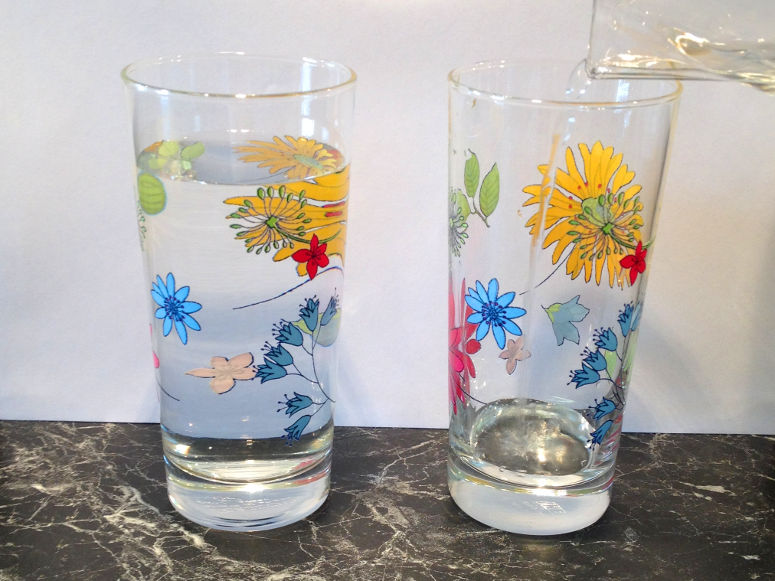
Pour a glass of hot water and a glass with the same amount of cold water (the greater the temperature difference, the clearer the result, but the hottest and coldest from the tap will be good enough).
## Step 2
 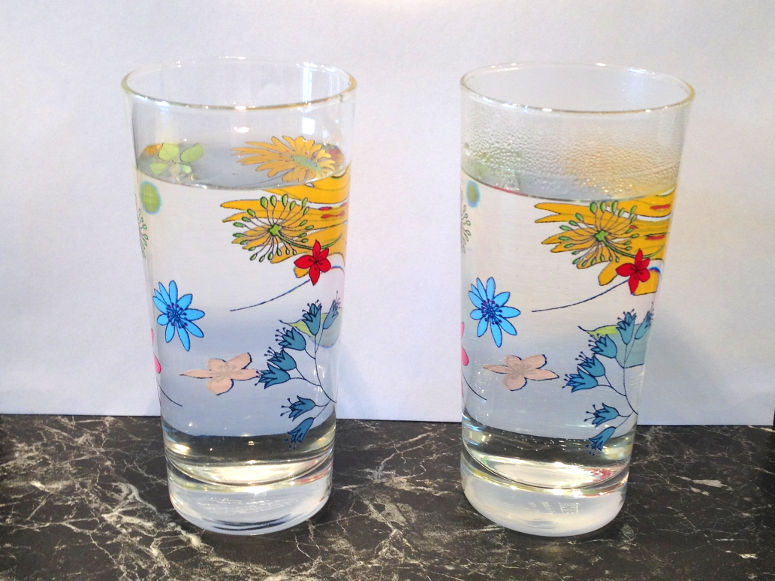
Wait a few minutes until the water is still.
## Step 3
 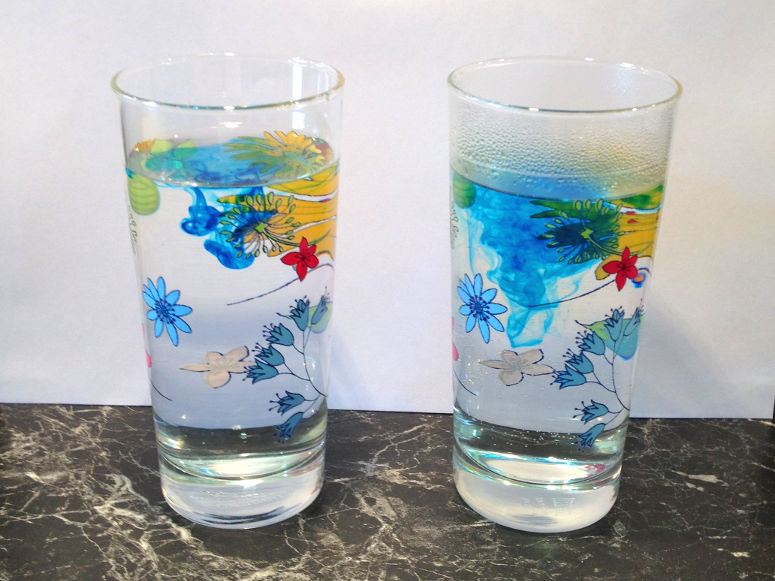
Add the same amount of food coloring to both glasses.
## Step 4
 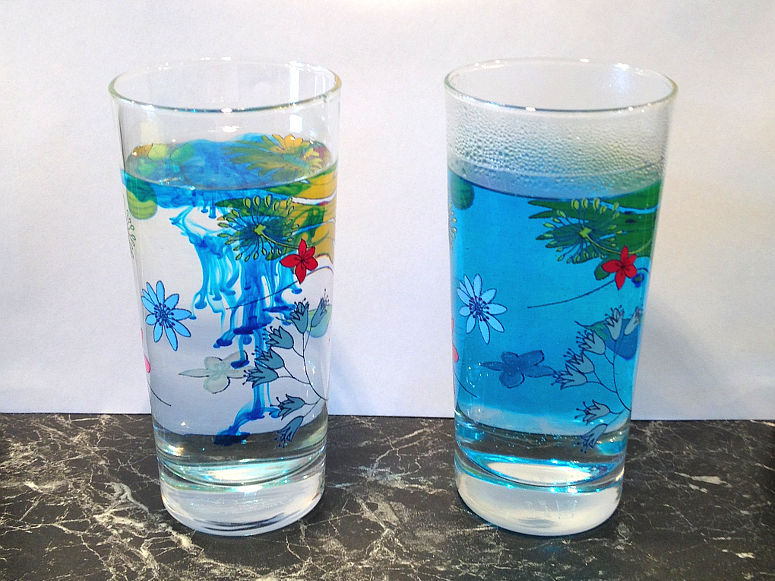
Note how the color spreads in the glasses. Soon the color has spread completely in the hot water, but not in the cold water\!
## Short explanation
Water molecules move all the time - and they move more the hotter the water is. The more they move, the faster the food coloring spreads among them.
## Long explanation
Temperature is a measure of how much the particles in a chemical substance move. The higher the temperature of a chemical substance, the more the particles in it move. If a chemical substance consists of solitary atoms, as, for example, a noble gas does, the atoms move up-down, right-left and forward-backward (translational movement), but they also rotate and vibrate. If a chemical substance consists of many atoms composed of larger molecules or ionic compounds, most of the movement is only vibrations. However, water molecules are quite small so they move both translationally, rotate and vibrate. The fact that particles constantly move means they collide with each other. Therefore, if you look at an individual particle, it looks like it's moving randomly here and there. This random movement of particles causes a substance to move from high to low concentration over time - thus spreading evenly. This process of even distribution is called *diffusion*. When the food color is added, each color molecule will be pushed around by the surrounding water molecules. If you would only look at one color molecule it would move randomly about. This phenomenon is called *Brownian motion*, after the botanist Robert Brown. He saw this happening to pollen grains in water. Albert Einstein later studied the phenomenon and made it a strong argument for the existence of atoms and molecules.
A single water molecule can also be said to undergo Brownian motion, although it's hard (or impossible?) to observe a single water molecule among all the others.
Diffusion can be thought of as a macroscopic manifestation of Brownian motion.
In this demonstration, you will see how the food color and the water mix. This happens by diffusion. Both the water and the color diffuse. The difference between the glasses is the temperature of the water. The higher the temperature of a substance, the faster the particles in it move and the faster diffusion goes.
## Experiment
You can turn this demonstration into an experiment. This will make it a better [science project](https://www.experimentarchive.com/science-projects/). To do that, try answering one of the following questions. The answer to the question will be your hypothesis. Then test the hypothesis by doing the experiment.
- What happens if you use milk instead of food coloring?
- What happens if you use cooking oil instead of food coloring?
- What happens if you use sugar instead of food coloring?
- What happens if you increase the temperature difference between the glasses?
- What happens if you use less food coloring?
- What happens if you use two food colors in each glass?
- What happens if you pour in larger particles, such as sesame seeds?
| | | |
|---|---|---|
| Gilla: | | Dela: | | ||||||
| ML Classification | |||||||
| ML Categories |
Raw JSON{
"/Science": 960,
"/Science/Physics": 856
} | ||||||
| ML Page Types |
Raw JSON{
"/Interactive_Tools": 394,
"/Interactive_Tools/Quiz": 158
} | ||||||
| ML Intent Types |
Raw JSON{
"Informational": 998
} | ||||||
| Content Metadata | |||||||
| Language | null | ||||||
| Author | null | ||||||
| Publish Time | not set | ||||||
| Original Publish Time | 2022-10-04 07:08:17 (3 years ago) | ||||||
| Republished | No | ||||||
| Word Count (Total) | 2,619 | ||||||
| Word Count (Content) | 603 | ||||||
| Links | |||||||
| External Links | 2 | ||||||
| Internal Links | 129 | ||||||
| Technical SEO | |||||||
| Meta Nofollow | No | ||||||
| Meta Noarchive | No | ||||||
| JS Rendered | No | ||||||
| Redirect Target | null | ||||||
| Performance | |||||||
| Download Time (ms) | 571 | ||||||
| TTFB (ms) | 415 | ||||||
| Download Size (bytes) | 13,783 | ||||||
| Shard | 157 (laksa) | ||||||
| Root Hash | 3299776185727451757 | ||||||
| Unparsed URL | com,experimentarchive!www,/experiments/brownian-motion/ s443 | ||||||