ℹ️ Skipped - page is already crawled
| Filter | Status | Condition | Details |
|---|---|---|---|
| HTTP status | PASS | download_http_code = 200 | HTTP 200 |
| Age cutoff | PASS | download_stamp > now() - 6 MONTH | 0.5 months ago |
| History drop | PASS | isNull(history_drop_reason) | No drop reason |
| Spam/ban | PASS | fh_dont_index != 1 AND ml_spam_score = 0 | ml_spam_score=0 |
| Canonical | PASS | meta_canonical IS NULL OR = '' OR = src_unparsed | Not set |
| Property | Value | |||||||||
|---|---|---|---|---|---|---|---|---|---|---|
| URL | https://www.eac.gov/election-officials/election-results-canvass-and-certification | |||||||||
| Last Crawled | 2026-04-13 08:05:20 (14 days ago) | |||||||||
| First Indexed | 2022-05-25 14:29:34 (3 years ago) | |||||||||
| HTTP Status Code | 200 | |||||||||
| Content | ||||||||||
| Meta Title | Election Results, Canvass, and Certification | U.S. Election Assistance Commission | |||||||||
| Meta Description | null | |||||||||
| Meta Canonical | null | |||||||||
| Boilerpipe Text | Have you ever wondered what happens to your ballot after you get your I Voted Sticker? After the polls close, ballots and electronic vote records are securely transferred to the elections office. Election officials make election results public as quickly as possible. However, even when those results say “100% Precincts Reporting,” they are still unofficial.
The process of reporting, canvassing, and certifying election results takes a great deal of work. This page contains information about how election results change from unofficial to official as well as best practices and resources to help election officials communicate this essential process to voters. While detailed information about post-election audit processes is not included here, more information about audits can be found in the EAC report
Election Audits Across the United States
.
Additionally, election officials can use the
Communicating Election and Post-Election Processes Toolkit
to create educational materials about pre- and post-election processes that observers and the public can understand. Election officials in any size jurisdiction can adapt this toolkit to fit their observer and voter education needs.
Election Results Reporting
Canvass
Certification
State and Local Best Practices
The election results reported on election night are never the final, certified results. Election officials well know there are various other steps and factors that impact when election results are final. Communicating that information with the public can be a challenge. Voters look to election officials for trusted information about election results. How election officials display election results can play a key role in facilitating public confidence in election outcomes.
Election officials can use the
Checklist for Securing Election Night Results Reporting
as a baseline to assess their current Election Night Reporting cybersecurity protocols. These protocols would be in addition to other physical and administrative procedures election officials implement to ensure data reliability, including documented chain of custody, data verification procedures, and using certified technology to tabulate vote totals.
Checklist for Securing Election Night Results Reporting
To help communicate the nuances of this process,the resources below help provide context when voters are viewing election results online.
Best Practices: Election Results Reporting
Poster Format
Presentation Format
Leading up to the 2020 general election, the EAC hosted a discussion on preparing for election night reporting and press coverage on election results. Speakers offered remarks on issues surrounding misinformation and disinformation, unofficial results, managing expectations, ballots received after the election, and audits. Joining the EAC Commissioners were New Mexico Secretary of State Maggie Toulouse Oliver, Iowa Secretary of State Paul Pate; Brian Carovillano, Vice President and Managing Editor of the Associated Press; and Nate Persily, Professor of Law, Stanford Law School. Watch a recording of the event below.
The canvass is a culmination of all the data generated during an election cycle. More importantly, it is a process that allows election officials to confirm the accuracy of election data and identify areas for improvement. The canvass process aggregates and confirms every valid ballot cast and counted, including mail, uniformed and overseas citizen, early voting, Election Day, and provisional ballots.
Election officials can find information about the canvass process in the best practices guide below,
Guide to the Canvass
. This document includes best practices for conducting post-election canvasses, including checklists for key parts of the canvass.
Guide to the Canvass
Voters may have questions about the canvass process, and how this process ensures that election results are both secure and accurate. The resources below are intended to help election officials explain this process to their voters.
Election Certification
Election certification refers to the process of election officials attesting that the election results are a true and accurate accounting of all votes cast in a particular election.
Importantly, the results reported on election night are not final even though the media may call the projected winner of races. Only election officials provide official election results. There are several steps election officials complete before they certify final election results. The figure below outlines the typical processes election officials perform before final, official results are certified. Not all jurisdictions follow each procedure outlined, or they may conduct them in a different order.
Unofficial results are published after the polls close on election night and continue to be released until all ballots are counted. Election results are unofficial until they are certified.
During the canvass, election officials reconcile the number of mail, early, and election day ballots cast with the number of voters. The purpose of the canvass is to make sure that every valid vote is included in the final results.
Most states require a post-election audit to verify voting equipment used during an election correctly counted votes. The timing and method of post-election audits differ among states.
Election officials issue a written statement of certification attesting that the election results are a true and accurate accounting of all votes cast in a particular election.
Impact of Recounts
In addition to the steps included above, recounts may impact the timeline for final election certification depending on state law. For example, New Hampshire law specifies that state certification takes place after the deadline for a recount has expired. Similarly, in West Virginia, counties must certify results within 30 days of the election or, if there is a recount, within 30 days of completing the recount.
A recount typically includes an additional count of votes cast to make sure the ballots were counted accurately. Each state has its own laws regarding the process for initiating a recount. Typically, recounts are initiated in one of the following ways:
A candidate for office requests a recount
A voter who participated in the election requests a recount
The vote margin falls within a legally required recount threshold
A judge issues a court order to recount a contest
For requested recounts, state law may require the requestor to pay a set fee or the cost of the recount. Although no federal uniform statutory timeline exists for recounts, any recount would need to be resolved before statutory deadlines for transmission of certificates of ascertainment containing the names of the presidential electors and other candidates taking office.
Who certifies election results and when?
When polls close, local election officials will report unofficial election results to the public and if it is a state or federal election to their respective states. State election offices will aggregate data and report unofficial results for State and Federal offices, including President and Vice President. Then, after every valid vote has been included in the final results, and all required processes have been completed, the election results will be certified.
Certification of election results at both the local and state level varies between states and sometimes even between local jurisdictions within a state depending on the contest being certified. Localities may have a multi-member board or a single elected election official, like a county auditor or municipal clerk, who certify results. At the state level, results may be certified by a single elected official (for example the Secretary of State or Governor), the state legislative body, an appointed election director, or by a multi-member board. Certifying a presidential election involves an additional set of deadlines and players—namely, electors. When voters cast their votes for President and Vice President, they are choosing a slate of electors to send to the
Electoral College
. Several states have a different timeline for the certification of the presidential race versus other Federal offices due to deadlines associated with the Electoral College.
The following table provides an estimated certification timeline for each state’s local and state election officials to certify the 2024 general election results for federal offices. Estimated dates are for general informational purposes only. In the event a jurisdiction must recount a contest, it may impact the certification deadline. State and local election officials are the authorities on election certification dates.
Jurisdiction
Local Certification
Deadline
State Certification
Deadline
Notes
Alabama
(link is external)
November 15
November 27
Alaska
(link is external)
November 30
State deadline is the target
deadline of the Alaska Division
of Elections
Arizona
(link is external)
November 21
December 2
State deadline is the deadline to issue certificates. November 25 is the state canvass deadline.
Arkansas
(link is external)
November 13
(presidential electors)
November 20 (other
federal offices)
November 30
(presidential electors)
December 20 (other
federal offices)
California
(link is external)
December 5
December 7
(presidential electors)
December 13 (other
federal offices)
Colorado
(link is external)
November 27
December 2
Connecticut
(link is external)
November 8
November 27
Delaware
(link is external)
November 7
November 7
District of
Columbia
(link is external)
December 2
Tentative deadline
Florida
(link is external)
November 18
November 19
Georgia
(link is external)
November 12
November 22 (other
federal offices)
November 23
(presidential electors)
Hawaii
(link is external)
November 25
November 25 (other
federal offices)
November 30
(presidential electors)
Idaho
(link is external)
November 15
November 26
Illinois
(link is external)
November 26
December 6
Indiana
(link is external)
November 18
November 18 (other
federal offices)
November 26
(presidential electors)
State deadlines for Election
Division to tabulate results
Iowa
(link is external)
November 18
December 2
Kansas
(link is external)
November 19
December 2
State deadline for State Board
of Canvassers to meet
Kentucky
(link is external)
November 8
November 25
Louisiana
(link is external)
November 11
November 21
State final results publication date.
Maine
(link is external)
November 7
November 25
Maryland
(link is external)
November 15
December 5
Massachusetts
(link is external)
November 20
November 30
Michigan
(link is external)
November 19
November 25
Michigan law permits an
expedited canvass if unofficial
returns show presidential
results are within 25,000 votes
Minnesota
(link is external)
November 13
November 21
State deadline for state canvass
to begin
Mississippi
(link is external)
November 15
December 6
Missouri
(link is external)
November 15
November 20
(presidential electors)
December 10 (other
federal offices)
Montana
(link is external)
November 19
November 26
Nebraska
(link is external)
November 25
December 2
Nevada
(link is external)
November 15
November 26
New
Hampshire
(link is external)
November 6
December 4
State deadline is the date the Governor will issue certificates of election.
New Jersey
(link is external)
November 25
December 5
New Mexico
(link is external)
November 15 (counties
with fewer than
150,000 voters)
November 18 (counties
with over 150,000
voters)
November 26
State deadline to declare
results with certificates issued
by December 6
New York
(link is external)
November 30
December 9
North Carolina
(link is external)
November 15
November 26
State certification meeting date
North Dakota
(link is external)
November 18
November 22
Ohio
(link is external)
November 26
December 6
Local certification is expected to be complete by November 20 per Ohio Secretary of State directive.
Oklahoma
(link is external)
November 8
November 12
Oregon
(link is external)
November 25
December 12
State deadline to issue Certificates of Ascertainment is December 11
Pennsylvania
(link is external)
November 25
Not Specified
Rhode Island
(link is external)
Not Specified
Not Specified
South Carolina
(link is external)
November 8
November 14
South Dakota
(link is external)
November 11
November 12
State deadline for state
canvassers to meet
Tennessee
(link is external)
November 25
November 25
Texas
(link is external)
November 19
December 8
Utah
(link is external)
November 19
November 25
State deadline for state
canvassers to meet
Vermont
(link is external)
November 7
November 12
State deadline for state
canvassers to meet
Virginia
(link is external)
November 15
December 2
Washington
(link is external)
November 26
December 5
West Virginia
(link is external)
December 5
December 5
Wisconsin
(link is external)
November 19
December 1
Wyoming
(link is external)
November 8
November 13
California
Yolo County
Harnessing Technology to Improve Polling Place Resources and Response Time, Strengthen Voter Communications, and Increase Future Turnout which has streamlined election night reporting and improve voter participation.
In 2018, the county harnessed GIS Systems and Mapping, along with a new poll worker app, to streamline election night reporting and improve voter participation. The Elections Office partnered with the county’s Information Technology division of the General Services Department to attain several innovative successes. The effort resulted in improved resource allocation, greater response time to polling places, strengthened communication of election results to citizens, and the likelihood of increasing future turnout through targeted outreach and education.
https://www.eac.gov/election-officials/yolo-county-elections-office-ca-2019-clearinghouse-award-winner
North Carolina
Durham County
Wait-Time Tracker for Early Voting
This innovative app allowed voters to locate polling places closest to them, view voting information, and see current polling place wait times. Users could also find bus routes or get GPS directions. The results from using this application were extremely positive for both election workers and voters. In the 2020 General Election, over 48% of registered voters in Durham County chose to vote early. This new service helped to alleviate crowds at busy polling places by offering alternatives, provided voters with streamlined real-time information, and fostered staffing needs for early in-person locations.
https://www.eac.gov/election-officials/durham-county-board-elections-nc-2020-clearinghouse-award-winner
Utah
Utah County
GIS Solutions
The Elections Division and GIS Department in Utah County collaborated on the use of GIS software to improve ballot security, public accountability, office efficiency, and real-time reporting and technology. Three major solutions were developed: a public-facing election results map, a secure dropbox ballot tracker dashboard, and a public-facing real-time ballot workflow dashboard system. These efforts accelerated the ballot counting process, increased security of dropbox information, provided data analysis to improve future elections, and reduced bottom-line costs.
https://www.eac.gov/election-officials/utah-county-elections-division-and-gis-department-ut-2020-clearinghouse-award
| |||||||||
| Markdown | [Skip to main content](https://www.eac.gov/election-officials/election-results-canvass-and-certification#main-content)

An official website of the United States government
Here's how you know
Here's how you know

**Official websites use .gov**
A **.gov** website belongs to an official government organization in the United States.

**Secure .gov websites use HTTPS**
A **lock** ( Locked padlock ) or **https://** means you’ve safely connected to the .gov website. Share sensitive information only on official, secure websites.
[](https://www.eac.gov/ "Home")
[United States Election Assistance Commission](https://www.eac.gov/ "Home")
 Menu
[](https://www.eac.gov/ "Home")
[United States Election Assistance Commission](https://www.eac.gov/ "Home")
Close
- Election Admin
[Election Management Guidelines](https://www.eac.gov/election-officials/election-management-guidelines)
[Election Official Toolkits](https://www.eac.gov/toolkits)
[Quick Start Guides](https://www.eac.gov/election-officials/quick-start-guides)
[Election Official Resources](https://www.eac.gov/election-officials)
[Language Access Resources](https://www.eac.gov/language-access-resources)
[UOCAVA Resources](https://www.eac.gov/uocava)
[Secure Elections](https://www.eac.gov/election-officials/election-security-preparedness)
[Accessibility](https://www.eac.gov/voting-accessibility)
[VVSG Communication Resources](https://www.eac.gov/election-officials/voluntary-voting-system-guidelines-vvsg-deprecation)
[Poll Worker Resources for Election Officials](https://www.eac.gov/election-officials/poll-worker-resources-election-officials)
[Clearinghouse Awards](https://www.eac.gov/election-officials/eac-national-clearinghouse-awards-information)
[All Election Admin Resources](https://www.eac.gov/election-admin)
- Voting
[Voting in Your State](https://www.eac.gov/voters/register-and-vote-in-your-state)
[National Mail Voter Registration Form](https://www.eac.gov/voters/national-mail-voter-registration-form)
[Become A Poll Worker](https://www.eac.gov/help-america-vote)
[Voter FAQs](https://www.eac.gov/voters/voter-faqs)
[Voting 101](https://www.eac.gov/voters/voting-101-election-information-new-voters "Voting 101 – Election Information for Voters")
[Overseas & Military](https://www.eac.gov/uocava)
[Secure Voting](https://www.eac.gov/voters/election-security)
[Voter Accessibility](https://www.eac.gov/voting-accessibility)
[Voter Registration Cancellations](https://www.eac.gov/voters/voter-registration-cancellations)
[All Voting Resources](https://www.eac.gov/voters)
- Election Technology
[Voting System Testing & Certification Program (T\&C)](https://www.eac.gov/election-technology/testing-certification-program-tc)
[Election Supporting Technology Evaluation Program (ESTEP)](https://www.eac.gov/election-technology/estep-program)
[Field Services Program (FSP)](https://www.eac.gov/election-technology/field-services-program)
[View All Election Technology Resources](https://www.eac.gov/election-technology)
- Research
[Election Administration and Voting Survey (EAVS) Reports](https://www.eac.gov/research-and-data/studies-and-reports)
[Accessibility](https://www.eac.gov/voting-accessibility)
[PCEA](https://www.eac.gov/pcea/pcea "Presidential Commission on Election Administration Report and Supplemental Material")
[All Research Resources](https://www.eac.gov/research-and-data)
- Grants
[Grants Management & Oversight](https://www.eac.gov/grants/grants-management-and-oversight)
[Grants Guidance](https://www.eac.gov/payments-and-grants/grants-guidance)
[HAVA Grant Programs](https://www.eac.gov/payments-and-grants/hava-grant-programs)
[Grants Expenditure Reports](https://www.eac.gov/grants/grants-expenditure-reports)
[HAVA Audits and Resolutions](https://www.eac.gov/grants/audits-resolutions)
[Reporting Requirements](https://www.eac.gov/payments-and-grants/reporting-oversight)
[Election Security Funds](https://www.eac.gov/grants/election-security-funds)
[State Administrative Complaints](https://www.eac.gov/grants/state-administrative-complaints)
[Help America Vote College Program](https://www.eac.gov/grants/help-america-vote-college-program)
[All Grants Resources](https://www.eac.gov/payments-and-grants)
- News & Events
[Blogs](https://www.eac.gov/blogs)
[Events](https://www.eac.gov/events)
[News](https://www.eac.gov/news)
[EAC Newsletters](https://www.eac.gov/election-officials/eac-news-election-officials)
[EAC's YouTube Channel](https://www.youtube.com/@u.s.electionassistancecomm2110 "(opens in a new window)")
[All News & Events](https://www.eac.gov/news-and-events)
- About
[Advisory Boards](https://www.eac.gov/about/advisory-boards)
[EAC Commissioners](https://www.eac.gov/about_the_eac/commissioners.aspx)
[Budget and Finance](https://www.eac.gov/about-eac/budget-and-finance "Agency budgets and justifications, agency financial reports, and other reporting. ")
[Congressional Affairs](https://www.eac.gov/about-eac/congressional-affairs)
[Help America Vote Act](https://www.eac.gov/about_the_eac/help_america_vote_act.aspx)
[Careers](https://www.eac.gov/about-eac/careers "Learn how to become a part of our EAC staff.")
[Office of Inspector General](https://www.eac.gov/inspector-general)
[Contact U.S. EAC](https://www.eac.gov/contactuseac)
[About the EAC](https://www.eac.gov/about)
## Breadcrumb
1. [EAC Home](https://www.eac.gov/)
2. [Clearinghouse Resources For Election Officials](https://www.eac.gov/election-officials)
3. Election Results, Canvass, and Certification
# Election Results, Canvass, and Certification
Tuesday, December 23, 2025
[Share](https://www.addtoany.com/share#url=https%3A%2F%2Fwww.eac.gov%2Felection-officials%2Felection-results-canvass-and-certification&title=Election%20Results%2C%20Canvass%2C%20and%20Certification)
Have you ever wondered what happens to your ballot after you get your I Voted Sticker? After the polls close, ballots and electronic vote records are securely transferred to the elections office. Election officials make election results public as quickly as possible. However, even when those results say “100% Precincts Reporting,” they are still unofficial.
The process of reporting, canvassing, and certifying election results takes a great deal of work. This page contains information about how election results change from unofficial to official as well as best practices and resources to help election officials communicate this essential process to voters. While detailed information about post-election audit processes is not included here, more information about audits can be found in the EAC report [Election Audits Across the United States](https://www.eac.gov/sites/default/files/bestpractices/Election_Audits_Across_the_United_States.pdf).
Additionally, election officials can use the [Communicating Election and Post-Election Processes Toolkit](https://www.eac.gov/election-officials/communicating-election-and-post-election-processes-toolkit) to create educational materials about pre- and post-election processes that observers and the public can understand. Election officials in any size jurisdiction can adapt this toolkit to fit their observer and voter education needs.
- [Election Results Reporting](https://www.eac.gov/election-officials/election-results-canvass-and-certification#Election_Results_Reporting)
- [Canvass](https://www.eac.gov/election-officials/election-results-canvass-and-certification#Canvass)
- [Certification](https://www.eac.gov/election-officials/election-results-canvass-and-certification#Certification)
- [State and Local Best Practices](https://www.eac.gov/election-officials/election-results-canvass-and-certification#State_and_Local_Best_Practices)
The election results reported on election night are never the final, certified results. Election officials well know there are various other steps and factors that impact when election results are final. Communicating that information with the public can be a challenge. Voters look to election officials for trusted information about election results. How election officials display election results can play a key role in facilitating public confidence in election outcomes.
Election officials can use the [Checklist for Securing Election Night Results Reporting](https://www.eac.gov/sites/default/files/electionofficials/postelection/Checklist_for_Securing_Election_Results_FINAL_EAC.pdf) as a baseline to assess their current Election Night Reporting cybersecurity protocols. These protocols would be in addition to other physical and administrative procedures election officials implement to ensure data reliability, including documented chain of custody, data verification procedures, and using certified technology to tabulate vote totals.
**[Checklist for Securing Election Night Results Reporting](https://www.eac.gov/sites/default/files/electionofficials/postelection/Checklist_for_Securing_Election_Results_FINAL_EAC.pdf)**
To help communicate the nuances of this process,the resources below help provide context when voters are viewing election results online.
Best Practices: Election Results Reporting
[Poster Format](https://www.eac.gov/sites/default/files/electionofficials/postelection/Election_Results_Reporting_Poster_Format.pdf)
[Presentation Format](https://www.eac.gov/sites/default/files/electionofficials/postelection/Election_Results_Reporting_Presentation_Format.pdf)
***
Leading up to the 2020 general election, the EAC hosted a discussion on preparing for election night reporting and press coverage on election results. Speakers offered remarks on issues surrounding misinformation and disinformation, unofficial results, managing expectations, ballots received after the election, and audits. Joining the EAC Commissioners were New Mexico Secretary of State Maggie Toulouse Oliver, Iowa Secretary of State Paul Pate; Brian Carovillano, Vice President and Managing Editor of the Associated Press; and Nate Persily, Professor of Law, Stanford Law School. Watch a recording of the event below.
The canvass is a culmination of all the data generated during an election cycle. More importantly, it is a process that allows election officials to confirm the accuracy of election data and identify areas for improvement. The canvass process aggregates and confirms every valid ballot cast and counted, including mail, uniformed and overseas citizen, early voting, Election Day, and provisional ballots.
Election officials can find information about the canvass process in the best practices guide below, [Guide to the Canvass](https://www.eac.gov/sites/default/files/electionofficials/postelection/Guide_to_the_Canvass_EAC.pdf "Guide to the Canvass EAC"). This document includes best practices for conducting post-election canvasses, including checklists for key parts of the canvass.
[Guide to the Canvass](https://www.eac.gov/sites/default/files/electionofficials/postelection/Guide_to_the_Canvass_EAC.pdf "Guide to the Canvass EAC")
Voters may have questions about the canvass process, and how this process ensures that election results are both secure and accurate. The resources below are intended to help election officials explain this process to their voters.
### Election Certification
Election certification refers to the process of election officials attesting that the election results are a true and accurate accounting of all votes cast in a particular election.
Importantly, the results reported on election night are not final even though the media may call the projected winner of races. Only election officials provide official election results. There are several steps election officials complete before they certify final election results. The figure below outlines the typical processes election officials perform before final, official results are certified. Not all jurisdictions follow each procedure outlined, or they may conduct them in a different order.
| | | | |
|---|---|---|---|
| Image 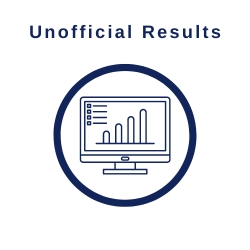 | Image 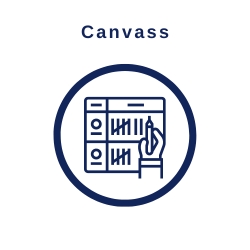 | Image 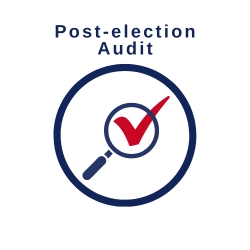 | Image  |
| Unofficial results are published after the polls close on election night and continue to be released until all ballots are counted. Election results are unofficial until they are certified. | During the canvass, election officials reconcile the number of mail, early, and election day ballots cast with the number of voters. The purpose of the canvass is to make sure that every valid vote is included in the final results. | Most states require a post-election audit to verify voting equipment used during an election correctly counted votes. The timing and method of post-election audits differ among states. | Election officials issue a written statement of certification attesting that the election results are a true and accurate accounting of all votes cast in a particular election. |
### Impact of Recounts
In addition to the steps included above, recounts may impact the timeline for final election certification depending on state law. For example, New Hampshire law specifies that state certification takes place after the deadline for a recount has expired. Similarly, in West Virginia, counties must certify results within 30 days of the election or, if there is a recount, within 30 days of completing the recount.
A recount typically includes an additional count of votes cast to make sure the ballots were counted accurately. Each state has its own laws regarding the process for initiating a recount. Typically, recounts are initiated in one of the following ways:
- A candidate for office requests a recount
- A voter who participated in the election requests a recount
- The vote margin falls within a legally required recount threshold
- A judge issues a court order to recount a contest
For requested recounts, state law may require the requestor to pay a set fee or the cost of the recount. Although no federal uniform statutory timeline exists for recounts, any recount would need to be resolved before statutory deadlines for transmission of certificates of ascertainment containing the names of the presidential electors and other candidates taking office.
### Who certifies election results and when?
When polls close, local election officials will report unofficial election results to the public and if it is a state or federal election to their respective states. State election offices will aggregate data and report unofficial results for State and Federal offices, including President and Vice President. Then, after every valid vote has been included in the final results, and all required processes have been completed, the election results will be certified.
Certification of election results at both the local and state level varies between states and sometimes even between local jurisdictions within a state depending on the contest being certified. Localities may have a multi-member board or a single elected election official, like a county auditor or municipal clerk, who certify results. At the state level, results may be certified by a single elected official (for example the Secretary of State or Governor), the state legislative body, an appointed election director, or by a multi-member board. Certifying a presidential election involves an additional set of deadlines and players—namely, electors. When voters cast their votes for President and Vice President, they are choosing a slate of electors to send to the [Electoral College](https://www.eac.gov/voters/presidential-elections#ElectoralCollege). Several states have a different timeline for the certification of the presidential race versus other Federal offices due to deadlines associated with the Electoral College.
The following table provides an estimated certification timeline for each state’s local and state election officials to certify the 2024 general election results for federal offices. Estimated dates are for general informational purposes only. In the event a jurisdiction must recount a contest, it may impact the certification deadline. State and local election officials are the authorities on election certification dates.
| Jurisdiction | Local Certification Deadline | State Certification Deadline | Notes |
|---|---|---|---|
| [Alabama](https://www.sos.alabama.gov/sites/default/files/election-2024/2024AdminCalendar.pdf "(opens in a new window)") | | | |
### California
### Yolo County
Harnessing Technology to Improve Polling Place Resources and Response Time, Strengthen Voter Communications, and Increase Future Turnout which has streamlined election night reporting and improve voter participation.
In 2018, the county harnessed GIS Systems and Mapping, along with a new poll worker app, to streamline election night reporting and improve voter participation. The Elections Office partnered with the county’s Information Technology division of the General Services Department to attain several innovative successes. The effort resulted in improved resource allocation, greater response time to polling places, strengthened communication of election results to citizens, and the likelihood of increasing future turnout through targeted outreach and education.
<https://www.eac.gov/election-officials/yolo-county-elections-office-ca-2019-clearinghouse-award-winner>
### North Carolina
### Durham County
Wait-Time Tracker for Early Voting
This innovative app allowed voters to locate polling places closest to them, view voting information, and see current polling place wait times. Users could also find bus routes or get GPS directions. The results from using this application were extremely positive for both election workers and voters. In the 2020 General Election, over 48% of registered voters in Durham County chose to vote early. This new service helped to alleviate crowds at busy polling places by offering alternatives, provided voters with streamlined real-time information, and fostered staffing needs for early in-person locations.
<https://www.eac.gov/election-officials/durham-county-board-elections-nc-2020-clearinghouse-award-winner>
### Utah
### Utah County
GIS Solutions
The Elections Division and GIS Department in Utah County collaborated on the use of GIS software to improve ballot security, public accountability, office efficiency, and real-time reporting and technology. Three major solutions were developed: a public-facing election results map, a secure dropbox ballot tracker dashboard, and a public-facing real-time ballot workflow dashboard system. These efforts accelerated the ballot counting process, increased security of dropbox information, provided data analysis to improve future elections, and reduced bottom-line costs.
<https://www.eac.gov/election-officials/utah-county-elections-division-and-gis-department-ut-2020-clearinghouse-award>
### U.S. Election Assistance Commission
633 3rd Street NW, Suite 200, Washington, DC 20001
[Contact the EAC](https://www.eac.gov/contact)
[](https://www.facebook.com/eacgov1 "(opens in a new window)")
[](https://www.instagram.com/us.eac/ "(opens in a new window)")
[](https://www.youtube.com/channel/UCpN6i0g2rlF4ITWhwvBwwZw "(opens in a new window)")
[](https://twitter.com/EACgov "(opens in a new window)")
[](https://www.linkedin.com/company/u-s-election-assistance-commission "(opens in a new window)")
[](https://www.eac.gov/rss.xml)
Stay Informed
Get the latest on elections, resources, and events
delivered straight to your inbox.
[About EAC](https://www.eac.gov/about-the-useac) [Accessibility Statement](https://www.eac.gov/accessibility-statement "Accessibility Statement") [FOIA Requests](https://www.eac.gov/foia/freedomofinformationactfoia/) [No FEAR Act Data](https://www.eac.gov/no-fear-act) [Office of the Inspector General](https://www.eac.gov/inspector-general/)
[U.S. Office of Special Counsel](https://osc.gov/ "(opens in a new window)")
[Privacy Policy](https://www.eac.gov/privacy-statement) [Site Map](https://www.eac.gov/sitemap) For more U.S. government information visit:
[USA.gov](https://www.usa.gov/ "(opens in a new window)")
✓
Thanks for sharing\!
[AddToAny](https://www.addtoany.com/ "Share Buttons")
[More…](https://www.eac.gov/election-officials/election-results-canvass-and-certification#addtoany "Show all") | |||||||||
| Readable Markdown | Have you ever wondered what happens to your ballot after you get your I Voted Sticker? After the polls close, ballots and electronic vote records are securely transferred to the elections office. Election officials make election results public as quickly as possible. However, even when those results say “100% Precincts Reporting,” they are still unofficial.
The process of reporting, canvassing, and certifying election results takes a great deal of work. This page contains information about how election results change from unofficial to official as well as best practices and resources to help election officials communicate this essential process to voters. While detailed information about post-election audit processes is not included here, more information about audits can be found in the EAC report [Election Audits Across the United States](https://www.eac.gov/sites/default/files/bestpractices/Election_Audits_Across_the_United_States.pdf).
Additionally, election officials can use the [Communicating Election and Post-Election Processes Toolkit](https://www.eac.gov/election-officials/communicating-election-and-post-election-processes-toolkit) to create educational materials about pre- and post-election processes that observers and the public can understand. Election officials in any size jurisdiction can adapt this toolkit to fit their observer and voter education needs.
- [Election Results Reporting](https://www.eac.gov/election-officials/election-results-canvass-and-certification#Election_Results_Reporting)
- [Canvass](https://www.eac.gov/election-officials/election-results-canvass-and-certification#Canvass)
- [Certification](https://www.eac.gov/election-officials/election-results-canvass-and-certification#Certification)
- [State and Local Best Practices](https://www.eac.gov/election-officials/election-results-canvass-and-certification#State_and_Local_Best_Practices)
The election results reported on election night are never the final, certified results. Election officials well know there are various other steps and factors that impact when election results are final. Communicating that information with the public can be a challenge. Voters look to election officials for trusted information about election results. How election officials display election results can play a key role in facilitating public confidence in election outcomes.
Election officials can use the [Checklist for Securing Election Night Results Reporting](https://www.eac.gov/sites/default/files/electionofficials/postelection/Checklist_for_Securing_Election_Results_FINAL_EAC.pdf) as a baseline to assess their current Election Night Reporting cybersecurity protocols. These protocols would be in addition to other physical and administrative procedures election officials implement to ensure data reliability, including documented chain of custody, data verification procedures, and using certified technology to tabulate vote totals.
**[Checklist for Securing Election Night Results Reporting](https://www.eac.gov/sites/default/files/electionofficials/postelection/Checklist_for_Securing_Election_Results_FINAL_EAC.pdf)**
To help communicate the nuances of this process,the resources below help provide context when voters are viewing election results online.
Best Practices: Election Results Reporting
[Poster Format](https://www.eac.gov/sites/default/files/electionofficials/postelection/Election_Results_Reporting_Poster_Format.pdf)
[Presentation Format](https://www.eac.gov/sites/default/files/electionofficials/postelection/Election_Results_Reporting_Presentation_Format.pdf)
***
Leading up to the 2020 general election, the EAC hosted a discussion on preparing for election night reporting and press coverage on election results. Speakers offered remarks on issues surrounding misinformation and disinformation, unofficial results, managing expectations, ballots received after the election, and audits. Joining the EAC Commissioners were New Mexico Secretary of State Maggie Toulouse Oliver, Iowa Secretary of State Paul Pate; Brian Carovillano, Vice President and Managing Editor of the Associated Press; and Nate Persily, Professor of Law, Stanford Law School. Watch a recording of the event below.
The canvass is a culmination of all the data generated during an election cycle. More importantly, it is a process that allows election officials to confirm the accuracy of election data and identify areas for improvement. The canvass process aggregates and confirms every valid ballot cast and counted, including mail, uniformed and overseas citizen, early voting, Election Day, and provisional ballots.
Election officials can find information about the canvass process in the best practices guide below, [Guide to the Canvass](https://www.eac.gov/sites/default/files/electionofficials/postelection/Guide_to_the_Canvass_EAC.pdf "Guide to the Canvass EAC"). This document includes best practices for conducting post-election canvasses, including checklists for key parts of the canvass.
[Guide to the Canvass](https://www.eac.gov/sites/default/files/electionofficials/postelection/Guide_to_the_Canvass_EAC.pdf "Guide to the Canvass EAC")
Voters may have questions about the canvass process, and how this process ensures that election results are both secure and accurate. The resources below are intended to help election officials explain this process to their voters.
### Election Certification
Election certification refers to the process of election officials attesting that the election results are a true and accurate accounting of all votes cast in a particular election.
Importantly, the results reported on election night are not final even though the media may call the projected winner of races. Only election officials provide official election results. There are several steps election officials complete before they certify final election results. The figure below outlines the typical processes election officials perform before final, official results are certified. Not all jurisdictions follow each procedure outlined, or they may conduct them in a different order.
| | | | |
|---|---|---|---|
| Unofficial results are published after the polls close on election night and continue to be released until all ballots are counted. Election results are unofficial until they are certified. | During the canvass, election officials reconcile the number of mail, early, and election day ballots cast with the number of voters. The purpose of the canvass is to make sure that every valid vote is included in the final results. | Most states require a post-election audit to verify voting equipment used during an election correctly counted votes. The timing and method of post-election audits differ among states. | Election officials issue a written statement of certification attesting that the election results are a true and accurate accounting of all votes cast in a particular election. |
### Impact of Recounts
In addition to the steps included above, recounts may impact the timeline for final election certification depending on state law. For example, New Hampshire law specifies that state certification takes place after the deadline for a recount has expired. Similarly, in West Virginia, counties must certify results within 30 days of the election or, if there is a recount, within 30 days of completing the recount.
A recount typically includes an additional count of votes cast to make sure the ballots were counted accurately. Each state has its own laws regarding the process for initiating a recount. Typically, recounts are initiated in one of the following ways:
- A candidate for office requests a recount
- A voter who participated in the election requests a recount
- The vote margin falls within a legally required recount threshold
- A judge issues a court order to recount a contest
For requested recounts, state law may require the requestor to pay a set fee or the cost of the recount. Although no federal uniform statutory timeline exists for recounts, any recount would need to be resolved before statutory deadlines for transmission of certificates of ascertainment containing the names of the presidential electors and other candidates taking office.
### Who certifies election results and when?
When polls close, local election officials will report unofficial election results to the public and if it is a state or federal election to their respective states. State election offices will aggregate data and report unofficial results for State and Federal offices, including President and Vice President. Then, after every valid vote has been included in the final results, and all required processes have been completed, the election results will be certified.
Certification of election results at both the local and state level varies between states and sometimes even between local jurisdictions within a state depending on the contest being certified. Localities may have a multi-member board or a single elected election official, like a county auditor or municipal clerk, who certify results. At the state level, results may be certified by a single elected official (for example the Secretary of State or Governor), the state legislative body, an appointed election director, or by a multi-member board. Certifying a presidential election involves an additional set of deadlines and players—namely, electors. When voters cast their votes for President and Vice President, they are choosing a slate of electors to send to the [Electoral College](https://www.eac.gov/voters/presidential-elections#ElectoralCollege). Several states have a different timeline for the certification of the presidential race versus other Federal offices due to deadlines associated with the Electoral College.
The following table provides an estimated certification timeline for each state’s local and state election officials to certify the 2024 general election results for federal offices. Estimated dates are for general informational purposes only. In the event a jurisdiction must recount a contest, it may impact the certification deadline. State and local election officials are the authorities on election certification dates.
| Jurisdiction | Local Certification Deadline | State Certification Deadline | Notes |
|---|---|---|---|
| [Alabama](https://www.sos.alabama.gov/sites/default/files/election-2024/2024AdminCalendar.pdf "(opens in a new window)") | | | |
### California
### Yolo County
Harnessing Technology to Improve Polling Place Resources and Response Time, Strengthen Voter Communications, and Increase Future Turnout which has streamlined election night reporting and improve voter participation.
In 2018, the county harnessed GIS Systems and Mapping, along with a new poll worker app, to streamline election night reporting and improve voter participation. The Elections Office partnered with the county’s Information Technology division of the General Services Department to attain several innovative successes. The effort resulted in improved resource allocation, greater response time to polling places, strengthened communication of election results to citizens, and the likelihood of increasing future turnout through targeted outreach and education.
<https://www.eac.gov/election-officials/yolo-county-elections-office-ca-2019-clearinghouse-award-winner>
### North Carolina
### Durham County
Wait-Time Tracker for Early Voting
This innovative app allowed voters to locate polling places closest to them, view voting information, and see current polling place wait times. Users could also find bus routes or get GPS directions. The results from using this application were extremely positive for both election workers and voters. In the 2020 General Election, over 48% of registered voters in Durham County chose to vote early. This new service helped to alleviate crowds at busy polling places by offering alternatives, provided voters with streamlined real-time information, and fostered staffing needs for early in-person locations.
<https://www.eac.gov/election-officials/durham-county-board-elections-nc-2020-clearinghouse-award-winner>
### Utah
### Utah County
GIS Solutions
The Elections Division and GIS Department in Utah County collaborated on the use of GIS software to improve ballot security, public accountability, office efficiency, and real-time reporting and technology. Three major solutions were developed: a public-facing election results map, a secure dropbox ballot tracker dashboard, and a public-facing real-time ballot workflow dashboard system. These efforts accelerated the ballot counting process, increased security of dropbox information, provided data analysis to improve future elections, and reduced bottom-line costs.
<https://www.eac.gov/election-officials/utah-county-elections-division-and-gis-department-ut-2020-clearinghouse-award> | |||||||||
| ML Classification | ||||||||||
| ML Categories |
Raw JSON{
"/Law_and_Government": 980,
"/Law_and_Government/Government": 889,
"/Law_and_Government/Government/Legislative_Branch": 443
} | |||||||||
| ML Page Types |
Raw JSON{
"/Article": 658,
"/Article/Tutorial_or_Guide": 319
} | |||||||||
| ML Intent Types |
Raw JSON{
"Informational": 999
} | |||||||||
| Content Metadata | ||||||||||
| Language | en | |||||||||
| Author | null | |||||||||
| Publish Time | not set | |||||||||
| Original Publish Time | 2022-05-25 14:29:34 (3 years ago) | |||||||||
| Republished | No | |||||||||
| Word Count (Total) | 2,642 | |||||||||
| Word Count (Content) | 2,220 | |||||||||
| Links | ||||||||||
| External Links | 78 | |||||||||
| Internal Links | 89 | |||||||||
| Technical SEO | ||||||||||
| Meta Nofollow | No | |||||||||
| Meta Noarchive | No | |||||||||
| JS Rendered | Yes | |||||||||
| Redirect Target | null | |||||||||
| Performance | ||||||||||
| Download Time (ms) | 474 | |||||||||
| TTFB (ms) | 473 | |||||||||
| Download Size (bytes) | 17,219 | |||||||||
| Shard | 59 (laksa) | |||||||||
| Root Hash | 13308034649210480459 | |||||||||
| Unparsed URL | gov,eac!www,/election-officials/election-results-canvass-and-certification s443 | |||||||||