ℹ️ Skipped - page is already crawled
| Filter | Status | Condition | Details |
|---|---|---|---|
| HTTP status | PASS | download_http_code = 200 | HTTP 200 |
| Age cutoff | PASS | download_stamp > now() - 6 MONTH | 0.1 months ago |
| History drop | PASS | isNull(history_drop_reason) | No drop reason |
| Spam/ban | PASS | fh_dont_index != 1 AND ml_spam_score = 0 | ml_spam_score=0 |
| Canonical | PASS | meta_canonical IS NULL OR = '' OR = src_unparsed | Not set |
| Property | Value | ||||||||||||||||||
|---|---|---|---|---|---|---|---|---|---|---|---|---|---|---|---|---|---|---|---|
| URL | https://www.datacamp.com/blog/how-to-learn-nlp | ||||||||||||||||||
| Last Crawled | 2026-04-23 15:52:11 (1 day ago) | ||||||||||||||||||
| First Indexed | 2024-09-07 06:08:38 (1 year ago) | ||||||||||||||||||
| HTTP Status Code | 200 | ||||||||||||||||||
| Content | |||||||||||||||||||
| Meta Title | How to Learn NLP From Scratch in 2026: An Expert Guide | DataCamp | ||||||||||||||||||
| Meta Description | Learn NLP from scratch with this expert guide. Get a step-by-step, detailed plan covering essential concepts, tasks, and projects to master NLP in 2026. | ||||||||||||||||||
| Meta Canonical | null | ||||||||||||||||||
| Boilerpipe Text | Home
Blog
Machine Learning
In this guide, you’ll discover how to learn Natural Language Processing (NLP) from scratch. With a clear, week-by-week learning plan, you'll explore essential NLP concepts, practical applications, and hands-on projects to build your skills.
Sep 3, 2024
· 13 min read
Master NLP in Python Today
Learn the NLP skills to convert data into valuable insights.
Build Machine Learning Skills
Elevate your machine learning skills to production level.
Author
Laiba Siddiqui
Topics
Learn more about NLP and machine learning with these courses! | ||||||||||||||||||
| Markdown | [ Last chance! **50% off** DataCamp Premium Sale ends in 3d08h18m33s Buy Now](https://www.datacamp.com/promo/flash-sale-apr-26)
[Skip to main content](https://www.datacamp.com/blog/how-to-learn-nlp#main)
EN
[English](https://www.datacamp.com/blog/how-to-learn-nlp)[Español](https://www.datacamp.com/es/blog/how-to-learn-nlp)[Português](https://www.datacamp.com/pt/blog/how-to-learn-nlp)[DeutschBeta](https://www.datacamp.com/de/blog/how-to-learn-nlp)[FrançaisBeta](https://www.datacamp.com/fr/blog/how-to-learn-nlp)[ItalianoBeta](https://www.datacamp.com/it/blog/how-to-learn-nlp)[TürkçeBeta](https://www.datacamp.com/tr/blog/how-to-learn-nlp)[Bahasa IndonesiaBeta](https://www.datacamp.com/id/blog/how-to-learn-nlp)[Tiếng ViệtBeta](https://www.datacamp.com/vi/blog/how-to-learn-nlp)[NederlandsBeta](https://www.datacamp.com/nl/blog/how-to-learn-nlp)[हिन्दीBeta](https://www.datacamp.com/hi/blog/how-to-learn-nlp)[日本語Beta](https://www.datacamp.com/ja/blog/how-to-learn-nlp)[한국어Beta](https://www.datacamp.com/ko/blog/how-to-learn-nlp)[PolskiBeta](https://www.datacamp.com/pl/blog/how-to-learn-nlp)[RomânăBeta](https://www.datacamp.com/ro/blog/how-to-learn-nlp)[РусскийBeta](https://www.datacamp.com/ru/blog/how-to-learn-nlp)[SvenskaBeta](https://www.datacamp.com/sv/blog/how-to-learn-nlp)[ไทยBeta](https://www.datacamp.com/th/blog/how-to-learn-nlp)[中文(简体)Beta](https://www.datacamp.com/zh/blog/how-to-learn-nlp)
***
[More Information](https://support.datacamp.com/hc/en-us/articles/21821832799255-Languages-Available-on-DataCamp)
[Found an Error?]()
[Log in](https://www.datacamp.com/users/sign_in?redirect=%2Fblog%2Fhow-to-learn-nlp)[Get Started](https://www.datacamp.com/users/sign_up?redirect=%2Fblog%2Fhow-to-learn-nlp)
blogs
[Blogs](https://www.datacamp.com/blog)
[Tutorials](https://www.datacamp.com/tutorial)
[docs](https://www.datacamp.com/doc)
[Podcasts](https://www.datacamp.com/podcast)
[Cheat Sheets](https://www.datacamp.com/cheat-sheet)
[code-alongs](https://www.datacamp.com/code-along)
[Newsletter](https://dcthemedian.substack.com/)
Category
Category
About DataCamp
Latest news about our products and team
[Certification](https://www.datacamp.com/blog/category/certification)[DataCamp Classrooms](https://www.datacamp.com/blog/category/datacamp-classrooms)[DataCamp Donates](https://www.datacamp.com/blog/category/datacamp-donates)[For Business](https://www.datacamp.com/blog/category/for-business)[Learner Stories](https://www.datacamp.com/blog/category/learner-stories)[Life at DataCamp](https://www.datacamp.com/blog/category/life-at-datacamp)[Product News](https://www.datacamp.com/blog/category/product-news)
Category
Industries
Learn about how data is applied by industry leaders
[Enterprise Solutions](https://www.datacamp.com/blog/category/data-literacy-enterprise-solutions)
Category
Roles
How different roles contribute to data.
[Data Leader](https://www.datacamp.com/blog/category/best-practices-for-data-leaders)[L\&D](https://www.datacamp.com/blog/category/best-practices-for-learning-and-development-professionals)
Category
Technologies
Discover content by tools and technology
[AI Agents](https://www.datacamp.com/blog/category/ai-agents)[AI News](https://www.datacamp.com/blog/category/ai-news)[Airflow](https://www.datacamp.com/blog/category/apache-airflow)[Alteryx](https://www.datacamp.com/blog/category/alteryx)[Artificial Intelligence](https://www.datacamp.com/blog/category/ai)[AWS](https://www.datacamp.com/blog/category/aws)[Azure](https://www.datacamp.com/blog/category/microsoft-azure)[Business Intelligence](https://www.datacamp.com/blog/category/learn-business-intelligence)[ChatGPT](https://www.datacamp.com/blog/category/chatgpt)[Databricks](https://www.datacamp.com/blog/category/databricks)[dbt](https://www.datacamp.com/blog/category/dbt)[Docker](https://www.datacamp.com/blog/category/docker)[Excel](https://www.datacamp.com/blog/category/excel)[Flink](https://www.datacamp.com/blog/category/apache-flink)[Generative AI](https://www.datacamp.com/blog/category/generative-ai)[Git](https://www.datacamp.com/blog/category/git)[Google Cloud Platform](https://www.datacamp.com/blog/category/google-cloud-platform)[Hadoop](https://www.datacamp.com/blog/category/apache-hadoop)[Java](https://www.datacamp.com/blog/category/java)[Julia](https://www.datacamp.com/blog/category/julia)[Kafka](https://www.datacamp.com/blog/category/apache-kafka)[Kubernetes](https://www.datacamp.com/blog/category/kubernetes)[Large Language Models](https://www.datacamp.com/blog/category/large-language-models)[MongoDB](https://www.datacamp.com/blog/category/mongodb)[MySQL](https://www.datacamp.com/blog/category/mysql)[NoSQL](https://www.datacamp.com/blog/category/nosql)[OpenAI](https://www.datacamp.com/blog/category/OpenAI)[PostgreSQL](https://www.datacamp.com/blog/category/postgresql)[Power BI](https://www.datacamp.com/blog/category/power-bi)[PySpark](https://www.datacamp.com/blog/category/pyspark)[Python](https://www.datacamp.com/blog/category/python)[R](https://www.datacamp.com/blog/category/r-programming)[Scala](https://www.datacamp.com/blog/category/scala)[Sigma](https://www.datacamp.com/blog/category/sigma)[Snowflake](https://www.datacamp.com/blog/category/snowflake)[Spreadsheets](https://www.datacamp.com/blog/category/spreadsheets)[SQL](https://www.datacamp.com/blog/category/sql)[SQLite](https://www.datacamp.com/blog/category/sqlite)[Tableau](https://www.datacamp.com/blog/category/tableau)
Category
Topics
Discover content by data science topics
[AI for Business](https://www.datacamp.com/blog/category/ai-for-business)[Big Data](https://www.datacamp.com/blog/category/big-data)[Career Development](https://www.datacamp.com/blog/category/career-development)[Career Services](https://www.datacamp.com/blog/category/career-services)[Cloud](https://www.datacamp.com/blog/category/cloud)[Data Analysis](https://www.datacamp.com/blog/category/data-analysis)[Data Engineering](https://www.datacamp.com/blog/category/data-engineering)[Data Governance](https://www.datacamp.com/blog/category/data-governance)[Data Literacy](https://www.datacamp.com/blog/category/data-literacy)[Data Science](https://www.datacamp.com/blog/category/data-science)[Data Skills and Training](https://www.datacamp.com/blog/category/data-skills-and-training)[Data Storytelling](https://www.datacamp.com/blog/category/data-storytelling)[Data Transformation](https://www.datacamp.com/blog/category/data-transformation)[Data Visualization](https://www.datacamp.com/blog/category/data-visualization)[DataCamp Product](https://www.datacamp.com/blog/category/datacamp-product)[DataLab](https://www.datacamp.com/blog/category/datalab)[Deep Learning](https://www.datacamp.com/blog/category/deep-learning)[Machine Learning](https://www.datacamp.com/blog/category/machine-learning)[MLOps](https://www.datacamp.com/blog/category/mlops)[Thought Leadership](https://www.datacamp.com/blog/category/thought-leadership)
[Browse Courses](https://www.datacamp.com/courses-all)
category
1. [Home](https://www.datacamp.com/)
2. [Blog](https://www.datacamp.com/blog)
3. [Machine Learning](https://www.datacamp.com/blog/category/machine-learning)
# How to Learn NLP From Scratch in 2026: An Expert Guide
In this guide, you’ll discover how to learn Natural Language Processing (NLP) from scratch. With a clear, week-by-week learning plan, you'll explore essential NLP concepts, practical applications, and hands-on projects to build your skills.
Contents
Sep 3, 2024 · 13 min read
Contents
- [Why Learn NLP?](https://www.datacamp.com/blog/how-to-learn-nlp#why-learn-nlp?-<ahre)
- [Core Concepts to Understand in NLP](https://www.datacamp.com/blog/how-to-learn-nlp#core-concepts-to-understand-in-nlp-<span)
- [Text preprocessing](https://www.datacamp.com/blog/how-to-learn-nlp#text-preprocessing-<span)
- [Bag-of-words (BoW) and TF-IDF](https://www.datacamp.com/blog/how-to-learn-nlp#bag-of-words-\(bow\)-and-tf-idf-<span)
- [Word embeddings](https://www.datacamp.com/blog/how-to-learn-nlp#word-embeddings-<ahre)
- [Language models](https://www.datacamp.com/blog/how-to-learn-nlp#language-models-<span)
- [Text classification and clustering](https://www.datacamp.com/blog/how-to-learn-nlp#text-classification-and-clustering-<span)
- [Learning NLP in Python](https://www.datacamp.com/blog/how-to-learn-nlp#learning-nlp-in-python-<span)
- [Why Python for NLP?](https://www.datacamp.com/blog/how-to-learn-nlp#why-python-for-nlp?-pytho)
- [Python libraries for NLP](https://www.datacamp.com/blog/how-to-learn-nlp#python-libraries-for-nlp-<span)
- [How to Learn NLP from Scratch](https://www.datacamp.com/blog/how-to-learn-nlp#how-to-learn-nlp-from-scratch-<span)
- [Step 1: Understand the basics of text data](https://www.datacamp.com/blog/how-to-learn-nlp#step-1:-understand-the-basics-of-text-data-<span)
- [Step 2: Learn text preprocessing techniques](https://www.datacamp.com/blog/how-to-learn-nlp#step-2:-learn-text-preprocessing-techniques-<span)
- [Step 3: Explore text representation methods](https://www.datacamp.com/blog/how-to-learn-nlp#step-3:-explore-text-representation-methods-<span)
- [Step 4: Work on NLP tasks](https://www.datacamp.com/blog/how-to-learn-nlp#step-4:-work-on-nlp-tasks-<span)
- [Step 5: Learn advanced NLP topics](https://www.datacamp.com/blog/how-to-learn-nlp#step-5:-learn-advanced-nlp-topics-<span)
- [An Example Learning Plan for NLP](https://www.datacamp.com/blog/how-to-learn-nlp#an-example-learning-plan-for-nlp-nowyo)
- [Best Resources for Learning NLP](https://www.datacamp.com/blog/how-to-learn-nlp#best-resources-for-learning-nlp-<span)
- [Online courses](https://www.datacamp.com/blog/how-to-learn-nlp#online-courses-<span)
- [Books and textbooks](https://www.datacamp.com/blog/how-to-learn-nlp#books-and-textbooks-<span)
- [YouTube channels and tutorials](https://www.datacamp.com/blog/how-to-learn-nlp#youtube-channels-and-tutorials-<span)
- [Practice platforms](https://www.datacamp.com/blog/how-to-learn-nlp#practice-platforms-<span)
- [Tips for Mastering NLP](https://www.datacamp.com/blog/how-to-learn-nlp#tips-for-mastering-nlp-<span)
- [Final Thoughts](https://www.datacamp.com/blog/how-to-learn-nlp#final-thoughts-nomat)
- [FAQs](https://www.datacamp.com/blog/how-to-learn-nlp#faq)
## Training more people?
Get your team access to the full DataCamp for business platform.
[For Business](https://www.datacamp.com/business)For a bespoke solution [book a demo](https://www.datacamp.com/business/demo-2).
Natural Language Processing (NLP) has been around for [over seven decades](https://cs.stanford.edu/people/eroberts/courses/soco/projects/2004-05/nlp/overview_history.html). It started with simple linguistic methods and gradually expanded into fields like artificial intelligence and data science, which shows that this machine learning (ML) technology has greatly evolved.
Its importance surged in 2011 with the launch of Siri, a successful NLP-powered assistant. NLP is central to many AI applications, such as chatbots, sentiment analysis, machine translation, and more.
In this article, I’ll explain how you can learn NLP and in what ways it can benefit you as a data practitioner. I will also break down this broader niche into easy-to-understand concepts and provide a learning plan so that you can start from scratch.
## Why Learn NLP?
[The NLP market grew beyond \$23 billion in 2023](https://www.statista.com/forecasts/1449869/nlp-market-size-world) and is expected to surpass \$60 billion by 2030. But do you know why this upsurge is predicted? NLP bridges the communication gap between technology and humans. Organizations rely on it to process unstructured data in less time to make better decisions.
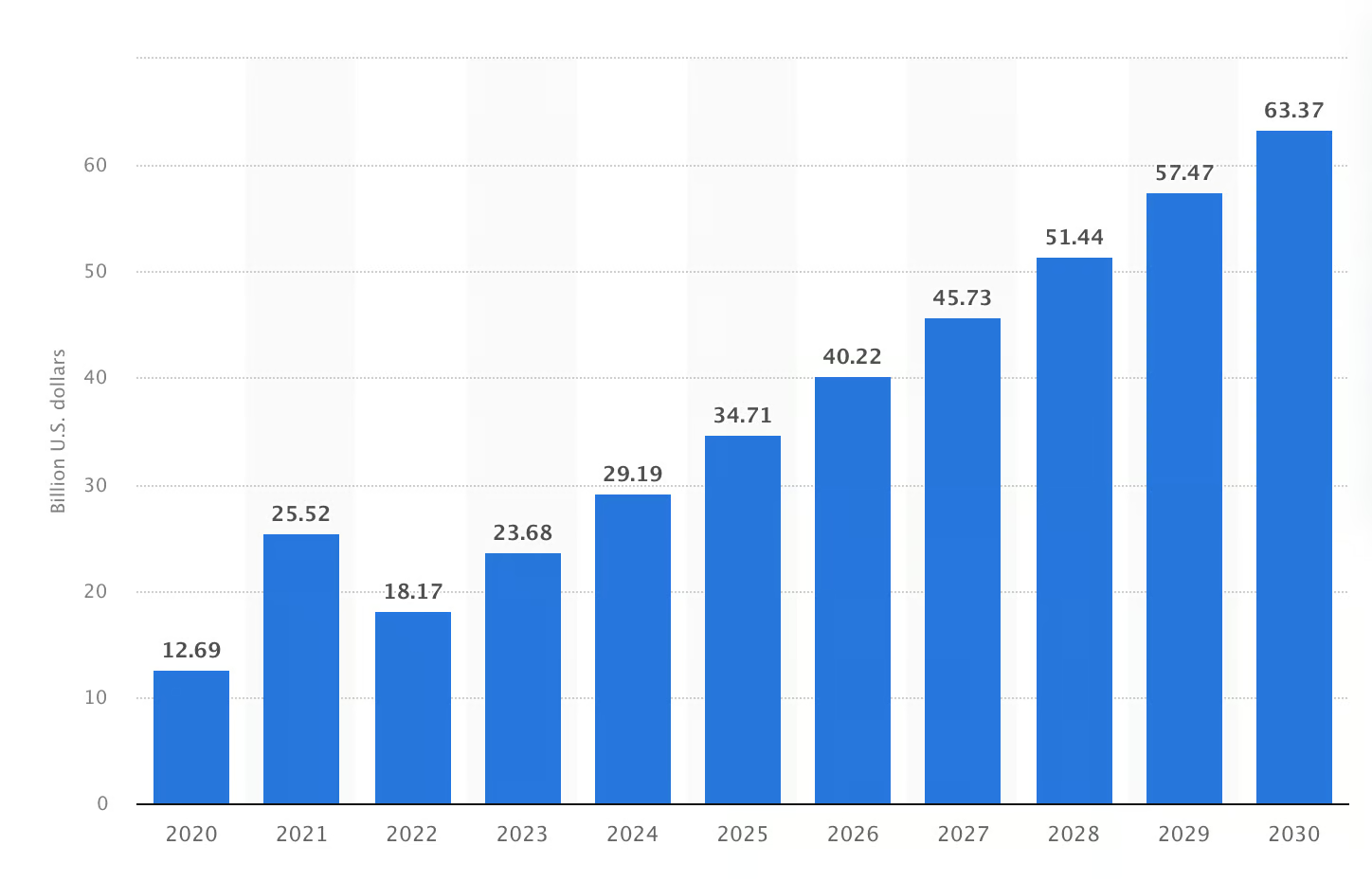
*The expected size of the NLP market worldwide will be from 2020 to 2030 (in billions of U.S. dollars). Image source: [Statista](https://www.statista.com/forecasts/1449869/nlp-market-size-world)*
Now, it’s being used in various real-world applications:
- You can analyze medical records in the healthcare sector or understand market trends in finance.
- Six of ten U.S. consumers state that [NLP-powered chatbots save them time](https://www.statista.com/statistics/1461736/perceived-benefits-of-chatbots-united-states/#:~:text=Chatbots%20bring%20multiple%20advantages%20to,chatbots%20immediately%20answered%20their%20questions) while exploring eCommerce products.
- Sentiment analysis is another key application of NLP — it interprets the emotions behind social media comments.
This shows NLP is used in almost all fields, from healthcare and finance to eCommerce and marketing. So, learning it can expand your career options, especially in data science, AI, and software development.
Since AI is becoming more common, the demand for NLP experts to handle complex tasks that general models can't solve is also increasing yearly. Simply put, by learning NLP, you can set yourself up for a career with plenty of opportunities and long-term relevance.
## Master NLP in Python Today
Learn the NLP skills to convert data into valuable insights.
[Start Learning for Free](https://www.datacamp.com/tracks/natural-language-processing-in-python)
## Core Concepts to Understand in NLP
If you're a complete beginner to NLP and don't know the basics and advanced topics it involves, here are some core NLP concepts you need to learn. This is to give you a feel of what working in NLP could look like.
### Text preprocessing
Text preprocessing converts raw data into a suitable format for computer models to understand and process that data. It processes all the data while preserving the actual meaning and context of human language in numbers. This preprocessing is done in multiple steps, but the number of steps can vary depending on the nature of the text and the goals you want to achieve with NLP.
The most common steps include:
- Tokenization: It breaks down text into smaller units called tokens. These tokens can be words, characters, or punctuation marks. For example, the sentence “I want to learn NLP.” would be tokenized into: `I`, `want`, `to`, `learn`,` NLP`,`.`.
- Stopword removal: Stopwords are words without meaning in the text, such as “is”, “the”, and “and”. Removing these words makes it easier to focus on meaningful words.
- Stemming: Stemming strips away suffixes and reduces words to their base form. For example, “going” will be reduced to “go”.
- Lemmatization: Lemmatization reduces words into lemmas that are always meaningful. It's a time-consuming process with a more complex algorithm than stemming.
### Bag-of-words (BoW) and TF-IDF
Both bag-of-words and TF-IDF are important concepts in NLP for information retrieval. Here's an overview of both concepts:
- Bag-of-words are documents containing collection words. This approach creates a feature representing each word from the corpus (an organized collection of datasets). Then, it assigns each feature a value based on the number of times a word appears within the text. You can use it to capture word occurrences in large amounts of data.
- TF-IDF builds on the BoW model. However, it gives more importance to words that occur frequently across the entire corpus. You can use this model to highlight notable words in a document's content.
### Word embeddings
[Word embeddings](https://www.datacamp.com/blog/what-is-text-embedding-ai) are representations of words in a continuous vector space. Machine learning models rely on them to understand and work with text data. Three commonly used embedding techniques include Word2Vec, GloVe, and FasText. Let's see what sets them apart:
- Word2Vec uses nearby words to understand the context and capture semantic meaning. However, it struggles with out-of-vocabulary (OOV) words and only learns embeddings for words found in training data.
- GloVe builds a co-occurrence matrix to record how often a word appears in a dataset. Placing similar words in one place allows it to capture semantic relations between those words.
- FastText breaks down words into subwords and learns embeddings for these smaller parts, which allows it to retain semantic meaning.
### Language models
Any NLP task — text generation or speech recognition — has to predict the likelihood of a sequence of words first. That's where language models help. They assign probabilities to word sequences and make computers understand human language. Two common language models include:
1. Traditional N-Gram models: These models use N-Grams, which are the probabilities of a word based on the previous words in a sequence. Since they rely on counting word sequences from large datasets, they face challenges with data sparsity.
2. Modern deep learning-based models: Deep learning completely changed with the introduction of Word2Vec and GloVe. These neural-based models create word embeddings that capture semantic relationships but cannot handle out-of-vocabulary (OOV) words.
Modern deep learning transformer-based models like Bert and GPT were introduced to address issues found in previous models. These models capture context and meaning across entire sentences. Here's how:
- Google's BERT reads the text in both directions to better understand the text context. It incorporates semantic and syntactic features to excel at tasks like answering questions and analyzing documents.
- GPT uses a unidirectional approach to predict the next word in the sequence, which is why it can create human-like and contextually correct content.
### Text classification and clustering
Text classification assigns predefined categories to text data using bag-of-words and N-Gram models. For example, if you have the words “BERT” and “GPT”, it will create two categories based on these words. Then, this will be used to train the model to predict the category of unseen text.
While clustering groups similar items together without predefined labels, its algorithm examines the features of each item to find similarities and group similar items together. For example, marketing teams can incorporate clustering to identify consumer groups based on demographics and show more relevant ads to drive growth.
## Learning NLP in Python
Python is popular for NLP because of its simplicity and helpful libraries. So, whether you're just starting or have some coding experience, let’s see how to build a solid NLP foundation using Python.
### Why Python for NLP?
Python has extensive libraries, such as [NLTK](https://www.datacamp.com/tutorial/text-analytics-beginners-nltk), [spaCy](https://www.datacamp.com/courses/advanced-nlp-with-spacy), and TextBlob, that provide tools for processing, tokenization, and more. Its [active community](https://www.python.org/community/) constantly adds new features and fixes bugs to improve these tools. This means you can rely on it for up-to-date resources and online support.
In addition to libraries, Python also has frameworks that are used in NLP. [TensorFlow](https://www.datacamp.com/courses/introduction-to-tensorflow-in-python) and [PyTorch-NLP](https://www.datacamp.com/tutorial/nlp-with-pytorch-a-comprehensive-guide) are two such frameworks that you can use for text classification, question answering, and sentiment analysis.
### Python libraries for NLP
Some of the most used Python libraries for NLP tasks include:
- NLTK (Natural Language Toolkit): It has functions to identify named entities and create parse trees. You can use it to tag parts of speech and classify text. These capabilities make it a go-to for beginners and experienced users.
- spaCy: While NLTK is great for basic tasks such as tokenization and working with stopwords, spaCy handles these tasks faster and more accurately. Also, it excels at dependency parsing, meaning it allows you to understand relationships between words in a sentence. You can use it for production-level applications.
- Gensim: If you want to work with word embeddings like Word2Vec, Gensim will be your go-to library. It finds word similarities and cluster-related words. You can also use it to process large corpora since it can handle large text datasets.
- Transformers (Hugging Face): These libraries give easy access to more-trained models, like [BERT](https://huggingface.co/docs/transformers/en/model_doc/bert) and [GPT](https://huggingface.co/docs/transformers/en/model_doc/openai-gpt). You can use these libraries to fine-tune models on your own datasets. For example, you can perform tasks like named entity recognition and song lyrics generation in your desired style.
## How to Learn NLP from Scratch
Since NLP is a vast field, it seems challenging for beginners to learn it from scratch. But you should start with the basics, such as text preprocessing and word embedding, and then move on to advanced topics like deep learning.
I’ve put together a step-wise guide to help you start your NLP journey from scratch:
### Step 1: Understand the basics of text data
Since data preparation is the core of any NLP task, you should start by understanding the text data structure and learning to analyze different data types, such as sentences, paragraphs, or documents.
### Step 2: Learn text preprocessing techniques
Next, learn about text preprocessing (preparing data for analysis). This way, you’ll understand how punctuations are removed, how text is converted to lowercase, and how special characters are handled. While these tasks may seem simple, the science and logic behind them will help you understand how NLP models process text.
Once you’ve understood everything, practice with real-world examples. Find text samples from websites or social media platforms. Then, apply different cleaning methods to this text. This hands-on approach will help you see firsthand how preprocessing transforms messy data into a format ready for analysis.
As you practice, you'll understand why each step matters and how it contributes to the overall goal of preparing text for NLP tasks.
### Step 3: Explore text representation methods
To work effectively with text data in NLP, you need to understand different ways to represent data. Start by learning about basic methods like bag-of-words and TF-IDF. Then, move on to advanced techniques, like word embeddings, and learn how they capture the semantic meaning of words.
Apply these methods to real-world texts like news articles or social media posts. Notice how each technique changes the way text is analyzed and affects NLP model results.
### Step 4: Work on NLP tasks
Next, understand concepts like sentiment analysis, text classification, and named entity recognition (NER). Start with sentiment analysis to identify the feeling the text expresses — positive, negative, or neutral.
To better understand these concepts, practice with DataCamp's project, [Who's Tweeting? Trump or Trudeau](https://www.datacamp.com/projects/467). After finishing it, you'll be able to analyze tweets and the feelings they express.
Then, work on classification and learn to sort text into different categories.
### Step 5: Learn advanced NLP topics
Now, learn about advanced skills like deep learning, language models, and transfer learning. Building models from scratch can be expensive and time-consuming. That's why you should learn to use pre-trained models like BERT.
Fine-tune these models to summarize articles, answer questions based on text, and classify different articles. These real-world examples will help you perform better on specific text types.
## An Example Learning Plan for NLP
Now you know what steps to take to get started, so follow this weekly plan and start learning:
| | | | |
|---|---|---|---|
| Week | Focus area | Learning objectives | Resources |
| Week 1 | NLP concepts | Learn about syntax, semantics, pragmatics, and basic text representations (strings, lists, dictionaries, sets). | [What is Natural Language Processing](https://www.datacamp.com/blog/what-is-natural-language-processing) [Understanding Text Classification in Python](https://www.datacamp.com/tutorial/text-classification-python) [NLP Processing in Python Course](https://www.datacamp.com/courses/introduction-to-natural-language-processing-in-python) |
| Week 2 | Text representation | Learn about text representation methods and word embedding techniques like Word2Vec or GloVe. | [What Is Text Embedding in AI](https://www.datacamp.com/blog/what-is-text-embedding-ai) |
| Week 3 | NLP tasks | Apply knowledge to sentiment analysis, text classification, and NER. Familiarize with Python libraries. | [NLP with PyTorch: A Comprehensive Guide](https://www.datacamp.com/tutorial/nlp-with-pytorch-a-comprehensive-guide) [Sentiment Analysis in Python Course](https://www.datacamp.com/courses/sentiment-analysis-in-python) [NLP with SpaCy Course](https://www.datacamp.com/courses/natural-language-processing-with-spacy) |
| Week 4 | Study language models | Learn about language models and fine-tune BERT for text summarization and question answering. | [What is BERT? An Intro to BERT Models](https://www.datacamp.com/blog/what-is-bert-an-intro-to-bert-models) [Feature Engineering for NLP in Python Course](https://www.datacamp.com/courses/feature-engineering-for-nlp-in-python) |
| Week 5 | Build an NLP project | Implement an NLP project (e.g., chatbot or sentiment analysis tool). | [7 NLP Projects for All Levels](https://www.datacamp.com/tutorial/nlp-project-ideas-for-all-levels) |
Alternatively, you can follow DataCamp’s [NLP in Python skill track](https://www.datacamp.com/tracks/natural-language-processing-in-python), which contains several courses to take you from beginner to advanced.
## Best Resources for Learning NLP
Whether you want to learn basics or advanced concepts, there are many resources, from online courses to YouTube tutorials, to get you off to a strong start. Here are my top picks:
### Online courses
Online courses provide you with a lifelong learning opportunity. DataCamp offers some great courses that provide in-depth knowledge of NLP. Here are some of the great NLP courses on DataCamp:
- **For NLP basics:** [Introduction to Natural Language Processing](https://www.datacamp.com/courses/introduction-to-natural-language-processing-in-python)
- For production-level applications with NLP: [Advanced NLP with SpaCy](https://www.datacamp.com/courses/advanced-nlp-with-spacy)
- For training models with SpaCy: [Natural Language Processing with SpaCy](https://www.datacamp.com/courses/natural-language-processing-with-spacy)
- Discover basic tools for NLP in R: [Introduction to Natural Language Processing in R](https://www.datacamp.com/courses/introduction-to-natural-language-processing-in-r)
- Use Python to process text into a format suitable for machine learning: [Feature Engineering for NLP in Python](https://www.datacamp.com/courses/feature-engineering-for-nlp-in-python)
### Books and textbooks
Books and textbooks are great for learning practical NLP problems and solutions. They come in handy when you're working on lengthy projects and need to grasp new concepts.
You can read these books to become proficient in NLP concepts:
- For basics: [Speech and Language Processing](https://www.amazon.com/Speech-Language-Processing-Daniel-Jurafsky/dp/0131873210)
- For advanced NLP concepts: [Natural Language Processing with Python](https://www.amazon.com/Natural-Language-Processing-Python-Analyzing/dp/0596516495)
### YouTube channels and tutorials
When it comes to self-directed learning, YouTube tutorials are my go-to picks. There are some great YouTube channels dedicated to only NLP and its implementations. So you can use them and practice with them.
Here are some of my best picks for you:
- For basics: [Natural Language Processing (NLP) playlist](https://youtube.com/playlist?list=PLZoTAELRMXVMdJ5sqbCK2LiM0HhQVWNzm&si=jBt42kAkA5fGBNgY)
- For word embeddings: [A Complete Overview of Word Embeddings](https://youtu.be/5MaWmXwxFNQ?si=Ym6C7eQ4dLTWDx78)
- For transformer-based model: [What is BERT and How Does It Work](https://youtu.be/6ahxPTLZxU8?si=PTxKpB6bLGdfi62f)
- For transformers basics: [Transformers For Beginners](https://youtu.be/_UVfwBqcnbM?si=j3RWC0W3dMN4xjnS)
### Practice platforms
If you’re more of a practice enthusiast, try platforms like Kaggle and Hugging Face. They offer thousands of datasets to work on real-life use cases. Some recruiters may even ask you to complete NLP tasks in a single-player Kaggle competition. So, practicing on these platforms is worth your time.
Check out the following resources:
- For simple datasets: [Best 25 Datasets for NLP Projects](https://www.kaggle.com/discussions/general/150720)
- For complex datasets: [IMDB Datasets at Hugging Face](https://huggingface.co/datasets/stanfordnlp/imdb)
- For customer reviews: [Amazon Reviews for Sentiment Analysis](https://www.kaggle.com/datasets/bittlingmayer/amazonreviews)
## Tips for Mastering NLP
Mastering NLP takes consistent effort and a hands-on approach. I've learned a lot on my NLP journey, and I'd love to share some tips that have helped me along the way. Regular practice with consistency is a great way to keep advancing. But here are some key advice to stick to if you want to excel fast:
- Practice regularly: Keep practicing to understand the broad spectrum of NLP concepts and tasks. In addition, try to incorporate NLP exercises into your routine, whether through coding challenges or working on text-based datasets.
- Join study groups or forums: I've always benefited from online communities when it comes to tech projects. They bring beginners, data practitioners, researchers, and AI experts on one page. That’s why make sure to join forums so you can find solutions to any NLP-related problems.
- Work on real NLP projects: To stand out, you must turn concepts like word embedding and model validation into actual software. Start your own projects or contribute to open-source initiatives to gain practical experience and build a portfolio.
- Stay curious and keep learning: Since NLP is evolving rapidly, its future seems promising. So, make it a habit to read the latest research papers, follow thought leaders, and take advanced courses to stay ahead of the curve.
## Final Thoughts
No matter who you are — a computer science (CS) graduate or someone with years of experience, mastering NLP can land you specialized roles.
But remember, NLP tasks vary widely. What works for one problem may not work for another, so you must adapt your approach based on the specific challenges and data involved. And this is something you learn by applying theoretical knowledge into practice.
To start learning NLP from scratch today, check out our [Natural Language Processing in Python](https://www.datacamp.com/tracks/natural-language-processing-in-python) skill track.
## Build Machine Learning Skills
Elevate your machine learning skills to production level.
[Start Learning for Free](https://www.datacamp.com/tracks/machine-learning-in-production)
## FAQs
### Is coding required for NLP?
**Yes, some coding is required for NLP, but you don't need to be an expert. A basic understanding of Python is sufficient to work with NLP tools and libraries. You'll also encounter concepts from machine learning, deep learning, and statistics, which are integral to NLP.**
### How much can I earn with NLP skills?
**According to [ZipRecruiter](https://www.ziprecruiter.com/Salaries/Nlp-Salary), NLP professionals earn an average salary of around \$122,738 per year, depending on experience and location.**
### Is NLP part of AI or ML?
**NLP is a subset of AI that relies heavily on machine learning (ML) techniques. It enables computers to understand and process human language.**
### Can I learn NLP without machine learning?
**No, machine learning is essential for NLP. Many NLP tasks depend on ML algorithms to process and analyze language data effectively.**
***
Author
Laiba Siddiqui
I'm a content strategist who loves simplifying complex topics. I’ve helped companies like Splunk, Hackernoon, and Tiiny Host create engaging and informative content for their audiences.
Topics
[Machine Learning](https://www.datacamp.com/blog/category/machine-learning)
[Artificial Intelligence](https://www.datacamp.com/blog/category/ai)
***
Laiba SiddiquiI'm a content strategist who loves simplifying complex topics.
***
Topics
[Machine Learning](https://www.datacamp.com/blog/category/machine-learning)
[Artificial Intelligence](https://www.datacamp.com/blog/category/ai)

[How to Learn AI From Scratch in 2026: A Complete Guide From the Experts](https://www.datacamp.com/blog/how-to-learn-ai)
[What is Natural Language Processing (NLP)? A Comprehensive Guide for Beginners](https://www.datacamp.com/blog/what-is-natural-language-processing)
[How to Learn PyTorch From Scratch in 2026: An Expert Guide](https://www.datacamp.com/blog/how-to-learn-pytorch)
[How to Learn Python From Scratch in 2026: An Expert Guide](https://www.datacamp.com/blog/how-to-learn-python-expert-guide)

[How to Learn Deep Learning in 2026: A Complete Guide](https://www.datacamp.com/blog/how-to-learn-deep-learning)
[Natural Language Processing with BERT: A Hands-On Guide](https://www.datacamp.com/tutorial/tutorial-natural-language-processing)
Learn more about NLP and machine learning with these courses\!
Track
### [Machine Learning Scientist in Python](https://www.datacamp.com/tracks/machine-learning-scientist-with-python)
85 hr
Discover machine learning with Python and work towards becoming a machine learning scientist. Explore supervised, unsupervised, and deep learning.
[See Details](https://www.datacamp.com/tracks/machine-learning-scientist-with-python)
[Start Course](https://www.datacamp.com/users/sign_up?redirect=%2Ftracks%2Fmachine-learning-scientist-with-python%2Fcontinue)
Course
### [Advanced NLP with spaCy](https://www.datacamp.com/courses/advanced-nlp-with-spacy)
5 hr
21\.6K
Learn how to use spaCy to build advanced natural language understanding systems, using both rule-based and machine learning approaches.
[See Details](https://www.datacamp.com/courses/advanced-nlp-with-spacy)
[Start Course](https://www.datacamp.com/users/sign_up?redirect=%2Fcourses%2Fadvanced-nlp-with-spacy%2Fcontinue)
Course
### [Feature Engineering for NLP in Python](https://www.datacamp.com/courses/feature-engineering-for-nlp-in-python)
4 hr
28\.8K
Learn techniques to extract useful information from text and process them into a format suitable for machine learning.
[See Details](https://www.datacamp.com/courses/feature-engineering-for-nlp-in-python)
[Start Course](https://www.datacamp.com/users/sign_up?redirect=%2Fcourses%2Ffeature-engineering-for-nlp-in-python%2Fcontinue)
[See More](https://www.datacamp.com/category/machine-learning)
Related
[blogHow to Learn AI From Scratch in 2026: A Complete Guide From the Experts](https://www.datacamp.com/blog/how-to-learn-ai)
Find out everything you need to know about learning AI in 2026, from tips to get you started, helpful resources, and insights from industry experts.
Adel Nehme
15 min
[blogWhat is Natural Language Processing (NLP)? A Comprehensive Guide for Beginners](https://www.datacamp.com/blog/what-is-natural-language-processing)
Explore the transformative world of Natural Language Processing (NLP) with DataCamp’s comprehensive guide for beginners. Dive into the core components, techniques, applications, and challenges of NLP.
Matt Crabtree
11 min
[blogHow to Learn PyTorch From Scratch in 2026: An Expert Guide](https://www.datacamp.com/blog/how-to-learn-pytorch)
Learn PyTorch from scratch with this comprehensive 2026 guide. Discover step-by-step tutorials, practical tips, and an 8-week learning plan to master deep learning with PyTorch.
Bex Tuychiev
15 min
[blogHow to Learn Python From Scratch in 2026: An Expert Guide](https://www.datacamp.com/blog/how-to-learn-python-expert-guide)
Discover how to learn Python in 2026, its applications, and the demand for Python skills. Start your Python journey today with our comprehensive guide.
Matt Crabtree
15 min
[blogHow to Learn Deep Learning in 2026: A Complete Guide](https://www.datacamp.com/blog/how-to-learn-deep-learning)
Discover how to learn deep learning with DataCamp’s 2026 guide. Explore topics from basics to neural networks, with key applications and learning resources.
Adel Nehme
14 min
[TutorialNatural Language Processing with BERT: A Hands-On Guide](https://www.datacamp.com/tutorial/tutorial-natural-language-processing)
Learn what natural language processing (NLP) is and discover its real-world application, using Google BERT to process text datasets.

DataCamp Team
[See More](https://www.datacamp.com/blog/category/machine-learning)
[See More](https://www.datacamp.com/blog/category/machine-learning)
## Grow your data skills with DataCamp for Mobile
Make progress on the go with our mobile courses and daily 5-minute coding challenges.
[Download on the App Store](https://datacamp.onelink.me/xztQ/45dozwue?deep_link_sub1=%7B%22src_url%22%3A%22https%3A%2F%2Fwww.datacamp.com%2Fblog%2Fhow-to-learn-nlp%22%7D)[Get it on Google Play](https://datacamp.onelink.me/xztQ/go2f19ij?deep_link_sub1=%7B%22src_url%22%3A%22https%3A%2F%2Fwww.datacamp.com%2Fblog%2Fhow-to-learn-nlp%22%7D)
**Learn**
[Learn Python](https://www.datacamp.com/blog/how-to-learn-python-expert-guide)[Learn AI](https://www.datacamp.com/blog/how-to-learn-ai)[Learn Power BI](https://www.datacamp.com/learn/power-bi)[Learn Data Engineering](https://www.datacamp.com/category/data-engineering)[Assessments](https://www.datacamp.com/signal)[Career Tracks](https://www.datacamp.com/tracks/career)[Skill Tracks](https://www.datacamp.com/tracks/skill)[Courses](https://www.datacamp.com/courses-all)[Data Science Roadmap](https://www.datacamp.com/blog/data-science-roadmap)
**Data Courses**
[Python Courses](https://www.datacamp.com/category/python)[R Courses](https://www.datacamp.com/category/r)[SQL Courses](https://www.datacamp.com/category/sql)[Power BI Courses](https://www.datacamp.com/category/power-bi)[Tableau Courses](https://www.datacamp.com/category/tableau)[Alteryx Courses](https://www.datacamp.com/category/alteryx)[Azure Courses](https://www.datacamp.com/category/azure)[AWS Courses](https://www.datacamp.com/category/aws)[Google Cloud Courses](https://www.datacamp.com/category/google-cloud)[Google Sheets Courses](https://www.datacamp.com/category/google-sheets)[Excel Courses](https://www.datacamp.com/category/excel)[AI Courses](https://www.datacamp.com/category/artificial-intelligence)[Data Analysis Courses](https://www.datacamp.com/category/data-analysis)[Data Visualization Courses](https://www.datacamp.com/category/data-visualization)[Machine Learning Courses](https://www.datacamp.com/category/machine-learning)[Data Engineering Courses](https://www.datacamp.com/category/data-engineering)[Probability & Statistics Courses](https://www.datacamp.com/category/probability-and-statistics)
**DataLab**
[Get Started](https://www.datacamp.com/datalab)[Pricing](https://www.datacamp.com/datalab/pricing)[Security](https://www.datacamp.com/datalab/security)[Documentation](https://datalab-docs.datacamp.com/)
**Certification**
[Certifications](https://www.datacamp.com/certification)[Data Scientist](https://www.datacamp.com/certification/data-scientist)[Data Analyst](https://www.datacamp.com/certification/data-analyst)[Data Engineer](https://www.datacamp.com/certification/data-engineer)[SQL Associate](https://www.datacamp.com/certification/sql-associate)[Power BI Data Analyst](https://www.datacamp.com/certification/data-analyst-in-power-bi)[Tableau Certified Data Analyst](https://www.datacamp.com/certification/data-analyst-in-tableau)[Azure Fundamentals](https://www.datacamp.com/certification/azure-fundamentals)[AI Fundamentals](https://www.datacamp.com/certification/ai-fundamentals)
**Resources**
[Resource Center](https://www.datacamp.com/resources)[Upcoming Events](https://www.datacamp.com/webinars)[Blog](https://www.datacamp.com/blog)[Code-Alongs](https://www.datacamp.com/code-along)[Tutorials](https://www.datacamp.com/tutorial)[Docs](https://www.datacamp.com/doc)[Open Source](https://www.datacamp.com/open-source)[RDocumentation](https://www.rdocumentation.org/)[Book a Demo with DataCamp for Business](https://www.datacamp.com/business/demo)[Data Portfolio](https://www.datacamp.com/data-portfolio)
**Plans**
[Pricing](https://www.datacamp.com/pricing)[For Students](https://www.datacamp.com/pricing/student)[For Business](https://www.datacamp.com/business)[For Universities](https://www.datacamp.com/universities)[Discounts, Promos & Sales](https://www.datacamp.com/promo)[Expense DataCamp](https://www.datacamp.com/expense)[DataCamp Donates](https://www.datacamp.com/donates)
**For Business**
[Business Pricing](https://www.datacamp.com/business/compare-plans)[Teams Plan](https://www.datacamp.com/business/learn-teams)[Data & AI Unlimited Plan](https://www.datacamp.com/business/data-unlimited)[Customer Stories](https://www.datacamp.com/business/customer-stories)[Partner Program](https://www.datacamp.com/business/partner-program)
**About**
[About Us](https://www.datacamp.com/about)[Learner Stories](https://www.datacamp.com/stories)[Careers](https://www.datacamp.com/careers)[Become an Instructor](https://www.datacamp.com/learn/create)[Press](https://www.datacamp.com/press)[Leadership](https://www.datacamp.com/about/leadership)[Contact Us](https://support.datacamp.com/hc/en-us/articles/360021185634)[DataCamp Español](https://www.datacamp.com/es)[DataCamp Português](https://www.datacamp.com/pt)[DataCamp Deutsch](https://www.datacamp.com/de)[DataCamp Français](https://www.datacamp.com/fr)
**Support**
[Help Center](https://support.datacamp.com/hc/en-us)[Become an Affiliate](https://www.datacamp.com/affiliates)
[Facebook](https://www.facebook.com/datacampinc/)
[Twitter](https://twitter.com/datacamp)
[LinkedIn](https://www.linkedin.com/school/datacampinc/)
[YouTube](https://www.youtube.com/channel/UC79Gv3mYp6zKiSwYemEik9A)
[Instagram](https://www.instagram.com/datacamp/)
[Privacy Policy](https://www.datacamp.com/privacy-policy)[Cookie Notice](https://www.datacamp.com/cookie-notice)[Do Not Sell My Personal Information](https://www.datacamp.com/do-not-sell-my-personal-information)[Accessibility](https://www.datacamp.com/accessibility)[Security](https://www.datacamp.com/security)[Terms of Use](https://www.datacamp.com/terms-of-use)
© 2026 DataCamp, Inc. All Rights Reserved. | ||||||||||||||||||
| Readable Markdown | 1. [Home](https://www.datacamp.com/)
2. [Blog](https://www.datacamp.com/blog)
3. [Machine Learning](https://www.datacamp.com/blog/category/machine-learning)
In this guide, you’ll discover how to learn Natural Language Processing (NLP) from scratch. With a clear, week-by-week learning plan, you'll explore essential NLP concepts, practical applications, and hands-on projects to build your skills.
Sep 3, 2024 · 13 min read
## Master NLP in Python Today
Learn the NLP skills to convert data into valuable insights.
## Build Machine Learning Skills
Elevate your machine learning skills to production level.
***
Author
Laiba Siddiqui
Topics
Learn more about NLP and machine learning with these courses\! | ||||||||||||||||||
| ML Classification | |||||||||||||||||||
| ML Categories |
Raw JSON{
"/Computers_and_Electronics": 794,
"/Computers_and_Electronics/Programming": 641,
"/Jobs_and_Education": 393,
"/Jobs_and_Education/Education": 393,
"/Computers_and_Electronics/Programming/Scripting_Languages": 360,
"/Jobs_and_Education/Education/Computer_Education": 331
} | ||||||||||||||||||
| ML Page Types |
Raw JSON{
"/Article": 998,
"/Article/Tutorial_or_Guide": 888
} | ||||||||||||||||||
| ML Intent Types |
Raw JSON{
"Informational": 996
} | ||||||||||||||||||
| Content Metadata | |||||||||||||||||||
| Language | en | ||||||||||||||||||
| Author | Laiba Siddiqui | ||||||||||||||||||
| Publish Time | not set | ||||||||||||||||||
| Original Publish Time | 2024-09-07 06:08:38 (1 year ago) | ||||||||||||||||||
| Republished | No | ||||||||||||||||||
| Word Count (Total) | 3,993 | ||||||||||||||||||
| Word Count (Content) | 86 | ||||||||||||||||||
| Links | |||||||||||||||||||
| External Links | 30 | ||||||||||||||||||
| Internal Links | 205 | ||||||||||||||||||
| Technical SEO | |||||||||||||||||||
| Meta Nofollow | No | ||||||||||||||||||
| Meta Noarchive | No | ||||||||||||||||||
| JS Rendered | Yes | ||||||||||||||||||
| Redirect Target | null | ||||||||||||||||||
| Performance | |||||||||||||||||||
| Download Time (ms) | 113 | ||||||||||||||||||
| TTFB (ms) | 104 | ||||||||||||||||||
| Download Size (bytes) | 87,087 | ||||||||||||||||||
| Shard | 136 (laksa) | ||||||||||||||||||
| Root Hash | 7979813049800185936 | ||||||||||||||||||
| Unparsed URL | com,datacamp!www,/blog/how-to-learn-nlp s443 | ||||||||||||||||||