ℹ️ Skipped - page is already crawled
| Filter | Status | Condition | Details |
|---|---|---|---|
| HTTP status | PASS | download_http_code = 200 | HTTP 200 |
| Age cutoff | PASS | download_stamp > now() - 6 MONTH | 0.1 months ago |
| History drop | PASS | isNull(history_drop_reason) | No drop reason |
| Spam/ban | PASS | fh_dont_index != 1 AND ml_spam_score = 0 | ml_spam_score=0 |
| Canonical | PASS | meta_canonical IS NULL OR = '' OR = src_unparsed | Not set |
| Property | Value |
|---|---|
| URL | https://www.counseling.org/mental-health-counseling/what-is-counseling |
| Last Crawled | 2026-04-18 11:23:26 (3 days ago) |
| First Indexed | 2024-03-01 00:10:50 (2 years ago) |
| HTTP Status Code | 200 |
| Meta Title | What Is Counseling | Meaning, Benefits and How It Helps | ACA |
| Meta Description | Learn what counseling is, how professional counselors support mental health, wellness, and life goals, and when counseling may help you overcome challenges and improve well-being. Expert guidance and insights from the American Counseling Association. |
| Meta Canonical | null |
| Boilerpipe Text | Please Get Help
Call or Text 988
The 988 Lifeline is a suicide and crisis lifeline, which uses a network of 200+ local crisis centers to connect people with 24/7 free and confidential support.
The 988 Suicide & Crisis Lifeline’s specialized support for LGBTQ+ youth is at risk. Please advocate for LGBTQ+ youth mental health and tell your legislators to support and continue to fund the 988’s specialized support for LGBTQ+ youth.
ACA SUICIDE RESOURCES
HELP ONLINE
Is Counseling Right for You?
Considering seeing a counselor but not sure if it’s right for you? Check out these frequently asked questions to gain more insight on who counselors are and how they work with clients.
Counseling is a professional relationship that empowers diverse individuals, families and groups to accomplish mental health, wellness, education and career goals.
Life is rarely perfect. We all face ups and downs and sometimes need some extra help in our corner. If there is an area of your life that you are struggling with, or where you feel you could use additional insight, or even just a partner for the journey, then working with a counselor may be right for you. Working with a counselor helps you focus on your mental and emotional health, overcome challenges, meet your goals, and lay foundations for a brighter, healthier future.
Professional counselors are trained to diagnose and treat clients with mental or behavioral health issues, such as anxiety, depression, bipolar disorder or substance use disorder. But you don’t need a formal diagnosis to benefit from mental health care. Counselors also work with clients who are seeking to generally improve their wellbeing.
There’s no right or wrong time to begin working with a professional counselor
. Many people tend to seek professional counseling when they feel distressed, overwhelmed or stuck. But everyday life challenges like unemployment/underemployment, financial worries, stress from work or too much exposure to bad news in the media are other examples of where a counselor's guidance can help set, or reset, people on their desired path.
Professional counselors can help with every area of a person’s life.
The right counselor can help you strive for optimal mental health, meet wellness goals, or work on relationship issues. Counselors can help with academic and career issues, as well as adjusting to chronic illness or rehabilitation. Counselors work with people across the lifespan and address issues related to life transitions, traumatic events, and difficult situations.
Professional counselors are graduate-level mental health service providers, trained to work with individuals, families and groups in treating mental, behavioral, and emotional problems and disorders. They have obtained a master’s degree or higher from a counseling program accredited by the Council for Accreditation of Counseling and Related Education Programs (CACREP), an independent agency which ACA endorses.
Professional counselors have also obtained appropriate licenses to practice in the state where they reside. (Learn more about
ACA’s efforts to expand license portability for counselors
.)
Counselors work in a variety of settings within communities to provide care for those who need it. Their workplace settings include in private practice, schools (K-12 and at universities), employee assistance programs, government agencies, rehabilitation centers and prisons, to name a few. Our
Provider Directories
are a good place to start your search for a local counseling professional.
All professional counselors have three things in common, so if you choose to work with a counselor, you can expect:
A Client-Centered Approach That Focuses on You
Just as no two people are alike, counselors recognize that no two people who work with a counselor will have the same experience. So, a professional counselor’s first goal is to get to know their client.
Your counselor will be interested in hearing about you and all areas of your life. They will likely ask you questions about yourself, your hobbies, your relationships and your work to understand how different parts of your life may be affecting each other.
Through creating a safe, non-judgmental environment and actively listening, counselors help you to explore what’s troubling you. Professional counselors also regularly utilize evidence-based practices grounded in research to ensure top quality care. As counselors get to know you and listen to your concerns, wishes and goals, they help you develop insight so that you can identify and get to the root of your challenges.
A Wellness-Based Philosophy
Counselors are committed to helping you achieve wellness in every area of your life. While professional counselors are trained to diagnose and treat mental disorders, they can also work with you to improve your overall wellbeing. Whether you are struggling with life’s adversities or just looking to live a better life, a counselor will approach your treatment with your mental, physical and spiritual wellness in mind. They work with you to understand what is holding you back from achieving wellness, and help you build the knowledge and skills you need to come up with real solutions and healthy coping strategies for the challenges you face.
A Professional Commitment to Ethical and Culturally Inclusive Practice
Professional counselors are committed to ensuring that every person who seeks counseling receives ethical, culturally inclusive service that benefits and protects every client. They consider your unique culture and experiences to see your challenges from your perspective. Counselors prioritize your individuality and strive to meet you where you are. They embody this commitment by following the ACA Code of Ethics. |
| Markdown | - [Career Central](https://www.counseling.org/resources/career-central)
- [Store](https://www.counseling.org/store)
- [Connect](https://www.counseling.org/aca-connect)
- [My ACA](https://www.counseling.org/my-aca-menu)
Welcome
***
[My Account](https://imis.counseling.org/ACA/MyProfile/AccountPage.aspx)
[Logout](https://www.counseling.org/mxt/authservice/SignOut)
[Login](https://www.counseling.org/mxt/authservice)
[](https://www.counseling.org/)
- [Learn About Counseling](https://www.counseling.org/mental-health-counseling/what-is-counseling)
- [What Is Counseling?](https://www.counseling.org/mental-health-counseling/what-is-counseling)
- [Counselor Stories](https://www.counseling.org/mental-health-counseling/counselor-stories)
- [Counseling Impact](https://www.counseling.org/mental-health-counseling/counseling-impact)
- [Provider Directories](https://www.counseling.org/mental-health-counseling/provider-directories)
- [Counseling Corner](https://www.counseling.org/mental-health-counseling/counseling-corner)
- [Counseling Awareness Month](https://www.counseling.org/mental-health-counseling/counseling-awareness-month)
- [Membership](https://www.counseling.org/mental-health-counseling/what-is-counseling)
- [Join Now](https://www.counseling.org/membership/join-now)
- [Value of Membership](https://www.counseling.org/membership/value-of-membership)
- [Membership Tiers](https://www.counseling.org/membership/tiers)
- [Awards](https://www.counseling.org/membership/awards)
- [Membership Savings Program](https://www.counseling.org/membership/savings-program)
- [Government Affairs](https://www.counseling.org/mental-health-counseling/what-is-counseling)
- [Legislative Advocacy](https://www.counseling.org/government-affairs/legislative)
- [Legislative Updates](https://www.counseling.org/government-affairs/updates)
- [Federal Issues](https://www.counseling.org/government-affairs/federal-issues)
- [Medicare Coverage for Counseling](https://www.counseling.org/government-affairs/federal-issues/medicare-coverage-for-counseling)
- [State Issues](https://www.counseling.org/government-affairs/state-issues)
- [Counseling Compact](https://www.counseling.org/government-affairs/counseling-compact)
- [Take Action](https://www.counseling.org/government-affairs/take-action)
- [Resources](https://www.counseling.org/government-affairs/resources)
- [Events & Education](https://www.counseling.org/mental-health-counseling/what-is-counseling)
- [Events](https://www.counseling.org/events-education/events)
- [ACA 75th Anniversary](https://www.counseling.org/events-education/events/aca-75th-anniversary)
- [ACA Conference & Expo](https://www.counseling.org/events-education/conferences)
- [Continuing Education](https://www.counseling.org/events-education/continuing-education)
- [Publications & News](https://www.counseling.org/mental-health-counseling/what-is-counseling)
- [About Our Publications](https://www.counseling.org/publications/overview)
- [Books](https://www.counseling.org/publications/aca-books)
- [Counseling Journals](https://www.counseling.org/publications/counseling-journals)
- [*Journal of Counseling & Development*](https://www.counseling.org/publications/counseling-journals/journal-of-counseling-development)
- [*The Career Development Quarterly*](https://www.counseling.org/publications/counseling-journals/career-development-quarterly)
- [*Counselor Education and Supervision*](https://www.counseling.org/publications/counseling-journals/counselor-education-and-supervision)
- [*Journal of Addictions & Offender Counseling*](https://www.counseling.org/publications/counseling-journals/addictions-offender-counseling)
- [*Journal of Employment Counseling*](https://www.counseling.org/publications/counseling-journals/employment-counseling)
- [*The Journal of Humanistic Counseling*](https://www.counseling.org/publications/counseling-journals/humanistic-counseling)
- [*The Journal of Multicultural Counseling and Development*](https://www.counseling.org/publications/counseling-journals/multicultural-counseling-and-development)
- [*Counseling Today* Magazine](https://www.counseling.org/publications/counseling-today-magazine)
- [Media Center](https://www.counseling.org/publications/media-center)
- [Resources](https://www.counseling.org/mental-health-counseling/what-is-counseling)
- [Ethics](https://www.counseling.org/resources/ethics)
- [Topics](https://www.counseling.org/resources/topics)
- [Professional Counseling](https://www.counseling.org/resources/topics/professional-counseling)
- [Assessment, Diagnosis & Treatment](https://www.counseling.org/resources/topics/assessment-diagnosis-treatment)
- [Cultural Identities, Multiculturalism & Diversity](https://www.counseling.org/resources/topics/cultural-identities)
- [Special Considerations](https://www.counseling.org/resources/topics/special-considerations)
- [Modalities](https://www.counseling.org/resources/topics/modalities)
- [Licensure Requirements](https://www.counseling.org/resources/licensure-requirements)
- [Practice Briefs](https://www.counseling.org/resources/practice-briefs)
- [Research & Reports](https://www.counseling.org/resources/research-reports)
- [Competencies & Exemplary Practices](https://www.counseling.org/resources/competencies)
- [Career Central](https://www.counseling.org/resources/career-central)
- [About ACA](https://www.counseling.org/mental-health-counseling/what-is-counseling)
- [Who We Are](https://www.counseling.org/about/who-we-are)
- [Meet Our Staff](https://www.counseling.org/about/who-we-are/meet-our-staff)
- [Leadership & Governance](https://www.counseling.org/about/leadership-governance)
- [New Governance Model](https://www.counseling.org/about/leadership-governance/new-governance-model)
- [Elections](https://www.counseling.org/about/leadership-governance/elections)
- [Divisions, Regions and Branches](https://www.counseling.org/about/divisions-regions-branches)
- [Strategic Plan](https://www.counseling.org/about/strategic-plan)
- [Values & Statements](https://www.counseling.org/about/values-statements)
- [Media Kit](https://www.counseling.org/about/media-kit)
- [ACA Foundation](https://www.counseling.org/about/aca-foundation)
- [Work at ACA\!](https://www.counseling.org/about/working-for-aca)
- [Partnerships](https://www.counseling.org/about/partnerships)
- [Year in Review](https://www.counseling.org/about/year-in-review)
1. [Home](https://www.counseling.org/)
# What Is Counseling?

### What Is a Professional Counselor?
Professional counselors help people gain personal insights, develop strategies and come up with real-life solutions to the problems and challenges they face in every area of life. As trained and credentialed professionals, they accomplish this by getting to know clients, by building safe, positive relationships and suggesting tools and techniques they believe will benefit clients.
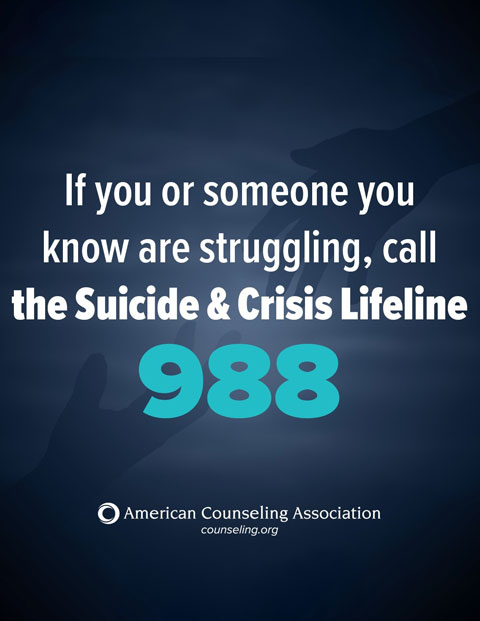
Please Get Help
### Call or Text 988
The 988 Lifeline is a suicide and crisis lifeline, which uses a network of 200+ local crisis centers to connect people with 24/7 free and confidential support.
The 988 Suicide & Crisis Lifeline’s specialized support for LGBTQ+ youth is at risk. Please advocate for LGBTQ+ youth mental health and tell your legislators to support and continue to fund the 988’s specialized support for LGBTQ+ youth.
[ACA SUICIDE RESOURCES](https://www.counseling.org/resources/topics/assessment-diagnosis-treatment/suicide-prevention) [HELP ONLINE](https://www.samhsa.gov/find-support/in-crisis)
## Is Counseling Right for You?
Considering seeing a counselor but not sure if it’s right for you? Check out these frequently asked questions to gain more insight on who counselors are and how they work with clients.
What is counseling?
Counseling is a professional relationship that empowers diverse individuals, families and groups to accomplish mental health, wellness, education and career goals.
Why meet with a professional counselor?
Life is rarely perfect. We all face ups and downs and sometimes need some extra help in our corner. If there is an area of your life that you are struggling with, or where you feel you could use additional insight, or even just a partner for the journey, then working with a counselor may be right for you. Working with a counselor helps you focus on your mental and emotional health, overcome challenges, meet your goals, and lay foundations for a brighter, healthier future.
Who should see a professional counselor?
Professional counselors are trained to diagnose and treat clients with mental or behavioral health issues, such as anxiety, depression, bipolar disorder or substance use disorder. But you don’t need a formal diagnosis to benefit from mental health care. Counselors also work with clients who are seeking to generally improve their wellbeing.
When should I call a counselor?
**There’s no right or wrong time to begin working with a professional counselor**. Many people tend to seek professional counseling when they feel distressed, overwhelmed or stuck. But everyday life challenges like unemployment/underemployment, financial worries, stress from work or too much exposure to bad news in the media are other examples of where a counselor's guidance can help set, or reset, people on their desired path.
How can a professional counselor help me?
Professional counselors can help with every area of a person’s life.
The right counselor can help you strive for optimal mental health, meet wellness goals, or work on relationship issues. Counselors can help with academic and career issues, as well as adjusting to chronic illness or rehabilitation. Counselors work with people across the lifespan and address issues related to life transitions, traumatic events, and difficult situations.
How are counselors trained?
Professional counselors are graduate-level mental health service providers, trained to work with individuals, families and groups in treating mental, behavioral, and emotional problems and disorders. They have obtained a master’s degree or higher from a counseling program accredited by the Council for Accreditation of Counseling and Related Education Programs (CACREP), an independent agency which ACA endorses.
Professional counselors have also obtained appropriate licenses to practice in the state where they reside. (Learn more about [ACA’s efforts to expand license portability for counselors](https://www.counseling.org/government-affairs/counseling-compact).)
Where can I connect with a counselor?
Counselors work in a variety of settings within communities to provide care for those who need it. Their workplace settings include in private practice, schools (K-12 and at universities), employee assistance programs, government agencies, rehabilitation centers and prisons, to name a few. Our [Provider Directories](https://www.counseling.org/mental-health-counseling/provider-directories) are a good place to start your search for a local counseling professional.
What is it like to work with a counselor?
All professional counselors have three things in common, so if you choose to work with a counselor, you can expect:
- **A Client-Centered Approach That Focuses on You**
Just as no two people are alike, counselors recognize that no two people who work with a counselor will have the same experience. So, a professional counselor’s first goal is to get to know their client.
Your counselor will be interested in hearing about you and all areas of your life. They will likely ask you questions about yourself, your hobbies, your relationships and your work to understand how different parts of your life may be affecting each other.
Through creating a safe, non-judgmental environment and actively listening, counselors help you to explore what’s troubling you. Professional counselors also regularly utilize evidence-based practices grounded in research to ensure top quality care. As counselors get to know you and listen to your concerns, wishes and goals, they help you develop insight so that you can identify and get to the root of your challenges.
- **A Wellness-Based Philosophy**
Counselors are committed to helping you achieve wellness in every area of your life. While professional counselors are trained to diagnose and treat mental disorders, they can also work with you to improve your overall wellbeing. Whether you are struggling with life’s adversities or just looking to live a better life, a counselor will approach your treatment with your mental, physical and spiritual wellness in mind. They work with you to understand what is holding you back from achieving wellness, and help you build the knowledge and skills you need to come up with real solutions and healthy coping strategies for the challenges you face.
- **A Professional Commitment to Ethical and Culturally Inclusive Practice**
Professional counselors are committed to ensuring that every person who seeks counseling receives ethical, culturally inclusive service that benefits and protects every client. They consider your unique culture and experiences to see your challenges from your perspective. Counselors prioritize your individuality and strive to meet you where you are. They embody this commitment by following the ACA Code of Ethics.
- Advertisement
[](https://bit.ly/nova-r1)
- Advertisement
[](https://bit.ly/carecredit26)
[](https://www.counseling.org/images/default-source/nav1---mental-health-counseling/02122024.png?sfvrsn=507f4ed0_0)

2461 Eisenhower Avenue, Suite 300, Alexandria, Va. 22314 \| 800-347-6647 \| (fax) 800-473-2329
[My ACA](https://www.counseling.org/my-aca) [Join Now](https://www.counseling.org/membership/join-now) [Contact Us](https://www.counseling.org/contact) [Privacy Policy](https://www.counseling.org/about/policies/privacy-policy) [Terms of Use](https://www.counseling.org/about/policies/terms-of-use) © All Rights Reserved. |
| Readable Markdown | 
Please Get Help
### Call or Text 988
The 988 Lifeline is a suicide and crisis lifeline, which uses a network of 200+ local crisis centers to connect people with 24/7 free and confidential support.
The 988 Suicide & Crisis Lifeline’s specialized support for LGBTQ+ youth is at risk. Please advocate for LGBTQ+ youth mental health and tell your legislators to support and continue to fund the 988’s specialized support for LGBTQ+ youth.
[ACA SUICIDE RESOURCES](https://www.counseling.org/resources/topics/assessment-diagnosis-treatment/suicide-prevention) [HELP ONLINE](https://www.samhsa.gov/find-support/in-crisis)
## Is Counseling Right for You?
Considering seeing a counselor but not sure if it’s right for you? Check out these frequently asked questions to gain more insight on who counselors are and how they work with clients.
Counseling is a professional relationship that empowers diverse individuals, families and groups to accomplish mental health, wellness, education and career goals.
Life is rarely perfect. We all face ups and downs and sometimes need some extra help in our corner. If there is an area of your life that you are struggling with, or where you feel you could use additional insight, or even just a partner for the journey, then working with a counselor may be right for you. Working with a counselor helps you focus on your mental and emotional health, overcome challenges, meet your goals, and lay foundations for a brighter, healthier future.
Professional counselors are trained to diagnose and treat clients with mental or behavioral health issues, such as anxiety, depression, bipolar disorder or substance use disorder. But you don’t need a formal diagnosis to benefit from mental health care. Counselors also work with clients who are seeking to generally improve their wellbeing.
**There’s no right or wrong time to begin working with a professional counselor**. Many people tend to seek professional counseling when they feel distressed, overwhelmed or stuck. But everyday life challenges like unemployment/underemployment, financial worries, stress from work or too much exposure to bad news in the media are other examples of where a counselor's guidance can help set, or reset, people on their desired path.
Professional counselors can help with every area of a person’s life.
The right counselor can help you strive for optimal mental health, meet wellness goals, or work on relationship issues. Counselors can help with academic and career issues, as well as adjusting to chronic illness or rehabilitation. Counselors work with people across the lifespan and address issues related to life transitions, traumatic events, and difficult situations.
Professional counselors are graduate-level mental health service providers, trained to work with individuals, families and groups in treating mental, behavioral, and emotional problems and disorders. They have obtained a master’s degree or higher from a counseling program accredited by the Council for Accreditation of Counseling and Related Education Programs (CACREP), an independent agency which ACA endorses.
Professional counselors have also obtained appropriate licenses to practice in the state where they reside. (Learn more about [ACA’s efforts to expand license portability for counselors](https://www.counseling.org/government-affairs/counseling-compact).)
Counselors work in a variety of settings within communities to provide care for those who need it. Their workplace settings include in private practice, schools (K-12 and at universities), employee assistance programs, government agencies, rehabilitation centers and prisons, to name a few. Our [Provider Directories](https://www.counseling.org/mental-health-counseling/provider-directories) are a good place to start your search for a local counseling professional.
All professional counselors have three things in common, so if you choose to work with a counselor, you can expect:
- **A Client-Centered Approach That Focuses on You**
Just as no two people are alike, counselors recognize that no two people who work with a counselor will have the same experience. So, a professional counselor’s first goal is to get to know their client.
Your counselor will be interested in hearing about you and all areas of your life. They will likely ask you questions about yourself, your hobbies, your relationships and your work to understand how different parts of your life may be affecting each other.
Through creating a safe, non-judgmental environment and actively listening, counselors help you to explore what’s troubling you. Professional counselors also regularly utilize evidence-based practices grounded in research to ensure top quality care. As counselors get to know you and listen to your concerns, wishes and goals, they help you develop insight so that you can identify and get to the root of your challenges.
- **A Wellness-Based Philosophy**
Counselors are committed to helping you achieve wellness in every area of your life. While professional counselors are trained to diagnose and treat mental disorders, they can also work with you to improve your overall wellbeing. Whether you are struggling with life’s adversities or just looking to live a better life, a counselor will approach your treatment with your mental, physical and spiritual wellness in mind. They work with you to understand what is holding you back from achieving wellness, and help you build the knowledge and skills you need to come up with real solutions and healthy coping strategies for the challenges you face.
- **A Professional Commitment to Ethical and Culturally Inclusive Practice**
Professional counselors are committed to ensuring that every person who seeks counseling receives ethical, culturally inclusive service that benefits and protects every client. They consider your unique culture and experiences to see your challenges from your perspective. Counselors prioritize your individuality and strive to meet you where you are. They embody this commitment by following the ACA Code of Ethics.
[](https://www.counseling.org/images/default-source/nav1---mental-health-counseling/02122024.png?sfvrsn=507f4ed0_0) |
| Shard | 181 (laksa) |
| Root Hash | 14412372568989142181 |
| Unparsed URL | org,counseling!www,/mental-health-counseling/what-is-counseling s443 |