ℹ️ Skipped - page is already crawled
| Filter | Status | Condition | Details |
|---|---|---|---|
| HTTP status | PASS | download_http_code = 200 | HTTP 200 |
| Age cutoff | PASS | download_stamp > now() - 6 MONTH | 0.4 months ago |
| History drop | PASS | isNull(history_drop_reason) | No drop reason |
| Spam/ban | PASS | fh_dont_index != 1 AND ml_spam_score = 0 | ml_spam_score=0 |
| Canonical | PASS | meta_canonical IS NULL OR = '' OR = src_unparsed | Not set |
| Property | Value |
|---|---|
| URL | https://www.cnn.com/2022/10/01/health/long-covid-smell-taste-loss-wellness |
| Last Crawled | 2026-04-04 00:25:44 (10 days ago) |
| First Indexed | 2022-10-01 14:30:21 (3 years ago) |
| HTTP Status Code | 200 |
| Meta Title | Long Covid: What we know about the loss of smell and taste | CNN |
| Meta Description | Most people recover their sense of smell and taste after Covid-19. But not all do. Some continue to struggle with the inability to smell or taste at all, while others have only partially recovered. Here’s what we know so far about why. |
| Meta Canonical | null |
| Boilerpipe Text | Video Ad Feedback
See how Covid-19 changed their sense of smell
02:20
• Source:
CNN
CNN
—
Imagine waking up one morning after recovering from Covid-19 to find that your coffee smells like unwashed socks, your eggs reek of feces and your orange juice tastes metallic. Oddly, that’s a good thing: It’s a sign you still have a working sense of smell – even if it’s miswired in your brain.
Your ability to smell can also disappear completely, a condition called anosmia. Without warning, you can no longer inhale the sweet odor of your baby’s skin, the roses gifted by your partner or the pungent stink of your exercise clothes.
Taste and smell are intertwined, so food may be bland or flavorless. Appetite and enjoyment of life may plummet, which past studies show can lead to
nutritional deficits
,
cognitive decline
and
depression
.
Danger lurks as well. Without smell, you may not recognize the telltale signs of fires, natural gas leaks, poisonous chemicals or spoiled food and drink.
Such is the reality of some 5% of global Covid-19 survivors who have now developed long-lasting taste and smell problems,
according to a 2022 study
. More than two years into the pandemic, researchers found an estimated 15 million people may still have problems perceiving odors, while 12 million may struggle with taste.
Support and advocacy groups such as
AbScent
and
Fifth Sense
have mobilized to help, offering
affirmation
and hope,
tips on smell training
and even
recipes
to bolster appetite.
Smell or olfactory training encourages people to sniff essential oils twice a day, said rhinologist Dr. Zara Patel, a professor of otolaryngology, head and neck surgery at Stanford University School of Medicine.
“The way I explain it to patients is if you had a stroke, and it made your arm not work, you would go to physical therapy, you would do rehab,” Patel said. “That’s exactly what olfactory training is for your sense of smell.”
As science learns more about how Covid-19 attacks and disrupts smell, “I think you’re going to see interventions that are more targeted,” said rhinologist Dr. Justin Turner, an associate professor of otolaryngology, head and neck surgery at Vanderbilt University Medical Center in Nashville.
Anyone still struggling with a loss of smell and taste “should think positively and assume their sense of smell will return,” Turner said. “Yes, there are some people that won’t recover, so for those folks, we want them to not ignore it. We want them to take it seriously.”
People have been losing their sense of smell and taste for centuries. Common cold and flu viruses, nasal polyps, thyroid disorders, severe allergies, sinus infections and neurological conditions such as
Alzheimer’s disease, Parkinson’s disease and multiple sclerosis can all damage the ability to smell and taste – at times, permanently.
So can head trauma, exposure to noxious chemicals, cancer treatments, smoking, gum disease, antibiotics and various blood pressure, cholesterol, reflux and allergy medications,
according to the Cleveland Clinic
.
Growing old is a major cause of smell loss as the ability of the olfactory neurons to regenerate declines. A
study conducted in 1984
found more than 50% of people between ages 65 and 80 years suffered from “major olfactory impairment.” The number climbed to more than 75%
for people over age 80.
When the virus that causes Covid-19 invaded our lives, a condition that was relatively rare among people under 50 expanded exponentially, affecting all ages.
“Covid-19 affected younger people much more than other forms of post-viral smell loss,” said
surgeon Dr. Eric Holbrook, an associate professor of otolaryngology and head and neck surgery at Harvard Medical School. “You wouldn’t see much smell loss in the pediatric population, for example, and now it’s very common.”
In fact, loss of smell was so prevalent at the beginning of the pandemic it was considered the canary in the coal mine – an early sign of Covid-19 infection even in the absence of other symptoms.
That’s not true today. A
study
published in May found 17% of people lost their sense of smell when infected with the Omicron variant, which became the
predominant variant of the virus that causes Covid-19 in late 2021.
(This could change again
if the virus mutates.)
In comparison, people sickened by the two original variants, Alpha and Beta, were 50% more likely to lose their sense of smell or taste. Delta was nearly as bad – 44% of people were affected,
according to the study.
Statistics show most people recover
their sense of taste and smell. An
August analysis
of 267 people who lost smell and taste at least two years ago found the majority either fully (38.2%) or partially (54.3%) recovered their ability to smell and taste. That was especially true for people under 40, according to the study.
But 7.5%
had not recovered their sense of smell and taste two years after their Covid-19 infection cleared. Those who were least likely to recover included people with existing nasal congestion, more women than men, and those who had a greater initial severity of smell loss, the study found.
How does Covid-19 damage the olfactory system? At first scientists believed it infected neurons in the nose responsible for transmitting smells from the environment into the brain. Those neurons sit in the olfactory bulbs at the very top of each nostril and send out axons, or cables, to unique sensory spots in the brain.
Soon studies discovered the virus does not enter those neurons at all. Instead, it attacks
sustentacular cells,
also known as supporting cells, which provide nourishment and protection to nerve cells from birth. Unlike many other cells, neurons in the nose undergo rebirth every two to three months.
“(Covid-19) infection of those supporting cells likely has some sort of long-term effect on the ability of those neurons to regenerate themselves with time,” Turner said.
“That’s one of the reasons we sometimes see a delayed effect: People may have some smell loss that recovers, then later they have a second wave of smell loss, parosmia or other symptoms because that regenerative capacity is malfunctioning,” he said.
Parosmia is the medical term for distorted smells, which can often be quite disgusting, Patel said.
“Unfortunately, there’s these classic categories of really terrible smells and tastes,” she said. “Sometimes it’s feces, garbage or old dirty socks. There can be a sort of sickly, sweet chemical type of smell and taste. Oh, and rotting flesh is another common category.”
For many people, parosmia tends to occur or reoccur at the three-month mark, about the time olfactory neurons would naturally be regenerating, experts told CNN.
“If the reconnection misses its target and hits a different spot in the brain reserved for a different odor, your perception of smell is going to be totally screwed up,” Holbrook said.
“You have to rely on the ability for those axons to retract and then find their way to the right spot,” he added. “Or if they’re not correct, wait for those neurons to die off and have new ones come back and find the right spot.”
Science continues to discover ways the virus attacks. A
study
from February found it may also
damage olfactory receptors
that sit on the surface of nerve cells in the nose. Those receptors bind smells and trigger the nerve impulses that transmit the information to the brain.
There may also be a genetic component. A
January study
discovered a mutation in two overlapping genes, UGT2A1 and UGT2A2, that play a role in metabolizing odors. People with that mutation may be more susceptible to losing their sense of smell, but further studies are needed to determine the virus’s
association
to the genes – if any.
People who are older and have chronic diseases that affect the nervous system, such as diabetes, are often more susceptible to olfactory damage, Patel said.
“It’s the very small vessels in the body, including the nose, that are affected by diabetes, disturbing blood, nutrient and oxygen flow to these olfactory nerves,” she said. “People with chronic sinus or allergy inflammation in the nose – anything that makes it harder for our system to bounce back will likely be at higher risk as well.” |
| Markdown | Thank You\!
Your effort and contribution in providing this feedback is much appreciated.
Close
Ad Feedback
[Health](https://www.cnn.com/health)
[Life, But Better](https://www.cnn.com/interactive/life-but-better/)
[Fitness](https://www.cnn.com/health/life-but-better/fitness)
[Food](http://www.cnn.com/health/life-but-better/food)
[Sleep](https://www.cnn.com/health/life-but-better/sleep)
[Mindfulness](https://www.cnn.com/health/life-but-better/mindfulness)
[Relationships](https://www.cnn.com/health/life-but-better/relationships)
[More]()
[Life, But Better](https://www.cnn.com/interactive/life-but-better/) [Fitness](https://www.cnn.com/health/life-but-better/fitness) [Food](http://www.cnn.com/health/life-but-better/food) [Sleep](https://www.cnn.com/health/life-but-better/sleep) [Mindfulness](https://www.cnn.com/health/life-but-better/mindfulness) [Relationships](https://www.cnn.com/health/life-but-better/relationships)
[Watch](https://www.cnn.com/watch) [Listen](https://www.cnn.com/audio)
Subscribe
Sign in
My Account
- [Settings](https://www.cnn.com/account/settings)
- [Newsletters](https://www.cnn.com/newsletters)
- [Topics you follow](https://www.cnn.com/follow?iid=fw_var-nav)
- [Sign out](https://www.cnn.com/2022/10/01/health/long-covid-smell-taste-loss-wellness)
Your CNN account Sign in to your CNN account
***
Sign in
My Account
- [Settings](https://www.cnn.com/account/settings)
- [Newsletters](https://www.cnn.com/newsletters)
- [Topics you follow](https://www.cnn.com/follow?iid=fw_var-nav)
- [Sign out](https://www.cnn.com/2022/10/01/health/long-covid-smell-taste-loss-wellness)
Your CNN account Sign in to your CNN account
***
[Listen](https://www.cnn.com/audio) [Watch](https://www.cnn.com/watch)
***
Edition
[US](https://us.cnn.com/?hpt=header_edition-picker)
[International](https://edition.cnn.com/?hpt=header_edition-picker)
[Arabic](https://arabic.cnn.com/?hpt=header_edition-picker)
[Español](https://cnnespanol.cnn.com/?hpt=header_edition-picker)
Edition
- [US](https://us.cnn.com/?hpt=header_edition-picker)
- [International](https://edition.cnn.com/?hpt=header_edition-picker)
- [Arabic](https://arabic.cnn.com/?hpt=header_edition-picker)
- [Español](https://cnnespanol.cnn.com/?hpt=header_edition-picker)
***
[Life, But Better](https://www.cnn.com/interactive/life-but-better/)
[Fitness](https://www.cnn.com/health/life-but-better/fitness)
[Food](http://www.cnn.com/health/life-but-better/food)
[Sleep](https://www.cnn.com/health/life-but-better/sleep)
[Mindfulness](https://www.cnn.com/health/life-but-better/mindfulness)
[Relationships](https://www.cnn.com/health/life-but-better/relationships)
***
Follow CNN
Download the CNN App
***
- [US](https://www.cnn.com/us)
- [Crime & Justice](https://www.cnn.com/us/crime-and-justice)
- [Immigration](https://www.cnn.com/us/immigration)
- [Education](https://www.cnn.com/us/education)
- [Transportation](https://www.cnn.com/us/transportation)
- [Race & Identity](https://www.cnn.com/us/race-and-identity)
- [World](https://www.cnn.com/world)
- [Africa](https://www.cnn.com/world/africa)
- [Americas](https://www.cnn.com/world/americas)
- [Asia](https://www.cnn.com/world/asia)
- [Australia](https://www.cnn.com/world/australia)
- [China](https://www.cnn.com/world/china)
- [Europe](https://www.cnn.com/world/europe)
- [India](https://www.cnn.com/world/india)
- [Middle East](https://www.cnn.com/world/middle-east)
- [United Kingdom](https://www.cnn.com/world/united-kingdom)
- [Politics](https://www.cnn.com/politics)
- [Elections 2026](https://www.cnn.com/election/2026)
- [Trump](https://www.cnn.com/politics/president-donald-trump-47)
- [Facts First](https://www.cnn.com/politics/fact-check)
- [CNN Polls](https://www.cnn.com/polling)
- [Redistricting Tracker](https://www.cnn.com/politics/state-redistricting-maps-vis/index.html)
- [Epstein Files](https://www.cnn.com/politics/epstein-files)
- [Business](https://www.cnn.com/business)
- [Tech](https://www.cnn.com/business/tech)
- [Media](https://www.cnn.com/business/media)
- [Calculators](https://www.cnn.com/business/financial-calculators)
- [Videos](https://www.cnn.com/business/videos)
- [Markets](https://www.cnn.com/markets)
- [Pre-markets](https://www.cnn.com/markets/premarkets)
- [After-Hours](https://www.cnn.com/markets/after-hours)
- [Fear & Greed](https://www.cnn.com/markets/fear-and-greed)
- [Investing](https://www.cnn.com/business/investing)
- [Markets Now](https://www.cnn.com/business/markets-now)
- [Nightcap](https://www.cnn.com/business/markets/nightcap)
- [Health](https://www.cnn.com/health)
- [Life, But Better](https://www.cnn.com/interactive/life-but-better/)
- [Fitness](https://www.cnn.com/health/life-but-better/fitness)
- [Food](https://www.cnn.com/health/life-but-better/food)
- [Sleep](https://www.cnn.com/health/life-but-better/sleep)
- [Mindfulness](https://www.cnn.com/health/life-but-better/mindfulness)
- [Relationships](https://www.cnn.com/health/life-but-better/relationships)
- [CNN Underscored](https://www.cnn.com/cnn-underscored)
- [Electronics](https://www.cnn.com/cnn-underscored/electronics)
- [Fashion](https://www.cnn.com/cnn-underscored/fashion)
- [Beauty](https://www.cnn.com/cnn-underscored/beauty)
- [Health & Fitness](https://www.cnn.com/cnn-underscored/health-fitness)
- [Home](https://www.cnn.com/cnn-underscored/home)
- [Reviews](https://www.cnn.com/cnn-underscored/reviews)
- [Deals](https://www.cnn.com/cnn-underscored/deals)
- [Gifts](https://www.cnn.com/cnn-underscored/gifts)
- [Travel](https://www.cnn.com/cnn-underscored/travel)
- [Outdoors](https://www.cnn.com/cnn-underscored/outdoors)
- [Pets](https://www.cnn.com/cnn-underscored/pets)
- [Entertainment](https://www.cnn.com/entertainment)
- [Movies](https://www.cnn.com/entertainment/movies)
- [Television](https://www.cnn.com/entertainment/tv-shows)
- [Celebrity](https://www.cnn.com/entertainment/celebrities)
- [Tech](https://www.cnn.com/business/tech)
- [Innovate](https://www.cnn.com/business/tech/innovate)
- [Style](https://www.cnn.com/style)
- [Arts](https://www.cnn.com/style/arts)
- [Design](https://www.cnn.com/style/design)
- [Fashion](https://www.cnn.com/style/fashion)
- [Architecture](https://www.cnn.com/style/architecture)
- [Luxury](https://www.cnn.com/style/luxury)
- [Beauty](https://www.cnn.com/style/beauty)
- [Video](https://www.cnn.com/style/videos)
- [Travel](https://www.cnn.com/travel)
- [Destinations](https://www.cnn.com/travel/destinations)
- [Food & Drink](https://www.cnn.com/travel/food-and-drink)
- [Stay](https://www.cnn.com/travel/stay)
- [Videos](https://www.cnn.com/travel/videos)
- [Sports](https://www.cnn.com/sports)
- [NFL](https://www.cnn.com/sport/nfl)
- [NBA](https://www.cnn.com/sport/nba)
- [MLB](https://www.cnn.com/sport/mlb)
- [WNBA](https://www.cnn.com/sport/wnba)
- [Golf](https://www.cnn.com/sport/golf)
- [Soccer](https://www.cnn.com/sport/soccer)
- [Tennis](https://www.cnn.com/sport/tennis)
- [Motorsport](https://www.cnn.com/sport/motorsport)
- [College Sports](https://www.cnn.com/sport/college-sports)
- [Olympics](https://www.cnn.com/sport/milan-cortina-winter-olympics-2026)
- [Bleacher Report](https://bleacherreport.com/)
- [Science](https://www.cnn.com/science)
- [Space](https://www.cnn.com/science/space)
- [Life](https://www.cnn.com/science/life)
- [Unearthed](https://www.cnn.com/science/unearthed)
- [Climate](https://www.cnn.com/climate)
- [Solutions](https://www.cnn.com/climate/solutions)
- [Weather](https://www.cnn.com/weather)
- [Weather](https://www.cnn.com/weather)
- [Video](https://www.cnn.com/weather/video)
- [Climate](https://www.cnn.com/climate)
- [Ukraine-Russia War](https://www.cnn.com/world/europe/ukraine)
- [Israel-Hamas War](https://www.cnn.com/world/middleeast/israel)
- [Watch](https://www.cnn.com/watch)
- [Featured](https://www.cnn.com/watch)
- [Shows & Films](https://www.cnn.com/watch#shows-films)
- [Network TV](https://www.cnn.com/videos/live)
- [Clips](https://www.cnn.com/videos)
- [CNN Headlines](https://www.cnn.com/videos/fast/cnn-headlines)
- [Shows A-Z](https://www.cnn.com/tv/all-shows)
- [CNN 10](https://www.cnn10.com/)
- [CNN TV Schedule](https://www.cnn.com/tv/schedule/cnn)
- [Listen](https://www.cnn.com/audio)
- [CNN 5 Things](https://www.cnn.com/audio/podcasts/5-things)
- [Chasing Life with Dr. Sanjay Gupta](https://www.cnn.com/audio/podcasts/chasing-life)
- [The Assignment with Audie Cornish](https://www.cnn.com/audio/podcasts/the-assignment)
- [One Thing](https://www.cnn.com/audio/podcasts/one-thing)
- [Tug of War](https://www.cnn.com/audio/podcasts/tug-of-war)
- [CNN Political Briefing](https://www.cnn.com/audio/podcasts/political-briefing)
- [The Axe Files](https://www.cnn.com/audio/podcasts/axe-files)
- [All There Is with Anderson Cooper](https://www.cnn.com/audio/podcasts/all-there-is-with-anderson-cooper)
- [All CNN Audio podcasts](https://www.cnn.com/audio)
- [Games](https://www.cnn.com/games)
- [Daily Crossword](https://www.cnn.com/games/play/cnn-crossword)
- [Jumble Crossword](https://www.cnn.com/games/play/jumble-crossword-daily)
- [Photo Shuffle](https://www.cnn.com/games/play/photo-shuffle)
- [Sudoblock](https://www.cnn.com/games/play/sudoblock)
- [Sudoku](https://www.cnn.com/games/play/daily-sudoku)
- [5 Things Quiz](https://cnn.it/5thingsquiz)
- [About CNN](https://www.cnn.com/about)
- [Subscribe](https://www.cnn.com/subscription?source=sub_web_footersubnav-link)
- [Photos](https://www.cnn.com/world/photos)
- [Investigations](https://www.cnn.com/us/cnn-investigates)
- [CNN Profiles](https://www.cnn.com/profiles)
- [CNN Leadership](https://www.cnn.com/profiles/cnn-leadership)
- [CNN Newsletters](https://www.cnn.com/newsletters)
- [Work for CNN](https://careers.wbd.com/cnnjobs)
***
Download the CNN App
# Long Covid: What science has learned about the loss of smell and taste
By Sandee LaMotte, CNN
6 min read
Updated 8:04 AM EDT, Sat October 1, 2022
Link Copied\!
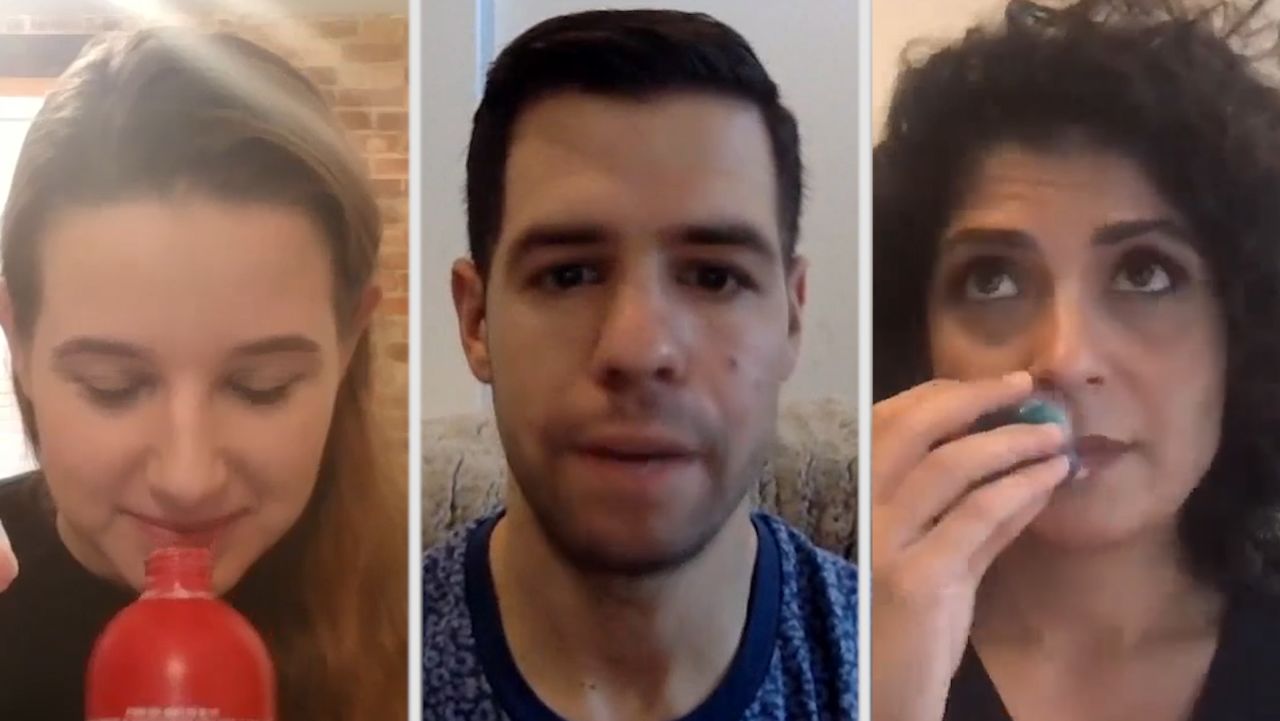
Video Ad Feedback
See how Covid-19 changed their sense of smell
02:20 • Source: [CNN](https://www.cnn.com/)
CNN
—
Imagine waking up one morning after recovering from Covid-19 to find that your coffee smells like unwashed socks, your eggs reek of feces and your orange juice tastes metallic. Oddly, that’s a good thing: It’s a sign you still have a working sense of smell – even if it’s miswired in your brain.
Your ability to smell can also disappear completely, a condition called anosmia. Without warning, you can no longer inhale the sweet odor of your baby’s skin, the roses gifted by your partner or the pungent stink of your exercise clothes.
Taste and smell are intertwined, so food may be bland or flavorless. Appetite and enjoyment of life may plummet, which past studies show can lead to [nutritional deficits](https://academic.oup.com/jn/article/151/3/605/6131860), [cognitive decline](https://n.neurology.org/content/92/7/e700) and [depression](https://academic.oup.com/chemse/article/39/3/185/502849).
Danger lurks as well. Without smell, you may not recognize the telltale signs of fires, natural gas leaks, poisonous chemicals or spoiled food and drink.
Such is the reality of some 5% of global Covid-19 survivors who have now developed long-lasting taste and smell problems, [according to a 2022 study](https://www.bmj.com/company/newsroom/millions-of-covid-patients-may-have-long-term-smell-and-taste-problems/#:~:text=They%20found%20that%20smell%20loss,of%20patients%20reported%20taste%20recovery). More than two years into the pandemic, researchers found an estimated 15 million people may still have problems perceiving odors, while 12 million may struggle with taste.
Support and advocacy groups such as [AbScent](https://abscent.org/) and [Fifth Sense](https://www.fifthsense.org.uk/) have mobilized to help, offering [affirmation](https://www.fifthsense.org.uk/support-hubs/) and hope, [tips on smell training](https://abscent.org/learn-us/smell-training) and even [recipes](https://abscent.org/insights-blog/blog/finding-pleasure-cooking-and-eating) to bolster appetite.
Smell or olfactory training encourages people to sniff essential oils twice a day, said rhinologist Dr. Zara Patel, a professor of otolaryngology, head and neck surgery at Stanford University School of Medicine.
“The way I explain it to patients is if you had a stroke, and it made your arm not work, you would go to physical therapy, you would do rehab,” Patel said. “That’s exactly what olfactory training is for your sense of smell.”
[ Linda Timmer, 64, photographed with her son in Michigan. Courtesy Linda Timmer Related article Their virus symptoms were minor. Then they had long Covid.](https://www.cnn.com/2022/05/02/health/long-covid-asympomatic-cases/index.html)
As science learns more about how Covid-19 attacks and disrupts smell, “I think you’re going to see interventions that are more targeted,” said rhinologist Dr. Justin Turner, an associate professor of otolaryngology, head and neck surgery at Vanderbilt University Medical Center in Nashville.
Anyone still struggling with a loss of smell and taste “should think positively and assume their sense of smell will return,” Turner said. “Yes, there are some people that won’t recover, so for those folks, we want them to not ignore it. We want them to take it seriously.”
## Cases exploded due to Covid-19
People have been losing their sense of smell and taste for centuries. Common cold and flu viruses, nasal polyps, thyroid disorders, severe allergies, sinus infections and neurological conditions such asAlzheimer’s disease, Parkinson’s disease and multiple sclerosis can all damage the ability to smell and taste – at times, permanently.
So can head trauma, exposure to noxious chemicals, cancer treatments, smoking, gum disease, antibiotics and various blood pressure, cholesterol, reflux and allergy medications, [according to the Cleveland Clinic](https://my.clevelandclinic.org/health/symptoms/16708-loss-of-taste-and-smell).
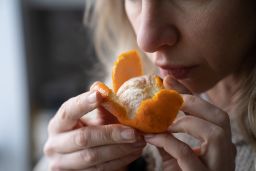
Some people who have had Covid-19 suffer long-term problems with their sense of smell.
Adobe Stock
Growing old is a major cause of smell loss as the ability of the olfactory neurons to regenerate declines. A [study conducted in 1984](https://pubmed.ncbi.nlm.nih.gov/6505700/) found more than 50% of people between ages 65 and 80 years suffered from “major olfactory impairment.” The number climbed to more than 75%for people over age 80.
When the virus that causes Covid-19 invaded our lives, a condition that was relatively rare among people under 50 expanded exponentially, affecting all ages.
“Covid-19 affected younger people much more than other forms of post-viral smell loss,” saidsurgeon Dr. Eric Holbrook, an associate professor of otolaryngology and head and neck surgery at Harvard Medical School. “You wouldn’t see much smell loss in the pediatric population, for example, and now it’s very common.”
[ Shutterstock Related article Loss of smell in mild Covid-19 cases occurs 86% of the time, study says](https://www.cnn.com/2021/01/06/health/loss-of-smell-covid-study-wellness/index.html)
In fact, loss of smell was so prevalent at the beginning of the pandemic it was considered the canary in the coal mine – an early sign of Covid-19 infection even in the absence of other symptoms.
That’s not true today. A [study](https://pubmed.ncbi.nlm.nih.gov/35503739/) published in May found 17% of people lost their sense of smell when infected with the Omicron variant, which became thepredominant variant of the virus that causes Covid-19 in late 2021.(This could change againif the virus mutates.)
In comparison, people sickened by the two original variants, Alpha and Beta, were 50% more likely to lose their sense of smell or taste. Delta was nearly as bad – 44% of people were affected,according to the study.
Statistics show most people recovertheir sense of taste and smell. An [August analysis](https://pubmed.ncbi.nlm.nih.gov/35987099/) of 267 people who lost smell and taste at least two years ago found the majority either fully (38.2%) or partially (54.3%) recovered their ability to smell and taste. That was especially true for people under 40, according to the study.
But 7.5%had not recovered their sense of smell and taste two years after their Covid-19 infection cleared. Those who were least likely to recover included people with existing nasal congestion, more women than men, and those who had a greater initial severity of smell loss, the study found.
## How damage occurs
How does Covid-19 damage the olfactory system? At first scientists believed it infected neurons in the nose responsible for transmitting smells from the environment into the brain. Those neurons sit in the olfactory bulbs at the very top of each nostril and send out axons, or cables, to unique sensory spots in the brain.
Soon studies discovered the virus does not enter those neurons at all. Instead, it attacks [sustentacular cells,](https://www.mpg.de/17907472/corona-sense-of-smell) also known as supporting cells, which provide nourishment and protection to nerve cells from birth. Unlike many other cells, neurons in the nose undergo rebirth every two to three months.
[ blackheads on the nose of a teenager closeup Shutterstock Related article Did Covid-19 destroy your sense of smell with foul odors?](https://www.cnn.com/2021/06/25/health/loss-of-taste-smell-covid-19-return-wellness/index.html)
“(Covid-19) infection of those supporting cells likely has some sort of long-term effect on the ability of those neurons to regenerate themselves with time,” Turner said.
“That’s one of the reasons we sometimes see a delayed effect: People may have some smell loss that recovers, then later they have a second wave of smell loss, parosmia or other symptoms because that regenerative capacity is malfunctioning,” he said.
Parosmia is the medical term for distorted smells, which can often be quite disgusting, Patel said.
“Unfortunately, there’s these classic categories of really terrible smells and tastes,” she said. “Sometimes it’s feces, garbage or old dirty socks. There can be a sort of sickly, sweet chemical type of smell and taste. Oh, and rotting flesh is another common category.”
For many people, parosmia tends to occur or reoccur at the three-month mark, about the time olfactory neurons would naturally be regenerating, experts told CNN.
“If the reconnection misses its target and hits a different spot in the brain reserved for a different odor, your perception of smell is going to be totally screwed up,” Holbrook said.
“You have to rely on the ability for those axons to retract and then find their way to the right spot,” he added. “Or if they’re not correct, wait for those neurons to die off and have new ones come back and find the right spot.”
Science continues to discover ways the virus attacks. A [study](https://www.cell.com/cell/fulltext/S0092-8674\(22\)00135-0) from February found it may also [damage olfactory receptors](https://www.cell.com/cell/fulltext/S0092-8674\(22\)00135-0) that sit on the surface of nerve cells in the nose. Those receptors bind smells and trigger the nerve impulses that transmit the information to the brain.
[ Medical workers treat a patient who is suffering from the effects of Covid-19 in the ICU at Hartford Hospital in Hartford, Connecticut, on January 18, 2022. (Photo by Joseph Prezioso / AFP) (Photo by JOSEPH PREZIOSO/AFP via Getty Images) Joseph Prezioso/AFP/Getty Images Related article Long Covid-19 may remain a chronic condition for millions](https://www.cnn.com/2022/04/06/health/long-covid-19-what-it-is/index.html)
There may also be a genetic component. A [January study](https://pubmed.ncbi.nlm.nih.gov/35039640/) discovered a mutation in two overlapping genes, UGT2A1 and UGT2A2, that play a role in metabolizing odors. People with that mutation may be more susceptible to losing their sense of smell, but further studies are needed to determine the virus’sassociationto the genes – if any.
People who are older and have chronic diseases that affect the nervous system, such as diabetes, are often more susceptible to olfactory damage, Patel said.
“It’s the very small vessels in the body, including the nose, that are affected by diabetes, disturbing blood, nutrient and oxygen flow to these olfactory nerves,” she said. “People with chronic sinus or allergy inflammation in the nose – anything that makes it harder for our system to bounce back will likely be at higher risk as well.”
Ad Feedback
Ad Feedback
Ad Feedback
Ad Feedback
Ad Feedback
Subscribe
***
Sign in
My Account
- [Settings](https://www.cnn.com/account/settings)
- [Newsletters](https://www.cnn.com/newsletters)
- [Topics you follow](https://www.cnn.com/follow?iid=fw_var-nav)
- [Sign out](https://www.cnn.com/2022/10/01/health/long-covid-smell-taste-loss-wellness)
Your CNN account Sign in to your CNN account
***
[Listen](https://www.cnn.com/audio) [Watch](https://www.cnn.com/watch)
***
- [US](https://www.cnn.com/us)
- [Crime & Justice](https://www.cnn.com/us/crime-and-justice)
- [Immigration](https://www.cnn.com/us/immigration)
- [Education](https://www.cnn.com/us/education)
- [Transportation](https://www.cnn.com/us/transportation)
- [Race & Identity](https://www.cnn.com/us/race-and-identity)
- [World](https://www.cnn.com/world)
- [Africa](https://www.cnn.com/world/africa)
- [Americas](https://www.cnn.com/world/americas)
- [Asia](https://www.cnn.com/world/asia)
- [Australia](https://www.cnn.com/world/australia)
- [China](https://www.cnn.com/world/china)
- [Europe](https://www.cnn.com/world/europe)
- [India](https://www.cnn.com/world/india)
- [Middle East](https://www.cnn.com/world/middle-east)
- [United Kingdom](https://www.cnn.com/world/united-kingdom)
- [Politics](https://www.cnn.com/politics)
- [Elections 2026](https://www.cnn.com/election/2026)
- [Trump](https://www.cnn.com/politics/president-donald-trump-47)
- [Facts First](https://www.cnn.com/politics/fact-check)
- [CNN Polls](https://www.cnn.com/polling)
- [Redistricting Tracker](https://www.cnn.com/politics/state-redistricting-maps-vis/index.html)
- [Epstein Files](https://www.cnn.com/politics/epstein-files)
- [Business](https://www.cnn.com/business)
- [Tech](https://www.cnn.com/business/tech)
- [Media](https://www.cnn.com/business/media)
- [Calculators](https://www.cnn.com/business/financial-calculators)
- [Videos](https://www.cnn.com/business/videos)
- [Markets](https://www.cnn.com/markets)
- [Pre-markets](https://www.cnn.com/markets/premarkets)
- [After-Hours](https://www.cnn.com/markets/after-hours)
- [Fear & Greed](https://www.cnn.com/markets/fear-and-greed)
- [Investing](https://www.cnn.com/business/investing)
- [Markets Now](https://www.cnn.com/business/markets-now)
- [Nightcap](https://www.cnn.com/business/markets/nightcap)
- [Health](https://www.cnn.com/health)
- [Life, But Better](https://www.cnn.com/interactive/life-but-better/)
- [Fitness](https://www.cnn.com/health/life-but-better/fitness)
- [Food](https://www.cnn.com/health/life-but-better/food)
- [Sleep](https://www.cnn.com/health/life-but-better/sleep)
- [Mindfulness](https://www.cnn.com/health/life-but-better/mindfulness)
- [Relationships](https://www.cnn.com/health/life-but-better/relationships)
- [CNN Underscored](https://www.cnn.com/cnn-underscored)
- [Electronics](https://www.cnn.com/cnn-underscored/electronics)
- [Fashion](https://www.cnn.com/cnn-underscored/fashion)
- [Beauty](https://www.cnn.com/cnn-underscored/beauty)
- [Health & Fitness](https://www.cnn.com/cnn-underscored/health-fitness)
- [Home](https://www.cnn.com/cnn-underscored/home)
- [Reviews](https://www.cnn.com/cnn-underscored/reviews)
- [Deals](https://www.cnn.com/cnn-underscored/deals)
- [Gifts](https://www.cnn.com/cnn-underscored/gifts)
- [Travel](https://www.cnn.com/cnn-underscored/travel)
- [Outdoors](https://www.cnn.com/cnn-underscored/outdoors)
- [Pets](https://www.cnn.com/cnn-underscored/pets)
- [Entertainment](https://www.cnn.com/entertainment)
- [Movies](https://www.cnn.com/entertainment/movies)
- [Television](https://www.cnn.com/entertainment/tv-shows)
- [Celebrity](https://www.cnn.com/entertainment/celebrities)
- [Tech](https://www.cnn.com/business/tech)
- [Innovate](https://www.cnn.com/business/tech/innovate)
- [Style](https://www.cnn.com/style)
- [Arts](https://www.cnn.com/style/arts)
- [Design](https://www.cnn.com/style/design)
- [Fashion](https://www.cnn.com/style/fashion)
- [Architecture](https://www.cnn.com/style/architecture)
- [Luxury](https://www.cnn.com/style/luxury)
- [Beauty](https://www.cnn.com/style/beauty)
- [Video](https://www.cnn.com/style/videos)
- [Travel](https://www.cnn.com/travel)
- [Destinations](https://www.cnn.com/travel/destinations)
- [Food & Drink](https://www.cnn.com/travel/food-and-drink)
- [Stay](https://www.cnn.com/travel/stay)
- [News](https://www.cnn.com/travel/news)
- [Videos](https://www.cnn.com/travel/videos)
- [Sports](https://www.cnn.com/sports)
- [NFL](https://www.cnn.com/sport/nfl)
- [NBA](https://www.cnn.com/sport/nba)
- [MLB](https://www.cnn.com/sport/mlb)
- [WNBA](https://www.cnn.com/sport/wnba)
- [Golf](https://www.cnn.com/sport/golf)
- [Soccer](https://www.cnn.com/sport/soccer)
- [Tennis](https://www.cnn.com/sport/tennis)
- [Motorsport](https://www.cnn.com/sport/motorsport)
- [College Sports](https://www.cnn.com/sport/college-sports)
- [Olympics](https://www.cnn.com/sport/milan-cortina-winter-olympics-2026)
- [Bleacher Report](https://bleacherreport.com/)
- [Science](https://www.cnn.com/science)
- [Space](https://www.cnn.com/science/space)
- [Life](https://www.cnn.com/science/life)
- [Unearthed](https://www.cnn.com/science/unearthed)
- [Climate](https://www.cnn.com/climate)
- [Solutions](https://www.cnn.com/climate/solutions)
- [Weather](https://www.cnn.com/weather)
- [Weather](https://www.cnn.com/weather)
- [Video](https://www.cnn.com/weather/video)
- [Climate](https://www.cnn.com/climate)
- [Ukraine-Russia War](https://www.cnn.com/world/europe/ukraine)
- [Israel-Hamas War](https://www.cnn.com/world/middleeast/israel)
- [Watch](https://www.cnn.com/watch)
- [Featured](https://www.cnn.com/watch)
- [Shows & Films](https://www.cnn.com/watch#shows-films)
- [Network TV](https://www.cnn.com/videos/live)
- [Clips](https://www.cnn.com/videos)
- [CNN Headlines](https://www.cnn.com/videos/fast/cnn-headlines)
- [Shows A-Z](https://www.cnn.com/tv/all-shows)
- [CNN 10](https://www.cnn10.com/)
- [CNN TV Schedule](https://www.cnn.com/tv/schedule/cnn)
- [Listen](https://www.cnn.com/audio)
- [CNN 5 Things](https://www.cnn.com/audio/podcasts/5-things)
- [Chasing Life with Dr. Sanjay Gupta](https://www.cnn.com/audio/podcasts/chasing-life)
- [The Assignment with Audie Cornish](https://www.cnn.com/audio/podcasts/the-assignment)
- [One Thing](https://www.cnn.com/audio/podcasts/one-thing)
- [Tug of War](https://www.cnn.com/audio/podcasts/tug-of-war)
- [CNN Political Briefing](https://www.cnn.com/audio/podcasts/political-briefing)
- [The Axe Files](https://www.cnn.com/audio/podcasts/axe-files)
- [All There Is with Anderson Cooper](https://www.cnn.com/audio/podcasts/all-there-is-with-anderson-cooper)
- [All CNN Audio podcasts](https://www.cnn.com/audio)
- [Games](https://www.cnn.com/games)
- [Daily Crossword](https://www.cnn.com/games/play/cnn-crossword)
- [Jumble Crossword](https://www.cnn.com/games/play/jumble-crossword-daily)
- [Photo Shuffle](https://www.cnn.com/games/play/photo-shuffle)
- [Sudoblock](https://www.cnn.com/games/play/sudoblock)
- [Sudoku](https://www.cnn.com/games/play/daily-sudoku)
- [5 Things Quiz](https://cnn.it/5thingsquiz)
- [About CNN](https://www.cnn.com/about)
- [Subscribe](https://www.cnn.com/subscription?source=sub_web_footersubnav-link)
- [Photos](https://www.cnn.com/world/photos)
- [Investigations](https://www.cnn.com/us/cnn-investigates)
- [CNN Profiles](https://www.cnn.com/profiles)
- [CNN Leadership](https://www.cnn.com/profiles/cnn-leadership)
- [CNN Newsletters](https://www.cnn.com/newsletters)
- [Work for CNN](https://careers.wbd.com/cnnjobs)
***
[Health](https://www.cnn.com/health)
[Watch](https://www.cnn.com/watch) [Listen](https://www.cnn.com/audio)
***
Subscribe
Sign in
My Account
- [Settings](https://www.cnn.com/account/settings)
- [Newsletters](https://www.cnn.com/newsletters)
- [Topics you follow](https://www.cnn.com/follow?iid=fw_var-nav)
- [Sign out](https://www.cnn.com/2022/10/01/health/long-covid-smell-taste-loss-wellness)
Your CNN account Sign in to your CNN account
Follow CNN
***
Download the CNN app
Download the CNN app
***
[Terms of Use](https://www.cnn.com/terms) [Privacy Policy](https://www.cnn.com/privacy) [Ad Choices](https://www.cnn.com/ad-choices) [Accessibility & CC](https://www.cnn.com/accessibility) [About](https://www.cnn.com/about) [Subscribe](https://www.cnn.com/subscription?source=sub_web_footerlink-link) [Newsletters](https://www.cnn.com/newsletters) [Transcripts](https://www.cnn.com/transcripts) [Help Center](https://help.cnn.com/)
© 2026 Cable News Network. A Warner Bros. Discovery Company. All Rights Reserved.
CNN Sans ™ & © 2016 Cable News Network.
## Download the CNN app
Scan the QR code to download the CNN app on Google Play.

## Download the CNN app
Scan the QR code to download the CNN app from the Apple Store.
 |
| Readable Markdown | 
Video Ad Feedback
See how Covid-19 changed their sense of smell
02:20 • Source: [CNN](https://www.cnn.com/)
CNN —
Imagine waking up one morning after recovering from Covid-19 to find that your coffee smells like unwashed socks, your eggs reek of feces and your orange juice tastes metallic. Oddly, that’s a good thing: It’s a sign you still have a working sense of smell – even if it’s miswired in your brain.
Your ability to smell can also disappear completely, a condition called anosmia. Without warning, you can no longer inhale the sweet odor of your baby’s skin, the roses gifted by your partner or the pungent stink of your exercise clothes.
Taste and smell are intertwined, so food may be bland or flavorless. Appetite and enjoyment of life may plummet, which past studies show can lead to [nutritional deficits](https://academic.oup.com/jn/article/151/3/605/6131860), [cognitive decline](https://n.neurology.org/content/92/7/e700) and [depression](https://academic.oup.com/chemse/article/39/3/185/502849).
Danger lurks as well. Without smell, you may not recognize the telltale signs of fires, natural gas leaks, poisonous chemicals or spoiled food and drink.
Such is the reality of some 5% of global Covid-19 survivors who have now developed long-lasting taste and smell problems, [according to a 2022 study](https://www.bmj.com/company/newsroom/millions-of-covid-patients-may-have-long-term-smell-and-taste-problems/#:~:text=They%20found%20that%20smell%20loss,of%20patients%20reported%20taste%20recovery). More than two years into the pandemic, researchers found an estimated 15 million people may still have problems perceiving odors, while 12 million may struggle with taste.
Support and advocacy groups such as [AbScent](https://abscent.org/) and [Fifth Sense](https://www.fifthsense.org.uk/) have mobilized to help, offering [affirmation](https://www.fifthsense.org.uk/support-hubs/) and hope, [tips on smell training](https://abscent.org/learn-us/smell-training) and even [recipes](https://abscent.org/insights-blog/blog/finding-pleasure-cooking-and-eating) to bolster appetite.
Smell or olfactory training encourages people to sniff essential oils twice a day, said rhinologist Dr. Zara Patel, a professor of otolaryngology, head and neck surgery at Stanford University School of Medicine.
“The way I explain it to patients is if you had a stroke, and it made your arm not work, you would go to physical therapy, you would do rehab,” Patel said. “That’s exactly what olfactory training is for your sense of smell.”
As science learns more about how Covid-19 attacks and disrupts smell, “I think you’re going to see interventions that are more targeted,” said rhinologist Dr. Justin Turner, an associate professor of otolaryngology, head and neck surgery at Vanderbilt University Medical Center in Nashville.
Anyone still struggling with a loss of smell and taste “should think positively and assume their sense of smell will return,” Turner said. “Yes, there are some people that won’t recover, so for those folks, we want them to not ignore it. We want them to take it seriously.”
People have been losing their sense of smell and taste for centuries. Common cold and flu viruses, nasal polyps, thyroid disorders, severe allergies, sinus infections and neurological conditions such asAlzheimer’s disease, Parkinson’s disease and multiple sclerosis can all damage the ability to smell and taste – at times, permanently.
So can head trauma, exposure to noxious chemicals, cancer treatments, smoking, gum disease, antibiotics and various blood pressure, cholesterol, reflux and allergy medications, [according to the Cleveland Clinic](https://my.clevelandclinic.org/health/symptoms/16708-loss-of-taste-and-smell).

Growing old is a major cause of smell loss as the ability of the olfactory neurons to regenerate declines. A [study conducted in 1984](https://pubmed.ncbi.nlm.nih.gov/6505700/) found more than 50% of people between ages 65 and 80 years suffered from “major olfactory impairment.” The number climbed to more than 75%for people over age 80.
When the virus that causes Covid-19 invaded our lives, a condition that was relatively rare among people under 50 expanded exponentially, affecting all ages.
“Covid-19 affected younger people much more than other forms of post-viral smell loss,” saidsurgeon Dr. Eric Holbrook, an associate professor of otolaryngology and head and neck surgery at Harvard Medical School. “You wouldn’t see much smell loss in the pediatric population, for example, and now it’s very common.”
In fact, loss of smell was so prevalent at the beginning of the pandemic it was considered the canary in the coal mine – an early sign of Covid-19 infection even in the absence of other symptoms.
That’s not true today. A [study](https://pubmed.ncbi.nlm.nih.gov/35503739/) published in May found 17% of people lost their sense of smell when infected with the Omicron variant, which became thepredominant variant of the virus that causes Covid-19 in late 2021.(This could change againif the virus mutates.)
In comparison, people sickened by the two original variants, Alpha and Beta, were 50% more likely to lose their sense of smell or taste. Delta was nearly as bad – 44% of people were affected,according to the study.
Statistics show most people recovertheir sense of taste and smell. An [August analysis](https://pubmed.ncbi.nlm.nih.gov/35987099/) of 267 people who lost smell and taste at least two years ago found the majority either fully (38.2%) or partially (54.3%) recovered their ability to smell and taste. That was especially true for people under 40, according to the study.
But 7.5%had not recovered their sense of smell and taste two years after their Covid-19 infection cleared. Those who were least likely to recover included people with existing nasal congestion, more women than men, and those who had a greater initial severity of smell loss, the study found.
How does Covid-19 damage the olfactory system? At first scientists believed it infected neurons in the nose responsible for transmitting smells from the environment into the brain. Those neurons sit in the olfactory bulbs at the very top of each nostril and send out axons, or cables, to unique sensory spots in the brain.
Soon studies discovered the virus does not enter those neurons at all. Instead, it attacks [sustentacular cells,](https://www.mpg.de/17907472/corona-sense-of-smell) also known as supporting cells, which provide nourishment and protection to nerve cells from birth. Unlike many other cells, neurons in the nose undergo rebirth every two to three months.
“(Covid-19) infection of those supporting cells likely has some sort of long-term effect on the ability of those neurons to regenerate themselves with time,” Turner said.
“That’s one of the reasons we sometimes see a delayed effect: People may have some smell loss that recovers, then later they have a second wave of smell loss, parosmia or other symptoms because that regenerative capacity is malfunctioning,” he said.
Parosmia is the medical term for distorted smells, which can often be quite disgusting, Patel said.
“Unfortunately, there’s these classic categories of really terrible smells and tastes,” she said. “Sometimes it’s feces, garbage or old dirty socks. There can be a sort of sickly, sweet chemical type of smell and taste. Oh, and rotting flesh is another common category.”
For many people, parosmia tends to occur or reoccur at the three-month mark, about the time olfactory neurons would naturally be regenerating, experts told CNN.
“If the reconnection misses its target and hits a different spot in the brain reserved for a different odor, your perception of smell is going to be totally screwed up,” Holbrook said.
“You have to rely on the ability for those axons to retract and then find their way to the right spot,” he added. “Or if they’re not correct, wait for those neurons to die off and have new ones come back and find the right spot.”
Science continues to discover ways the virus attacks. A [study](https://www.cell.com/cell/fulltext/S0092-8674\(22\)00135-0) from February found it may also [damage olfactory receptors](https://www.cell.com/cell/fulltext/S0092-8674\(22\)00135-0) that sit on the surface of nerve cells in the nose. Those receptors bind smells and trigger the nerve impulses that transmit the information to the brain.
There may also be a genetic component. A [January study](https://pubmed.ncbi.nlm.nih.gov/35039640/) discovered a mutation in two overlapping genes, UGT2A1 and UGT2A2, that play a role in metabolizing odors. People with that mutation may be more susceptible to losing their sense of smell, but further studies are needed to determine the virus’sassociationto the genes – if any.
People who are older and have chronic diseases that affect the nervous system, such as diabetes, are often more susceptible to olfactory damage, Patel said.
“It’s the very small vessels in the body, including the nose, that are affected by diabetes, disturbing blood, nutrient and oxygen flow to these olfactory nerves,” she said. “People with chronic sinus or allergy inflammation in the nose – anything that makes it harder for our system to bounce back will likely be at higher risk as well.” |
| Shard | 51 (laksa) |
| Root Hash | 2312100192101524051 |
| Unparsed URL | com,cnn!www,/2022/10/01/health/long-covid-smell-taste-loss-wellness s443 |