ℹ️ Skipped - page is already crawled
| Filter | Status | Condition | Details |
|---|---|---|---|
| HTTP status | PASS | download_http_code = 200 | HTTP 200 |
| Age cutoff | PASS | download_stamp > now() - 6 MONTH | 0.6 months ago |
| History drop | PASS | isNull(history_drop_reason) | No drop reason |
| Spam/ban | PASS | fh_dont_index != 1 AND ml_spam_score = 0 | ml_spam_score=0 |
| Canonical | PASS | meta_canonical IS NULL OR = '' OR = src_unparsed | Not set |
| Property | Value | ||||||||||||||||||
|---|---|---|---|---|---|---|---|---|---|---|---|---|---|---|---|---|---|---|---|
| URL | https://www.cnn.com/2014/10/06/world/asia/philippines-legal-divorce-battle | ||||||||||||||||||
| Last Crawled | 2026-04-04 14:03:35 (18 days ago) | ||||||||||||||||||
| First Indexed | 2022-12-29 21:42:16 (3 years ago) | ||||||||||||||||||
| HTTP Status Code | 200 | ||||||||||||||||||
| Content | |||||||||||||||||||
| Meta Title | The fight to make divorce legal in the Philippines | CNN | ||||||||||||||||||
| Meta Description | The Philippines is one of only two countries which lacks divorce laws. Campaigners hope a new bill will change that. | ||||||||||||||||||
| Meta Canonical | null | ||||||||||||||||||
| Boilerpipe Text | Story highlights
Apart from the Vatican, the Philippines is the only country without divorce laws
A new bill before Congress is intended to allow for legal divorce
It faces stiff opposition from the Catholic Church and politicians
Backers of the bill say only wealthy Filipinos can currently afford marriage annulments
Manila
CNN
—
When Rowena Festin leaves her job as a congressional aide in Quezon City, Metro Manila each day, she returns home to three children and a husband. But her marriage, like many others in the Philippines, exists in name only.
“My husband wants another person,” she says. “We are living in the same house but both decided to live our own life.”
Although both have long wanted to legally end their marriage, the government will not allow them to do so. The Philippines is the only country in the world, aside from Vatican City, which lacks divorce laws.
But a bill recently filed in Congress provides hope for thousands of couples trapped in failed and often abusive marriages, by legalizing divorce. It comes at a time when Catholic Church leaders from across the world are holding
an “Extraordinary Synod”
in Rome at the request of Pope Francis to explore the Church’s position on issues such as family, marriage and divorce.
Catholic legacy
Divorce is not a new concept in the Philippines. It was legal during the American colonial period and Japanese occupation in the first half of the 20th century, but became prohibited with the enactment of the 1949 Civil Code.
Solita Monsod, professor emerita at University of the Philippines School of Economics, says religion was behind the move.
“It is because of a very powerful and conservative church hierarchy, and the dominance of very conservative segments of the catholic laity.”
Although current laws do allow for legal separation, declaration of a nullity of marriage and annulment, none of these options address the needs of the majority of couples who are searching for freedom from each other.
Legal separation allows the couple to live apart and separate their assets, but they are not free to marry again. In fact, they face being charged with adultery or concubinage if caught with another partner.
A declaration of nullity is as if the marriage never took place, because it was bigamous, incestuous or polygamous. The court may also find other grounds to nullify the marriage’s existence, such as lack of a valid marriage license or marrying below the age of 18.
For annulment, specific conditions must be met within a certain time period, and the marriage is considered valid until the time it is set aside by the courts. It may also require a detailed investigation where a psychiatrist must declare one partner psychologically incapacitated.
Costly process
With Roman Catholics accounting for 83% of the population, religion also plays a big role in the battle over the right to divorce.
The majority of catholic Filipinos prefer to marry in the church, which requires them to apply for a civil marriage license first. In order to leave that marriage legally and be able to marry in the church again, a person would have to get both a church and civil annulment.
These options not only take years to process, but are very costly. In a country where two-fifths of the population lives off less than $2 a day, it is impossible for most Filipinos to even conceive of paying the minimum of $4,000 currently required to end their marriage legally.
Teresa, who asked not to be identified by her full name, is one of the lucky ones, since she was able to afford both a church and civil annulment. She says that the current system is biased towards the rich.
“It took four years but I wanted to cut clean. But sadly, you need money to do this.”
‘Divorce Philippine-style
Congresswoman Luzviminda Ilagan, representative of Gabriella Women’s Party, is a co-author of the new divorce bill.
“We see many famous or wealthy people getting annulments while those in lower income brackets are not able,” she says.
“It’s the hypocrisy – they say we must respect the sanctity of marriage yet they grant annulments to select individuals.”
Her proposed divorce bill is nicknamed “Divorce Philippine-style” because it will still have strict conditions and eligibility requirements.
Married couples must have been living separately for a minimum of five years with no hope of reconciliation to be eligible, or legally separated for at least two years.
“It’s not like in Las Vegas or … countries where there is no fault divorce,” says Ilagan.
But the bill does promise to make the whole process quicker and cheaper – up to 30-40% less costly than legal separation or annulment. It would also provide procedures for settling concerns, such as over property or financial support for the former spouse and children.
The effect of the bill, says Monsod, “would be the empowerment of women, particularly the poor.
“The grounds for annulment are very restrictive – they do not include infidelity or spousal abuse – and the costs are prohibitive for them.”
According to the Philippines’ Solicitor General’s office, 9,117 petitions for annulment of marriage were filed in court in 2010, and only 133 cases filed for legal separation – 61% of these cases were filed by women.
Monsod says the bill would also remove “the discrimination that now exists in the country on the grounds of religion: A Filipino who is Muslim is allowed to divorce; a Filipino who is christian is not.”
Although the controversial bill has support in Congress, many politicians are hesitant to endorse it openly. Congressman Joey Zubiri, representative of Bukidnon, is one of the few outspoken supporters so far.
“I believe that it is the right of people who are trapped in a formal relationship to be able to get out of them,” he tells CNN. “The 21st century Philippines should be a secular, liberal, democratic state where no one particular faith is supposed to dominate affairs of state.”
By not allowing divorce, he says, the Philippines was allowing a religious group to impose its values on everyone.
Fierce opposition
But the bill faces tough opposition. Lawmakers such as Congressman Elpidio Barzaga Jr., representing the 2nd district of Cavite, believe that allowing divorce will weaken the backbone of society.
“To have a strong nation we must have a strong society, which depends on a strong family. We can have this only if there are laws that solidify and strengthen it,” he says.
“Marriage is not merely a personal contract between husband and wife, it is a social institution which public policy cherishes and protects.”
The Catholic Church has come out forcefully against the bill.
“We are opposed to legislation which would enable the state to break the marriage bond so that the couple can each remarry,” explains Bishop Teodoro C. Bacani Jr.
As for cases where there is spousal abuse, Bacani argues that if divorce is allowed, “then that man is free to marry another woman and continue the abuse… Instead, she can just legally separate.”
He said the church fears allowing divorce will make marriage a more “fragile institution” and encourage people to divorce unnecessarily.
“There is also damage to the children – studies have shown in general that they fare worst in life, in their studies and relationships.”
Overseas workers impacted
There are signs however that the prohibition of divorce is leaving its own mark on the country’s social fabric.
Maria Linda Balthazar is one of the millions of Filipinos who work abroad.
Two weeks after her wedding, her husband was hired for contract work in Saudi Arabia, and she has not heard from him since. Years later, she was sent to work in Canada, but is unable to move on with her life because she is still legally married to her husband.
Henriqueta Baquiran, a Filipina who also works abroad in Hong Kong, says marriages break apart anyway when relationships fail, despite the lack of legal divorce.
“So many friends just resort to other means,” she says. “They leave their spouses, move in with another partner, and have children out of wedlock – because they have no other choice.”
‘Moral hypocrisy’
Congressman Zubiri describes the situation as the height of moral hypocrisy, and believes the law gives people the opportunity to make a better choice after having made a bad one.
“It will show people that there is a second chance,” he says. “Many married women in particular are trapped where they are abused, their children neglected, or husbands openly philandering and essentially saying to them, ‘What are you going to do about it, as there is no divorce?’”
He says the option of divorce would “make people more careful on both sides, because now there is a very distinct possibility that (the marriage) could end.”
Although the constitution mandates a separation of church and state, many lawmakers and citizens believe the political pressure being exerted by the Catholic Church reduces the chance of the bill passing anytime soon.
“Politicians are practical,” Barzaga says. “As much as possible they don’t want to antagonize a major portion of society, which happens to be Roman Catholic.”
Filipinas like Teresa feel that the Philippines’ status as one of only two countries without divorce is emblematic of a far greater issue.
“It is a clear manifestation that there is no separation of church and state in this country.” But, she continues, “the fact that the bill is being filed and certain congressmen are willing to sponsor it is a positive first step.”
For women like Rowena, that can only be a welcome development.
“If the divorce bill becomes a law, I believe that more Filipina women will be empowered to fight for their rights and for what is right,” she says. | ||||||||||||||||||
| Markdown | Thank You\!
Your effort and contribution in providing this feedback is much appreciated.
Close
Ad Feedback
[World](https://cnn.com/world)
[Africa](https://www.cnn.com/world/africa)
[Americas](https://www.cnn.com/world/americas)
[Asia](https://www.cnn.com/world/asia)
[Australia](https://www.cnn.com/world/australia)
[China](https://www.cnn.com/world/china)
[Europe](https://www.cnn.com/world/europe)
[India](https://www.cnn.com/world/india)
[Middle East](https://www.cnn.com/world/middle-east)
[United Kingdom](https://www.cnn.com/world/united-kingdom)
[More]()
[Africa](https://www.cnn.com/world/africa) [Americas](https://www.cnn.com/world/americas) [Asia](https://www.cnn.com/world/asia) [Australia](https://www.cnn.com/world/australia) [China](https://www.cnn.com/world/china) [Europe](https://www.cnn.com/world/europe) [India](https://www.cnn.com/world/india) [Middle East](https://www.cnn.com/world/middle-east) [United Kingdom](https://www.cnn.com/world/united-kingdom)
[Watch](https://www.cnn.com/watch) [Listen](https://www.cnn.com/audio)
Subscribe
Sign in
My Account
- [Settings](https://www.cnn.com/account/settings)
- [Newsletters](https://www.cnn.com/newsletters)
- [Topics you follow](https://www.cnn.com/follow?iid=fw_var-nav)
- [Sign out](https://www.cnn.com/2014/10/06/world/asia/philippines-legal-divorce-battle)
Your CNN account Sign in to your CNN account
***
Sign in
My Account
- [Settings](https://www.cnn.com/account/settings)
- [Newsletters](https://www.cnn.com/newsletters)
- [Topics you follow](https://www.cnn.com/follow?iid=fw_var-nav)
- [Sign out](https://www.cnn.com/2014/10/06/world/asia/philippines-legal-divorce-battle)
Your CNN account Sign in to your CNN account
***
[Listen](https://www.cnn.com/audio) [Watch](https://www.cnn.com/watch)
***
Edition
[US](https://us.cnn.com/?hpt=header_edition-picker)
[International](https://edition.cnn.com/?hpt=header_edition-picker)
[Arabic](https://arabic.cnn.com/?hpt=header_edition-picker)
[Español](https://cnnespanol.cnn.com/?hpt=header_edition-picker)
Edition
- [US](https://us.cnn.com/?hpt=header_edition-picker)
- [International](https://edition.cnn.com/?hpt=header_edition-picker)
- [Arabic](https://arabic.cnn.com/?hpt=header_edition-picker)
- [Español](https://cnnespanol.cnn.com/?hpt=header_edition-picker)
***
[Africa](https://www.cnn.com/world/africa)
[Americas](https://www.cnn.com/world/americas)
[Asia](https://www.cnn.com/world/asia)
[Australia](https://www.cnn.com/world/australia)
[China](https://www.cnn.com/world/china)
[Europe](https://www.cnn.com/world/europe)
[India](https://www.cnn.com/world/india)
[Middle East](https://www.cnn.com/world/middle-east)
[United Kingdom](https://www.cnn.com/world/united-kingdom)
***
Follow CNN
Download the CNN App
***
- [US](https://www.cnn.com/us)
- [Crime & Justice](https://www.cnn.com/us/crime-and-justice)
- [Immigration](https://www.cnn.com/us/immigration)
- [Education](https://www.cnn.com/us/education)
- [Transportation](https://www.cnn.com/us/transportation)
- [Race & Identity](https://www.cnn.com/us/race-and-identity)
- [World](https://www.cnn.com/world)
- [Africa](https://www.cnn.com/world/africa)
- [Americas](https://www.cnn.com/world/americas)
- [Asia](https://www.cnn.com/world/asia)
- [Australia](https://www.cnn.com/world/australia)
- [China](https://www.cnn.com/world/china)
- [Europe](https://www.cnn.com/world/europe)
- [India](https://www.cnn.com/world/india)
- [Middle East](https://www.cnn.com/world/middle-east)
- [United Kingdom](https://www.cnn.com/world/united-kingdom)
- [Politics](https://www.cnn.com/politics)
- [Elections 2026](https://www.cnn.com/election/2026)
- [Trump](https://www.cnn.com/politics/president-donald-trump-47)
- [Facts First](https://www.cnn.com/politics/fact-check)
- [CNN Polls](https://www.cnn.com/polling)
- [Redistricting Tracker](https://www.cnn.com/politics/state-redistricting-maps-vis/index.html)
- [Epstein Files](https://www.cnn.com/politics/epstein-files)
- [Business](https://www.cnn.com/business)
- [Tech](https://www.cnn.com/business/tech)
- [Media](https://www.cnn.com/business/media)
- [Calculators](https://www.cnn.com/business/financial-calculators)
- [Videos](https://www.cnn.com/business/videos)
- [Markets](https://www.cnn.com/markets)
- [Pre-markets](https://www.cnn.com/markets/premarkets)
- [After-Hours](https://www.cnn.com/markets/after-hours)
- [Fear & Greed](https://www.cnn.com/markets/fear-and-greed)
- [Investing](https://www.cnn.com/business/investing)
- [Markets Now](https://www.cnn.com/business/markets-now)
- [Nightcap](https://www.cnn.com/business/markets/nightcap)
- [Health](https://www.cnn.com/health)
- [Life, But Better](https://www.cnn.com/interactive/life-but-better/)
- [Fitness](https://www.cnn.com/health/life-but-better/fitness)
- [Food](https://www.cnn.com/health/life-but-better/food)
- [Sleep](https://www.cnn.com/health/life-but-better/sleep)
- [Mindfulness](https://www.cnn.com/health/life-but-better/mindfulness)
- [Relationships](https://www.cnn.com/health/life-but-better/relationships)
- [CNN Underscored](https://www.cnn.com/cnn-underscored)
- [Electronics](https://www.cnn.com/cnn-underscored/electronics)
- [Fashion](https://www.cnn.com/cnn-underscored/fashion)
- [Beauty](https://www.cnn.com/cnn-underscored/beauty)
- [Health & Fitness](https://www.cnn.com/cnn-underscored/health-fitness)
- [Home](https://www.cnn.com/cnn-underscored/home)
- [Reviews](https://www.cnn.com/cnn-underscored/reviews)
- [Deals](https://www.cnn.com/cnn-underscored/deals)
- [Gifts](https://www.cnn.com/cnn-underscored/gifts)
- [Travel](https://www.cnn.com/cnn-underscored/travel)
- [Outdoors](https://www.cnn.com/cnn-underscored/outdoors)
- [Pets](https://www.cnn.com/cnn-underscored/pets)
- [Entertainment](https://www.cnn.com/entertainment)
- [Movies](https://www.cnn.com/entertainment/movies)
- [Television](https://www.cnn.com/entertainment/tv-shows)
- [Celebrity](https://www.cnn.com/entertainment/celebrities)
- [Tech](https://www.cnn.com/business/tech)
- [Innovate](https://www.cnn.com/business/tech/innovate)
- [Style](https://www.cnn.com/style)
- [Arts](https://www.cnn.com/style/arts)
- [Design](https://www.cnn.com/style/design)
- [Fashion](https://www.cnn.com/style/fashion)
- [Architecture](https://www.cnn.com/style/architecture)
- [Luxury](https://www.cnn.com/style/luxury)
- [Beauty](https://www.cnn.com/style/beauty)
- [Video](https://www.cnn.com/style/videos)
- [Travel](https://www.cnn.com/travel)
- [Destinations](https://www.cnn.com/travel/destinations)
- [Food & Drink](https://www.cnn.com/travel/food-and-drink)
- [Stay](https://www.cnn.com/travel/stay)
- [Videos](https://www.cnn.com/travel/videos)
- [Sports](https://www.cnn.com/sports)
- [NFL](https://www.cnn.com/sport/nfl)
- [NBA](https://www.cnn.com/sport/nba)
- [MLB](https://www.cnn.com/sport/mlb)
- [WNBA](https://www.cnn.com/sport/wnba)
- [Golf](https://www.cnn.com/sport/golf)
- [Soccer](https://www.cnn.com/sport/soccer)
- [Tennis](https://www.cnn.com/sport/tennis)
- [Motorsport](https://www.cnn.com/sport/motorsport)
- [College Sports](https://www.cnn.com/sport/college-sports)
- [Olympics](https://www.cnn.com/sport/milan-cortina-winter-olympics-2026)
- [Bleacher Report](https://bleacherreport.com/)
- [Science](https://www.cnn.com/science)
- [Space](https://www.cnn.com/science/space)
- [Life](https://www.cnn.com/science/life)
- [Unearthed](https://www.cnn.com/science/unearthed)
- [Climate](https://www.cnn.com/climate)
- [Solutions](https://www.cnn.com/climate/solutions)
- [Weather](https://www.cnn.com/weather)
- [Weather](https://www.cnn.com/weather)
- [Video](https://www.cnn.com/weather/video)
- [Climate](https://www.cnn.com/climate)
- [Ukraine-Russia War](https://www.cnn.com/world/europe/ukraine)
- [Israel-Hamas War](https://www.cnn.com/world/middleeast/israel)
- [Watch](https://www.cnn.com/watch)
- [Featured](https://www.cnn.com/watch)
- [Shows & Films](https://www.cnn.com/watch#shows-films)
- [Network TV](https://www.cnn.com/videos/live)
- [Clips](https://www.cnn.com/videos)
- [CNN Headlines](https://www.cnn.com/videos/fast/cnn-headlines)
- [Shows A-Z](https://www.cnn.com/tv/all-shows)
- [CNN 10](https://www.cnn10.com/)
- [CNN TV Schedule](https://www.cnn.com/tv/schedule/cnn)
- [Listen](https://www.cnn.com/audio)
- [CNN 5 Things](https://www.cnn.com/audio/podcasts/5-things)
- [Chasing Life with Dr. Sanjay Gupta](https://www.cnn.com/audio/podcasts/chasing-life)
- [The Assignment with Audie Cornish](https://www.cnn.com/audio/podcasts/the-assignment)
- [One Thing](https://www.cnn.com/audio/podcasts/one-thing)
- [Tug of War](https://www.cnn.com/audio/podcasts/tug-of-war)
- [CNN Political Briefing](https://www.cnn.com/audio/podcasts/political-briefing)
- [The Axe Files](https://www.cnn.com/audio/podcasts/axe-files)
- [All There Is with Anderson Cooper](https://www.cnn.com/audio/podcasts/all-there-is-with-anderson-cooper)
- [All CNN Audio podcasts](https://www.cnn.com/audio)
- [Games](https://www.cnn.com/games)
- [Daily Crossword](https://www.cnn.com/games/play/cnn-crossword)
- [Jumble Crossword](https://www.cnn.com/games/play/jumble-crossword-daily)
- [Photo Shuffle](https://www.cnn.com/games/play/photo-shuffle)
- [Sudoblock](https://www.cnn.com/games/play/sudoblock)
- [Sudoku](https://www.cnn.com/games/play/daily-sudoku)
- [5 Things Quiz](https://cnn.it/5thingsquiz)
- [About CNN](https://www.cnn.com/about)
- [Subscribe](https://www.cnn.com/subscription?source=sub_web_footersubnav-link)
- [Photos](https://www.cnn.com/world/photos)
- [Investigations](https://www.cnn.com/us/cnn-investigates)
- [CNN Profiles](https://www.cnn.com/profiles)
- [CNN Leadership](https://www.cnn.com/profiles/cnn-leadership)
- [CNN Newsletters](https://www.cnn.com/newsletters)
- [Work for CNN](https://careers.wbd.com/cnnjobs)
***
Download the CNN App
# The fight to make divorce legal in the Philippines
Sunshine Lichauco de Leon, for CNN
7 min read
Published 12:55 AM EDT, Mon October 6, 2014
Link Copied\!

A newlywed couple kiss at a wedding ceremony in Manila on Valentine's Day last year.
JAY DIRECTO/AFP/Getty Images
### Story highlights
Apart from the Vatican, the Philippines is the only country without divorce laws
A new bill before Congress is intended to allow for legal divorce
It faces stiff opposition from the Catholic Church and politicians
Backers of the bill say only wealthy Filipinos can currently afford marriage annulments
Manila
CNN
—
When Rowena Festin leaves her job as a congressional aide in Quezon City, Metro Manila each day, she returns home to three children and a husband. But her marriage, like many others in the Philippines, exists in name only.
“My husband wants another person,” she says. “We are living in the same house but both decided to live our own life.”
Although both have long wanted to legally end their marriage, the government will not allow them to do so. The Philippines is the only country in the world, aside from Vatican City, which lacks divorce laws.
But a bill recently filed in Congress provides hope for thousands of couples trapped in failed and often abusive marriages, by legalizing divorce. It comes at a time when Catholic Church leaders from across the world are holding [an “Extraordinary Synod”](http://synod14.vatican.va/content/sinodo/it/sinodo2014/events/topic.html/content/sinodoevents/it/2014/10/1/sinododeivescovi) in Rome at the request of Pope Francis to explore the Church’s position on issues such as family, marriage and divorce.
**Catholic legacy**
Divorce is not a new concept in the Philippines. It was legal during the American colonial period and Japanese occupation in the first half of the 20th century, but became prohibited with the enactment of the 1949 Civil Code.
Solita Monsod, professor emerita at University of the Philippines School of Economics, says religion was behind the move.
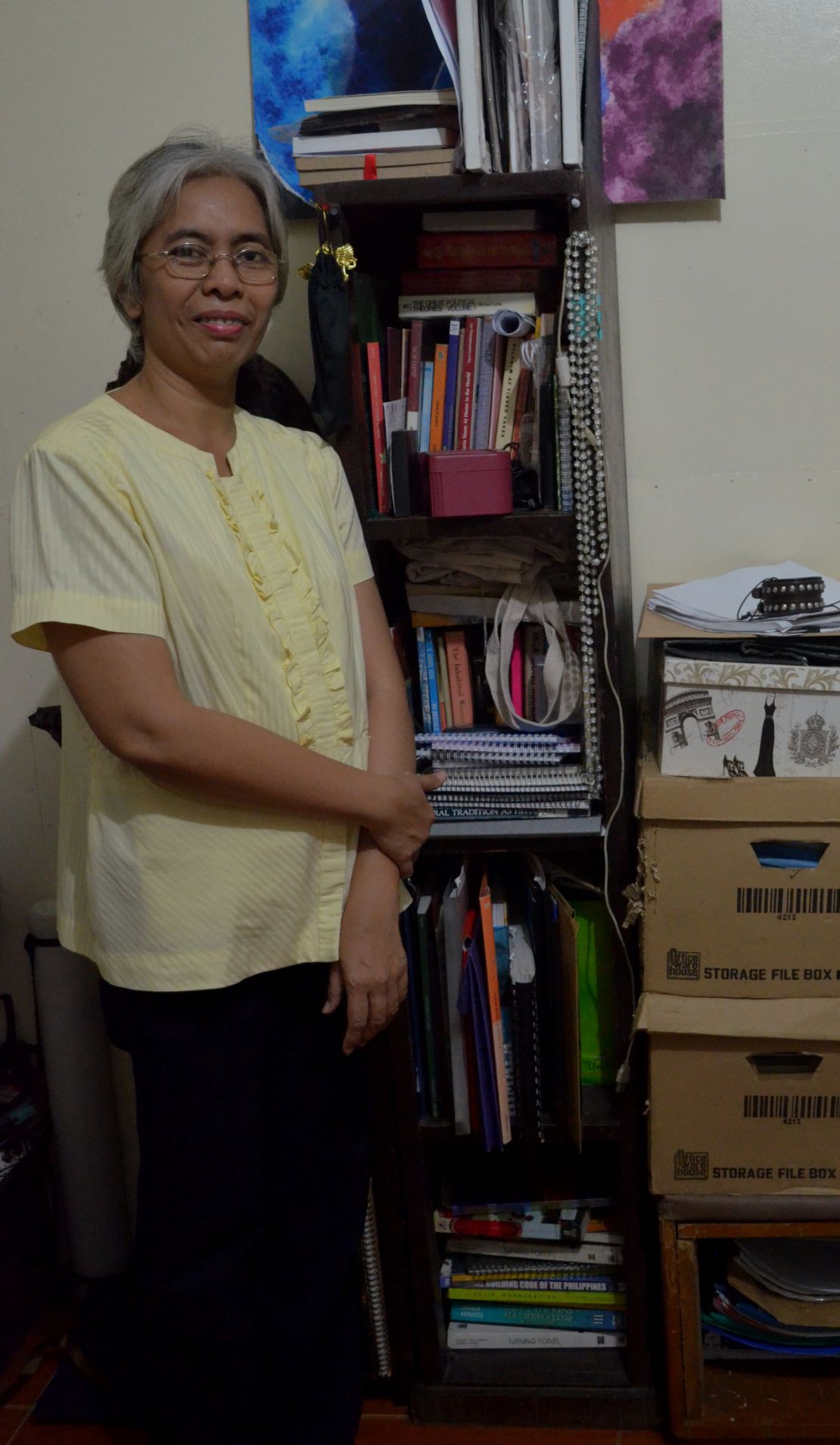
The lack of divorce laws in the Philippines means Rowena Festin is trapped in her marriage.
Courtesy Rowena Festin
“It is because of a very powerful and conservative church hierarchy, and the dominance of very conservative segments of the catholic laity.”
Although current laws do allow for legal separation, declaration of a nullity of marriage and annulment, none of these options address the needs of the majority of couples who are searching for freedom from each other.
Legal separation allows the couple to live apart and separate their assets, but they are not free to marry again. In fact, they face being charged with adultery or concubinage if caught with another partner.
A declaration of nullity is as if the marriage never took place, because it was bigamous, incestuous or polygamous. The court may also find other grounds to nullify the marriage’s existence, such as lack of a valid marriage license or marrying below the age of 18.
For annulment, specific conditions must be met within a certain time period, and the marriage is considered valid until the time it is set aside by the courts. It may also require a detailed investigation where a psychiatrist must declare one partner psychologically incapacitated.
We see many famous or wealthy people getting annulments while those in lower income brackets are not able. It’s the hypocrisy
Philippines Congresswoman Luzviminda Ilagan
**Costly process**
With Roman Catholics accounting for 83% of the population, religion also plays a big role in the battle over the right to divorce.
The majority of catholic Filipinos prefer to marry in the church, which requires them to apply for a civil marriage license first. In order to leave that marriage legally and be able to marry in the church again, a person would have to get both a church and civil annulment.
These options not only take years to process, but are very costly. In a country where two-fifths of the population lives off less than \$2 a day, it is impossible for most Filipinos to even conceive of paying the minimum of \$4,000 currently required to end their marriage legally.
Teresa, who asked not to be identified by her full name, is one of the lucky ones, since she was able to afford both a church and civil annulment. She says that the current system is biased towards the rich.
“It took four years but I wanted to cut clean. But sadly, you need money to do this.”
**‘Divorce Philippine-style**
Congresswoman Luzviminda Ilagan, representative of Gabriella Women’s Party, is a co-author of the new divorce bill.
“We see many famous or wealthy people getting annulments while those in lower income brackets are not able,” she says.
A Filipino who is Muslim is allowed to divorce; a Filipino who is Christian is not
Solita Monsod, professor emerita at University of the Philippines School of Economics
“It’s the hypocrisy – they say we must respect the sanctity of marriage yet they grant annulments to select individuals.”
Her proposed divorce bill is nicknamed “Divorce Philippine-style” because it will still have strict conditions and eligibility requirements.
Married couples must have been living separately for a minimum of five years with no hope of reconciliation to be eligible, or legally separated for at least two years.
“It’s not like in Las Vegas or … countries where there is no fault divorce,” says Ilagan.
But the bill does promise to make the whole process quicker and cheaper – up to 30-40% less costly than legal separation or annulment. It would also provide procedures for settling concerns, such as over property or financial support for the former spouse and children.
The effect of the bill, says Monsod, “would be the empowerment of women, particularly the poor.
“The grounds for annulment are very restrictive – they do not include infidelity or spousal abuse – and the costs are prohibitive for them.”
According to the Philippines’ Solicitor General’s office, 9,117 petitions for annulment of marriage were filed in court in 2010, and only 133 cases filed for legal separation – 61% of these cases were filed by women.
I believe that it is the right of people who are trapped in a formal relationship to be able to get out of them
Philippines Congressman Joey Zubiri
Monsod says the bill would also remove “the discrimination that now exists in the country on the grounds of religion: A Filipino who is Muslim is allowed to divorce; a Filipino who is christian is not.”
Although the controversial bill has support in Congress, many politicians are hesitant to endorse it openly. Congressman Joey Zubiri, representative of Bukidnon, is one of the few outspoken supporters so far.
“I believe that it is the right of people who are trapped in a formal relationship to be able to get out of them,” he tells CNN. “The 21st century Philippines should be a secular, liberal, democratic state where no one particular faith is supposed to dominate affairs of state.”
By not allowing divorce, he says, the Philippines was allowing a religious group to impose its values on everyone.
**Fierce opposition**
But the bill faces tough opposition. Lawmakers such as Congressman Elpidio Barzaga Jr., representing the 2nd district of Cavite, believe that allowing divorce will weaken the backbone of society.
“To have a strong nation we must have a strong society, which depends on a strong family. We can have this only if there are laws that solidify and strengthen it,” he says.
“Marriage is not merely a personal contract between husband and wife, it is a social institution which public policy cherishes and protects.”
The Catholic Church has come out forcefully against the bill.
“We are opposed to legislation which would enable the state to break the marriage bond so that the couple can each remarry,” explains Bishop Teodoro C. Bacani Jr.
To have a strong nation we must have a strong society, which depends on a strong family.
Philippines Congressman Elpidio Barzaga Jr.
As for cases where there is spousal abuse, Bacani argues that if divorce is allowed, “then that man is free to marry another woman and continue the abuse… Instead, she can just legally separate.”
He said the church fears allowing divorce will make marriage a more “fragile institution” and encourage people to divorce unnecessarily.
“There is also damage to the children – studies have shown in general that they fare worst in life, in their studies and relationships.”
**Overseas workers impacted**
There are signs however that the prohibition of divorce is leaving its own mark on the country’s social fabric.
Maria Linda Balthazar is one of the millions of Filipinos who work abroad.
Two weeks after her wedding, her husband was hired for contract work in Saudi Arabia, and she has not heard from him since. Years later, she was sent to work in Canada, but is unable to move on with her life because she is still legally married to her husband.
Henriqueta Baquiran, a Filipina who also works abroad in Hong Kong, says marriages break apart anyway when relationships fail, despite the lack of legal divorce.
“So many friends just resort to other means,” she says. “They leave their spouses, move in with another partner, and have children out of wedlock – because they have no other choice.”
**‘Moral hypocrisy’**
Congressman Zubiri describes the situation as the height of moral hypocrisy, and believes the law gives people the opportunity to make a better choice after having made a bad one.
Many married women… are trapped where they are abused, their children neglected or husbands openly philandering and essentially saying to them, ‘What are you going to do about it?’
Philippines Congressman Joey Zubiri
“It will show people that there is a second chance,” he says. “Many married women in particular are trapped where they are abused, their children neglected, or husbands openly philandering and essentially saying to them, ‘What are you going to do about it, as there is no divorce?’”
He says the option of divorce would “make people more careful on both sides, because now there is a very distinct possibility that (the marriage) could end.”
Although the constitution mandates a separation of church and state, many lawmakers and citizens believe the political pressure being exerted by the Catholic Church reduces the chance of the bill passing anytime soon.
“Politicians are practical,” Barzaga says. “As much as possible they don’t want to antagonize a major portion of society, which happens to be Roman Catholic.”
Filipinas like Teresa feel that the Philippines’ status as one of only two countries without divorce is emblematic of a far greater issue.
“It is a clear manifestation that there is no separation of church and state in this country.” But, she continues, “the fact that the bill is being filed and certain congressmen are willing to sponsor it is a positive first step.”
For women like Rowena, that can only be a welcome development.
“If the divorce bill becomes a law, I believe that more Filipina women will be empowered to fight for their rights and for what is right,” she says.
Ad Feedback
Ad Feedback
Ad Feedback
Ad Feedback
Ad Feedback
Subscribe
***
Sign in
My Account
- [Settings](https://www.cnn.com/account/settings)
- [Newsletters](https://www.cnn.com/newsletters)
- [Topics you follow](https://www.cnn.com/follow?iid=fw_var-nav)
- [Sign out](https://www.cnn.com/2014/10/06/world/asia/philippines-legal-divorce-battle)
Your CNN account Sign in to your CNN account
***
[Listen](https://www.cnn.com/audio) [Watch](https://www.cnn.com/watch)
***
- [US](https://www.cnn.com/us)
- [Crime & Justice](https://www.cnn.com/us/crime-and-justice)
- [Immigration](https://www.cnn.com/us/immigration)
- [Education](https://www.cnn.com/us/education)
- [Transportation](https://www.cnn.com/us/transportation)
- [Race & Identity](https://www.cnn.com/us/race-and-identity)
- [World](https://www.cnn.com/world)
- [Africa](https://www.cnn.com/world/africa)
- [Americas](https://www.cnn.com/world/americas)
- [Asia](https://www.cnn.com/world/asia)
- [Australia](https://www.cnn.com/world/australia)
- [China](https://www.cnn.com/world/china)
- [Europe](https://www.cnn.com/world/europe)
- [India](https://www.cnn.com/world/india)
- [Middle East](https://www.cnn.com/world/middle-east)
- [United Kingdom](https://www.cnn.com/world/united-kingdom)
- [Politics](https://www.cnn.com/politics)
- [Elections 2026](https://www.cnn.com/election/2026)
- [Trump](https://www.cnn.com/politics/president-donald-trump-47)
- [Facts First](https://www.cnn.com/politics/fact-check)
- [CNN Polls](https://www.cnn.com/polling)
- [Redistricting Tracker](https://www.cnn.com/politics/state-redistricting-maps-vis/index.html)
- [Epstein Files](https://www.cnn.com/politics/epstein-files)
- [Business](https://www.cnn.com/business)
- [Tech](https://www.cnn.com/business/tech)
- [Media](https://www.cnn.com/business/media)
- [Calculators](https://www.cnn.com/business/financial-calculators)
- [Videos](https://www.cnn.com/business/videos)
- [Markets](https://www.cnn.com/markets)
- [Pre-markets](https://www.cnn.com/markets/premarkets)
- [After-Hours](https://www.cnn.com/markets/after-hours)
- [Fear & Greed](https://www.cnn.com/markets/fear-and-greed)
- [Investing](https://www.cnn.com/business/investing)
- [Markets Now](https://www.cnn.com/business/markets-now)
- [Nightcap](https://www.cnn.com/business/markets/nightcap)
- [Health](https://www.cnn.com/health)
- [Life, But Better](https://www.cnn.com/interactive/life-but-better/)
- [Fitness](https://www.cnn.com/health/life-but-better/fitness)
- [Food](https://www.cnn.com/health/life-but-better/food)
- [Sleep](https://www.cnn.com/health/life-but-better/sleep)
- [Mindfulness](https://www.cnn.com/health/life-but-better/mindfulness)
- [Relationships](https://www.cnn.com/health/life-but-better/relationships)
- [CNN Underscored](https://www.cnn.com/cnn-underscored)
- [Electronics](https://www.cnn.com/cnn-underscored/electronics)
- [Fashion](https://www.cnn.com/cnn-underscored/fashion)
- [Beauty](https://www.cnn.com/cnn-underscored/beauty)
- [Health & Fitness](https://www.cnn.com/cnn-underscored/health-fitness)
- [Home](https://www.cnn.com/cnn-underscored/home)
- [Reviews](https://www.cnn.com/cnn-underscored/reviews)
- [Deals](https://www.cnn.com/cnn-underscored/deals)
- [Gifts](https://www.cnn.com/cnn-underscored/gifts)
- [Travel](https://www.cnn.com/cnn-underscored/travel)
- [Outdoors](https://www.cnn.com/cnn-underscored/outdoors)
- [Pets](https://www.cnn.com/cnn-underscored/pets)
- [Entertainment](https://www.cnn.com/entertainment)
- [Movies](https://www.cnn.com/entertainment/movies)
- [Television](https://www.cnn.com/entertainment/tv-shows)
- [Celebrity](https://www.cnn.com/entertainment/celebrities)
- [Tech](https://www.cnn.com/business/tech)
- [Innovate](https://www.cnn.com/business/tech/innovate)
- [Style](https://www.cnn.com/style)
- [Arts](https://www.cnn.com/style/arts)
- [Design](https://www.cnn.com/style/design)
- [Fashion](https://www.cnn.com/style/fashion)
- [Architecture](https://www.cnn.com/style/architecture)
- [Luxury](https://www.cnn.com/style/luxury)
- [Beauty](https://www.cnn.com/style/beauty)
- [Video](https://www.cnn.com/style/videos)
- [Travel](https://www.cnn.com/travel)
- [Destinations](https://www.cnn.com/travel/destinations)
- [Food & Drink](https://www.cnn.com/travel/food-and-drink)
- [Stay](https://www.cnn.com/travel/stay)
- [News](https://www.cnn.com/travel/news)
- [Videos](https://www.cnn.com/travel/videos)
- [Sports](https://www.cnn.com/sports)
- [NFL](https://www.cnn.com/sport/nfl)
- [NBA](https://www.cnn.com/sport/nba)
- [MLB](https://www.cnn.com/sport/mlb)
- [WNBA](https://www.cnn.com/sport/wnba)
- [Golf](https://www.cnn.com/sport/golf)
- [Soccer](https://www.cnn.com/sport/soccer)
- [Tennis](https://www.cnn.com/sport/tennis)
- [Motorsport](https://www.cnn.com/sport/motorsport)
- [College Sports](https://www.cnn.com/sport/college-sports)
- [Olympics](https://www.cnn.com/sport/milan-cortina-winter-olympics-2026)
- [Bleacher Report](https://bleacherreport.com/)
- [Science](https://www.cnn.com/science)
- [Space](https://www.cnn.com/science/space)
- [Life](https://www.cnn.com/science/life)
- [Unearthed](https://www.cnn.com/science/unearthed)
- [Climate](https://www.cnn.com/climate)
- [Solutions](https://www.cnn.com/climate/solutions)
- [Weather](https://www.cnn.com/weather)
- [Weather](https://www.cnn.com/weather)
- [Video](https://www.cnn.com/weather/video)
- [Climate](https://www.cnn.com/climate)
- [Ukraine-Russia War](https://www.cnn.com/world/europe/ukraine)
- [Israel-Hamas War](https://www.cnn.com/world/middleeast/israel)
- [Watch](https://www.cnn.com/watch)
- [Featured](https://www.cnn.com/watch)
- [Shows & Films](https://www.cnn.com/watch#shows-films)
- [Network TV](https://www.cnn.com/videos/live)
- [Clips](https://www.cnn.com/videos)
- [CNN Headlines](https://www.cnn.com/videos/fast/cnn-headlines)
- [Shows A-Z](https://www.cnn.com/tv/all-shows)
- [CNN 10](https://www.cnn10.com/)
- [CNN TV Schedule](https://www.cnn.com/tv/schedule/cnn)
- [Listen](https://www.cnn.com/audio)
- [CNN 5 Things](https://www.cnn.com/audio/podcasts/5-things)
- [Chasing Life with Dr. Sanjay Gupta](https://www.cnn.com/audio/podcasts/chasing-life)
- [The Assignment with Audie Cornish](https://www.cnn.com/audio/podcasts/the-assignment)
- [One Thing](https://www.cnn.com/audio/podcasts/one-thing)
- [Tug of War](https://www.cnn.com/audio/podcasts/tug-of-war)
- [CNN Political Briefing](https://www.cnn.com/audio/podcasts/political-briefing)
- [The Axe Files](https://www.cnn.com/audio/podcasts/axe-files)
- [All There Is with Anderson Cooper](https://www.cnn.com/audio/podcasts/all-there-is-with-anderson-cooper)
- [All CNN Audio podcasts](https://www.cnn.com/audio)
- [Games](https://www.cnn.com/games)
- [Daily Crossword](https://www.cnn.com/games/play/cnn-crossword)
- [Jumble Crossword](https://www.cnn.com/games/play/jumble-crossword-daily)
- [Photo Shuffle](https://www.cnn.com/games/play/photo-shuffle)
- [Sudoblock](https://www.cnn.com/games/play/sudoblock)
- [Sudoku](https://www.cnn.com/games/play/daily-sudoku)
- [5 Things Quiz](https://cnn.it/5thingsquiz)
- [About CNN](https://www.cnn.com/about)
- [Subscribe](https://www.cnn.com/subscription?source=sub_web_footersubnav-link)
- [Photos](https://www.cnn.com/world/photos)
- [Investigations](https://www.cnn.com/us/cnn-investigates)
- [CNN Profiles](https://www.cnn.com/profiles)
- [CNN Leadership](https://www.cnn.com/profiles/cnn-leadership)
- [CNN Newsletters](https://www.cnn.com/newsletters)
- [Work for CNN](https://careers.wbd.com/cnnjobs)
***
[World](https://www.cnn.com/world)
[Watch](https://www.cnn.com/watch) [Listen](https://www.cnn.com/audio)
***
Subscribe
Sign in
My Account
- [Settings](https://www.cnn.com/account/settings)
- [Newsletters](https://www.cnn.com/newsletters)
- [Topics you follow](https://www.cnn.com/follow?iid=fw_var-nav)
- [Sign out](https://www.cnn.com/2014/10/06/world/asia/philippines-legal-divorce-battle)
Your CNN account Sign in to your CNN account
Follow CNN
***
Download the CNN app
Download the CNN app
***
[Terms of Use](https://www.cnn.com/terms) [Privacy Policy](https://www.cnn.com/privacy) [Ad Choices](https://www.cnn.com/ad-choices) [Accessibility & CC](https://www.cnn.com/accessibility) [About](https://www.cnn.com/about) [Subscribe](https://www.cnn.com/subscription?source=sub_web_footerlink-link) [Newsletters](https://www.cnn.com/newsletters) [Transcripts](https://www.cnn.com/transcripts) [Help Center](https://help.cnn.com/)
© 2026 Cable News Network. A Warner Bros. Discovery Company. All Rights Reserved.
CNN Sans ™ & © 2016 Cable News Network.
## Download the CNN app
Scan the QR code to download the CNN app on Google Play.

## Download the CNN app
Scan the QR code to download the CNN app from the Apple Store.
 | ||||||||||||||||||
| Readable Markdown | ### Story highlights
Apart from the Vatican, the Philippines is the only country without divorce laws
A new bill before Congress is intended to allow for legal divorce
It faces stiff opposition from the Catholic Church and politicians
Backers of the bill say only wealthy Filipinos can currently afford marriage annulments
Manila CNN —
When Rowena Festin leaves her job as a congressional aide in Quezon City, Metro Manila each day, she returns home to three children and a husband. But her marriage, like many others in the Philippines, exists in name only.
“My husband wants another person,” she says. “We are living in the same house but both decided to live our own life.”
Although both have long wanted to legally end their marriage, the government will not allow them to do so. The Philippines is the only country in the world, aside from Vatican City, which lacks divorce laws.
But a bill recently filed in Congress provides hope for thousands of couples trapped in failed and often abusive marriages, by legalizing divorce. It comes at a time when Catholic Church leaders from across the world are holding [an “Extraordinary Synod”](http://synod14.vatican.va/content/sinodo/it/sinodo2014/events/topic.html/content/sinodoevents/it/2014/10/1/sinododeivescovi) in Rome at the request of Pope Francis to explore the Church’s position on issues such as family, marriage and divorce.
**Catholic legacy**
Divorce is not a new concept in the Philippines. It was legal during the American colonial period and Japanese occupation in the first half of the 20th century, but became prohibited with the enactment of the 1949 Civil Code.
Solita Monsod, professor emerita at University of the Philippines School of Economics, says religion was behind the move.

“It is because of a very powerful and conservative church hierarchy, and the dominance of very conservative segments of the catholic laity.”
Although current laws do allow for legal separation, declaration of a nullity of marriage and annulment, none of these options address the needs of the majority of couples who are searching for freedom from each other.
Legal separation allows the couple to live apart and separate their assets, but they are not free to marry again. In fact, they face being charged with adultery or concubinage if caught with another partner.
A declaration of nullity is as if the marriage never took place, because it was bigamous, incestuous or polygamous. The court may also find other grounds to nullify the marriage’s existence, such as lack of a valid marriage license or marrying below the age of 18.
For annulment, specific conditions must be met within a certain time period, and the marriage is considered valid until the time it is set aside by the courts. It may also require a detailed investigation where a psychiatrist must declare one partner psychologically incapacitated.
**Costly process**
With Roman Catholics accounting for 83% of the population, religion also plays a big role in the battle over the right to divorce.
The majority of catholic Filipinos prefer to marry in the church, which requires them to apply for a civil marriage license first. In order to leave that marriage legally and be able to marry in the church again, a person would have to get both a church and civil annulment.
These options not only take years to process, but are very costly. In a country where two-fifths of the population lives off less than \$2 a day, it is impossible for most Filipinos to even conceive of paying the minimum of \$4,000 currently required to end their marriage legally.
Teresa, who asked not to be identified by her full name, is one of the lucky ones, since she was able to afford both a church and civil annulment. She says that the current system is biased towards the rich.
“It took four years but I wanted to cut clean. But sadly, you need money to do this.”
**‘Divorce Philippine-style**
Congresswoman Luzviminda Ilagan, representative of Gabriella Women’s Party, is a co-author of the new divorce bill.
“We see many famous or wealthy people getting annulments while those in lower income brackets are not able,” she says.
“It’s the hypocrisy – they say we must respect the sanctity of marriage yet they grant annulments to select individuals.”
Her proposed divorce bill is nicknamed “Divorce Philippine-style” because it will still have strict conditions and eligibility requirements.
Married couples must have been living separately for a minimum of five years with no hope of reconciliation to be eligible, or legally separated for at least two years.
“It’s not like in Las Vegas or … countries where there is no fault divorce,” says Ilagan.
But the bill does promise to make the whole process quicker and cheaper – up to 30-40% less costly than legal separation or annulment. It would also provide procedures for settling concerns, such as over property or financial support for the former spouse and children.
The effect of the bill, says Monsod, “would be the empowerment of women, particularly the poor.
“The grounds for annulment are very restrictive – they do not include infidelity or spousal abuse – and the costs are prohibitive for them.”
According to the Philippines’ Solicitor General’s office, 9,117 petitions for annulment of marriage were filed in court in 2010, and only 133 cases filed for legal separation – 61% of these cases were filed by women.
Monsod says the bill would also remove “the discrimination that now exists in the country on the grounds of religion: A Filipino who is Muslim is allowed to divorce; a Filipino who is christian is not.”
Although the controversial bill has support in Congress, many politicians are hesitant to endorse it openly. Congressman Joey Zubiri, representative of Bukidnon, is one of the few outspoken supporters so far.
“I believe that it is the right of people who are trapped in a formal relationship to be able to get out of them,” he tells CNN. “The 21st century Philippines should be a secular, liberal, democratic state where no one particular faith is supposed to dominate affairs of state.”
By not allowing divorce, he says, the Philippines was allowing a religious group to impose its values on everyone.
**Fierce opposition**
But the bill faces tough opposition. Lawmakers such as Congressman Elpidio Barzaga Jr., representing the 2nd district of Cavite, believe that allowing divorce will weaken the backbone of society.
“To have a strong nation we must have a strong society, which depends on a strong family. We can have this only if there are laws that solidify and strengthen it,” he says.
“Marriage is not merely a personal contract between husband and wife, it is a social institution which public policy cherishes and protects.”
The Catholic Church has come out forcefully against the bill.
“We are opposed to legislation which would enable the state to break the marriage bond so that the couple can each remarry,” explains Bishop Teodoro C. Bacani Jr.
As for cases where there is spousal abuse, Bacani argues that if divorce is allowed, “then that man is free to marry another woman and continue the abuse… Instead, she can just legally separate.”
He said the church fears allowing divorce will make marriage a more “fragile institution” and encourage people to divorce unnecessarily.
“There is also damage to the children – studies have shown in general that they fare worst in life, in their studies and relationships.”
**Overseas workers impacted**
There are signs however that the prohibition of divorce is leaving its own mark on the country’s social fabric.
Maria Linda Balthazar is one of the millions of Filipinos who work abroad.
Two weeks after her wedding, her husband was hired for contract work in Saudi Arabia, and she has not heard from him since. Years later, she was sent to work in Canada, but is unable to move on with her life because she is still legally married to her husband.
Henriqueta Baquiran, a Filipina who also works abroad in Hong Kong, says marriages break apart anyway when relationships fail, despite the lack of legal divorce.
“So many friends just resort to other means,” she says. “They leave their spouses, move in with another partner, and have children out of wedlock – because they have no other choice.”
**‘Moral hypocrisy’**
Congressman Zubiri describes the situation as the height of moral hypocrisy, and believes the law gives people the opportunity to make a better choice after having made a bad one.
“It will show people that there is a second chance,” he says. “Many married women in particular are trapped where they are abused, their children neglected, or husbands openly philandering and essentially saying to them, ‘What are you going to do about it, as there is no divorce?’”
He says the option of divorce would “make people more careful on both sides, because now there is a very distinct possibility that (the marriage) could end.”
Although the constitution mandates a separation of church and state, many lawmakers and citizens believe the political pressure being exerted by the Catholic Church reduces the chance of the bill passing anytime soon.
“Politicians are practical,” Barzaga says. “As much as possible they don’t want to antagonize a major portion of society, which happens to be Roman Catholic.”
Filipinas like Teresa feel that the Philippines’ status as one of only two countries without divorce is emblematic of a far greater issue.
“It is a clear manifestation that there is no separation of church and state in this country.” But, she continues, “the fact that the bill is being filed and certain congressmen are willing to sponsor it is a positive first step.”
For women like Rowena, that can only be a welcome development.
“If the divorce bill becomes a law, I believe that more Filipina women will be empowered to fight for their rights and for what is right,” she says. | ||||||||||||||||||
| ML Classification | |||||||||||||||||||
| ML Categories |
Raw JSON{
"/Law_and_Government": 896,
"/Law_and_Government/Legal": 894,
"/Law_and_Government/Legal/Family_Law": 885,
"/People_and_Society": 720,
"/People_and_Society/Social_Issues_and_Advocacy": 393,
"/People_and_Society/Social_Issues_and_Advocacy/Work_and_Labor_Issues": 267
} | ||||||||||||||||||
| ML Page Types |
Raw JSON{
"/Article": 998,
"/Article/News_Update": 852
} | ||||||||||||||||||
| ML Intent Types |
Raw JSON{
"Informational": 999
} | ||||||||||||||||||
| Content Metadata | |||||||||||||||||||
| Language | en | ||||||||||||||||||
| Author | Sunshine Lichauco de Leon | ||||||||||||||||||
| Publish Time | 2014-10-06 04:55:39 (11 years ago) | ||||||||||||||||||
| Original Publish Time | 2014-10-06 04:55:39 (11 years ago) | ||||||||||||||||||
| Republished | No | ||||||||||||||||||
| Word Count (Total) | 2,578 | ||||||||||||||||||
| Word Count (Content) | 1,627 | ||||||||||||||||||
| Links | |||||||||||||||||||
| External Links | 14 | ||||||||||||||||||
| Internal Links | 250 | ||||||||||||||||||
| Technical SEO | |||||||||||||||||||
| Meta Nofollow | No | ||||||||||||||||||
| Meta Noarchive | No | ||||||||||||||||||
| JS Rendered | No | ||||||||||||||||||
| Redirect Target | null | ||||||||||||||||||
| Performance | |||||||||||||||||||
| Download Time (ms) | 482 | ||||||||||||||||||
| TTFB (ms) | 425 | ||||||||||||||||||
| Download Size (bytes) | 498,751 | ||||||||||||||||||
| Shard | 51 (laksa) | ||||||||||||||||||
| Root Hash | 2312100192101524051 | ||||||||||||||||||
| Unparsed URL | com,cnn!www,/2014/10/06/world/asia/philippines-legal-divorce-battle s443 | ||||||||||||||||||