ℹ️ Skipped - page is already crawled
| Filter | Status | Condition | Details |
|---|---|---|---|
| HTTP status | PASS | download_http_code = 200 | HTTP 200 |
| Age cutoff | PASS | download_stamp > now() - 6 MONTH | 0.8 months ago |
| History drop | PASS | isNull(history_drop_reason) | No drop reason |
| Spam/ban | PASS | fh_dont_index != 1 AND ml_spam_score = 0 | ml_spam_score=0 |
| Canonical | PASS | meta_canonical IS NULL OR = '' OR = src_unparsed | Not set |
| Property | Value |
|---|---|
| URL | https://www.cdc.gov/sinus-infection/about/index.html |
| Last Crawled | 2026-03-20 16:56:56 (24 days ago) |
| First Indexed | 2024-05-25 15:57:54 (1 year ago) |
| HTTP Status Code | 200 |
| Meta Title | Sinus Infection Basics | Sinus Infection | CDC |
| Meta Description | Stuffy nose that just isn't getting better? You might have a sinus infection. |
| Meta Canonical | null |
| Boilerpipe Text | Stuffy nose that just isn't getting better? You might have a sinus infection, also called sinusitis.
You don't need antibiotics for many sinus infections, but your healthcare provider can decide if you need an antibiotic.
Overview
Sinus infections happen when fluid builds up in the air-filled pockets in the face (sinuses). This fluid buildup allows germs to grow.
When you have a sinus infection, one or more of your sinuses becomes inflamed. Fluid builds up, which can cause congestion and runny nose.
Signs and symptoms
Runny nose
Stuffy nose
Facial pain or pressure
Headache
Mucus dripping down the throat (post-nasal drip)
Sore throat
Cough
Bad breath
Risk factors
A previous
cold
.
Seasonal allergies.
Smoking and exposure to secondhand smoke.
Structural problems within the sinuses. For example, growths on the lining of the nose or sinuses, known as nasal polyps.
A weak immune system or taking drugs that weaken the immune system.
Causes
Viruses cause most sinus infections, but bacteria can cause some sinus infections.
Prevention
You can help prevent sinus infections by doing your best to stay healthy and keep others healthy, including:
Clean your hands
.
Receive recommended vaccines, such as the
flu vaccine
and
pneumococcal vaccine
.
Avoid close contact with people who have colds or other upper respiratory infections.
Don't smoke and avoid secondhand smoke.
Use a clean humidifier to moisten the air at home.
When to seek medical care
See a healthcare provider if you have:
Severe symptoms, such as severe headache or facial pain.
Symptoms that get worse after improving.
Symptoms lasting more than 10 days without getting better.
Fever longer than 3-4 days.
Multiple sinus infections in the past year.
This list is not all-inclusive. Please see a healthcare provider for any symptom that is severe or concerning.
Diagnosis
Your healthcare provider will determine if you have a sinus infection by asking about symptoms and examining you.
Treatment
You do not need antibiotics for many sinus infections. Most sinus infections usually get better on their own without antibiotics.
When antibiotics aren't needed, they won't help you, and their side effects could still cause harm. Side effects can range from mild reactions, like a rash, to more serious health problems. These problems can include severe allergic reactions,
antimicrobial-resistant infections
and
C. diff
infection.
C. diff
causes diarrhea that can lead to severe colon damage and death.
However, in some cases, you may need antibiotics. Talk to your healthcare provider about the best treatment for your illness.
For some sinus infections, your healthcare provider might recommend
watchful waiting
or
delayed antibiotic prescribing
.
Watchful waiting:
Your healthcare provider may suggest watching and waiting for 2-3 days to see if you need antibiotics. This gives the immune system time to fight off the infection. If your symptoms don't improve, the healthcare provider may prescribe an antibiotic.
Delayed prescribing:
Your healthcare provider may prescribe an antibiotic but suggest that you wait 2–3 days before filling the prescription. You may recover on your own and may not need the antibiotic.
How to feel better
Put a warm compress over the nose and forehead to help relieve sinus pressure.
Use a decongestant or saline nasal spray.
Breathe in steam from a bowl of hot water or shower.
Ask your healthcare provider about over-the-counter medicines that can help you feel better. Always use over-the-counter medicines as directed.
Over-the-counter medicine and children
Carefully read and follow instructions on over-the-counter medicine product labels before giving medicines to children. Some over-the-counter medicines are not recommended for children of certain ages.
Pain relievers:
Children younger than 6 months: only give acetaminophen.
Children 6 months or older: it is OK to give acetaminophen or ibuprofen.
Never give aspirin to children because it can cause Reye's syndrome. Reye's syndrome is a very serious, but rare illness that can harm the liver and brain.
Cough and cold medicines:
Children younger than 4 years old: do not use over-the-counter cough and cold medicines in young children unless a healthcare provider specifically tells you to. Cough and cold medicines can result in serious and sometimes life-threatening side effects in young children.
Children 4 years or older: discuss with your child’s healthcare provider if over-the-counter cough and cold medicines are safe to give to your child.
Ask your healthcare provider about the right dosage of over-the-counter medicines for your child's age and size. Also, tell your child's healthcare provider about all prescription and over-the-counter medicines they are taking.
Similar diseases
Other conditions can cause symptoms similar to a sinus infection, including:
Seasonal allergies
Colds
April 17, 2024 |
| Markdown | [Skip directly to site content](https://www.cdc.gov/sinus-infection/about/index.html#content) [Skip directly to search](https://www.cdc.gov/sinus-infection/about/index.html#cdc-search__input) [Skip directly to On This Page](https://www.cdc.gov/sinus-infection/about/index.html#first-on-this-page)
 An official website of the United States government
[Here's how you know](https://www.cdc.gov/sinus-infection/about/index.html#gov-notice)

**Official websites use .gov**
A **.gov** website belongs to an official government organization in the United States.

**Secure .gov websites use HTTPS**
A **lock** ( ) or **https://** means you've safely connected to the .gov website. Share sensitive information only on official, secure websites.
[](https://www.cdc.gov/)
[Sinus Infection](https://www.cdc.gov/sinus-infection/about/index.html)
Explore This Topic
Related Topics
- [Antibiotic Prescribing and Use](https://www.cdc.gov/antibiotic-use/index.html)
[More from CDC](https://www.cdc.gov/az/)
- [Health Topics A-Z](https://www.cdc.gov/az/)
- [Outbreaks](https://www.cdc.gov/outbreaks/)
- [About CDC](https://www.cdc.gov/about/)
[Health Topics A-Z](https://www.cdc.gov/az/)
[](https://www.cdc.gov/)
[*search*](https://www.cdc.gov/sinus-infection/about/index.html)
[Sinus Infection](https://www.cdc.gov/sinus-infection/about/index.html)
Menu
Related Topics
- [Antibiotic Prescribing and Use](https://www.cdc.gov/antibiotic-use/index.html)
More from CDC
- [Health Topics A-Z](https://www.cdc.gov/az/)
- [Outbreaks](https://www.cdc.gov/outbreaks/)
- [About CDC](https://www.cdc.gov/about/)
[Sinus Infection](https://www.cdc.gov/sinus-infection/about/index.html)

April 17, 2024
[Español](https://www.cdc.gov/sinus-infection/es/about/informacion-basica-sobre-la-sinusitis-infeccion-de-los-senos-paranasales.html)
For Everyone
# Sinus Infection Basics
## Key points
- Stuffy nose that just isn't getting better? You might have a sinus infection, also called sinusitis.
- You don't need antibiotics for many sinus infections, but your healthcare provider can decide if you need an antibiotic.
## Overview
- Sinus infections happen when fluid builds up in the air-filled pockets in the face (sinuses). This fluid buildup allows germs to grow.
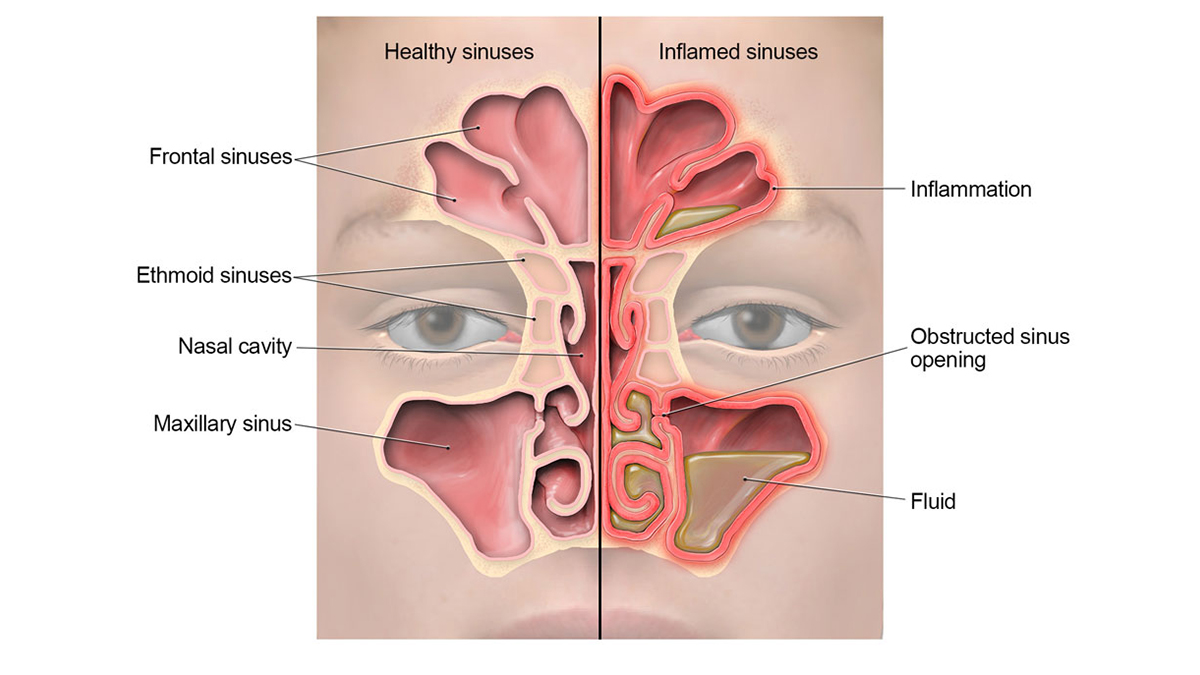
When you have a sinus infection, one or more of your sinuses becomes inflamed. Fluid builds up, which can cause congestion and runny nose.
## Signs and symptoms
- Runny nose
- Stuffy nose
- Facial pain or pressure
- Headache
- Mucus dripping down the throat (post-nasal drip)
- Sore throat
- Cough
- Bad breath
## Risk factors
- A previous [cold](https://www.cdc.gov/common-cold/treatment/index.html).
- Seasonal allergies.
- Smoking and exposure to secondhand smoke.
- Structural problems within the sinuses. For example, growths on the lining of the nose or sinuses, known as nasal polyps.
- A weak immune system or taking drugs that weaken the immune system.
## Causes
- Viruses cause most sinus infections, but bacteria can cause some sinus infections.
## Prevention
You can help prevent sinus infections by doing your best to stay healthy and keep others healthy, including:
- [Clean your hands](https://www.cdc.gov/handwashing/when-how-handwashing.html).
- Receive recommended vaccines, such as the [flu vaccine](https://www.cdc.gov/flu/prevent/keyfacts.htm) and [pneumococcal vaccine](https://www.cdc.gov/vaccines/vpd/pneumo/index.html).
- Avoid close contact with people who have colds or other upper respiratory infections.
- Don't smoke and avoid secondhand smoke.
- Use a clean humidifier to moisten the air at home.
## When to seek medical care
See a healthcare provider if you have:
- Severe symptoms, such as severe headache or facial pain.
- Symptoms that get worse after improving.
- Symptoms lasting more than 10 days without getting better.
- Fever longer than 3-4 days.
- Multiple sinus infections in the past year.
This list is not all-inclusive. Please see a healthcare provider for any symptom that is severe or concerning.
## Diagnosis
Your healthcare provider will determine if you have a sinus infection by asking about symptoms and examining you.
## Treatment
- You do not need antibiotics for many sinus infections. Most sinus infections usually get better on their own without antibiotics.
- When antibiotics aren't needed, they won't help you, and their side effects could still cause harm. Side effects can range from mild reactions, like a rash, to more serious health problems. These problems can include severe allergic reactions, [antimicrobial-resistant infections](https://www.cdc.gov/antimicrobial-resistance/index.html) and [*C. diff*](https://www.cdc.gov/c-diff/about/index.html) infection. *C. diff* causes diarrhea that can lead to severe colon damage and death.
However, in some cases, you may need antibiotics. Talk to your healthcare provider about the best treatment for your illness.
For some sinus infections, your healthcare provider might recommend **watchful waiting** or **delayed antibiotic prescribing**.
- **Watchful waiting:** Your healthcare provider may suggest watching and waiting for 2-3 days to see if you need antibiotics. This gives the immune system time to fight off the infection. If your symptoms don't improve, the healthcare provider may prescribe an antibiotic.
- **Delayed prescribing:** Your healthcare provider may prescribe an antibiotic but suggest that you wait 2–3 days before filling the prescription. You may recover on your own and may not need the antibiotic.
## How to feel better
- Put a warm compress over the nose and forehead to help relieve sinus pressure.
- Use a decongestant or saline nasal spray.
- Breathe in steam from a bowl of hot water or shower.
- Ask your healthcare provider about over-the-counter medicines that can help you feel better. Always use over-the-counter medicines as directed.
## Over-the-counter medicine and children
Carefully read and follow instructions on over-the-counter medicine product labels before giving medicines to children. Some over-the-counter medicines are not recommended for children of certain ages.
- Pain relievers:
- Children younger than 6 months: only give acetaminophen.
- Children 6 months or older: it is OK to give acetaminophen or ibuprofen.
- Never give aspirin to children because it can cause Reye's syndrome. Reye's syndrome is a very serious, but rare illness that can harm the liver and brain.
- Cough and cold medicines:
- Children younger than 4 years old: do not use over-the-counter cough and cold medicines in young children unless a healthcare provider specifically tells you to. Cough and cold medicines can result in serious and sometimes life-threatening side effects in young children.
- Children 4 years or older: discuss with your child’s healthcare provider if over-the-counter cough and cold medicines are safe to give to your child.
Ask your healthcare provider about the right dosage of over-the-counter medicines for your child's age and size. Also, tell your child's healthcare provider about all prescription and over-the-counter medicines they are taking.
## Similar diseases
Other conditions can cause symptoms similar to a sinus infection, including:
- Seasonal allergies
- Colds
## Resources
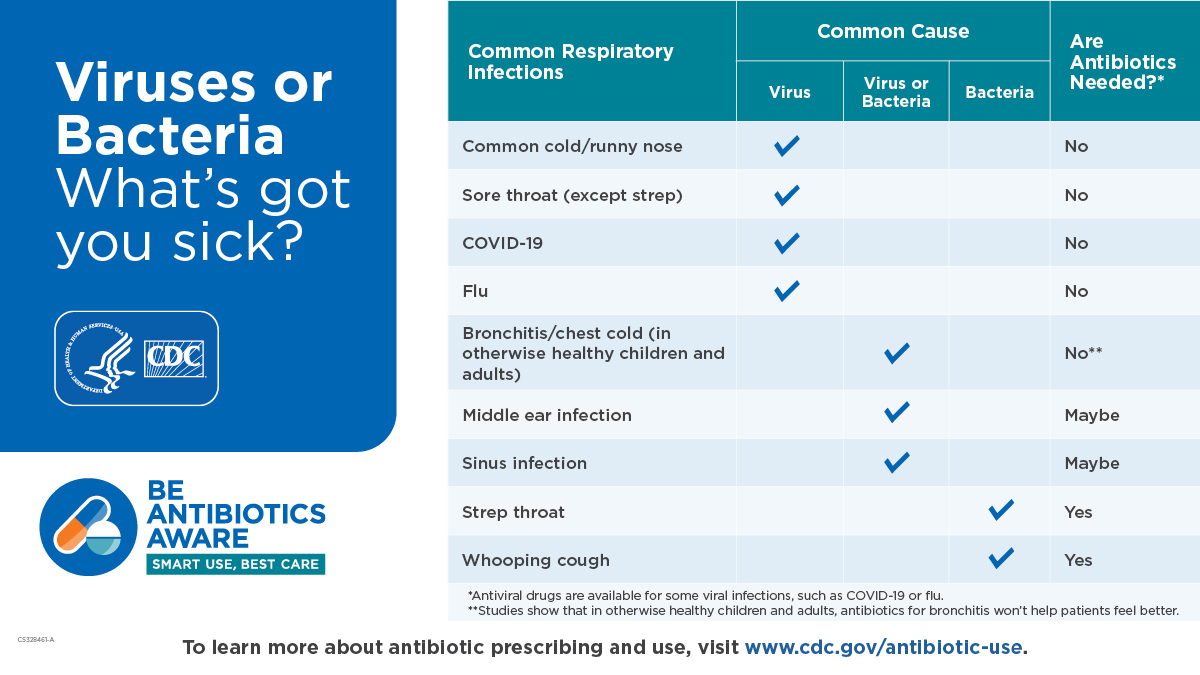
Viruses or Bacteria What's got you sick?
For more on treatment of common illnesses, visit CDC resources:
- [Acute Bronchitis](https://www.cdc.gov/acute-bronchitis/about/index.html)
- [Ear Infection](https://www.cdc.gov/ear-infection/about/index.html)
- [Sore Throat](https://www.cdc.gov/sore-throat/about/index.html)
- [Urinary Tract Infection](https://www.cdc.gov/uti/about/index.html)
- [Common Cold Fact Sheet](https://www.cdc.gov/common-cold/media/pdfs/2024/04/CommonCold_fact_sheet_508.pdf)
- [Skin Infection Fact Sheet](https://www.cdc.gov/antibiotic-use/media/pdfs/Skin-Infection-FS-508.pdf)
## On This Page
- [Overview](https://www.cdc.gov/sinus-infection/about/index.html#cdc_disease_basics_overview-overview)
- [Signs and symptoms](https://www.cdc.gov/sinus-infection/about/index.html#cdc_disease_basics_symptoms-signs-and-symptoms)
- [Risk factors](https://www.cdc.gov/sinus-infection/about/index.html#cdc_disease_basics_risk-risk-factors)
- [Causes](https://www.cdc.gov/sinus-infection/about/index.html#cdc_disease_basics_causes_risk_spread-causes)
- [Prevention](https://www.cdc.gov/sinus-infection/about/index.html#cdc_disease_basics_prevention-prevention)
- [When to seek medical care](https://www.cdc.gov/sinus-infection/about/index.html#cdc_disease_basics_testing_screening-when-to-seek-medical-care)
- [Diagnosis](https://www.cdc.gov/sinus-infection/about/index.html#cdc_disease_basics_symptoms_mngmt-diagnosis)
- [Treatment](https://www.cdc.gov/sinus-infection/about/index.html#cdc_disease_basics_treatment-treatment)
- [How to feel better](https://www.cdc.gov/sinus-infection/about/index.html#cdc_disease_basics_myths-how-to-feel-better)
- [Over-the-counter medicine and children](https://www.cdc.gov/sinus-infection/about/index.html#cdc_disease_basics_outlook-over-the-counter-medicine-and-children)
- [Similar diseases](https://www.cdc.gov/sinus-infection/about/index.html#cdc_disease_basics_case-similar-diseases)
- [Resources](https://www.cdc.gov/sinus-infection/about/index.html#cdc_disease_basics_res-resources)
[Show More](https://www.cdc.gov/sinus-infection/about/index.html)
April 17, 2024
[Sources](https://www.cdc.gov/sinus-infection/about/index.html#content-sources) [Print](https://www.cdc.gov/sinus-infection/about/index.html#print) [Share](https://www.cdc.gov/sinus-infection/about/index.html#share)
[Facebook](https://www.facebook.com/sharer/sharer.php?u=https%3A%2F%2Fwww.cdc.gov%2Fsinus-infection%2Fabout%2Findex.html "Share to Facebook") [LinkedIn](https://www.linkedin.com/shareArticle?url=https%3A%2F%2Fwww.cdc.gov%2Fsinus-infection%2Fabout%2Findex.html&title=Sinus%20Infection%20Basics "Share to LinkedIn") [Twitter](http://twitter.com/share?url=https%3A%2F%2Fwww.cdc.gov%2Fsinus-infection%2Fabout%2Findex.html&text=Sinus%20Infection%20Basics "Share to Twitter") [Syndicate](https://tools.cdc.gov/medialibrary/index.aspx#/sharecontent/https://https://www.cdc.gov/sinus-infection/about/index.html "Embed this Page")
Content Source:
[National Center for Emerging and Zoonotic Infectious Diseases (NCEZID)](https://www.cdc.gov/ncezid/index.html)
Back to Top
## [Sinus Infection](https://www.cdc.gov/sinus-infection/about/index.html)
A sinus infection is usually caused by a virus and gets better on its own—without antibiotics. Learn the signs and symptoms.
[Sign up for Email Updates](https://tools.cdc.gov/campaignproxyservice/subscriptions.aspx?topic_id=USCDC_426)
[Contact Us](https://www.cdc.gov/sinus-infection/about/index.html#contactUs)
[Contact Us](https://www.cdc.gov/cdc-info/index.html)
- [Call 800-232-4636](tel:800-232-4636)
- [Contact CDC](https://www.cdc.gov/cdc-info/index.html)
[About CDC](https://www.cdc.gov/sinus-infection/about/index.html#aboutCDC)
[About CDC](https://www.cdc.gov/about/)
- [Pressroom](https://www.cdc.gov/media/)
- [Organization](https://www.cdc.gov/about/organization/)
- [Budget & Funding](https://www.cdc.gov/budget/)
- [Careers & Jobs](https://jobs.cdc.gov/index.html)
[Policies](https://www.cdc.gov/sinus-infection/about/index.html#policies)
- [Accessibility](https://www.cdc.gov/other/accessibility.html)
- [External Links](https://www.cdc.gov/Other/disclaimer.html#exit-notification)
- [Privacy](https://www.cdc.gov/other/privacy.html)
- [Web Policies](https://www.cdc.gov/Other/policies.html)
- [FOIA](https://www.cdc.gov/foia/)
- [OIG](https://oig.hhs.gov/)
- [No Fear Act](https://www.cdc.gov/oeeowe/no-fear-act/)
- [Nondiscrimination](https://www.cdc.gov/other/nondiscrimination.html)
- [Vulnerability Disclosure Policy](https://www.hhs.gov/vulnerability-disclosure-policy/index.html)
[Languages](https://www.cdc.gov/sinus-infection/about/index.html#languages)
[Languages](https://www.cdc.gov/other/other-languages/index.html)
- [Español](https://www.cdc.gov/spanish/)
[Language Assistance](https://www.cdc.gov/other/language-assistance.html)
- [Español](https://www.cdc.gov/other/language-assistance.html#Spanish)
- [繁體中文](https://www.cdc.gov/other/language-assistance.html#Chinese)
- [Tiếng Việt](https://www.cdc.gov/other/language-assistance.html#Vietnamese)
- [한국어](https://www.cdc.gov/other/language-assistance.html#Korean)
- [Tagalog](https://www.cdc.gov/other/language-assistance.html#Tagalog)
- [Русский](https://www.cdc.gov/other/language-assistance.html#Russian)
- [العربية](https://www.cdc.gov/other/language-assistance.html#Arabic)
- [Kreyòl Ayisyen](https://www.cdc.gov/other/language-assistance.html#Haitian)
- [Français](https://www.cdc.gov/other/language-assistance.html#French)
- [Polski](https://www.cdc.gov/other/language-assistance.html#Polish)
- [Português](https://www.cdc.gov/other/language-assistance.html#Portuguese)
- [Italiano](https://www.cdc.gov/other/language-assistance.html#Italian)
- [Deutsch](https://www.cdc.gov/other/language-assistance.html#German)
- [日本語](https://www.cdc.gov/other/language-assistance.html#Japanese)
- [فارسی](https://www.cdc.gov/other/language-assistance.html#Farsi)
- [English](https://www.cdc.gov/other/language-assistance.html#English)
[Archive](https://www.cdc.gov/sinus-infection/about/index.html#archive)
- [CDC Archive](https://archive.cdc.gov/)
- [Public Health Publications](https://stacks.cdc.gov/)
[Contact Us](https://www.cdc.gov/sinus-infection/about/index.html#mobile-footer-contactUs)
[Contact Us](https://www.cdc.gov/cdc-info/index.html)
- [Call 800-232-4636](tel:800-232-4636)
- [Contact CDC](https://www.cdc.gov/cdc-info/index.html)
[About CDC](https://www.cdc.gov/sinus-infection/about/index.html#mobile-footer-aboutCDC)
- [Pressroom](https://www.cdc.gov/media/)
- [Organization](https://www.cdc.gov/about/organization/)
- [Budget & Funding](https://www.cdc.gov/budget/)
- [Careers & Jobs](https://jobs.cdc.gov/index.html)
- [About CDC](https://www.cdc.gov/about/)
[Policies](https://www.cdc.gov/sinus-infection/about/index.html#mobile-footer-policies)
- [Accessibility](https://www.cdc.gov/other/accessibility.html)
- [External Links](https://www.cdc.gov/Other/disclaimer.html#exit-notification)
- [Privacy](https://www.cdc.gov/other/privacy.html)
- [Web Policies](https://www.cdc.gov/Other/policies.html)
- [FOIA](https://www.cdc.gov/foia/)
- [OIG](https://oig.hhs.gov/)
- [No Fear Act](https://www.cdc.gov/oeeowe/no-fear-act/)
- [Nondiscrimination](https://www.cdc.gov/other/nondiscrimination.html)
- [Vulnerability Disclosure Policy](https://www.hhs.gov/vulnerability-disclosure-policy/index.html)
[Languages](https://www.cdc.gov/sinus-infection/about/index.html#mobile-footer-languages)
Languages
- [Español](https://www.cdc.gov/spanish/)
Language Assistance
- [Español](https://www.cdc.gov/other/language-assistance.html#Spanish)
- [繁體中文](https://www.cdc.gov/other/language-assistance.html#Chinese)
- [Tiếng Việt](https://www.cdc.gov/other/language-assistance.html#Vietnamese)
- [한국어](https://www.cdc.gov/other/language-assistance.html#Korean)
- [Tagalog](https://www.cdc.gov/other/language-assistance.html#Tagalog)
- [Русский](https://www.cdc.gov/other/language-assistance.html#Russian)
- [العربية](https://www.cdc.gov/other/language-assistance.html#Arabic)
- [Kreyòl Ayisyen](https://www.cdc.gov/other/language-assistance.html#Haitian)
- [Français](https://www.cdc.gov/other/language-assistance.html#French)
- [Polski](https://www.cdc.gov/other/language-assistance.html#Polish)
- [Português](https://www.cdc.gov/other/language-assistance.html#Portuguese)
- [Italiano](https://www.cdc.gov/other/language-assistance.html#Italian)
- [Deutsch](https://www.cdc.gov/other/language-assistance.html#German)
- [日本語](https://www.cdc.gov/other/language-assistance.html#Japanese)
- [فارسی](https://www.cdc.gov/other/language-assistance.html#Farsi)
- [English](https://www.cdc.gov/other/language-assistance.html#English)
[Archive](https://www.cdc.gov/sinus-infection/about/index.html#mobile-footer-archive)
- [CDC Archive](https://archive.cdc.gov/)
- [Public Health Publications](https://stacks.cdc.gov/)
[](https://www.cdc.gov/)
[HHS.gov](https://hhs.gov/) [USA.gov](https://usa.gov/) |
| Readable Markdown | - Stuffy nose that just isn't getting better? You might have a sinus infection, also called sinusitis.
- You don't need antibiotics for many sinus infections, but your healthcare provider can decide if you need an antibiotic.
## Overview
- Sinus infections happen when fluid builds up in the air-filled pockets in the face (sinuses). This fluid buildup allows germs to grow.

When you have a sinus infection, one or more of your sinuses becomes inflamed. Fluid builds up, which can cause congestion and runny nose.
## Signs and symptoms
- Runny nose
- Stuffy nose
- Facial pain or pressure
- Headache
- Mucus dripping down the throat (post-nasal drip)
- Sore throat
- Cough
- Bad breath
## Risk factors
- A previous [cold](https://www.cdc.gov/common-cold/treatment/index.html).
- Seasonal allergies.
- Smoking and exposure to secondhand smoke.
- Structural problems within the sinuses. For example, growths on the lining of the nose or sinuses, known as nasal polyps.
- A weak immune system or taking drugs that weaken the immune system.
## Causes
- Viruses cause most sinus infections, but bacteria can cause some sinus infections.
## Prevention
You can help prevent sinus infections by doing your best to stay healthy and keep others healthy, including:
- [Clean your hands](https://www.cdc.gov/handwashing/when-how-handwashing.html).
- Receive recommended vaccines, such as the [flu vaccine](https://www.cdc.gov/flu/prevent/keyfacts.htm) and [pneumococcal vaccine](https://www.cdc.gov/vaccines/vpd/pneumo/index.html).
- Avoid close contact with people who have colds or other upper respiratory infections.
- Don't smoke and avoid secondhand smoke.
- Use a clean humidifier to moisten the air at home.
## When to seek medical care
See a healthcare provider if you have:
- Severe symptoms, such as severe headache or facial pain.
- Symptoms that get worse after improving.
- Symptoms lasting more than 10 days without getting better.
- Fever longer than 3-4 days.
- Multiple sinus infections in the past year.
This list is not all-inclusive. Please see a healthcare provider for any symptom that is severe or concerning.
## Diagnosis
Your healthcare provider will determine if you have a sinus infection by asking about symptoms and examining you.
## Treatment
- You do not need antibiotics for many sinus infections. Most sinus infections usually get better on their own without antibiotics.
- When antibiotics aren't needed, they won't help you, and their side effects could still cause harm. Side effects can range from mild reactions, like a rash, to more serious health problems. These problems can include severe allergic reactions, [antimicrobial-resistant infections](https://www.cdc.gov/antimicrobial-resistance/index.html) and [*C. diff*](https://www.cdc.gov/c-diff/about/index.html) infection. *C. diff* causes diarrhea that can lead to severe colon damage and death.
However, in some cases, you may need antibiotics. Talk to your healthcare provider about the best treatment for your illness.
For some sinus infections, your healthcare provider might recommend **watchful waiting** or **delayed antibiotic prescribing**.
- **Watchful waiting:** Your healthcare provider may suggest watching and waiting for 2-3 days to see if you need antibiotics. This gives the immune system time to fight off the infection. If your symptoms don't improve, the healthcare provider may prescribe an antibiotic.
- **Delayed prescribing:** Your healthcare provider may prescribe an antibiotic but suggest that you wait 2–3 days before filling the prescription. You may recover on your own and may not need the antibiotic.
## How to feel better
- Put a warm compress over the nose and forehead to help relieve sinus pressure.
- Use a decongestant or saline nasal spray.
- Breathe in steam from a bowl of hot water or shower.
- Ask your healthcare provider about over-the-counter medicines that can help you feel better. Always use over-the-counter medicines as directed.
## Over-the-counter medicine and children
Carefully read and follow instructions on over-the-counter medicine product labels before giving medicines to children. Some over-the-counter medicines are not recommended for children of certain ages.
- Pain relievers:
- Children younger than 6 months: only give acetaminophen.
- Children 6 months or older: it is OK to give acetaminophen or ibuprofen.
- Never give aspirin to children because it can cause Reye's syndrome. Reye's syndrome is a very serious, but rare illness that can harm the liver and brain.
- Cough and cold medicines:
- Children younger than 4 years old: do not use over-the-counter cough and cold medicines in young children unless a healthcare provider specifically tells you to. Cough and cold medicines can result in serious and sometimes life-threatening side effects in young children.
- Children 4 years or older: discuss with your child’s healthcare provider if over-the-counter cough and cold medicines are safe to give to your child.
Ask your healthcare provider about the right dosage of over-the-counter medicines for your child's age and size. Also, tell your child's healthcare provider about all prescription and over-the-counter medicines they are taking.
## Similar diseases
Other conditions can cause symptoms similar to a sinus infection, including:
- Seasonal allergies
- Colds
April 17, 2024 |
| Shard | 5 (laksa) |
| Root Hash | 17308952984333333205 |
| Unparsed URL | gov,cdc!www,/sinus-infection/about/index.html s443 |