ℹ️ Skipped - page is already crawled
| Filter | Status | Condition | Details |
|---|---|---|---|
| HTTP status | PASS | download_http_code = 200 | HTTP 200 |
| Age cutoff | PASS | download_stamp > now() - 6 MONTH | 0.8 months ago |
| History drop | PASS | isNull(history_drop_reason) | No drop reason |
| Spam/ban | PASS | fh_dont_index != 1 AND ml_spam_score = 0 | ml_spam_score=0 |
| Canonical | PASS | meta_canonical IS NULL OR = '' OR = src_unparsed | Not set |
| Property | Value | |||||||||
|---|---|---|---|---|---|---|---|---|---|---|
| URL | https://www.cdc.gov/mental-health/living-with/index.html | |||||||||
| Last Crawled | 2026-03-31 23:22:56 (23 days ago) | |||||||||
| First Indexed | 2024-10-20 15:14:21 (1 year ago) | |||||||||
| HTTP Status Code | 200 | |||||||||
| Content | ||||||||||
| Meta Title | Managing Stress | Mental Health | CDC | |||||||||
| Meta Description | Chronic stress can impact everyday life and lead to worsening health problems. | |||||||||
| Meta Canonical | null | |||||||||
| Boilerpipe Text | Everyone experiences occasional stress; it is a normal part of life.
Long-term stress can lead to worsening health problems.
Managing stress daily can prevent you from developing long-term stress.
Find resources if you are struggling to cope with stress for extra support.
How it impacts everyday life
Everyone experiences stress, which is your body's physical and emotional response to new or challenging situations.
1
This can occur when you face problems such as those related to work, school, health, and relationships. Feeling stress can be a normal coping response and can forge a healthy sense of our ability to solve problems. However, when the stress is long term, known as chronic stress, it can lead to worsening health problems.
2
Stress can cause the following:
Feelings of fear, anger, sadness, worry, numbness, or frustration
Changes in appetite, energy, desires, and interests
Trouble concentrating and making decisions
Nightmares or problems sleeping
Physical reactions, such as headaches, body pains, stomach problems, or skin rashes
Worsening of chronic health problems and mental health conditions
Increased use of
alcohol
,
drugs
, and other substances
Healthy ways to cope with stress
Learning to cope in a healthy way can help reduce your stress. Taking small steps in your daily life to manage stress can have a big impact. Everyone manages stress differently. You can find and manage what triggers your stress and the right combination of healthy techniques that work for you.
Take care of your mind.
Take breaks from news and social media. It is good to be informed, but constant information about negative events can be upsetting.
3
Make time to unwind.
Take deep breaths, stretch, or
meditate
.
Keep a journal.
Spend time outdoors either being active or relaxing.
Try to do some other relaxing activities you enjoy.
Practice gratitude daily. Remind yourself of specific things you are grateful for and write them down.
4
Connect with others.
Talk with people
you trust about your concerns and how you are feeling.
Connect with your community-based or faith-based organizations.
Gratitude works
Gratitude may be the best kept secret to help reduce stress and feel better.
Practicing gratitude
every day can improve your physical and emotional well-being.
Take care of your body.
Get enough sleep. Go to bed and wake up at the same time each day to help you
sleep better
. Adults need 7 or more hours per night.
5
Move more. Staying
physically healthy
can improve your emotional well-being. Every little bit of physical activity helps.
Start small and build up to 2 ½ hours a week.
Break it into smaller amounts such as 20 to 30 minutes a day.
Eat healthy. Have fruits and vegetables, lean protein, whole grains, and low-fat or no-fat dairy. Limit foods with unhealthy fats, salt, and added sugars.
See Healthy Eating Tips
.
Limit alcohol intake. Choose not to drink, or drink in moderation on days you drink alcohol. Moderation means:
2 drinks or less a day for men.
1 drink or less for women.
Find out more at
Drink Less, Be Your Best
.
Avoid using illegal drugs or prescription drugs in ways other than prescribed. Don't take someone else's prescription.
Substance use treatment
is available, and recovery starts with asking for help.
Avoid smoking, vaping, and the use of other tobacco products. People can and do
quit smoking
for good.
Continue with regular health appointments, tests, screenings, and vaccinations.
Integration of physical and mental health
Regular physical activity is one of the most important things you can do for your health and can improve your mental health. See how to
get started
.
Resources and support
Resources
CDC's Improve Your Emotional Well-Being
CDC's Coping with a Disaster or Traumatic Event
Tools for Supporting Emotional Wellbeing in Children and Youth
I'm So Stressed Out! Fact Sheet (NIMH)
Stress: MedlinePlus
Caring for Your Mental Health - National Institute of Mental Health (NIMH) (nih.gov)
Mindfulness Coach – PTSD: National Center for PTSD (va.gov)
June 9, 2025
References
National Institute of Mental Health. (n.d.). I’m so stressed out fact sheet. Retrieved on June 24, 2024 from
https://www.nimh.nih.gov/health/publications/so-stressed-out-fact-sheet
National Center for Complementary and Integrative Health. (2022). Stress. Retrieved on June 24, 2024 from
https://www.nccih.nih.gov/health/stress
CDC. (2023).
Worry and Anxiety
. Retrieved on July 18, 2024 from
https://www.cdc.gov/howrightnow/emotion/worry/index.html
.
National Institute of Mental Health. (2024).
Caring for your mental health
. Retrieved on June 24, 2024 from
https://www.nimh.nih.gov/health/topics/caring-for-your-mental-health
CDC. (2024).
About Sleep.
Retrieved on July 12, 2024 from
https://www.cdc.gov/sleep/about/index.html | |||||||||
| Markdown | [Skip directly to site content](https://www.cdc.gov/mental-health/living-with/index.html#content) [Skip directly to search](https://www.cdc.gov/mental-health/living-with/index.html#cdc-search__input)
 An official website of the United States government
[Here's how you know](https://www.cdc.gov/mental-health/living-with/index.html#gov-notice)

**Official websites use .gov**
A **.gov** website belongs to an official government organization in the United States.

**Secure .gov websites use HTTPS**
A **lock** ( ) or **https://** means you've safely connected to the .gov website. Share sensitive information only on official, secure websites.
[](https://www.cdc.gov/)
[Mental Health](https://www.cdc.gov/mental-health/index.html)
Explore This Topic
[For Everyone](https://www.cdc.gov/mental-health/index.html)
- [About](https://www.cdc.gov/mental-health/about/index.html)
- [Caring for Yourself and Others](https://www.cdc.gov/mental-health/caring/index.html)
- [Managing Stress](https://www.cdc.gov/mental-health/living-with/index.html)
- [Mental Health Data Channel](https://www.cdc.gov/mental-health/about-data/index.html)
- [Mental Health Stigma](https://www.cdc.gov/mental-health/stigma/index.html)
- [View all](https://www.cdc.gov/mental-health/site.html#gen)
**Related Topics:**
[Children's Mental Health](https://www.cdc.gov/children-mental-health/about/index.html) \| [Emotional Well-Being](https://www.cdc.gov/emotional-well-being/about/index.html)
[Home](https://www.cdc.gov/mental-health/index.html)
[](https://www.cdc.gov/)
[*search*](https://www.cdc.gov/mental-health/living-with/index.html)
[Mental Health](https://www.cdc.gov/mental-health/index.html)
Menu
For Everyone
- [About](https://www.cdc.gov/mental-health/about/index.html)
- [Caring for Yourself and Others](https://www.cdc.gov/mental-health/caring/index.html)
- [Managing Stress](https://www.cdc.gov/mental-health/living-with/index.html)
- [Mental Health Data Channel](https://www.cdc.gov/mental-health/about-data/index.html)
- [Mental Health Stigma](https://www.cdc.gov/mental-health/stigma/index.html)
- [View All](https://www.cdc.gov/mental-health/site.html#gen) [Home](https://www.cdc.gov/mental-health/index.html)
Related Topics
- [Children's Mental Health](https://www.cdc.gov/children-mental-health/about/index.html)
- [Emotional Well-Being](https://www.cdc.gov/emotional-well-being/about/index.html)
[Mental Health](https://www.cdc.gov/mental-health/index.html)
[About](https://www.cdc.gov/mental-health/about/index.html) [Caring for Yourself and Others](https://www.cdc.gov/mental-health/caring/index.html) [Managing Stress](https://www.cdc.gov/mental-health/living-with/index.html) [Mental Health Data Channel](https://www.cdc.gov/mental-health/about-data/index.html) [Mental Health Stigma](https://www.cdc.gov/mental-health/stigma/index.html) [View Menu](https://www.cdc.gov/mental-health/living-with/index.html)
# Managing Stress
June 9, 2025
[Español](https://www.cdc.gov/mental-health/es/living-with/manejo-del-estres.html)
Get help now
If you or someone you know is struggling or in crisis, confidential, free, 24/7/365 help is available. Call or text 988 or chat 988lifeline.org. See [Resources for help](https://www.cdc.gov/mental-health/caring/index.html).
## Key points
- Everyone experiences occasional stress; it is a normal part of life.
- Long-term stress can lead to worsening health problems.
- Managing stress daily can prevent you from developing long-term stress.
- Find resources if you are struggling to cope with stress for extra support.

## How it impacts everyday life
Everyone experiences stress, which is your body's physical and emotional response to new or challenging situations.[1](https://www.cdc.gov/mental-health/living-with/index.html#cdcreference_1) This can occur when you face problems such as those related to work, school, health, and relationships. Feeling stress can be a normal coping response and can forge a healthy sense of our ability to solve problems. However, when the stress is long term, known as chronic stress, it can lead to worsening health problems.[2](https://www.cdc.gov/mental-health/living-with/index.html#cdcreference_2)
Stress can cause the following:
- Feelings of fear, anger, sadness, worry, numbness, or frustration
- Changes in appetite, energy, desires, and interests
- Trouble concentrating and making decisions
- Nightmares or problems sleeping
- Physical reactions, such as headaches, body pains, stomach problems, or skin rashes
- Worsening of chronic health problems and mental health conditions
- Increased use of [alcohol](https://www.cdc.gov/alcohol/about-alcohol-use/), [drugs](https://www.cdc.gov/overdose-prevention/index.html), and other substances
## Healthy ways to cope with stress
Learning to cope in a healthy way can help reduce your stress. Taking small steps in your daily life to manage stress can have a big impact. Everyone manages stress differently. You can find and manage what triggers your stress and the right combination of healthy techniques that work for you.
**Take care of your mind.**
- Take breaks from news and social media. It is good to be informed, but constant information about negative events can be upsetting.[3](https://www.cdc.gov/mental-health/living-with/index.html#cdcreference_3)
- Make time to unwind.
- Take deep breaths, stretch, or [meditate](https://www.nccih.nih.gov/health/meditation-and-mindfulness-what-you-need-to-know).
- Keep a journal.
- Spend time outdoors either being active or relaxing.
- Try to do some other relaxing activities you enjoy.
- Practice gratitude daily. Remind yourself of specific things you are grateful for and write them down.[4](https://www.cdc.gov/mental-health/living-with/index.html#cdcreference_4)
- Connect with others.
- [Talk with people](https://www.cdc.gov/howrightnow/talk) you trust about your concerns and how you are feeling.
- Connect with your community-based or faith-based organizations.
### Gratitude works
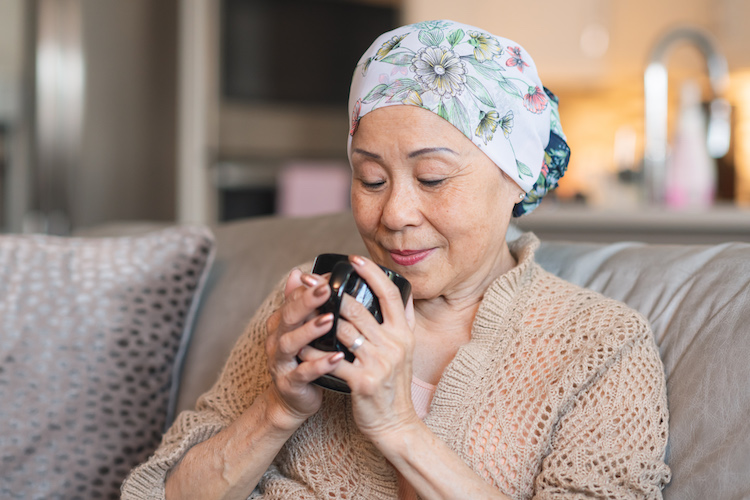
Gratitude may be the best kept secret to help reduce stress and feel better. [Practicing gratitude](https://www.cdc.gov/howrightnow/gratitude/index.html) every day can improve your physical and emotional well-being.
**Take care of your body.**
- Get enough sleep. Go to bed and wake up at the same time each day to help you [sleep better](https://www.cdc.gov/sleep/about/). Adults need 7 or more hours per night.[5](https://www.cdc.gov/mental-health/living-with/index.html#cdcreference_5)
- Move more. Staying [physically healthy](https://www.cdc.gov/moving-matters/about/index.html) can improve your emotional well-being. Every little bit of physical activity helps.
- Start small and build up to 2 \½ hours a week.
- Break it into smaller amounts such as 20 to 30 minutes a day.
- Eat healthy. Have fruits and vegetables, lean protein, whole grains, and low-fat or no-fat dairy. Limit foods with unhealthy fats, salt, and added sugars. [See Healthy Eating Tips](https://www.cdc.gov/nccdphp/dnpao/features/healthy-eating-tips/index.html).
- Limit alcohol intake. Choose not to drink, or drink in moderation on days you drink alcohol. Moderation means:
- 2 drinks or less a day for men.
- 1 drink or less for women.
- Find out more at [Drink Less, Be Your Best](https://www.cdc.gov/drink-less-be-your-best/index.html).
- Avoid using illegal drugs or prescription drugs in ways other than prescribed. Don't take someone else's prescription. [Substance use treatment](https://www.findtreatment.gov/) is available, and recovery starts with asking for help.
- Avoid smoking, vaping, and the use of other tobacco products. People can and do [quit smoking](https://www.cdc.gov/tobacco/about/how-to-quit.html) for good.
- Continue with regular health appointments, tests, screenings, and vaccinations.
### Integration of physical and mental health

Regular physical activity is one of the most important things you can do for your health and can improve your mental health. See how to [get started](https://www.cdc.gov/healthy-weight-growth/physical-activity/getting-started.html).
## Resources and support
### Resources
- [CDC's Improve Your Emotional Well-Being](https://www.cdc.gov/emotional-well-being/improve-your-emotional-well-being/index.html)
- [CDC's Coping with a Disaster or Traumatic Event](https://emergency.cdc.gov/coping/index.asp)
- [Tools for Supporting Emotional Wellbeing in Children and Youth](https://nap.nationalacademies.org/resource/other/dbasse/wellbeing-tools/interactive/)
- [I'm So Stressed Out! Fact Sheet (NIMH)](https://www.nimh.nih.gov/health/publications/so-stressed-out-fact-sheet)
- [Stress: MedlinePlus](https://medlineplus.gov/stress.html)
- [Caring for Your Mental Health - National Institute of Mental Health (NIMH) (nih.gov)](https://www.nimh.nih.gov/health/topics/caring-for-your-mental-health)
- [Mindfulness Coach – PTSD: National Center for PTSD (va.gov)](https://www.ptsd.va.gov/appvid/mobile/mindfulcoach_app.asp)
## On This Page
- [How it impacts everyday life](https://www.cdc.gov/mental-health/living-with/index.html#cdc_living_with_life_imp-how-it-impacts-everyday-life "How it impacts everyday life")
- [Healthy ways to cope with stress](https://www.cdc.gov/mental-health/living-with/index.html#cdc_living_with_man_stra-healthy-ways-to-cope-with-stress "Healthy ways to cope with stress")
- [Resources and support](https://www.cdc.gov/mental-health/living-with/index.html#cdc_living_with_res-resources-and-support "Resources and support")
June 9, 2025
[Sources](https://www.cdc.gov/mental-health/living-with/index.html#content-sources) [Print](https://www.cdc.gov/mental-health/living-with/index.html#print) [Share](https://www.cdc.gov/mental-health/living-with/index.html#share)
[Facebook](https://www.facebook.com/ "Share to Facebook") [LinkedIn](https://www.linkedin.com/ "Share to LinkedIn") [Twitter](https://twitter.com/ "Share to Twitter") [Syndicate](https://tools.cdc.gov/medialibrary/index.aspx#/sharecontent "Embed this Page")
Content Source:
[National Center for Injury Prevention and Control](https://www.cdc.gov/injury/index.html)
References
1. National Institute of Mental Health. (n.d.). I’m so stressed out fact sheet. Retrieved on June 24, 2024 from <https://www.nimh.nih.gov/health/publications/so-stressed-out-fact-sheet>
2. National Center for Complementary and Integrative Health. (2022). Stress. Retrieved on June 24, 2024 from <https://www.nccih.nih.gov/health/stress>
3. CDC. (2023). *Worry and Anxiety*. Retrieved on July 18, 2024 from <https://www.cdc.gov/howrightnow/emotion/worry/index.html>.
4. National Institute of Mental Health. (2024). *Caring for your mental health*. Retrieved on June 24, 2024 from <https://www.nimh.nih.gov/health/topics/caring-for-your-mental-health>
5. CDC. (2024). *About Sleep.* Retrieved on July 12, 2024 from <https://www.cdc.gov/sleep/about/index.html>
## [Mental Health](https://www.cdc.gov/mental-health/index.html)
Learn about mental health basics and data, and where to get help and support.
[View All](https://www.cdc.gov/mental-health/site.html)
- [About](https://www.cdc.gov/mental-health/about/index.html)
- [Caring for Yourself and Others](https://www.cdc.gov/mental-health/caring/index.html)
- [Managing Stress](https://www.cdc.gov/mental-health/living-with/index.html)
- [Mental Health Data Channel](https://www.cdc.gov/mental-health/about-data/index.html)
- [Mental Health Stigma](https://www.cdc.gov/mental-health/stigma/index.html)
[Sign up for Email Updates](https://tools.cdc.gov/campaignproxyservice/subscriptions.aspx?topic_id=USCDC_2301)
[Contact Us](https://www.cdc.gov/mental-health/living-with/index.html#contactUs)
[Contact Us](https://www.cdc.gov/cdc-info/index.html)
- [Call 800-232-4636](tel:800-232-4636)
- [Contact CDC](https://www.cdc.gov/cdc-info/index.html)
[About CDC](https://www.cdc.gov/mental-health/living-with/index.html#aboutCDC)
[About CDC](https://www.cdc.gov/about/)
- [Pressroom](https://www.cdc.gov/media/)
- [Organization](https://www.cdc.gov/about/organization/)
- [Budget & Funding](https://www.cdc.gov/budget/)
- [Careers & Jobs](https://jobs.cdc.gov/index.html)
[Policies](https://www.cdc.gov/mental-health/living-with/index.html#policies)
- [Accessibility](https://www.cdc.gov/other/accessibility.html)
- [External Links](https://www.cdc.gov/Other/disclaimer.html#exit-notification)
- [Privacy](https://www.cdc.gov/other/privacy.html)
- [Web Policies](https://www.cdc.gov/Other/policies.html)
- [FOIA](https://www.cdc.gov/foia/)
- [OIG](https://oig.hhs.gov/)
- [No Fear Act](https://www.cdc.gov/oeeowe/no-fear-act/)
- [Nondiscrimination](https://www.cdc.gov/other/nondiscrimination.html)
- [Vulnerability Disclosure Policy](https://www.hhs.gov/vulnerability-disclosure-policy/index.html)
[Languages](https://www.cdc.gov/mental-health/living-with/index.html#languages)
[Languages](https://www.cdc.gov/other/other-languages/index.html)
- [Español](https://www.cdc.gov/spanish/)
[Language Assistance](https://www.cdc.gov/other/language-assistance.html)
- [Español](https://www.cdc.gov/other/language-assistance.html#Spanish)
- [繁體中文](https://www.cdc.gov/other/language-assistance.html#Chinese)
- [Tiếng Việt](https://www.cdc.gov/other/language-assistance.html#Vietnamese)
- [한국어](https://www.cdc.gov/other/language-assistance.html#Korean)
- [Tagalog](https://www.cdc.gov/other/language-assistance.html#Tagalog)
- [Русский](https://www.cdc.gov/other/language-assistance.html#Russian)
- [العربية](https://www.cdc.gov/other/language-assistance.html#Arabic)
- [Kreyòl Ayisyen](https://www.cdc.gov/other/language-assistance.html#Haitian)
- [Français](https://www.cdc.gov/other/language-assistance.html#French)
- [Polski](https://www.cdc.gov/other/language-assistance.html#Polish)
- [Português](https://www.cdc.gov/other/language-assistance.html#Portuguese)
- [Italiano](https://www.cdc.gov/other/language-assistance.html#Italian)
- [Deutsch](https://www.cdc.gov/other/language-assistance.html#German)
- [日本語](https://www.cdc.gov/other/language-assistance.html#Japanese)
- [فارسی](https://www.cdc.gov/other/language-assistance.html#Farsi)
- [English](https://www.cdc.gov/other/language-assistance.html#English)
[Archive](https://www.cdc.gov/mental-health/living-with/index.html#archive)
- [CDC Archive](https://archive.cdc.gov/)
- [Public Health Publications](https://stacks.cdc.gov/)
[Contact Us](https://www.cdc.gov/mental-health/living-with/index.html#mobile-footer-contactUs)
[Contact Us](https://www.cdc.gov/cdc-info/index.html)
- [Call 800-232-4636](tel:800-232-4636)
- [Contact CDC](https://www.cdc.gov/cdc-info/index.html)
[About CDC](https://www.cdc.gov/mental-health/living-with/index.html#mobile-footer-aboutCDC)
- [Pressroom](https://www.cdc.gov/media/)
- [Organization](https://www.cdc.gov/about/organization/)
- [Budget & Funding](https://www.cdc.gov/budget/)
- [Careers & Jobs](https://jobs.cdc.gov/index.html)
- [About CDC](https://www.cdc.gov/about/)
[Policies](https://www.cdc.gov/mental-health/living-with/index.html#mobile-footer-policies)
- [Accessibility](https://www.cdc.gov/other/accessibility.html)
- [External Links](https://www.cdc.gov/Other/disclaimer.html#exit-notification)
- [Privacy](https://www.cdc.gov/other/privacy.html)
- [Web Policies](https://www.cdc.gov/Other/policies.html)
- [FOIA](https://www.cdc.gov/foia/)
- [OIG](https://oig.hhs.gov/)
- [No Fear Act](https://www.cdc.gov/oeeowe/no-fear-act/)
- [Nondiscrimination](https://www.cdc.gov/other/nondiscrimination.html)
- [Vulnerability Disclosure Policy](https://www.hhs.gov/vulnerability-disclosure-policy/index.html)
[Languages](https://www.cdc.gov/mental-health/living-with/index.html#mobile-footer-languages)
Languages
- [Español](https://www.cdc.gov/spanish/)
Language Assistance
- [Español](https://www.cdc.gov/other/language-assistance.html#Spanish)
- [繁體中文](https://www.cdc.gov/other/language-assistance.html#Chinese)
- [Tiếng Việt](https://www.cdc.gov/other/language-assistance.html#Vietnamese)
- [한국어](https://www.cdc.gov/other/language-assistance.html#Korean)
- [Tagalog](https://www.cdc.gov/other/language-assistance.html#Tagalog)
- [Русский](https://www.cdc.gov/other/language-assistance.html#Russian)
- [العربية](https://www.cdc.gov/other/language-assistance.html#Arabic)
- [Kreyòl Ayisyen](https://www.cdc.gov/other/language-assistance.html#Haitian)
- [Français](https://www.cdc.gov/other/language-assistance.html#French)
- [Polski](https://www.cdc.gov/other/language-assistance.html#Polish)
- [Português](https://www.cdc.gov/other/language-assistance.html#Portuguese)
- [Italiano](https://www.cdc.gov/other/language-assistance.html#Italian)
- [Deutsch](https://www.cdc.gov/other/language-assistance.html#German)
- [日本語](https://www.cdc.gov/other/language-assistance.html#Japanese)
- [فارسی](https://www.cdc.gov/other/language-assistance.html#Farsi)
- [English](https://www.cdc.gov/other/language-assistance.html#English)
[Archive](https://www.cdc.gov/mental-health/living-with/index.html#mobile-footer-archive)
- [CDC Archive](https://archive.cdc.gov/)
- [Public Health Publications](https://stacks.cdc.gov/)
[](https://www.cdc.gov/)
[HHS.gov](https://hhs.gov/) [USA.gov](https://usa.gov/) | |||||||||
| Readable Markdown | - Everyone experiences occasional stress; it is a normal part of life.
- Long-term stress can lead to worsening health problems.
- Managing stress daily can prevent you from developing long-term stress.
- Find resources if you are struggling to cope with stress for extra support.

## How it impacts everyday life
Everyone experiences stress, which is your body's physical and emotional response to new or challenging situations.[1](https://www.cdc.gov/mental-health/living-with/index.html#cdcreference_1) This can occur when you face problems such as those related to work, school, health, and relationships. Feeling stress can be a normal coping response and can forge a healthy sense of our ability to solve problems. However, when the stress is long term, known as chronic stress, it can lead to worsening health problems.[2](https://www.cdc.gov/mental-health/living-with/index.html#cdcreference_2)
Stress can cause the following:
- Feelings of fear, anger, sadness, worry, numbness, or frustration
- Changes in appetite, energy, desires, and interests
- Trouble concentrating and making decisions
- Nightmares or problems sleeping
- Physical reactions, such as headaches, body pains, stomach problems, or skin rashes
- Worsening of chronic health problems and mental health conditions
- Increased use of [alcohol](https://www.cdc.gov/alcohol/about-alcohol-use/), [drugs](https://www.cdc.gov/overdose-prevention/index.html), and other substances
## Healthy ways to cope with stress
Learning to cope in a healthy way can help reduce your stress. Taking small steps in your daily life to manage stress can have a big impact. Everyone manages stress differently. You can find and manage what triggers your stress and the right combination of healthy techniques that work for you.
**Take care of your mind.**
- Take breaks from news and social media. It is good to be informed, but constant information about negative events can be upsetting.[3](https://www.cdc.gov/mental-health/living-with/index.html#cdcreference_3)
- Make time to unwind.
- Take deep breaths, stretch, or [meditate](https://www.nccih.nih.gov/health/meditation-and-mindfulness-what-you-need-to-know).
- Keep a journal.
- Spend time outdoors either being active or relaxing.
- Try to do some other relaxing activities you enjoy.
- Practice gratitude daily. Remind yourself of specific things you are grateful for and write them down.[4](https://www.cdc.gov/mental-health/living-with/index.html#cdcreference_4)
- Connect with others.
- [Talk with people](https://www.cdc.gov/howrightnow/talk) you trust about your concerns and how you are feeling.
- Connect with your community-based or faith-based organizations.
### Gratitude works

Gratitude may be the best kept secret to help reduce stress and feel better. [Practicing gratitude](https://www.cdc.gov/howrightnow/gratitude/index.html) every day can improve your physical and emotional well-being.
**Take care of your body.**
- Get enough sleep. Go to bed and wake up at the same time each day to help you [sleep better](https://www.cdc.gov/sleep/about/). Adults need 7 or more hours per night.[5](https://www.cdc.gov/mental-health/living-with/index.html#cdcreference_5)
- Move more. Staying [physically healthy](https://www.cdc.gov/moving-matters/about/index.html) can improve your emotional well-being. Every little bit of physical activity helps.
- Start small and build up to 2 \½ hours a week.
- Break it into smaller amounts such as 20 to 30 minutes a day.
- Eat healthy. Have fruits and vegetables, lean protein, whole grains, and low-fat or no-fat dairy. Limit foods with unhealthy fats, salt, and added sugars. [See Healthy Eating Tips](https://www.cdc.gov/nccdphp/dnpao/features/healthy-eating-tips/index.html).
- Limit alcohol intake. Choose not to drink, or drink in moderation on days you drink alcohol. Moderation means:
- 2 drinks or less a day for men.
- 1 drink or less for women.
- Find out more at [Drink Less, Be Your Best](https://www.cdc.gov/drink-less-be-your-best/index.html).
- Avoid using illegal drugs or prescription drugs in ways other than prescribed. Don't take someone else's prescription. [Substance use treatment](https://www.findtreatment.gov/) is available, and recovery starts with asking for help.
- Avoid smoking, vaping, and the use of other tobacco products. People can and do [quit smoking](https://www.cdc.gov/tobacco/about/how-to-quit.html) for good.
- Continue with regular health appointments, tests, screenings, and vaccinations.
### Integration of physical and mental health

Regular physical activity is one of the most important things you can do for your health and can improve your mental health. See how to [get started](https://www.cdc.gov/healthy-weight-growth/physical-activity/getting-started.html).
## Resources and support
### Resources
- [CDC's Improve Your Emotional Well-Being](https://www.cdc.gov/emotional-well-being/improve-your-emotional-well-being/index.html)
- [CDC's Coping with a Disaster or Traumatic Event](https://emergency.cdc.gov/coping/index.asp)
- [Tools for Supporting Emotional Wellbeing in Children and Youth](https://nap.nationalacademies.org/resource/other/dbasse/wellbeing-tools/interactive/)
- [I'm So Stressed Out! Fact Sheet (NIMH)](https://www.nimh.nih.gov/health/publications/so-stressed-out-fact-sheet)
- [Stress: MedlinePlus](https://medlineplus.gov/stress.html)
- [Caring for Your Mental Health - National Institute of Mental Health (NIMH) (nih.gov)](https://www.nimh.nih.gov/health/topics/caring-for-your-mental-health)
- [Mindfulness Coach – PTSD: National Center for PTSD (va.gov)](https://www.ptsd.va.gov/appvid/mobile/mindfulcoach_app.asp)
June 9, 2025
References
1. National Institute of Mental Health. (n.d.). I’m so stressed out fact sheet. Retrieved on June 24, 2024 from <https://www.nimh.nih.gov/health/publications/so-stressed-out-fact-sheet>
2. National Center for Complementary and Integrative Health. (2022). Stress. Retrieved on June 24, 2024 from <https://www.nccih.nih.gov/health/stress>
3. CDC. (2023). *Worry and Anxiety*. Retrieved on July 18, 2024 from <https://www.cdc.gov/howrightnow/emotion/worry/index.html>.
4. National Institute of Mental Health. (2024). *Caring for your mental health*. Retrieved on June 24, 2024 from <https://www.nimh.nih.gov/health/topics/caring-for-your-mental-health>
5. CDC. (2024). *About Sleep.* Retrieved on July 12, 2024 from <https://www.cdc.gov/sleep/about/index.html> | |||||||||
| ML Classification | ||||||||||
| ML Categories |
Raw JSON{
"/Health": 997,
"/Health/Mental_Health": 996,
"/Health/Mental_Health/Anxiety_and_Stress": 989
} | |||||||||
| ML Page Types |
Raw JSON{
"/Article": 939,
"/Article/How_to": 577
} | |||||||||
| ML Intent Types |
Raw JSON{
"Informational": 999
} | |||||||||
| Content Metadata | ||||||||||
| Language | en-us | |||||||||
| Author | null | |||||||||
| Publish Time | 2025-06-10 12:59:45 (10 months ago) | |||||||||
| Original Publish Time | 2024-10-20 15:14:21 (1 year ago) | |||||||||
| Republished | Yes | |||||||||
| Word Count (Total) | 1,148 | |||||||||
| Word Count (Content) | 741 | |||||||||
| Links | ||||||||||
| External Links | 26 | |||||||||
| Internal Links | 65 | |||||||||
| Technical SEO | ||||||||||
| Meta Nofollow | No | |||||||||
| Meta Noarchive | No | |||||||||
| JS Rendered | No | |||||||||
| Redirect Target | null | |||||||||
| Performance | ||||||||||
| Download Time (ms) | 402 | |||||||||
| TTFB (ms) | 401 | |||||||||
| Download Size (bytes) | 11,649 | |||||||||
| Shard | 5 (laksa) | |||||||||
| Root Hash | 17308952984333333205 | |||||||||
| Unparsed URL | gov,cdc!www,/mental-health/living-with/index.html s443 | |||||||||