ℹ️ Skipped - page is already crawled
| Filter | Status | Condition | Details |
|---|---|---|---|
| HTTP status | PASS | download_http_code = 200 | HTTP 200 |
| Age cutoff | PASS | download_stamp > now() - 6 MONTH | 0.2 months ago |
| History drop | PASS | isNull(history_drop_reason) | No drop reason |
| Spam/ban | PASS | fh_dont_index != 1 AND ml_spam_score = 0 | ml_spam_score=0 |
| Canonical | PASS | meta_canonical IS NULL OR = '' OR = src_unparsed | Not set |
| Property | Value |
|---|---|
| URL | https://www.calpol.co.uk/fever-information/high-temperature |
| Last Crawled | 2026-04-13 13:30:21 (4 days ago) |
| First Indexed | 2021-05-13 14:36:52 (4 years ago) |
| HTTP Status Code | 200 |
| Meta Title | Children’s High Temperature (Fever) | Babies & Children | CALPOL® UK |
| Meta Description | Learn what a baby’s normal temperature is and how to identify a fever in babies and children. Read our handy treatments for a high temp in kids. |
| Meta Canonical | null |
| Boilerpipe Text | Normal temperature for babies and children
The body’s normal temperature will vary slightly from child to child, but a baby’s normal temperature and young children should be around 36.4°C. A normal infant temperature can be impacted by their level of activity and what they’re wearing.
Dawn Kelly, a health visitor lecturer and mother-of-three, says: “Some children can ‘run hot’. It’s worth taking their temperature when they’re not ill to get an idea of their natural base temperature.”
This content was written by healthcare professional Dawn Kelly in 2020. She was paid for her time but does not endorse CALPOL
®
Products.
What is a fever in children?
A fever is a temperature of 38°C or more. Fevers in babies and children can have a number of other symptoms alongside the high temperature.
As a parent, you’ll know when your little one isn’t quite themselves, and could maybe spot the tell-tale signs of a fever in a baby or child.
Dawn Kelly says: “A good starting point is to put your hand on the back of their neck. If it’s hot, it’s a good sign they have a temperature. It’s then worth checking with a digital thermometer.”
This content was written by healthcare professional Dawn Kelly in 2020. She was paid for her time but does not endorse CALPOL® Products.
Fever symptoms in babies and children
The following symptoms can accompany a fever in children:
Feeling
cold or shivery
but hot and dry when you touch them
Flushed
cheeks, hot and sweaty skin
Stomach ache
or headaches
Irritable,
tired
, have watery eyes and not able to settle
Swollen glands
When to call a doctor for a fever in children
Most fevers in children will resolve themselves within three or four days. But if your child shows any of the following signs, contact your local GP or call NHS 111:
They are under 3 months old and you’ve recorded a fever temperature of 38°C or higher or you think they have a temperature
They are 3 to 6 months old and they have a temperature of 39°C or higher
They have other signs of illness, such as a rash as well as high temperature
The fever has lasted five days or more
They are off their food and are not their usual self and you’re worried
Paracetamol does not help to reduce the fever
They’re showing signs of dehydration such as feeling thirsty, no tears when crying, dry mouth, feeling tired and dark, strong-smelling urine
Call 999 or take your child to your nearest A&E if:
They have a stiff neck
They have a rash that doesn't fade when you press a glass against it
Lights bother them
They suffer a fit or febrile seizure for the first time
Their hands and feet are colder than normal
Their skin is pale, blotchy, blue or grey
Their cry becomes weak or high-pitched
You see they are drowsy and hard to wake
Breathing becomes difficult for them, or it’s a lot of effort, or you can see skin being sucked in between their ribs
They are very confused, don’t respond like usual, or agitated
Is not responding like they normally do, or is not interested in feeding or normal activities
Is extremely agitated (does not stop crying) or is confused
Remember, you know your child best – trust your instincts. Keep a record of their temperature and if you’re worried or have any concerns, contact your GP.
Febrile seizures
Sometimes fevers in children – usually those aged between six months and three years old - can cause them to have a febrile seizure.
You can spot a febrile seizure in a child by looking for:
Them becoming stiff
Arms and legs twitching
Your child falling unconscious
Wetting or soiling themselves
Vomit or foam at the mouth
Eyes rolling back
These fits usually last less than five minutes, which can seem like an age as a parent. Afterwards, they could feel sleepy for up to an hour.
Take your child to the nearest hospital or call 999 and ask for an ambulance if:
is having a seizure for the first time
is having a seizure that's lasting longer than five minutes and showing no signs of stopping
is having breathing difficulties
you suspect the seizure is caused by a serious illness
Call your GP or 111 if your child has seizures previously and this one has lasted less than five minutes.
Causes of a fever in babies and children
A fever in babies and children usually occurs as a secondary symptom of other infections such as
the flu
. It’s often a body’s response to an infection or inflammation. Make sure you keep an eye on any other symptoms your little one has alongside their fever.
Infections
If your little one has a fever, it could be caused by the following infections:
Respiratory tract infections
Ear infections
Tonsillitis
Kidney or urinary tract infections (UTIs)
Chickenpox
Roseola
Whooping cough (pertussis)
If your little one has a fever and a rash, it could be a sign of the following:
Roseola –
a fever accompanied by pinkish-red spots, patches or bumps that appear first on the torso before spreading to the face, neck and arms. It’s not usually serious and usually disappears in a week.
Scarlet fever –
the fever is usually followed in a couple of days by the skin becoming rough with a pink or red rash.
Sepsis –
symptoms of sepsis can be vague though can include a fever and rash that doesn’t disappear or fade when pressed.
Meningitis –
a fever and rash that doesn’t fade or disappear when a glass is rolled over it could signal meningitis
“In the end, you know your child best. If you think things are a bit off, call 111 or your GP. If you’re seriously worried, call 999. Don’t brush your concerns aside,” says Dawn Kelly.
This content was written by healthcare professional Dawn Kelly in 2020. She was paid for her time but does not endorse CALPOL
®
Products.
Immunisations
Vaccinations can sometimes bring on a fever in children and babies. Your GP or practice nurse should explain all possible side effects of your baby’s vaccinations so you know what to expect. Find out more on our
Vaccines
page.
How to take your little one’s temperature
It’s fairly straightforward to take a child’s temperature and can be the best indicator of fever symptoms in a child. The most effective way to take your little one’s temperature is usually with a digital thermometer, with the armpit reading recommended.
Hold the digital thermometer in place for the period it states on the device’s instructions. Make a note of the temperature, and the time it was taken. That way you can track any changes, see if they’re getting better, and monitor how long they’ve had a temperature.
Dawn Kelly said: “Always go for an armpit reading in the under 5 year olds, as this is the most accurate. Make sure you’re right inside the armpit and gently hold the top of the arm to minimise air pockets.”
This content was written by healthcare professional Dawn Kelly in 2020. She was paid for her time but does not endorse CALPOL
®
Products.
Remember, certain environmental factors could also alter a child’s or baby’s normal temperature. Your little one could display a warmer temperature if they've:
Just had a bath
Been wrapped up warmly in a blanket
Been cuddling a hot water bottle
Wearing lots of layers
The room or car they’re in is too warm
They’ve been running around
If this is the case, give them a few minutes to cool down (without letting them get cold), and retake their temperature to see if there’s any change.
Taking a baby’s temperature
You should always use a thermometer under the armpit for children 5 years and under. If you’re using a digital thermometer, wait for it to beep so you know you have a reading.
Hold your child in your lap to help keep them still, making sure the thermometer stays in place and in contact with skin.
Taking an older child’s temperature
If your child is older, you can take their temperature by ear or with a strip, although it is more accurate under their armpit.
For safety reasons, you should never use a mercury-in-glass thermometer.
Last reviewed 2020 by qualified paediatric nurse Dawn Kelly, a health visitor, lecturer and mother-of-three. Dawn was paid for her time and does not endorse CALPOL
®
Products.
Child and baby fever treatment and medicines
Knowing what to do when your baby or child has a high temperature or fever will go a long way to helping them feel comfortable until they’re well again. If they are unsettled or really not happy there are a few home tips and medicines you can try to help reduce your little one’s discomfort and make them feel more like themselves.
“If a baby or child has a fever but is otherwise happy in themselves, it’s best to leave them be. But if they’re grumpy etc then antipyretics can be very helpful,” says Dawn Kelly.
This content was written by healthcare professional Dawn Kelly in 2020. She was paid for her time but does not endorse CALPOL® Products.
Fever medicines for babies and children
If your little one is distressed or unwell, try giving them ibuprofen or paracetamol (but not both at the same time) to help reduce their fever. Paracetamol is recommended for post-immunisation fever, especially after the MenB vaccine.
If you’re unsure they’re suitable for your child, take a look at our
dosage page
to find the appropriate dose for every age group.
Check out the full range of Calpol products to help feverish children feel themselves. |
| Markdown | [Skip to main content](https://www.calpol.co.uk/fever-information/high-temperature#accessibilitySkipLink)
[Fever Information in Babies & Children](https://www.calpol.co.uk/fever-information)
Pain Information
- [Pain Information](https://www.calpol.co.uk/pain-information)
- [Teething](https://www.calpol.co.uk/pain-information/teething-pain)
- [Aches and pains in children](https://www.calpol.co.uk/pain-information/aches-pains)
- [Earache in children](https://www.calpol.co.uk/pain-information/earache)
- [Teething Rash: Symptoms, Causes and Treatment](https://www.calpol.co.uk/pain-information/baby-teething-rash)
- [Headaches in Children: Symptoms, Causes & Treatment](https://www.calpol.co.uk/pain-information/headaches-in-children)
- [Baby & Child Growth Spurts](https://www.calpol.co.uk/baby-and-child-information/baby-and-child-development/growth-spurts)
- [Growing pains in kids – Causes and Symptoms](https://www.calpol.co.uk/pain-information/growing-pains)
- [Pain Information](https://www.calpol.co.uk/pain-information)
Common Childhood Illnesses
- [Measles in Babies & Children](https://www.calpol.co.uk/childhood-illnesses-information/measles)
- [Mumps in Children](https://www.calpol.co.uk/childhood-illnesses-information/mumps)
- [Scarlet fever in Children](https://www.calpol.co.uk/childhood-illnesses-information/scarlet-fever)
- [Chickenpox in Children: Symptoms & Treatment](https://www.calpol.co.uk/childhood-illnesses-information/chicken-pox)
- [Caring for a Poorly Child \| Calpol®](https://www.calpol.co.uk/childhood-illnesses-information/caring-for-poorly-child)
- [Coughs in babies and children](https://www.calpol.co.uk/cough-cold-congestion-information/cough)
- [Colds in Babies & Children](https://www.calpol.co.uk/cough-cold-congestion-information/cold-flu)
- [Common Childhood Illnesses](https://www.calpol.co.uk/childhood-illnesses-information)
[Other Baby & Childhood Information](https://www.calpol.co.uk/baby-and-child-information)
[Our Products](https://www.calpol.co.uk/our-products)
[NSPCC Partnership](https://www.calpol.co.uk/nspcc)
- [Fever Information in Babies & Children](https://www.calpol.co.uk/fever-information)
- Pain Information
- Common Childhood Illnesses
- [Other Baby & Childhood Information](https://www.calpol.co.uk/baby-and-child-information)
- [Our Products](https://www.calpol.co.uk/our-products)
- [NSPCC Partnership](https://www.calpol.co.uk/nspcc)
# Children’s High Temperature (Fever) in Babies and Infants
A high temperature in children (fever) will happen from time to time. As a parent, it's worth understanding what's generally considered to be a child’s or baby’s normal temperature and what is classed as a fever. Once you’re armed with this knowledge, you can start to make your child more comfortable – whatever the cause of the fever in children.
Our dedicated fever page will look at:
- Normal temperatures for babies and children
- What is a fever in children?
- Fever symptoms in babies and children
- When to call a doctor for a fever in children
- Febrile seizures
- Causes of a fever in babies and children
- How to take your little one’s temperature
- Child and baby fever treatment and medicines
- Fever treatment for kids at home: 4 helpful tips
## Normal temperature for babies and children
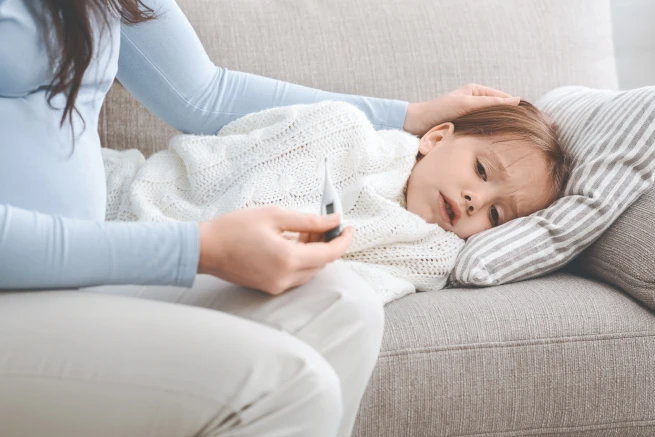
The body’s normal temperature will vary slightly from child to child, but a baby’s normal temperature and young children should be around 36.4°C. A normal infant temperature can be impacted by their level of activity and what they’re wearing.
Dawn Kelly, a health visitor lecturer and mother-of-three, says: “Some children can ‘run hot’. It’s worth taking their temperature when they’re not ill to get an idea of their natural base temperature.”
**This content was written by healthcare professional Dawn Kelly in 2020. She was paid for her time but does not endorse CALPOL****®** **Products.**
## What is a fever in children?
A fever is a temperature of 38°C or more. Fevers in babies and children can have a number of other symptoms alongside the high temperature.
As a parent, you’ll know when your little one isn’t quite themselves, and could maybe spot the tell-tale signs of a fever in a baby or child.
Dawn Kelly says: “A good starting point is to put your hand on the back of their neck. If it’s hot, it’s a good sign they have a temperature. It’s then worth checking with a digital thermometer.”
**This content was written by healthcare professional Dawn Kelly in 2020. She was paid for her time but does not endorse CALPOL® Products.**
## Fever symptoms in babies and children
The following symptoms can accompany a fever in children:
- Feeling **cold or shivery** but hot and dry when you touch them
- **Flushed** cheeks, hot and sweaty skin
- **Stomach ache** or headaches
- Irritable, **tired**, have watery eyes and not able to settle
- **Swollen glands**
## **When to call a doctor for a fever in children**
Most fevers in children will resolve themselves within three or four days. But if your child shows any of the following signs, contact your local GP or call NHS 111:
- They are under 3 months old and you’ve recorded a fever temperature of 38°C or higher or you think they have a temperature
- They are 3 to 6 months old and they have a temperature of 39°C or higher
- They have other signs of illness, such as a rash as well as high temperature
- The fever has lasted five days or more
- They are off their food and are not their usual self and you’re worried
- Paracetamol does not help to reduce the fever
- They’re showing signs of dehydration such as feeling thirsty, no tears when crying, dry mouth, feeling tired and dark, strong-smelling urine
Call 999 or take your child to your nearest A\&E if:
- They have a stiff neck
- They have a rash that doesn't fade when you press a glass against it
- Lights bother them
- They suffer a fit or febrile seizure for the first time
- Their hands and feet are colder than normal
- Their skin is pale, blotchy, blue or grey
- Their cry becomes weak or high-pitched
- You see they are drowsy and hard to wake
- Breathing becomes difficult for them, or it’s a lot of effort, or you can see skin being sucked in between their ribs
- They are very confused, don’t respond like usual, or agitated
- Is not responding like they normally do, or is not interested in feeding or normal activities
- Is extremely agitated (does not stop crying) or is confused
Remember, you know your child best – trust your instincts. Keep a record of their temperature and if you’re worried or have any concerns, contact your GP.
## Febrile seizures
Sometimes fevers in children – usually those aged between six months and three years old - can cause them to have a febrile seizure.
You can spot a febrile seizure in a child by looking for:
- Them becoming stiff
- Arms and legs twitching
- Your child falling unconscious
- Wetting or soiling themselves
- Vomit or foam at the mouth
- Eyes rolling back
These fits usually last less than five minutes, which can seem like an age as a parent. Afterwards, they could feel sleepy for up to an hour.
Take your child to the nearest hospital or call 999 and ask for an ambulance if:
- is having a seizure for the first time
- is having a seizure that's lasting longer than five minutes and showing no signs of stopping
- is having breathing difficulties
- you suspect the seizure is caused by a serious illness
Call your GP or 111 if your child has seizures previously and this one has lasted less than five minutes.
## Causes of a fever in babies and children
A fever in babies and children usually occurs as a secondary symptom of other infections such as [the flu](https://www.calpol.co.uk/fever-information/flu-in-children-and-babies). It’s often a body’s response to an infection or inflammation. Make sure you keep an eye on any other symptoms your little one has alongside their fever.
**Infections**
If your little one has a fever, it could be caused by the following infections:
- Respiratory tract infections
- [Ear infections](https://www.calpol.co.uk/pain-information/earache)
- Tonsillitis
- Kidney or urinary tract infections (UTIs)
- [Chickenpox](https://www.calpol.co.uk/childhood-illnesses-information/chicken-pox)
- Roseola
- Whooping cough (pertussis)
If your little one has a fever and a rash, it could be a sign of the following:
- **Roseola –** a fever accompanied by pinkish-red spots, patches or bumps that appear first on the torso before spreading to the face, neck and arms. It’s not usually serious and usually disappears in a week.
- **Scarlet fever –** the fever is usually followed in a couple of days by the skin becoming rough with a pink or red rash.
- **Sepsis –** symptoms of sepsis can be vague though can include a fever and rash that doesn’t disappear or fade when pressed.
- **Meningitis –** a fever and rash that doesn’t fade or disappear when a glass is rolled over it could signal meningitis
“In the end, you know your child best. If you think things are a bit off, call 111 or your GP. If you’re seriously worried, call 999. Don’t brush your concerns aside,” says Dawn Kelly.
**This content was written by healthcare professional Dawn Kelly in 2020. She was paid for her time but does not endorse CALPOL****®** **Products.**
### **Immunisations**
Vaccinations can sometimes bring on a fever in children and babies. Your GP or practice nurse should explain all possible side effects of your baby’s vaccinations so you know what to expect. Find out more on our [Vaccines](https://www.calpol.co.uk/fever-information/vaccines) page.
## How to take your little one’s temperature
It’s fairly straightforward to take a child’s temperature and can be the best indicator of fever symptoms in a child. The most effective way to take your little one’s temperature is usually with a digital thermometer, with the armpit reading recommended.
Content is restricted by privacy settings. Please review your cookie settings to enable access.
Hold the digital thermometer in place for the period it states on the device’s instructions. Make a note of the temperature, and the time it was taken. That way you can track any changes, see if they’re getting better, and monitor how long they’ve had a temperature.
Dawn Kelly said: “Always go for an armpit reading in the under 5 year olds, as this is the most accurate. Make sure you’re right inside the armpit and gently hold the top of the arm to minimise air pockets.”
**This content was written by healthcare professional Dawn Kelly in 2020. She was paid for her time but does not endorse CALPOL****®** **Products.**
Remember, certain environmental factors could also alter a child’s or baby’s normal temperature. Your little one could display a warmer temperature if they've:
- Just had a bath
- Been wrapped up warmly in a blanket
- Been cuddling a hot water bottle
- Wearing lots of layers
- The room or car they’re in is too warm
- They’ve been running around
If this is the case, give them a few minutes to cool down (without letting them get cold), and retake their temperature to see if there’s any change.
### **Taking a baby’s temperature**
You should always use a thermometer under the armpit for children 5 years and under. If you’re using a digital thermometer, wait for it to beep so you know you have a reading.
Hold your child in your lap to help keep them still, making sure the thermometer stays in place and in contact with skin.
### **Taking an older child’s temperature**
If your child is older, you can take their temperature by ear or with a strip, although it is more accurate under their armpit.
For safety reasons, you should never use a mercury-in-glass thermometer.
Last reviewed 2020 by qualified paediatric nurse Dawn Kelly, a health visitor, lecturer and mother-of-three. Dawn was paid for her time and does not endorse CALPOL® Products.
## Child and baby fever treatment and medicines
Knowing what to do when your baby or child has a high temperature or fever will go a long way to helping them feel comfortable until they’re well again. If they are unsettled or really not happy there are a few home tips and medicines you can try to help reduce your little one’s discomfort and make them feel more like themselves.
“If a baby or child has a fever but is otherwise happy in themselves, it’s best to leave them be. But if they’re grumpy etc then antipyretics can be very helpful,” says Dawn Kelly.
This content was written by healthcare professional Dawn Kelly in 2020. She was paid for her time but does not endorse CALPOL® Products.
### **Fever medicines for babies and children**
If your little one is distressed or unwell, try giving them ibuprofen or paracetamol (but not both at the same time) to help reduce their fever. Paracetamol is recommended for post-immunisation fever, especially after the MenB vaccine.
If you’re unsure they’re suitable for your child, take a look at our [dosage page](https://www.calpol.co.uk/our-products/get-the-dose-right) to find the appropriate dose for every age group.
[Check out the full range of Calpol products to help feverish children feel themselves.](https://www.calpol.co.uk/our-products)
### Fever treatment for kids at home: 4 helpful tips
1. **Drinking plenty of fluids.** Make sure your baby gets plenty of fluids and be on the lookout for signs of dehydration. Whether they’re breastfed or bottle-fed, give them frequent regular feeds if they’ll accept them.
2. **Provide food** for weaned babies but don’t force them to eat if they don’t want to.
3. **Keep a log** of their temperature at regular intervals throughout the day and night so you can monitor whether their fever temperature is improving or not. Use a diary to track how they’re doing and provide your GP with the record if you need to.
4. **Dress them normally.** There’s no need to over or underdress your child when they have a fever. Cotton-based clothing is ideal as it will help their skin breathe easier.

#### Corona Virus
It can be hard to know what to do if your child is unwell. It's important to trust your instincts and get medical help if you need it. If you think your child may be suffering from COVID-19 symptoms, [visit the NHS website](https://www.nhs.uk/conditions/coronavirus-covid-19/) for further information.

##### Health Visitor
#### Dawn Kelly
Dawn is a qualified paediatric nurse, health visitor and lecturer with over 25 years’ experience. She’s written widely about child health and development and has a wealth of knowledge about childhood illnesses and advising parents on issues such as weaning and sleep. Her three daughters also put her knowledge to the test\!
This HCP does not endorse Calpol.
## Related Products
[](https://www.calpol.co.uk/our-products/calpol-infant-suspension)
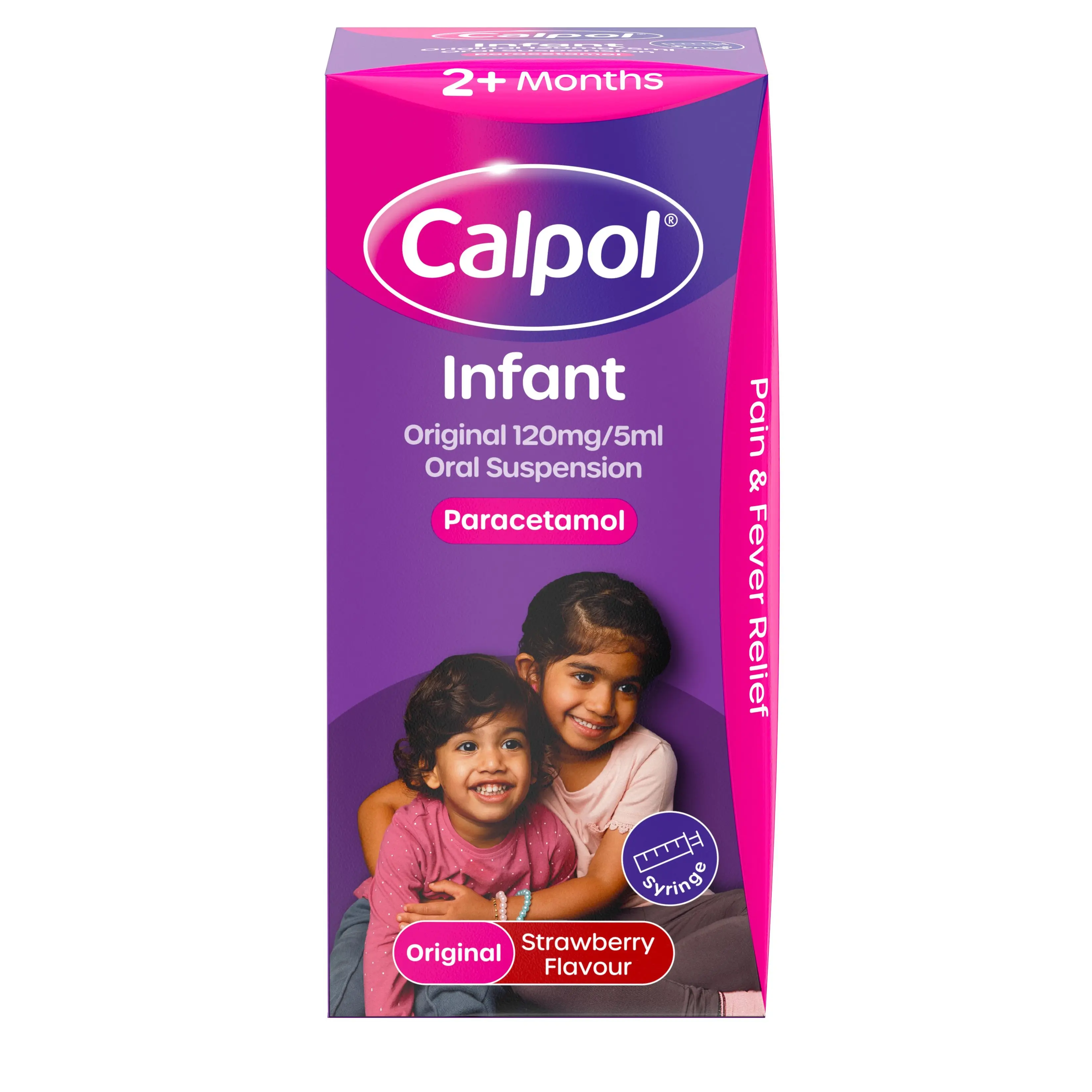
[Calpol® Infant Sugar Free Suspension](https://www.calpol.co.uk/our-products/calpol-infant-suspension)
[4\.9 (1417)](https://www.calpol.co.uk/our-products/calpol-infant-suspension)
[](https://www.calpol.co.uk/our-products/calprofen-ibuprofen-suspension)
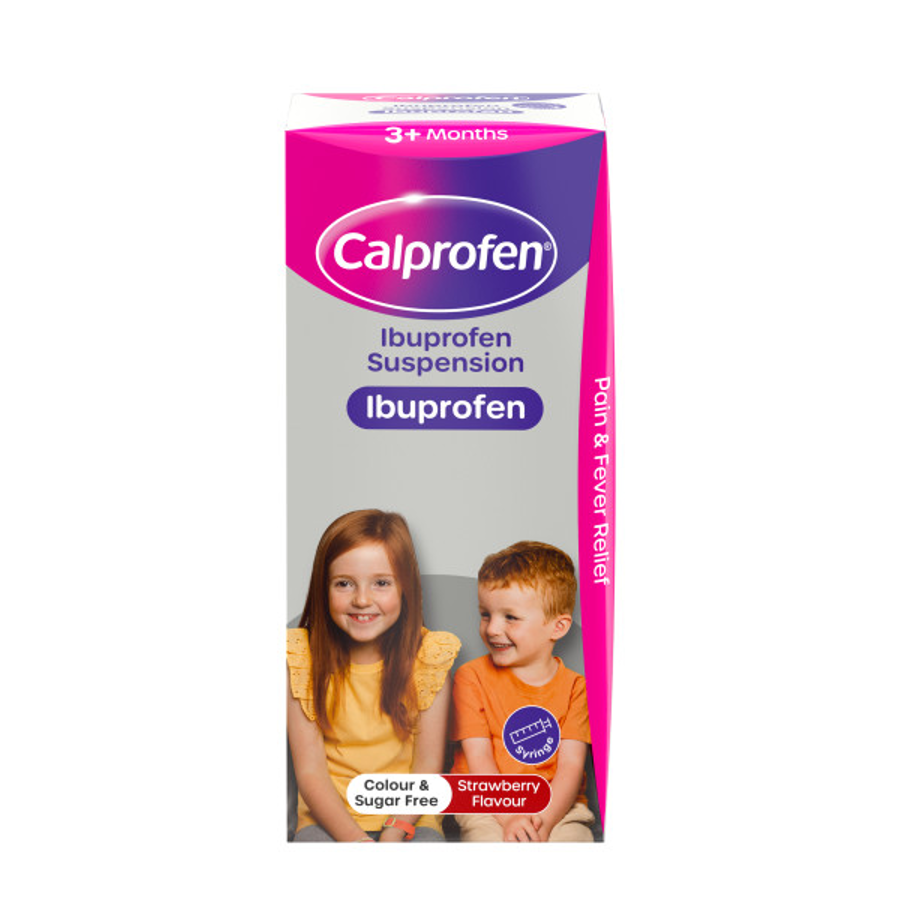
[CALPROFEN® Ibuprofen Oral Suspension](https://www.calpol.co.uk/our-products/calprofen-ibuprofen-suspension)
[4\.8 (395)](https://www.calpol.co.uk/our-products/calprofen-ibuprofen-suspension)
[](https://www.calpol.co.uk/our-products/calpol-sixplus-oral-suspension-paracetamol)
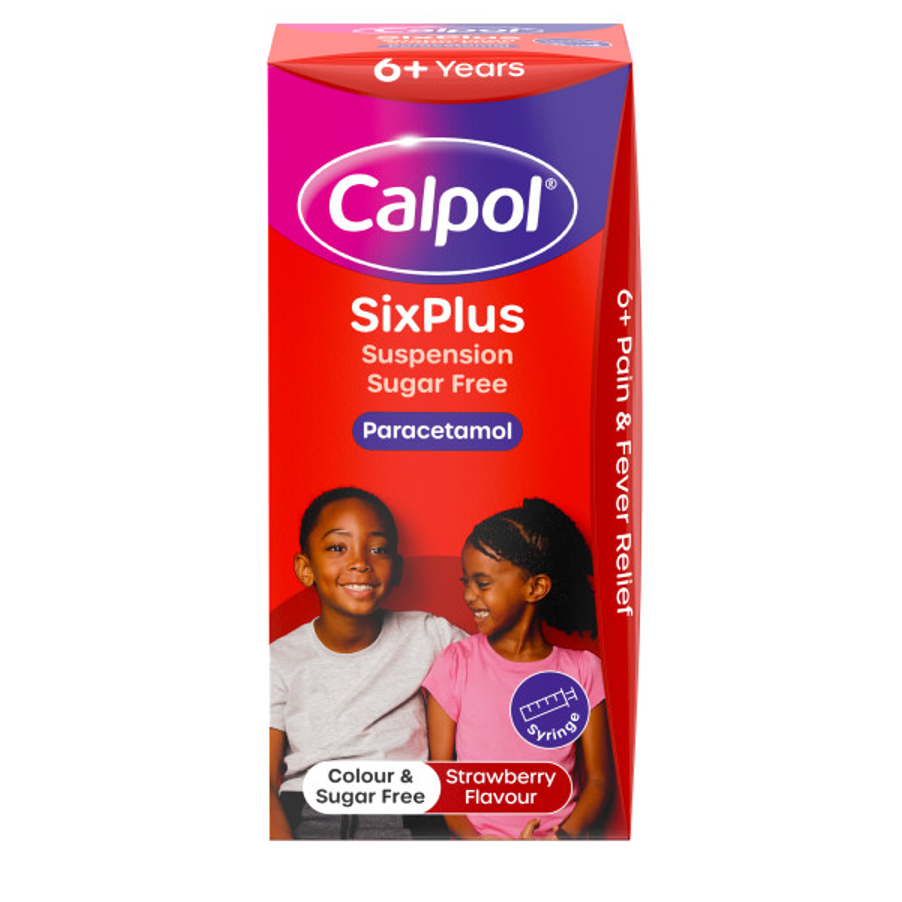
[CALPOL® SixPlusTM Oral Suspension Paracetamol for Children](https://www.calpol.co.uk/our-products/calpol-sixplus-oral-suspension-paracetamol)
[4\.8 (427)](https://www.calpol.co.uk/our-products/calpol-sixplus-oral-suspension-paracetamol)
## Related Articles
[Coughs in babies and children](https://www.calpol.co.uk/cough-cold-congestion-information/cough)
[Congestion and Blocked Nose](https://www.calpol.co.uk/cough-cold-congestion-information/congestion)
[Colds in Babies & Children](https://www.calpol.co.uk/cough-cold-congestion-information/cold-flu)
- [Fever Information](https://www.calpol.co.uk/fever-information)
- [Pain Information](https://www.calpol.co.uk/pain-information)
- [Colds in Babies & Children]()
- [Coughs in babies and children](https://www.calpol.co.uk/cough-cold-congestion-information/cough)
- [Other Illnesses Information](https://www.calpol.co.uk/childhood-illnesses-information)
- [Other Baby & Child Information](https://www.calpol.co.uk/baby-and-child-information)
- [Our Products](https://www.calpol.co.uk/our-products)
- Cookies Settings
- [Product Review Policy](https://www.kenvue.com/en-uk/locations/united-kingdom/product-review-policy)
- [Where to Buy](https://www.calpol.co.uk/where-to-buy)
- [What is Calpol?](https://www.calpol.co.uk/what-is-calpol)
- [FAQs](https://www.calpol.co.uk/faqs)
- [NSPCC](https://www.calpol.co.uk/nspcc)
- [Privacy Policy](https://www.calpol.co.uk/privacy-policy)
- [Legal Notice](https://www.calpol.co.uk/legal-notice)
- [Terms & Conditions](https://www.calpol.co.uk/terms-and-conditions)
- [Contact Us](https://www.calpol.co.uk/contact-us)
- [Cookie Policy](https://www.calpol.co.uk/cookies)
- [Modern Slavery Act Statement](https://www.kenvue.com/en-uk/locations/united-kingdom/modern-slavery-act-statement)
- [How to recycle Calpol](https://www.calpol.co.uk/recycling)
- [Sitemap](https://www.calpol.co.uk/sitemap)
We may match data about you which we may already know with data that our advertising partners may gather about you when you use other websites or other applications on the internet to generate a profile and thus provide you with advertising better suited to your individual interests.
**Always read the label.**
Do not use more than one product containing paracetamol at the same time.
CALPOL® Infant Original Suspension, CALPOL® Infant Suspension Sachets, CALPOL® Sugar Free Infant Suspension, CALPOL® Sugar Free Infant Suspension Sachets and CALPOL® Infant Sugar Free Colour Free 120mg/5ml Oral Suspension contain paracetamol, can be used in infants from 2 months old (weighing over 4kg and not premature). For pain and fever. CALPOL® SIXPLUS™ Sugar Free Suspension and CALPOL® SIXPLUS™ Fastmelts contain paracetamol, can be used in children from 6 years old. For pain and fever. CALPROFEN® Ibuprofen Suspension contains ibuprofen, can be used in infants from 3 months old (weighing over 5Kg). For pain and fever. CALCOUGH® Infant Syrup contains glycerol, can be used in infants from 3 months old. For dry cough. CALCOUGH® Children's Syrup, can be used in children over one year old. For cough. CALGEL® Teething Gel contains an anaesthetic and antiseptic, can be used in infants from 5 months. For short- term use of no more than 7 days, where non-medicinal methods have not provided relief. Always read the label.
CALPOL® Blocked Nose Spray (from 3 years) for congestion relief. CALPOL® Saline Nasal Spray and CALPOL® Saline Nasal Drops (from birth) for congestion relief. CALPOL® Vapour Plug & Nightlight (from 3 months) to help with clear and easy breathing. Non medicines. Always read the label.
CALPOL®, CALPROFEN®, CALGEL® and CALCOUGH® are registered trademarks. SIXPLUS™ is a trademark.
The healthcare professionals involved in creating the website content do not endorse any medicinal products or brands.
Site last updated on: March 2025
© Kenvue UK Limited, 2025
This site is published by Kenvue UK Limited which is solely responsible for its contents. It is intended for a UK audience. |
| Readable Markdown | ## Normal temperature for babies and children
The body’s normal temperature will vary slightly from child to child, but a baby’s normal temperature and young children should be around 36.4°C. A normal infant temperature can be impacted by their level of activity and what they’re wearing.
Dawn Kelly, a health visitor lecturer and mother-of-three, says: “Some children can ‘run hot’. It’s worth taking their temperature when they’re not ill to get an idea of their natural base temperature.”
**This content was written by healthcare professional Dawn Kelly in 2020. She was paid for her time but does not endorse CALPOL****®** **Products.**
## What is a fever in children?
A fever is a temperature of 38°C or more. Fevers in babies and children can have a number of other symptoms alongside the high temperature.
As a parent, you’ll know when your little one isn’t quite themselves, and could maybe spot the tell-tale signs of a fever in a baby or child.
Dawn Kelly says: “A good starting point is to put your hand on the back of their neck. If it’s hot, it’s a good sign they have a temperature. It’s then worth checking with a digital thermometer.”
**This content was written by healthcare professional Dawn Kelly in 2020. She was paid for her time but does not endorse CALPOL® Products.**
## Fever symptoms in babies and children
The following symptoms can accompany a fever in children:
- Feeling **cold or shivery** but hot and dry when you touch them
- **Flushed** cheeks, hot and sweaty skin
- **Stomach ache** or headaches
- Irritable, **tired**, have watery eyes and not able to settle
- **Swollen glands**
## **When to call a doctor for a fever in children**
Most fevers in children will resolve themselves within three or four days. But if your child shows any of the following signs, contact your local GP or call NHS 111:
- They are under 3 months old and you’ve recorded a fever temperature of 38°C or higher or you think they have a temperature
- They are 3 to 6 months old and they have a temperature of 39°C or higher
- They have other signs of illness, such as a rash as well as high temperature
- The fever has lasted five days or more
- They are off their food and are not their usual self and you’re worried
- Paracetamol does not help to reduce the fever
- They’re showing signs of dehydration such as feeling thirsty, no tears when crying, dry mouth, feeling tired and dark, strong-smelling urine
Call 999 or take your child to your nearest A\&E if:
- They have a stiff neck
- They have a rash that doesn't fade when you press a glass against it
- Lights bother them
- They suffer a fit or febrile seizure for the first time
- Their hands and feet are colder than normal
- Their skin is pale, blotchy, blue or grey
- Their cry becomes weak or high-pitched
- You see they are drowsy and hard to wake
- Breathing becomes difficult for them, or it’s a lot of effort, or you can see skin being sucked in between their ribs
- They are very confused, don’t respond like usual, or agitated
- Is not responding like they normally do, or is not interested in feeding or normal activities
- Is extremely agitated (does not stop crying) or is confused
Remember, you know your child best – trust your instincts. Keep a record of their temperature and if you’re worried or have any concerns, contact your GP.
## Febrile seizures
Sometimes fevers in children – usually those aged between six months and three years old - can cause them to have a febrile seizure.
You can spot a febrile seizure in a child by looking for:
- Them becoming stiff
- Arms and legs twitching
- Your child falling unconscious
- Wetting or soiling themselves
- Vomit or foam at the mouth
- Eyes rolling back
These fits usually last less than five minutes, which can seem like an age as a parent. Afterwards, they could feel sleepy for up to an hour.
Take your child to the nearest hospital or call 999 and ask for an ambulance if:
- is having a seizure for the first time
- is having a seizure that's lasting longer than five minutes and showing no signs of stopping
- is having breathing difficulties
- you suspect the seizure is caused by a serious illness
Call your GP or 111 if your child has seizures previously and this one has lasted less than five minutes.
## Causes of a fever in babies and children
A fever in babies and children usually occurs as a secondary symptom of other infections such as [the flu](https://www.calpol.co.uk/fever-information/flu-in-children-and-babies). It’s often a body’s response to an infection or inflammation. Make sure you keep an eye on any other symptoms your little one has alongside their fever.
**Infections**
If your little one has a fever, it could be caused by the following infections:
- Respiratory tract infections
- [Ear infections](https://www.calpol.co.uk/pain-information/earache)
- Tonsillitis
- Kidney or urinary tract infections (UTIs)
- [Chickenpox](https://www.calpol.co.uk/childhood-illnesses-information/chicken-pox)
- Roseola
- Whooping cough (pertussis)
If your little one has a fever and a rash, it could be a sign of the following:
- **Roseola –** a fever accompanied by pinkish-red spots, patches or bumps that appear first on the torso before spreading to the face, neck and arms. It’s not usually serious and usually disappears in a week.
- **Scarlet fever –** the fever is usually followed in a couple of days by the skin becoming rough with a pink or red rash.
- **Sepsis –** symptoms of sepsis can be vague though can include a fever and rash that doesn’t disappear or fade when pressed.
- **Meningitis –** a fever and rash that doesn’t fade or disappear when a glass is rolled over it could signal meningitis
“In the end, you know your child best. If you think things are a bit off, call 111 or your GP. If you’re seriously worried, call 999. Don’t brush your concerns aside,” says Dawn Kelly.
**This content was written by healthcare professional Dawn Kelly in 2020. She was paid for her time but does not endorse CALPOL****®** **Products.**
### **Immunisations**
Vaccinations can sometimes bring on a fever in children and babies. Your GP or practice nurse should explain all possible side effects of your baby’s vaccinations so you know what to expect. Find out more on our [Vaccines](https://www.calpol.co.uk/fever-information/vaccines) page.
## How to take your little one’s temperature
It’s fairly straightforward to take a child’s temperature and can be the best indicator of fever symptoms in a child. The most effective way to take your little one’s temperature is usually with a digital thermometer, with the armpit reading recommended.
Hold the digital thermometer in place for the period it states on the device’s instructions. Make a note of the temperature, and the time it was taken. That way you can track any changes, see if they’re getting better, and monitor how long they’ve had a temperature.
Dawn Kelly said: “Always go for an armpit reading in the under 5 year olds, as this is the most accurate. Make sure you’re right inside the armpit and gently hold the top of the arm to minimise air pockets.”
**This content was written by healthcare professional Dawn Kelly in 2020. She was paid for her time but does not endorse CALPOL****®** **Products.**
Remember, certain environmental factors could also alter a child’s or baby’s normal temperature. Your little one could display a warmer temperature if they've:
- Just had a bath
- Been wrapped up warmly in a blanket
- Been cuddling a hot water bottle
- Wearing lots of layers
- The room or car they’re in is too warm
- They’ve been running around
If this is the case, give them a few minutes to cool down (without letting them get cold), and retake their temperature to see if there’s any change.
### **Taking a baby’s temperature**
You should always use a thermometer under the armpit for children 5 years and under. If you’re using a digital thermometer, wait for it to beep so you know you have a reading.
Hold your child in your lap to help keep them still, making sure the thermometer stays in place and in contact with skin.
### **Taking an older child’s temperature**
If your child is older, you can take their temperature by ear or with a strip, although it is more accurate under their armpit.
For safety reasons, you should never use a mercury-in-glass thermometer.
Last reviewed 2020 by qualified paediatric nurse Dawn Kelly, a health visitor, lecturer and mother-of-three. Dawn was paid for her time and does not endorse CALPOL® Products.
## Child and baby fever treatment and medicines
Knowing what to do when your baby or child has a high temperature or fever will go a long way to helping them feel comfortable until they’re well again. If they are unsettled or really not happy there are a few home tips and medicines you can try to help reduce your little one’s discomfort and make them feel more like themselves.
“If a baby or child has a fever but is otherwise happy in themselves, it’s best to leave them be. But if they’re grumpy etc then antipyretics can be very helpful,” says Dawn Kelly.
This content was written by healthcare professional Dawn Kelly in 2020. She was paid for her time but does not endorse CALPOL® Products.
### **Fever medicines for babies and children**
If your little one is distressed or unwell, try giving them ibuprofen or paracetamol (but not both at the same time) to help reduce their fever. Paracetamol is recommended for post-immunisation fever, especially after the MenB vaccine.
If you’re unsure they’re suitable for your child, take a look at our [dosage page](https://www.calpol.co.uk/our-products/get-the-dose-right) to find the appropriate dose for every age group.
[Check out the full range of Calpol products to help feverish children feel themselves.](https://www.calpol.co.uk/our-products) |
| Shard | 22 (laksa) |
| Root Hash | 12439341906834841622 |
| Unparsed URL | uk,co,calpol!www,/fever-information/high-temperature s443 |