ℹ️ Skipped - page is already crawled
| Filter | Status | Condition | Details |
|---|---|---|---|
| HTTP status | PASS | download_http_code = 200 | HTTP 200 |
| Age cutoff | PASS | download_stamp > now() - 6 MONTH | 0.3 months ago |
| History drop | PASS | isNull(history_drop_reason) | No drop reason |
| Spam/ban | PASS | fh_dont_index != 1 AND ml_spam_score = 0 | ml_spam_score=0 |
| Canonical | PASS | meta_canonical IS NULL OR = '' OR = src_unparsed | Not set |
| Property | Value | ||||||||||||||||||||||||
|---|---|---|---|---|---|---|---|---|---|---|---|---|---|---|---|---|---|---|---|---|---|---|---|---|---|
| URL | https://www.brookings.edu/events/the-global-economic-crisis-of-2008-what-happened-whats-next/ | ||||||||||||||||||||||||
| Last Crawled | 2026-04-15 15:34:19 (8 days ago) | ||||||||||||||||||||||||
| First Indexed | 2016-08-20 15:58:31 (9 years ago) | ||||||||||||||||||||||||
| HTTP Status Code | 200 | ||||||||||||||||||||||||
| Content | |||||||||||||||||||||||||
| Meta Title | The Global Economic Crisis of 2008: What Happened? What’s Next? | Brookings | ||||||||||||||||||||||||
| Meta Description | On October 27, the Brookings Doha Center hosted a luncheon with Glenn H. Hutchins, co-founder and co-chief executive of Silver Lake Partners, and a trustee of the Brookings Institution, on the build-up to the global financial crisis, highlighting the important policy implications of the global recession. Hady Amr, director of the Brookings Doha Center, moderated the discussion which was attended by leading members of Qatar’s business and academic communities. | ||||||||||||||||||||||||
| Meta Canonical | null | ||||||||||||||||||||||||
| Boilerpipe Text | October
27
2009
6:00 pm EDT
-
8:00 pm EDT
Past Event
Tuesday, October 27, 2009
6:00 pm - 8:00 pm EDT
Content from the Brookings Doha Center is now archived
. In September 2021, after 14 years of impactful partnership, Brookings and the Brookings Doha Center announced that they were ending their affiliation. The Brookings Doha Center is now the
Middle East Council on Global Affairs
, a separate public policy institution based in Qatar.
On October 27, the Brookings Doha Center hosted a luncheon with Glenn H. Hutchins, co-founder and co-chief executive of Silver Lake Partners, and a trustee of the Brookings Institution, on the build-up to the global financial crisis, highlighting the important policy implications of the global recession. Hady Amr, director of the Brookings Doha Center, moderated the discussion which was attended by leading members of Qatar’s business and academic communities.
Hutchins presented a comprehensive presentation detailing the various conditions that produced the global economic meltdown, the current status of the global economy, and a prognosis. Hutchins explained that after 9/11, central banks around the world cut interest rates to an all-time low; resultantly, since “money was free,” investors borrowed excessive amounts of money which subsequently led to significantly reduced liquidity in the market and a massive build-up of foreign exchange outside of the United States. Americans indulged in consumption while they had no savings, and homeowners extracted value from their homes in order to subsidize mortgages. U.S. government-sponsored enterprises like Fannie Mae and Freddie Mac only intervened after it was too late.
Hutchins established that a ten-fold increase in easy financing and rising prices culminated in a historic bubble by 2008, calling it “the biggest asset bubble in human history.” Americans incurred more debt than they could pay off and began to evade loan payments. Homeowners started to default on their mortgages and, according to Mr. Hutchins, this is when the bubble burst. After the deterioration of the housing market, the fall of Fannie Mae and Freddie Mac precipitated the bank crisis, which was marked by major capital losses and solvency concerns. Hutchins credited the failure of Lehman Brothers as being the tipping point of the entire downward spiral. Within weeks investors withdrew 700 billion dollars from the stock market and bond funds, resulting in the shut down of the credit market. An economy is unsustainable without credit circulation and newly frugal consumers stopped spending. Unemployment rose and consumer confidence nosedived. Hutchins reminded addressees that the argument holding the financial sector largely accountable for the economic crisis is partially credible and that consumer consumption, federal deficits partly due to financing two wars et al., and widespread regulatory failure are all equally responsible.
With regard to the question on the current status of the U.S. economy, Hutchins said that “the beginning has ended, but the end has not begun.” He informed the audience that the American consumer and the industrial economy have both stabilized and the free fall period has concluded. The U.S. residential market is demonstrating signs of life and prices have risen, albeit to a limited extent. Hutchins’ presentation pointed out statistics indicating that the United States currently has 26 million underutilized workers, 19 million vacant homes, and that there is a 1.2 trillion dollar value gap between what the United States is producing versus what it could be producing. In his estimation, overall, the economy has stabilized, though to a low level of activity.
Hutchins offered a prognosis for recovery saying that it will take at least 24 months before a return to sustained economic growth and prosperity, five years for unemployment rates to recoup, and six years for the housing market to recuperate. He warned against the possibility that advanced economies may “turn inward” and that for some “free market capitalism is under a cloud.” Additionally, foreign capital will essentially finance U.S. budget and trade deficits. And given that China holds three trillion dollars worth of foreign exchange reserves, it will continue to play a major role in global economy and the recovery process. As a veteran technology investor, he believes that a viable solution to the current hardship the economy is experiencing is innovation because regardless of spending restraints, consumers will always spend on the latest technology. He advised policymakers to remain vigilant with regard to the policies currently being employed to overcome the economic crisis so as to ensure that the seeds of the next crisis are not being planted now.
Hutchins also fielded questions on the future of the dollar, whether the financial services industry was the biggest offender in the financial downturn of 2008, and the politics of managing the economic decline. While he would not speculate on whether the dollar has waned as the primary global currency, he advised the audience not to “over-learn the lesson”, with respect to the financial services sector, by turning its back on free market capitalism. He added that the financial services industry will come back. Hutchins said that an effective approach to managing the economic downturn would be maintaining consistent government policies; thus far, some policies have been inconsistent such as the federal bailout of the auto industry and not the steel industry.
Audio Player | ||||||||||||||||||||||||
| Markdown | - [Experts](https://www.brookings.edu/experts/)
- [Events](https://www.brookings.edu/events/)
- [Research Programs](https://www.brookings.edu/research-programs/)
- [Research & Commentary](https://www.brookings.edu/research-commentary/)
- [Newsletters](https://www.brookings.edu/newsletters/)
- [For Media](https://www.brookings.edu/for-media/)
- [About Us](https://www.brookings.edu/about-us/)
- [Leadership](https://www.brookings.edu/about-us/leadership/)
- [Careers](https://www.brookings.edu/careers/)
- [Our Commitments](https://www.brookings.edu/about-us/#commitments)
- [Our Finances](https://www.brookings.edu/about-us/finances/)
- [Diversity, Equity, and Inclusion](https://www.brookings.edu/dei-report-2025/)
- [BI Press](https://www.brookings.edu/all-books/brookings-institution-press/)
- [Donate](https://www.brookings.edu/support-brookings/)
[Home](https://www.brookings.edu/)
- [Iran](https://www.brookings.edu/regions/middle-east-north-africa/iran/)
- [Taxes](https://www.brookings.edu/topics/federal-fiscal-tax-policy/)
- [Immigration](https://www.brookings.edu/topics/immigration-5/)
- [Housing](https://www.brookings.edu/topics/housing/)
- [Tariffs and Trade](https://www.brookings.edu/tags/tariffs/)
- [Topics](https://www.brookings.edu/topics/)
- [ Business & Workforce](https://www.brookings.edu/topics/business-industry/)
- [ Cities & Communities](https://www.brookings.edu/topics/cities-communities/)
- [ Climate & Energy](https://www.brookings.edu/topics/climate-energy/)
- [ Defense & Security](https://www.brookings.edu/topics/national-security/)
- [ Education](https://www.brookings.edu/topics/education-2/)
- [ Global Economy & Development](https://www.brookings.edu/topics/global-inequality/)
- [ Health Care](https://www.brookings.edu/topics/health-care-2/)
- [ International Affairs](https://www.brookings.edu/topics/international-affairs/)
- [ Society & Culture](https://www.brookings.edu/topics/social-issues/)
- [ Technology & Information](https://www.brookings.edu/topics/technology-innovation/)
- [ U.S. Economy](https://www.brookings.edu/topics/u-s-economy/)
- [ U.S. Government & Politics](https://www.brookings.edu/topics/u-s-politics-government/)
- [Regions](https://www.brookings.edu/regions/)
- [ Africa](https://www.brookings.edu/regions/africa/)
- [ Asia & the Pacific](https://www.brookings.edu/regions/asia-the-pacific/)
- [ Europe & Eurasia](https://www.brookings.edu/regions/europe-eurasia/)
- [ Latin America & the Caribbean](https://www.brookings.edu/regions/latin-america-the-caribbean/)
- [ Middle East & North Africa](https://www.brookings.edu/regions/middle-east-north-africa/)
- [ North America](https://www.brookings.edu/regions/north-america/)
[Search](https://www.brookings.edu/events/the-global-economic-crisis-of-2008-what-happened-whats-next/#overlay-search)
[Home](https://www.brookings.edu/)
- [Iran](https://www.brookings.edu/regions/middle-east-north-africa/iran/)
- [Taxes](https://www.brookings.edu/topics/federal-fiscal-tax-policy/)
- [Immigration](https://www.brookings.edu/topics/immigration-5/)
- [Tariffs](https://www.brookings.edu/tags/tariffs/)
- [Housing](https://www.brookings.edu/topics/housing/)
- [All Topics](https://www.brookings.edu/topics/)
- [All Regions](https://www.brookings.edu/regions/)
- [Experts](https://www.brookings.edu/experts/)
- [Events](https://www.brookings.edu/events/)
- [Research Programs](https://www.brookings.edu/research-programs/)
- [About Us](https://www.brookings.edu/about-us/)
- [Research & Commentary](https://www.brookings.edu/research-commentary/)
- [Newsletters](https://www.brookings.edu/newsletters/)
- [Careers](https://www.brookings.edu/careers/)
- [For Media](https://www.brookings.edu/for-media/)
[Home](https://www.brookings.edu/)
#### The Global Economic Crisis of 2008: What Happened? What’s Next?
[Register](https://www.brookings.edu/events/the-global-economic-crisis-of-2008-what-happened-whats-next/)
Register
- [Attend in person](http://onlinepressroom.net/brookings/new/)
- [Contact](https://www.brookings.edu/events/the-global-economic-crisis-of-2008-what-happened-whats-next/)
- [Share](https://www.brookings.edu/events/the-global-economic-crisis-of-2008-what-happened-whats-next/)
- Share
- [Bluesky Streamline Icon: https://streamlinehq.com](https://bsky.app/intent/compose?text=The+Global+Economic+Crisis+of+2008%3A+What+Happened%3F+What%E2%80%99s+Next%3F%20https%3A%2F%2Fwww.brookings.edu%2Fevents%2Fthe-global-economic-crisis-of-2008-what-happened-whats-next%2F%3Fb%3D1)
[Search](https://www.brookings.edu/events/the-global-economic-crisis-of-2008-what-happened-whats-next/#overlay-search)
[Register](https://www.brookings.edu/events/the-global-economic-crisis-of-2008-what-happened-whats-next/)
Register
- [Attend in person](http://onlinepressroom.net/brookings/new/)
- [Contact](https://www.brookings.edu/events/the-global-economic-crisis-of-2008-what-happened-whats-next/)
Brookings Doha Center
[DohaCenter@brookings.edu](mailto:DohaCenter@brookings.edu) [\+974.422.7800](<tele: +974.422.7800>)
- [Share](https://www.brookings.edu/events/the-global-economic-crisis-of-2008-what-happened-whats-next/)
- Share
- [Bluesky Streamline Icon: https://streamlinehq.com](https://bsky.app/intent/compose?text=The+Global+Economic+Crisis+of+2008%3A+What+Happened%3F+What%E2%80%99s+Next%3F%20https%3A%2F%2Fwww.brookings.edu%2Fevents%2Fthe-global-economic-crisis-of-2008-what-happened-whats-next%2F%3Fb%3D1)
### October
27
##### 2009
6:00 pm EDT - 8:00 pm EDT
Past Event
# The Global Economic Crisis of 2008: What Happened? What’s Next?
- [Agenda](https://www.brookings.edu/events/the-global-economic-crisis-of-2008-what-happened-whats-next/%20%20#agenda%0A%20%20)
- ##### Tuesday, October 27, 2009
6:00 pm - 8:00 pm EDT
##### Brookings Doha Center, Doha, Qatar
- [Bluesky Streamline Icon: https://streamlinehq.com](https://bsky.app/intent/compose?text=The+Global+Economic+Crisis+of+2008%3A+What+Happened%3F+What%E2%80%99s+Next%3F%20https%3A%2F%2Fwww.brookings.edu%2Fevents%2Fthe-global-economic-crisis-of-2008-what-happened-whats-next%2F%3Fb%3D1)
Print
Brookings Doha Center
[DohaCenter@brookings.edu](mailto:DohaCenter@brookings.edu) [\+974.422.7800](<tele: +974.422.7800>)
Print
##### More On
[Global Economy & Development](https://www.brookings.edu/topics/global-inequality/)
Program
[Foreign Policy](https://www.brookings.edu/programs/foreign-policy/)
**Content from the Brookings Doha Center is now archived**. In September 2021, after 14 years of impactful partnership, Brookings and the Brookings Doha Center announced that they were ending their affiliation. The Brookings Doha Center is now the [Middle East Council on Global Affairs](https://mecouncil.org/), a separate public policy institution based in Qatar.
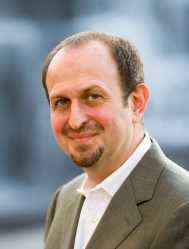
On October 27, the Brookings Doha Center hosted a luncheon with Glenn H. Hutchins, co-founder and co-chief executive of Silver Lake Partners, and a trustee of the Brookings Institution, on the build-up to the global financial crisis, highlighting the important policy implications of the global recession. Hady Amr, director of the Brookings Doha Center, moderated the discussion which was attended by leading members of Qatar’s business and academic communities.
Hutchins presented a comprehensive presentation detailing the various conditions that produced the global economic meltdown, the current status of the global economy, and a prognosis. Hutchins explained that after 9/11, central banks around the world cut interest rates to an all-time low; resultantly, since “money was free,” investors borrowed excessive amounts of money which subsequently led to significantly reduced liquidity in the market and a massive build-up of foreign exchange outside of the United States. Americans indulged in consumption while they had no savings, and homeowners extracted value from their homes in order to subsidize mortgages. U.S. government-sponsored enterprises like Fannie Mae and Freddie Mac only intervened after it was too late.
Hutchins established that a ten-fold increase in easy financing and rising prices culminated in a historic bubble by 2008, calling it “the biggest asset bubble in human history.” Americans incurred more debt than they could pay off and began to evade loan payments. Homeowners started to default on their mortgages and, according to Mr. Hutchins, this is when the bubble burst. After the deterioration of the housing market, the fall of Fannie Mae and Freddie Mac precipitated the bank crisis, which was marked by major capital losses and solvency concerns. Hutchins credited the failure of Lehman Brothers as being the tipping point of the entire downward spiral. Within weeks investors withdrew 700 billion dollars from the stock market and bond funds, resulting in the shut down of the credit market. An economy is unsustainable without credit circulation and newly frugal consumers stopped spending. Unemployment rose and consumer confidence nosedived. Hutchins reminded addressees that the argument holding the financial sector largely accountable for the economic crisis is partially credible and that consumer consumption, federal deficits partly due to financing two wars et al., and widespread regulatory failure are all equally responsible.
With regard to the question on the current status of the U.S. economy, Hutchins said that “the beginning has ended, but the end has not begun.” He informed the audience that the American consumer and the industrial economy have both stabilized and the free fall period has concluded. The U.S. residential market is demonstrating signs of life and prices have risen, albeit to a limited extent. Hutchins’ presentation pointed out statistics indicating that the United States currently has 26 million underutilized workers, 19 million vacant homes, and that there is a 1.2 trillion dollar value gap between what the United States is producing versus what it could be producing. In his estimation, overall, the economy has stabilized, though to a low level of activity.
Hutchins offered a prognosis for recovery saying that it will take at least 24 months before a return to sustained economic growth and prosperity, five years for unemployment rates to recoup, and six years for the housing market to recuperate. He warned against the possibility that advanced economies may “turn inward” and that for some “free market capitalism is under a cloud.” Additionally, foreign capital will essentially finance U.S. budget and trade deficits. And given that China holds three trillion dollars worth of foreign exchange reserves, it will continue to play a major role in global economy and the recovery process. As a veteran technology investor, he believes that a viable solution to the current hardship the economy is experiencing is innovation because regardless of spending restraints, consumers will always spend on the latest technology. He advised policymakers to remain vigilant with regard to the policies currently being employed to overcome the economic crisis so as to ensure that the seeds of the next crisis are not being planted now.
Hutchins also fielded questions on the future of the dollar, whether the financial services industry was the biggest offender in the financial downturn of 2008, and the politics of managing the economic decline. While he would not speculate on whether the dollar has waned as the primary global currency, he advised the audience not to “over-learn the lesson”, with respect to the financial services sector, by turning its back on free market capitalism. He added that the financial services industry will come back. Hutchins said that an effective approach to managing the economic downturn would be maintaining consistent government policies; thus far, some policies have been inconsistent such as the federal bailout of the auto industry and not the steel industry.
#### The Global Economic Crisis of 2008: What Happened? What’s Next?
Audio Player
<http://e94516386dde43a790f1-3efc6a395eb32e640ae30c4edef7596c.r44.cf1.rackcdn.com/593383483001.mp3>
00:00
00:00
00:00
[Use Up/Down Arrow keys to increase or decrease volume.]()
## Agenda
- [October 27](https://www.brookings.edu/events/the-global-economic-crisis-of-2008-what-happened-whats-next/#44ykva-accordion)
- [Featured Speaker](https://www.brookings.edu/events/the-global-economic-crisis-of-2008-what-happened-whats-next/)
- [Moderator](https://www.brookings.edu/events/the-global-economic-crisis-of-2008-what-happened-whats-next/)
[](https://www.brookings.edu/people/hady-amr/)
[Hady Amr](https://www.brookings.edu/people/hady-amr/)
[@HadyAmr](https://twitter.com/HadyAmr)
More On
Program
[Foreign Policy](https://www.brookings.edu/programs/foreign-policy/)
[The return of global imbalances? The US case](https://www.brookings.edu/articles/the-return-of-global-imbalances-the-us-case/)
[Global Economy & Development](https://www.brookings.edu/topics/global-inequality/)
The return of global imbalances? The US case
Gian Maria Milesi-Ferretti
April 14, 2026
[April 2026 update to TIGER: A year of economic healing turns into a year of peril](https://www.brookings.edu/articles/april-2026-update-to-tiger-a-year-of-economic-healing-turns-into-a-year-of-peril/)

[Global Economy & Development](https://www.brookings.edu/topics/global-inequality/)
April 2026 update to TIGER: A year of economic healing turns into a year of peril
Eswar Prasad, Caroline Smiltneks, Sahasra Kalwala
April 12, 2026
[What’s the marginal product of capital in developing countries?](https://www.brookings.edu/articles/whats-the-marginal-product-of-capital-in-developing-countries/)
[Multilateral Development Organizations](https://www.brookings.edu/topics/multilateral-development-organizations/)
What’s the marginal product of capital in developing countries?
Homi Kharas, Liv Schaefer
April 10, 2026
Get the latest from Brookings
- [twitter](https://twitter.com/BrookingsInst)
- [facebook](https://www.facebook.com/brookings)
- [linkedin](https://www.linkedin.com/company/the-brookings-institution)
- [youtube](https://www.youtube.com/user/BrookingsInstitution)
- [instagram](https://www.instagram.com/brookingsinst/)
Brookings equips decisionmakers with nonpartisan research and policy strategies to create a more prosperous and secure country and world.
[Donate](https://www.brookings.edu/support-brookings/)
- [Research Programs](https://www.brookings.edu/research-programs/)
- [Governance Studies](https://www.brookings.edu/programs/governance-studies/)
- [Economic Studies](https://www.brookings.edu/programs/economic-studies/)
- [Foreign Policy](https://www.brookings.edu/programs/foreign-policy/)
- [Global Economy and Development](https://www.brookings.edu/programs/global-economy-and-development/)
- [Brookings Metro](https://www.brookings.edu/programs/brookings-metro/)
- [About Us](https://www.brookings.edu/about-us/)
- [Leadership](https://www.brookings.edu/about-us/leadership/)
- [Careers](https://www.brookings.edu/careers/)
- [Brookings Institution Press](https://www.brookings.edu/all-books/brookings-institution-press/)
- [Contact Brookings](https://www.brookings.edu/contact-brookings/)
- [Cookie Preferences]()
- [Research & Commentary](https://www.brookings.edu/research-commentary/)
- [Experts](https://www.brookings.edu/experts/)
- [Events](https://www.brookings.edu/events/)
- [Books](https://www.brookings.edu/all-books/)
- [Podcasts](https://www.brookings.edu/podcasts/)
- [Newsletters](https://www.brookings.edu/newsletters/)
- [Privacy Policy, Updated August 2024](https://www.brookings.edu/brookings-institution-privacy-policy/)
- [Terms of Use, Updated August 2024](https://www.brookings.edu/terms-of-use/)
Copyright 2026 The Brookings Institution
 | ||||||||||||||||||||||||
| Readable Markdown | ### October
27
##### 2009
6:00 pm EDT - 8:00 pm EDT
Past Event
- ##### Tuesday, October 27, 2009
6:00 pm - 8:00 pm EDT
**Content from the Brookings Doha Center is now archived**. In September 2021, after 14 years of impactful partnership, Brookings and the Brookings Doha Center announced that they were ending their affiliation. The Brookings Doha Center is now the [Middle East Council on Global Affairs](https://mecouncil.org/), a separate public policy institution based in Qatar.
On October 27, the Brookings Doha Center hosted a luncheon with Glenn H. Hutchins, co-founder and co-chief executive of Silver Lake Partners, and a trustee of the Brookings Institution, on the build-up to the global financial crisis, highlighting the important policy implications of the global recession. Hady Amr, director of the Brookings Doha Center, moderated the discussion which was attended by leading members of Qatar’s business and academic communities.
Hutchins presented a comprehensive presentation detailing the various conditions that produced the global economic meltdown, the current status of the global economy, and a prognosis. Hutchins explained that after 9/11, central banks around the world cut interest rates to an all-time low; resultantly, since “money was free,” investors borrowed excessive amounts of money which subsequently led to significantly reduced liquidity in the market and a massive build-up of foreign exchange outside of the United States. Americans indulged in consumption while they had no savings, and homeowners extracted value from their homes in order to subsidize mortgages. U.S. government-sponsored enterprises like Fannie Mae and Freddie Mac only intervened after it was too late.
Hutchins established that a ten-fold increase in easy financing and rising prices culminated in a historic bubble by 2008, calling it “the biggest asset bubble in human history.” Americans incurred more debt than they could pay off and began to evade loan payments. Homeowners started to default on their mortgages and, according to Mr. Hutchins, this is when the bubble burst. After the deterioration of the housing market, the fall of Fannie Mae and Freddie Mac precipitated the bank crisis, which was marked by major capital losses and solvency concerns. Hutchins credited the failure of Lehman Brothers as being the tipping point of the entire downward spiral. Within weeks investors withdrew 700 billion dollars from the stock market and bond funds, resulting in the shut down of the credit market. An economy is unsustainable without credit circulation and newly frugal consumers stopped spending. Unemployment rose and consumer confidence nosedived. Hutchins reminded addressees that the argument holding the financial sector largely accountable for the economic crisis is partially credible and that consumer consumption, federal deficits partly due to financing two wars et al., and widespread regulatory failure are all equally responsible.
With regard to the question on the current status of the U.S. economy, Hutchins said that “the beginning has ended, but the end has not begun.” He informed the audience that the American consumer and the industrial economy have both stabilized and the free fall period has concluded. The U.S. residential market is demonstrating signs of life and prices have risen, albeit to a limited extent. Hutchins’ presentation pointed out statistics indicating that the United States currently has 26 million underutilized workers, 19 million vacant homes, and that there is a 1.2 trillion dollar value gap between what the United States is producing versus what it could be producing. In his estimation, overall, the economy has stabilized, though to a low level of activity.
Hutchins offered a prognosis for recovery saying that it will take at least 24 months before a return to sustained economic growth and prosperity, five years for unemployment rates to recoup, and six years for the housing market to recuperate. He warned against the possibility that advanced economies may “turn inward” and that for some “free market capitalism is under a cloud.” Additionally, foreign capital will essentially finance U.S. budget and trade deficits. And given that China holds three trillion dollars worth of foreign exchange reserves, it will continue to play a major role in global economy and the recovery process. As a veteran technology investor, he believes that a viable solution to the current hardship the economy is experiencing is innovation because regardless of spending restraints, consumers will always spend on the latest technology. He advised policymakers to remain vigilant with regard to the policies currently being employed to overcome the economic crisis so as to ensure that the seeds of the next crisis are not being planted now.
Hutchins also fielded questions on the future of the dollar, whether the financial services industry was the biggest offender in the financial downturn of 2008, and the politics of managing the economic decline. While he would not speculate on whether the dollar has waned as the primary global currency, he advised the audience not to “over-learn the lesson”, with respect to the financial services sector, by turning its back on free market capitalism. He added that the financial services industry will come back. Hutchins said that an effective approach to managing the economic downturn would be maintaining consistent government policies; thus far, some policies have been inconsistent such as the federal bailout of the auto industry and not the steel industry.
Audio Player | ||||||||||||||||||||||||
| ML Classification | |||||||||||||||||||||||||
| ML Categories |
Raw JSON{
"/Finance": 927,
"/Finance/Financial_Planning_and_Management": 557,
"/Finance/Financial_Planning_and_Management/Other": 330,
"/News": 215,
"/News/Business_News": 175,
"/Law_and_Government": 171,
"/News/Business_News/Economy_News": 169,
"/Law_and_Government/Government": 102
} | ||||||||||||||||||||||||
| ML Page Types |
Raw JSON{
"/Article": 841,
"/Article/Thought_Leadership": 377
} | ||||||||||||||||||||||||
| ML Intent Types |
Raw JSON{
"Informational": 999
} | ||||||||||||||||||||||||
| Content Metadata | |||||||||||||||||||||||||
| Language | en-us | ||||||||||||||||||||||||
| Author | null | ||||||||||||||||||||||||
| Publish Time | 2016-07-29 09:06:13 (9 years ago) | ||||||||||||||||||||||||
| Original Publish Time | 2016-07-29 09:06:13 (9 years ago) | ||||||||||||||||||||||||
| Republished | No | ||||||||||||||||||||||||
| Word Count (Total) | 1,304 | ||||||||||||||||||||||||
| Word Count (Content) | 864 | ||||||||||||||||||||||||
| Links | |||||||||||||||||||||||||
| External Links | 15 | ||||||||||||||||||||||||
| Internal Links | 59 | ||||||||||||||||||||||||
| Technical SEO | |||||||||||||||||||||||||
| Meta Nofollow | No | ||||||||||||||||||||||||
| Meta Noarchive | No | ||||||||||||||||||||||||
| JS Rendered | Yes | ||||||||||||||||||||||||
| Redirect Target | null | ||||||||||||||||||||||||
| Performance | |||||||||||||||||||||||||
| Download Time (ms) | 1,296 | ||||||||||||||||||||||||
| TTFB (ms) | 1,295 | ||||||||||||||||||||||||
| Download Size (bytes) | 37,418 | ||||||||||||||||||||||||
| Shard | 55 (laksa) | ||||||||||||||||||||||||
| Root Hash | 11646626373533845055 | ||||||||||||||||||||||||
| Unparsed URL | edu,brookings!www,/events/the-global-economic-crisis-of-2008-what-happened-whats-next/ s443 | ||||||||||||||||||||||||