ℹ️ Skipped - page is already crawled
| Filter | Status | Condition | Details |
|---|---|---|---|
| HTTP status | PASS | download_http_code = 200 | HTTP 200 |
| Age cutoff | PASS | download_stamp > now() - 6 MONTH | 0.3 months ago |
| History drop | PASS | isNull(history_drop_reason) | No drop reason |
| Spam/ban | PASS | fh_dont_index != 1 AND ml_spam_score = 0 | ml_spam_score=0 |
| Canonical | PASS | meta_canonical IS NULL OR = '' OR = src_unparsed | Not set |
| Property | Value | |||||||||
|---|---|---|---|---|---|---|---|---|---|---|
| URL | https://www.brookings.edu/articles/the-brutal-truth-about-bitcoin/ | |||||||||
| Last Crawled | 2026-04-16 13:42:29 (7 days ago) | |||||||||
| First Indexed | 2023-06-27 02:45:02 (2 years ago) | |||||||||
| HTTP Status Code | 200 | |||||||||
| Content | ||||||||||
| Meta Title | Bitcoin: The Brutal Truths Revealed | |||||||||
| Meta Description | Eswar Prasad uncovers the strengths and weaknesses of Bitcoin as a digital currency. | |||||||||
| Meta Canonical | null | |||||||||
| Boilerpipe Text | Commentary
Op-ed
The brutal truth about Bitcoin
July 20, 2021
7 min read
Bitcoin, the original cryptocurrency, has been on a wild ride since its
creation in 2009
. Earlier this year, the
price of one Bitcoin
surged to over $60,000, an eightfold increase in 12 months. Then it fell to half that value in just a few weeks. Values of other cryptocurrencies such as
Dogecoin
have risen and fallen even more sharply, often based just on
Elon Musk’s tweets
. Even after the recent fall in their prices, the total
market value
of all cryptocurrencies now exceeds $1.5 trillion, a staggering amount for virtual objects that are nothing more than computer code.
Are cryptocurrencies the wave of the future and should you be using and investing in them? And do the massive swings in their prices—nearly
$1 trillion was wiped off their total value
in May—portend trouble for the financial system?
Bitcoin was
created
(by a person or group that remains unidentified to this day) as
a way to conduct transactions
without the intervention of a trusted third party, such as a central bank or financial institution. Its emergence amid the global financial crisis, which shook trust in banks and even governments, was perfectly timed. Bitcoin enabled transactions using only digital identities, granting users some degree of anonymity. This made Bitcoin the preferred currency for illicit activities, including recent ransomware attacks. It
powered the shadowy darknet
of illegal online commerce much like PayPal helped the rise of eBay by making payments easier.
While Bitcoin’s roller-coaster prices garner attention, of far more consequence is the revolution in money and finance it has set off that will ultimately affect every one of us, for better and worse.
As it grew in popularity, Bitcoin became cumbersome, slow, and expensive to use. It takes
about 10 minutes
to validate most transactions using the cryptocurrency and the
transaction fee
has been at a median of about $20 this year. Bitcoin’s unstable value has also made it an unviable medium of exchange. It is as though your $10 bill could buy you a beer on one day and a bottle of fine wine on another.
Moreover, it has become clear that Bitcoin does not offer true anonymity. The government’s success in
tracking and retrieving part of the Bitcoin ransom
paid to the hacking collective DarkSide in the Colonial Pipeline ransomware attack has heightened doubts about the security and nontraceability of Bitcoin transactions.
While Bitcoin has failed in its stated objectives, it has become a speculative investment. This is puzzling. It has no intrinsic value and is not backed by anything. Bitcoin devotees will tell you that, like gold, its value comes from its scarcity—Bitcoin’s computer algorithm mandates a
fixed cap
of 21 million digital coins (nearly
19 million
have been created so far). But scarcity by itself can hardly be a source of value. Bitcoin investors seem to be relying on the greater fool theory—all you need to profit from an investment is to find someone willing to buy the asset at an even higher price.
Related Content
Despite their high valuations on paper, a collapse of Bitcoin and other cryptocurrencies is unlikely to rattle the financial system. Banks have mostly stayed on the sidelines. As with any speculative bubble, naive investors who come to the party late are at greatest risk of losses. The government should certainly caution retail investors that, much like in the
GameStop saga
, they act at their own peril. Securities that enable speculation on Bitcoin prices are
already regulated
, but there is not much more the government can or ought to do.
Bitcoin is not innocuous. Transactions are processed by “miners” using massive amounts of computing power in return for rewards in the form of Bitcoin. By some estimates, the Bitcoin network
consumes
as much energy as entire countries like Argentina and Norway, not to mention the
mountains of electronic waste
from specialized machines used for such mining operations that burn out rapidly.
Whatever Bitcoin’s eventual fate, its
blockchain technology
is truly
ingenious and groundbreaking
. Bitcoin has shown how programs running on networks of computers can be harnessed to securely conduct payments, within and between countries, without relying on avaricious financial institutions that charge high fees. For migrant workers sending remittances back to their home countries, for instance, such fees are a major burden. Technologies that make payments cheaper, quicker and easier to track would benefit consumers and businesses, facilitating both domestic and international commerce.
The technology is not without risks. Facebook plans to issue its own cryptocurrency called
Diem
intended to make digital payments easier. Unlike Bitcoin, Diem would be fully backed by reserves of U.S. dollars or other major currencies, ensuring stable value. But, as with its other ostensibly high-minded initiatives, Facebook can hardly be trusted to put the public’s welfare above its own. The prospect of multinational corporations one day issuing their own unbacked cryptocurrencies worldwide is deeply disquieting. Such currencies won’t threaten the U.S. dollar, but could wipe out the currencies of smaller and less developed countries.
Related Books
Variants of Bitcoin’s technology are also making many financial products and services available to the masses at low cost, directly connecting savers and borrowers. These developments and the possibilities created by the new technologies have spurred central banks to consider issuing digital versions of their own currencies.
China
,
Japan
, and
Sweden
are already conducting trials of their digital currencies.
Ironically, rather than truly democratizing finance, some of these innovations may exacerbate inequality. Unequal financial literacy and digital access might result in sophisticated investors garnering the benefits while the less well off, dazzled by new technologies, take on risks they do not fully comprehend. Computer algorithms could worsen entrenched racial and other biases in credit scoring and financial decisions, rather than reducing them. The ubiquity of digital payments could also destroy any remaining vestiges of privacy in our day-to-day lives.
While Bitcoin’s roller-coaster prices garner attention, of far more consequence is the
revolution in money and finance
it has set off that will ultimately affect every one of us, for better and worse.
The Brookings Institution is committed to quality, independence, and impact.
We are supported by a
diverse array of funders
. In line with our
values and policies
, each Brookings publication represents the sole views of its author(s). | |||||||||
| Markdown | - [Experts](https://www.brookings.edu/experts/)
- [Events](https://www.brookings.edu/events/)
- [Research Programs](https://www.brookings.edu/research-programs/)
- [Research & Commentary](https://www.brookings.edu/research-commentary/)
- [Newsletters](https://www.brookings.edu/newsletters/)
- [For Media](https://www.brookings.edu/for-media/)
- [About Us](https://www.brookings.edu/about-us/)
- [Leadership](https://www.brookings.edu/about-us/leadership/)
- [Careers](https://www.brookings.edu/careers/)
- [Our Commitments](https://www.brookings.edu/about-us/#commitments)
- [Our Finances](https://www.brookings.edu/about-us/finances/)
- [Diversity, Equity, and Inclusion](https://www.brookings.edu/dei-report-2025/)
- [BI Press](https://www.brookings.edu/all-books/brookings-institution-press/)
- [Donate](https://www.brookings.edu/support-brookings/)
[Home](https://www.brookings.edu/)
- [Iran](https://www.brookings.edu/regions/middle-east-north-africa/iran/)
- [Taxes](https://www.brookings.edu/topics/federal-fiscal-tax-policy/)
- [Immigration](https://www.brookings.edu/topics/immigration-5/)
- [Housing](https://www.brookings.edu/topics/housing/)
- [Tariffs and Trade](https://www.brookings.edu/tags/tariffs/)
- [Topics](https://www.brookings.edu/topics/)
- [ Business & Workforce](https://www.brookings.edu/topics/business-industry/)
- [ Cities & Communities](https://www.brookings.edu/topics/cities-communities/)
- [ Climate & Energy](https://www.brookings.edu/topics/climate-energy/)
- [ Defense & Security](https://www.brookings.edu/topics/national-security/)
- [ Education](https://www.brookings.edu/topics/education-2/)
- [ Global Economy & Development](https://www.brookings.edu/topics/global-inequality/)
- [ Health Care](https://www.brookings.edu/topics/health-care-2/)
- [ International Affairs](https://www.brookings.edu/topics/international-affairs/)
- [ Society & Culture](https://www.brookings.edu/topics/social-issues/)
- [ Technology & Information](https://www.brookings.edu/topics/technology-innovation/)
- [ U.S. Economy](https://www.brookings.edu/topics/u-s-economy/)
- [ U.S. Government & Politics](https://www.brookings.edu/topics/u-s-politics-government/)
- [Regions](https://www.brookings.edu/regions/)
- [ Africa](https://www.brookings.edu/regions/africa/)
- [ Asia & the Pacific](https://www.brookings.edu/regions/asia-the-pacific/)
- [ Europe & Eurasia](https://www.brookings.edu/regions/europe-eurasia/)
- [ Latin America & the Caribbean](https://www.brookings.edu/regions/latin-america-the-caribbean/)
- [ Middle East & North Africa](https://www.brookings.edu/regions/middle-east-north-africa/)
- [ North America](https://www.brookings.edu/regions/north-america/)
[Search](https://www.brookings.edu/articles/the-brutal-truth-about-bitcoin/#overlay-search)
[Home](https://www.brookings.edu/)
- [Iran](https://www.brookings.edu/regions/middle-east-north-africa/iran/)
- [Taxes](https://www.brookings.edu/topics/federal-fiscal-tax-policy/)
- [Immigration](https://www.brookings.edu/topics/immigration-5/)
- [Tariffs](https://www.brookings.edu/tags/tariffs/)
- [Housing](https://www.brookings.edu/topics/housing/)
- [All Topics](https://www.brookings.edu/topics/)
- [All Regions](https://www.brookings.edu/regions/)
- [Experts](https://www.brookings.edu/experts/)
- [Events](https://www.brookings.edu/events/)
- [Research Programs](https://www.brookings.edu/research-programs/)
- [About Us](https://www.brookings.edu/about-us/)
- [Research & Commentary](https://www.brookings.edu/research-commentary/)
- [Newsletters](https://www.brookings.edu/newsletters/)
- [Careers](https://www.brookings.edu/careers/)
- [For Media](https://www.brookings.edu/for-media/)
[Home](https://www.brookings.edu/)
#### The brutal truth about Bitcoin
- [Share](https://www.brookings.edu/articles/the-brutal-truth-about-bitcoin/)
- Share
- [Bluesky Streamline Icon: https://streamlinehq.com](https://bsky.app/intent/compose?text=The+brutal+truth+about+Bitcoin%20https%3A%2F%2Fwww.brookings.edu%2Farticles%2Fthe-brutal-truth-about-bitcoin%2F%3Fb%3D1)
[Search](https://www.brookings.edu/articles/the-brutal-truth-about-bitcoin/#overlay-search)
[Sections](https://www.brookings.edu/articles/the-brutal-truth-about-bitcoin/)
Sections
- [Share](https://www.brookings.edu/articles/the-brutal-truth-about-bitcoin/)
- Share
- [Bluesky Streamline Icon: https://streamlinehq.com](https://bsky.app/intent/compose?text=The+brutal+truth+about+Bitcoin%20https%3A%2F%2Fwww.brookings.edu%2Farticles%2Fthe-brutal-truth-about-bitcoin%2F%3Fb%3D1)
Commentary
[Op-ed](https://www.brookings.edu/articles/the-brutal-truth-about-bitcoin/)
# The brutal truth about Bitcoin
##### [Eswar Prasad](https://www.brookings.edu/people/eswar-prasad/) [](https://www.brookings.edu/people/eswar-prasad/) [Eswar Prasad](https://www.brookings.edu/people/eswar-prasad/) Senior Fellow \- [Global Economy and Development](https://www.brookings.edu/programs/global-economy-and-development/)
July 20, 2021
- 7 min read
- [Bluesky Streamline Icon: https://streamlinehq.com](https://bsky.app/intent/compose?text=The+brutal+truth+about+Bitcoin%20https%3A%2F%2Fwww.brookings.edu%2Farticles%2Fthe-brutal-truth-about-bitcoin%2F%3Fb%3D1)
Print
Sections
Toggle section navigation
Sections
Print
Follow the authors
- Eswar Prasad
- [See More](https://www.brookings.edu/articles/the-brutal-truth-about-bitcoin/)
##### More On
[Global Economy & Development](https://www.brookings.edu/topics/global-inequality/)
Sub-Topics
[International Financial Institutions](https://www.brookings.edu/topics/international-financial-institutions/)
[Technology & Information](https://www.brookings.edu/topics/technology-innovation/)
Program
[Global Economy and Development](https://www.brookings.edu/programs/global-economy-and-development/)
**Editor's note:**
This op-ed was originally published by [The New York Times](https://www.nytimes.com/2021/06/14/opinion/bitcoin-cryptocurrency-flaws.html).
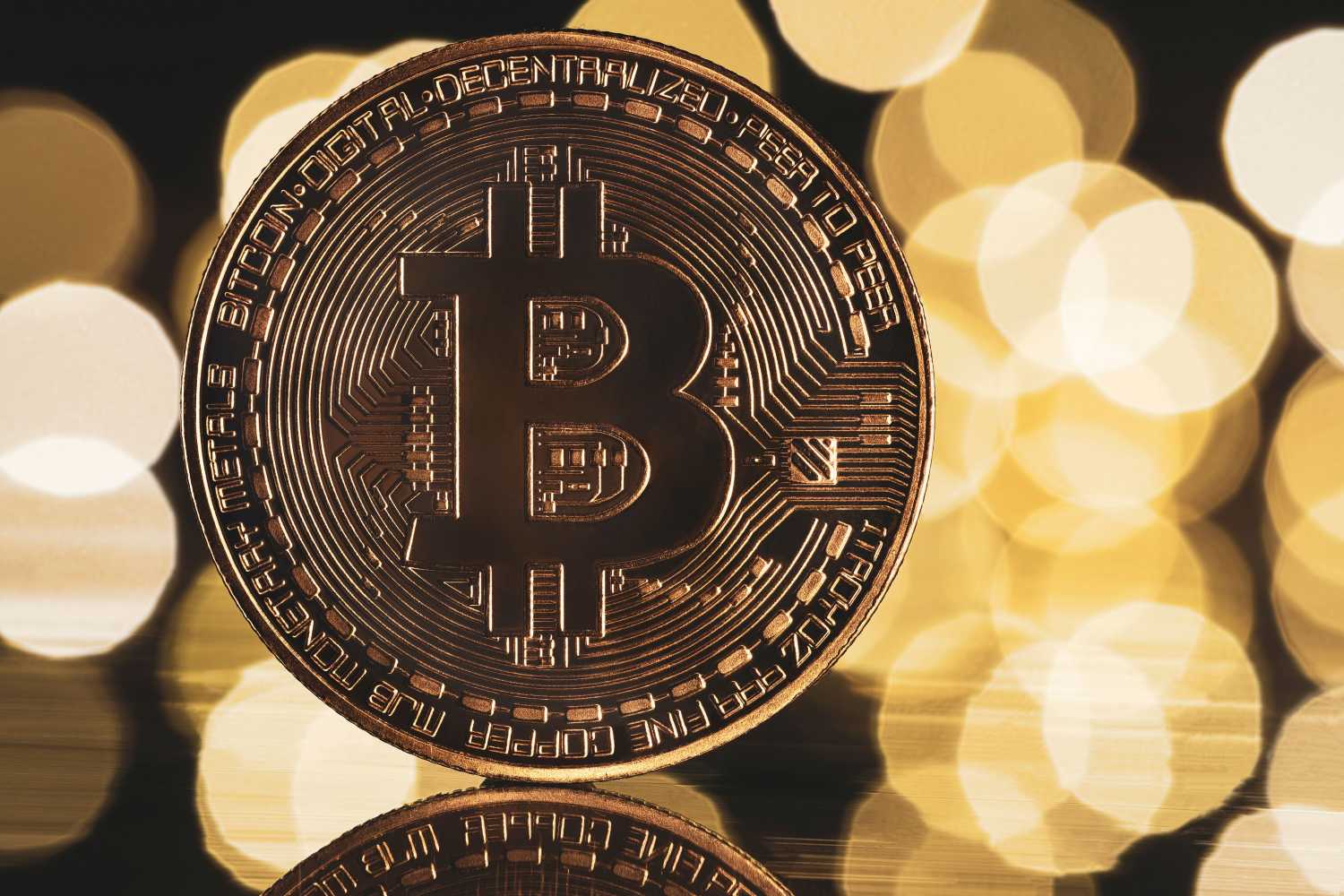
Bitcoin, the original cryptocurrency, has been on a wild ride since its [creation in 2009](https://bitcoin.org/en/bitcoin-paper). Earlier this year, the [price of one Bitcoin](https://coinmarketcap.com/currencies/bitcoin/) surged to over \$60,000, an eightfold increase in 12 months. Then it fell to half that value in just a few weeks. Values of other cryptocurrencies such as [Dogecoin](https://coinmarketcap.com/currencies/dogecoin/) have risen and fallen even more sharply, often based just on [Elon Musk’s tweets](https://www.cnbc.com/2021/05/20/dogecoin-jumps-on-elon-musk-tweet-as-wild-cryptocurrency-trading-continues.html). Even after the recent fall in their prices, the total [market value](http://coinmarketcap.com/) of all cryptocurrencies now exceeds \$1.5 trillion, a staggering amount for virtual objects that are nothing more than computer code.
Are cryptocurrencies the wave of the future and should you be using and investing in them? And do the massive swings in their prices—nearly [\$1 trillion was wiped off their total value](https://coinmarketcap.com/charts/) in May—portend trouble for the financial system?
Bitcoin was [created](https://bitcoin.org/en/faq) (by a person or group that remains unidentified to this day) as [a way to conduct transactions](https://bitcoin.org/bitcoin.pdf) without the intervention of a trusted third party, such as a central bank or financial institution. Its emergence amid the global financial crisis, which shook trust in banks and even governments, was perfectly timed. Bitcoin enabled transactions using only digital identities, granting users some degree of anonymity. This made Bitcoin the preferred currency for illicit activities, including recent ransomware attacks. It [powered the shadowy darknet](https://papers.ssrn.com/sol3/papers.cfm?abstract_id=3102645) of illegal online commerce much like PayPal helped the rise of eBay by making payments easier.
> While Bitcoin’s roller-coaster prices garner attention, of far more consequence is the revolution in money and finance it has set off that will ultimately affect every one of us, for better and worse.
As it grew in popularity, Bitcoin became cumbersome, slow, and expensive to use. It takes [about 10 minutes](https://www.statista.com/statistics/793539/bitcoin-transaction-confirmation-time/) to validate most transactions using the cryptocurrency and the [transaction fee](https://ycharts.com/indicators/bitcoin_average_transaction_fee) has been at a median of about \$20 this year. Bitcoin’s unstable value has also made it an unviable medium of exchange. It is as though your \$10 bill could buy you a beer on one day and a bottle of fine wine on another.
Moreover, it has become clear that Bitcoin does not offer true anonymity. The government’s success in [tracking and retrieving part of the Bitcoin ransom](https://www.nytimes.com/2021/06/09/technology/bitcoin-untraceable-pipeline-ransomware.html) paid to the hacking collective DarkSide in the Colonial Pipeline ransomware attack has heightened doubts about the security and nontraceability of Bitcoin transactions.
While Bitcoin has failed in its stated objectives, it has become a speculative investment. This is puzzling. It has no intrinsic value and is not backed by anything. Bitcoin devotees will tell you that, like gold, its value comes from its scarcity—Bitcoin’s computer algorithm mandates a [fixed cap](https://www.investopedia.com/tech/what-happens-bitcoin-after-21-million-mined/) of 21 million digital coins (nearly [19 million](https://www.blockchain.com/charts/total-bitcoins) have been created so far). But scarcity by itself can hardly be a source of value. Bitcoin investors seem to be relying on the greater fool theory—all you need to profit from an investment is to find someone willing to buy the asset at an even higher price.
Related Content
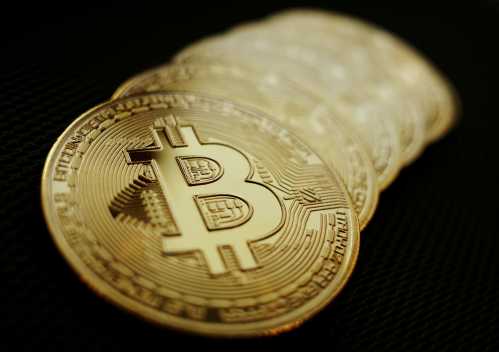
[Digital currencies are transforming the future of money](https://www.brookings.edu/articles/digital-currencies-are-transforming-the-future-of-money/)
[Federal Reserve](https://www.brookings.edu/topics/federal-reserve/)
Digital currencies are transforming the future of money
Eswar Prasad, David Dollar
June 21, 2021
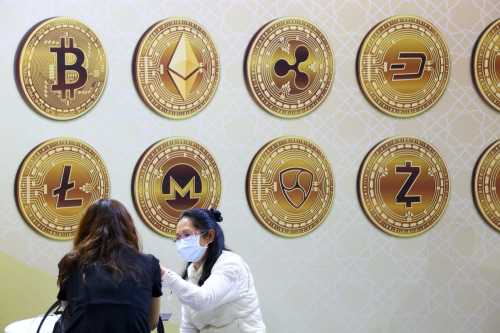
[Five myths about cryptocurrency](https://www.brookings.edu/articles/five-myths-about-cryptocurrency/)
[Technology & Information](https://www.brookings.edu/topics/technology-innovation/)
Five myths about cryptocurrency
Eswar Prasad
May 24, 2021
[Design choices for central bank digital currency](https://www.brookings.edu/articles/design-choices-for-central-bank-digital-currency/)
[Technology & Information](https://www.brookings.edu/topics/technology-innovation/)
Design choices for central bank digital currency
Sarah Allen, James Grimmelmann, Ari Juels, Eswar Prasad
July 23, 2020
Despite their high valuations on paper, a collapse of Bitcoin and other cryptocurrencies is unlikely to rattle the financial system. Banks have mostly stayed on the sidelines. As with any speculative bubble, naive investors who come to the party late are at greatest risk of losses. The government should certainly caution retail investors that, much like in the [GameStop saga](https://www.nytimes.com/2021/02/07/business/gamestop-stock-losses.html), they act at their own peril. Securities that enable speculation on Bitcoin prices are [already regulated](https://www.sec.gov/news/public-statement/statement-clayton-2017-12-11), but there is not much more the government can or ought to do.
Bitcoin is not innocuous. Transactions are processed by “miners” using massive amounts of computing power in return for rewards in the form of Bitcoin. By some estimates, the Bitcoin network [consumes](https://digiconomist.net/bitcoin-energy-consumption) as much energy as entire countries like Argentina and Norway, not to mention the [mountains of electronic waste](https://digiconomist.net/bitcoin-electronic-waste-monitor/) from specialized machines used for such mining operations that burn out rapidly.
Whatever Bitcoin’s eventual fate, its [blockchain technology](https://blockgeeks.com/guides/what-is-blockchain-technology/) is truly [ingenious and groundbreaking](http://bitcoinbook.cs.princeton.edu/). Bitcoin has shown how programs running on networks of computers can be harnessed to securely conduct payments, within and between countries, without relying on avaricious financial institutions that charge high fees. For migrant workers sending remittances back to their home countries, for instance, such fees are a major burden. Technologies that make payments cheaper, quicker and easier to track would benefit consumers and businesses, facilitating both domestic and international commerce.
The technology is not without risks. Facebook plans to issue its own cryptocurrency called [Diem](https://www.diem.com/en-us/) intended to make digital payments easier. Unlike Bitcoin, Diem would be fully backed by reserves of U.S. dollars or other major currencies, ensuring stable value. But, as with its other ostensibly high-minded initiatives, Facebook can hardly be trusted to put the public’s welfare above its own. The prospect of multinational corporations one day issuing their own unbacked cryptocurrencies worldwide is deeply disquieting. Such currencies won’t threaten the U.S. dollar, but could wipe out the currencies of smaller and less developed countries.
Related Books
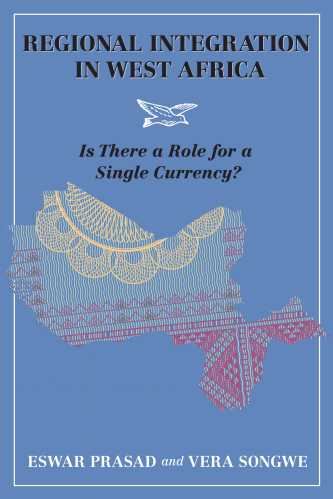
[Regional Integration in West Africa](https://www.brookings.edu/books/regional-integration-in-west-africa/)
[U.S. Economy](https://www.brookings.edu/topics/u-s-economy/)
Regional Integration in West Africa
Eswar Prasad, Vera Songwe
July 13, 2021
[Gaining Currency](https://www.brookings.edu/books/gaining-currency/)
[Global Economy & Development](https://www.brookings.edu/topics/global-inequality/)
Gaining Currency
Eswar Prasad
October 11, 2016
[The Dollar Trap: How the US Dollar Tightened Its Grip on Global Finance](https://www.brookings.edu/books/the-dollar-trap-how-the-u-s-dollar-tightened-its-grip-on-global-finance/)
The Dollar Trap: How the US Dollar Tightened Its Grip on Global Finance
Eswar Prasad
January 26, 2014
Variants of Bitcoin’s technology are also making many financial products and services available to the masses at low cost, directly connecting savers and borrowers. These developments and the possibilities created by the new technologies have spurred central banks to consider issuing digital versions of their own currencies. [China](https://www.nytimes.com/2021/03/01/technology/china-national-digital-currency.html), [Japan](https://www.boj.or.jp/en/announcements/release_2021/rel210405b.pdf), and [Sweden](https://www.riksbank.se/en-gb/payments--cash/e-krona/) are already conducting trials of their digital currencies.
Ironically, rather than truly democratizing finance, some of these innovations may exacerbate inequality. Unequal financial literacy and digital access might result in sophisticated investors garnering the benefits while the less well off, dazzled by new technologies, take on risks they do not fully comprehend. Computer algorithms could worsen entrenched racial and other biases in credit scoring and financial decisions, rather than reducing them. The ubiquity of digital payments could also destroy any remaining vestiges of privacy in our day-to-day lives.
While Bitcoin’s roller-coaster prices garner attention, of far more consequence is the [revolution in money and finance](https://futureofmoneybook.com/) it has set off that will ultimately affect every one of us, for better and worse.
Author
[](https://www.brookings.edu/people/eswar-prasad/)
[Eswar Prasad](https://www.brookings.edu/people/eswar-prasad/) Senior Fellow \- [Global Economy and Development](https://www.brookings.edu/programs/global-economy-and-development/)
[@EswarSPrasad](https://twitter.com/EswarSPrasad)
**The Brookings Institution is committed to quality, independence, and impact.** We are supported by a [diverse array of funders](https://www.brookings.edu/about-us/annual-report/). In line with our [values and policies](https://www.brookings.edu/about-us/research-independence-and-integrity-policies/), each Brookings publication represents the sole views of its author(s).
More On
- [Global Economy & Development](https://www.brookings.edu/articles/the-brutal-truth-about-bitcoin/)
Sub-Topics
[International Financial Institutions](https://www.brookings.edu/topics/international-financial-institutions/)
Program
[Global Economy and Development](https://www.brookings.edu/programs/global-economy-and-development/)
[Global energy demands within the AI regulatory landscape](https://www.brookings.edu/articles/global-energy-demands-within-the-ai-regulatory-landscape/)
[Climate & Energy](https://www.brookings.edu/topics/climate-energy/)
Global energy demands within the AI regulatory landscape
Brooke Tanner, Derek Belle, Cameron F. Kerry, Nicoleta Kyosovska, Andrea Renda, Elham Tabassi, Andrew W. Wyckoff [\+2 more](https://www.brookings.edu/articles/the-brutal-truth-about-bitcoin/)
April 10, 2026
[What Gen Z protests reveal about Kenya’s democracy](https://www.brookings.edu/articles/what-gen-z-protests-reveal-about-kenyas-democracy/)
[Democracy, Conflict, & Governance](https://www.brookings.edu/topics/democracy-conflict-and-governance/)
What Gen Z protests reveal about Kenya’s democracy
Winnie Mitullah, Oscar M. Otele, Karuti Kanyinga
April 7, 2026
[It was never the keyboard](https://www.brookings.edu/articles/it-was-never-the-keyboard/)

[Artificial Intelligence](https://www.brookings.edu/topics/artificial-intelligence/)
It was never the keyboard
Michael Lokshin
April 3, 2026
Get the latest from Brookings
- [twitter](https://twitter.com/BrookingsInst)
- [facebook](https://www.facebook.com/brookings)
- [linkedin](https://www.linkedin.com/company/the-brookings-institution)
- [youtube](https://www.youtube.com/user/BrookingsInstitution)
- [instagram](https://www.instagram.com/brookingsinst/)
Brookings equips decisionmakers with nonpartisan research and policy strategies to create a more prosperous and secure country and world.
[Donate](https://www.brookings.edu/support-brookings/)
- [Research Programs](https://www.brookings.edu/research-programs/)
- [Governance Studies](https://www.brookings.edu/programs/governance-studies/)
- [Economic Studies](https://www.brookings.edu/programs/economic-studies/)
- [Foreign Policy](https://www.brookings.edu/programs/foreign-policy/)
- [Global Economy and Development](https://www.brookings.edu/programs/global-economy-and-development/)
- [Brookings Metro](https://www.brookings.edu/programs/brookings-metro/)
- [About Us](https://www.brookings.edu/about-us/)
- [Leadership](https://www.brookings.edu/about-us/leadership/)
- [Careers](https://www.brookings.edu/careers/)
- [Brookings Institution Press](https://www.brookings.edu/all-books/brookings-institution-press/)
- [Contact Brookings](https://www.brookings.edu/contact-brookings/)
- [Cookie Preferences]()
- [Research & Commentary](https://www.brookings.edu/research-commentary/)
- [Experts](https://www.brookings.edu/experts/)
- [Events](https://www.brookings.edu/events/)
- [Books](https://www.brookings.edu/all-books/)
- [Podcasts](https://www.brookings.edu/podcasts/)
- [Newsletters](https://www.brookings.edu/newsletters/)
- [Privacy Policy, Updated August 2024](https://www.brookings.edu/brookings-institution-privacy-policy/)
- [Terms of Use, Updated August 2024](https://www.brookings.edu/terms-of-use/)
Copyright 2026 The Brookings Institution
 | |||||||||
| Readable Markdown | Commentary
[Op-ed](https://www.brookings.edu/articles/the-brutal-truth-about-bitcoin/)
## The brutal truth about Bitcoin
#####
July 20, 2021

- 7 min read
Bitcoin, the original cryptocurrency, has been on a wild ride since its [creation in 2009](https://bitcoin.org/en/bitcoin-paper). Earlier this year, the [price of one Bitcoin](https://coinmarketcap.com/currencies/bitcoin/) surged to over \$60,000, an eightfold increase in 12 months. Then it fell to half that value in just a few weeks. Values of other cryptocurrencies such as [Dogecoin](https://coinmarketcap.com/currencies/dogecoin/) have risen and fallen even more sharply, often based just on [Elon Musk’s tweets](https://www.cnbc.com/2021/05/20/dogecoin-jumps-on-elon-musk-tweet-as-wild-cryptocurrency-trading-continues.html). Even after the recent fall in their prices, the total [market value](http://coinmarketcap.com/) of all cryptocurrencies now exceeds \$1.5 trillion, a staggering amount for virtual objects that are nothing more than computer code.
Are cryptocurrencies the wave of the future and should you be using and investing in them? And do the massive swings in their prices—nearly [\$1 trillion was wiped off their total value](https://coinmarketcap.com/charts/) in May—portend trouble for the financial system?
Bitcoin was [created](https://bitcoin.org/en/faq) (by a person or group that remains unidentified to this day) as [a way to conduct transactions](https://bitcoin.org/bitcoin.pdf) without the intervention of a trusted third party, such as a central bank or financial institution. Its emergence amid the global financial crisis, which shook trust in banks and even governments, was perfectly timed. Bitcoin enabled transactions using only digital identities, granting users some degree of anonymity. This made Bitcoin the preferred currency for illicit activities, including recent ransomware attacks. It [powered the shadowy darknet](https://papers.ssrn.com/sol3/papers.cfm?abstract_id=3102645) of illegal online commerce much like PayPal helped the rise of eBay by making payments easier.
> While Bitcoin’s roller-coaster prices garner attention, of far more consequence is the revolution in money and finance it has set off that will ultimately affect every one of us, for better and worse.
As it grew in popularity, Bitcoin became cumbersome, slow, and expensive to use. It takes [about 10 minutes](https://www.statista.com/statistics/793539/bitcoin-transaction-confirmation-time/) to validate most transactions using the cryptocurrency and the [transaction fee](https://ycharts.com/indicators/bitcoin_average_transaction_fee) has been at a median of about \$20 this year. Bitcoin’s unstable value has also made it an unviable medium of exchange. It is as though your \$10 bill could buy you a beer on one day and a bottle of fine wine on another.
Moreover, it has become clear that Bitcoin does not offer true anonymity. The government’s success in [tracking and retrieving part of the Bitcoin ransom](https://www.nytimes.com/2021/06/09/technology/bitcoin-untraceable-pipeline-ransomware.html) paid to the hacking collective DarkSide in the Colonial Pipeline ransomware attack has heightened doubts about the security and nontraceability of Bitcoin transactions.
While Bitcoin has failed in its stated objectives, it has become a speculative investment. This is puzzling. It has no intrinsic value and is not backed by anything. Bitcoin devotees will tell you that, like gold, its value comes from its scarcity—Bitcoin’s computer algorithm mandates a [fixed cap](https://www.investopedia.com/tech/what-happens-bitcoin-after-21-million-mined/) of 21 million digital coins (nearly [19 million](https://www.blockchain.com/charts/total-bitcoins) have been created so far). But scarcity by itself can hardly be a source of value. Bitcoin investors seem to be relying on the greater fool theory—all you need to profit from an investment is to find someone willing to buy the asset at an even higher price.
Related Content
Despite their high valuations on paper, a collapse of Bitcoin and other cryptocurrencies is unlikely to rattle the financial system. Banks have mostly stayed on the sidelines. As with any speculative bubble, naive investors who come to the party late are at greatest risk of losses. The government should certainly caution retail investors that, much like in the [GameStop saga](https://www.nytimes.com/2021/02/07/business/gamestop-stock-losses.html), they act at their own peril. Securities that enable speculation on Bitcoin prices are [already regulated](https://www.sec.gov/news/public-statement/statement-clayton-2017-12-11), but there is not much more the government can or ought to do.
Bitcoin is not innocuous. Transactions are processed by “miners” using massive amounts of computing power in return for rewards in the form of Bitcoin. By some estimates, the Bitcoin network [consumes](https://digiconomist.net/bitcoin-energy-consumption) as much energy as entire countries like Argentina and Norway, not to mention the [mountains of electronic waste](https://digiconomist.net/bitcoin-electronic-waste-monitor/) from specialized machines used for such mining operations that burn out rapidly.
Whatever Bitcoin’s eventual fate, its [blockchain technology](https://blockgeeks.com/guides/what-is-blockchain-technology/) is truly [ingenious and groundbreaking](http://bitcoinbook.cs.princeton.edu/). Bitcoin has shown how programs running on networks of computers can be harnessed to securely conduct payments, within and between countries, without relying on avaricious financial institutions that charge high fees. For migrant workers sending remittances back to their home countries, for instance, such fees are a major burden. Technologies that make payments cheaper, quicker and easier to track would benefit consumers and businesses, facilitating both domestic and international commerce.
The technology is not without risks. Facebook plans to issue its own cryptocurrency called [Diem](https://www.diem.com/en-us/) intended to make digital payments easier. Unlike Bitcoin, Diem would be fully backed by reserves of U.S. dollars or other major currencies, ensuring stable value. But, as with its other ostensibly high-minded initiatives, Facebook can hardly be trusted to put the public’s welfare above its own. The prospect of multinational corporations one day issuing their own unbacked cryptocurrencies worldwide is deeply disquieting. Such currencies won’t threaten the U.S. dollar, but could wipe out the currencies of smaller and less developed countries.
Related Books
Variants of Bitcoin’s technology are also making many financial products and services available to the masses at low cost, directly connecting savers and borrowers. These developments and the possibilities created by the new technologies have spurred central banks to consider issuing digital versions of their own currencies. [China](https://www.nytimes.com/2021/03/01/technology/china-national-digital-currency.html), [Japan](https://www.boj.or.jp/en/announcements/release_2021/rel210405b.pdf), and [Sweden](https://www.riksbank.se/en-gb/payments--cash/e-krona/) are already conducting trials of their digital currencies.
Ironically, rather than truly democratizing finance, some of these innovations may exacerbate inequality. Unequal financial literacy and digital access might result in sophisticated investors garnering the benefits while the less well off, dazzled by new technologies, take on risks they do not fully comprehend. Computer algorithms could worsen entrenched racial and other biases in credit scoring and financial decisions, rather than reducing them. The ubiquity of digital payments could also destroy any remaining vestiges of privacy in our day-to-day lives.
While Bitcoin’s roller-coaster prices garner attention, of far more consequence is the [revolution in money and finance](https://futureofmoneybook.com/) it has set off that will ultimately affect every one of us, for better and worse.
**The Brookings Institution is committed to quality, independence, and impact.** We are supported by a [diverse array of funders](https://www.brookings.edu/about-us/annual-report/). In line with our [values and policies](https://www.brookings.edu/about-us/research-independence-and-integrity-policies/), each Brookings publication represents the sole views of its author(s). | |||||||||
| ML Classification | ||||||||||
| ML Categories |
Raw JSON{
"/Finance": 991,
"/Finance/Investing": 982,
"/Finance/Investing/Currencies_and_Foreign_Exchange": 754
} | |||||||||
| ML Page Types |
Raw JSON{
"/Article": 997,
"/Article/Opinion_Piece": 945
} | |||||||||
| ML Intent Types |
Raw JSON{
"Informational": 999
} | |||||||||
| Content Metadata | ||||||||||
| Language | en-us | |||||||||
| Author | null | |||||||||
| Publish Time | 2024-08-20 10:32:12 (1 year ago) | |||||||||
| Original Publish Time | 2023-06-27 02:45:02 (2 years ago) | |||||||||
| Republished | Yes | |||||||||
| Word Count (Total) | 1,593 | |||||||||
| Word Count (Content) | 1,058 | |||||||||
| Links | ||||||||||
| External Links | 44 | |||||||||
| Internal Links | 70 | |||||||||
| Technical SEO | ||||||||||
| Meta Nofollow | No | |||||||||
| Meta Noarchive | No | |||||||||
| JS Rendered | Yes | |||||||||
| Redirect Target | null | |||||||||
| Performance | ||||||||||
| Download Time (ms) | 59 | |||||||||
| TTFB (ms) | 58 | |||||||||
| Download Size (bytes) | 38,635 | |||||||||
| Shard | 55 (laksa) | |||||||||
| Root Hash | 11646626373533845055 | |||||||||
| Unparsed URL | edu,brookings!www,/articles/the-brutal-truth-about-bitcoin/ s443 | |||||||||