ℹ️ Skipped - page is already crawled
| Filter | Status | Condition | Details |
|---|---|---|---|
| HTTP status | PASS | download_http_code = 200 | HTTP 200 |
| Age cutoff | PASS | download_stamp > now() - 6 MONTH | 0.2 months ago |
| History drop | PASS | isNull(history_drop_reason) | No drop reason |
| Spam/ban | PASS | fh_dont_index != 1 AND ml_spam_score = 0 | ml_spam_score=0 |
| Canonical | PASS | meta_canonical IS NULL OR = '' OR = src_unparsed | Not set |
| Property | Value | |||||||||||||||||||||||||||||||||
|---|---|---|---|---|---|---|---|---|---|---|---|---|---|---|---|---|---|---|---|---|---|---|---|---|---|---|---|---|---|---|---|---|---|---|
| URL | https://www.boaterexam.com/blog/sinking-ship-survival-guide/ | |||||||||||||||||||||||||||||||||
| Last Crawled | 2026-04-16 08:40:48 (6 days ago) | |||||||||||||||||||||||||||||||||
| First Indexed | 2022-04-07 05:10:13 (4 years ago) | |||||||||||||||||||||||||||||||||
| HTTP Status Code | 200 | |||||||||||||||||||||||||||||||||
| Content | ||||||||||||||||||||||||||||||||||
| Meta Title | How to Survive a Shipwreck in 2026 | BOATERexam | |||||||||||||||||||||||||||||||||
| Meta Description | Do you know how to survive a sinking ship? Read this guide to learn how to stay calm, call for help, get to safety, and how to be prepared beforehand. | |||||||||||||||||||||||||||||||||
| Meta Canonical | null | |||||||||||||||||||||||||||||||||
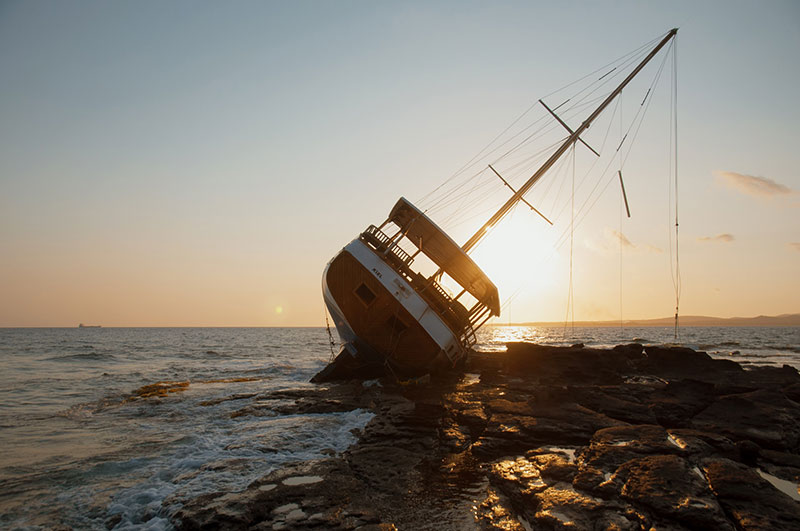
| Boilerpipe Text | To survive a sinking ship, stay calm and get a flotation device,
ideally a life raft or life preserver. Move to a higher deck and follow crew instructions. If you have to abandon ship, get away from the wreckage.
Once to safety, conserve energy, stay in the shade to avoid dehydration, collect rainwater if you can, and try to signal for help with reflective objects.
Maybe your ship is sinking because you wrecked while
going an unsafe speed
, or a collision on the water was out of your control, despite your best efforts to operate your boat safely. No matter why you find yourself in this situation, it's crucial to know what to do.
Fortunately, the odds of surviving a sinking ship are very high. Let's get into more details about how to survive a sinking ship.
Be Prepared
Anyone with experience as a scout will know these two words: "Be prepared."
The meaning behind this famous saying is closely tied to another famous saying: "Knowing is half the battle." Those two bits of advice could very well save your life on a sinking ship.
Before stepping aboard, prepare an evacuation bag with the tools you'd need to survive on a raft or an island.
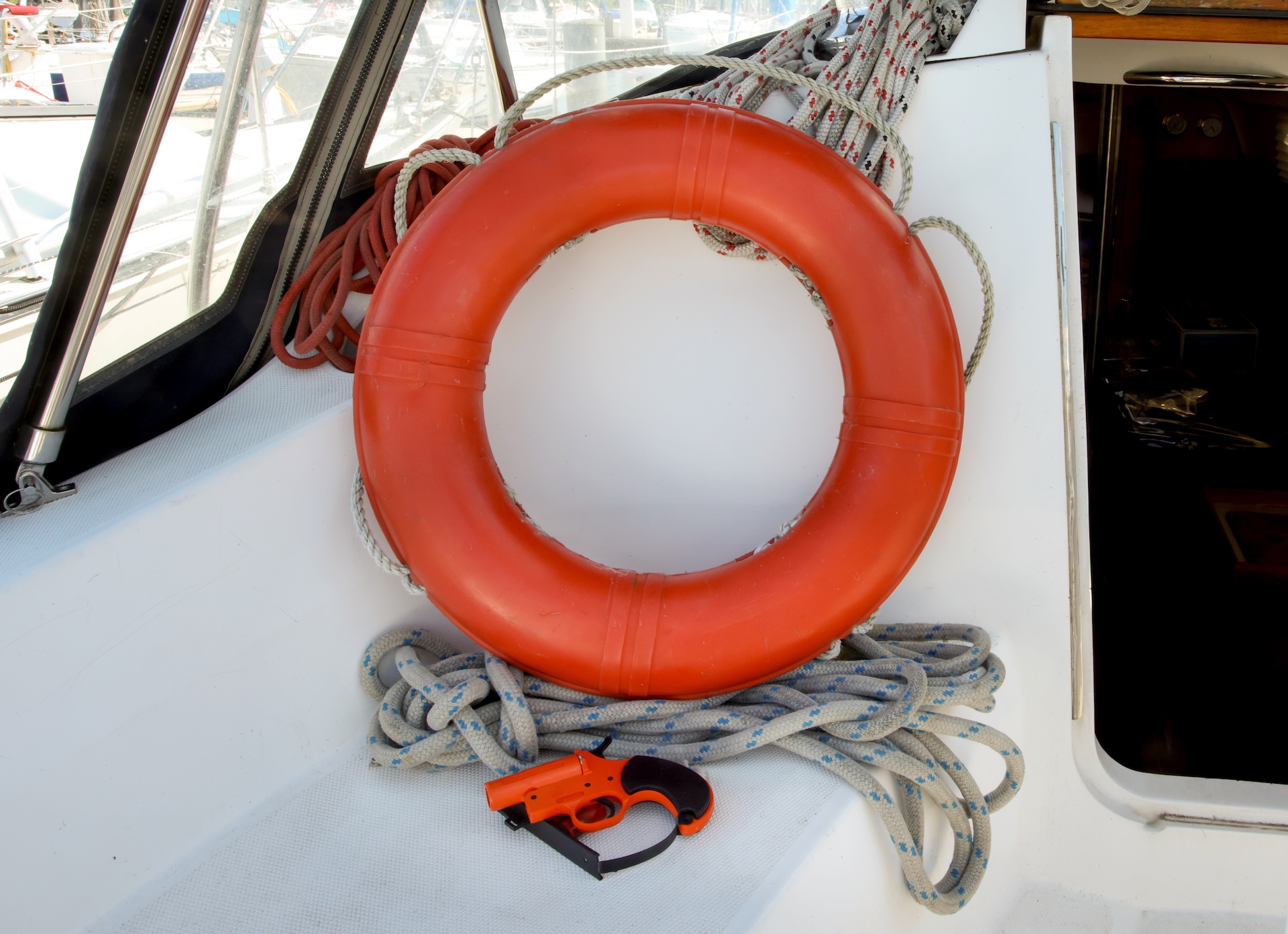
Flotation device and flare on a boat.
Your survival kit should include:
Compass
Flashlight
Waterproof matches
Knife
Sunscreen lotion
Fresh water
Mirror for signalling
Flares
First aid kit
Some food rations
Even if you only plan to be out on the water for the day, having these essentials on board can be a lifesaver. You never know when something could go wrong, and you'll need some crucial items for survival.
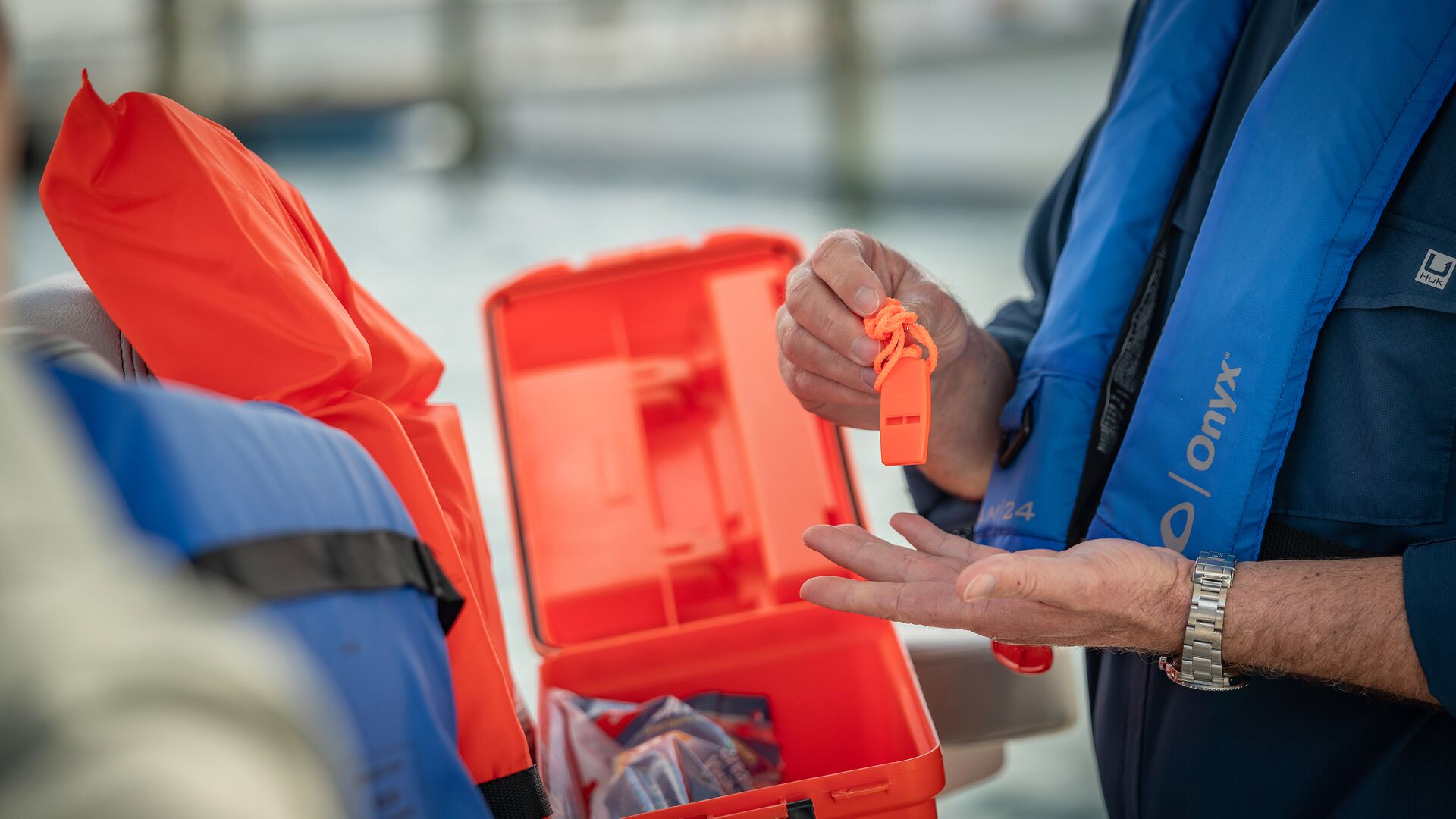
A boater holds a whistle from a boat emergency kit.
Learn Where Everything Is
Explore the ship or boat and familiarize yourself with all the emergency exits and evacuation maps. Find the closest lifeboat to your cabin (if on a bigger ship), and be sure to know where all the life jackets are.
When it comes to ocean survival, floating is everything. You may have been able to tread water for hours in the old swimming pool, but the ocean or a deep lake is much colder and rough. You'll already be fatigued and in a relative state of shock when you hit the water, and bodies of water are filled with various forms of dangly leg-eaters.
Stay Calm
So there you are, relaxing by the pool on your cruise ship, when suddenly, the
loud horn lets out seven short bursts
followed by one long one. T
his is the signal to abandon ship.
Screaming and running is a quick way to not survive a sinking ship. Instead, l
et the frenzying folk do their thing while you
practice square breathing.
This simple technique is used in the military to lower the heart rates of snipers.
To practice
square (or box) breathing
:
Inhale deeply for 4 seconds
Hold your lungs full for 4 seconds
Exhale for 4 seconds
Hold your longs empty for 4 seconds
4, 4, 4, 4 represents a "square" of breathing to help you slow down and calm down. Repeat this pattern 3-4 times, and your nerves will settle, your heart rate will slow, and you will find it much easier to focus on survival.
Generally speaking, in an emergency scenario, most people will panic, a small percentage will make irrational decisions, and only a few will think clearly. Remaining calm places you above most of the people on the ship and sets you up for a better chance of survival.
Follow the Rats
Hopefully, you haven't seen any rats on board, whether you're on a large ship or a smaller vessel.
However, if the boat starts to capsize, watch for the rats!
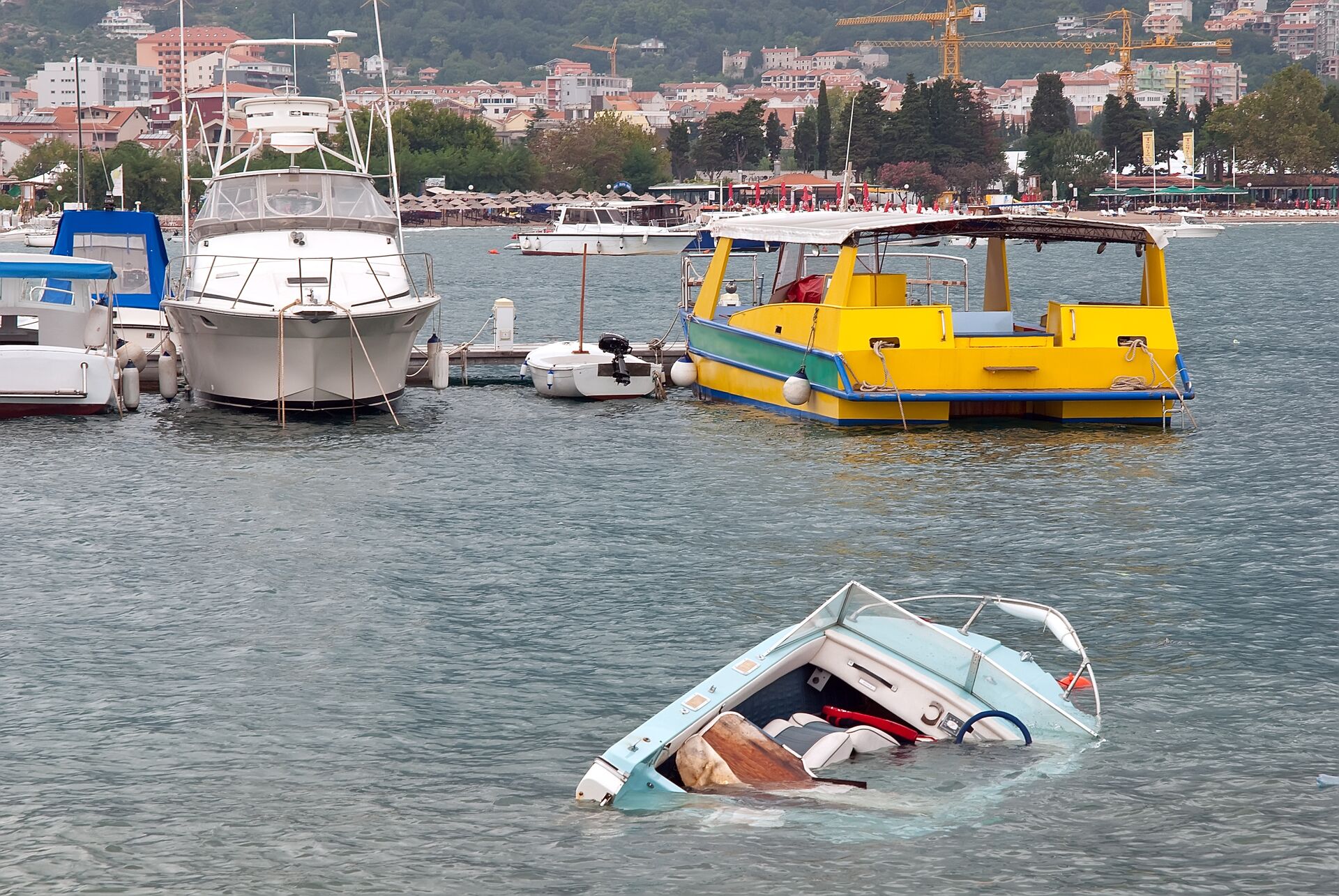
If the hull is breached and the ship begins to take on water, the lowest parts of the ship generally fill first. This is also where much of a ship's vermin dwell.
Rats have been known to be the first to abandon a sinking ship, which seems like intelligence at first, until they plunge into the ocean and drown anyway. They do, however, set the right example of where to go as the ship fills up.
Getting to the deck as fast as possible is extremely important. It would seem fairly obvious to avoid heading deeper and more toward the center of the ship as it sinks, but when panic sets in, it's easier to lose orientation and get lost.
Similar to a burning building situation, avoid using the elevators; it would be terrible to get stuck in one as the boat goes under. If you have time, make sure to grab your evacuation bag!
A Stable Ship is a Sinking Ship
A good thing to know is if you're on the deck of your own boat and the boat seems to be rolling less than it should, it could be filling up with water. The weight of the water is preventing your boat from rolling with the waves, so it's time to abandon the ship!
A woman uses the radio on a boat.
Calling for Help
If you're on a big cruise ship, you are clearly not responsible for
calling for help
. However, if you're on your own boat, it's important to have a radio and know how to use it.
Your radio should always be on and tuned to marine
VHF radio channel Sixteen
(16) or Frequency 161.400 or 156.800 MHz; marine MF/SSB on 2182 kHz. The Coast Guard and other ocean rescue authorities constantly monitor these channels and can dispatch help in an emergency.
Most modern radios are equipped with a Digital Select Calling (DCS) button, which, once pressed, sends your GPS coordinates along with a Mayday beacon to the coastguard.
Send a MayDay Signal
If it's your responsibility to call for help,
send a MayDay signal
.
It should go something like this:
Say "MAYDAY, MAYDAY, MAYDAY" over the radio.
Then say, "This is (name of your boat three times) then (call letters once)."
Repeat once more "MAYDAY" and your boat's name.
Say your location.
Describe the nature of your emergency.
Request the kind of assistance you need.
Tell them the number of people on board and the condition of any injured.
Describe the boat and its condition (or seaworthiness).
Wait for a response. If there is no response, repeat the message.
Interesting Trivia:
Mayday comes from the French term "m'aider," which means "Help me!"
A man in a lifeboat on the water holds a lighted flare.
Get to the Life Boats
Without pushing or shoving, find a lifejacket, put it on before helping anyone else, and get yourself on a lifeboat in an orderly fashion.
You can decide whether you let women and children on the boats first – but know that the longer you stay aboard, the lower your chances of survival. It could be said that a man's willingness to let the ladies go first decreases as the speed of the sinking ship increases.
However, if you end up in the water instead of aboard a life raft, your odds of survival drop by as much as 70%. The
water surrounding the Titanic
when it sank was 28 degrees, giving swimmers about 15-30 minutes before their hearts stopped.
Once you're in the lifeboat:
Continue to remain calm.
Protect your skin from the sun.
Drink fresh water sparingly.
Dehydration occurs quickly on the open seas. Whenever it rains, use whatever you can to capture the water.
The vastness of the ocean and the apparent "hopelessness" of the situation can make people freak out, so try to keep people's brains occupied with conversation, singing, or games.
At this point, you can let the raft drift to shore, using your flares sparingly to attract the attention of other boats or aircraft.
What to Do in the Worst-Case Scenario
So the boat's going down, and you've been unable to make it onto a life raft. What do you do?
Find a life jacket or any kind of floatation device.
If the water is cold, your system will
suffer varying degrees of shock
, and it will become increasingly difficult to tread water, especially if the seas are rough. Swim away from the boat to avoid the propeller. Although some have busted the whole "ship pulling you under" myth, actual survivors have reported it happening.
Now, if you're in the water and there's no life jacket, life preserver, or floatation device, your last chance will be to create a makeshift life jacket out of your pants.
Here's how to make your pants float:
Take off your pants
Tie knots at the bottom of each leg
Hold your pants in the air and then yank them downwards into the water, where they will collect some air
Your pants will now act as a flimsy but existent floating device.
The Best Preparation is a Boating Safety Course
We hope you never experience a sinking ship, whether it's your fishing boat or a big cruise boat. However, knowing what to do when things go wrong can save your life!
Being prepared with a boater education course is the best way to respond appropriately, no matter what happens on a boat. If you've already taken a course and received your certification, helping others be prepared can save their lives, too.
Before hitting the water,
encourage friends and family to get safety certified
through BOATERexam. Our online courses cover everything from essential safety equipment every boat needs to how to call for help in the event of a boating accident leading to a sinking vessel. Plus,
our state-approved and Transport Canada-approved courses meet the requirements for boater education.
Content most recently reviewed and updated February 26, 2026.
Frequently Asked Questions (FAQs)
We have answers to some of the top questions about how to survive a shipwreck!
Q: How to survive being shipwrecked.
A:
To survive a ship being wrecked, stay calm and get flotation immediately, whether that’s a life jacket or debris that floats. Move a safe distance from the wreck, conserve energy, and focus on staying warm and visible for rescue. If stranded longer term, prioritize shelter and fresh water before food.
Q: How do you survive a sinking ship?
A:
To survive a sinking ship, follow crew instructions, put on a life jacket properly, and head to designated evacuation points. Once in the water, swim clear of the vessel and debris, then get onto a lifeboat or stable floating object as soon as possible.
Q: Would a sinking ship pull you under?
A:
A sinking ship will not usually pull you under if you put some distance between you and the boat, but it certainly can. If you are very close when it goes under, turbulence and rushing water can pull you down briefly, but distance greatly reduces the risk.
Q: Can you swim away from a sinking ship?
A:
Yes, in most cases, you can swim away safely if you move steadily and put space between yourself and the ship. Aim to get several ship-lengths away to avoid debris and strong currents. | |||||||||||||||||||||||||||||||||
| Markdown | [](https://www.boaterexam.com/blog/)
Menu
- [Take Your Boating Safety Course](https://www.boaterexam.com/blog/#footer-nav)
- Categories
- [Boating Accidents](https://www.boaterexam.com/blog/tags/boating-accidents/)
- [Boating Laws](https://www.boaterexam.com/blog/tags/boating-laws/)
- [Boating Safety](https://www.boaterexam.com/blog/tags/boating-safety/)
- [Boating History](https://www.boaterexam.com/blog/tags/boating-history/)
- [Miscellaneous](https://www.boaterexam.com/blog/tags/miscellaneous/)
- [Ships & Crafts](https://www.boaterexam.com/blog/tags/ships/)
[Boating Accidents](https://www.boaterexam.com/blog/tags/boating-accidents/)
# How to Survive a Sinking Ship in 2026
By [Teri Williams](https://www.boaterexam.com/blog/authors/teri-williams/)
February 25, 2026

**To survive a sinking ship, stay calm and get a flotation device,** ideally a life raft or life preserver. Move to a higher deck and follow crew instructions. If you have to abandon ship, get away from the wreckage.
Once to safety, conserve energy, stay in the shade to avoid dehydration, collect rainwater if you can, and try to signal for help with reflective objects.
Maybe your ship is sinking because you wrecked while [going an unsafe speed](https://www.boaterexam.com/blog/how-is-safe-speed-defined-for-vessels-in-canada/), or a collision on the water was out of your control, despite your best efforts to operate your boat safely. No matter why you find yourself in this situation, it's crucial to know what to do.
Fortunately, the odds of surviving a sinking ship are very high. Let's get into more details about how to survive a sinking ship.
## Be Prepared
Anyone with experience as a scout will know these two words: "Be prepared."
The meaning behind this famous saying is closely tied to another famous saying: "Knowing is half the battle." Those two bits of advice could very well save your life on a sinking ship.
Before stepping aboard, prepare an evacuation bag with the tools you'd need to survive on a raft or an island.
*Flotation device and flare on a boat.*
**Your survival kit should include:**
- Compass
- Flashlight
- Waterproof matches
- Knife
- Sunscreen lotion
- Fresh water
- Mirror for signalling
- Flares
- First aid kit
- Some food rations
Even if you only plan to be out on the water for the day, having these essentials on board can be a lifesaver. You never know when something could go wrong, and you'll need some crucial items for survival.
*A boater holds a whistle from a boat emergency kit.*
## Learn Where Everything Is
Explore the ship or boat and familiarize yourself with all the emergency exits and evacuation maps. Find the closest lifeboat to your cabin (if on a bigger ship), and be sure to know where all the life jackets are.
When it comes to ocean survival, floating is everything. You may have been able to tread water for hours in the old swimming pool, but the ocean or a deep lake is much colder and rough. You'll already be fatigued and in a relative state of shock when you hit the water, and bodies of water are filled with various forms of dangly leg-eaters.
## Stay Calm
So there you are, relaxing by the pool on your cruise ship, when suddenly, the [loud horn lets out seven short bursts](https://www.boaterexam.com/blog/ship-horn-signals-what-they-mean/) followed by one long one. This is the signal to abandon ship.
Screaming and running is a quick way to not survive a sinking ship. Instead, let the frenzying folk do their thing while you **practice square breathing.** This simple technique is used in the military to lower the heart rates of snipers.
To practice [square (or box) breathing](https://www.webmd.com/balance/what-is-box-breathing):
- Inhale deeply for 4 seconds
- Hold your lungs full for 4 seconds
- Exhale for 4 seconds
- Hold your longs empty for 4 seconds
4, 4, 4, 4 represents a "square" of breathing to help you slow down and calm down. Repeat this pattern 3-4 times, and your nerves will settle, your heart rate will slow, and you will find it much easier to focus on survival.
Generally speaking, in an emergency scenario, most people will panic, a small percentage will make irrational decisions, and only a few will think clearly. Remaining calm places you above most of the people on the ship and sets you up for a better chance of survival.
| | |
|---|---|
| [](https://www.boaterexam.com/#usa-states) | [](https://www.boaterexam.com/canada/) |
## Follow the Rats
Hopefully, you haven't seen any rats on board, whether you're on a large ship or a smaller vessel. However, if the boat starts to capsize, watch for the rats\!
If the hull is breached and the ship begins to take on water, the lowest parts of the ship generally fill first. This is also where much of a ship's vermin dwell.
Rats have been known to be the first to abandon a sinking ship, which seems like intelligence at first, until they plunge into the ocean and drown anyway. They do, however, set the right example of where to go as the ship fills up.
Getting to the deck as fast as possible is extremely important. It would seem fairly obvious to avoid heading deeper and more toward the center of the ship as it sinks, but when panic sets in, it's easier to lose orientation and get lost.
Similar to a burning building situation, avoid using the elevators; it would be terrible to get stuck in one as the boat goes under. If you have time, make sure to grab your evacuation bag\!
### A Stable Ship is a Sinking Ship
A good thing to know is if you're on the deck of your own boat and the boat seems to be rolling less than it should, it could be filling up with water. The weight of the water is preventing your boat from rolling with the waves, so it's time to abandon the ship\!
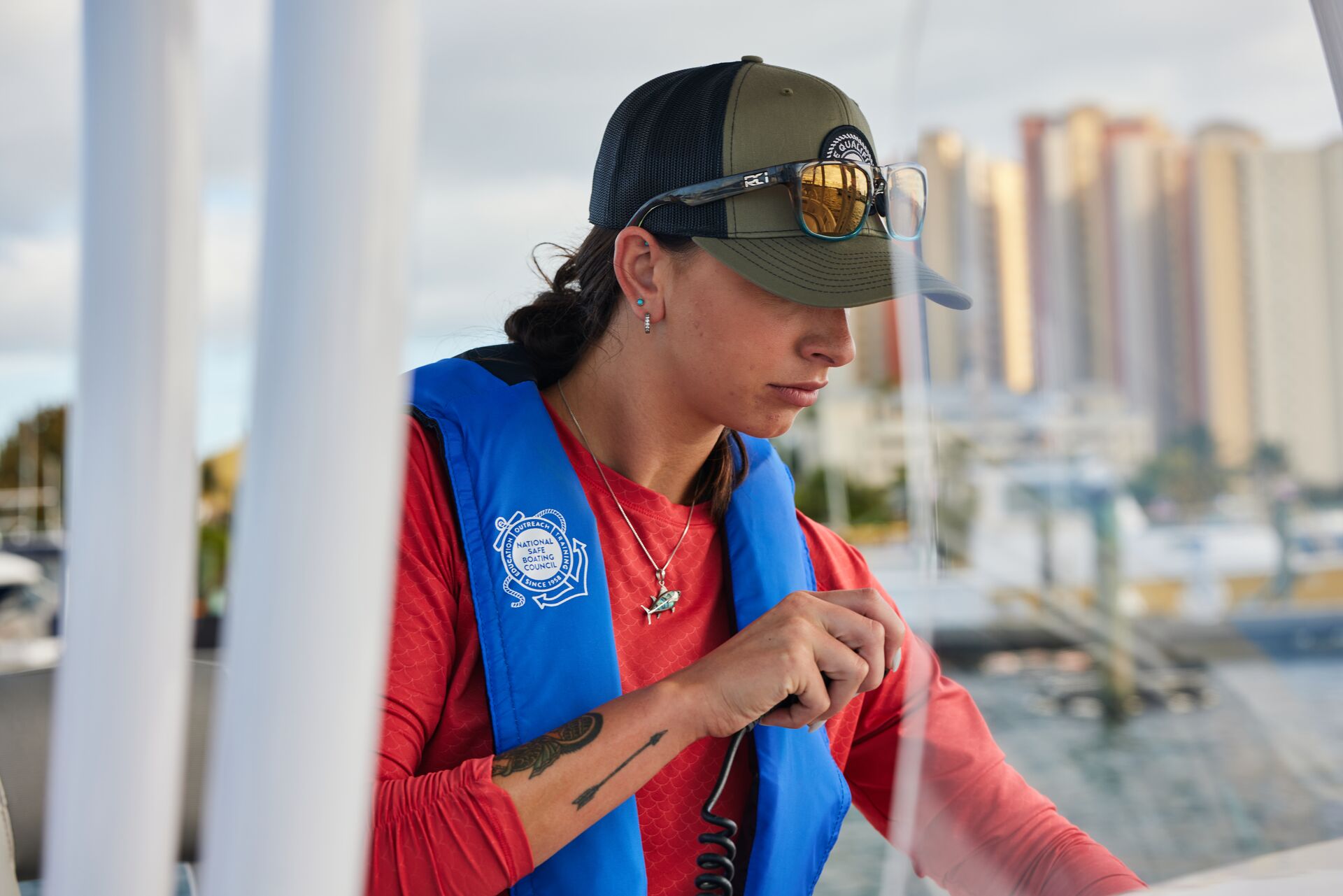
*A woman uses the radio on a boat.*
## Calling for Help
If you're on a big cruise ship, you are clearly not responsible for [calling for help](https://www.boaterexam.com/blog/how-to-call-for-help-on-a-boat/). However, if you're on your own boat, it's important to have a radio and know how to use it.
Your radio should always be on and tuned to marine [VHF radio channel Sixteen](https://www.navcen.uscg.gov/radio-information-for-boaters) (16) or Frequency 161.400 or 156.800 MHz; marine MF/SSB on 2182 kHz. The Coast Guard and other ocean rescue authorities constantly monitor these channels and can dispatch help in an emergency.
Most modern radios are equipped with a Digital Select Calling (DCS) button, which, once pressed, sends your GPS coordinates along with a Mayday beacon to the coastguard.
### Send a MayDay Signal
If it's your responsibility to call for help, [send a MayDay signal](https://www.boaterexam.com/blog/why-mayday-is-used-as-an-emergency-call/).
It should go something like this:
1. Say "MAYDAY, MAYDAY, MAYDAY" over the radio.
2. Then say, "This is (name of your boat three times) then (call letters once)."
3. Repeat once more "MAYDAY" and your boat's name.
4. Say your location.
5. Describe the nature of your emergency.
6. Request the kind of assistance you need.
7. Tell them the number of people on board and the condition of any injured.
8. Describe the boat and its condition (or seaworthiness).
9. Wait for a response. If there is no response, repeat the message.
**Interesting Trivia:** Mayday comes from the French term "m'aider," which means "Help me!"
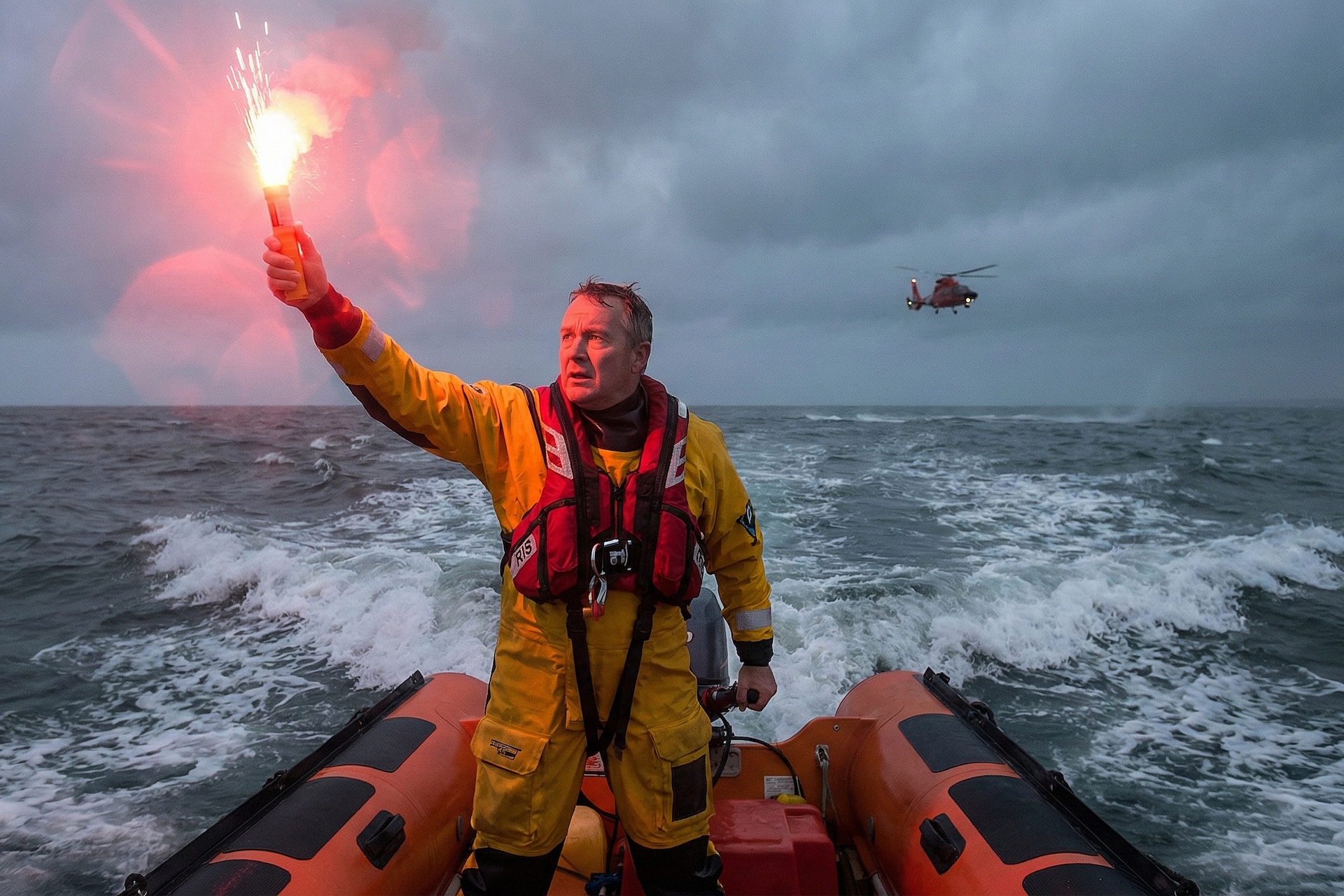
*A man in a lifeboat on the water holds a lighted flare.*
## Get to the Life Boats
Without pushing or shoving, find a lifejacket, put it on before helping anyone else, and get yourself on a lifeboat in an orderly fashion.
You can decide whether you let women and children on the boats first – but know that the longer you stay aboard, the lower your chances of survival. It could be said that a man's willingness to let the ladies go first decreases as the speed of the sinking ship increases.
However, if you end up in the water instead of aboard a life raft, your odds of survival drop by as much as 70%. The [water surrounding the Titanic](https://www.cruisehive.com/how-cold-was-the-water-when-the-titanic-sank/87765) when it sank was 28 degrees, giving swimmers about 15-30 minutes before their hearts stopped.
**Once you're in the lifeboat:**
- Continue to remain calm.
- Protect your skin from the sun.
- Drink fresh water sparingly.
Dehydration occurs quickly on the open seas. Whenever it rains, use whatever you can to capture the water.
The vastness of the ocean and the apparent "hopelessness" of the situation can make people freak out, so try to keep people's brains occupied with conversation, singing, or games.
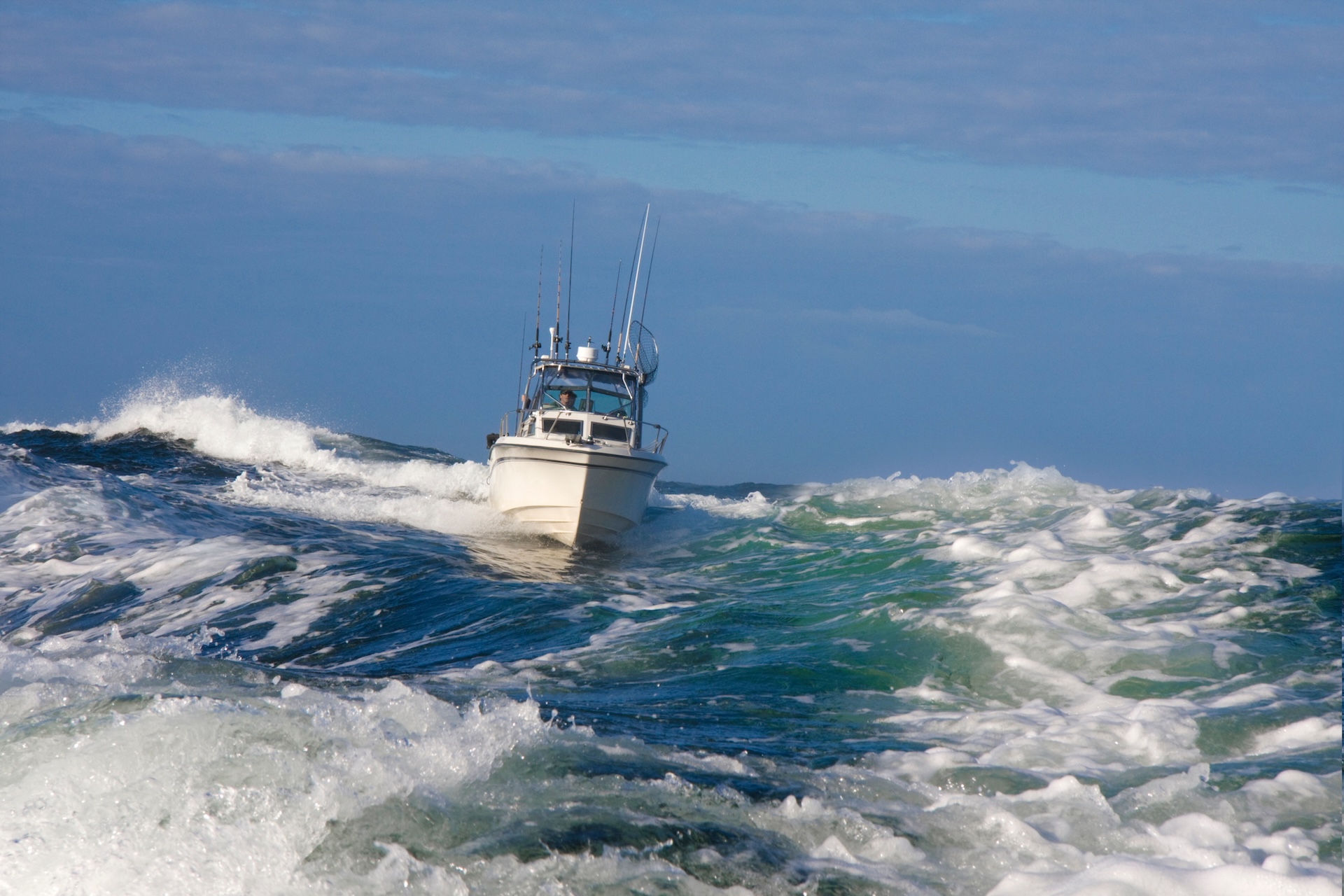
At this point, you can let the raft drift to shore, using your flares sparingly to attract the attention of other boats or aircraft.
What to Do in the Worst-Case Scenario
So the boat's going down, and you've been unable to make it onto a life raft. What do you do?
Find a life jacket or any kind of floatation device.
If the water is cold, your system will [suffer varying degrees of shock](https://www.boaterexam.com/blog/cold-water-immersion/), and it will become increasingly difficult to tread water, especially if the seas are rough. Swim away from the boat to avoid the propeller. Although some have busted the whole "ship pulling you under" myth, actual survivors have reported it happening.
Now, if you're in the water and there's no life jacket, life preserver, or floatation device, your last chance will be to create a makeshift life jacket out of your pants.
**Here's how to make your pants float:**
1. Take off your pants
2. Tie knots at the bottom of each leg
3. Hold your pants in the air and then yank them downwards into the water, where they will collect some air
Your pants will now act as a flimsy but existent floating device.

## The Best Preparation is a Boating Safety Course
We hope you never experience a sinking ship, whether it's your fishing boat or a big cruise boat. However, knowing what to do when things go wrong can save your life\!
Being prepared with a boater education course is the best way to respond appropriately, no matter what happens on a boat. If you've already taken a course and received your certification, helping others be prepared can save their lives, too.
Before hitting the water, **encourage friends and family to get safety certified** through BOATERexam. Our online courses cover everything from essential safety equipment every boat needs to how to call for help in the event of a boating accident leading to a sinking vessel. Plus, **our state-approved and Transport Canada-approved courses meet the requirements for boater education.**
[](https://www.boaterexam.com/#usa-states)
[](https://www.boaterexam.com/canada/)
*Content most recently reviewed and updated February 26, 2026.*
***
## Frequently Asked Questions (FAQs)
We have answers to some of the top questions about how to survive a shipwreck\!
### Q: How to survive being shipwrecked.
**A:** To survive a ship being wrecked, stay calm and get flotation immediately, whether that’s a life jacket or debris that floats. Move a safe distance from the wreck, conserve energy, and focus on staying warm and visible for rescue. If stranded longer term, prioritize shelter and fresh water before food.
### Q: How do you survive a sinking ship?
**A:** To survive a sinking ship, follow crew instructions, put on a life jacket properly, and head to designated evacuation points. Once in the water, swim clear of the vessel and debris, then get onto a lifeboat or stable floating object as soon as possible.
### Q: Would a sinking ship pull you under?
**A:** A sinking ship will not usually pull you under if you put some distance between you and the boat, but it certainly can. If you are very close when it goes under, turbulence and rushing water can pull you down briefly, but distance greatly reduces the risk.
### Q: Can you swim away from a sinking ship?
**A:** Yes, in most cases, you can swim away safely if you move steadily and put space between yourself and the ship. Aim to get several ship-lengths away to avoid debris and strong currents.
[](https://www.boaterexam.com/#usa-states)
[](https://www.boaterexam.com/canada/)
### Tagged in:
- [Boating Accidents](https://www.boaterexam.com/blog/tags/boating-accidents/)
### Share this story:
[Facebook](https://www.facebook.com/sharer/sharer.php?u=https%3A%2F%2Fwww.boaterexam.com%2Fblog%2Fsinking-ship-survival-guide%2F)
[Pinterest](https://pinterest.com/pin/create/button/?url=https%3A%2F%2Fwww.boaterexam.com%2Fblog%2Fsinking-ship-survival-guide%2F&media=https%3A%2F%2Fwww.boaterexam.com%2Fblog%2Fmedia%2Fposts%2F11%2Fsinking-ship-hero.jpg&description=How%20to%20Survive%20a%20Sinking%20Ship%20in%202026)
[LinkedIn](http://www.linkedin.com/shareArticle?url=https%3A%2F%2Fwww.boaterexam.com%2Fblog%2Fsinking-ship-survival-guide%2F&title=How%20to%20Survive%20a%20Sinking%20Ship%20in%202026)
[Previous](https://www.boaterexam.com/blog/how-to-get-a-boating-license-in-saskatchewan/)
### Share:
[Next](https://www.boaterexam.com/blog/how-and-where-to-catch-alligator-gar-this-season/)
### You should also read:
[](https://www.boaterexam.com/blog/how-to-get-a-boating-license-in-new-brunswick/)
### [How to Get a Boating License in New Brunswick in 2026](https://www.boaterexam.com/blog/how-to-get-a-boating-license-in-new-brunswick/)
By [Teri Williams](https://www.boaterexam.com/blog/authors/teri-williams/)
January 22, 2026
[](https://www.boaterexam.com/blog/pleasure-craft-licence-requirements-in-canada/)
### [New 2026 Pleasure Craft Licence Requirements in Canada](https://www.boaterexam.com/blog/pleasure-craft-licence-requirements-in-canada/)
By [Teri Williams](https://www.boaterexam.com/blog/authors/teri-williams/)
January 13, 2026
[](https://www.boaterexam.com/blog/how-to-get-a-boating-license-in-manitoba/)
### [How to Get a Boating License in Manitoba in 2026](https://www.boaterexam.com/blog/how-to-get-a-boating-license-in-manitoba/)
By [Teri Williams](https://www.boaterexam.com/blog/authors/teri-williams/)
January 8, 2026
[](https://www.boaterexam.com/blog/ship-horn-signals-what-they-mean/)
### [Ship Horn Signals: What They Mean for Boaters](https://www.boaterexam.com/blog/ship-horn-signals-what-they-mean/)
By [Teri Williams](https://www.boaterexam.com/blog/authors/teri-williams/)
November 13, 2025
[](https://www.boaterexam.com/blog/your-guide-to-how-to-register-a-boat-in-bc/)
### [How to Register a Boat in BC in 2026](https://www.boaterexam.com/blog/your-guide-to-how-to-register-a-boat-in-bc/)
By [Teri Williams](https://www.boaterexam.com/blog/authors/teri-williams/)
March 26, 2026
[](https://www.boaterexam.com/blog/captains-license-canada-how-to-get-one/)
### [Captain's License Canada: How to Get One in 2026](https://www.boaterexam.com/blog/captains-license-canada-how-to-get-one/)
By [Teri Williams](https://www.boaterexam.com/blog/authors/teri-williams/)
February 16, 2026
[](https://www.boaterexam.com/blog/)
- [Canada \| English](https://www.boaterexam.com/canada/)
- [Canada \| français](https://www.examenbateau.com/)
- [Alabama](https://www.boaterexam.com/usa/alabama/)
- [Alaska](https://www.boaterexam.com/usa/alaska/)
- [Arizona](https://www.boaterexam.com/usa/arizona/)
- [California](https://www.boaterexam.com/usa/california/)
- [Colorado](https://www.boaterexam.com/usa/colorado/)
- [Connecticut](https://www.boaterexam.com/usa/connecticut/)
- [Delaware](https://www.boaterexam.com/usa/delaware/)
- [District of Columbia](https://www.boaterexam.com/usa/districtofcolumbia/)
- [Florida](https://www.boaterexam.com/usa/florida/)
- [Georgia](https://www.boaterexam.com/usa/georgia/)
- [Hawaii](https://www.boaterexam.com/usa/hawaii/)
- [Idaho](https://www.boaterexam.com/usa/idaho/)
- [Illinois](https://www.boaterexam.com/usa/illinois/)
- [Indiana](https://www.boaterexam.com/usa/indiana/)
- [Iowa](https://www.boaterexam.com/usa/iowa/)
- [Kansas](https://www.boaterexam.com/usa/kansas/)
- [Kentucky](https://www.boaterexam.com/usa/kentucky/)
- [Maryland](https://www.boaterexam.com/usa/maryland/)
- [Massachusetts](https://www.boaterexam.com/usa/massachusetts/)
- [Michigan](https://www.boaterexam.com/usa/michigan/)
- [Minnesota](https://www.boaterexam.com/usa/minnesota/)
- [Mississippi](https://www.boaterexam.com/usa/mississippi/)
- [Montana](https://www.boaterexam.com/usa/montana/)
- [Nebraska](https://www.boaterexam.com/usa/nebraska/)
- [Nevada](https://www.boaterexam.com/usa/nevada/)
- [New Jersey](https://www.boaterexam.com/usa/newjersey/)
- [New Mexico](https://www.boaterexam.com/usa/newmexico/)
- [New York](https://www.boaterexam.com/usa/newyork/)
- [North Carolina](https://www.boaterexam.com/usa/northcarolina/)
- [North Dakota](https://www.boaterexam.com/usa/northdakota/)
- [Ohio](https://www.boaterexam.com/usa/ohio/)
- [Oklahoma](https://www.boaterexam.com/usa/oklahoma/)
- [Oregon](https://www.boaterexam.com/usa/oregon/)
- [Pennsylvania](https://www.boaterexam.com/usa/pennsylvania/)
- [South Carolina](https://www.boaterexam.com/usa/southcarolina/)
- [South Dakota](https://www.boaterexam.com/usa/southdakota/)
- [Tennessee](https://www.boaterexam.com/usa/tennessee/)
- [Texas](https://www.boaterexam.com/usa/texas/)
- [Utah](https://www.boaterexam.com/usa/utah/)
- [Virginia](https://www.boaterexam.com/usa/virginia/)
- [Virgin Islands](https://www.boaterexam.com/usa/virginislands/)
- [Washington](https://www.boaterexam.com/usa/washington/)
- [West Virginia](https://www.boaterexam.com/usa/westvirginia/)
- [Wisconsin](https://www.boaterexam.com/usa/wisconsin/)
- [Wyoming](https://www.boaterexam.com/usa/wyoming/)
© 2000–2025 All rights reserved. [Privacy Policy](https://www.boaterexam.com/usa/privacy.aspx), and [Terms of Use](https://www.boaterexam.com/usa/termsofuse.aspx) and [Your Privacy Choices](https://www.boaterexam.com/blog/sinking-ship-survival-guide/). | |||||||||||||||||||||||||||||||||
| Readable Markdown | 
**To survive a sinking ship, stay calm and get a flotation device,** ideally a life raft or life preserver. Move to a higher deck and follow crew instructions. If you have to abandon ship, get away from the wreckage.
Once to safety, conserve energy, stay in the shade to avoid dehydration, collect rainwater if you can, and try to signal for help with reflective objects.
Maybe your ship is sinking because you wrecked while [going an unsafe speed](https://www.boaterexam.com/blog/how-is-safe-speed-defined-for-vessels-in-canada/), or a collision on the water was out of your control, despite your best efforts to operate your boat safely. No matter why you find yourself in this situation, it's crucial to know what to do.
Fortunately, the odds of surviving a sinking ship are very high. Let's get into more details about how to survive a sinking ship.

## Be Prepared
Anyone with experience as a scout will know these two words: "Be prepared."
The meaning behind this famous saying is closely tied to another famous saying: "Knowing is half the battle." Those two bits of advice could very well save your life on a sinking ship.
Before stepping aboard, prepare an evacuation bag with the tools you'd need to survive on a raft or an island.

*Flotation device and flare on a boat.*
**Your survival kit should include:**
- Compass
- Flashlight
- Waterproof matches
- Knife
- Sunscreen lotion
- Fresh water
- Mirror for signalling
- Flares
- First aid kit
- Some food rations
Even if you only plan to be out on the water for the day, having these essentials on board can be a lifesaver. You never know when something could go wrong, and you'll need some crucial items for survival.

*A boater holds a whistle from a boat emergency kit.*
## Learn Where Everything Is
Explore the ship or boat and familiarize yourself with all the emergency exits and evacuation maps. Find the closest lifeboat to your cabin (if on a bigger ship), and be sure to know where all the life jackets are.
When it comes to ocean survival, floating is everything. You may have been able to tread water for hours in the old swimming pool, but the ocean or a deep lake is much colder and rough. You'll already be fatigued and in a relative state of shock when you hit the water, and bodies of water are filled with various forms of dangly leg-eaters.
## Stay Calm
So there you are, relaxing by the pool on your cruise ship, when suddenly, the [loud horn lets out seven short bursts](https://www.boaterexam.com/blog/ship-horn-signals-what-they-mean/) followed by one long one. This is the signal to abandon ship.
Screaming and running is a quick way to not survive a sinking ship. Instead, let the frenzying folk do their thing while you **practice square breathing.** This simple technique is used in the military to lower the heart rates of snipers.
To practice [square (or box) breathing](https://www.webmd.com/balance/what-is-box-breathing):
- Inhale deeply for 4 seconds
- Hold your lungs full for 4 seconds
- Exhale for 4 seconds
- Hold your longs empty for 4 seconds
4, 4, 4, 4 represents a "square" of breathing to help you slow down and calm down. Repeat this pattern 3-4 times, and your nerves will settle, your heart rate will slow, and you will find it much easier to focus on survival.
Generally speaking, in an emergency scenario, most people will panic, a small percentage will make irrational decisions, and only a few will think clearly. Remaining calm places you above most of the people on the ship and sets you up for a better chance of survival.

## Follow the Rats
Hopefully, you haven't seen any rats on board, whether you're on a large ship or a smaller vessel. However, if the boat starts to capsize, watch for the rats\!
If the hull is breached and the ship begins to take on water, the lowest parts of the ship generally fill first. This is also where much of a ship's vermin dwell.
Rats have been known to be the first to abandon a sinking ship, which seems like intelligence at first, until they plunge into the ocean and drown anyway. They do, however, set the right example of where to go as the ship fills up.
Getting to the deck as fast as possible is extremely important. It would seem fairly obvious to avoid heading deeper and more toward the center of the ship as it sinks, but when panic sets in, it's easier to lose orientation and get lost.
Similar to a burning building situation, avoid using the elevators; it would be terrible to get stuck in one as the boat goes under. If you have time, make sure to grab your evacuation bag\!
### A Stable Ship is a Sinking Ship
A good thing to know is if you're on the deck of your own boat and the boat seems to be rolling less than it should, it could be filling up with water. The weight of the water is preventing your boat from rolling with the waves, so it's time to abandon the ship\!

*A woman uses the radio on a boat.*
## Calling for Help
If you're on a big cruise ship, you are clearly not responsible for [calling for help](https://www.boaterexam.com/blog/how-to-call-for-help-on-a-boat/). However, if you're on your own boat, it's important to have a radio and know how to use it.
Your radio should always be on and tuned to marine [VHF radio channel Sixteen](https://www.navcen.uscg.gov/radio-information-for-boaters) (16) or Frequency 161.400 or 156.800 MHz; marine MF/SSB on 2182 kHz. The Coast Guard and other ocean rescue authorities constantly monitor these channels and can dispatch help in an emergency.
Most modern radios are equipped with a Digital Select Calling (DCS) button, which, once pressed, sends your GPS coordinates along with a Mayday beacon to the coastguard.
### Send a MayDay Signal
If it's your responsibility to call for help, [send a MayDay signal](https://www.boaterexam.com/blog/why-mayday-is-used-as-an-emergency-call/).
It should go something like this:
1. Say "MAYDAY, MAYDAY, MAYDAY" over the radio.
2. Then say, "This is (name of your boat three times) then (call letters once)."
3. Repeat once more "MAYDAY" and your boat's name.
4. Say your location.
5. Describe the nature of your emergency.
6. Request the kind of assistance you need.
7. Tell them the number of people on board and the condition of any injured.
8. Describe the boat and its condition (or seaworthiness).
9. Wait for a response. If there is no response, repeat the message.
**Interesting Trivia:** Mayday comes from the French term "m'aider," which means "Help me!"

*A man in a lifeboat on the water holds a lighted flare.*
## Get to the Life Boats
Without pushing or shoving, find a lifejacket, put it on before helping anyone else, and get yourself on a lifeboat in an orderly fashion.
You can decide whether you let women and children on the boats first – but know that the longer you stay aboard, the lower your chances of survival. It could be said that a man's willingness to let the ladies go first decreases as the speed of the sinking ship increases.
However, if you end up in the water instead of aboard a life raft, your odds of survival drop by as much as 70%. The [water surrounding the Titanic](https://www.cruisehive.com/how-cold-was-the-water-when-the-titanic-sank/87765) when it sank was 28 degrees, giving swimmers about 15-30 minutes before their hearts stopped.
**Once you're in the lifeboat:**
- Continue to remain calm.
- Protect your skin from the sun.
- Drink fresh water sparingly.
Dehydration occurs quickly on the open seas. Whenever it rains, use whatever you can to capture the water.
The vastness of the ocean and the apparent "hopelessness" of the situation can make people freak out, so try to keep people's brains occupied with conversation, singing, or games.

At this point, you can let the raft drift to shore, using your flares sparingly to attract the attention of other boats or aircraft.
What to Do in the Worst-Case Scenario
So the boat's going down, and you've been unable to make it onto a life raft. What do you do?
Find a life jacket or any kind of floatation device.
If the water is cold, your system will [suffer varying degrees of shock](https://www.boaterexam.com/blog/cold-water-immersion/), and it will become increasingly difficult to tread water, especially if the seas are rough. Swim away from the boat to avoid the propeller. Although some have busted the whole "ship pulling you under" myth, actual survivors have reported it happening.
Now, if you're in the water and there's no life jacket, life preserver, or floatation device, your last chance will be to create a makeshift life jacket out of your pants.
**Here's how to make your pants float:**
1. Take off your pants
2. Tie knots at the bottom of each leg
3. Hold your pants in the air and then yank them downwards into the water, where they will collect some air
Your pants will now act as a flimsy but existent floating device.

## The Best Preparation is a Boating Safety Course
We hope you never experience a sinking ship, whether it's your fishing boat or a big cruise boat. However, knowing what to do when things go wrong can save your life\!
Being prepared with a boater education course is the best way to respond appropriately, no matter what happens on a boat. If you've already taken a course and received your certification, helping others be prepared can save their lives, too.
Before hitting the water, **encourage friends and family to get safety certified** through BOATERexam. Our online courses cover everything from essential safety equipment every boat needs to how to call for help in the event of a boating accident leading to a sinking vessel. Plus, **our state-approved and Transport Canada-approved courses meet the requirements for boater education.**
[](https://www.boaterexam.com/#usa-states)
[](https://www.boaterexam.com/canada/)
*Content most recently reviewed and updated February 26, 2026.*
***
## Frequently Asked Questions (FAQs)
We have answers to some of the top questions about how to survive a shipwreck\!
### Q: How to survive being shipwrecked.
**A:** To survive a ship being wrecked, stay calm and get flotation immediately, whether that’s a life jacket or debris that floats. Move a safe distance from the wreck, conserve energy, and focus on staying warm and visible for rescue. If stranded longer term, prioritize shelter and fresh water before food.
### Q: How do you survive a sinking ship?
**A:** To survive a sinking ship, follow crew instructions, put on a life jacket properly, and head to designated evacuation points. Once in the water, swim clear of the vessel and debris, then get onto a lifeboat or stable floating object as soon as possible.
### Q: Would a sinking ship pull you under?
**A:** A sinking ship will not usually pull you under if you put some distance between you and the boat, but it certainly can. If you are very close when it goes under, turbulence and rushing water can pull you down briefly, but distance greatly reduces the risk.
### Q: Can you swim away from a sinking ship?
**A:** Yes, in most cases, you can swim away safely if you move steadily and put space between yourself and the ship. Aim to get several ship-lengths away to avoid debris and strong currents.
[](https://www.boaterexam.com/#usa-states)
[](https://www.boaterexam.com/canada/) | |||||||||||||||||||||||||||||||||
| ML Classification | ||||||||||||||||||||||||||||||||||
| ML Categories |
Raw JSON{
"/Sports": 366,
"/Sports/Water_Sports": 364,
"/Sports/Water_Sports/Other": 344,
"/Hobbies_and_Leisure": 297,
"/Hobbies_and_Leisure/Water_Activities": 296,
"/Hobbies_and_Leisure/Water_Activities/Boating": 293,
"/Autos_and_Vehicles": 231,
"/Autos_and_Vehicles/Boats_and_Watercraft": 231,
"/Travel_and_Transportation": 210,
"/Travel_and_Transportation/Transportation": 151,
"/Travel_and_Transportation/Transportation/Cruises_and_Charters": 136
} | |||||||||||||||||||||||||||||||||
| ML Page Types |
Raw JSON{
"/Article": 997,
"/Article/How_to": 822
} | |||||||||||||||||||||||||||||||||
| ML Intent Types |
Raw JSON{
"Informational": 998
} | |||||||||||||||||||||||||||||||||
| Content Metadata | ||||||||||||||||||||||||||||||||||
| Language | en | |||||||||||||||||||||||||||||||||
| Author | Teri Williams | |||||||||||||||||||||||||||||||||
| Publish Time | 2025-11-13 07:41:00 (5 months ago) | |||||||||||||||||||||||||||||||||
| Original Publish Time | 2022-04-07 05:10:13 (4 years ago) | |||||||||||||||||||||||||||||||||
| Republished | Yes | |||||||||||||||||||||||||||||||||
| Word Count (Total) | 2,077 | |||||||||||||||||||||||||||||||||
| Word Count (Content) | 1,846 | |||||||||||||||||||||||||||||||||
| Links | ||||||||||||||||||||||||||||||||||
| External Links | 6 | |||||||||||||||||||||||||||||||||
| Internal Links | 72 | |||||||||||||||||||||||||||||||||
| Technical SEO | ||||||||||||||||||||||||||||||||||
| Meta Nofollow | No | |||||||||||||||||||||||||||||||||
| Meta Noarchive | No | |||||||||||||||||||||||||||||||||
| JS Rendered | No | |||||||||||||||||||||||||||||||||
| Redirect Target | null | |||||||||||||||||||||||||||||||||
| Performance | ||||||||||||||||||||||||||||||||||
| Download Time (ms) | 186 | |||||||||||||||||||||||||||||||||
| TTFB (ms) | 186 | |||||||||||||||||||||||||||||||||
| Download Size (bytes) | 12,026 | |||||||||||||||||||||||||||||||||
| Shard | 142 (laksa) | |||||||||||||||||||||||||||||||||
| Root Hash | 2435950424266172742 | |||||||||||||||||||||||||||||||||
| Unparsed URL | com,boaterexam!www,/blog/sinking-ship-survival-guide/ s443 | |||||||||||||||||||||||||||||||||