ℹ️ Skipped - page is already crawled
| Filter | Status | Condition | Details |
|---|---|---|---|
| HTTP status | PASS | download_http_code = 200 | HTTP 200 |
| Age cutoff | PASS | download_stamp > now() - 6 MONTH | 0 months ago |
| History drop | PASS | isNull(history_drop_reason) | No drop reason |
| Spam/ban | PASS | fh_dont_index != 1 AND ml_spam_score = 0 | ml_spam_score=0 |
| Canonical | PASS | meta_canonical IS NULL OR = '' OR = src_unparsed | Not set |
| Property | Value |
|---|---|
| URL | https://www.bls.gov/ooh/transportation-and-material-moving/airline-and-commercial-pilots.htm |
| Last Crawled | 2026-04-17 20:08:23 (3 hours ago) |
| First Indexed | 2016-12-10 22:54:25 (9 years ago) |
| HTTP Status Code | 200 |
| Meta Title | Airline and Commercial Pilots : Occupational Outlook Handbook: : U.S. Bureau of Labor Statistics |
| Meta Description | Airline and commercial pilots fly and navigate airplanes, helicopters, and other aircraft. |
| Meta Canonical | null |
| Boilerpipe Text | Summary
Please enable javascript to play this video.
Video transcript available at https://www.youtube.com/watch?v=oey4mi_QV48.
Quick Facts: Airline and Commercial Pilots
2024 Median Pay
$198,100 per year
Typical Entry-Level Education
See How to Become One
Work Experience in a Related Occupation
See How to Become One
On-the-job Training
Moderate-term on-the-job training
Number of Jobs, 2024
155,400
Job Outlook, 2024–34
4% (As fast as average)
Employment Change, 2024–34
6,700
What Airline and Commercial Pilots Do
Airline and commercial pilots fly and navigate airplanes, helicopters, and other aircraft.
Work Environment
Pilots usually have variable work schedules, with overnight layovers that are more common for airline pilots.
How to Become an Airline or Commercial Pilot
Airline pilots typically need a bachelor’s degree and experience as a commercial or
military
pilot. Commercial pilots typically need flight training. Both also must meet
Federal Aviation Administration
(FAA) requirements.
Pay
The median annual wage for airline pilots, copilots, and flight engineers was $226,600 in May 2024.
The median annual wage for commercial pilots was $122,670 in May 2024.
Job Outlook
Overall employment of airline and commercial pilots is projected to grow 4 percent from 2024 to 2034, about as fast as the average for all occupations.
About 18,200 openings for airline and commercial pilots are projected each year, on average, over the decade.
Many of those openings are expected to result from the need to replace workers who transfer to different occupations or exit the labor force, such as to retire.
State & Area Data
Explore resources for employment and wages by state and area for airline and commercial pilots.
Similar Occupations
Compare the job duties, education, job growth, and pay of airline and commercial pilots with similar occupations.
More Information, Including Links to O*NET
Learn more about airline and commercial pilots by visiting additional resources, including O*NET, a source on key characteristics of workers and occupations.
What Airline and Commercial Pilots Do
About this section
Commercial pilots are involved in activities such as firefighting and crop dusting.
Airline and commercial pilots fly and navigate airplanes, helicopters, and other aircraft.
Duties
Pilots typically do the following:
Check the overall condition of the aircraft before and after every flight
Ensure that the aircraft is balanced and below its weight limit
Verify that the fuel supply is adequate and that weather conditions are acceptable
Prepare and submit flight plans to air traffic control
Communicate with air traffic control over the aircraft’s radio system
Operate and control aircraft along planned routes and during takeoffs and landings
Monitor engines, fuel consumption, and other aircraft systems during flight
Respond to changing conditions, such as weather events and emergencies (for example, a mechanical malfunction)
Navigate the aircraft by using cockpit instruments and visual references
Pilots plan their flights by checking that the aircraft is operable and safe, that the cargo has been loaded correctly, and that weather conditions are acceptable. They file flight plans with air traffic control and may modify the plans in flight because of changing weather conditions or other factors.
Takeoff and landing can be the most demanding parts of a flight. They require close coordination among the pilot; copilot; flight engineer, if present; air traffic controllers; and ground personnel. Once in the air, the captain may have the first officer, if present, fly the aircraft, but the captain remains responsible for the aircraft. After landing, pilots fill out records that document their flight and the status of the aircraft.
Some pilots are also instructors using simulators and dual-controlled aircraft to teach students how to fly.
The following are examples of types of pilots:
Airline pilots
work primarily for airlines that transport passengers and cargo on a fixed schedule. The captain or pilot in command, usually the most experienced pilot, supervises all other crew members and has primary responsibility for the flight. The copilot, often called the first officer or second in command, shares flight duties with the captain. Some older planes require a third pilot known as a flight engineer, who monitors instruments and operates controls. Technology has automated many of these tasks, and new aircraft do not require flight engineers.
Commercial pilots
are involved in unscheduled flight activities, such as aerial application, charter flights, and aerial tours. Commercial pilots may have additional nonflight duties. Some commercial pilots schedule flights, arrange for maintenance of the aircraft, and load luggage themselves. Pilots who transport company executives, also known as corporate pilots, greet their passengers before embarking on the flight.
Agricultural pilots typically handle agricultural chemicals, such as pesticides, and may be involved in other agricultural practices in addition to flying. Pilots, such as helicopter pilots, who fly at low levels must constantly look for trees, bridges, power lines, transmission towers, and other obstacles.
With proper training, airline pilots also may be deputized as federal law enforcement officers and be issued firearms to protect the cockpit.
Work Environment
About this section
Pilots have variable work schedules, which may include overnight layovers.
Airline pilots, copilots, and flight engineers held about 100,000 jobs in 2024. The largest employers of airline pilots, copilots, and flight engineers were as follows:
Scheduled air transportation
87%
Couriers and express delivery services
4
Federal government, excluding postal service
3
Support activities for transportation
2
Nonscheduled air transportation
1
Commercial pilots held about 55,400 jobs in 2024. The largest employers of commercial pilots were as follows:
Nonscheduled air transportation
39%
Technical and trade schools; private
10
Support activities for air transportation
8
Other ambulatory healthcare services
7
Professional, scientific, and technical services
4
Pilots assigned to long-distance routes may experience fatigue and jetlag. Weather conditions may result in turbulence, requiring pilots to change the flying altitude. Flights can be long and flight decks are often sealed, so pilots work in small teams for long periods in close proximity to one another.
Aerial applicators, also known as crop dusters, may be exposed to toxic chemicals, typically use unimproved landing strips, such as grass, dirt, or gravel surface, and may be at risk of collision with power lines. Helicopter pilots involved in rescue operations may fly at low levels during bad weather or at night, and land in areas surrounded by power lines, highways, and other obstacles. Pilots use hearing protection devices to prevent their exposure to engine noise.
The high level of concentration required to fly an aircraft and the mental stress of being responsible for the safety of passengers can be fatiguing. Pilots must be alert and quick to react if something goes wrong. Federal law requires pilots to retire at age 65.
Most pilots are based near large airports.
Injuries and Illnesses
Although fatalities are uncommon, airline and commercial pilots experience one of the highest rates of occupational fatalities of all occupations.
Work Schedules
Federal regulations set the maximum work hours and minimum requirements for rest between flights for most pilots. Airline pilots fly an average of 75 hours per month and work an additional 150 hours per month performing other duties, such as checking weather conditions and preparing flight plans. Pilots have variable work schedules that may include some days of work followed by some days off. Flight assignments are based on seniority. Seniority enables pilots who have worked at a company for a long time to get preferred routes and schedules.
Airline pilots may spend several nights a week away from home because flight assignments often involve overnight layovers. When pilots are away from home, the airlines typically provide hotel accommodations, transportation to the airport, and an allowance for meals and other expenses.
Commercial pilots also may have irregular schedules. Although most commercial pilots remain near their home overnight, some may still work nonstandard hours.
How to Become an Airline or Commercial Pilot
About this section
Airline and commercial pilots who are newly hired by airlines or on-demand air services companies must undergo on-the-job training.
Airline pilots typically need a bachelor’s degree and experience as a commercial or military pilot. Commercial pilots typically need flight training, and some employers may require or prefer them to have a degree.
Airline and commercial pilots also must have specific certificates and ratings from the
Federal Aviation Administration
(FAA).
Education
Airline pilots typically need a bachelor’s degree in any
field
, including
transportation
,
engineering
, or
business
. They also complete flight training with independent FAA-certified flight instructors or at schools that offer flight training.
Commercial pilots typically complete flight training, and some employers require or prefer that they have a degree.
The FAA certifies hundreds of civilian flight schools, which range from small fixed base operators (FBO) to state universities. Some colleges and universities offer pilot training as part of a 2- or 4-year aviation degree.
Training
Airline and commercial pilots who are newly hired by airlines or on-demand air services companies undergo on-the-job training in accordance with federal regulations. This training usually includes several weeks of ground school and flight training. Various types of ratings for specific aircraft, such as the Boeing 737 or Cessna Citation, typically are acquired through employer-based training and generally are earned by pilots who have at least a commercial pilot certificate.
Pilots also must maintain their experience in performing certain maneuvers. This requirement means that pilots must perform specific maneuvers and procedures a given number of times within a specified amount of time. Pilots also must undergo periodic training and medical examinations, generally every year or every other year.
Work Experience in a Related Occupation
Airline pilots typically need work experience as a commercial or
military
pilot.
To get a job with a major or regional airline, pilots need extensive flight experience. Some pilots work as flight instructors or on-demand charter pilots, positions that usually require less experience than airline jobs require, to help build enough flying hours so that they can apply to the airlines.
Military pilots may transfer to civilian aviation and apply directly to airlines to become airline pilots.
Licenses, Certifications, and Registrations
Those who are seeking a career as a professional pilot must meet FAA requirements. Pilots typically get their FAA-issued certificates and ratings in the following order:
Student pilot certificate
Private pilot certificate
Instrument rating
Commercial pilot certificate
Multi-engine rating
Airline transport pilot certificate
Each certificate and rating requires that pilots pass a knowledge test on the ground and a practical flying exam, usually called a check ride, in an appropriate aircraft. In addition to earning these credentials, many pilots get a flight instructor certificate after they get their commercial pilot certificate. The flight instructor certificate helps them build flight time and experience quickly and at less personal expense.
Commercial pilot certificate.
To qualify for a commercial pilot certificate, applicants must meet age and flight-hour requirements. Student pilots use a logbook and keep detailed records of their flight time, which must be endorsed by a flight instructor. Federal regulations specify the types and quantities of flight experience and knowledge needed.
Applicants must pass the appropriate medical exam, meet all of the detailed flight experience and knowledge requirements, and pass a written exam and a practical flight exam in order to get a commercial pilot certificate. The medical exam confirms that the pilot’s vision is correctable to 20/20 and that no physical or mental conditions exist that could impair the pilot’s performance.
Commercial pilots must hold an instrument rating if they want to carry passengers for pay more than 50 miles from the point of origin of their flight, or at night.
Instrument rating.
Pilots who earn an instrument rating can fly during periods of low visibility, also known as instrument meteorological conditions, or IMC. They may qualify for this rating by having at least 40 hours of instrument flight experience and 50 hours of cross-country flight time as pilot in command, and by meeting other requirements detailed in the federal regulations.
Airline transport pilot (ATP) certificate.
All pilot crews of a scheduled commercial airliner must have ATP certificates. To earn the ATP certificate, applicants must meet certain federal requirements, such as for age, hours of flight, and written and practical exams. A commercial pilot certificate is a prerequisite for the ATP. Airline pilots usually maintain one or more aircraft-type ratings, which allow them to fly aircraft that require specific training, depending on the requirements of their particular airline.
Pilots must pass periodic physical and practical flight examinations to be able to perform the duties granted by their certificate.
Advancement
Commercial pilots may advance to airline pilots after completing a degree, accruing required flight time, and obtaining an ATP certificate.
Advancement for airline pilots depends on a system of seniority outlined in collective bargaining contracts.
Important Qualities
The following are examples of qualities that are important for these workers to perform their duties. For more information, visit the Employment Projections (EP)
skills data page
.
Communication skills.
Pilots must speak clearly when conveying information to air traffic controllers and other crew members. They must also listen carefully for instructions.
Observational skills.
Pilots regularly watch over screens, gauges, and dials to make sure that all systems are in working order. They also need to maintain situational awareness by looking for other aircraft or obstacles. Pilots must be able to see clearly, be able to judge the distance between objects, and possess good color vision.
Problem-solving skills.
Pilots must be able to identify complex problems and figure out appropriate solutions. When a plane encounters turbulence, for example, pilots assess the weather conditions and request a change in route or altitude from air traffic control.
Quick reaction time.
Pilots must respond quickly, and with good judgment, to any impending danger.
Pay
About this section
Airline and Commercial Pilots
Median annual wages, May 2024
Airline pilots, copilots, and flight engineers
$226,600
Aircraft pilots and flight engineers
$198,100
Commercial pilots
$122,670
Air transportation workers
$106,500
Total, all occupations
$49,500
The median annual wage for airline pilots, copilots, and flight engineers was $226,600 in May 2024.
The median wage is the wage at which half the workers in an occupation earned more than that amount and half earned less. The lowest 10 percent earned less than $98,560, and the highest 10 percent earned more than $239,200.
The median annual wage for commercial pilots was $122,670 in May 2024.
The lowest 10 percent earned less than $59,330, and the highest 10 percent earned more than $239,200.
In May 2024, the median annual wages for airline pilots, copilots, and flight engineers in the top industries in which they worked were as follows:
Scheduled air transportation
$239,200 or more
Couriers and express delivery services
239,200 or more
Nonscheduled air transportation
226,870
Support activities for transportation
138,290
Federal government, excluding postal service
130,980
In May 2024, the median annual wages for commercial pilots in the top industries in which they worked were as follows:
Nonscheduled air transportation
$124,330
Support activities for air transportation
123,120
Professional, scientific, and technical services
112,650
Other ambulatory healthcare services
96,910
Technical and trade schools; private
91,780
Airline pilots usually begin their careers as first officers and receive wage increases as they accumulate experience and seniority.
In addition, airline pilots receive an expense allowance, or “per diem,” for every hour they are away from home, and they may earn extra pay for international flights. Airline pilots and their immediate families usually are entitled to free or reduced-fare flights.
Federal regulations set the maximum work hours and minimum requirements for rest between flights for most pilots. Airline pilots fly an average of 75 hours per month and work an additional 150 hours per month performing other duties, such as checking weather conditions and preparing flight plans. Pilots have variable work schedules that may include several days of work followed by some days off.
Airline pilots may spend several nights a week away from home because flight assignments often involve overnight layovers. When pilots are away from home, the airlines typically provide hotel accommodations, transportation to the airport, and an allowance for meals and other expenses.
Commercial pilots also may have irregular schedules. Although most commercial pilots remain near their home overnight, they may still work nonstandard hours.
Job Outlook
About this section
Airline and Commercial Pilots
Percent change in employment, projected 2024–34
Air transportation workers
6%
Commercial pilots
5%
Aircraft pilots and flight engineers
4%
Airline pilots, copilots, and flight engineers
4%
Total, all occupations
3%
Overall employment of airline and commercial pilots is projected to grow 4 percent from 2024 to 2034, about as fast as the average for all occupations.
About 18,200 openings for airline and commercial pilots are projected each year, on average, over the decade.
Many of those openings are expected to result from the need to replace workers who transfer to different occupations or exit the labor force, such as to retire.
Employment
Employment of airline pilots is projected to grow as the demand for air travel, particularly leisure travel, increases. Continued e-commerce growth also will result in increased freight activity, which should further support employment demand.
Continued demand for private chartered flights is expected to sustain job growth for commercial pilots.
Employment projections data for airline and commercial pilots, 2024–34
Occupational Title
SOC Code
Employment, 2024
Projected Employment, 2034
Change, 2024–34
Employment by Industry
Percent
Numeric
SOURCE: U.S. Bureau of Labor Statistics, Employment Projections program
Aircraft pilots and flight engineers
53-2010
155,400
162,200
4
6,700
Get data
Airline pilots, copilots, and flight engineers
53-2011
100,000
103,900
4
3,900
Get data
Commercial pilots
53-2012
55,400
58,300
5
2,800
Get data
State & Area Data
About this section
Occupational Employment and Wage Statistics (OEWS)
The
Occupational Employment and Wage Statistics
(OEWS) program produces employment and wage estimates annually for over 800 occupations. These estimates are available for the nation as a whole, for individual states, and for metropolitan and nonmetropolitan areas. The link below goes to OEWS data maps for employment and wages by state and area. Use the dropdown boxes to select an occupation.
Occupational Employment and Wage Statistics (OEWS) Profiles
Projections Central
Occupational employment projections are developed for all states by Labor Market Information (LMI) or individual state Employment Projections offices. All state projections data are available at
www.projectionscentral.org
. Information on this site allows projected employment growth for an occupation to be compared among states or to be compared within one state. In addition, states may produce projections for areas; there are links to each state’s websites where these data may be retrieved.
CareerOneStop
CareerOneStop includes hundreds of
occupational profiles
with data available by state and metro area. There are links in the left-hand side menu to compare occupational employment by state and occupational wages by local area or metro area. There is also a
salary info tool
to search for wages by zip code.
Similar Occupations
About this section
This table shows a list of occupations with job duties that are similar to those of airline and commercial pilots.
Occupation
Job Duties
ENTRY-LEVEL EDUCATION
2024 MEDIAN PAY
Air Traffic Controllers
Air traffic controllers coordinate the movement of aircraft to maintain safe distances between them.
Associate's degree
$144,580
Water Transportation Workers
Water transportation workers operate and maintain vessels that take cargo and people over water.
See How to Become One
$66,490 |
| Markdown | [Skip to Content](https://www.bls.gov/ooh/transportation-and-material-moving/airline-and-commercial-pilots.htm#startcontent)

An official website of the United States government Here is how you know
[ United States Department of Labor](https://www.dol.gov/)

**The .gov means it's official.**
Federal government websites often end in .gov or .mil. Before sharing sensitive information, make sure you're on a federal government site.

**The site is secure.**
The **https://** ensures that you are connecting to the official website and that any information you provide is encrypted and transmitted securely.
[U.S. Bureau of Labor Statistics](https://www.bls.gov/)
[Release Calendar](https://www.bls.gov/schedule/news_release/) \| [Subscribe]("Subscribe to BLS E-mail Updates")
Menu
- [Release Calendar](https://www.bls.gov/schedule/news_release/) \| [Subscribe]("Subscribe to BLS E-mail Updates")
- [Home](https://www.bls.gov/)
- [About BLS](https://www.bls.gov/bls/about-bls.htm)
- [History](https://www.bls.gov/bls/history/home.htm)
- [Our Leadership](https://www.bls.gov/bls/senior_staff/home.htm)
- [Budget and Performance](https://www.bls.gov/bls/bls_budget_and_performance.htm)
- [Questions and Answers](https://www.bls.gov/bls/faqs.htm)
- [A-Z Index](https://www.bls.gov/bls/topicsaz.htm)
- [Glossary](https://www.bls.gov/bls/glossary.htm)
- [BLS Speakers Available](https://www.bls.gov/bls/bls-speakers/)
- [Errata](https://www.bls.gov/errata/)
- [Contact BLS](https://www.bls.gov/bls/contact.htm)
- [Overview of BLS Statistics](https://www.bls.gov/bls/overview.htm)
- [Guide to Programs & Services](https://www.bls.gov/information-guide/home.htm)
- [Demographics](https://www.bls.gov/bls/demographics.htm)
- [Industries](https://www.bls.gov/bls/industry.htm)
- [Business Costs](https://www.bls.gov/bls/business.htm)
- [Occupations](https://www.bls.gov/bls/occupation.htm)
- [Geography](https://www.bls.gov/bls/geography.htm)
- [Resources For](https://www.bls.gov/audience/)
- [Business Leaders](https://www.bls.gov/audience/business.htm)
- [Consumers](https://www.bls.gov/audience/consumers.htm)
- [Developers](https://www.bls.gov/audience/developers.htm)
- [Economists](https://www.bls.gov/audience/economists.htm)
- [Investors](https://www.bls.gov/audience/investors.htm)
- [Jobseekers](https://www.bls.gov/audience/jobseekers.htm)
- [Media](https://www.bls.gov/audience/media.htm)
- [Public Policymakers](https://www.bls.gov/audience/policy.htm)
- [Researcher](https://www.bls.gov/audience/researcher.htm)
- [Students & Teachers](https://www.bls.gov/audience/students.htm)
- [Survey Respondents](https://www.bls.gov/respondents/)
- [Subjects](https://www.bls.gov/bls/proghome.htm)
- [Inflation & Prices](https://www.bls.gov/bls/inflation.htm)
- [Consumer Price Index](https://www.bls.gov/cpi/)
- [Producer Price Indexes](https://www.bls.gov/ppi/)
- [Import/Export Price Indexes](https://www.bls.gov/mxp/)
- [Contract Escalation](https://www.bls.gov/bls/escalation.htm)
- [Price Index Research](https://www.bls.gov/pir/)
- [Pay & Benefits](https://www.bls.gov/bls/wages.htm)
- [Employment Cost Index](https://www.bls.gov/eci/)
- [Employer Costs for Employee Compensation](https://www.bls.gov/ecec/home.htm)
- [Wage Data by Occupation](https://www.bls.gov/oes/)
- [Earnings by Demographics](https://www.bls.gov/cps/earnings.htm#demographics)
- [Earnings by Industry](https://www.bls.gov/ces/)
- [County Wages](https://www.bls.gov/cew/)
- [Benefits](https://www.bls.gov/ebs/)
- [Modeled Wage Estimates](https://www.bls.gov/mwe/)
- [Compensation Research](https://www.bls.gov/crp/)
- [Strikes & Lockouts](https://www.bls.gov/wsp/)
- [Wage Records from Unemployment Insurance](https://www.bls.gov/wrp/)
- [Occupational Requirements](https://www.bls.gov/ors/)
- [Unemployment](https://www.bls.gov/bls/unemployment.htm)
- [National Unemployment Rate](https://www.bls.gov/cps/)
- [State & Local Unemployment Rates](https://www.bls.gov/lau/)
- [Unemployment Research](https://www.bls.gov/ers/)
- [Employment](https://www.bls.gov/bls/employment.htm)
- [National Employment](https://www.bls.gov/ces/)
- [State & Local Employment](https://www.bls.gov/sae/)
- [County Employment](https://www.bls.gov/cew/)
- [Worker Characteristics](https://www.bls.gov/cps/)
- [American Indian Report](https://www.bls.gov/air/)
- [Employment Projections](https://www.bls.gov/emp/)
- [Job Openings & Labor Turnover Survey](https://www.bls.gov/jlt/)
- [Business Response Survey](https://www.bls.gov/brs/)
- [Employment by Occupation](https://www.bls.gov/oes/)
- [Work Experience Over Time](https://www.bls.gov/nls/)
- [Business Employment Dynamics](https://www.bls.gov/bdm/)
- [Foreign Direct Investment](https://www.bls.gov/fdi/)
- [Employment Research](https://www.bls.gov/ers/)
- [Workplace Injuries](https://www.bls.gov/iif/)
- [Productivity](https://www.bls.gov/bls/productivity.htm)
- [Labor and Total Factor Productivity](https://www.bls.gov/productivity/)
- [Productivity Research](https://www.bls.gov/dpr/)
- [Spending & Time Use](https://www.bls.gov/bls/spending.htm)
- [Consumer Expenditures](https://www.bls.gov/cex/)
- [How Americans Spend Time](https://www.bls.gov/tus/)
- [International](https://www.bls.gov/bls/international.htm)
- [International Technical Cooperation](https://www.bls.gov/itc/)
- [Import/Export Price Indexes](https://www.bls.gov/mxp/)
- [Geographic Information](https://www.bls.gov/regions/)
- [Northeast (Boston-New York)](https://www.bls.gov/regions/northeast/)
- [Mid-Atlantic (Philadelphia)](https://www.bls.gov/regions/mid-atlantic/)
- [Southeast (Atlanta)](https://www.bls.gov/regions/southeast/)
- [Midwest (Chicago)](https://www.bls.gov/regions/midwest/)
- [Southwest (Dallas)](https://www.bls.gov/regions/southwest/)
- [Mountain-Plains (Kansas City)](https://www.bls.gov/regions/mountain-plains/)
- [West (San Francisco)](https://www.bls.gov/regions/west/)
- [Data Tools](https://www.bls.gov/data/)
- [Data Retrieval Tools](https://www.bls.gov/data/tools.htm)
- [BLS Popular Series](https://data.bls.gov/toppicks?code=&survey=bls)
- [Series Report](https://data.bls.gov/series-report)
- [Top Picks, One Screen, Multi-Screen, and Maps](https://www.bls.gov/data/home.htm)
- [Data Finder](https://data.bls.gov/dataQuery/search)
- [Public Data API](https://www.bls.gov/developers/home.htm)
- [Charts and Applications](https://www.bls.gov/data/apps.htm)
- [Charts for Economic News Releases](https://www.bls.gov/charts/home.htm)
- [CPI Inflation Calculator](https://www.bls.gov/data/inflation_calculator.htm)
- [Injury and Illness Calculator](https://data.bls.gov/iirc/)
- [Pay Measure Comparison](https://data.bls.gov/apps/compensation-comparison-matrix/home.htm)
- [Demographic Data Sources](https://data.bls.gov/apps/demographic-comparison-matrix/home.htm)
- [COVID-19 Economic Trends](https://data.bls.gov/apps/covid-dashboard/home.htm)
- [Industry Productivity Viewer](https://data.bls.gov/apps/industry-productivity-viewer/home.htm)
- [Employment and Wages Data Viewer](https://data.bls.gov/cew/apps/data_views/data_views.htm#tab=Tables)
- [Industry Finder from the Quarterly Census of Employment and Wages](https://data.bls.gov/cew/apps/bls_naics/bls_naics_app.htm)
- [Customized Tables](https://www.bls.gov/data/tables.htm)
- [U.S. Economy at a Glance](https://www.bls.gov/eag/eag.us.htm)
- [Regions, States & Areas at a Glance](https://www.bls.gov/eag/home.htm)
- [Industry at a Glance](https://www.bls.gov/iag/home.htm)
- [Text Files](https://download.bls.gov/pub/time.series/)
- [News Release Tables](https://www.bls.gov/data/#historical-tables)
- [More Sources of Data](https://www.bls.gov/bls/moredata.htm)
- [Restricted Data Access](https://www.bls.gov/rda/home.htm)
- [Discontinued Databases](https://www.bls.gov/data/archived.htm)
- [Questions & Answers](https://www.bls.gov/help/hlpform1.htm)
- [Special Notices](https://www.bls.gov/help/notice.htm)
- [Publications](https://www.bls.gov/opub/)
- [Latest Publications](https://www.bls.gov/opub/)
- [The Economics Daily](https://www.bls.gov/opub/ted/)
- [Monthly Labor Review](https://www.bls.gov/opub/mlr/)
- [Beyond the Numbers](https://www.bls.gov/opub/btn/)
- [Spotlight on Statistics](https://www.bls.gov/spotlight/)
- [Reports](https://www.bls.gov/opub/reports)
- [Videos](https://www.bls.gov/video/)
- [Career Outlook](https://www.bls.gov/careeroutlook/)
- [Occupational Outlook Handbook](https://www.bls.gov/ooh/)
- [Geographic Profile](https://www.bls.gov/opub/geographic-profile/)
- [Handbook of Methods](https://www.bls.gov/opub/hom/)
- [Research Papers](https://www.bls.gov/osmr/research-papers/)
- [Copyright Information](https://www.bls.gov/opub/copyright-information.htm)
- [Contact & Help](https://www.bls.gov/opub/opbinfo.htm)
- [Weekly Update](https://www.bls.gov/opub/update.htm)
- [Economic Releases](https://www.bls.gov/bls/newsrels.htm)
- [Latest Releases](https://www.bls.gov/bls/newsrels.htm#latest-releases)
- [Major Economic Indicators](https://www.bls.gov/bls/newsrels.htm#major)
- [Schedules for news Releases](https://www.bls.gov/schedule/news_release/)
- [By Month](https://www.bls.gov/schedule/)
- [By News Release](https://www.bls.gov/schedule/schedule/by_prog/all_sched.htm)
- [Current Year](https://www.bls.gov/schedule/news_release/current_year.asp)
- [Prior Years](https://www.bls.gov/bls/archived_sched.htm)
- [Archived News Releases](https://www.bls.gov/bls/news-release/)
- [Employment & Unemployment](https://www.bls.gov/bls/newsrels.htm#OEUS)
- [Monthly](https://www.bls.gov/bls/newsrels.htm#OEUS)
- [Quarterly, annual, and other](https://www.bls.gov/bls/newsrels.htm#OEUS)
- [Inflation & Prices](https://www.bls.gov/bls/newsrels.htm#OPLC)
- [Pay & Benefits & Workplace Injuries](https://www.bls.gov/bls/newsrels.htm#OCWC)
- [Productivity & Technology](https://www.bls.gov/bls/newsrels.htm#OPT)
- [Employment Projections](https://www.bls.gov/bls/newsrels.htm#OEP)
- [Regional News Releases](https://www.bls.gov/bls/newsrels.htm#NEWS)
- [Classroom](https://www.bls.gov/k12/)
- [K-12 Student & Teacher Resources](https://www.bls.gov/k12/)
- [Games & Quizzes](https://www.bls.gov/k12/games/)
- [Student's Desk](https://www.bls.gov/k12/students/)
- [Teacher's Desk](https://www.bls.gov/k12/teachers/)
- [Questions & Answers](https://www.bls.gov/k12/faq.htm)
- [Beta](https://www.bls.gov/beta/)
- [Redesigned News Releases](https://www.bls.gov/beta/redesigned-news-releases.htm)
- [OOH HOME](https://www.bls.gov/ooh/home.htm) \|
- [OCCUPATION FINDER](https://www.bls.gov/ooh/occupation-finder.htm) \|
- [OOH FAQ](https://www.bls.gov/ooh/about/ooh-faqs.htm) \|
- [HOW TO FIND A JOB](https://www.bls.gov/ooh/how-to-find-a-job/home.htm) \|
- [A-Z INDEX](https://www.bls.gov/ooh/a-z-index.htm) \|
- [OOH SITE MAP](https://www.bls.gov/ooh/ooh-site-map.htm)
[](https://www.bls.gov/ooh/)
[Occupational Outlook Handbook](https://www.bls.gov/ooh/home.htm) \> [Transportation and Material Moving](https://www.bls.gov/ooh/transportation-and-material-moving/home.htm) \>
# Airline and Commercial Pilots
[PRINTER-FRIENDLY ](https://www.bls.gov/ooh/transportation-and-material-moving/print/airline-and-commercial-pilots.htm)
- [Summary](https://www.bls.gov/ooh/transportation-and-material-moving/airline-and-commercial-pilots.htm#tab-1)
- [What They Do](https://www.bls.gov/ooh/transportation-and-material-moving/airline-and-commercial-pilots.htm#tab-2)
- [Work Environment](https://www.bls.gov/ooh/transportation-and-material-moving/airline-and-commercial-pilots.htm#tab-3)
- [How to Become One](https://www.bls.gov/ooh/transportation-and-material-moving/airline-and-commercial-pilots.htm#tab-4)
- [Pay](https://www.bls.gov/ooh/transportation-and-material-moving/airline-and-commercial-pilots.htm#tab-5)
- [Job Outlook](https://www.bls.gov/ooh/transportation-and-material-moving/airline-and-commercial-pilots.htm#tab-6)
- [State & Area Data](https://www.bls.gov/ooh/transportation-and-material-moving/airline-and-commercial-pilots.htm#tab-7)
- [Similar Occupations](https://www.bls.gov/ooh/transportation-and-material-moving/airline-and-commercial-pilots.htm#tab-8)
- [More Info](https://www.bls.gov/ooh/transportation-and-material-moving/airline-and-commercial-pilots.htm#tab-9)
## Summary
Please enable javascript to play this video.
[Video transcript available at https://www.youtube.com/watch?v=oey4mi\_QV48.](https://www.youtube.com/watch?v=oey4mi_QV48)
| Quick Facts: Airline and Commercial Pilots | |
|---|---|
| [2024 Median Pay](https://www.bls.gov/ooh/transportation-and-material-moving/airline-and-commercial-pilots.htm#TB_inline?height=325&width=325&inlineId=qf-wage) | \$198,100 per year |
| [Typical Entry-Level Education](https://www.bls.gov/ooh/transportation-and-material-moving/airline-and-commercial-pilots.htm#TB_inline?height=325&width=325&inlineId=qf-education) | [See How to Become One](https://www.bls.gov/ooh/transportation-and-material-moving/airline-and-commercial-pilots.htm#tab-4) |
| [Work Experience in a Related Occupation](https://www.bls.gov/ooh/transportation-and-material-moving/airline-and-commercial-pilots.htm#TB_inline?height=325&width=325&inlineId=qf-experience) | [See How to Become One](https://www.bls.gov/ooh/transportation-and-material-moving/airline-and-commercial-pilots.htm#tab-4) |
| [On-the-job Training](https://www.bls.gov/ooh/transportation-and-material-moving/airline-and-commercial-pilots.htm#TB_inline?height=325&width=325&inlineId=qf-training) | Moderate-term on-the-job training |
| [Number of Jobs, 2024](https://www.bls.gov/ooh/transportation-and-material-moving/airline-and-commercial-pilots.htm#TB_inline?height=325&width=325&inlineId=qf-number-jobs) | 155,400 |
| [Job Outlook, 2024–34](https://www.bls.gov/ooh/transportation-and-material-moving/airline-and-commercial-pilots.htm#TB_inline?height=325&width=325&inlineId=qf-outlook) | 4% (As fast as average) |
| [Employment Change, 2024–34](https://www.bls.gov/ooh/transportation-and-material-moving/airline-and-commercial-pilots.htm#TB_inline?height=325&width=325&inlineId=qf-emp-change) | 6,700 |
### [What Airline and Commercial Pilots Do](https://www.bls.gov/ooh/transportation-and-material-moving/airline-and-commercial-pilots.htm#tab-2)
Airline and commercial pilots fly and navigate airplanes, helicopters, and other aircraft.
### [Work Environment](https://www.bls.gov/ooh/transportation-and-material-moving/airline-and-commercial-pilots.htm#tab-3)
Pilots usually have variable work schedules, with overnight layovers that are more common for airline pilots.
### [How to Become an Airline or Commercial Pilot](https://www.bls.gov/ooh/transportation-and-material-moving/airline-and-commercial-pilots.htm#tab-4)
Airline pilots typically need a bachelor’s degree and experience as a commercial or [military](https://www.bls.gov/ooh/military/military-careers.htm "Military Careers") pilot. Commercial pilots typically need flight training. Both also must meet [Federal Aviation Administration](https://www.faa.gov/) (FAA) requirements.
### [Pay](https://www.bls.gov/ooh/transportation-and-material-moving/airline-and-commercial-pilots.htm#tab-5)
The median annual wage for airline pilots, copilots, and flight engineers was \$226,600 in May 2024.
The median annual wage for commercial pilots was \$122,670 in May 2024.
### [Job Outlook](https://www.bls.gov/ooh/transportation-and-material-moving/airline-and-commercial-pilots.htm#tab-6)
Overall employment of airline and commercial pilots is projected to grow 4 percent from 2024 to 2034, about as fast as the average for all occupations.
About 18,200 openings for airline and commercial pilots are projected each year, on average, over the decade. Many of those openings are expected to result from the need to replace workers who transfer to different occupations or exit the labor force, such as to retire.
### [State & Area Data](https://www.bls.gov/ooh/transportation-and-material-moving/airline-and-commercial-pilots.htm#tab-7)
Explore resources for employment and wages by state and area for airline and commercial pilots.
### [Similar Occupations](https://www.bls.gov/ooh/transportation-and-material-moving/airline-and-commercial-pilots.htm#tab-8)
Compare the job duties, education, job growth, and pay of airline and commercial pilots with similar occupations.
### [More Information, Including Links to O\*NET](https://www.bls.gov/ooh/transportation-and-material-moving/airline-and-commercial-pilots.htm#tab-9)
Learn more about airline and commercial pilots by visiting additional resources, including O\*NET, a source on key characteristics of workers and occupations.
[What They Do -\>](https://www.bls.gov/ooh/transportation-and-material-moving/airline-and-commercial-pilots.htm#tab-2)
## What Airline and Commercial Pilots Do [About this section](https://www.bls.gov/ooh/transportation-and-material-moving/airline-and-commercial-pilots.htm#TB_inline?height=325&width=325&inlineId=about-what-they-do)
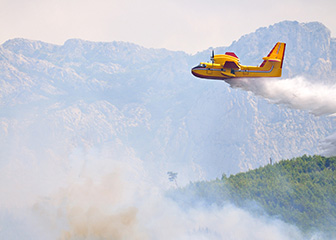
Commercial pilots are involved in activities such as firefighting and crop dusting.
Airline and commercial pilots fly and navigate airplanes, helicopters, and other aircraft.
### Duties
Pilots typically do the following:
- Check the overall condition of the aircraft before and after every flight
- Ensure that the aircraft is balanced and below its weight limit
- Verify that the fuel supply is adequate and that weather conditions are acceptable
- Prepare and submit flight plans to air traffic control
- Communicate with air traffic control over the aircraft’s radio system
- Operate and control aircraft along planned routes and during takeoffs and landings
- Monitor engines, fuel consumption, and other aircraft systems during flight
- Respond to changing conditions, such as weather events and emergencies (for example, a mechanical malfunction)
- Navigate the aircraft by using cockpit instruments and visual references
Pilots plan their flights by checking that the aircraft is operable and safe, that the cargo has been loaded correctly, and that weather conditions are acceptable. They file flight plans with air traffic control and may modify the plans in flight because of changing weather conditions or other factors.
Takeoff and landing can be the most demanding parts of a flight. They require close coordination among the pilot; copilot; flight engineer, if present; air traffic controllers; and ground personnel. Once in the air, the captain may have the first officer, if present, fly the aircraft, but the captain remains responsible for the aircraft. After landing, pilots fill out records that document their flight and the status of the aircraft.
Some pilots are also instructors using simulators and dual-controlled aircraft to teach students how to fly.
The following are examples of types of pilots:
***Airline pilots*** work primarily for airlines that transport passengers and cargo on a fixed schedule. The captain or pilot in command, usually the most experienced pilot, supervises all other crew members and has primary responsibility for the flight. The copilot, often called the first officer or second in command, shares flight duties with the captain. Some older planes require a third pilot known as a flight engineer, who monitors instruments and operates controls. Technology has automated many of these tasks, and new aircraft do not require flight engineers.
***Commercial pilots*** are involved in unscheduled flight activities, such as aerial application, charter flights, and aerial tours. Commercial pilots may have additional nonflight duties. Some commercial pilots schedule flights, arrange for maintenance of the aircraft, and load luggage themselves. Pilots who transport company executives, also known as corporate pilots, greet their passengers before embarking on the flight.
Agricultural pilots typically handle agricultural chemicals, such as pesticides, and may be involved in other agricultural practices in addition to flying. Pilots, such as helicopter pilots, who fly at low levels must constantly look for trees, bridges, power lines, transmission towers, and other obstacles.
With proper training, airline pilots also may be deputized as federal law enforcement officers and be issued firearms to protect the cockpit.
[\<- Summary](https://www.bls.gov/ooh/transportation-and-material-moving/airline-and-commercial-pilots.htm#tab-1) [Work Environment -\>](https://www.bls.gov/ooh/transportation-and-material-moving/airline-and-commercial-pilots.htm#tab-3)
## Work Environment [About this section](https://www.bls.gov/ooh/transportation-and-material-moving/airline-and-commercial-pilots.htm#TB_inline?height=325&width=325&inlineId=about-working-environment)

Pilots have variable work schedules, which may include overnight layovers.
Airline pilots, copilots, and flight engineers held about 100,000 jobs in 2024. The largest employers of airline pilots, copilots, and flight engineers were as follows:
| | |
|---|---|
| Scheduled air transportation | 87% |
| Couriers and express delivery services | 4 |
| Federal government, excluding postal service | 3 |
| Support activities for transportation | 2 |
| Nonscheduled air transportation | 1 |
Commercial pilots held about 55,400 jobs in 2024. The largest employers of commercial pilots were as follows:
| | |
|---|---|
| Nonscheduled air transportation | 39% |
| Technical and trade schools; private | 10 |
| Support activities for air transportation | 8 |
| Other ambulatory healthcare services | 7 |
| Professional, scientific, and technical services | 4 |
Pilots assigned to long-distance routes may experience fatigue and jetlag. Weather conditions may result in turbulence, requiring pilots to change the flying altitude. Flights can be long and flight decks are often sealed, so pilots work in small teams for long periods in close proximity to one another.
Aerial applicators, also known as crop dusters, may be exposed to toxic chemicals, typically use unimproved landing strips, such as grass, dirt, or gravel surface, and may be at risk of collision with power lines. Helicopter pilots involved in rescue operations may fly at low levels during bad weather or at night, and land in areas surrounded by power lines, highways, and other obstacles. Pilots use hearing protection devices to prevent their exposure to engine noise.
The high level of concentration required to fly an aircraft and the mental stress of being responsible for the safety of passengers can be fatiguing. Pilots must be alert and quick to react if something goes wrong. Federal law requires pilots to retire at age 65.
Most pilots are based near large airports.
### Injuries and Illnesses
Although fatalities are uncommon, airline and commercial pilots experience one of the highest rates of occupational fatalities of all occupations.
### Work Schedules
Federal regulations set the maximum work hours and minimum requirements for rest between flights for most pilots. Airline pilots fly an average of 75 hours per month and work an additional 150 hours per month performing other duties, such as checking weather conditions and preparing flight plans. Pilots have variable work schedules that may include some days of work followed by some days off. Flight assignments are based on seniority. Seniority enables pilots who have worked at a company for a long time to get preferred routes and schedules.
Airline pilots may spend several nights a week away from home because flight assignments often involve overnight layovers. When pilots are away from home, the airlines typically provide hotel accommodations, transportation to the airport, and an allowance for meals and other expenses.
Commercial pilots also may have irregular schedules. Although most commercial pilots remain near their home overnight, some may still work nonstandard hours.
[\<- What They Do](https://www.bls.gov/ooh/transportation-and-material-moving/airline-and-commercial-pilots.htm#tab-2) [How to Become One -\>](https://www.bls.gov/ooh/transportation-and-material-moving/airline-and-commercial-pilots.htm#tab-4)
## How to Become an Airline or Commercial Pilot [About this section](https://www.bls.gov/ooh/transportation-and-material-moving/airline-and-commercial-pilots.htm#TB_inline?height=325&width=325&inlineId=about-become-one)
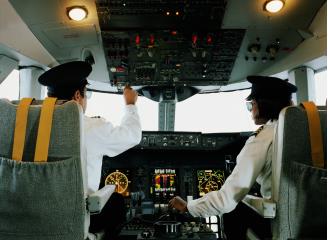
Airline and commercial pilots who are newly hired by airlines or on-demand air services companies must undergo on-the-job training.
Airline pilots typically need a bachelor’s degree and experience as a commercial or military pilot. Commercial pilots typically need flight training, and some employers may require or prefer them to have a degree.
Airline and commercial pilots also must have specific certificates and ratings from the [Federal Aviation Administration](https://www.faa.gov/) (FAA).
### Education
Airline pilots typically need a bachelor’s degree in any [field](https://www.bls.gov/ooh/field-of-degree/home.htm), including [transportation](https://www.bls.gov/ooh/field-of-degree/transportation/transportation-field-of-degree.htm), [engineering](https://www.bls.gov/ooh/field-of-degree/engineering/engineering-field-of-degree.htm), or [business](https://www.bls.gov/ooh/field-of-degree/business/business-field-of-degree.htm). They also complete flight training with independent FAA-certified flight instructors or at schools that offer flight training.
Commercial pilots typically complete flight training, and some employers require or prefer that they have a degree.
The FAA certifies hundreds of civilian flight schools, which range from small fixed base operators (FBO) to state universities. Some colleges and universities offer pilot training as part of a 2- or 4-year aviation degree.
### Training
Airline and commercial pilots who are newly hired by airlines or on-demand air services companies undergo on-the-job training in accordance with federal regulations. This training usually includes several weeks of ground school and flight training. Various types of ratings for specific aircraft, such as the Boeing 737 or Cessna Citation, typically are acquired through employer-based training and generally are earned by pilots who have at least a commercial pilot certificate.
Pilots also must maintain their experience in performing certain maneuvers. This requirement means that pilots must perform specific maneuvers and procedures a given number of times within a specified amount of time. Pilots also must undergo periodic training and medical examinations, generally every year or every other year.
### Work Experience in a Related Occupation
Airline pilots typically need work experience as a commercial or [military](https://www.bls.gov/ooh/military/military-careers.htm "Military Careers") pilot.
To get a job with a major or regional airline, pilots need extensive flight experience. Some pilots work as flight instructors or on-demand charter pilots, positions that usually require less experience than airline jobs require, to help build enough flying hours so that they can apply to the airlines.
Military pilots may transfer to civilian aviation and apply directly to airlines to become airline pilots.
### Licenses, Certifications, and Registrations
Those who are seeking a career as a professional pilot must meet FAA requirements. Pilots typically get their FAA-issued certificates and ratings in the following order:
- Student pilot certificate
- Private pilot certificate
- Instrument rating
- Commercial pilot certificate
- Multi-engine rating
- Airline transport pilot certificate
Each certificate and rating requires that pilots pass a knowledge test on the ground and a practical flying exam, usually called a check ride, in an appropriate aircraft. In addition to earning these credentials, many pilots get a flight instructor certificate after they get their commercial pilot certificate. The flight instructor certificate helps them build flight time and experience quickly and at less personal expense.
***Commercial pilot certificate.*** To qualify for a commercial pilot certificate, applicants must meet age and flight-hour requirements. Student pilots use a logbook and keep detailed records of their flight time, which must be endorsed by a flight instructor. Federal regulations specify the types and quantities of flight experience and knowledge needed.
Applicants must pass the appropriate medical exam, meet all of the detailed flight experience and knowledge requirements, and pass a written exam and a practical flight exam in order to get a commercial pilot certificate. The medical exam confirms that the pilot’s vision is correctable to 20/20 and that no physical or mental conditions exist that could impair the pilot’s performance.
Commercial pilots must hold an instrument rating if they want to carry passengers for pay more than 50 miles from the point of origin of their flight, or at night.
***Instrument rating.*** Pilots who earn an instrument rating can fly during periods of low visibility, also known as instrument meteorological conditions, or IMC. They may qualify for this rating by having at least 40 hours of instrument flight experience and 50 hours of cross-country flight time as pilot in command, and by meeting other requirements detailed in the federal regulations.
***Airline transport pilot (ATP) certificate.*** All pilot crews of a scheduled commercial airliner must have ATP certificates. To earn the ATP certificate, applicants must meet certain federal requirements, such as for age, hours of flight, and written and practical exams. A commercial pilot certificate is a prerequisite for the ATP. Airline pilots usually maintain one or more aircraft-type ratings, which allow them to fly aircraft that require specific training, depending on the requirements of their particular airline.
Pilots must pass periodic physical and practical flight examinations to be able to perform the duties granted by their certificate.
### Advancement
Commercial pilots may advance to airline pilots after completing a degree, accruing required flight time, and obtaining an ATP certificate.
Advancement for airline pilots depends on a system of seniority outlined in collective bargaining contracts.
### Important Qualities
The following are examples of qualities that are important for these workers to perform their duties. For more information, visit the Employment Projections (EP) [skills data page](https://www.bls.gov/emp/data/skills-data.htm).
***Communication skills.*** Pilots must speak clearly when conveying information to air traffic controllers and other crew members. They must also listen carefully for instructions.
***Observational skills.*** Pilots regularly watch over screens, gauges, and dials to make sure that all systems are in working order. They also need to maintain situational awareness by looking for other aircraft or obstacles. Pilots must be able to see clearly, be able to judge the distance between objects, and possess good color vision.
***Problem-solving skills.*** Pilots must be able to identify complex problems and figure out appropriate solutions. When a plane encounters turbulence, for example, pilots assess the weather conditions and request a change in route or altitude from air traffic control.
***Quick reaction time.*** Pilots must respond quickly, and with good judgment, to any impending danger.
[\<- Work Environment](https://www.bls.gov/ooh/transportation-and-material-moving/airline-and-commercial-pilots.htm#tab-3) [Pay -\>](https://www.bls.gov/ooh/transportation-and-material-moving/airline-and-commercial-pilots.htm#tab-5)
## Pay [About this section](https://www.bls.gov/ooh/transportation-and-material-moving/airline-and-commercial-pilots.htm#TB_inline?height=325&width=325&inlineId=about-pay)
### Airline and Commercial Pilots
Median annual wages, May 2024
Airline pilots, copilots, and flight engineers
\$226,600
Aircraft pilots and flight engineers
\$198,100
Commercial pilots
\$122,670
Air transportation workers
\$106,500
Total, all occupations
\$49,500
Note: All Occupations includes all occupations in the U.S. Economy.
Source: U.S. Bureau of Labor Statistics, Occupational Employment and Wage Statistics
The median annual wage for airline pilots, copilots, and flight engineers was \$226,600 in May 2024. The median wage is the wage at which half the workers in an occupation earned more than that amount and half earned less. The lowest 10 percent earned less than \$98,560, and the highest 10 percent earned more than \$239,200.
The median annual wage for commercial pilots was \$122,670 in May 2024. The lowest 10 percent earned less than \$59,330, and the highest 10 percent earned more than \$239,200.
In May 2024, the median annual wages for airline pilots, copilots, and flight engineers in the top industries in which they worked were as follows:
| | |
|---|---|
| Scheduled air transportation | \$239,200 or more |
| Couriers and express delivery services | 239,200 or more |
| Nonscheduled air transportation | 226,870 |
| Support activities for transportation | 138,290 |
| Federal government, excluding postal service | 130,980 |
In May 2024, the median annual wages for commercial pilots in the top industries in which they worked were as follows:
| | |
|---|---|
| Nonscheduled air transportation | \$124,330 |
| Support activities for air transportation | 123,120 |
| Professional, scientific, and technical services | 112,650 |
| Other ambulatory healthcare services | 96,910 |
| Technical and trade schools; private | 91,780 |
Airline pilots usually begin their careers as first officers and receive wage increases as they accumulate experience and seniority.
In addition, airline pilots receive an expense allowance, or “per diem,” for every hour they are away from home, and they may earn extra pay for international flights. Airline pilots and their immediate families usually are entitled to free or reduced-fare flights.
Federal regulations set the maximum work hours and minimum requirements for rest between flights for most pilots. Airline pilots fly an average of 75 hours per month and work an additional 150 hours per month performing other duties, such as checking weather conditions and preparing flight plans. Pilots have variable work schedules that may include several days of work followed by some days off.
Airline pilots may spend several nights a week away from home because flight assignments often involve overnight layovers. When pilots are away from home, the airlines typically provide hotel accommodations, transportation to the airport, and an allowance for meals and other expenses.
Commercial pilots also may have irregular schedules. Although most commercial pilots remain near their home overnight, they may still work nonstandard hours.
[\<- How to Become One](https://www.bls.gov/ooh/transportation-and-material-moving/airline-and-commercial-pilots.htm#tab-4) [Job Outlook -\>](https://www.bls.gov/ooh/transportation-and-material-moving/airline-and-commercial-pilots.htm#tab-6)
## Job Outlook [About this section](https://www.bls.gov/ooh/transportation-and-material-moving/airline-and-commercial-pilots.htm#TB_inline?height=325&width=325&inlineId=about-job-outlook)
### Airline and Commercial Pilots
Percent change in employment, projected 2024–34
Air transportation workers
6%
Commercial pilots
5%
Aircraft pilots and flight engineers
4%
Airline pilots, copilots, and flight engineers
4%
Total, all occupations
3%
Note: All Occupations includes all occupations in the U.S. Economy.
Source: U.S. Bureau of Labor Statistics, Employment Projections program
Overall employment of airline and commercial pilots is projected to grow 4 percent from 2024 to 2034, about as fast as the average for all occupations.
About 18,200 openings for airline and commercial pilots are projected each year, on average, over the decade. Many of those openings are expected to result from the need to replace workers who transfer to different occupations or exit the labor force, such as to retire.
### Employment
Employment of airline pilots is projected to grow as the demand for air travel, particularly leisure travel, increases. Continued e-commerce growth also will result in increased freight activity, which should further support employment demand.
Continued demand for private chartered flights is expected to sustain job growth for commercial pilots.
| Occupational Title | SOC Code | Employment, 2024 | Projected Employment, 2034 | Change, 2024–34 | Employment by Industry | |
|---|---|---|---|---|---|---|
| Percent | Numeric | | | | | |
| SOURCE: U.S. Bureau of Labor Statistics, Employment Projections program | | | | | | |
| **Aircraft pilots and flight engineers** | 53-2010 | 155,400 | 162,200 | 4 | 6,700 | [Get data](https://data.bls.gov/projections/nationalMatrix?queryParams=53-2010&ioType=o) |
| **Airline pilots, copilots, and flight engineers** | 53-2011 | 100,000 | 103,900 | 4 | 3,900 | [Get data](https://data.bls.gov/projections/nationalMatrix?queryParams=53-2011&ioType=o) |
| **Commercial pilots** | 53-2012 | 55,400 | 58,300 | 5 | 2,800 | [Get data](https://data.bls.gov/projections/nationalMatrix?queryParams=53-2012&ioType=o) |
[\<- Pay](https://www.bls.gov/ooh/transportation-and-material-moving/airline-and-commercial-pilots.htm#tab-5) [State & Area Data -\>](https://www.bls.gov/ooh/transportation-and-material-moving/airline-and-commercial-pilots.htm#tab-7)
## State & Area Data [About this section](https://www.bls.gov/ooh/transportation-and-material-moving/airline-and-commercial-pilots.htm#TB_inline?height=325&width=325&inlineId=about-state-area)
### **Occupational Employment and Wage Statistics (OEWS)**
The [Occupational Employment and Wage Statistics](https://www.bls.gov/oes/) (OEWS) program produces employment and wage estimates annually for over 800 occupations. These estimates are available for the nation as a whole, for individual states, and for metropolitan and nonmetropolitan areas. The link below goes to OEWS data maps for employment and wages by state and area. Use the dropdown boxes to select an occupation.
- [Occupational Employment and Wage Statistics (OEWS) Profiles](https://data.bls.gov/oesprofile/)
### **Projections Central**
Occupational employment projections are developed for all states by Labor Market Information (LMI) or individual state Employment Projections offices. All state projections data are available at [www.projectionscentral.org](http://www.projectionscentral.org/). Information on this site allows projected employment growth for an occupation to be compared among states or to be compared within one state. In addition, states may produce projections for areas; there are links to each state’s websites where these data may be retrieved.
### **CareerOneStop**
CareerOneStop includes hundreds of [occupational profiles](http://www.careerinfonet.org/Occupations/select_occupation.aspx?next=occ_rep&level=&optstatus=111111111&id=1&nodeid=2&soccode=&stfips=&jobfam=&menuMode) with data available by state and metro area. There are links in the left-hand side menu to compare occupational employment by state and occupational wages by local area or metro area. There is also a [salary info tool](https://www.careeronestop.org/Toolkit/Wages/find-salary.aspx?frd=true) to search for wages by zip code.
[\<- Job Outlook](https://www.bls.gov/ooh/transportation-and-material-moving/airline-and-commercial-pilots.htm#tab-6) [Similar Occupations -\>](https://www.bls.gov/ooh/transportation-and-material-moving/airline-and-commercial-pilots.htm#tab-8)
## Similar Occupations [About this section](https://www.bls.gov/ooh/transportation-and-material-moving/airline-and-commercial-pilots.htm#TB_inline?height=325&width=325&inlineId=about-similar-jobs)
This table shows a list of occupations with job duties that are similar to those of airline and commercial pilots.
| | Occupation | Job Duties | ENTRY-LEVEL EDUCATION [](https://www.bls.gov/#TB_inline?height=325&width=325&inlineId=inlinehelp-education) | 2024 MEDIAN PAY [](https://www.bls.gov/#TB_inline?height=325&width=325&inlineId=inlinehelp-pay) |
|---|---|---|---|---|
| [](https://www.bls.gov/ooh/transportation-and-material-moving/air-traffic-controllers.htm) | **[Air Traffic Controllers](https://www.bls.gov/ooh/transportation-and-material-moving/air-traffic-controllers.htm)** | Air traffic controllers coordinate the movement of aircraft to maintain safe distances between them. | Associate's degree | \$144,580 |
| [](https://www.bls.gov/ooh/transportation-and-material-moving/water-transportation-occupations.htm) | **[Water Transportation Workers](https://www.bls.gov/ooh/transportation-and-material-moving/water-transportation-occupations.htm)** | Water transportation workers operate and maintain vessels that take cargo and people over water. | [See How to Become One](https://www.bls.gov/ooh/transportation-and-material-moving/water-transportation-occupations.htm#tab-4) | \$66,490 |
[\<- State & Area Data](https://www.bls.gov/ooh/transportation-and-material-moving/airline-and-commercial-pilots.htm#tab-7) [More Info -\>](https://www.bls.gov/ooh/transportation-and-material-moving/airline-and-commercial-pilots.htm#tab-9)
## Contacts for More Information [About this section](https://www.bls.gov/ooh/transportation-and-material-moving/airline-and-commercial-pilots.htm#TB_inline?height=325&width=325&inlineId=about-more-information)
For specific information about pilot certificate and ratings requirements and other federal regulations, visit
[Code of Federal Regulations, Title 14](https://www.ecfr.gov/current/title-14)
For more information about pilots, visit
[Federal Aviation Administration](https://www.faa.gov/)
### O\*NET
[Airline Pilots, Copilots, and Flight Engineers](https://www.onetonline.org/link/summary/53-2011.00)
[Commercial Pilots](https://www.onetonline.org/link/summary/53-2012.00)
[\<- Similar Occupations](https://www.bls.gov/ooh/transportation-and-material-moving/airline-and-commercial-pilots.htm#tab-8)
**Suggested citation:**
Bureau of Labor Statistics, U.S. Department of Labor, Occupational Outlook Handbook, Airline and Commercial Pilots,
at <https://www.bls.gov/ooh/transportation-and-material-moving/airline-and-commercial-pilots.htm> (visited *March 27, 2026*).
**Last Modified Date:** Thursday, August 28, 2025
## What They Do
The *What They Do* tab describes the typical duties and responsibilities of workers in the occupation, including what tools and equipment they use and how closely they are supervised. This tab also covers different types of occupational specialties.
## Work Environment
The *Work Environment* tab includes the number of jobs held in the occupation and describes the workplace, the level of physical activity expected, and typical hours worked. It may also discuss the major industries that employed the occupation. This tab may also describe opportunities for part-time work, the amount and type of travel required, any safety equipment that is used, and the risk of injury that workers may face.
## How to Become One
The *How to Become One* tab describes how to prepare for a job in the occupation. This tab can include information on education, training, work experience, licensing and certification, and important qualities that are required or helpful for entering or working in the occupation.
## Pay
The *Pay* tab describes typical earnings and how workers in the occupation are compensated—annual salaries, hourly wages, commissions, tips, or bonuses. Within every occupation, earnings vary by experience, responsibility, performance, tenure, and geographic area. For most profiles, this tab has a table with wages in the major industries employing the occupation. It does not include pay for self-employed workers, agriculture workers, or workers in private households because these data are not collected by the Occupational Employment and Wage Statistics (OEWS) survey, the source of BLS wage data in the OOH.
## State & Area Data
The *State and Area Data* tab provides links to state and area occupational data from the Occupational Employment and Wage Statistics (OEWS) program, state projections data from Projections Central, and occupational information from the Department of Labor's CareerOneStop.
## Job Outlook
The *Job Outlook* tab describes the factors that affect employment growth or decline in the occupation, and in some instances, describes the relationship between the number of job seekers and the number of job openings.
## Similar Occupations
The *Similar Occupations* tab describes occupations that share similar duties, skills, interests, education, or training with the occupation covered in the profile.
## Contacts for More Information
The *More Information* tab provides the Internet addresses of associations, government agencies, unions, and other organizations that can provide additional information on the occupation. This tab also includes links to relevant occupational information from the Occupational Information Network (O\*NET).
## 2024 Median Pay
The wage at which half of the workers in the occupation earned more than that amount and half earned less. Median wage data are from the BLS Occupational Employment and Wage Statistics survey. In May 2024, the median annual wage for all workers was \$49,500.
## On-the-job Training
Additional training needed (postemployment) to attain competency in the skills needed in this occupation.
## Entry-level Education
Typical level of education that most workers need to enter this occupation.
## Work experience in a related occupation
Work experience that is commonly considered necessary by employers, or is a commonly accepted substitute for more formal types of training or education.
## Number of Jobs, 2024
The employment, or size, of this occupation in 2024, which is the base year of the 2024–34 employment projections.
## Job Outlook, 2024-34
The projected percent change in employment from 2024 to 2034. The average growth rate for all occupations is 3 percent.
## Employment Change, 2024-34
The projected numeric change in employment from 2024 to 2034.
## Entry-level Education
Typical level of education that most workers need to enter this occupation.
## On-the-job Training
Additional training needed (postemployment) to attain competency in the skills needed in this occupation.
## Employment Change, projected 2024-34
The projected numeric change in employment from 2024 to 2034.
## Growth Rate (Projected)
The percent change of employment for each occupation from 2024 to 2034.
## Projected Number of New Jobs
The projected numeric change in employment from 2024 to 2034.
## Projected Growth Rate
The projected percent change in employment from 2024 to 2034.
## 2024 Median Pay
The wage at which half of the workers in the occupation earned more than that amount and half earned less. Median wage data are from the BLS Occupational Employment and Wage Statistics survey. In May 2024, the median annual wage for all workers was \$49,500.
- [Home](https://www.bls.gov/)
- [Subjects](https://www.bls.gov/bls/proghome.htm)
- [Data Tools](https://www.bls.gov/data/)
- [Publications](https://www.bls.gov/opub/)
- [Economic Releases](https://www.bls.gov/bls/newsrels.htm)
- [Classroom](https://www.bls.gov/k12/)
- [Beta](https://www.bls.gov/beta/)

**U.S. Bureau of Labor Statistics** Occupational Outlook Handbook Office of Employment and Unemployment Statistics Suitland Federal Center Floor 3 4600 Silver Hill Road Washington, DC 20212-0002
[Telephone: 202-691-5700](tel:12026915700) [www.bls.gov/ooh](https://www.bls.gov/ooh/home.htm) [Contact OOH](https://data.bls.gov/ooh/about/ooh-faqs.htm)
**resources**
- [Inspector General (OIG)](https://www.oig.dol.gov/)
- [Budget and Performance](https://www.bls.gov/bls/bls_budget_and_performance.htm)
- [Department of Labor Grants](https://www.dol.gov/grants)
- [No Fear Act](https://www.bls.gov/bls/no_fear_act.htm)
- [USA.gov](https://www.usa.gov/)
**about the site**
- [Sitemap](https://www.bls.gov/bls/sitemap.htm)
- [Freedom of Information Act](https://www.bls.gov/bls/blsfoia.htm)
- [Privacy and Security Statement](https://www.bls.gov/bls/pss.htm)
- [Disclaimers](https://www.bls.gov/bls/disclaimer.htm)
- [Linking and Copyright Info](https://www.bls.gov/bls/linksite.htm)
- [Important Website Notices](https://www.bls.gov/bls/website-policies.htm)
- [Help and Tutorials](https://www.bls.gov/help/)
- [Accessibility Statement](https://www.bls.gov/bls/ada.htm)
Connect With BLS
[Bluesky](https://bsky.app/profile/usbls.bsky.social "Connect with BLS on Bluesky")
[Instagram](https://www.instagram.com/usbls_gov/ "Connect with BLS on Instagram")
[LinkedIn](https://www.linkedin.com/company/bureau-of-labor-statistics/ "Connect with BLS on LinkedIn")
[Threads](https://www.threads.net/@usbls_gov "Connect with BLS on Threads")
[Visit BLS on X](https://x.com/BLS_gov "Connect with BLS on X, formerly referred to as Twitter")
[Youtube](https://www.youtube.com/channel/UCijn3WBpHtx4AvSya7NER9Q "BLS Youtube")
[Email]("Subscribe to BLS E-mail Updates")
- [Publications](https://www.bls.gov/opub/)
- [Occupational Outlook Handbook](https://www.bls.gov/ooh/)
- [Transportation and Material Moving](https://www.bls.gov/ooh/transportation-and-material-moving/home.htm) |
| Readable Markdown | ## Summary
Please enable javascript to play this video.
[Video transcript available at https://www.youtube.com/watch?v=oey4mi\_QV48.](https://www.youtube.com/watch?v=oey4mi_QV48)
| Quick Facts: Airline and Commercial Pilots | |
|---|---|
| [2024 Median Pay](https://www.bls.gov/ooh/transportation-and-material-moving/airline-and-commercial-pilots.htm#TB_inline?height=325&width=325&inlineId=qf-wage) | \$198,100 per year |
| [Typical Entry-Level Education](https://www.bls.gov/ooh/transportation-and-material-moving/airline-and-commercial-pilots.htm#TB_inline?height=325&width=325&inlineId=qf-education) | [See How to Become One](https://www.bls.gov/ooh/transportation-and-material-moving/airline-and-commercial-pilots.htm#tab-4) |
| [Work Experience in a Related Occupation](https://www.bls.gov/ooh/transportation-and-material-moving/airline-and-commercial-pilots.htm#TB_inline?height=325&width=325&inlineId=qf-experience) | [See How to Become One](https://www.bls.gov/ooh/transportation-and-material-moving/airline-and-commercial-pilots.htm#tab-4) |
| [On-the-job Training](https://www.bls.gov/ooh/transportation-and-material-moving/airline-and-commercial-pilots.htm#TB_inline?height=325&width=325&inlineId=qf-training) | Moderate-term on-the-job training |
| [Number of Jobs, 2024](https://www.bls.gov/ooh/transportation-and-material-moving/airline-and-commercial-pilots.htm#TB_inline?height=325&width=325&inlineId=qf-number-jobs) | 155,400 |
| [Job Outlook, 2024–34](https://www.bls.gov/ooh/transportation-and-material-moving/airline-and-commercial-pilots.htm#TB_inline?height=325&width=325&inlineId=qf-outlook) | 4% (As fast as average) |
| [Employment Change, 2024–34](https://www.bls.gov/ooh/transportation-and-material-moving/airline-and-commercial-pilots.htm#TB_inline?height=325&width=325&inlineId=qf-emp-change) | 6,700 |
### [What Airline and Commercial Pilots Do](https://www.bls.gov/ooh/transportation-and-material-moving/airline-and-commercial-pilots.htm#tab-2)
Airline and commercial pilots fly and navigate airplanes, helicopters, and other aircraft.
### [Work Environment](https://www.bls.gov/ooh/transportation-and-material-moving/airline-and-commercial-pilots.htm#tab-3)
Pilots usually have variable work schedules, with overnight layovers that are more common for airline pilots.
### [How to Become an Airline or Commercial Pilot](https://www.bls.gov/ooh/transportation-and-material-moving/airline-and-commercial-pilots.htm#tab-4)
Airline pilots typically need a bachelor’s degree and experience as a commercial or [military](https://www.bls.gov/ooh/military/military-careers.htm "Military Careers") pilot. Commercial pilots typically need flight training. Both also must meet [Federal Aviation Administration](https://www.faa.gov/) (FAA) requirements.
### [Pay](https://www.bls.gov/ooh/transportation-and-material-moving/airline-and-commercial-pilots.htm#tab-5)
The median annual wage for airline pilots, copilots, and flight engineers was \$226,600 in May 2024.
The median annual wage for commercial pilots was \$122,670 in May 2024.
### [Job Outlook](https://www.bls.gov/ooh/transportation-and-material-moving/airline-and-commercial-pilots.htm#tab-6)
Overall employment of airline and commercial pilots is projected to grow 4 percent from 2024 to 2034, about as fast as the average for all occupations.
About 18,200 openings for airline and commercial pilots are projected each year, on average, over the decade. Many of those openings are expected to result from the need to replace workers who transfer to different occupations or exit the labor force, such as to retire.
### [State & Area Data](https://www.bls.gov/ooh/transportation-and-material-moving/airline-and-commercial-pilots.htm#tab-7)
Explore resources for employment and wages by state and area for airline and commercial pilots.
### [Similar Occupations](https://www.bls.gov/ooh/transportation-and-material-moving/airline-and-commercial-pilots.htm#tab-8)
Compare the job duties, education, job growth, and pay of airline and commercial pilots with similar occupations.
### [More Information, Including Links to O\*NET](https://www.bls.gov/ooh/transportation-and-material-moving/airline-and-commercial-pilots.htm#tab-9)
Learn more about airline and commercial pilots by visiting additional resources, including O\*NET, a source on key characteristics of workers and occupations.
## What Airline and Commercial Pilots Do [About this section](https://www.bls.gov/ooh/transportation-and-material-moving/airline-and-commercial-pilots.htm#TB_inline?height=325&width=325&inlineId=about-what-they-do)

Commercial pilots are involved in activities such as firefighting and crop dusting.
Airline and commercial pilots fly and navigate airplanes, helicopters, and other aircraft.
### Duties
Pilots typically do the following:
- Check the overall condition of the aircraft before and after every flight
- Ensure that the aircraft is balanced and below its weight limit
- Verify that the fuel supply is adequate and that weather conditions are acceptable
- Prepare and submit flight plans to air traffic control
- Communicate with air traffic control over the aircraft’s radio system
- Operate and control aircraft along planned routes and during takeoffs and landings
- Monitor engines, fuel consumption, and other aircraft systems during flight
- Respond to changing conditions, such as weather events and emergencies (for example, a mechanical malfunction)
- Navigate the aircraft by using cockpit instruments and visual references
Pilots plan their flights by checking that the aircraft is operable and safe, that the cargo has been loaded correctly, and that weather conditions are acceptable. They file flight plans with air traffic control and may modify the plans in flight because of changing weather conditions or other factors.
Takeoff and landing can be the most demanding parts of a flight. They require close coordination among the pilot; copilot; flight engineer, if present; air traffic controllers; and ground personnel. Once in the air, the captain may have the first officer, if present, fly the aircraft, but the captain remains responsible for the aircraft. After landing, pilots fill out records that document their flight and the status of the aircraft.
Some pilots are also instructors using simulators and dual-controlled aircraft to teach students how to fly.
The following are examples of types of pilots:
***Airline pilots*** work primarily for airlines that transport passengers and cargo on a fixed schedule. The captain or pilot in command, usually the most experienced pilot, supervises all other crew members and has primary responsibility for the flight. The copilot, often called the first officer or second in command, shares flight duties with the captain. Some older planes require a third pilot known as a flight engineer, who monitors instruments and operates controls. Technology has automated many of these tasks, and new aircraft do not require flight engineers.
***Commercial pilots*** are involved in unscheduled flight activities, such as aerial application, charter flights, and aerial tours. Commercial pilots may have additional nonflight duties. Some commercial pilots schedule flights, arrange for maintenance of the aircraft, and load luggage themselves. Pilots who transport company executives, also known as corporate pilots, greet their passengers before embarking on the flight.
Agricultural pilots typically handle agricultural chemicals, such as pesticides, and may be involved in other agricultural practices in addition to flying. Pilots, such as helicopter pilots, who fly at low levels must constantly look for trees, bridges, power lines, transmission towers, and other obstacles.
With proper training, airline pilots also may be deputized as federal law enforcement officers and be issued firearms to protect the cockpit.
## Work Environment [About this section](https://www.bls.gov/ooh/transportation-and-material-moving/airline-and-commercial-pilots.htm#TB_inline?height=325&width=325&inlineId=about-working-environment)

Pilots have variable work schedules, which may include overnight layovers.
Airline pilots, copilots, and flight engineers held about 100,000 jobs in 2024. The largest employers of airline pilots, copilots, and flight engineers were as follows:
| | |
|---|---|
| Scheduled air transportation | 87% |
| Couriers and express delivery services | 4 |
| Federal government, excluding postal service | 3 |
| Support activities for transportation | 2 |
| Nonscheduled air transportation | 1 |
Commercial pilots held about 55,400 jobs in 2024. The largest employers of commercial pilots were as follows:
| | |
|---|---|
| Nonscheduled air transportation | 39% |
| Technical and trade schools; private | 10 |
| Support activities for air transportation | 8 |
| Other ambulatory healthcare services | 7 |
| Professional, scientific, and technical services | 4 |
Pilots assigned to long-distance routes may experience fatigue and jetlag. Weather conditions may result in turbulence, requiring pilots to change the flying altitude. Flights can be long and flight decks are often sealed, so pilots work in small teams for long periods in close proximity to one another.
Aerial applicators, also known as crop dusters, may be exposed to toxic chemicals, typically use unimproved landing strips, such as grass, dirt, or gravel surface, and may be at risk of collision with power lines. Helicopter pilots involved in rescue operations may fly at low levels during bad weather or at night, and land in areas surrounded by power lines, highways, and other obstacles. Pilots use hearing protection devices to prevent their exposure to engine noise.
The high level of concentration required to fly an aircraft and the mental stress of being responsible for the safety of passengers can be fatiguing. Pilots must be alert and quick to react if something goes wrong. Federal law requires pilots to retire at age 65.
Most pilots are based near large airports.
### Injuries and Illnesses
Although fatalities are uncommon, airline and commercial pilots experience one of the highest rates of occupational fatalities of all occupations.
### Work Schedules
Federal regulations set the maximum work hours and minimum requirements for rest between flights for most pilots. Airline pilots fly an average of 75 hours per month and work an additional 150 hours per month performing other duties, such as checking weather conditions and preparing flight plans. Pilots have variable work schedules that may include some days of work followed by some days off. Flight assignments are based on seniority. Seniority enables pilots who have worked at a company for a long time to get preferred routes and schedules.
Airline pilots may spend several nights a week away from home because flight assignments often involve overnight layovers. When pilots are away from home, the airlines typically provide hotel accommodations, transportation to the airport, and an allowance for meals and other expenses.
Commercial pilots also may have irregular schedules. Although most commercial pilots remain near their home overnight, some may still work nonstandard hours.
## How to Become an Airline or Commercial Pilot [About this section](https://www.bls.gov/ooh/transportation-and-material-moving/airline-and-commercial-pilots.htm#TB_inline?height=325&width=325&inlineId=about-become-one)

Airline and commercial pilots who are newly hired by airlines or on-demand air services companies must undergo on-the-job training.
Airline pilots typically need a bachelor’s degree and experience as a commercial or military pilot. Commercial pilots typically need flight training, and some employers may require or prefer them to have a degree.
Airline and commercial pilots also must have specific certificates and ratings from the [Federal Aviation Administration](https://www.faa.gov/) (FAA).
### Education
Airline pilots typically need a bachelor’s degree in any [field](https://www.bls.gov/ooh/field-of-degree/home.htm), including [transportation](https://www.bls.gov/ooh/field-of-degree/transportation/transportation-field-of-degree.htm), [engineering](https://www.bls.gov/ooh/field-of-degree/engineering/engineering-field-of-degree.htm), or [business](https://www.bls.gov/ooh/field-of-degree/business/business-field-of-degree.htm). They also complete flight training with independent FAA-certified flight instructors or at schools that offer flight training.
Commercial pilots typically complete flight training, and some employers require or prefer that they have a degree.
The FAA certifies hundreds of civilian flight schools, which range from small fixed base operators (FBO) to state universities. Some colleges and universities offer pilot training as part of a 2- or 4-year aviation degree.
### Training
Airline and commercial pilots who are newly hired by airlines or on-demand air services companies undergo on-the-job training in accordance with federal regulations. This training usually includes several weeks of ground school and flight training. Various types of ratings for specific aircraft, such as the Boeing 737 or Cessna Citation, typically are acquired through employer-based training and generally are earned by pilots who have at least a commercial pilot certificate.
Pilots also must maintain their experience in performing certain maneuvers. This requirement means that pilots must perform specific maneuvers and procedures a given number of times within a specified amount of time. Pilots also must undergo periodic training and medical examinations, generally every year or every other year.
### Work Experience in a Related Occupation
Airline pilots typically need work experience as a commercial or [military](https://www.bls.gov/ooh/military/military-careers.htm "Military Careers") pilot.
To get a job with a major or regional airline, pilots need extensive flight experience. Some pilots work as flight instructors or on-demand charter pilots, positions that usually require less experience than airline jobs require, to help build enough flying hours so that they can apply to the airlines.
Military pilots may transfer to civilian aviation and apply directly to airlines to become airline pilots.
### Licenses, Certifications, and Registrations
Those who are seeking a career as a professional pilot must meet FAA requirements. Pilots typically get their FAA-issued certificates and ratings in the following order:
- Student pilot certificate
- Private pilot certificate
- Instrument rating
- Commercial pilot certificate
- Multi-engine rating
- Airline transport pilot certificate
Each certificate and rating requires that pilots pass a knowledge test on the ground and a practical flying exam, usually called a check ride, in an appropriate aircraft. In addition to earning these credentials, many pilots get a flight instructor certificate after they get their commercial pilot certificate. The flight instructor certificate helps them build flight time and experience quickly and at less personal expense.
***Commercial pilot certificate.*** To qualify for a commercial pilot certificate, applicants must meet age and flight-hour requirements. Student pilots use a logbook and keep detailed records of their flight time, which must be endorsed by a flight instructor. Federal regulations specify the types and quantities of flight experience and knowledge needed.
Applicants must pass the appropriate medical exam, meet all of the detailed flight experience and knowledge requirements, and pass a written exam and a practical flight exam in order to get a commercial pilot certificate. The medical exam confirms that the pilot’s vision is correctable to 20/20 and that no physical or mental conditions exist that could impair the pilot’s performance.
Commercial pilots must hold an instrument rating if they want to carry passengers for pay more than 50 miles from the point of origin of their flight, or at night.
***Instrument rating.*** Pilots who earn an instrument rating can fly during periods of low visibility, also known as instrument meteorological conditions, or IMC. They may qualify for this rating by having at least 40 hours of instrument flight experience and 50 hours of cross-country flight time as pilot in command, and by meeting other requirements detailed in the federal regulations.
***Airline transport pilot (ATP) certificate.*** All pilot crews of a scheduled commercial airliner must have ATP certificates. To earn the ATP certificate, applicants must meet certain federal requirements, such as for age, hours of flight, and written and practical exams. A commercial pilot certificate is a prerequisite for the ATP. Airline pilots usually maintain one or more aircraft-type ratings, which allow them to fly aircraft that require specific training, depending on the requirements of their particular airline.
Pilots must pass periodic physical and practical flight examinations to be able to perform the duties granted by their certificate.
### Advancement
Commercial pilots may advance to airline pilots after completing a degree, accruing required flight time, and obtaining an ATP certificate.
Advancement for airline pilots depends on a system of seniority outlined in collective bargaining contracts.
### Important Qualities
The following are examples of qualities that are important for these workers to perform their duties. For more information, visit the Employment Projections (EP) [skills data page](https://www.bls.gov/emp/data/skills-data.htm).
***Communication skills.*** Pilots must speak clearly when conveying information to air traffic controllers and other crew members. They must also listen carefully for instructions.
***Observational skills.*** Pilots regularly watch over screens, gauges, and dials to make sure that all systems are in working order. They also need to maintain situational awareness by looking for other aircraft or obstacles. Pilots must be able to see clearly, be able to judge the distance between objects, and possess good color vision.
***Problem-solving skills.*** Pilots must be able to identify complex problems and figure out appropriate solutions. When a plane encounters turbulence, for example, pilots assess the weather conditions and request a change in route or altitude from air traffic control.
***Quick reaction time.*** Pilots must respond quickly, and with good judgment, to any impending danger.
## Pay [About this section](https://www.bls.gov/ooh/transportation-and-material-moving/airline-and-commercial-pilots.htm#TB_inline?height=325&width=325&inlineId=about-pay)
### Airline and Commercial Pilots
Median annual wages, May 2024
Airline pilots, copilots, and flight engineers
\$226,600
Aircraft pilots and flight engineers
\$198,100
Commercial pilots
\$122,670
Air transportation workers
\$106,500
Total, all occupations
\$49,500
The median annual wage for airline pilots, copilots, and flight engineers was \$226,600 in May 2024. The median wage is the wage at which half the workers in an occupation earned more than that amount and half earned less. The lowest 10 percent earned less than \$98,560, and the highest 10 percent earned more than \$239,200.
The median annual wage for commercial pilots was \$122,670 in May 2024. The lowest 10 percent earned less than \$59,330, and the highest 10 percent earned more than \$239,200.
In May 2024, the median annual wages for airline pilots, copilots, and flight engineers in the top industries in which they worked were as follows:
| | |
|---|---|
| Scheduled air transportation | \$239,200 or more |
| Couriers and express delivery services | 239,200 or more |
| Nonscheduled air transportation | 226,870 |
| Support activities for transportation | 138,290 |
| Federal government, excluding postal service | 130,980 |
In May 2024, the median annual wages for commercial pilots in the top industries in which they worked were as follows:
| | |
|---|---|
| Nonscheduled air transportation | \$124,330 |
| Support activities for air transportation | 123,120 |
| Professional, scientific, and technical services | 112,650 |
| Other ambulatory healthcare services | 96,910 |
| Technical and trade schools; private | 91,780 |
Airline pilots usually begin their careers as first officers and receive wage increases as they accumulate experience and seniority.
In addition, airline pilots receive an expense allowance, or “per diem,” for every hour they are away from home, and they may earn extra pay for international flights. Airline pilots and their immediate families usually are entitled to free or reduced-fare flights.
Federal regulations set the maximum work hours and minimum requirements for rest between flights for most pilots. Airline pilots fly an average of 75 hours per month and work an additional 150 hours per month performing other duties, such as checking weather conditions and preparing flight plans. Pilots have variable work schedules that may include several days of work followed by some days off.
Airline pilots may spend several nights a week away from home because flight assignments often involve overnight layovers. When pilots are away from home, the airlines typically provide hotel accommodations, transportation to the airport, and an allowance for meals and other expenses.
Commercial pilots also may have irregular schedules. Although most commercial pilots remain near their home overnight, they may still work nonstandard hours.
## Job Outlook [About this section](https://www.bls.gov/ooh/transportation-and-material-moving/airline-and-commercial-pilots.htm#TB_inline?height=325&width=325&inlineId=about-job-outlook)
### Airline and Commercial Pilots
Percent change in employment, projected 2024–34
Air transportation workers
6%
Commercial pilots
5%
Aircraft pilots and flight engineers
4%
Airline pilots, copilots, and flight engineers
4%
Total, all occupations
3%
Overall employment of airline and commercial pilots is projected to grow 4 percent from 2024 to 2034, about as fast as the average for all occupations.
About 18,200 openings for airline and commercial pilots are projected each year, on average, over the decade. Many of those openings are expected to result from the need to replace workers who transfer to different occupations or exit the labor force, such as to retire.
### Employment
Employment of airline pilots is projected to grow as the demand for air travel, particularly leisure travel, increases. Continued e-commerce growth also will result in increased freight activity, which should further support employment demand.
Continued demand for private chartered flights is expected to sustain job growth for commercial pilots.
| Occupational Title | SOC Code | Employment, 2024 | Projected Employment, 2034 | Change, 2024–34 | Employment by Industry | |
|---|---|---|---|---|---|---|
| Percent | Numeric | | | | | |
| SOURCE: U.S. Bureau of Labor Statistics, Employment Projections program | | | | | | |
| **Aircraft pilots and flight engineers** | 53-2010 | 155,400 | 162,200 | 4 | 6,700 | [Get data](https://data.bls.gov/projections/nationalMatrix?queryParams=53-2010&ioType=o) |
| **Airline pilots, copilots, and flight engineers** | 53-2011 | 100,000 | 103,900 | 4 | 3,900 | [Get data](https://data.bls.gov/projections/nationalMatrix?queryParams=53-2011&ioType=o) |
| **Commercial pilots** | 53-2012 | 55,400 | 58,300 | 5 | 2,800 | [Get data](https://data.bls.gov/projections/nationalMatrix?queryParams=53-2012&ioType=o) |
## State & Area Data [About this section](https://www.bls.gov/ooh/transportation-and-material-moving/airline-and-commercial-pilots.htm#TB_inline?height=325&width=325&inlineId=about-state-area)
### **Occupational Employment and Wage Statistics (OEWS)**
The [Occupational Employment and Wage Statistics](https://www.bls.gov/oes/) (OEWS) program produces employment and wage estimates annually for over 800 occupations. These estimates are available for the nation as a whole, for individual states, and for metropolitan and nonmetropolitan areas. The link below goes to OEWS data maps for employment and wages by state and area. Use the dropdown boxes to select an occupation.
- [Occupational Employment and Wage Statistics (OEWS) Profiles](https://data.bls.gov/oesprofile/)
### **Projections Central**
Occupational employment projections are developed for all states by Labor Market Information (LMI) or individual state Employment Projections offices. All state projections data are available at [www.projectionscentral.org](http://www.projectionscentral.org/). Information on this site allows projected employment growth for an occupation to be compared among states or to be compared within one state. In addition, states may produce projections for areas; there are links to each state’s websites where these data may be retrieved.
### **CareerOneStop**
CareerOneStop includes hundreds of [occupational profiles](http://www.careerinfonet.org/Occupations/select_occupation.aspx?next=occ_rep&level=&optstatus=111111111&id=1&nodeid=2&soccode=&stfips=&jobfam=&menuMode) with data available by state and metro area. There are links in the left-hand side menu to compare occupational employment by state and occupational wages by local area or metro area. There is also a [salary info tool](https://www.careeronestop.org/Toolkit/Wages/find-salary.aspx?frd=true) to search for wages by zip code.
## Similar Occupations [About this section](https://www.bls.gov/ooh/transportation-and-material-moving/airline-and-commercial-pilots.htm#TB_inline?height=325&width=325&inlineId=about-similar-jobs)
This table shows a list of occupations with job duties that are similar to those of airline and commercial pilots.
| | Occupation | Job Duties | ENTRY-LEVEL EDUCATION [](https://www.bls.gov/#TB_inline?height=325&width=325&inlineId=inlinehelp-education) | 2024 MEDIAN PAY [](https://www.bls.gov/#TB_inline?height=325&width=325&inlineId=inlinehelp-pay) |
|---|---|---|---|---|
| [](https://www.bls.gov/ooh/transportation-and-material-moving/air-traffic-controllers.htm) | **[Air Traffic Controllers](https://www.bls.gov/ooh/transportation-and-material-moving/air-traffic-controllers.htm)** | Air traffic controllers coordinate the movement of aircraft to maintain safe distances between them. | Associate's degree | \$144,580 |
| [](https://www.bls.gov/ooh/transportation-and-material-moving/water-transportation-occupations.htm) | **[Water Transportation Workers](https://www.bls.gov/ooh/transportation-and-material-moving/water-transportation-occupations.htm)** | Water transportation workers operate and maintain vessels that take cargo and people over water. | [See How to Become One](https://www.bls.gov/ooh/transportation-and-material-moving/water-transportation-occupations.htm#tab-4) | \$66,490 | |
| Shard | 152 (laksa) |
| Root Hash | 4452032194740496152 |
| Unparsed URL | gov,bls!www,/ooh/transportation-and-material-moving/airline-and-commercial-pilots.htm s443 |