ℹ️ Skipped - page is already crawled
| Filter | Status | Condition | Details |
|---|---|---|---|
| HTTP status | PASS | download_http_code = 200 | HTTP 200 |
| Age cutoff | PASS | download_stamp > now() - 6 MONTH | 0.4 months ago |
| History drop | PASS | isNull(history_drop_reason) | No drop reason |
| Spam/ban | PASS | fh_dont_index != 1 AND ml_spam_score = 0 | ml_spam_score=0 |
| Canonical | PASS | meta_canonical IS NULL OR = '' OR = src_unparsed | Not set |
| Property | Value | ||||||||||||||||||
|---|---|---|---|---|---|---|---|---|---|---|---|---|---|---|---|---|---|---|---|
| URL | https://www.bikatadventures.com/Home/Itinerary/Everest-Base-Camp-Trek | ||||||||||||||||||
| Last Crawled | 2026-04-10 13:48:42 (12 days ago) | ||||||||||||||||||
| First Indexed | 2017-10-08 15:23:38 (8 years ago) | ||||||||||||||||||
| HTTP Status Code | 200 | ||||||||||||||||||
| Content | |||||||||||||||||||
| Meta Title | Everest Base Camp Trek 2026 - Itinerary, Trail Info & Packing List | ||||||||||||||||||
| Meta Description | Are you planning to trek to the base camp of Mount Everest the highest peak on earth? Here is a complete guide for EBC trek. Book online in fixed departures. | ||||||||||||||||||
| Meta Canonical | null | ||||||||||||||||||
| Boilerpipe Text | Detailed Itinerary
Day 1
Arrive in Kathmandu (1,330M)
Day 1 is reserved to make your way to the bustling capital city of Kathmandu. Its colourful, crowded streets packed with shops stacking trekking and climbing gear to their very top in addition to the many tourist hotels and cafes with high mountains in the backdrop is enough to suggest that trekking in Nepal is going to be a different experience. With crowds from across the globe sifting through the city in search of climbing gear suited for the highest mountains, this place is your best bet if you need to buy some top-class equipment, at the best rates, for your future climbs or if you are missing something for the one you are on now! The shops and cafes in Kathmandu accept Indian currency but you might want to take this day to exchange your money to Nepal currency since cash is the only medium of payment on the higher reaches of the trek and the only money accepted in tea houses above is local currency.
Day 2
Kathmandu (1,330M) to Lukla (2,860M) to Phakding (2,652M)
Duration:
35 min (flight to Lukla) + 3 hour (trek to Phakding)
Distance:
7 km trek
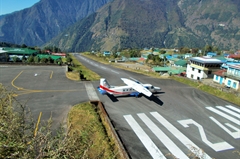
Today is the first day of the trek but not before we take a short flight up to the trail head. After breakfast we proceed to Tribhuvan Domestic Airport, Kathmandu for our flight out to Lukla. The flight over mountains in the Khumbu Region is all of 35 minutes but presents you with some of the most exquisite views of Nepal and can easily be one of the highlights of this trek. If you get a seat on the left side of these tiny planes, the view out the window is one you’ll never forget. Lukla is a small village with no road, only reachable by flight or foot. We walk straight out of the airport, across the cobbled stone footpath of the village and off into the forest trail, officially starting our first day of trekking. Just before exiting the village, we are required to present the first of our two permits at the check post – so remember to keep these handy. Today is easy - it is a simple trek for 3 hours which starts with descending 300M and then slowly climbs up 100M to meet the rest point for the night - Phakding. Along the way, we pass countless mani walls painted on the rocks lining the trail and boulders carved with Tibetan Buddhist prayer inscriptions. We also find numerous prayer wheels all along the trail. We spend our first night in a tea house at Phakding.
Day 3
Phakding (2,652M) to Namche Bazaar (3,440M)
Duration:
6-7 hours
Distance:
11 km
Its serious business from today onwards – today marking day 1 of our brush with difficult terrain on this trek. We start by walking along the banks of the Dudh Kosi, crossing it twice on the high suspension bridges Nepal treks are famous for. The trail is a series of small, repeated ascents and descents, following along the river and again crossing the engraved Buddhist stones characteristic of the area. We stop for lunch at the village of Monjo, which is also the gateway to Sagarmatha National Park. Here is where we present the second of our two permits. After entering the park, we descend along an enormous wall painted sky-high with prayers written in Tibetan to the Bhote Kosi River arriving at Jorsalle village. This is where all the fun begins. After one final stroll along the beach-like riverbank, the trail gets steeper passing through dense forests. After a while we cross the last suspension bridge for today – the bridge dangling spectacularly high above a sharply-descending gorge. From here, we ascend 600M through a thickly forested patch all the way to Namche Bazaar, the administrative and trade capital of the Khumbu region. If the weather is clear we might get our first view of Everest at the rest point along the way. Overnight stay in tea house in Namche Bazaar.
Day 4
Namche (3,440M) to Tengboche (3,860M)
Duration:
6-7 hours
Distance:
10-11 km
Tengboche is a small valley at an altitude of 3,860M. This beautiful route between the two villages starts with us passing through Namche on a stone-paved path by the stream. Thamserku, a beautiful peak of 6,608M, dominates the view, with Ama Dablam – one of the most peculiarly shaped mountains – farther up the valley. Everest is visible above the joining ridge of the south face of Lhotse and Nuptse that close the valley far ahead. Close to an hour into the trek, we come across a huge chorten dedicated to Tenzin Norgay – the man who needs no introduction. The trail is small sections of ascents with patches of descents that are enough to recover your breath for the next section of ascent. We should reach our stop-hold for today by lunch-time.
Day 5
Tengboche (3,860M) to Dingboche (4,410M)
Duration:
5-6 hours
Today we start our trek early and head out of Tengboche over to the other side of the ridge and straight into a birch and rhododendron forest. From here, Lower Pangboche is close to 4 km – with a height gain of close to 260M, we should get there in less than 2 hours. The village of Pangboche is spread out right below the impressive Ama Dablam and hence offers some of the most spectacular views of the mountain making it a perfect spot to take a break. Depending on what time we get here, we either stop for tea or head straight for lunch. Everest now disappears from the view until we reach the upper parts of the Khumbu Valley. We see a lot of revered peaks all through our trek today, don’t forget to question your local guide about these each time you see a new peak peering out from behind at the turn of the view.
To our left is the Lobuche River. Dingboche comes into view after a series of moraines. This large settlement has some spectacular sights to offer with the south face of Lhotse (8,516M) dominating the view. Do not miss the sunset from this beautiful location.
Day 6
Acclimatization day at Dingboche (4,410M)
We have climbed over 2000M in the last few days. This marks for a good milestone to take a day off so as to rest the body and give it time to acclimatize to this newly gained elevation. This makes it easier for it to handle the elevation it has to face in the coming days. Acclimatization is done best and done right when you expose yourself to the mountain air at this elevation – so remember to take yourself out and walk around. There is much to see and admire in this region. A small hike from here brings you face to face with three of the world’s highest mountain peaks - Mount Lhotse, Mount Makalu and Mount Cho Oyu.
Day 7
Dingboche (4,410M) to Dughla/Thukla (4,620M)
Duration:
3 hours
Distance:
5 km
Today is the shortest of all days on the trek which seems easier still after resting it out at Dingboche yesterday. The flat trail till Dughla offers some of the best views on this route along with a spectacular view of the wall of Khumbu Glacier. On our right, we see the magnificent Mount Pumori (7,138m) and a brightly colored glacial lake. There are no tea houses between these two locations, and no sources of water either – remember to carry sufficient supplies of refreshment as well as water for today.
Day 8
Dhugla/Thukla (4,620M) to Lobuche (4,940M)
Duration:
3.5 hours
Today we start our trekking towards Lobuche which is situated beside the Khumbu glacier. Initial part of the trek is tough as we undertake the strenuous climb up to Dughla Pass/ Thukla Pass to go onwards to Lobuche. The climb is short but extremely steep – if it’s any consolation, it offers some of the most memorable views of the entire trek. The pass is filled with memorials of mountaineers who got the ball rolling for all of us to be here today. We spend some time at the pass before we carry on to Lobuche – the trail after the pass is mostly flat.
Day 9
Lobuche (4,940M) to Gorakshep (5,164M) to Everest Base Camp (5,364M) and back to Gorakshep (5,164M)
Duration:
7 – 8 hours
Today's trail has a lot of ups and downs till Gorakshep – most of these are humps on the moraines of the infamous Khumbu Glacier. Once we reach Gorakshep, we have something to eat and leave straight after to get to Everest Base Camp - situated at the beginning of the massive Khumbu Glacier. The trail walks along the glacier with extraordinary views of Mt. Pumori to our right and Mt. Nuptse to our left. We get a clear as day view of the Khumbu icefall from the base camp – a view that’s inspiring enough to up your trekking game. This portion of the trek also brings us face to face with some of the biggest mountains in Nepal and in the world – the feeling of being surrounded by giants is almost surreal. We need to hike on the Khumbu glacier for a short bit in order to get to Everest Base Camp – giving us a tiny feel for what it must be like to climb up this beast of a mountain. We spend some time at the base camp soaking in the views before we head back down to Gorakshep on the same trail.
Day 10
Gorakshep (5,164M) to Kala Patthar (5,644M) to Pheriche (4,371M)
Duration:
7 – 8 hours
Today is the most exciting day of the trek, if you ask us! With views to die for, it is everything we have been secretly waiting for throughout the trek. We start early to make our way to Kala Patthar – a place kind enough to give us the clearest views of Everest on this entire trail – it will however, take some effort. The trek to the summit of Kala Patthar is one of the most difficult but also highly rewarding. After the trek to Kala Patthar, it is easy to imagine why Everest is the most sought after mountain on the planet and why it’s captured the fancy of some of the most accomplished climbers across eras. In fact, Kala Patthar is the only place from where you can get views of almost the entire high peak mountains of the Khumbu Range – which is what makes it such an inspiring journey to make. It takes about 3 hours to reach Kala Patthar from Gorakshep. We can’t spend much time on the top as it’s an extremely windy place with nothing to obstruct the ferocious winds.
From Kala Patthar, it’s only descent all the way to Pheriche. This almost 1,300M of descent should take about 4 hours. Pheriche lies on a flat valley on the bank of Dhudhkoshi River.
Day 11
Pheriche (4,371M) to Namche Bazaar (3,440M)
Today’s trek is moderate but is made easy in the memory of the awe-inspiring landscape we witnessed yesterday. There are small patches of ascent before Tengboche and after Phungi Thanga.
Day 12
Namche Bazaar (3,440M) to Lukla (2,860M)
The last day of our trek in the gorgeous Khumbu region, it is one which must be savored. Walking on this familiar trail gives you the opportunity to better enjoy its beauty without having to worry about familiarizing yourself to it like we did the first time around. With no rush to get anywhere, this is literally a walk in the park.
Day 13
Lukla (2,860M) to Kathmandu (1,330M)
Airborne, we once again witness the beauty of Nepal from a bird’s eye view which is the perfect way to end this breathtaking journey, if you ask us!
Day 14
Departure
It is time to bid adieu to the Everest Base Camp Trek here. The check-out time is 12 noon. Please note that we can arrange for a drop-off at the airport on request.
Frequently Asked Questions
Everest Base Camp Trek is suitable for trekkers with prior experience, having completed at least one
BRS
4 level trek or equivalent.
If you can Jog/Run for 5 kms in 25-30 mins, you are ready to take on this trek. Once a week, you can practice running 10 kms in an hour or so to improve your endurance further. In addition to this, you can also add resistance workouts to your schedule like squats, lunges, push ups etc.
If you cannot do the above, there’s no need to worry. It is important to remember that it’s all about practice. Get on a training schedule and we can assure you that you will meet these standards in a matter of a few months.
A certain level of fitness and physical endurance are required to take on any high-altitude trail in the Himalayas. Basic knowledge of ascending and descending on steep gradients, high-altitude attire and layering and mountain mannerisms will be helpful.
The minimum age limit is 13 years. However, minors between 13 to 17 years of age should be accompanied by their parents/ guardians. If you are above the age of 60, kindly carry a medical certificate from your doctor that deems you fit for adventure activities like trekking.
The Everest Base Camp Trek is located in the Solukhumbu district of Nepal, in the Sagarmatha National Park. The trek starts from the town of Lukla, which can be reached by a short flight from Kathmandu, the capital city of Nepal.
The Everest Base Camp Trek is one of the three most sought-after treks in Nepal, alongside the Annapurna Circuit Trek and the Annapurna Base Camp Trek and for good reason - it’s bringing you to the foot of the tallest mountain in the world, afterall! Throughout the two-week-long trek, you are immersed in the high-altitude zone, enjoying incredible views of majestic peaks such as Everest, Lhotse, Makalu, Nuptse, Pumori, and Ama Dablam. All in all, the Everest Base Camp Trek offers an unforgettable experience in one of the most stunning landscapes on the planet. As you walk amongst the highest mountains in the world, the trek takes you through the vibrant culture and lifestyles of the high-altitude villages in Nepal. The journey involves crossing some of Nepal's longest suspension bridges, traversing over the deepest gorges adorned with colourful prayer flags, and passing through other amazing natural wonders.
The Everest Base Camp Trek can be demanding with several challenges for trekkers. It involves ascending to an altitude at 5,545M, which can lead to altitude sickness, a serious concern for some. The terrain can get rugged and uneven, with steep ascents and descents, rocky paths, and narrow trails. Weather conditions in the Himalayas are unpredictable and can change rapidly, bringing rain, snow, and even hailstorms. Therefore, trekkers must prepare for any weather eventuality.
The best months for the EBC trek are March to May and October to December.
The accommodation for all days of the trek will be provided in a guesthouse or lodge, generally called tea houses in Nepal.
During the spring season (March to May), temperatures at the Everest Base Camp can range from 15°C during the day to -10°C at night.
During October to December, temperatures at the Everest Base Camp can range from 10°C during the day to -10°C at night. This is generally the most popular time to visit because of the clear skies and favourable weather conditions.
Everest Base Camp Trek is not technically challenging, however, it is extremely physically demanding. It involves traversing difficult terrain, patches of rugged and uneven land, with steep ascents and descents, rocky paths, and narrow trails, which can be challenging to navigate, especially in adverse weather conditions. However, no specialised climbing or mountaineering skills are required.
The base for EBC trek is Kathmandu. To get to Kathmandu from Delhi, you can take one of the following options:
By Air:
There are multiple flights daily connecting Delhi and Kathmandu.
By Road:
The road distance between Delhi and Kathmandu is 1,152 km.
By Rail:
Multiple trains are operating daily from Delhi to Gorakhpur near the India - Nepal border. From Gorakhpur, you will have to take a bus to Sunauli across the border. From Sunauli, you will have to take another bus to Kathmandu.
There is 3G connectivity for local network NCell for most of the Everest Base Camp trek. And you can also get wifi facilities at campsite on paid basis. Read more:
Comprehensive Guide for Trekking in Nepal
The nearest ATMs are located in Kathmandu.
You will have to arrive at Kathmandu on your own. It is a well established tourist location and is easy to reach.
We will stay the night in Kathmandu on Day 13. Plan for your departure from Kathmandu early morning on the next day.
You will be in Kathmandu at the beginning and end of this trek. There are a number of places to explore in Kathmandu - walk through the old city, explore the streets of Thamel, visit the famous Swayambhunath and Pashupatinath temples, take thangka painting workshops or learn how to cook local cuisine. You can also drive or fly to Pokhara in Central Nepal and explore the Annapurna and Dhaulagiri regions - rife with vast trekking options as well! Another must-see attraction is the Royal Palace, the site of the infamous 2001 massacre of the Royal Family by the then Crown Prince, and now converted into the Narayanhiti Palace Museum.
Safety equipment used for rescue such as static rescue rope, seat harness, carabiners, pulleys is carried by our trek leaders. Gaiters, microspikes and sleeping bags (wherever necessary) are not included and thus have to be rented from Kathmandu by you.
We don’t provide rentals in Nepal. But rental facilities are available in the market.
Rental facilities are available in the market.
You’ll have to return all the rented equipment to the shop from where you rented them.
For a detailed list, check the Packing List section on this page.
You can buy your trekking necessities from Kathmandu. There may be some items available at shops in Namche Bazaar, or other villages on the trail as well. However we recommend that you do not leave any essential purchases for the last minute.
Although not recommended, you can off load your bag at an additional cost. Add a request while making your booking for the trek and it can be arranged.
(Note: We don’t recommend offloading because the extra resources on a trail - ponies or porters depending on the trail - means extra load on the environment which can easily be avoided. It also goes against the spirit of trekking by eliminating a level of endurance and discomfort from the experience which are factors at the very heart of an outdoor adventure activity.)
You can leave your extra luggage in hotel cloak rooms on a paid basis.
Like any trek in Nepal, meals are not part of the trek fee. All meals will have to be purchased by the trekkers at the tea houses where we stay. The tea houses in Nepal offer a wide variety of healthy and nutritious food. Read more:
Comprehensive Guide for Trekking in Nepal
Since we will be staying at tea houses, these accommodations have proper toilet facilities. Depending on the tea house, however, some may have shared toilets and some may have private toilets attached to the rooms.
In case you get your period on the trail and don’t have sanitary napkins, our trek leaders can provide them to you. If you need any other kind of assistance, you can let our trek leaders know. Irrespective of gender, our leaders are gender sensitised and equipped to assist you in any way you need them to.
Our team carries a first aid kit and all the basic medicines required during the trek. They are equipped to be the first responders in case of any injury or health-related issues. For higher expeditions, we also carry a HAPO Bag and oxygen cylinders to tend to any altitude-related health conditions.
You will get electricity at the tea houses. But these regions are prone to power cuts so it is better to carry your power bank as a backup.
A copy of your ID Proof and Medical Certificate are the mandatory documents required for this trek. (Soft copies for all of these are to be sent to us & originals should be on your person while on the trek.)
Yes, insurance for any high-altitude activity is highly recommended to cover for the cost of rescue, evacuation and any other emergency service required as well as to cover for medical cost in case of injury or illness during the trek. You can buy it on your own. Alternatively, if you want us to buy it on your behalf, you can speak to our post-booking team and they will arrange it for you. They will send you a payment link once the insurance has been purchased. Read more:
Comprehensive Guide for Trekking in Nepal
Yes, there are multiple permits required for this. We obtain the permits on every trekkers’ behalf. All the permit costs are included in your trek cost.
Yes, you will receive e-certificates (of completion) after the trek. It will bear your name, the trek, and the maximum altitude you achieved on the trek. In case you were unable to finish the trek, you will get a certificate of participation.
On completion of the trek, the certificate will show up on your dashboard on our website. You can download it directly from there.
Foreign nationals need a Visa to enter Nepal. For some countries, the visa may be obtained on arrival. Citizens of China and SAARC countries, which includes India, a tourist visa can be obtained without a charge (visa fees) but for other countries there is a fee depending on the duration of the stay. Visit
http://online.nepalimmigration.gov.np/tourist-visa
to get all the information on the required processes based on your home country.
This does not apply to you if you are an Indian citizen. In case you don’t hold an Indian passport, you will need to check online for Visa application rules based on your home country. Read more:
Comprehensive Guide for Trekking in Nepal
If you are not an Indian citizen, you will need Travel Medical Insurance to travel to the country. Please make sure that your insurance policy is valid for the altitude you are going to and the activity you are undertaking, to cover risks during the trek. The insurance policy provided by Bikat Adventures does not cover foreign nationals. So, please do not purchase it while making the booking from our website.
The Nepal Himalayas are home to Mount Everest, the highest mountain in the world, which attracts thousands of visitors each year. As a trekkers’ paradise Nepal has countless trekking trails which take you through all kinds of terrain spread out across Nepal. A country of warm people, eight of the fourteen tallest mountains in the world, diverse geography, and a rich culture with multiple languages, ethnicities and religions; the first thing you notice on entering Nepal is that it is extremely welcoming and full of colour – a country with a lot of heart.
You can make the booking any time depending on availability of slots in our fixed departure batches. You will get this information at the top of this page.
A Basic Mountaineering Course certification from one of the five recognized mountaineering institutes in India is a minimum requirement to join our team. Our field experts are also trained in basic medicine and first-aid response. We also conduct on-ground training for our staff once a year as a refresher for old skills and to learn some new ones. During this training that we call APW (Adventure Professional Workshop), our leaders learn close to 25 topics and techniques of rescue which are not covered in the BMC and AMC courses. For practical training, we simulate on-ground situations to prepare them for quick thinking and quick response during emergencies.
We follow a rigorous regime of hiring and training our experts on the field. Each trek leader is a certified mountaineer with years of experience in the field. The interview process to bring a trek leader on-board is close to 6 months long where we assess various skills as well as personality traits of an individual. They also go through an on-field assignment as part of the hiring process. Trek leaders also progress in time from leading easier treks before advancing to the more difficult ones where the stakes are higher. For detailed information on our selection process, please visit
Forerunners - The Making Of A Trek Leader
It absolutely is. We recognize, value and embody the ideology that the world of outdoor adventure can benefit from diversity. We make it our mission to create outdoor spaces as equally accessible and safe for all genders as possible. We also encourage women leaders in the outdoors and all of our staff (irrespective of gender) is gender sensitised. As for accommodation, in case there are no other women on the trek, a solo female trekker is provided with a separate single-occupancy tent.
Our batch sizes for Everest Base Camp Trek are capped at 15 with the trek leader to trekker ratio of 1:8.
In addition to their qualification, our trek leaders are trained to tackle any and all kinds of sudden conditions that may present themselves on ground. During our recce stage, we study the trail in great detail and map out rescue routes before opening it up for our trekkers. We also have local support staff stationed in each area to arrange for emergency services at the place of need as quickly as possible.
We mobilise road rescue efforts where our trek leaders bring the person to be rescued down to the trailhead of the trek from where a car can take them to the nearest healthcare facility. The cost of rescue is not covered in the trek fee that we charge. It must be borne by the participant. However, if you opt for the insurance the cost of rescue operations can be claimed from the Insurance company on production of valid proof e.g. doctor’s prescription & hospital bills etc. Please note that Bikat Adventures is only a facilitator & not a party in the Insurance policy. You need to raise the claim request directly with the Insurance company. Bikat Adventures is not responsible for any rejection of claim. You can call the insurance provider directly for any clarifications related to the Insurance policy. Although not mandatory, we recommend buying the insurance. You don’t necessarily have to get the insurance we provide, you can pick an Insurance company of your choice and get a policy directly from them. If you need more information on the terms and conditions of the insurance policy, get in touch with our customer support team.
All the gear used on our treks and expeditions is tried and tested, maintained for good quality and is overall top notch in quality and condition. We are continually looking to obtain the best of everything there is in the market so as to ensure optimum safety.
That will depend on the nature of your medical condition. Do give us a call, and one of our people will help you understand what is best for you. If not this, we are sure there would be plenty of other options you can choose from our vast portfolio to pick as your next adventure.
This is a complex question and has a compound answer. The simple response is that because it is bad for the environment which we dearly love but if you are interested in a more detailed response to this question, please read
Reasons to Ban Fixed Camping in Himalayas
There are a number of measures that we take to prevent overcrowding on some of the most popular trails. Some of them are capping our group size at 15, capping the number of trekkers on a trail to 250 per season, constantly looking for newer trails and routes to spread the crowd around and providing incentives to our trekkers to try unexplored territories with us. We put in place the system of dynamic pricing, which is the first of its kind in the trekking industry, which incentivises trekkers to choose less crowded trails by offering higher discounts. We have noticed, since we started this system, that this has helped in a big way to spread out the crowds between trekking routes. We are also going international so as to relieve some of the stress on the Himalayan landscape as well as explore newer ranges and design newer experiences for our community. If you want a more detailed description of all our measures in this regard, please read
Simple solutions to overcrowding on Himalayan Treks
Some basic things to remember are: do not use water, do not dispose of anything non-biodegradable inside the pits, carry your own roll of toilet paper and remember to cover up after yourself to leave a clean toilet for your fellow trekkers. Everything else is much the same like using an Indian style home toilet!
Most wet wipes are not biodegradable which means it could take 100 years or more for them to decompose – not the best thing if you are trying to ‘Leave No Trace’, right?
This is quite a tricky situation but not a hopeless one. Since most of our sanitary waste is not biodegradable, we recommend that you pack your pads/tampons neatly, store it in a zip-lock bag and bring it back down with you where there are better options to dispose of them. In case you do not have zip-lock bags, ask our trek leaders for them and they should be able to provide them to you.
Each trekker is responsible for the use and hygiene of their own eating utensils. And as a measure to maintain proper hygiene, we do not provide plates and spoons. Also, dipping your hands in cold water to wash your own utensils adds something to the overall joy of high-altitude living, wouldn’t you think?
On making the payment, you will receive a booking confirmation along with the packing list and a copy of the undertaking form via email. You will subsequently receive emails detailing documents required, how to prepare physically and mentally for the trek, information on pick-up location on the first day etc. Please add
info@bikatadventures.com
in your trusted emails list to make sure our emails don't go to your spam folder.
A Whatsapp group will be formed a few weeks before departure. Members from our team are on those groups as well. Feel free to seek any clarifications you require in regards to the trek, on the group itself. Updates related to transportation/pickup point/pickup timing, accommodation etc. will be shared on the Whatsapp group as well.
Yes, we create a Whatsapp group a few weeks before the departure date so that the flow of information remains smooth and transparent.
Yes, it is one of the mandatory documents you will need to submit before the trek starts. The soft copy is to be sent to us & the original should be on your person while on the trek.
Yes, we will provide you an undertaking form through email which will need to be filled up by you and submitted to us post booking. | ||||||||||||||||||
| Markdown | [](https://www.bikatadventures.com/)
- [Home](https://www.bikatadventures.com/)
- [Blog]()
- [All](https://www.bikatadventures.com/Home/Blogs)
- [Latest Updates](https://www.bikatadventures.com/Home/Blogs/Latest%20Updates)
- [Contests & Giveaways](https://www.bikatadventures.com/Home/Blogs/Contests)
- [Practicing Sustainability](https://www.bikatadventures.com/Home/Blogs/Practicing%20Sustainability)
- [Practicing Safety](https://www.bikatadventures.com/Home/Blogs/Practicing%20Safety)
- [Know How](https://www.bikatadventures.com/Home/Blogs/Know-How)
- [Informative](https://www.bikatadventures.com/Home/Blogs/Informative)
- [Our Book of Adventures](https://www.bikatadventures.com/Home/Blogs/Our%20Book%20of%20Adventures)
- [The Opinion Corner](https://www.bikatadventures.com/Home/Blogs/The%20Opinion%20Corner)
- [Picture Blogs](https://www.bikatadventures.com/Home/Blogs/Picture%20Blogs)
- [Trekkers' Blogs](https://www.bikatadventures.com/Home/Blogs/Trekkers%E2%80%99-Blogs)
- [Activities](https://www.bikatadventures.com/Home/find_your_next_adventure)
- [Rent Gear](https://www.bikatadventures.com/Home/Pages/rent-gear)
- [Careers](https://www.bikatadventures.com/Home/Pages/careers)
- [Active Holidays]()
- [Spiti](https://fullontravel.com/holidays/spiti-tour-packages)
- [Ladakh](https://fullontravel.com/holidays/ladakh-tour-packages)
- [North East](https://fullontravel.com/holidays/north-east-tour-packages)
# Everest Base Camp Trek
Walk where the Legends walked.
Difficult
## Everest Base Camp Trek
BRS 5
Max Altitude
5545 mts
Nepal
14 Days
120 Km
Max 15
₹ 85000 \+ 5% GST
Kathmandu to Kathmandu
Add ons
\+ Rs. 35000 Mandatory Add On for Non Indians /OCI Card Holders
***
[Book Now](https://www.bikatadventures.com/Home/Itinerary/Everest-Base-Camp-Trek#Book)
## Available Batches
### April 2026
[18 Apr - 1 May ( OPEN ) 4 Left]()
[25 Apr - 8 May ( OPEN )]()
### May 2026
[9 May - 22 May ( OPEN ) 4 Left]()
[16 May - 29 May ( OPEN ) 5 Left]()
### October 2026
[3 Oct - 16 Oct ( OPEN )]()
[17 Oct - 30 Oct ( OPEN )]()
[31 Oct - 13 Nov ( OPEN )]()
### November 2026
[14 Nov - 27 Nov ( OPEN )]()
## Available Batches
[Book Now](https://www.bikatadventures.com/Home/Itinerary/Everest-Base-Camp-Trek#Book)
### Apr 2026
[18 Apr - 1 May ( OPEN ) 4 Left]() [25 Apr - 8 May ( OPEN )]()

### May 2026
[9 May - 22 May ( OPEN ) 4 Left]() [16 May - 29 May ( OPEN ) 5 Left]()

### Oct 2026
[3 Oct - 16 Oct ( OPEN )]() [17 Oct - 30 Oct ( OPEN )]() [31 Oct - 13 Nov ( OPEN )]()

### Nov 2026
[14 Nov - 27 Nov ( OPEN )]()
‹
›
- [Brief Description](https://www.bikatadventures.com/Home/Itinerary/Everest-Base-Camp-Trek#br-description)
- [Gallery](https://www.bikatadventures.com/Home/Itinerary/Everest-Base-Camp-Trek#gal)
- [Itinerary](https://www.bikatadventures.com/Home/Itinerary/Everest-Base-Camp-Trek#short-itinerary-id)
- [What’s Included](https://www.bikatadventures.com/Home/Itinerary/Everest-Base-Camp-Trek#what)
- [Packing List](https://www.bikatadventures.com/Home/Itinerary/Everest-Base-Camp-Trek#pack)
- [FAQs](https://www.bikatadventures.com/Home/Itinerary/Everest-Base-Camp-Trek#question)
- [Why Bikat?](https://www.bikatadventures.com/Home/Itinerary/Everest-Base-Camp-Trek#why)
- [Reviews](https://www.bikatadventures.com/Home/Itinerary/Everest-Base-Camp-Trek#rev)
- [Cancellation Policy](https://www.bikatadventures.com/Home/Itinerary/Everest-Base-Camp-Trek#can)
- [Blog Posts](https://www.bikatadventures.com/Home/Itinerary/Everest-Base-Camp-Trek#blog)
- [Similar Adventures](https://www.bikatadventures.com/Home/Itinerary/Everest-Base-Camp-Trek#sim)
## Brief Description
Grade:Difficult
Location: Nepal
Altitude:5545 m
Duration:14 Days
Being at the foot of the world’s tallest mountain is an obvious pull but the trek to Everest Base Camp is so much more than just that. Regarded as a classic, magnificent views aside, EBC trek introduces you to the rich and diverse culture of Nepal and brings you to the heart of the lives of some of the warmest people you will ever met. The immense variation in geography presented by Nepal’s landscape is unimaginable and the trek to the base of the highest mountain gives you a taste for just that – leading you to and through bits of all that Nepal has to offer.
EBC is one of the three most popular treks in all of Nepal including Annapurna Circuit Trek and Annapurna Base Camp Trek. Confronted by photogenic views on every corner, beautiful mornings and even better sunsets in the midst of sharp peaks, ridges and mountain walls on all sides, the region is a world of its own and a striking one at that. Walking amongst the biggest mountains there are, the trek takes you through the colourful life of high-altitude villages in Nepal, across some of the longest suspension bridges that Nepal is popular for, over the deepest gorges with prayer flags adding more colour and life to the landscape.
As the most popular trek in Khumbu region, the Base Camp for Everest is a definite magnet but a trek little further from there to Kala Patthar offers much better views of the region and of the mighty Everest itself, as compared to views from the Base Camp. Kala Patthar is situated above Gorakshep (5,170M) which is the last settlement in the Khumbu Valley.
This two week long endeavor keeps you in the high-altitude zone all throughout with amazing views of Everest, Lhotse, Makalu, Nuptse, Pumori, and Ama Dablam in one of the most exquisite landscapes the planet has to offer. Given the duration of the trek and the altitude it continually keeps you in, sound fitness and some experience in the Himalayas is essential before you decide to go on this journey of a lifetime. Although comfort is one thing that you wouldn’t need to worry about since the stay is in warm, cozy tea houses, which are characteristic of Nepal treks, the rocky, alpine terrain itself can get a little tricky in patches, demanding experience of having been in similar regions.
The best months for the EBC trek are March to May and October to December. Stay on this page to know more about the trek.
Read more
## Gallery
[](https://www.bikatadventures.com/images/Gallery/IMG1000X548/img-Everest-Base-Camp-Trek5817-Bikat-Adventures.JPG "Airstrip at Lukla Airport") [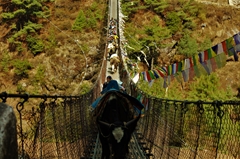](https://www.bikatadventures.com/images/Gallery/IMG1000X548/img-Everest-Base-Camp-Trek5818-Bikat-Adventures.JPG "Suspension Bridge, EBC Trek") [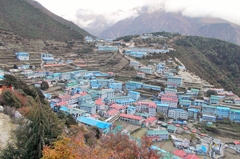](https://www.bikatadventures.com/images/Gallery/IMG1000X548/img-Everest-Base-Camp-Trek5819-Bikat-Adventures.JPG "Namche Bazaar") [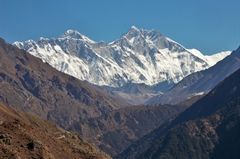](https://www.bikatadventures.com/images/Gallery/IMG1000X548/img-Everest-Base-Camp-Trek5821-Bikat-Adventures.JPG "Mount Everest & Lhotse peak to its right") [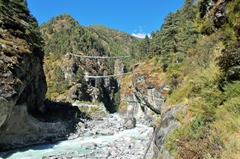](https://www.bikatadventures.com/images/Gallery/IMG1000X548/img-Everest-Base-Camp-Trek5822-Bikat-Adventures.JPG "One of many suspension bridges on the EBC trail.") [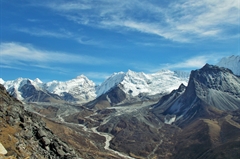](https://www.bikatadventures.com/images/Gallery/IMG1000X548/img-Everest-Base-Camp-Trek5823-Bikat-Adventures.JPG "The Khumbu skyline from Nangkartzang") [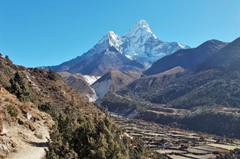](https://www.bikatadventures.com/images/Gallery/IMG1000X548/img-Everest-Base-Camp-Trek5824-Bikat-Adventures.JPG "Ama Dablam") [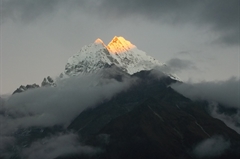](https://www.bikatadventures.com/images/Gallery/IMG1000X548/img-Everest-Base-Camp-Trek5826-Bikat-Adventures.JPG "Evening sun rays on Thamserku Peak as seen from above Namche") [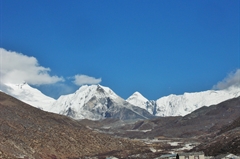](https://www.bikatadventures.com/images/Gallery/IMG1000X548/img-Everest-Base-Camp-Trek5827-Bikat-Adventures.JPG "Island Peak") [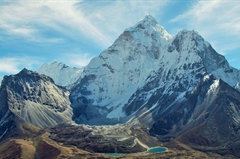](https://www.bikatadventures.com/images/Gallery/IMG1000X548/img-Everest-Base-Camp-Trek5828-Bikat-Adventures.JPG "The beautiful Ama Dablam") [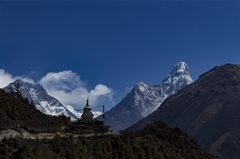](https://www.bikatadventures.com/images/Gallery/IMG1000X548/img-Everest-Base-Camp-Trek6097-Bikat-Adventures.jpg "Route to Tengboche") [](https://www.bikatadventures.com/images/Gallery/IMG1000X548/img-Everest-Base-Camp-Trek6098-Bikat-Adventures.jpg "Dingboche Village") [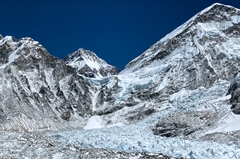](https://www.bikatadventures.com/images/Gallery/IMG1000X548/img-Everest-Base-Camp-Trek7655-Bikat-Adventures.jpg) [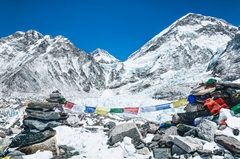](https://www.bikatadventures.com/images/Gallery/IMG1000X548/img-Everest-Base-Camp-Trek7656-Bikat-Adventures.jpg) [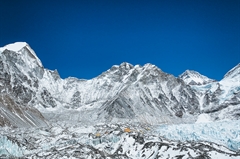](https://www.bikatadventures.com/images/Gallery/IMG1000X548/img-Everest-Base-Camp-Trek7657-Bikat-Adventures.jpg) [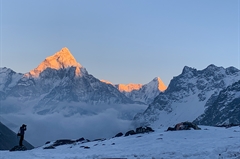](https://www.bikatadventures.com/images/Gallery/IMG1000X548/img-Everest-Base-Camp-Trek7658-Bikat-Adventures.jpg) [](https://www.bikatadventures.com/images/Gallery/IMG1000X548/img-Everest-Base-Camp-Trek9321-Bikat-Adventures.jpg) [](https://www.bikatadventures.com/images/Gallery/IMG1000X548/img-Everest-Base-Camp-Trek9322-Bikat-Adventures.jpeg) [](https://www.bikatadventures.com/images/Gallery/IMG1000X548/img-Everest-Base-Camp-Trek9323-Bikat-Adventures.jpeg) [](https://www.bikatadventures.com/images/Gallery/IMG1000X548/img-Everest-Base-Camp-Trek9324-Bikat-Adventures.jpeg) [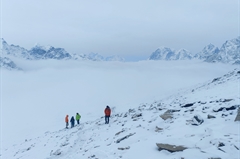](https://www.bikatadventures.com/images/Gallery/IMG1000X548/img-Everest-Base-Camp-Trek9325-Bikat-Adventures.jpeg) [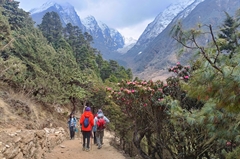](https://www.bikatadventures.com/images/Gallery/IMG1000X548/img-Everest-Base-Camp-Trek9326-Bikat-Adventures.jpeg) [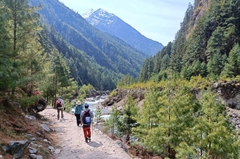](https://www.bikatadventures.com/images/Gallery/IMG1000X548/img-Everest-Base-Camp-Trek9327-Bikat-Adventures.jpeg) [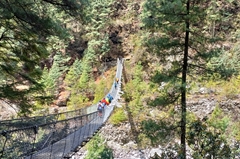](https://www.bikatadventures.com/images/Gallery/IMG1000X548/img-Everest-Base-Camp-Trek9328-Bikat-Adventures.jpeg)
## Brief Itinerary
Day 1
Arrive in Kathmandu (1,330M)
Day 2
Kathmandu (1,330M) to Lukla (2,860M) to Phakding (2,652M)
Day 3
Phakding (2,652M) to Namche Bazaar (3,440M)
Day 4
Namche (3,440M) to Tengboche (3,860M)
Day 5
Tengboche (3,860M) to Dingboche (4,410M)
Day 6
Acclimatization day at Dingboche (4,410M)
Day 7
Dingboche (4,410M) to Dughla/Thukla (4,620M)
Day 8
Dhugla/Thukla (4,620M) to Lobuche (4,940M)
Day 9
Lobuche (4,940M) to Gorakshep (5,164M) to Everest Base Camp (5,364M) and back to Gorakshep (5,164M)
Day 10
Gorakshep (5,164M) to Kala Patthar (5,644M) to Pheriche (4,371M)
Day 11
Pheriche (4,371M) to Namche Bazaar (3,440M)
Day 12
Namche Bazaar (3,440M) to Lukla (2,860M)
Day 13
Lukla (2,860M) to Kathmandu (1,330M)
Day 14
Departure
## Detailed Itinerary
### Day 1
Arrive in Kathmandu (1,330M)
Day 1 is reserved to make your way to the bustling capital city of Kathmandu. Its colourful, crowded streets packed with shops stacking trekking and climbing gear to their very top in addition to the many tourist hotels and cafes with high mountains in the backdrop is enough to suggest that trekking in Nepal is going to be a different experience. With crowds from across the globe sifting through the city in search of climbing gear suited for the highest mountains, this place is your best bet if you need to buy some top-class equipment, at the best rates, for your future climbs or if you are missing something for the one you are on now! The shops and cafes in Kathmandu accept Indian currency but you might want to take this day to exchange your money to Nepal currency since cash is the only medium of payment on the higher reaches of the trek and the only money accepted in tea houses above is local currency.
### Day 2
Kathmandu (1,330M) to Lukla (2,860M) to Phakding (2,652M)
**Duration:** 35 min (flight to Lukla) + 3 hour (trek to Phakding)
**Distance:** 7 km trek
Today is the first day of the trek but not before we take a short flight up to the trail head. After breakfast we proceed to Tribhuvan Domestic Airport, Kathmandu for our flight out to Lukla. The flight over mountains in the Khumbu Region is all of 35 minutes but presents you with some of the most exquisite views of Nepal and can easily be one of the highlights of this trek. If you get a seat on the left side of these tiny planes, the view out the window is one you’ll never forget. Lukla is a small village with no road, only reachable by flight or foot. We walk straight out of the airport, across the cobbled stone footpath of the village and off into the forest trail, officially starting our first day of trekking. Just before exiting the village, we are required to present the first of our two permits at the check post – so remember to keep these handy. Today is easy - it is a simple trek for 3 hours which starts with descending 300M and then slowly climbs up 100M to meet the rest point for the night - Phakding. Along the way, we pass countless mani walls painted on the rocks lining the trail and boulders carved with Tibetan Buddhist prayer inscriptions. We also find numerous prayer wheels all along the trail. We spend our first night in a tea house at Phakding.
### Day 3
Phakding (2,652M) to Namche Bazaar (3,440M)
**Duration:** 6-7 hours
**Distance:** 11 km
Its serious business from today onwards – today marking day 1 of our brush with difficult terrain on this trek. We start by walking along the banks of the Dudh Kosi, crossing it twice on the high suspension bridges Nepal treks are famous for. The trail is a series of small, repeated ascents and descents, following along the river and again crossing the engraved Buddhist stones characteristic of the area. We stop for lunch at the village of Monjo, which is also the gateway to Sagarmatha National Park. Here is where we present the second of our two permits. After entering the park, we descend along an enormous wall painted sky-high with prayers written in Tibetan to the Bhote Kosi River arriving at Jorsalle village. This is where all the fun begins. After one final stroll along the beach-like riverbank, the trail gets steeper passing through dense forests. After a while we cross the last suspension bridge for today – the bridge dangling spectacularly high above a sharply-descending gorge. From here, we ascend 600M through a thickly forested patch all the way to Namche Bazaar, the administrative and trade capital of the Khumbu region. If the weather is clear we might get our first view of Everest at the rest point along the way. Overnight stay in tea house in Namche Bazaar.
### Day 4
Namche (3,440M) to Tengboche (3,860M)
**Duration:** 6-7 hours
**Distance:** 10-11 km
Tengboche is a small valley at an altitude of 3,860M. This beautiful route between the two villages starts with us passing through Namche on a stone-paved path by the stream. Thamserku, a beautiful peak of 6,608M, dominates the view, with Ama Dablam – one of the most peculiarly shaped mountains – farther up the valley. Everest is visible above the joining ridge of the south face of Lhotse and Nuptse that close the valley far ahead. Close to an hour into the trek, we come across a huge chorten dedicated to Tenzin Norgay – the man who needs no introduction. The trail is small sections of ascents with patches of descents that are enough to recover your breath for the next section of ascent. We should reach our stop-hold for today by lunch-time.
### Day 5
Tengboche (3,860M) to Dingboche (4,410M)
**Duration:** 5-6 hours
Today we start our trek early and head out of Tengboche over to the other side of the ridge and straight into a birch and rhododendron forest. From here, Lower Pangboche is close to 4 km – with a height gain of close to 260M, we should get there in less than 2 hours. The village of Pangboche is spread out right below the impressive Ama Dablam and hence offers some of the most spectacular views of the mountain making it a perfect spot to take a break. Depending on what time we get here, we either stop for tea or head straight for lunch. Everest now disappears from the view until we reach the upper parts of the Khumbu Valley. We see a lot of revered peaks all through our trek today, don’t forget to question your local guide about these each time you see a new peak peering out from behind at the turn of the view.
To our left is the Lobuche River. Dingboche comes into view after a series of moraines. This large settlement has some spectacular sights to offer with the south face of Lhotse (8,516M) dominating the view. Do not miss the sunset from this beautiful location.
### Day 6
Acclimatization day at Dingboche (4,410M)
We have climbed over 2000M in the last few days. This marks for a good milestone to take a day off so as to rest the body and give it time to acclimatize to this newly gained elevation. This makes it easier for it to handle the elevation it has to face in the coming days. Acclimatization is done best and done right when you expose yourself to the mountain air at this elevation – so remember to take yourself out and walk around. There is much to see and admire in this region. A small hike from here brings you face to face with three of the world’s highest mountain peaks - Mount Lhotse, Mount Makalu and Mount Cho Oyu.
### Day 7
Dingboche (4,410M) to Dughla/Thukla (4,620M)
**Duration:** 3 hours
**Distance:** 5 km
Today is the shortest of all days on the trek which seems easier still after resting it out at Dingboche yesterday. The flat trail till Dughla offers some of the best views on this route along with a spectacular view of the wall of Khumbu Glacier. On our right, we see the magnificent Mount Pumori (7,138m) and a brightly colored glacial lake. There are no tea houses between these two locations, and no sources of water either – remember to carry sufficient supplies of refreshment as well as water for today.
### Day 8
Dhugla/Thukla (4,620M) to Lobuche (4,940M)
**Duration:** 3.5 hours
Today we start our trekking towards Lobuche which is situated beside the Khumbu glacier. Initial part of the trek is tough as we undertake the strenuous climb up to Dughla Pass/ Thukla Pass to go onwards to Lobuche. The climb is short but extremely steep – if it’s any consolation, it offers some of the most memorable views of the entire trek. The pass is filled with memorials of mountaineers who got the ball rolling for all of us to be here today. We spend some time at the pass before we carry on to Lobuche – the trail after the pass is mostly flat.
### Day 9
Lobuche (4,940M) to Gorakshep (5,164M) to Everest Base Camp (5,364M) and back to Gorakshep (5,164M)
**Duration:** 7 – 8 hours
Today's trail has a lot of ups and downs till Gorakshep – most of these are humps on the moraines of the infamous Khumbu Glacier. Once we reach Gorakshep, we have something to eat and leave straight after to get to Everest Base Camp - situated at the beginning of the massive Khumbu Glacier. The trail walks along the glacier with extraordinary views of Mt. Pumori to our right and Mt. Nuptse to our left. We get a clear as day view of the Khumbu icefall from the base camp – a view that’s inspiring enough to up your trekking game. This portion of the trek also brings us face to face with some of the biggest mountains in Nepal and in the world – the feeling of being surrounded by giants is almost surreal. We need to hike on the Khumbu glacier for a short bit in order to get to Everest Base Camp – giving us a tiny feel for what it must be like to climb up this beast of a mountain. We spend some time at the base camp soaking in the views before we head back down to Gorakshep on the same trail.
### Day 10
Gorakshep (5,164M) to Kala Patthar (5,644M) to Pheriche (4,371M)
**Duration:** 7 – 8 hours
Today is the most exciting day of the trek, if you ask us! With views to die for, it is everything we have been secretly waiting for throughout the trek. We start early to make our way to Kala Patthar – a place kind enough to give us the clearest views of Everest on this entire trail – it will however, take some effort. The trek to the summit of Kala Patthar is one of the most difficult but also highly rewarding. After the trek to Kala Patthar, it is easy to imagine why Everest is the most sought after mountain on the planet and why it’s captured the fancy of some of the most accomplished climbers across eras. In fact, Kala Patthar is the only place from where you can get views of almost the entire high peak mountains of the Khumbu Range – which is what makes it such an inspiring journey to make. It takes about 3 hours to reach Kala Patthar from Gorakshep. We can’t spend much time on the top as it’s an extremely windy place with nothing to obstruct the ferocious winds.
From Kala Patthar, it’s only descent all the way to Pheriche. This almost 1,300M of descent should take about 4 hours. Pheriche lies on a flat valley on the bank of Dhudhkoshi River.
### Day 11
Pheriche (4,371M) to Namche Bazaar (3,440M)
Today’s trek is moderate but is made easy in the memory of the awe-inspiring landscape we witnessed yesterday. There are small patches of ascent before Tengboche and after Phungi Thanga.
### Day 12
Namche Bazaar (3,440M) to Lukla (2,860M)
The last day of our trek in the gorgeous Khumbu region, it is one which must be savored. Walking on this familiar trail gives you the opportunity to better enjoy its beauty without having to worry about familiarizing yourself to it like we did the first time around. With no rush to get anywhere, this is literally a walk in the park.
### Day 13
Lukla (2,860M) to Kathmandu (1,330M)
Airborne, we once again witness the beauty of Nepal from a bird’s eye view which is the perfect way to end this breathtaking journey, if you ask us\!
### Day 14
Departure
It is time to bid adieu to the Everest Base Camp Trek here. The check-out time is 12 noon. Please note that we can arrange for a drop-off at the airport on request.
## What's Included
- Domestic airport transfers for Lukla flights.
- Accommodation in Kathmandu (2 nights)
- Accommodation during the trekking period (11 nights).
- Domestic return flights (Kathmandu/Ramechhap- Lukla -Kathmandu /Ramechhap).
- All necessary paperwork and trekking permits (National Park Permit, TIMS)
- Mountaineering course certified Bikat's Trek Leader for group size of 6 & above only.
- Staff costs including their salary, insurance, equipment, domestic airfare, food and accommodation
- Medical kit (carried by your trek leader).
- All government and local taxes.
- Please Note: For single trekker we provide porter cum guide.
- Experienced and Certified guide
- Kathmandu Airport pickup & drop to hotel on Day 1 & 14 only.
- Three meals (Breakfast, Lunch & Dinner) a day during the trekking (open menu to choose one item per meal from the menu). Order more at your own cost.
- Backpack Offloading upto 10 Kg per participant
## What's Not Included
- Soft-drinks / Beverages / Alcohols / Snacks / Chocolates Etc
- Additional accommodation and food expenses if trek gets delayed due to weather, flight cancellation, health or any other reason
- Personal expenses (phone calls, laundry, bar bills, battery recharge, extra porters, bottle or boiled water, shower, etc.).
- Health Insurance, Personal Insurance and other travel insurance
- Expenses for evacuation and rescue operations due to natural calamity, mishaps, injury or any health problem.
- Nepalese visa fee.
- Tips for guide(s), porter(s).
- Gaiters, microspikes and sleeping bags (wherever necessary) are not included and thus have to rented from Kathmandu by you.
- Additional Permit Fee for Non Indians & OCI Card Holders
- Mandatory Summit Bonus of INR 3000 as tip for Guide, Porters & Support Staff and optional for non summit participants
## Are you Eligible for this Adventure?
Everest Base Camp Trek is 120 kilometers of sheer awe, divided into approximately 8-10 kms per day. It takes you to an elevation of 5,545M. Given the duration of the trek and the altitude it continually keeps you in, sound fitness and some experience in the Himalayas is essential before you decide to go on this journey of a lifetime.
Grade
Difficult
Max Altitude
5545 m
Distance
120 km

BRS Level Required

Terrain

Prerequisite Skills

Fitness Benchmark
## BRS Level Required
### BRS 5
Everest Base Camp Trek is a level 5 adventure on the Bikat Rating Scale.
This makes it mandatory for you to have high-altitude experience of preferably multiple treks marked at level 4 on the BRS. The altitude, the terrain and the nature of the climb demand a certain level of skill and a need for you to be aware of how your body reacts to the various features of a high altitude environment.
### If you do not know what level of BRS trek would suit you best, worry not! Fill out this Form:

[Click Here\!](https://www.bikatadventures.com/Home/Pages/personalized-trek-progression-chart)
we will send you a progression chart to help you comfortably get out of your comfort zone in order to level up and ultimately reach your highest potential in the big, bad world of outdoor adventure.
## Terrain
The Everest Base Camp Trek can be demanding with several challenges for trekkers. It involves ascending to an altitude at 5,545M, which can lead to altitude sickness, a serious concern for some. The terrain can get rugged and uneven, with steep ascents and descents, rocky paths, and narrow trails. Weather conditions in the Himalayas are unpredictable and can change rapidly, bringing rain, snow, and even hailstorms. Therefore, trekkers must prepare for any weather eventuality.
## Prequisite Skills
The trek demands a few mountain skills:

Layering for Himalayan Treks
***

Mountain Mannerism
***

Ascending and descending on steep gradients
***

Using a sleeping tent
***

Working together as a team
***
Walking in snow
***
## fitness benchmark
If you can do the following, physically you are ready to take on this trek:

Jog/Run for 5 kms in 25-30 mins

Walk continuously for 10 kms on a slight incline

Hold your breath for 40 seconds
Climbing 30 floors without a break

10 Push Ups
15 X 2 sets of Lunges & Squats
## Packing List
This is a list of essential items for individuals doing the trek with Bikat Adventures. This list contains only those items which the participants are required to bring with them. The list excludes those items which are provided by Bikat Adventures on the trek. We have divided the items into five categories. All the items in the list are essential except for those marked as optional.
#### Trekking Gear
- Ruck sack bag with rain cover. Qty -1
- Day Pack Bag - Recommended for treks with summit day
- Head Torch with spare Batteries. Qty -1
- U V protection sunglasses. Qty -1 Here is how you can choose the best [sunglasses for trekking.](https://www.bikatadventures.com/Home/Blog/Eye-Protection-101)
- Water Bottles: 2 bottles of 1 liter each
#### Footwear
- Non-skid, deep treaded, high-ankle trekking shoes Qty -1
- Pair of light weight Slipper/Sandals Qty -1
### Read full
#### Clothing
- Quick Dry Warm lower or Track Pants. Qty - 2
- Full sleeves T-shirts/ Sweatshirts. 1 for every 2 days of trekking
- Pair of thick woolen socks. 1 pair for every two days of trekking
- Thermal Body warmer Upper & Lower. Qty-1
- Undergarments. Qty - 1 for every day of trekking
- Warm jacket closed at wrist & neck .Qty-1
- Full sleeves sweater. Qty -1
- Rain wear ( Jacket & Pants ) . Qty-1
- Pair of waterproof, warm gloves. Qty-1
- Woolen cap. Qty-1
- Sun shielding Hat. Qty -1
#### Toiletries
- Personal toiletries kit (Small Towel, Toilet paper, paper soap, Bar soap, toothbrush, toothpaste, cold cream, etc.)
- Sun screen lotion small pack. Qty -1 Here is your Sun Protection 101 to stay safe in the bright sunny outdoors.
- Lip Balm small pack. Qty-1
#### Utensils
- Small size, Light weight & Leak proof lunch box. Qty-1
- Plate. Qty- 1
- Spoon.Qty-1
- Tea/Coffee (plastic) Mug.Qty-1
#### Miscellaneous
- Camera (Optional)
- Carry your medicines in plenty in case you have any specific ailment. Consult your doctor before joining the trek.
- Dry fruits, Nuts, Chocolate bars (Optional)
***
## Frequently Asked Questions
### Eligibility
***
### Is this adventure good for me?
Everest Base Camp Trek is suitable for trekkers with prior experience, having completed at least one [BRS](https://www.bikatadventures.com/Home/Blog/Bikat-Rating-Scale) 4 level trek or equivalent.
***
### What’s a good fitness benchmark for this adventure?
If you can Jog/Run for 5 kms in 25-30 mins, you are ready to take on this trek. Once a week, you can practice running 10 kms in an hour or so to improve your endurance further. In addition to this, you can also add resistance workouts to your schedule like squats, lunges, push ups etc.
If you cannot do the above, there’s no need to worry. It is important to remember that it’s all about practice. Get on a training schedule and we can assure you that you will meet these standards in a matter of a few months.
***
### What skills do I need to complete this adventure?
A certain level of fitness and physical endurance are required to take on any high-altitude trail in the Himalayas. Basic knowledge of ascending and descending on steep gradients, high-altitude attire and layering and mountain mannerisms will be helpful.
***
### What is the minimum and maximum age limit?
The minimum age limit is 13 years. However, minors between 13 to 17 years of age should be accompanied by their parents/ guardians. If you are above the age of 60, kindly carry a medical certificate from your doctor that deems you fit for adventure activities like trekking.
***
### About the activity
***
### Where is it located?
The Everest Base Camp Trek is located in the Solukhumbu district of Nepal, in the Sagarmatha National Park. The trek starts from the town of Lukla, which can be reached by a short flight from Kathmandu, the capital city of Nepal.
***
### What are some of its highlights?
The Everest Base Camp Trek is one of the three most sought-after treks in Nepal, alongside the Annapurna Circuit Trek and the Annapurna Base Camp Trek and for good reason - it’s bringing you to the foot of the tallest mountain in the world, afterall! Throughout the two-week-long trek, you are immersed in the high-altitude zone, enjoying incredible views of majestic peaks such as Everest, Lhotse, Makalu, Nuptse, Pumori, and Ama Dablam. All in all, the Everest Base Camp Trek offers an unforgettable experience in one of the most stunning landscapes on the planet. As you walk amongst the highest mountains in the world, the trek takes you through the vibrant culture and lifestyles of the high-altitude villages in Nepal. The journey involves crossing some of Nepal's longest suspension bridges, traversing over the deepest gorges adorned with colourful prayer flags, and passing through other amazing natural wonders.
***
### What are some of its challenges?
The Everest Base Camp Trek can be demanding with several challenges for trekkers. It involves ascending to an altitude at 5,545M, which can lead to altitude sickness, a serious concern for some. The terrain can get rugged and uneven, with steep ascents and descents, rocky paths, and narrow trails. Weather conditions in the Himalayas are unpredictable and can change rapidly, bringing rain, snow, and even hailstorms. Therefore, trekkers must prepare for any weather eventuality.
***
### What is the best season for this?
The best months for the EBC trek are March to May and October to December.
***
### What is the accommodation type?
The accommodation for all days of the trek will be provided in a guesthouse or lodge, generally called tea houses in Nepal.
***
### What is the temperature like here?
During the spring season (March to May), temperatures at the Everest Base Camp can range from 15°C during the day to -10°C at night.
During October to December, temperatures at the Everest Base Camp can range from 10°C during the day to -10°C at night. This is generally the most popular time to visit because of the clear skies and favourable weather conditions.
***
### Is it technically challenging?
Everest Base Camp Trek is not technically challenging, however, it is extremely physically demanding. It involves traversing difficult terrain, patches of rugged and uneven land, with steep ascents and descents, rocky paths, and narrow trails, which can be challenging to navigate, especially in adverse weather conditions. However, no specialised climbing or mountaineering skills are required.
***
### Connectivity
***
### How do I reach the starting point?
The base for EBC trek is Kathmandu. To get to Kathmandu from Delhi, you can take one of the following options:
**By Air:** There are multiple flights daily connecting Delhi and Kathmandu.
**By Road:** The road distance between Delhi and Kathmandu is 1,152 km.
**By Rail:** Multiple trains are operating daily from Delhi to Gorakhpur near the India - Nepal border. From Gorakhpur, you will have to take a bus to Sunauli across the border. From Sunauli, you will have to take another bus to Kathmandu.
***
### Is there cellular network available throughout?
There is 3G connectivity for local network NCell for most of the Everest Base Camp trek. And you can also get wifi facilities at campsite on paid basis. Read more: [Comprehensive Guide for Trekking in Nepal](https://www.bikatadventures.com/Home/Blog/trekking-in-nepal-a-comprehensive-guide)
***
### Where is the nearest ATM?
The nearest ATMs are located in Kathmandu.
***
### If I choose to travel to the base with you, what is the pick-up point?
You will have to arrive at Kathmandu on your own. It is a well established tourist location and is easy to reach.
***
### What time is the drop-off on the last day?
We will stay the night in Kathmandu on Day 13. Plan for your departure from Kathmandu early morning on the next day.
***
### What are the nearby attractions that I can explore?
You will be in Kathmandu at the beginning and end of this trek. There are a number of places to explore in Kathmandu - walk through the old city, explore the streets of Thamel, visit the famous Swayambhunath and Pashupatinath temples, take thangka painting workshops or learn how to cook local cuisine. You can also drive or fly to Pokhara in Central Nepal and explore the Annapurna and Dhaulagiri regions - rife with vast trekking options as well! Another must-see attraction is the Royal Palace, the site of the infamous 2001 massacre of the Royal Family by the then Crown Prince, and now converted into the Narayanhiti Palace Museum.
***
### Equipment & Gear
***
### What equipment is provided to us?
Safety equipment used for rescue such as static rescue rope, seat harness, carabiners, pulleys is carried by our trek leaders. Gaiters, microspikes and sleeping bags (wherever necessary) are not included and thus have to be rented from Kathmandu by you.
***
### What can I rent from you?
We don’t provide rentals in Nepal. But rental facilities are available in the market.
***
### Where will I receive the rented items?
Rental facilities are available in the market.
***
### Where do I have to return the rented items?
You’ll have to return all the rented equipment to the shop from where you rented them.
***
### What gear do I need to bring?
For a detailed list, check the Packing List section on this page.
***
### Are there local shops to rent/buy equipment?
You can buy your trekking necessities from Kathmandu. There may be some items available at shops in Namche Bazaar, or other villages on the trail as well. However we recommend that you do not leave any essential purchases for the last minute.
***
### Facilities & Additional Services
***
### Can I offload my bag?
Although not recommended, you can off load your bag at an additional cost. Add a request while making your booking for the trek and it can be arranged.
*(Note: We don’t recommend offloading because the extra resources on a trail - ponies or porters depending on the trail - means extra load on the environment which can easily be avoided. It also goes against the spirit of trekking by eliminating a level of endurance and discomfort from the experience which are factors at the very heart of an outdoor adventure activity.)*
***
### Can I leave any extra luggage I carry at the base of this adventure?
You can leave your extra luggage in hotel cloak rooms on a paid basis.
***
### What are the meals like?
Like any trek in Nepal, meals are not part of the trek fee. All meals will have to be purchased by the trekkers at the tea houses where we stay. The tea houses in Nepal offer a wide variety of healthy and nutritious food. Read more: [Comprehensive Guide for Trekking in Nepal](https://www.bikatadventures.com/Home/Blog/trekking-in-nepal-a-comprehensive-guide)
***
### What are the washroom/ toilet facilities like?
Since we will be staying at tea houses, these accommodations have proper toilet facilities. Depending on the tea house, however, some may have shared toilets and some may have private toilets attached to the rooms.
***
### What should I do if I get my period on this adventure?
In case you get your period on the trail and don’t have sanitary napkins, our trek leaders can provide them to you. If you need any other kind of assistance, you can let our trek leaders know. Irrespective of gender, our leaders are gender sensitised and equipped to assist you in any way you need them to.
***
### What are the medical facilities available to me on this adventure?
Our team carries a first aid kit and all the basic medicines required during the trek. They are equipped to be the first responders in case of any injury or health-related issues. For higher expeditions, we also carry a HAPO Bag and oxygen cylinders to tend to any altitude-related health conditions.
***
### Are there any electricity charging points on this adventure?
You will get electricity at the tea houses. But these regions are prone to power cuts so it is better to carry your power bank as a backup.
***
### Mandatory Documents
***
### What documents do I need to carry?
A copy of your ID Proof and Medical Certificate are the mandatory documents required for this trek. (Soft copies for all of these are to be sent to us & originals should be on your person while on the trek.)
***
### Do I need insurance for this?
Yes, insurance for any high-altitude activity is highly recommended to cover for the cost of rescue, evacuation and any other emergency service required as well as to cover for medical cost in case of injury or illness during the trek. You can buy it on your own. Alternatively, if you want us to buy it on your behalf, you can speak to our post-booking team and they will arrange it for you. They will send you a payment link once the insurance has been purchased. Read more: [Comprehensive Guide for Trekking in Nepal](https://www.bikatadventures.com/Home/Blog/trekking-in-nepal-a-comprehensive-guide)
***
### Do I need a permit for this?
Yes, there are multiple permits required for this. We obtain the permits on every trekkers’ behalf. All the permit costs are included in your trek cost.
***
### Certification
***
### Do you provide a certificate of completion?
Yes, you will receive e-certificates (of completion) after the trek. It will bear your name, the trek, and the maximum altitude you achieved on the trek. In case you were unable to finish the trek, you will get a certificate of participation.
***
### When and how will I get the certificate of completion?
On completion of the trek, the certificate will show up on your dashboard on our website. You can download it directly from there.
***
### International Travel
***
### Will I need a Visa?
Foreign nationals need a Visa to enter Nepal. For some countries, the visa may be obtained on arrival. Citizens of China and SAARC countries, which includes India, a tourist visa can be obtained without a charge (visa fees) but for other countries there is a fee depending on the duration of the stay. Visit <http://online.nepalimmigration.gov.np/tourist-visa> to get all the information on the required processes based on your home country.
***
### When should I apply for the Visa?
This does not apply to you if you are an Indian citizen. In case you don’t hold an Indian passport, you will need to check online for Visa application rules based on your home country. Read more: [Comprehensive Guide for Trekking in Nepal](https://www.bikatadventures.com/Home/Blog/trekking-in-nepal-a-comprehensive-guide)
***
### What kinds of insurance do I need to travel here?
If you are not an Indian citizen, you will need Travel Medical Insurance to travel to the country. Please make sure that your insurance policy is valid for the altitude you are going to and the activity you are undertaking, to cover risks during the trek. The insurance policy provided by Bikat Adventures does not cover foreign nationals. So, please do not purchase it while making the booking from our website.
***
### What is the specialty of this when compared to other mountain ranges?
The Nepal Himalayas are home to Mount Everest, the highest mountain in the world, which attracts thousands of visitors each year. As a trekkers’ paradise Nepal has countless trekking trails which take you through all kinds of terrain spread out across Nepal. A country of warm people, eight of the fourteen tallest mountains in the world, diverse geography, and a rich culture with multiple languages, ethnicities and religions; the first thing you notice on entering Nepal is that it is extremely welcoming and full of colour – a country with a lot of heart.
***
### Till which month can I make a booking for this?
You can make the booking any time depending on availability of slots in our fixed departure batches. You will get this information at the top of this page.
***
### Safety
***
### What is the qualification of the outdoor leader provided to us?
A Basic Mountaineering Course certification from one of the five recognized mountaineering institutes in India is a minimum requirement to join our team. Our field experts are also trained in basic medicine and first-aid response. We also conduct on-ground training for our staff once a year as a refresher for old skills and to learn some new ones. During this training that we call APW (Adventure Professional Workshop), our leaders learn close to 25 topics and techniques of rescue which are not covered in the BMC and AMC courses. For practical training, we simulate on-ground situations to prepare them for quick thinking and quick response during emergencies.
***
### How do you choose your outdoor leaders?
We follow a rigorous regime of hiring and training our experts on the field. Each trek leader is a certified mountaineer with years of experience in the field. The interview process to bring a trek leader on-board is close to 6 months long where we assess various skills as well as personality traits of an individual. They also go through an on-field assignment as part of the hiring process. Trek leaders also progress in time from leading easier treks before advancing to the more difficult ones where the stakes are higher. For detailed information on our selection process, please visit [Forerunners - The Making Of A Trek Leader](https://youtu.be/g0_PX8GrmPI)
***
### Is it safe for women?
It absolutely is. We recognize, value and embody the ideology that the world of outdoor adventure can benefit from diversity. We make it our mission to create outdoor spaces as equally accessible and safe for all genders as possible. We also encourage women leaders in the outdoors and all of our staff (irrespective of gender) is gender sensitised. As for accommodation, in case there are no other women on the trek, a solo female trekker is provided with a separate single-occupancy tent.
***
### What is the ratio of outdoor leader to participants?
Our batch sizes for Everest Base Camp Trek are capped at 15 with the trek leader to trekker ratio of 1:8.
***
### What do you do in case of an emergency?
In addition to their qualification, our trek leaders are trained to tackle any and all kinds of sudden conditions that may present themselves on ground. During our recce stage, we study the trail in great detail and map out rescue routes before opening it up for our trekkers. We also have local support staff stationed in each area to arrange for emergency services at the place of need as quickly as possible.
***
### What are the rescue options on this adventure?
We mobilise road rescue efforts where our trek leaders bring the person to be rescued down to the trailhead of the trek from where a car can take them to the nearest healthcare facility. The cost of rescue is not covered in the trek fee that we charge. It must be borne by the participant. However, if you opt for the insurance the cost of rescue operations can be claimed from the Insurance company on production of valid proof e.g. doctor’s prescription & hospital bills etc. Please note that Bikat Adventures is only a facilitator & not a party in the Insurance policy. You need to raise the claim request directly with the Insurance company. Bikat Adventures is not responsible for any rejection of claim. You can call the insurance provider directly for any clarifications related to the Insurance policy. Although not mandatory, we recommend buying the insurance. You don’t necessarily have to get the insurance we provide, you can pick an Insurance company of your choice and get a policy directly from them. If you need more information on the terms and conditions of the insurance policy, get in touch with our customer support team.
***
### How do you choose your equipment?
All the gear used on our treks and expeditions is tried and tested, maintained for good quality and is overall top notch in quality and condition. We are continually looking to obtain the best of everything there is in the market so as to ensure optimum safety.
***
### Can I attempt this adventure if I have a specific medical condition?
That will depend on the nature of your medical condition. Do give us a call, and one of our people will help you understand what is best for you. If not this, we are sure there would be plenty of other options you can choose from our vast portfolio to pick as your next adventure.
***
### Sustainability
***
### What kind of camping do you practice on your outdoor adventures?
We have rolling camps on all our trails. To know why we are strictly against the concept of Fixed Camping, read [Reasons to Ban Fixed Camping in Himalayas](https://www.bikatadventures.com/Home/Blog/reasons-to-ban-fixed-camping-in-himalayas)
***
### Why are you against fixed camping in the outdoors?
This is a complex question and has a compound answer. The simple response is that because it is bad for the environment which we dearly love but if you are interested in a more detailed response to this question, please read [Reasons to Ban Fixed Camping in Himalayas](https://www.bikatadventures.com/Home/Blog/reasons-to-ban-fixed-camping-in-himalayas)
***
### How do you manage overcrowding on certain trails?
There are a number of measures that we take to prevent overcrowding on some of the most popular trails. Some of them are capping our group size at 15, capping the number of trekkers on a trail to 250 per season, constantly looking for newer trails and routes to spread the crowd around and providing incentives to our trekkers to try unexplored territories with us. We put in place the system of dynamic pricing, which is the first of its kind in the trekking industry, which incentivises trekkers to choose less crowded trails by offering higher discounts. We have noticed, since we started this system, that this has helped in a big way to spread out the crowds between trekking routes. We are also going international so as to relieve some of the stress on the Himalayan landscape as well as explore newer ranges and design newer experiences for our community. If you want a more detailed description of all our measures in this regard, please read [Simple solutions to overcrowding on Himalayan Treks](https://www.bikatadventures.com/Home/Blog/degradation-and-overcrowding-of-himalayan-treks-in-India-data-and-solutions)
***
### What are some things to remember when using a dry toilet?
Some basic things to remember are: do not use water, do not dispose of anything non-biodegradable inside the pits, carry your own roll of toilet paper and remember to cover up after yourself to leave a clean toilet for your fellow trekkers. Everything else is much the same like using an Indian style home toilet\!
***
### Why should I avoid wet wipes in the outdoors?
Most wet wipes are not biodegradable which means it could take 100 years or more for them to decompose – not the best thing if you are trying to ‘Leave No Trace’, right?
***
### Where should I dispose of my sanitary waste if I am on my period?
This is quite a tricky situation but not a hopeless one. Since most of our sanitary waste is not biodegradable, we recommend that you pack your pads/tampons neatly, store it in a zip-lock bag and bring it back down with you where there are better options to dispose of them. In case you do not have zip-lock bags, ask our trek leaders for them and they should be able to provide them to you.
***
### Why should I carry my own utensils on an outdoor adventure?
Each trekker is responsible for the use and hygiene of their own eating utensils. And as a measure to maintain proper hygiene, we do not provide plates and spoons. Also, dipping your hands in cold water to wash your own utensils adds something to the overall joy of high-altitude living, wouldn’t you think?
***
### Booking Process
***
### What happens after I make the payment?
On making the payment, you will receive a booking confirmation along with the packing list and a copy of the undertaking form via email. You will subsequently receive emails detailing documents required, how to prepare physically and mentally for the trek, information on pick-up location on the first day etc. Please add
info@bikatadventures.com
in your trusted emails list to make sure our emails don't go to your spam folder.
A Whatsapp group will be formed a few weeks before departure. Members from our team are on those groups as well. Feel free to seek any clarifications you require in regards to the trek, on the group itself. Updates related to transportation/pickup point/pickup timing, accommodation etc. will be shared on the Whatsapp group as well.
***
### Do you create a Whatsapp group of participants before the start date of the activity?
Yes, we create a Whatsapp group a few weeks before the departure date so that the flow of information remains smooth and transparent.
***
### Do I need to submit a medical certificate?
Yes, it is one of the mandatory documents you will need to submit before the trek starts. The soft copy is to be sent to us & the original should be on your person while on the trek.
***
### Do I need to submit an undertaking form?
Yes, we will provide you an undertaking form through email which will need to be filled up by you and submitted to us post booking.
***
## Why Bikat?

### Small Group Size
***
Our batch sizes are capped at 15 for smaller treks with the trek leader and trekker ratio of 1:8. This ratio, in our years of experience, has proven to deliver the best trekking experience for individuals as well as groups. Capping the size of the group ensures individual attention to each trekker so that no signs of distress or need during the trek go unnoticed. It also helps to form a more cohesive cohort with better group energy which helps define the rhythm and pace of days on the trek.
As you go higher up on the BRS scale, since the stakes are higher, expeditions have an even smaller group size with the ratio of expedition leader to climber set at 1:2.
***
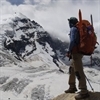

### Qualified Trek Leaders
***
We follow a rigorous regime of hiring and training our experts in the field. Each trek leader is a certified mountaineer with years of experience in the field. In addition to their qualification, they also go through practical and situational training to tackle any and all kinds of sudden conditions that may present themselves on the ground. Being unpredictable is the core nature of the mountains but being ready for any circumstance as best as possible is a controllable asset that we try to nurture.
Our field experts are also trained in basic medicine and first-aid response.
Watch: [Forerunners - The Making of A Trek Leader At Bikat Adventures](https://www.youtube.com/watch?v=20VEaZV4EhA&t=46s)
***
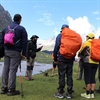

### Guided Progression
***
Since Bikat Adventures is a learning-based organization, we help you climb up the ladder of difficulty within the sphere of outdoor adventure systematically. Our on-ground training modules are designed to handhold you through the upskilling process so that you are ready to take on bigger challenges.
***

### Equipment Quality and Check
***
All the gear used on our treks and expeditions is tried and tested, maintained for good quality, and is overall top-notch in quality and condition. We are continually looking to obtain the best of everything there is in the market so as to ensure optimum safety.
***
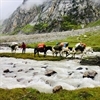

### Support Systems
***
Along with the staff you see on-ground, we have a team of superheroes working in the background to give you the best experience possible. Our background team also comprises local staff from each area who know the region best. Having local support helps with studying the area, pre-planning, execution, and in receiving timely support in case of emergencies in these remote locations.
***

### Communication
***
Our on-field staff is in constant contact with our teams based in primary locations so as to eliminate any avoidable delay in reaching additional help and support when required. We try to use the best tools for communication available, including satellite phones, in regions where they are not restricted.
***
## What our customers Say
[](https://www.google.com/search?q=google+bikat+adventures+reviews&rlz=1C1RXQR_enIN1027IN1027&ei=5fLEY52hC57A3LUP-IiQsAQ&ved=0ahUKEwjdp6aav8v8AhUeILcAHXgEBEYQ4dUDCBA&uact=5&oq=google+bikat+adventures+reviews&gs_lcp=Cgxnd3Mtd2l6LXNlcnAQAzIGCAAQFhAeMgUIABCGAzIFCAAQhgMyBQgAEIYDOgoIABBHENYEELADOg0IABBHENYEELADEIsDOh4ILhBHENYEEMcBEK8BEMgDELADEIsDEKYDEKgDGAFKBAhBGABKBAhGGABQvQZYrh5g2SNoAXABeACAAY8BiAG7CJIBAzAuOJgBAKABAcgBCLgBAsABAdoBBAgBGAg&sclient=gws-wiz-serp#lrd=0x390d1b0e6542f93f:0x4be8fb6f06c456d7,1,,,,)
4\.7
2604 reviews
[](https://www.tripadvisor.com/Attraction_Review-g304551-d11751358-Reviews-Bikat_Adventures_Private_Limited-New_Delhi_National_Capital_Territory_of_Delhi.html)
4\.5
1079 reviews
## Cancellation Policy
Cash refund
Cancellations up to 60 days prior to departure date
5% deduction
Between 60 days upto 30 days prior to departure date
10% deduction
Between 30 days upto 10 days prior to departure date
50% deduction
Less than 10 days prior to departure date
No Refund
Voucher refund
Cancellations up to 30 days prior to departure date
No Deduction
Between 30 days upto 15 days prior to departure date
15% Deduction
Between 15 days upto 10 days prior to departure date
30% Deduction
Less 10 days prior to departure date
90% Deduction
Please Note:
1. Cash refund is applicable only in case of bookings made without using any promotional offer code or Cancellation Vouchers or Discounts. "Cash Refund will be processed in 7-14 working days."
2. This is only a brief of cancellation terms. For finer details please refer [Detailed Cancellation Policy.](https://www.bikatadventures.com/Home/Pages/cancellation-and-batch-shifting)
## Blog Posts
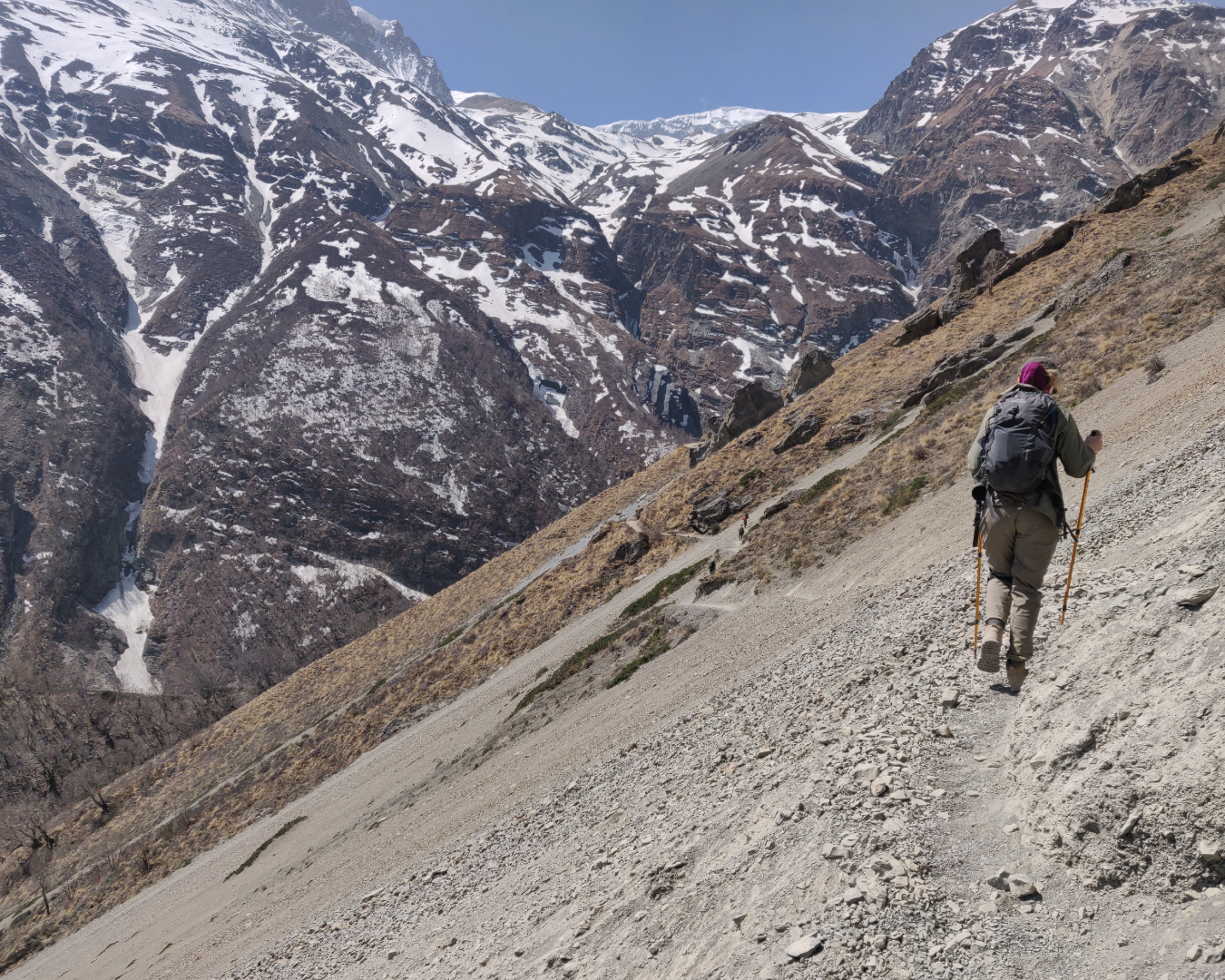
Informative
All You Need To Know About Trekking In Nepal- A Comprehensive Guide
Nepal, best known for being home to the highest mountain in the world, Mount Everest (8,848M) is much more than an access to the top most point of contact on the planet. Formerly known as the Federal Democratic Republic of Nepal, it is a landlocked c...
[Read full](https://www.bikatadventures.com/Home/Blog/trekking-in-nepal-a-comprehensive-guide)
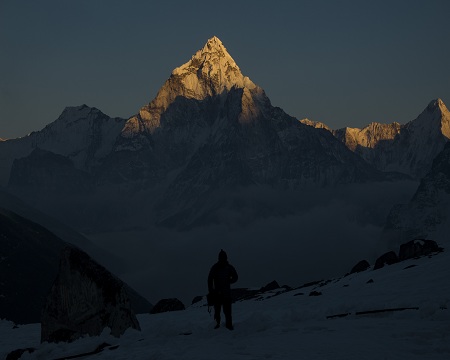
Informative
Everest Base Camp's Secret Detour: Gokyo Lakes Via Cho La
There has always been something about treks that return the same way they came that irks me. Of course, any day spent hiking is a good one, but days where the trail is one I haven’t been on before are extra special. I don’t know about yo...
[Read full](https://www.bikatadventures.com/Home/Blog/Everest-Base-Camp-trek-and-Gokyo-Ri-via-Cho-La-Pass)
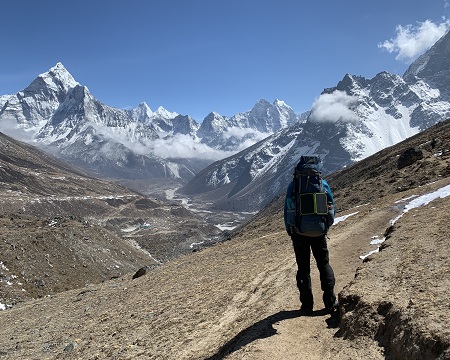
Informative
Trekking Everest Base Camp: 10 Things I Should Have Known
Everest Base Camp - a name that draws thousands each year to visit its historic trail, witness some of the world’s tallest mountains and test their endurance. It has been a dream of my own for years to “do EBC.” After all, the 12-da...
[Read full](https://www.bikatadventures.com/Home/Blog/secrets-of-trekking-Everest-Base-Camp)
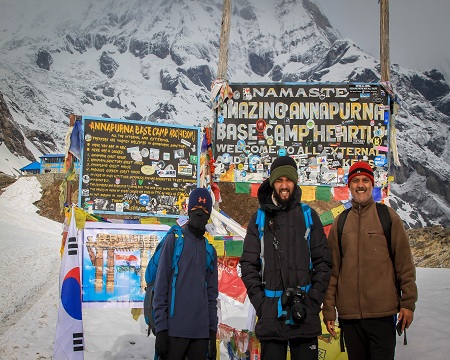
Informative
Everest Base Camp Versus Annapurna Base Camp: How To Choose
Everest Base Camp and Annapurna Base Camp, the two treks many outdoor enthusiasts carry on their bucket list for years, hoping to one day join the ranks of those who have made it to the top. One has legendary name-recognition for hosting climbers wis...
[Read full](https://www.bikatadventures.com/Home/Blog/Choosing-Everest-Base-Camp-or-Annapurna-Base-Camp)
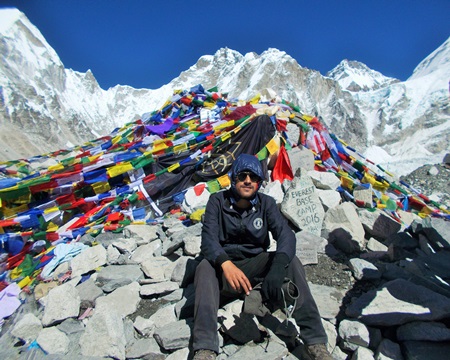
Trekkers' blog
EVEREST BASE CAMP & KALA PATHAR TREK NARRATIVE
Hello to all adventure freaks. This is a write up of my recent trek to the Everest base camp with one of my close friends in November 2016. Just to give you guys a hint of the back story that led to this trek. It had been a couple of months since I ...
[Read full](https://www.bikatadventures.com/Home/Blog/EVEREST-BASE-CAMP--KALA-PATHAR-TREK-NARRATIVE-copy)
## Similar Adventures
‹
›
##### Enter your Email
Select Batch:
[Continue]()
## Events By Categories
[ Trekking](https://www.bikatadventures.com/Home/expedition/trekking)
[ Mountaineering](https://www.bikatadventures.com/Home/expedition/Mountaineering)
[ Skiing](https://www.bikatadventures.com/Home/expedition/Skiing)
[ Kayaking](https://www.bikatadventures.com/Home/expedition/Kayaking)
[ Cycling](https://www.bikatadventures.com/Home/expedition/Cycling)
[ Scuba Diving](https://www.bikatadventures.com/Home/expedition/Scuba%20Diving)
## Events By Months
- [January](https://www.bikatadventures.com/Home/SearchMonth/1)
[July](https://www.bikatadventures.com/Home/SearchMonth/7)
- [February](https://www.bikatadventures.com/Home/SearchMonth/2)
[August](https://www.bikatadventures.com/Home/SearchMonth/8)
- [March](https://www.bikatadventures.com/Home/SearchMonth/3)
[September](https://www.bikatadventures.com/Home/SearchMonth/9)
- [April](https://www.bikatadventures.com/Home/SearchMonth/4)
[October](https://www.bikatadventures.com/Home/SearchMonth/10)
- [May](https://www.bikatadventures.com/Home/SearchMonth/5)
[November](https://www.bikatadventures.com/Home/SearchMonth/11)
- [June](https://www.bikatadventures.com/Home/SearchMonth/6)
[December](https://www.bikatadventures.com/Home/SearchMonth/12)
## Events By Nights
- [1 Night](https://www.bikatadventures.com/Home/SearchDay/1)
- [2 Night](https://www.bikatadventures.com/Home/SearchDay/2)
- [3 Night](https://www.bikatadventures.com/Home/SearchDay/3)
- [4 Night](https://www.bikatadventures.com/Home/SearchDay/4)
- [5 & More Night](https://www.bikatadventures.com/Home/SearchDay/5)
## Policies
- [Environmental Policy](https://www.bikatadventures.com/Home/Pages/environment-policy)
- [Privacy Policy](https://www.bikatadventures.com/Home/Pages/privacy-policy)
- [Term & Conditions](https://www.bikatadventures.com/Home/Pages/terms-and-conditions)
- [About Us](https://www.bikatadventures.com/Home/About)
- [Work With Us](https://www.bikatadventures.com/Home/Pages/careers)
## Contact Us
- Address: Unit 759, JMD Megapolis, Sector 48. Gurgaon Haryana 122001
- Pre Sale - [9667639126](tel:+919667639126) , Post Sale - [9319028363](tel:+919319028363),
## Bikat Adventures
- [Cancellation & Refunds](https://www.bikatadventures.com/Home/Pages/cancellation-and-batch-shifting)
- [Membership](https://www.bikatadventures.com/home/faqs)
- [Vouchers](https://www.bikatadventures.com/home/faqs)
- [Referrals](https://www.bikatadventures.com/home/faqs)
- [Content Sharing](https://www.bikatadventures.com/home/faqs)
[](https://play.google.com/store/apps/details?id=com.app.bikat)
### © 2026 Bikat Adventures - All Rights Reserved
### [Powered by: Novel Knett Software Solutions](http://www.nksoftwaresolutions.co.in/)
***
[Ali Bedni Bugyal Trek](https://www.bikatadventures.com/Home/Itinerary/ali-bedni-bugyal-trek)
[Annapurna Base Camp](https://www.bikatadventures.com/Home/Itinerary/Annapurna-Base-Camp-Trek)
[Annapurna Circuit Trek](https://www.bikatadventures.com/Home/Itinerary/Annapurna-Circuit-Trek)
[Auden's Col Trek](https://www.bikatadventures.com/Home/Itinerary/Audens-col-trek)
[Bali Pass Trek](https://www.bikatadventures.com/Home/Itinerary/bali-pass-trek)
[Baraadsar Lake Trek](https://www.bikatadventures.com/Home/Itinerary/baraadsar-lake-trek)
[Basic Kayaking Course](https://www.bikatadventures.com/Home/Itinerary/basic-kayaking-course-rishikesh)
[Beas Kund Trek](https://www.bikatadventures.com/Home/Itinerary/Beas-kund-trek)
[Bhrigu Lake Trek](https://www.bikatadventures.com/Home/Itinerary/bhrigu-lake-trek)
[Borasu Pass Trek](https://www.bikatadventures.com/Home/Itinerary/borasu-pass-trek)
[Brahmatal Trek](https://www.bikatadventures.com/Home/Itinerary/brahmatal-trek)
[Buran Ghati Trek](https://www.bikatadventures.com/Home/Itinerary/buran-ghati-trek)
[Chadar Trek](https://www.bikatadventures.com/Home/Itinerary/chadar-trek)
[Chandrakhani Pass Trek](https://www.bikatadventures.com/Home/Itinerary/Chandrakhani-Pass-Trek)
[Dayara Bugyal Trek](https://www.bikatadventures.com/Home/Itinerary/Dayara-Bugyal-Trek)
[Deo Tibba Base Camp Trek](https://www.bikatadventures.com/Home/Itinerary/deo-tibba-base-camp-trek)
[Deoriatal Chandrashila Trek](https://www.bikatadventures.com/Home/Itinerary/Chopta-chandrashila-trek)
[Dev Kyara Trek](https://www.bikatadventures.com/Home/Itinerary/dev-kyara-trek)
[Dodital Trek](https://www.bikatadventures.com/Home/Itinerary/dodital-Trek)
[Dzo jongo Peak With Markha Valley](https://www.bikatadventures.com/Home/Itinerary/dzo-jongo-trek-ladakh)
[Everest Base Camp Trek](https://www.bikatadventures.com/Home/Itinerary/Everest-Base-Camp-Trek)
[Everest Base Camp With Gokyo Ri](https://www.bikatadventures.com/Home/Itinerary/Everest-Base-Camp-Gokyo-Ri-Trek)
[Friendship Peak Expedition](https://www.bikatadventures.com/Home/Itinerary/friendship-peak-expedition)
[Gaumukh Tapovan Trek](https://www.bikatadventures.com/Home/Itinerary/gaumukh-tapovan-trek)
[Ghepan Ghat Trek](https://www.bikatadventures.com/Home/Itinerary/Ghepan-Ghat-Lake-Trek)
[Goechala Trek](https://www.bikatadventures.com/Home/Itinerary/goechala-trek)
[Hampta Pass Trek](https://www.bikatadventures.com/Home/Itinerary/Hampta-Pass-Chandratal-Lake-Trek)
[Har Ki Dun Trek](https://www.bikatadventures.com/Home/Itinerary/Har-Ki-Dun-Trek)
[Integrated Basic Kayaking Course](https://www.bikatadventures.com/Home/Itinerary/integrated-basic-kayaking-course)
[Kalihani Pass Trek](https://www.bikatadventures.com/Home/Itinerary/Kalihani-Pass-Trek)
[Kalindi Khal](https://www.bikatadventures.com/Home/Itinerary/kalindi-khal-trek)
[Kang Yaste II](https://www.bikatadventures.com/Home/Itinerary/Kang-Yatse-II-Trek)
[Kashmir Great Lakes Trek](https://www.bikatadventures.com/Home/Itinerary/kashmir-great-lakes-trek)
[Kedarkantha Trek](https://www.bikatadventures.com/Home/Itinerary/kedarkantha-trek)
[Kedartal Trek](https://www.bikatadventures.com/Home/Itinerary/kedar-taal-trek)
[Khopra Ridge Trek](https://www.bikatadventures.com/Home/Itinerary/khopra-ridge-trek-nepal)
[Kilimanjaro Trek](https://www.bikatadventures.com/Home/Itinerary/mount-kilimanjaro-trek)
[Kuari Pass Trek](https://www.bikatadventures.com/Home/Itinerary/Kuari-pass-trek)
[Leh To Tsomoriri Cycling Expedition](https://www.bikatadventures.com/Home/Itinerary/Leh-Tso-Moriri-Cycling-Expedition#:~:text=The%20cycle%20tour%20starts%20from,Kiari%2C%20Chumathang%2C%20and%20Mahe.)
[Manali Leh Cycling Expedition](https://www.bikatadventures.com/Home/Itinerary/Manali-Leh-Cycle-Expedition)
[Markha Valley Trek](https://www.bikatadventures.com/Home/Itinerary/markha-valley-trek)
[Miyar Valley Trek](https://www.bikatadventures.com/Home/Itinerary/Miyar-Valley-Trek)
[Mt. Black Peak](https://www.bikatadventures.com/Home/Itinerary/Black-Peak-Expedition)
[Mt. CB 13 & 14](https://www.bikatadventures.com/Home/Itinerary/Mt-CB-13-and-CB-14-expedition)
[Mt. Deo Tibba](https://www.bikatadventures.com/Home/Itinerary/deo-tibba-peak)
[Mt. Nun](https://www.bikatadventures.com/Home/Itinerary/Mount-Nun-Expedition)
[Nag Tibba Winter Trek](https://www.bikatadventures.com/Home/Itinerary/Nag-Tibba-Trek)
[Pangarchulla Peak Trek](https://www.bikatadventures.com/Home/Itinerary/pangarchulla-peak-trek)
[Parang La Trek](https://www.bikatadventures.com/Home/Itinerary/parang-la-trek)
[Phulara Ridge Trek](https://www.bikatadventures.com/Home/Itinerary/phulara-ridge-trek)
[Pin Bhaba Trek](https://www.bikatadventures.com/Home/Itinerary/Pin-Bhaba-Pass-Trek)
[Pin Parwati Pass Trek](https://www.bikatadventures.com/Home/Itinerary/Pin-parwati-pass-trek)
[Rumste To Tsomoriri Lake Trek](https://www.bikatadventures.com/Home/Itinerary/rumtse-to-tso-moriri-lake-trek)
[Rupin Pass Trek](https://www.bikatadventures.com/Home/Itinerary/rupin-pass-trek)
[Saach Pass Cycling Expedition](https://www.bikatadventures.com/Home/Itinerary/sach-pass-cycling)
[Sandakphu Trek](https://www.bikatadventures.com/Home/Itinerary/sandakphu-trek)
[Sar Pass Trek](https://www.bikatadventures.com/Home/Itinerary/Sar-Pass-Trek#:~:text=The%20total%20trek%20distance%20is,very%20thrilling%20and%20enriching%20experience.)
[Spiti Winter Homestay Trail](https://www.bikatadventures.com/Home/Itinerary/Spiti-Winter-Homestay-Trail)
[Sumda Chey Winter Trek](https://www.bikatadventures.com/Home/Itinerary/sumda-chey-winter-trek)
[Tarsar Marsar Trek](https://www.bikatadventures.com/Home/Itinerary/tarsar-marsar-trek)
[Tawang Bum La Cycling Expedition](https://www.bikatadventures.com/Home/Itinerary/Guwahati-Tawang-Bam-La-Cycling)
[Vasuki Tal Meru Glacier Trek](https://www.bikatadventures.com/Home/Itinerary/gangotri-tapovan-vasuki-tal-trek)
[Warwan Valley Trek](https://www.bikatadventures.com/Home/Itinerary/warwan-valley-kashmir-trek)
[Yunam Peak Trek](https://www.bikatadventures.com/Home/Itinerary/yunam-peak-expedition)
[Chat With Us](https://wa.me/message/IS7DBKP2P6MZH1)
Pre Sale - [9667639126](tel:+919667639126) , Post Sale - [9319028363](tel:+919319028363)
Submit Enquiry
- [Book Now](https://www.bikatadventures.com/Home/Itinerary/Everest-Base-Camp-Trek)
#### Call Us
Pre Sale - [9667639126](tel:+919667639126) , Post Sale - [9319028363](tel:+919319028363) | ||||||||||||||||||
| Readable Markdown | ## Detailed Itinerary
### Day 1
Arrive in Kathmandu (1,330M)
Day 1 is reserved to make your way to the bustling capital city of Kathmandu. Its colourful, crowded streets packed with shops stacking trekking and climbing gear to their very top in addition to the many tourist hotels and cafes with high mountains in the backdrop is enough to suggest that trekking in Nepal is going to be a different experience. With crowds from across the globe sifting through the city in search of climbing gear suited for the highest mountains, this place is your best bet if you need to buy some top-class equipment, at the best rates, for your future climbs or if you are missing something for the one you are on now! The shops and cafes in Kathmandu accept Indian currency but you might want to take this day to exchange your money to Nepal currency since cash is the only medium of payment on the higher reaches of the trek and the only money accepted in tea houses above is local currency.
### Day 2
Kathmandu (1,330M) to Lukla (2,860M) to Phakding (2,652M)
**Duration:** 35 min (flight to Lukla) + 3 hour (trek to Phakding)
**Distance:** 7 km trek
Today is the first day of the trek but not before we take a short flight up to the trail head. After breakfast we proceed to Tribhuvan Domestic Airport, Kathmandu for our flight out to Lukla. The flight over mountains in the Khumbu Region is all of 35 minutes but presents you with some of the most exquisite views of Nepal and can easily be one of the highlights of this trek. If you get a seat on the left side of these tiny planes, the view out the window is one you’ll never forget. Lukla is a small village with no road, only reachable by flight or foot. We walk straight out of the airport, across the cobbled stone footpath of the village and off into the forest trail, officially starting our first day of trekking. Just before exiting the village, we are required to present the first of our two permits at the check post – so remember to keep these handy. Today is easy - it is a simple trek for 3 hours which starts with descending 300M and then slowly climbs up 100M to meet the rest point for the night - Phakding. Along the way, we pass countless mani walls painted on the rocks lining the trail and boulders carved with Tibetan Buddhist prayer inscriptions. We also find numerous prayer wheels all along the trail. We spend our first night in a tea house at Phakding.
### Day 3
Phakding (2,652M) to Namche Bazaar (3,440M)
**Duration:** 6-7 hours
**Distance:** 11 km
Its serious business from today onwards – today marking day 1 of our brush with difficult terrain on this trek. We start by walking along the banks of the Dudh Kosi, crossing it twice on the high suspension bridges Nepal treks are famous for. The trail is a series of small, repeated ascents and descents, following along the river and again crossing the engraved Buddhist stones characteristic of the area. We stop for lunch at the village of Monjo, which is also the gateway to Sagarmatha National Park. Here is where we present the second of our two permits. After entering the park, we descend along an enormous wall painted sky-high with prayers written in Tibetan to the Bhote Kosi River arriving at Jorsalle village. This is where all the fun begins. After one final stroll along the beach-like riverbank, the trail gets steeper passing through dense forests. After a while we cross the last suspension bridge for today – the bridge dangling spectacularly high above a sharply-descending gorge. From here, we ascend 600M through a thickly forested patch all the way to Namche Bazaar, the administrative and trade capital of the Khumbu region. If the weather is clear we might get our first view of Everest at the rest point along the way. Overnight stay in tea house in Namche Bazaar.
### Day 4
Namche (3,440M) to Tengboche (3,860M)
**Duration:** 6-7 hours
**Distance:** 10-11 km
Tengboche is a small valley at an altitude of 3,860M. This beautiful route between the two villages starts with us passing through Namche on a stone-paved path by the stream. Thamserku, a beautiful peak of 6,608M, dominates the view, with Ama Dablam – one of the most peculiarly shaped mountains – farther up the valley. Everest is visible above the joining ridge of the south face of Lhotse and Nuptse that close the valley far ahead. Close to an hour into the trek, we come across a huge chorten dedicated to Tenzin Norgay – the man who needs no introduction. The trail is small sections of ascents with patches of descents that are enough to recover your breath for the next section of ascent. We should reach our stop-hold for today by lunch-time.
### Day 5
Tengboche (3,860M) to Dingboche (4,410M)
**Duration:** 5-6 hours
Today we start our trek early and head out of Tengboche over to the other side of the ridge and straight into a birch and rhododendron forest. From here, Lower Pangboche is close to 4 km – with a height gain of close to 260M, we should get there in less than 2 hours. The village of Pangboche is spread out right below the impressive Ama Dablam and hence offers some of the most spectacular views of the mountain making it a perfect spot to take a break. Depending on what time we get here, we either stop for tea or head straight for lunch. Everest now disappears from the view until we reach the upper parts of the Khumbu Valley. We see a lot of revered peaks all through our trek today, don’t forget to question your local guide about these each time you see a new peak peering out from behind at the turn of the view.
To our left is the Lobuche River. Dingboche comes into view after a series of moraines. This large settlement has some spectacular sights to offer with the south face of Lhotse (8,516M) dominating the view. Do not miss the sunset from this beautiful location.
### Day 6
Acclimatization day at Dingboche (4,410M)
We have climbed over 2000M in the last few days. This marks for a good milestone to take a day off so as to rest the body and give it time to acclimatize to this newly gained elevation. This makes it easier for it to handle the elevation it has to face in the coming days. Acclimatization is done best and done right when you expose yourself to the mountain air at this elevation – so remember to take yourself out and walk around. There is much to see and admire in this region. A small hike from here brings you face to face with three of the world’s highest mountain peaks - Mount Lhotse, Mount Makalu and Mount Cho Oyu.
### Day 7
Dingboche (4,410M) to Dughla/Thukla (4,620M)
**Duration:** 3 hours
**Distance:** 5 km
Today is the shortest of all days on the trek which seems easier still after resting it out at Dingboche yesterday. The flat trail till Dughla offers some of the best views on this route along with a spectacular view of the wall of Khumbu Glacier. On our right, we see the magnificent Mount Pumori (7,138m) and a brightly colored glacial lake. There are no tea houses between these two locations, and no sources of water either – remember to carry sufficient supplies of refreshment as well as water for today.
### Day 8
Dhugla/Thukla (4,620M) to Lobuche (4,940M)
**Duration:** 3.5 hours
Today we start our trekking towards Lobuche which is situated beside the Khumbu glacier. Initial part of the trek is tough as we undertake the strenuous climb up to Dughla Pass/ Thukla Pass to go onwards to Lobuche. The climb is short but extremely steep – if it’s any consolation, it offers some of the most memorable views of the entire trek. The pass is filled with memorials of mountaineers who got the ball rolling for all of us to be here today. We spend some time at the pass before we carry on to Lobuche – the trail after the pass is mostly flat.
### Day 9
Lobuche (4,940M) to Gorakshep (5,164M) to Everest Base Camp (5,364M) and back to Gorakshep (5,164M)
**Duration:** 7 – 8 hours
Today's trail has a lot of ups and downs till Gorakshep – most of these are humps on the moraines of the infamous Khumbu Glacier. Once we reach Gorakshep, we have something to eat and leave straight after to get to Everest Base Camp - situated at the beginning of the massive Khumbu Glacier. The trail walks along the glacier with extraordinary views of Mt. Pumori to our right and Mt. Nuptse to our left. We get a clear as day view of the Khumbu icefall from the base camp – a view that’s inspiring enough to up your trekking game. This portion of the trek also brings us face to face with some of the biggest mountains in Nepal and in the world – the feeling of being surrounded by giants is almost surreal. We need to hike on the Khumbu glacier for a short bit in order to get to Everest Base Camp – giving us a tiny feel for what it must be like to climb up this beast of a mountain. We spend some time at the base camp soaking in the views before we head back down to Gorakshep on the same trail.
### Day 10
Gorakshep (5,164M) to Kala Patthar (5,644M) to Pheriche (4,371M)
**Duration:** 7 – 8 hours
Today is the most exciting day of the trek, if you ask us! With views to die for, it is everything we have been secretly waiting for throughout the trek. We start early to make our way to Kala Patthar – a place kind enough to give us the clearest views of Everest on this entire trail – it will however, take some effort. The trek to the summit of Kala Patthar is one of the most difficult but also highly rewarding. After the trek to Kala Patthar, it is easy to imagine why Everest is the most sought after mountain on the planet and why it’s captured the fancy of some of the most accomplished climbers across eras. In fact, Kala Patthar is the only place from where you can get views of almost the entire high peak mountains of the Khumbu Range – which is what makes it such an inspiring journey to make. It takes about 3 hours to reach Kala Patthar from Gorakshep. We can’t spend much time on the top as it’s an extremely windy place with nothing to obstruct the ferocious winds.
From Kala Patthar, it’s only descent all the way to Pheriche. This almost 1,300M of descent should take about 4 hours. Pheriche lies on a flat valley on the bank of Dhudhkoshi River.
### Day 11
Pheriche (4,371M) to Namche Bazaar (3,440M)
Today’s trek is moderate but is made easy in the memory of the awe-inspiring landscape we witnessed yesterday. There are small patches of ascent before Tengboche and after Phungi Thanga.
### Day 12
Namche Bazaar (3,440M) to Lukla (2,860M)
The last day of our trek in the gorgeous Khumbu region, it is one which must be savored. Walking on this familiar trail gives you the opportunity to better enjoy its beauty without having to worry about familiarizing yourself to it like we did the first time around. With no rush to get anywhere, this is literally a walk in the park.
### Day 13
Lukla (2,860M) to Kathmandu (1,330M)
Airborne, we once again witness the beauty of Nepal from a bird’s eye view which is the perfect way to end this breathtaking journey, if you ask us\!
### Day 14
Departure
It is time to bid adieu to the Everest Base Camp Trek here. The check-out time is 12 noon. Please note that we can arrange for a drop-off at the airport on request.
## Frequently Asked Questions
***
Everest Base Camp Trek is suitable for trekkers with prior experience, having completed at least one [BRS](https://www.bikatadventures.com/Home/Blog/Bikat-Rating-Scale) 4 level trek or equivalent.
***
If you can Jog/Run for 5 kms in 25-30 mins, you are ready to take on this trek. Once a week, you can practice running 10 kms in an hour or so to improve your endurance further. In addition to this, you can also add resistance workouts to your schedule like squats, lunges, push ups etc. If you cannot do the above, there’s no need to worry. It is important to remember that it’s all about practice. Get on a training schedule and we can assure you that you will meet these standards in a matter of a few months.
***
A certain level of fitness and physical endurance are required to take on any high-altitude trail in the Himalayas. Basic knowledge of ascending and descending on steep gradients, high-altitude attire and layering and mountain mannerisms will be helpful.
***
The minimum age limit is 13 years. However, minors between 13 to 17 years of age should be accompanied by their parents/ guardians. If you are above the age of 60, kindly carry a medical certificate from your doctor that deems you fit for adventure activities like trekking.
***
***
The Everest Base Camp Trek is located in the Solukhumbu district of Nepal, in the Sagarmatha National Park. The trek starts from the town of Lukla, which can be reached by a short flight from Kathmandu, the capital city of Nepal.
***
The Everest Base Camp Trek is one of the three most sought-after treks in Nepal, alongside the Annapurna Circuit Trek and the Annapurna Base Camp Trek and for good reason - it’s bringing you to the foot of the tallest mountain in the world, afterall! Throughout the two-week-long trek, you are immersed in the high-altitude zone, enjoying incredible views of majestic peaks such as Everest, Lhotse, Makalu, Nuptse, Pumori, and Ama Dablam. All in all, the Everest Base Camp Trek offers an unforgettable experience in one of the most stunning landscapes on the planet. As you walk amongst the highest mountains in the world, the trek takes you through the vibrant culture and lifestyles of the high-altitude villages in Nepal. The journey involves crossing some of Nepal's longest suspension bridges, traversing over the deepest gorges adorned with colourful prayer flags, and passing through other amazing natural wonders.
***
The Everest Base Camp Trek can be demanding with several challenges for trekkers. It involves ascending to an altitude at 5,545M, which can lead to altitude sickness, a serious concern for some. The terrain can get rugged and uneven, with steep ascents and descents, rocky paths, and narrow trails. Weather conditions in the Himalayas are unpredictable and can change rapidly, bringing rain, snow, and even hailstorms. Therefore, trekkers must prepare for any weather eventuality.
***
The best months for the EBC trek are March to May and October to December.
***
The accommodation for all days of the trek will be provided in a guesthouse or lodge, generally called tea houses in Nepal.
***
During the spring season (March to May), temperatures at the Everest Base Camp can range from 15°C during the day to -10°C at night. During October to December, temperatures at the Everest Base Camp can range from 10°C during the day to -10°C at night. This is generally the most popular time to visit because of the clear skies and favourable weather conditions.
***
Everest Base Camp Trek is not technically challenging, however, it is extremely physically demanding. It involves traversing difficult terrain, patches of rugged and uneven land, with steep ascents and descents, rocky paths, and narrow trails, which can be challenging to navigate, especially in adverse weather conditions. However, no specialised climbing or mountaineering skills are required.
***
***
The base for EBC trek is Kathmandu. To get to Kathmandu from Delhi, you can take one of the following options: **By Air:** There are multiple flights daily connecting Delhi and Kathmandu. **By Road:** The road distance between Delhi and Kathmandu is 1,152 km. **By Rail:** Multiple trains are operating daily from Delhi to Gorakhpur near the India - Nepal border. From Gorakhpur, you will have to take a bus to Sunauli across the border. From Sunauli, you will have to take another bus to Kathmandu.
***
There is 3G connectivity for local network NCell for most of the Everest Base Camp trek. And you can also get wifi facilities at campsite on paid basis. Read more: [Comprehensive Guide for Trekking in Nepal](https://www.bikatadventures.com/Home/Blog/trekking-in-nepal-a-comprehensive-guide)
***
The nearest ATMs are located in Kathmandu.
***
You will have to arrive at Kathmandu on your own. It is a well established tourist location and is easy to reach.
***
We will stay the night in Kathmandu on Day 13. Plan for your departure from Kathmandu early morning on the next day.
***
You will be in Kathmandu at the beginning and end of this trek. There are a number of places to explore in Kathmandu - walk through the old city, explore the streets of Thamel, visit the famous Swayambhunath and Pashupatinath temples, take thangka painting workshops or learn how to cook local cuisine. You can also drive or fly to Pokhara in Central Nepal and explore the Annapurna and Dhaulagiri regions - rife with vast trekking options as well! Another must-see attraction is the Royal Palace, the site of the infamous 2001 massacre of the Royal Family by the then Crown Prince, and now converted into the Narayanhiti Palace Museum.
***
***
Safety equipment used for rescue such as static rescue rope, seat harness, carabiners, pulleys is carried by our trek leaders. Gaiters, microspikes and sleeping bags (wherever necessary) are not included and thus have to be rented from Kathmandu by you.
***
We don’t provide rentals in Nepal. But rental facilities are available in the market.
***
Rental facilities are available in the market.
***
You’ll have to return all the rented equipment to the shop from where you rented them.
***
For a detailed list, check the Packing List section on this page.
***
You can buy your trekking necessities from Kathmandu. There may be some items available at shops in Namche Bazaar, or other villages on the trail as well. However we recommend that you do not leave any essential purchases for the last minute.
***
***
Although not recommended, you can off load your bag at an additional cost. Add a request while making your booking for the trek and it can be arranged. *(Note: We don’t recommend offloading because the extra resources on a trail - ponies or porters depending on the trail - means extra load on the environment which can easily be avoided. It also goes against the spirit of trekking by eliminating a level of endurance and discomfort from the experience which are factors at the very heart of an outdoor adventure activity.)*
***
You can leave your extra luggage in hotel cloak rooms on a paid basis.
***
Like any trek in Nepal, meals are not part of the trek fee. All meals will have to be purchased by the trekkers at the tea houses where we stay. The tea houses in Nepal offer a wide variety of healthy and nutritious food. Read more: [Comprehensive Guide for Trekking in Nepal](https://www.bikatadventures.com/Home/Blog/trekking-in-nepal-a-comprehensive-guide)
***
Since we will be staying at tea houses, these accommodations have proper toilet facilities. Depending on the tea house, however, some may have shared toilets and some may have private toilets attached to the rooms.
***
In case you get your period on the trail and don’t have sanitary napkins, our trek leaders can provide them to you. If you need any other kind of assistance, you can let our trek leaders know. Irrespective of gender, our leaders are gender sensitised and equipped to assist you in any way you need them to.
***
Our team carries a first aid kit and all the basic medicines required during the trek. They are equipped to be the first responders in case of any injury or health-related issues. For higher expeditions, we also carry a HAPO Bag and oxygen cylinders to tend to any altitude-related health conditions.
***
You will get electricity at the tea houses. But these regions are prone to power cuts so it is better to carry your power bank as a backup.
***
***
A copy of your ID Proof and Medical Certificate are the mandatory documents required for this trek. (Soft copies for all of these are to be sent to us & originals should be on your person while on the trek.)
***
Yes, insurance for any high-altitude activity is highly recommended to cover for the cost of rescue, evacuation and any other emergency service required as well as to cover for medical cost in case of injury or illness during the trek. You can buy it on your own. Alternatively, if you want us to buy it on your behalf, you can speak to our post-booking team and they will arrange it for you. They will send you a payment link once the insurance has been purchased. Read more: [Comprehensive Guide for Trekking in Nepal](https://www.bikatadventures.com/Home/Blog/trekking-in-nepal-a-comprehensive-guide)
***
Yes, there are multiple permits required for this. We obtain the permits on every trekkers’ behalf. All the permit costs are included in your trek cost.
***
***
Yes, you will receive e-certificates (of completion) after the trek. It will bear your name, the trek, and the maximum altitude you achieved on the trek. In case you were unable to finish the trek, you will get a certificate of participation.
***
On completion of the trek, the certificate will show up on your dashboard on our website. You can download it directly from there.
***
***
Foreign nationals need a Visa to enter Nepal. For some countries, the visa may be obtained on arrival. Citizens of China and SAARC countries, which includes India, a tourist visa can be obtained without a charge (visa fees) but for other countries there is a fee depending on the duration of the stay. Visit <http://online.nepalimmigration.gov.np/tourist-visa> to get all the information on the required processes based on your home country.
***
This does not apply to you if you are an Indian citizen. In case you don’t hold an Indian passport, you will need to check online for Visa application rules based on your home country. Read more: [Comprehensive Guide for Trekking in Nepal](https://www.bikatadventures.com/Home/Blog/trekking-in-nepal-a-comprehensive-guide)
***
If you are not an Indian citizen, you will need Travel Medical Insurance to travel to the country. Please make sure that your insurance policy is valid for the altitude you are going to and the activity you are undertaking, to cover risks during the trek. The insurance policy provided by Bikat Adventures does not cover foreign nationals. So, please do not purchase it while making the booking from our website.
***
The Nepal Himalayas are home to Mount Everest, the highest mountain in the world, which attracts thousands of visitors each year. As a trekkers’ paradise Nepal has countless trekking trails which take you through all kinds of terrain spread out across Nepal. A country of warm people, eight of the fourteen tallest mountains in the world, diverse geography, and a rich culture with multiple languages, ethnicities and religions; the first thing you notice on entering Nepal is that it is extremely welcoming and full of colour – a country with a lot of heart.
***
You can make the booking any time depending on availability of slots in our fixed departure batches. You will get this information at the top of this page.
***
***
A Basic Mountaineering Course certification from one of the five recognized mountaineering institutes in India is a minimum requirement to join our team. Our field experts are also trained in basic medicine and first-aid response. We also conduct on-ground training for our staff once a year as a refresher for old skills and to learn some new ones. During this training that we call APW (Adventure Professional Workshop), our leaders learn close to 25 topics and techniques of rescue which are not covered in the BMC and AMC courses. For practical training, we simulate on-ground situations to prepare them for quick thinking and quick response during emergencies.
***
We follow a rigorous regime of hiring and training our experts on the field. Each trek leader is a certified mountaineer with years of experience in the field. The interview process to bring a trek leader on-board is close to 6 months long where we assess various skills as well as personality traits of an individual. They also go through an on-field assignment as part of the hiring process. Trek leaders also progress in time from leading easier treks before advancing to the more difficult ones where the stakes are higher. For detailed information on our selection process, please visit [Forerunners - The Making Of A Trek Leader](https://youtu.be/g0_PX8GrmPI)
***
It absolutely is. We recognize, value and embody the ideology that the world of outdoor adventure can benefit from diversity. We make it our mission to create outdoor spaces as equally accessible and safe for all genders as possible. We also encourage women leaders in the outdoors and all of our staff (irrespective of gender) is gender sensitised. As for accommodation, in case there are no other women on the trek, a solo female trekker is provided with a separate single-occupancy tent.
***
Our batch sizes for Everest Base Camp Trek are capped at 15 with the trek leader to trekker ratio of 1:8.
***
In addition to their qualification, our trek leaders are trained to tackle any and all kinds of sudden conditions that may present themselves on ground. During our recce stage, we study the trail in great detail and map out rescue routes before opening it up for our trekkers. We also have local support staff stationed in each area to arrange for emergency services at the place of need as quickly as possible.
***
We mobilise road rescue efforts where our trek leaders bring the person to be rescued down to the trailhead of the trek from where a car can take them to the nearest healthcare facility. The cost of rescue is not covered in the trek fee that we charge. It must be borne by the participant. However, if you opt for the insurance the cost of rescue operations can be claimed from the Insurance company on production of valid proof e.g. doctor’s prescription & hospital bills etc. Please note that Bikat Adventures is only a facilitator & not a party in the Insurance policy. You need to raise the claim request directly with the Insurance company. Bikat Adventures is not responsible for any rejection of claim. You can call the insurance provider directly for any clarifications related to the Insurance policy. Although not mandatory, we recommend buying the insurance. You don’t necessarily have to get the insurance we provide, you can pick an Insurance company of your choice and get a policy directly from them. If you need more information on the terms and conditions of the insurance policy, get in touch with our customer support team.
***
All the gear used on our treks and expeditions is tried and tested, maintained for good quality and is overall top notch in quality and condition. We are continually looking to obtain the best of everything there is in the market so as to ensure optimum safety.
***
That will depend on the nature of your medical condition. Do give us a call, and one of our people will help you understand what is best for you. If not this, we are sure there would be plenty of other options you can choose from our vast portfolio to pick as your next adventure.
***
***
***
This is a complex question and has a compound answer. The simple response is that because it is bad for the environment which we dearly love but if you are interested in a more detailed response to this question, please read [Reasons to Ban Fixed Camping in Himalayas](https://www.bikatadventures.com/Home/Blog/reasons-to-ban-fixed-camping-in-himalayas)
***
There are a number of measures that we take to prevent overcrowding on some of the most popular trails. Some of them are capping our group size at 15, capping the number of trekkers on a trail to 250 per season, constantly looking for newer trails and routes to spread the crowd around and providing incentives to our trekkers to try unexplored territories with us. We put in place the system of dynamic pricing, which is the first of its kind in the trekking industry, which incentivises trekkers to choose less crowded trails by offering higher discounts. We have noticed, since we started this system, that this has helped in a big way to spread out the crowds between trekking routes. We are also going international so as to relieve some of the stress on the Himalayan landscape as well as explore newer ranges and design newer experiences for our community. If you want a more detailed description of all our measures in this regard, please read [Simple solutions to overcrowding on Himalayan Treks](https://www.bikatadventures.com/Home/Blog/degradation-and-overcrowding-of-himalayan-treks-in-India-data-and-solutions)
***
Some basic things to remember are: do not use water, do not dispose of anything non-biodegradable inside the pits, carry your own roll of toilet paper and remember to cover up after yourself to leave a clean toilet for your fellow trekkers. Everything else is much the same like using an Indian style home toilet\!
***
Most wet wipes are not biodegradable which means it could take 100 years or more for them to decompose – not the best thing if you are trying to ‘Leave No Trace’, right?
***
This is quite a tricky situation but not a hopeless one. Since most of our sanitary waste is not biodegradable, we recommend that you pack your pads/tampons neatly, store it in a zip-lock bag and bring it back down with you where there are better options to dispose of them. In case you do not have zip-lock bags, ask our trek leaders for them and they should be able to provide them to you.
***
Each trekker is responsible for the use and hygiene of their own eating utensils. And as a measure to maintain proper hygiene, we do not provide plates and spoons. Also, dipping your hands in cold water to wash your own utensils adds something to the overall joy of high-altitude living, wouldn’t you think?
***
***
On making the payment, you will receive a booking confirmation along with the packing list and a copy of the undertaking form via email. You will subsequently receive emails detailing documents required, how to prepare physically and mentally for the trek, information on pick-up location on the first day etc. Please add info@bikatadventures.com in your trusted emails list to make sure our emails don't go to your spam folder. A Whatsapp group will be formed a few weeks before departure. Members from our team are on those groups as well. Feel free to seek any clarifications you require in regards to the trek, on the group itself. Updates related to transportation/pickup point/pickup timing, accommodation etc. will be shared on the Whatsapp group as well.
***
Yes, we create a Whatsapp group a few weeks before the departure date so that the flow of information remains smooth and transparent.
***
Yes, it is one of the mandatory documents you will need to submit before the trek starts. The soft copy is to be sent to us & the original should be on your person while on the trek.
***
Yes, we will provide you an undertaking form through email which will need to be filled up by you and submitted to us post booking.
*** | ||||||||||||||||||
| ML Classification | |||||||||||||||||||
| ML Categories |
Raw JSON{
"/Travel_and_Transportation": 707,
"/Travel_and_Transportation/Specialty_Travel": 535,
"/Travel_and_Transportation/Specialty_Travel/Adventure_Travel": 532,
"/Sports": 502,
"/Sports/Individual_Sports": 286,
"/Sports/Individual_Sports/Running_and_Walking": 256
} | ||||||||||||||||||
| ML Page Types |
Raw JSON{
"/Article": 555,
"/Article/Tutorial_or_Guide": 311
} | ||||||||||||||||||
| ML Intent Types |
Raw JSON{
"Informational": 472,
"Commercial": 467,
"Transactional": 414
} | ||||||||||||||||||
| Content Metadata | |||||||||||||||||||
| Language | en | ||||||||||||||||||
| Author | null | ||||||||||||||||||
| Publish Time | not set | ||||||||||||||||||
| Original Publish Time | 2017-10-08 15:23:38 (8 years ago) | ||||||||||||||||||
| Republished | No | ||||||||||||||||||
| Word Count (Total) | 8,893 | ||||||||||||||||||
| Word Count (Content) | 5,257 | ||||||||||||||||||
| Links | |||||||||||||||||||
| External Links | 20 | ||||||||||||||||||
| Internal Links | 165 | ||||||||||||||||||
| Technical SEO | |||||||||||||||||||
| Meta Nofollow | No | ||||||||||||||||||
| Meta Noarchive | No | ||||||||||||||||||
| JS Rendered | Yes | ||||||||||||||||||
| Redirect Target | null | ||||||||||||||||||
| Performance | |||||||||||||||||||
| Download Time (ms) | 1,197 | ||||||||||||||||||
| TTFB (ms) | 914 | ||||||||||||||||||
| Download Size (bytes) | 39,674 | ||||||||||||||||||
| Shard | 3 (laksa) | ||||||||||||||||||
| Root Hash | 7247449401269342603 | ||||||||||||||||||
| Unparsed URL | com,bikatadventures!www,/Home/Itinerary/Everest-Base-Camp-Trek s443 | ||||||||||||||||||