ℹ️ Skipped - page is already crawled
| Filter | Status | Condition | Details |
|---|---|---|---|
| HTTP status | PASS | download_http_code = 200 | HTTP 200 |
| Age cutoff | PASS | download_stamp > now() - 6 MONTH | 1.2 months ago |
| History drop | PASS | isNull(history_drop_reason) | No drop reason |
| Spam/ban | PASS | fh_dont_index != 1 AND ml_spam_score = 0 | ml_spam_score=0 |
| Canonical | PASS | meta_canonical IS NULL OR = '' OR = src_unparsed | Not set |
| Property | Value |
|---|---|
| URL | https://www.bbc.com/news/health-62577464 |
| Last Crawled | 2026-03-05 12:13:15 (1 month ago) |
| First Indexed | 2022-08-18 05:08:35 (3 years ago) |
| HTTP Status Code | 200 |
| Meta Title | Covid: Brain fog more common two years on, study suggests |
| Meta Description | Diagnoses of dementia rose after two years but other issues like depression fell away, research found. |
| Meta Canonical | null |
| Boilerpipe Text | 18 August 2022
Getty Images
Two years after having Covid-19, diagnoses of brain fog, dementia and epilepsy are more common than after other respiratory infections, a study by the University of Oxford suggests.
But anxiety and depression are no more likely in adults or children two years on, the research found.
More research is needed to understand how and why Covid could lead to other conditions.
Experts say the virus disrupted daily life as well as making people ill.
Previous research has suggested that adults are at an increased risk of brain and mental health conditions in the six months after a Covid infection.
This study looked at the risks of 14 different disorders in 1.25 million patients two years on from Covid, mostly in the US. It then compared them with a closely-matched group of 1.25 million people who had a different respiratory infection.
In the group who had Covid, after two years, there were more new cases of:
dementia, stroke and brain fog in adults aged over 65
brain fog in adults aged 18-64
epilepsy and psychotic disorders in children, although the overall risks were small
For example, children's risk of developing epilepsy after Covid was 260 in 10,000, compared to 130 in 10,000 after another respiratory infection.
Their risk of developing a psychotic disorder also increased after Covid - to 18 in 10,000 - but it is still a rare condition.
Some disorders became less common two years after Covid, including:
anxiety and depression in children and adults
psychotic disorders in adults
The increased risk of depression and anxiety in adults lasts less than two months before returning to normal levels, the research found.
'Worrying'
Prof Paul Harrison, lead study author, from University of Oxford's psychiatry department, said it was "worrying" that some disorders, such as dementia and seizures, are more likely to be diagnosed after Covid-19, even two years later.
But he said it was "good news" that depression and anxiety cases after Covid were "short-lived", and not seen in children.
The researchers said the numbers affected were "hard to ignore" but were "not a tsunami", and some would be likely to need medical attention which could add to the pressure on health services.
It also did not look at how severe each condition was after diagnosis or how long they lasted, and whether these are similar after Covid compared with other infections.
They stopped short of calling these conditions "long Covid", although brain fog - or problems with memory and concentration - is a typical symptom.
Although less severe than the Delta variant, Omicron appears to lead to similar risks of brain and mental health conditions, this study found.
'Societal upheaval'
The study has some limitations - it did not look at how Covid could cause brain and mental health disorders, although some experts say it could be explained by the development of micro-clots in the blood.
Dr Jonathan Rogers and Prof Glyn Lewis, from University College London, who were not involved in the research, said the study highlighted "some clinical features that particularly merit further investigation", but they added that more studies were needed to confirm the findings.
Prof David Menon, from the University of Cambridge, said the impact of being in hospital with Covid was "equal to 20 years of ageing (between 50 and 70)".
Paul Garner, emeritus professor in evidence synthesis in global health at Liverpool School of Tropical Medicine, said the Covid pandemic had changed people's lives in many different ways.
He said the small increases in dementia and psychosis were "more likely to be related to the societal upheaval and dystopia we have been living through, rather than being a direct effect of the virus." |
| Markdown | [Skip to content](https://www.bbc.com/news/health-62577464#main-content)
[Register](https://session.bbc.com/session?action=register&userOrigin=BBCS_BBC&ptrt=https%3A%2F%2Fwww.bbc.com%2Fnews%2Fhealth-62577464)
[Sign In](https://session.bbc.com/session?userOrigin=BBCS_BBC&ptrt=https%3A%2F%2Fwww.bbc.com%2Fnews%2Fhealth-62577464)
- [Home](https://www.bbc.com/)
- [News](https://www.bbc.com/news)
- [Sport](https://www.bbc.com/sport)
- [Business](https://www.bbc.com/business)
- [Technology](https://www.bbc.com/technology)
- [Health](https://www.bbc.com/health)
- [Culture](https://www.bbc.com/culture)
- [Arts](https://www.bbc.com/arts)
- [Travel](https://www.bbc.com/travel)
- [Earth](https://www.bbc.com/future-planet)
- [Audio](https://www.bbc.com/audio)
- [Video](https://www.bbc.com/video)
- [Live](https://www.bbc.com/live)
- [Home](https://www.bbc.com/home)
- [News](https://www.bbc.com/news)
- [US & Canada](https://www.bbc.com/news/us-canada)
- [UK](https://www.bbc.com/news/uk)
- [UK Politics](https://www.bbc.com/news/politics)
- [England](https://www.bbc.com/news/england)
- [N. Ireland](https://www.bbc.com/news/northern_ireland)
- [N. Ireland Politics](https://www.bbc.com/news/northern_ireland/northern_ireland_politics)
- [Scotland](https://www.bbc.com/news/scotland)
- [Scotland Politics](https://www.bbc.com/news/scotland/scotland_politics)
- [Wales](https://www.bbc.com/news/wales)
- [Wales Politics](https://www.bbc.com/news/wales/wales_politics)
- [Africa](https://www.bbc.com/news/world/africa)
- [Asia](https://www.bbc.com/news/world/asia)
- [China](https://www.bbc.com/news/world/asia/china)
- [India](https://www.bbc.com/news/world/asia/india)
- [Australia](https://www.bbc.com/news/world/australia)
- [Europe](https://www.bbc.com/news/world/europe)
- [Latin America](https://www.bbc.com/news/world/latin_america)
- [Middle East](https://www.bbc.com/news/world/middle_east)
- [In Pictures](https://www.bbc.com/news/in_pictures)
- [BBC InDepth](https://www.bbc.com/news/bbcindepth)
- [BBC Verify](https://www.bbc.com/news/bbcverify)
- [Sport](https://www.bbc.com/sport)
- [Business](https://www.bbc.com/business)
- [World of Business](https://www.bbc.com/business/world-of-business)
- [Technology of Business](https://www.bbc.com/business/technology-of-business)
- [NYSE Opening Bell](https://www.bbc.com/business/opening-bell)
- [Technology](https://www.bbc.com/technology)
- [Artificial Intelligence](https://www.bbc.com/technology/artificial-intelligence)
- [AI v the Mind](https://www.bbc.com/technology/ai-v-the-mind)
- [Health](https://www.bbc.com/health)
- [Culture](https://www.bbc.com/culture)
- [Film & TV](https://www.bbc.com/culture/film-tv)
- [Music](https://www.bbc.com/culture/music)
- [Art & Design](https://www.bbc.com/culture/art)
- [Style](https://www.bbc.com/culture/style)
- [Books](https://www.bbc.com/culture/books)
- [Entertainment News](https://www.bbc.com/culture/entertainment-news)
- [Arts](https://www.bbc.com/arts)
- [Arts in Motion](https://www.bbc.com/arts/arts-in-motion)
- [Travel](https://www.bbc.com/travel)
- [Destinations](https://www.bbc.com/travel/destinations)
- [Africa](https://www.bbc.com/travel/destinations/africa)
- [Antarctica](https://www.bbc.com/travel/destinations/antarctica)
- [Asia](https://www.bbc.com/travel/destinations/asia)
- [Australia and Pacific](https://www.bbc.com/travel/destinations/australia-and-pacific)
- [Caribbean & Bermuda](https://www.bbc.com/travel/destinations/caribbean)
- [Central America](https://www.bbc.com/travel/destinations/central-america)
- [Europe](https://www.bbc.com/travel/destinations/europe)
- [Middle East](https://www.bbc.com/travel/destinations/middle-east)
- [North America](https://www.bbc.com/travel/destinations/north-america)
- [South America](https://www.bbc.com/travel/destinations/south-america)
- [World’s Table](https://www.bbc.com/travel/worlds-table)
- [Culture & Experiences](https://www.bbc.com/travel/cultural-experiences)
- [Adventures](https://www.bbc.com/travel/adventures)
- [The SpeciaList](https://www.bbc.com/travel/specialist)
- [Earth](https://www.bbc.com/future-planet)
- [Science](https://www.bbc.com/innovation/science)
- [Natural Wonders](https://www.bbc.com/future-planet/natural-wonders)
- [Climate Solutions](https://www.bbc.com/future-planet/solutions)
- [Sustainable Business](https://www.bbc.com/future-planet/sustainable-business)
- [Green Living](https://www.bbc.com/future-planet/green-living)
- [Audio](https://www.bbc.com/audio)
- [Podcast Categories](https://www.bbc.com/audio/categories)
- [Radio](https://www.bbc.com/audio/stations)
- [Audio FAQs](https://www.bbc.com/undefined)
- [Video](https://www.bbc.com/video)
- [BBC Maestro](https://www.bbc.com/video/bbc-maestro)
- [Discover the World](https://www.bbc.com/video/discover-the-world)
- [Live](https://www.bbc.com/live)
- [Live News](https://www.bbc.com/live/news)
- [Live Sport](https://www.bbc.com/live/sport)
[Home](https://www.bbc.com/)
News
[Sport](https://www.bbc.com/sport)
Business
Technology
[Health](https://www.bbc.com/health)
Culture
Arts
Travel
Earth
Audio
Video
Live
[Weather](https://www.bbc.com/weather)
[Newsletters](https://www.bbc.com/newsletters)
# Covid: Brain fog more common two years on, study suggests
18 August 2022
Share
Save
Share
Save
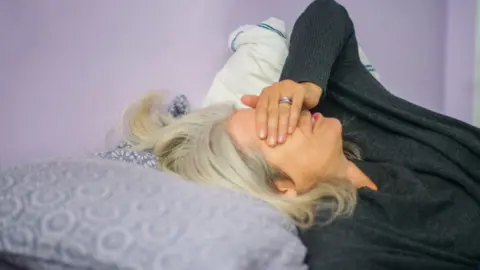Getty Images
**Two years after having Covid-19, diagnoses of brain fog, dementia and epilepsy are more common than after other respiratory infections, a study by the University of Oxford suggests.**
But anxiety and depression are no more likely in adults or children two years on, the research found.
More research is needed to understand how and why Covid could lead to other conditions.
Experts say the virus disrupted daily life as well as making people ill.
Previous research has suggested that adults are at an increased risk of brain and mental health conditions in the six months after a Covid infection.
This study looked at the risks of 14 different disorders in 1.25 million patients two years on from Covid, mostly in the US. It then compared them with a closely-matched group of 1.25 million people who had a different respiratory infection.
In the group who had Covid, after two years, there were more new cases of:
- dementia, stroke and brain fog in adults aged over 65
- brain fog in adults aged 18-64
- epilepsy and psychotic disorders in children, although the overall risks were small
For example, children's risk of developing epilepsy after Covid was 260 in 10,000, compared to 130 in 10,000 after another respiratory infection.
Their risk of developing a psychotic disorder also increased after Covid - to 18 in 10,000 - but it is still a rare condition.
Some disorders became less common two years after Covid, including:
- anxiety and depression in children and adults
- psychotic disorders in adults
The increased risk of depression and anxiety in adults lasts less than two months before returning to normal levels, the research found.
## 'Worrying'
Prof Paul Harrison, lead study author, from University of Oxford's psychiatry department, said it was "worrying" that some disorders, such as dementia and seizures, are more likely to be diagnosed after Covid-19, even two years later.
But he said it was "good news" that depression and anxiety cases after Covid were "short-lived", and not seen in children.
The researchers said the numbers affected were "hard to ignore" but were "not a tsunami", and some would be likely to need medical attention which could add to the pressure on health services.
[The study, published in the Lancet Psychiatry](https://www.thelancet.com/journals/lanpsy/article/PIIS2215-0366\(22\)00260-7/fulltext), did not track individual people over two years - instead it analysed the number of people with a new diagnosis two years after their infection.
It also did not look at how severe each condition was after diagnosis or how long they lasted, and whether these are similar after Covid compared with other infections.
They stopped short of calling these conditions "long Covid", although brain fog - or problems with memory and concentration - is a typical symptom.
Last winter's Omicron variant was less likely to cause long Covid symptoms than previous variants, [recent research suggests.](https://www.bbc.co.uk/news/health-61828335)
Although less severe than the Delta variant, Omicron appears to lead to similar risks of brain and mental health conditions, this study found.
## 'Societal upheaval'
The study has some limitations - it did not look at how Covid could cause brain and mental health disorders, although some experts say it could be explained by the development of micro-clots in the blood.
Dr Jonathan Rogers and Prof Glyn Lewis, from University College London, who were not involved in the research, said the study highlighted "some clinical features that particularly merit further investigation", but they added that more studies were needed to confirm the findings.
Prof David Menon, from the University of Cambridge, said the impact of being in hospital with Covid was "equal to 20 years of ageing (between 50 and 70)".
Paul Garner, emeritus professor in evidence synthesis in global health at Liverpool School of Tropical Medicine, said the Covid pandemic had changed people's lives in many different ways.
He said the small increases in dementia and psychosis were "more likely to be related to the societal upheaval and dystopia we have been living through, rather than being a direct effect of the virus."
[Covid infections continuing to fall around the UK](https://www.bbc.com/news/health-62435912)
['Long Covid' risk lower with Omicron, study finds](https://www.bbc.com/news/health-61828335)
[Long Covid patients face lottery over treatment](https://www.bbc.com/news/health-61711913)
[What are the symptoms of long Covid?](https://www.bbc.com/news/health-57833394)
[Depression](https://www.bbc.com/news/topics/c50znx8v471t)
[Oxford](https://www.bbc.com/news/topics/ck7rdn2x59rt)
[Mental health](https://www.bbc.com/news/topics/cwlw3xz04egt)
***
Related
['Brutally honest' artworks explore depression](https://www.bbc.com/news/articles/cg4epd30r4yo)
['The nightmares were horrific' - dads open up about crippling post-natal depression](https://www.bbc.com/news/articles/cy8v8xe24gzo)
[Light therapy boxes placed in all NI libraries](https://www.bbc.com/news/videos/cp3904qg35xo)
***
More from the BBC
[5 mins ago  Traffic restored after boat crashes into bridge The narrowboat got stuck on Folly Bridge in Oxford during the evening rush hour. 5 mins ago](https://www.bbc.com/news/articles/cn8zze3y9q7o)
[2 hrs ago  More 'highly likely' to lose water after burst main The water main burst is disrupting supplies in the OX7, OX18, OX28, OX29, GL7 postcodes. 2 hrs ago](https://www.bbc.com/news/articles/c8755nx5x2no)
[5 hrs ago  New unit aims to support children with anxiety The facility is aimed at children who experience emotionally based school avoidance. 5 hrs ago](https://www.bbc.com/news/articles/cvg1195z47zo)
[6 hrs ago  Campaigners fundraise for stadium legal challenge Friends of Stratfield Brake have persistently opposed the plans for Oxford United's new ground. 6 hrs ago](https://www.bbc.com/news/articles/cewz8xyv75wo)
[6 hrs ago  'From prison to Parliament' - ADHD woman's journey Charlie Herd shared her experience in the UK to help other women in prison who also have ADHD. 6 hrs ago](https://www.bbc.com/news/articles/cz7gglg35r5o)
***
- [Home](https://www.bbc.com/)
- [News](https://www.bbc.com/news)
- [Sport](https://www.bbc.com/sport)
- [Business](https://www.bbc.com/business)
- [Technology](https://www.bbc.com/technology)
- [Health](https://www.bbc.com/health)
- [Culture](https://www.bbc.com/culture)
- [Arts](https://www.bbc.com/arts)
- [Travel](https://www.bbc.com/travel)
- [Earth](https://www.bbc.com/future-planet)
- [Audio](https://www.bbc.com/audio)
- [Video](https://www.bbc.com/video)
- [Live](https://www.bbc.com/live)
- [Weather](https://www.bbc.com/weather)
- [BBC Shop](https://shop.bbc.com/)
- [BritBox](https://www.britbox.com/?utm_source=bbc.com&utm_medium=referral&utm_campaign=footer)
BBC in other languages
### The BBC is in multiple languages
#### Read the BBC In your own language
[Oduu Afaan Oromootiin](https://www.bbc.com/afaanoromoo)
[Amharic ዜና በአማርኛ](https://www.bbc.com/amharic)
[Arabic عربي](https://www.bbc.com/arabic)
[Azeri AZƏRBAYCAN](https://www.bbc.com/azeri)
[Bangla বাংলা](https://www.bbc.com/bengali)
[Burmese မြန်မာ](https://www.bbc.com/burmese)
[Chinese 中文网](https://www.bbc.com/zhongwen/simp)
[Dari دری](https://www.bbc.com/dari)
[French AFRIQUE](https://www.bbc.com/afrique)
[Hausa HAUSA](https://www.bbc.com/hausa)
[Hindi हिन्दी](https://www.bbc.com/hindi)
[Gaelic NAIDHEACHDAN](https://www.bbc.com/naidheachdan)
[Gujarati ગુજરાતીમાં સમાચાર](https://www.bbc.com/gujarati)
[Igbo AKỤKỌ N’IGBO](https://www.bbc.com/igbo)
[Indonesian INDONESIA](https://www.bbc.com/indonesia)
[Japanese 日本語](https://www.bbc.com/japanese)
[Kinyarwanda GAHUZA](https://www.bbc.com/gahuza)
[Kirundi KIRUNDI](https://www.bbc.com/gahuza)
[Korean 한국어](https://www.bbc.com/korean)
[Kyrgyz Кыргыз](https://www.bbc.com/kyrgyz)
[Marathi मराठी](https://www.bbc.com/marathi)
[Nepali नेपाली](https://www.bbc.com/nepali)
[Noticias para hispanoparlantes](https://www.bbc.com/mundo)
[Pashto پښتو](https://www.bbc.com/pashto)
[Persian فارسی](https://www.bbc.com/persian)
[Pidgin](https://www.bbc.com/pidgin)
[Polish PO POLSKU](https://www.bbc.com/polska)
[Portuguese BRASIL](https://www.bbc.com/portuguese)
[Punjabi ਪੰਜਾਬੀ ਖ਼ਬਰਾਂ](https://www.bbc.com/punjabi)
[Russian НА РУССКОМ](https://www.bbc.com/russian)
[Serbian NA SRPSKOM](https://www.bbc.com/serbian/lat)
[Sinhala සිංහල](https://www.bbc.com/sinhala)
[Somali SOMALI](https://www.bbc.com/somali)
[Swahili HABARI KWA KISWAHILI](https://www.bbc.com/swahili)
[Tamil தமிழில் செய்திகள்](https://www.bbc.com/tamil)
[Telugu తెలుగు వార్తలు](https://www.bbc.com/telugu)
[Thai ข่าวภาษาไทย](https://www.bbc.com/thai)
[Tigrinya ዜና ብትግርኛ](https://www.bbc.com/tigrinya)
[Turkish TÜRKÇE](https://www.bbc.com/turkce)
[Ukrainian УКРАЇНСЬКA](https://www.bbc.com/ukrainian)
[Urdu اردو](https://www.bbc.com/urdu)
[Uzbek O'ZBEK](https://www.bbc.com/uzbek)
[Vietnamese TIẾNG VIỆT](https://www.bbc.com/vietnamese)
[Welsh NEWYDDION](https://www.bbc.com/cymrufyw)
[Yoruba ÌRÒYÌN NÍ YORÙBÁ](https://www.bbc.com/yoruba)
Follow BBC on:
- [Terms of Use](https://www.bbc.com/pages/terms-of-use)
- [Subscription Terms](https://www.bbc.com/pages/subscription-terms)
- [About the BBC](https://www.bbc.co.uk/aboutthebbc)
- [Privacy Policy](https://www.bbc.com/pages/privacy-policy)
- [Cookies](https://www.bbc.com/usingthebbc/cookies/)
- [Accessibility Help](https://www.bbc.co.uk/accessibility/)
- [Contact the BBC](https://www.bbc.co.uk/contact)
- [Advertise with us](https://advertising.bbcstudios.com/)
- [Do not share or sell my info](https://www.bbc.com/usingthebbc/cookies/how-can-i-change-my-bbc-cookie-settings/)
- [BBC.com Help & FAQs](https://help.bbc.com/hc/)
- [Content Index](https://www.bbc.com/pages/content-index)
- [Set Preferred Source](https://www.bbc.com/future/article/20260128-how-to-make-google-put-trusted-sources-up-top-when-you-search)
Copyright 2026 BBC. All rights reserved. The BBC is not responsible for the content of external sites. [**Read about our approach to external linking.**](https://www.bbc.co.uk/editorialguidelines/guidance/feeds-and-links) |
| Readable Markdown | 18 August 2022
Getty Images
**Two years after having Covid-19, diagnoses of brain fog, dementia and epilepsy are more common than after other respiratory infections, a study by the University of Oxford suggests.**
But anxiety and depression are no more likely in adults or children two years on, the research found.
More research is needed to understand how and why Covid could lead to other conditions.
Experts say the virus disrupted daily life as well as making people ill.
Previous research has suggested that adults are at an increased risk of brain and mental health conditions in the six months after a Covid infection.
This study looked at the risks of 14 different disorders in 1.25 million patients two years on from Covid, mostly in the US. It then compared them with a closely-matched group of 1.25 million people who had a different respiratory infection.
In the group who had Covid, after two years, there were more new cases of:
- dementia, stroke and brain fog in adults aged over 65
- brain fog in adults aged 18-64
- epilepsy and psychotic disorders in children, although the overall risks were small
For example, children's risk of developing epilepsy after Covid was 260 in 10,000, compared to 130 in 10,000 after another respiratory infection.
Their risk of developing a psychotic disorder also increased after Covid - to 18 in 10,000 - but it is still a rare condition.
Some disorders became less common two years after Covid, including:
- anxiety and depression in children and adults
- psychotic disorders in adults
The increased risk of depression and anxiety in adults lasts less than two months before returning to normal levels, the research found.
'Worrying'
Prof Paul Harrison, lead study author, from University of Oxford's psychiatry department, said it was "worrying" that some disorders, such as dementia and seizures, are more likely to be diagnosed after Covid-19, even two years later.
But he said it was "good news" that depression and anxiety cases after Covid were "short-lived", and not seen in children.
The researchers said the numbers affected were "hard to ignore" but were "not a tsunami", and some would be likely to need medical attention which could add to the pressure on health services.
It also did not look at how severe each condition was after diagnosis or how long they lasted, and whether these are similar after Covid compared with other infections.
They stopped short of calling these conditions "long Covid", although brain fog - or problems with memory and concentration - is a typical symptom.
Although less severe than the Delta variant, Omicron appears to lead to similar risks of brain and mental health conditions, this study found.
'Societal upheaval'
The study has some limitations - it did not look at how Covid could cause brain and mental health disorders, although some experts say it could be explained by the development of micro-clots in the blood.
Dr Jonathan Rogers and Prof Glyn Lewis, from University College London, who were not involved in the research, said the study highlighted "some clinical features that particularly merit further investigation", but they added that more studies were needed to confirm the findings.
Prof David Menon, from the University of Cambridge, said the impact of being in hospital with Covid was "equal to 20 years of ageing (between 50 and 70)".
Paul Garner, emeritus professor in evidence synthesis in global health at Liverpool School of Tropical Medicine, said the Covid pandemic had changed people's lives in many different ways.
He said the small increases in dementia and psychosis were "more likely to be related to the societal upheaval and dystopia we have been living through, rather than being a direct effect of the virus." |
| Shard | 16 (laksa) |
| Root Hash | 1643509356818581016 |
| Unparsed URL | com,bbc!www,/news/health-62577464 s443 |