ℹ️ Skipped - page is already crawled
| Filter | Status | Condition | Details |
|---|---|---|---|
| HTTP status | PASS | download_http_code = 200 | HTTP 200 |
| Age cutoff | PASS | download_stamp > now() - 6 MONTH | 1.2 months ago |
| History drop | PASS | isNull(history_drop_reason) | No drop reason |
| Spam/ban | PASS | fh_dont_index != 1 AND ml_spam_score = 0 | ml_spam_score=0 |
| Canonical | PASS | meta_canonical IS NULL OR = '' OR = src_unparsed | Not set |
| Property | Value |
|---|---|
| URL | https://www.bbc.com/news/articles/cy4w10y8703o |
| Last Crawled | 2026-03-11 11:18:31 (1 month ago) |
| First Indexed | not set |
| HTTP Status Code | 200 |
| Meta Title | How an AI tool is helping doctors prescribe antidepressants |
| Meta Description | The University of Oxford project looks at data about depression alongside a patients' personal information. |
| Meta Canonical | null |
| Boilerpipe Text | 5 hours ago
Alastair Fee
South of England health correspondent
BBC
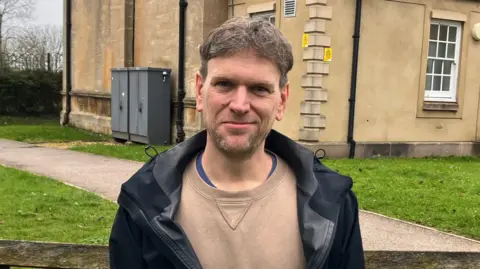
Henry Winchester says the study helped find an antidepressant that helped him
A tool that uses artificial intelligence has been shown to effectively help doctors prescribe antidepressants.
Developed by the University of Oxford, it looks at all available data about depression alongside a patients' personal information, including their preferences for things like what side effects they can live with.
The tool predicts the best medicine, and in a major international trial researchers demonstrated doctors can then better tailor the right drug to people with depression.
It can currently take years to select the correct treatment and it is estimated that about 80% of the millions of people prescribed antidepressants stop their medication within a few weeks.
Since university, 45-year-old Henry Winchester from Bristol, has lived with bouts of depression.
"It has been very challenging at times. I get quite bad anxiety about things. I can get in quite a low mood about things," he said.
"That can limit how much I can do with my life, there's a lot of things that I'd like to do but I can't because I feel that I'm held back by my brain."
He is one of 500 adults that have Major Depressive Disorder (MDD) to take part in the trial in the UK, Brazil and Canada
Winchester said: "It involved competing a survey, that was quite interesting, a lot of questions about my health and the side effects I didn't want to have.
"And then there was quite an exciting moment when it finally revealed the antidepressant that suited me best."
NIHR Research Professor Andrea Cipriani is an honorary consultant psychiatrist at Oxford Health NHS Foundation Trust
Research Professor Andrea Cipriani, from the University of Oxford, was lead investigator of the Personalising Antidepressant Treatment for Unipolar Depression Combining Individual Choices, Risks and Big Data (PETRUSHKA) study that was conducted across 47 sites around the world.
"The PETRUSHKA tool is a revolutionary approach, because until now when we prescribe an antidepressant to a person with depression, we use trial and error based on the experience of the clinician," he said.
"The trial and error is a lengthy process and also it is harmful for patients."
Cipriani said the findings show that people whose antidepressant was selected using the AI tool were much more likely to stick with their treatment.
He said: "The results of the tool are outstanding because if we use the PETRUSHKA tool, we increase by 40% the probability of continuing the medication.
"And this is important because continuing the medication means that the medication is effective and tolerable.
"And if you continue taking the medication the symptoms improve and this is what we demonstrated in the PETRUSHKA trial, reducing both depressive and anxiety symptoms."
Henry Winchester took part in the study by answering a series of questions
Until he took part in the study, Winchester said he spent five years trying different medications but found the side effects too severe.
"I feel much more optimistic because I feel like, a lot of the things that bothered me before, don't bother me as much now," he said.
"I just have an inner confidence that I've never really had before."
The findings, that have been published in the Journal of American Medical Association, are the first time a mental health clinical prediction tool has been demonstrated as effective.
The team now hope it can be applied to other mental health conditions with the ambition to have it rolled out to GPs UK wide.
More on this story
Related Links |
| Markdown | [Skip to content](https://www.bbc.com/news/articles/cy4w10y8703o#main-content)
- [Home](https://www.bbc.com/)
- [News](https://www.bbc.com/news)
- [Sport](https://www.bbc.com/sport)
- [Business](https://www.bbc.com/business)
- [Technology](https://www.bbc.com/technology)
- [Health](https://www.bbc.com/health)
- [Culture](https://www.bbc.com/culture)
- [Arts](https://www.bbc.com/arts)
- [Travel](https://www.bbc.com/travel)
- [Earth](https://www.bbc.com/future-planet)
- [Audio](https://www.bbc.com/audio)
- [Video](https://www.bbc.com/video)
- [Live](https://www.bbc.com/live)
- [Home](https://www.bbc.com/home)
- [News](https://www.bbc.com/news)
- [US & Canada](https://www.bbc.com/news/us-canada)
- [UK](https://www.bbc.com/news/uk)
- [UK Politics](https://www.bbc.com/news/politics)
- [England](https://www.bbc.com/news/england)
- [N. Ireland](https://www.bbc.com/news/northern_ireland)
- [N. Ireland Politics](https://www.bbc.com/news/northern_ireland/northern_ireland_politics)
- [Scotland](https://www.bbc.com/news/scotland)
- [Scotland Politics](https://www.bbc.com/news/scotland/scotland_politics)
- [Wales](https://www.bbc.com/news/wales)
- [Wales Politics](https://www.bbc.com/news/wales/wales_politics)
- [Africa](https://www.bbc.com/news/world/africa)
- [Asia](https://www.bbc.com/news/world/asia)
- [China](https://www.bbc.com/news/world/asia/china)
- [India](https://www.bbc.com/news/world/asia/india)
- [Australia](https://www.bbc.com/news/world/australia)
- [Europe](https://www.bbc.com/news/world/europe)
- [Latin America](https://www.bbc.com/news/world/latin_america)
- [Middle East](https://www.bbc.com/news/world/middle_east)
- [In Pictures](https://www.bbc.com/news/in_pictures)
- [BBC InDepth](https://www.bbc.com/news/bbcindepth)
- [BBC Verify](https://www.bbc.com/news/bbcverify)
- [Sport](https://www.bbc.com/sport)
- [Business](https://www.bbc.com/business)
- [World of Business](https://www.bbc.com/business/world-of-business)
- [Technology of Business](https://www.bbc.com/business/technology-of-business)
- [NYSE Opening Bell](https://www.bbc.com/business/opening-bell)
- [Technology](https://www.bbc.com/technology)
- [Artificial Intelligence](https://www.bbc.com/technology/artificial-intelligence)
- [AI v the Mind](https://www.bbc.com/technology/ai-v-the-mind)
- [Health](https://www.bbc.com/health)
- [Culture](https://www.bbc.com/culture)
- [Film & TV](https://www.bbc.com/culture/film-tv)
- [Music](https://www.bbc.com/culture/music)
- [Art & Design](https://www.bbc.com/culture/art)
- [Style](https://www.bbc.com/culture/style)
- [Books](https://www.bbc.com/culture/books)
- [Entertainment News](https://www.bbc.com/culture/entertainment-news)
- [Arts](https://www.bbc.com/arts)
- [Arts in Motion](https://www.bbc.com/arts/arts-in-motion)
- [Travel](https://www.bbc.com/travel)
- [Destinations](https://www.bbc.com/travel/destinations)
- [Africa](https://www.bbc.com/travel/destinations/africa)
- [Antarctica](https://www.bbc.com/travel/destinations/antarctica)
- [Asia](https://www.bbc.com/travel/destinations/asia)
- [Australia and Pacific](https://www.bbc.com/travel/destinations/australia-and-pacific)
- [Caribbean & Bermuda](https://www.bbc.com/travel/destinations/caribbean)
- [Central America](https://www.bbc.com/travel/destinations/central-america)
- [Europe](https://www.bbc.com/travel/destinations/europe)
- [Middle East](https://www.bbc.com/travel/destinations/middle-east)
- [North America](https://www.bbc.com/travel/destinations/north-america)
- [South America](https://www.bbc.com/travel/destinations/south-america)
- [World’s Table](https://www.bbc.com/travel/worlds-table)
- [Culture & Experiences](https://www.bbc.com/travel/cultural-experiences)
- [Adventures](https://www.bbc.com/travel/adventures)
- [The SpeciaList](https://www.bbc.com/travel/specialist)
- [Earth](https://www.bbc.com/future-planet)
- [Science](https://www.bbc.com/innovation/science)
- [Natural Wonders](https://www.bbc.com/future-planet/natural-wonders)
- [Climate Solutions](https://www.bbc.com/future-planet/solutions)
- [Sustainable Business](https://www.bbc.com/future-planet/sustainable-business)
- [Green Living](https://www.bbc.com/future-planet/green-living)
- [Audio](https://www.bbc.com/audio)
- [Podcast Categories](https://www.bbc.com/audio/categories)
- [Radio](https://www.bbc.com/audio/stations)
- [Audio FAQs](https://www.bbc.com/undefined)
- [Video](https://www.bbc.com/video)
- [BBC Maestro](https://www.bbc.com/video/bbc-maestro)
- [Discover the World](https://www.bbc.com/video/discover-the-world)
- [Live](https://www.bbc.com/live)
- [Live News](https://www.bbc.com/live/news)
- [Live Sport](https://www.bbc.com/live/sport)
[Home](https://www.bbc.com/)
News
[Sport](https://www.bbc.com/sport)
Business
Technology
[Health](https://www.bbc.com/health)
Culture
Arts
Travel
Earth
Audio
Video
Live
[Weather](https://www.bbc.com/weather)
[Newsletters](https://www.bbc.com/newsletters)
# AI tool helps doctors prescribe antidepressants
5 hours ago
Share
Save
Alastair FeeSouth of England health correspondent
Share
Save
BBC
Henry Winchester says the study helped find an antidepressant that helped him
A tool that uses artificial intelligence has been shown to effectively help doctors prescribe antidepressants.
Developed by the University of Oxford, it looks at all available data about depression alongside a patients' personal information, including their preferences for things like what side effects they can live with.
The tool predicts the best medicine, and in a major international trial researchers demonstrated doctors can then better tailor the right drug to people with depression.
It can currently take years to select the correct treatment and it is estimated that about 80% of the millions of people prescribed antidepressants stop their medication within a few weeks.
Since university, 45-year-old Henry Winchester from Bristol, has lived with bouts of depression.
"It has been very challenging at times. I get quite bad anxiety about things. I can get in quite a low mood about things," he said.
"That can limit how much I can do with my life, there's a lot of things that I'd like to do but I can't because I feel that I'm held back by my brain."
He is one of 500 adults that have Major Depressive Disorder (MDD) to take part in the trial in the UK, Brazil and Canada
Winchester said: "It involved competing a survey, that was quite interesting, a lot of questions about my health and the side effects I didn't want to have.
"And then there was quite an exciting moment when it finally revealed the antidepressant that suited me best."
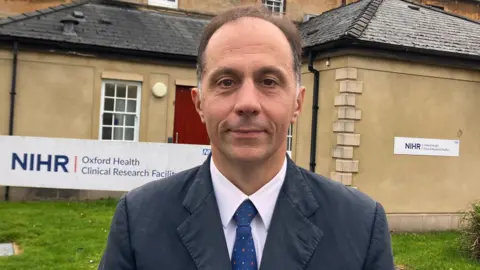
NIHR Research Professor Andrea Cipriani is an honorary consultant psychiatrist at Oxford Health NHS Foundation Trust
Research Professor Andrea Cipriani, from the University of Oxford, was lead investigator of the Personalising Antidepressant Treatment for Unipolar Depression Combining Individual Choices, Risks and Big Data (PETRUSHKA) study that was conducted across 47 sites around the world.
"The PETRUSHKA tool is a revolutionary approach, because until now when we prescribe an antidepressant to a person with depression, we use trial and error based on the experience of the clinician," he said.
"The trial and error is a lengthy process and also it is harmful for patients."
Cipriani said the findings show that people whose antidepressant was selected using the AI tool were much more likely to stick with their treatment.
He said: "The results of the tool are outstanding because if we use the PETRUSHKA tool, we increase by 40% the probability of continuing the medication.
"And this is important because continuing the medication means that the medication is effective and tolerable.
"And if you continue taking the medication the symptoms improve and this is what we demonstrated in the PETRUSHKA trial, reducing both depressive and anxiety symptoms."
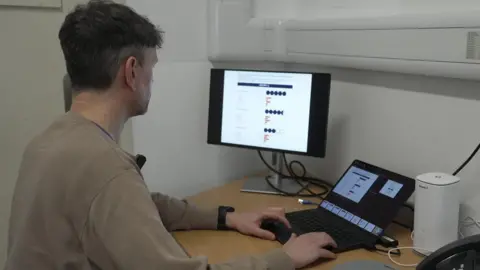
Henry Winchester took part in the study by answering a series of questions
Until he took part in the study, Winchester said he spent five years trying different medications but found the side effects too severe.
"I feel much more optimistic because I feel like, a lot of the things that bothered me before, don't bother me as much now," he said.
"I just have an inner confidence that I've never really had before."
The findings, that have been published in the Journal of American Medical Association, are the first time a mental health clinical prediction tool has been demonstrated as effective.
The team now hope it can be applied to other mental health conditions with the ambition to have it rolled out to GPs UK wide.
*You can follow* [*BBC Oxfordshire*](https://www.bbc.co.uk/news/england/oxford) *on* [*Facebook*](https://www.facebook.com/bbcoxford/)*,* [X](https://twitter.com/bbcoxford)*, or* [*Instagram*](https://www.instagram.com/bbcoxford)*.*
More on this story
[Study finds four in 10 in UK would use AI counsellor](https://www.bbc.co.uk/news/articles/cy4wwjmjp4no)
[AI chatbots pose 'dangerous' risk when giving medical advice, study suggests](https://www.bbc.co.uk/news/articles/c3093gjy2ero)
[How AI is being used to support positive mental health](https://www.bbc.co.uk/videos/c1d6kyegl2wo)
[AI therapy chatbot 'works best with emotion'](https://www.bbc.co.uk/news/articles/c5yj8rd2dnmo)
[The rise of AI therapy](https://www.bbc.co.uk/sounds/play/m002k3hk)
Related Links
[PETRUSHKA Trial](https://www.psych.ox.ac.uk/research/research-groups/evidence-based-mental-health/petrushka-trial)
[University of Oxford](https://www.ox.ac.uk/)
***
- [Home](https://www.bbc.com/)
- [News](https://www.bbc.com/news)
- [Sport](https://www.bbc.com/sport)
- [Business](https://www.bbc.com/business)
- [Technology](https://www.bbc.com/technology)
- [Health](https://www.bbc.com/health)
- [Culture](https://www.bbc.com/culture)
- [Arts](https://www.bbc.com/arts)
- [Travel](https://www.bbc.com/travel)
- [Earth](https://www.bbc.com/future-planet)
- [Audio](https://www.bbc.com/audio)
- [Video](https://www.bbc.com/video)
- [Live](https://www.bbc.com/live)
- [Weather](https://www.bbc.com/weather)
- [BBC Shop](https://shop.bbc.com/)
- [BritBox](https://www.britbox.com/?utm_source=bbc.com&utm_medium=referral&utm_campaign=footer)
BBC in other languages
### The BBC is in multiple languages
#### Read the BBC In your own language
[Oduu Afaan Oromootiin](https://www.bbc.com/afaanoromoo)
[Amharic ዜና በአማርኛ](https://www.bbc.com/amharic)
[Arabic عربي](https://www.bbc.com/arabic)
[Azeri AZƏRBAYCAN](https://www.bbc.com/azeri)
[Bangla বাংলা](https://www.bbc.com/bengali)
[Burmese မြန်မာ](https://www.bbc.com/burmese)
[Chinese 中文网](https://www.bbc.com/zhongwen/simp)
[Dari دری](https://www.bbc.com/dari)
[French AFRIQUE](https://www.bbc.com/afrique)
[Hausa HAUSA](https://www.bbc.com/hausa)
[Hindi हिन्दी](https://www.bbc.com/hindi)
[Gaelic NAIDHEACHDAN](https://www.bbc.com/naidheachdan)
[Gujarati ગુજરાતીમાં સમાચાર](https://www.bbc.com/gujarati)
[Igbo AKỤKỌ N’IGBO](https://www.bbc.com/igbo)
[Indonesian INDONESIA](https://www.bbc.com/indonesia)
[Japanese 日本語](https://www.bbc.com/japanese)
[Kinyarwanda GAHUZA](https://www.bbc.com/gahuza)
[Kirundi KIRUNDI](https://www.bbc.com/gahuza)
[Korean 한국어](https://www.bbc.com/korean)
[Kyrgyz Кыргыз](https://www.bbc.com/kyrgyz)
[Marathi मराठी](https://www.bbc.com/marathi)
[Nepali नेपाली](https://www.bbc.com/nepali)
[Noticias para hispanoparlantes](https://www.bbc.com/mundo)
[Pashto پښتو](https://www.bbc.com/pashto)
[Persian فارسی](https://www.bbc.com/persian)
[Pidgin](https://www.bbc.com/pidgin)
[Polish PO POLSKU](https://www.bbc.com/polska)
[Portuguese BRASIL](https://www.bbc.com/portuguese)
[Punjabi ਪੰਜਾਬੀ ਖ਼ਬਰਾਂ](https://www.bbc.com/punjabi)
[Russian НА РУССКОМ](https://www.bbc.com/russian)
[Serbian NA SRPSKOM](https://www.bbc.com/serbian/lat)
[Sinhala සිංහල](https://www.bbc.com/sinhala)
[Somali SOMALI](https://www.bbc.com/somali)
[Swahili HABARI KWA KISWAHILI](https://www.bbc.com/swahili)
[Tamil தமிழில் செய்திகள்](https://www.bbc.com/tamil)
[Telugu తెలుగు వార్తలు](https://www.bbc.com/telugu)
[Thai ข่าวภาษาไทย](https://www.bbc.com/thai)
[Tigrinya ዜና ብትግርኛ](https://www.bbc.com/tigrinya)
[Turkish TÜRKÇE](https://www.bbc.com/turkce)
[Ukrainian УКРАЇНСЬКA](https://www.bbc.com/ukrainian)
[Urdu اردو](https://www.bbc.com/urdu)
[Uzbek O'ZBEK](https://www.bbc.com/uzbek)
[Vietnamese TIẾNG VIỆT](https://www.bbc.com/vietnamese)
[Welsh NEWYDDION](https://www.bbc.com/cymrufyw)
[Yoruba ÌRÒYÌN NÍ YORÙBÁ](https://www.bbc.com/yoruba)
Follow BBC on:
- [Terms of Use](https://www.bbc.com/pages/terms-of-use)
- [Subscription Terms](https://www.bbc.com/pages/subscription-terms)
- [About the BBC](https://www.bbc.co.uk/aboutthebbc)
- [Privacy Policy](https://www.bbc.com/pages/privacy-policy)
- [Cookies](https://www.bbc.com/usingthebbc/cookies/)
- [Accessibility Help](https://www.bbc.co.uk/accessibility/)
- [Contact the BBC](https://www.bbc.co.uk/contact)
- [Advertise with us](https://advertising.bbcstudios.com/)
- [Do not share or sell my info](https://www.bbc.com/usingthebbc/cookies/how-can-i-change-my-bbc-cookie-settings/)
- [BBC.com Help & FAQs](https://help.bbc.com/hc/)
- [Content Index](https://www.bbc.com/pages/content-index)
- [Set Preferred Source](https://www.bbc.com/future/article/20260128-how-to-make-google-put-trusted-sources-up-top-when-you-search)
Copyright 2026 BBC. All rights reserved. The BBC is not responsible for the content of external sites. [**Read about our approach to external linking.**](https://www.bbc.co.uk/editorialguidelines/guidance/feeds-and-links) |
| Readable Markdown | 5 hours ago
Alastair FeeSouth of England health correspondent
BBC
Henry Winchester says the study helped find an antidepressant that helped him
A tool that uses artificial intelligence has been shown to effectively help doctors prescribe antidepressants.
Developed by the University of Oxford, it looks at all available data about depression alongside a patients' personal information, including their preferences for things like what side effects they can live with.
The tool predicts the best medicine, and in a major international trial researchers demonstrated doctors can then better tailor the right drug to people with depression.
It can currently take years to select the correct treatment and it is estimated that about 80% of the millions of people prescribed antidepressants stop their medication within a few weeks.
Since university, 45-year-old Henry Winchester from Bristol, has lived with bouts of depression.
"It has been very challenging at times. I get quite bad anxiety about things. I can get in quite a low mood about things," he said.
"That can limit how much I can do with my life, there's a lot of things that I'd like to do but I can't because I feel that I'm held back by my brain."
He is one of 500 adults that have Major Depressive Disorder (MDD) to take part in the trial in the UK, Brazil and Canada
Winchester said: "It involved competing a survey, that was quite interesting, a lot of questions about my health and the side effects I didn't want to have.
"And then there was quite an exciting moment when it finally revealed the antidepressant that suited me best."

NIHR Research Professor Andrea Cipriani is an honorary consultant psychiatrist at Oxford Health NHS Foundation Trust
Research Professor Andrea Cipriani, from the University of Oxford, was lead investigator of the Personalising Antidepressant Treatment for Unipolar Depression Combining Individual Choices, Risks and Big Data (PETRUSHKA) study that was conducted across 47 sites around the world.
"The PETRUSHKA tool is a revolutionary approach, because until now when we prescribe an antidepressant to a person with depression, we use trial and error based on the experience of the clinician," he said.
"The trial and error is a lengthy process and also it is harmful for patients."
Cipriani said the findings show that people whose antidepressant was selected using the AI tool were much more likely to stick with their treatment.
He said: "The results of the tool are outstanding because if we use the PETRUSHKA tool, we increase by 40% the probability of continuing the medication.
"And this is important because continuing the medication means that the medication is effective and tolerable.
"And if you continue taking the medication the symptoms improve and this is what we demonstrated in the PETRUSHKA trial, reducing both depressive and anxiety symptoms."

Henry Winchester took part in the study by answering a series of questions
Until he took part in the study, Winchester said he spent five years trying different medications but found the side effects too severe.
"I feel much more optimistic because I feel like, a lot of the things that bothered me before, don't bother me as much now," he said.
"I just have an inner confidence that I've never really had before."
The findings, that have been published in the Journal of American Medical Association, are the first time a mental health clinical prediction tool has been demonstrated as effective.
The team now hope it can be applied to other mental health conditions with the ambition to have it rolled out to GPs UK wide.
More on this story
Related Links |
| Shard | 16 (laksa) |
| Root Hash | 1643509356818581016 |
| Unparsed URL | com,bbc!www,/news/articles/cy4w10y8703o s443 |