ℹ️ Skipped - page is already crawled
| Filter | Status | Condition | Details |
|---|---|---|---|
| HTTP status | PASS | download_http_code = 200 | HTTP 200 |
| Age cutoff | PASS | download_stamp > now() - 6 MONTH | 0.8 months ago |
| History drop | PASS | isNull(history_drop_reason) | No drop reason |
| Spam/ban | PASS | fh_dont_index != 1 AND ml_spam_score = 0 | ml_spam_score=0 |
| Canonical | PASS | meta_canonical IS NULL OR = '' OR = src_unparsed | Not set |
| Property | Value |
|---|---|
| URL | https://www.bbc.com/news/articles/c4gjn1d74jlo |
| Last Crawled | 2026-03-20 00:10:36 (23 days ago) |
| First Indexed | not set |
| HTTP Status Code | 200 |
| Meta Title | Sir John Curtice: Why Labour's Brexit focus has shifted from Leavers to Remainers |
| Meta Description | Will the pursuit of a closer relationship with the EU risk courting electoral disaster by alienating Brexit-backing voters? |
| Meta Canonical | null |
| Boilerpipe Text | 9 minutes ago
Sir John Curtice
Professor of politics at the University of Strathclyde
BBC
"Brexit did deep damage." With those words at her Mais lecture on Tuesday, Chancellor Rachel Reeves made it clear that there has been an important shift within the Labour Party - one that government ministers have been signalling for some time.
"Let me say this directly to our friends and allies in Europe. This government believes a deeper relationship is in the interest of the whole of Europe," she said, while at the same time insisting that the government was not trying to "turn back the clock" on Brexit.
Speaking in such overt terms about Brexit's perceived harms in part reflects a belief that, as the government attempts to turn around the country's persistently sluggish economic performance, it must be more ambitious in its attempt to "reset" the UK's post-Brexit relationship with the EU.
Labour's 2024 election manifesto did propose some renegotiation of the Trade and Co-operation Agreement that Boris Johnson negotiated on leaving the EU in 2020. In particular, it wanted to end EU customs checks on exports of food and agricultural products by aligning Britain's regulations of such products with those of the EU.
However, it also drew clear red lines: no return to the single market, the customs union, or freedom of movement.
Of the possibility of rejoining the EU there was no suggestion whatsoever.
This stance was the product of the party's heavy defeat in the 2019 election. After that calamity, Labour accepted the decision to leave the EU and voted for Johnson's Trade and Co-operation Agreement.
However, Labour's tone has been changing. Shortly after last autumn's Budget, the Prime Minister Sir Keir Starmer declared that "Brexit had significantly hurt our economy" and that Britain needed to "keep moving towards a close relationship with the EU".
Although the red lines in Labour's manifesto were apparently still to be kept intact, his speech suggested that Labour was coming to the conclusion that, if it was going to turn around Britain's ailing economy, it needed to be more ambitious in its approach to the reset.
Reuters
Chancellor Rachel Reeves claimed this week that Brexit had done great damage
Some ministers have seemingly even been willing to go further.
Speaking at a literary festival in October, Wes Streeting, the health secretary, said: "I'm glad that Brexit is a problem whose name we now dare speak," and indicated that he believed being outside the EU was making it difficult to deliver the economic growth the government had promised.
The Deputy Prime Minister, David Lammy, said in a podcast that it was "self-evident" that Brexit had damaged the economy and noted the economic benefit that Turkey had derived from its customs agreement with the EU.
Meanwhile, in further evidence of pressure within Labour's ranks to rethink its policy on Brexit, on Wednesday the London Mayor, Sadiq Khan, called for the UK to rejoin the EU customs union and single market before the next election, and then campaign at that ballot on a promise to rejoin the EU.
AFP via Getty Images
Of the possibility of rejoining the EU there was no suggestion whatsoever in Labour's 2024 manifesto
Although on Tuesday Reeves, in contrast, stressed that the red lines set out in Labour's manifesto still stand, the chancellor has now clearly signalled a shift. She indicated in her Mais lecture that, wherever it was in Britain's interest to do so, the government wants to align the UK's regulatory regime with that of the EU in more areas.
Such a step was, she suggested, one of the keys to delivering the economic growth Labour promised in the 2024 election campaign but which, so far, has largely eluded it. The economy grew by 1.3% in 2025, an improvement on growth of 1.1% in 2024, although worse than official forecasts of 1.5%.
These moves are not just economically significant – they potentially matter politically too.
Will the pursuit of a closer relationship with the EU risk courting electoral disaster by alienating Brexit-backing voters? Or has the political front line fundamentally shifted so that it now makes political sense for Labour to change tack on Brexit?
Reconnecting with working-class voters
Labour's stance on Brexit was, after all, born of painful defeat.
After losing the 2019 election when it pledged to renegotiate the Brexit deal and then hold a second referendum with Remain as an option, the party took the view it would be unable to regain power unless it reconnected with the many working-class voters who had traditionally voted Labour, but had then backed Leave in 2016 and supported Boris Johnson's call to "get Brexit done" in 2019.
It was their defection from Labour that helped collapse the "Red Wall" of once-safe Labour seats in the Midlands and the North of England that Labour reckoned it needed to win back to regain power.
Yet although Labour won the 2024 election, it did so despite in fact making relatively little progress between 2019 and 2024 in reconnecting with working-class Leave voters.
Reuters
Labour's 2024 election manifesto did propose some renegotiation of the Trade and Co-operation Agreement that Boris Johnson negotiated
Data from the British Election Study and the National Centre for Social Research suggest that 80% of Labour's support came from people who said they would vote to rejoin the EU - only a little below the equivalent figure of 86% in 2019.
The party was much more successful at winning over 2019 Tory voters who backed rejoining the EU than they were those who wanted to stay out.
At the same time, Labour's advance among working-class voters was no stronger than among middle class voters - and may have even been somewhat weaker. As a result, and in line with what happened in 2019, working-class voters were no more likely than those in middle class occupations to give Labour their vote.
Now, nearly two years on, the party is in even more serious electoral trouble than in 2019. So far this month, the polls on average put the party's standing at just 19%.
It trails Reform, whose support comes predominantly from those who back Brexit, by eight points. One in 10 of those who voted Labour in 2024 are now supporting Nigel Farage's party.
But although one might assume Labour's efforts should focus on recapturing voters shifting to Reform, Reform's rise is not the principal source of Labour's electoral woes at present.
That is because for every voter who has switched since 2024 from Labour to Reform, almost twice as many (19%) have swung to the resurgent Greens. The party has also lost another 8% of its former voters to the Liberal Democrats.
Anadolu via Getty Images
For every voter who has switched since 2024 from Labour to Reform, almost twice as many have swung to the Greens
And while those who have switched from Labour to Reform would nearly all vote to stay out of the EU, most who have moved to the Greens or the Liberal Democrats are rejoiners.
So, although Labour's vote is currently down by nine points since 2024 among those who voted Leave, it has fallen by 19 points among those who supported Remain.
This makes one thing clear: Labour is unlikely to restore its electoral fortunes simply by appealing to Brexit-backing Reform voters. The party also needs to win back pro-EU minded voters, who, in switching to the Greens and the Liberal Democrats, have defected to parties that, in contrast to Labour, are in favour of eventually reversing Brexit.
Labour voters on rejoining the European Union
So what has been behind Labour's Brexit strategy up to now?
In trying to reset Britain's relationship with the EU, but going no further than that, Labour's presumption appears to have been that while such a strategy would be welcomed by Labour's pro-EU supporters, it would not upset its minority of Brexiteers.
Indeed, last June 76% of 2024 Labour voters told YouGov they supported "Britain having a closer relationship with the European Union, without rejoining the European Union, the Single Market, or the Customs Union". Only 11% were opposed.
However, that does not mean Labour's reset approach is more popular with its supporters than the more radical step of rejoining the EU.
In the same YouGov poll, 82% of Labour voters said they supported "Britain rejoining the European Union". Just 12% were against. More recently, in December, YouGov reported that 73% of 2024 Labour voters supported "starting negotiations for Britain to rejoin the European Union", with 18% opposed.
The core elements of Labour's approach
But it is also true that the popularity of the central elements of the reset that the party has been pursuing up to now cannot be taken for granted.
The core of the party's strategy hitherto has been getting rid of customs checks on exports of food and agricultural products from Britain to the EU.
At first glance, this is popular with Labour voters.
In January last year, 63% of the party's 2024 voters told BMG they supported negotiating a "veterinary agreement to remove paperwork required on food and drink exports" between the UK and the EU. Only 10% were opposed.
However, much depends on how the question is asked.
Redfield & Wilton secured a very different result when, also in January last year, they presented voters with the relevant trade-offs. They asked which would be "better for Britain":
The UK follows EU laws and regulations for food sold in Britain, and food made in Britain to be sold abroad DOES NOT go through border checks upon arrival in the EU.
Or: the UK follows its own laws and regulations for food sold in Britain, and food made in Britain to be sold abroad DOES go through border checks upon arrival in the EU.
Now Labour voters only narrowly favoured the former option over the latter by 45% to 40%.
These divergent poll findings suggest Labour cannot assume that even if the talks with the EU on Labour's original reset proposals do eventually reach a successful conclusion that they will necessarily land well with its voters.
Getty Images
In a YouGov poll, 12% of Labour voters said they were against "Britain rejoining the European Union"
Rather, much would depend on the party's ability to persuade them of its merits.
After all, Reform and the Conservatives are likely to present a reset as a betrayal of Brexit, involving a return to following EU rules made in Brussels rather than British rules made at Westminster.
And the polling evidently suggests this is an argument to which Labour supporters are not wholly immune.
Rather than necessarily being easier to sell, the potential difficulty with Labour's reset strategy is that the trade-offs are potentially all too apparent to some of the party's supporters.
John Curtice is Professor of Politics, Strathclyde University, and Senior Fellow, National Centre for Social Research, and The UK in a Changing Europe
Top picture credits: Getty Images and Reuters
More from InDepth
BBC InDepth
is the home on the website and app for the best analysis, with fresh perspectives that challenge assumptions and deep reporting on the biggest issues of the day. Emma Barnett and John Simpson bring their pick of the most thought-provoking deep reads and analysis, every Saturday.
Sign up for the newsletter here |
| Markdown | [Skip to content](https://www.bbc.com/news/articles/c4gjn1d74jlo#main-content)
- [Home](https://www.bbc.com/)
- [News](https://www.bbc.com/news)
- [Sport](https://www.bbc.com/sport)
- [Business](https://www.bbc.com/business)
- [Technology](https://www.bbc.com/technology)
- [Health](https://www.bbc.com/health)
- [Culture](https://www.bbc.com/culture)
- [Arts](https://www.bbc.com/arts)
- [Travel](https://www.bbc.com/travel)
- [Earth](https://www.bbc.com/future-planet)
- [Audio](https://www.bbc.com/audio)
- [Video](https://www.bbc.com/video)
- [Live](https://www.bbc.com/live)
- [Home](https://www.bbc.com/home)
- [News](https://www.bbc.com/news)
- [US & Canada](https://www.bbc.com/news/us-canada)
- [UK](https://www.bbc.com/news/uk)
- [UK Politics](https://www.bbc.com/news/politics)
- [England](https://www.bbc.com/news/england)
- [N. Ireland](https://www.bbc.com/news/northern_ireland)
- [N. Ireland Politics](https://www.bbc.com/news/northern_ireland/northern_ireland_politics)
- [Scotland](https://www.bbc.com/news/scotland)
- [Scotland Politics](https://www.bbc.com/news/scotland/scotland_politics)
- [Wales](https://www.bbc.com/news/wales)
- [Wales Politics](https://www.bbc.com/news/wales/wales_politics)
- [Africa](https://www.bbc.com/news/world/africa)
- [Asia](https://www.bbc.com/news/world/asia)
- [China](https://www.bbc.com/news/world/asia/china)
- [India](https://www.bbc.com/news/world/asia/india)
- [Australia](https://www.bbc.com/news/world/australia)
- [Europe](https://www.bbc.com/news/world/europe)
- [Latin America](https://www.bbc.com/news/world/latin_america)
- [Middle East](https://www.bbc.com/news/world/middle_east)
- [In Pictures](https://www.bbc.com/news/in_pictures)
- [BBC InDepth](https://www.bbc.com/news/bbcindepth)
- [BBC Verify](https://www.bbc.com/news/bbcverify)
- [Sport](https://www.bbc.com/sport)
- [Business](https://www.bbc.com/business)
- [World of Business](https://www.bbc.com/business/world-of-business)
- [Technology of Business](https://www.bbc.com/business/technology-of-business)
- [NYSE Opening Bell](https://www.bbc.com/business/opening-bell)
- [Technology](https://www.bbc.com/technology)
- [Artificial Intelligence](https://www.bbc.com/technology/artificial-intelligence)
- [AI v the Mind](https://www.bbc.com/technology/ai-v-the-mind)
- [Health](https://www.bbc.com/health)
- [Culture](https://www.bbc.com/culture)
- [Film & TV](https://www.bbc.com/culture/film-tv)
- [Music](https://www.bbc.com/culture/music)
- [Art & Design](https://www.bbc.com/culture/art)
- [Style](https://www.bbc.com/culture/style)
- [Books](https://www.bbc.com/culture/books)
- [Entertainment News](https://www.bbc.com/culture/entertainment-news)
- [Arts](https://www.bbc.com/arts)
- [Arts in Motion](https://www.bbc.com/arts/arts-in-motion)
- [Travel](https://www.bbc.com/travel)
- [Destinations](https://www.bbc.com/travel/destinations)
- [Africa](https://www.bbc.com/travel/destinations/africa)
- [Antarctica](https://www.bbc.com/travel/destinations/antarctica)
- [Asia](https://www.bbc.com/travel/destinations/asia)
- [Australia and Pacific](https://www.bbc.com/travel/destinations/australia-and-pacific)
- [Caribbean & Bermuda](https://www.bbc.com/travel/destinations/caribbean)
- [Central America](https://www.bbc.com/travel/destinations/central-america)
- [Europe](https://www.bbc.com/travel/destinations/europe)
- [Middle East](https://www.bbc.com/travel/destinations/middle-east)
- [North America](https://www.bbc.com/travel/destinations/north-america)
- [South America](https://www.bbc.com/travel/destinations/south-america)
- [World’s Table](https://www.bbc.com/travel/worlds-table)
- [Culture & Experiences](https://www.bbc.com/travel/cultural-experiences)
- [Adventures](https://www.bbc.com/travel/adventures)
- [The SpeciaList](https://www.bbc.com/travel/specialist)
- [Earth](https://www.bbc.com/future-planet)
- [Science](https://www.bbc.com/innovation/science)
- [Natural Wonders](https://www.bbc.com/future-planet/natural-wonders)
- [Climate Solutions](https://www.bbc.com/future-planet/solutions)
- [Sustainable Business](https://www.bbc.com/future-planet/sustainable-business)
- [Green Living](https://www.bbc.com/future-planet/green-living)
- [Audio](https://www.bbc.com/audio)
- [Podcast Categories](https://www.bbc.com/audio/categories)
- [Radio](https://www.bbc.com/audio/stations)
- [Audio FAQs](https://www.bbc.com/undefined)
- [Video](https://www.bbc.com/video)
- [BBC Maestro](https://www.bbc.com/video/bbc-maestro)
- [Discover the World](https://www.bbc.com/video/discover-the-world)
- [Live](https://www.bbc.com/live)
- [Live News](https://www.bbc.com/live/news)
- [Live Sport](https://www.bbc.com/live/sport)
[Home](https://www.bbc.com/)
News
[Sport](https://www.bbc.com/sport)
Business
Technology
[Health](https://www.bbc.com/health)
Culture
Arts
Travel
Earth
Audio
Video
Live
[Weather](https://www.bbc.com/weather)
[Newsletters](https://www.bbc.com/newsletters)
# Sir John Curtice: Why Labour's Brexit focus has shifted from Leavers to Remainers
9 minutes ago
Share
Save

Sir John CurticeProfessor of politics at the University of Strathclyde
Share
Save
BBC
**"Brexit did deep damage." With those words at her Mais lecture on Tuesday, Chancellor Rachel Reeves made it clear that there has been an important shift within the Labour Party - one that government ministers have been signalling for some time.**
"Let me say this directly to our friends and allies in Europe. This government believes a deeper relationship is in the interest of the whole of Europe," she said, while at the same time insisting that the government was not trying to "turn back the clock" on Brexit.
Speaking in such overt terms about Brexit's perceived harms in part reflects a belief that, as the government attempts to turn around the country's persistently sluggish economic performance, it must be more ambitious in its attempt to "reset" the UK's post-Brexit relationship with the EU.
Labour's 2024 election manifesto did propose some renegotiation of the Trade and Co-operation Agreement that Boris Johnson negotiated on leaving the EU in 2020. In particular, it wanted to end EU customs checks on exports of food and agricultural products by aligning Britain's regulations of such products with those of the EU.
However, it also drew clear red lines: no return to the single market, the customs union, or freedom of movement.
Of the possibility of rejoining the EU there was no suggestion whatsoever.
This stance was the product of the party's heavy defeat in the 2019 election. After that calamity, Labour accepted the decision to leave the EU and voted for Johnson's Trade and Co-operation Agreement.
However, Labour's tone has been changing. Shortly after last autumn's Budget, the Prime Minister Sir Keir Starmer declared that "Brexit had significantly hurt our economy" and that Britain needed to "keep moving towards a close relationship with the EU".
Although the red lines in Labour's manifesto were apparently still to be kept intact, his speech suggested that Labour was coming to the conclusion that, if it was going to turn around Britain's ailing economy, it needed to be more ambitious in its approach to the reset.
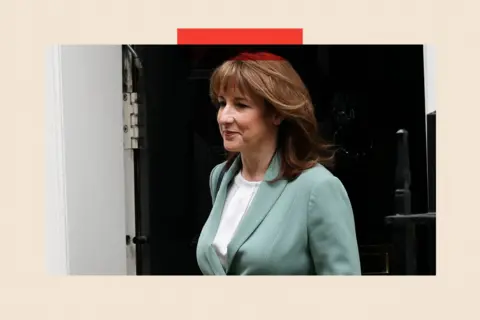Reuters
Chancellor Rachel Reeves claimed this week that Brexit had done great damage
Some ministers have seemingly even been willing to go further.
Speaking at a literary festival in October, Wes Streeting, the health secretary, said: "I'm glad that Brexit is a problem whose name we now dare speak," and indicated that he believed being outside the EU was making it difficult to deliver the economic growth the government had promised.
The Deputy Prime Minister, David Lammy, said in a podcast that it was "self-evident" that Brexit had damaged the economy and noted the economic benefit that Turkey had derived from its customs agreement with the EU.
Meanwhile, in further evidence of pressure within Labour's ranks to rethink its policy on Brexit, on Wednesday the London Mayor, Sadiq Khan, called for the UK to rejoin the EU customs union and single market before the next election, and then campaign at that ballot on a promise to rejoin the EU.
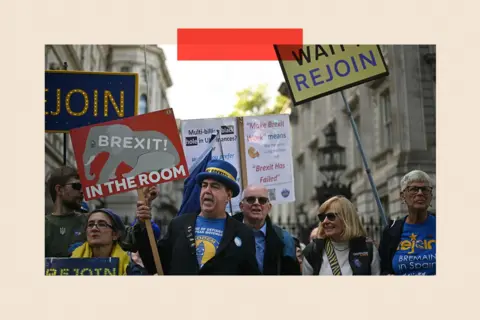AFP via Getty Images
Of the possibility of rejoining the EU there was no suggestion whatsoever in Labour's 2024 manifesto
Although on Tuesday Reeves, in contrast, stressed that the red lines set out in Labour's manifesto still stand, the chancellor has now clearly signalled a shift. She indicated in her Mais lecture that, wherever it was in Britain's interest to do so, the government wants to align the UK's regulatory regime with that of the EU in more areas.
Such a step was, she suggested, one of the keys to delivering the economic growth Labour promised in the 2024 election campaign but which, so far, has largely eluded it. The economy grew by 1.3% in 2025, an improvement on growth of 1.1% in 2024, although worse than official forecasts of 1.5%.
These moves are not just economically significant – they potentially matter politically too.
Will the pursuit of a closer relationship with the EU risk courting electoral disaster by alienating Brexit-backing voters? Or has the political front line fundamentally shifted so that it now makes political sense for Labour to change tack on Brexit?
## Reconnecting with working-class voters
Labour's stance on Brexit was, after all, born of painful defeat.
After losing the 2019 election when it pledged to renegotiate the Brexit deal and then hold a second referendum with Remain as an option, the party took the view it would be unable to regain power unless it reconnected with the many working-class voters who had traditionally voted Labour, but had then backed Leave in 2016 and supported Boris Johnson's call to "get Brexit done" in 2019.
It was their defection from Labour that helped collapse the "Red Wall" of once-safe Labour seats in the Midlands and the North of England that Labour reckoned it needed to win back to regain power.
Yet although Labour won the 2024 election, it did so despite in fact making relatively little progress between 2019 and 2024 in reconnecting with working-class Leave voters.
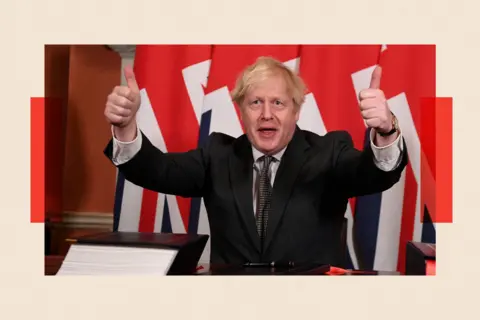Reuters
Labour's 2024 election manifesto did propose some renegotiation of the Trade and Co-operation Agreement that Boris Johnson negotiated
Data from the British Election Study and the National Centre for Social Research suggest that 80% of Labour's support came from people who said they would vote to rejoin the EU - only a little below the equivalent figure of 86% in 2019.
The party was much more successful at winning over 2019 Tory voters who backed rejoining the EU than they were those who wanted to stay out.
At the same time, Labour's advance among working-class voters was no stronger than among middle class voters - and may have even been somewhat weaker. As a result, and in line with what happened in 2019, working-class voters were no more likely than those in middle class occupations to give Labour their vote.
Now, nearly two years on, the party is in even more serious electoral trouble than in 2019. So far this month, the polls on average put the party's standing at just 19%.
It trails Reform, whose support comes predominantly from those who back Brexit, by eight points. One in 10 of those who voted Labour in 2024 are now supporting Nigel Farage's party.
But although one might assume Labour's efforts should focus on recapturing voters shifting to Reform, Reform's rise is not the principal source of Labour's electoral woes at present.
That is because for every voter who has switched since 2024 from Labour to Reform, almost twice as many (19%) have swung to the resurgent Greens. The party has also lost another 8% of its former voters to the Liberal Democrats.
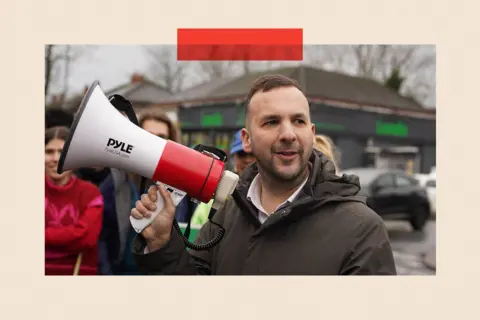Anadolu via Getty Images
For every voter who has switched since 2024 from Labour to Reform, almost twice as many have swung to the Greens
And while those who have switched from Labour to Reform would nearly all vote to stay out of the EU, most who have moved to the Greens or the Liberal Democrats are rejoiners.
So, although Labour's vote is currently down by nine points since 2024 among those who voted Leave, it has fallen by 19 points among those who supported Remain.
This makes one thing clear: Labour is unlikely to restore its electoral fortunes simply by appealing to Brexit-backing Reform voters. The party also needs to win back pro-EU minded voters, who, in switching to the Greens and the Liberal Democrats, have defected to parties that, in contrast to Labour, are in favour of eventually reversing Brexit.
## Labour voters on rejoining the European Union
So what has been behind Labour's Brexit strategy up to now?
In trying to reset Britain's relationship with the EU, but going no further than that, Labour's presumption appears to have been that while such a strategy would be welcomed by Labour's pro-EU supporters, it would not upset its minority of Brexiteers.
Indeed, last June 76% of 2024 Labour voters told YouGov they supported "Britain having a closer relationship with the European Union, without rejoining the European Union, the Single Market, or the Customs Union". Only 11% were opposed.
However, that does not mean Labour's reset approach is more popular with its supporters than the more radical step of rejoining the EU.
In the same YouGov poll, 82% of Labour voters said they supported "Britain rejoining the European Union". Just 12% were against. More recently, in December, YouGov reported that 73% of 2024 Labour voters supported "starting negotiations for Britain to rejoin the European Union", with 18% opposed.
## The core elements of Labour's approach
But it is also true that the popularity of the central elements of the reset that the party has been pursuing up to now cannot be taken for granted.
The core of the party's strategy hitherto has been getting rid of customs checks on exports of food and agricultural products from Britain to the EU.
At first glance, this is popular with Labour voters.
In January last year, 63% of the party's 2024 voters told BMG they supported negotiating a "veterinary agreement to remove paperwork required on food and drink exports" between the UK and the EU. Only 10% were opposed.
However, much depends on how the question is asked.
Redfield & Wilton secured a very different result when, also in January last year, they presented voters with the relevant trade-offs. They asked which would be "better for Britain":
The UK follows EU laws and regulations for food sold in Britain, and food made in Britain to be sold abroad DOES NOT go through border checks upon arrival in the EU.
Or: the UK follows its own laws and regulations for food sold in Britain, and food made in Britain to be sold abroad DOES go through border checks upon arrival in the EU.
Now Labour voters only narrowly favoured the former option over the latter by 45% to 40%.
These divergent poll findings suggest Labour cannot assume that even if the talks with the EU on Labour's original reset proposals do eventually reach a successful conclusion that they will necessarily land well with its voters.
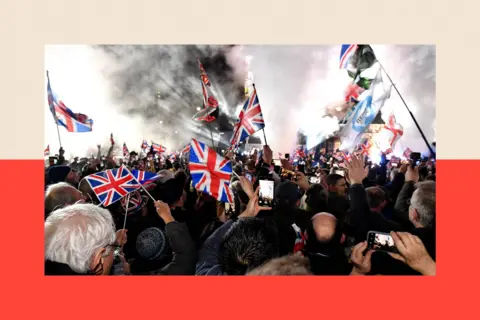Getty Images
In a YouGov poll, 12% of Labour voters said they were against "Britain rejoining the European Union"
Rather, much would depend on the party's ability to persuade them of its merits.
After all, Reform and the Conservatives are likely to present a reset as a betrayal of Brexit, involving a return to following EU rules made in Brussels rather than British rules made at Westminster.
And the polling evidently suggests this is an argument to which Labour supporters are not wholly immune.
Rather than necessarily being easier to sell, the potential difficulty with Labour's reset strategy is that the trade-offs are potentially all too apparent to some of the party's supporters.
*John Curtice is Professor of Politics, Strathclyde University, and Senior Fellow, National Centre for Social Research, and The UK in a Changing Europe*
*Top picture credits: Getty Images and Reuters*
More from InDepth
[Sir John Curtice: How Reform's capture of the Brexit vote could be enough to win an election](https://www.bbc.co.uk/news/articles/cwy853rj2kzo)
[We expect government help in a crisis. Will Reeves intervene on energy bills this time?](https://www.bbc.co.uk/news/articles/cvgky84z6lro)
[Polanski and Farage don't agree. But they have more in common than you might think](https://www.bbc.co.uk/news/articles/cd037p0z1gxo)

[*BBC InDepth*](https://www.bbc.co.uk/news/bbcindepth) *is the home on the website and app for the best analysis, with fresh perspectives that challenge assumptions and deep reporting on the biggest issues of the day. Emma Barnett and John Simpson bring their pick of the most thought-provoking deep reads and analysis, every Saturday.* [*Sign up for the newsletter here*](https://www.bbc.co.uk/newsletters/zqv4mbk)
[Rachel Reeves](https://www.bbc.com/news/topics/c342d8py37qt)
[Keir Starmer](https://www.bbc.com/news/topics/c50znx8v8rwt)
[UK economy](https://www.bbc.com/news/topics/clm1wxp5378t)
[Labour Party](https://www.bbc.com/news/topics/crr7mlg0dg1t)
[Economic effects of Brexit](https://www.bbc.com/news/topics/cv0kerlpjwvt)
[European Union](https://www.bbc.com/news/topics/cwlw3xz0ljmt)
[Brexit](https://www.bbc.com/news/topics/cwlw3xz0lvvt)
***
Related
[Mayors to gain more spending power under Reeves tax plans](https://www.bbc.com/news/articles/c0k16zdr1r1o)
[Reeves to double funding for 'British Silicon Valley'](https://www.bbc.com/news/articles/c309gq6y0d1o)
[Heating oil support 'needs to be delivered now'](https://www.bbc.com/news/articles/crrxywl5e2ko)
***
More from the BBC
[6 hrs ago  UK agrees deal to ease migrant returns to Nigeria It comes during the Nigerian president's state visit to the UK - the first by a west African leader in 37 years. 6 hrs ago](https://www.bbc.com/news/articles/crm1w24p8p7o)
[8 hrs ago  Faisal Islam: Iran war is having a dramatic effect on the UK economy The knock-on effects of the war in the Gulf go beyond a hold on interest rates and are set to reverberate for months. 8 hrs ago](https://www.bbc.com/news/articles/c33lnd1gxxro)
[10 hrs ago  Pay grows at slowest rate in more than five years Annual earnings grew at an annual rate of 3.8% in the November to January period, the Office for National Statistics says. 10 hrs ago](https://www.bbc.com/news/articles/cn0z0x82r00o)
[11 hrs ago  Why are UK prices still rising? UK Inflation has dropped back from record highs but remains above the Bank of England's 2% target. 11 hrs ago](https://www.bbc.com/news/articles/c17rgd8e9gjo)
[12 hrs ago  Will UK interest rates fall any time soon? The interest rate set by the Bank of England affects mortgage, loan and savings rates for millions. 12 hrs ago](https://www.bbc.com/news/articles/c3dky111m40o)
***
- [Home](https://www.bbc.com/)
- [News](https://www.bbc.com/news)
- [Sport](https://www.bbc.com/sport)
- [Business](https://www.bbc.com/business)
- [Technology](https://www.bbc.com/technology)
- [Health](https://www.bbc.com/health)
- [Culture](https://www.bbc.com/culture)
- [Arts](https://www.bbc.com/arts)
- [Travel](https://www.bbc.com/travel)
- [Earth](https://www.bbc.com/future-planet)
- [Audio](https://www.bbc.com/audio)
- [Video](https://www.bbc.com/video)
- [Live](https://www.bbc.com/live)
- [Weather](https://www.bbc.com/weather)
- [BBC Shop](https://shop.bbc.com/)
- [BritBox](https://www.britbox.com/?utm_source=bbc.com&utm_medium=referral&utm_campaign=footer)
BBC in other languages
### The BBC is in multiple languages
#### Read the BBC In your own language
[Oduu Afaan Oromootiin](https://www.bbc.com/afaanoromoo)
[Amharic ዜና በአማርኛ](https://www.bbc.com/amharic)
[Arabic عربي](https://www.bbc.com/arabic)
[Azeri AZƏRBAYCAN](https://www.bbc.com/azeri)
[Bangla বাংলা](https://www.bbc.com/bengali)
[Burmese မြန်မာ](https://www.bbc.com/burmese)
[Chinese 中文网](https://www.bbc.com/zhongwen/simp)
[Dari دری](https://www.bbc.com/dari)
[French AFRIQUE](https://www.bbc.com/afrique)
[Hausa HAUSA](https://www.bbc.com/hausa)
[Hindi हिन्दी](https://www.bbc.com/hindi)
[Gaelic NAIDHEACHDAN](https://www.bbc.com/naidheachdan)
[Gujarati ગુજરાતીમાં સમાચાર](https://www.bbc.com/gujarati)
[Igbo AKỤKỌ N’IGBO](https://www.bbc.com/igbo)
[Indonesian INDONESIA](https://www.bbc.com/indonesia)
[Japanese 日本語](https://www.bbc.com/japanese)
[Kinyarwanda GAHUZA](https://www.bbc.com/gahuza)
[Kirundi KIRUNDI](https://www.bbc.com/gahuza)
[Korean 한국어](https://www.bbc.com/korean)
[Kyrgyz Кыргыз](https://www.bbc.com/kyrgyz)
[Marathi मराठी](https://www.bbc.com/marathi)
[Nepali नेपाली](https://www.bbc.com/nepali)
[Noticias para hispanoparlantes](https://www.bbc.com/mundo)
[Pashto پښتو](https://www.bbc.com/pashto)
[Persian فارسی](https://www.bbc.com/persian)
[Pidgin](https://www.bbc.com/pidgin)
[Polish PO POLSKU](https://www.bbc.com/polska)
[Portuguese BRASIL](https://www.bbc.com/portuguese)
[Punjabi ਪੰਜਾਬੀ ਖ਼ਬਰਾਂ](https://www.bbc.com/punjabi)
[Russian НА РУССКОМ](https://www.bbc.com/russian)
[Serbian NA SRPSKOM](https://www.bbc.com/serbian/lat)
[Sinhala සිංහල](https://www.bbc.com/sinhala)
[Somali SOMALI](https://www.bbc.com/somali)
[Swahili HABARI KWA KISWAHILI](https://www.bbc.com/swahili)
[Tamil தமிழில் செய்திகள்](https://www.bbc.com/tamil)
[Telugu తెలుగు వార్తలు](https://www.bbc.com/telugu)
[Thai ข่าวภาษาไทย](https://www.bbc.com/thai)
[Tigrinya ዜና ብትግርኛ](https://www.bbc.com/tigrinya)
[Turkish TÜRKÇE](https://www.bbc.com/turkce)
[Ukrainian УКРАЇНСЬКA](https://www.bbc.com/ukrainian)
[Urdu اردو](https://www.bbc.com/urdu)
[Uzbek O'ZBEK](https://www.bbc.com/uzbek)
[Vietnamese TIẾNG VIỆT](https://www.bbc.com/vietnamese)
[Welsh NEWYDDION](https://www.bbc.com/cymrufyw)
[Yoruba ÌRÒYÌN NÍ YORÙBÁ](https://www.bbc.com/yoruba)
Follow BBC on:
- [Terms of Use](https://www.bbc.com/pages/terms-of-use)
- [Subscription Terms](https://www.bbc.com/pages/subscription-terms)
- [About the BBC](https://www.bbc.co.uk/aboutthebbc)
- [Privacy Policy](https://www.bbc.com/pages/privacy-policy)
- [Cookies](https://www.bbc.com/usingthebbc/cookies/)
- [Accessibility Help](https://www.bbc.co.uk/accessibility/)
- [Contact the BBC](https://www.bbc.co.uk/contact)
- [Advertise with us](https://advertising.bbcstudios.com/)
- [Do not share or sell my info](https://www.bbc.com/usingthebbc/cookies/how-can-i-change-my-bbc-cookie-settings/)
- [BBC.com Help & FAQs](https://help.bbc.com/hc/)
- [Content Index](https://www.bbc.com/pages/content-index)
- [Set Preferred Source](https://www.bbc.com/future/article/20260128-how-to-make-google-put-trusted-sources-up-top-when-you-search)
Copyright 2026 BBC. All rights reserved. The BBC is not responsible for the content of external sites. [**Read about our approach to external linking.**](https://www.bbc.co.uk/editorialguidelines/guidance/feeds-and-links) |
| Readable Markdown | 9 minutes ago
 Sir John CurticeProfessor of politics at the University of Strathclyde
BBC
**"Brexit did deep damage." With those words at her Mais lecture on Tuesday, Chancellor Rachel Reeves made it clear that there has been an important shift within the Labour Party - one that government ministers have been signalling for some time.**
"Let me say this directly to our friends and allies in Europe. This government believes a deeper relationship is in the interest of the whole of Europe," she said, while at the same time insisting that the government was not trying to "turn back the clock" on Brexit.
Speaking in such overt terms about Brexit's perceived harms in part reflects a belief that, as the government attempts to turn around the country's persistently sluggish economic performance, it must be more ambitious in its attempt to "reset" the UK's post-Brexit relationship with the EU.
Labour's 2024 election manifesto did propose some renegotiation of the Trade and Co-operation Agreement that Boris Johnson negotiated on leaving the EU in 2020. In particular, it wanted to end EU customs checks on exports of food and agricultural products by aligning Britain's regulations of such products with those of the EU.
However, it also drew clear red lines: no return to the single market, the customs union, or freedom of movement.
Of the possibility of rejoining the EU there was no suggestion whatsoever.
This stance was the product of the party's heavy defeat in the 2019 election. After that calamity, Labour accepted the decision to leave the EU and voted for Johnson's Trade and Co-operation Agreement.
However, Labour's tone has been changing. Shortly after last autumn's Budget, the Prime Minister Sir Keir Starmer declared that "Brexit had significantly hurt our economy" and that Britain needed to "keep moving towards a close relationship with the EU".
Although the red lines in Labour's manifesto were apparently still to be kept intact, his speech suggested that Labour was coming to the conclusion that, if it was going to turn around Britain's ailing economy, it needed to be more ambitious in its approach to the reset.
Reuters
Chancellor Rachel Reeves claimed this week that Brexit had done great damage
Some ministers have seemingly even been willing to go further.
Speaking at a literary festival in October, Wes Streeting, the health secretary, said: "I'm glad that Brexit is a problem whose name we now dare speak," and indicated that he believed being outside the EU was making it difficult to deliver the economic growth the government had promised.
The Deputy Prime Minister, David Lammy, said in a podcast that it was "self-evident" that Brexit had damaged the economy and noted the economic benefit that Turkey had derived from its customs agreement with the EU.
Meanwhile, in further evidence of pressure within Labour's ranks to rethink its policy on Brexit, on Wednesday the London Mayor, Sadiq Khan, called for the UK to rejoin the EU customs union and single market before the next election, and then campaign at that ballot on a promise to rejoin the EU.
AFP via Getty Images
Of the possibility of rejoining the EU there was no suggestion whatsoever in Labour's 2024 manifesto
Although on Tuesday Reeves, in contrast, stressed that the red lines set out in Labour's manifesto still stand, the chancellor has now clearly signalled a shift. She indicated in her Mais lecture that, wherever it was in Britain's interest to do so, the government wants to align the UK's regulatory regime with that of the EU in more areas.
Such a step was, she suggested, one of the keys to delivering the economic growth Labour promised in the 2024 election campaign but which, so far, has largely eluded it. The economy grew by 1.3% in 2025, an improvement on growth of 1.1% in 2024, although worse than official forecasts of 1.5%.
These moves are not just economically significant – they potentially matter politically too.
Will the pursuit of a closer relationship with the EU risk courting electoral disaster by alienating Brexit-backing voters? Or has the political front line fundamentally shifted so that it now makes political sense for Labour to change tack on Brexit?
Reconnecting with working-class voters
Labour's stance on Brexit was, after all, born of painful defeat.
After losing the 2019 election when it pledged to renegotiate the Brexit deal and then hold a second referendum with Remain as an option, the party took the view it would be unable to regain power unless it reconnected with the many working-class voters who had traditionally voted Labour, but had then backed Leave in 2016 and supported Boris Johnson's call to "get Brexit done" in 2019.
It was their defection from Labour that helped collapse the "Red Wall" of once-safe Labour seats in the Midlands and the North of England that Labour reckoned it needed to win back to regain power.
Yet although Labour won the 2024 election, it did so despite in fact making relatively little progress between 2019 and 2024 in reconnecting with working-class Leave voters.
Reuters
Labour's 2024 election manifesto did propose some renegotiation of the Trade and Co-operation Agreement that Boris Johnson negotiated
Data from the British Election Study and the National Centre for Social Research suggest that 80% of Labour's support came from people who said they would vote to rejoin the EU - only a little below the equivalent figure of 86% in 2019.
The party was much more successful at winning over 2019 Tory voters who backed rejoining the EU than they were those who wanted to stay out.
At the same time, Labour's advance among working-class voters was no stronger than among middle class voters - and may have even been somewhat weaker. As a result, and in line with what happened in 2019, working-class voters were no more likely than those in middle class occupations to give Labour their vote.
Now, nearly two years on, the party is in even more serious electoral trouble than in 2019. So far this month, the polls on average put the party's standing at just 19%.
It trails Reform, whose support comes predominantly from those who back Brexit, by eight points. One in 10 of those who voted Labour in 2024 are now supporting Nigel Farage's party.
But although one might assume Labour's efforts should focus on recapturing voters shifting to Reform, Reform's rise is not the principal source of Labour's electoral woes at present.
That is because for every voter who has switched since 2024 from Labour to Reform, almost twice as many (19%) have swung to the resurgent Greens. The party has also lost another 8% of its former voters to the Liberal Democrats.
Anadolu via Getty Images
For every voter who has switched since 2024 from Labour to Reform, almost twice as many have swung to the Greens
And while those who have switched from Labour to Reform would nearly all vote to stay out of the EU, most who have moved to the Greens or the Liberal Democrats are rejoiners.
So, although Labour's vote is currently down by nine points since 2024 among those who voted Leave, it has fallen by 19 points among those who supported Remain.
This makes one thing clear: Labour is unlikely to restore its electoral fortunes simply by appealing to Brexit-backing Reform voters. The party also needs to win back pro-EU minded voters, who, in switching to the Greens and the Liberal Democrats, have defected to parties that, in contrast to Labour, are in favour of eventually reversing Brexit.
Labour voters on rejoining the European Union
So what has been behind Labour's Brexit strategy up to now?
In trying to reset Britain's relationship with the EU, but going no further than that, Labour's presumption appears to have been that while such a strategy would be welcomed by Labour's pro-EU supporters, it would not upset its minority of Brexiteers.
Indeed, last June 76% of 2024 Labour voters told YouGov they supported "Britain having a closer relationship with the European Union, without rejoining the European Union, the Single Market, or the Customs Union". Only 11% were opposed.
However, that does not mean Labour's reset approach is more popular with its supporters than the more radical step of rejoining the EU.
In the same YouGov poll, 82% of Labour voters said they supported "Britain rejoining the European Union". Just 12% were against. More recently, in December, YouGov reported that 73% of 2024 Labour voters supported "starting negotiations for Britain to rejoin the European Union", with 18% opposed.
The core elements of Labour's approach
But it is also true that the popularity of the central elements of the reset that the party has been pursuing up to now cannot be taken for granted.
The core of the party's strategy hitherto has been getting rid of customs checks on exports of food and agricultural products from Britain to the EU.
At first glance, this is popular with Labour voters.
In January last year, 63% of the party's 2024 voters told BMG they supported negotiating a "veterinary agreement to remove paperwork required on food and drink exports" between the UK and the EU. Only 10% were opposed.
However, much depends on how the question is asked.
Redfield & Wilton secured a very different result when, also in January last year, they presented voters with the relevant trade-offs. They asked which would be "better for Britain":
The UK follows EU laws and regulations for food sold in Britain, and food made in Britain to be sold abroad DOES NOT go through border checks upon arrival in the EU.
Or: the UK follows its own laws and regulations for food sold in Britain, and food made in Britain to be sold abroad DOES go through border checks upon arrival in the EU.
Now Labour voters only narrowly favoured the former option over the latter by 45% to 40%.
These divergent poll findings suggest Labour cannot assume that even if the talks with the EU on Labour's original reset proposals do eventually reach a successful conclusion that they will necessarily land well with its voters.
Getty Images
In a YouGov poll, 12% of Labour voters said they were against "Britain rejoining the European Union"
Rather, much would depend on the party's ability to persuade them of its merits.
After all, Reform and the Conservatives are likely to present a reset as a betrayal of Brexit, involving a return to following EU rules made in Brussels rather than British rules made at Westminster.
And the polling evidently suggests this is an argument to which Labour supporters are not wholly immune.
Rather than necessarily being easier to sell, the potential difficulty with Labour's reset strategy is that the trade-offs are potentially all too apparent to some of the party's supporters.
*John Curtice is Professor of Politics, Strathclyde University, and Senior Fellow, National Centre for Social Research, and The UK in a Changing Europe*
*Top picture credits: Getty Images and Reuters*
More from InDepth

[*BBC InDepth*](https://www.bbc.co.uk/news/bbcindepth) *is the home on the website and app for the best analysis, with fresh perspectives that challenge assumptions and deep reporting on the biggest issues of the day. Emma Barnett and John Simpson bring their pick of the most thought-provoking deep reads and analysis, every Saturday.* [*Sign up for the newsletter here*](https://www.bbc.co.uk/newsletters/zqv4mbk) |
| Shard | 16 (laksa) |
| Root Hash | 1643509356818581016 |
| Unparsed URL | com,bbc!www,/news/articles/c4gjn1d74jlo s443 |