ℹ️ Skipped - page is already crawled
| Filter | Status | Condition | Details |
|---|---|---|---|
| HTTP status | PASS | download_http_code = 200 | HTTP 200 |
| Age cutoff | PASS | download_stamp > now() - 6 MONTH | 1.1 months ago |
| History drop | PASS | isNull(history_drop_reason) | No drop reason |
| Spam/ban | PASS | fh_dont_index != 1 AND ml_spam_score = 0 | ml_spam_score=0 |
| Canonical | PASS | meta_canonical IS NULL OR = '' OR = src_unparsed | Not set |
| Property | Value | |||||||||||||||||||||
|---|---|---|---|---|---|---|---|---|---|---|---|---|---|---|---|---|---|---|---|---|---|---|
| URL | https://www.bbc.com/news/articles/c4g2089vznzo | |||||||||||||||||||||
| Last Crawled | 2026-03-21 20:00:39 (1 month ago) | |||||||||||||||||||||
| First Indexed | 2025-04-08 15:51:38 (1 year ago) | |||||||||||||||||||||
| HTTP Status Code | 200 | |||||||||||||||||||||
| Content | ||||||||||||||||||||||
| Meta Title | What would a US-China trade war do to the world economy? | |||||||||||||||||||||
| Meta Description | After the US president hit China with tariffs of over 100%, Beijing retaliates with higher taxes on American imports. | |||||||||||||||||||||
| Meta Canonical | null | |||||||||||||||||||||
| Boilerpipe Text | 11 April 2025
Ben Chu
BBC Verify
Getty Images
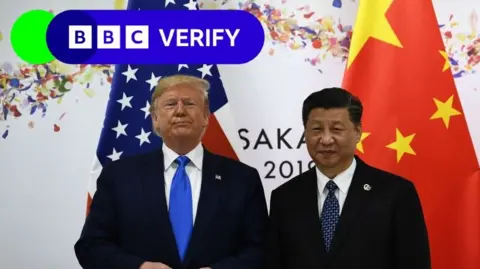
A full-scale trade war between China and the US is in prospect after President Donald Trump imposed 125% tariffs on Chinese goods imports.
China has retaliated by hiking its tariffs - or taxes - on goods imported from America to 125%.
What does this escalating trade conflict mean for the world economy?
How much trade do they do?
The trade in goods between the two economic powers added up to around $585bn (£429bn) last year.
Though the US imported far more from China ($440bn) than China imported from America ($145bn).
That left the US running a trade deficit with China - the difference between what it imports and exports - of $295bn in 2024. That's a considerable trade deficit, equivalent to around 1% of the US economy.
Trump already imposed significant tariffs on China in his first term as president. Those tariffs were kept in place and added to by his successor Joe Biden.
Together those trade barriers helped to bring the goods the US imported from China down from a 21% share of America's total imports in 2016 to 13% last year.
So the US reliance on China for trade has diminished over the past decade.
Yet analysts point out that some Chinese goods exports to the US have been re-routed through south-east Asian countries.
Live updates on this story
Is the US making $2bn a day from tariffs?
China is not backing down from Trump's tariff war. What next?
Who are the tariff 'PANICANS' derided as 'weak and stupid' by Trump?
But the US Commerce Department
presented evidence in 2023
that Chinese solar panel manufacturers had shifted their assembly operations to states such as Malaysia, Thailand, Cambodia and Vietnam and then sent the finished products to the US from those countries, effectively evading the tariffs.
The new "reciprocal" tariffs Trump imposed on those countries - which he has now paused - could therefore push up the US price of a wide range of goods ultimately originating in China.
What do the US and China import from each other?
In 2024, the biggest category of goods exports from the US to China were soybeans – primarily used to feed China's estimated 440 million pigs.
The US also sent pharmaceuticals and petroleum to China.
Going the other way, from China to the US, were large volumes of electronics, computers and toys. A large amount of batteries, which are vital for electric vehicles, were also exported.
The biggest category of US imports from China is smartphones, accounting for 9% of the total. A large proportion of these smartphones are made in China for Apple, a US-based multinational.
The US tariffs on China have been one of the main contributors to the decline in the market value of Apple in recent weeks, with its share price falling by 20% over the past month.
All these imported items to the US from China were already set to become considerably more expensive for Americans due to the 20% tariff the Trump administration had already imposed on Beijing.
Now that the tariff has risen to 125% - and even 145% for some products - the impact could be six times greater.
And US imports into China will also go up in price due to China's retaliatory tariffs, ultimately hurting Chinese consumers in a similar way.
But beyond tariffs, there are other ways for these two nations to attempt to damage each other through trade.
Watch: China says it will 'fight to the end' in trade war
China has a central role in refining many vital metals for industry, from copper and lithium to rare earths.
Beijing could place obstacles in the way of these metals reaching the US.
As for the US, it could attempt to tighten the technological blockade on China started by Joe Biden by making it harder for China to import the kind of advanced microchips – which are vital for applications like artificial intelligence – it still can't yet produce itself.
Donald Trump's trade advisor, Peter Navarro, has suggested this week that the US could apply pressure on other countries, including Cambodia, Mexico and Vietnam, not to trade with China if they want to continue to exporting to the US.
How might this affect other countries?
The US and China together account for such a large share of the global economy, around 43% this year according to the International Monetary Fund.
If they were to engage in an all-out trade war that slowed their growth down, or even pushed them into recession, that would likely harm other countries' economies in the form of slower global growth.
Global investment would also likely suffer.
There are other potential consequences.
China is the world's biggest manufacturing nation and is producing far more than its population consumes domestically.
It is already running an almost $1tn goods surplus – meaning it is exporting more goods to the rest of the world than it imports.
And it is often producing those goods at below the true cost of production due to domestic subsidies and state financial support, like cheap loans, for favoured firms.
Steel is an example of this.
There is a risk that if such products were unable to enter the US, Chinese firms could seek to "dump" them abroad.
While that could be beneficial for some consumers, it could also undercut producers in countries threatening jobs and wages.
The lobby group UK Steel has warned of the danger of excess steel potentially being redirected to the UK market.
The spillover impacts of an all-out China-US trade war would be felt globally, and most economists judge that the impact would be highly negative. | |||||||||||||||||||||
| Markdown | [Skip to content](https://www.bbc.com/news/articles/c4g2089vznzo#main-content)
[Register](https://session.bbc.com/session?action=register&userOrigin=BBCS_BBC&ptrt=https%3A%2F%2Fwww.bbc.com%2Fnews%2Farticles%2Fc4g2089vznzo)
[Sign In](https://session.bbc.com/session?userOrigin=BBCS_BBC&ptrt=https%3A%2F%2Fwww.bbc.com%2Fnews%2Farticles%2Fc4g2089vznzo)
- [Home](https://www.bbc.com/)
- [News](https://www.bbc.com/news)
- [Sport](https://www.bbc.com/sport)
- [Business](https://www.bbc.com/business)
- [Technology](https://www.bbc.com/technology)
- [Health](https://www.bbc.com/health)
- [Culture](https://www.bbc.com/culture)
- [Arts](https://www.bbc.com/arts)
- [Travel](https://www.bbc.com/travel)
- [Earth](https://www.bbc.com/future-planet)
- [Audio](https://www.bbc.com/audio)
- [Video](https://www.bbc.com/video)
- [Live](https://www.bbc.com/live)
- [Home](https://www.bbc.com/home)
- [News](https://www.bbc.com/news)
- [US & Canada](https://www.bbc.com/news/us-canada)
- [UK](https://www.bbc.com/news/uk)
- [UK Politics](https://www.bbc.com/news/politics)
- [England](https://www.bbc.com/news/england)
- [N. Ireland](https://www.bbc.com/news/northern_ireland)
- [N. Ireland Politics](https://www.bbc.com/news/northern_ireland/northern_ireland_politics)
- [Scotland](https://www.bbc.com/news/scotland)
- [Scotland Politics](https://www.bbc.com/news/scotland/scotland_politics)
- [Wales](https://www.bbc.com/news/wales)
- [Wales Politics](https://www.bbc.com/news/wales/wales_politics)
- [Africa](https://www.bbc.com/news/world/africa)
- [Asia](https://www.bbc.com/news/world/asia)
- [China](https://www.bbc.com/news/world/asia/china)
- [India](https://www.bbc.com/news/world/asia/india)
- [Australia](https://www.bbc.com/news/world/australia)
- [Europe](https://www.bbc.com/news/world/europe)
- [Latin America](https://www.bbc.com/news/world/latin_america)
- [Middle East](https://www.bbc.com/news/world/middle_east)
- [In Pictures](https://www.bbc.com/news/in_pictures)
- [BBC InDepth](https://www.bbc.com/news/bbcindepth)
- [BBC Verify](https://www.bbc.com/news/bbcverify)
- [Sport](https://www.bbc.com/sport)
- [Business](https://www.bbc.com/business)
- [World of Business](https://www.bbc.com/business/world-of-business)
- [Technology of Business](https://www.bbc.com/business/technology-of-business)
- [NYSE Opening Bell](https://www.bbc.com/business/opening-bell)
- [Technology](https://www.bbc.com/technology)
- [Artificial Intelligence](https://www.bbc.com/technology/artificial-intelligence)
- [AI v the Mind](https://www.bbc.com/technology/ai-v-the-mind)
- [Health](https://www.bbc.com/health)
- [Culture](https://www.bbc.com/culture)
- [Film & TV](https://www.bbc.com/culture/film-tv)
- [Music](https://www.bbc.com/culture/music)
- [Art & Design](https://www.bbc.com/culture/art)
- [Style](https://www.bbc.com/culture/style)
- [Books](https://www.bbc.com/culture/books)
- [Entertainment News](https://www.bbc.com/culture/entertainment-news)
- [Arts](https://www.bbc.com/arts)
- [Arts in Motion](https://www.bbc.com/arts/arts-in-motion)
- [Travel](https://www.bbc.com/travel)
- [Destinations](https://www.bbc.com/travel/destinations)
- [Africa](https://www.bbc.com/travel/destinations/africa)
- [Antarctica](https://www.bbc.com/travel/destinations/antarctica)
- [Asia](https://www.bbc.com/travel/destinations/asia)
- [Australia and Pacific](https://www.bbc.com/travel/destinations/australia-and-pacific)
- [Caribbean & Bermuda](https://www.bbc.com/travel/destinations/caribbean)
- [Central America](https://www.bbc.com/travel/destinations/central-america)
- [Europe](https://www.bbc.com/travel/destinations/europe)
- [Middle East](https://www.bbc.com/travel/destinations/middle-east)
- [North America](https://www.bbc.com/travel/destinations/north-america)
- [South America](https://www.bbc.com/travel/destinations/south-america)
- [World’s Table](https://www.bbc.com/travel/worlds-table)
- [Culture & Experiences](https://www.bbc.com/travel/cultural-experiences)
- [Adventures](https://www.bbc.com/travel/adventures)
- [The SpeciaList](https://www.bbc.com/travel/specialist)
- [Earth](https://www.bbc.com/future-planet)
- [Science](https://www.bbc.com/innovation/science)
- [Natural Wonders](https://www.bbc.com/future-planet/natural-wonders)
- [Climate Solutions](https://www.bbc.com/future-planet/solutions)
- [Sustainable Business](https://www.bbc.com/future-planet/sustainable-business)
- [Green Living](https://www.bbc.com/future-planet/green-living)
- [Audio](https://www.bbc.com/audio)
- [Podcast Categories](https://www.bbc.com/audio/categories)
- [Radio](https://www.bbc.com/audio/stations)
- [Audio FAQs](https://www.bbc.com/undefined)
- [Video](https://www.bbc.com/video)
- [BBC Maestro](https://www.bbc.com/video/bbc-maestro)
- [Discover the World](https://www.bbc.com/video/discover-the-world)
- [Live](https://www.bbc.com/live)
- [Live News](https://www.bbc.com/live/news)
- [Live Sport](https://www.bbc.com/live/sport)
[Home](https://www.bbc.com/)
News
[Sport](https://www.bbc.com/sport)
Business
Technology
[Health](https://www.bbc.com/health)
Culture
Arts
Travel
Earth
Audio
Video
Live
[Weather](https://www.bbc.com/weather)
[Newsletters](https://www.bbc.com/newsletters)
# What would a US-China trade war do to the world economy?
11 April 2025
Share
Save
Ben ChuBBC Verify
Share
Save
Getty Images
A full-scale trade war between China and the US is in prospect after President Donald Trump imposed 125% tariffs on Chinese goods imports.
China has retaliated by hiking its tariffs - or taxes - on goods imported from America to 125%.
What does this escalating trade conflict mean for the world economy?
## How much trade do they do?
The trade in goods between the two economic powers added up to around \$585bn (£429bn) last year.
Though the US imported far more from China (\$440bn) than China imported from America (\$145bn).
That left the US running a trade deficit with China - the difference between what it imports and exports - of \$295bn in 2024. That's a considerable trade deficit, equivalent to around 1% of the US economy.
But it's less than the [\$1tn figure that Trump has repeatedly claimed](https://www.bbc.co.uk/news/live/ce3qnyr7y94t?post=asset%3Acdfe247a-863b-4a39-a008-252c14f16f43#post) this week.
Trump already imposed significant tariffs on China in his first term as president. Those tariffs were kept in place and added to by his successor Joe Biden.
Together those trade barriers helped to bring the goods the US imported from China down from a 21% share of America's total imports in 2016 to 13% last year.
So the US reliance on China for trade has diminished over the past decade.
Yet analysts point out that some Chinese goods exports to the US have been re-routed through south-east Asian countries.
- [Live updates on this story](https://www.bbc.co.uk/news/live/cp8vyy35g3mt)
- [Is the US making \$2bn a day from tariffs?](https://www.bbc.co.uk/news/articles/c7vnnd89e0jo)
- [China is not backing down from Trump's tariff war. What next?](https://www.bbc.co.uk/news/articles/ckg51yw700lo)
- [Who are the tariff 'PANICANS' derided as 'weak and stupid' by Trump?](https://www.bbc.co.uk/news/articles/c2ewrvkp72lo)
For example, the [Trump administration imposed 30% tariffs](https://www.bbc.co.uk/news/business-42784380) on Chinese imported solar panels in 2018.
But the US Commerce Department [presented evidence in 2023](https://www.commerce.gov/news/press-releases/2023/08/department-commerce-issues-final-determination-circumvention-inquiries) that Chinese solar panel manufacturers had shifted their assembly operations to states such as Malaysia, Thailand, Cambodia and Vietnam and then sent the finished products to the US from those countries, effectively evading the tariffs.
The new "reciprocal" tariffs Trump imposed on those countries - which he has now paused - could therefore push up the US price of a wide range of goods ultimately originating in China.
## What do the US and China import from each other?
In 2024, the biggest category of goods exports from the US to China were soybeans – primarily used to feed China's estimated 440 million pigs.
The US also sent pharmaceuticals and petroleum to China.
Going the other way, from China to the US, were large volumes of electronics, computers and toys. A large amount of batteries, which are vital for electric vehicles, were also exported.
The biggest category of US imports from China is smartphones, accounting for 9% of the total. A large proportion of these smartphones are made in China for Apple, a US-based multinational.
The US tariffs on China have been one of the main contributors to the decline in the market value of Apple in recent weeks, with its share price falling by 20% over the past month.
All these imported items to the US from China were already set to become considerably more expensive for Americans due to the 20% tariff the Trump administration had already imposed on Beijing.
Now that the tariff has risen to 125% - and even 145% for some products - the impact could be six times greater.
And US imports into China will also go up in price due to China's retaliatory tariffs, ultimately hurting Chinese consumers in a similar way.
But beyond tariffs, there are other ways for these two nations to attempt to damage each other through trade.
Watch: China says it will 'fight to the end' in trade war
China has a central role in refining many vital metals for industry, from copper and lithium to rare earths.
Beijing could place obstacles in the way of these metals reaching the US.
This is something it has already done in the case of [two materials called germanium and gallium](https://www.bbc.co.uk/news/business-66118831), which are used by the military in thermal imaging and radar.
As for the US, it could attempt to tighten the technological blockade on China started by Joe Biden by making it harder for China to import the kind of advanced microchips – which are vital for applications like artificial intelligence – it still can't yet produce itself.
Donald Trump's trade advisor, Peter Navarro, has suggested this week that the US could apply pressure on other countries, including Cambodia, Mexico and Vietnam, not to trade with China if they want to continue to exporting to the US.
## How might this affect other countries?
The US and China together account for such a large share of the global economy, around 43% this year according to the International Monetary Fund.
If they were to engage in an all-out trade war that slowed their growth down, or even pushed them into recession, that would likely harm other countries' economies in the form of slower global growth.
Global investment would also likely suffer.
There are other potential consequences.
China is the world's biggest manufacturing nation and is producing far more than its population consumes domestically.
It is already running an almost \$1tn goods surplus – meaning it is exporting more goods to the rest of the world than it imports.
And it is often producing those goods at below the true cost of production due to domestic subsidies and state financial support, like cheap loans, for favoured firms.
Steel is an example of this.
There is a risk that if such products were unable to enter the US, Chinese firms could seek to "dump" them abroad.
While that could be beneficial for some consumers, it could also undercut producers in countries threatening jobs and wages.
The lobby group UK Steel has warned of the danger of excess steel potentially being redirected to the UK market.
The spillover impacts of an all-out China-US trade war would be felt globally, and most economists judge that the impact would be highly negative.

[What do you want BBC Verify to investigate?](https://www.bbc.co.uk/news/articles/czd9yz5n354o)
[Trump tariffs](https://www.bbc.com/news/topics/c9vwxgl4p0dt)
[China](https://www.bbc.com/news/world/asia/china)
[Global trade](https://www.bbc.com/news/topics/cg5rv39y9mmt)
[Donald Trump](https://www.bbc.com/news/topics/cp7r8vgl2lgt)
[US politics](https://www.bbc.com/news/topics/cwnpxwzd269t)
***
Related
[Canada's Conservative leader talks tariffs and martial arts with Joe Rogan](https://www.bbc.com/news/articles/czx9l84v0j9o)
[Canada sheds more than 100,000 jobs in first two months of year](https://www.bbc.com/news/articles/c1d6lk1n91xo)
[New US trade probe targets EU, Canada, UK over forced labour](https://www.bbc.com/news/articles/cgrzvdqze5xo)
***
More from the BBC
[5 hrs ago  Why did US and Israel attack Iran and how long could the war last? Conflict has spread across the Middle East since the US and Israel launched strikes on Iran on 28 February. 5 hrs ago](https://www.bbc.com/news/articles/cx2dyz6p3weo)
[19 hrs ago  Trump says he is considering 'winding down' Iran war But more troops and warships are being sent to the region and the White House is seeking billions more in funding for the war. 19 hrs ago](https://www.bbc.com/news/articles/cpd5l00z7n6o)
[1 day ago  Trump makes Pearl Harbor remark in meeting with Japan's PM President Trump compared US strikes on Iran to the deadly 1941 Japanese attack and declaration of war as part of World War Two. 1 day ago](https://www.bbc.com/news/articles/c8dlpr074q3o)
[2 days ago  Trio charged over alleged plot to smuggle Nvidia chips from US to China They allegedly used fake papers and dummy gear as part of a plan to sell billions in tech to China. 2 days ago](https://www.bbc.com/news/articles/cy41ly2d9wko)
[2 days ago  Trump 24-karat gold coin approved by hand-picked federal panel The coin, intended to mark the nation's 250th birthday, should be "as large as possible", says one panel member. 2 days ago](https://www.bbc.com/news/articles/cwywxvgynr2o)
***
- [Home](https://www.bbc.com/)
- [News](https://www.bbc.com/news)
- [Sport](https://www.bbc.com/sport)
- [Business](https://www.bbc.com/business)
- [Technology](https://www.bbc.com/technology)
- [Health](https://www.bbc.com/health)
- [Culture](https://www.bbc.com/culture)
- [Arts](https://www.bbc.com/arts)
- [Travel](https://www.bbc.com/travel)
- [Earth](https://www.bbc.com/future-planet)
- [Audio](https://www.bbc.com/audio)
- [Video](https://www.bbc.com/video)
- [Live](https://www.bbc.com/live)
- [Weather](https://www.bbc.com/weather)
- [BBC Shop](https://shop.bbc.com/)
- [BritBox](https://www.britbox.com/?utm_source=bbc.com&utm_medium=referral&utm_campaign=footer)
BBC in other languages
### The BBC is in multiple languages
#### Read the BBC In your own language
[Oduu Afaan Oromootiin](https://www.bbc.com/afaanoromoo)
[Amharic ዜና በአማርኛ](https://www.bbc.com/amharic)
[Arabic عربي](https://www.bbc.com/arabic)
[Azeri AZƏRBAYCAN](https://www.bbc.com/azeri)
[Bangla বাংলা](https://www.bbc.com/bengali)
[Burmese မြန်မာ](https://www.bbc.com/burmese)
[Chinese 中文网](https://www.bbc.com/zhongwen/simp)
[Dari دری](https://www.bbc.com/dari)
[French AFRIQUE](https://www.bbc.com/afrique)
[Hausa HAUSA](https://www.bbc.com/hausa)
[Hindi हिन्दी](https://www.bbc.com/hindi)
[Gaelic NAIDHEACHDAN](https://www.bbc.com/naidheachdan)
[Gujarati ગુજરાતીમાં સમાચાર](https://www.bbc.com/gujarati)
[Igbo AKỤKỌ N’IGBO](https://www.bbc.com/igbo)
[Indonesian INDONESIA](https://www.bbc.com/indonesia)
[Japanese 日本語](https://www.bbc.com/japanese)
[Kinyarwanda GAHUZA](https://www.bbc.com/gahuza)
[Kirundi KIRUNDI](https://www.bbc.com/gahuza)
[Korean 한국어](https://www.bbc.com/korean)
[Kyrgyz Кыргыз](https://www.bbc.com/kyrgyz)
[Marathi मराठी](https://www.bbc.com/marathi)
[Nepali नेपाली](https://www.bbc.com/nepali)
[Noticias para hispanoparlantes](https://www.bbc.com/mundo)
[Pashto پښتو](https://www.bbc.com/pashto)
[Persian فارسی](https://www.bbc.com/persian)
[Pidgin](https://www.bbc.com/pidgin)
[Polish PO POLSKU](https://www.bbc.com/polska)
[Portuguese BRASIL](https://www.bbc.com/portuguese)
[Punjabi ਪੰਜਾਬੀ ਖ਼ਬਰਾਂ](https://www.bbc.com/punjabi)
[Russian НА РУССКОМ](https://www.bbc.com/russian)
[Serbian NA SRPSKOM](https://www.bbc.com/serbian/lat)
[Sinhala සිංහල](https://www.bbc.com/sinhala)
[Somali SOMALI](https://www.bbc.com/somali)
[Swahili HABARI KWA KISWAHILI](https://www.bbc.com/swahili)
[Tamil தமிழில் செய்திகள்](https://www.bbc.com/tamil)
[Telugu తెలుగు వార్తలు](https://www.bbc.com/telugu)
[Thai ข่าวภาษาไทย](https://www.bbc.com/thai)
[Tigrinya ዜና ብትግርኛ](https://www.bbc.com/tigrinya)
[Turkish TÜRKÇE](https://www.bbc.com/turkce)
[Ukrainian УКРАЇНСЬКA](https://www.bbc.com/ukrainian)
[Urdu اردو](https://www.bbc.com/urdu)
[Uzbek O'ZBEK](https://www.bbc.com/uzbek)
[Vietnamese TIẾNG VIỆT](https://www.bbc.com/vietnamese)
[Welsh NEWYDDION](https://www.bbc.com/cymrufyw)
[Yoruba ÌRÒYÌN NÍ YORÙBÁ](https://www.bbc.com/yoruba)
Follow BBC on:
- [Terms of Use](https://www.bbc.com/pages/terms-of-use)
- [Subscription Terms](https://www.bbc.com/pages/subscription-terms)
- [About the BBC](https://www.bbc.co.uk/aboutthebbc)
- [Privacy Policy](https://www.bbc.com/pages/privacy-policy)
- [Cookies](https://www.bbc.com/usingthebbc/cookies/)
- [Accessibility Help](https://www.bbc.co.uk/accessibility/)
- [Contact the BBC](https://www.bbc.co.uk/contact)
- [Advertise with us](https://advertising.bbcstudios.com/)
- [Do not share or sell my info](https://www.bbc.com/usingthebbc/cookies/how-can-i-change-my-bbc-cookie-settings/)
- [BBC.com Help & FAQs](https://help.bbc.com/hc/)
- [Content Index](https://www.bbc.com/pages/content-index)
- [Set Preferred Source](https://www.bbc.com/future/article/20260128-how-to-make-google-put-trusted-sources-up-top-when-you-search)
Copyright 2026 BBC. All rights reserved. The BBC is not responsible for the content of external sites. [**Read about our approach to external linking.**](https://www.bbc.co.uk/editorialguidelines/guidance/feeds-and-links) | |||||||||||||||||||||
| Readable Markdown | 11 April 2025
Ben ChuBBC Verify
Getty Images
A full-scale trade war between China and the US is in prospect after President Donald Trump imposed 125% tariffs on Chinese goods imports.
China has retaliated by hiking its tariffs - or taxes - on goods imported from America to 125%.
What does this escalating trade conflict mean for the world economy?
How much trade do they do?
The trade in goods between the two economic powers added up to around \$585bn (£429bn) last year.
Though the US imported far more from China (\$440bn) than China imported from America (\$145bn).
That left the US running a trade deficit with China - the difference between what it imports and exports - of \$295bn in 2024. That's a considerable trade deficit, equivalent to around 1% of the US economy.
Trump already imposed significant tariffs on China in his first term as president. Those tariffs were kept in place and added to by his successor Joe Biden.
Together those trade barriers helped to bring the goods the US imported from China down from a 21% share of America's total imports in 2016 to 13% last year.
So the US reliance on China for trade has diminished over the past decade.
Yet analysts point out that some Chinese goods exports to the US have been re-routed through south-east Asian countries.
- [Live updates on this story](https://www.bbc.co.uk/news/live/cp8vyy35g3mt)
- [Is the US making \$2bn a day from tariffs?](https://www.bbc.co.uk/news/articles/c7vnnd89e0jo)
- [China is not backing down from Trump's tariff war. What next?](https://www.bbc.co.uk/news/articles/ckg51yw700lo)
- [Who are the tariff 'PANICANS' derided as 'weak and stupid' by Trump?](https://www.bbc.co.uk/news/articles/c2ewrvkp72lo)
But the US Commerce Department [presented evidence in 2023](https://www.commerce.gov/news/press-releases/2023/08/department-commerce-issues-final-determination-circumvention-inquiries) that Chinese solar panel manufacturers had shifted their assembly operations to states such as Malaysia, Thailand, Cambodia and Vietnam and then sent the finished products to the US from those countries, effectively evading the tariffs.
The new "reciprocal" tariffs Trump imposed on those countries - which he has now paused - could therefore push up the US price of a wide range of goods ultimately originating in China.
What do the US and China import from each other?
In 2024, the biggest category of goods exports from the US to China were soybeans – primarily used to feed China's estimated 440 million pigs.
The US also sent pharmaceuticals and petroleum to China.
Going the other way, from China to the US, were large volumes of electronics, computers and toys. A large amount of batteries, which are vital for electric vehicles, were also exported.
The biggest category of US imports from China is smartphones, accounting for 9% of the total. A large proportion of these smartphones are made in China for Apple, a US-based multinational.
The US tariffs on China have been one of the main contributors to the decline in the market value of Apple in recent weeks, with its share price falling by 20% over the past month.
All these imported items to the US from China were already set to become considerably more expensive for Americans due to the 20% tariff the Trump administration had already imposed on Beijing.
Now that the tariff has risen to 125% - and even 145% for some products - the impact could be six times greater.
And US imports into China will also go up in price due to China's retaliatory tariffs, ultimately hurting Chinese consumers in a similar way.
But beyond tariffs, there are other ways for these two nations to attempt to damage each other through trade.
Watch: China says it will 'fight to the end' in trade war
China has a central role in refining many vital metals for industry, from copper and lithium to rare earths.
Beijing could place obstacles in the way of these metals reaching the US.
As for the US, it could attempt to tighten the technological blockade on China started by Joe Biden by making it harder for China to import the kind of advanced microchips – which are vital for applications like artificial intelligence – it still can't yet produce itself.
Donald Trump's trade advisor, Peter Navarro, has suggested this week that the US could apply pressure on other countries, including Cambodia, Mexico and Vietnam, not to trade with China if they want to continue to exporting to the US.
How might this affect other countries?
The US and China together account for such a large share of the global economy, around 43% this year according to the International Monetary Fund.
If they were to engage in an all-out trade war that slowed their growth down, or even pushed them into recession, that would likely harm other countries' economies in the form of slower global growth.
Global investment would also likely suffer.
There are other potential consequences.
China is the world's biggest manufacturing nation and is producing far more than its population consumes domestically.
It is already running an almost \$1tn goods surplus – meaning it is exporting more goods to the rest of the world than it imports.
And it is often producing those goods at below the true cost of production due to domestic subsidies and state financial support, like cheap loans, for favoured firms.
Steel is an example of this.
There is a risk that if such products were unable to enter the US, Chinese firms could seek to "dump" them abroad.
While that could be beneficial for some consumers, it could also undercut producers in countries threatening jobs and wages.
The lobby group UK Steel has warned of the danger of excess steel potentially being redirected to the UK market.
The spillover impacts of an all-out China-US trade war would be felt globally, and most economists judge that the impact would be highly negative.
 | |||||||||||||||||||||
| ML Classification | ||||||||||||||||||||||
| ML Categories |
Raw JSON{
"/Finance": 742,
"/News": 425,
"/Finance/Investing": 388,
"/News/Business_News": 295,
"/News/Business_News/Economy_News": 230,
"/Law_and_Government": 143,
"/Finance/Investing/Currencies_and_Foreign_Exchange": 100
} | |||||||||||||||||||||
| ML Page Types |
Raw JSON{
"/Article": 996,
"/Article/News_Update": 819
} | |||||||||||||||||||||
| ML Intent Types |
Raw JSON{
"Informational": 999
} | |||||||||||||||||||||
| Content Metadata | ||||||||||||||||||||||
| Language | en-gb | |||||||||||||||||||||
| Author | Ben Chu | |||||||||||||||||||||
| Publish Time | 2025-04-11 11:18:00 (1 year ago) | |||||||||||||||||||||
| Original Publish Time | 2025-04-08 15:51:38 (1 year ago) | |||||||||||||||||||||
| Republished | No | |||||||||||||||||||||
| Word Count (Total) | 1,646 | |||||||||||||||||||||
| Word Count (Content) | 947 | |||||||||||||||||||||
| Links | ||||||||||||||||||||||
| External Links | 26 | |||||||||||||||||||||
| Internal Links | 146 | |||||||||||||||||||||
| Technical SEO | ||||||||||||||||||||||
| Meta Nofollow | No | |||||||||||||||||||||
| Meta Noarchive | No | |||||||||||||||||||||
| JS Rendered | Yes | |||||||||||||||||||||
| Redirect Target | null | |||||||||||||||||||||
| Performance | ||||||||||||||||||||||
| Download Time (ms) | 319 | |||||||||||||||||||||
| TTFB (ms) | 312 | |||||||||||||||||||||
| Download Size (bytes) | 51,960 | |||||||||||||||||||||
| Shard | 16 (laksa) | |||||||||||||||||||||
| Root Hash | 1643509356818581016 | |||||||||||||||||||||
| Unparsed URL | com,bbc!www,/news/articles/c4g2089vznzo s443 | |||||||||||||||||||||